7 Minimalist Bedroom Ideas That Keep Clutter From Coming Back
Seven practical minimalist bedroom ideas: clear the nightstand, run one-in-one-out, hang wall storage, and keep a bedroom calm without a full redesign.
This post contains affiliate links. As an Amazon Associate I earn from qualifying purchases. If you buy through our links, we may earn a commission at no extra cost to you.
Where Bedroom Clutter Comes From
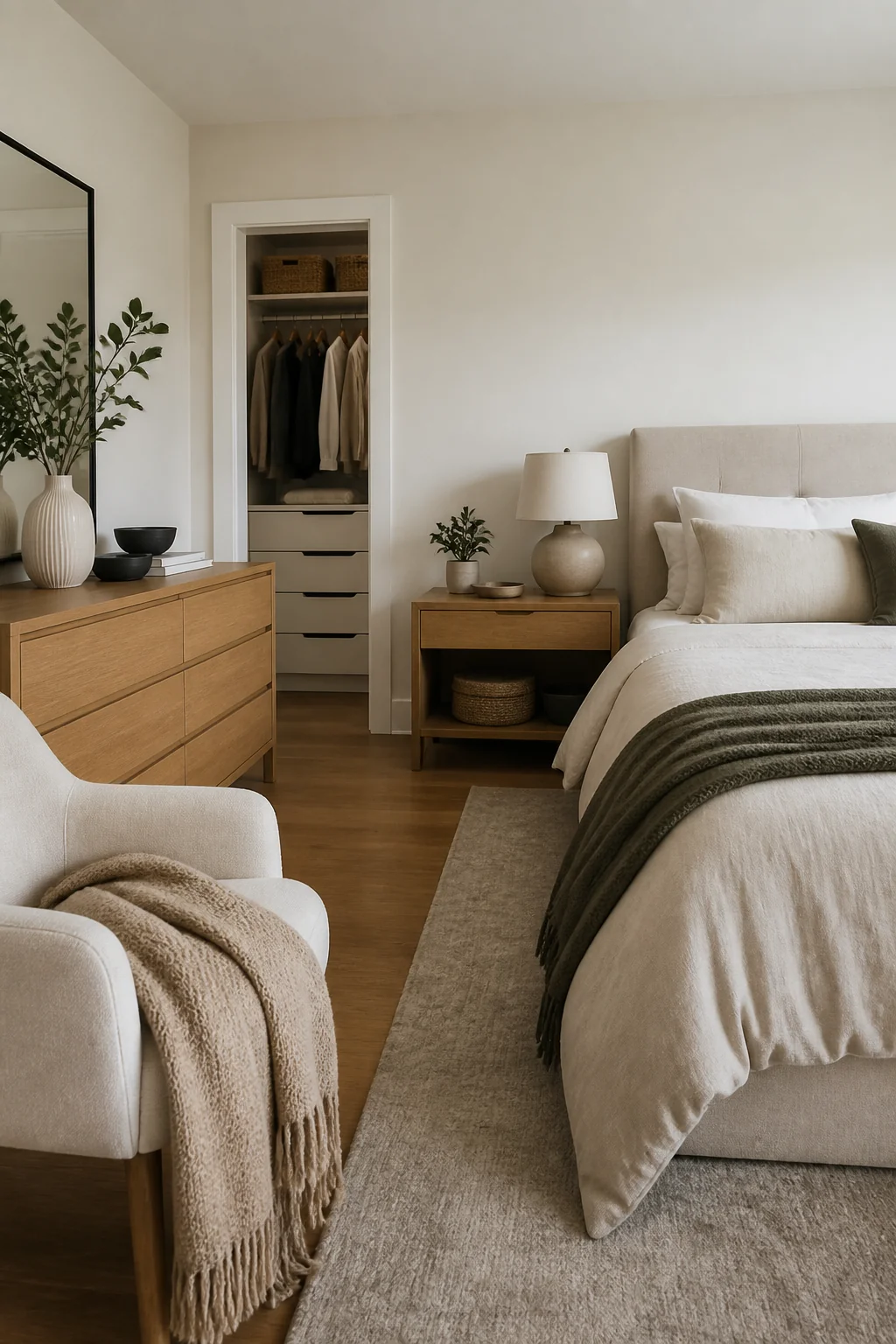
Bedroom clutter almost never arrives all at once. It's three throw blankets draped over one chair, a dresser top you have to excavate to find matching socks, and a nightstand holding receipts, two pairs of glasses, and a candle nobody has lit since December. None of it is a disaster on its own, which is exactly why it creeps up on you until the room feels tense instead of restful.
The version of minimalist bedroom design worth copying is the livable kind, where the room still feels warm but your eye has somewhere to rest, rather than the cold, empty one with white walls and a single chair. The seven ideas below run in the order that works best: one small surface first, then the two habits that stop clutter from rebuilding itself, then the bigger structural changes like wall storage and a color palette.
Most of them cost nothing at all. The only two that need a purchase are a pair of floating shelves and a sample pot of paint, together around $50.
Start With One Surface, and Make It the Nightstand
Pick your nightstand. Just that one surface. Trying to overhaul a whole bedroom in a single Saturday is how people burn out by hour three and put everything back where it was.
The nightstand goes first because you look at it twice a day, half asleep both times. A typical one gives you a top around 18 by 16 inches, which is room for three objects and not much more. Keep a lamp, a charging cable, and the book you're reading now. Add a glass of water if you drink one overnight. Everything else comes off.
The procedure matters more than the principle. Clear the surface completely into a cardboard box, wipe it down, and put back only those three things. Date the box, tape it shut, and slide it into a closet for 30 days. Whatever you open the box for earns its way back into the room. Whatever you never reached for gets donated without a second pass.
One failure mode shows up fast: an empty surface invites a new pile. Give the small stuff a home before it accumulates, ideally a shallow tray inside the top drawer, so mail, receipts, and chapstick land somewhere that isn't the top.
The One-In-One-Out Rule for Clothes
This is the habit that keeps clutter from quietly rebuilding itself after you've done the hard work.
Every time a new piece of clothing comes into the bedroom, one piece leaves. Donate it, sell it, hand it to a friend, it doesn't matter which, as long as it's out of the house that same week.
Ignore the item-count targets that get passed around online. There's no correct number of shirts, and chasing a number usually ends with buying storage bins instead of owning less. What matters is the rate. A closet stays calm when things leave as fast as they arrive. A standard reach-in closet gives you roughly 48 to 72 inches of hanging rod, and a shirt on a hanger needs about an inch of rod to slide freely. Pack them tighter than that and you stop seeing what you own, so you buy duplicates, and a wood rod over 48 inches will start to bow in the middle.
The rule works best at the register, not at home. Standing in the store, name the specific piece you'd remove to make room. If nothing comes to mind, you have your answer. It reads as restrictive on paper. In practice it just means you stop giving closet space to clothes you never reach for.
Create a "Donation Box" You Can Live With
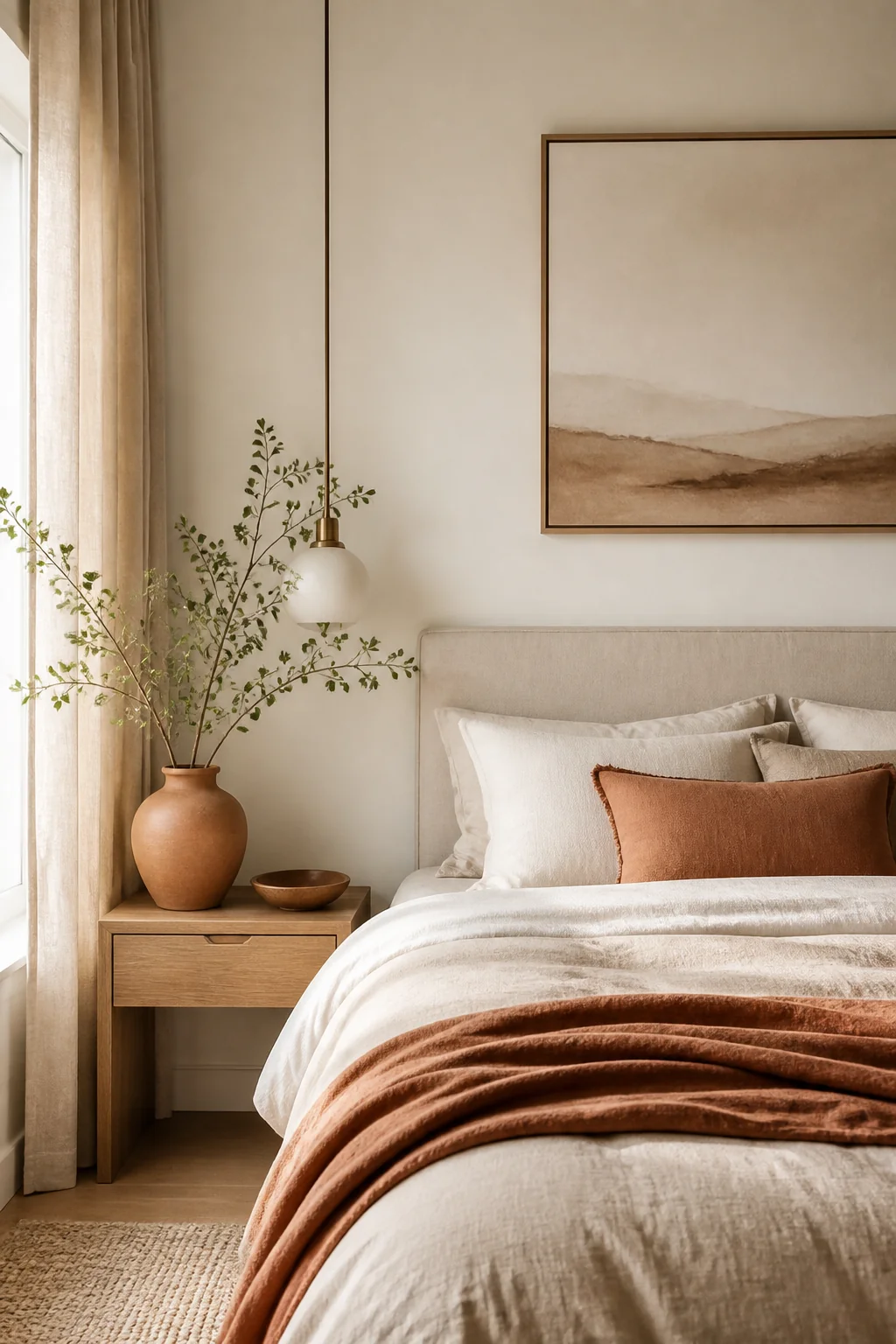
Keep a basket or box in the closet, visible enough that you'll use it without thinking, tucked far enough back that it never becomes part of the room's decor. A lidded seagrass or canvas bin around 15 by 11 inches runs $20 to $35 and holds about a carload of folded clothing before the lid stops closing, which is a useful built-in signal.
The decision happens in the moment, not later. You try something on, it pulls across the shoulders or the color has gone flat in the wash, and it goes in the trash right then, still in your hands. The second you hang it back up to think about it, it stays another two years.
Guilt is what keeps most of this in the room, and it's usually guilt about what the thing cost. That money is already spent. A jacket hanging unworn isn't refunding any of it, it's just holding rod space that a coat you wear every week could use.
When the bin is full, take it out that week. Bags that sit in the trunk have a habit of migrating back inside.
Go Vertical With Storage and Free Up Your Surfaces
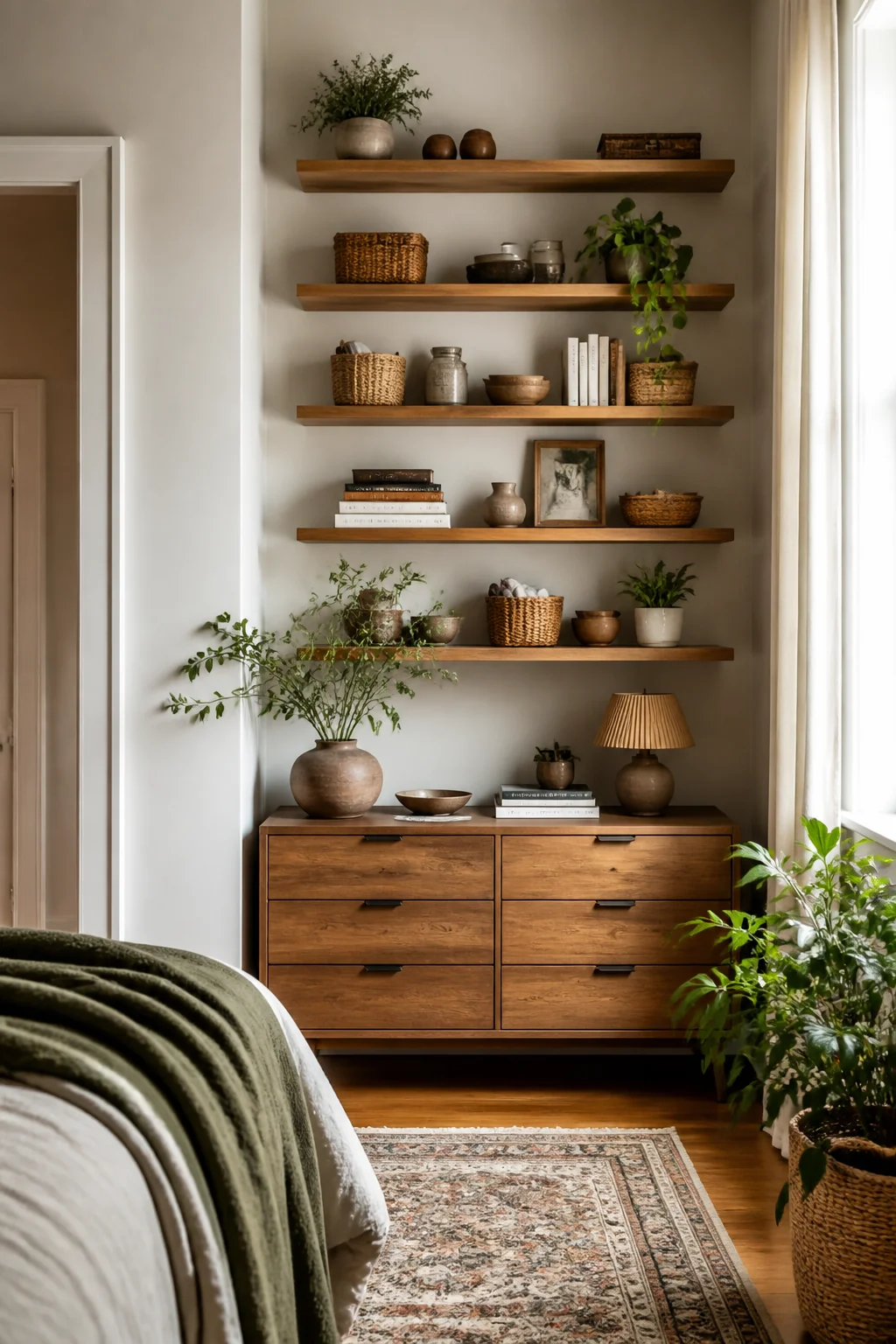
Most bedrooms read as cluttered for one plain reason: everything lives on horizontal surfaces. Dresser tops, nightstands, the floor beside the bed. The walls, meanwhile, are doing nothing at all.
A pair of floating shelves above the dresser costs $30 to $50 and moves the display job off the furniture. Hang the lower one 12 to 15 inches above the dresser top so you can still open drawers and set a lamp down, and space a second shelf about 12 inches above the first. Anchor into studs wherever you can, since they sit 16 inches on center in most homes. Where the studs don't line up, a pack of toggle bolts rated to 50 pounds costs around $6 and holds far more weight than the plastic anchors in the shelf box.
Put three or four things up there and stop. A small plant, two books, one framed photo. A shelf loaded edge to edge is just a taller dresser with the same problem.
If drilling is off the table, a row of hooks by the closet takes scarves, belts, and the robe that otherwise lives on a chair. Peel-and-stick hooks top out near 5 pounds, so screw in anything that has to hold a coat.
Keep Your Bed Simple, Less Is More Here
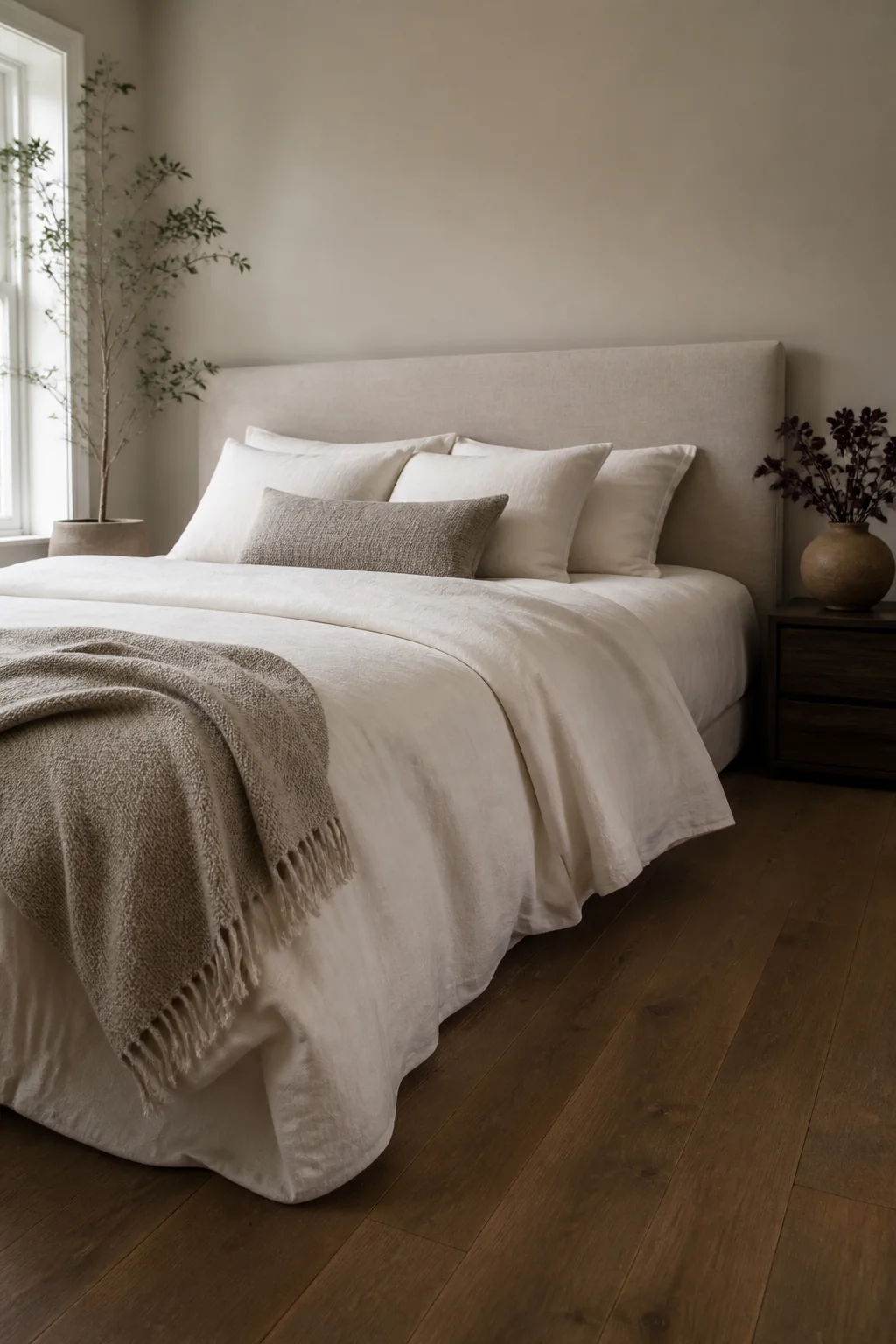
The over-decorated bed is where this goes wrong most often. A big upholstered headboard, four decorative pillows, a throw across the foot, a quilted coverlet over the duvet. It photographs beautifully for about two weeks. Then the pillows start sleeping on the floor, the throw gathers dust, and making the bed becomes a five-minute job you skip on a Tuesday.
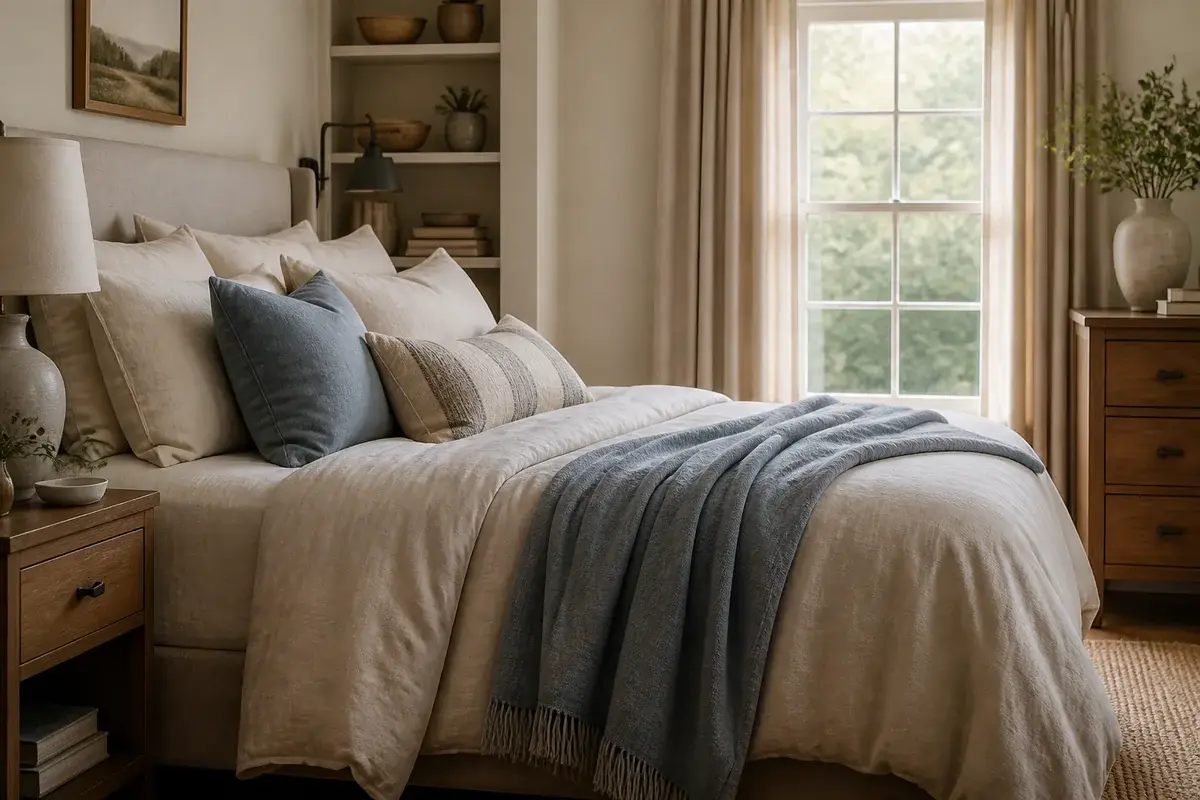
Strip it back to four layers: fitted sheet, flat sheet, duvet cover, and the pillow you sleep on. Keep one throw blanket, folded into a basket beside the bed rather than draped across it. Linen and cotton waffle weave both suit this, because they crease softly and look deliberate when rumpled, while polyester fleece holds a slept-in shape and reads as messy.
The payoff here is mechanical rather than decorative. Four layers take about 30 seconds to put right, and a job that short gets done every morning. Your bed is the largest single surface in the room, so once it's flat and smooth the whole space reads as tidy, even on days when the laundry chair says otherwise.
If you love the layered look, keep one decorative pillow and give it a home at night. A chair, a hook, anywhere but the floor.
Choose a Real Color Palette (Not Just Beige)
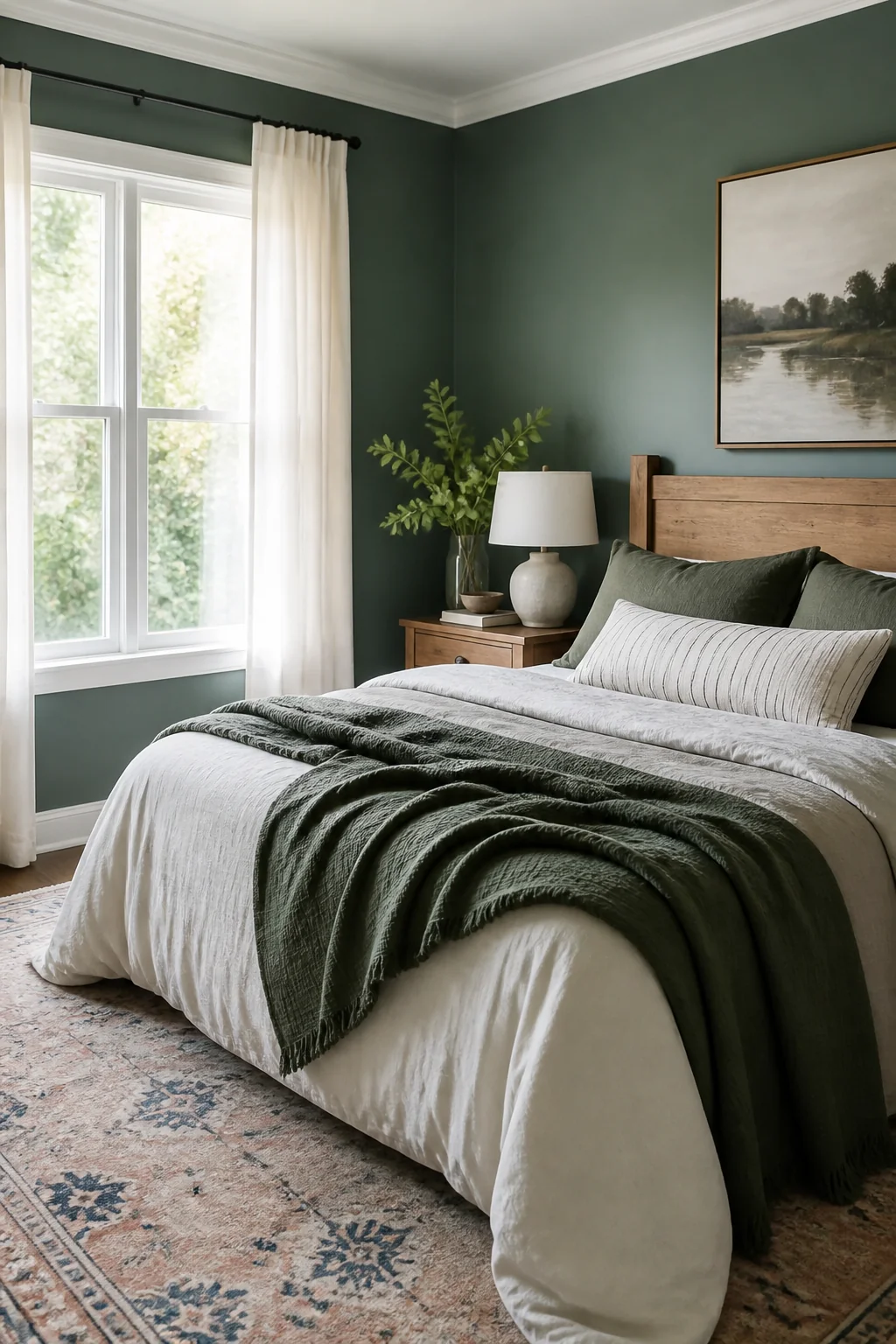
Minimalism gets confused with beige, cream, and builder white. Those are the safe defaults, not the point. A room can hold real color and still feel quiet, as long as the colors agree with one another.
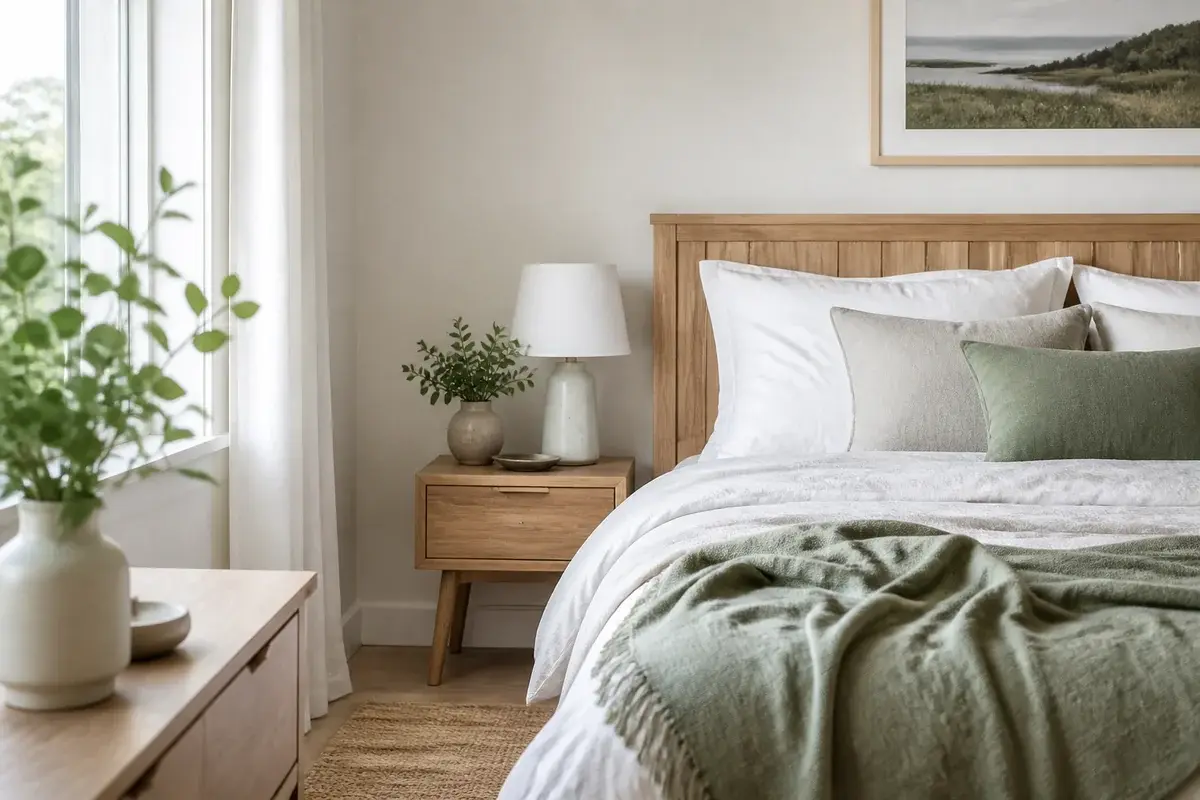
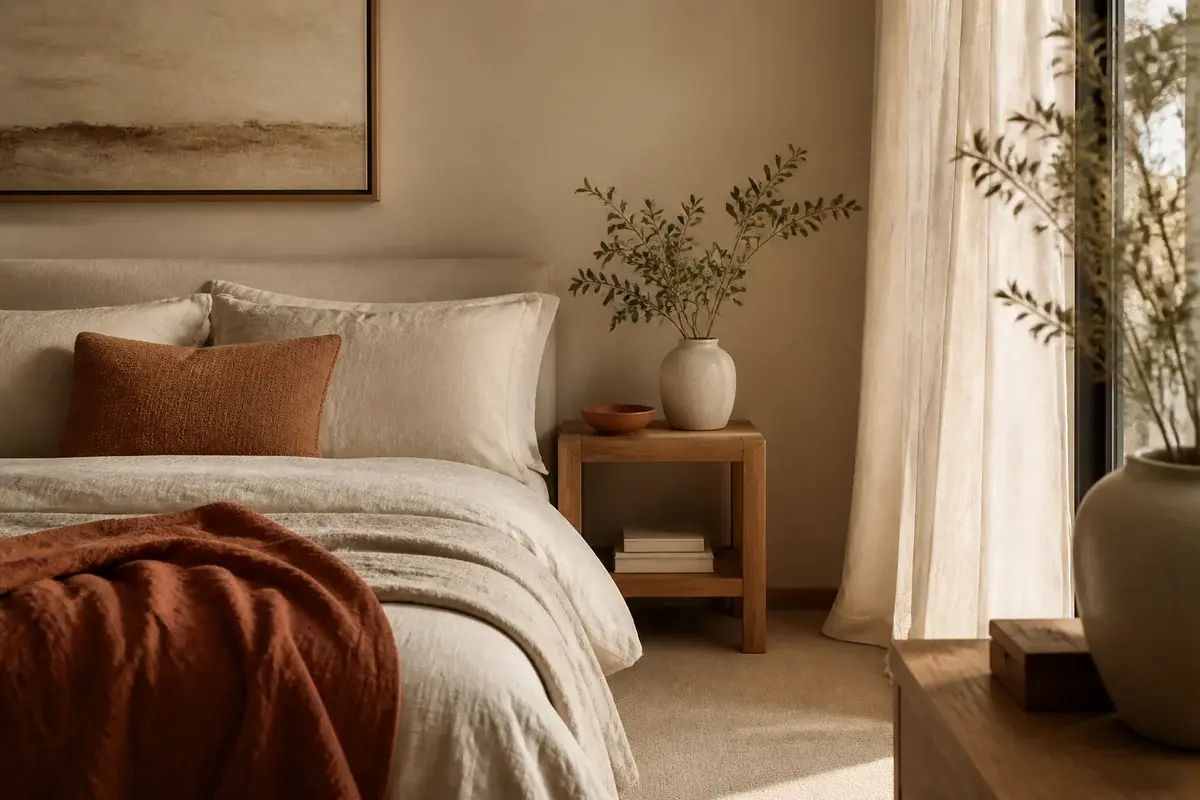
Choose one wall color and two supporting tones, then hold everything else in the room to that shortlist. Muted, low-chroma shades carry the most weight here: a soft clay, a gray-blue, a deep olive all read as neutral from the doorway but keep some warmth up close. Test before you commit. A $6 sample pot brushed onto a 12 by 12 inch patch, looked at once at 7 AM and again under lamplight, tells you more than any swatch card will, because north-facing rooms pull colors cooler and pink-toned whites go dingy under warm bulbs.
The real benefit is decluttering speed. Once the palette is written down, keep-or-donate stops being an emotional question. Does this fit? The teal pillow doesn't. The orange lampshade doesn't. That's a two-second call instead of a twenty-minute one.
Where it breaks down: picking a saturated color and then shopping to make it work. The palette is a filter, not a shopping list.
The "One Year" Test, Make It Your Rule
If something in your bedroom hasn't been used in a full 12 months, it leaves. Not "might use someday." Not "this could be useful if." Real use, inside the past year.
Twelve months is the right window because it covers every season once. The heated blanket you haven't touched since March isn't clutter, it's January's blanket. The humidifier you never remember to fill has now had an entire dry winter to prove itself and didn't, so it goes.
The items that usually fail are the ones nobody argues about:
- A second set of decorative throw pillows
- Empty gift boxes saved for a future present
- A reading lamp too dim to read by
- Charging cables for a device you no longer own
Run the test once a year, in the same week each time. Late September works well, because you're pulling cold-weather bedding out of the closet anyway and half the contents are already on the floor.
One exception is worth protecting. Sentimental things get their own container, one box with a hard size limit, and they don't have to justify themselves every year. This test exists to clear out the merely unused, not to audit your memories.
What to Do First, and What Can Wait
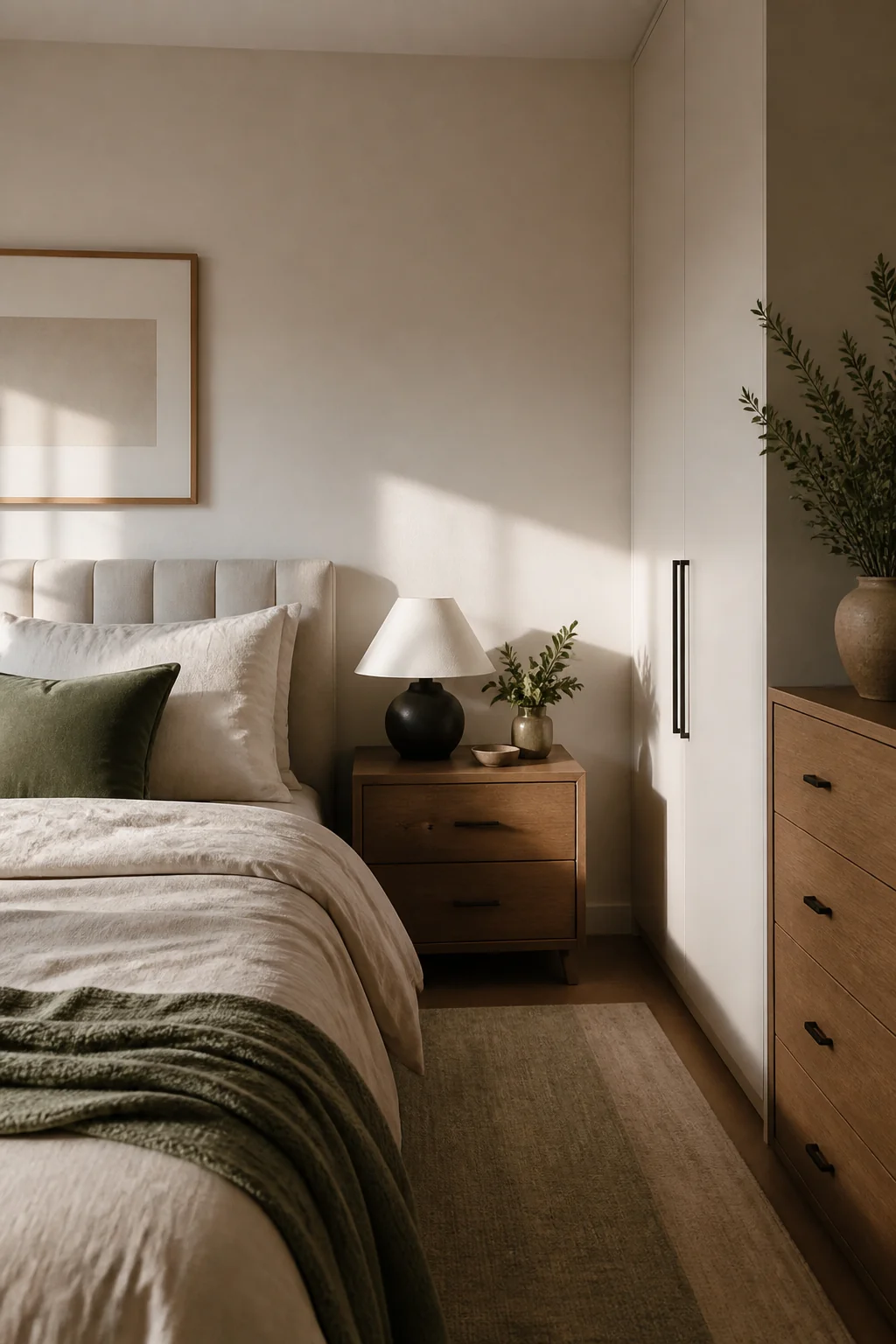
Only one of these needs to happen before the others, and it's the nightstand. Ten minutes, no money, and it's the surface you see last at night and first in the morning, so the result is hard to miss.
The rest stacks in a sensible order behind it. One-in-one-out and the donation bin are habits, not projects: they cost nothing and need no weekend, they just need somewhere to live. The bed edit is an afternoon of laundry. Wall shelves and a paint palette come last on purpose, because they work better once the volume of stuff is already down. Build storage first and you end up mounting shelves for things that were on their way out anyway.
One caution to end on, because it catches a lot of people. Minimalism turns into its own kind of clutter the moment it becomes a shopping trip: matching bins, a new dresser, three baskets to hide the things you haven't decided about. Nothing above needs a purchase except two shelves, a sample pot of paint, and a bin you may already own. The rest of it is just deciding what stays.
Keep this guide handy
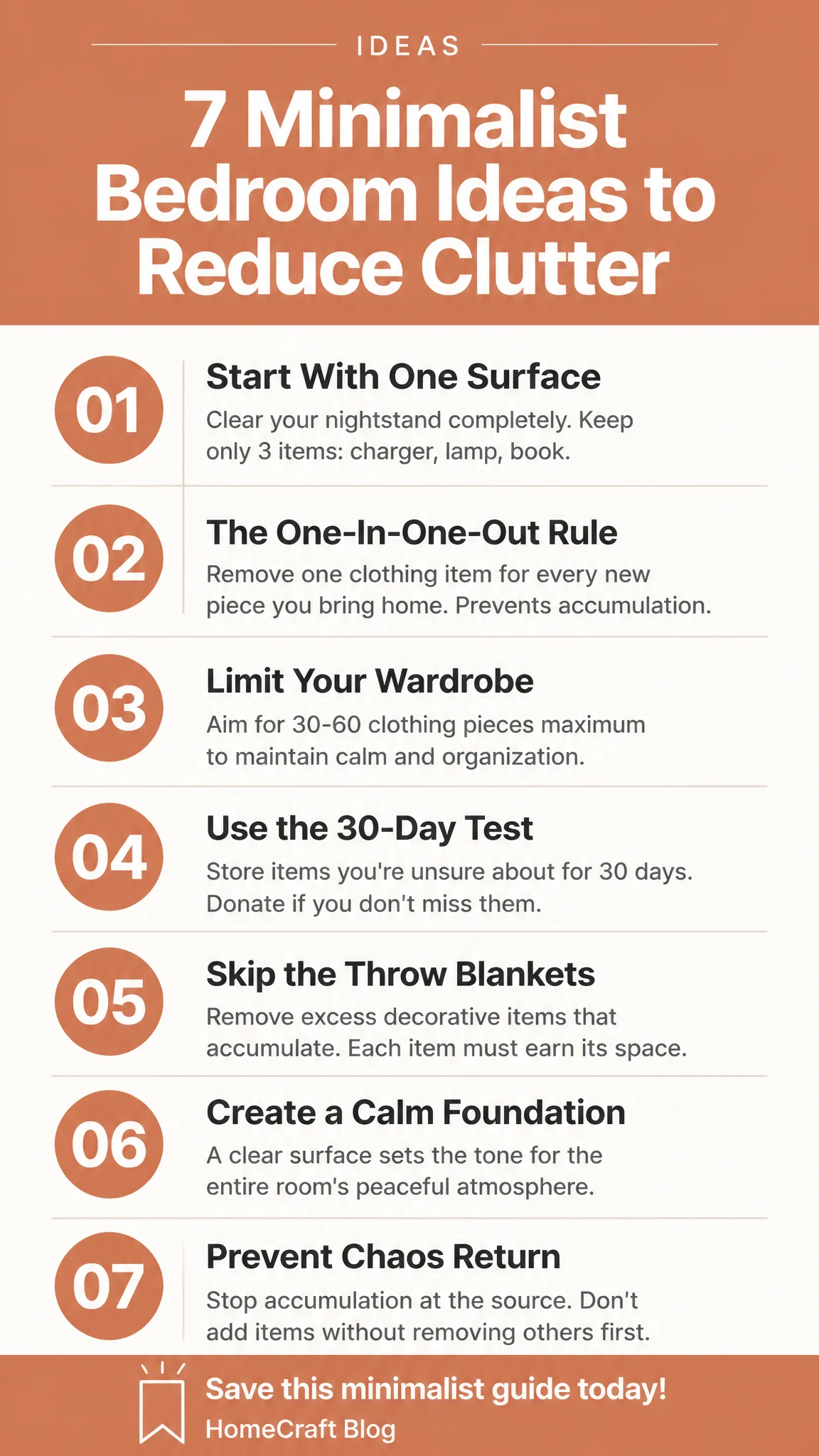
Working through other rooms? The same order applies to home office setups and bathroom storage: cut the volume first, then build storage around what's left.