Bathroom Organization Ideas: A Room-by-Room Guide
Bathroom organization ideas with the numbers behind them: working around the P-trap under the sink, sizing drawer dividers to a shallow vanity drawer, and mounting floating shelves that hold.

This post contains affiliate links. As an Amazon Associate I earn from qualifying purchases. If you buy through our links, we may earn a commission at no extra cost to you.
Three half-empty bottles of dry shampoo is the classic tell. You buy the second and the third because the first one is sitting behind a hair dryer cord and a tub of body butter, invisible until the day you finally pull everything out. A bathroom can look perfectly tidy on the counter and still be a junk drawer with tile walls.
The fix is giving every category one visible home, sized to what you actually own, and that rarely means buying more storage. Below we've broken the room into the seven zones that hold the most stuff, with the measurements, prices and clearances that decide whether an organizer fits or sits in its packaging for a month.
Under-Sink Storage: Stop Ignoring That Space
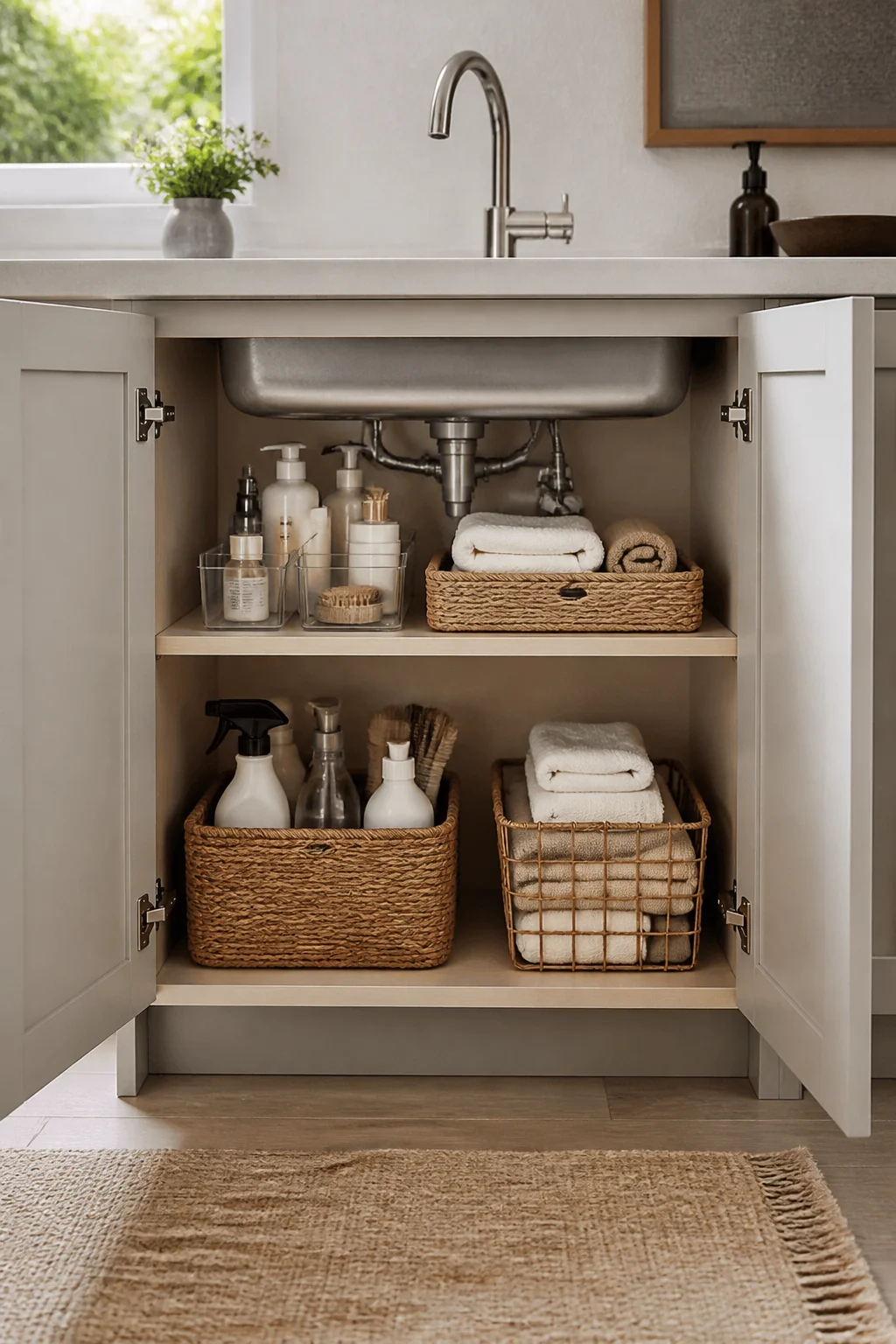
The cabinet under a bathroom sink is the most wasted square footage in the room, mostly because the P-trap runs straight through the middle of it. A standard 30-inch vanity gives you roughly 26 to 28 inches of interior width and about 20 inches of depth, but the drain assembly usually eats a 6 to 8 inch column dead center, sitting around 8 inches off the cabinet floor.
Work around it rather than through it. Two-tier pull-out organizers cost about $12 to $18 each and clear the trap if you keep them under 11 inches wide. Load one with cleaning supplies and one with hair tools, then set a shelf riser over the trap itself for backstock you reach for monthly rather than daily.
Visibility is the whole point. Anything stacked behind something else stops existing, which is how you end up owning two bottles of the same moisturizer.
Measure interior width, depth, and the height clearance under the trap before you order. Older homes have odd-sized cabinets, and 1/4 inch foam board cut to fit costs around $5, which beats returning three organizers that were an inch too wide.
Drawer Dividers: Your Secret Weapon
Bathroom drawers fail because everything in them is small, light and prone to rolling. Bobby pins, expired sunscreen, a charger you meant to move to the bedroom two years ago, half a broken straightener.
Empty the drawer completely onto a towel before you buy a single divider. Sort into keep, toss and relocate, then measure what's left. A typical vanity drawer is 12 to 20 inches wide, 16 to 18 inches deep, and only 3 to 4 inches tall, and that shallow height is what trips people up. Expandable spring-tension dividers run around $10 to $15 for a set of four, and they need roughly an inch of clearance under the drawer front to slide in and out without catching on the frame.
Give makeup one lane, hair accessories a second, medication a third, and leave a fourth lane deliberately empty. That empty lane is where the next impulse buy lands instead of on the counter. Anything you haven't touched in six months leaves the room.
Wall Space and Floating Shelves
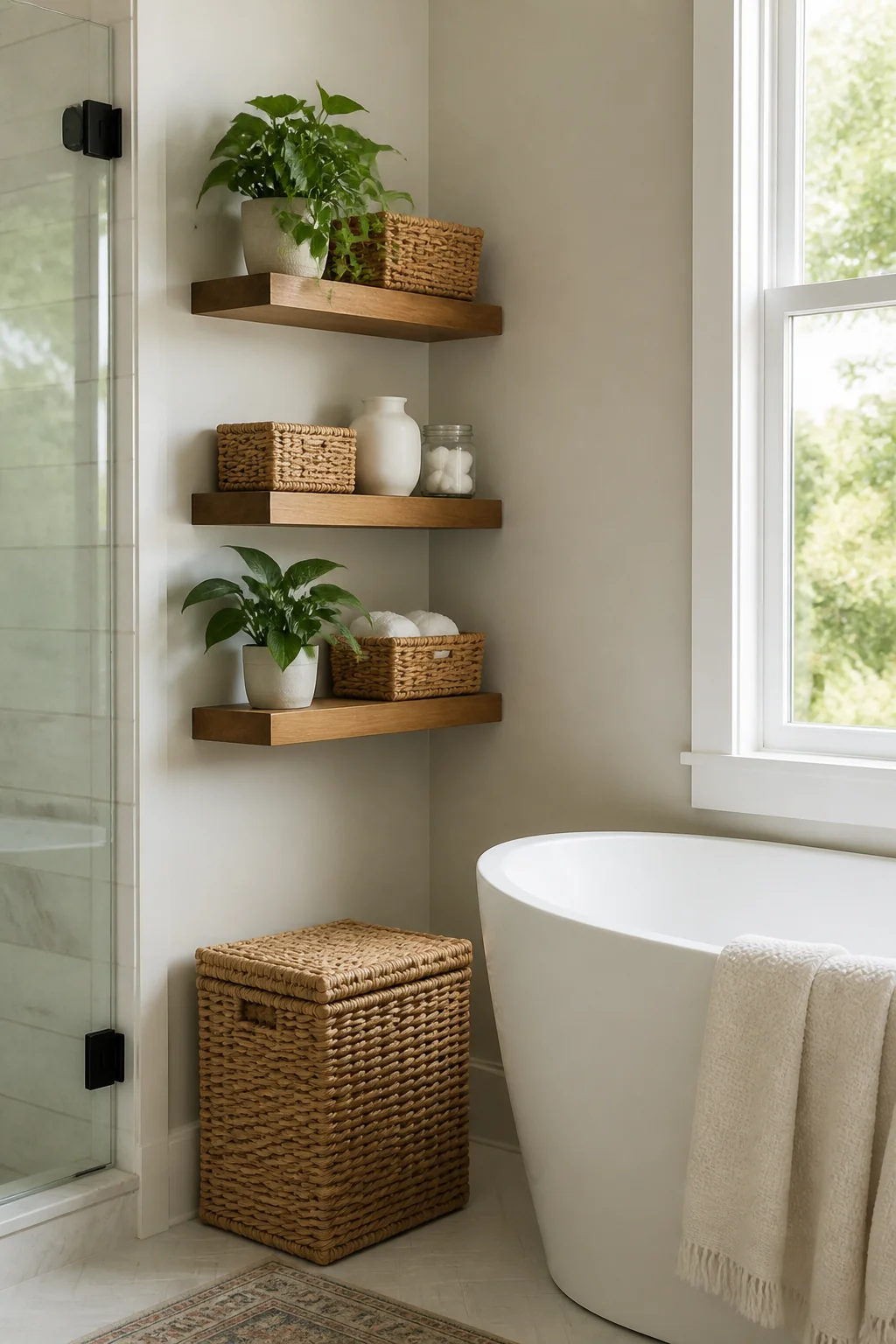
Above the toilet is the emptiest wall in most bathrooms and the cheapest storage you can add, because it costs you no floor space at all. Mount the lowest of your floating shelves about 24 inches above the tank lid so you can still lift the lid to reach the fill valve, then space anything above it 10 to 12 inches apart.
Depth matters more than length here. A 5 to 6 inch shelf holds a rolled washcloth or a bottle without becoming a head hazard when you lean over; go past 8 inches and you'll clip your shoulder every time you turn around. Budget $20 to $35 per shelf for solid wood or a decent MDF floating unit.
Hardware is where these fail most often. Studs sit 16 inches on center and rarely land where you want the shelf. Snap-toggle anchors rated to 50 pounds cost about $1.50 each and hold far better in 1/2 inch drywall than the plastic sleeves in the box. Loaded floating shelves sag at the bracket first, so check for droop after a week.
The Linen Closet: Organize It Like You Mean It
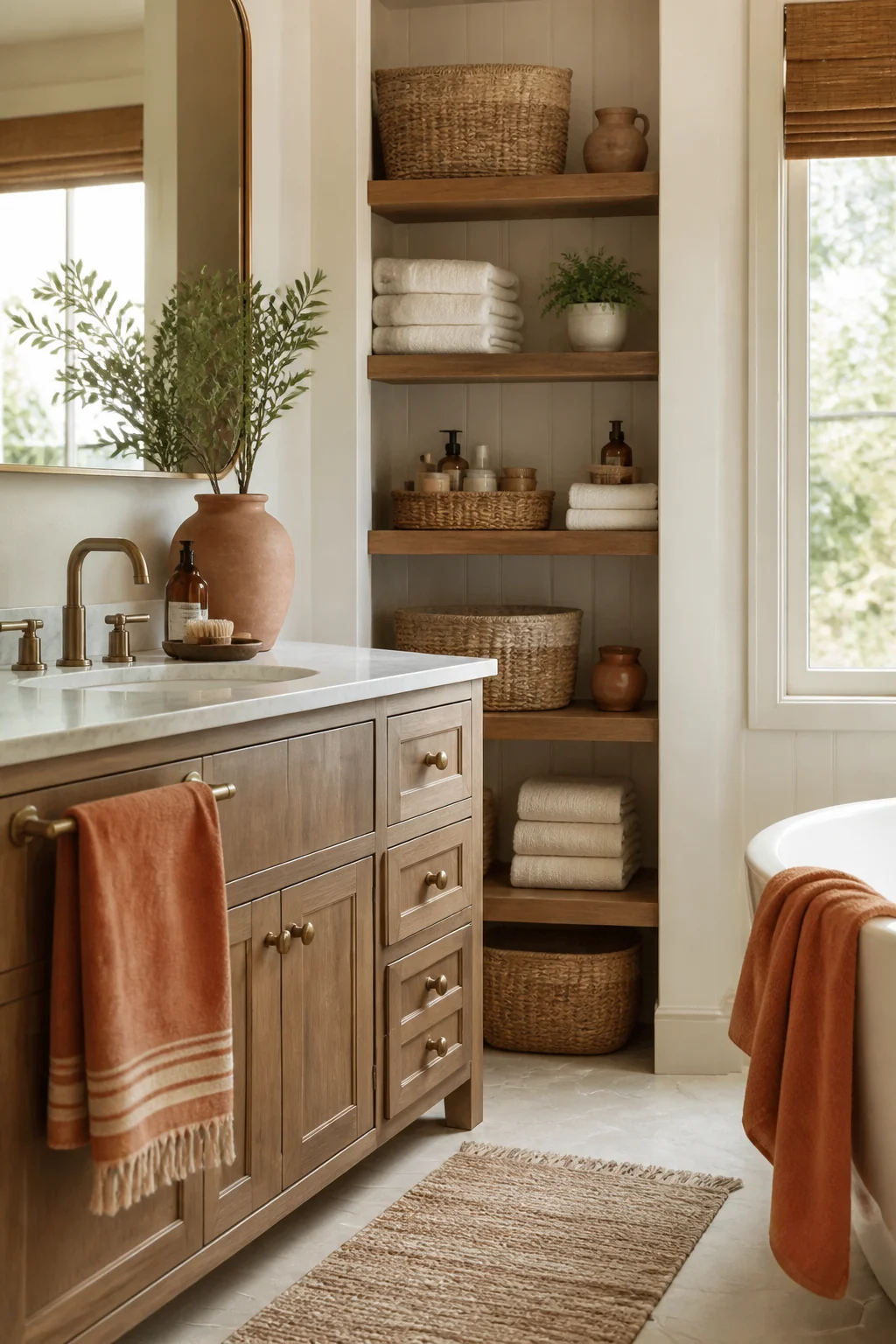
A linen closet turns into a landslide because the shelves are deeper than anything you put on them. Standard shelves run 14 to 16 inches deep, while a folded bath towel is roughly 12 by 9 inches, so there's always a back row nobody can see and nobody uses.
Fix the back row first. Keep what you reach for weekly at the front in one clean stack, and move backstock into clear bins that pull out like drawers. Basic 6 to 13 quart clear bins cost $3 to $6 each at IKEA or Target. Measure your shelf depth and buy bins an inch shorter, or they'll foul the door frame on the way out.
Group by type rather than by person: bath towels, washcloths, spare toiletries, cleaning supplies. Label every bin even in a one-person home, because the label is what stops the system drifting back.
One caution worth taking seriously: never shelve towels that are still damp. In a closed closet they hold moisture long enough to smell sour within a week.
Mirror and Backsplash Organization
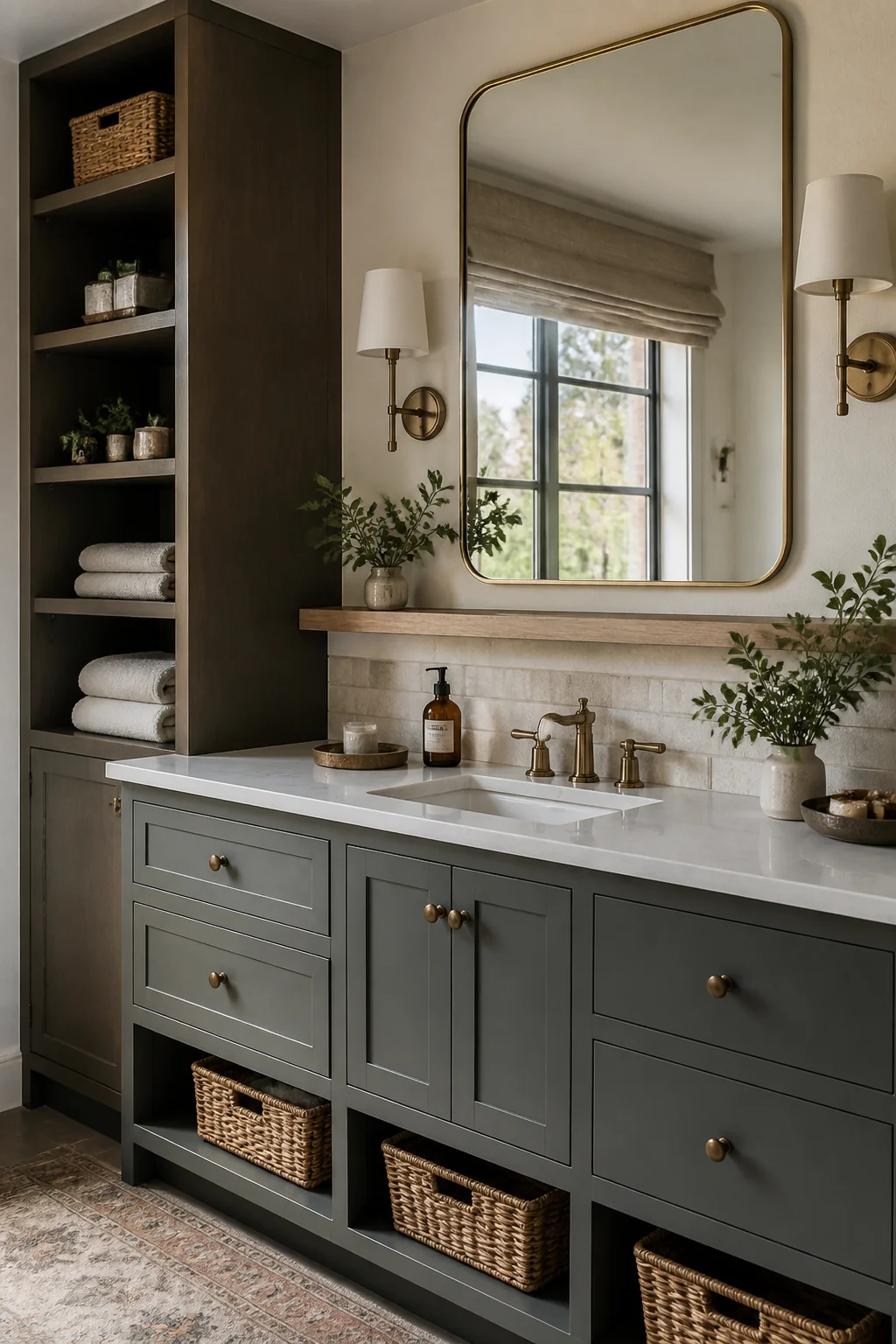
Keep the strip of wall beside and behind the mirror for the handful of things you touch every single morning: cleanser, moisturizer, toothbrush, whatever your five-minute routine needs. Everything else belongs under the sink. Mixing the two is what buries the daily items.
A shallow ledge shelf 3 to 4 inches deep, mounted around 50 to 54 inches off the floor, puts bottles at hand height without crowding the sink or the backsplash. Expect $15 to $30 for one. If your mirror is a medicine cabinet, its shelves are usually only 3.5 to 4 inches deep, which is fine for tubes and small jars and hopeless for a pump bottle.
One thing worth knowing: a bathroom is the worst room in the house for medication. Shower steam and heat degrade pills faster than a dry bedroom drawer would, so keep the cabinet for daily-use products and store prescriptions elsewhere.
A magnetic knife strip, roughly $10 to $15, holds bobby pins, tweezers and nail scissors flat against the wall where you can see them.
Vertical Storage and Hooks
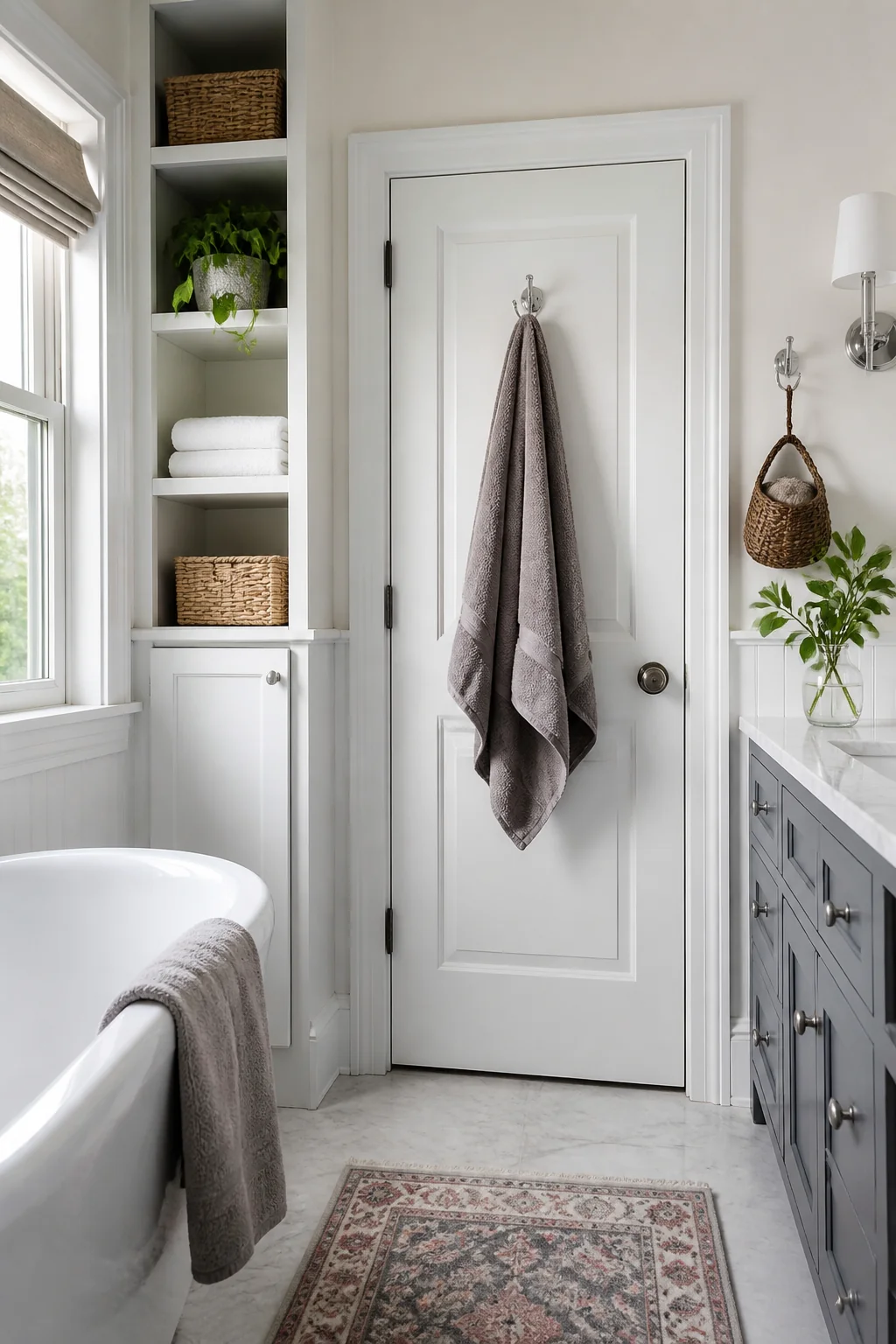
Hooks beat rods for anything you use wet. A towel on a hook touches itself at a single point and dries from both faces, while a towel folded over a bar traps a damp layer against itself for hours.
The back of the bathroom door is the easiest win in the room. Interior doors are 1 3/8 inches thick, so over-door hooks are built for that thickness. Check the top rail clears your door frame before you buy, and leave at least 3 inches between the hook and whatever the door swings toward. A three-pack of screw-in hooks runs about $8 and takes 20 minutes with a drill and a level.
Adhesive hooks are the common failure. Most are rated to 4 or 5 pounds in dry conditions, and steam plus a soaked towel peels them off glossy tile within a season. If it holds anything wet, screw it into the door or a stud.
Space hooks 9 to 12 inches apart so towels hang free, and keep the lowest one above 48 inches so nothing drags on the floor.
Daily Habits That Keep It Organized
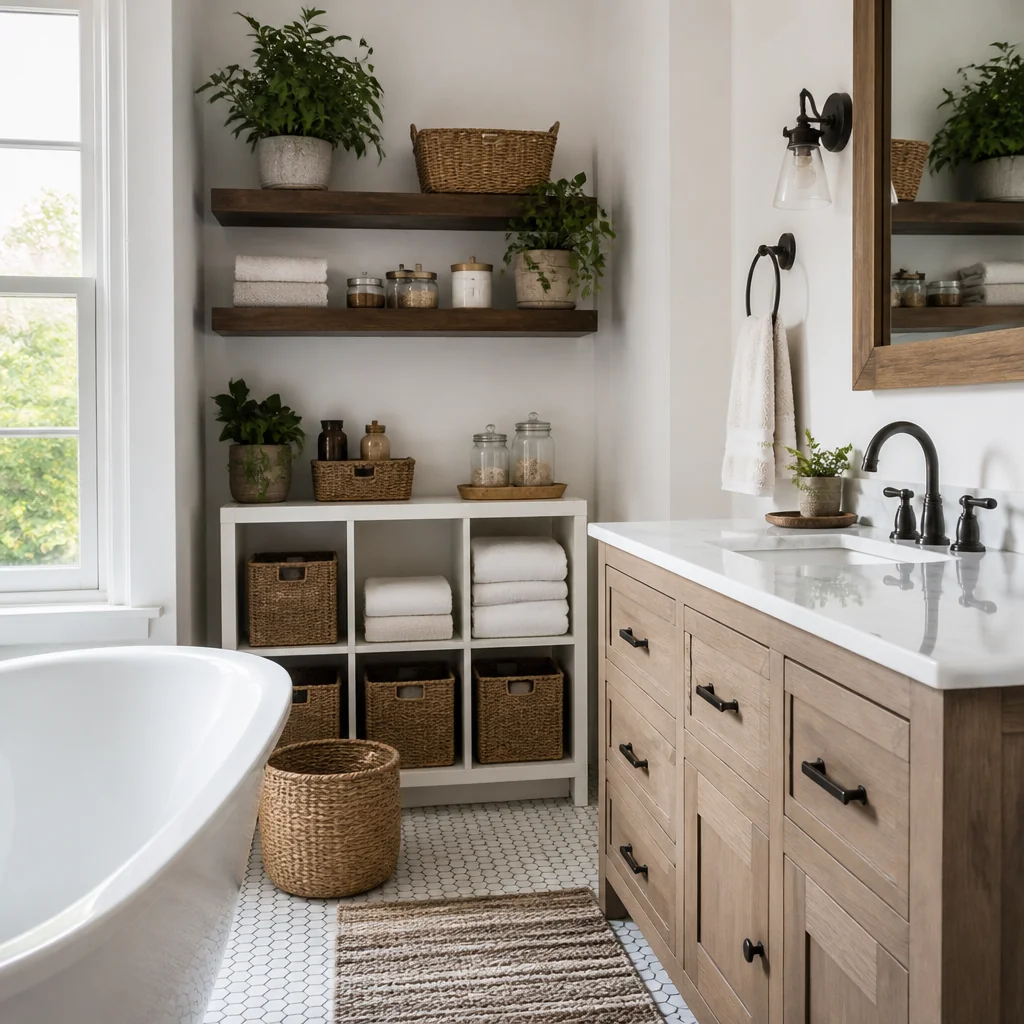
Systems fail on a tired Tuesday night, not on setup day. The reset that survives is the one short enough to finish while the tap is still running.
Two rhythms do most of the work. The first is a 30-second exit rule: nothing you used stays on the counter when you walk out. The second is a weekly 10-minute pass, easiest to attach to whenever you clean the mirror, where you refold washcloths, return whatever migrated, and toss the empties. Empty bottles are the real culprit. A finished shampoo bottle will sit on the tub ledge for a month if nobody names a moment to throw it away.
Keep a small bin under the sink for things on their way out, and drop expired sunscreen or a dried-out mascara in as you find them. When it's full, it goes.
The design rule underneath all of it: if putting something away takes more than one step, the system breaks. Fewer lids, fewer stacked containers, fewer bins you have to move to reach another bin.
If you're weighing where the effort pays off most, the under-sink cabinet holds the greatest volume, but the counter and the mirror wall are the surfaces that refill fastest and set the tone for the whole room.
Keep this guide handy
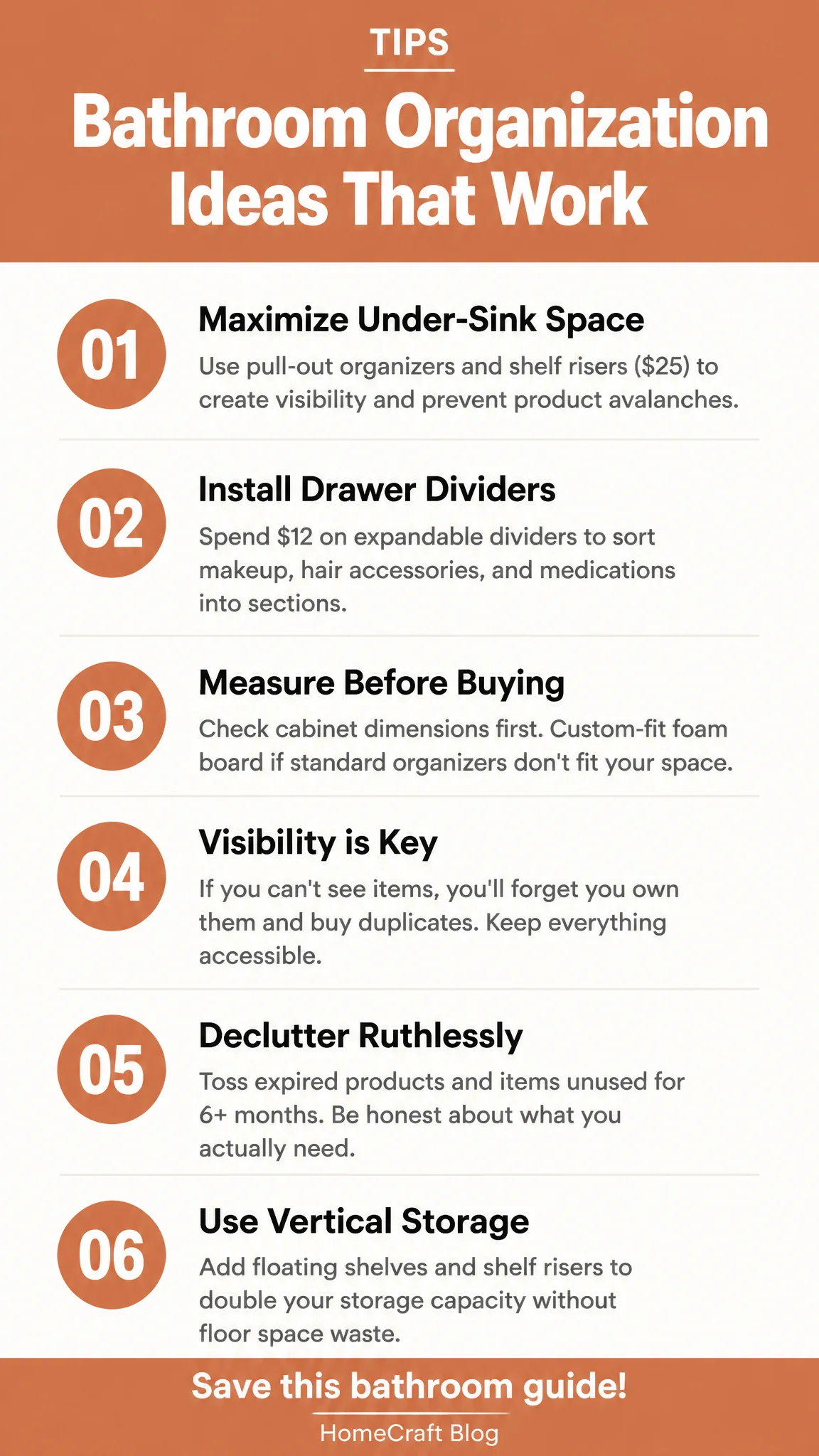
And a caution on shopping order: buying containers before you sort is how most of this goes wrong. Bins bought for a drawer you haven't emptied become a second layer of storage sitting on top of the mess, which is exactly how a bathroom ends up with three bottles of dry shampoo in it.