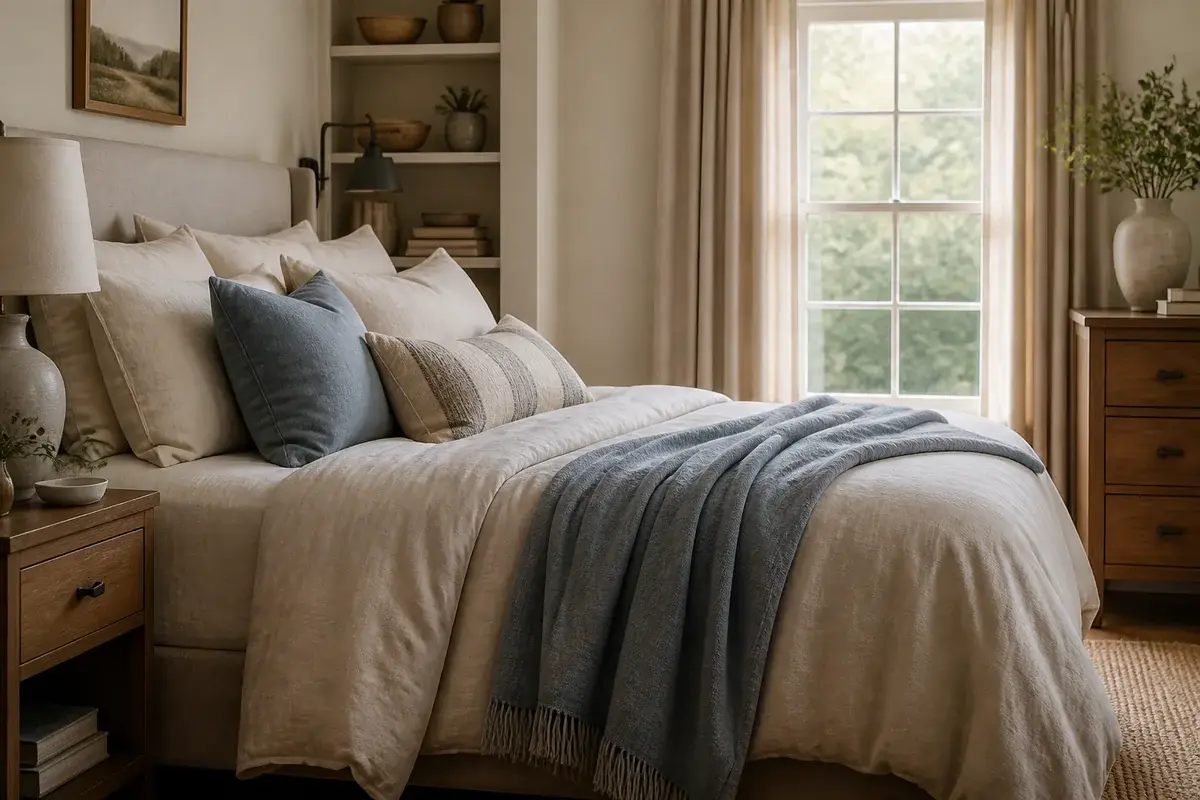
12 Cozy Bedroom Ideas, From Warm Bulbs to Linen Sheets
Twelve cozy bedroom ideas with real prices and measurements: layered 2700K lighting, a weighted blanket sized to you, three-pillow styling, fabric walls, linen sheets.
This post contains affiliate links. As an Amazon Associate I earn from qualifying purchases. If you buy through our links, we may earn a commission at no extra cost to you.
A bedroom can be perfectly comfortable and still feel like a hotel lobby at 11 PM. The usual culprits are one bright ceiling fixture, bare walls, and a bed that looks more like furniture than a place you want to climb into.
You can usually fix that without a renovation. Change the color temperature of your light, add texture within arm's reach, and bring in two or three things you want to touch on the way past. The twelve ideas below start with lighting, the change you'll notice the same evening. Prices are typical ranges, and we've flagged the spots where spending more stops paying you back.
Layer Your Lighting in Four Levels
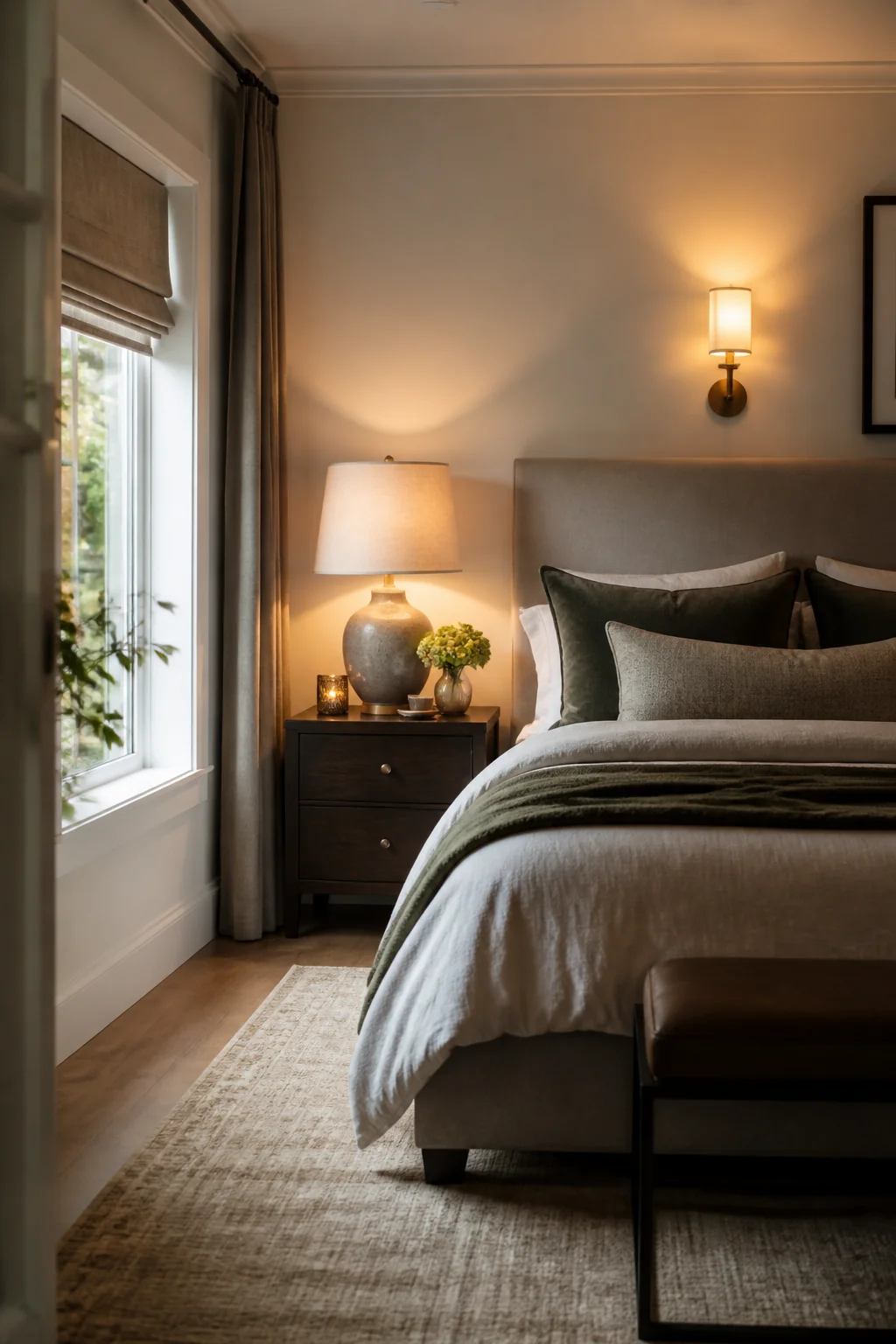
A cozy room gets its light from several places at once, most of them low and warm. Four modest sources will do more here than one expensive lamp.
Start overhead: swap in a 2700K bulb and put it on a dimmer. A wall dimmer runs about $20 and twenty minutes with the breaker off, and if you rent, a $12 to $15 smart bulb gets you the same range from your phone. Then a lamp on each nightstand, roughly $30 to $45 each. Height matters more than the shade you pick: on a 24 to 26 inch nightstand, a 20 to 24 inch lamp puts the bottom of the shade near your shoulder when you're sitting up, so the light falls on your book instead of your eyes. Add string lights above the headboard for $15 to $25, then one low light in a far corner so the glow reaches floor level.
Keep every bulb at 2700K. A single 4000K bulb mixed in reads cold and slightly clinical, and it's usually why a room with plenty of lamps still feels unfinished.
Weighted Blankets Earn Their Price
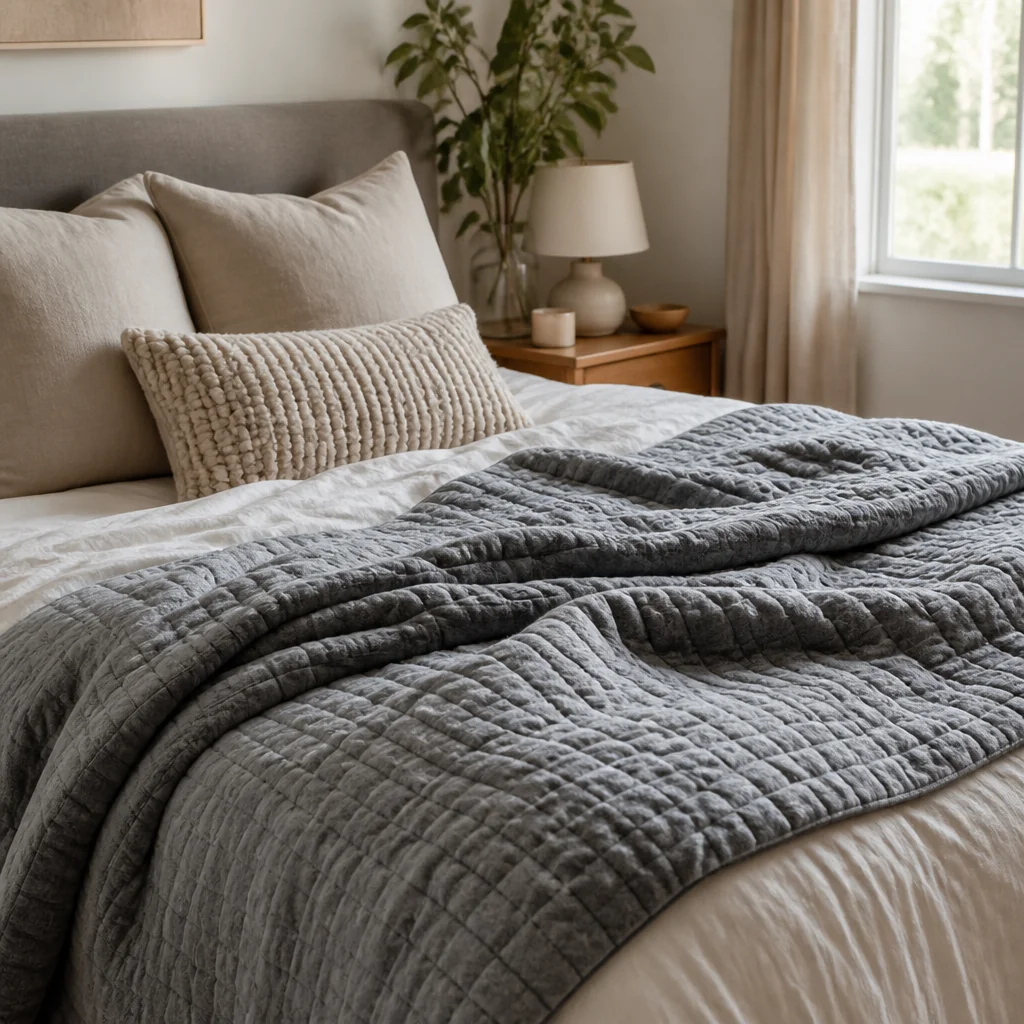
A $200 blanket sounds absurd until you've slept under one. The pressure is even and constant, which most people find settling in roughly the way a firm hug is.
Size it to your body, not your mattress. About 10 percent of body weight is the common guide, so 15 pounds for someone near 150 and 20 pounds closer to 200. A blanket wide enough to drape over the sides will creep to the floor by 2 a.m., so a 48 by 72 inch throw is right for a single sleeper even on a queen. Check the fill while you're comparing: glass beads are fine, quiet and stay distributed, while cheap plastic pellets bunch at the seams and rattle when you turn over. Expect $60 to $90 for a basic one, $200 to $250 for Gravity or Bearaby.
Two cautions. A 15 or 20 pound blanket is a heavy, waterlogged load for a home washer, so buy one with a removable cover you can wash on its own. And in July it's too warm, so fold it at the foot of the bed rather than boxing it up for the season.
Three Throw Pillows Beat Eight
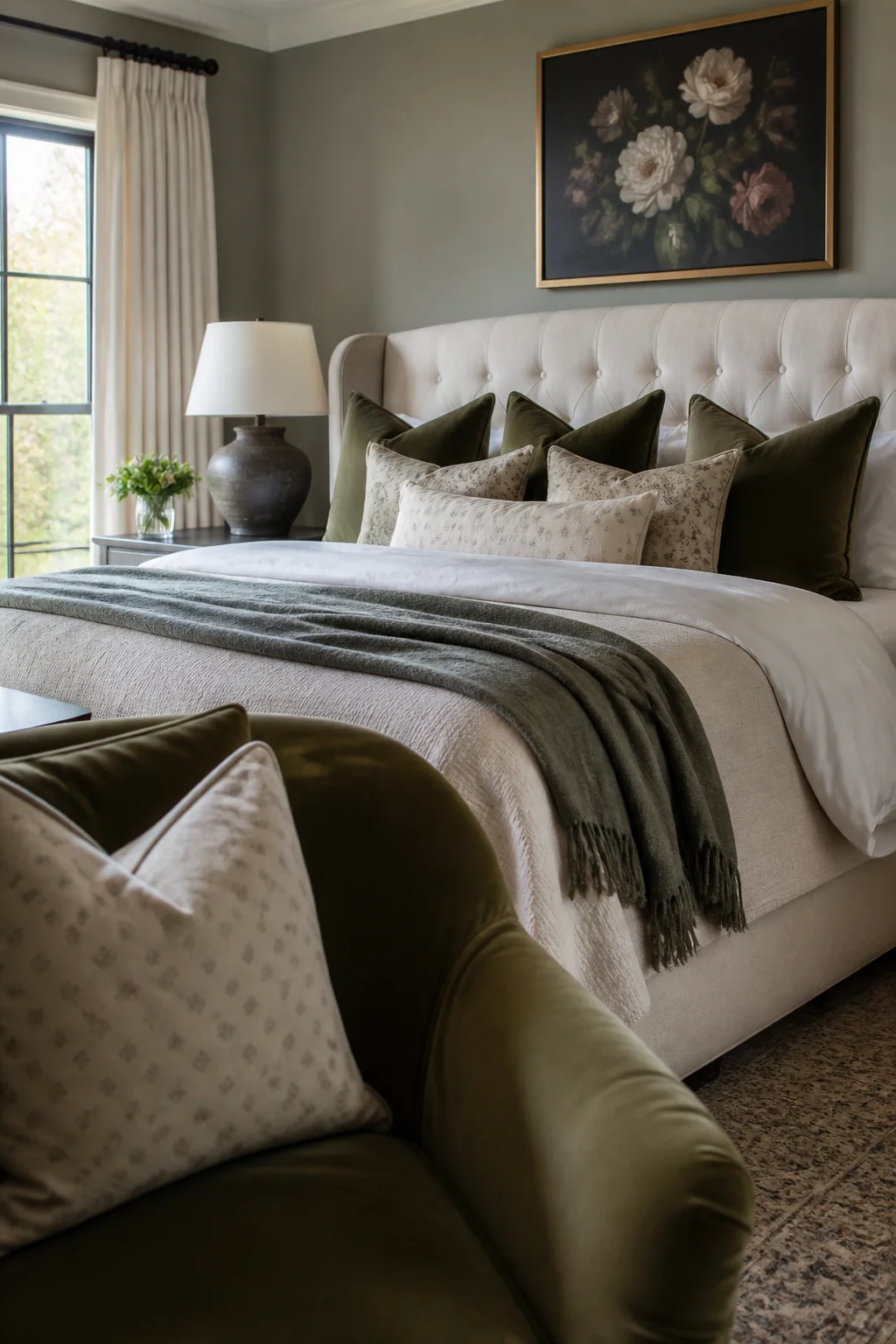
Eight coordinating pillows look like a gift shop exploded, and they turn bedtime into an unloading job. Five minutes a night is all it takes before they migrate to the reading chair, then to the closet.
Three is the number that survives. Vary the texture instead of the color: one velvet, one linen, one chunky knit, all sitting in the same two or three tones as your bedding. A 20 inch square, a second square and a 12 by 20 lumbar in front will cover the width of a queen without hiding the pillows you actually sleep on.
Buy covers and inserts separately. Covers run $12 to $25 each at Target or H&M Home, inserts $8 to $20, so three finished pillows land near $60. Order each insert two inches larger than its cover, a 22 inch insert in a 20 inch cover, so the corners fill out rather than collapsing. Feather-down inserts hold a shape and re-fluff for years. Polyester flattens inside a season and never quite comes back.
Soft Textures on the Walls (Not Paint)
Paint is the obvious answer and rarely the fastest one. Paint, primer, tape and rollers for a small bedroom run $150 to $250, plus two days of drying and a color you're committed to for years.
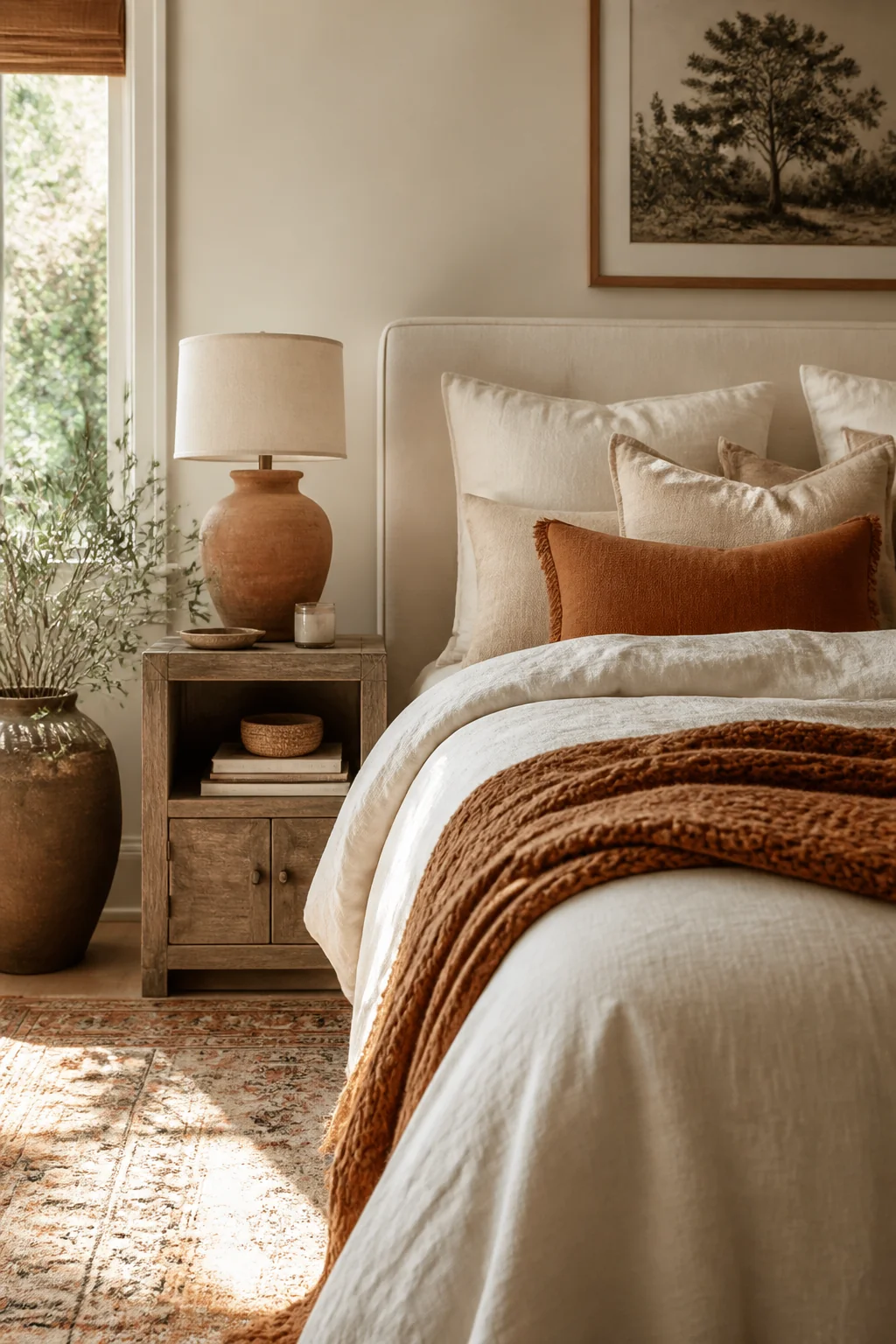
Fabric does the same job in an afternoon. A woven panel or tapestry behind the bed costs $60 to $120, and you want something 60 to 72 inches wide for a queen so it reads as deliberate rather than accidental. Hang it from a dowel on two hooks, screwed into studs where you can find them (16 inches on center in most walls) or into drywall anchors rated for at least 20 pounds. Leave the bottom edge clearing the headboard by 3 to 6 inches so the two don't fight.
A gallery wall with prints you love does it too, so does a linen headboard cover at $50 to $90, and sheer panels hung the full width of the wall soften a room the day they go up. The trade-off is upkeep: fabric holds dust and wants a vacuum brush every few months, and lightweight cotton sags in the middle within a year unless it's weighted at the hem.
A Bedroom Scent Nobody Talks About
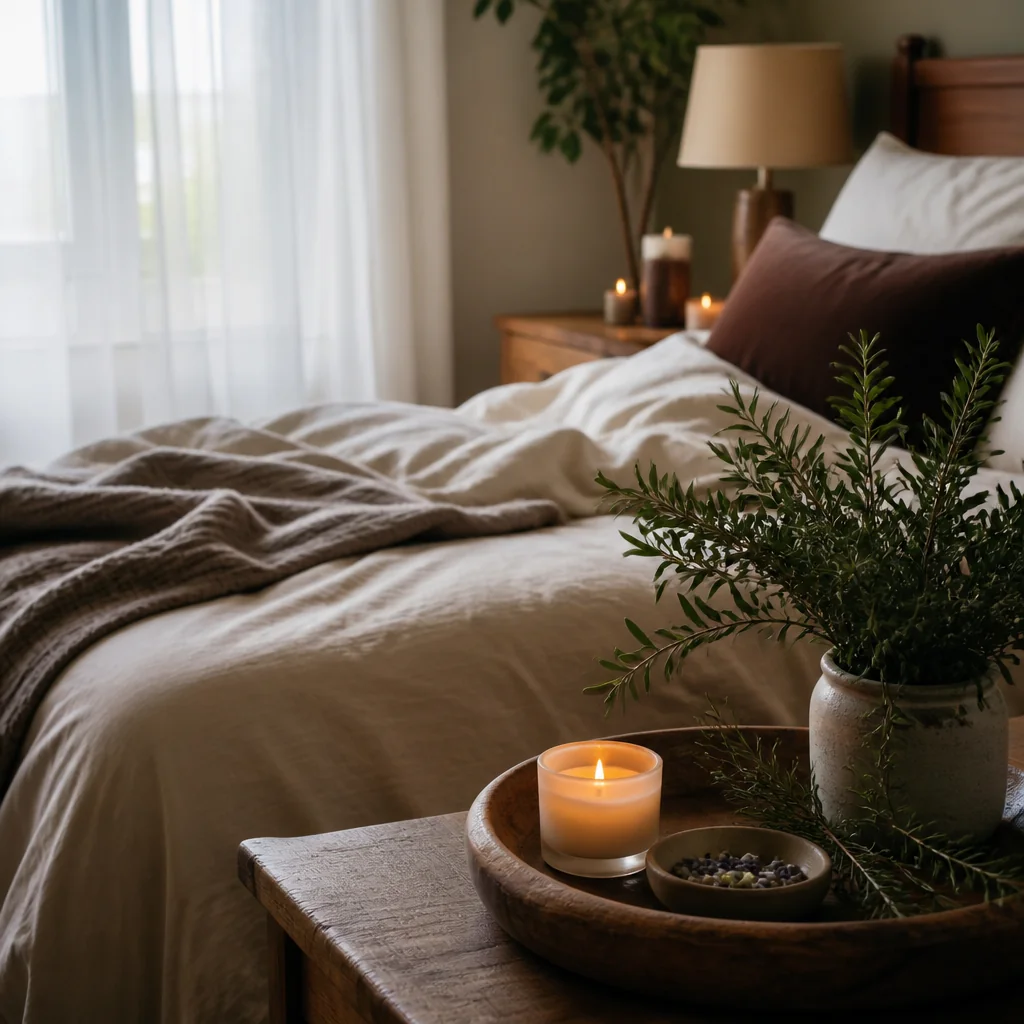
This one does nothing in photographs, which is exactly why it gets skipped.
The value is in the repetition, not the price. Light the same candle at the same hour, say 8 PM, and within a couple of weeks the smell starts working as a signal rather than a decoration. A mid-range soy candle costs $15 to $25 and burns 40 to 60 hours, so nightly use gets you a month or two out of one jar. Give it a nightstand with a foot of clear space, away from curtains and bedding, and blow it out before you lie down; if you tend to fall asleep reading, a flameless candle on a timer gives the same cue.
Burn it properly or it dies early. On the first light, leave it going about an hour per inch of jar diameter so the melt pool reaches the glass, otherwise it tunnels down the middle and you lose a third of the wax to the sides. Trim the wick to a quarter inch before each burn, stop at four hours, and put it out before you're in bed rather than after.
Keep the notes quiet. Cedar, juniper and sandalwood hold up in a room under 150 square feet, while heavy vanilla or bakery scents turn cloying in that little air. If an open flame is out of the question, a reed diffuser at $20 to $30 covers the same ground for two to three months.
Plants Make a Bedroom Feel Lived In
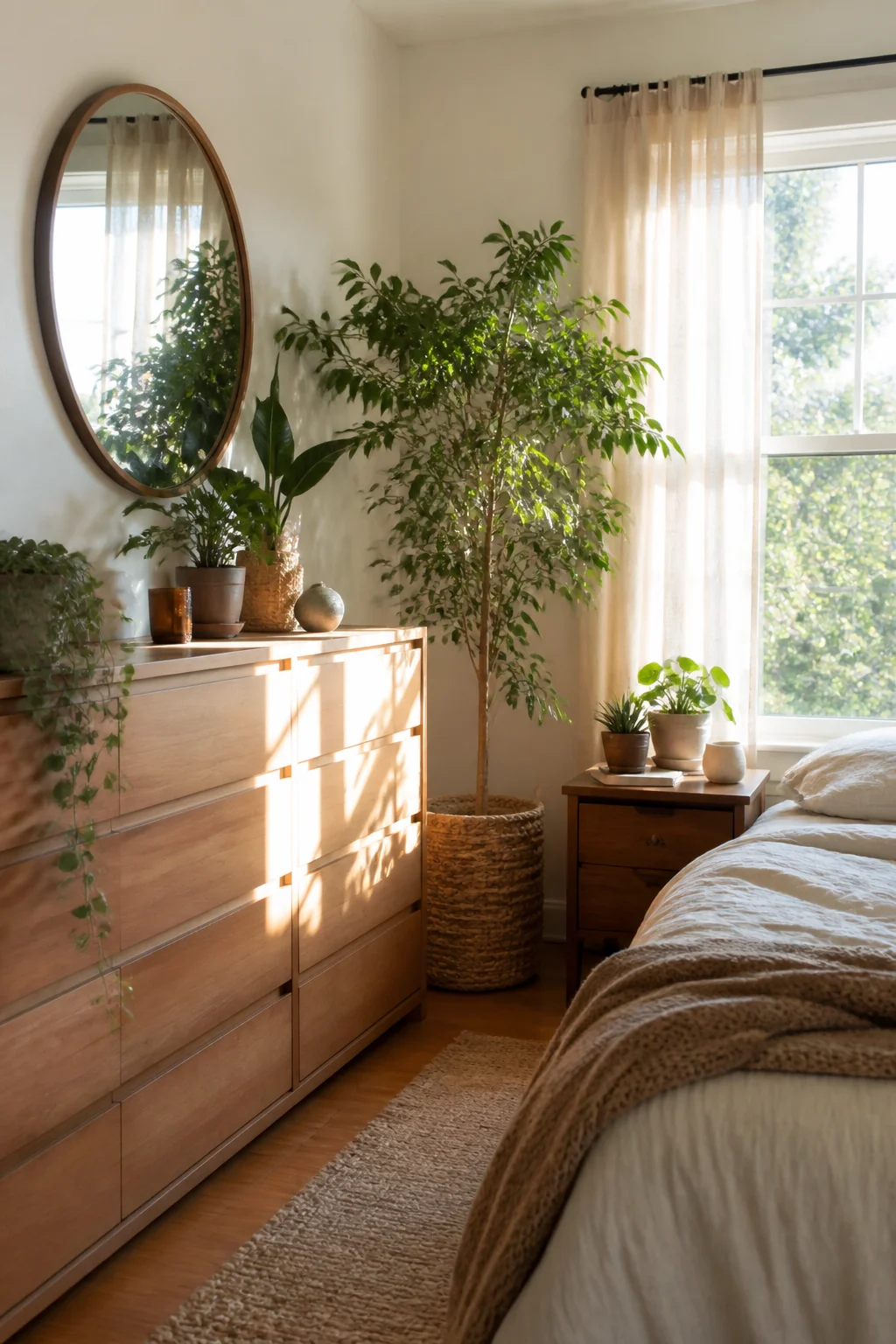
Four plants at three different heights do more for a room than one big one in a corner: something trailing on the dresser, something upright by the window, something small on the nightstand.
Choose for the light you have rather than the photo you liked. Pothos ($8 to $12 in a 4 inch pot) and snake plants ($20 to $30 in a 6 inch) both tolerate the dim corner most bedrooms offer, and both go three to four weeks between waterings. A fiddle leaf fig is the one that punishes you: it wants bright indirect light all day, and in a north-facing room with the door usually shut it starts dropping leaves inside a month. That's a $60 to $120 lesson.
Bedrooms dry out slowly, because the air is still and the blinds are often down, so drainage decides whether these survive. Keep each plant in its nursery pot with holes and set that inside the decorative one. Check toxicity before you buy, too: the ASPCA lists both pothos and snake plants as toxic to cats and dogs, which matters when the pot sits at pillow height. A spider plant is the pet-safe swap, though it wants a brighter spot near the window than a snake plant does.
The Bedding Matters More Than You Expect
Sheets touch you for eight hours a night. Nothing else in the room gets that kind of contact, which is why a change here registers faster than new furniture does.
Linen is the year-round pick. Flax fibers are hollow and loosely woven, so the same set breathes in August and holds a layer of warm air in January, and it softens with every wash instead of wearing thin. A queen set runs $150 to $250, with Parachute sitting near $200. If that's out of range, percale cotton at a 200 to 300 thread count costs $60 to $120 and sleeps cool and crisp, while sateen in the same price band drapes heavier and feels warmer against your legs.
Ignore anything advertising a thread count above 600. Those numbers usually come from multi-ply yarns counted twice, and the denser weave traps heat. Skip fabric softener as well, since it coats the fibers and kills the absorbency you paid for. Wash cool, tumble low, and pull linen out slightly damp so it finishes soft rather than board-stiff. Polyester blends are the ones that pill along the hips by month four.
Curtains That Close the Room In at Night
After dark, an uncovered window turns into a black rectangle, and a bedroom with one never quite settles. Heavy curtains drawn across it do what blinds can't: the fabric softens the hardest edge in the room, and the folds catch lamplight instead of reflecting it back as glare.
Go for fullness rather than pattern. The combined width of the panels should run about two to two and a half times the width of the window, or they hang flat like a sheet. Mount the rod well above the frame and let it run 8 to 12 inches past the casing on each side, so the open curtains rest against the wall and the whole window stays clear by day. A lined panel, or a separate blackout liner behind it, keeps out streetlight and early sun and hangs with more weight than an unlined one. Let the hem touch the floor or stop just above it. Our curtain size calculator works out the rod length and panel widths for your window.
A Rug Where Your Feet Land First
The first thing you touch in the morning is the floor. On bare boards or tile in January, that first step undoes a lot of the warmth the rest of the room has built up.
Put the rug under the lower two-thirds of the bed so it shows on both sides and at the foot. For a queen, an 8 by 10 turned with the long side across the bed leaves about two and a half feet showing on each side; a king wants a 9 by 12. In a tight room, two runners about 2.5 by 7 feet, one along each side, cover the same ground. Wool is the fiber to look for here, because it springs back under bare feet and softens the echo a hard floor gives a sparse room. Jute and sisal look the part but feel scratchy first thing in the morning. A thin rug pad stops the whole thing creeping toward the door. To check the size against your own bed, try our rug size calculator.
Cool Air, Warm Bed
The most comfortable version of cozy is a slightly cool room with a deep, warm bed, and it's also the one people sleep best in: the Cleveland Clinic puts the ideal bedroom temperature at 60 to 67°F, since a cooler room supports the steadier stages of sleep.
Set the thermostat into that range at night and let the bedding do the warming. Build it in layers you can adjust without getting up: a flat sheet, a light quilt or coverlet, then a duvet or the weighted blanket folded across the foot of the bed. When you wake up hot at 3 a.m., you push one layer down instead of lying there sweating under a single heavy comforter. In winter a wool blanket between the quilt and the duvet adds warmth with very little weight. In summer the duvet goes to the closet and the quilt does the work alone.
Natural Materials Within Arm's Reach
Look at what sits closest to you when you're in bed: the nightstand, the lamp base, the headboard. If those are glossy laminate, chrome and plastic, the room reads cool no matter how warm the bulbs are.
Swap one or two of them for natural materials. A wood nightstand, a ceramic or stoneware lamp base, a rattan tray for your glasses and book, a wool throw over the end of the bed. Matte surfaces like these diffuse warm light instead of throwing it back as hard highlights, and wood or wool feels warmer under your hand than metal does at the same room temperature, because it draws less heat away from your skin. You don't need to replace furniture to get there. A linen runner across a laminate dresser, or a wood tray on a glass-topped nightstand, changes what your hand lands on in the dark.
Give the Daily Clutter a Lid
Chargers, receipts, hair ties and the clothes that aren't dirty enough to wash are harmless until they're all in view from the pillow, and that's when the bedroom starts feeling like the last chore of the day.
You don't have to get rid of any of it, just give it somewhere to close. A lidded basket for the worn-once clothes keeps the chair a chair. A nightstand with a drawer, or a small box with a lid on an open one, takes the cables, pills and lip balm out of sight. A cord clip behind the nightstand keeps the charger lead from trailing across the floor. Under the bed, one lidded bin holds the spare blanket and the out-of-season pillows. The room still looks lived in, but the last thing you see at night is no longer a list of jobs.
Keep It Simple
Your bedroom is never going to look like a magazine. There's a laundry basket in the corner and a stack of books on the nightstand that never quite makes it to the shelf. That's a room being used.
Taken one piece at a time, cost and payoff line up in roughly this order: warm bulbs at $12, a bedside lamp near $35, sheets at $60 to $200, then texture on the bed and the wall behind it. The full list here lands somewhere between $400 and $600 depending on whether you go for the weighted blanket and the good linen, and none of it needs a contractor or a landlord's permission.
The failure mode isn't spending too little. It's buying all of it in one weekend, before you know what the room is short of after dark. Live with the lighting for a week and half of what looked essential turns out to be a lamp standing in the wrong place. The other half gets more use once the light is right.
Light is the cheapest change on this list and the one you register the same evening: a 2700K bulb costs a few dollars and the whole room reads differently after sunset. Texture and bedding can wait until you know what's still missing.
Keep this guide handy
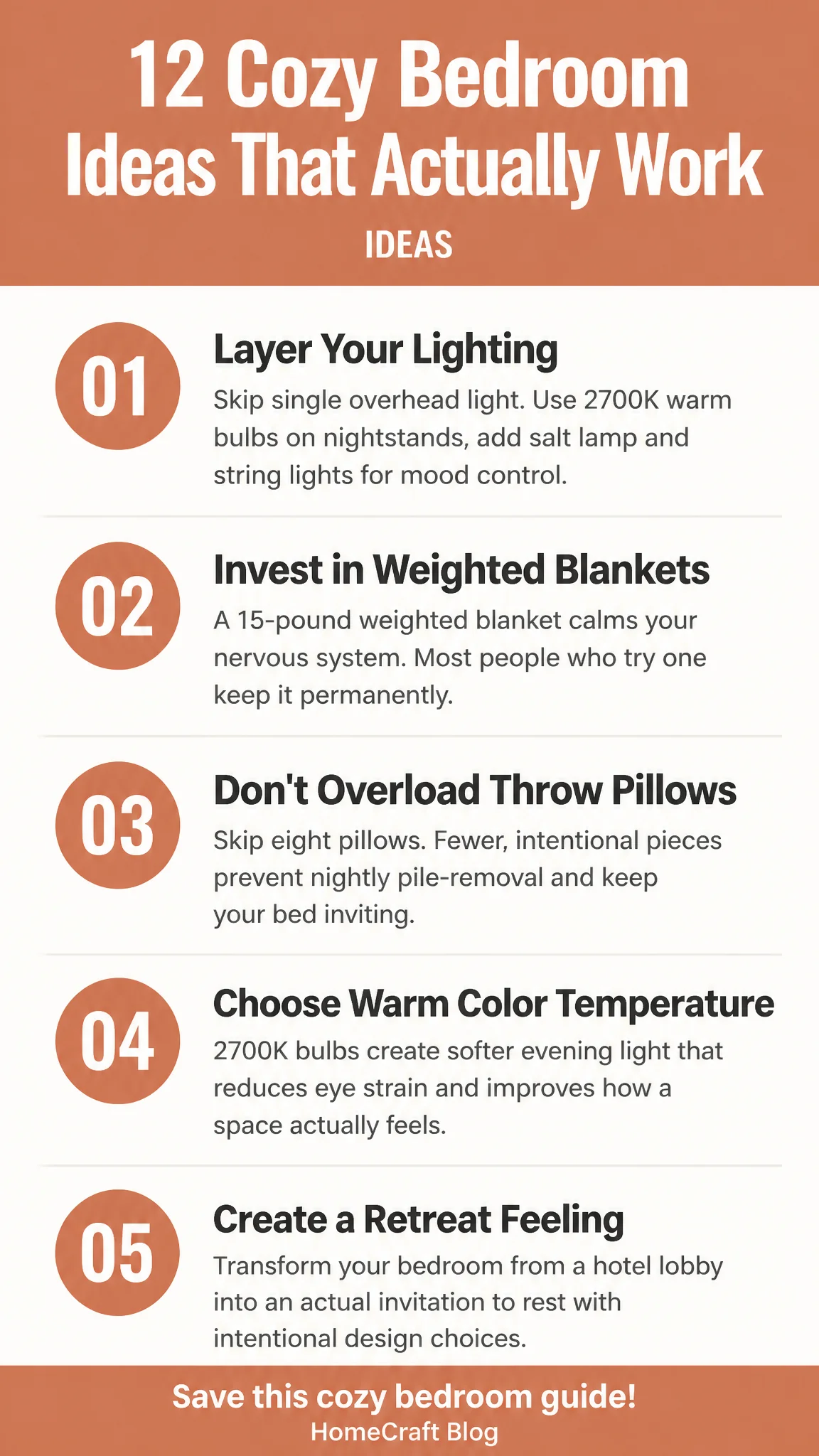
For specific low-cost picks, our bedroom decor ideas on a budget go piece by piece, and the DIY home decor ideas cover projects you can make yourself. When the room needs more color than texture, the fall bedroom decor ideas bring in deeper bedding tones for the colder months.