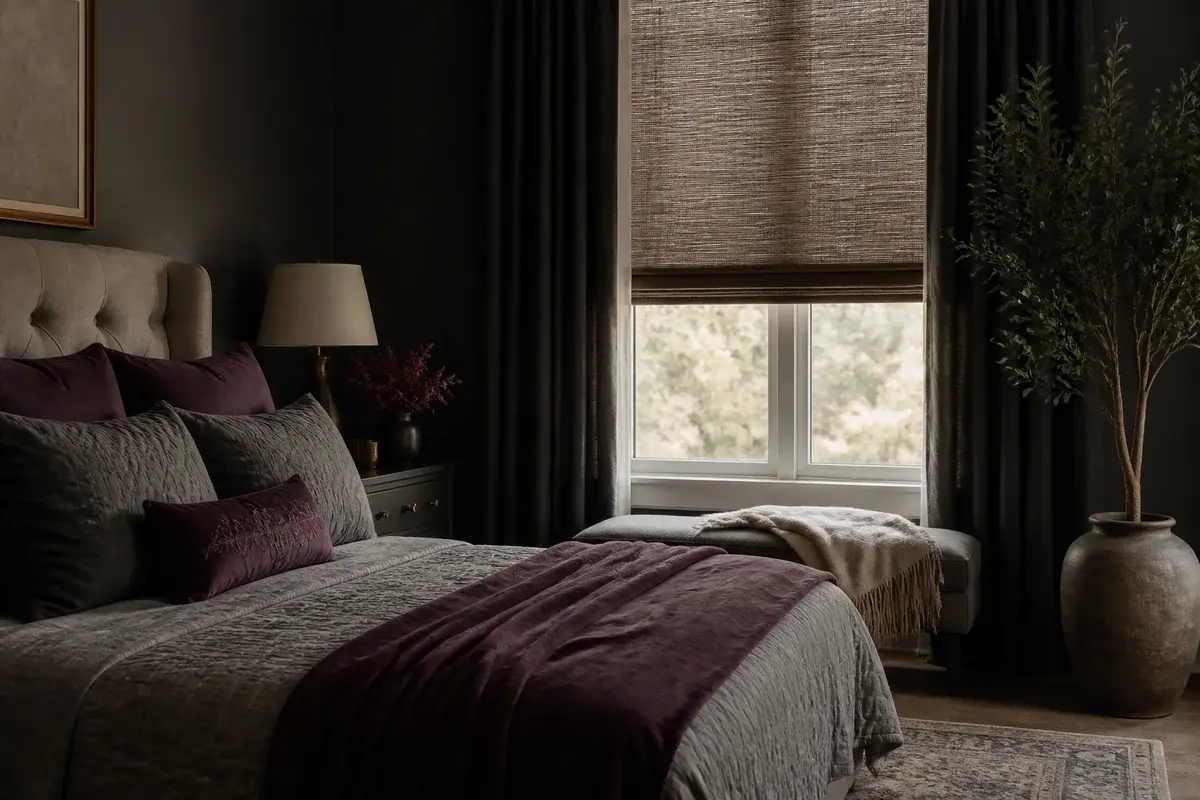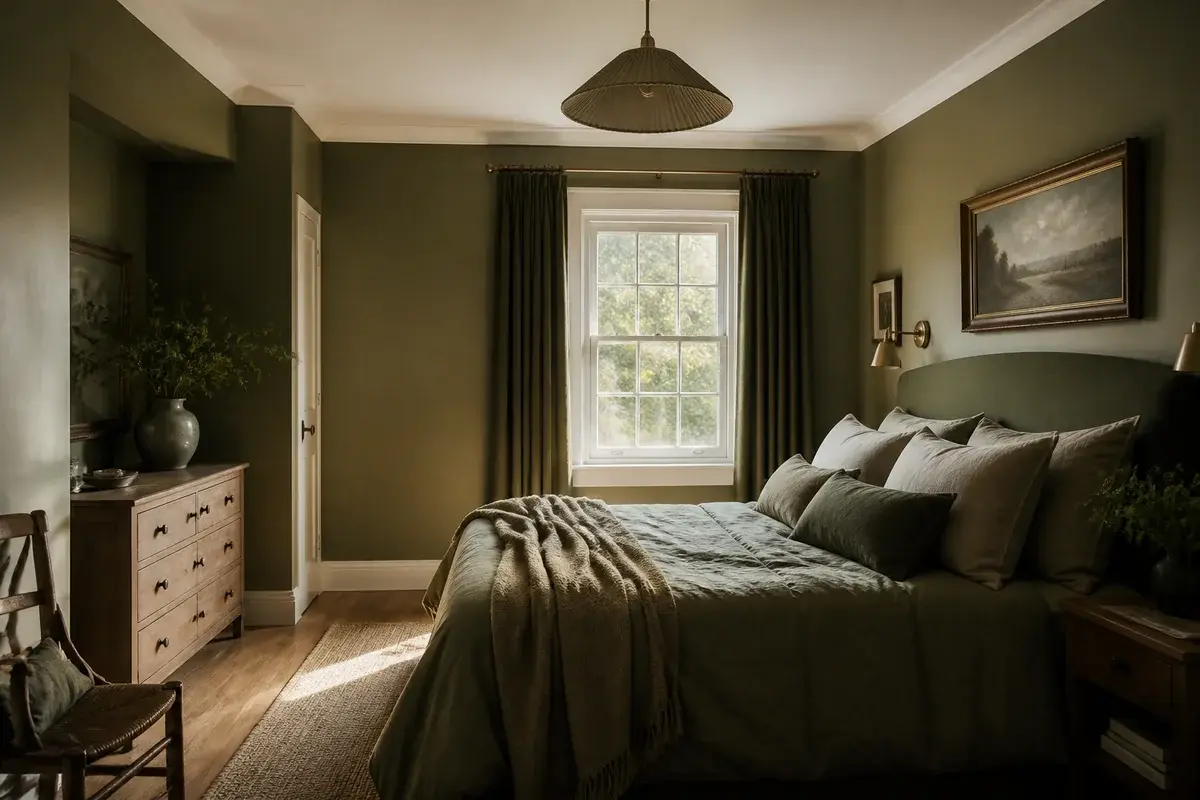
7 Bedroom Decor Ideas on a Budget Under $200
Refresh your bedroom for under $200. Seven budget decor ideas with real prices, the measurements that make them work, and the trade-offs to know first.
This post contains affiliate links. As an Amazon Associate I earn from qualifying purchases. If you buy through our links, we may earn a commission at no extra cost to you.
A bedroom can sit half-finished for years because every idea seems to begin with buying furniture. Most of what makes a room feel considered actually comes down to a few cheap decisions made in the right order: color on one wall, light at three different heights, and bedding cut large enough to hang properly. Layer in mood lighting and throw pillows once those bones are right, and the room reads as chosen rather than accumulated. Everything below fits inside $200 total, with prices and measurements attached so you can see where the money goes and which parts you're free to skip.
1. Start with Paint (the One Splurge That's Worth It)
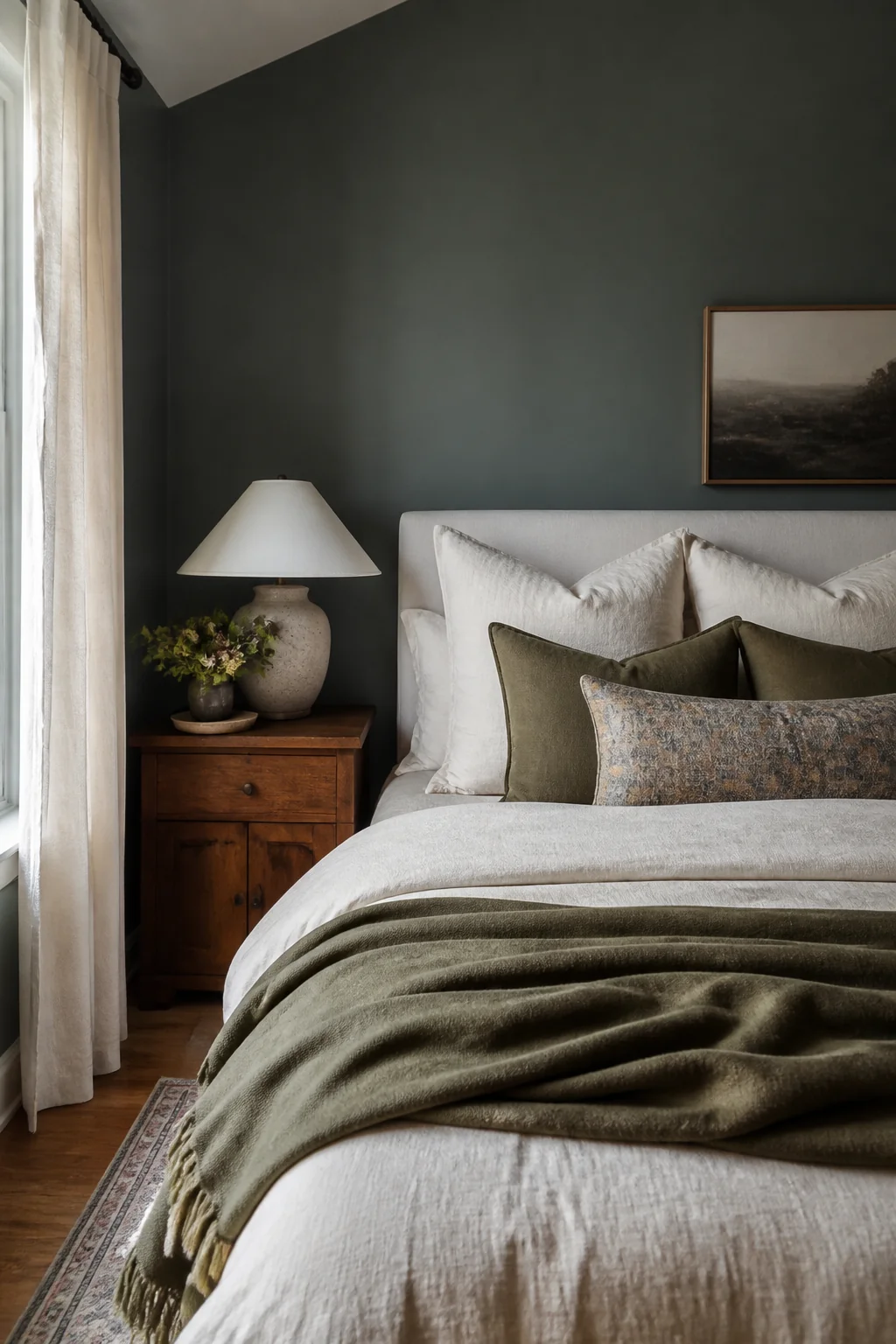
Paint is the cheapest square footage in the house. A gallon of mid-tier interior paint, something like Behr Premium Plus or Benjamin Moore Regal Select in a deep navy, runs $35 to $45. Put one can against a wall 12 feet wide and 8 feet tall, only 96 square feet, and its 400 square feet of reach gives you two coats plus enough left in the can for touch-ups next year.
You don't have to paint the whole room. The wall behind the headboard is enough, and it's the one wall you never look at while you're in bed, which is exactly why an accent wall goes there. A dark color behind white bedding makes the bedding look chosen instead of left over.
The order matters: wipe the wall down with a damp cloth, tape the ceiling line and baseboard, cut in the edges with a 2-inch angled brush, then roll the middle with a 3/8-inch nap roller. Give it four hours between coats.
Skip the $18 bargain gallon. It carries less pigment and less binder, so it dries streaky over a color change, and the third coat costs you the savings plus another afternoon.
2. Thrifted Nightstands, a Matched Pair Under $40
A pair does more than either piece alone. Goodwill, Habitat ReStore, estate sales and Facebook Marketplace all turn up solid wood nightstands in the $12 to $25 range, so a matched set lands near $30 against $130 or more for the cheapest new pair.
Measure before you go. You want the top surface within about 2 inches of your mattress height, which for most beds means a nightstand 24 to 28 inches tall. Keep the depth to 16 or 18 inches so the walkway survives: 24 inches of clear floor beside the bed is the minimum that doesn't feel tight, and 30 is comfortable.
Pull the drawer all the way out before you pay. Particleboard that has swelled at the back corners has already taken on water and will keep coming apart. Scratched solid wood is fine, and a wobble is usually loose corner blocks you can fix with wood glue and a clamp overnight.
Two different pieces can work if the heights match and the finishes are in the same family. What reads as unfinished is one real table on one side and a stack of books on the other.
3. Layer Three Light Sources Instead of One
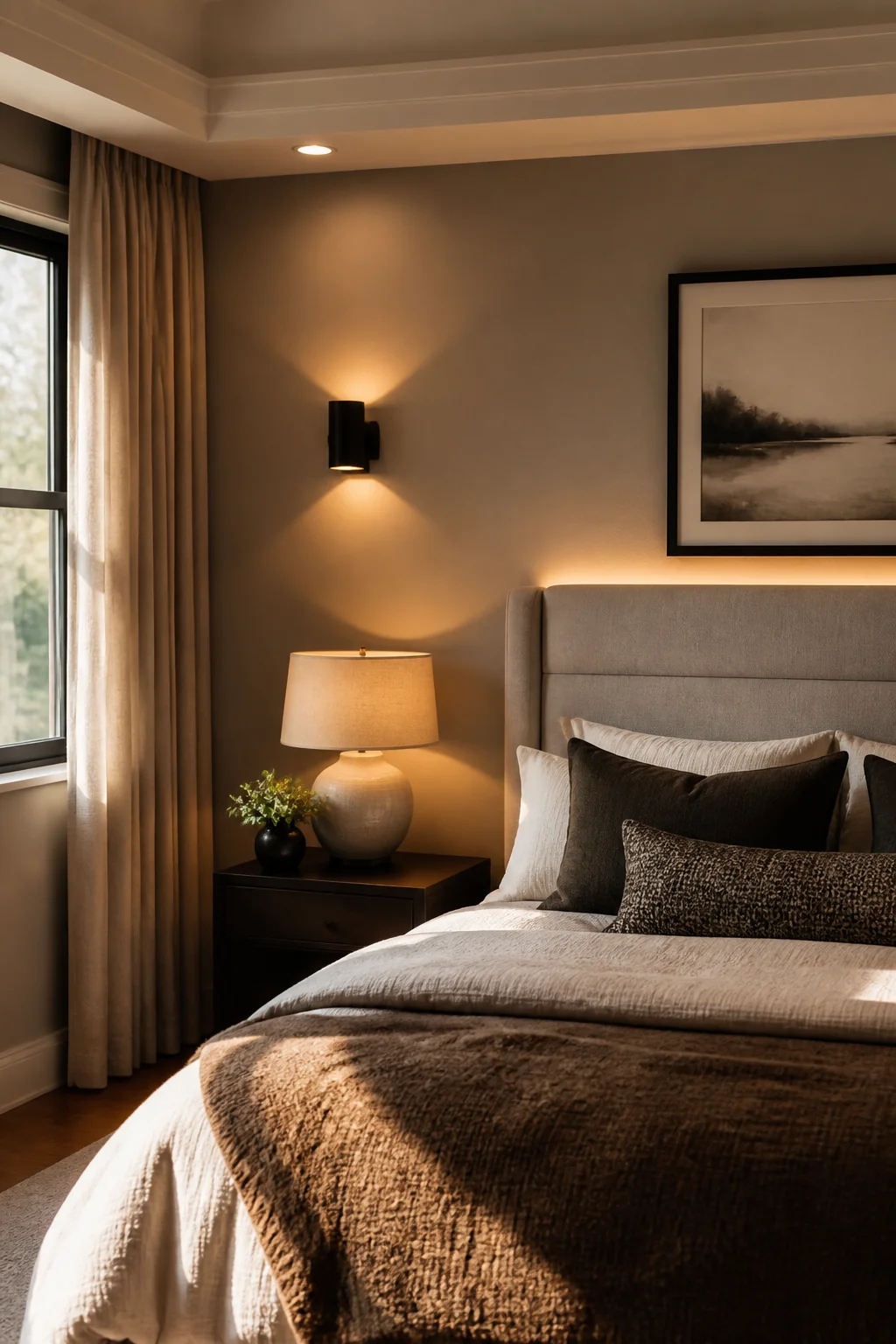
A single ceiling fixture lights the floor and throws every face into shadow, which is most of why a bedroom feels like a waiting room after dark. Fixing it costs roughly $40, and it's really a question of height: one source low, one at the bedside, one overhead.
A strand of warm white fairy lights, about $12 for a 30-foot USB set, draped along the top of the headboard handles the low ambient layer. A small table lamp from Target runs about $18. The bulb matters more than the lamp does: choose 2700K warm white, and 450 to 800 lumens if you read in bed. Sit the bottom of the shade near shoulder height when you're propped against the headboard, which is usually 24 to 26 inches above the mattress, so the light falls on the page and not in your eyes.
Anything rated 4000K or higher reads as fluorescent no matter how good the fixture looks. If your overhead is hardwired with no dimmer, a plug-in dimmer for a lamp costs about $15 and does most of that job for you.
4. New Bedding Doesn't Have to Be Expensive
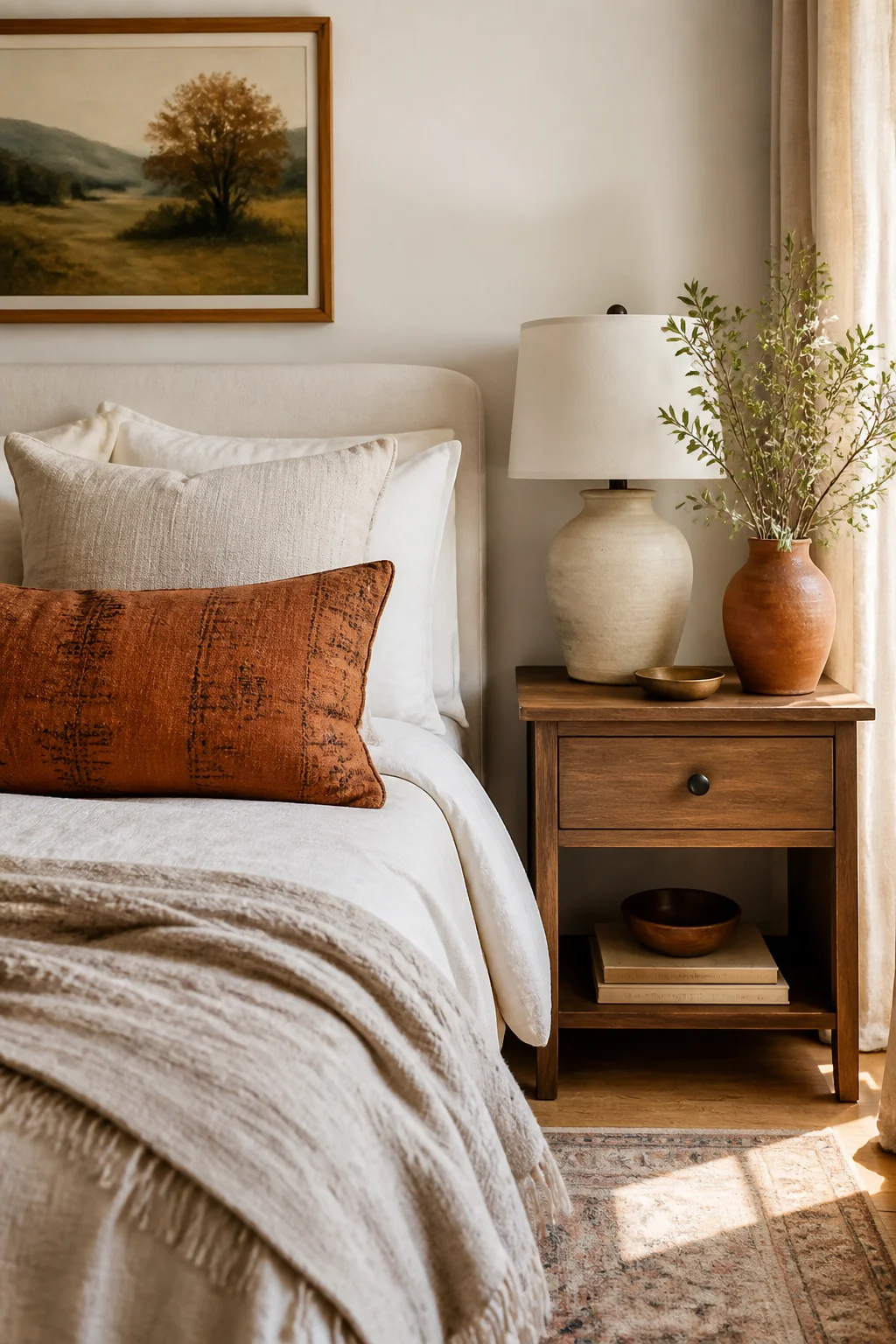
A comforter set on sale at Wayfair or Target sits around $60, and it shifts the room further than anything else at that price simply because the bed is the largest flat surface in it. Thin, flat bedding is what makes a room look like a college dorm room long after you've left one.
Size up. A queen comforter measures about 90 by 90 inches while a full mattress is 54 inches wide, so a queen on a full bed hangs down both sides instead of stopping at the edge of the mattress. The same trick works with a king comforter on a queen bed.
Fabric decides how it sleeps. Cotton percale is crisp and breathes, which suits warm sleepers; sateen is smoother and holds more heat; linen looks rumpled by design and softens with every wash. Microfiber is the cheapest and pills fastest where your knees rub.
Wash it before the first night, cold water, low tumble. And check that a duvet cover has interior corner ties, because a cover without them bunches into one end of the shell within a week.
5. Curtains or a Fabric Backdrop Create Instant Coziness
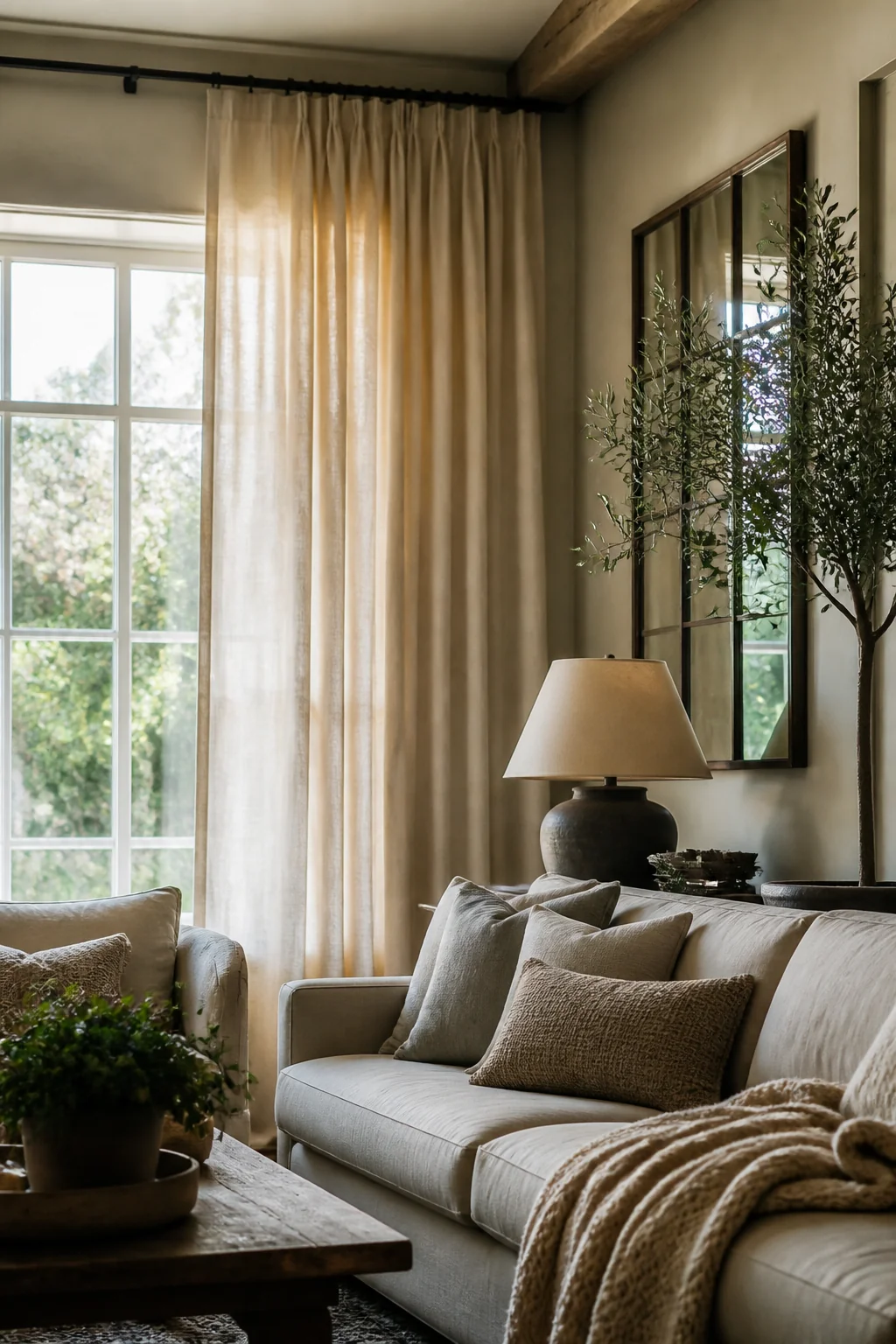
Blackout panels run about $25 a pair and are the one purchase here doing two jobs at once. The lining stops the 6 AM light, and the pocket of still air trapped between fabric and glass slows the heat moving through the window in both directions, which is the same reason a lined jacket beats an unlined one.
Hanging height separates curtains that look right from curtains that look apologetic. Lift the rod clear of the frame by 4 to 6 inches, or take it halfway to the ceiling if you have the bare wall for it, and let it overhang the casing by 8 to 12 inches on each side so the open panels bunch on plaster rather than over your daylight. Total panel width wants to be roughly twice the window width so they still look full when drawn back. Standard lengths are 84, 95 and 108 inches; aim for a half inch of clearance above the floor.
Renting? A spring tension rod inside the window frame holds a light panel with no hardware in the wall, and a length of fabric on a second tension rod behind the bed gives you the same soft backdrop without touching the paint.
6. Mirrors Reflect Light and Make Spaces Feel Bigger
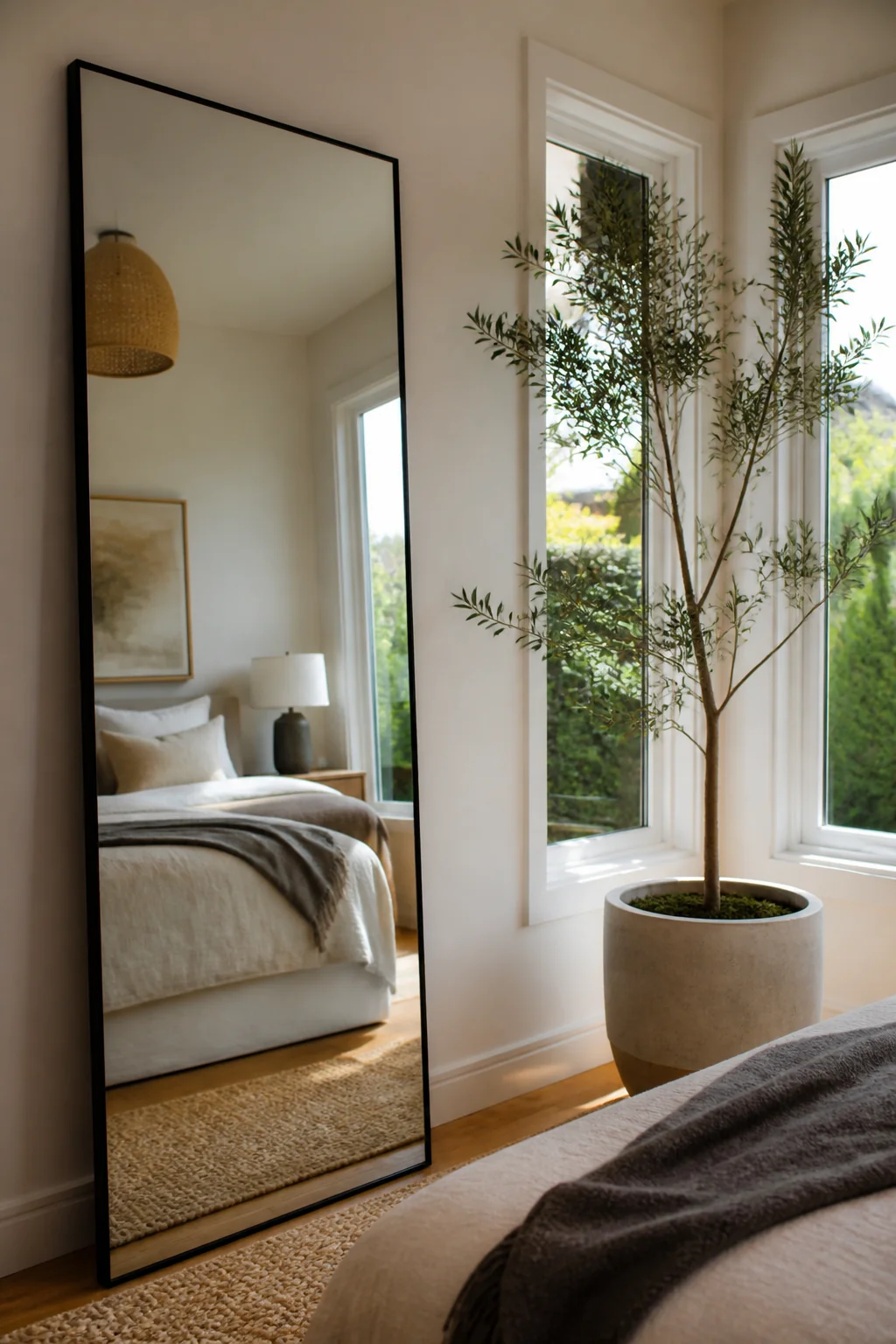
A 24-inch round mirror at Target costs about $30. Put it on the wall that faces your window rather than the wall beside it. Daylight then has to cross the room, hit the glass and bounce back, which throws light into the corner that never gets any, and the reflected slice of window gives a blank wall a sense of depth it didn't have.
Anchor it, whichever way you go. A large mirror leaned against a wall or propped on a dresser needs an anti-tip strap screwed into a stud, the same $8 hardware sold for securing bookcases. Hanging it instead, bring the middle of the glass to somewhere around 57 to 60 inches so you meet your own reflection standing up, and use two anchors rated for at least 50 pounds. Over a dresser, leave 4 to 8 inches between the dresser top and the bottom of the frame so the two read as one arrangement.
One caution: a mirror doubles whatever sits in front of it. Aimed at a cluttered corner or the laundry chair, it works against you, and plenty of people find a mirror facing the bed unsettling at night.
7. Textured Throw Pillows and a Blanket ($25-$40)
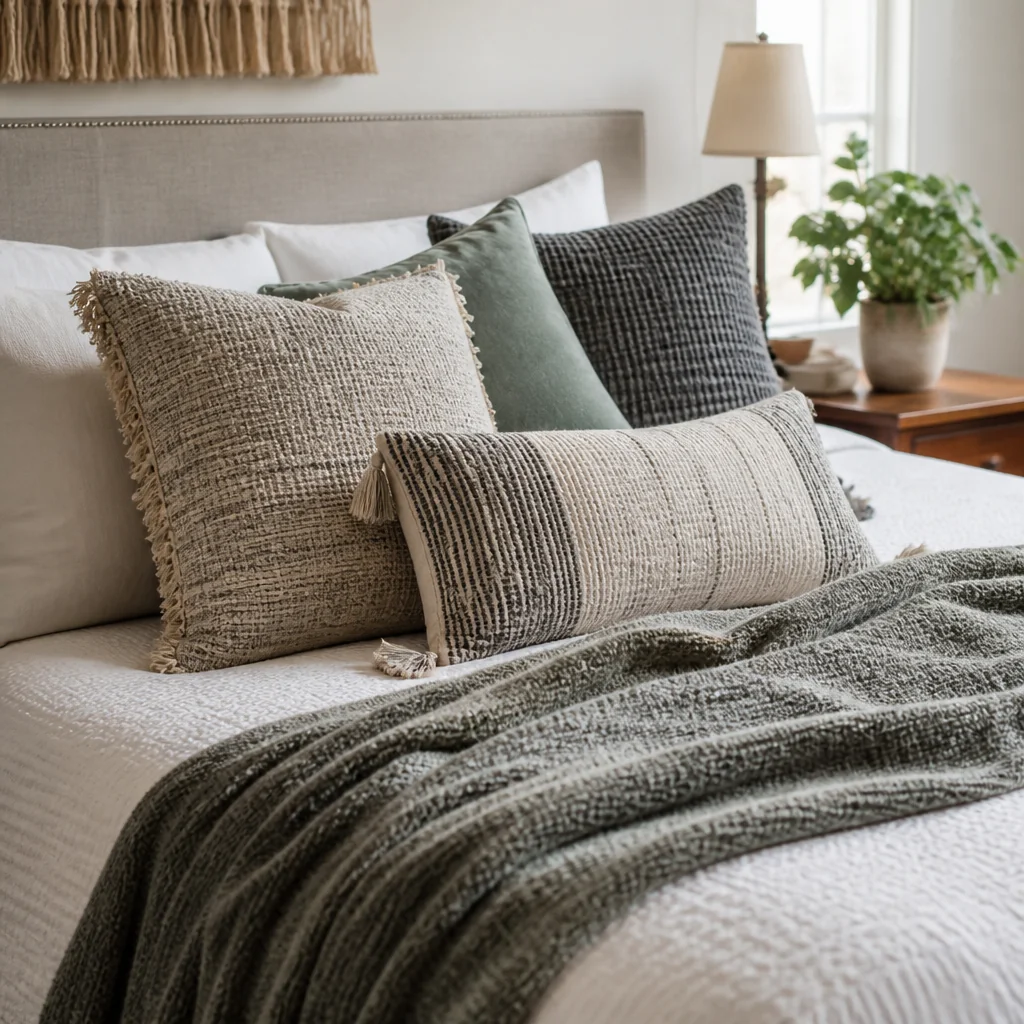
Three pillows and one throw is the whole formula, and texture carries it further than color does. Covers at Target and HomeGoods run $8 to $12 each, and a knit throw is $20 to $30. Buy covers and inserts separately once you've found covers you like, because the swap for a new season then costs $10 instead of $40.
Overstuff them on purpose. Push a 20-inch insert into an 18-inch cover and the corners finally fill, while matching the fill to the cover leaves that flat, half-empty slump no amount of karate-chopping fixes. Down and feather inserts have the most give but need a fluff each morning; polyester holds its shape and slowly flattens, so expect to replace those every couple of years.
Watch the fiber on the throw. Chunky acrylic knits stretch and sag under their own weight once part of the blanket hangs off the mattress. Wool and cotton blends keep their shape, though they shed for the first few washes.
Keep the count to what you can lift off in one armful. Pillows that take two trips end up on the floor by the second night.
If the budget only stretches to one line item, spend it on the paint. Every other idea here sits against the color behind your bed, and $40 of pillows in front of a wall you dislike still looks like $40 of pillows.
Save this for your next project
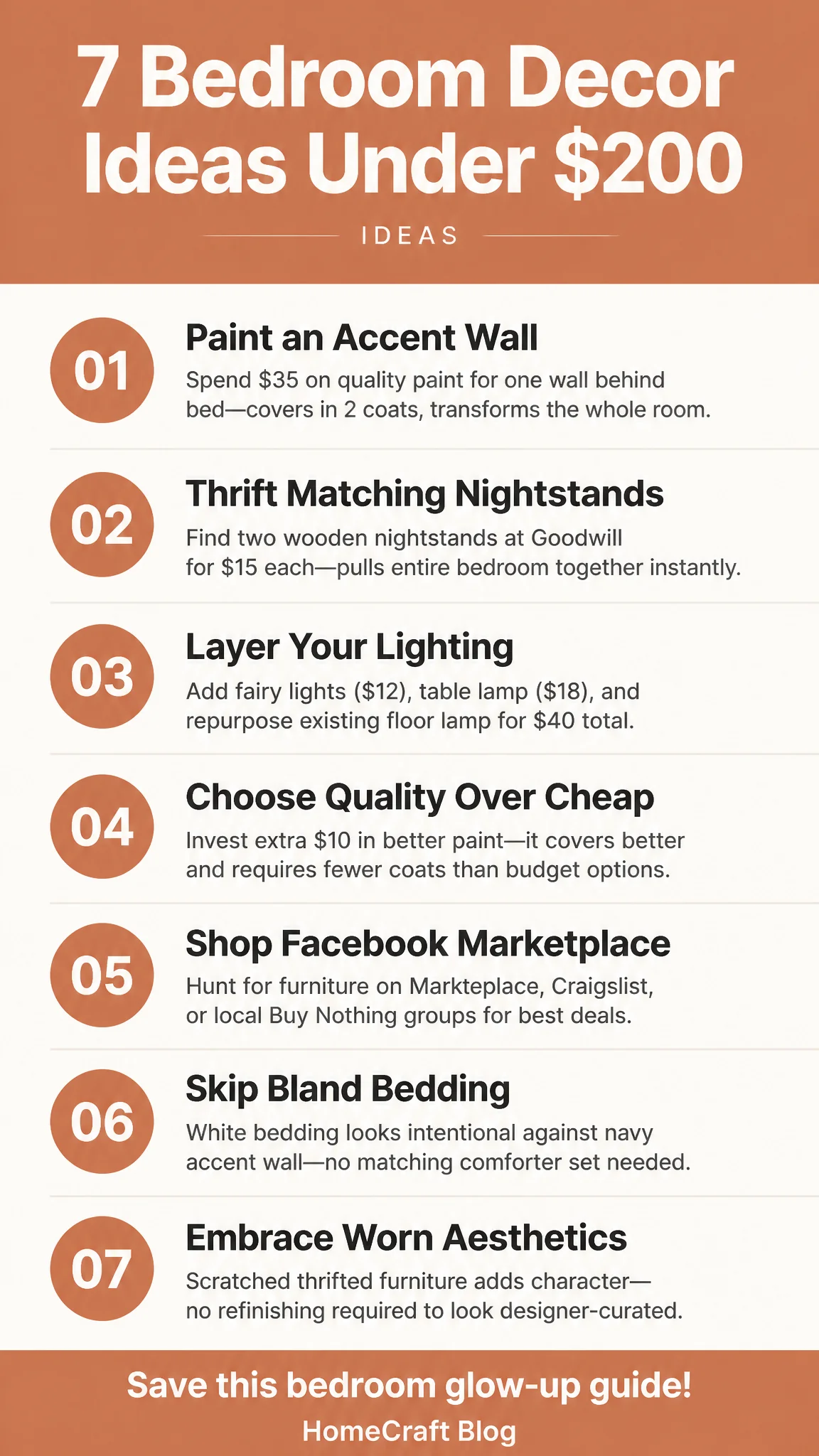
The measurements are what carry the rest. A nightstand at mattress height, a rod hung 6 inches high and 10 inches wide of the frame, a 2700K bulb instead of a 4000K one: none of those cost a dollar more than getting them wrong.