20 Bedroom Accent Wall Ideas for Depth, Color and Texture
20 bedroom accent wall ideas with real paint quantities, roll counts and finish notes, from moody navy and plum to shiplap, grasscloth and damask.
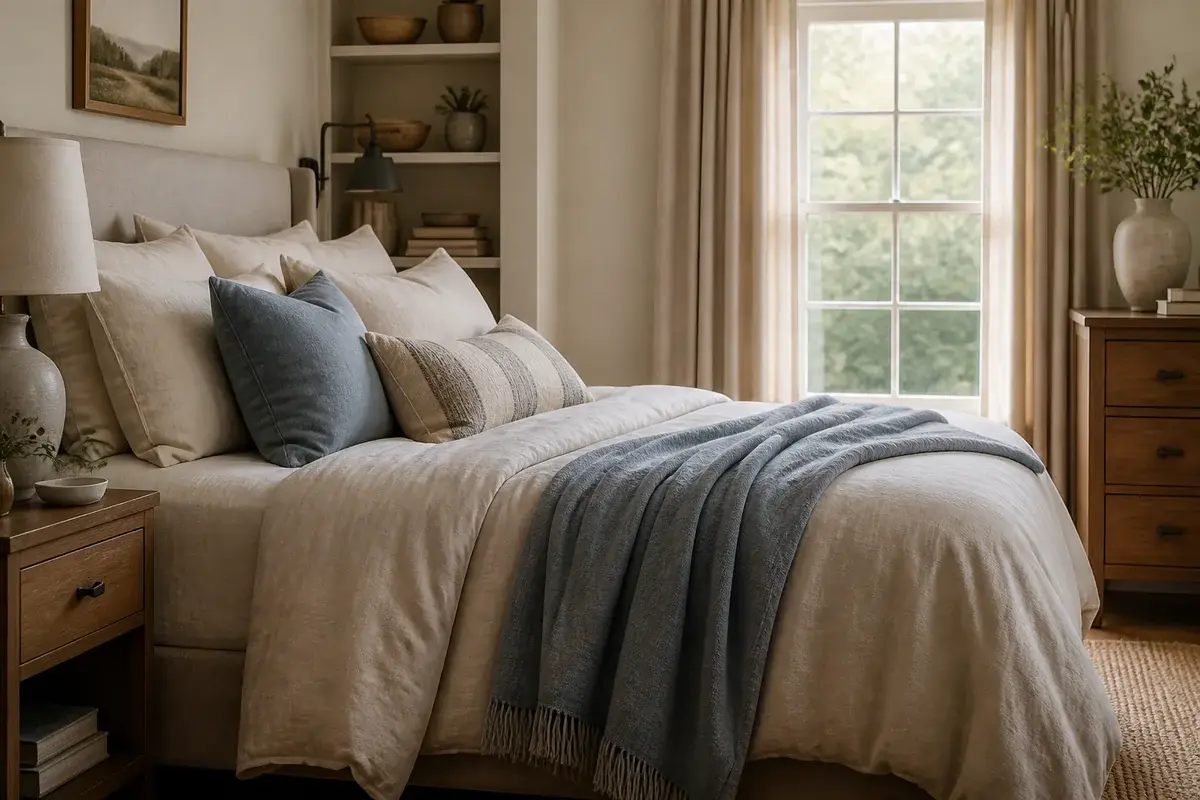
A bedroom can be perfectly nice and still feel flat. Soft greige walls, neutral bedding, nothing wrong with any of it, and nothing pulling your eye anywhere either. One wall in a different color or texture fixes that faster than new furniture does, because it gives the room a front and a back instead of four identical surfaces.
It's also the cheapest structural change available to you. A standard 10-by-8-foot bedroom wall is 80 square feet, and a single gallon of paint covers that twice with plenty left in the can. You're committing a weekend and around $50, not a redesign.
Here are 20 ideas, with the finishes, quantities and trade-offs that come with each.
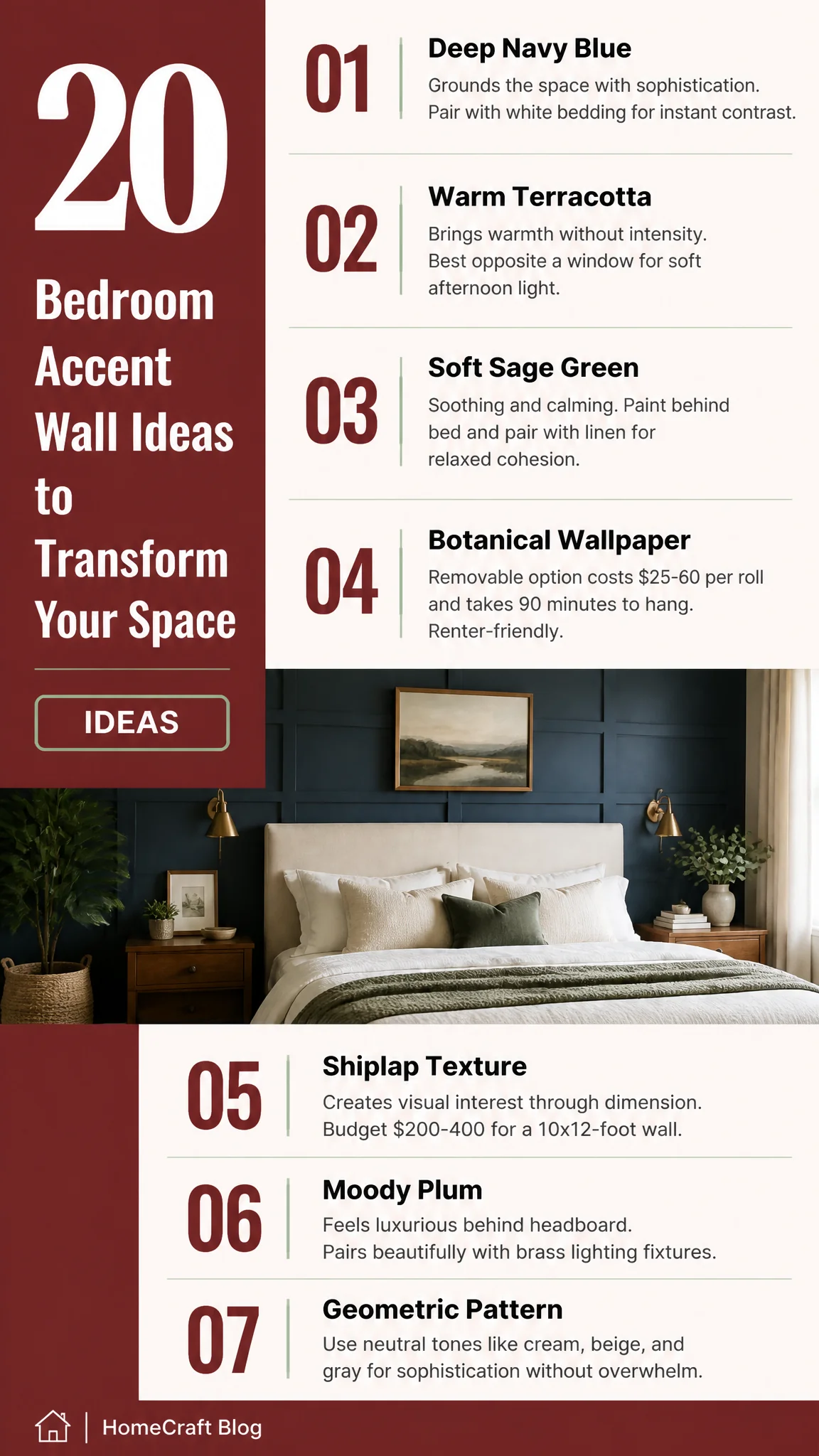
1. Deep Navy Blue for Calm Sophistication
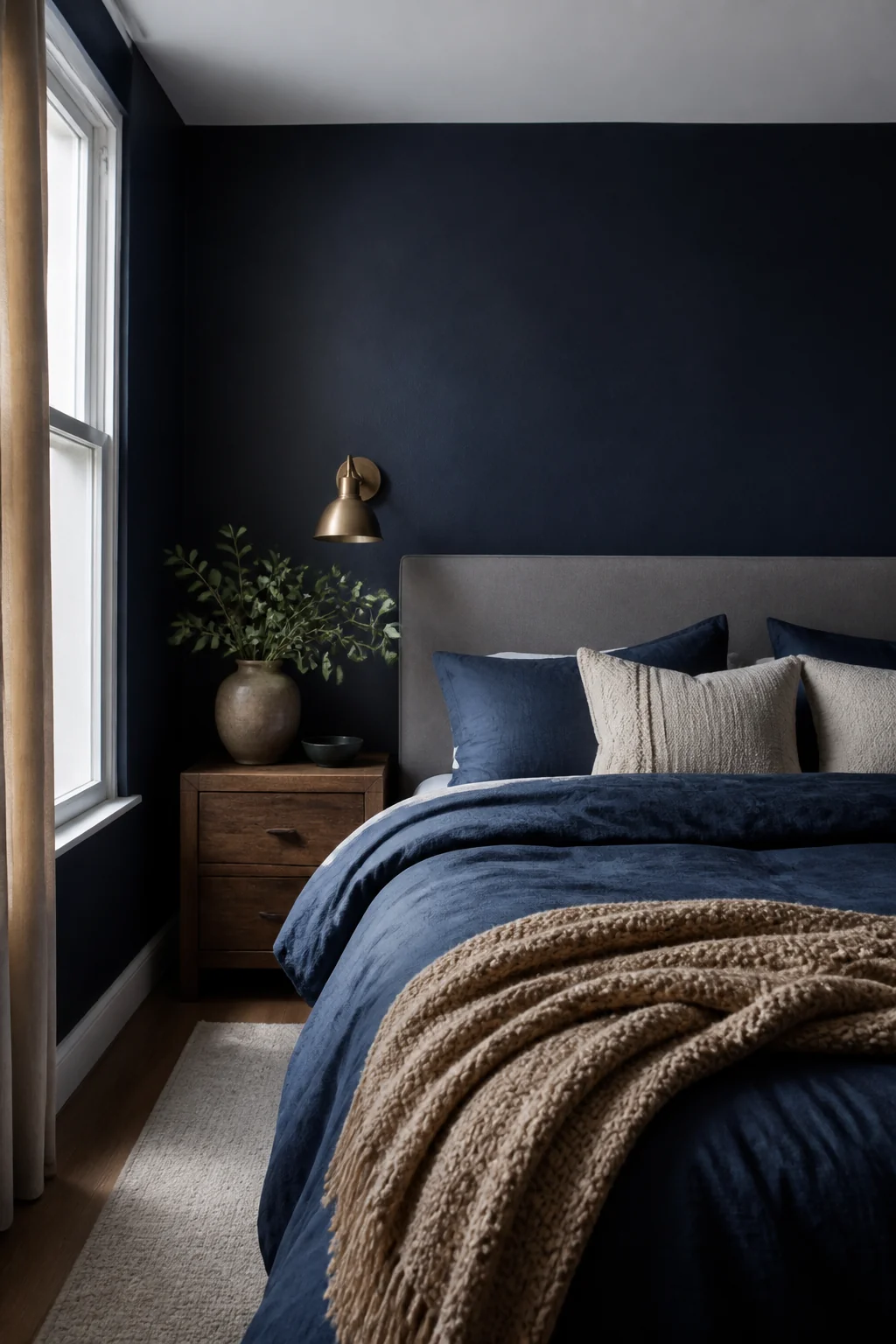
Navy earns its place behind a bed because it reads as shadow rather than as color once the lamps go on, so it grounds the room instead of shouting at it. Pair it with white bedding and the contrast does most of the styling for you.
Plan on two coats, and prime first with a gray-tinted primer if you're covering anything lighter than beige. Deep colors get mixed into a clear or near-clear base with very little white pigment in it, which is exactly why one coat of navy over white dries streaky and blotchy. The tinted primer gives the color something to sit on and usually saves you a third coat. A gallon of quality interior paint runs about $40 to $50 and covers a standard 10-by-8-foot wall twice over.
Pick eggshell rather than flat if the wall sits somewhere you brush past, like beside a doorway. Flat navy shows every scuff, and wiping it leaves a shiny burnished patch you can't rub back out.
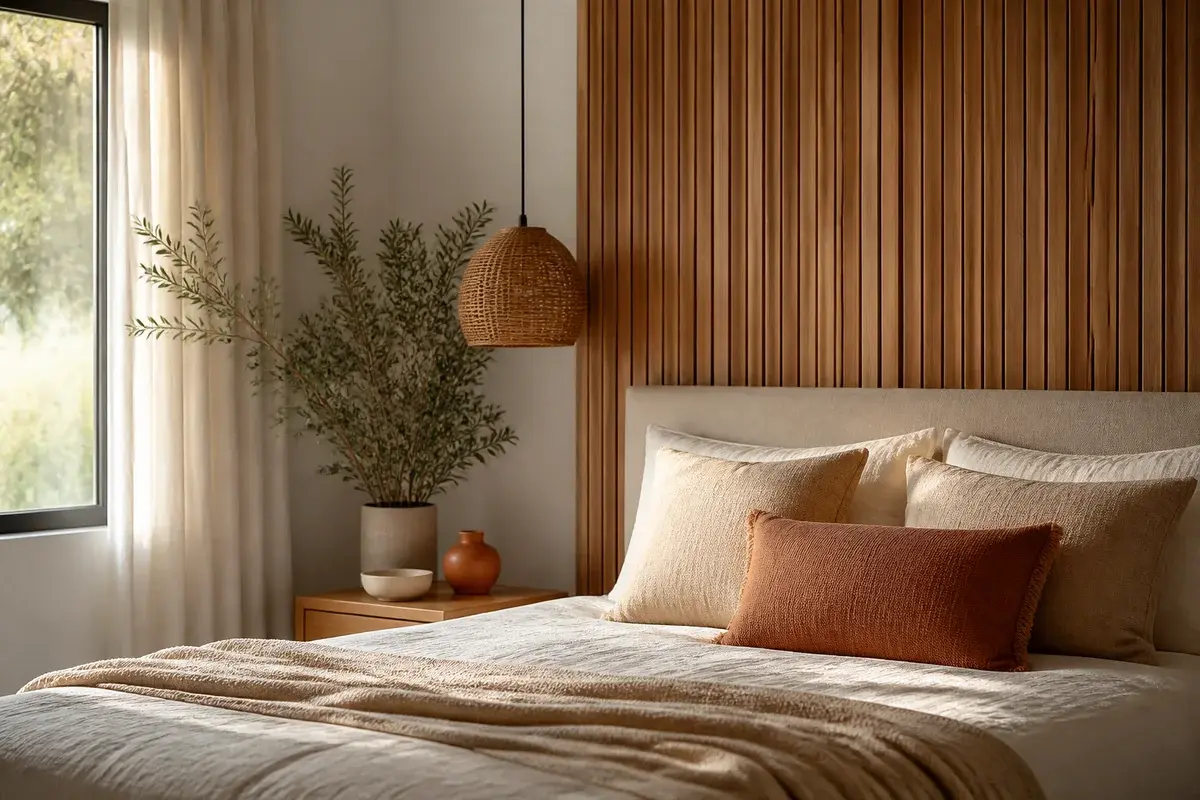
2. Warm Terracotta for Earth-Toned Comfort
Terracotta gives you the warmth of red with the volume turned down, because the pigment carries brown and orange rather than blue. That's what makes it sit so easily beside oak, walnut and rattan.
Light is the thing to watch. On a north-facing wall, where the daylight is cool and unchanging, terracotta can go muddy and faintly pink. On the wall opposite a window it catches warm afternoon light and glows. Before you commit, brush two 12-by-12-inch patches, one near the window and one in the darkest corner of the room, then look at both at 8am, at 4pm, and again under your bedside lamp.
While you're at it, check your bulbs. A 4000K bulb pushes terracotta toward gray; 2700K keeps it warm, and a four-pack costs under $12.
A quart of paint, roughly $20 to $25, is enough to test properly and will often finish a small wall on its own. Eggshell stops the color chalking out in flat daylight.
3. Soft Sage Green for Restful Vibes
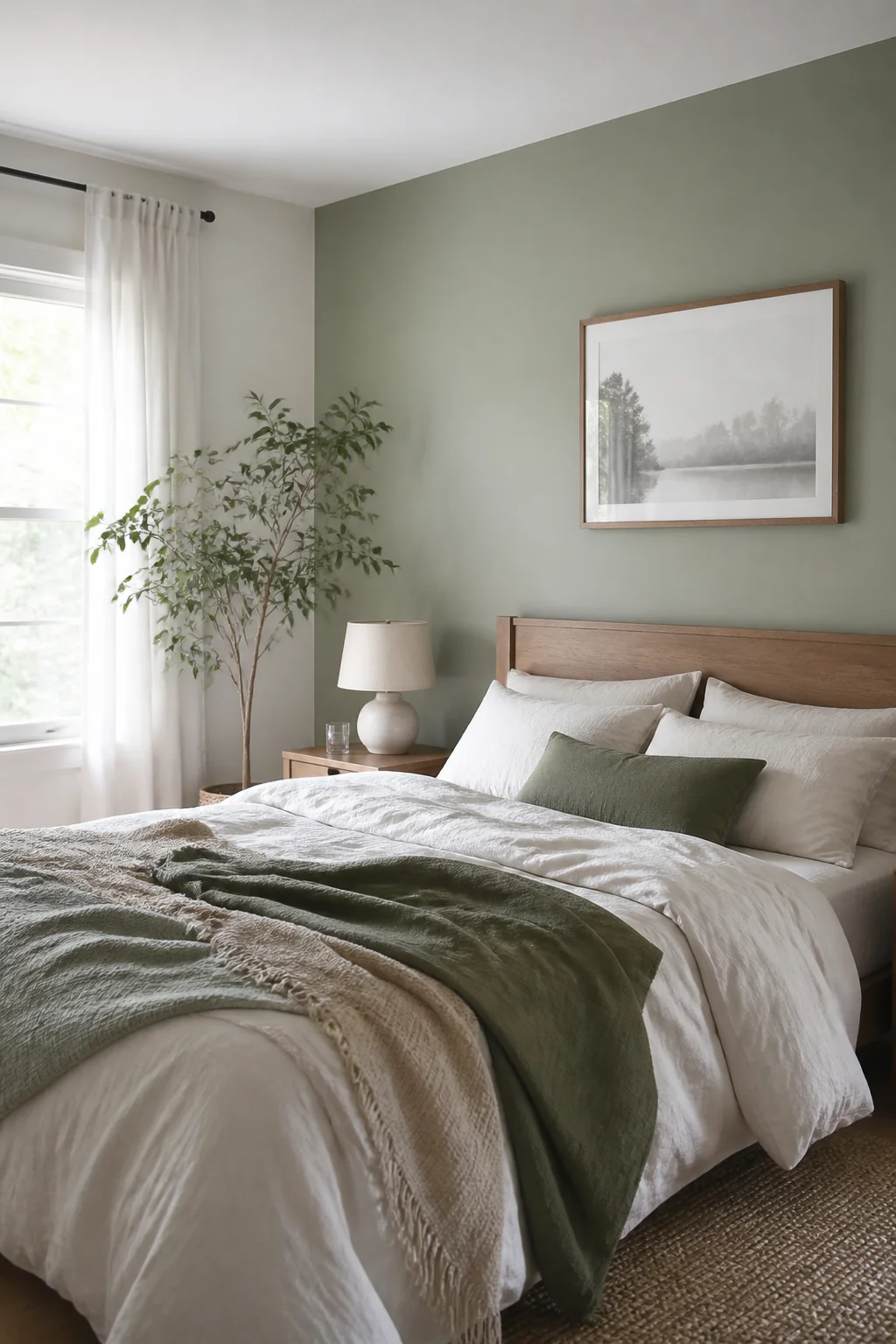
Sage is a green with a lot of gray mixed into it, and that low intensity is the whole reason it reads as soothing rather than leafy. Paint the wall behind your bed so it's the surface you wake up facing, and pair it with linen bedding for that cohesive, relaxed look.
One check before you buy: hold the paint chip flat against your existing trim. A sage with a yellow-green undertone next to warm cream trim can turn slightly sour, while the same green beside a bright white trim stays crisp. If your trim is builder-grade off-white, look for a sage carrying more gray.
Quantities are forgiving here. A 10-by-8-foot wall needs roughly a quart and a half for two coats, so a gallon at $40 to $50 leaves you enough for the nail-hole touch-ups you'll be doing in a year. Label the can with the room name and the date; sage colors are close enough to each other that matching one from memory is hopeless.
4. Charcoal with Matte Finish for Modern Drama
Matte charcoal and glossy black are not the same wall. A matte finish scatters light in every direction, so you get an even field of color with no glare and no reflections picking out every wave in the drywall. Gloss does the opposite, turning a merely average wall surface into a topographic map the moment sun hits it from the side.
In a small bedroom, under about 120 square feet, that light-absorbing softness makes the room feel enclosed in a good way rather than cramped. Keep the ceiling and the other three walls light so the dark wall reads as depth instead of a closed door.
The trade-off is durability. Standard flat and matte paints burnish, meaning a scuff or a wipe leaves a permanent shiny patch. Spending the extra $15 to $20 a gallon on a scrubbable matte is worth it on any wall within arm's reach of a bed, and it's the difference between touching up once a decade and once a season.
5. Wallpaper with Botanical Prints
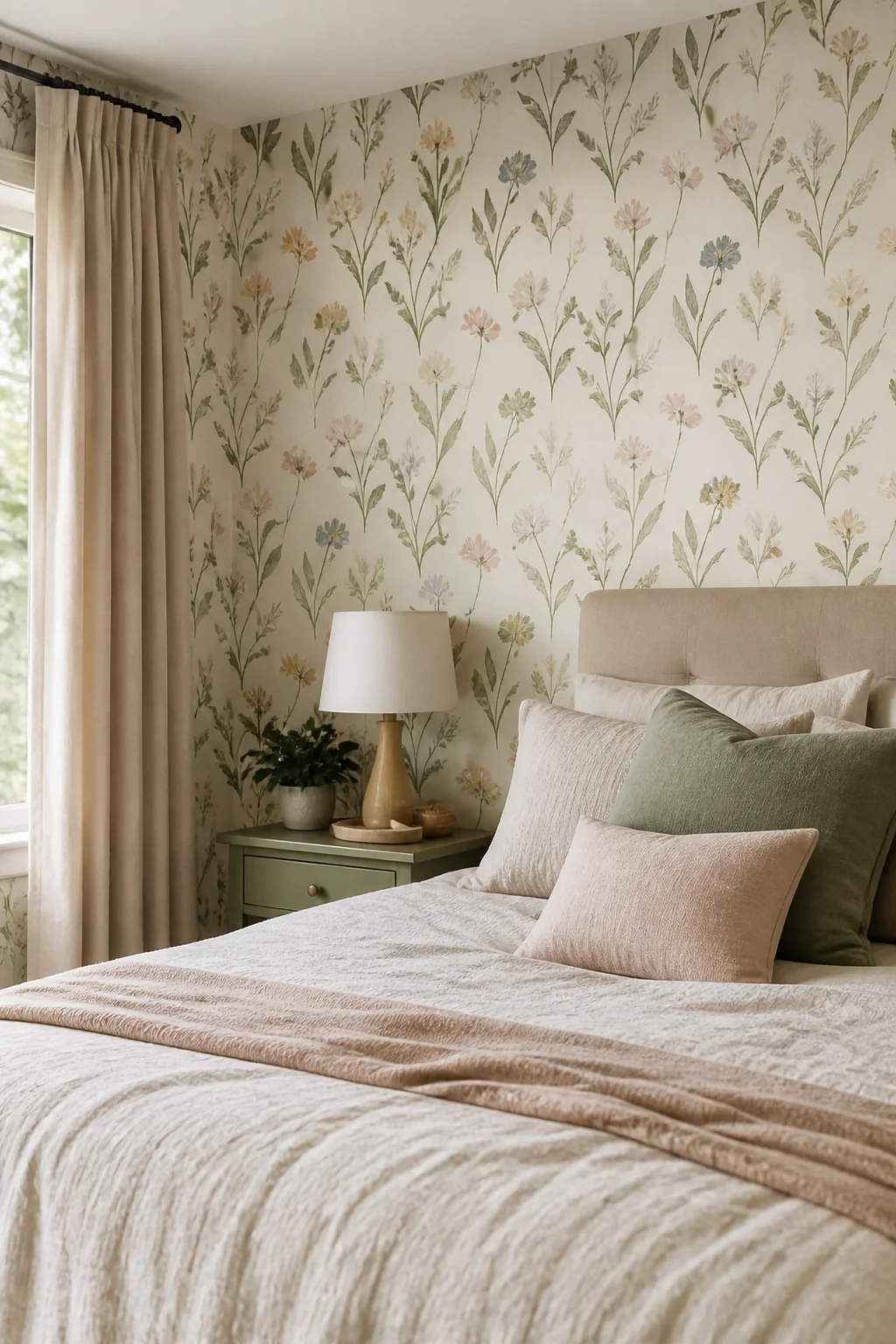
Peel-and-stick botanicals are the practical answer for anyone who can't paint, and they come off in whole panels at the end of a lease. A typical roll measures 20.5 inches wide by 16.5 feet long, about 28 square feet, so a 10-by-8-foot wall takes three rolls and realistically four once you allow for matching the pattern repeat. At $25 to $60 a roll, that's $75 to $240 for the wall.
The surface underneath decides whether this works at all. Peel-and-stick grips eggshell and satin paint that has cured for three or four weeks. On flat or matte paint, or on any orange-peel texture, the panels start letting go at the corners within a month and there's no fixing it.
Start from a plumb line you snap yourself, not from the corner of the room, because almost no bedroom wall is truly square. Budget around 90 minutes and a second pair of hands for the first two panels.
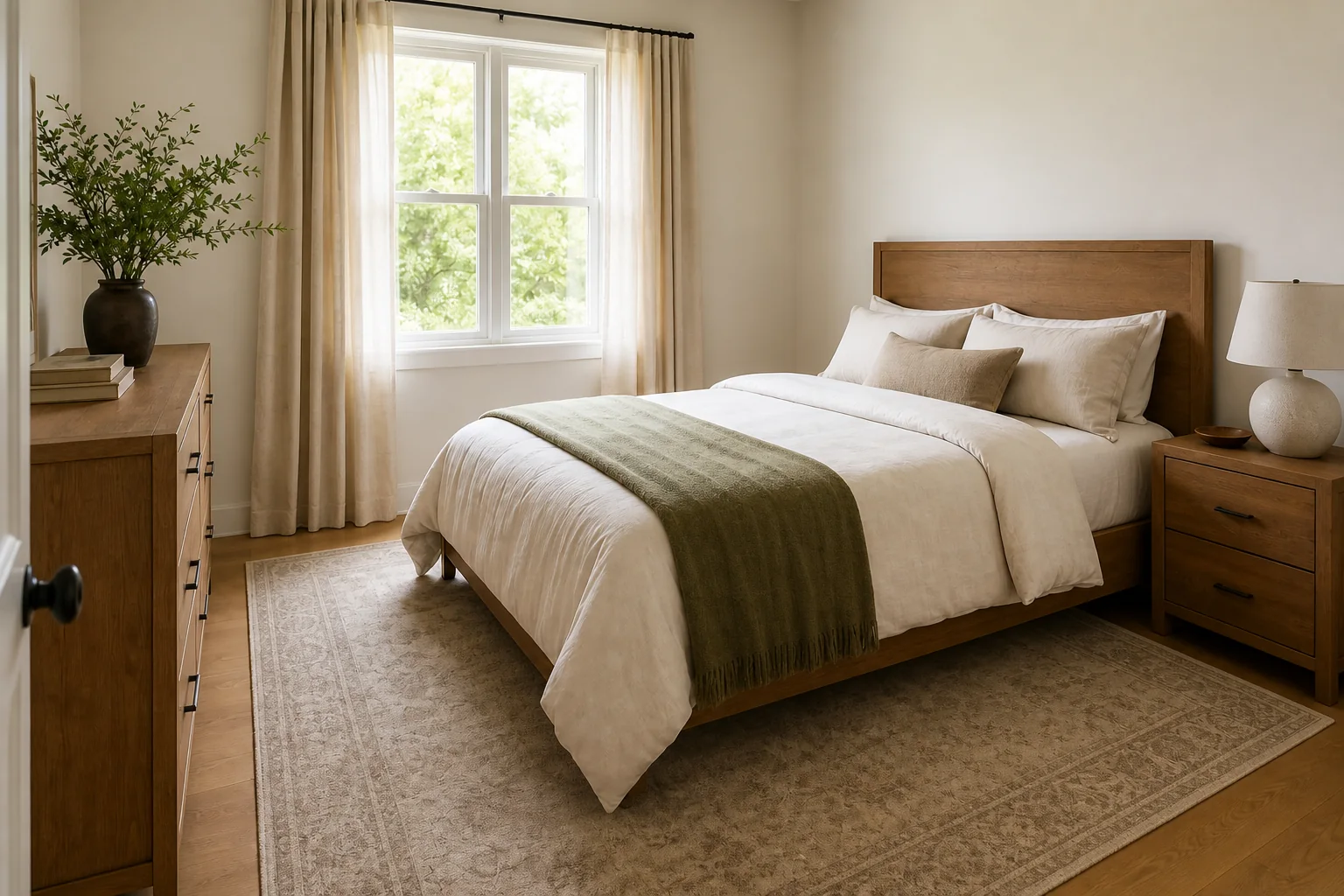
6. Shiplap Painted White or Soft Gray
Shiplap works because of the shadow line, not the wood. Each board sits a quarter inch or so proud of the one below it, and that thin dark gap is what your eye reads as texture from across the room. Paint alone can't produce it.
Pre-primed pine shiplap runs about $2 to $3 per square foot, so an 80-square-foot wall lands between $200 and $400 in boards, plus a tube of paintable caulk and a box of 2-inch brad nails. Find your studs first and mark them floor to ceiling in pencil. Every board wants two nails into framing at each stud; boards fixed to drywall alone will work loose as the wood expands and contracts with the seasons.
Run the boards horizontally to stretch a narrow room, vertically to lift a low ceiling. Caulk the perimeter where the boards meet trim and ceiling, but never the gaps between boards, since those gaps are the entire effect. Finish in satin so the top edges wipe clean, because every ledge collects dust.
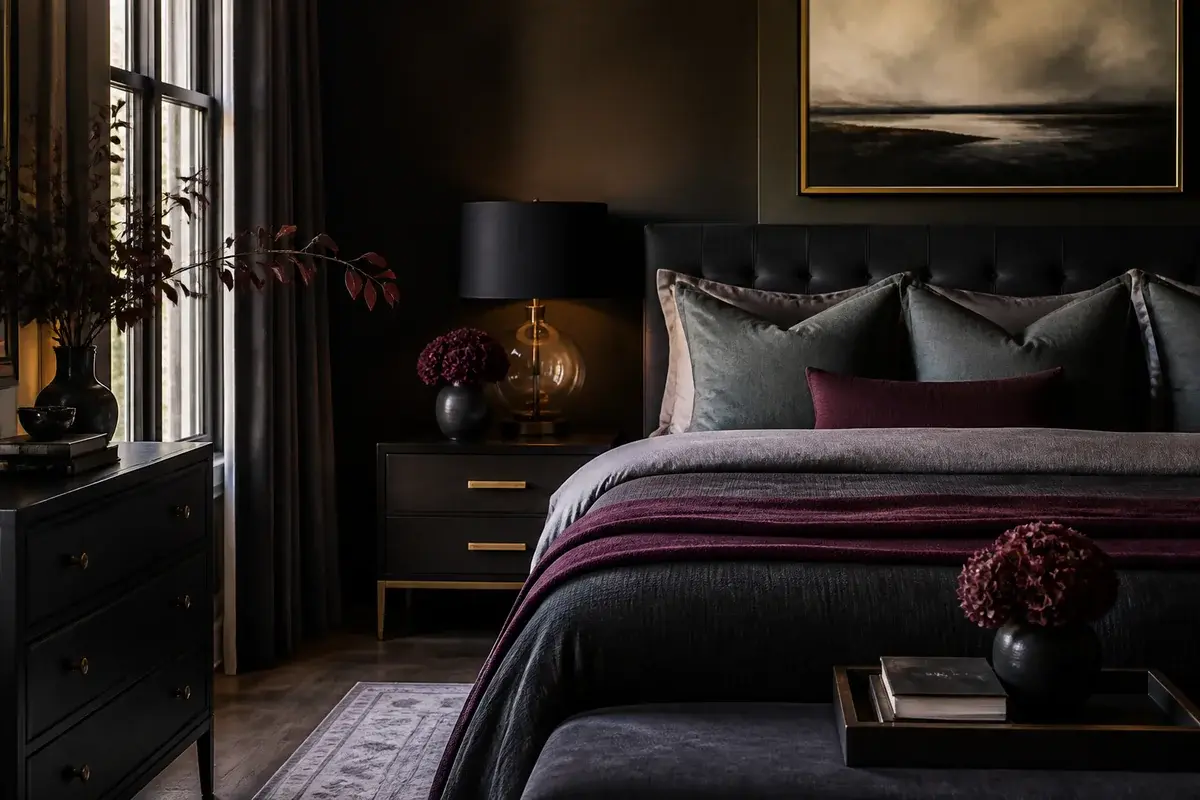
7. Moody Plum for Luxury Bedroom Vibes
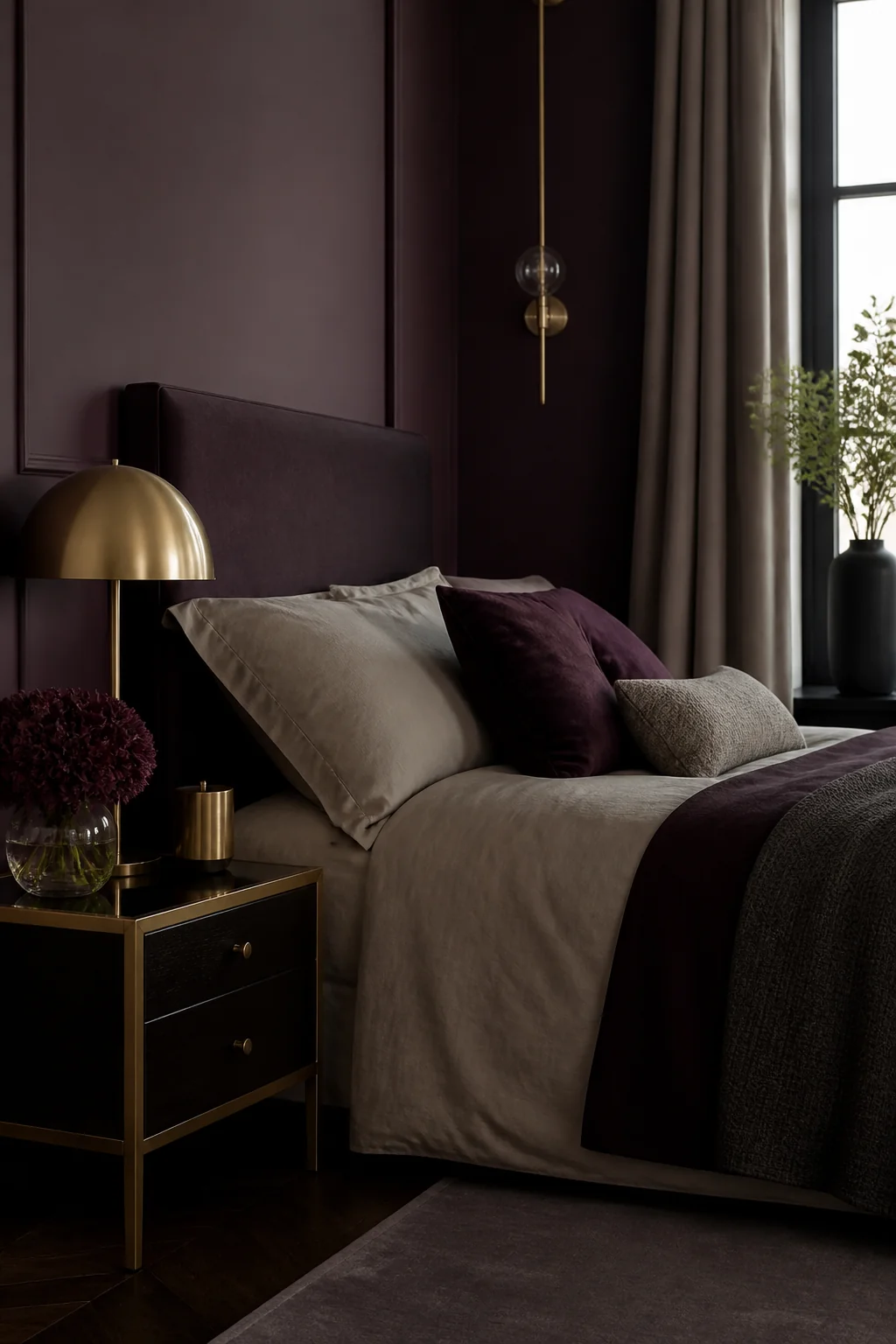
Plum has red underneath it, which is what separates it from lavender's blue cast and keeps it from feeling like a nursery. On the wall behind your headboard it carries real visual weight, and since you're lying against that wall rather than staring at it, the saturation never wears thin.
Brass is the metal that suits it. Warm yellow against a red-purple wall is close to a complementary contrast, so brass sconces, a brass lamp base or brass curtain rings all land as deliberate rather than accidental.
Test it under your own bulbs before you buy a gallon. Plum has a low light reflectance value, usually somewhere in the teens, so it drinks light rather than returning it, and under a cool 4000K bulb it slides toward brown. Warm 2700K bulbs with a lamp on each side of the bed keep it rich. Two coats over a gray-tinted primer, roughly $50 in paint for one wall.
8. Geometric Wallpaper in Neutral Tones
Pattern doesn't have to mean color. A geometric in cream, oatmeal and soft gray gives you rhythm on the wall while staying quiet enough to sleep in front of.
Scale is the decision that actually matters. From a bed eight to ten feet away, a repeat smaller than about four inches stops registering as a pattern and becomes texture, which is usually what you want in a bedroom. Larger repeats stay legible as shapes, so if you go big, keep the contrast between the three tones low.
Straight lines are unforgiving in old rooms. Bedroom walls are rarely plumb and ceilings are rarely level, so a strict grid or a stripe-based geometric will advertise every bit of drift along the ceiling line. Diamonds, arcs and irregular repeats hide it far better.
Traditional double rolls cover roughly 56 square feet and run $40 to $90. An 80-square-foot wall calculates to two of them, so order three. The pattern repeat swallows the difference, and dye lots shift between orders, so a roll bought later rarely matches.
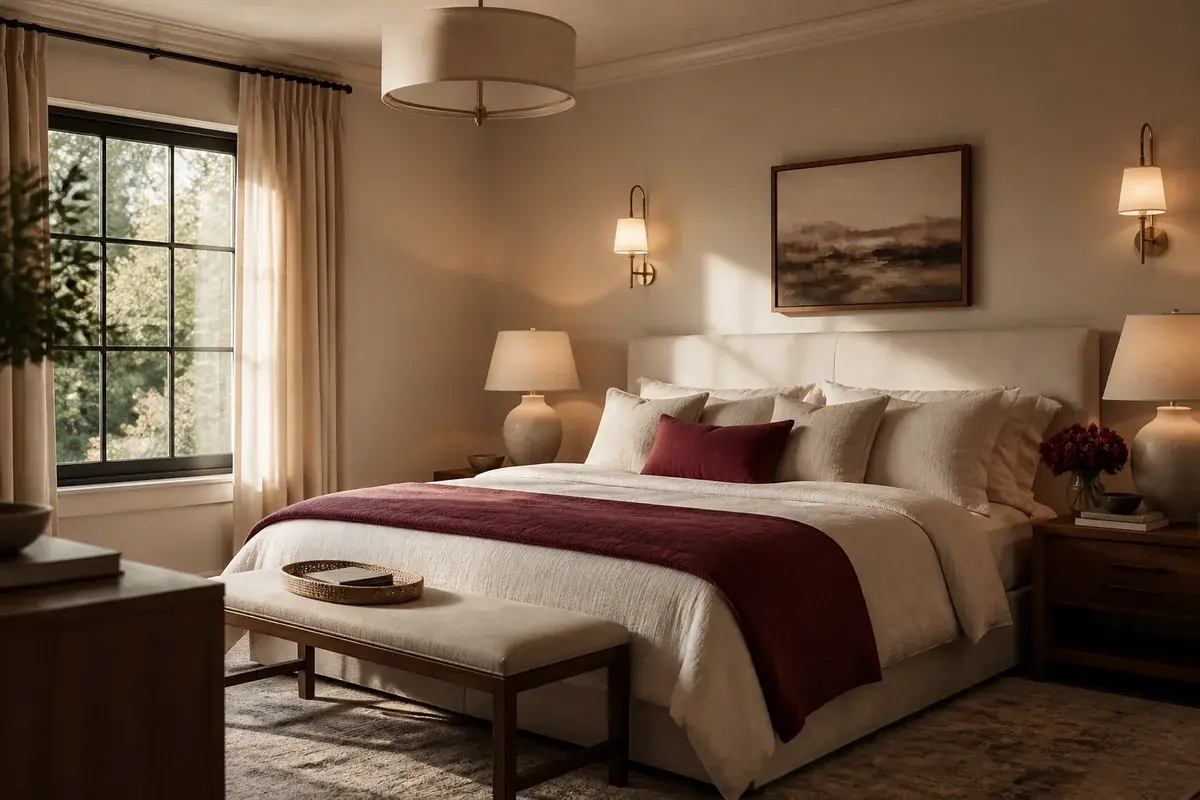
9. Brick Red for Warmth and Character
Brick red is a red with brown and a little black in it, which is why it looks aged instead of loud. It's bolder than terracotta and far less fashionable, and it does something kind for the orange in old pine and teak that a cooler red never will.
Be ready for the coverage. Red pigments are the most translucent on the shelf, and a true red over a white wall can need three or even four coats before the patchiness disappears. Ask the paint counter to tint your primer light gray or pink. That one step typically saves a full coat and about $45, and it's the difference between a Saturday and a whole weekend.
Budget roughly $60 in paint and primer for one wall. A worn wool rug from a thrift or estate sale, often under $100, is the cheapest way to tie the wall into the rest of the room, because the reds in an old rug have already faded to the same softness.
10. Soft Blush Pink for Gentle Femininity
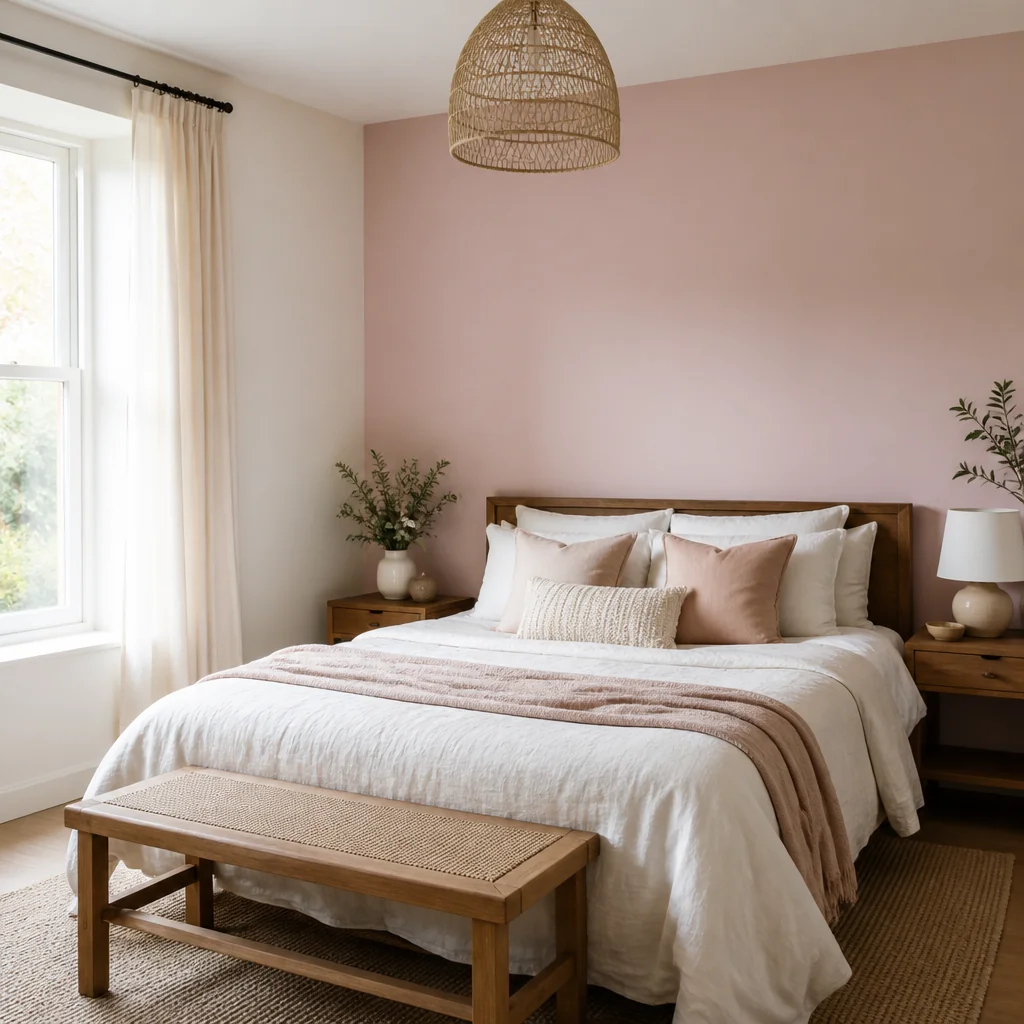
Blush sits much closer to a greige with a pink undertone than to any pink you remember from a childhood bedroom. Keep the intensity low and it behaves like a neutral, warming the room without ever announcing itself.
There are two ways it goes wrong. Too much white in the mix and it turns chalky and flat in daylight, like unfinished plaster. Too much red and it swings toward bubblegum the moment afternoon sun lands on it. The safe territory is a light reflectance value in the high 60s to mid 70s, dark enough to hold its color, light enough to still bounce light around a dim room.
White trim and bare oak or ash are its best partners, since the yellow in the wood keeps the pink from reading sweet. Brush a 12-by-12-inch patch right up against your existing trim before committing, because builder white and true white push blush in opposite directions.
11. Grasscloth Wallpaper for Organic Texture
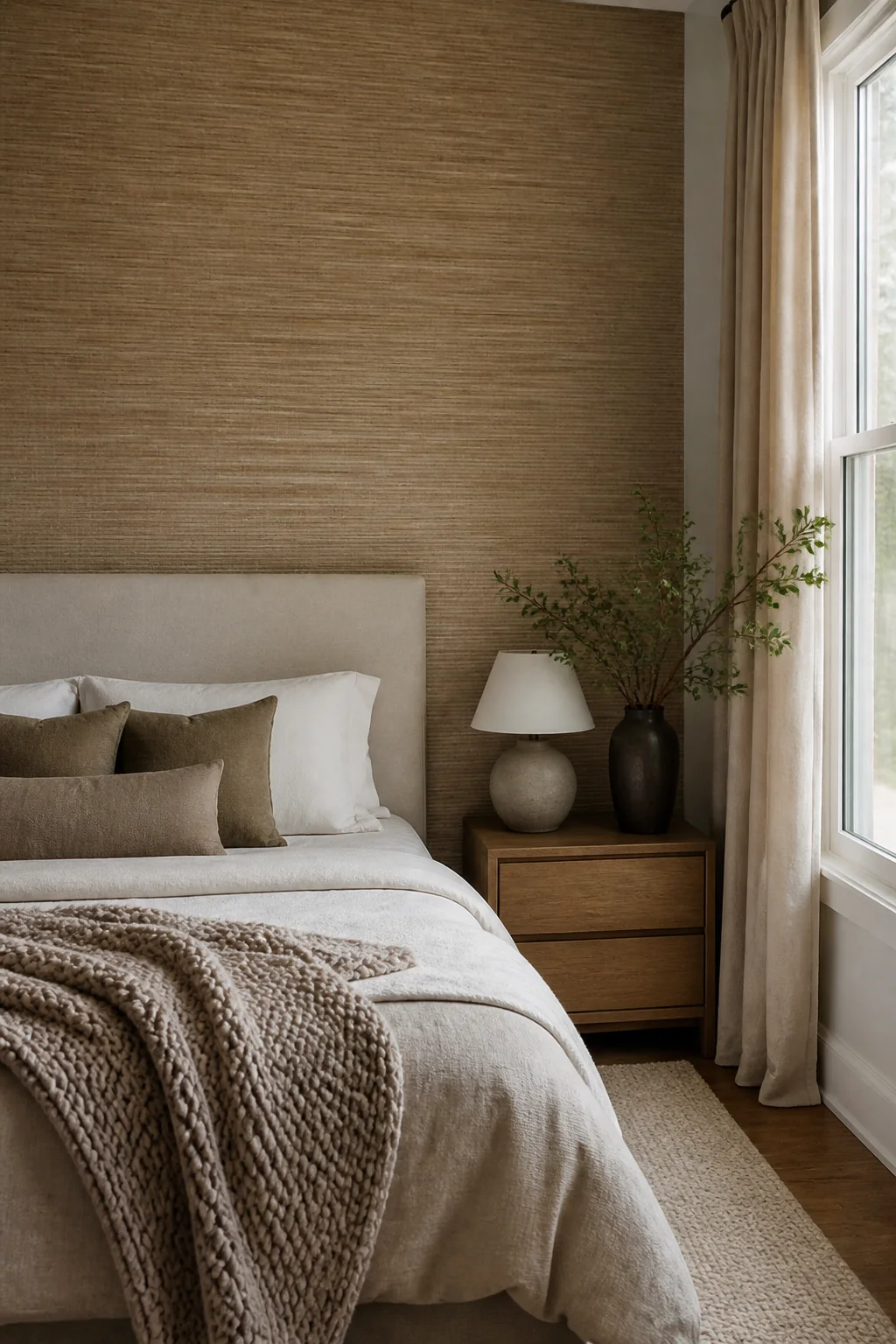
Grasscloth is real woven plant fiber laminated to a paper backing, so it brings genuine texture and a low sheen that printed paper can only imitate. Expect $40 to $80 a roll for standard sisal or arrowroot, plus paste, and considerably more for silk-blend versions.
Two things are worth accepting before you order. Seams show. Each panel is dyed in batches, so the color shifts slightly from strip to strip and the joins stay visible; that's a property of the material rather than a bad install. Second, it does not clean. Water spots it permanently and the marks don't fade, which is why it belongs behind a bed and not beside a window you leave open in the rain.
The wall underneath has to be smooth and even in color, since the backing is thin enough to telegraph patches. Over a repaired or lightly textured wall, hang a lining paper first at roughly $20 a roll.
12. Forest Green with Gold Accents
Deep forest green holds up in a bedroom because it behaves like a dark neutral. It's dark enough to recede after sunset, and its light reflectance value, usually somewhere around 8 to 12, means it swallows glare rather than throwing it back at you.
Gold and brass are the natural partners, and hardware is the cheapest way in. Swapping four nightstand knobs at $8 to $15 each costs under $60 and puts warm metal in the same sightline as the wall. A pair of brass sconces mounted about 30 to 36 inches above the mattress top adds more of it and solves your reading light at the same time.
Keep the metal finishes consistent in warmth rather than identical in tone. Unlacquered brass darkens noticeably over a year or two, satin brass stays put, and the two sitting near each other reads as collected instead of mismatched.
13. Dusty Mauve for Subdued Elegance
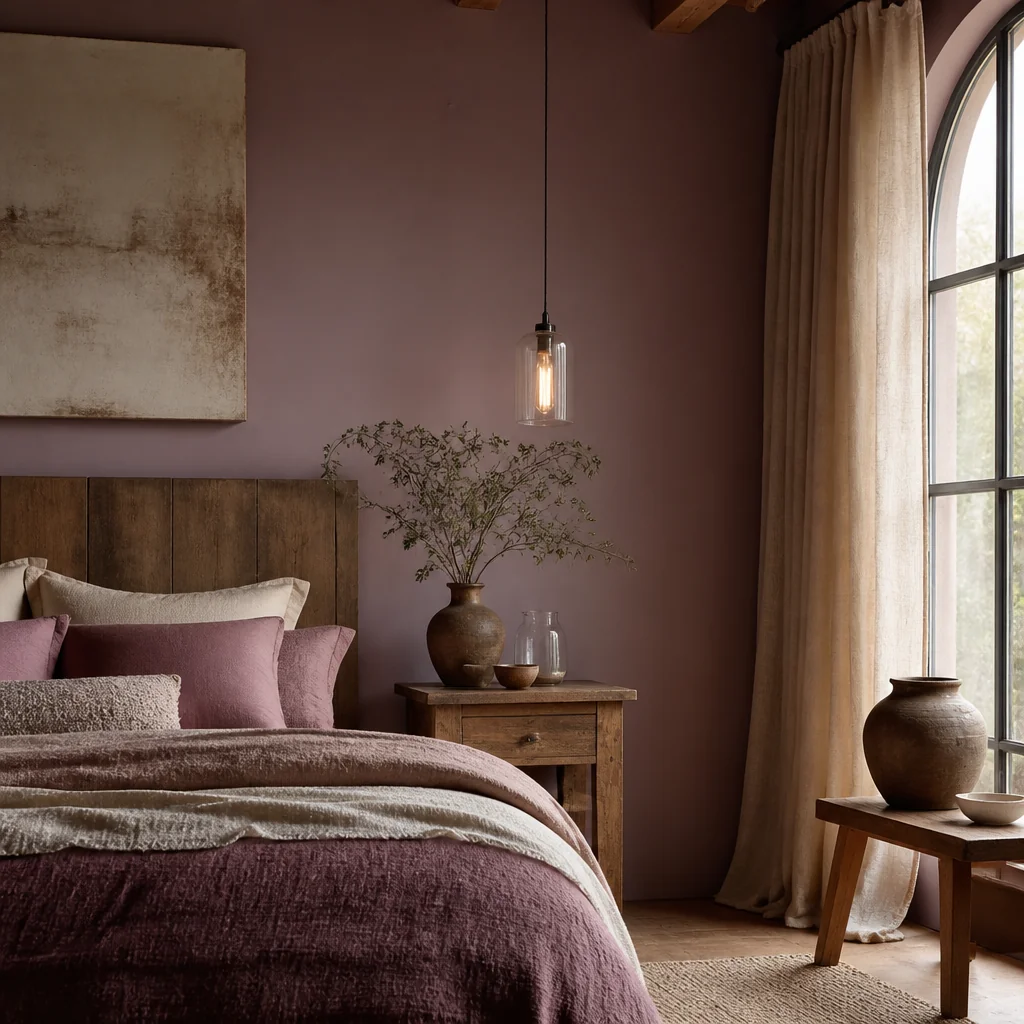
Mauve lives between purple and gray, and that split personality is the whole reason it's so easy to live with. It carries a red-purple pigment on a gray base, so it holds hands with warm walnut and with cool nickel at the same time and doesn't fight whatever bedding you already own.
The same quality makes it move with the light. Under warm evening lamplight mauve leans pink; under cool morning light from a north window it settles into gray. Neither version is wrong, but you should know which one you'll be looking at most, so leave a sample up for a full day and check it three times.
Eggshell is the sheen to choose here. In a flat finish mauve loses the purple almost entirely and can read as bare primer, while a little sheen keeps the color alive. A gallon at $40 to $50 covers a standard bedroom wall twice with room to spare.
14. Vertical Stripes in Two Complementary Colors
Stripes are the most forgiving pattern to do yourself, provided you respect the drying times. Roll two coats of the lighter color across the entire wall first, then leave it alone for at least 48 hours. Tape pulled off paint that hasn't fully cured lifts it away in sheets, and that is the classic way this project falls apart.
Measure the wall's width and divide it into an odd number of stripes, so you finish with the base color in both corners. Somewhere between 8 and 12 inches per stripe suits a bedroom; much narrower and the wall starts to vibrate when you look at it.
Mark your lines with a level, run the tape just outside them, then brush a thin pass of the base color along each tape edge and let it dry. That seals the edge so the second color physically cannot bleed under it. Pull the tape at a 45 degree angle while the topcoat is still slightly tacky.
15. Wallpaper with Oversized Floral Pattern
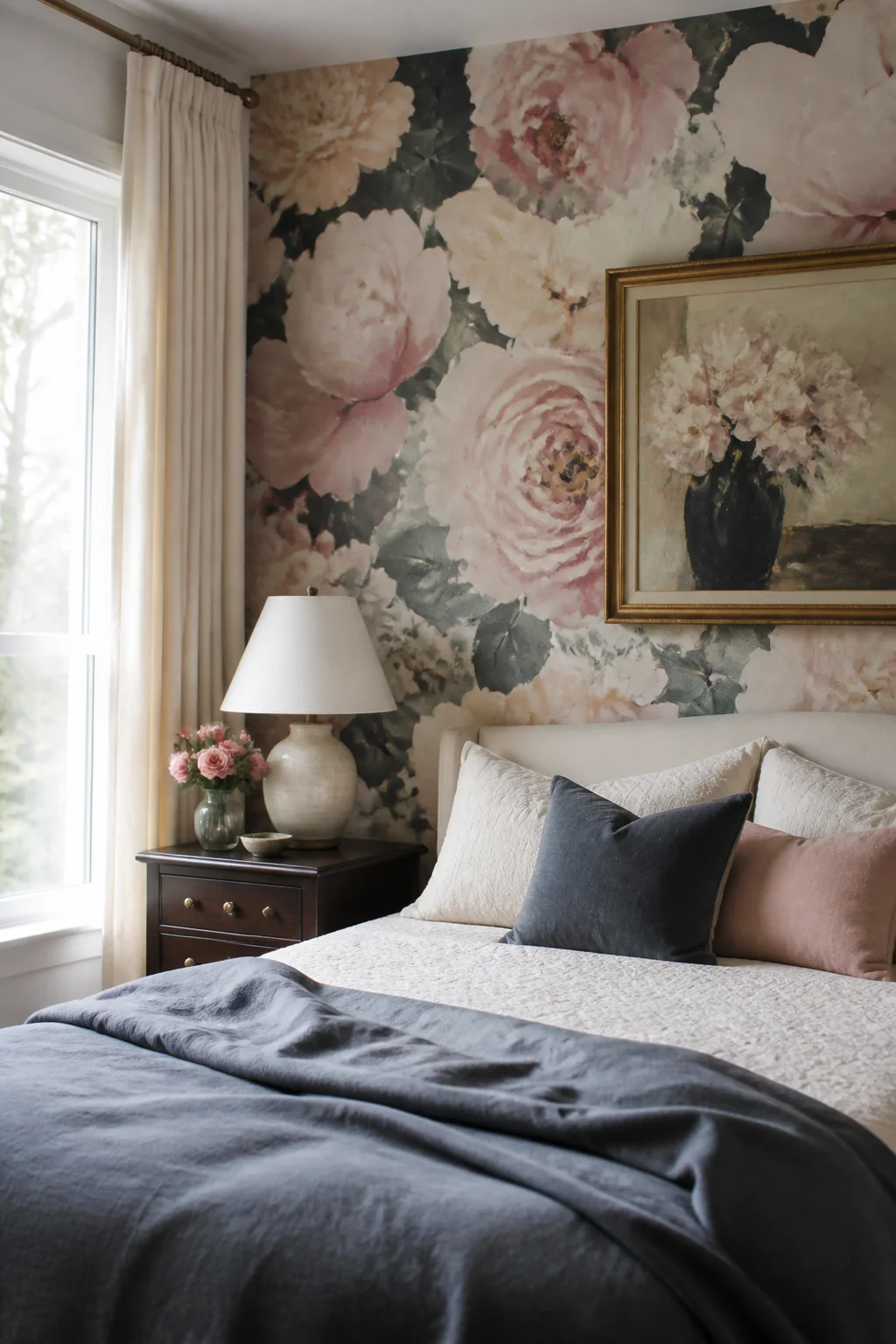
A large-scale floral behind the bed becomes the room's artwork, which is exactly why you can leave the surrounding walls bare and skip the gallery frames entirely.
Plan the layout before you cut anything. Big patterns have repeats of 20 to 25 inches, and where that repeat lands decides whether the wall looks composed or accidental. A queen headboard is about 62 inches wide and often 48 inches tall, so hold a full panel up against the wall and slide it sideways until a complete bloom sits in the space above the headboard rather than being sliced in half by it.
That planning costs paper. A 20-inch repeat means trimming close to a full repeat off the top of most panels just to line them up, so buy an extra roll beyond what the square footage calls for, and buy it in the same order so the dye lot matches.
Choose a print whose secondary colors, the leaf greens and background tones rather than the flowers themselves, already appear in your bedding. Matching the quiet colors is what makes the loud one look deliberate.
16. Soft Mustard Yellow for Warmth
Muted mustard is yellow with brown and a touch of gray in it, much closer to a raw ochre pigment than to anything neon. That dulling is precisely what lets it warm a cold room instead of buzzing in it.
It earns its keep in bedrooms with north-facing windows or cool overhead lighting, the ones where white walls read faintly blue from morning to night. A single mustard wall cancels that out.
The failure mode with any strong yellow is bounce. Yellow throws a surprising amount of light back into the room and tints the ceiling and the nearest bedding along with it. Keeping it to one wall is the fix, and a flat or matte sheen helps as well, since gloss will cast a bright patch across the ceiling every sunny morning.
Sample big. A two-inch chip of mustard looks charming; four square feet of it is a different experience altogether. Paint at least a 2-by-2-foot square and live with it for two full days.
17. Black Accent Wall for Modern Edge
Black is the most demanding wall on this list, and it needs the rest of the room to cooperate. The conventional placement is the wall opposite the bed rather than behind it, so it sits at the edge of your vision when you're lying down instead of filling all of it.
Keep the other three walls and the ceiling light, and keep the floor light if that's an option. A black wall over a dark floor with dark bedding stops reading as contrast and starts reading as a cave.
Black has a light reflectance value under 5, so it takes light out of the room rather than sharing it around. Plan for that up front: a lamp on each nightstand plus something overhead, not a single ceiling fixture doing all the work.
Use a matte or dead-flat finish. It conceals the drywall imperfections that black gloss magnifies mercilessly, and expect two coats over a gray-tinted primer even so.
18. Linen Wallpaper in Cream or Natural
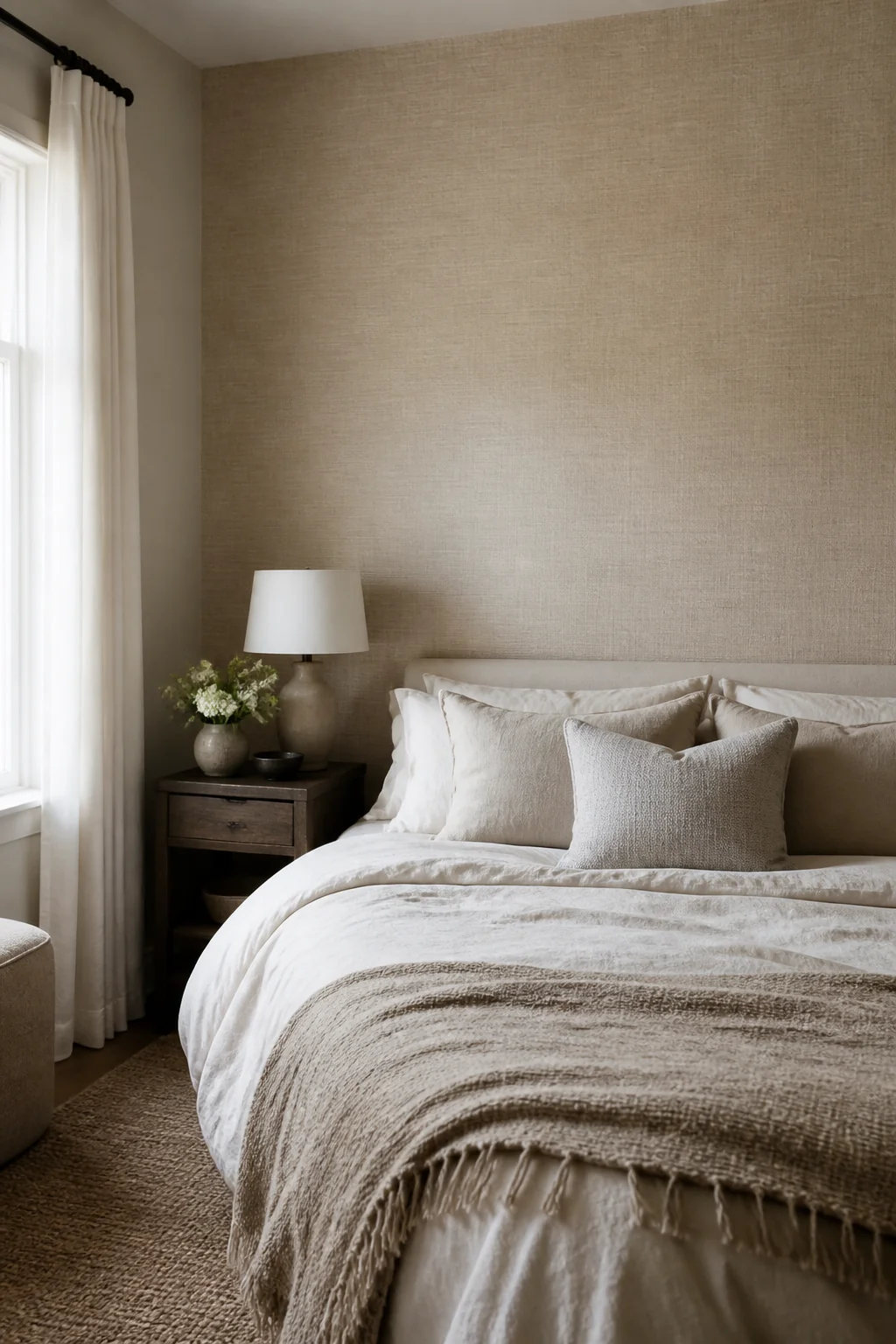
Linen-look wallpaper gives you the softness of an upholstered wall for a fraction of the work. Upholstering one properly means batting, yardage, a staple gun and a trim detail to hide the raw edges, and it climbs past $500 fast. Linen paper runs $30 to $50 a roll, so a standard bedroom wall lands nearer $120.
Because the texture is shallow, it only shows when light travels across it. Mount a sconce or a picture light close to the surface, within about 6 inches, and the weave appears. Lit head-on from the middle of the ceiling, the same paper looks like flat cream paint and you've spent the money for nothing.
Check whether you're buying paper or a vinyl-faced version. Vinyl wipes clean and suits the wall behind a bed, where heads and hands touch it nightly. The paper version stains and is better kept to a wall nobody brushes against.
19. Dusty Blue-Gray for Versatile Calm
Blue-gray is the compromise color, and there's no shame in that. It has enough blue to feel like a decision and enough gray to sit quietly behind whatever you already own, which makes it the sensible pick when the bedding and the art are doing the talking.
Undertone is where these colors separate from each other. A blue-gray with a green undertone stays warm and soft. One with a violet undertone reads cooler and more formal. A straight blue-gray in a north-facing room with no direct sun can turn cold and slightly clinical, like a waiting area, so if your window faces north, hunt for the version with green in it.
Aim for a light reflectance value around 50 to 60 if you want depth without dimming the room. Two coats, one gallon, about $45, and no primer needed if you're going over an existing light neutral.
20. Damask or Ornate Pattern Wallpaper
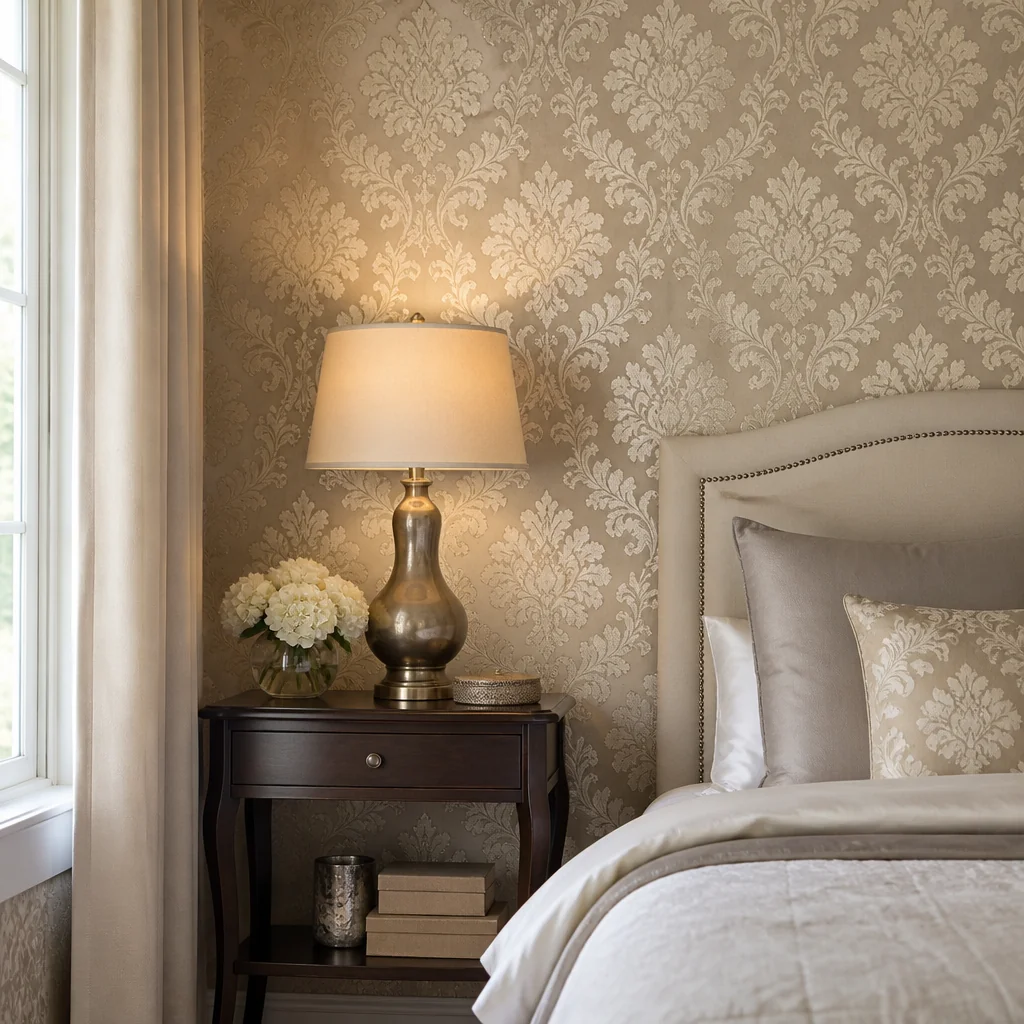
Damask reads as classic because the pattern itself is old, a formal mirrored motif borrowed from woven silk. Choosing a tonal version, cream on cream or gray on gray, lets the pattern show through sheen rather than color contrast, so you get the ornament without the clutter.
Check the match type printed on the roll label before you order. A straight match lines up panel to panel and wastes very little. A drop match staggers each panel by half a repeat, so the offcut from every strip is longer and a wall that calculates to three rolls will want four. Damasks are frequently drop match, and with repeats of 18 to 25 inches that adds up quickly. Expect $50 to $120 per double roll covering roughly 56 square feet.
High-contrast damask, black on cream, needs a large wall and restraint everywhere else in the room. In a bedroom under 120 square feet it simply takes over, and no amount of plain white bedding will pull it back.
Keep this guide handy
The sampling step is the one worth insisting on, whichever of these you land on. Paint a 2-by-2-foot square, or tape up a full wallpaper panel, and look at it in morning light, in late afternoon, and under the bulbs you sleep with. Most walls that get repainted within a year were chosen from a two-inch chip under store fluorescents, and a $6 peel-and-stick sample costs a great deal less than a second gallon.
Ideas fade by Friday. A plan finishes the room.
You just read a full guide to your bedroom. Saving ideas will not change it; a plan will. The Home Decor Collection is every planning tool we make, for every room in the house, in one download, so the after photos below stop being other people's rooms.
- Six room Style Kits, each with layout, palette and shopping list$114
- The Gallery Wall Studio: 200 prints + 15 measured layouts$29
- The Room Makeover System: 40 solved room layouts + workbook$29
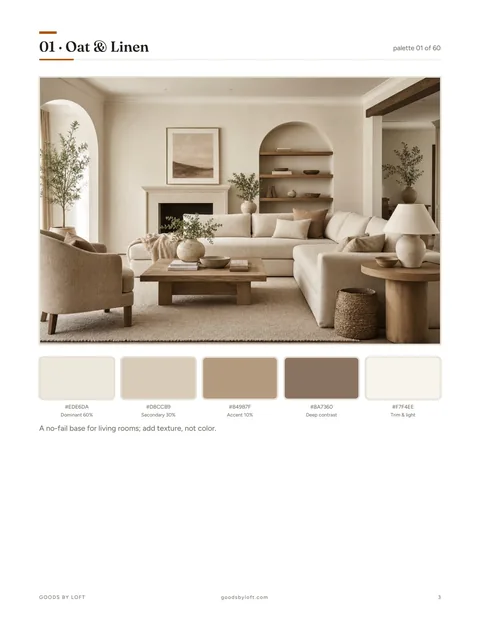
- The Color Palette Handbook: 60 palettes shown in real rooms$19
- The Whole-Home Reset: 40 printable organizing checklists$19
- The Decorator's Cheat Sheets: the 40 measurements that matter$9
- All eleven products, bought separately
$219$97
A single hour with an interior designer costs more than the entire Collection, and this one keeps answering for every room you will ever decorate. Free updates included as the products grow. And if it is not for you, the 14 day money back promise means you simply get a refund.