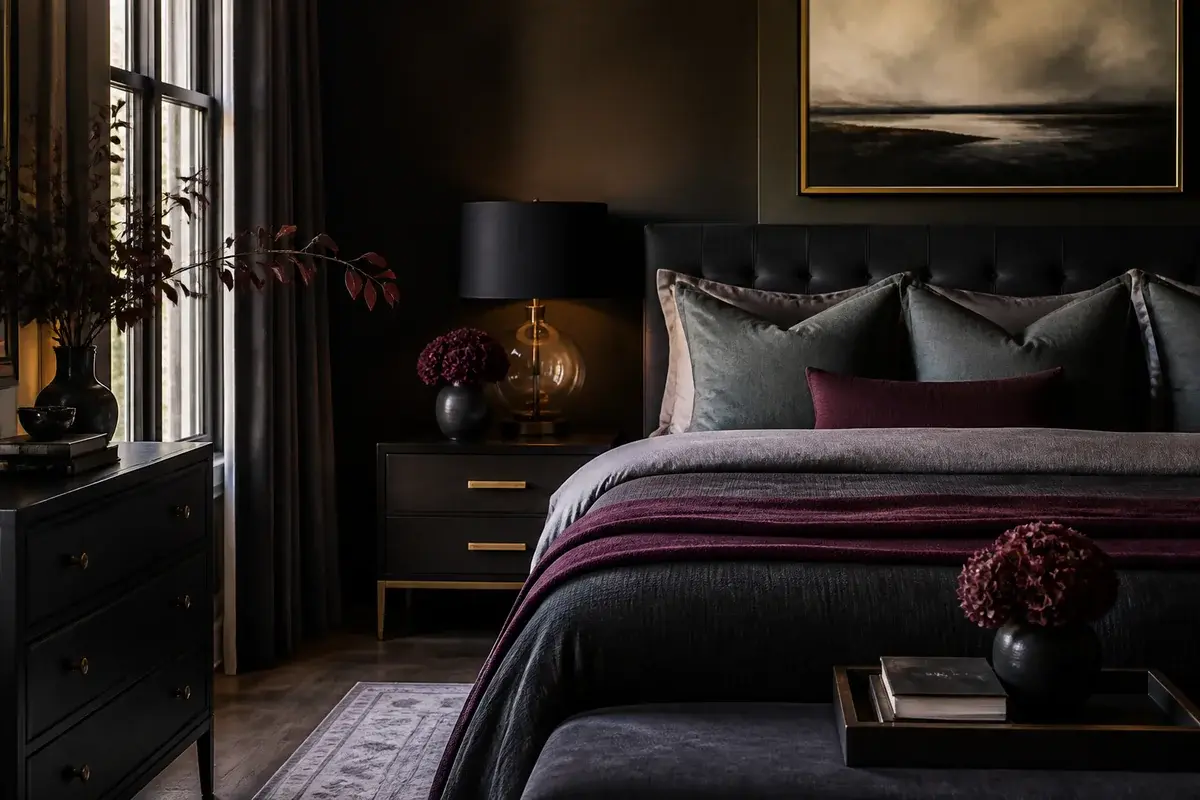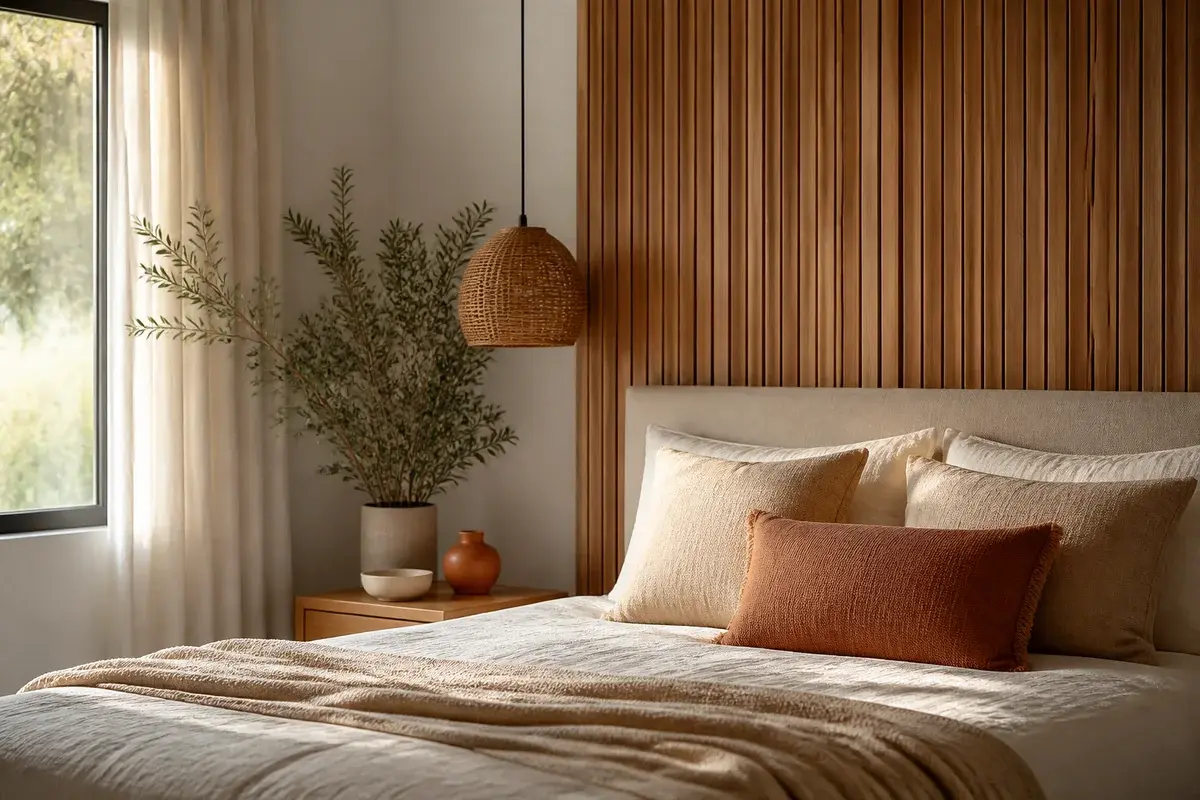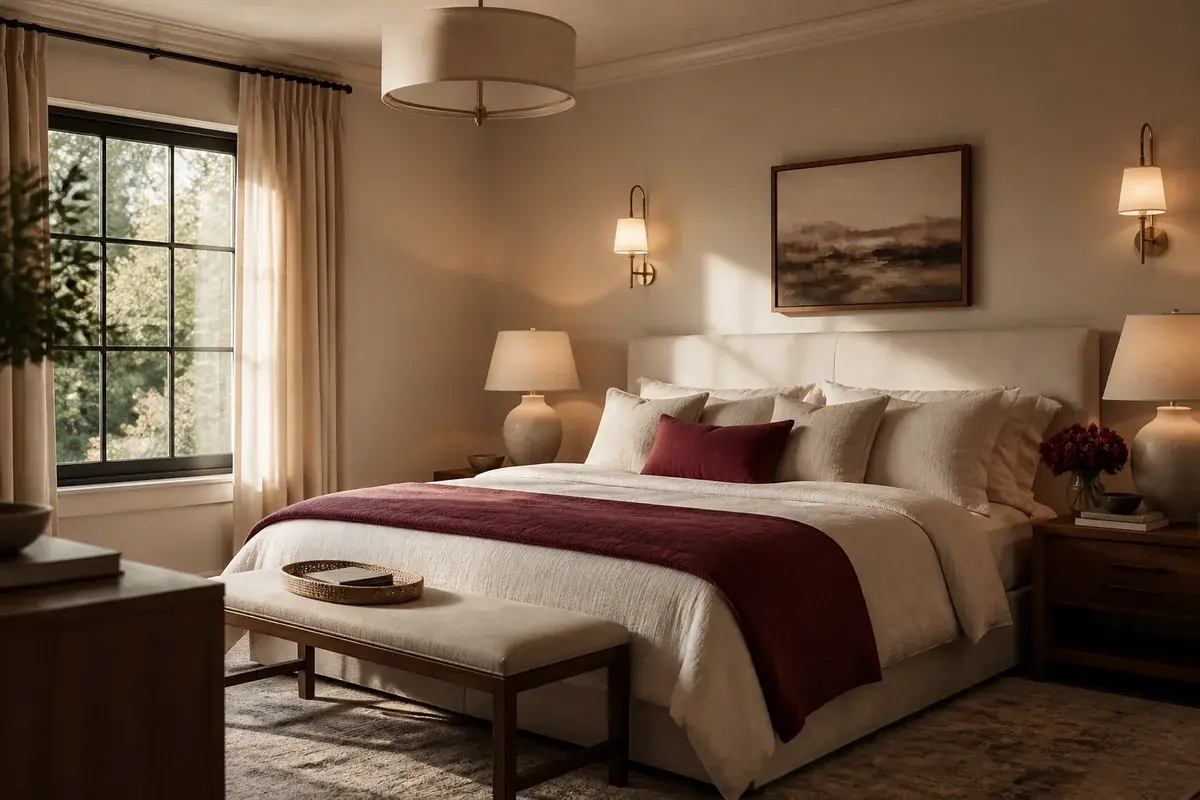
17 Calming Blue Bedroom Color Ideas for Better Sleep
Seventeen calming blue bedroom color ideas, from navy to sky blue, with paint names, prices and the pairings that make each shade work.
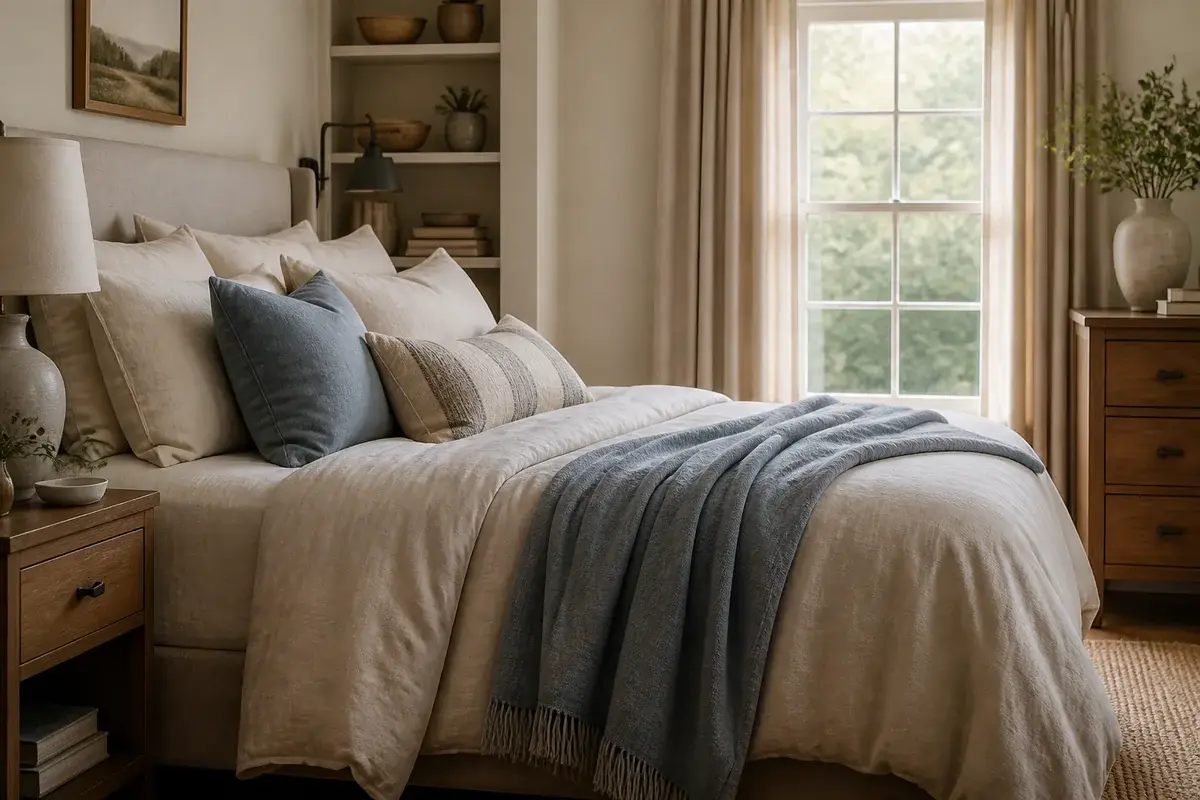
Most people stare at their bedroom walls at 11 PM and wonder why they're still awake. The color you choose matters more than you'd think. Part of why blue reads as calm is simple physics: the deeper, grayer versions have a low light reflectance value, so they throw less light back at you and the room quiets down as the lamps come on. But not all blues behave the same way. A bright cobalt will wire you up; a muted, desaturated blue does the opposite. The trick is finding the shade that feels restful to you, not just grabbing whatever blue paint chip looks nice at the store. Here are seventeen blue bedroom colors that work, each one paired with the furniture, lighting and finishes that make it feel complete.
1. Navy with warm wood trim
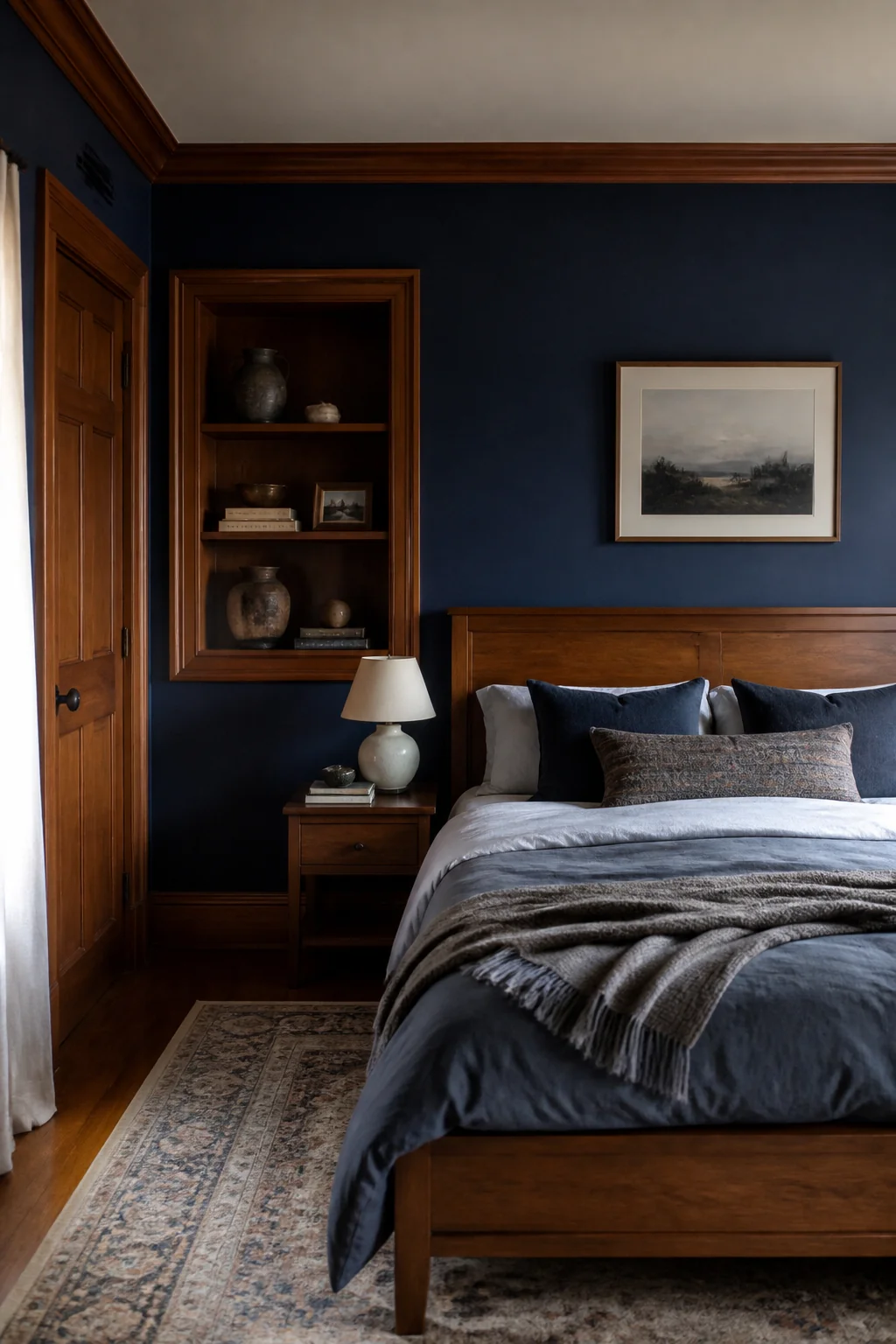
Navy is the safe bet that delivers. Benjamin Moore's Hale Navy HC-154 and Sherwin-Williams' Naval SW 6244 are the two most-used versions, and both sit near a light reflectance value of 12 to 14, so they soak up light rather than bouncing it around the room. Pair the walls with natural wood shelving or a wooden headboard, roughly $200 to $400 for a simple oak or walnut frame, to keep the room from reading like a chain hotel. The warm wood offsets navy's coolness because the amber in the grain sits opposite blue on the color wheel.
Two practical notes before you roll. Navy over beige or builder white needs a gray-tinted primer, or you'll be applying a third and fourth coat to kill the streaking. And choose eggshell rather than flat: dark flat paint shows every scuff at pillow height, and touch-ups on it never quite blend.
2. Powder blue on three walls, white on one
Paint three walls in a soft, almost dusty powder blue and leave the wall behind your bed white or cream. Benjamin Moore's Breath of Fresh Air 806 is the classic version of this shade. Quality interior latex runs $45 to $75 a gallon depending on the line, and for a 12x12 room with 8-foot ceilings, plan on two gallons to take three walls through two coats, since each one stretches 350 to 400 square feet per pass.
The reason to hold one wall back is practical. Even a pale blue eats brightness once it wraps a whole room, and the wall behind your head is the one surface you never look at while lying down. Keeping it white or cream bounces morning light back toward the window side and stops the color from closing in. Match that white to your existing trim so the break reads as a decision rather than an unfinished job.
3. Slate blue with white bedding and pale linens
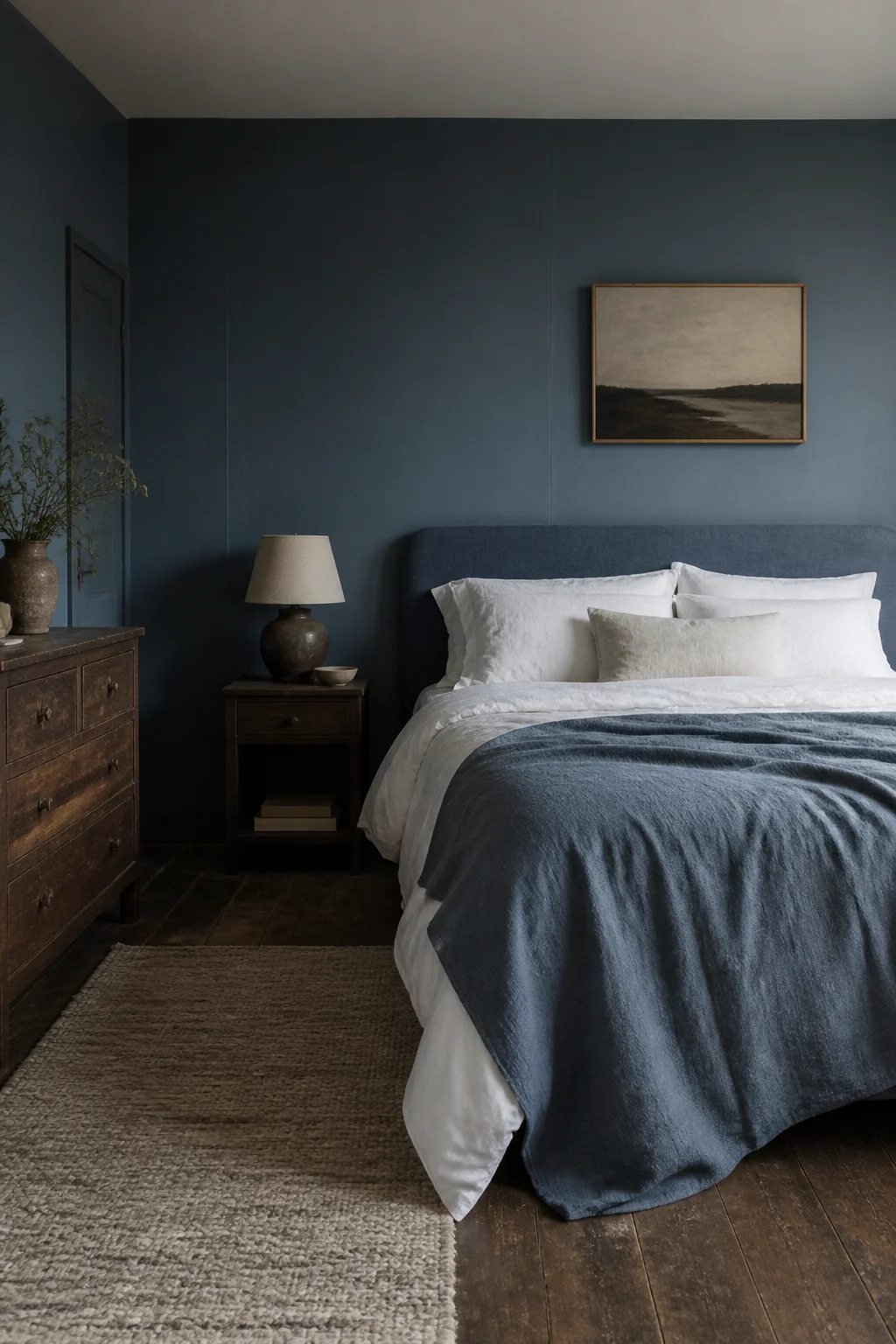
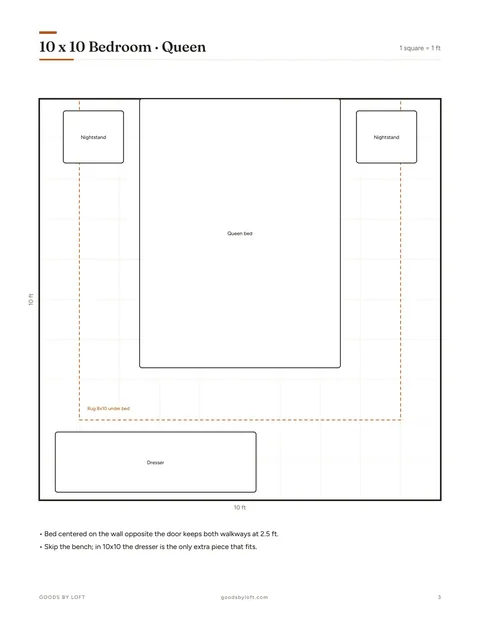
Slate blue sits between blue and gray, which makes it feel composed and surprisingly soothing. Keep your bedding bright white or pale gray so the walls stay the quiet part of the room. A 6x9 rug in cream or oatmeal under a low platform bed grounds the floor; for a queen, set it so the rug starts about 18 inches in front of the nightstands and runs a foot past the end of the mattress, which gives you warm landing space on all three open sides.
Check the undertone before you commit to a gallon. Slate blues swing violet under warm 2700K bulbs and noticeably greener under 4000K ones, and that shift is strongest on a north-facing wall. Tape a large sample near the head of the bed and look at it after dark, not just at noon. Wool rugs in that size run $200 to $500; a flatweave cotton version lands closer to $90 and washes at home.
4. Sky blue with a light linen canopy
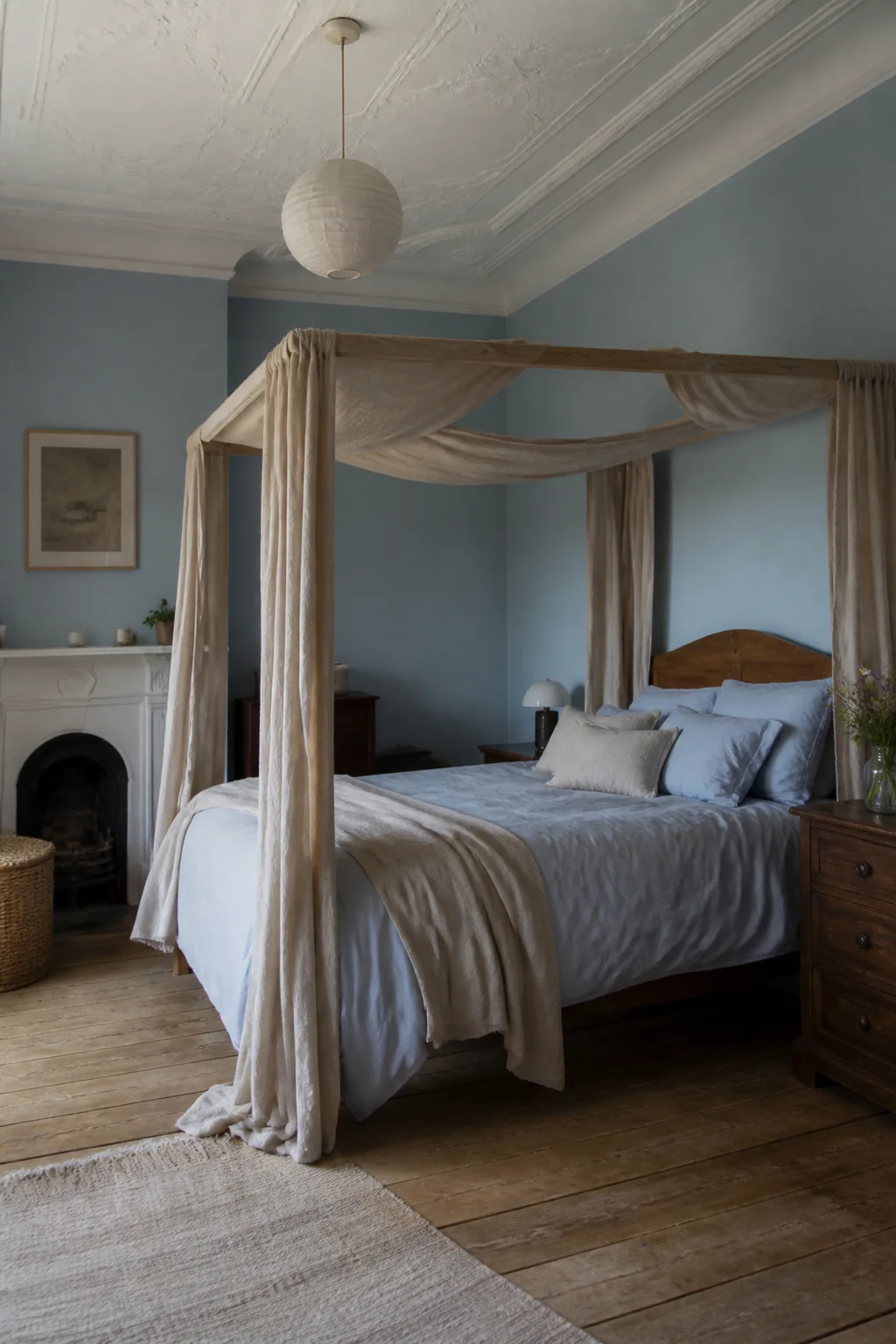
True sky blue is gentler than navy and closer to what you see outside on a clear day. A simple white or cream linen canopy, about $80 to $150, softens the light passing through it and gives the bed a defined edge instead of leaving it floating against a painted wall. Mount it properly: ceiling anchors rated for at least 20 pounds, driven into a joist rather than relying on drywall toggles, and hang the ring or track so the fabric clears your head by 18 to 24 inches when you sit up against the pillows.
Stop the panels an inch or two above the floor if you want them to stay clean, since puddled linen collects dust and needs washing every few weeks. Skip the canopy in a room with ceilings under 8 feet, where the fabric crowds the bed rather than framing it. Cotton voile is the cheaper stand-in at around $40, though it creases far more.
5. Periwinkle with gold accents
Periwinkle leans purple, which is how it stays calm without going cold. Brass is what warms it: picture frames, a table lamp with a brass base, drawer pulls, a slim tray on the nightstand. Unlacquered brass is worth seeking out if you like metal that dulls and darkens over a few years. Lacquered brass keeps its shine but reads yellow and slightly flat against a violet-blue wall. Replacement pulls cost $4 to $12 each, so re-doing a six-drawer dresser is a $30 to $70 change.
Hold the gold to three or four points in the room. Beyond that it stops registering as warmth and starts registering as a theme. The trade-off to watch is flooring: periwinkle over cool gray laminate turns chalky and a bit sad, while over honey oak, a jute rug, or even a warm cork floor it keeps its color. If your floor is gray, layer a warm neutral rug over it before you buy the paint.
6. Dusty blue-gray on all walls, warm lighting
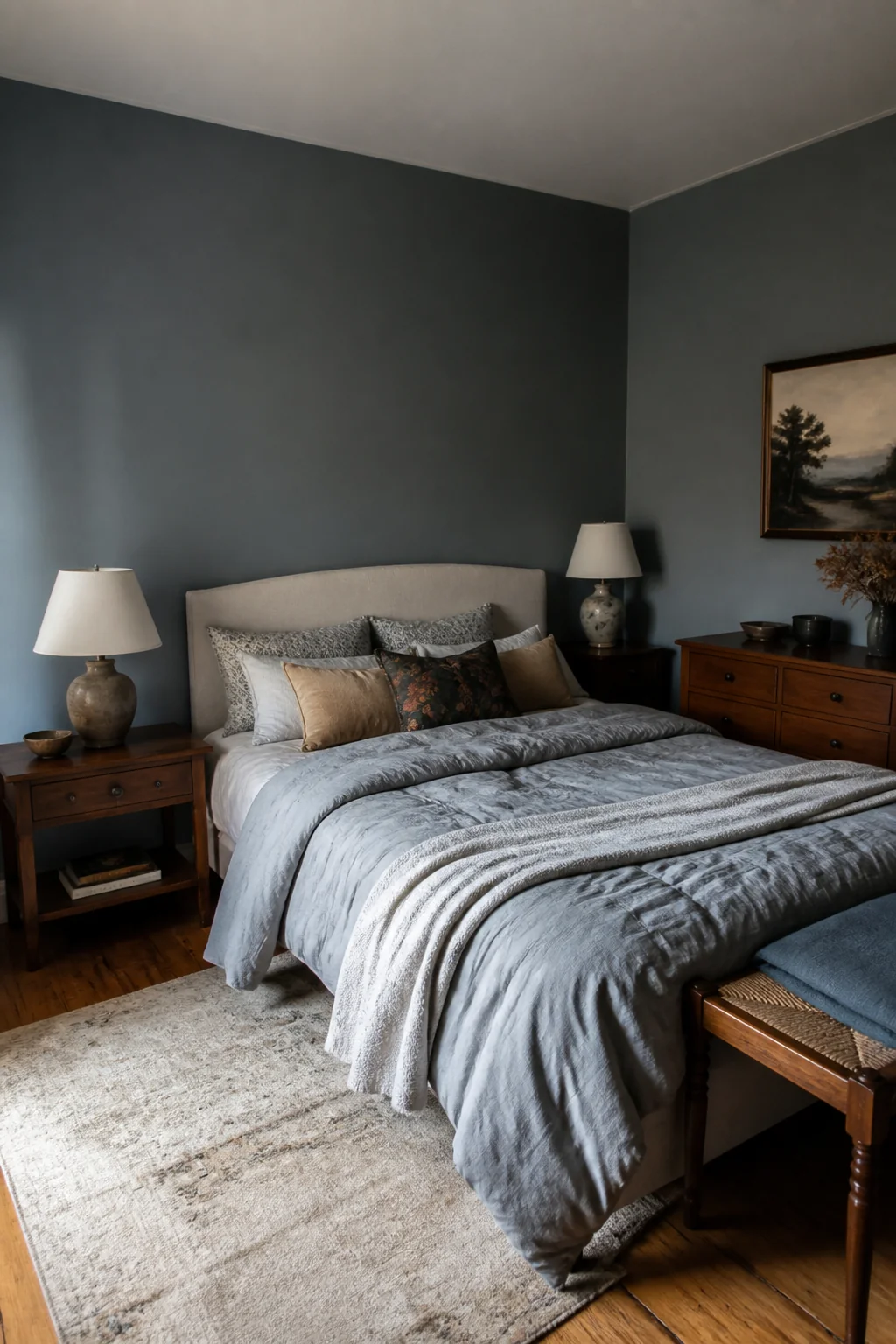
Blue-gray is where blue and gray blur together, and it's underrated for bedrooms. The lighting is doing half the work here, so treat it as part of the paint decision. Put 2700K warm white bulbs in the bedside lamps and the overhead fixture, and check the CRI printed on the box: 90 or above keeps the wall looking like the swatch instead of muddy and flattened.
A beautiful blue-gray lit by the 4000K cool whites that came in the hardware store multipack turns clinical overnight, and most people blame the paint rather than the bulb sitting two feet from it. Give each bedside lamp roughly 800 lumens, enough to read a chapter by, and put the ceiling fixture on a dimmer so you can drop it low in the last hour before bed. Dimmable LEDs cost $3 to $6 each and a basic dimmer switch is about $20, though every bulb on that circuit has to be dimmer-rated or they'll buzz and flicker.
7. Teal accent wall behind the bed, soft white walls
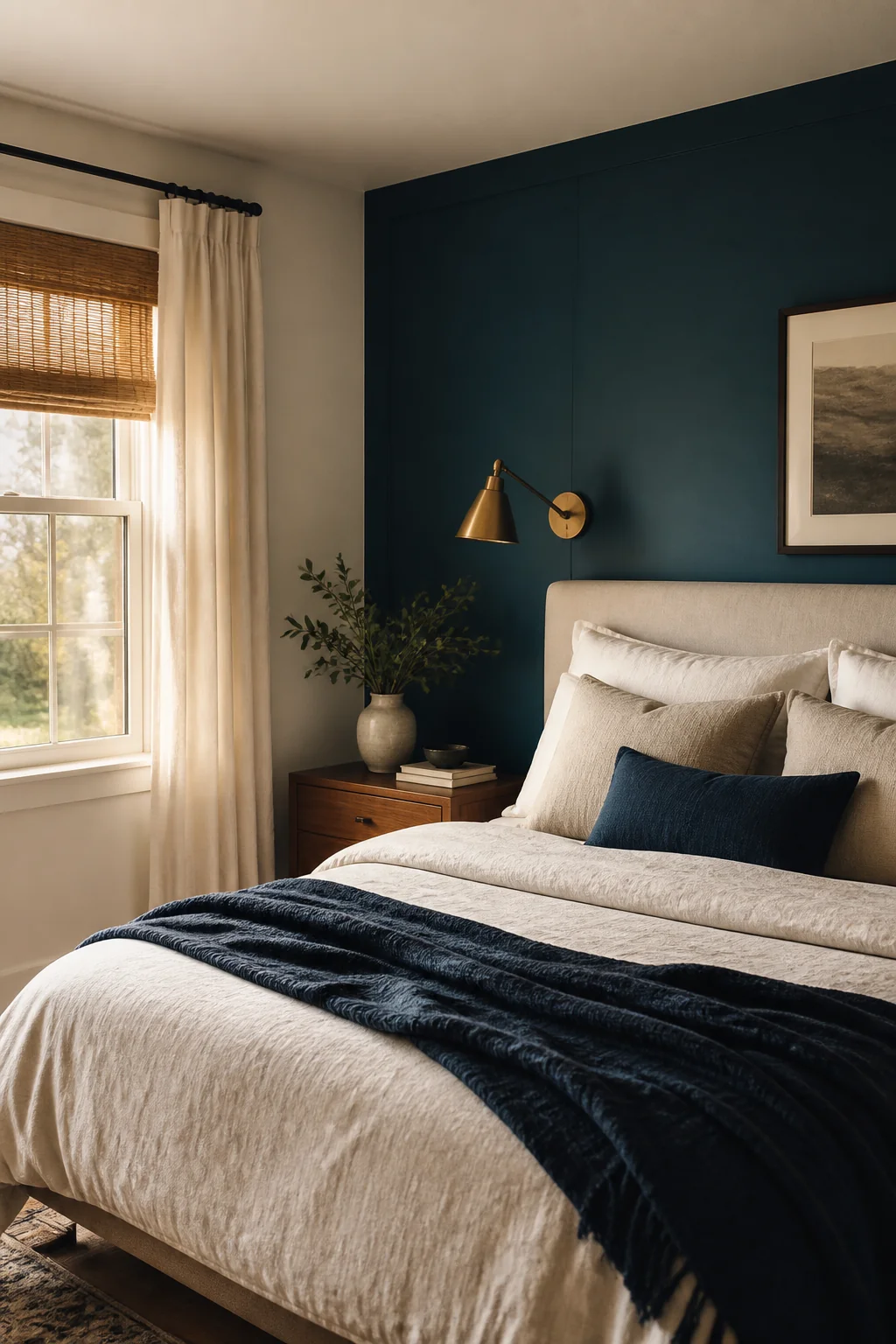
Teal, which is blue with green pushed into it, is deeper and more textured than plain blue. Paint only the wall behind your bed and keep the other three soft white or cream. A wooden headboard in natural oak or walnut over the teal gives the room a clear focal point without crowding it.
Width is the measurement that decides whether this works. An accent wall lands when the bed sits centered on it with at least 12 to 18 inches of color showing on each side of the headboard. If the bed is shoved into a corner, the painted wall reads lopsided and the whole effect falls apart, so move the bed to center first and paint second. Cut the edges in with a 2.5-inch angled sash brush rather than trusting tape alone, because heavily pigmented teal bleeds under tape on textured drywall. A quart, around $25, gives you two coats on a single accent wall with paint left over for touch-ups.
8. Cerulean with navy throw blanket
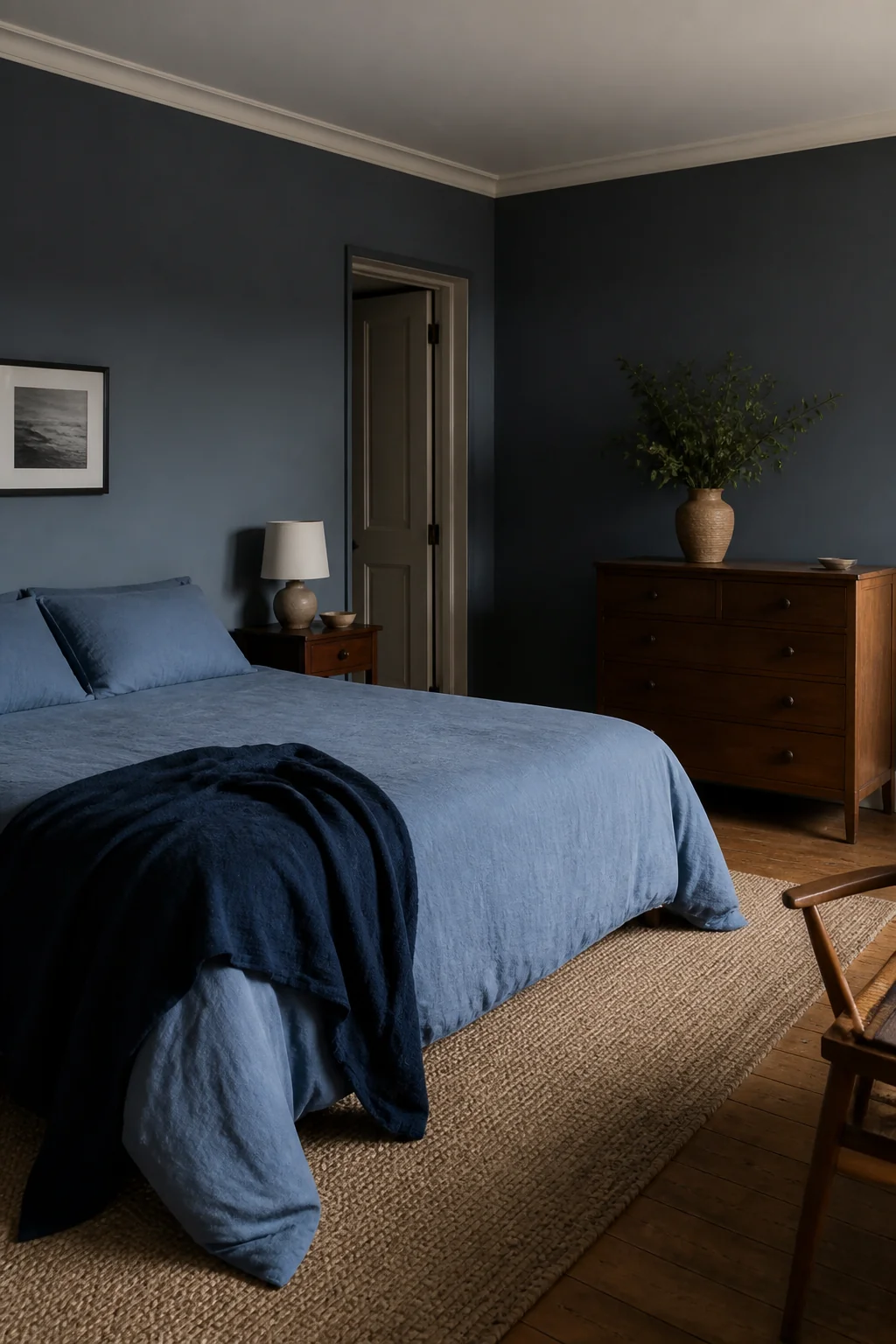
Cerulean is a bright, almost electric blue that sounds wrong for a bedroom and works anyway if you weigh it down. Keep it on the walls only, then drape a deep navy or charcoal throw across the foot of the bed. A heavier weave helps: a cotton throw at 6 to 8 pounds in a 50x60 size anchors the brighter wall and gives your eye a resting point, where a thin fleece just looks like laundry.
Two things to check first. Cerulean has a high light reflectance value, so it throws colored light onto whatever sits near it, and white bedding within a couple of feet of the wall picks up a visible blue cast. It's also the one blue here that argues with a warm bulb, tipping slightly green at 2700K. If the room has a single north window, paint your sample on the wall opposite that window, where the color will look its worst, before you buy a gallon.
9. Coastal blue with white shiplap headboard
Coastal blue reads soft and lived-in, the shade you see on beach houses. Pair it with a shiplap headboard painted white or off-white; nail-up or peel-and-stick kits run $150 to $300 depending on how much wall you cover. Build it about 54 inches wide for a queen so it reads as a headboard rather than a stretch of wainscot, and stop the boards 48 to 54 inches up the wall, which puts the top edge just above your pillows when you sit against it.
A few woven baskets on floating shelves and a natural wood nightstand finish the room for another $80 to $150. The failure mode with this one is going all in on the theme. Rope details, anchors, and painted oars turn a calm blue bedroom into a gift shop, and once a room reads as decor rather than a place to sleep, it's hard to unsee. Two textures, the wood and the woven, are plenty.
10. Indigo with soft linen curtains
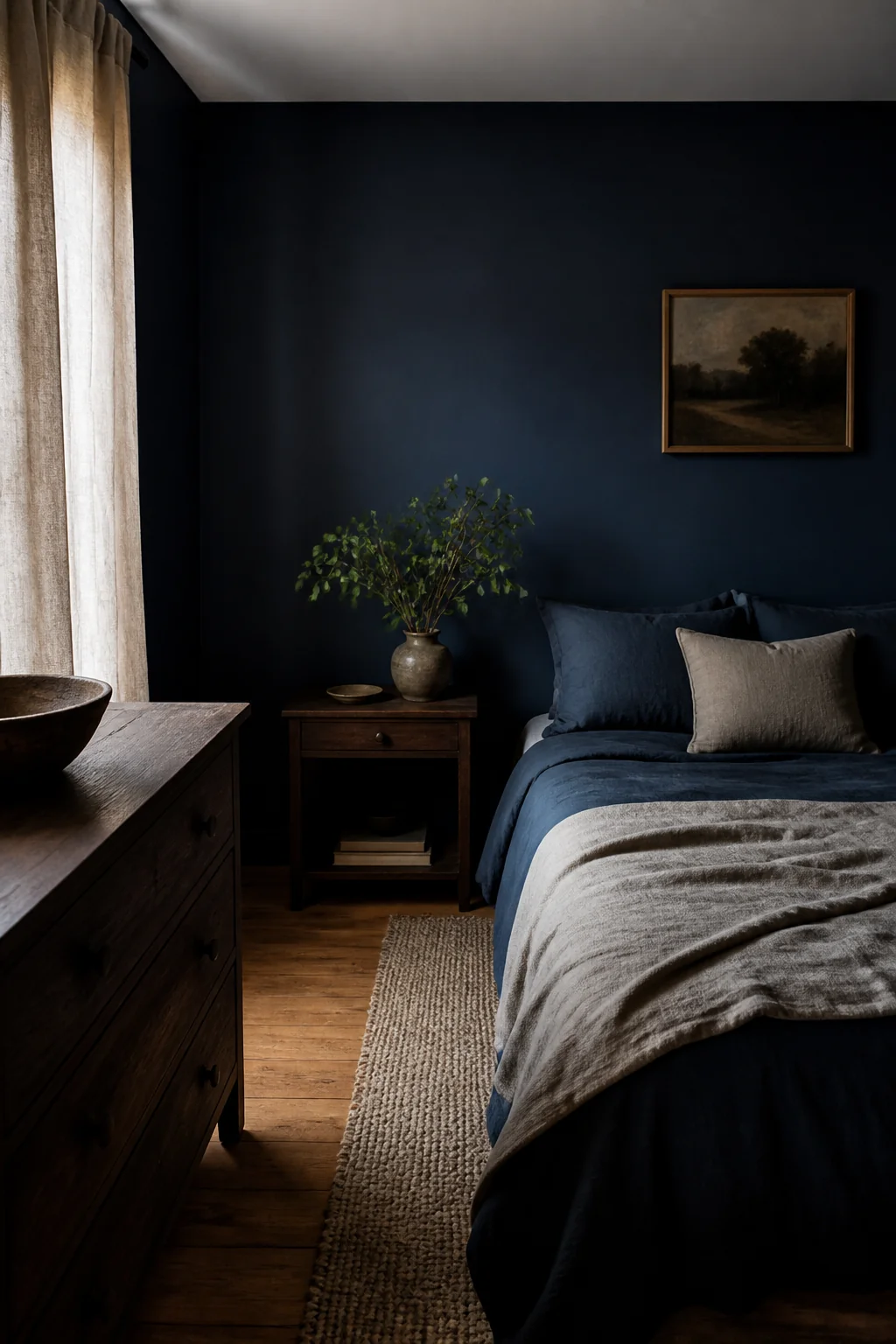
Indigo runs deep, close to midnight, the color of denim that's been worn in for years. Floor-to-ceiling linen curtains in cream or soft white pull the weight back the other way and keep the room moody rather than dark. Drill the brackets 4 to 6 inches over the frame, or nearer the ceiling if the wall allows, then carry the rod 8 to 12 inches past the window on either hand so the gathered linen sits against paint and the glass stays clear all day.
Buy enough fabric: the panels together should measure two to two and a half times the window width, or they hang flat and skimpy no matter how good the linen is. A pair of linen-blend panels costs $50 to $120, and a 5x7 cream or light gray rug ties the floor to the curtains. One caution. If you also work in this room, indigo on all four walls makes daytime video calls difficult to light, so consider limiting it to the two walls behind your desk chair.
11. Cornflower blue with warm wood flooring
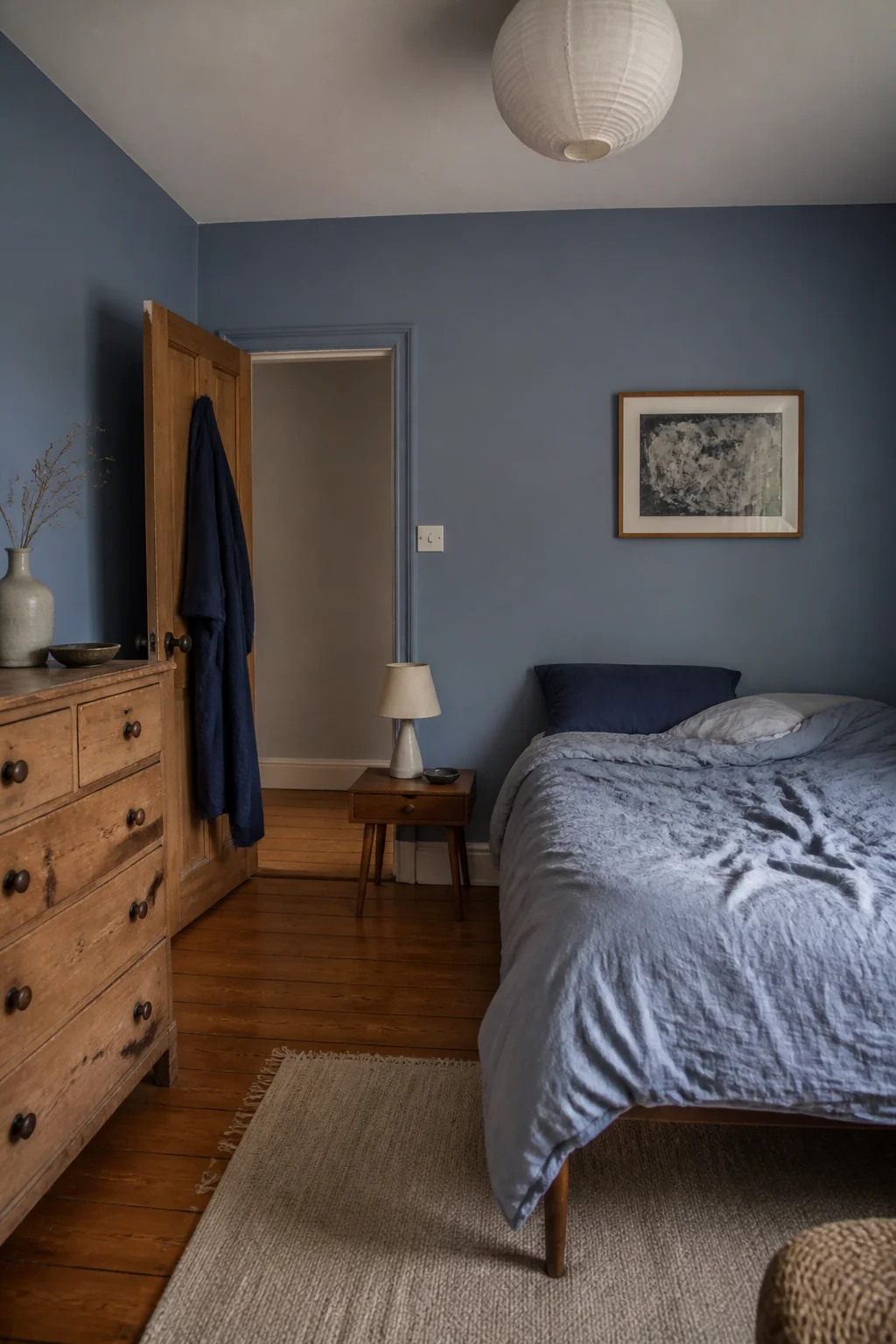
Cornflower is cheerful and slightly saturated without tipping into neon. Natural wood floors, or a laminate with a convincing oak grain, do half the balancing for you, since the amber in the wood offsets the coolness overhead. Paint the ceiling white or cream rather than carrying the color up, which keeps cornflower from pressing down on the room.
This shade is fussy about light. In a north-facing bedroom or a basement, cornflower goes gray and slightly dirty by mid-afternoon and no amount of lamplight rescues it; south and west-facing rooms are where it holds its color all day. If your floors are cool gray vinyl or gray-washed laminate, put down a jute or wool rug in a warm neutral, roughly $120 to $250 in a 5x8, to bridge the temperature gap. Stick to matte or eggshell too, because satin bounces enough light off a saturated blue to look plasticky.
12. Slate blue-green with brass hardware
Blue-green sits about halfway between blue and teal, close to seafoam, and it takes brass hardware beautifully: dresser pulls, cabinet knobs, a lamp switch. Keep the textiles neutral in gray, white, or cream so the metal stays the only warm note. Brass warms the cool blue-green without clashing because the two sit across from each other on the color wheel.
Measure before you order pulls. The standard center-to-center spacings are 3 inches, 3.75 inches, and 5 inches, and guessing wrong means drilling new holes in a dresser front you liked. Solid brass costs $8 to $15 per pull and holds up for decades; brass-plated zinc runs $3 to $5 and wears through at the thumb contact point within a year or two, leaving a silver patch on every drawer. If the room currently has chrome or brushed nickel, change all of it at once, because a mixed set on one dresser reads as a repair rather than a choice.
13. Steel blue with a light wood platform bed
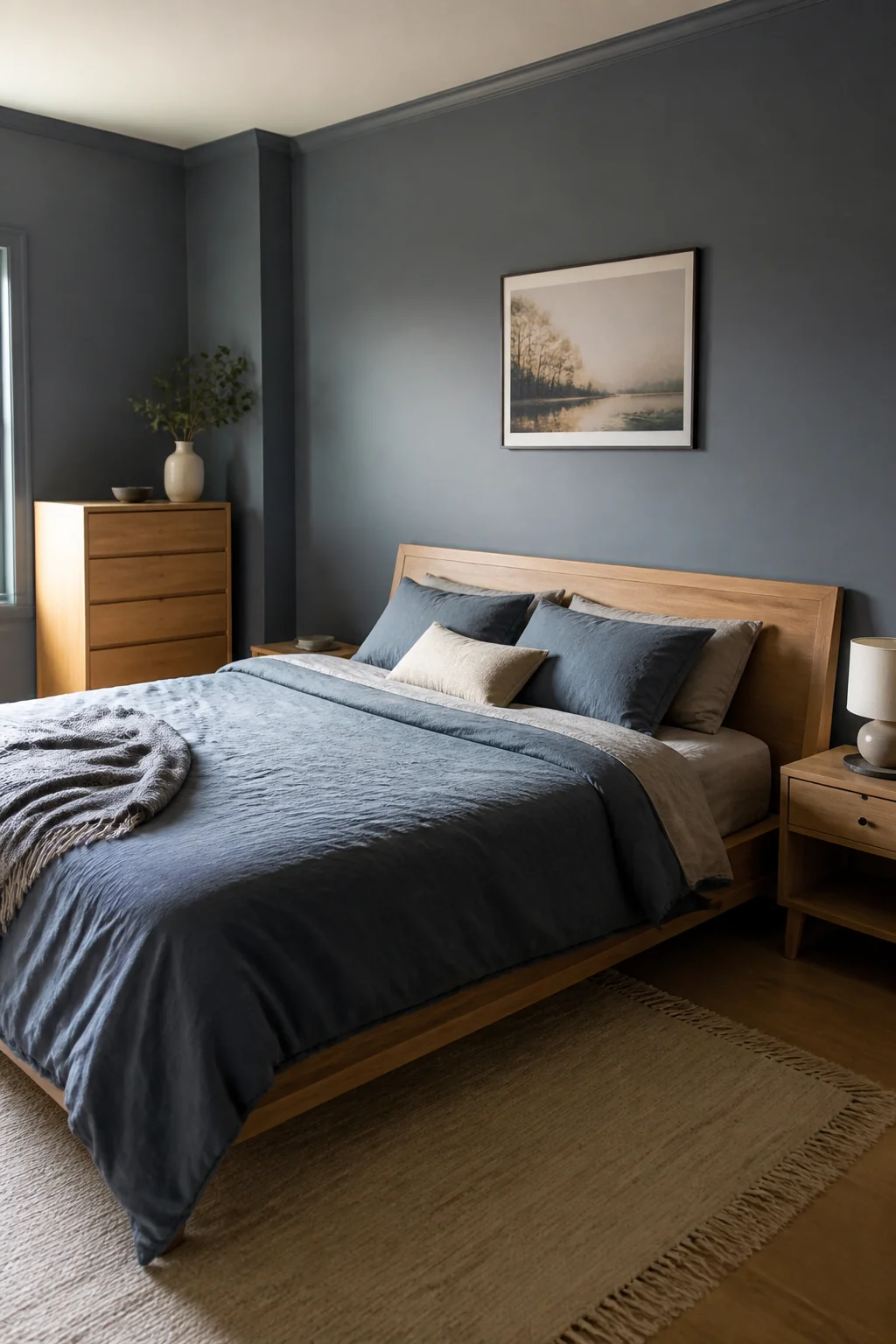
Steel blue is muted and far less sweet than powder blue, which makes it easy to live with year after year. A light wood platform bed in ash, birch, or white oak supplies the contrast, and skipping the headboard, or keeping it low, leaves the wall unbroken.
The proportions are the point. A platform bed puts the top of the mattress around 10 to 14 inches off the floor, against 24 to 25 inches for a frame with a box spring, so more wall stays visible above the pillows and a small room reads taller. Think about your own knees before committing, though, since a low bed is genuinely harder to get out of if mornings are stiff. Solid wood queen frames run $400 to $900 and veneered ones $250 to $450. Set the nightstand within 4 to 6 inches of the mattress edge so the lamp switch is reachable lying down.
14. Baby blue with white trim and gray linens
Baby blue on the walls, crisp white trim around doors and baseboards, cool gray bedding: this is the most traditional restful combination you'll find, and it's predictable in the way that things which work usually are. Use semi-gloss or satin on the trim and matte or eggshell on the walls, so the two surfaces read as separate planes even under the same lamp.
Getting the white right is the whole job. A trim white with a warm base looks yellow and slightly grubby beside a cool baby blue, so choose a clean neutral white and brush a foot of it directly next to your blue sample before buying a gallon. A quart of trim enamel, about $30, covers the baseboards and door casings in an average bedroom with a coat to spare. Finish with a plain white or gray rug and one small piece of soft blue art rather than a gallery wall, which fights the calm you painted for.
15. Deep ocean blue with minimal furniture
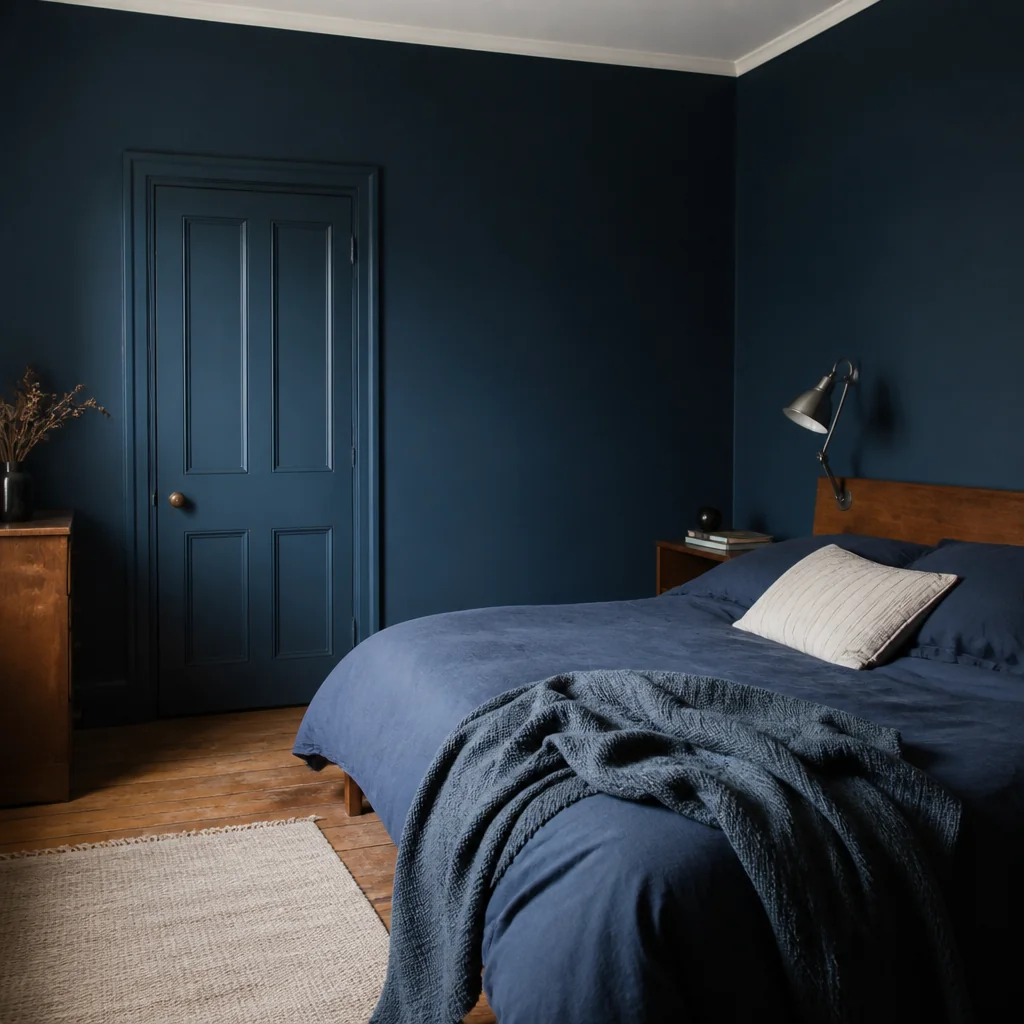
Deep ocean blue lands just short of black-blue, and it only holds up when everything else in the room stays quiet: a low platform bed, one nightstand, one lamp. With the walls carrying the whole room, your eye has almost nothing to sort through.
Plan for the light you're about to lose. A single ceiling fixture won't cover a room this dark, so add a sconce or a lamp at roughly 800 to 1,000 lumens on each side of the bed unless you want to read in a cave. Coverage is the other surprise: deep colors carry more pigment and less white base, so they hide poorly and typically need three coats over a gray primer, which stretches a one-day job into two. Buy an extra quart at the start rather than trying to match a second batch later. A single white or cream throw pillow is all the contrast this room needs.
16. Washed-out blue on all walls, warmer wood accents
Washed-out blue, the faded-denim kind, settles a room the moment the second coat dries. Bring in warm wood through nightstands, a dresser, or floating shelves, and top the bed with a cream or off-white spread. Mid-tone woods like oak, ash, and beech suit it better than cherry or mahogany, whose red pull can leave the blue looking dingy.
If you're mixing wood pieces you already own, don't chase an exact match, which almost never lands. Aim for the same broad temperature and let the grain and tone vary; it's two woods with opposite undertones side by side that looks like a mistake. A solid wood nightstand runs $120 to $300 and a decent dresser $400 to $800, with secondhand versions of both common at about a third of that. Keep the lowest shelf at least 18 inches above the mattress so you don't crack your head sitting up, and anchor into studs rather than drywall plugs.
17. Soft slate with layered lighting
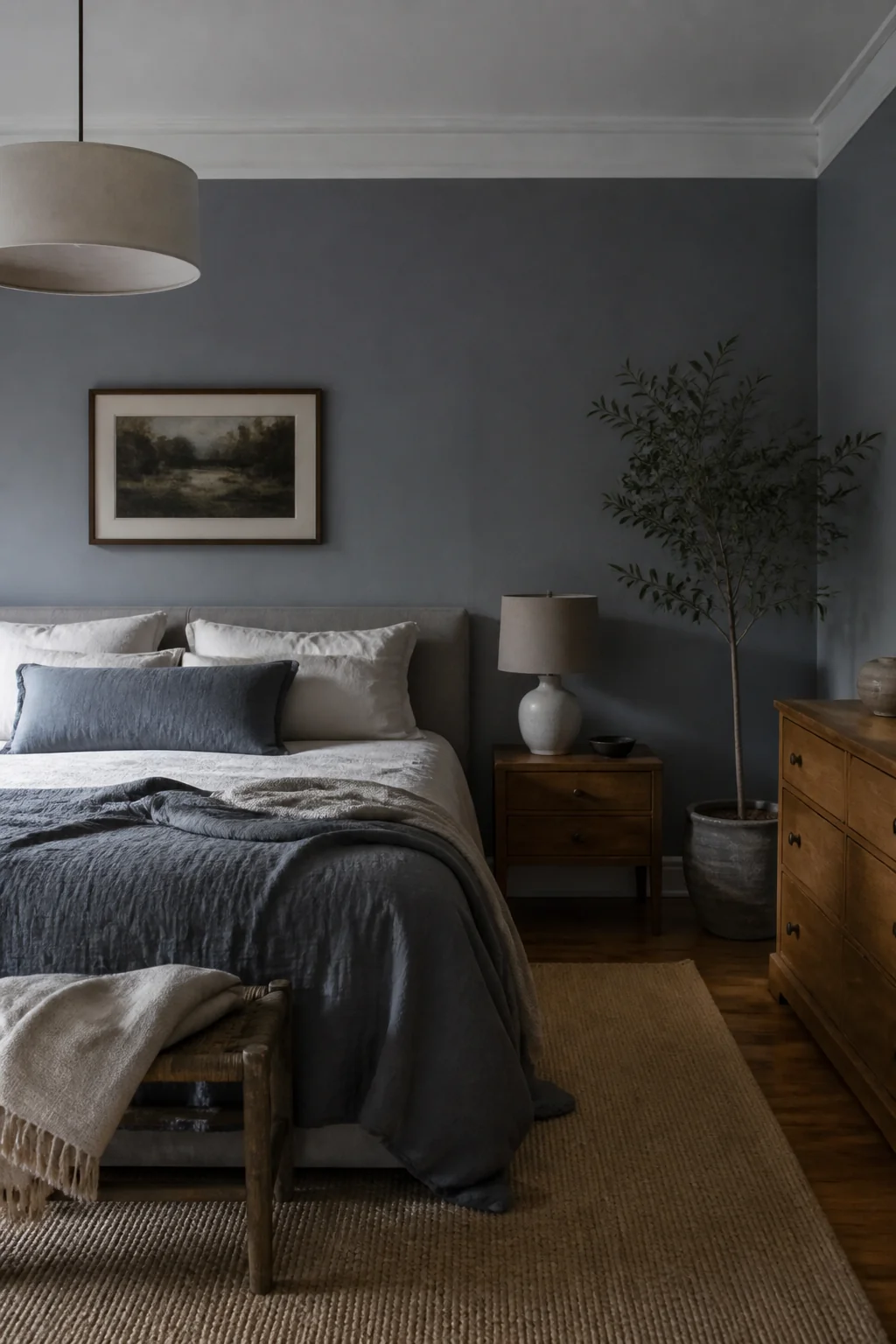
Soft slate blue plus several light sources gives you control that paint alone can't. Three layers is the working number: bedside lamps at 2700K for reading, a ceiling fixture on a dimmer for getting dressed, and one low accent lamp for late evening. The wall color stays put while the warmth and depth you perceive move with each setting.
Position the bedside lamps so the bottom of the shade sits near shoulder height when you're propped up, roughly 20 to 24 inches above the mattress, which keeps the bulb out of your eye line and the glare off the wall. Smart bulbs at $10 to $15 each let you dial brightness down without rewiring, and a plug-in lamp dimmer costs about $15. Of every lighting variable in a blue bedroom, color temperature is the one that matters most: a 5000K bulb strips the warmth out of soft slate no matter how good the paint is.
The whole guide in one image
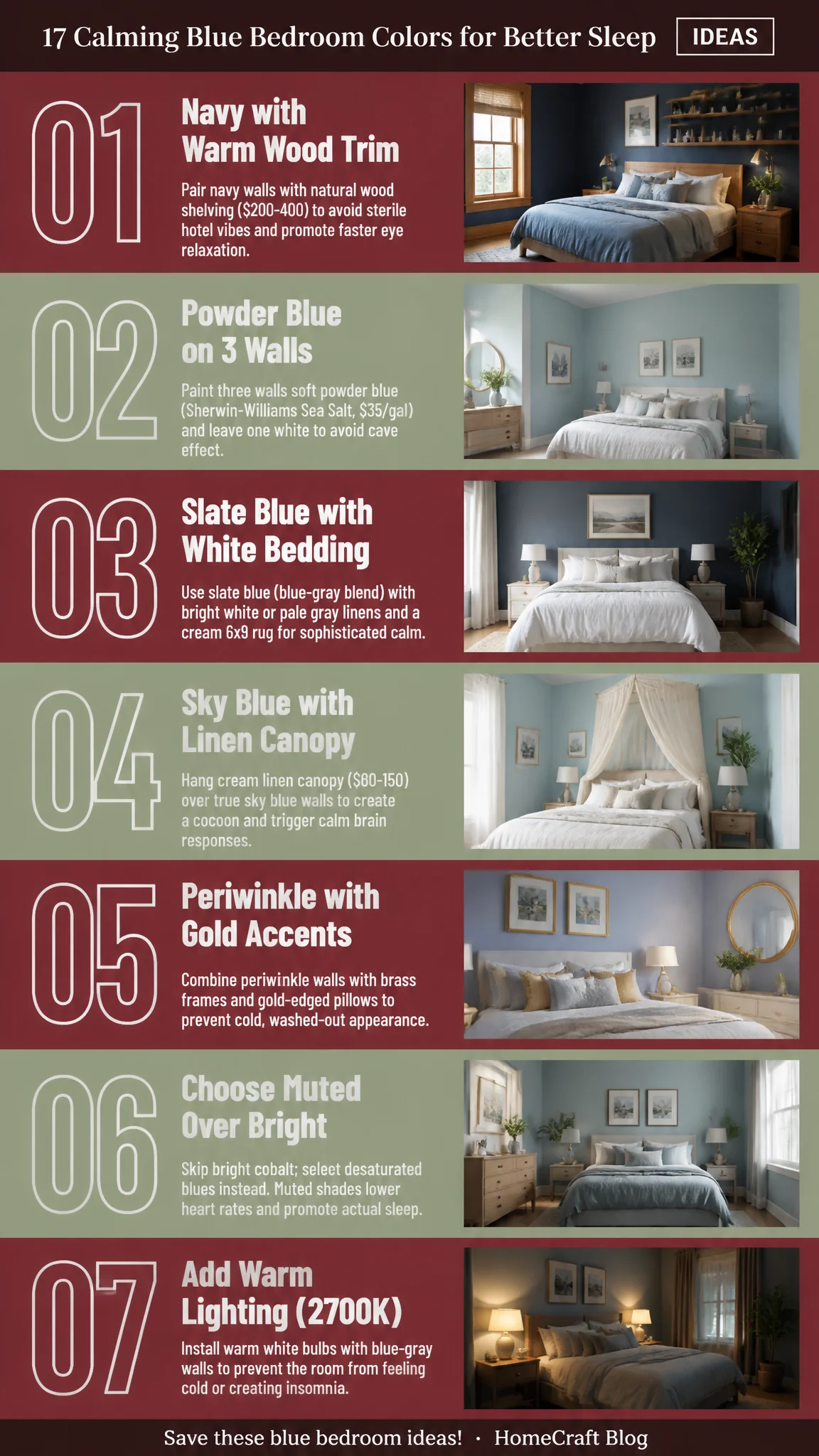
None of this is settled until the paint is on the wall. A sample pot costs $6 to $10, and a two-foot square of it beside your own bedding tells you more than any chip in the store, particularly after dark with only the lamps burning. The blues that disappoint people are almost always the ones chosen under showroom fluorescents, at eye level, with nothing else nearby to argue with.
Ideas fade by Friday. A plan finishes the room.
You just read a full guide to your bedroom. Saving ideas will not change it; a plan will. The Home Decor Collection is every planning tool we make, for every room in the house, in one download, so the after photos below stop being other people's rooms.
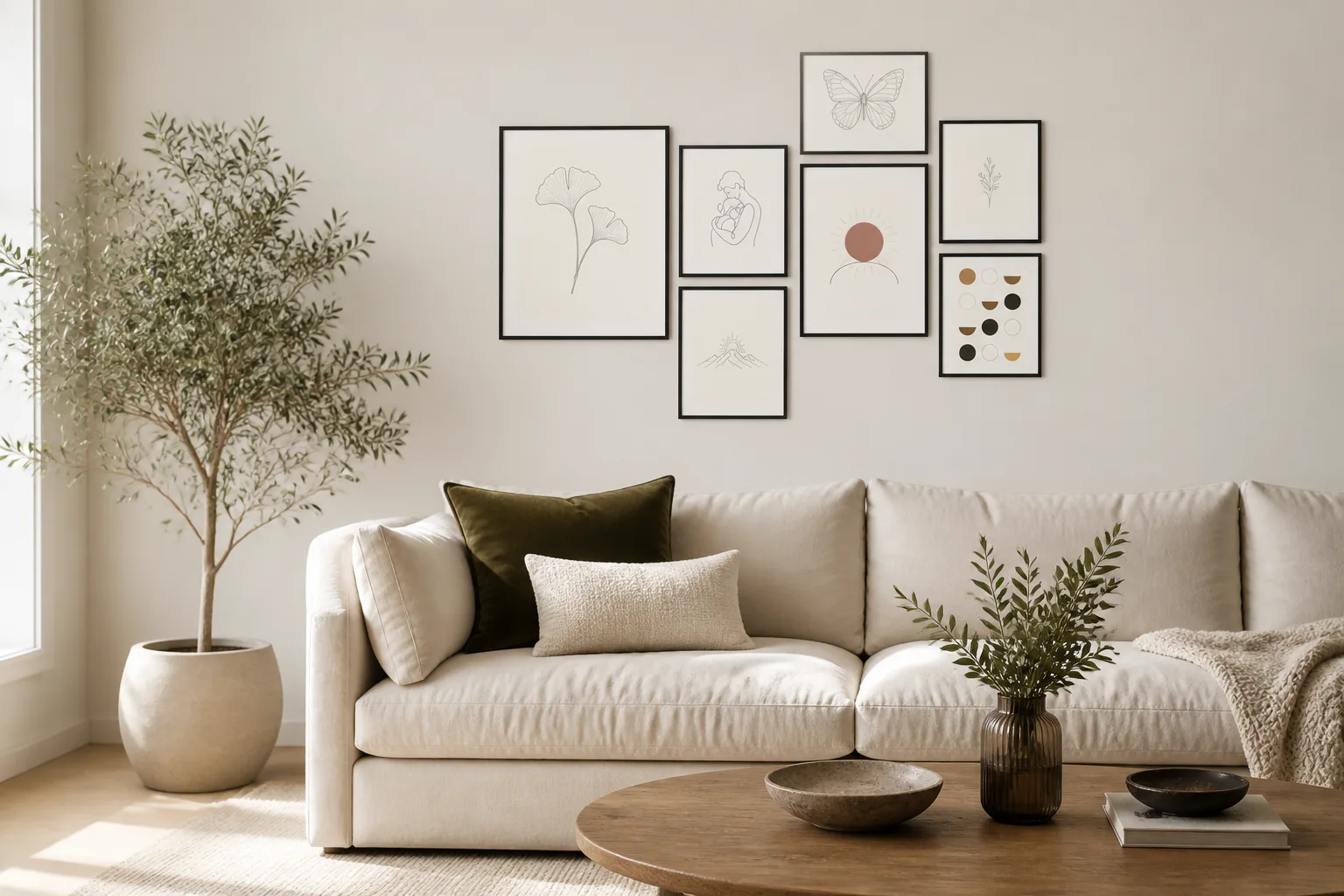
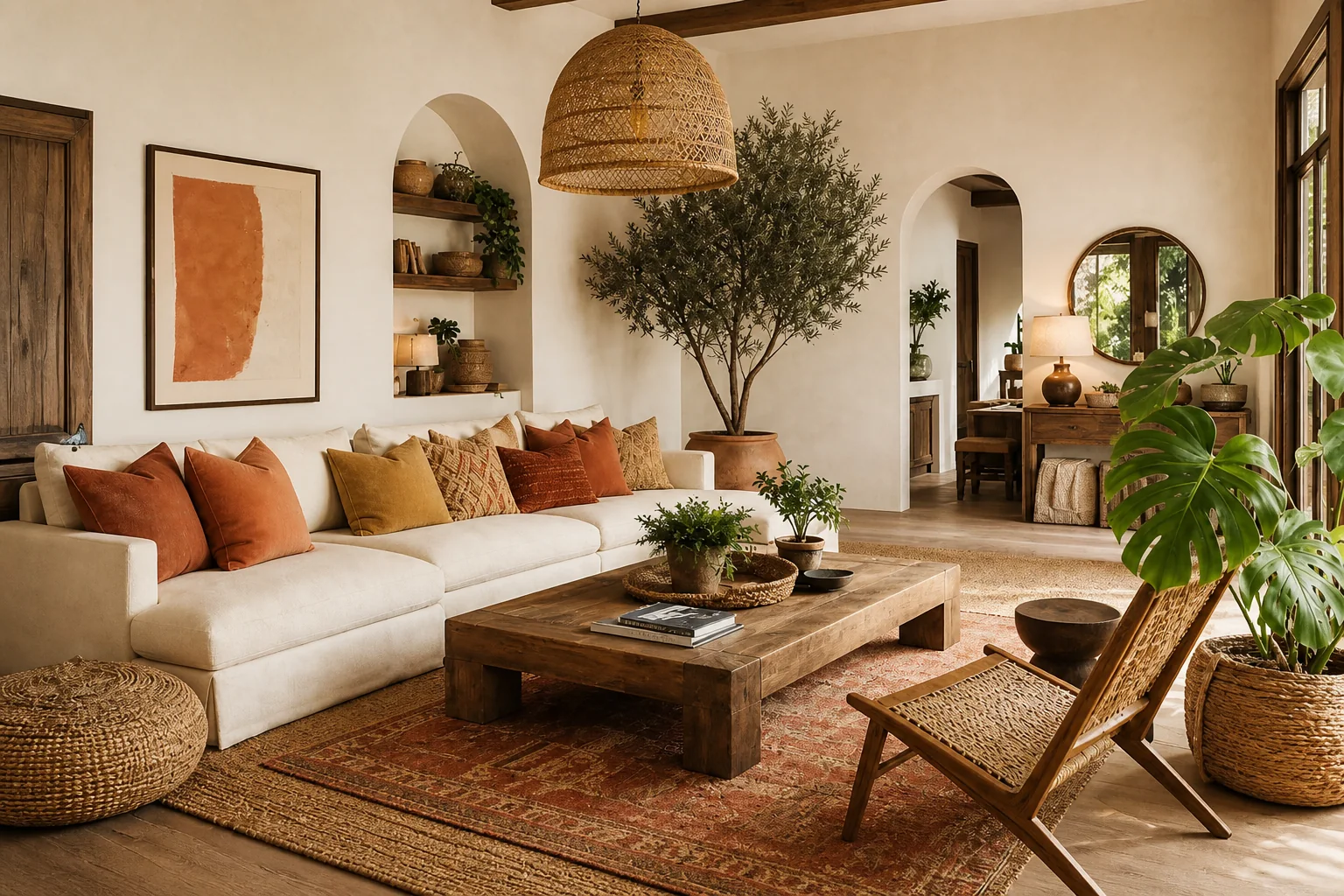
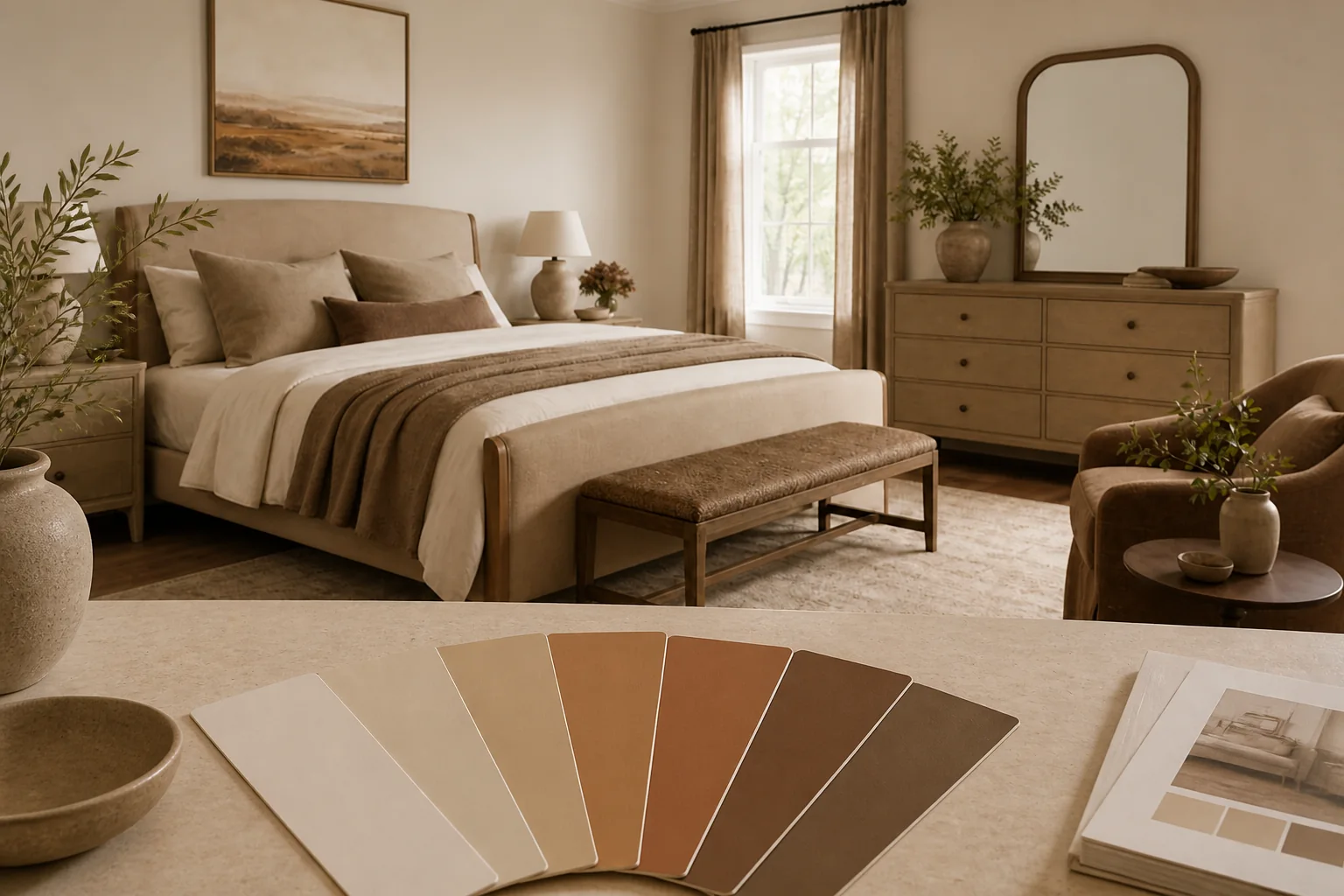
- Six room Style Kits, each with layout, palette and shopping list$114
- The Gallery Wall Studio: 200 prints + 15 measured layouts$29
- The Room Makeover System: 40 solved room layouts + workbook$29
- The Color Palette Handbook: 60 palettes shown in real rooms$19
- The Whole-Home Reset: 40 printable organizing checklists$19
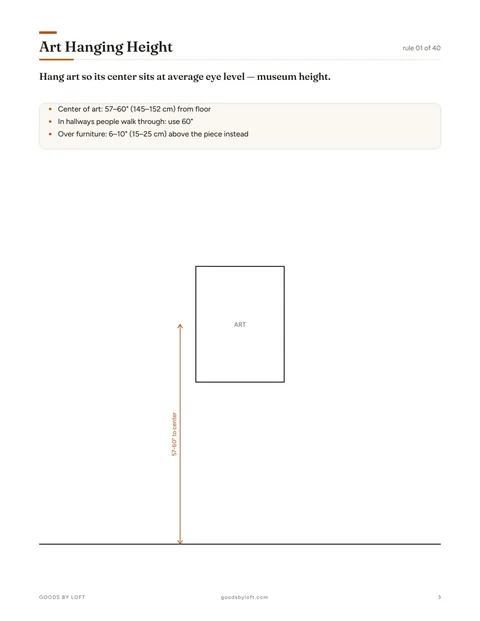
- The Decorator's Cheat Sheets: the 40 measurements that matter$9
- All eleven products, bought separately
$219$97
A single hour with an interior designer costs more than the entire Collection, and this one keeps answering for every room you will ever decorate. Free updates included as the products grow. And if it is not for you, the 14 day money back promise means you simply get a refund.