How to Decorate a College Bedroom in a 10x12 Dorm Room
College bedroom ideas that work in tiny spaces with tight budgets and rental restrictions. Real solutions, not Pinterest fantasies.

This post contains affiliate links. As an Amazon Associate I earn from qualifying purchases. If you buy through our links, we may earn a commission at no extra cost to you.
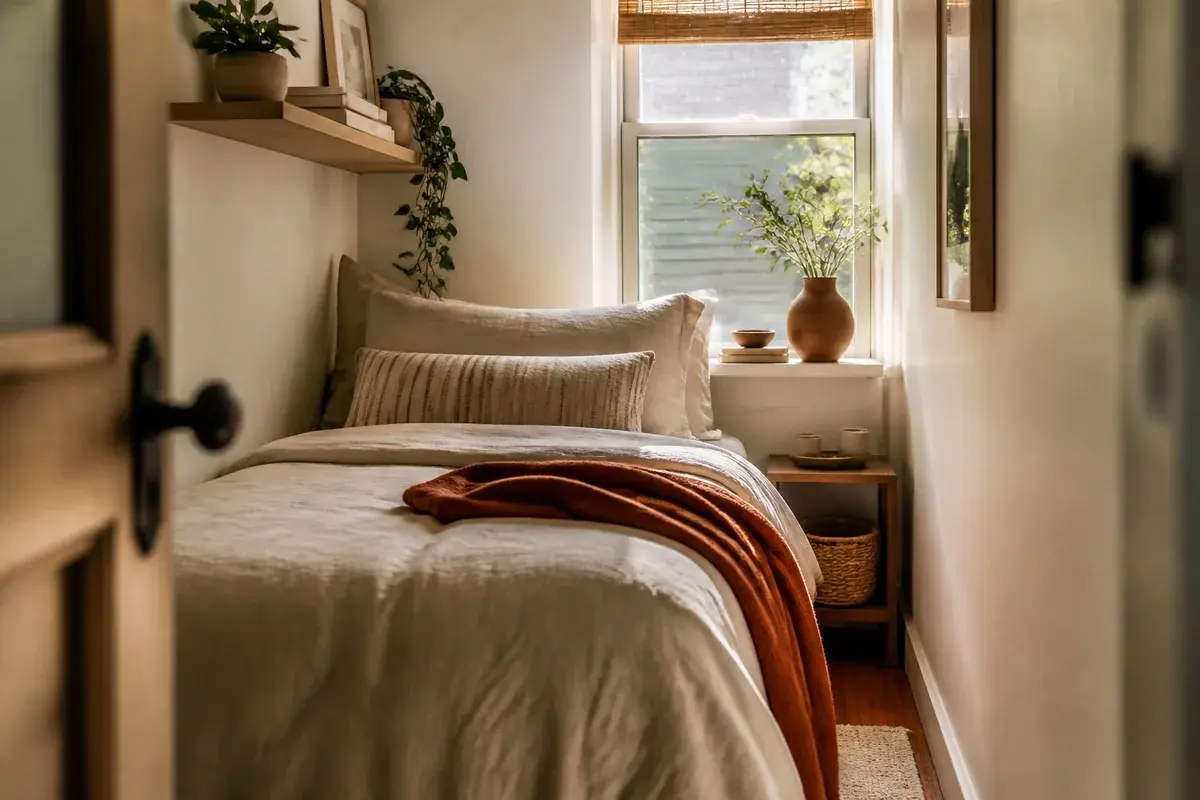
A standard dorm room runs about 10 by 12 feet, and most of that footprint is spoken for before you arrive: a bed you didn't pick, a desk bolted to a wall, a wardrobe, and a roommate with completely different taste. That's the gap between the college bedroom ideas saved on your inspiration board and the room you were assigned. Those photos were shot in bedrooms twice the size, with walls somebody was allowed to drill into. For move-in day and deposit rules, the guide to decorating a dorm room without losing your deposit covers the basics this page builds on.
The constraints are real but specific, so you can plan around them: adhesive instead of nails, vertical storage instead of sprawl, and twin XL bedding instead of twin. Here's the order that gets a small, rule-bound room feeling like yours, along with what each piece tends to cost and where people waste money.
The Rug Situation Is More Important Than You Think
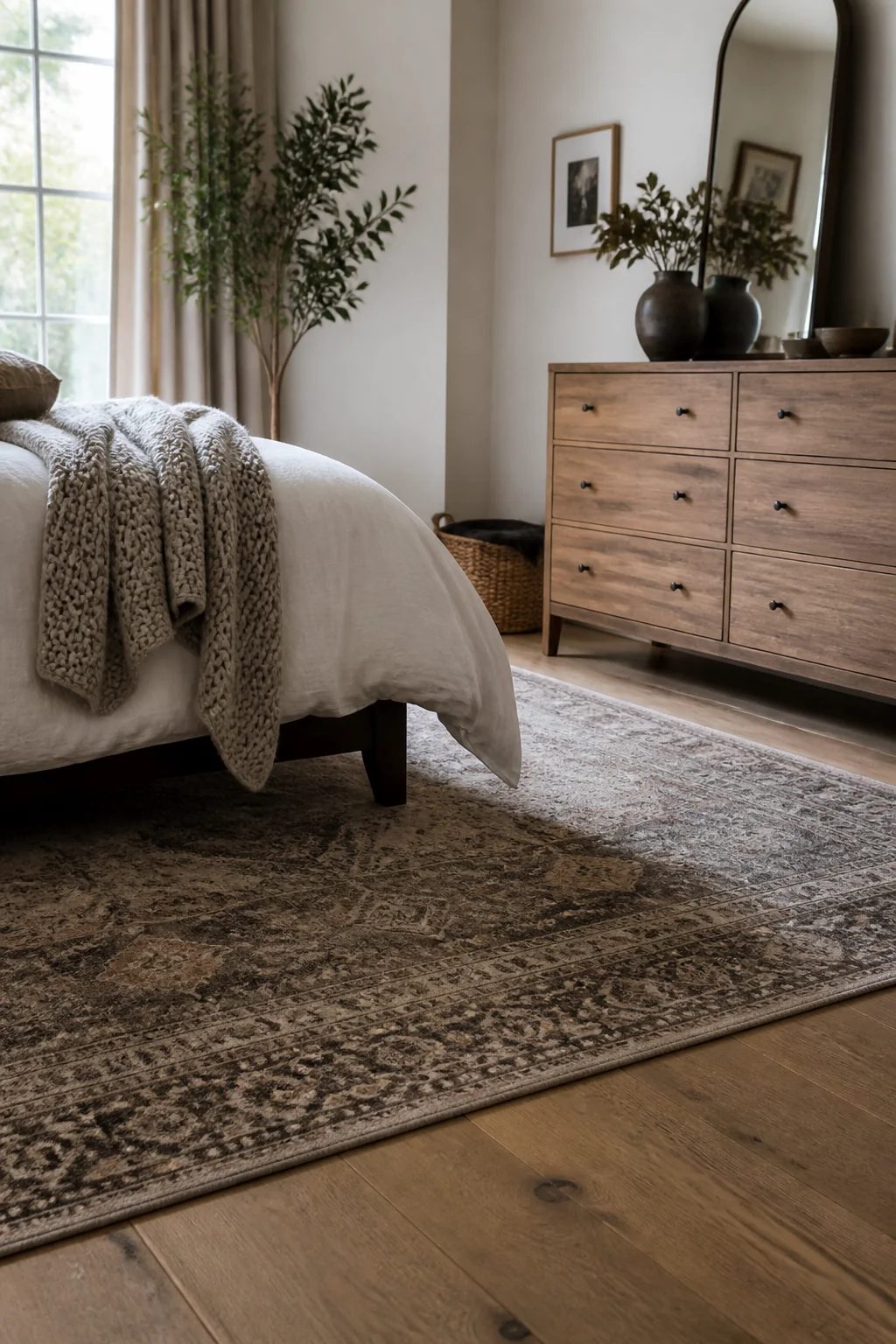
Your rug does more work than any other single piece in a small bedroom. It covers the institutional carpet, gives the bed corner a visible edge, and makes the floor somewhere you'd sit rather than a surface you cross.
Size it to the furniture, not to the room. In a 10 by 12 dorm, a 5x7 laid under the foot of the bed and out into the walking path leaves a border of bare floor you can sweep and still clears the closet door swing. In an 8 by 10 room, drop to a 4x6. Thickness is the measurement people forget: most interior doors clear the floor by roughly half an inch, so a plush pile that ends up under a swing will jam it. A flatweave under a quarter inch thick is the safer buy, and it shakes out clean instead of swallowing crumbs the way shag does.
Expect $50 to $100 for one that lasts four years. In small spaces, one good rug beats three cheap ones. If the carpet you inherited is loud, oatmeal or soft gray quiets it down; if it's plain, your rug is the piece that gets to carry color.
Your Walls Are Not Your Enemy (Even in Dorms)
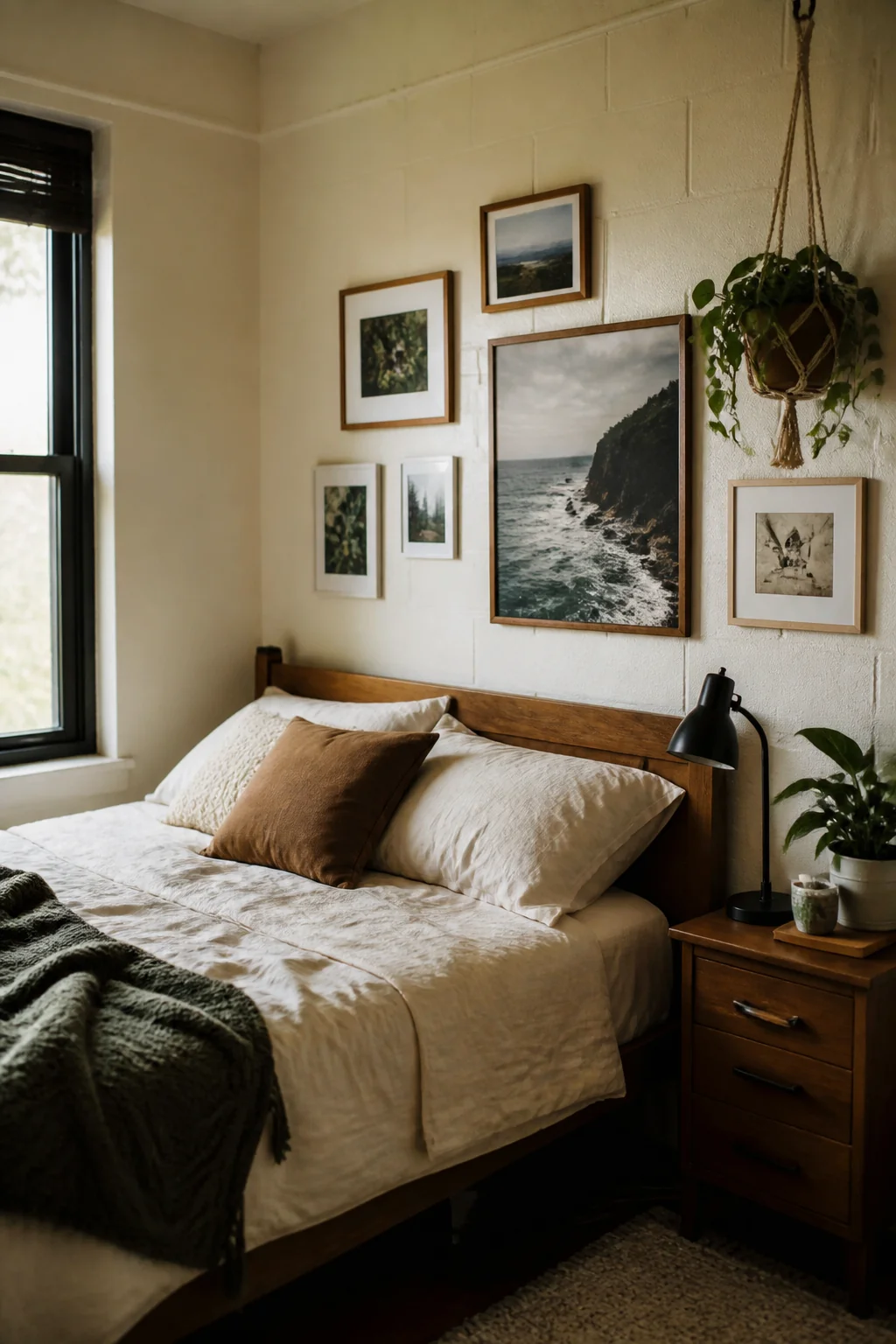
Beige walls tend to stay beige because everyone assumes decorating them breaks a rule. Most housing contracts ban nails, screws and putty, not adhesive, so read the two lines in your lease that say so before you write the walls off.
Adhesive picture hanging strips are the workhorse. A set of medium strips holds around 12 pounds and large ones around 16, which covers a framed print or a small mirror if you double up. Two details decide whether they come off cleanly. Wait a full week after any fresh paint before sticking anything to it, and when you take them down, pull the tab straight down along the wall, slowly, stretching it up to a foot rather than yanking outward. That single motion is the difference between a clean wall and a paint patch on your damage deposit. Where adhesive genuinely struggles is painted cinder block, since the texture leaves too little contact area.
Fabric is the cheapest square footage in the room. A thrifted batik, a vintage flat sheet or a scarf runs $8 to $25 and covers more wall than a frame ever will at that price, and a few yards of cotton weighs under a pound, so four strips hold it easily.
Vertical Storage Saves Your Sanity
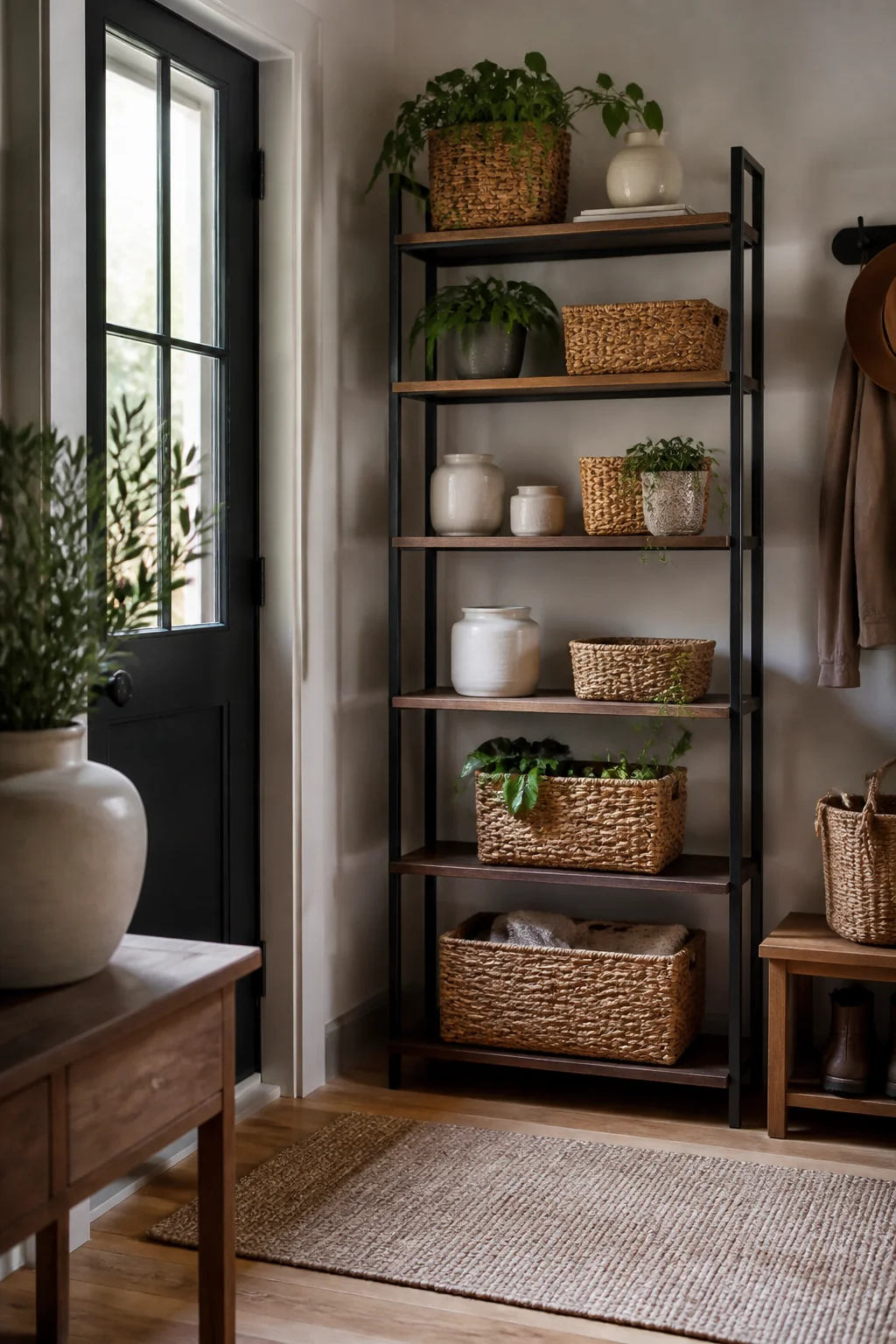
Floor space is the scarce resource in a room this size, so storage has to climb.
A 20-pocket over-the-door organizer costs $20 to $30 and swallows toiletries, snacks and chargers, hidden the moment the closet door shuts. Measure the door before you order: the hooks add roughly an inch and a half at the top, and on a snug-fitting door that gap is enough to stop it latching. Hang one on the closet, never on the room's entry door, because anything that keeps a fire door from closing fully is a contract violation and an easy write-up.
Under the bed is the other free volume. Risers add 3 to 8 inches of clearance for about $20 a set of four, though a lot of dorm frames already adjust on pins, which costs nothing. Ask your RA before buying. Rolling bins around 6 inches tall slide under either setup.
If floating shelves need wall anchors, a freestanding bookcase does the same job with no hardware. Keep it 12 inches deep or shallower and leave 24 to 30 inches of walkway in front, or you gain storage and lose the floor you just covered with a rug.

Lighting Fixes the Whole Vibe
The overhead fixture sits dead center in the ceiling, which flattens every surface and drops your own shadow onto whatever you're working on. The fix isn't a better ceiling light. It's two smaller sources down at eye level and the overhead switched off.
String lights aren't only for outdoor patios. A 30-foot warm white LED run costs about $15 and traces a headboard or a window frame in a few minutes. Check the box for 2700K; anything sold as daylight or 5000K puts you right back in fluorescent territory. Hang them on small adhesive clips rather than tacks, and skim your housing contract first, since plenty of campuses ban halogen fixtures and any lamp with an exposed bulb. LED strings draw only a few watts, so a power strip handles the whole run.
Your desk is the exception to warm light. A clamp or gooseneck lamp at $20 to $25, somewhere around 600 to 800 lumens and neutral rather than amber, keeps an 11 PM reading session from turning into a headache. Warm light everywhere you relax, brighter light where you work.
The Roommate Negotiation You'll Need First
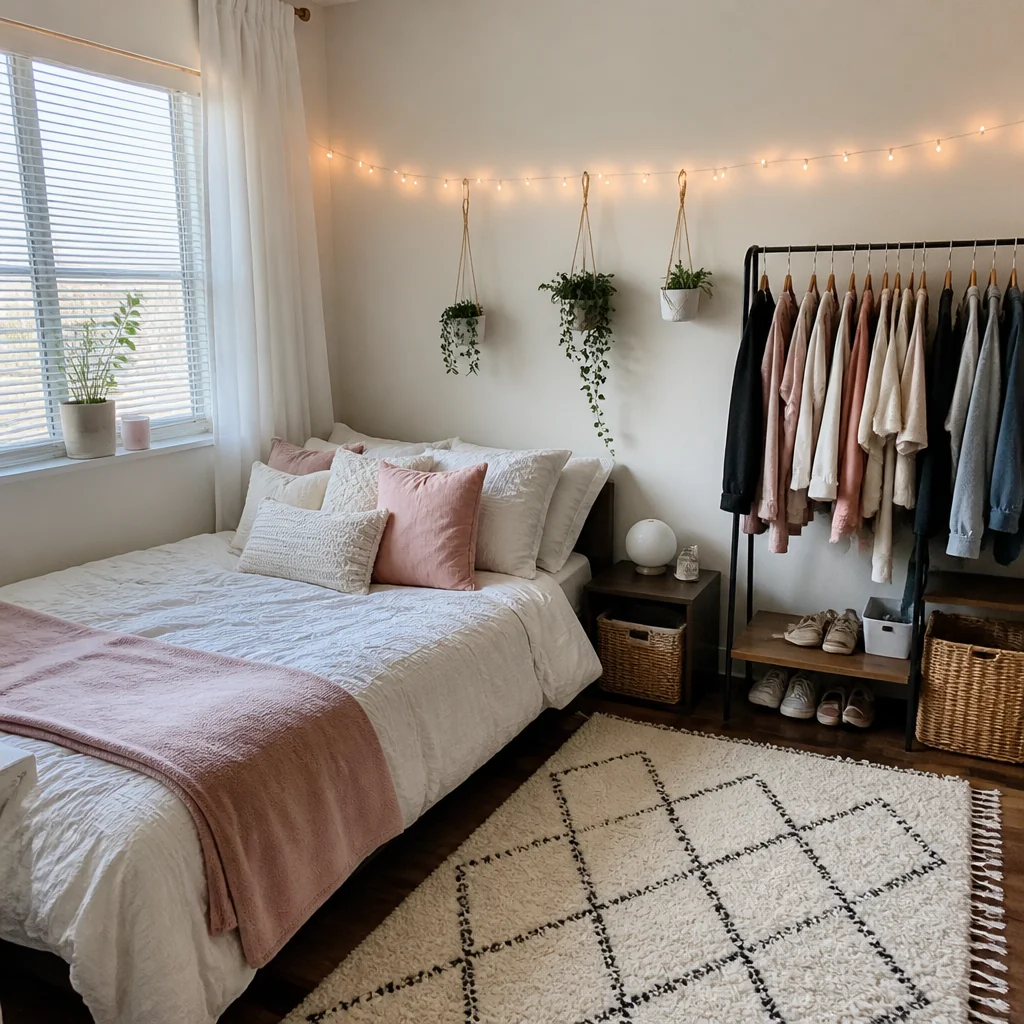
Two people decorating one 10 by 12 room without discussing it first is how a minimalist and a maximalist end up quietly resenting each other by October.
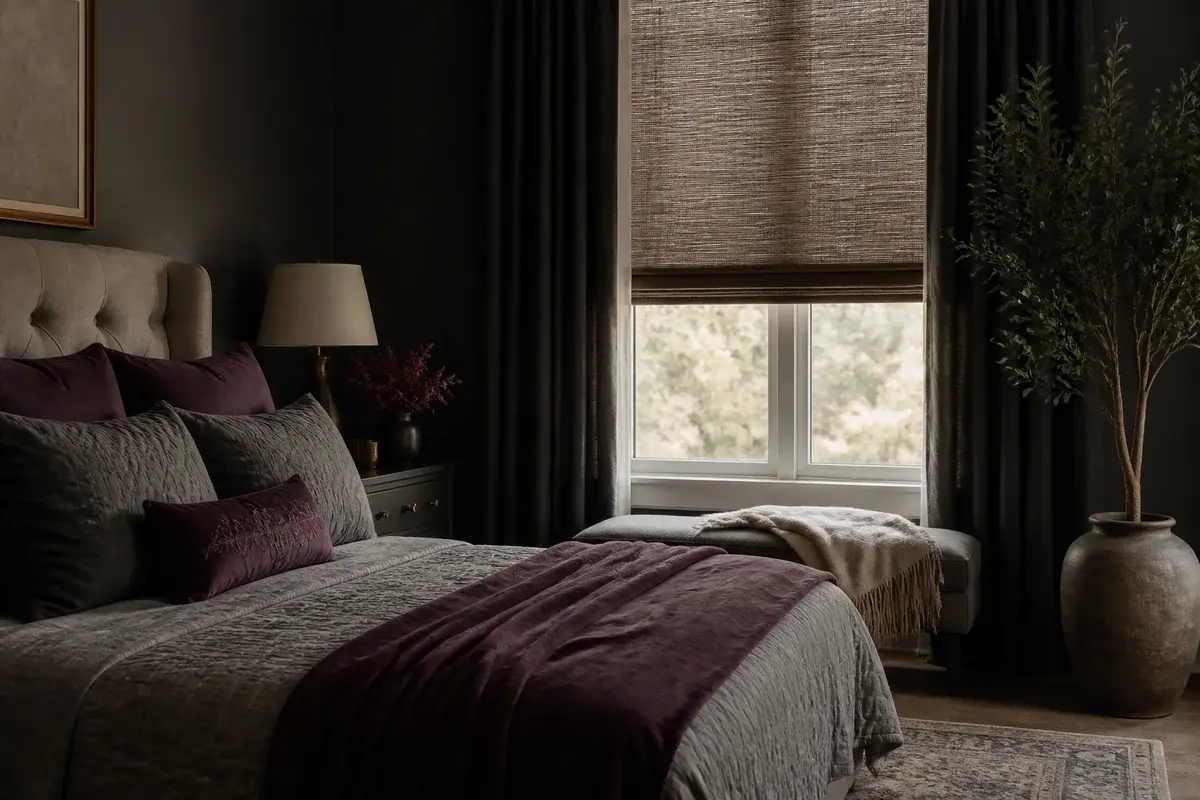
Divide the room rather than blending it. Each person styles their own bed wall however they like, and everything shared, meaning the rug, the curtain, the lamp on the common surface, stays inside a palette you both signed off on. A muted base of gray or cream plus one accent color gives a bare minimal corner and a boho corner somewhere to meet in the middle.
Settle the money in the same conversation. Shared purchases like a mini fridge at $90 to $150, a rug or a floor lamp need an owner from day one: either one person buys it and keeps it, or you split the cost and agree now who buys the other out in May. Splitting a $120 fridge in December with no plan is a genuinely miserable conversation.
Worth deciding early too: whose light stays on when the other is asleep. A clip lamp with a directional shade solves more roommate friction than any color scheme.
The Budget Reality Nobody Mentions
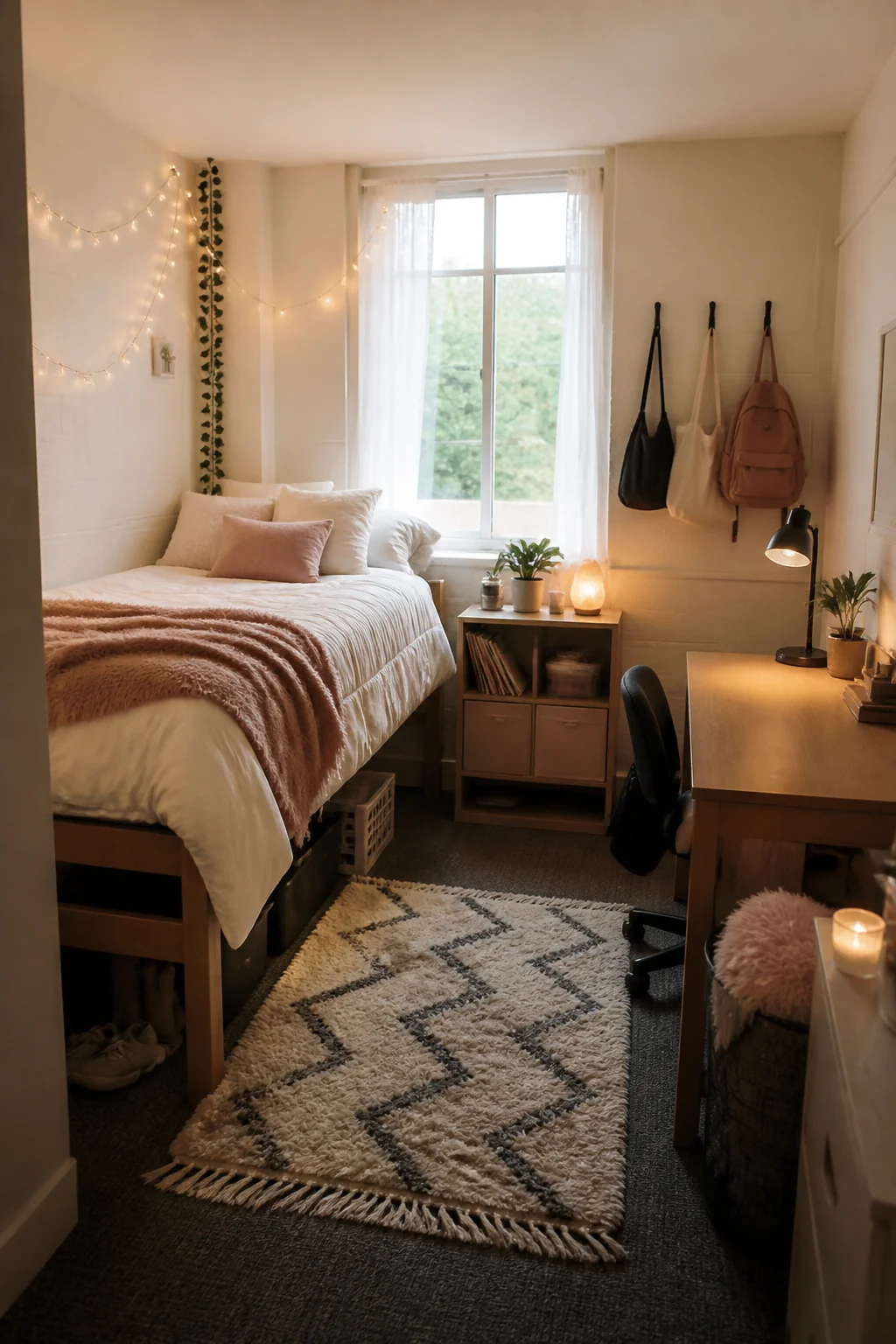
A dorm room that feels finished usually lands between $200 and $500 total, not thousands. A realistic build looks like this: rug $65, warm string lights $15, adhesive strips and hooks $20, desk lamp $25, bedding you like $80, two throw pillows $40, one piece of wall art $30. That comes to $275, and the expensive-looking part of it is the bedding.
Spend there first, and buy the right size. Nearly every dorm bed is Twin XL at 39 by 80 inches, five inches longer than the standard twin sheets sitting in your closet at home. Twin sheets will pop off the corners every night until you replace them. A Twin XL set runs $25 to $40, and a two-inch foam topper at $40 to $60 does more for how you sleep than anything else on the list, since university mattresses are built to survive fifteen years of students rather than to be comfortable.
Then stop for a few weeks. Buying the whole room in August, before you know where the light falls at 4 PM or how far the desk chair rolls into the walkway, is how people end up with pillows they don't use and a rug that doesn't fit.
Save the full guide
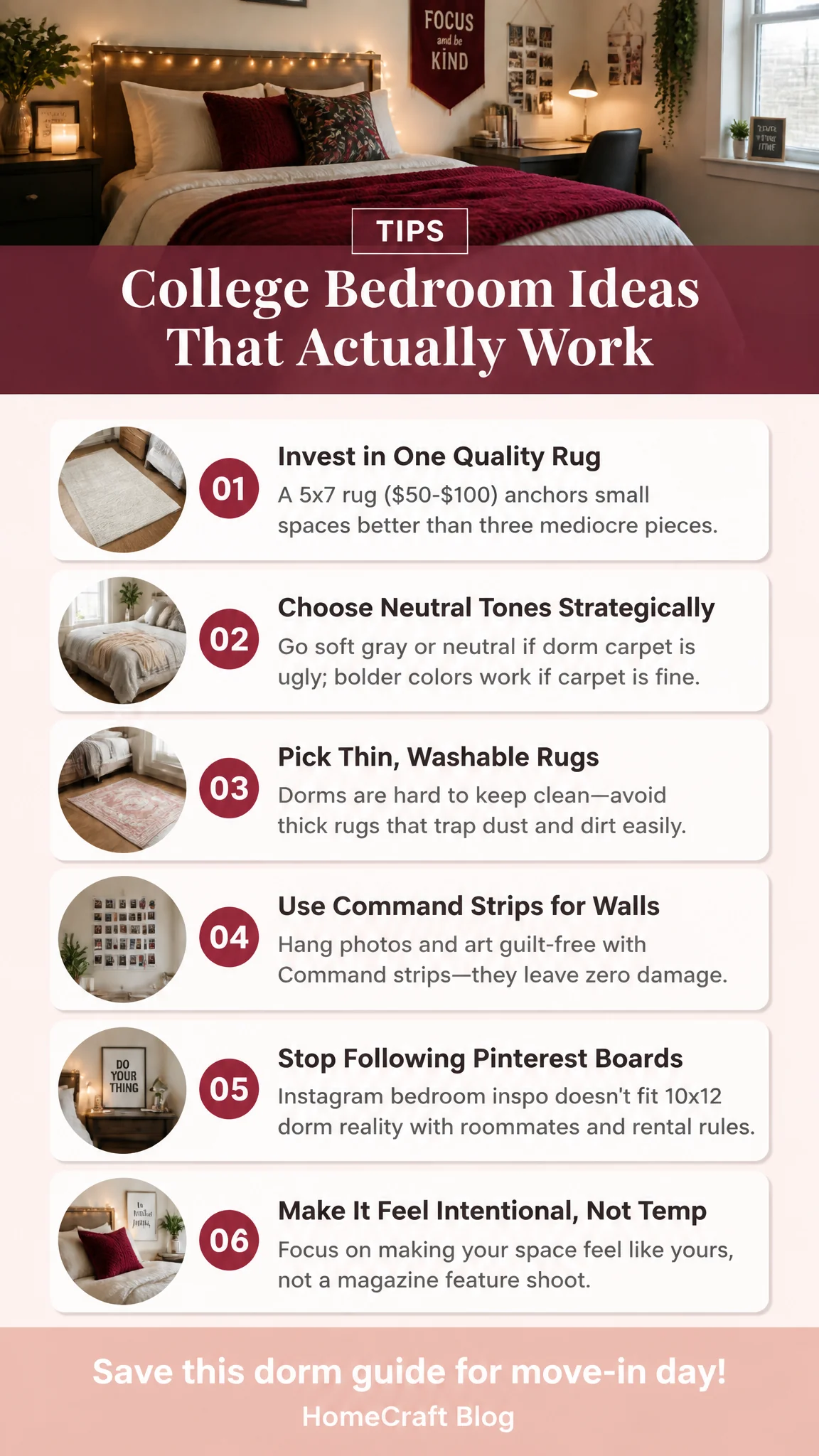
The rooms that feel settled aren't the ones with the most in them. They're the ones where the few things present actually fit the space: a rug that clears the door swing, sheets cut for the mattress you were assigned, a bookcase shallow enough to walk past. Measuring the floor between your bed and your desk takes about a minute and saves most of the returns.