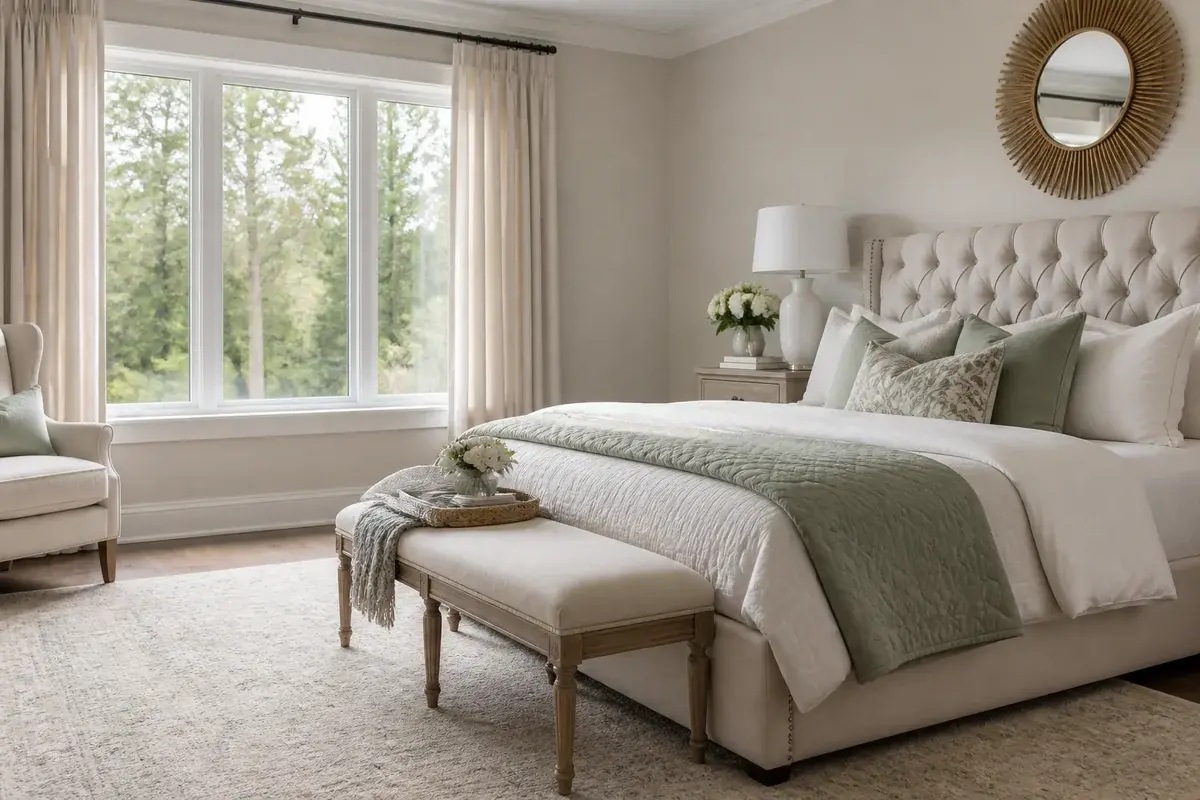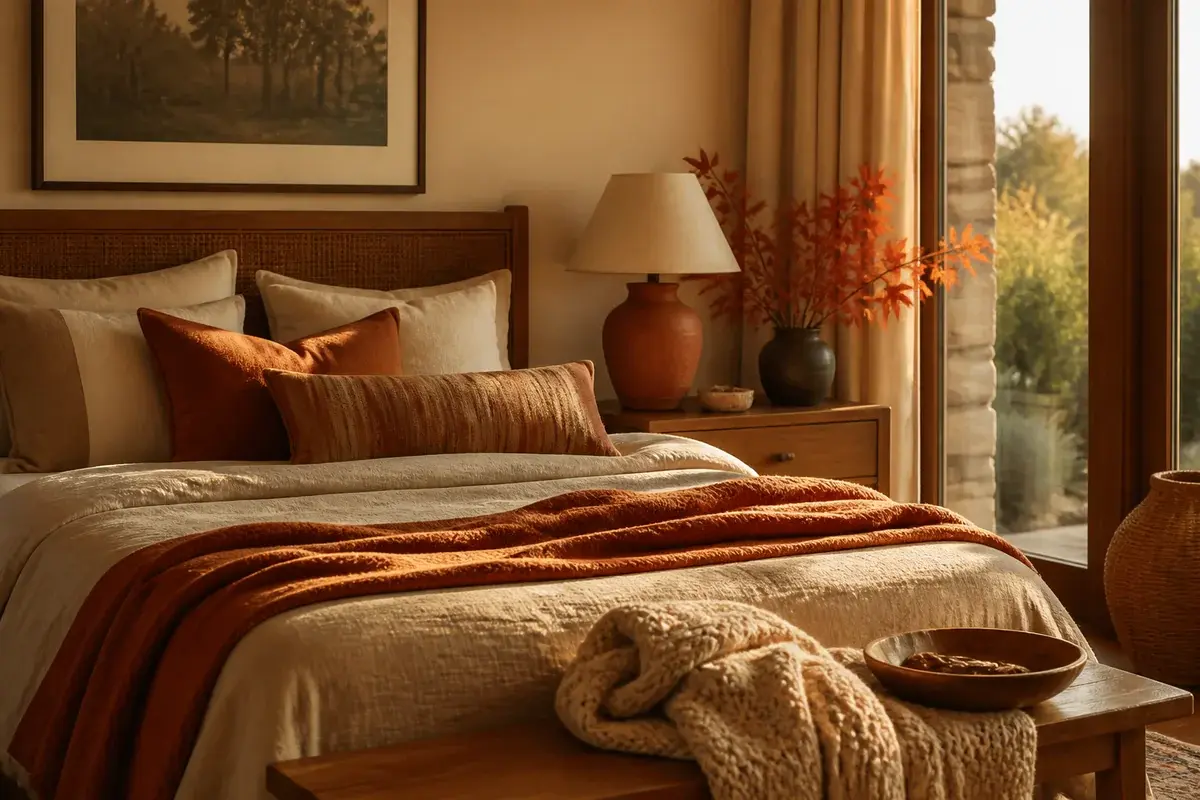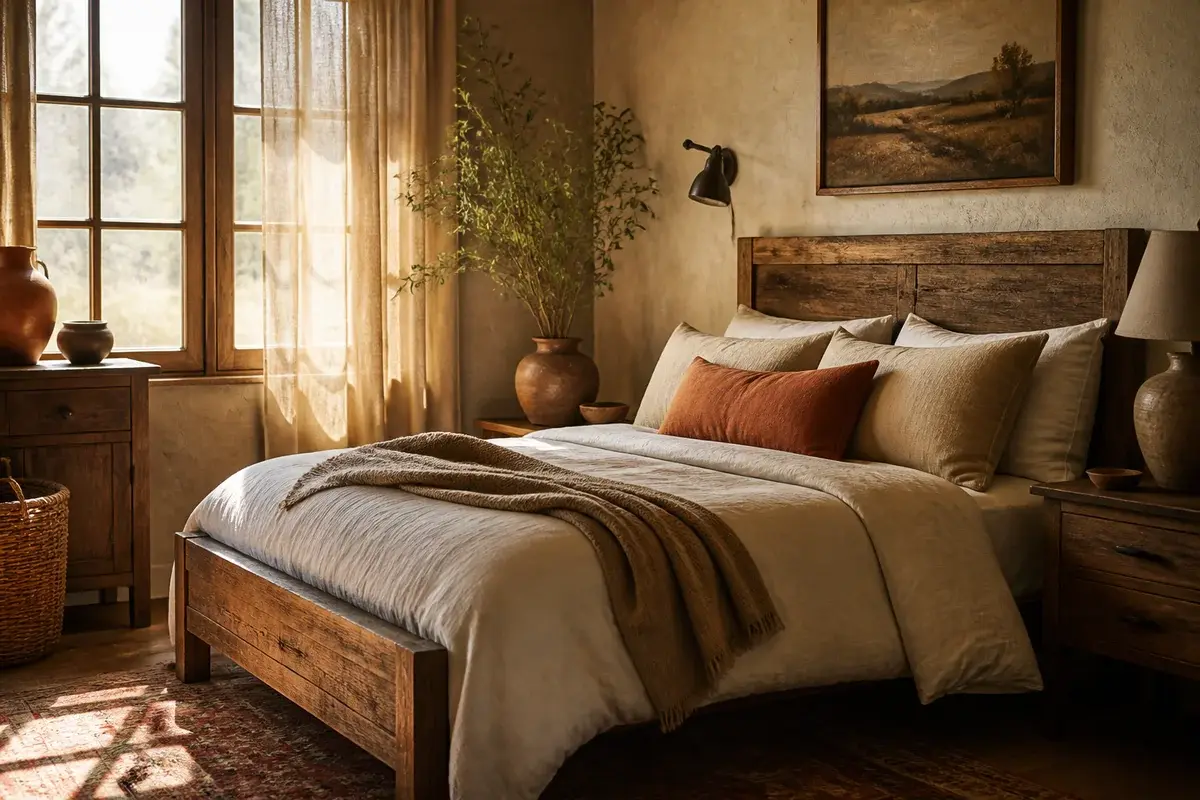
13 Warm Traditional Bedroom Furniture Ideas for Master Bedrooms
Create warm traditional bedroom furniture ideas with wood pieces, layered textiles, and a strong bed anchor for your master bedroom.
This post contains affiliate links. As an Amazon Associate I earn from qualifying purchases. If you buy through our links, we may earn a commission at no extra cost to you.
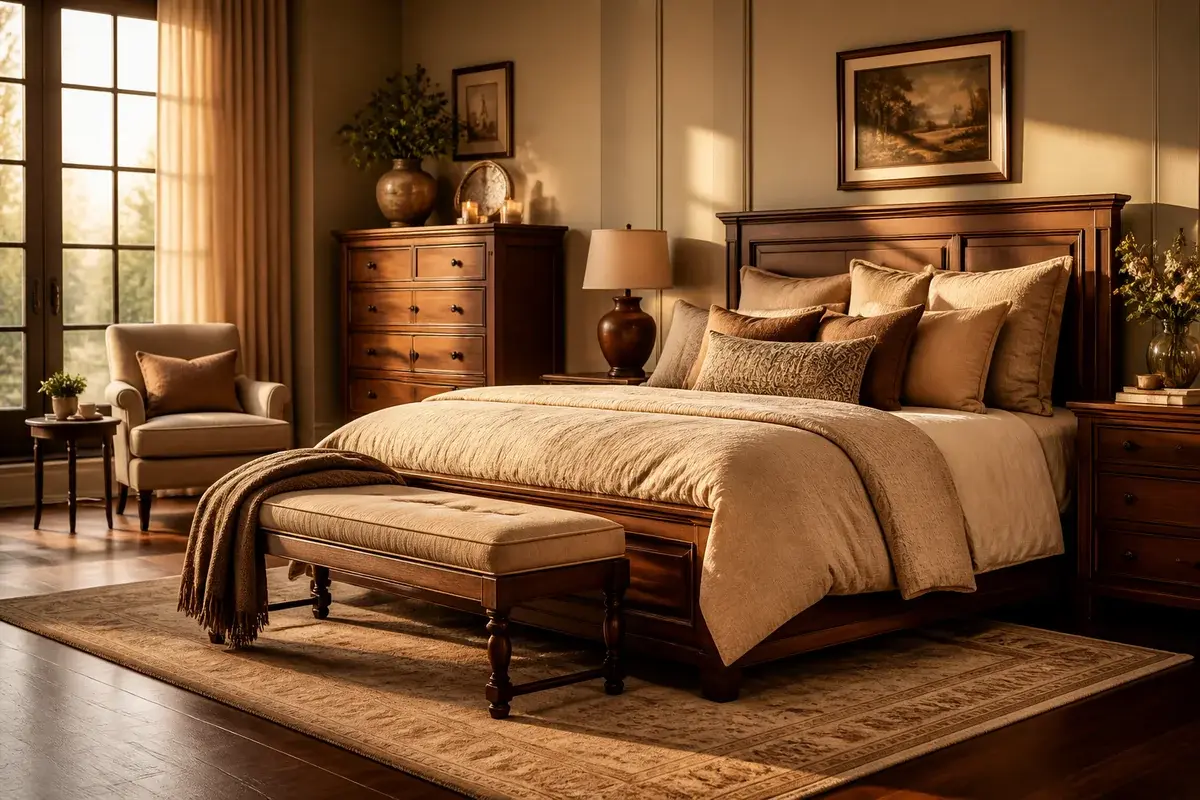
A truly warm traditional bedroom has wood furniture with real depth, layered textiles that invite you to sink in, and a bed that feels like the room's anchor instead of just the biggest thing in it. Most people either strip tradition down to bare bones (and end up with a cold showroom) or lean so hard into florals and fussy details that the room feels stuck in 1987. The thirteen ideas here skip both traps. They're the looks that read as timeless in a master bedroom without feeling like a museum.
1. Pair a low wooden bed frame with a tall carved headboard
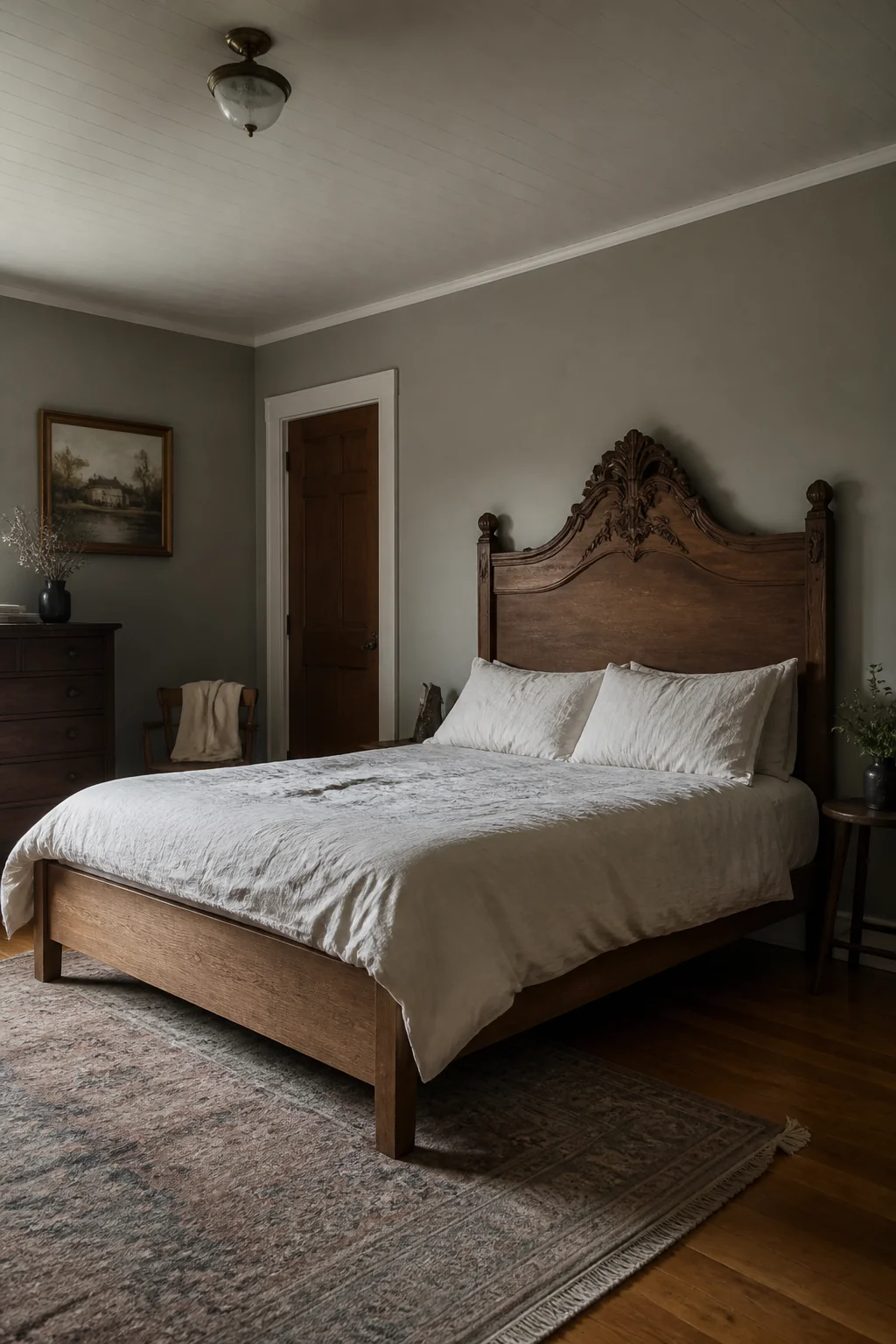
A bed with a headboard that reaches toward the ceiling changes how a room feels. Choose a solid wood frame in walnut, cherry, or a warm medium brown, then pair it with a headboard that has carved details, paneling, or a arched top. The headboard doesn't need to match the footboard or side rails exactly (in fact, slight variations in stain or carving style read more authentic). This works because it centers the bed visually and gives you a real piece of furniture, not just a platform. Set the frame 18 to 24 inches from the wall on each side if your room allows it, so you can see the bed's shape and legs. Look for beds labeled as "mission style" or "craftsman" frames if you want that carved depth without custom work.
2. Layer a dark patterned runner rug at the foot of a larger solid-colored rug
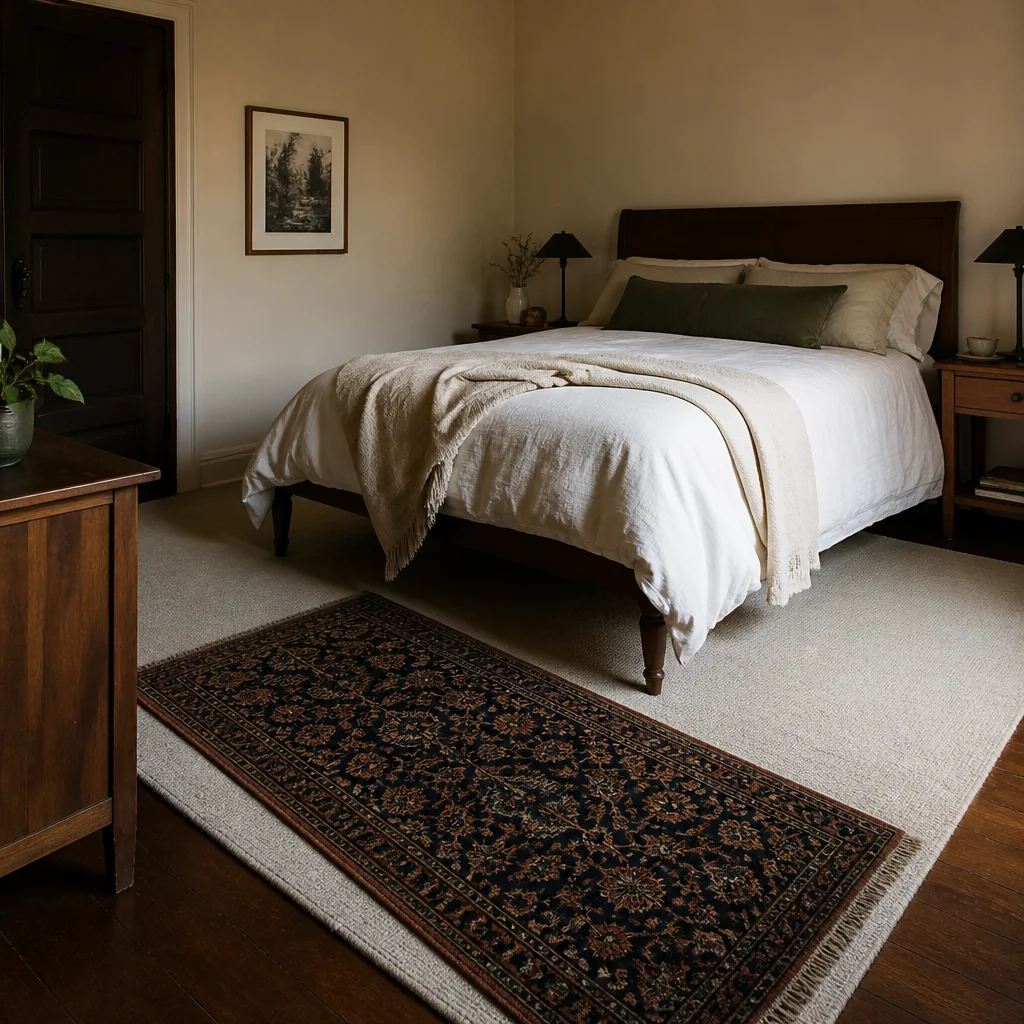
Start with a large solid rug under the bed (8 by 10 feet is standard for a master), then lay a narrower runner (2 by 6 feet or 3 by 8 feet) perpendicular to it at the foot, in a contrasting color or pattern. The runner anchors the foot of the bed and creates visual interest at the spot where people stand. Choose the runner in a traditional pattern: Turkish geometric, botanical print, or damask. This layering trick gives you texture without clutter, and it prevents the rug situation from looking accidental (one rug dead center always reads a little thin). The darker runner grounds the whole arrangement, especially if your main rug is cream or gray.
3. Mount the headboard wall with wallpaper in a small-scale pattern
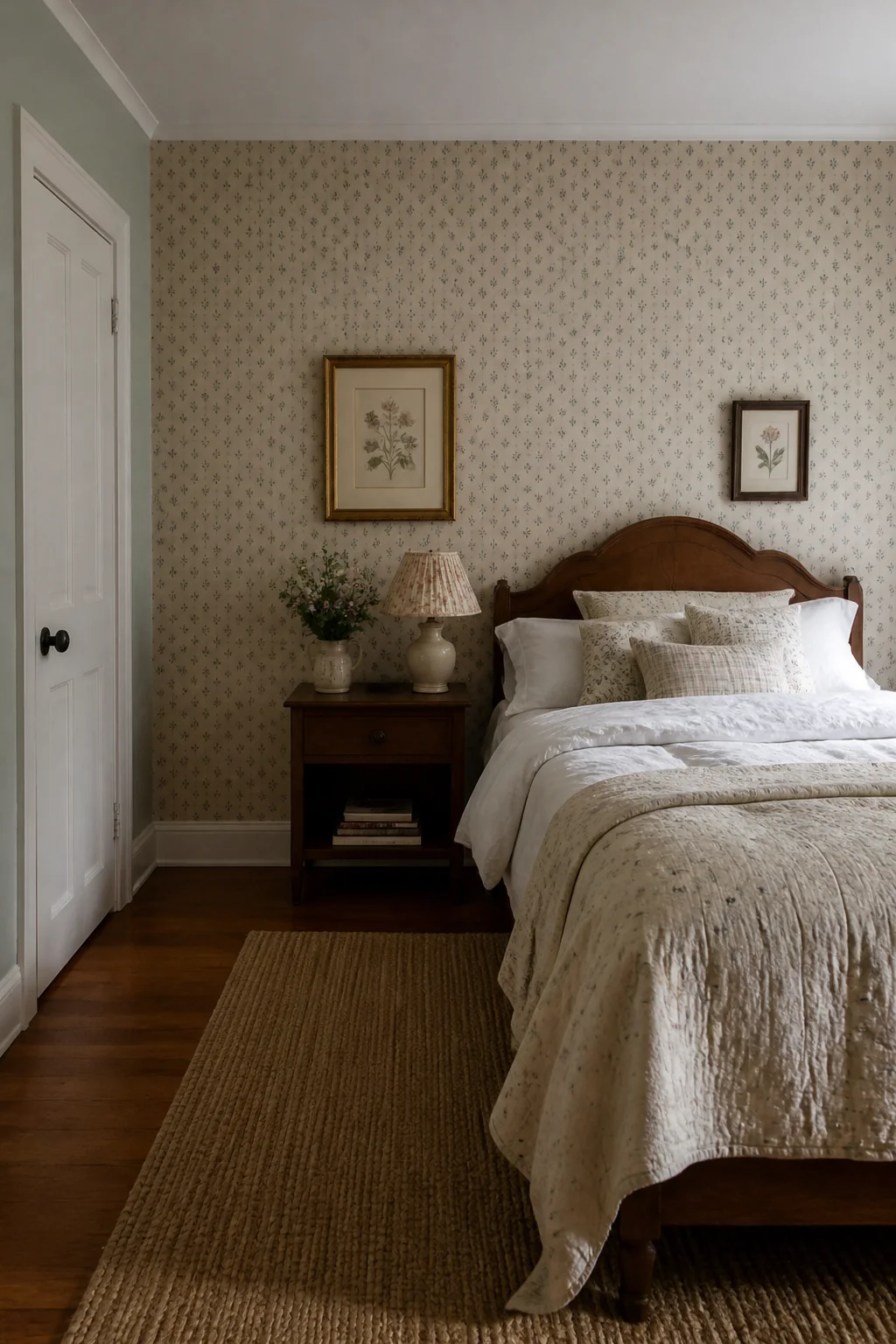
Paint isn't the only option. Choose a wallpaper in a muted colorway with a small-scale traditional print: damask, toile, or a subtle floral. Cover just the wall behind the headboard, not the whole room. This creates a framed backdrop for your bed without overwhelming the space. The wallpaper should read as restrained from across the room, not busy. Stick to papers in warm creams, soft blues, taupes, or sage green. A small-scale pattern (the print motifs around 2 to 4 inches) reads more sophisticated than large florals and won't make the wall feel claustrophobic. If you rent, removable peel-and-stick wallpaper gets you most of the effect without commitment, though it won't have the same crisp edges as permanent paper.
4. Add a wooden trunk or blanket chest at the foot of the bed
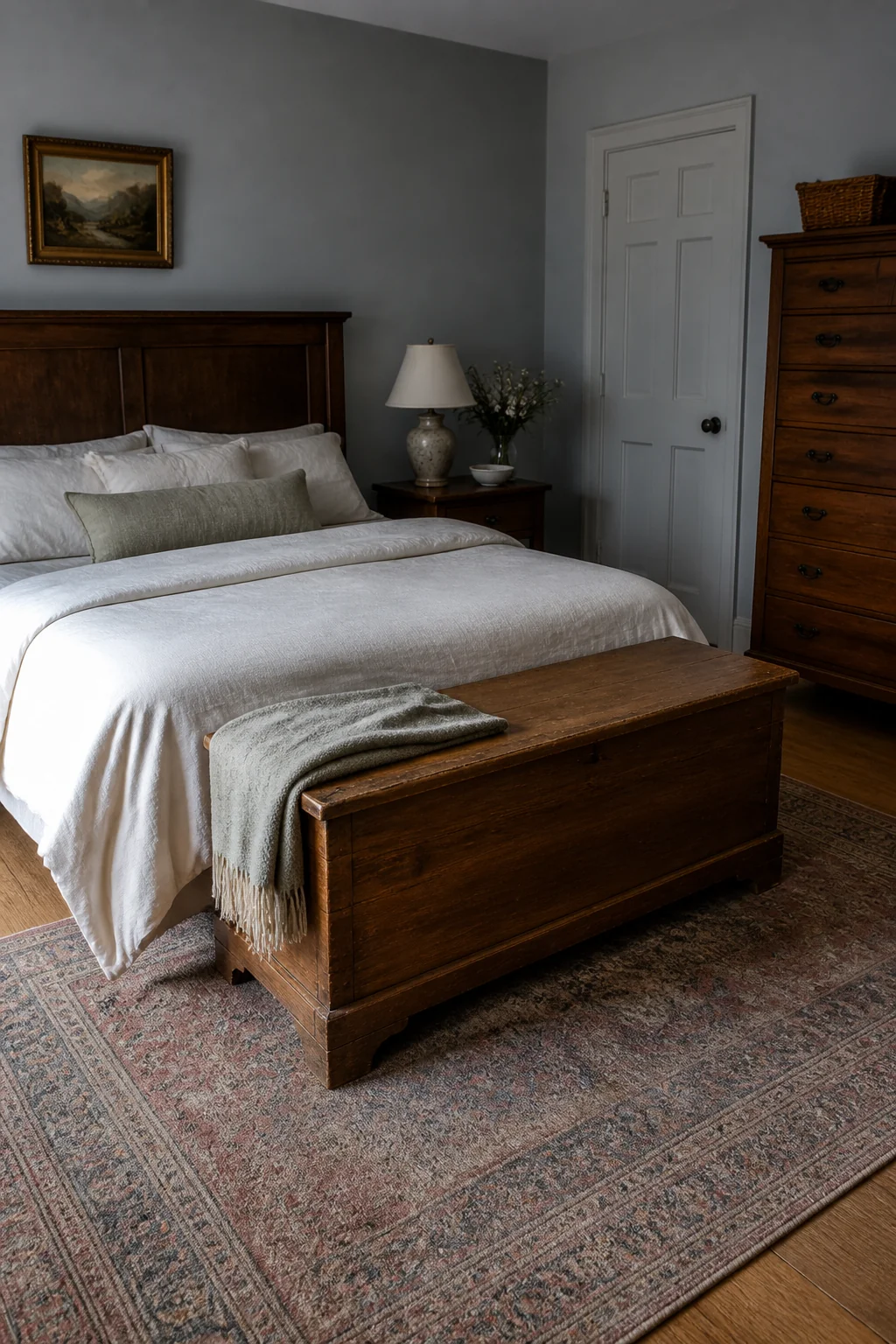
A blanket chest serves as storage, a seat, and a visual anchor point where the bed ends. Choose one in solid wood (oak, walnut, cedar, or pine) with metal hardware or leather handles. The chest should be 16 to 24 inches tall so it doesn't block sightlines to the headboard and leaves room to move around it. Set it directly centered at the foot of the bed, 12 inches from the bed frame. Use it to fold and store extra quilts, throw blankets, or off-season bedding. This piece immediately adds the sense of depth and "stuff" that makes a traditional room feel established. Look for antique or reproduction pieces at estate sales, antique shops, or online marketplaces if new furniture feels too uniform.
5. Hang two matching bedside tables with drawers instead of using legs
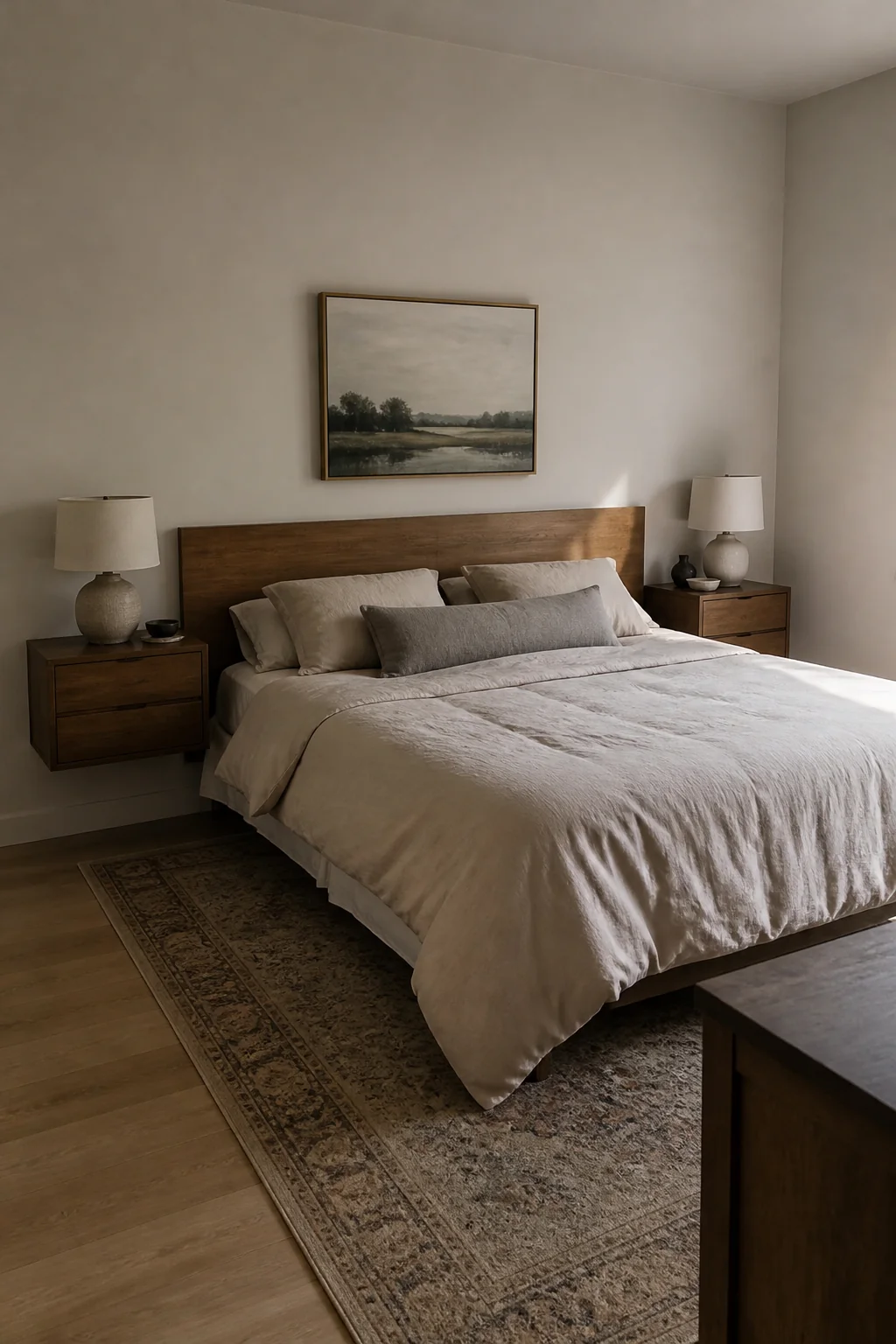
Wall-mounted bedside tables free up floor space and let you see the legs of the bed frame, which keeps the room from feeling heavy. Mount them 28 to 30 inches high (roughly elbow height when you're sitting in bed) on either side of the headboard, 18 to 24 inches from the bed's edge. Choose tables with at least one drawer so you can stash a book, glasses, or phone without visible clutter. Wood tables with turned legs as carved details reinforce the traditional look even though they're mounted. This works especially well in smaller master bedrooms because it opens up the floor and makes the space feel taller. Anchor them securely to studs with hardware rated for the weight of the table plus whatever you'll store in it.
6. Layer a patterned duvet cover with a contrasting quilted throw
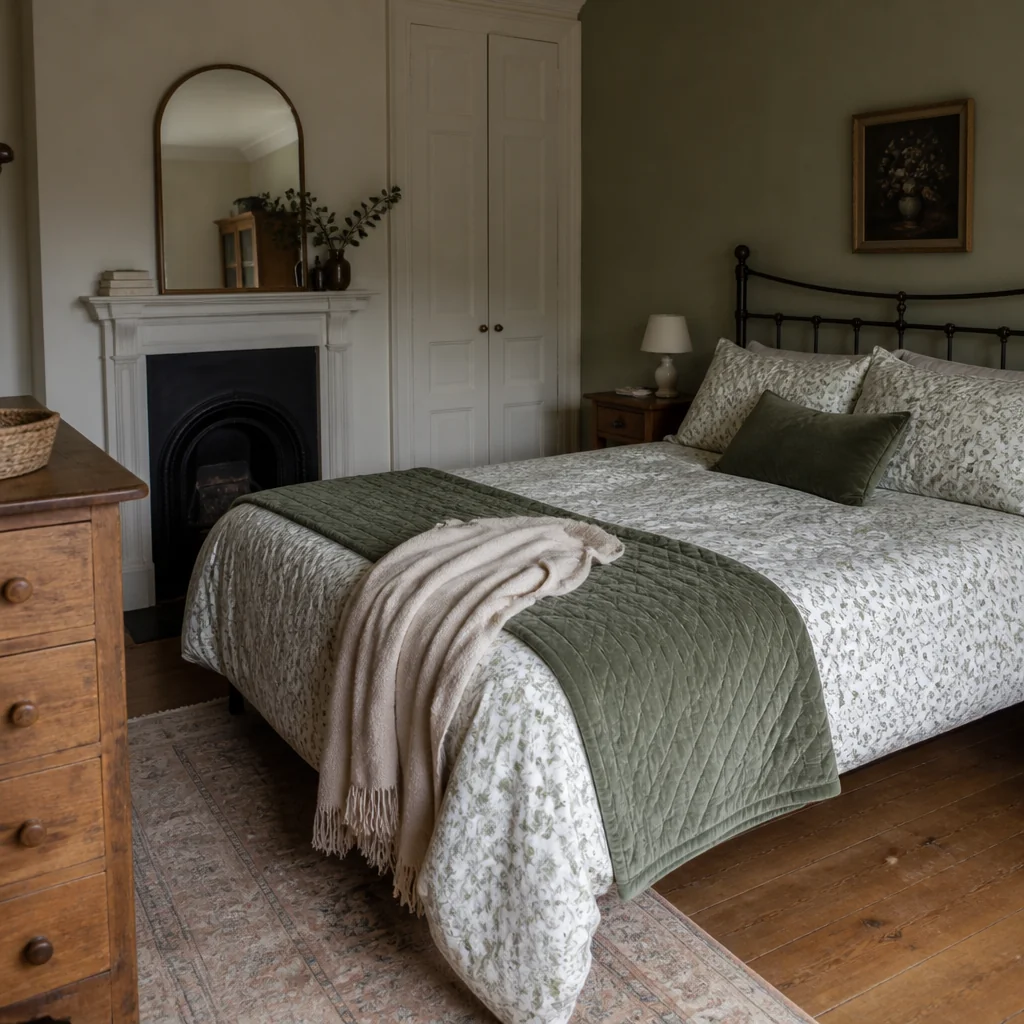
Choose a duvet cover in a traditional pattern (small florals, paisleys, or woven jacquard stripes), then fold a quilted throw blanket across the foot of the bed in a solid color that complements but contrasts with the duvet. The throw should be linen, cotton, or wool in a warm neutral (cream, warm gray, taupe, or soft blue). This layering creates depth and signals that the bed is a place for comfort, not just display. A 60-by-80-inch throw works well across the foot of most queen and king beds. The contrast between pattern and solid keeps the look balanced. Tumble the throw slightly off-center (draped more to one side) for a relaxed, lived-in feel rather than a perfectly centered look.
7. Place an upholstered bench against the wall opposite the foot of the bed
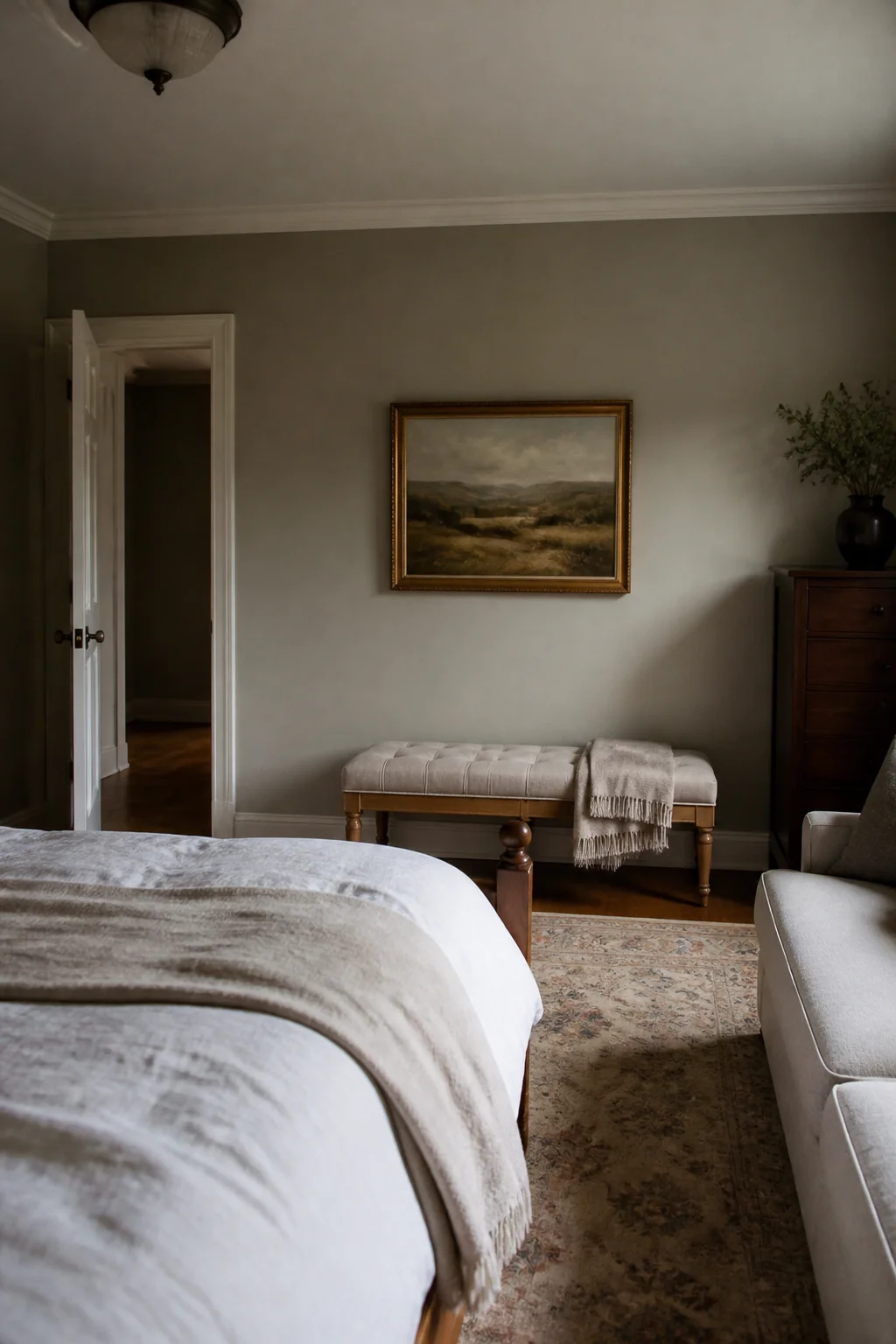
A bench facing the bed gives you a seat for getting dressed and changes how the room feels. Choose one upholstered in linen, cotton, or wool in a solid color that echoes your bedding palette. The bench should be 36 to 48 inches long (roughly the width of a small sofa) and sit 12 to 18 inches off the floor. Position it along the wall directly opposite the foot of the bed if your floor plan allows it. This creates symmetry and gives the eye something to land on when you look from the bed toward the door. A bench with wood legs (turned or straight) reinforces the traditional furniture style. If storage is tight, look for benches with a lift-up seat inside.
8. Use a mix of wood finishes on case pieces (no need to match perfectly)
Your dresser doesn't have to be the same stain as your nightstands, and your wardrobe doesn't have to match your bed frame. Traditional bedrooms built over decades have mixed finishes because furniture came in at different times. A walnut dresser, cherry nightstands, and an oak headboard read as intentional collecting, not a mismatched accident. Keep all pieces in warm-toned woods (avoid mixing warm and cool finishes in the same room). This approach gives your bedroom a gathered, established quality that matching suites never achieve (and it means you can choose pieces you like instead of hunting for the exact same collection). The variation in wood tone keeps things from feeling flat or showroom-like.
9. Install a brass or bronze chandelier centered on the ceiling
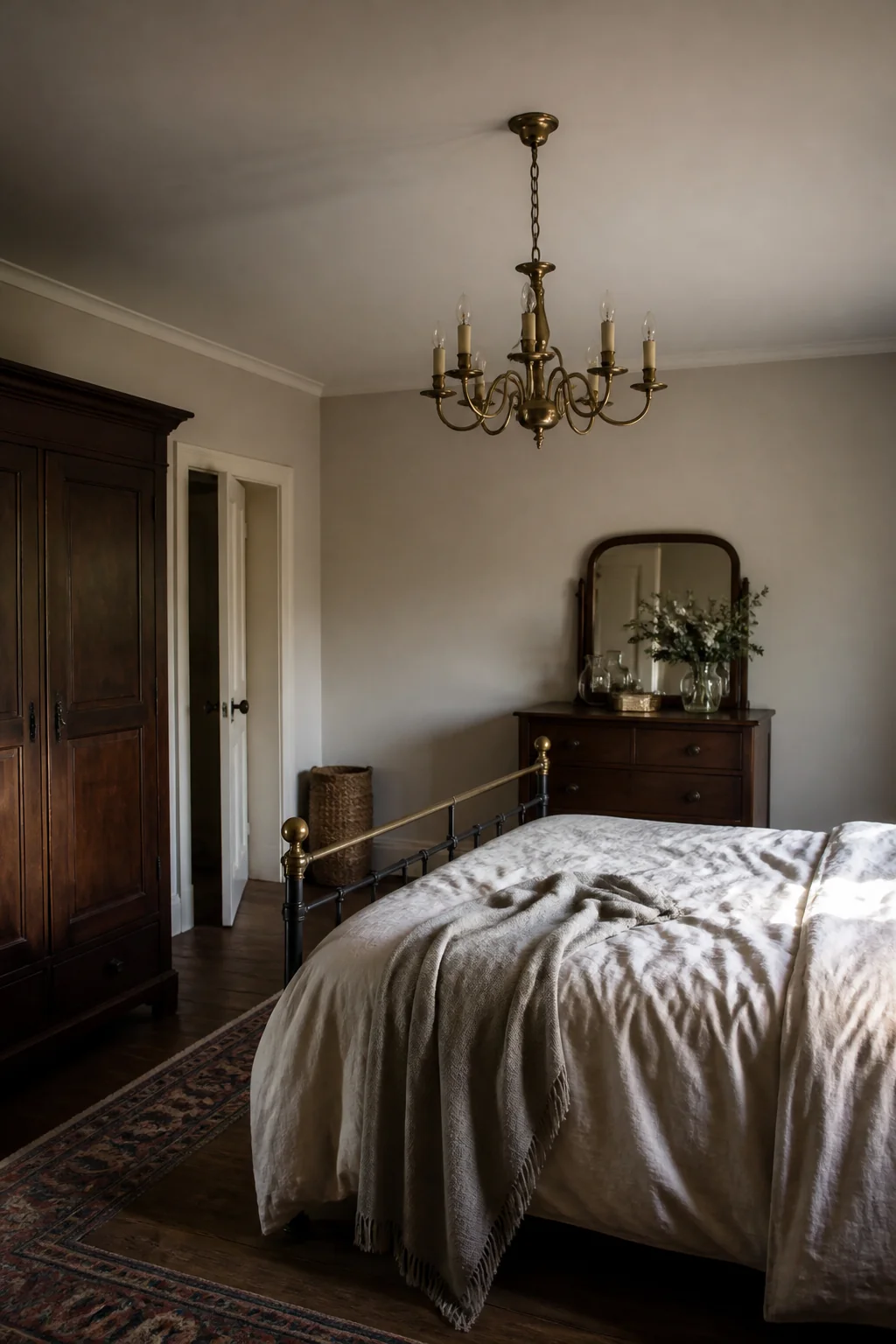
Overhead lighting in a traditional bedroom should come from a real fixture, not a ceiling fan. Choose a chandelier or a flush-mount fixture in brass, bronze, or brushed gold with multiple arms and shades. The fixture should have a diameter of roughly one-third your bed's width (so about 20 inches for a queen bed). Hang it 7 to 8 feet above the floor so it doesn't feel low-hanging when you're in bed. This becomes a focal point and sets the room's lighting tone. Pair it with a dimmer switch so you can lower the light for evening. Avoid crystal chandeliers that read as formal; look instead for ones with fabric shades, seeded glass, or simple metal details that feel warm and approachable. Wire it to a breaker so power is off before installation.
10. Frame an oil painting or botanical print above the dresser
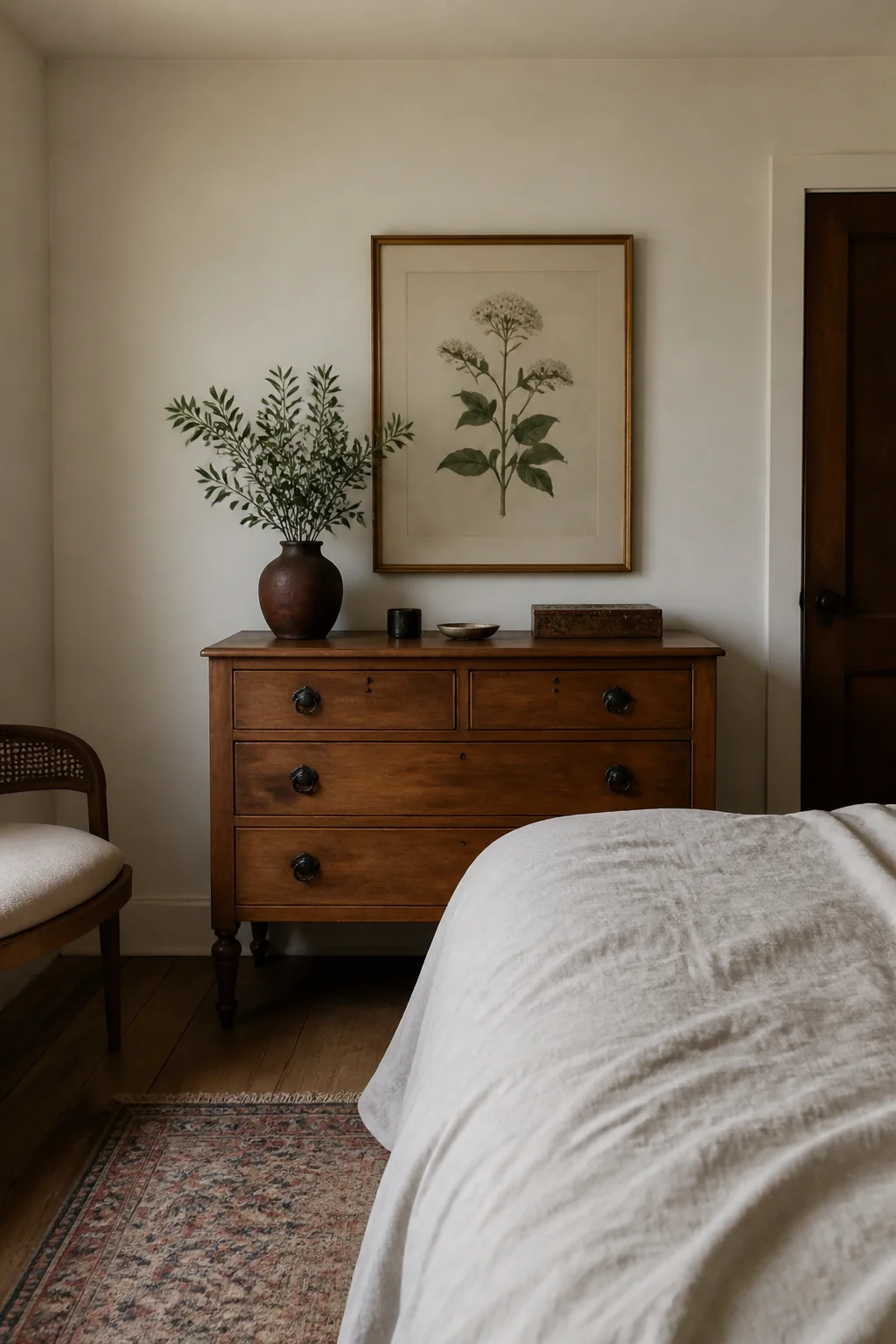
A large framed piece above the main storage piece (your dresser or chest of drawers) anchors that wall and prevents it from feeling empty. Choose an oil painting in traditional subject matter (a still life, landscape, or portrait) or a large botanical print in a wood frame. The frame should be 30 to 36 inches wide and mounted so the center of the art is at eye level when you're standing in front of the dresser (roughly 57 to 60 inches from the floor). This one piece should weigh enough to matter; it's not a lightweight accent. Mount it on a wall stud or use anchors rated for the weight. A piece this substantial immediately makes the room feel layered and collected.
11. Choose nightstands with turned legs and at least two drawers
Nightstands set the tone for tradition in a bedroom. Look for tables with turned legs (spindle turnings, tapered legs, or bun feet), a drawer for bedside items, and ideally a lower shelf for stacking books or displaying objects. The top surface should be 27 to 30 inches high (roughly level with your mattress). Tables should be 18 to 24 inches wide so they're proportional to a queen or king bed without looking skinny. Finish them in a warm wood stain that either matches or coordinates with your bed frame. Two tables, one on each side of the bed, create symmetry and balance even if they're not identical. This setup feels intentional and classic.
12. Hang a full-length mirror on one side wall in a carved or painted wooden frame
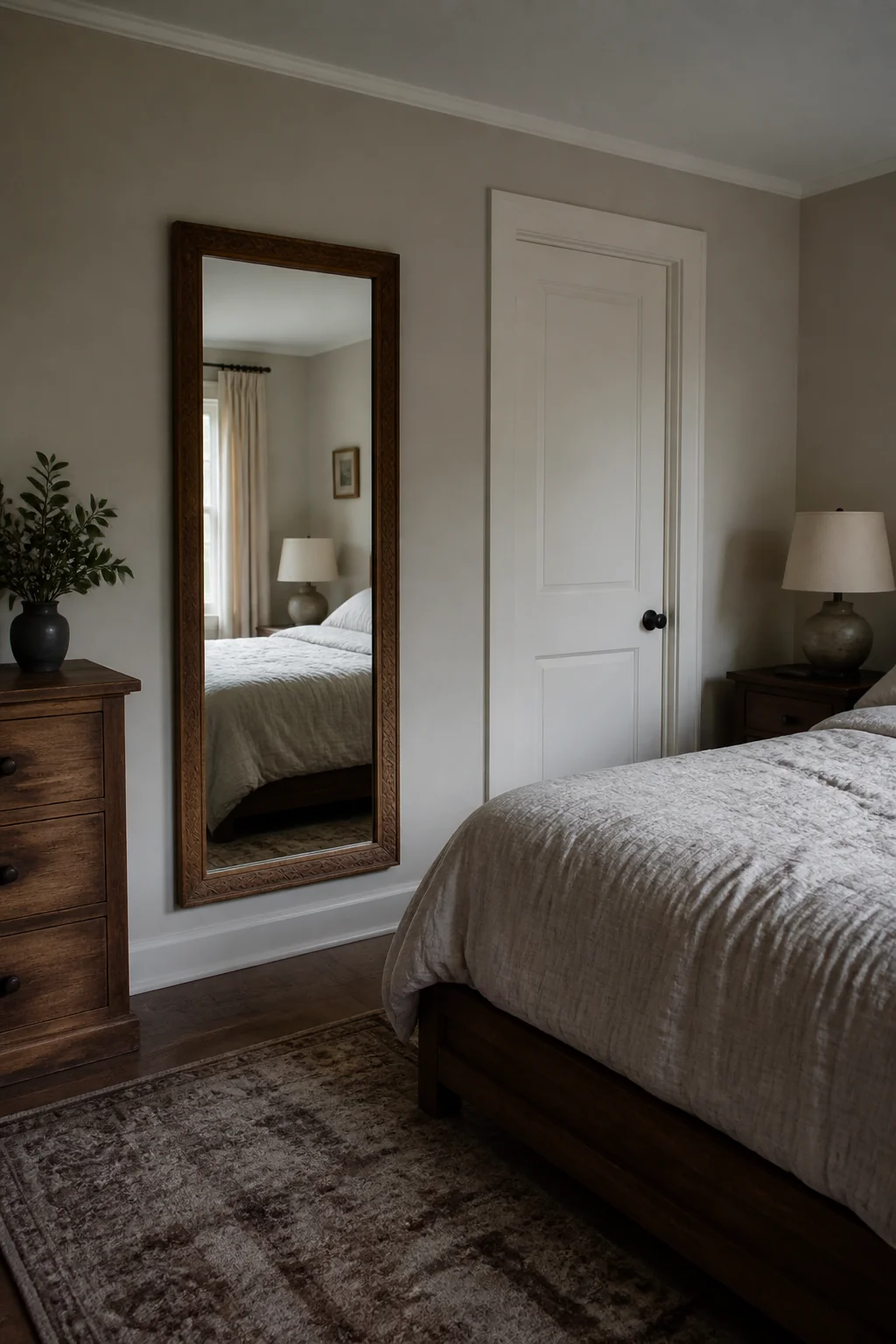
A mirror in a traditional wooden frame bounces light and makes the room feel bigger. Choose a frame 24 to 30 inches wide, mounted on a side wall (not directly opposite the bed, where it can feel disorienting). The frame should have visible carving, turned details, or painted finishing. Hang it at a slight tilt so the top edge is 2 to 3 inches from the wall and you can see yourself fully in it when you're standing nearby. This creates visual interest on a blank wall and reinforces the traditional look. Mount it securely on wall studs or heavy-duty anchors rated well above the mirror's weight.
13. Layer linen or cotton curtains in a neutral shade with a deeper valance
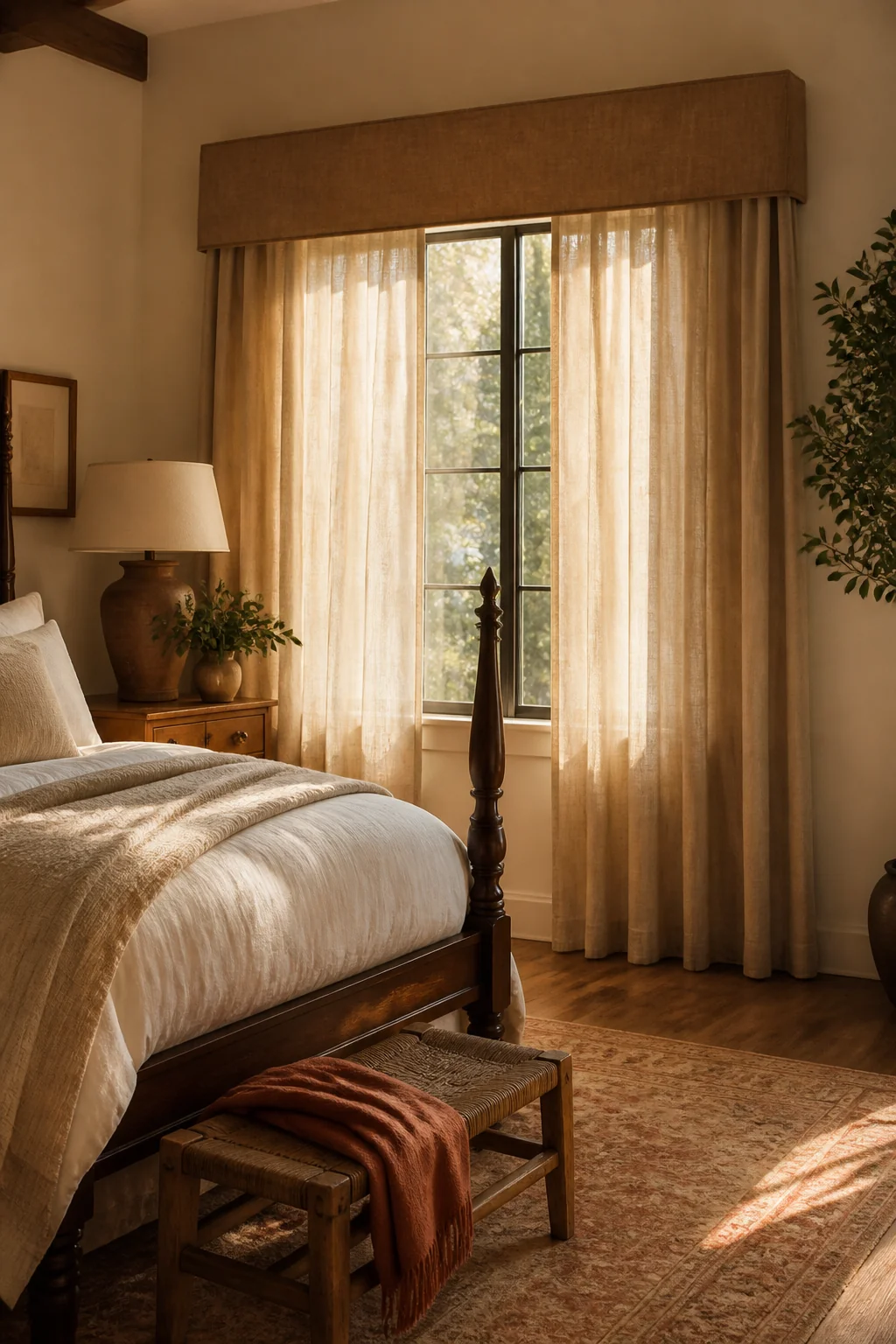
Window treatments are where traditional bedrooms succeed or fail. Hang floor-length curtain panels in natural linen or heavy cotton in cream, soft gray, or warm white, 8 to 12 inches wider than your window and reaching from the rod to the floor. Add a valance or cornice board in a deeper tone (taupe, soft brown, or muted blue) across the top. The deeper valance grounds the lighter panels and prevents them from feeling wispy. Hang the rod 6 to 12 inches above the window frame (higher rods make ceilings feel taller). Panels should stack back cleanly without blocking light when fully open. This layering works because it gives you privacy, light control, and visual weight without feeling heavy. For more ideas on window dressing, see our bedroom window treatment ideas.
Take the guide with you
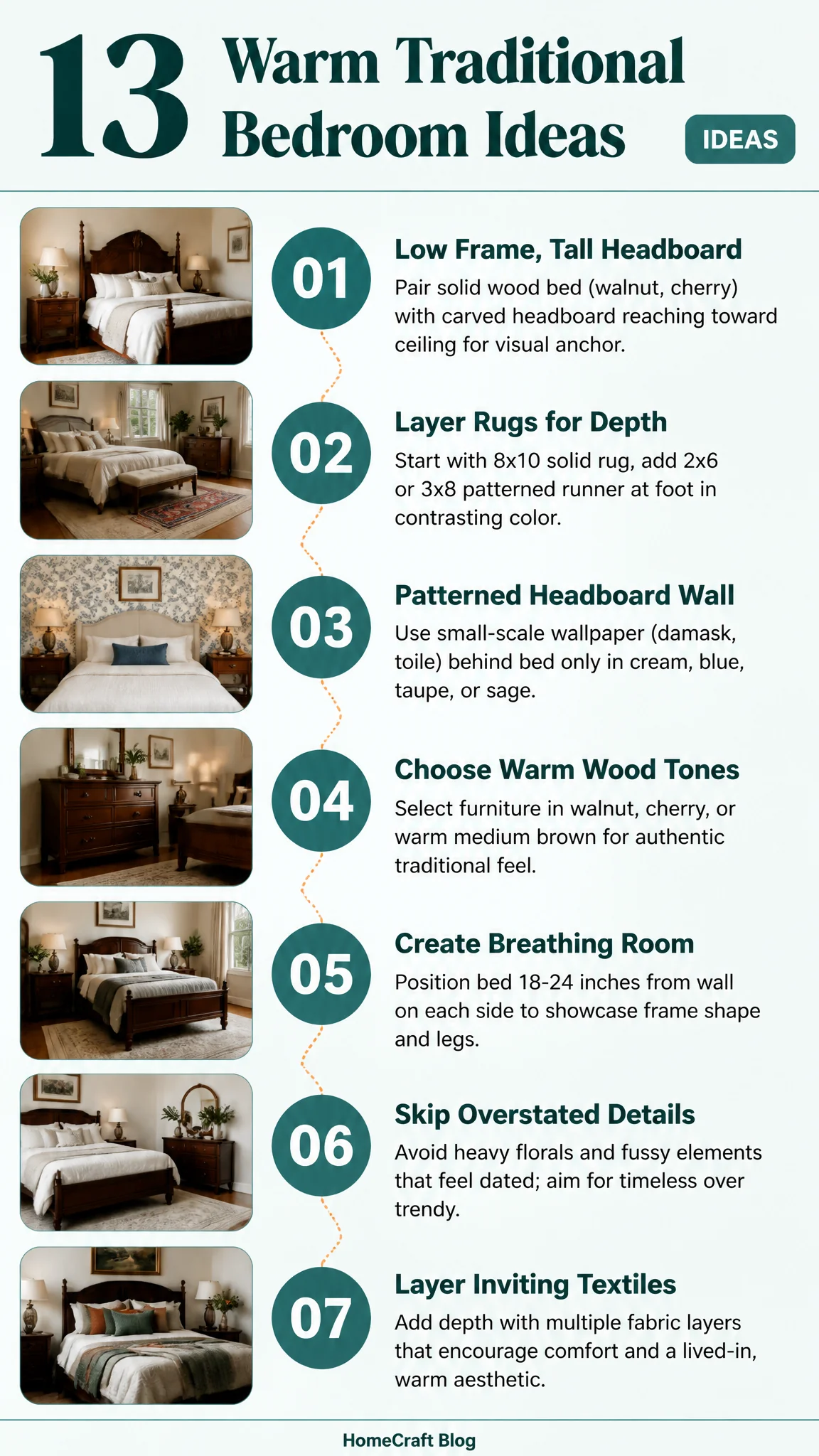
Most people ruin a traditional bedroom by trying to make it look too formal. A guest room or display space can handle stiff precision, but a master bedroom has to feel like you rest there. Let things be slightly off-center, let wood pieces vary a little in finish, and let textiles show some real texture and imperfection. That's what makes traditional feel like home.