14 Bedroom Window Treatment Ideas for Dark Rooms That Need Light
Brighten your dark bedroom with sheer fabrics, light colors, and smart layering. Try 14 window treatment ideas that actually work.
This post contains affiliate links. As an Amazon Associate I earn from qualifying purchases. If you buy through our links, we may earn a commission at no extra cost to you.
If you need the lamp on at 3 p.m., your bedroom is dark enough to feel smaller than it is. Heavy curtains block the little light you have, and bare windows give up your privacy. Sheers, light-backed shades and layered panels sit between the two: they soften the window and keep the room private while daylight still gets through.
1. Floor-to-ceiling sheers in white or cream
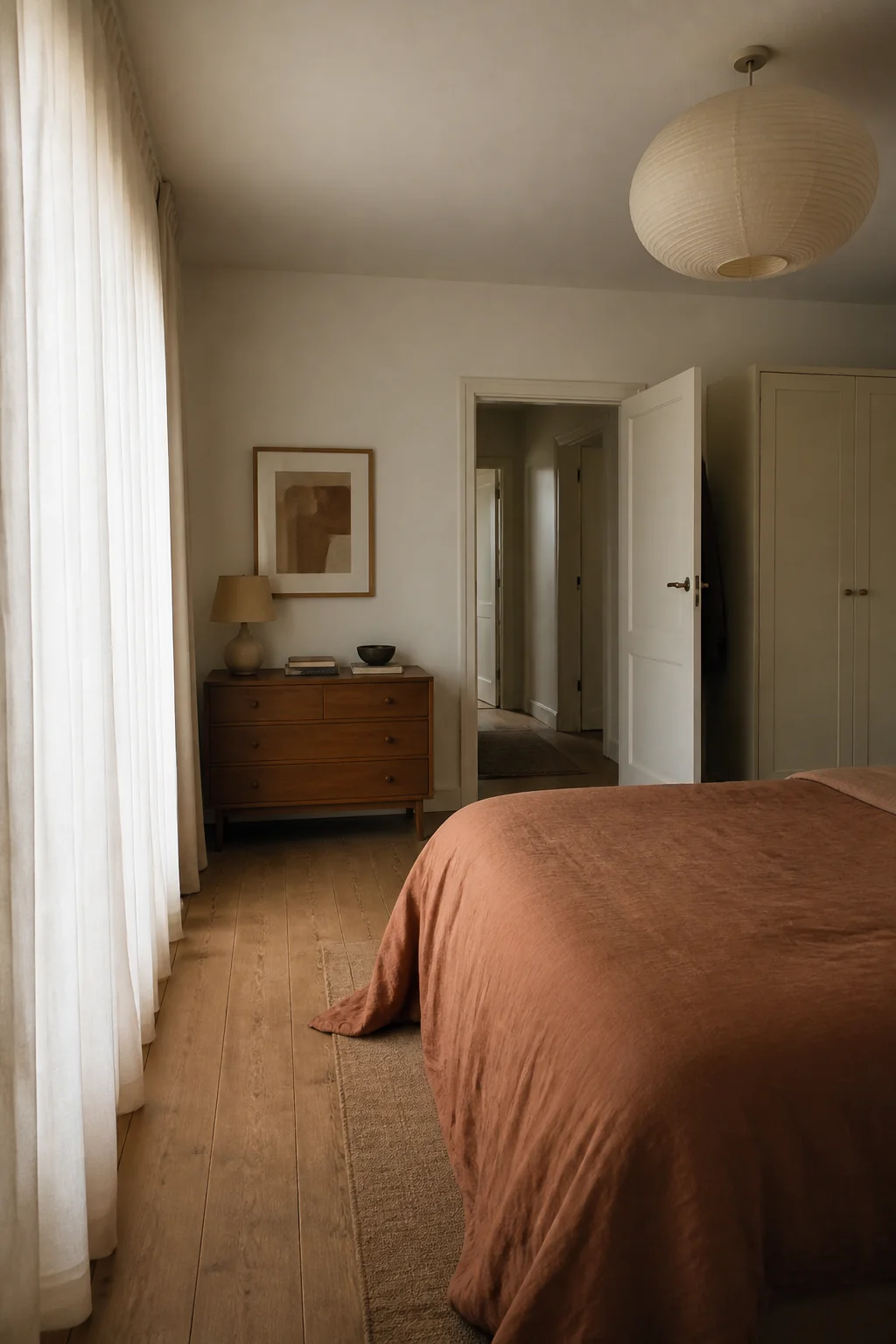
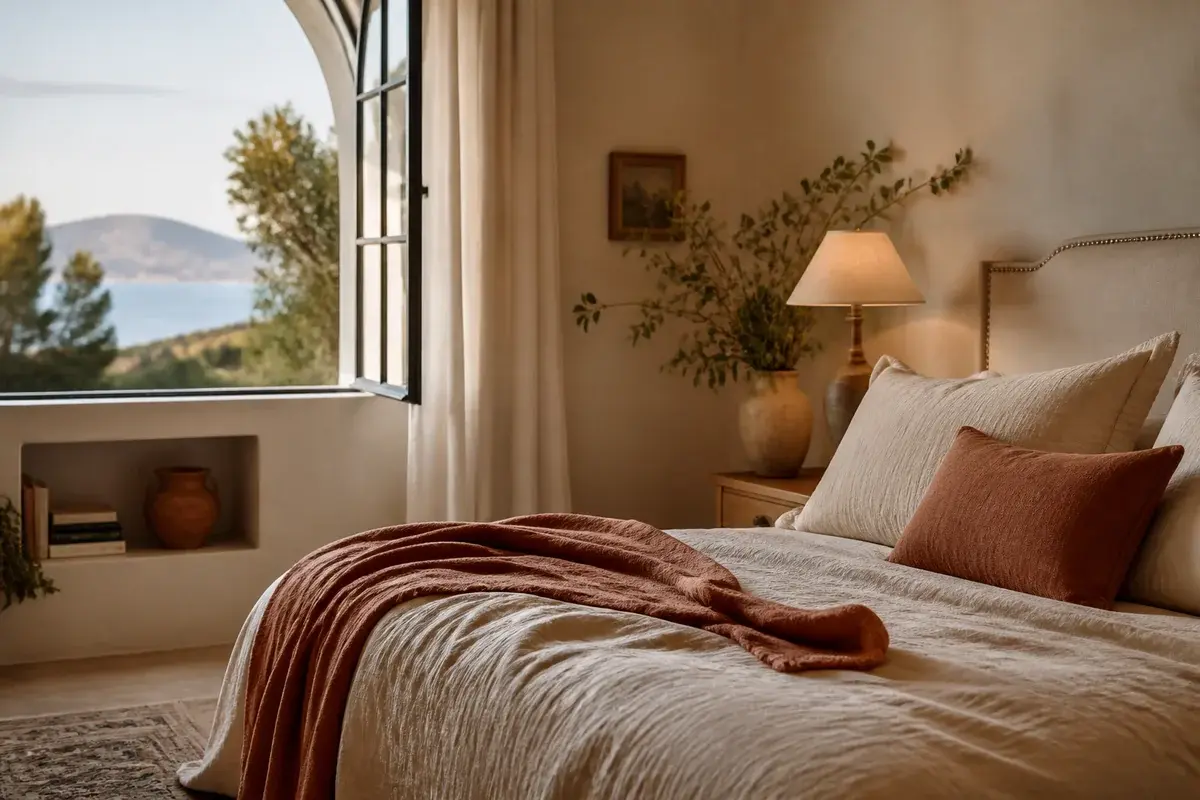
Hang floor-to-ceiling sheer panels from a rod mounted near the ceiling. White or cream fabric diffuses light instead of blocking it, so the room stays bright even with the curtains closed. The height makes the ceiling feel taller and the light feel wider across the wall. Pair them with blackout curtains on a second rod if you need to go completely dark at night, but the sheers do the heavy lifting most of the time. The key is mounting the rod 8-12 inches above the window frame, not right at the top of it.
2. Roman shades in linen with a light backing
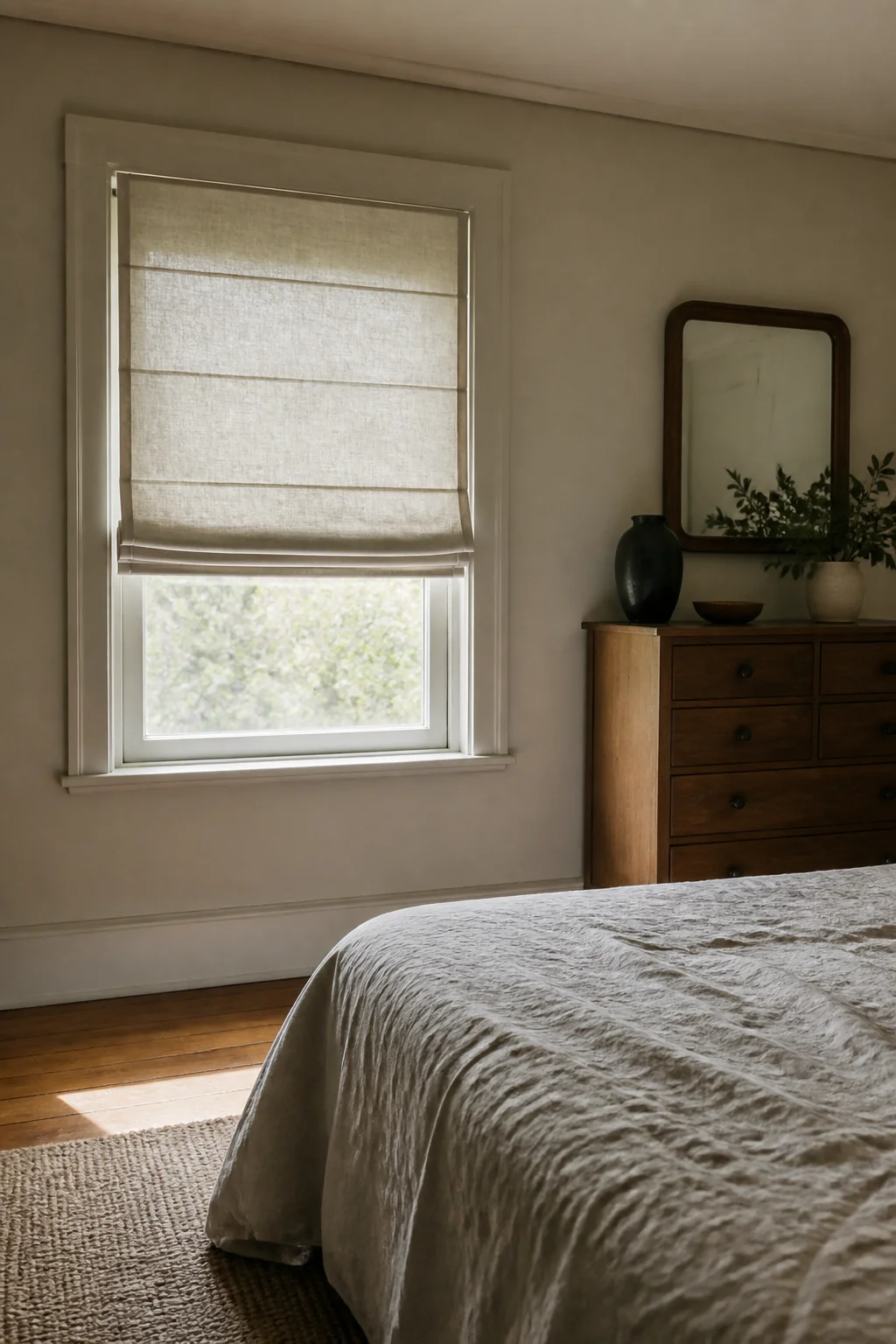
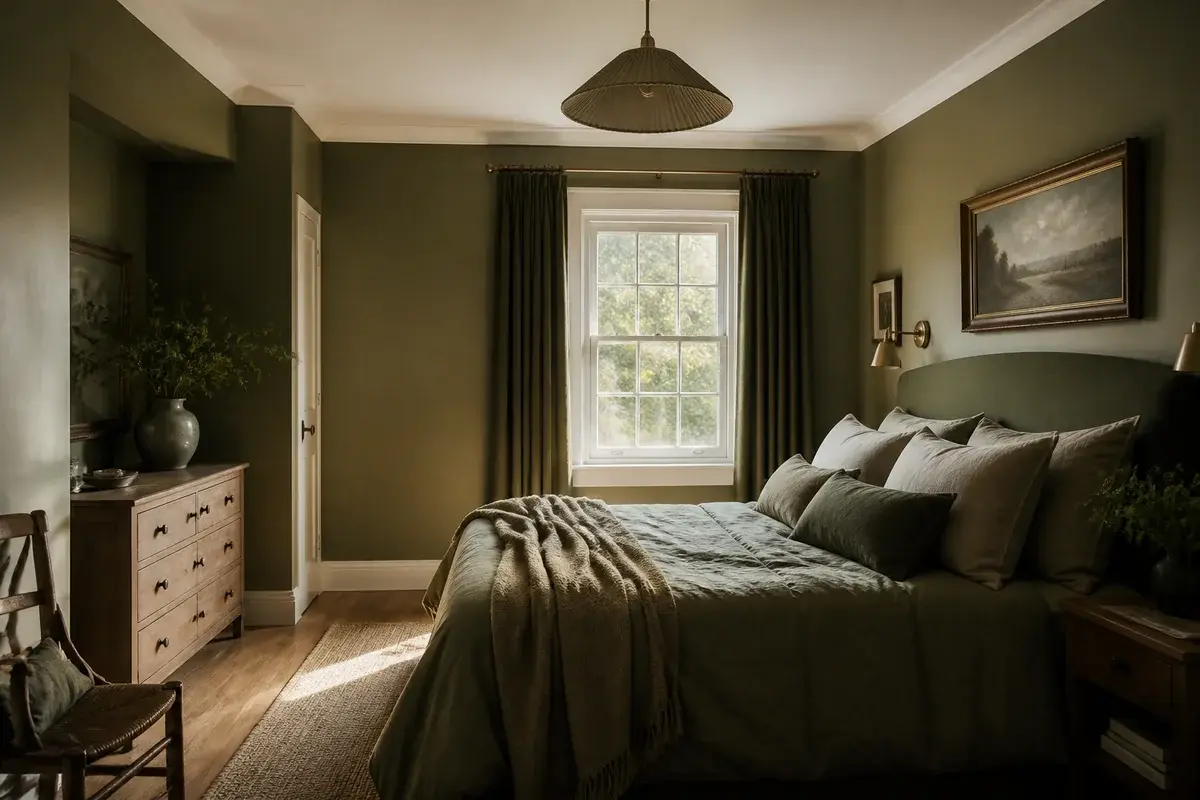
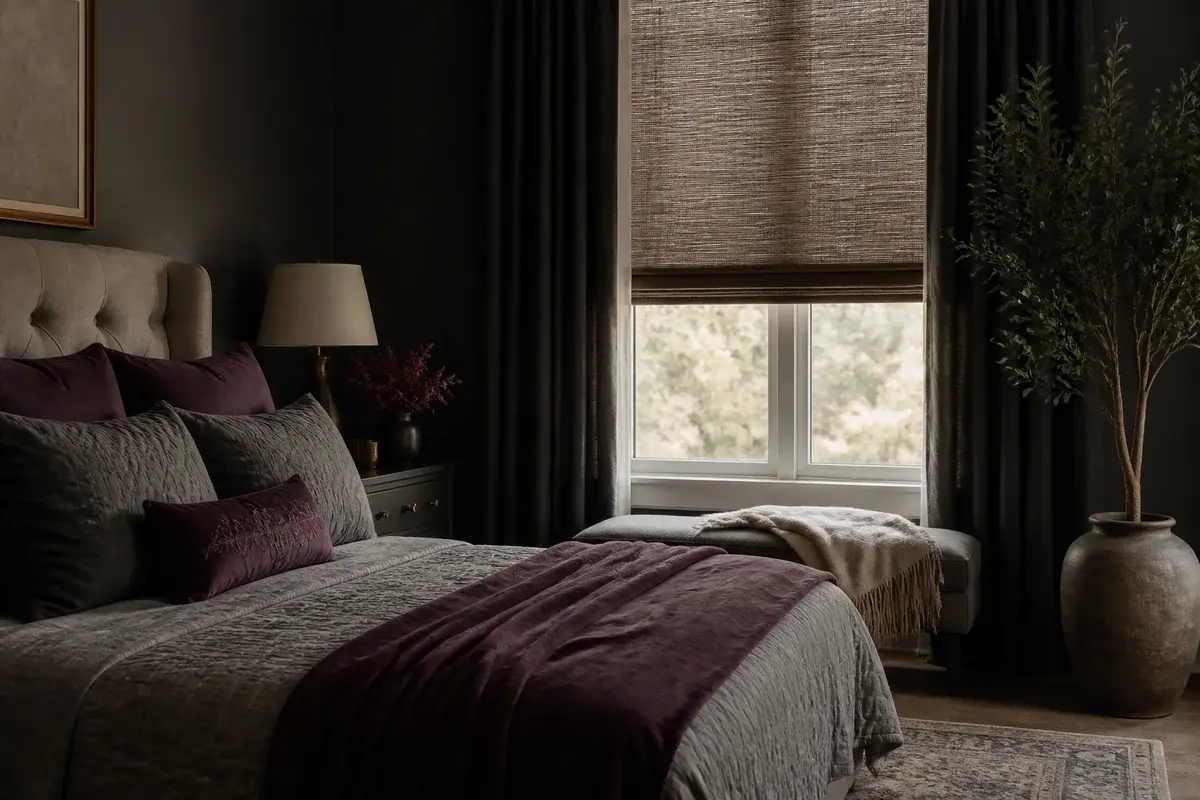
Roman shades fold up neatly into horizontal pleats and take up almost no visual space when raised. Linen is thick enough to offer some privacy when closed, but light-colored linen with a light backing lets soft illumination through instead of blocking it. The structured shape makes a dark room feel more organized than loose fabric does. Look for shades with a motorized option if your window is high or wide, which makes opening and closing them less of a chore. Mount them inside the window frame so they don't eat into the space around your bed or dresser.
3. Lightweight linen curtains in natural
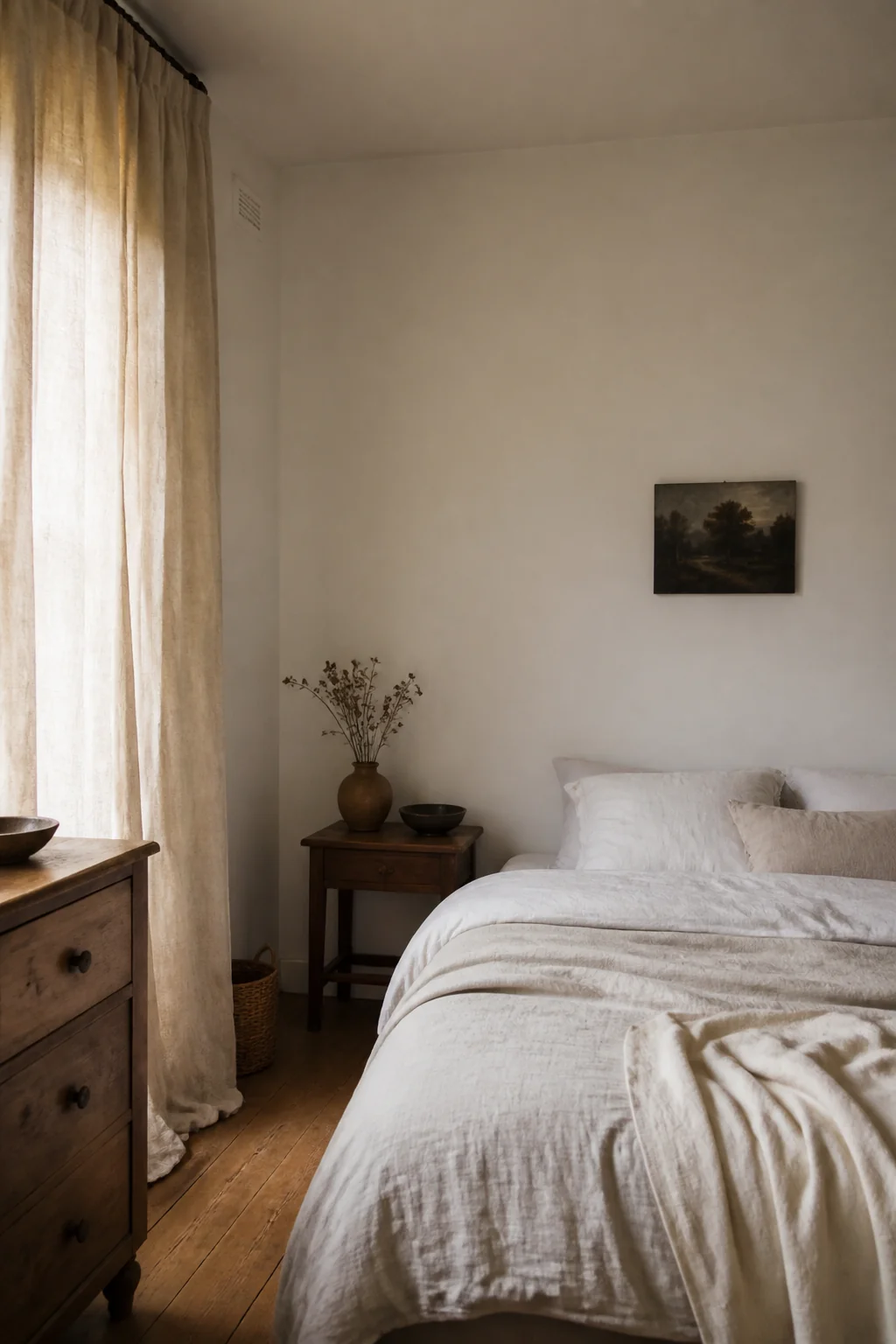
Natural linen in a warm cream or off-white has a subtle texture that catches light beautifully. Hang them from a rod that extends 8-12 inches beyond the window frame on each side so you can pull them completely open during the day and the fabric doesn't block any glass. Linen wrinkles as it hangs, which adds depth and keeps the look from feeling stiff. It's breathable, so the room won't feel stuffy, and it softens harsh morning light without dimming it. Linen costs more than cotton but lasts longer and gets softer with washing.
4. Sheer curtains layered over a single panel of solid color
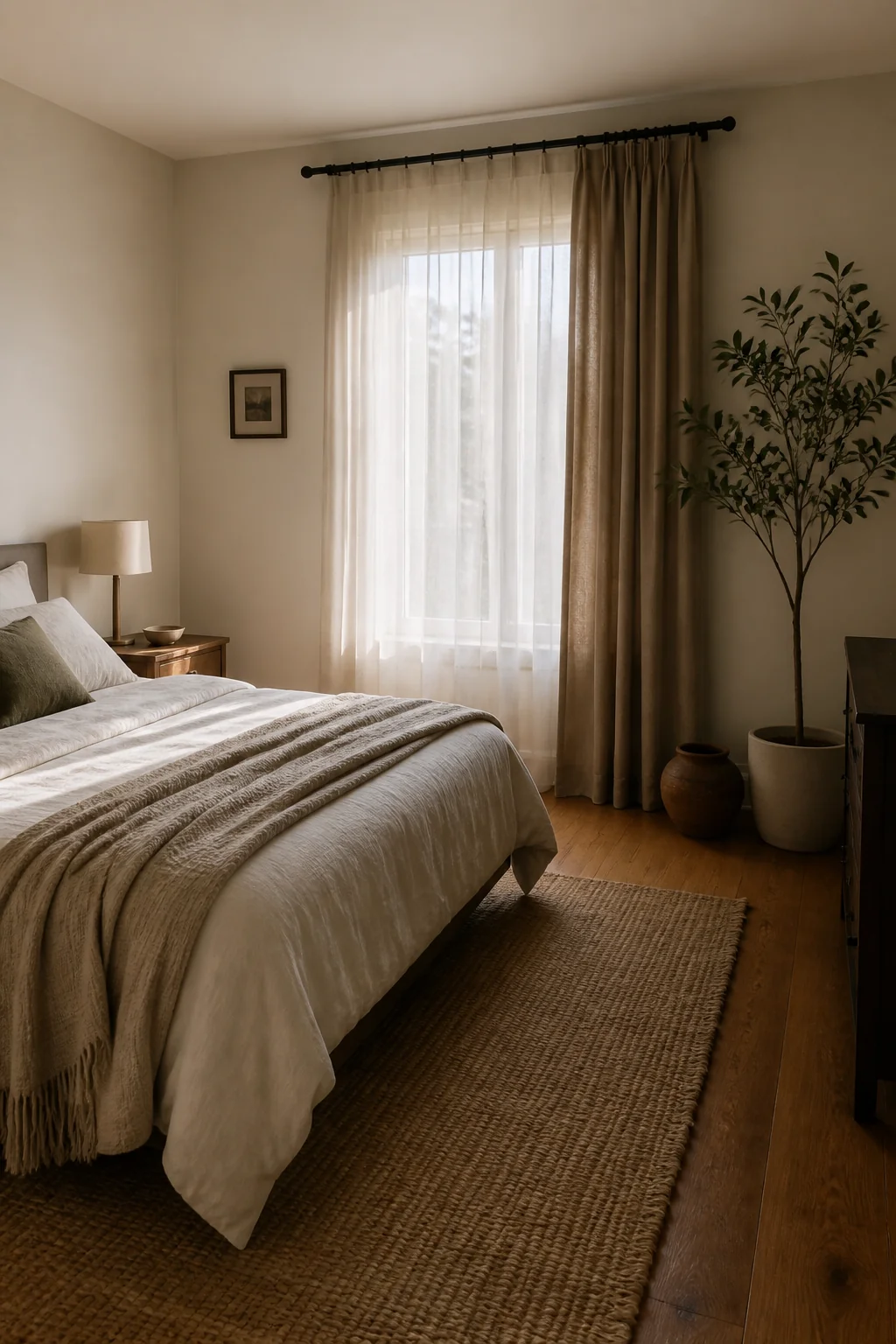
Use two rods: a sheer curtain on the inner rod and a solid linen or cotton panel on the outer rod. During the day, pull the solid panel to the side completely so all the light comes through the sheer, and you still have privacy from street view. At night, close both. This setup gives you three levels of control (both open, one closed, both closed) without the visual weight of heavy fabric taking up the whole wall. Mount both rods at least 12 inches above the window frame to make the wall feel taller.
5. Motorized roller shades in a semi-sheer fabric
Motorized shades in a light gray or taupe semi-sheer let you tilt them to control light without fully raising or lowering them. You can adjust throughout the day to catch morning light, block afternoon glare, and maintain privacy without ever opening them all the way. The mechanical operation is smooth and quiet, and there's no cord to look tangled or get in the way of your bedside table. These cost more upfront but save you the daily ritual of opening and closing, and they're less likely to get bent or damaged.
6. Plantation shutters in white or natural wood
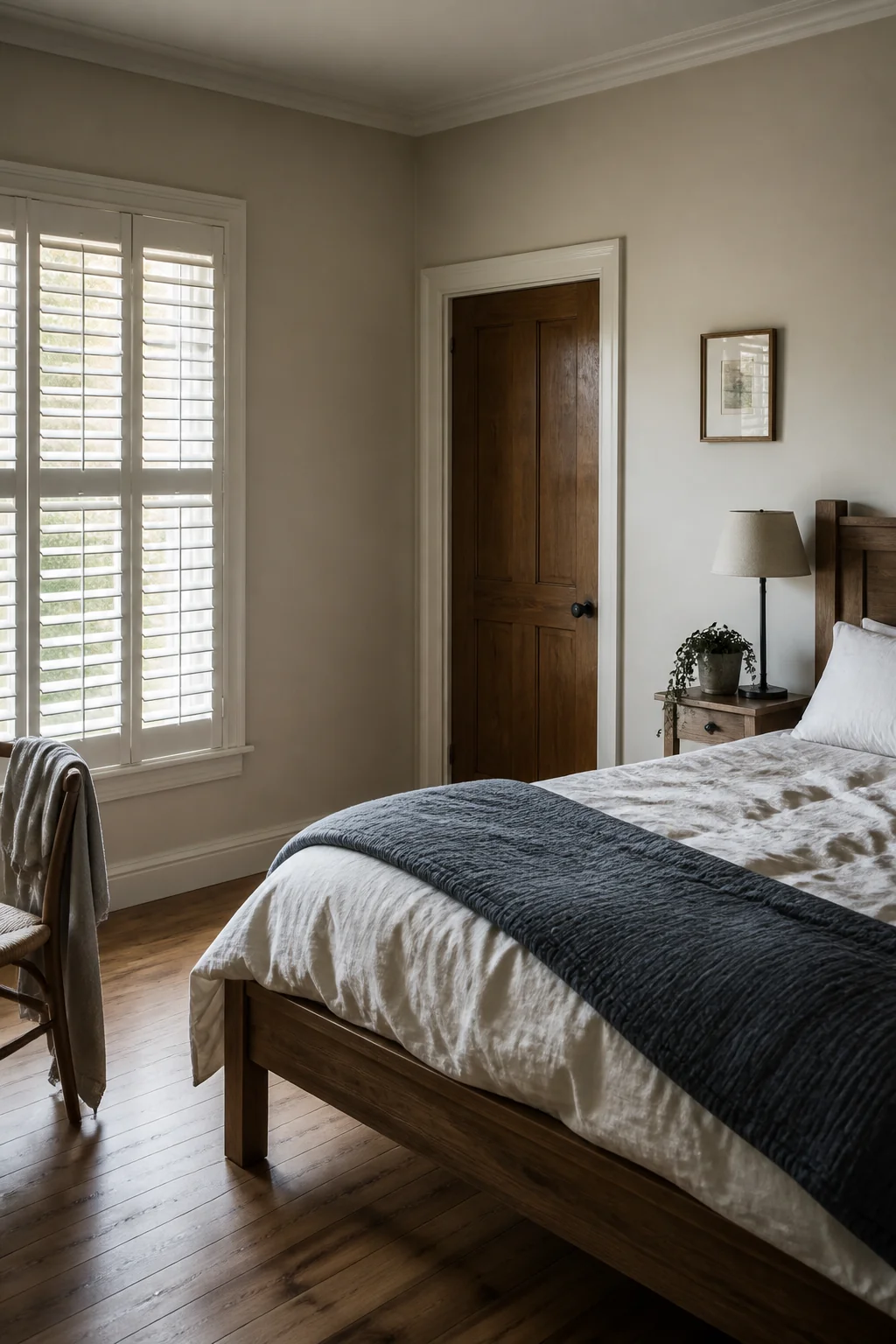
Plantation shutters have wide louvers that you tilt to direct light where you want it. They're semi-permanent, which means they take up almost no visual depth on the wall, so they're ideal for small or narrow bedrooms. White shutters bounce light around the room and feel crisp and clean. Natural wood shutter louvers warm up the space. You can open them all the way during the day for the full window opening, or tilt them partially closed for privacy while still letting filtered light through. They work well on windows with limited wall space on either side.
7. Linen curtains in warm white with a tie-back system
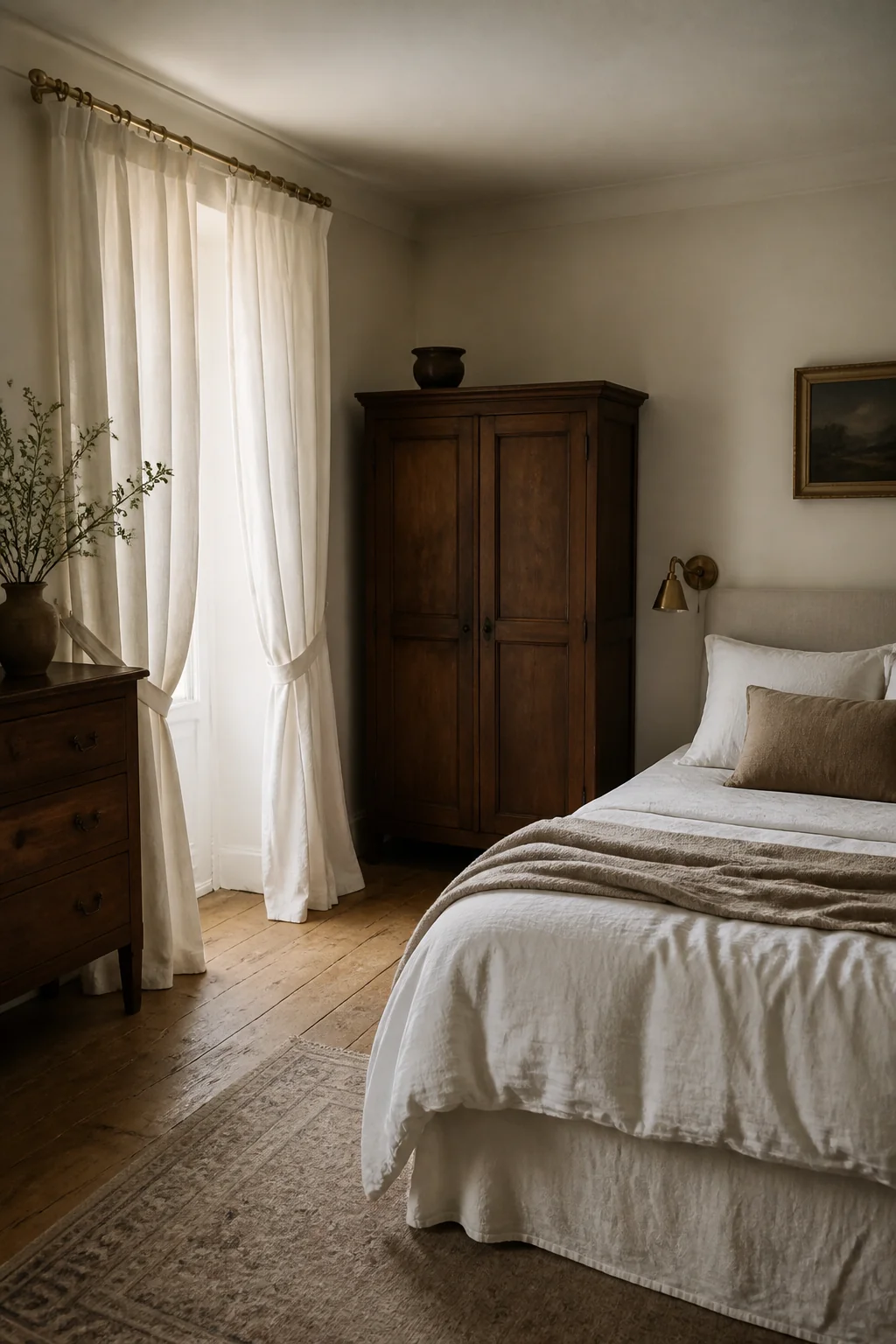
Hang lightweight linen curtains and use brass or natural wood tie-backs to hold them permanently open during the day, so the fabric frames the window without blocking any light. The tie-backs create a finished, intentional look instead of curtains just bunched to the side. The fabric softens the hard lines of the window frame and keeps the room from feeling cold. At night, you can let them drop to close fully for privacy. This works best on windows where you have at least 2 feet of wall space on each side to accommodate the tied-back fabric.
8. A single linen curtain panel hung on one side only
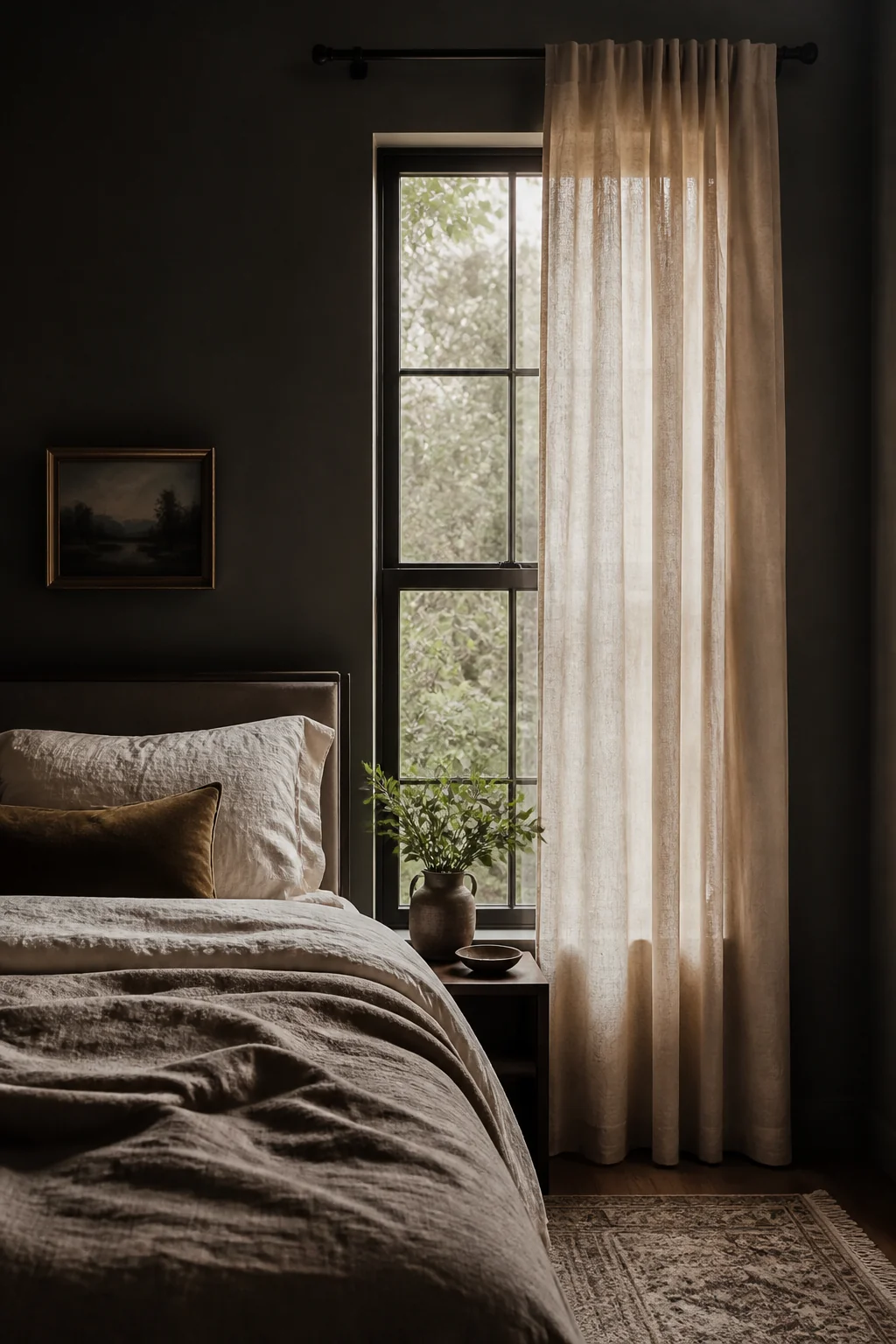
Hang a lightweight linen panel on just one side of the window on a single rod, either permanently tied or drawn only at night. This creates an asymmetrical, relaxed look that works especially well in modern bedrooms, and it blocks almost no light because the fabric sits off to the side. The panel should be 1.5 to 2 times the width of the window so it has fullness when it's drawn. Mount the rod high and wide, so when pulled, the panel covers the entire window. It's useful if you have a bed or furniture right next to one side of the window and need to protect just that area.
9. White wooden shutters with fabric roman shades behind
Combine wooden shutters on the outside (or inside frame) with a soft linen roman shade mounted inside the window frame. The shutters handle the hard privacy work and last decades, while the shade adds a layer of softness and texture that wood alone can't give you. The combination feels layered and intentional without looking fussy. When both are open, you get maximum light and the window looks clean. The shade shouldn't be motorized in this setup because you'll rarely need to adjust it, since the shutters do most of the work.
10. Linen panel in pale gray with a high rod placement
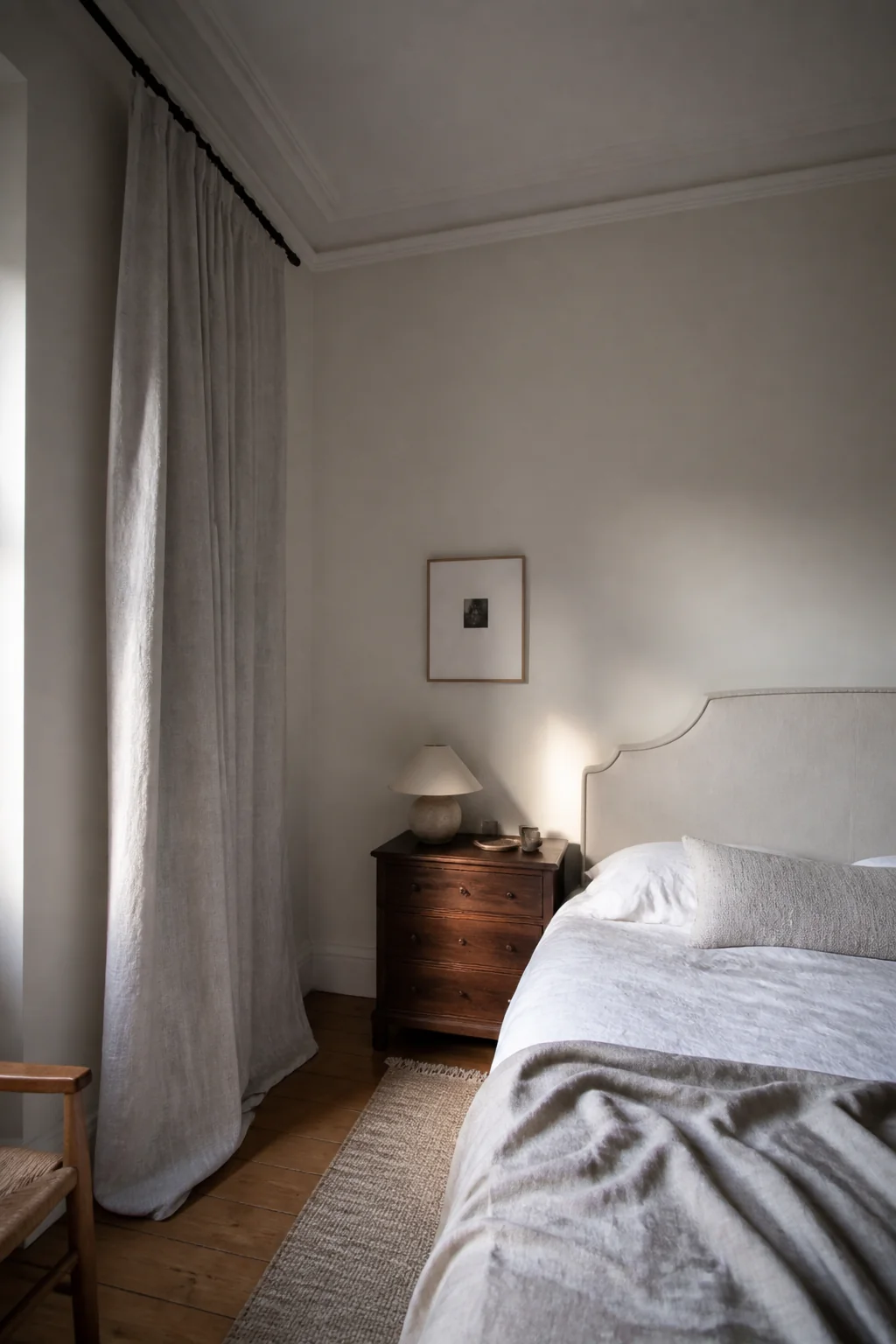
A single piece of lightweight linen in a warm pale gray hangs from a rod mounted 14 inches above the window frame and extends 10 inches beyond each side. Pale gray is darker than white or cream, so it diffuses harsh light without making the room feel brighter than it is, but it's still light enough to let plenty of illumination through. The high rod placement makes the wall feel taller and the window feel larger. The extra width means you can pull the panel completely off the glass during the day, and the corner of the room stays bright.
11. Sheer fabric in a soft pattern or texture
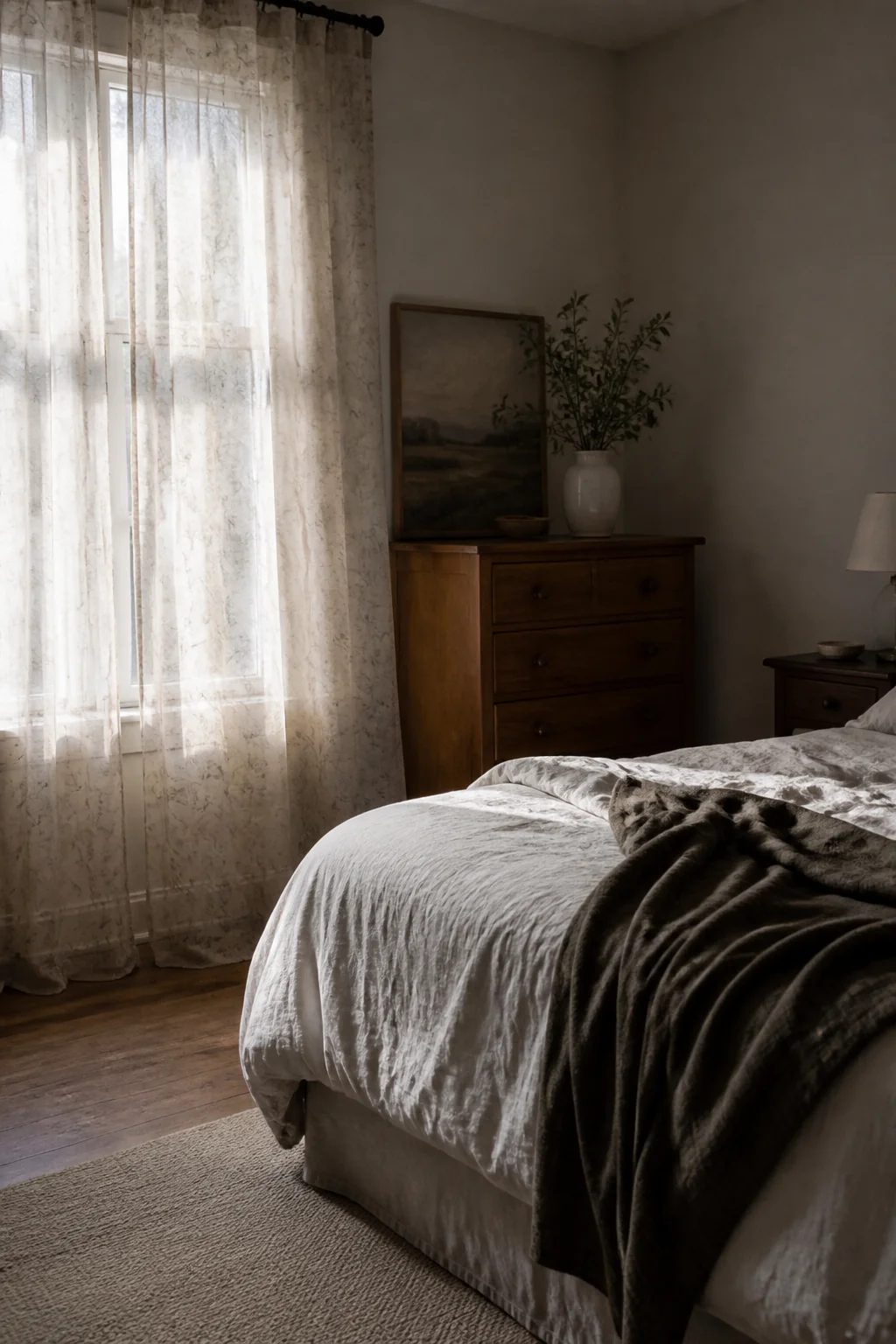
Instead of plain white, choose a sheer with a subtle tone-on-tone pattern: soft vertical lines, a gentle geometric print, or a textured weave. The pattern adds interest without blocking light, and it catches the eye more than a blank white curtain does, so the window becomes a design feature instead of just a source of brightness. Patterned sheers still let light through generously because the print is woven in, not printed on. Anchor the rod high and keep the walls around it clear so the pattern is the only thing drawing attention.
12. Blackout roman shade paired with a sheer rod pocket curtain
Mount a blackout shade inside the window frame for complete darkness when you need it, and hang a lightweight sheer curtain from a rod just above or just beyond the window frame. The sheer hangs in front of the shade and softens the look of the room during the day. When you need total darkness for sleep or to block afternoon heat, lower the shade. This combination gives you the most control over light without the room looking like an optical illusion of layered fabric. The sheer fabric should be simple and unlined so it doesn't add bulk.
13. Gauze or voile curtains in ivory with brass hardware
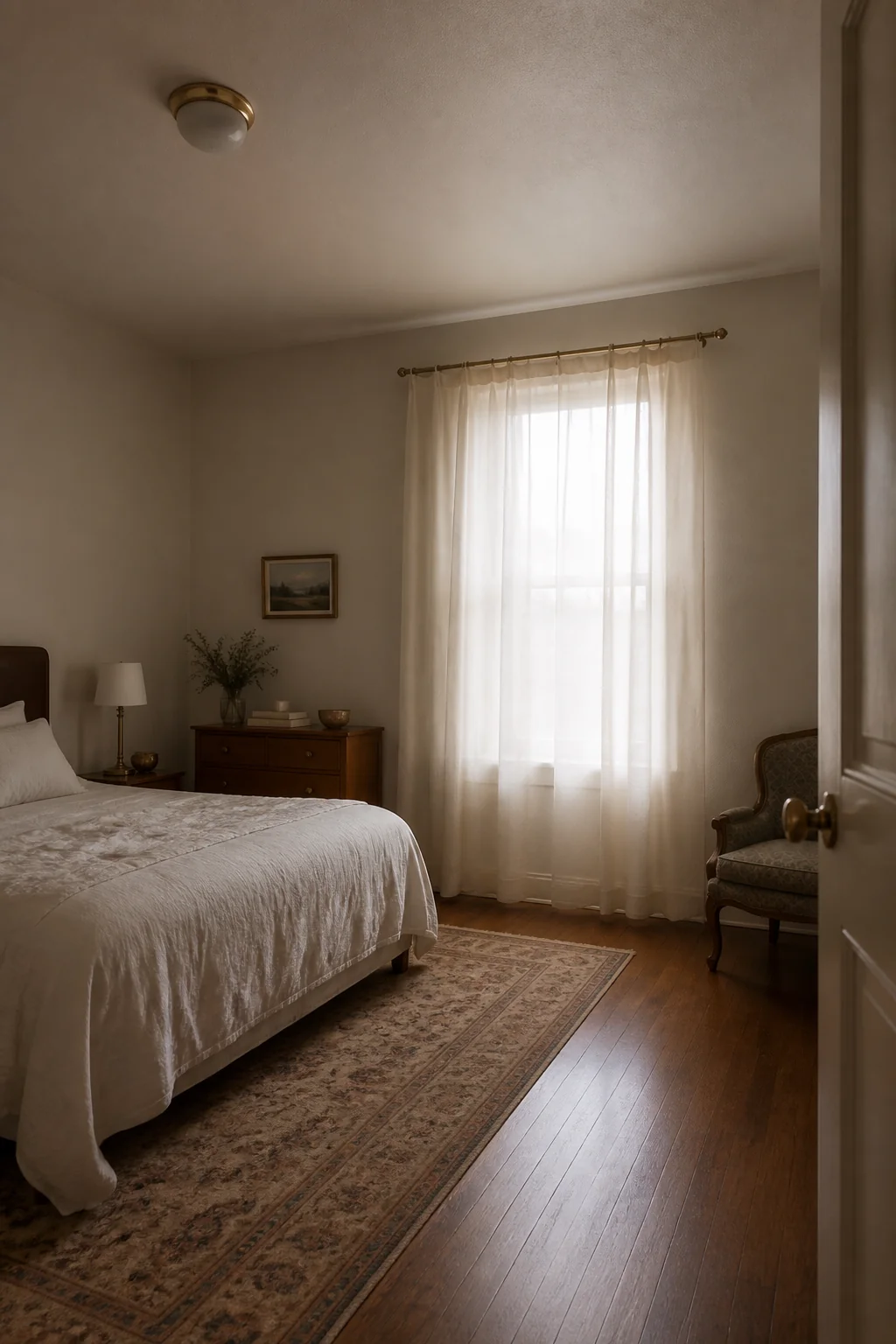
Gauze and voile are semi-transparent fabrics that feel almost weightless when hung. They drape beautifully and let light flood through while providing a soft veil of privacy from the street. Mount them from brass rods or rings for a warm, finished look that complements the softness of the fabric. The brass catches light and adds a subtle gleam to the window area. Hang them floor-to-ceiling if your ceilings allow, or at least 8 inches above the window frame, because their transparency means you see the wall behind them and you want that wall to feel tall.
14. Sliding sheer panels on a track system
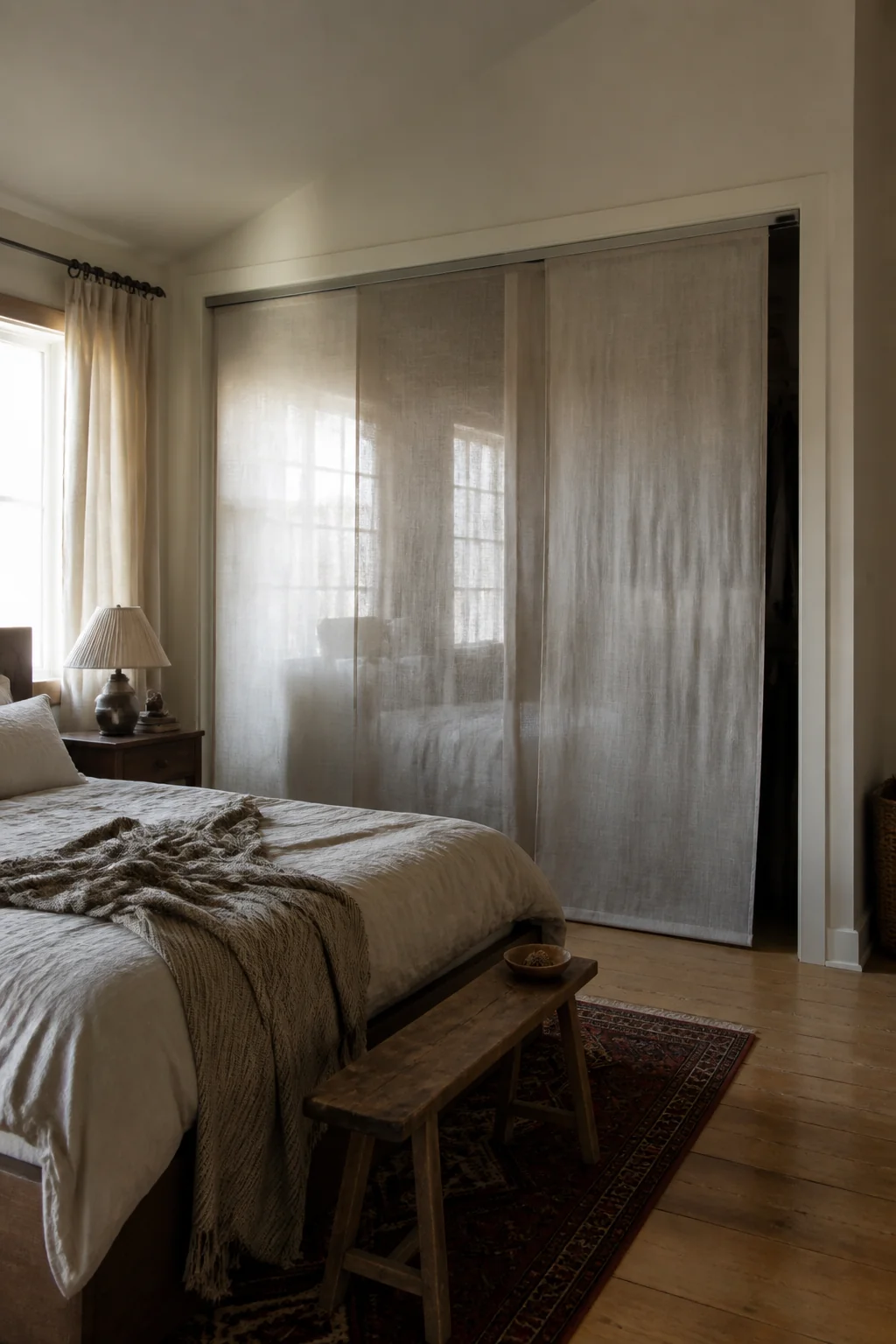
Sheer panels that slide on a horizontal track system are a modern alternative to traditional curtains. They stack completely to one side or both sides when open, taking up minimal visual space in a narrow bedroom. Light floods through during the day because there's nothing bunching up or blocking the glass. The track system is discreet and reads as minimal from across the room. You can open and close them with one smooth pull, and they don't wrinkle or bunch like soft fabric curtains can. This setup works best on wide windows or sliding glass doors where horizontal movement feels natural.
Save this for your next project
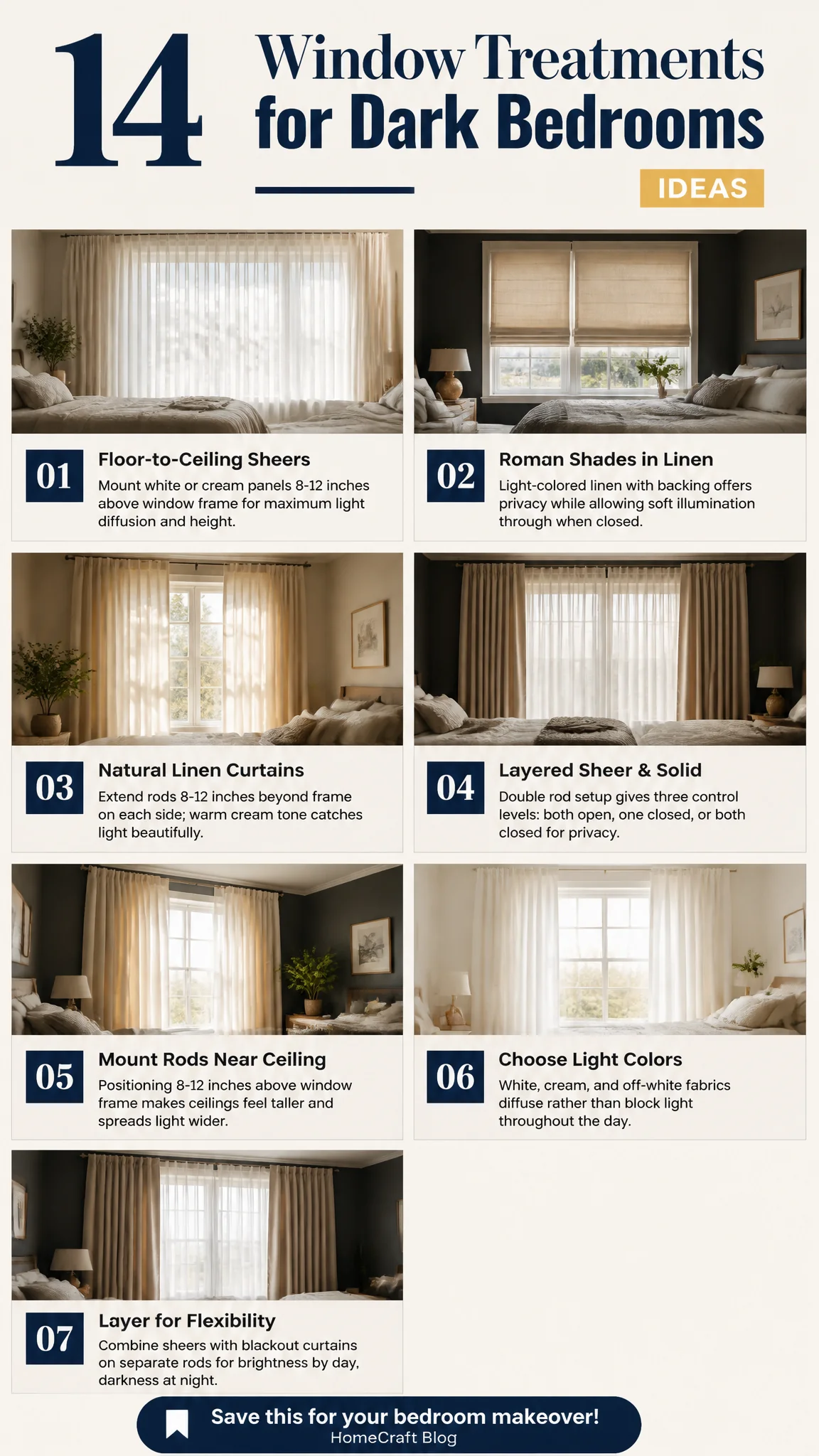
Light and privacy work together once the heavy, light-blocking fabrics stop being the default. The trade-off is small: some nights you close a blackout shade instead of drawing a curtain, and the room only gets fully dark with a second layer. In return the room feels bigger and brighter by day, and the natural light that is already there does more of the work.