9 Inviting Mediterranean Bedroom Decor Ideas for Low-Light Rooms
Brighten your low-light bedroom with warm whites, natural textures, and smart lighting. Nine mediterranean bedroom decor ideas that open up dim spaces.
This post contains affiliate links. As an Amazon Associate I earn from qualifying purchases. If you buy through our links, we may earn a commission — at no extra cost to you.
Low-light bedrooms kill the Mediterranean look before you even start. The style thrives on sun-washed walls and the feeling of space, so when your room gets maybe three hours of real daylight, standard Mediterranean design—cream walls, pale textiles, minimal lamps—leaves you in a cave. The fix isn't to abandon the aesthetic. Instead, layer in warm artificial light, use reflective finishes, bring in deeper neutrals, and add texture where flat color would disappear. Mediterranean bedroom decor ideas for low-light spaces require this adjustment. The bones stay Mediterranean: simple, earthy, honest. The execution just accounts for what your room actually has.
1. Warm white walls with a matte finish instead of flat
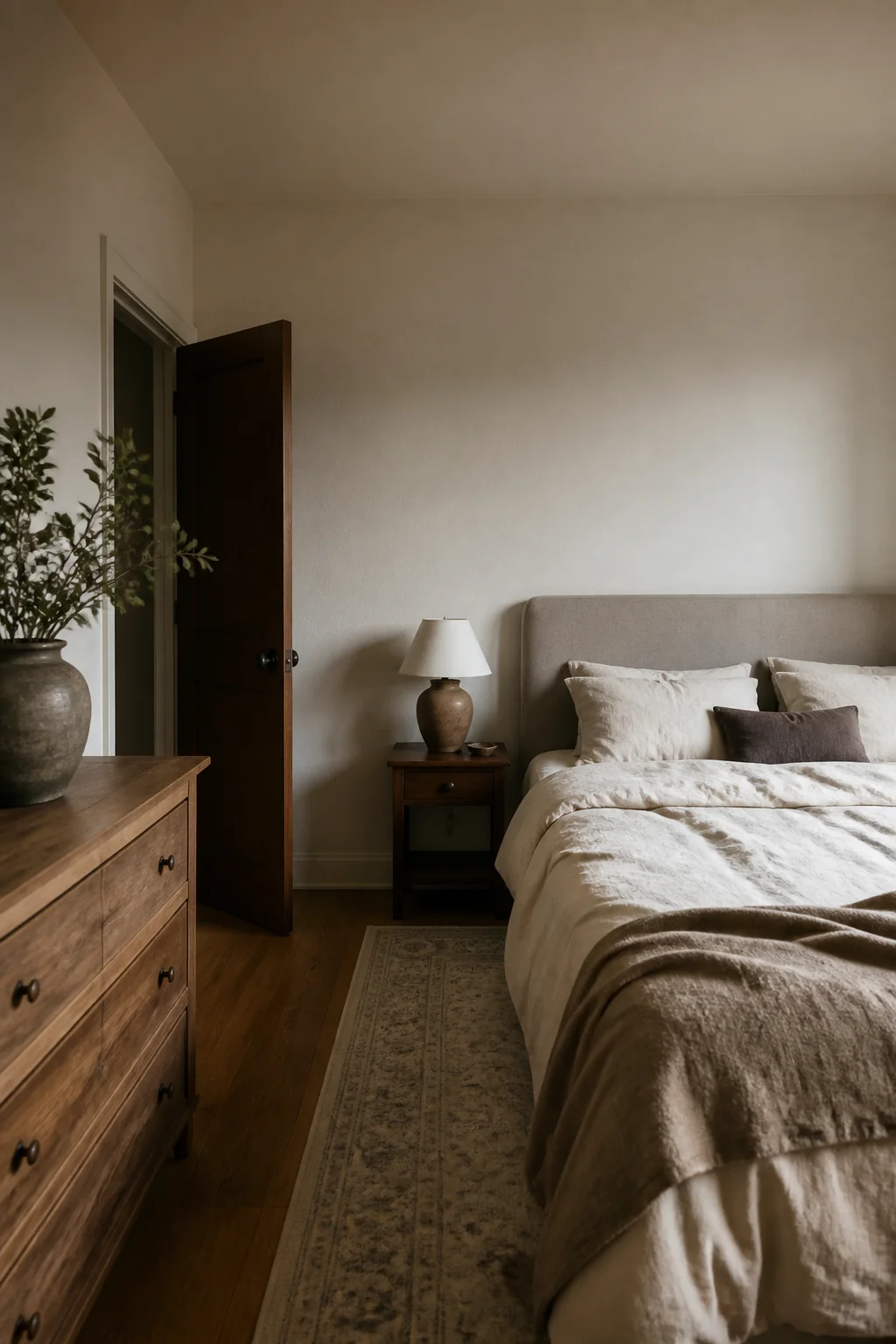
Matte finish, also called eggshell or satin depending on your region, has a slight texture that scatters light around the room instead of absorbing it. Walls feel less cave-like without looking shiny or modern. Warm whites work better than cool whites in low-light rooms because they read as cream rather than clinical, staying true to Mediterranean character. Paint costs about $40 to $60 per gallon, and a typical bedroom needs one to one-and-a-half gallons. Most people choose a white that looks good in daylight at the paint store, then get home and realize it's too stark under indoor lamps. A sample viewed under actual bedroom lighting for a couple of days reveals how it will perform at night.
2. Bed linens in off-white linen with visible weave
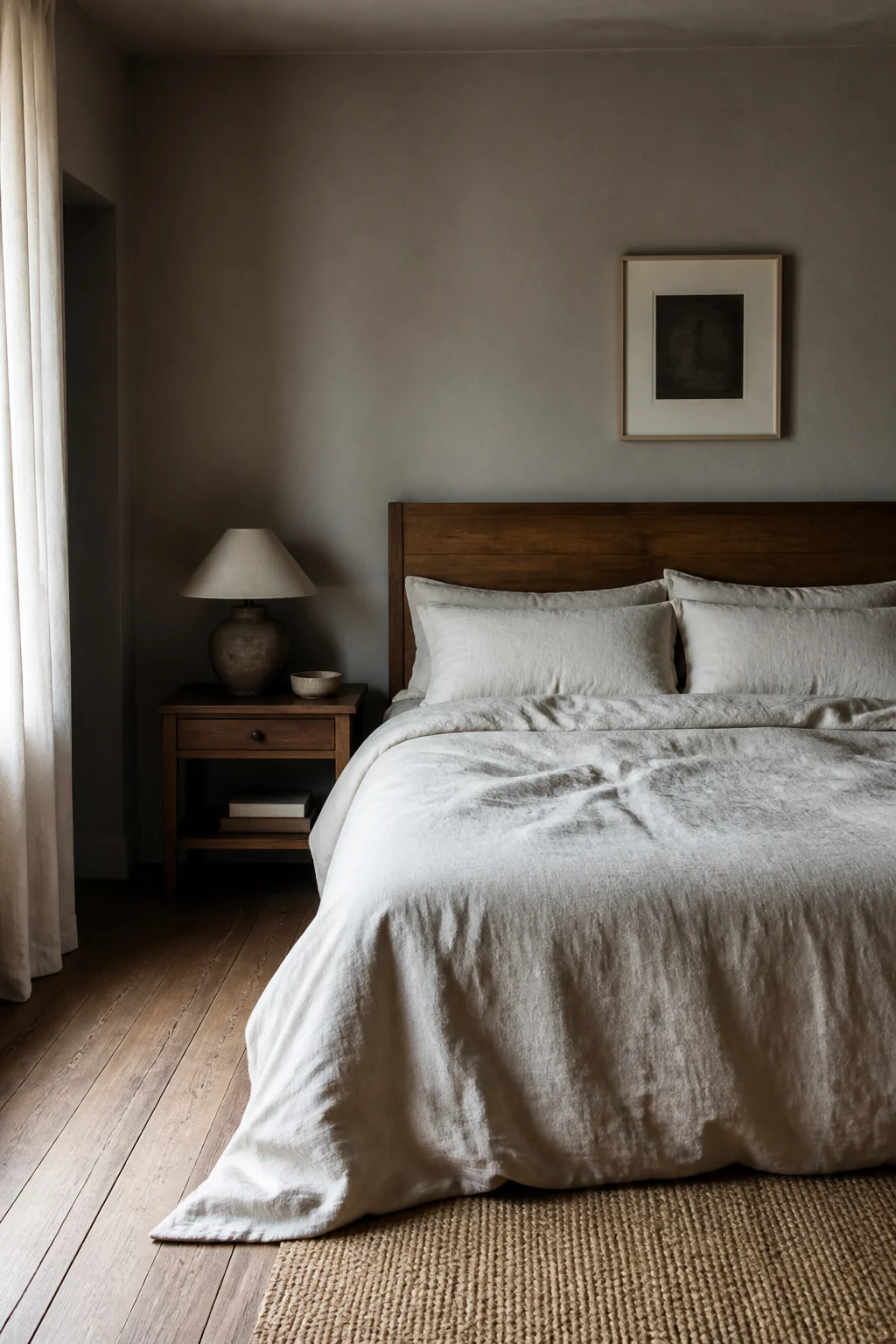
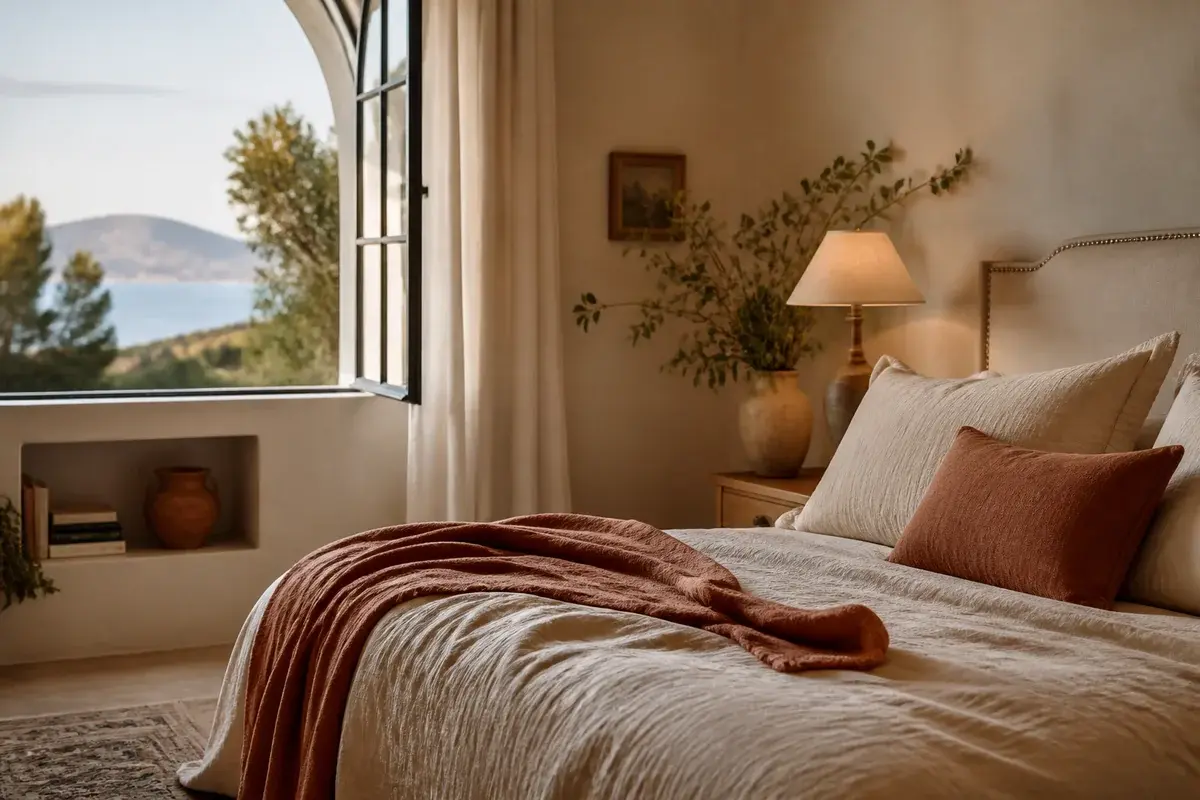
Linen scatters light because of its texture. Off-white linen, not pure white (which reads flat in low light), picks up warmth from your bedside lamp and reflects it around the room instead of absorbing it like cotton would. Look for a 200 to 250 thread-count linen that's loosely woven; the air pockets create that subtle shimmer. Quality linen sheets run $180 to $300 per set, but they're the largest surface in the room and work constantly. Dense, tight linen reads dull in dim light, so avoid the cheapest options. Hot water and machine drying collapse the weave and kill the glow, so gentle care matters.
3. Layered warm-toned lighting with no single overhead fixture
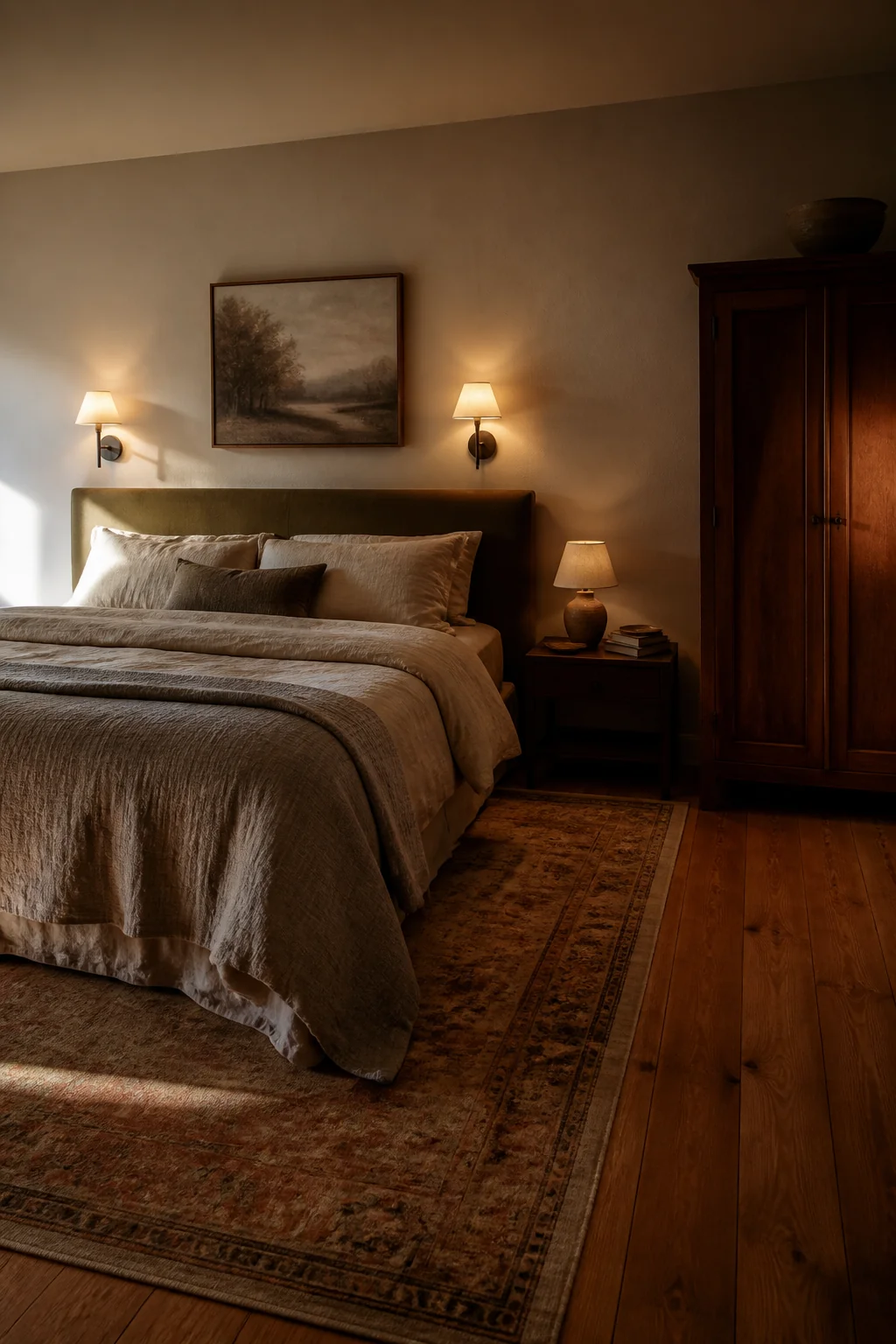
Bedrooms don't need an overhead light, especially Mediterranean ones (they usually didn't have them). Install two bedside wall sconces with warm bulbs (2700K color temperature, about $15 to $40 each). Add a floor lamp in the corner opposite the bed (another $60 to $150 for a decent tripod style). If space allows, include a small pendant or brass swing arm above a chair or reading nook. Each light source is dim on its own, but together they make the room feel lit and spacious instead of lit and dark. A single bright overhead fixture won't solve the problem. Low light needs layers.
4. Terracotta or clay-toned accent pieces on floating shelves
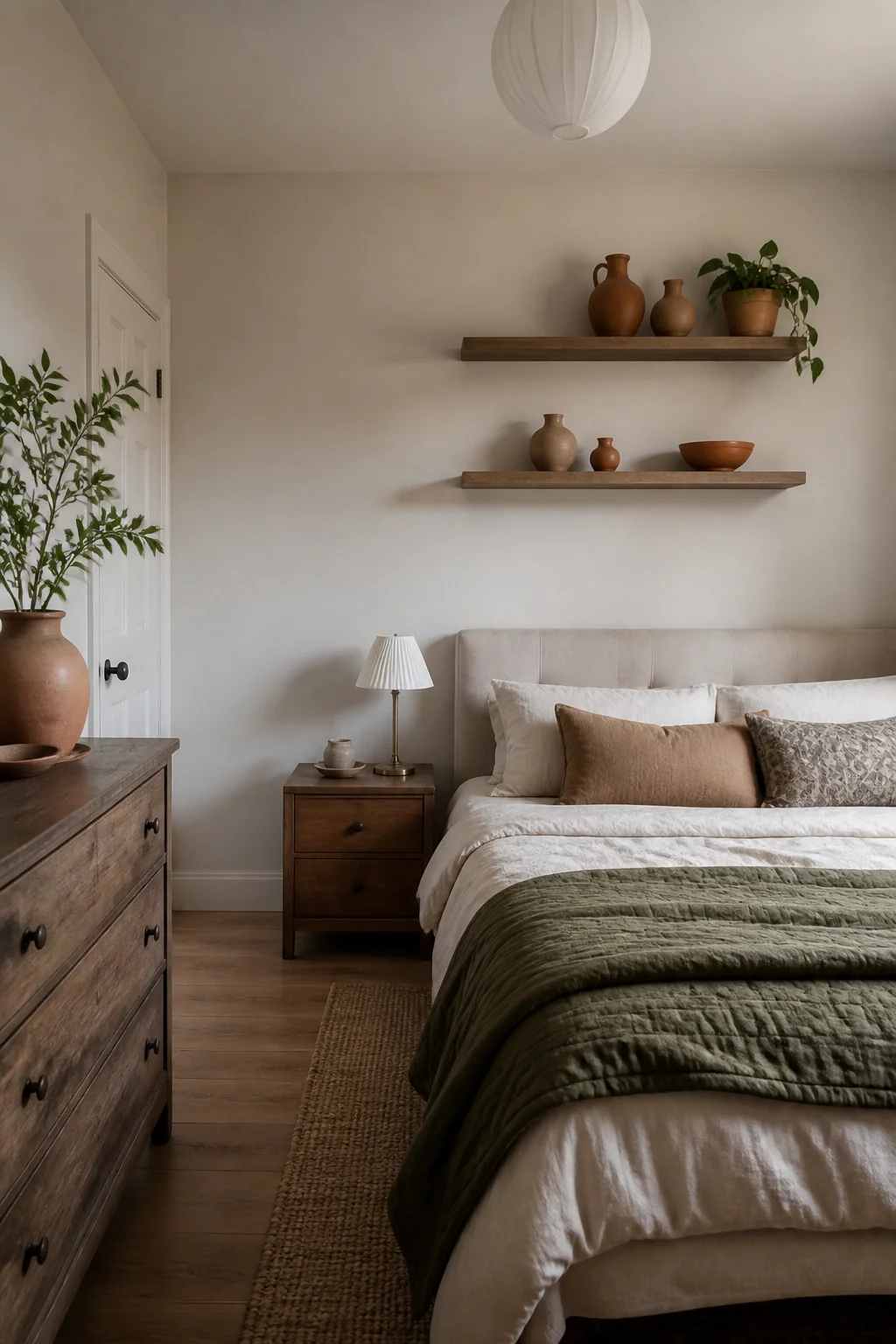
Mediterranean interiors feature earthenware and handmade clay. Small terracotta pots, clay bowls, or a sculptural piece in burnt orange or rust tone catch warm lamplight and add visual weight to a wall that otherwise reads flat. Mount floating shelves at eye level, usually 54 to 60 inches from the floor on a bedroom wall, and arrange three to five pieces with breathing room between them. Terracotta pieces run $15 to $80 each depending on size and whether they're handmade. Crowding too many objects on too little shelf space looks busy instead of curated. Empty air is part of the design.
5. Woven wall hanging in natural fiber above the bed
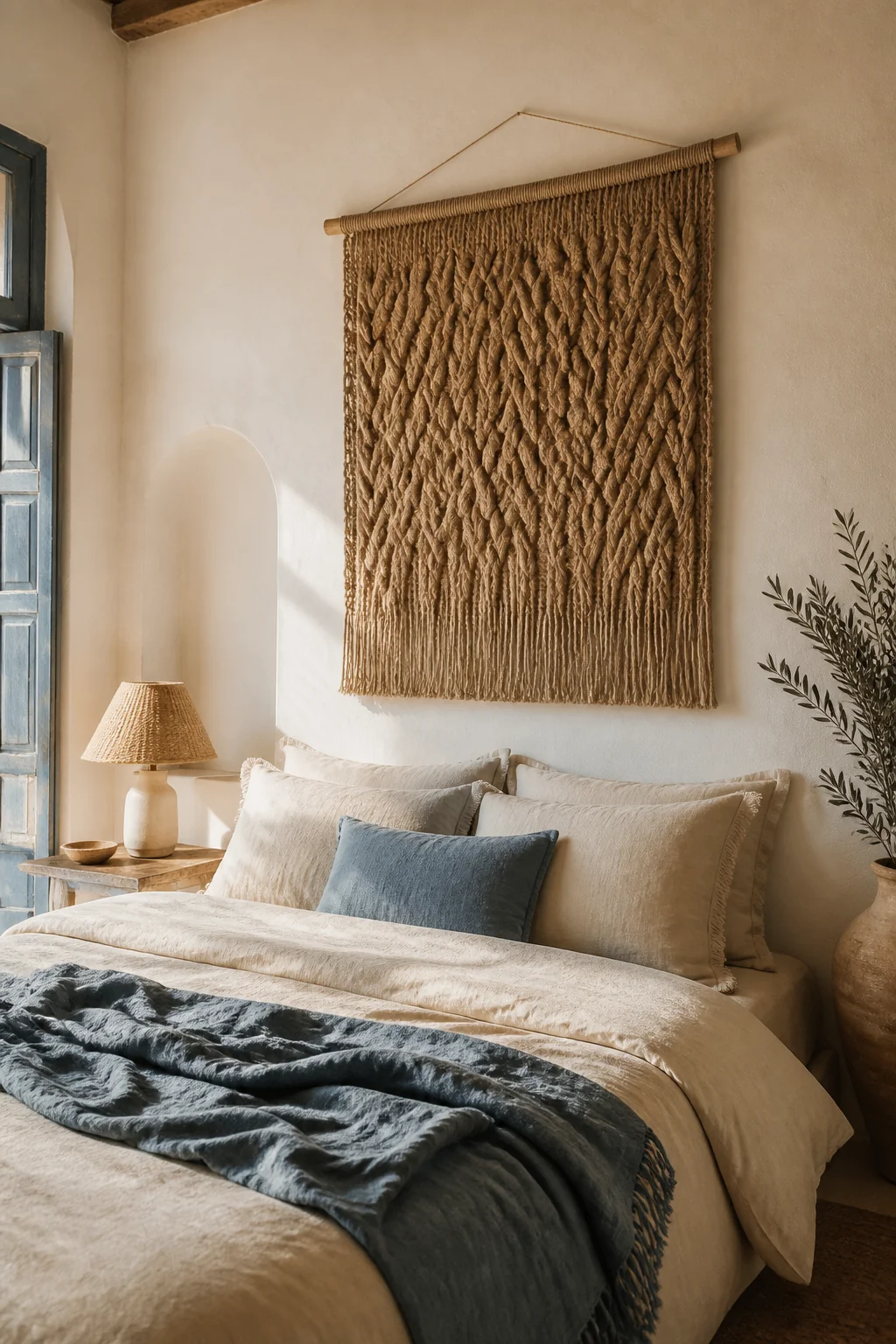
A large woven tapestry in jute, sisal, or rattan adds texture and warmth to a dark wall without needing light to "read" properly. Hang something 40 to 50 inches wide centered above your bed at about 12 to 18 inches above the headboard. Neutral tones—cream, sand, soft brown—stay Mediterranean while the weave itself becomes a focal point because the pattern is visible under indoor light. A good handwoven piece costs $80 to $200. Bold color or pictorial designs break from Mediterranean style, which stays abstract and muted. Synthetic materials like acrylic or polyester lack the depth of natural fiber and look cheap under any light.
6. Natural linen or cotton curtains in light sand or cream, floor to ceiling
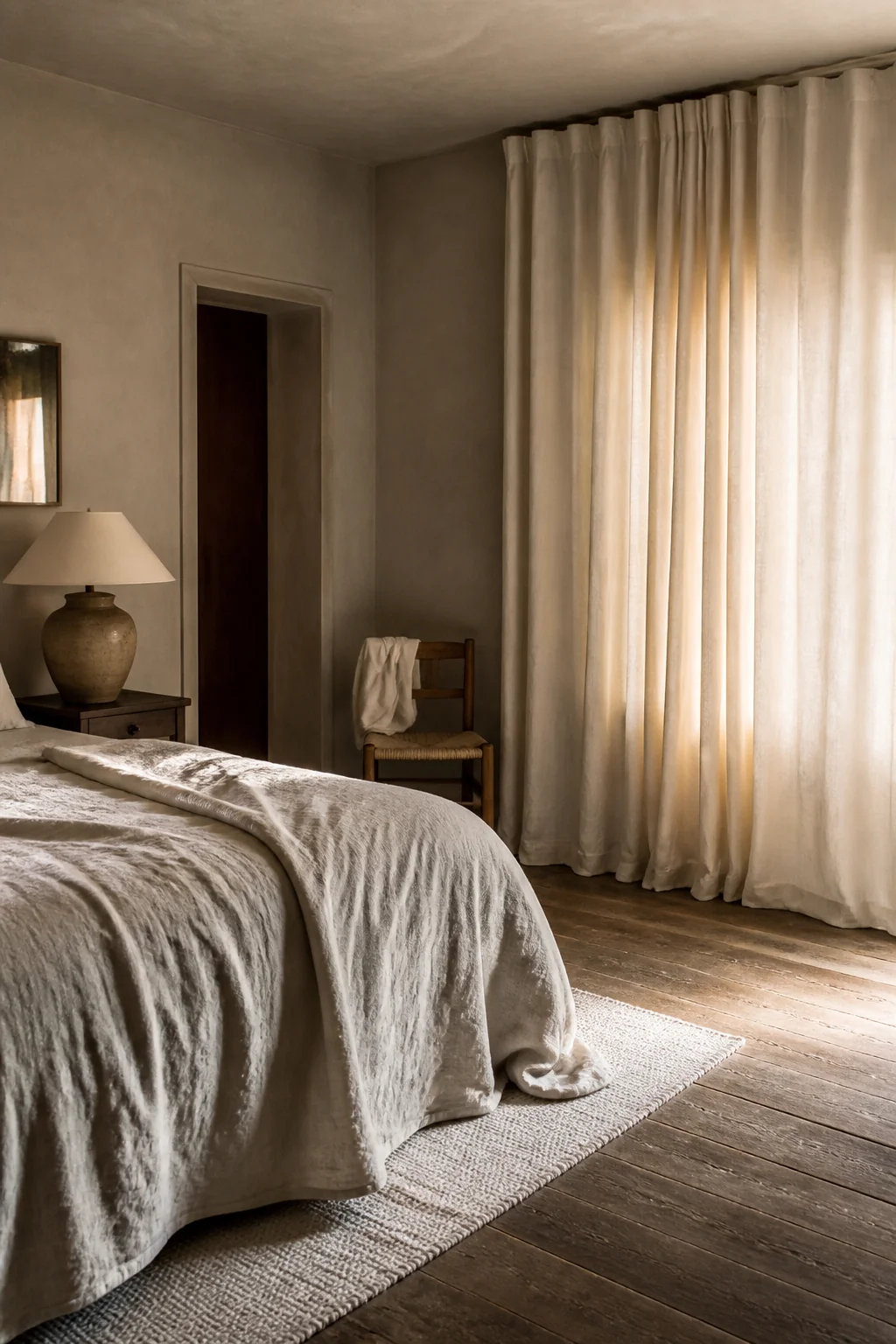
Floor-to-ceiling curtains make a low-light room feel taller and more open, and they soften shadows in corners where lamp light doesn't reach. Sheer or semi-sheer linen allows whatever daylight exists to filter through while still providing privacy. Hung from ceiling height on a simple rod in iron or brass, panels cost about $40 to $80 each. Most bedrooms need two panels for a standard window, so plan for $100 to $200 installed. Heavy blackout curtains close off low-light rooms; semi-sheer maintains a connection to the outside world even when the sun isn't there.
7. Pale natural wood furniture with open undersides
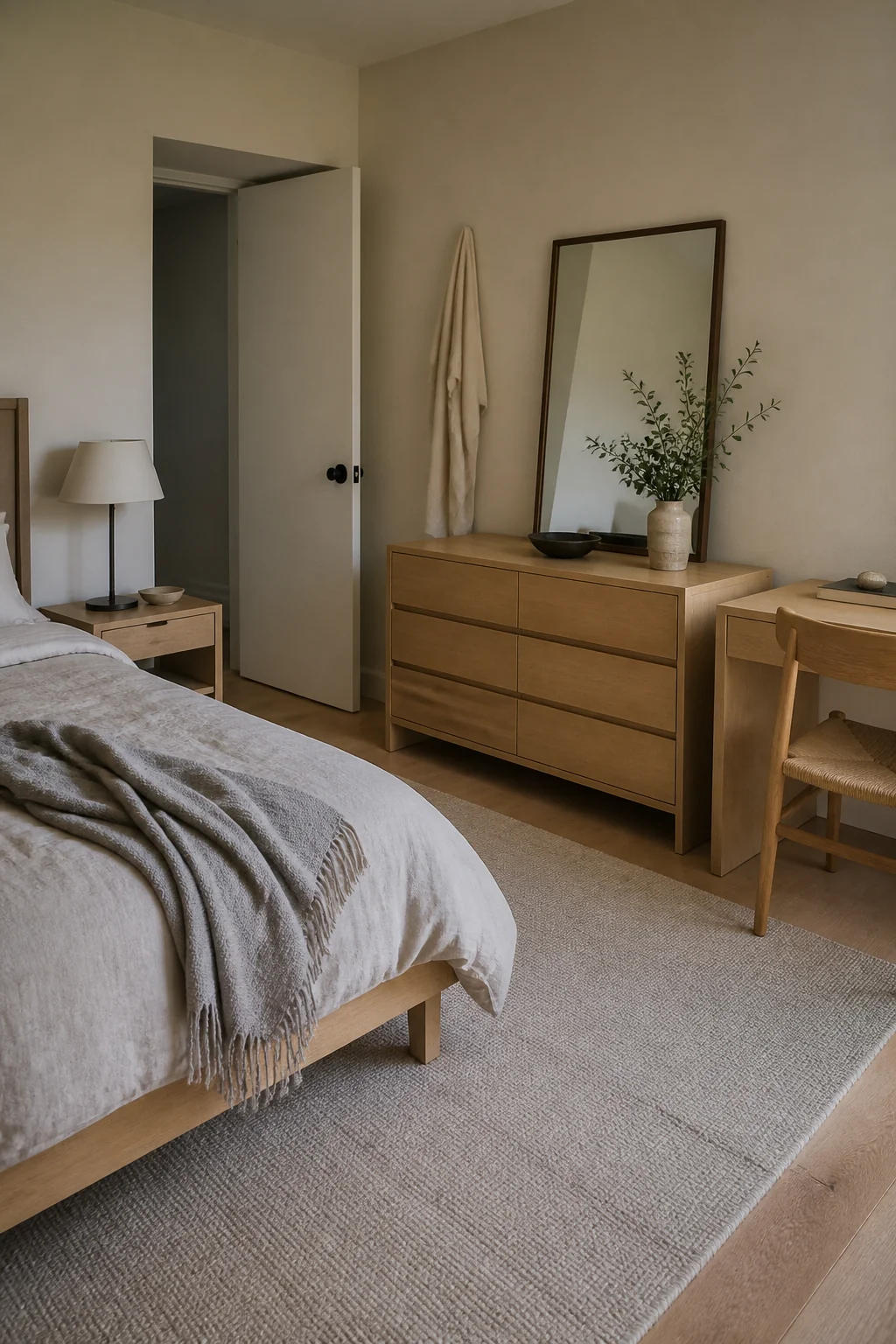
Mediterranean bedrooms typically feature simple wooden pieces: a nightstand, a low dresser, a desk. Solid wooden furniture reads heavy and dark in low light. Pale wood like reclaimed pine or whitewashed oak, combined with pieces that have open space underneath (visible legs rather than solid bases), keeps the room from feeling crowded. Lamp light travels under and around furniture instead of stopping at it. A simple wooden nightstand with a shelf and open legs runs $150 to $300. Heavily stained or dark wood finishes absorb light and make small rooms feel smaller.
8. Mirror on the adjacent wall to the bedroom entrance, not opposite
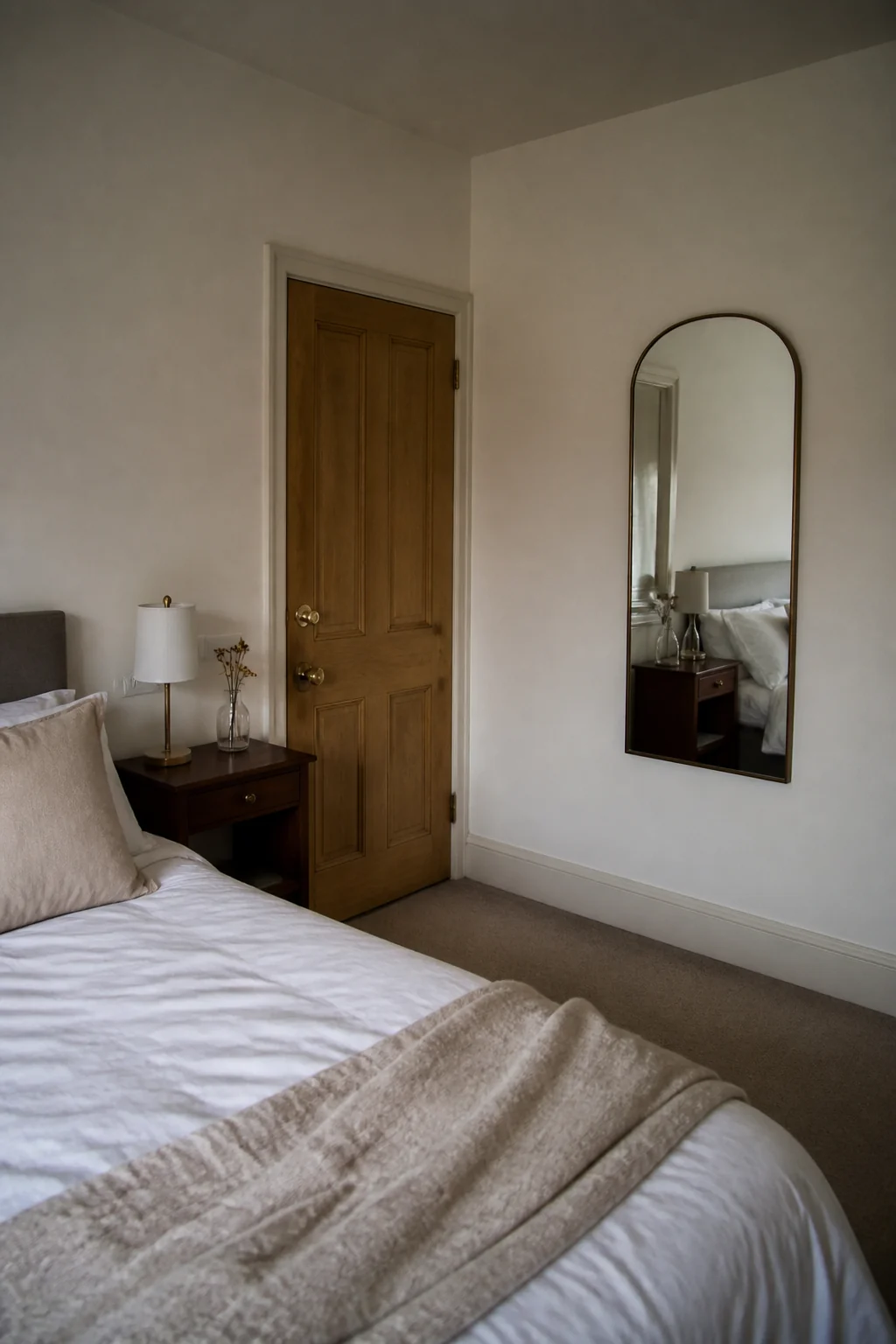
A mirror bounces lamp light around, but only if positioned correctly. Place a round or rectangular mirror about 24 to 30 inches wide on the wall perpendicular to your bedroom door, positioned so it reflects a bedside lamp or pendant back into the room. Don't hang one directly opposite the entrance; it will show the dark hallway and make the whole space feel dimmer. A 28-inch round mirror in wood or brass framing costs $60 to $150. Position matters as much as the mirror itself. A mirror in the wrong spot just shows darkness, which reads as more dark.
9. Woven poufs or low upholstered stools in natural tan or cream
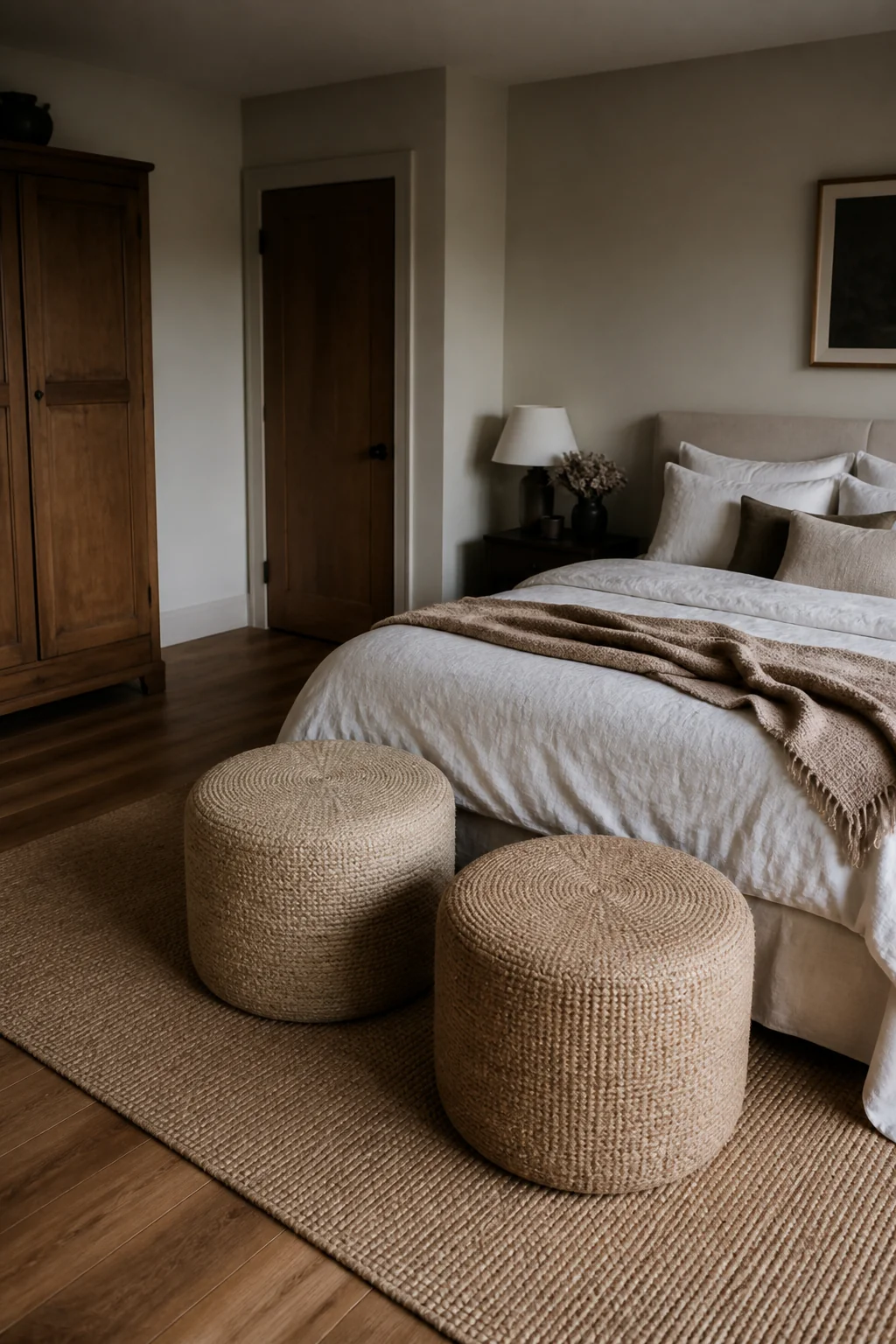
Low-level textiles anchor a room and add softness without taking up vertical wall space. A woven pouf or upholstered stool in natural linen, jute, or light leather provides extra seating and creates visual interest at floor level, where low lamps can spotlight the texture. Place one or two at the foot of the bed or in a corner near a reading lamp. Woven poufs run $50 to $120 depending on size and material. Upholstered stools start around $80. Dark or richly colored upholstery makes low-light rooms feel heavier; stick with neutrals that reflect warmth.
Keep this guide handy
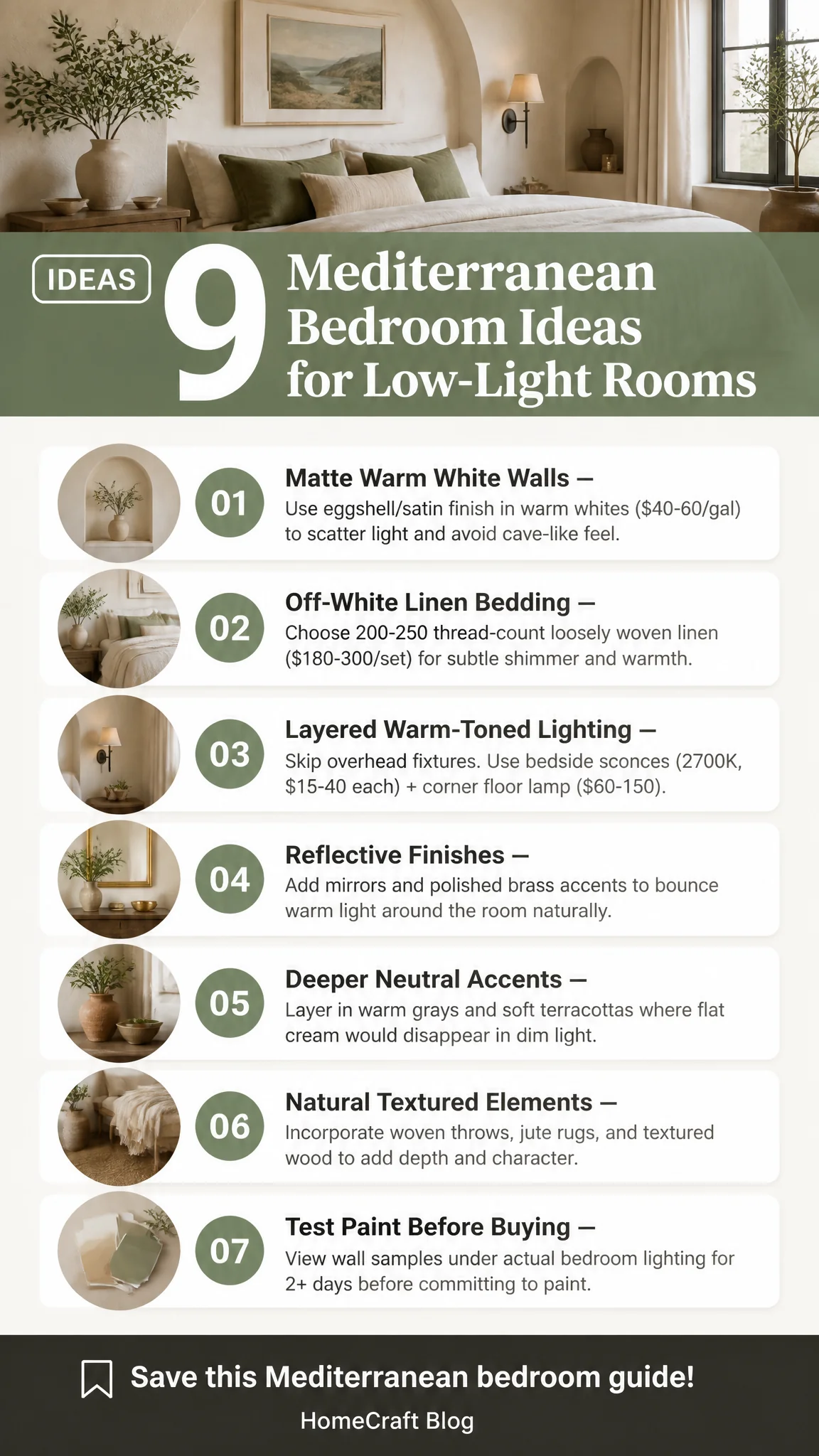
A room built this way glows warmly instead of disappearing into shadow. The textures—woven shelf styling, linen bedding, natural wood, hanging fibers—give your eye something to land on under lamplight instead of flat surfaces that vanish once the sun sets. The Mediterranean calm stays intact. The room just becomes livable after dark.