6 Stunning Olive Green Bedroom Schemes That Work in Small Rooms
Make small bedrooms work with olive green bedroom decor. Six color schemes and furniture layouts that brighten tight spaces instead of making them feel cramped.
This post contains affiliate links. As an Amazon Associate I earn from qualifying purchases. If you buy through our links, we may earn a commission — at no extra cost to you.
Small bedrooms have one brutal constraint: you can't fake the square footage. Olive green is a rich color, and rich colors absorb light, which means a small room painted olive can read as a cave if you get the shade, the wall coverage, or the balance wrong. You also can't layer in as much furniture as a larger room can hold, so every piece has to earn its space and every wall has to work twice as hard. The schemes below solve this by changing what you paint, what you leave white, where you use the green, and what you pair it with so the room doesn't shrink.
1. Paint the bed wall and keep three white
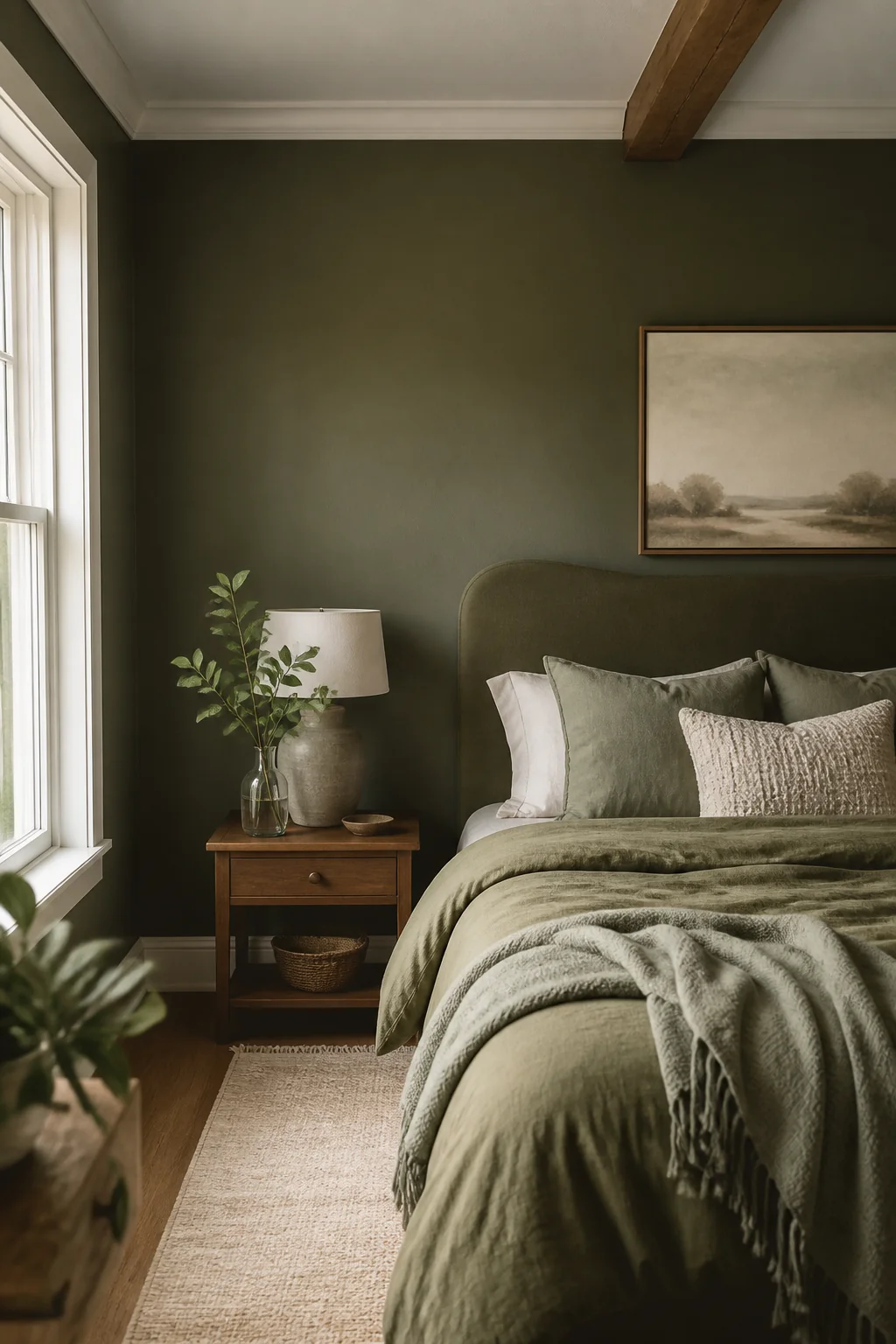
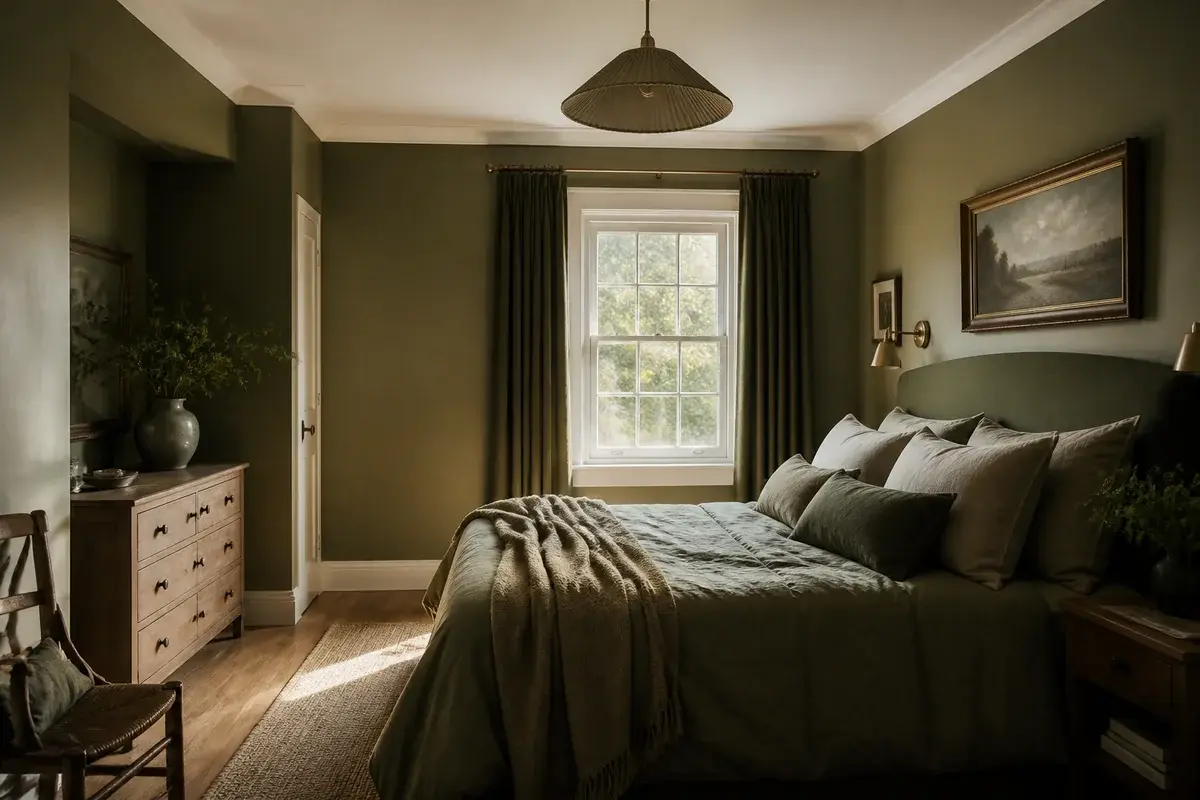
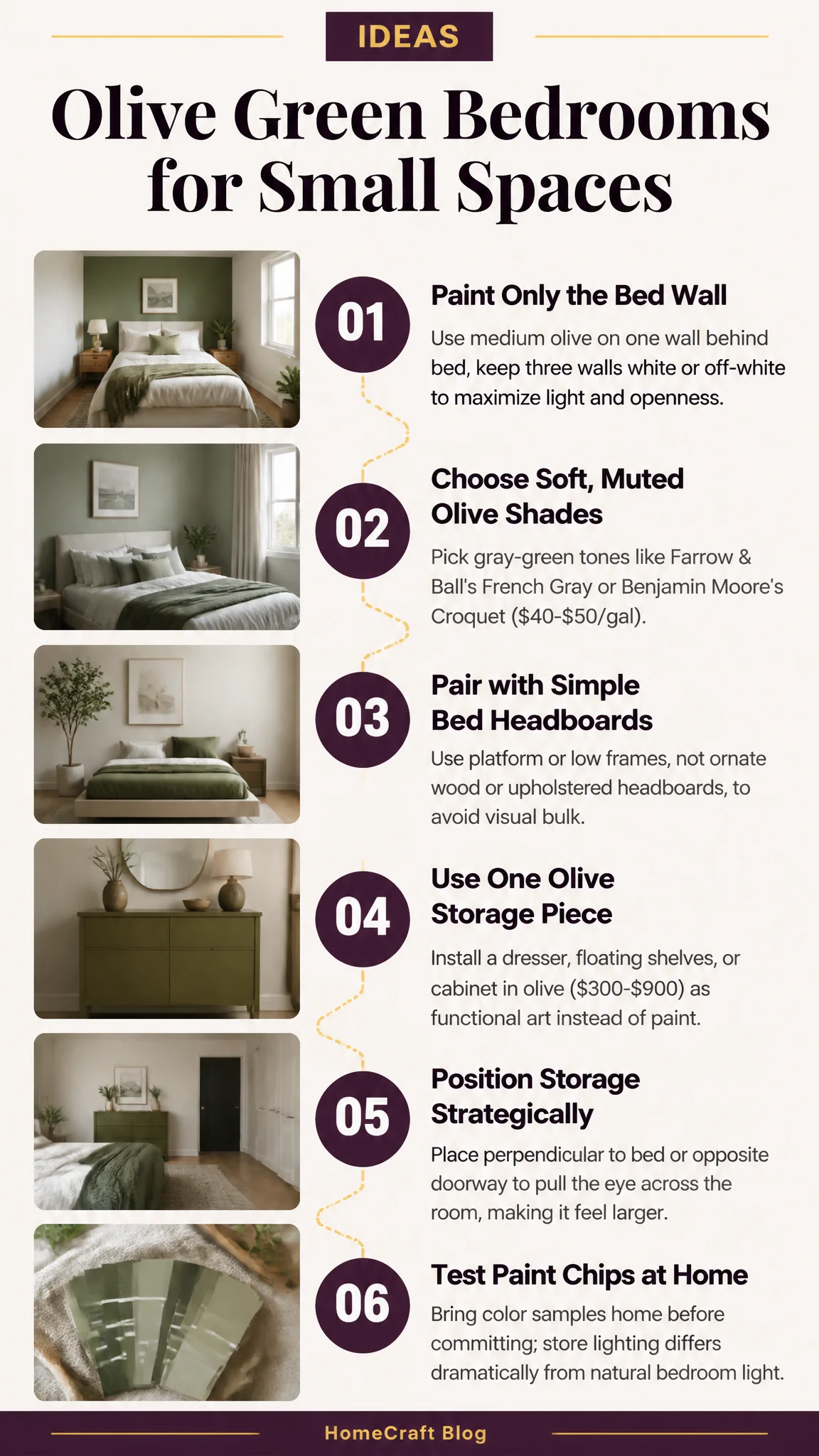
This is the tightest, safest play. Paint only the wall directly behind your bed, the one your eyes land on first when you're lying down, in a medium olive (something like Farrow & Ball's "French Gray" shifted toward green, or Benjamin Moore's "Croquet" at about $40 to $50 per gallon). Leave the other three walls white or off-white. The result: your eye reads the bed as the room's anchor, the space still feels open, and you're not fighting the color on every side.
Medium olive on one wall won't close off a small room the way a dark forest green will. The white walls bounce what little light comes in. This scheme works best if your bed headboard is simple (a platform or low frame without a lot of visual bulk) so the wall itself becomes the statement. If your headboard is ornate wood or upholstered, skip this one; you'd have too much visual weight in one corner.
The mistake people make here is choosing a shade that's too dark. A color that looks sophisticated in a paint chip under a store's bright lights will feel oppressive in a room with minimal natural light. Stick to a soft, muted olive, almost a gray-green, and bring the chip home before you commit.
2. Use olive green for one piece of built-in storage
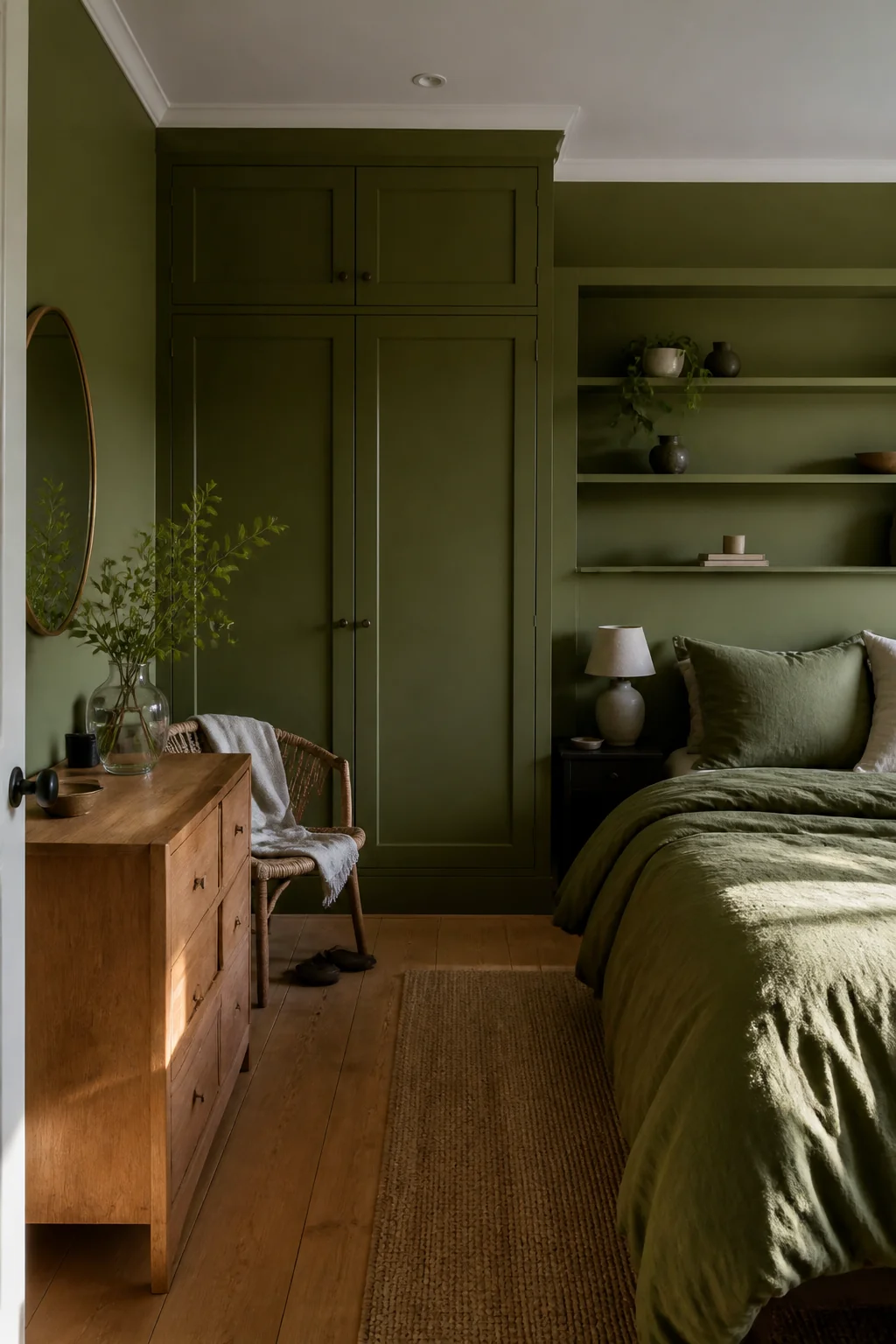
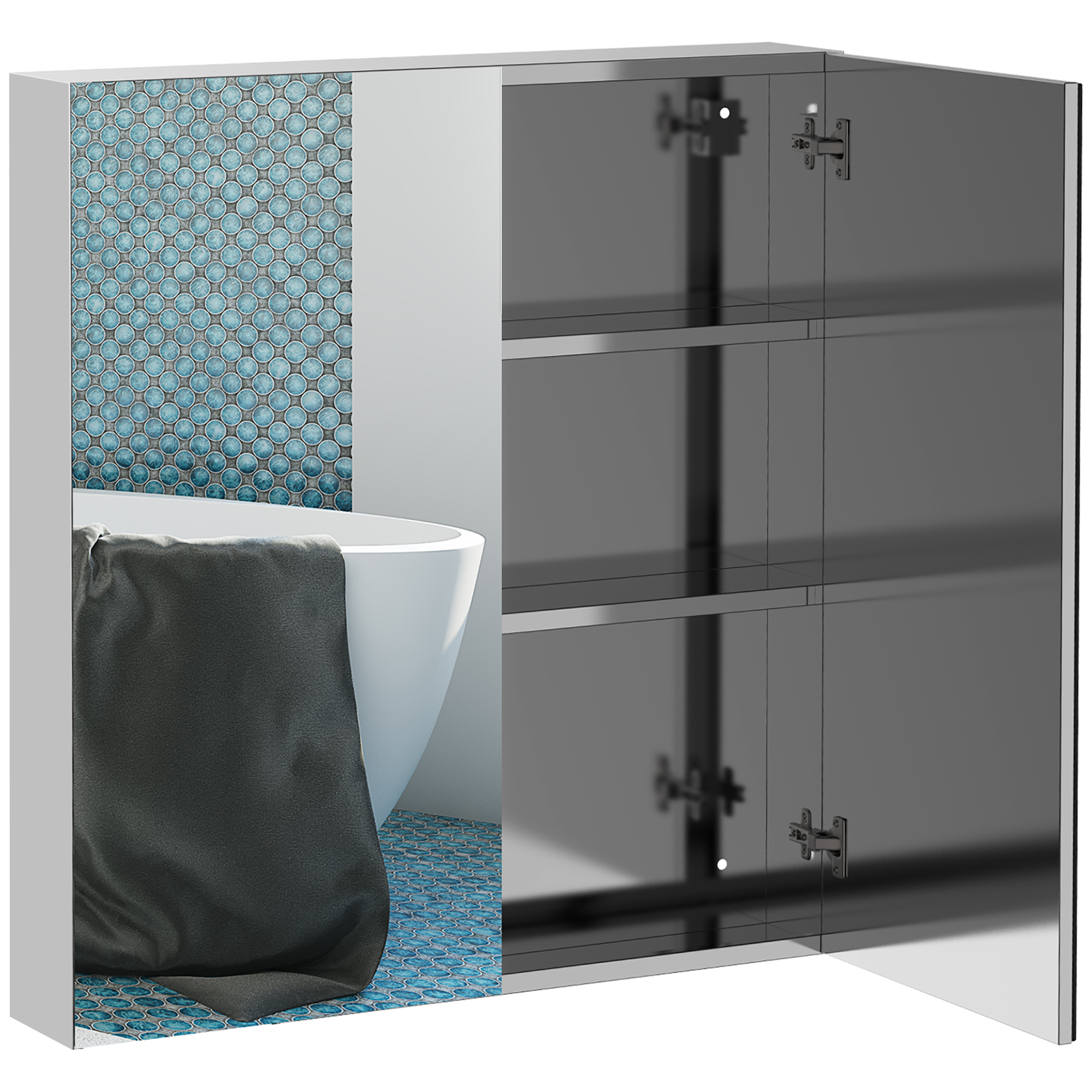
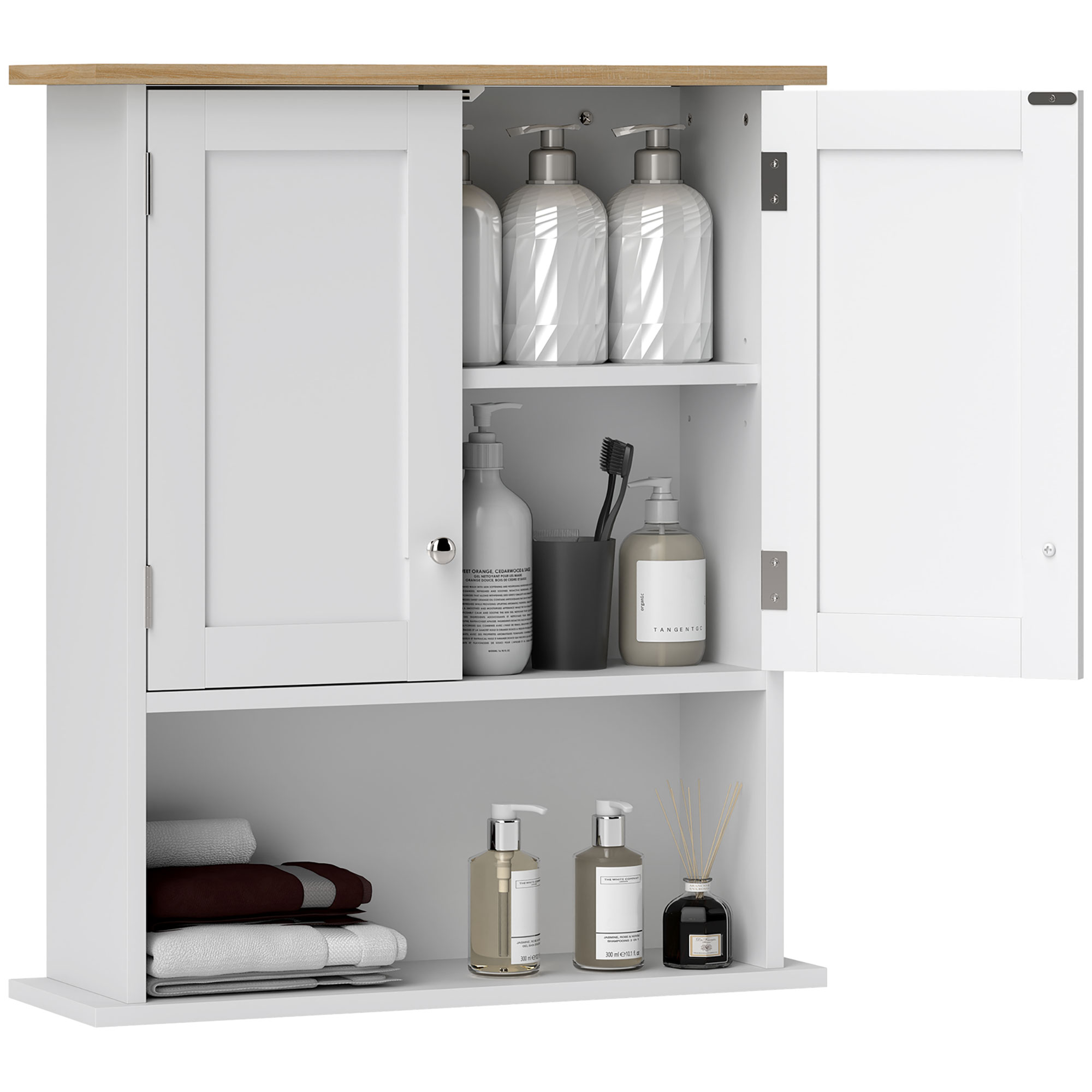
If painting feels too permanent, build or fit one piece of storage in olive and let it carry the color. A low dresser, a set of floating shelves, or a wall-mounted cabinet in olive (custom or off-the-shelf, usually $300 to $900 for a solid piece) anchors the room without consuming wall space the way a paint job does. Pair it with white walls and natural wood furniture elsewhere.
This approach lets you change your mind in a year or two without repainting, and it keeps the room feeling edited rather than colored. The olive piece becomes functional art instead of a backdrop. Place it perpendicular to your bed, opposite a doorway if your layout allows it, so it's the second thing you notice after the bed itself. That placement pulls your eye across the room, making the space read larger.
The catch: the piece has to be really solid and finished well, because it's not hiding against a wall. A flimsy laminate dresser in olive will cheapen the whole room in ways that read immediately. The cheap veneer shows dust, the hinges sag within months, and the color looks flat rather than intentional. Invest in real wood or quality plywood with a proper finish. Choose a piece with substantial drawer slides, clean joinery, and a finish that doesn't rely on glossy laminate to cover joints. Place it in a corner or under a window, where it doesn't block movement through the room, so it serves as both storage and a visual rest point.
3. Paint all four walls a very pale olive wash
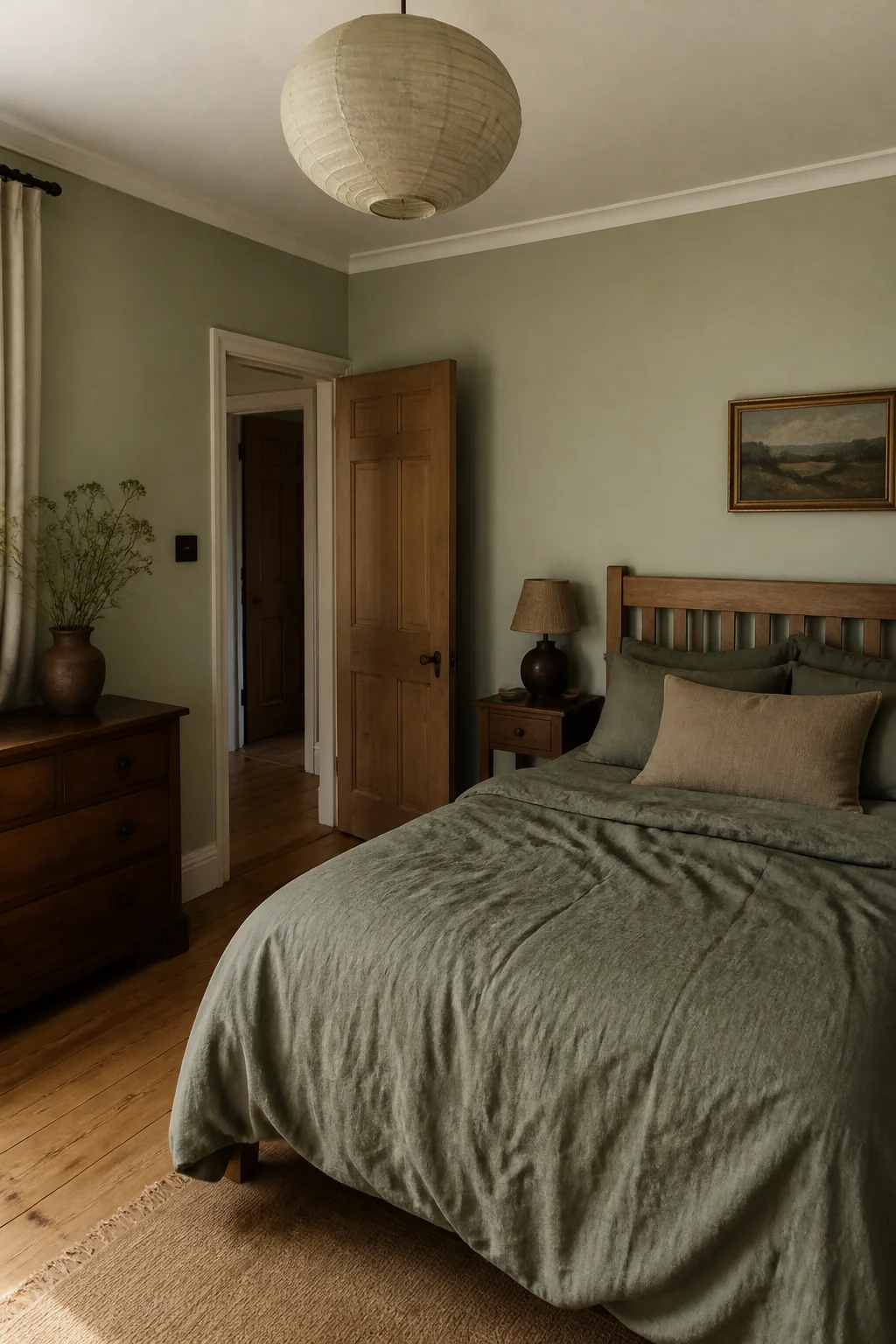
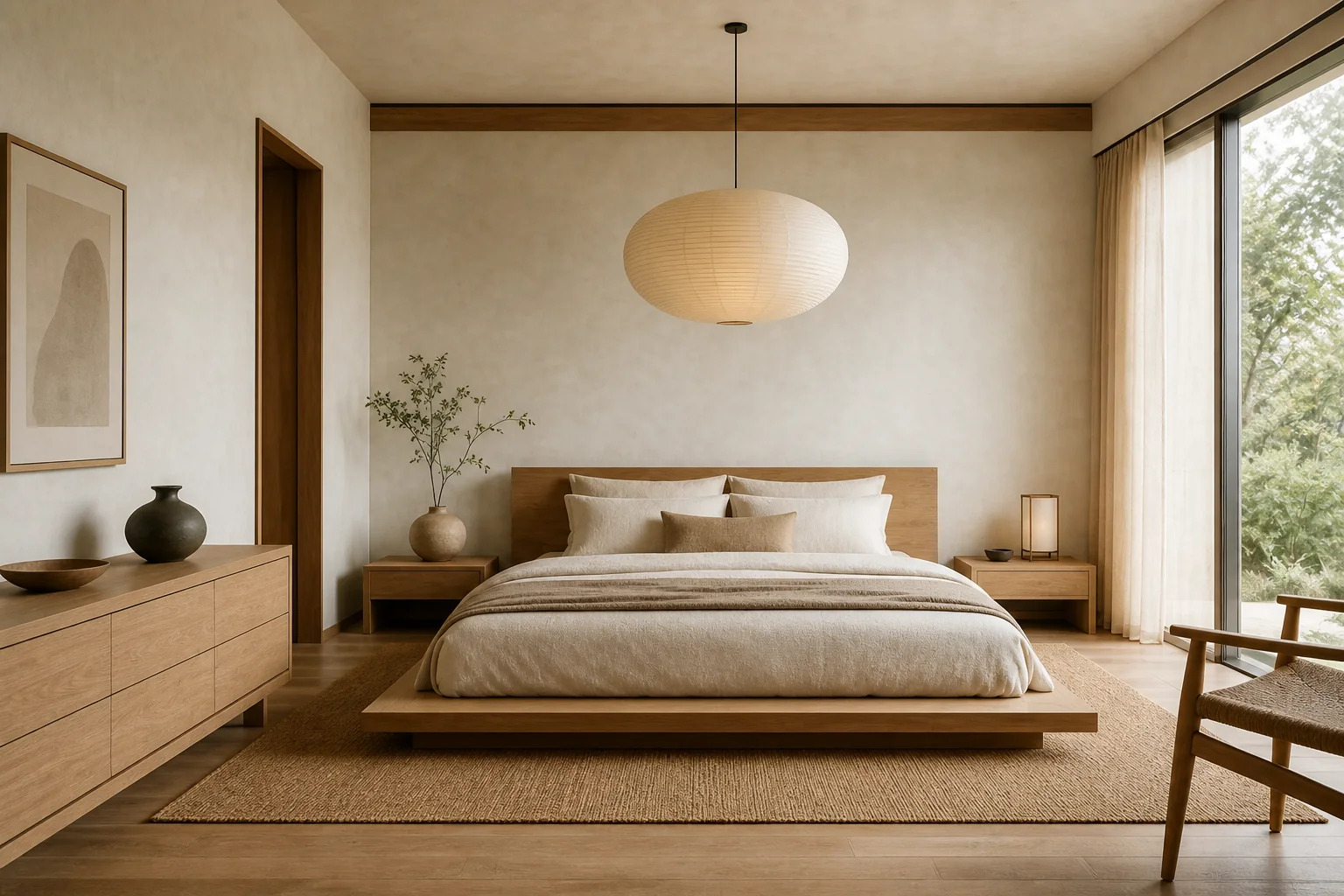
Instead of one dark accent wall or a medium olive single wall, paint all four walls in a barely-there olive, so pale it reads almost like white with a whisper of green. Farrow & Ball's "Old White" with a touch of green, or Benjamin Moore's "Aegean Mist" leaning warm, sits in this territory. The color is there but it's not oppressive.
This gives the room a cohesive, intentional feel without darkening it. Your eye picks up the subtle green shift, and the room feels calm rather than boxed. Pale olive works beautifully with warm wood tones, natural linen, and brass fixtures, it doesn't fight those materials the way a dark forest green would. This scheme lets you use bolder accent colors (jewel-tone pillows, a patterned throw, colorful art) because the walls are so quiet.
The downside: at this pale level, the olive is doing almost nothing visually. If you want a bold statement, this isn't it. You're paying for subtlety. But for a tiny bedroom where you need the walls to recede, this is the smartest choice for olive green bedroom decor in constrained spaces.
4. Olive green headboard with white walls and natural wood
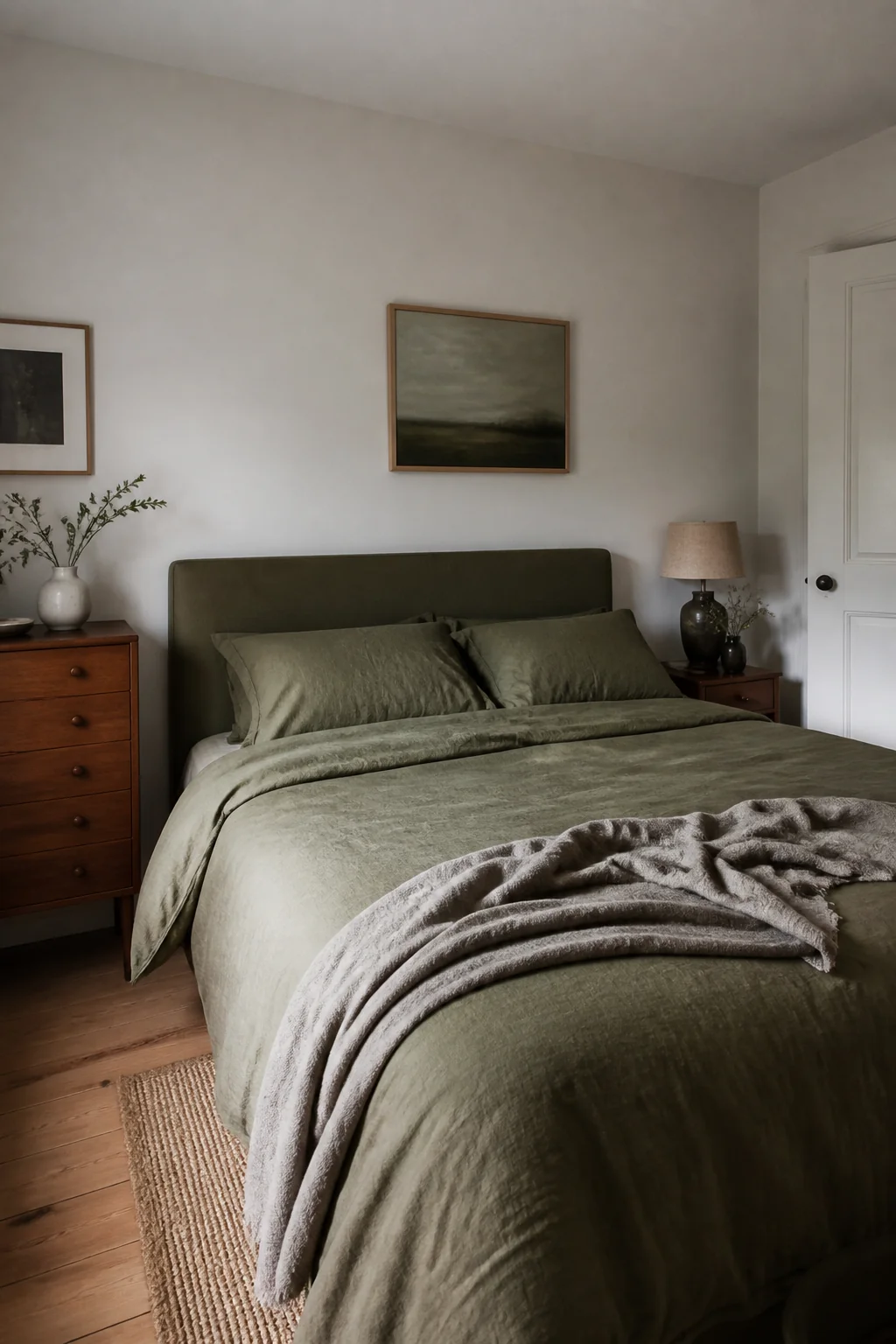
Swap a painted wall for an upholstered headboard in olive green. You can buy one (usually $250 to $600 for a twin or full) or have one custom made ($400 to $1,200). The headboard acts as art, a color statement, and a functional piece that actually makes the bed more comfortable. White walls stay clean and open. Natural wood furniture, nightstands, a dresser, a simple bedframe, adds warmth without competing.
This layering works because the headboard anchors the bed without painting over the wall behind it, so you can remove it if you move. The olive reads as a textile accent rather than a room color, which gives you more flexibility. A linen or cotton headboard will feel softer than velvet, which can read heavy in a small space. Avoid leather or faux leather in tight quarters; they bounce light strangely and show dust.
Pair this with a white or cream duvet and simple linen pillows. If your bed is under a window, a headboard with some height (40 to 48 inches) becomes a visual focal point and makes the bed feel intentional rather than like it's just shoved against the wall.
5. Olive green window treatment and accent accessories
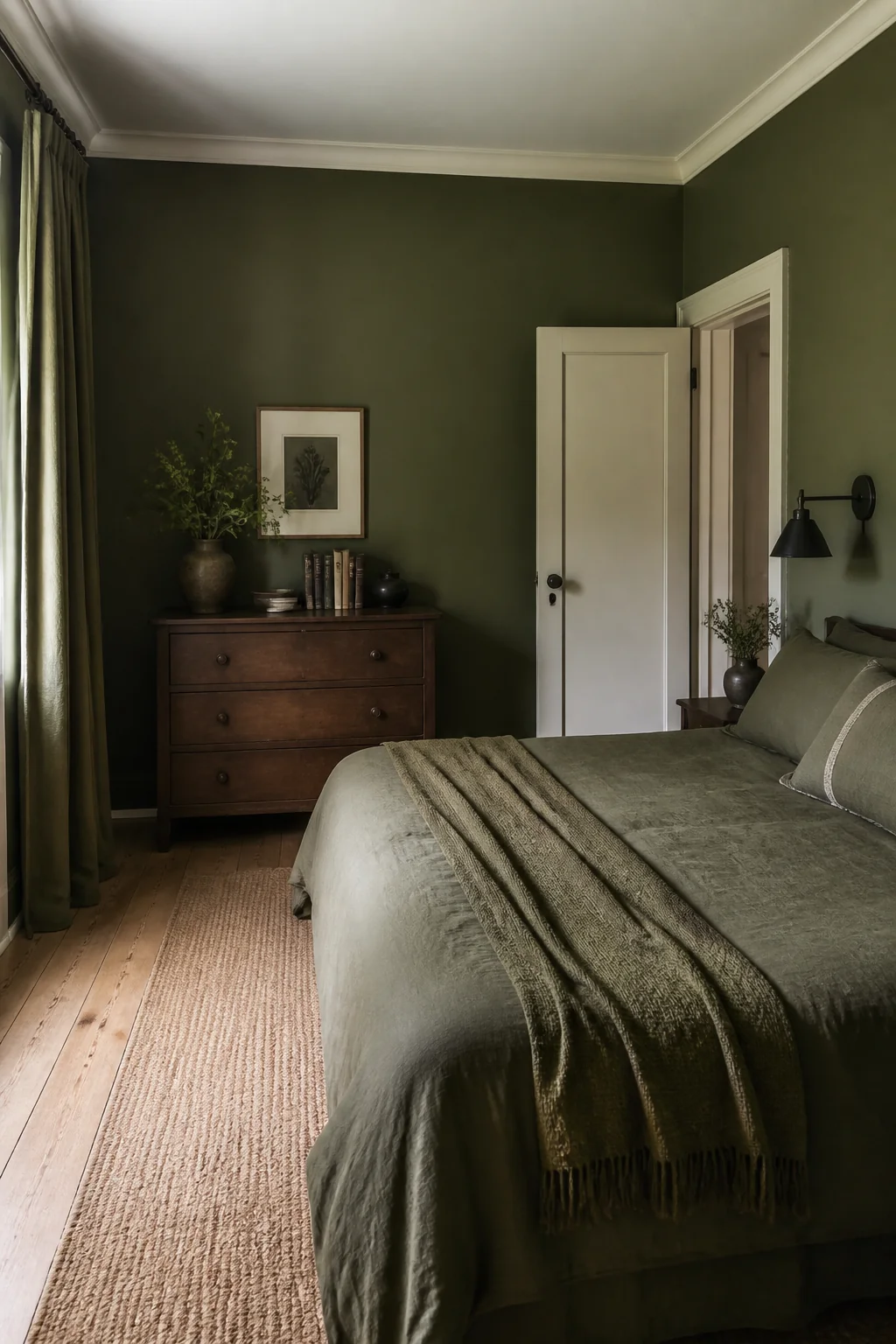
Keep the walls white or off-white and introduce olive through curtains, a throw blanket, and pillows. Linen curtains in olive (about $60 to $150 per panel, depending on length and weight) hung from ceiling to floor create the illusion of taller ceilings if your room has standard 8-foot ones. The fabric filters light softly, and the vertical line of floor-to-ceiling panels makes the space feel less squat.
Add depth with an olive throw folded across the bed or draped over a reading chair, and scatter three to four olive pillows (mix textures: linen, wool, cotton) at $20 to $60 each. This approach is flexible; you can swap out textiles seasonally without touching the walls. Your bedroom stays calm and neutral but gains the sophistication of olive without the risk of painting yourself into a corner.
This scheme works best in rooms with good light or windows on two sides. If your bedroom is dark, white walls with olive accents can feel a little bare. The payoff is adaptability. You maintain flexibility with olive green bedroom decor by rotating textiles rather than repainting, so the color investment is temporary rather than permanent.
6. Olive green lower half, white upper half
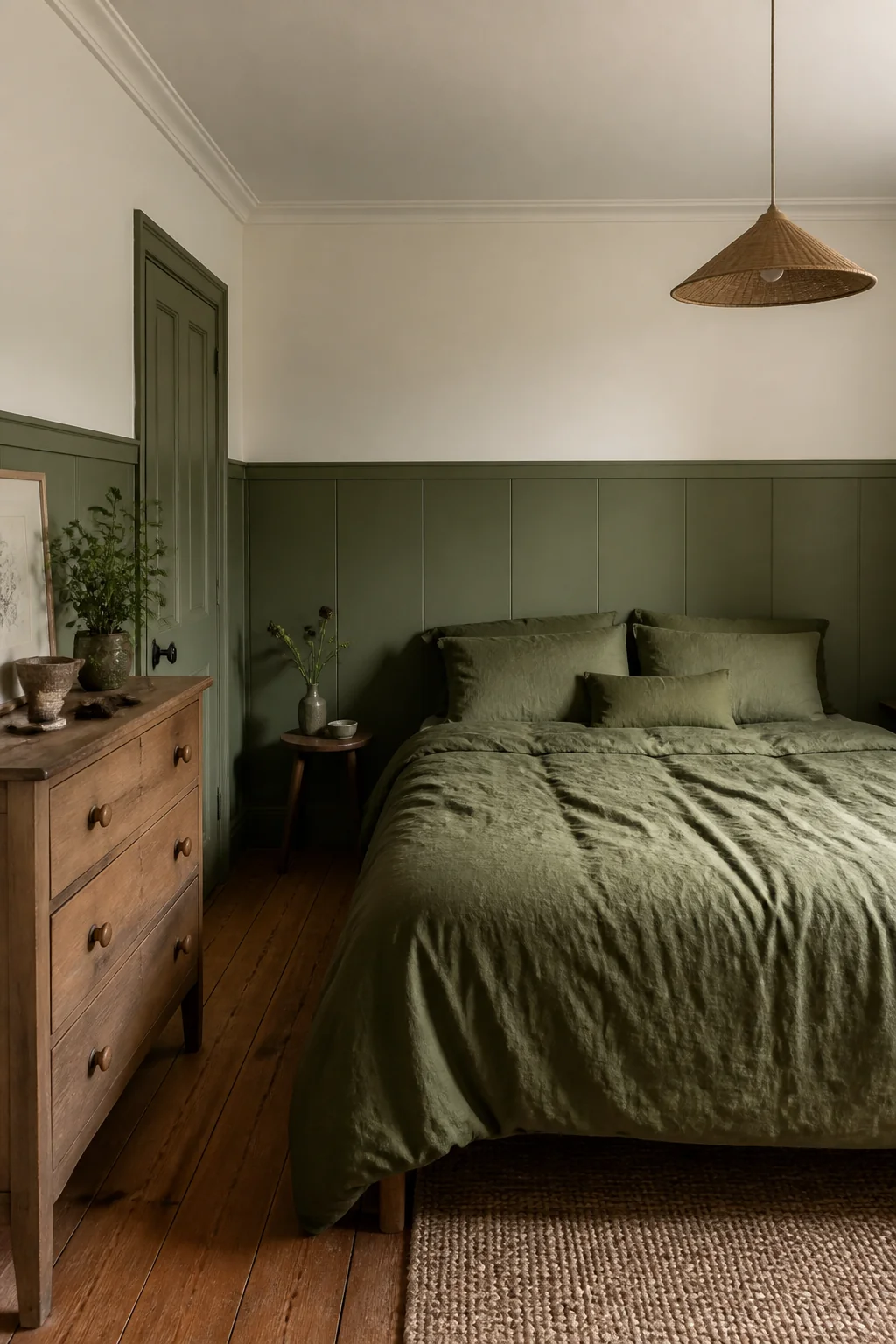
Paint the lower 40 inches of your walls in olive and the upper walls in white or cream. This horizontal division makes small rooms feel wider and keeps the color at eye level rather than looming overhead. It's the trick used in traditional paneling (which you don't have time to install) but faster: two paint colors, a chalk line, and a steady hand.
The line where the colors meet should sit just above the top of a dresser or windowsill in most bedrooms, around 40 to 48 inches up from the floor. Below that line, olive grounds the room and adds richness. Above, white opens everything up. You can run a thin trim (1 to 2 inches, optional) in white, cream, or soft gray where the colors meet to formalize the look.
This works beautifully in rooms with high ceilings (8.5 feet or taller) but can feel claustrophobic in rooms with standard 8-foot ceilings; the lower half might read too heavy. Test this by taping off the line with painter's tape and living with it for a day before you commit. If it feels like the walls are closing in, choose one of the other schemes instead.
Pin this for later
The real decision comes down to light. If your small bedroom has a single window or north-facing light, commit to the pale all-over scheme or the accent headboard; anything darker will feel like you're sleeping in a closet. If you have decent natural light or two windows, you have room to play with richer olives and deeper versions of olive green bedroom decor. Either way, the room's size isn't the limit; the light is.
Ideas fade by Friday. A plan finishes the room.
You just read a full guide to your bedroom. Saving ideas will not change it; a plan will. The Home Decor Collection is every planning tool we make, for every room in the house, in one download, so the after photos below stop being other people's rooms.
- Six room Style Kits, each with layout, palette and shopping list$82
- The Gallery Wall Studio: 200 prints + 15 measured layouts$24
- The Room Makeover System: 40 solved room layouts + workbook$29
- The Color Palette Handbook: 60 palettes shown in real rooms$19
- The Whole-Home Reset: 40 printable organizing checklists$9
- The Decorator's Cheat Sheets: the 40 measurements that matter$9
- All eleven products, bought separately
$172$69
A single hour with an interior designer costs more than the entire Collection, and this one keeps answering for every room you will ever decorate. Free updates included as the products grow. And if it is not for you, the 14 day money back promise means you simply get a refund.