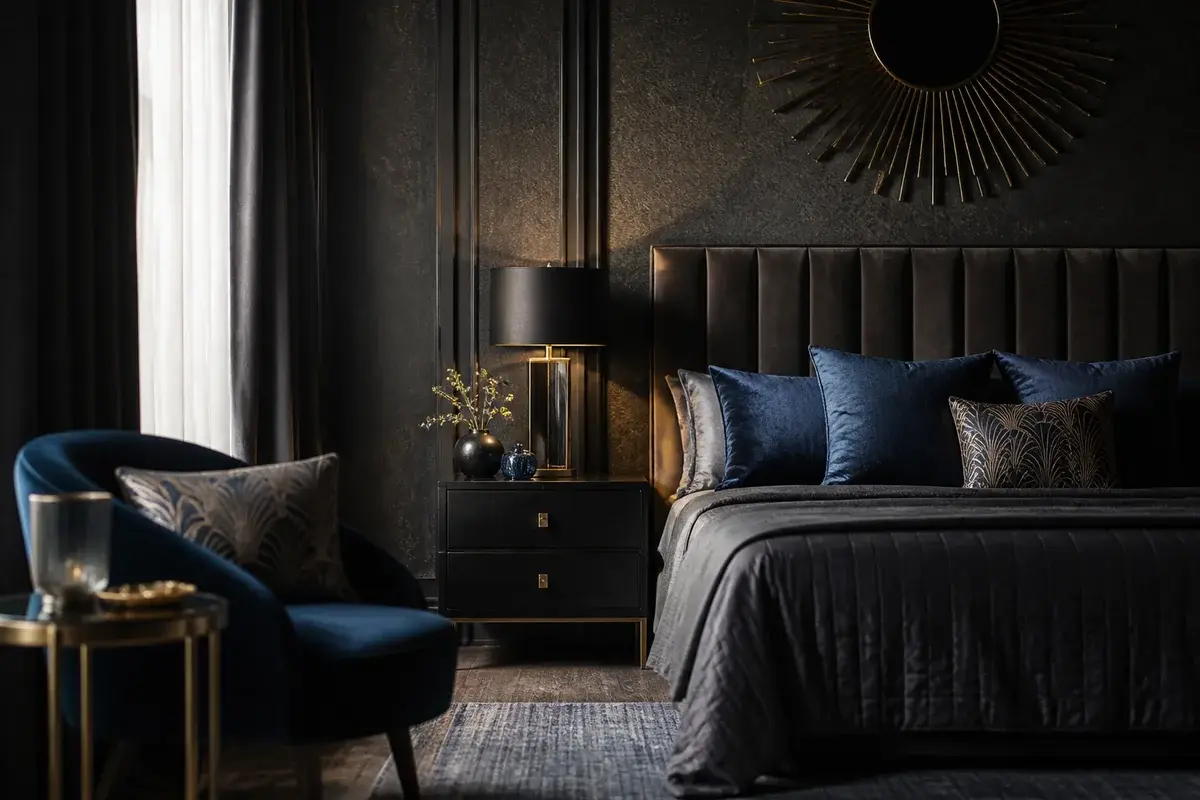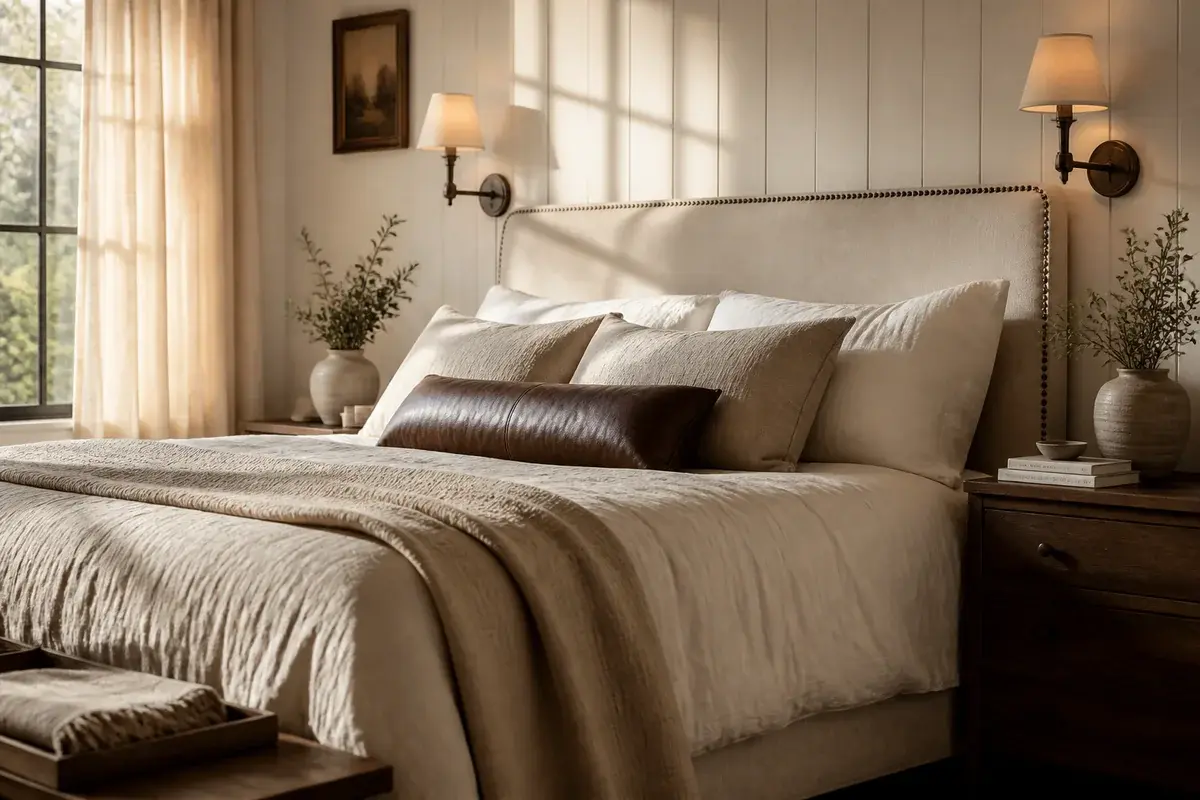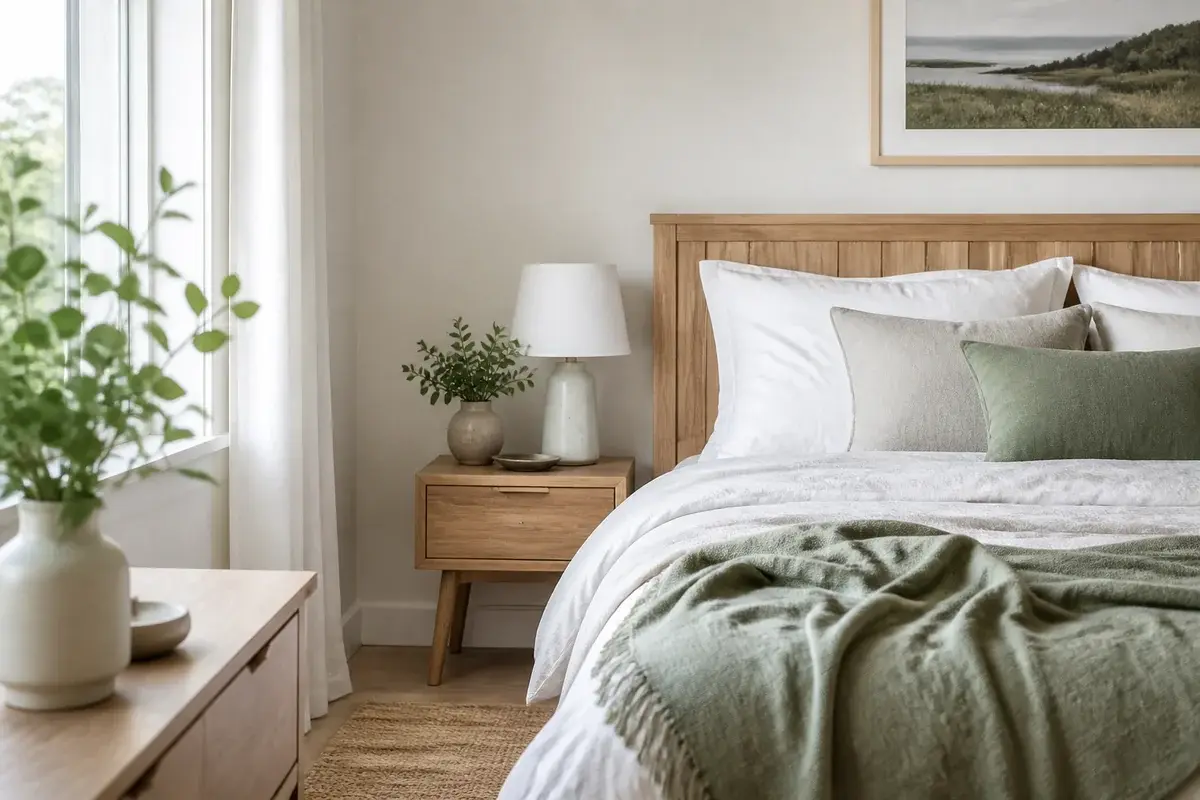
How to Get the Boho Small Bedroom Look Step by Step
Boho small bedroom ideas that hold up in a tight room: warm neutral walls, real clearances, and how to layer texture without losing the calm.
This post contains affiliate links. As an Amazon Associate I earn from qualifying purchases. If you buy through our links, we may earn a commission at no extra cost to you.
A small bedroom with boho ambitions usually hits the same wall: the moment you add macrame, a woven throw, stacked books, and plants, the room stops feeling relaxed and starts feeling cramped. Boho is layered and collected by nature, so in a small room you have to be ruthless about what you keep, which runs against the "add more" instinct the style invites. Below are the choices that work in a tight space, from color to furniture to the objects you display. It's written for a tight room; the full boho bedroom plan with prices covers a standard one.
Start With a Neutral Base That Reads Warm
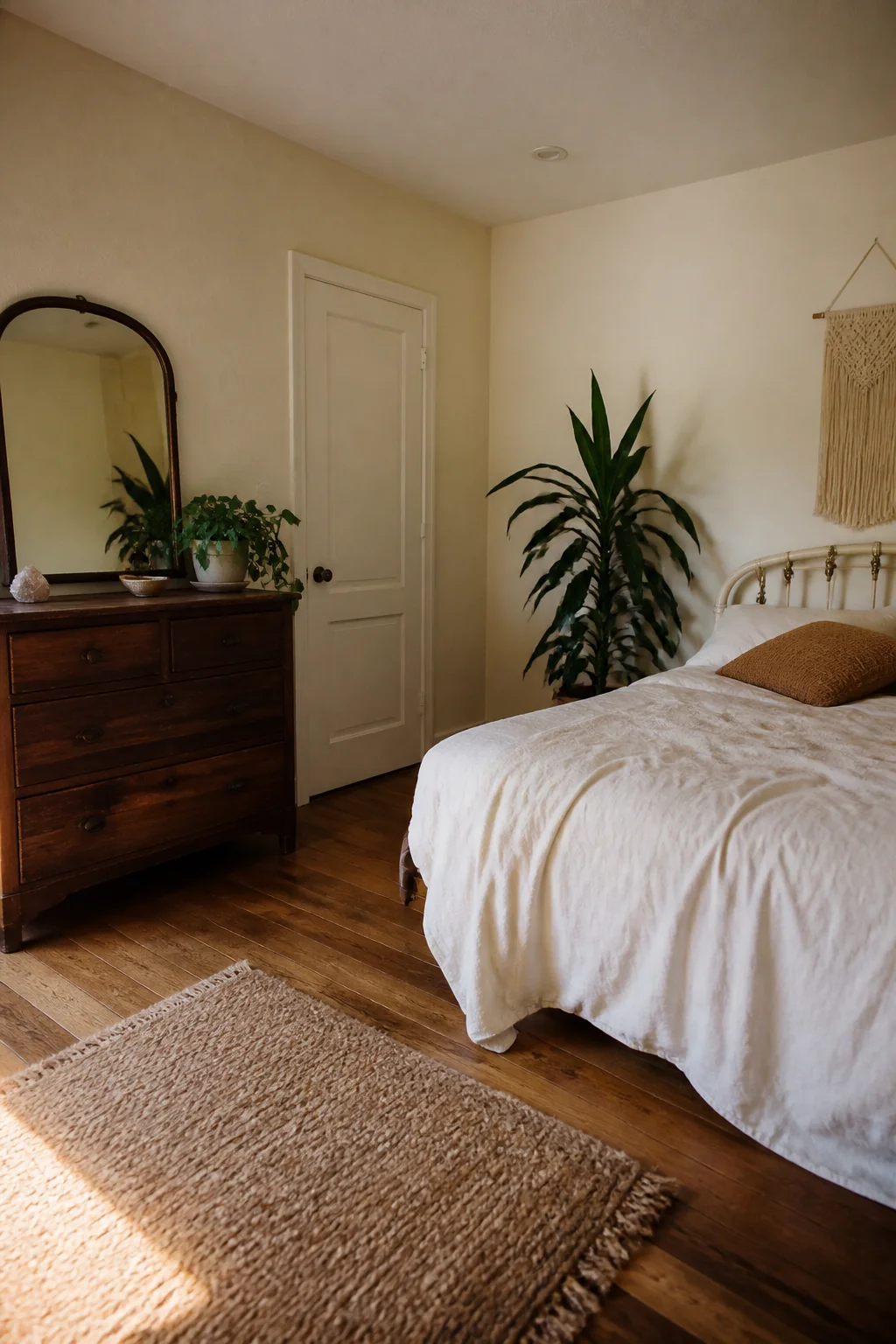
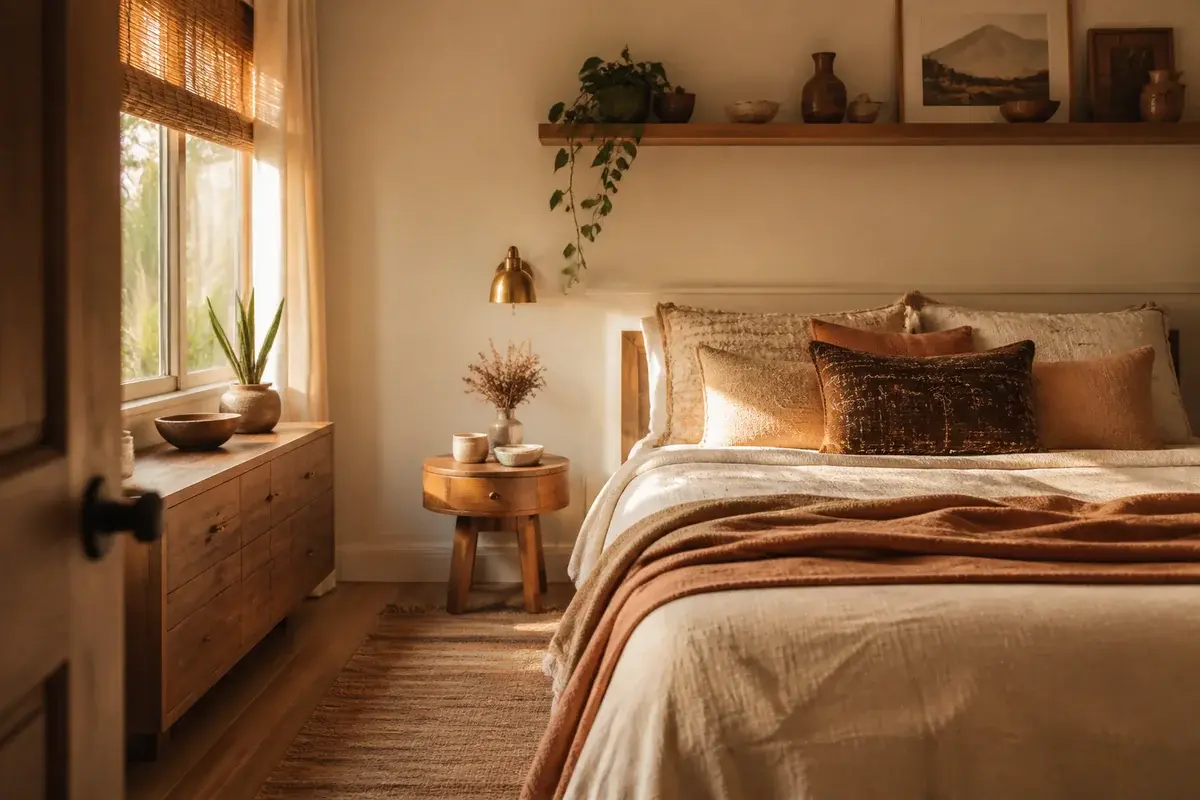
A small room needs walls to disappear visually, or at least step back. The usual advice is to paint small bedrooms light, and that's true, but not in the way most people do it. Boho spaces need warmth, so your neutral matters. Pure white makes a small boho room feel cold and clinical. Reach for warm whites or very soft cream instead: think about colors like ivory, off-white with a hint of warmth, or pale beige. Those all carry a trace of yellow or ochre in the base, which is why they stay soft at dusk while a true white goes gray on you.
In a small space, warm neutrals keep your eye from snapping to contrast. With fewer square feet to work with, every shade reads louder. A warm white (something like Benjamin Moore Swiss Coffee or Sherwin-Williams Alabaster) lets your textiles, plants, and accessories become the focal point instead of making the walls fight for attention.
Save your deeper tones for one accent wall if you want it, and keep that wall simple. A soft terracotta, warm gray, or muted ochre works better than a bold color here, because the wall should hint at color rather than lead the room.
Choose Furniture That Doesn't Eat Space
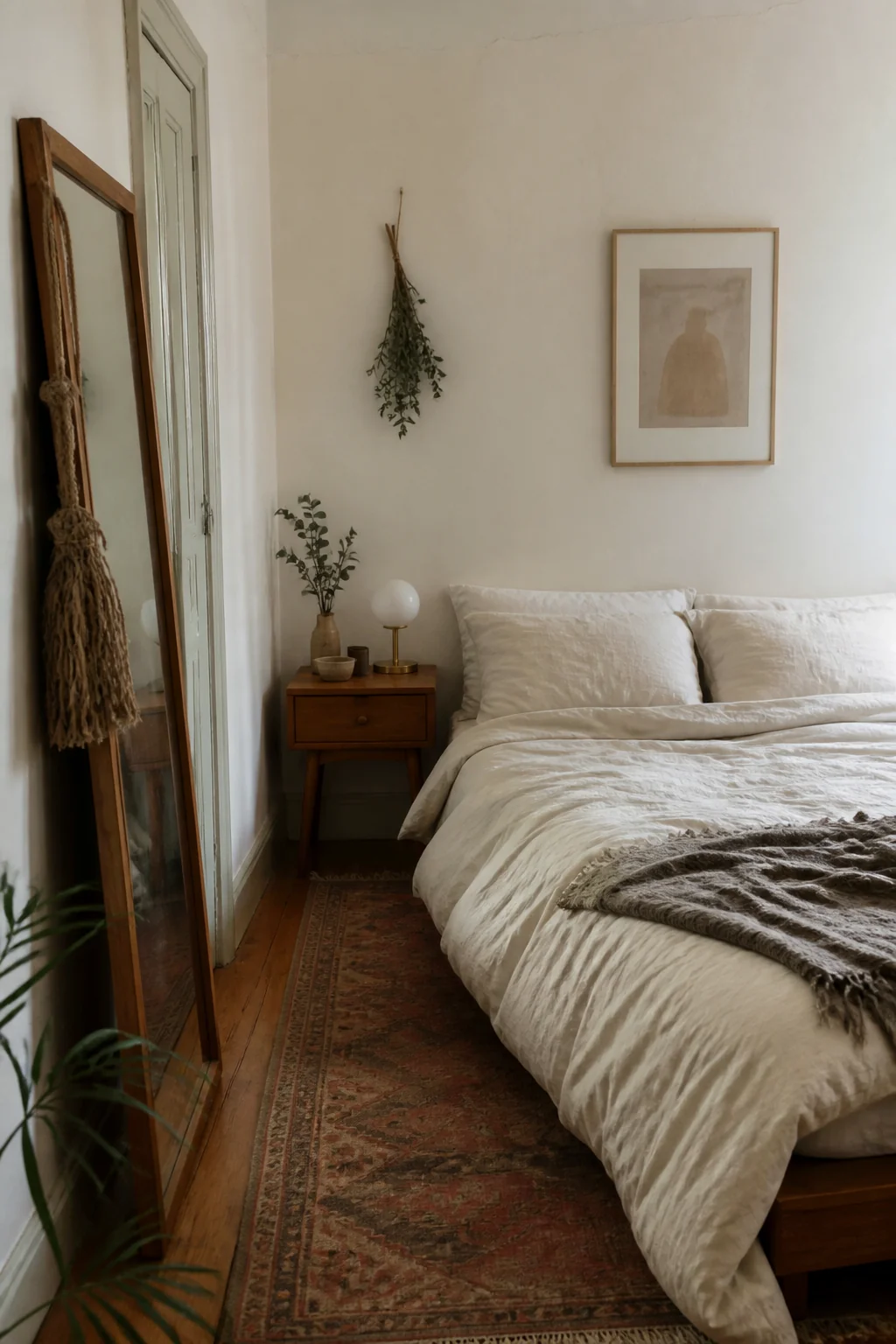
The usual misstep here is copying the furniture straight out of the photographs. Boho shows up online paired with oversized wooden beds, bulky nightstands, and lots of loose pieces scattered around. That works in a big room. In a small one, it's suffocation.
Your bed is the anchor. In a 10x12 bedroom, you need a bed that reads as one piece, not a furniture installation. A low-profile bed frame (about 12-16 inches off the ground) with clean lines actually looks more boho-friendly than a carved wooden behemoth. It leaves sight lines open and makes the room breathe. A walnut or natural wood frame about $400-600 works fine; the boho feeling comes from your textiles and what's around it, not the bed frame's weight.
Nightstands: one smaller table instead of a matched pair. A single wooden stool, a small side table, or even a floating shelf above a low dresser. Anything that doesn't plant itself in your floor plan like it owns the room.
Layer Textiles Strategically, Not Everywhere
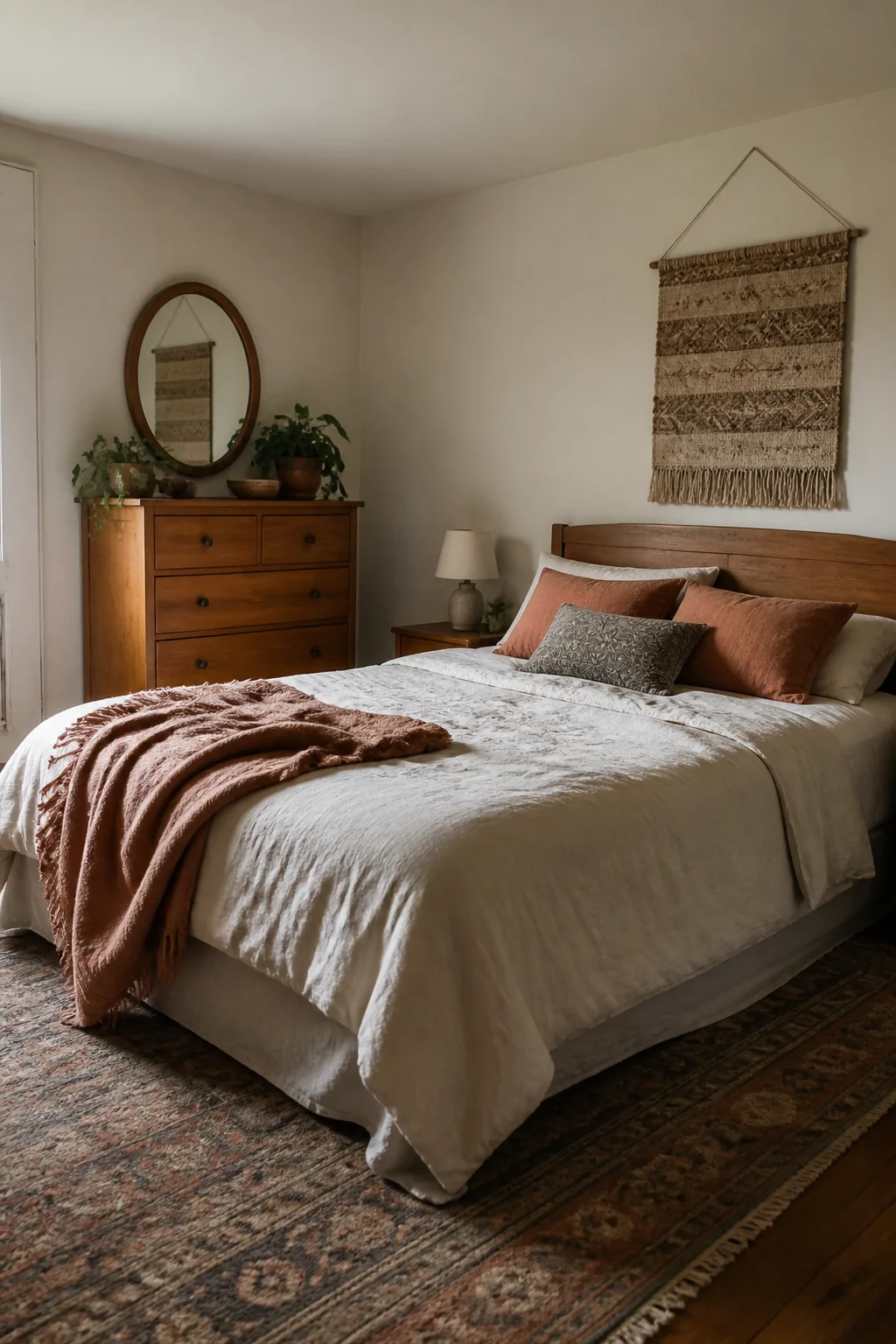
Boho lives in texture. But texture in a small space has a math to it. You want layering without clutter, and that means being specific about where your textiles go.
Your bed is your main textile moment. A quality linen or cotton sheet set (about $80-150), a woven throw across the foot or corner, and two pillows in different fabrics. That's plenty. Add a third pillow or a chunky knit blanket and you've crossed into "too much."
One area rug matters more than three. A 5x7 rug in natural jute, wool, or a blend works in most small bedrooms. Place it so your bed is partially on it, and it anchors the whole room without making it feel blocked off. Avoid bright patterns here; a natural tone or very muted pattern reads cleaner in a small space.
Wall tapestries, macrame, and hanging textiles should be one piece, not three. Pick your favorite and give it room to breathe. A single macrame wall hanging above your headboard or in a corner gives you the boho texture without creating visual noise.
Plants: Quality Over Quantity, and Real Placement Matters
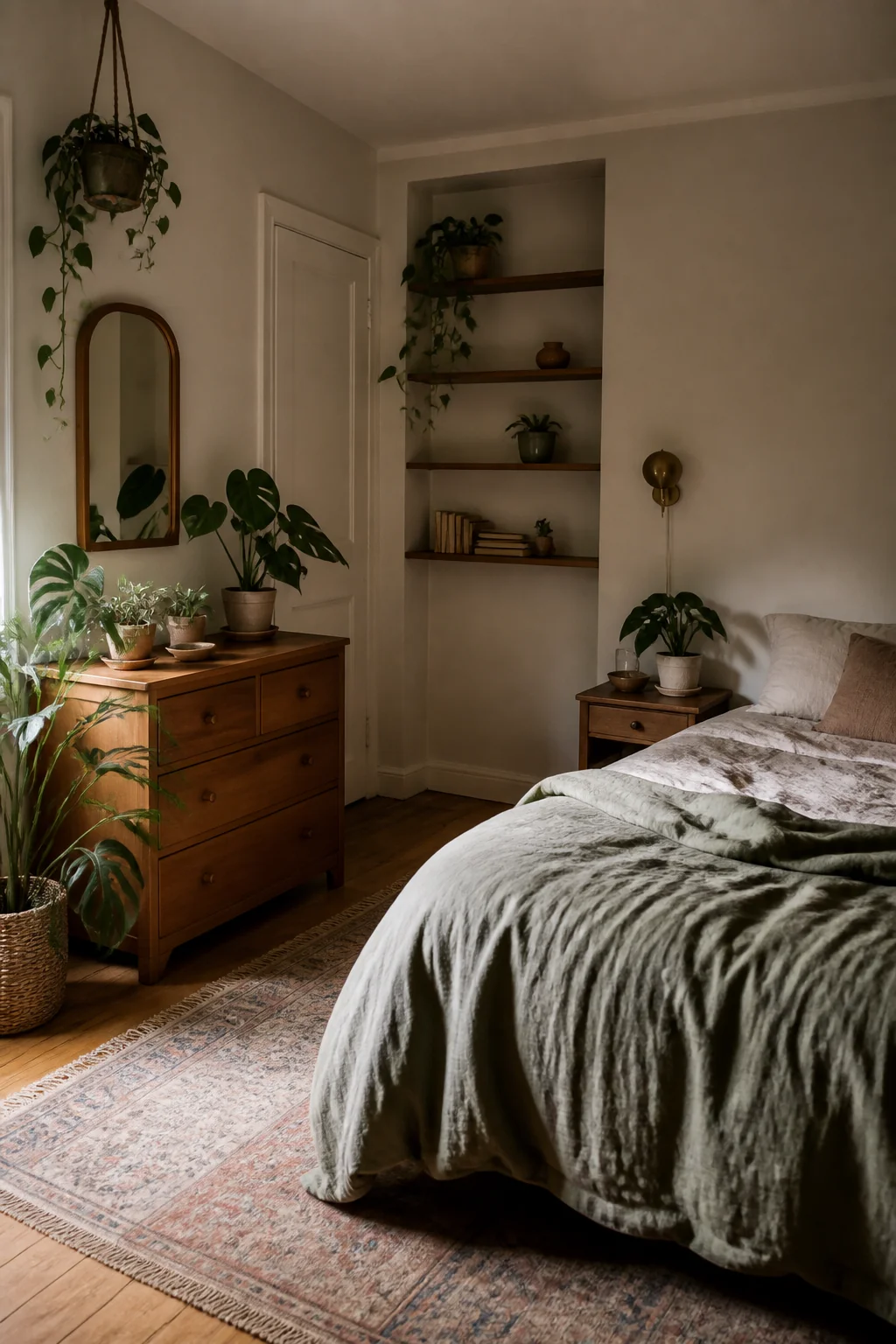
A boho bedroom without plants isn't boho. But a small bedroom with eight plants is a jungle that feels suffocating.
Three to four plants, well-placed, is the right amount. Choose one larger plant (a fiddle leaf fig, a monstera, or a snake plant about 3-4 feet tall) and position it in a corner or beside a window where it won't block movement. Two smaller plants on a shelf, dresser, or low side table. That's it. The boho vibe comes from living greenery being part of the room, not from maximum botanical coverage. Leave at least 24 inches of clear walking path beside the bed; a floor plant that clips your shin every night gets moved within a week anyway.
Pick plants that tolerate lower light if your bedroom doesn't get direct sun. Pothos, snake plants, and ZZ plants are boho-friendly and they don't demand a south-facing window. Use terracotta, ceramic, or woven baskets for pots. Avoid matching pots; that reads too styled. Variety looks more collected and natural.
Lighting Doesn't Have to Be Fancy, Just Warm
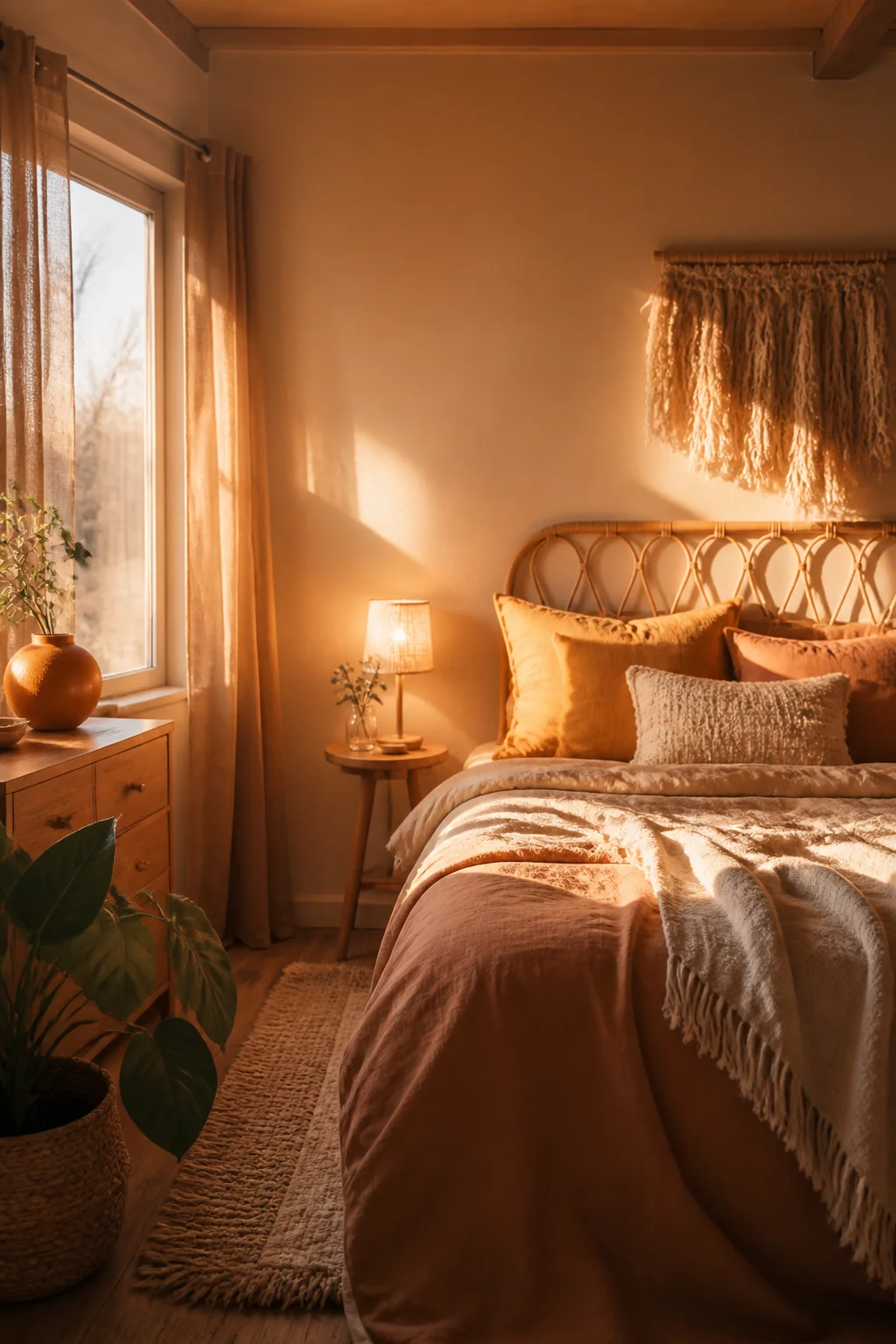
The mistake in a tight room is leaving all the light up at the ceiling. Overhead fixtures are harsh, and they take up visual space you can't spare. Boho spaces need soft, layered light.
Skip the ceiling fixture if you can. A bedside lamp on each side (or one on your single nightstand) with a warm bulb is better. Look for lamps with natural linen shades or woven textures. Nothing with a hard plastic base or industrial vibe. Most decent table lamps run $40-80. If your nightstand is under 18 inches wide, a plug-in wall sconce mounted around 30 inches above the mattress does the same job and gives the whole surface back to your book and your water glass.
A string of warm Edison bulbs or fairy lights in a corner or above the headboard adds boho feeling without taking up floor space. Keep them warm-toned: 2700K is the standard for this kind of lighting. Your bedroom should feel like candlelight, not a retail store.
Keep Wall Decoration Sparse and Honest
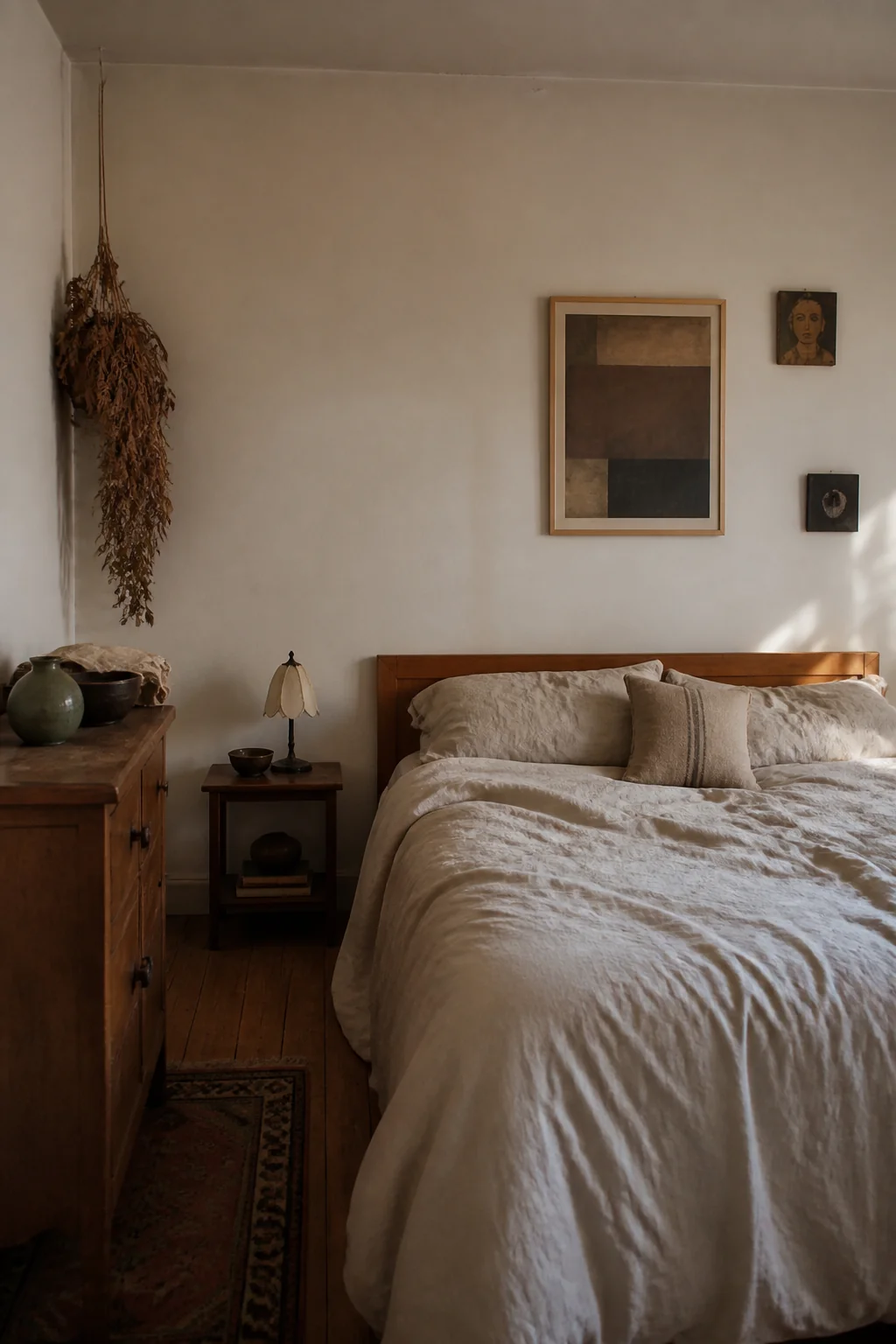
Most people see "boho bedroom" and think wall gallery. Boho doesn't require a gallery. It requires intention.
One good piece of wall art, or a small cluster of 2-3 related pieces, is enough. A woven wall hanging, a simple framed botanical print, or a piece of fabric stretched on a frame. The point is that it should look collected, not curated. Avoid matching frames or anything too matchy. If you're doing a small gallery, keep it to one small wall area, maybe 3x4 feet, and leave the rest of the walls clear.
Your best move might be no wall art at all and instead focus on hanging plants (use plant hangers or shelves) or a simple wooden shelf with a few objects. Three books, a small ceramic piece, a wooden figurine. Things that actually belong to you, not items you bought to fill a space.
The One Small Change Worth Making First
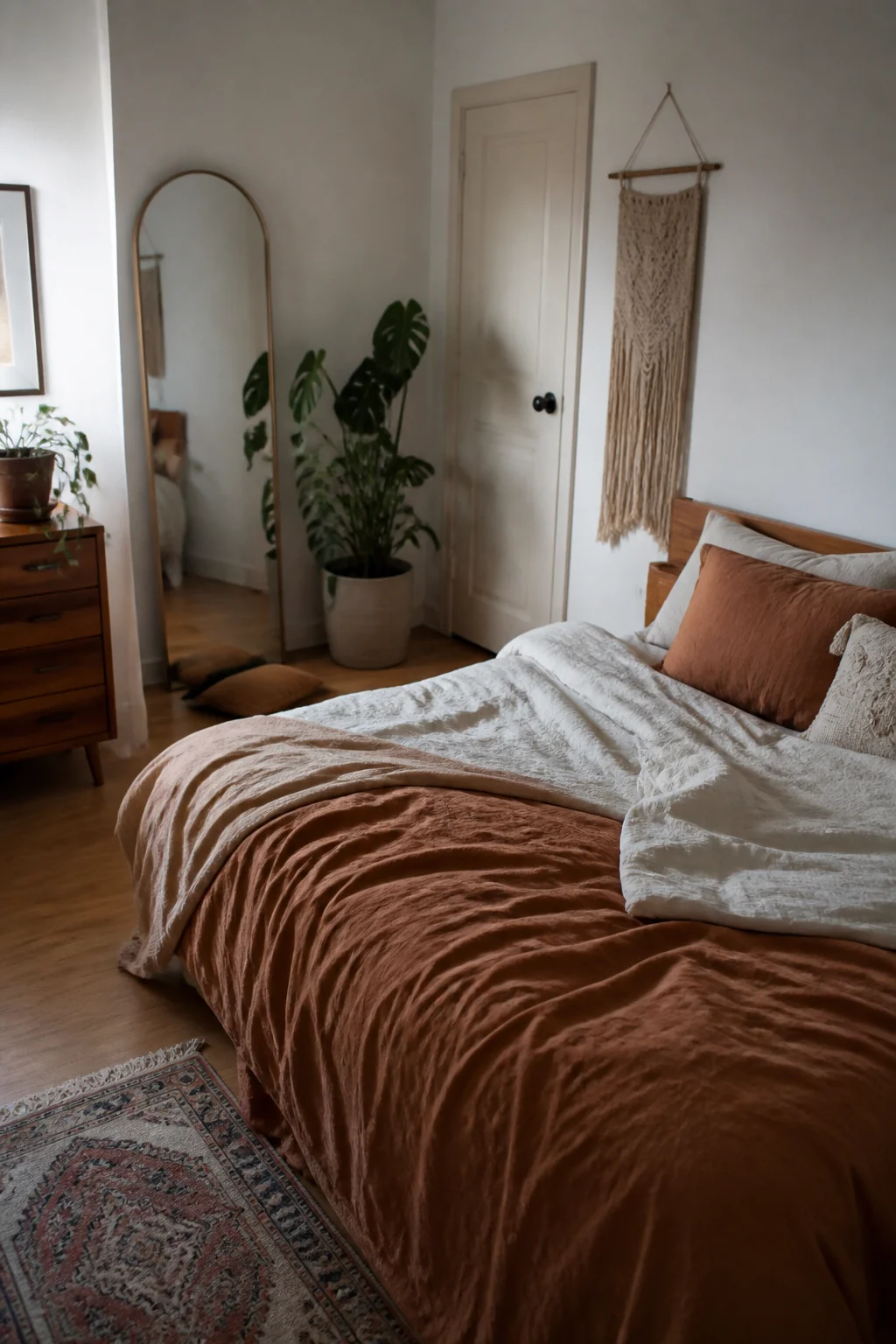
Of everything above, the warm white is the cheapest thing to test and the one that shifts the room most, so it's the sensible place to begin. Sample pots run about $6 to $10 at Benjamin Moore or Sherwin-Williams, and one pot is enough for three or four test boards.
Don't brush samples straight onto the wall. The old color underneath bleeds through a thin coat and skews what you see. Paint two coats onto a piece of white poster board instead, roughly 12 by 12 inches, and let it dry for a couple of hours. Wet paint reads a shade darker and cooler than the cured finish, which is how people end up with a cream that turns out beige.
Take the guide with you
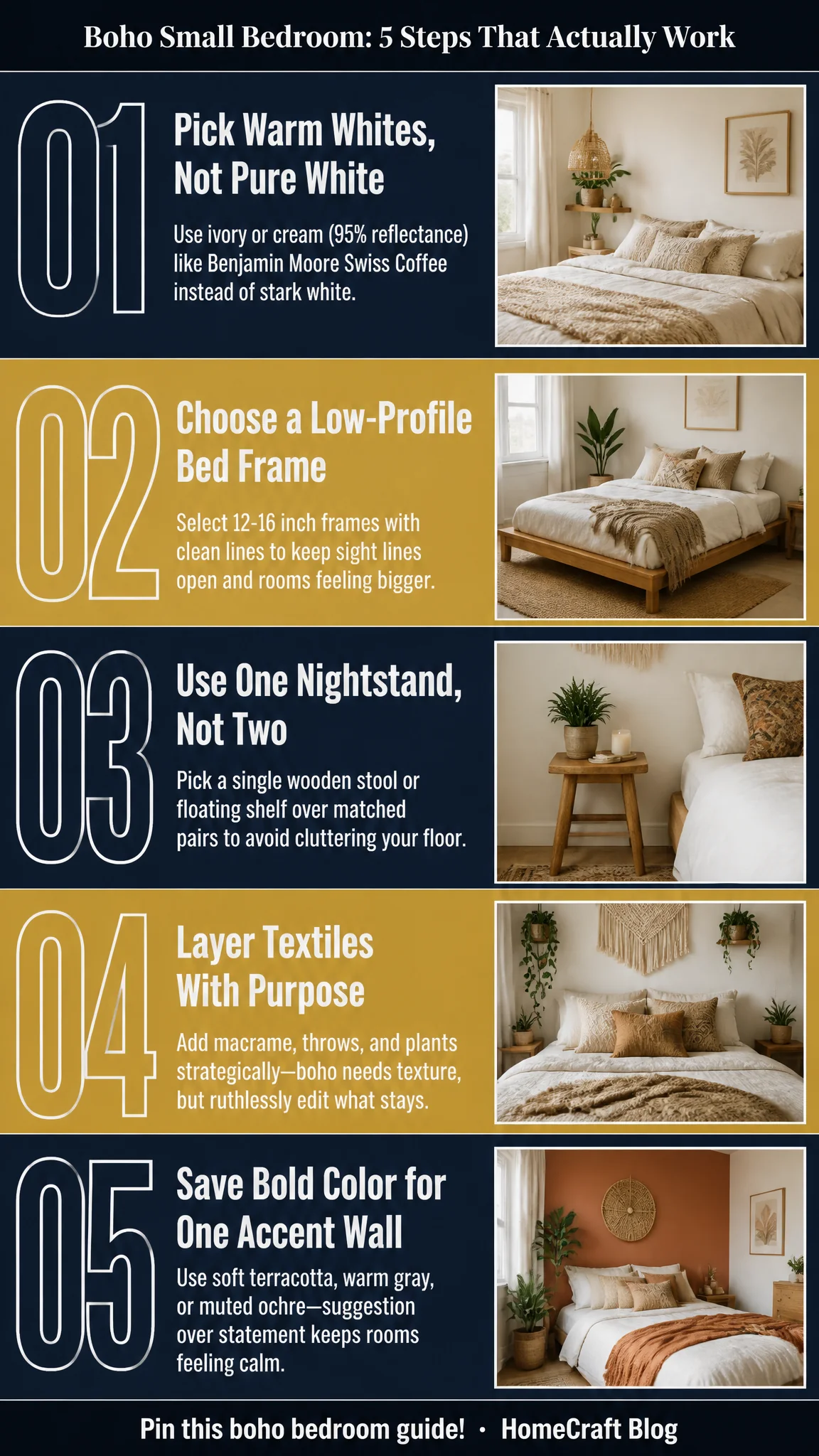
Then carry the boards around the room. Hold each one against the headboard wall in morning light, again in the late afternoon, and once under the 2700K lamp you actually read by. A white that looks perfect at noon can go slightly yellow and tired at night, and night is the light you live in here. Whichever board still looks calm in all three is your color. If two tie, keep the one that makes your rug and your throw look better, because those are the pieces doing the real boho work.