How to Get the Modern Farmhouse Bedroom Look for Less
Get modern farmhouse bedroom ideas without the high price tag. Create the rustic-modern look with budget swaps and smart styling tips.
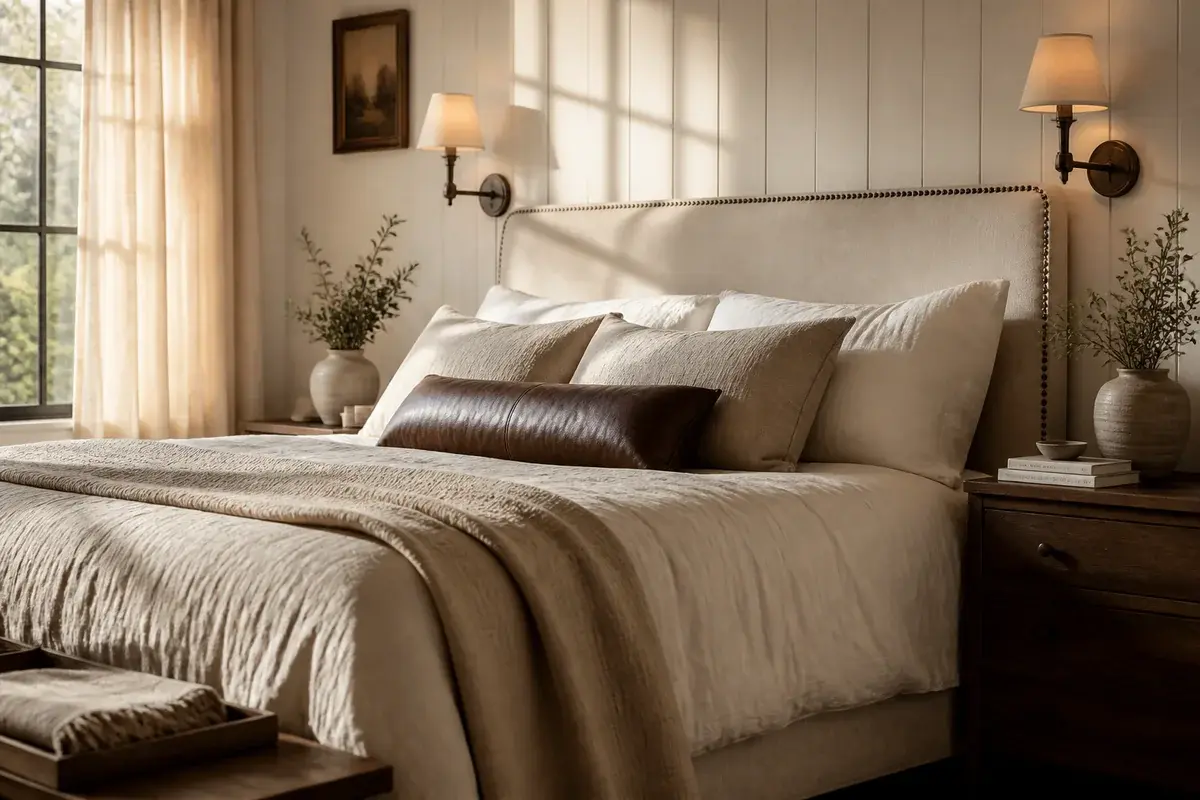
You're scrolling through Instagram and seeing those dreamy bedrooms: white shiplap walls, a chunky wood bed frame, soft linen bedding, and string lights draped perfectly above. Then you look at your own bedroom. Mismatched nightstands. Flat-pack frame from years ago. Plain walls. The price tags on those inspiration photos? They're making you feel sick.
Here's the thing: modern farmhouse doesn't require a five-figure renovation. It's more about what you choose to keep and what you swap out strategically. You can get that warm, collected, lived-in feel without emptying your bank account. What it takes is knowing which two or three items carry the look and which ones you can find secondhand for the price of a takeout dinner.
Start with the Bed Frame - But Go Real Wood, Not Fake
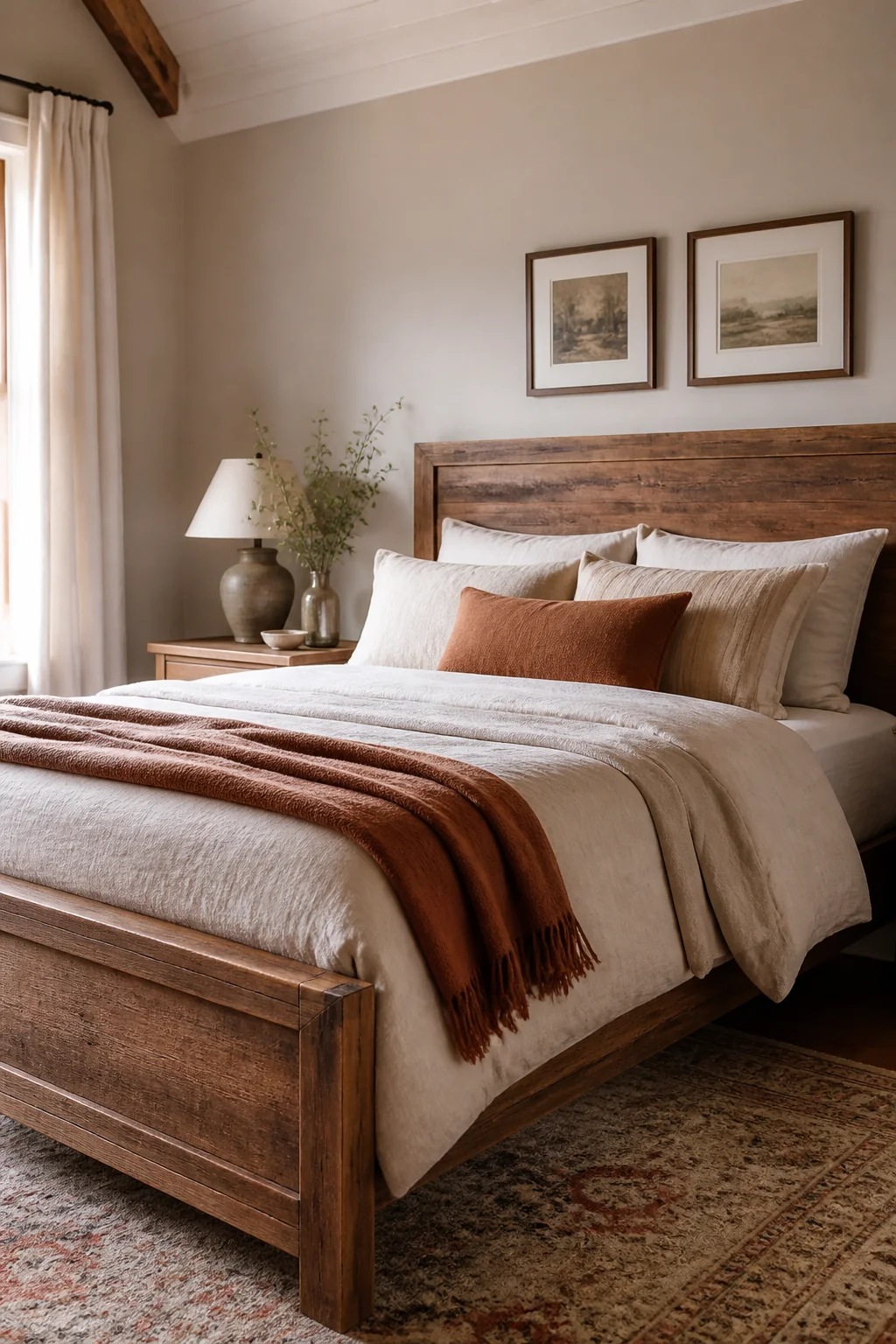
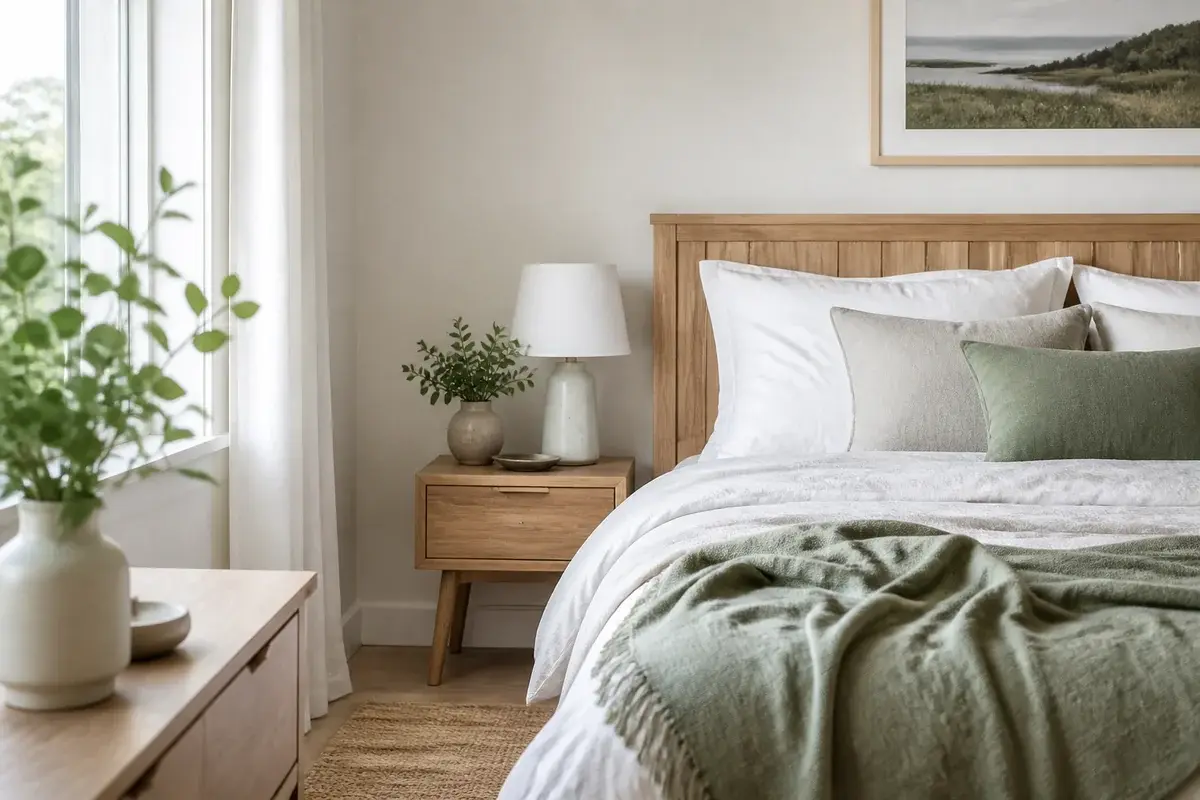
A proper bed frame is the anchor of your whole room, so this is where you should spend real money. But "real money" doesn't mean $3,000. Look for solid wood frames (not veneer) in natural finishes - think raw oak, weathered pine, or light walnut. You're aiming for that rustic-modern look, not high-gloss. A queen-size wooden bed frame runs roughly $400 to $800 from second-hand sellers, estate sales, or budget furniture sites. IKEA's solid-pine TARVA sits at the bottom of that range around $250 and takes a wipe-on stain beautifully, which is why it turns up in so many farmhouse rooms wearing a colour it didn't come in.
Skip the fancy upholstered headboard. Farmhouse is about showing the wood. A simple wood headboard costs half what an upholstered version does and looks way more authentic to the style.
The mistake people make here is buying a cheap wooden-looking frame that's actually particleboard wrapped in laminate. It won't last, it won't patina with age, and it doesn't feel solid when you're building the room around it. Real wood is worth it.
White Bedding and Layers Are Non-Negotiable
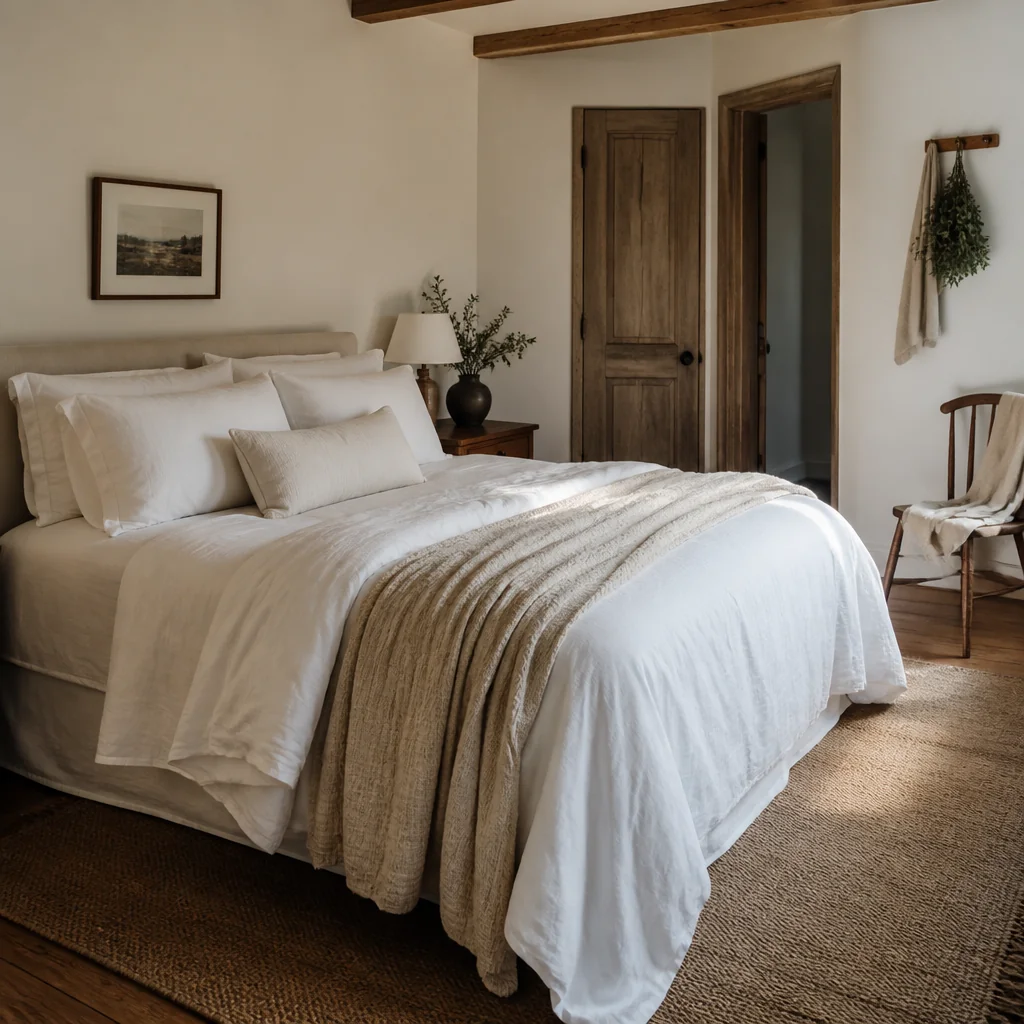
Modern farmhouse lives on white, cream, and warm neutrals. Start with sheets, since they cover more square footage than anything else in the room. Washed linen at roughly 160 to 190 GSM is the ideal: it softens after about five washes and wrinkles by design, so you never have to make the bed perfectly. A queen set runs $80 to $150. Heavy cotton percale does the same job for $40 to $70. Two or three sets is plenty.
Check the measurements before you order. A queen flat sheet is about 90 by 102 inches and a queen duvet cover about 88 by 92; a king duvet on a queen bed puddles on the floor and reads sloppy rather than relaxed.
Then layer: sheets, a cream waffle-weave blanket (around $50), a chunky knit throw folded across the foot of the bed. One warning on colour. Optic-white bedding next to a warm cream wall makes the wall look grubby, because the brighteners in the fabric read cooler than the paint. Look for "ivory" or "natural" on the label instead and the two sit together. Texture does the heavy lifting here, not expense.
Real Wood Nightstands Beat Anything Else
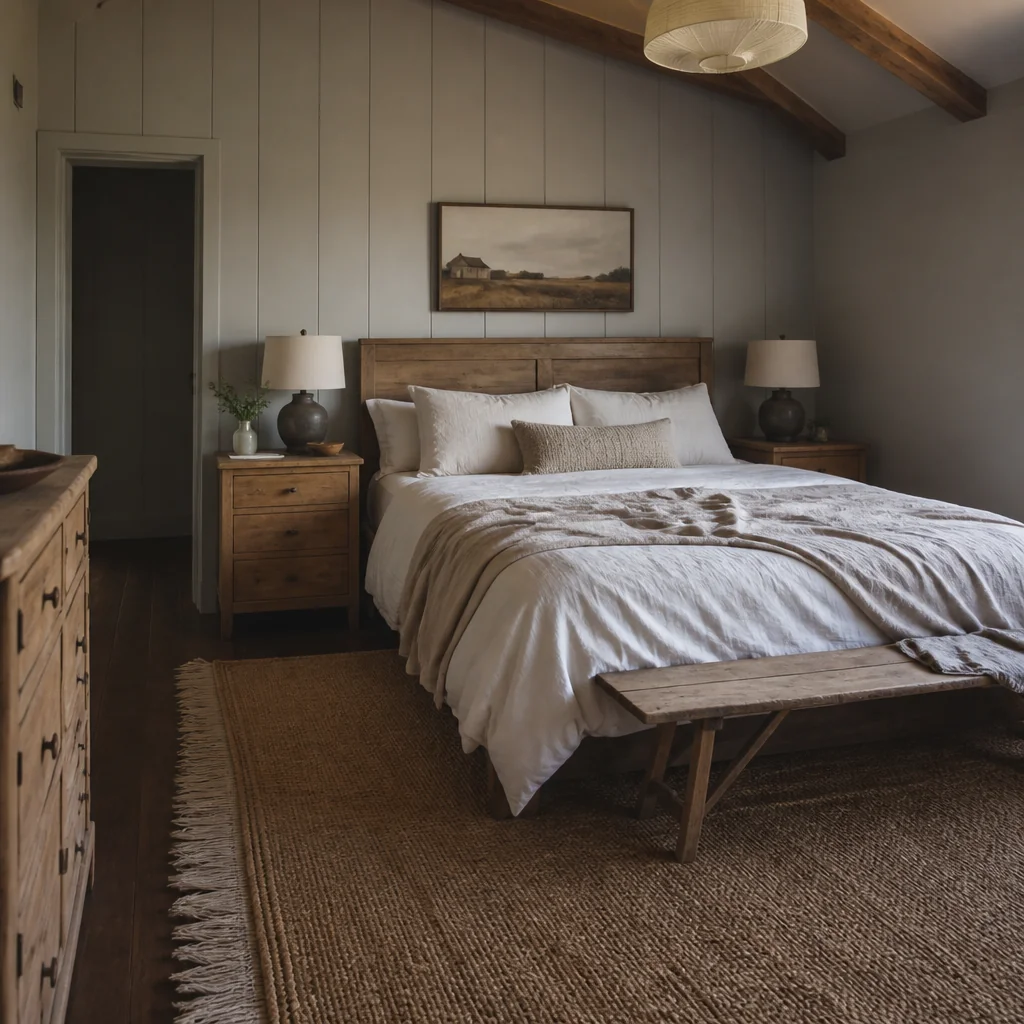
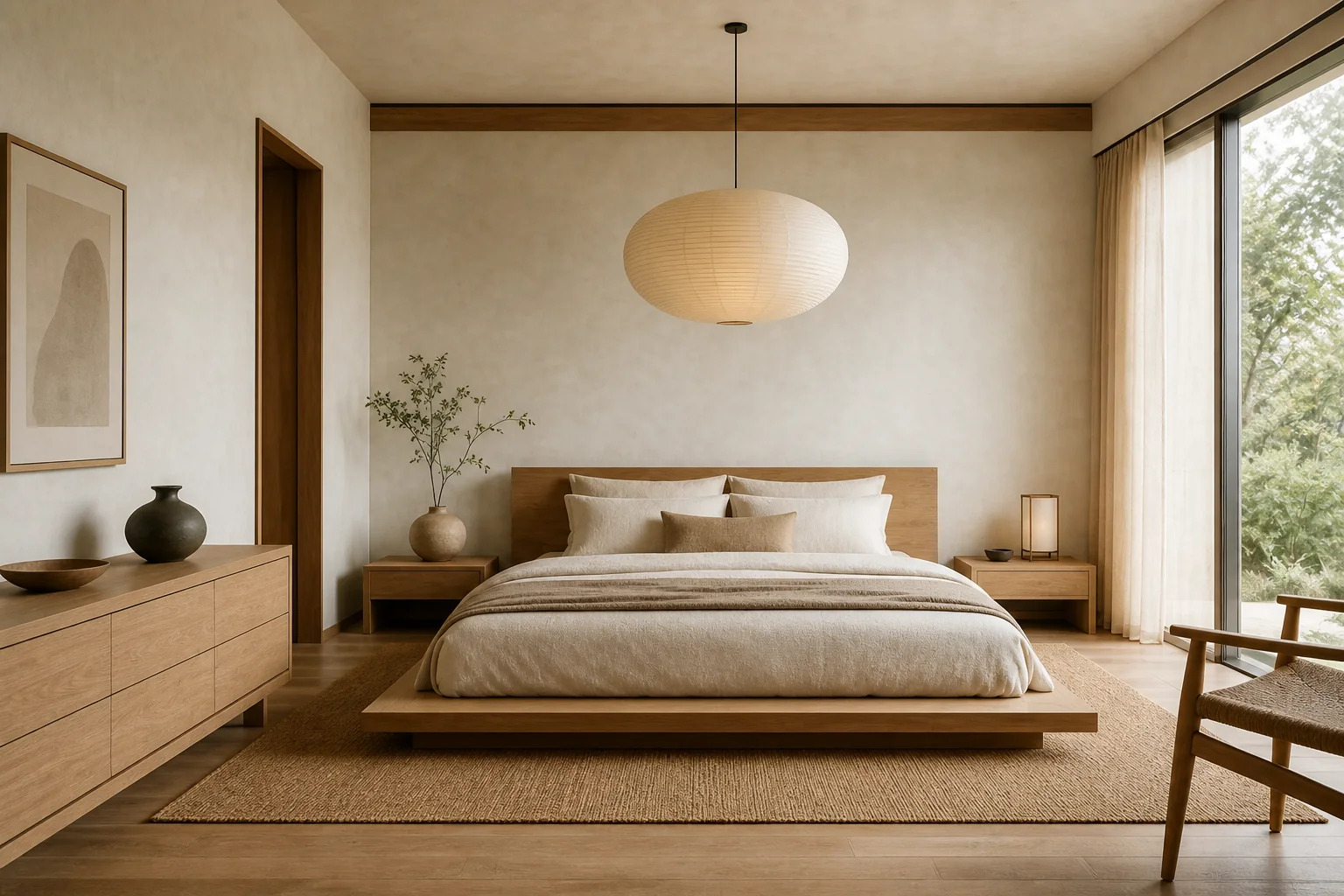
Hunt for wood nightstands at thrift stores, Facebook Marketplace, or Craigslist. A simple wooden table with one or two drawers costs $30 to $80 used and looks infinitely better than a white lacquered nightstand. Take a tape measure with you. The top should land within about 2 inches of your mattress top, which on a standard queen sits 24 to 25 inches off the floor, so you're shopping for something 24 to 28 inches tall and 18 to 24 inches wide. Leave a 2 to 3 inch gap between the nightstand and the frame so you can strip the bed without knocking the lamp over. Matching pairs aren't required; mixing heights and finishes is very modern farmhouse and honestly more interesting.
Damaged pieces are the bargains. Wipe the surface down, scuff-sand with 220-grit, then prime with a shellac-based primer like Zinsser B-I-N before any white paint touches it. Skip that step on knotty pine and the tannins bleed through as yellow-brown rings within a week, usually right after you've congratulated yourself. Two coats of paint, or a wipe-on stain such as Minwax Special Walnut, runs about $15 to $25.
Walls: Shiplap Is Expensive - Try This Instead
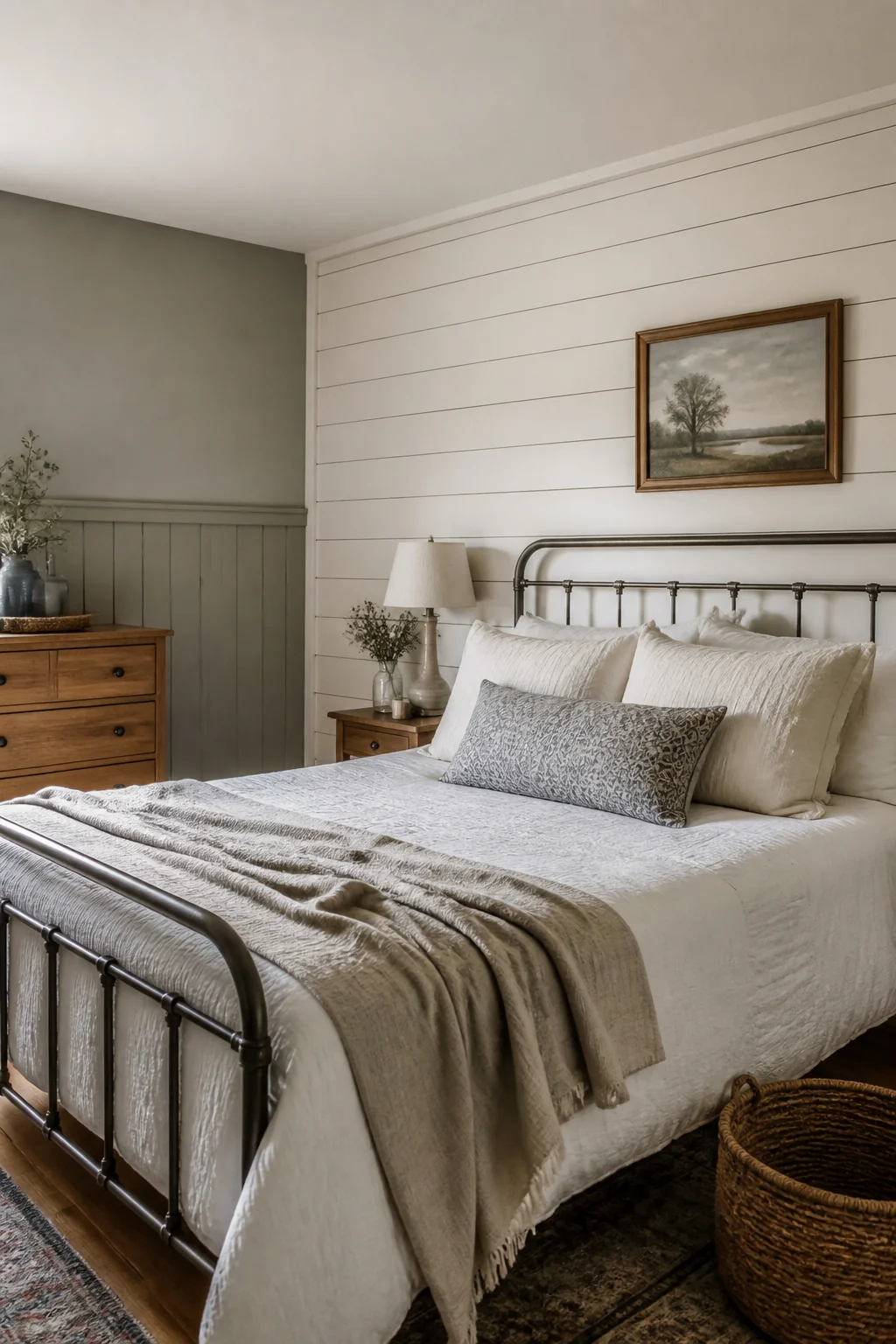
Real shiplap installed on all four walls? That's $800 to $2,000 labor and materials. Paint alone won't save you enough to matter.
What works instead: paint the walls a soft, warm white, then add shiplap to just one accent wall, usually behind the bed. Benjamin Moore White Dove OC-17 and Sherwin-Williams Alabaster SW 7008 are the two that turn up in these rooms again and again, both warm enough that they don't go blue in a north-facing bedroom. Behr Swiss Coffee is the cheaper equivalent at roughly $35 a gallon, and a standard 12 by 12 room takes two of them, since about 350 square feet is what one puts on the wall. Bare new drywall changes that: prime it first, or the paint soaks straight in and you are opening a third can. Or skip shiplap entirely and run vertical wood paneling up one wall, which costs less and reads just as farmhouse. Peel-and-stick wood-grain wallpaper covers an accent wall for under $50.
The budget version that holds up? Warm white paint, layered lighting, and one oversized wood-framed mirror. Nothing about the room will feel unfinished.
Lighting Matters Way More Than You'd Think
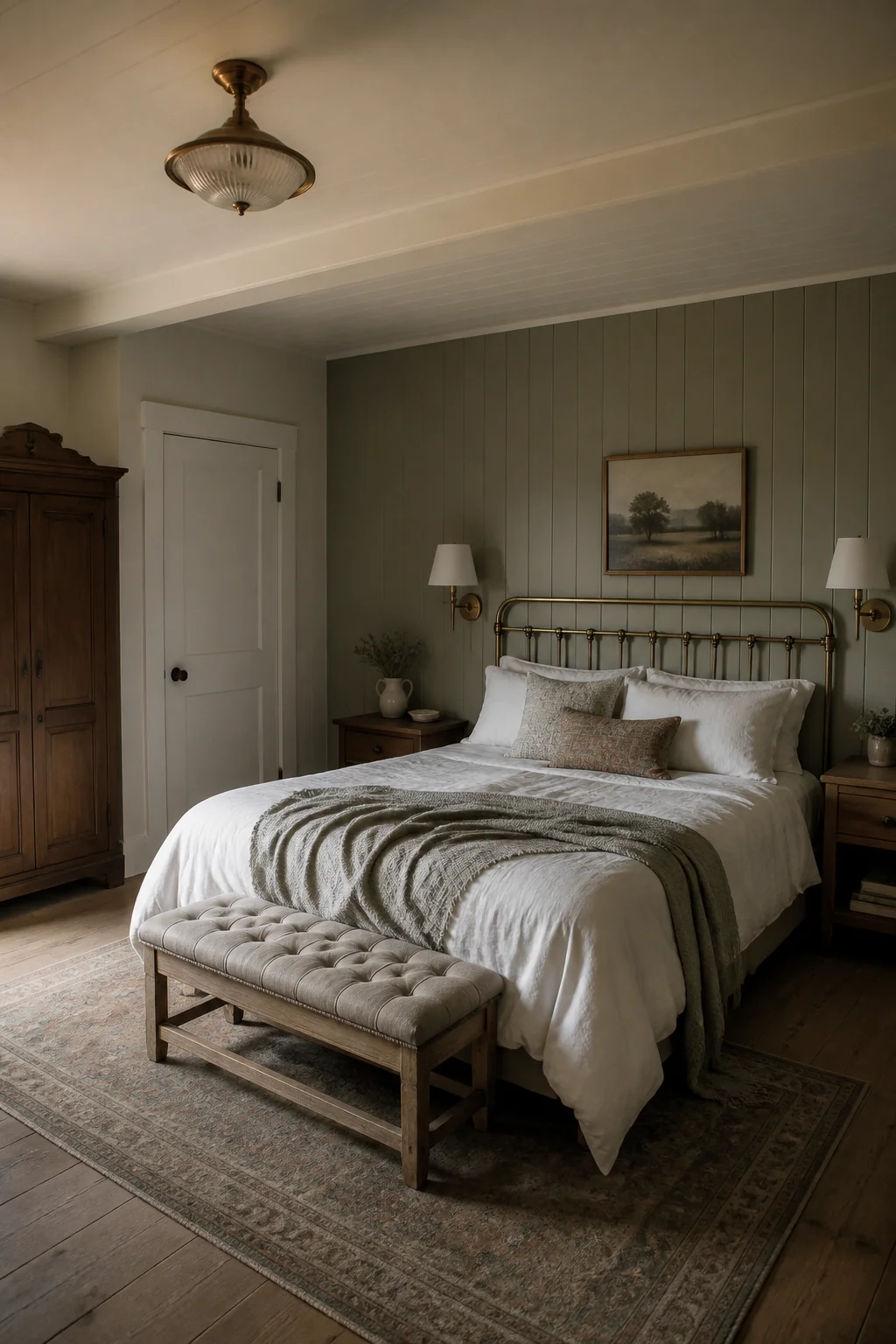
Farmhouse bedrooms need three or four light sources. One ceiling fixture flattens the whole room out. Put a simple brass or matte-black sconce on each side of the bed, about $30 to $60 each, with the bottom of the shade roughly 58 to 62 inches off the floor so the light lands on your book instead of your eyes. Plug-in sconces with a fabric cord and a paintable cord cover skip the $150 to $300 an electrician charges to hardwire a pair. Then add a small lamp on each nightstand and a strand of warm Edison-style bulbs looped loosely above the headboard.
Bulbs matter more than the fixtures here. Stay at 2700K, warm white, around 450 to 800 lumens each, and put the sconces on a dimmer. The easy mistake is that "daylight" sounds like an upgrade on the box: a 4000K bulb turns creamy walls grey and makes warm wood look flat and orange, which undoes everything you just spent on paint. Around $200 covers every fixture and bulb in the room.
A Simple Wooden Ladder as Wall Decor
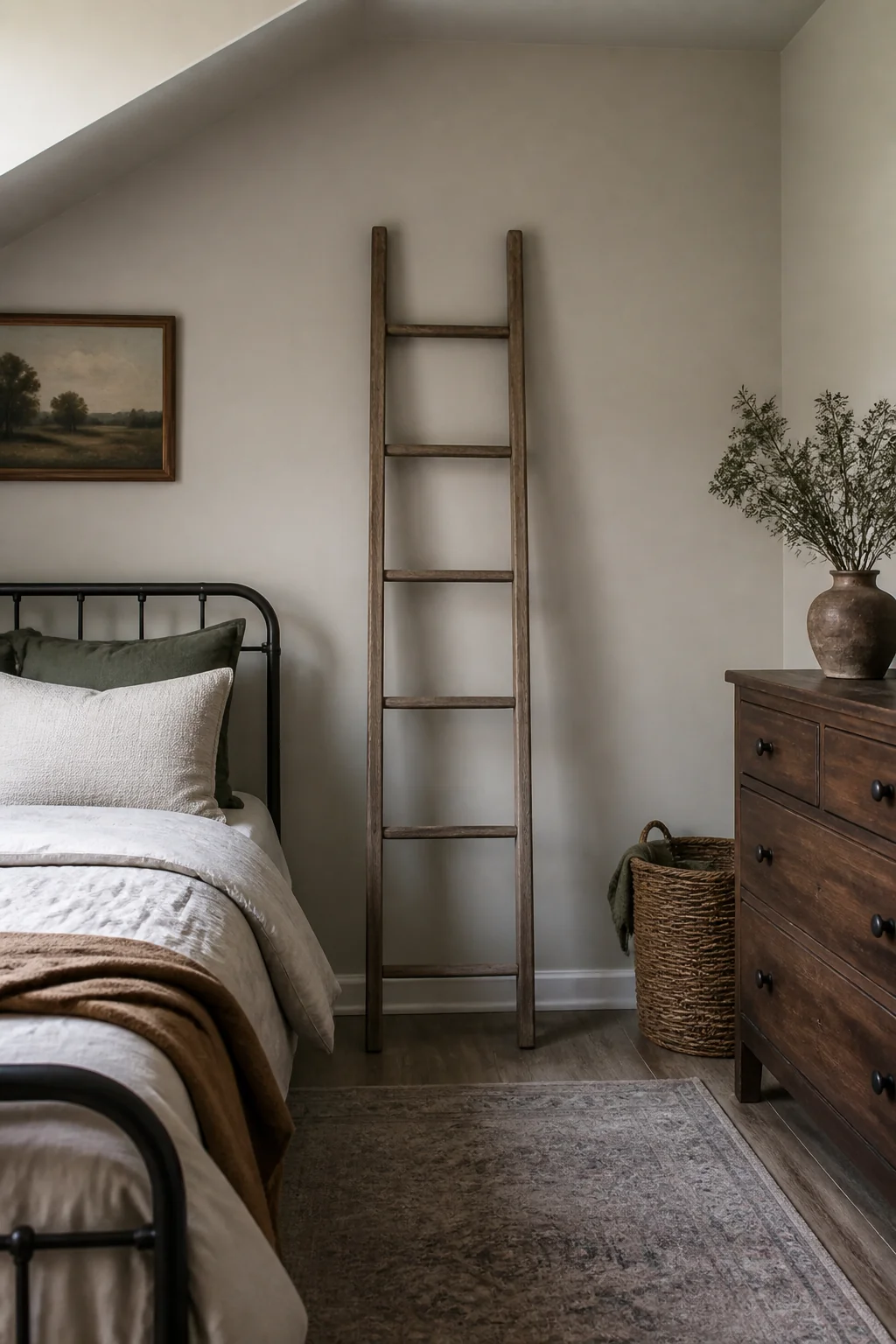
Lean a wooden ladder against one wall and hang quilts or linen throws over the rungs. An unfinished 5 to 6 foot ladder costs $40 to $80 new, or $25 to $60 for a vintage one, and it works as decor and blanket storage at the same time. Set the feet 8 to 12 inches out from the baseboard: any closer and the top rung fouls the trim, any further and the lean gets steep enough to walk itself across the floor. Rungs spaced 12 to 16 inches apart hold three or four folded blankets without looking crowded.
Two things to check before it goes up. Sand the rungs smooth and seal them with Danish oil or a matte water-based poly, because rough sawn wood catches loose-weave knits and pulls threads every time you lift a blanket off. And if you're buying a genuine barn ladder painted before 1978, assume the paint contains lead: leave it sealed and unsanded, or leave it at the flea market. With a toddler or a big dog in the house, screw a small L-bracket into a stud behind the top rung so the whole thing can't be pulled over.
Keep the Floors Simple and Anchor with a Rug
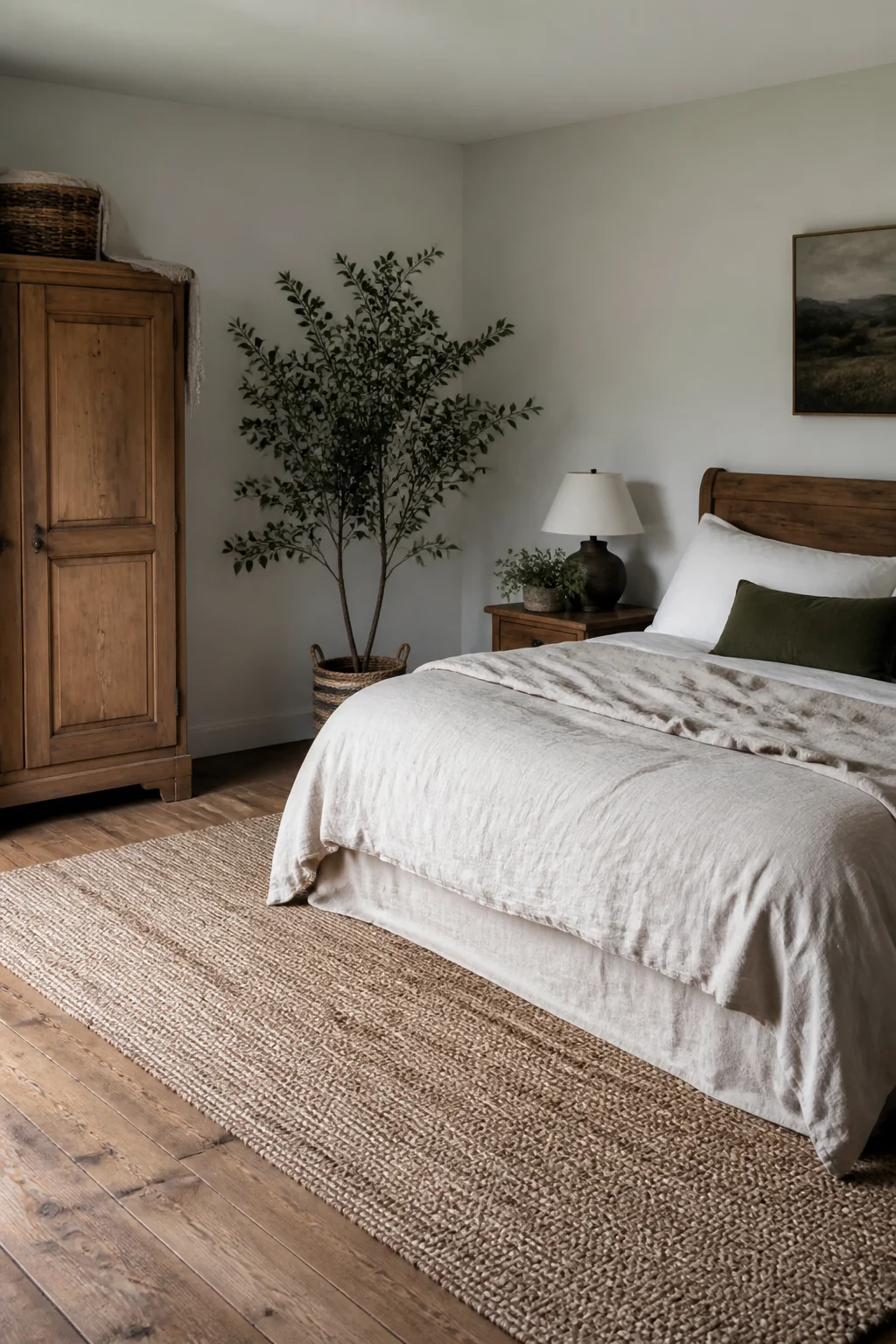
Hardwood is ideal but not required. Laminate, vinyl plank, even wall-to-wall carpet all work if the rug on top is sized properly. A queen mattress is 60 by 80 inches, so an 8x10 rug slid about two-thirds of the way down the frame leaves roughly 18 to 24 inches of soft landing on each side and at the foot. Go 9x12 for a king, or if you want the nightstands standing on the rug too. A natural jute or wool blend runs $150 to $300 and grounds the room without screaming "farmhouse."
A word on jute, since it photographs so well. It feels like a doormat under bare feet at 6am, and it stains permanently the first time a mug tips over, because the fibres take water straight in. A wool-jute blend gives you the same visible texture with a softer hand and a fighting chance at cleaning. Whatever you pick, buy a quarter-inch felt-and-rubber pad for $40 to $80. It stops the rug creeping toward the door, adds cushion, and keeps the edges from curling into something you catch a toe on. Skip pattern here. Warm solid neutrals work harder.
Styling and Accessories Round It Out
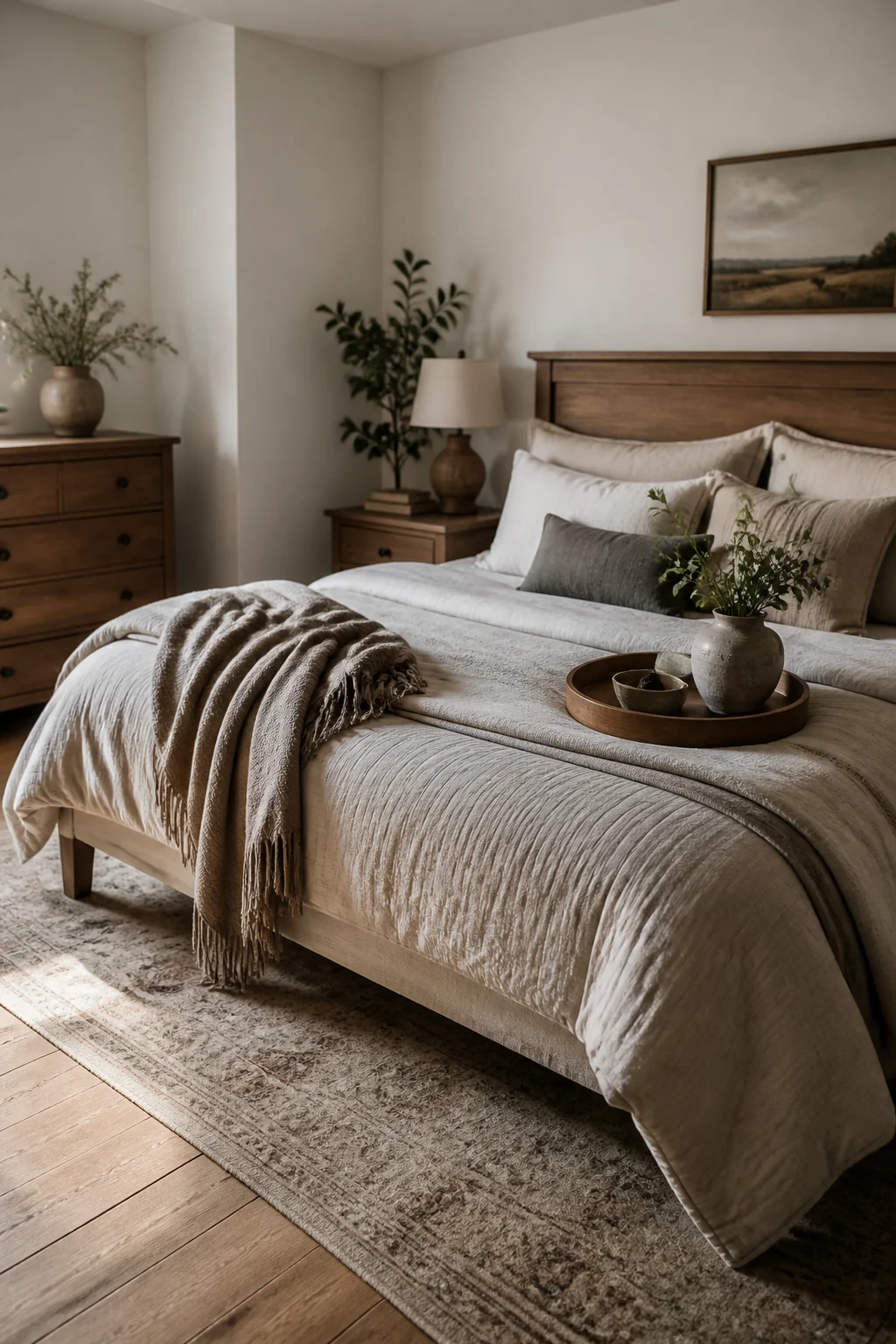
This is where people overspend. You don't need forty decorative items. Pick five things: a wooden tray on one nightstand (12 to 14 inches across, big enough for a lamp base plus a glass of water), a small potted plant, real or a good fake, about $15, a ceramic pitcher or vase, a stack of three or four books with cream or linen-coloured spines, and one piece of wall art in a wood frame. Size that last one to the bed rather than the wall. Roughly two-thirds of the headboard width is the ratio to work from, and a centre 57 to 60 inches up meets most people at standing eye level. A tall wood headboard changes the job: leave 6 to 10 inches of wall between the top rail and the frame, and let the centre sit wherever that puts it.
The usual advice is to buy everything new and coordinated. Don't. Mix old and new. Use what you have. A mismatched collection of wooden and ceramic items looks way more farmhouse than a perfectly matched set from one store.
One more thing: buy your accessories over time, not all at once. Your room should feel collected, not curated.
Real Texture Is the Secret Weapon
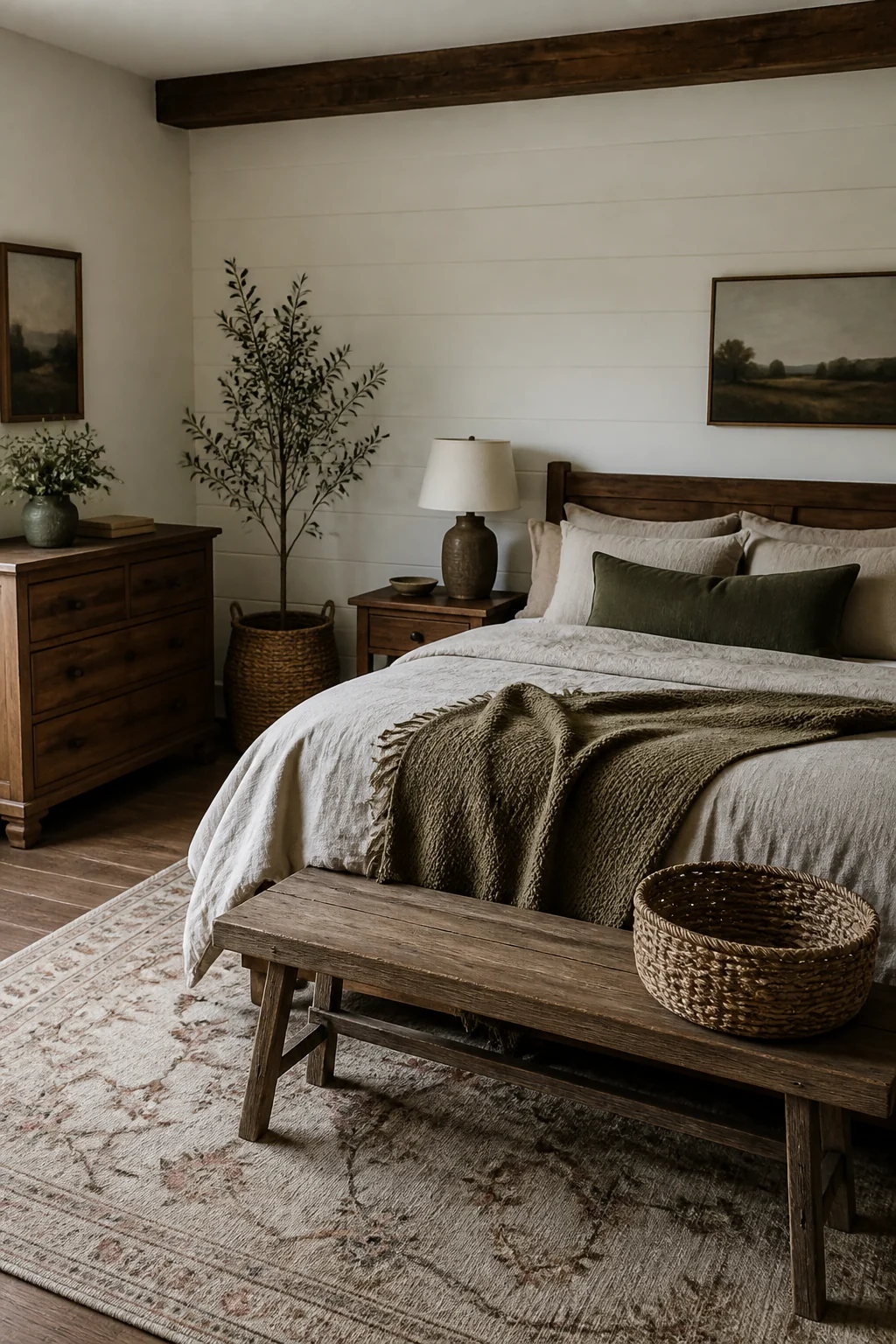
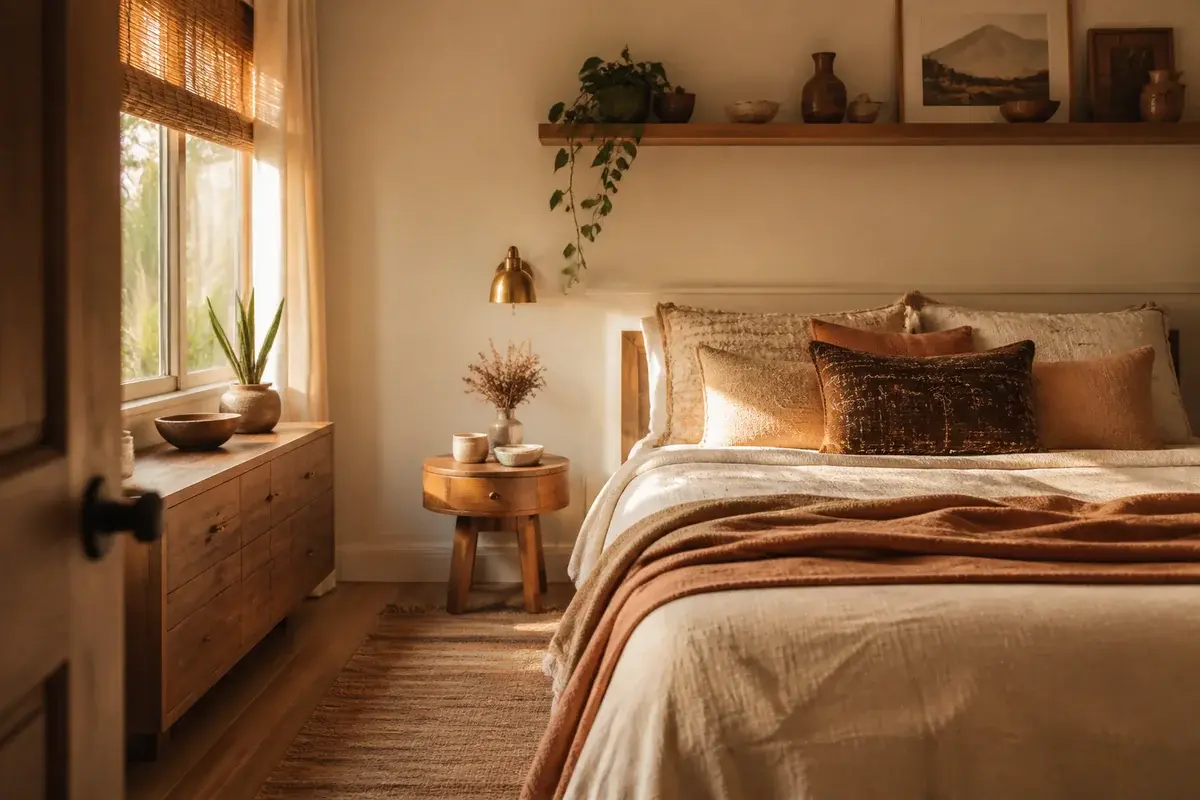
People think modern farmhouse is about white paint and shiplap. It's not. It's about layers of texture. Linen feels different than cotton. Wood grain differs by species. A woven basket looks nothing like a ceramic pot. That combination is what makes it feel designed, not sterile.
Add a chunky knit pouffe, a woven wall hanging (about $30), linen curtains, a wooden stool, and mix wood tones instead of matching everything. Your room becomes interesting without any major expense.
The order you do it in matters as much as the total. Walls first, while the room is close to empty and you can move a stepladder around freely. Then the frame, then the bedding, then nightstands and sconces, then the small things you'll gather over months rather than in one cart. Sequenced that way the whole room lands around $1,500 to $2,000 instead of $5,000, and you're never working around furniture you've just paid for.
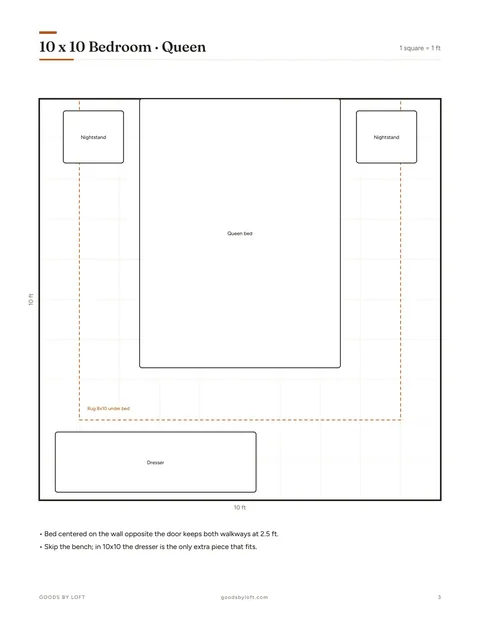
The whole guide in one image
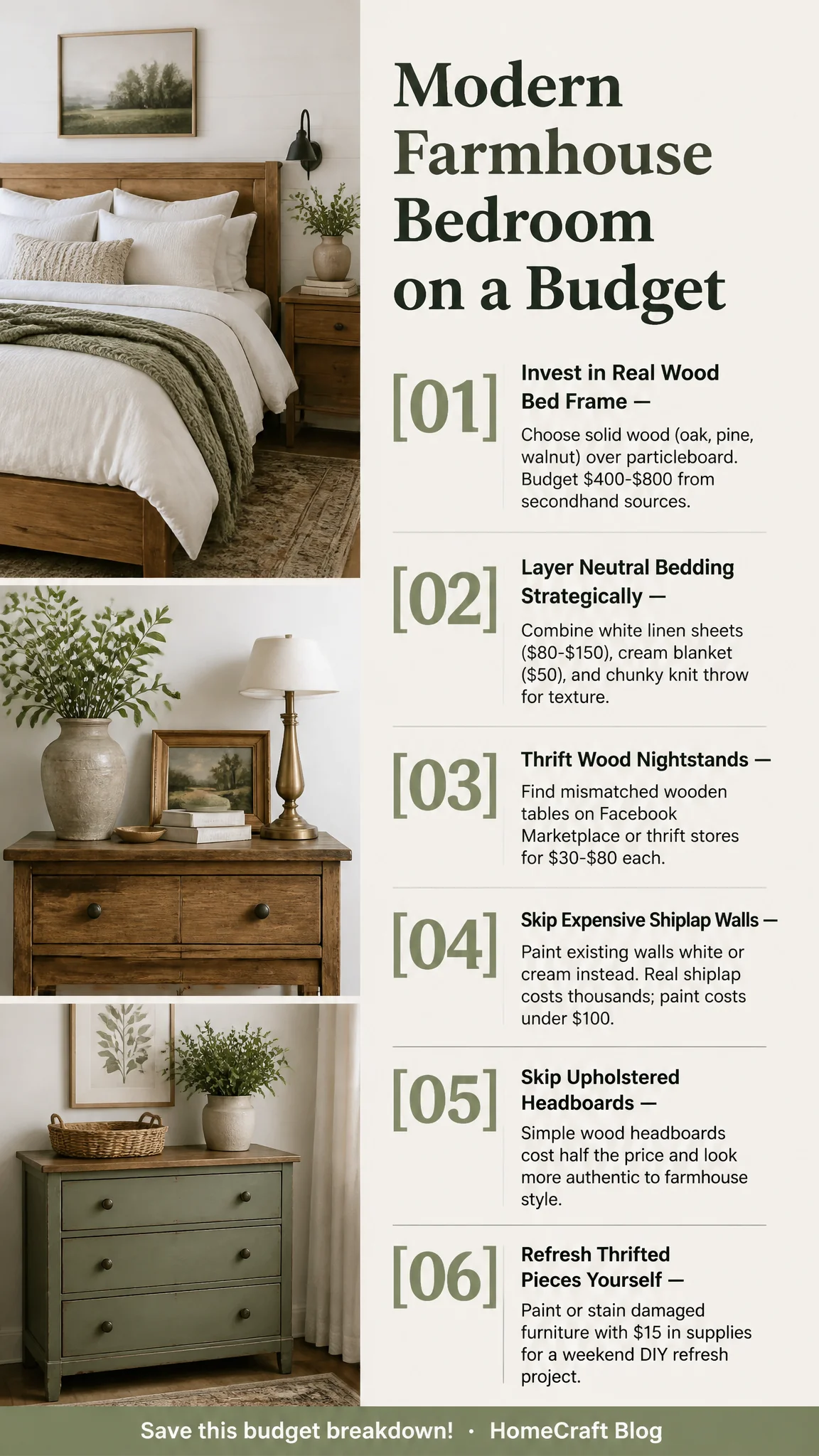
And if the money only stretches to two of these, make them the frame and the bedding. Those are what you look at last thing at night and touch every morning, and no amount of styling covers for a frame that creaks under scratchy sheets.
Ideas fade by Friday. A plan finishes the room.
You just read a full guide to your bedroom. Saving ideas will not change it; a plan will. The Home Decor Collection is every planning tool we make, for every room in the house, in one download, so the after photos below stop being other people's rooms.
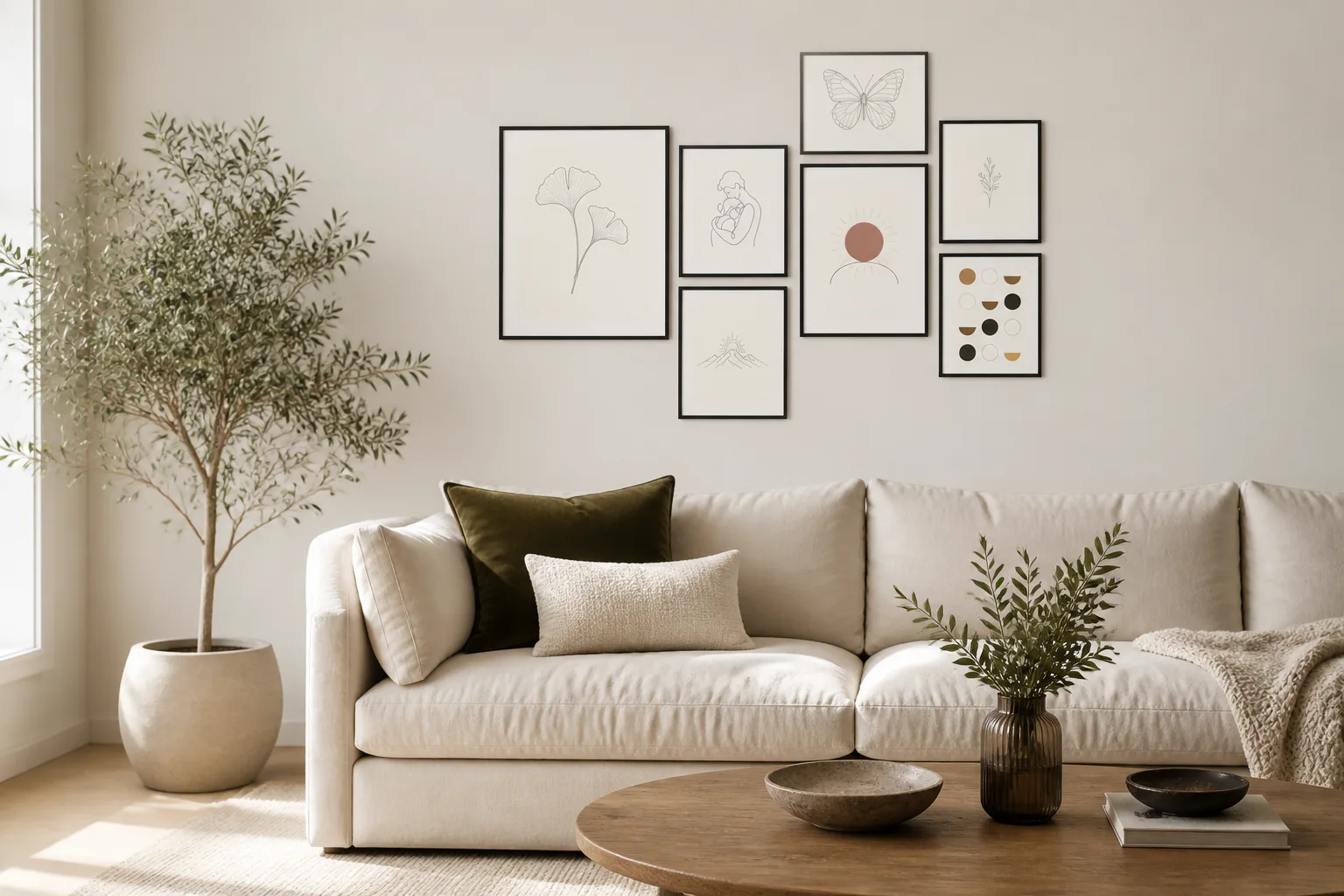
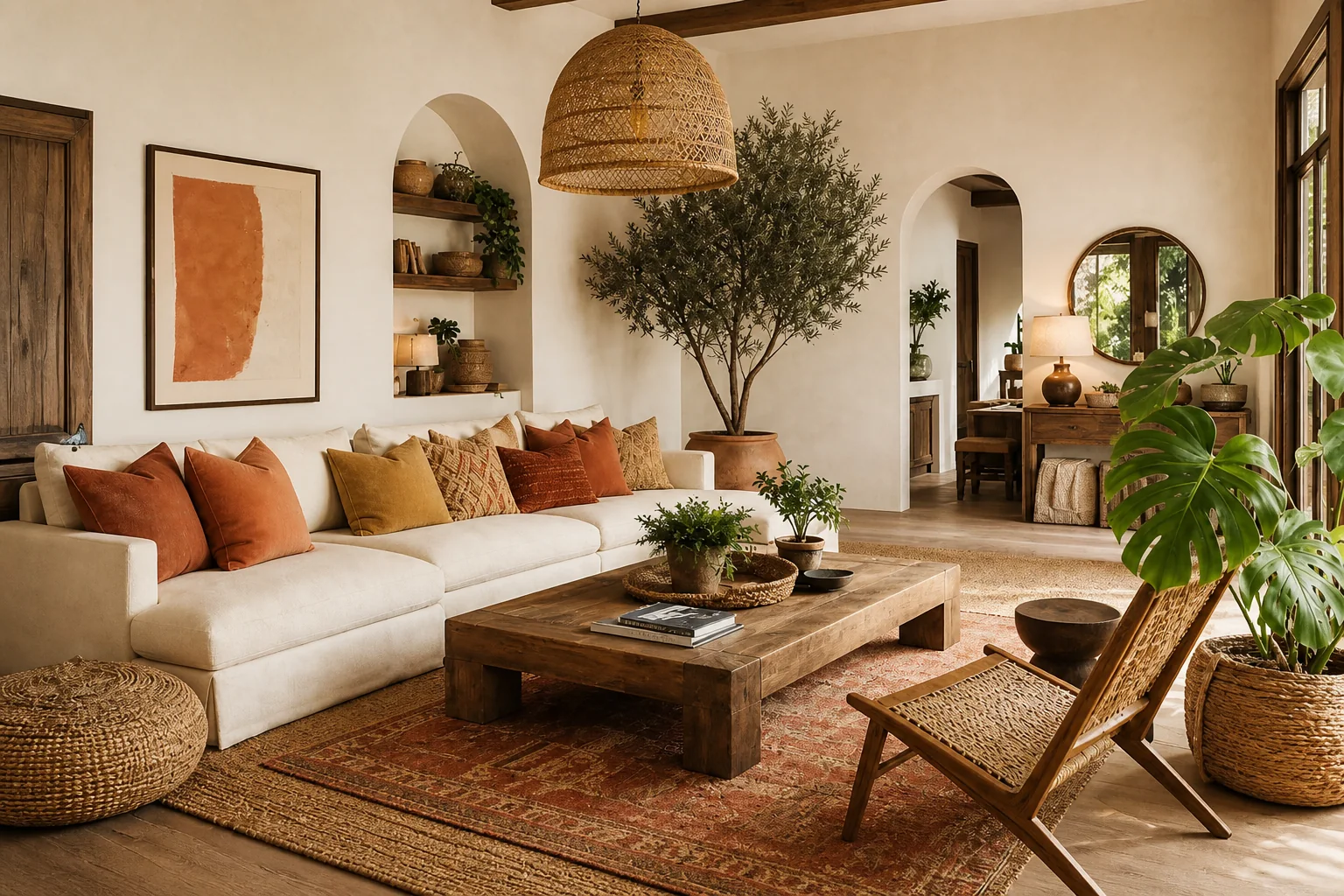
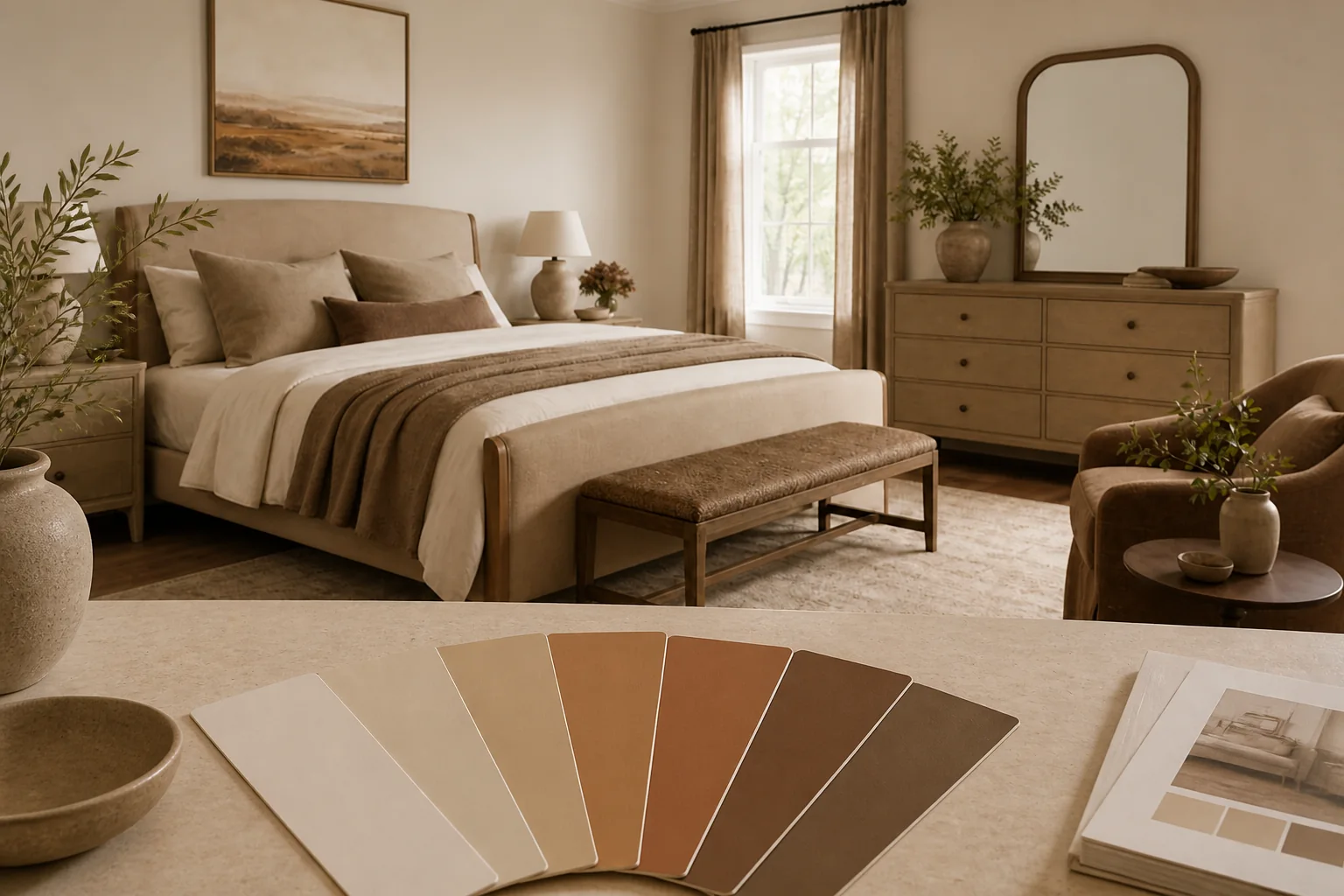
- Six room Style Kits, each with layout, palette and shopping list$114
- The Gallery Wall Studio: 200 prints + 15 measured layouts$29
- The Room Makeover System: 40 solved room layouts + workbook$29
- The Color Palette Handbook: 60 palettes shown in real rooms$19
- The Whole-Home Reset: 40 printable organizing checklists$19
- The Decorator's Cheat Sheets: the 40 measurements that matter$9
- All eleven products, bought separately
$219$97
A single hour with an interior designer costs more than the entire Collection, and this one keeps answering for every room you will ever decorate. Free updates included as the products grow. And if it is not for you, the 14 day money back promise means you simply get a refund.