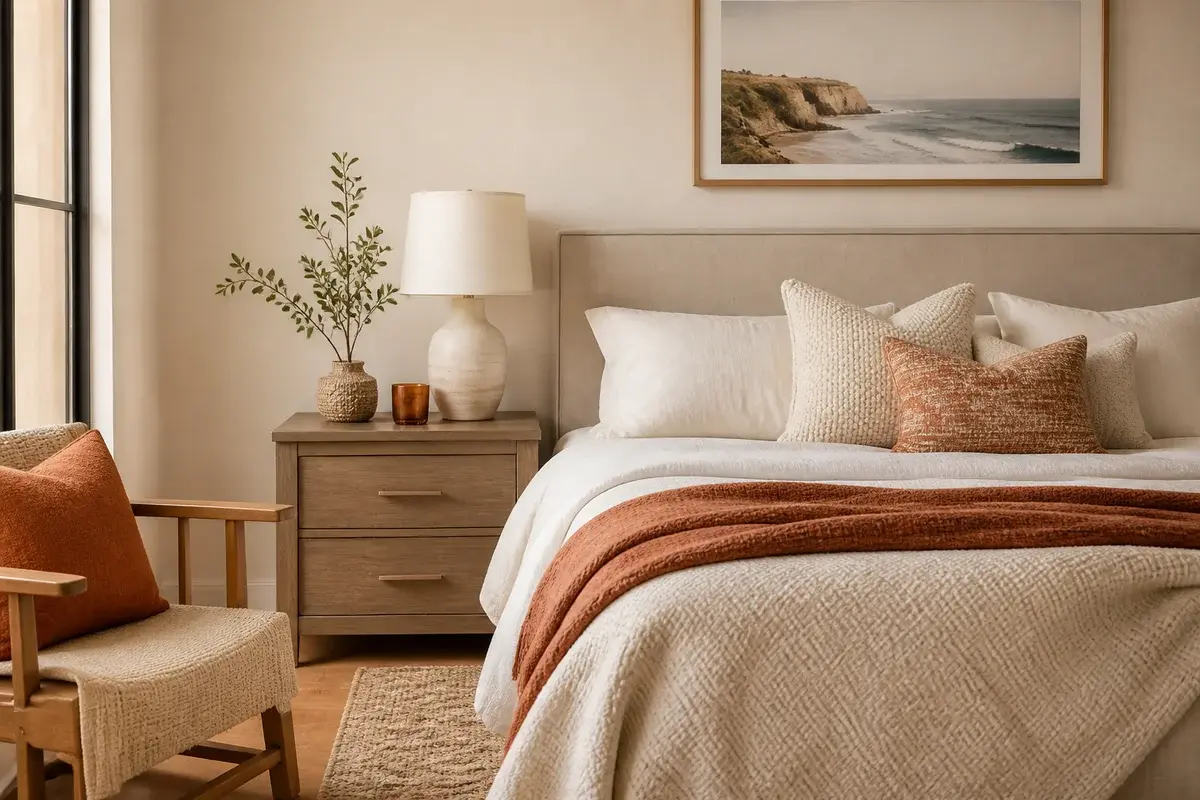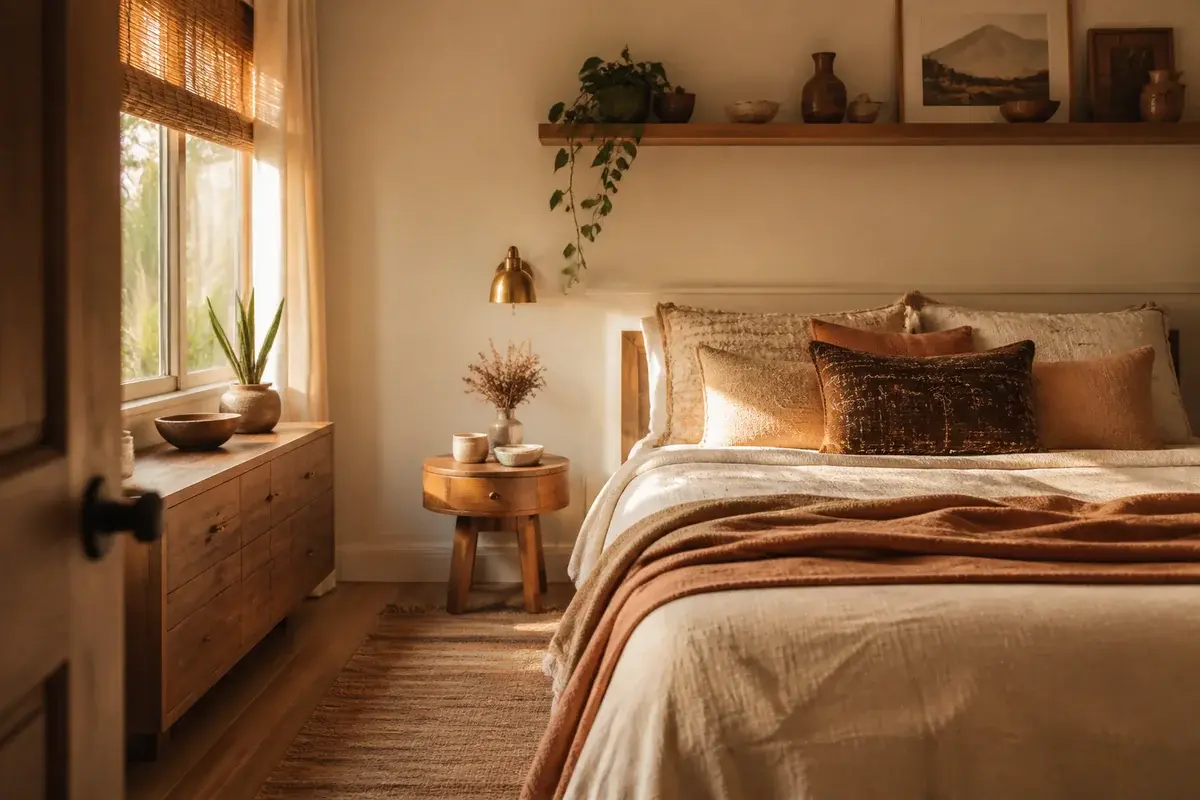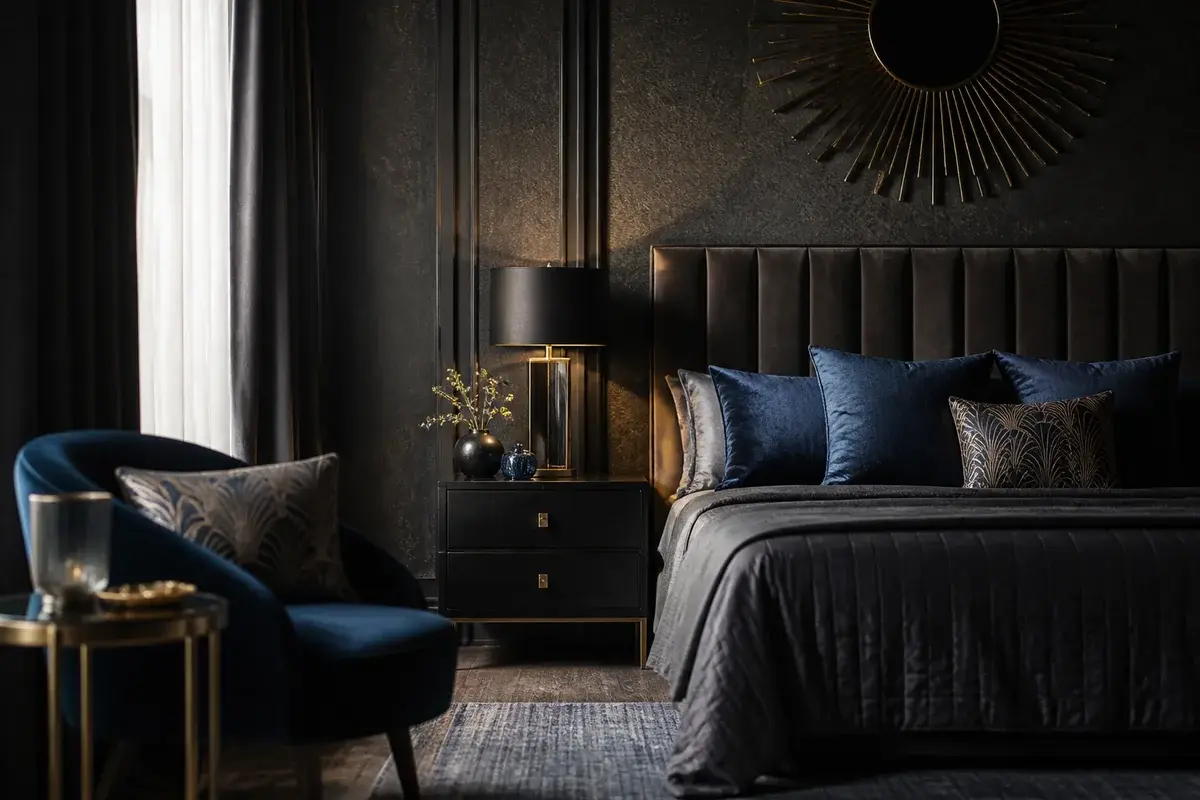
How to Get the Scandinavian Bedroom Look Without the Minimalist Guilt
Scandinavian bedroom ideas that feel cozy, not cold. Add warmth and texture while keeping that clean Nordic style you love.
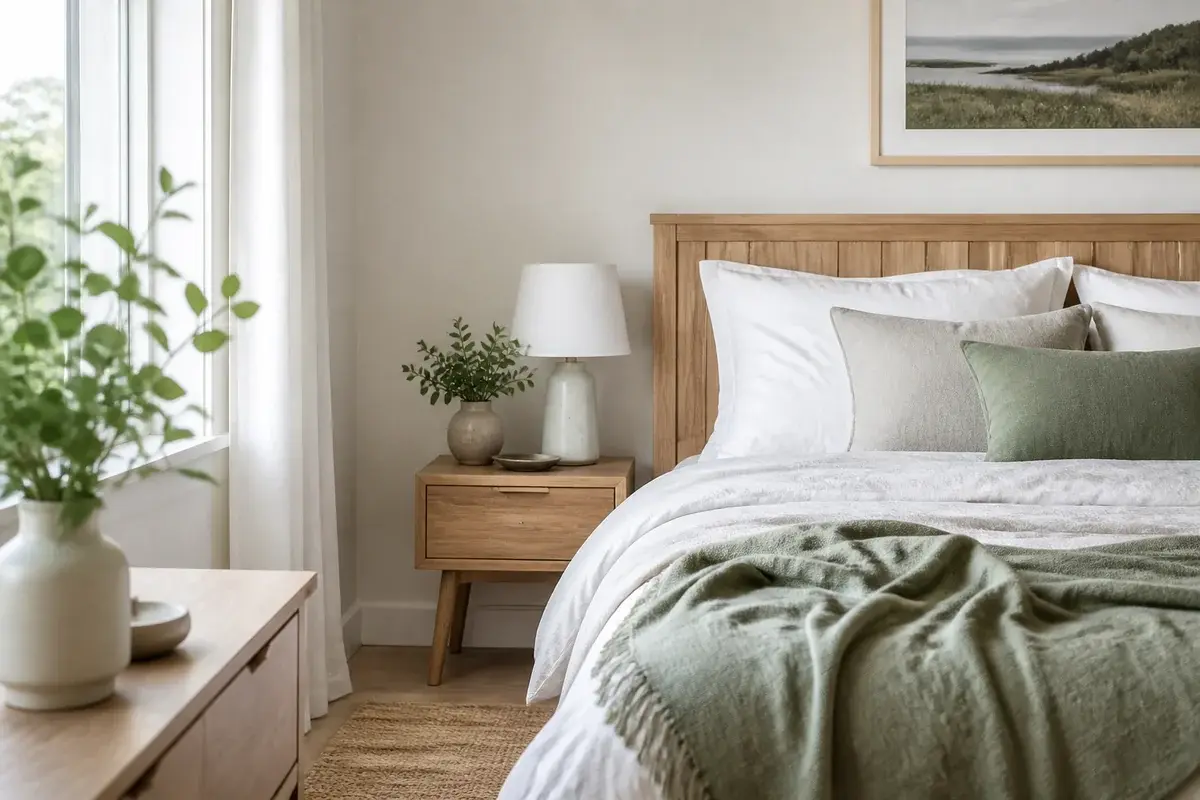
Scroll through Scandinavian bedrooms for ten minutes and you'll notice something odd about every single one of them. Nobody lives there. No book left face-down on the nightstand, no plant that's dropped a leaf, no throw rumpled from last night. Crisp white walls, light wood, clean lines, and a room that looks like it's holding its breath until the photographer leaves.
That's the part of Scandinavian design that gets lost on the way here. It picked up a reputation for being cold and stingy, as if you're allowed exactly seventeen possessions and should feel grateful for them. The real thing is warm, and it's warm for a reason. In Stockholm in late December the sun is up for barely six hours, so the whole style grew out of making a room feel good in the dark half of the year. Pale walls bounce what daylight there is. Everything you touch, wool, linen, sheepskin, unfinished wood, is there to put the warmth back.
So you don't have to pick between calm and comfortable. Here's how the two fit in the same room.
You Don't Need to Ditch Your Stuff
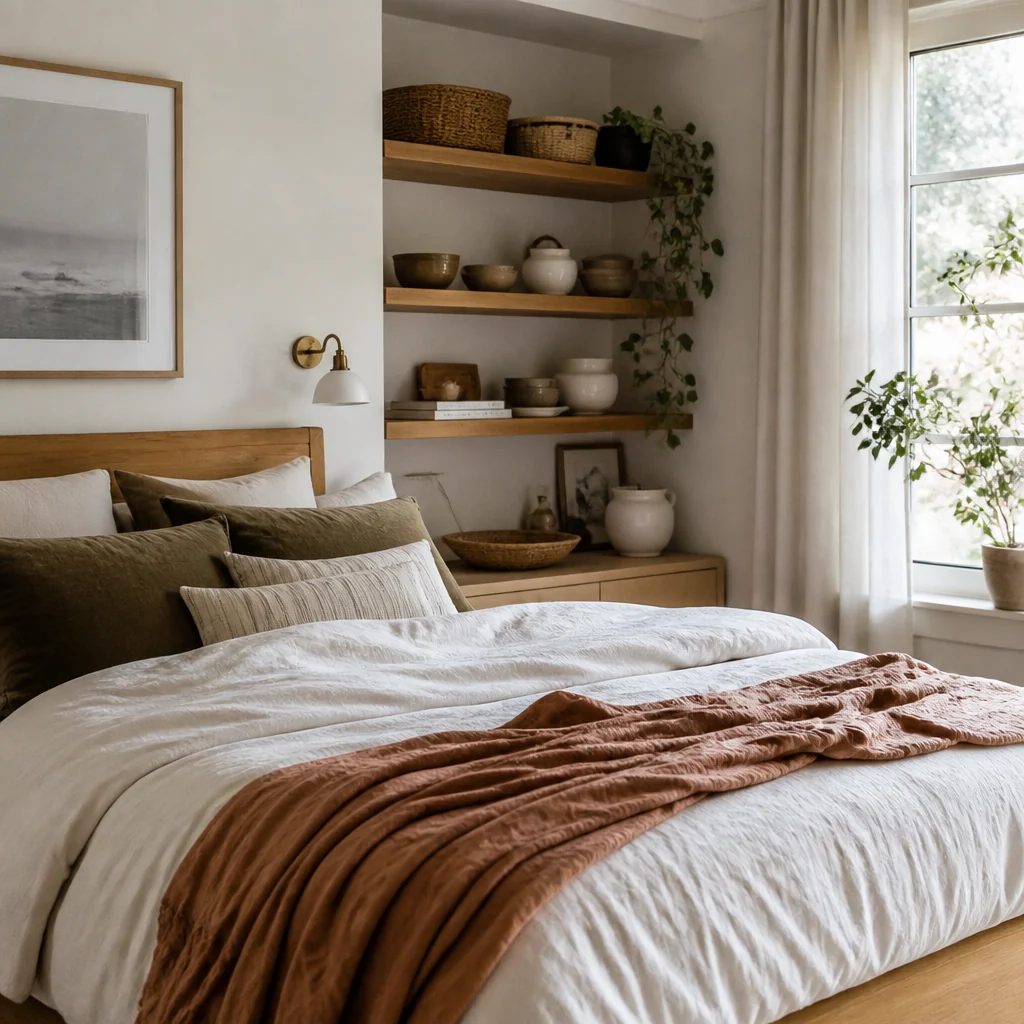
Scandinavian design isn't about owning nothing. It's about deciding what comes into the room and giving each thing an address.
Clear your surfaces completely and sort what was on them into three piles: used every week, loved but seasonal, and honestly just parked there. The weekly pile gets the good real estate, the nightstand top and the front of a drawer. The seasonal pile goes into a lidded basket or a rolling under-bed bin, and 6 inches is the height to look for since that clears most bed frames without scraping. The third pile leaves the room.
The conventional rule is visibility and purpose. A closet you have to shove shut doesn't read as Scandinavian, but a shelf of folded sweaters does, because you can see the order rather than take it on faith. Hidden clutter still counts, and you feel it every time you open the door.
Where this approach falls down is capacity. If your bedroom has one narrow closet and no dresser, editing alone won't rescue it, and you'll just keep re-sorting the same things. A 30-inch three-drawer chest runs about $120 to $200 in an oak-look laminate, and it solves the problem the purge was never going to.
Light Wood and White Walls Are a Start, Not the Whole Story
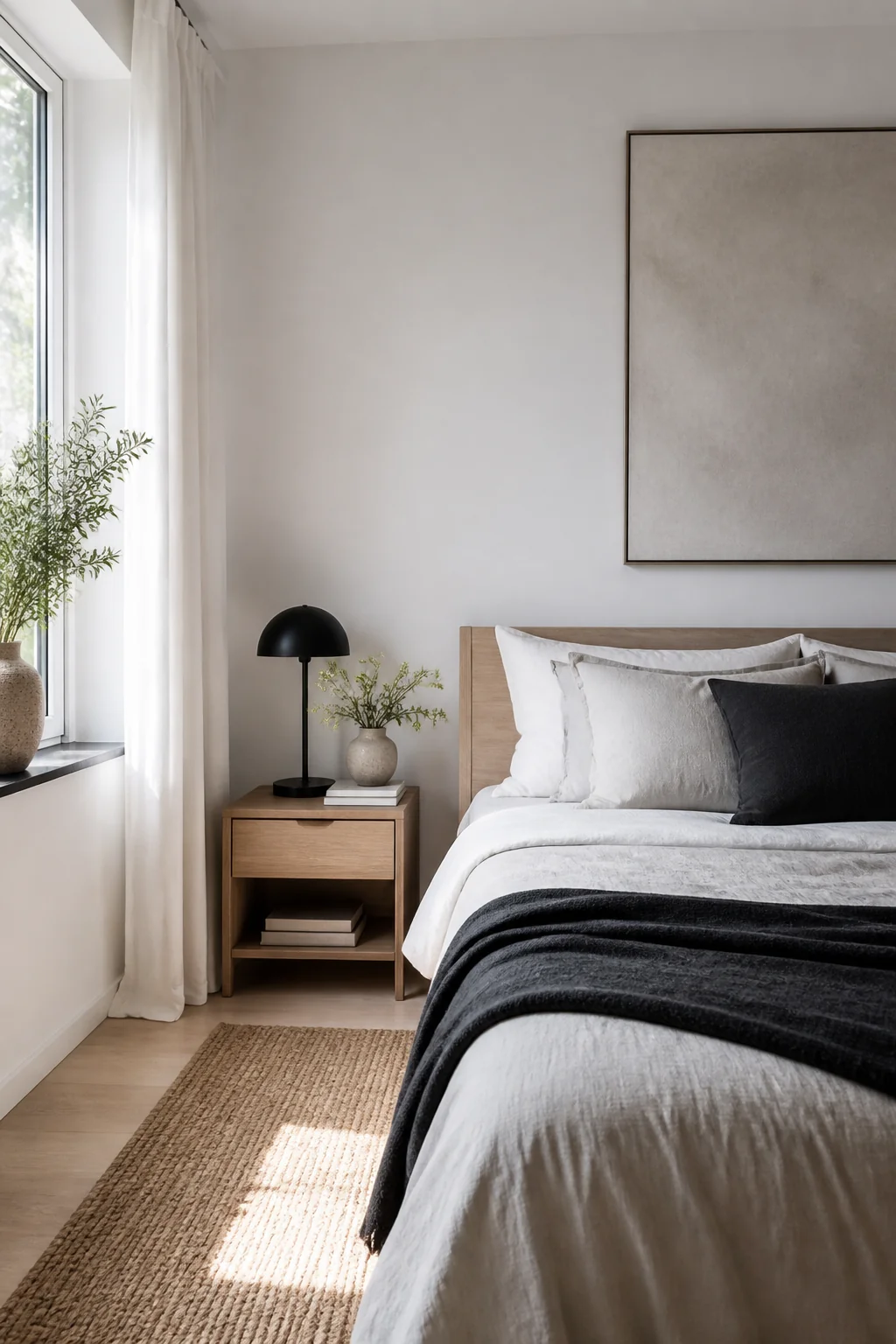
Color is where most people stall, because every reference photo is white and it's easy to read that as a rule. It isn't one.
Muted tones do the same job with more life in them. Warm gray, soft sage, a pale blue that stays crisp instead of drifting toward nursery. One wall in a gentle color gives the room depth, and it's the cheapest depth you will ever buy: a 12-foot wall wants two coats and still takes only one $35 to $60 gallon, since 350 square feet of coverage leaves plenty in the can for touch-ups years from now. Test it on a two-foot square first and look at it at night under your lamps, since north-facing bedrooms pull gray toward blue and can turn a warm sage flat.
For wood, light oak, ash and birch are the classics, and you don't need to buy any of them to get there. A dark nightstand scuff-sanded, primed and painted soft white costs about $30 in supplies and one Saturday. Use a water-based furniture enamel rather than leftover wall paint. Wall paint stays faintly tacky on a horizontal surface for weeks and lifts a ring off the bottom of every glass you set down.
Texture Matters More Than You Think
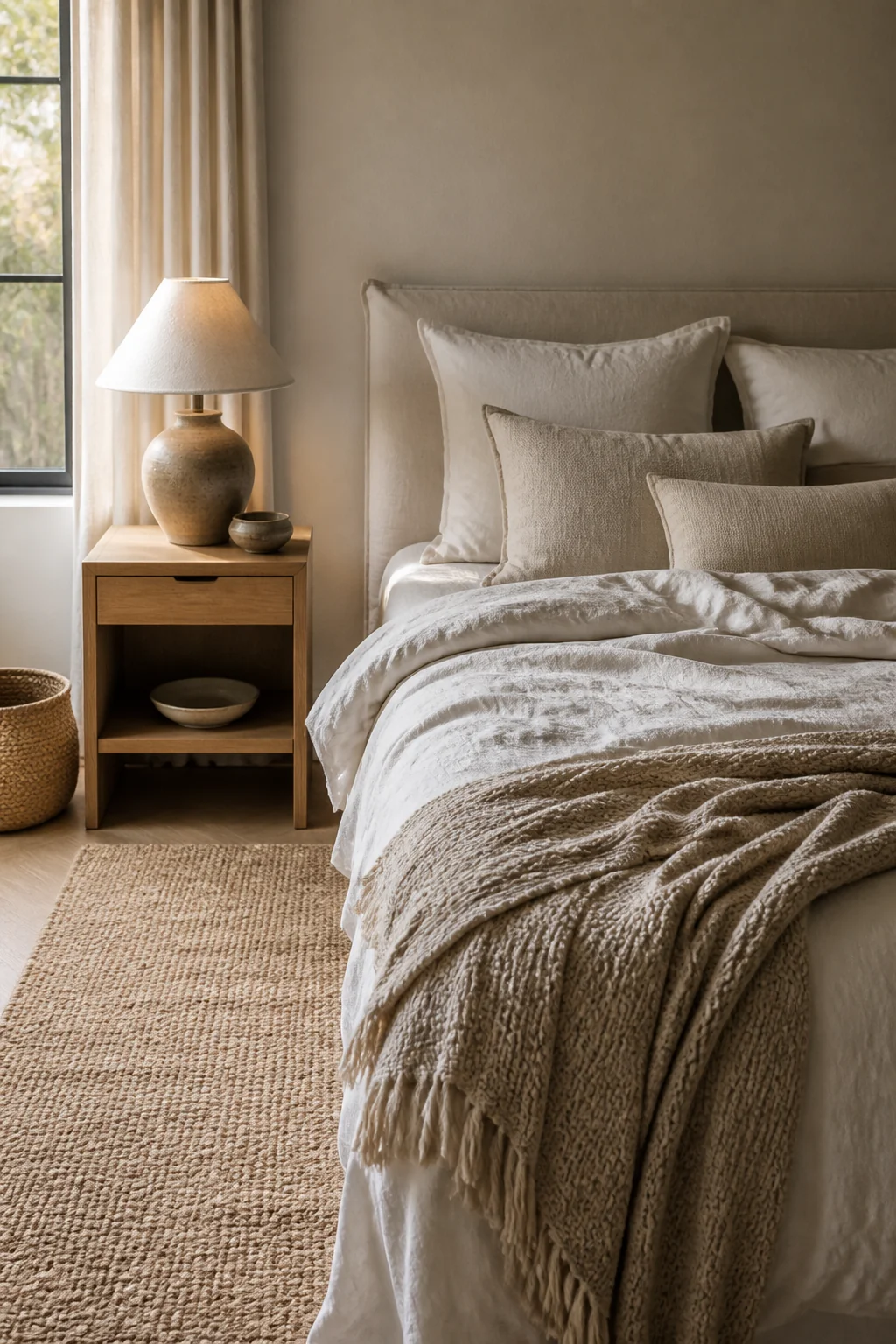
A Scandinavian room that feels cold is almost always a texture problem, not a color problem. The palette is doing its job. There's just nothing in the room worth touching.
Build it up in layers, starting with the bed. A washed linen bedspread in cream or oatmeal runs $80 to $150 for a queen, and linen earns that price by getting softer with every wash instead of pilling the way cotton-poly does. Lay a chunky knit throw across the foot of the bed at a slight angle rather than squared off. Put a sheepskin on the floor on the side you actually get out of, roughly $40 to $70 for real hide or $25 for a faux one.
Then the small things: a stoneware dish on the nightstand, a natural fiber basket for spare blankets, a woven hanging in a neutral tone. Three or four different materials held inside one quiet color range is the target. Ten materials is a jumble, and one is a showroom.
Plants Break Up the Minimalism Without Ruining It
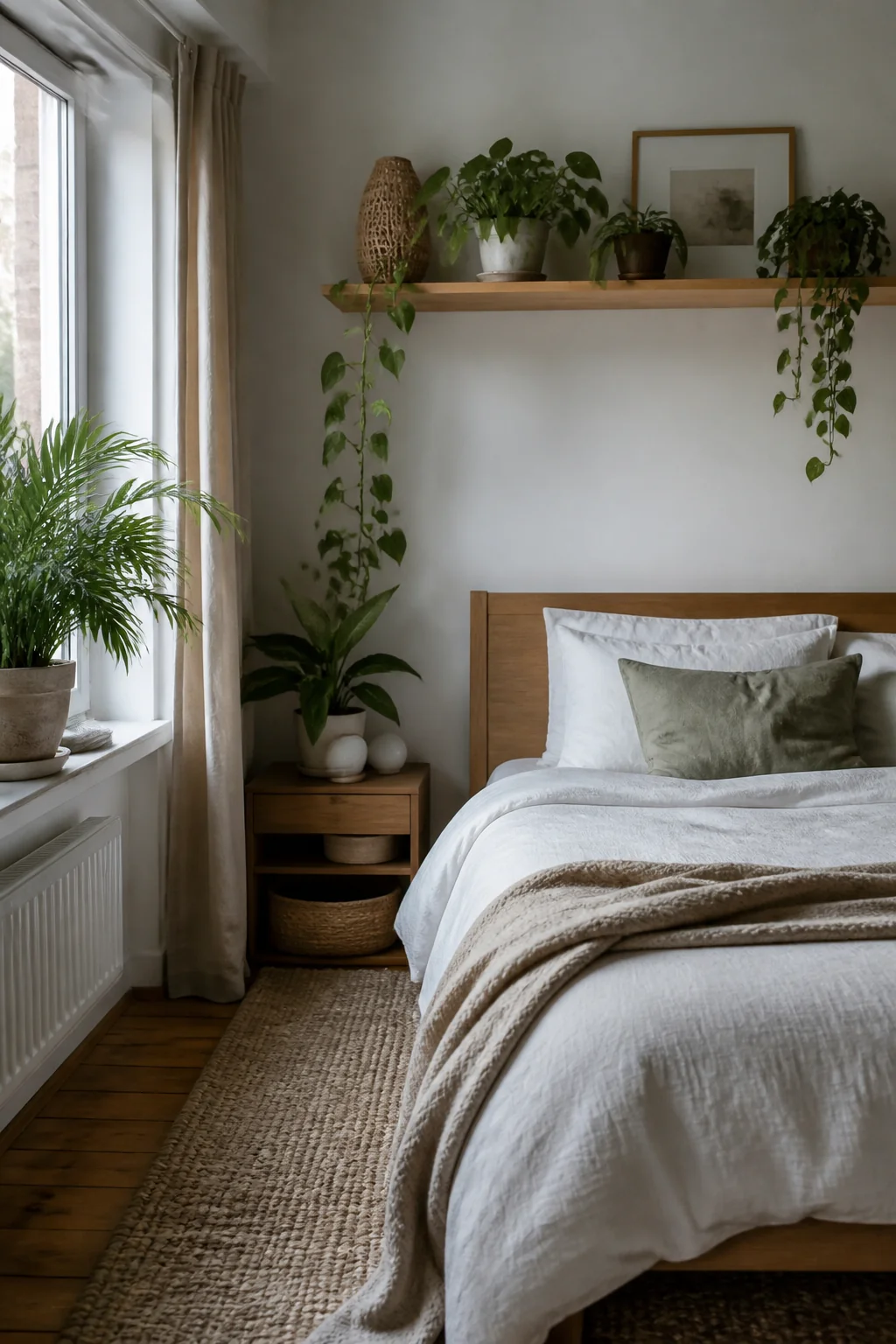
A room full of straight lines and flat planes reads as staged, and one irregular living shape is the fastest correction available. Plants are also the only thing in the room that changes week to week.
Three is usually right for a bedroom: one on the floor, one on a surface, one trailing from height. A fiddle leaf fig in a corner costs $30 to $80 depending on size, but it's fussy. It sulks when you move it and starts dropping leaves below about 60 degrees, which matters if you sleep with the window cracked in winter. Pothos is the forgiving choice at $10 to $15, fine in low light and fine if you forget it for a week. Run it along the top of a wardrobe or a high shelf and it softens the corner where the walls meet.
Check your light before you buy anything. Bedrooms are often the darkest room in the house, and a north-facing window with no direct sun will kill a fig within a season. In that case use a faux one in a real ceramic pot for the height and let the pothos do the living work.
Lighting Sets How Warm the Room Feels at Night
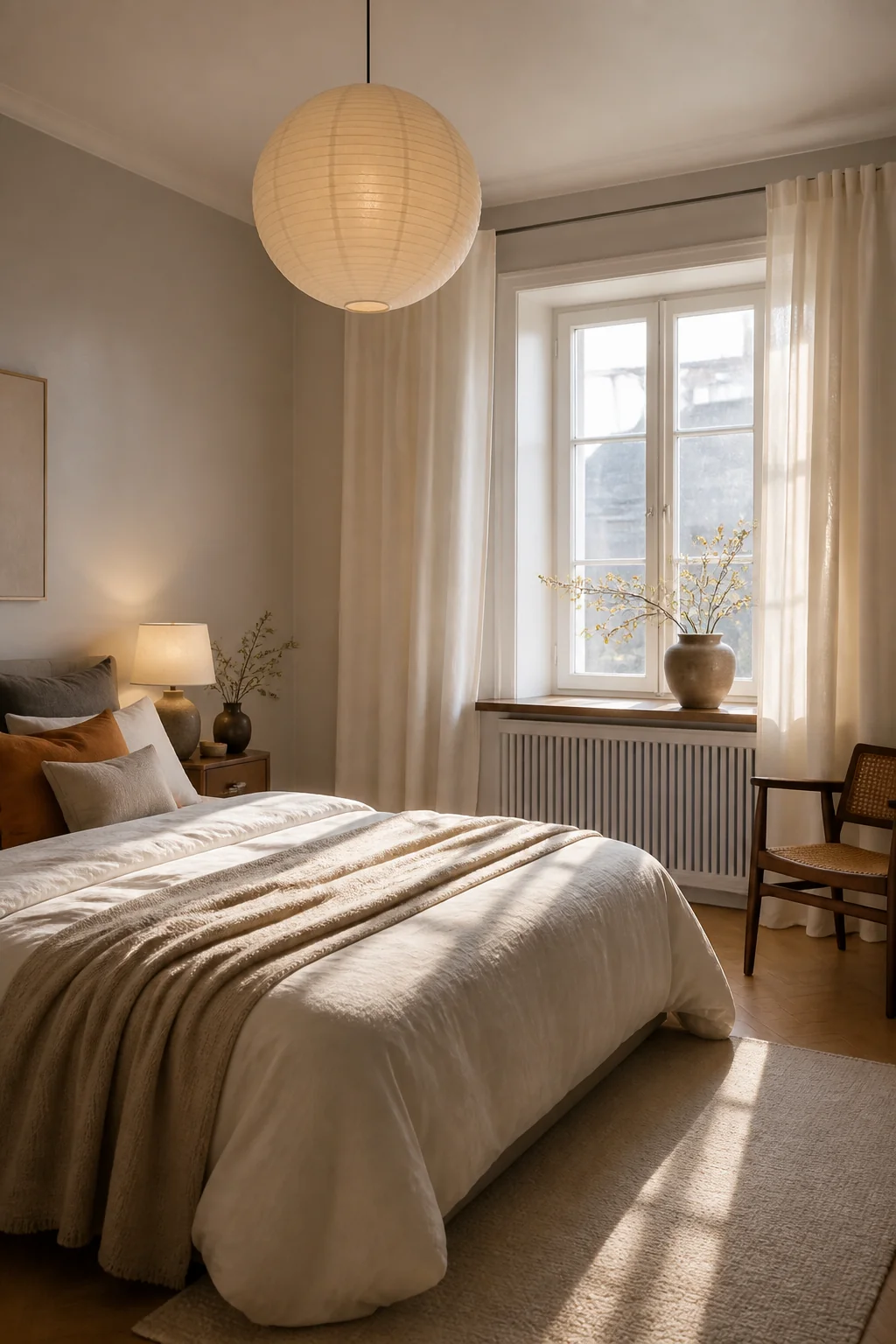
One bulb in the middle of the ceiling is what makes a bedroom feel like a waiting room. It throws light straight down from a single point, flattens every texture you just spent money on, and gives you exactly one setting.
Aim for three sources you can switch separately. A bedside lamp with a linen or paper shade for reading. A pendant or a pair of wall sconces mounted around 30 inches above the mattress top, high enough that the light clears your shoulder and lands on the page. Then something low for evening, a small table lamp or a warm white string tucked along a shelf.
Bulb temperature is the part people skip, and it does more than the fixture. Look for 2700K on the box, often labeled warm white. At 4000K and up the same room turns blue and clinical, which is exactly the coldness you were trying to design out. Plug-in sconces that need no electrician run $50 to $90 for a pair, and dimmable warm bulbs are about $6 each.
The Nightstand Matters
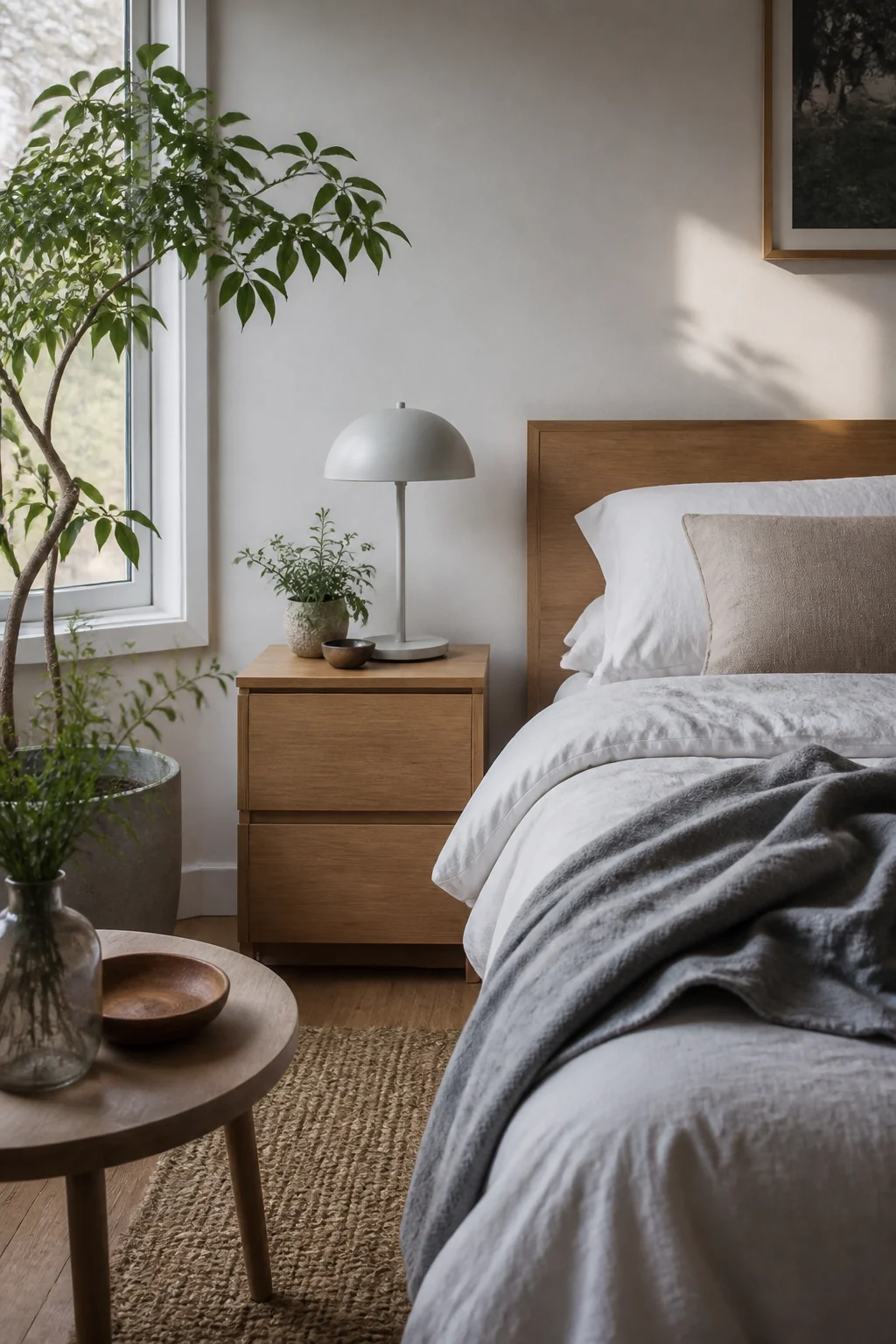
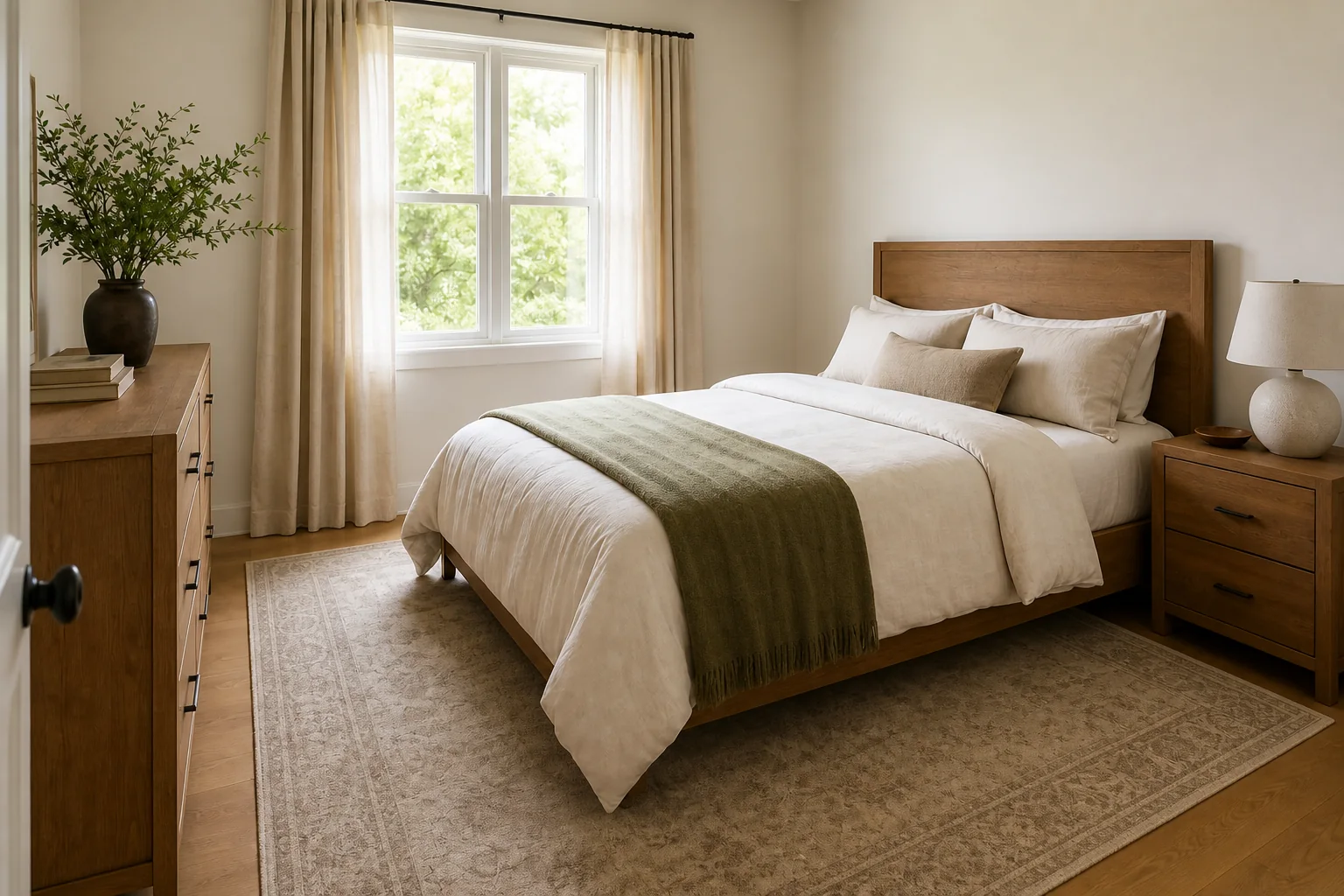
The nightstand is the surface closest to your face for eight hours a night, so it sets the tone of the room whether you plan it or not.
Hold the top to about four things: a lamp, a small ceramic dish for rings and keys, a book or two if you read in bed, and a plant or a glass of water. What sits underneath counts just as much. A table on legs reads lighter than a closed cabinet because you can see floor through it, which is why so many Nordic bedrooms use a slim three-legged side table instead of a chest.
Height is the practical part. The top wants to land within about 2 inches of your mattress height, so somewhere near 24 to 26 inches for a standard bed on a low frame. Sit on the edge and reach for the lamp switch before you commit. Too low and you're groping down past the mattress in the dark. Leave a couple of inches between the table and the bed frame as well, or the duvet edge bunches into the gap every morning.
Window Treatments Don't Need to Be Complicated
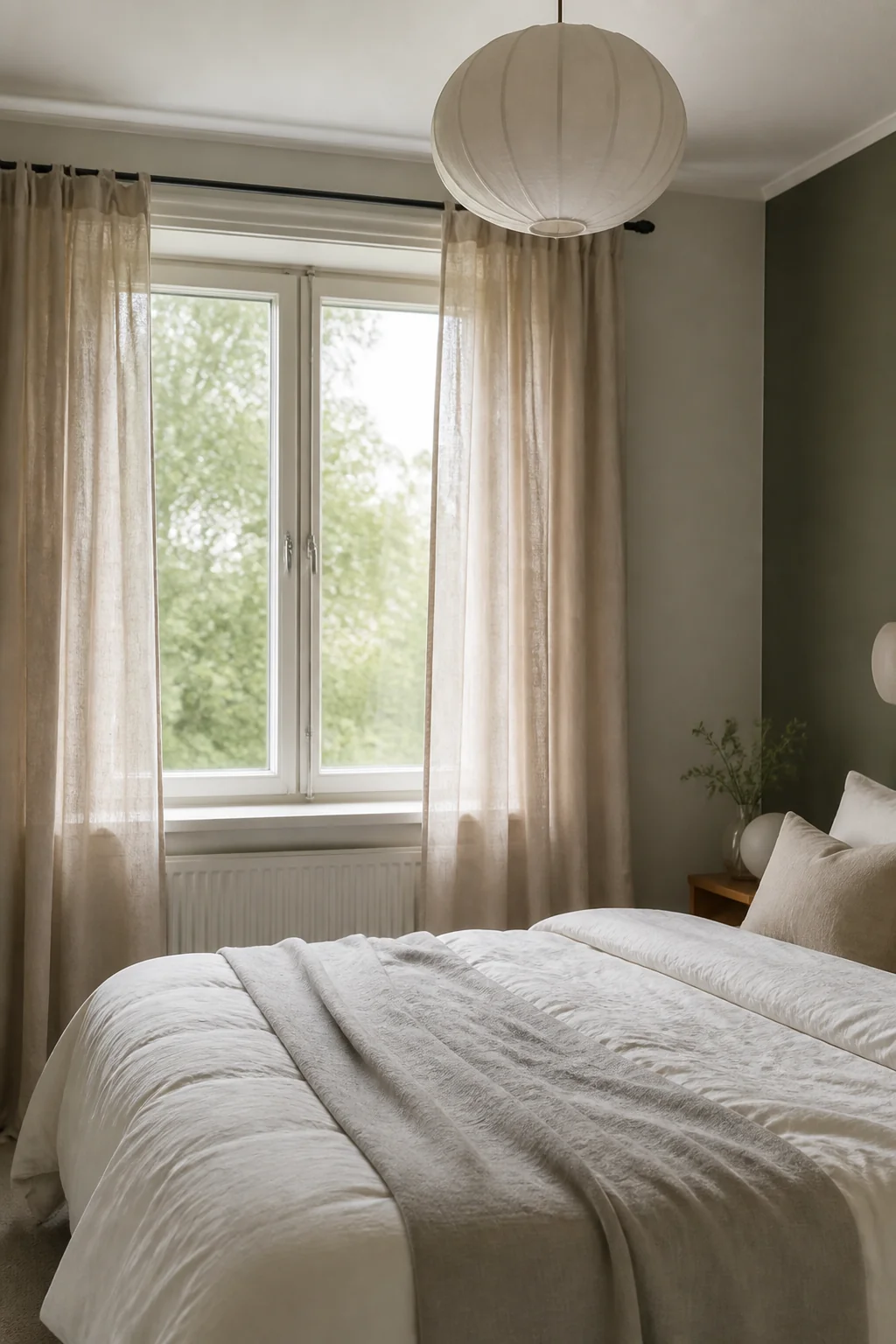
Curtains are where a simple room gets fussy for no good reason. White, cream or light gray panels in a fabric that filters daylight rather than blocking it, and you're finished.
Linen or a linen-cotton blend falls in a soft fold instead of a stiff pleat and runs about $25 to $40 a panel. Two details do most of the work, and both are settled at the order screen rather than at the drill. Buy a rod long enough to run 6 to 10 inches past the frame at each end, so the open panels have wall to gather on and the glass stays uncovered, and buy the panel length for brackets sitting 4 to 6 inches above the frame rather than on it. Order for the window and you get curtains that fit the window; order for the wall around it and the window looks taller and wider, and you lose no daylight to fabric. Length should brush the floor or stop about half an inch above it. Anything shorter looks like a mistake.
Where plain panels aren't enough is privacy and early summer light. Linen is sheer once a streetlight is behind it, and in June the sun can be up before five. Put a plain white roller shade or a honeycomb blind behind the panels, $30 to $60 for a standard window, and the room keeps the soft look with the function underneath.
None of this needs to happen at once, and the pieces work in almost any order. Paint is the cheapest change and the most visible. Bulbs are the fastest, done before dinner. A whole bedroom done this way tends to land under $800 when you're painting the furniture you own instead of replacing it, spread over a few weekends rather than one heroic push.
Keep this guide handy
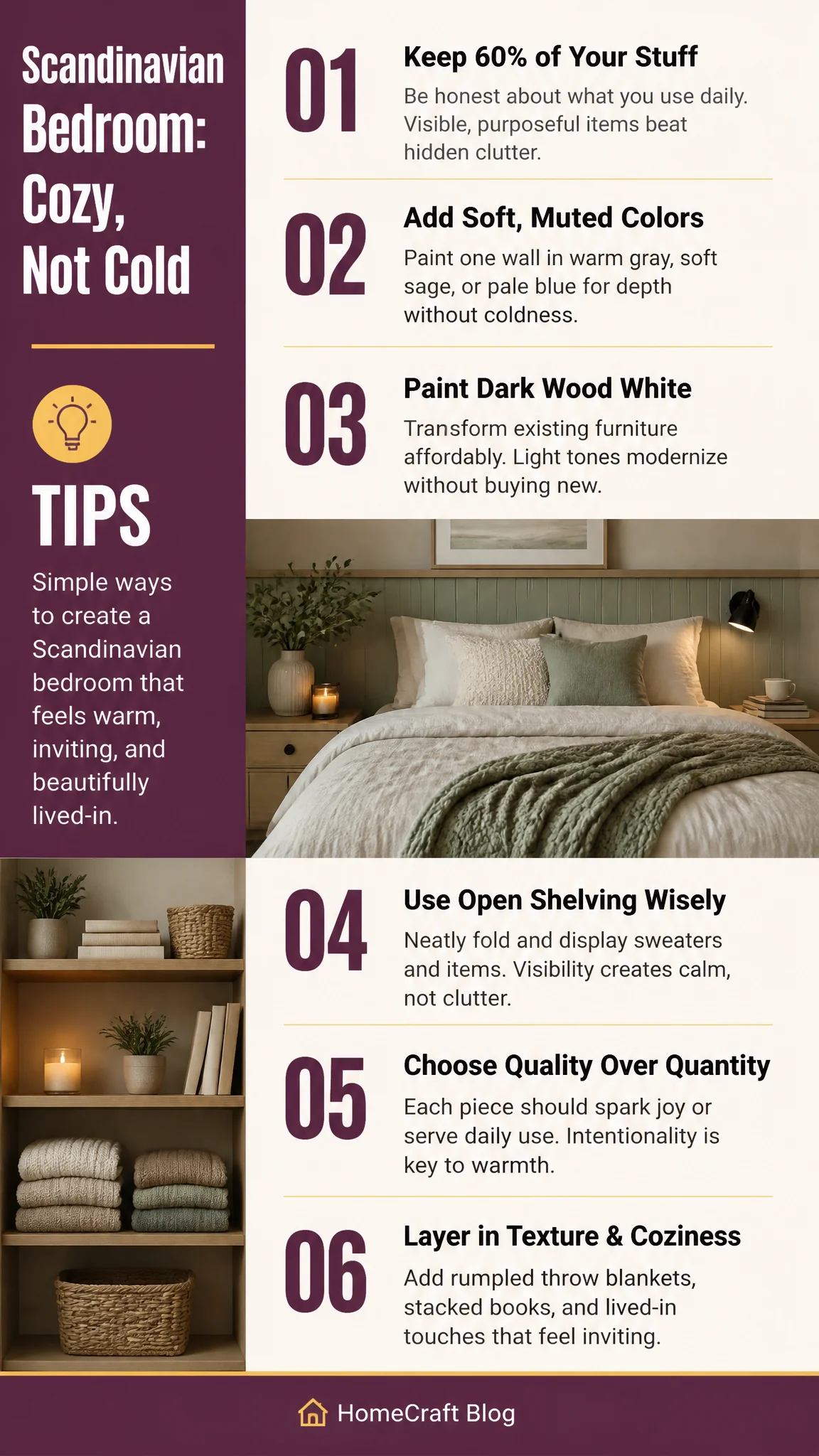
If one thing deserves your attention ahead of the rest, it's the lighting. A warm, dimmable lamp beside the bed does more for how the room feels at ten at night than any amount of white paint ever will.
Ideas fade by Friday. A plan finishes the room.
You just read a full guide to your bedroom. Saving ideas will not change it; a plan will. The Home Decor Collection is every planning tool we make, for every room in the house, in one download, so the after photos below stop being other people's rooms.
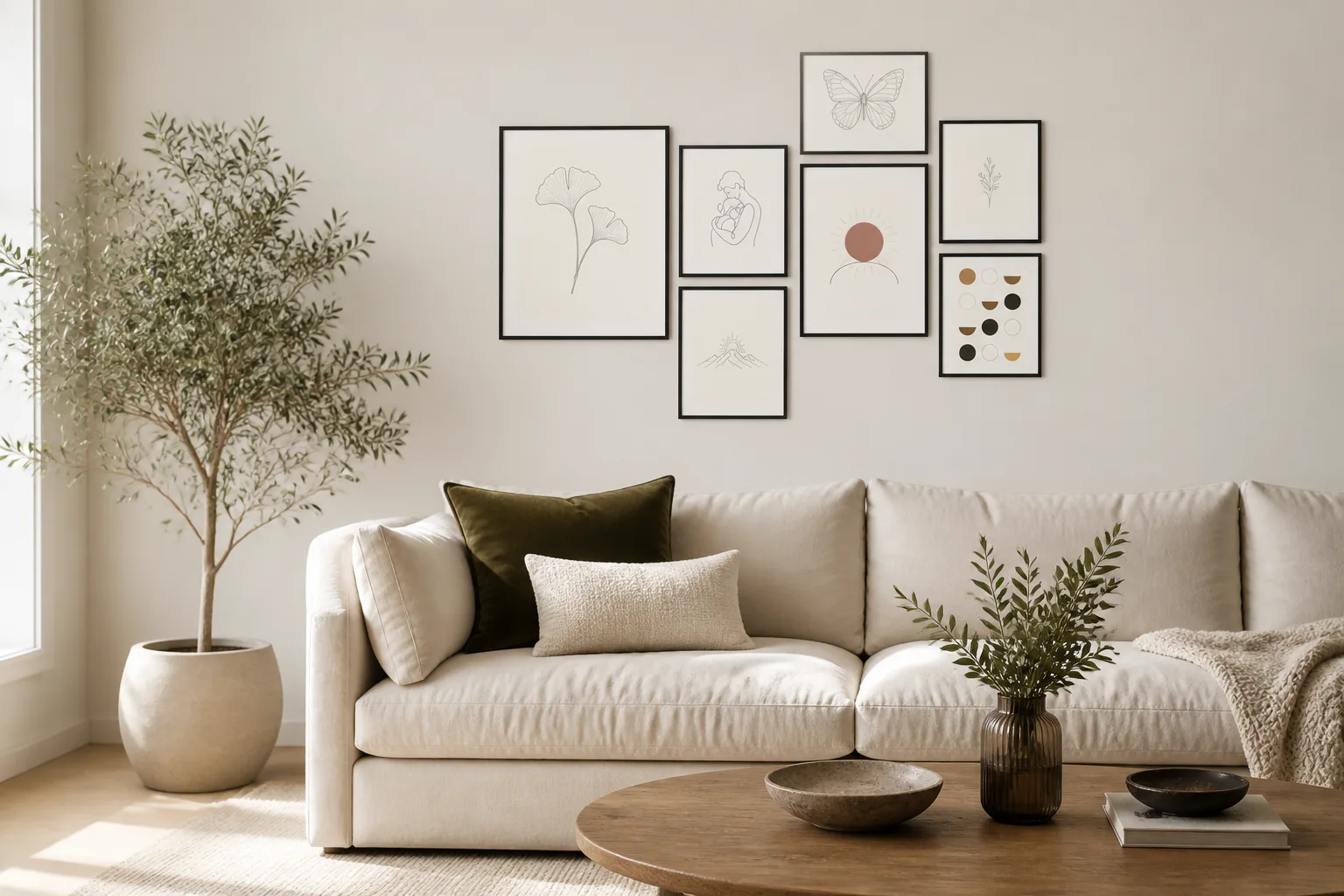
- Six room Style Kits, each with layout, palette and shopping list$114
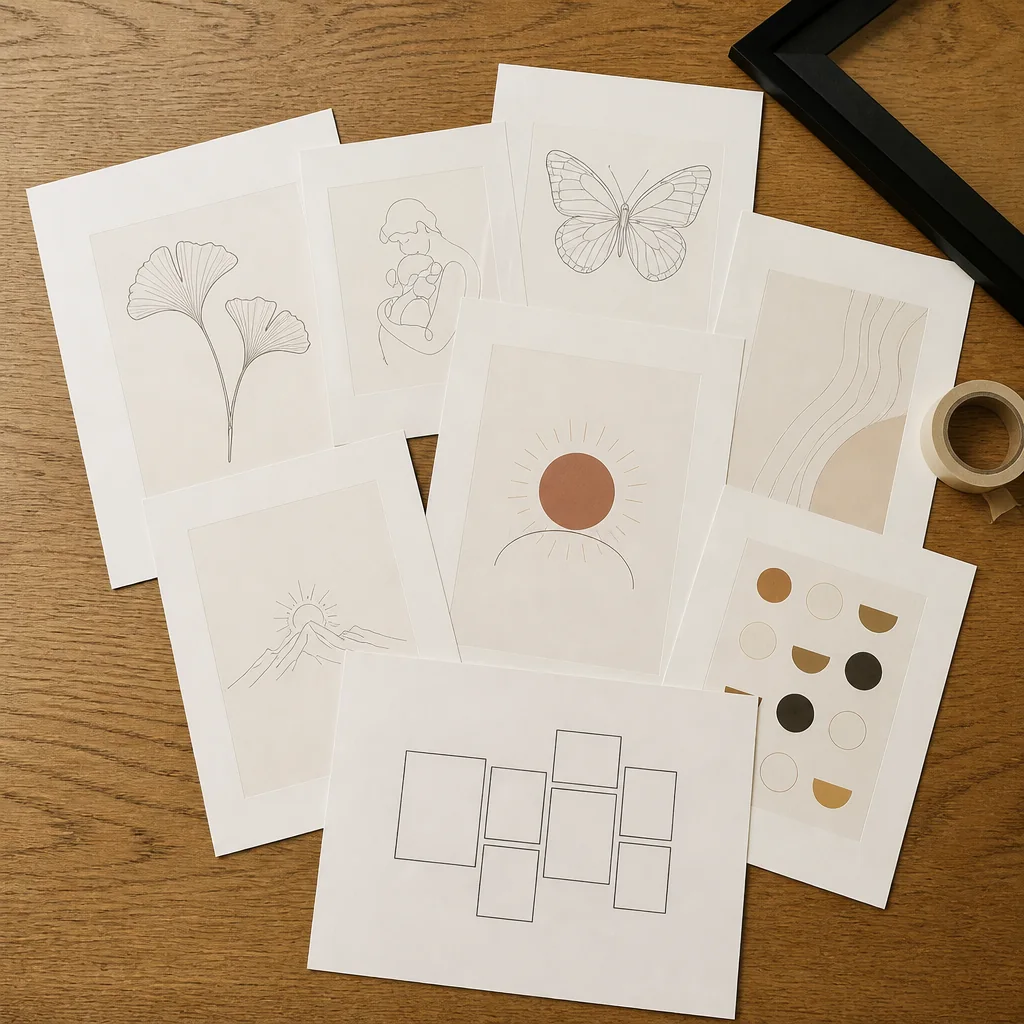
- The Gallery Wall Studio: 200 prints + 15 measured layouts$29
- The Room Makeover System: 40 solved room layouts + workbook$29
- The Color Palette Handbook: 60 palettes shown in real rooms$19
- The Whole-Home Reset: 40 printable organizing checklists$19
- The Decorator's Cheat Sheets: the 40 measurements that matter$9
- All eleven products, bought separately
$219$97
A single hour with an interior designer costs more than the entire Collection, and this one keeps answering for every room you will ever decorate. Free updates included as the products grow. And if it is not for you, the 14 day money back promise means you simply get a refund.