Layering Prints in a Maximalist Bedroom Without Making It Feel Cluttered
Small bedroom, no wall anchors allowed? Here's how to layer fabric, rugs, and window treatments into maximalist bedroom ideas that feel full, not messy.
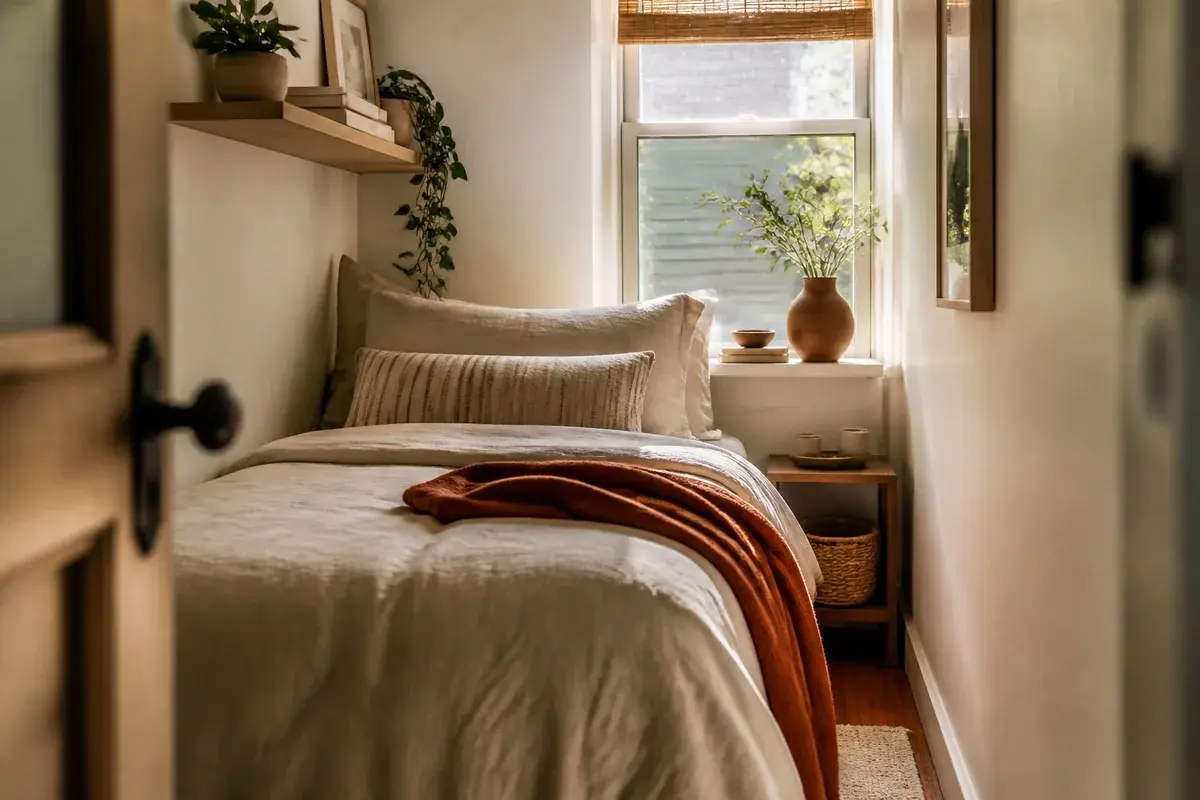
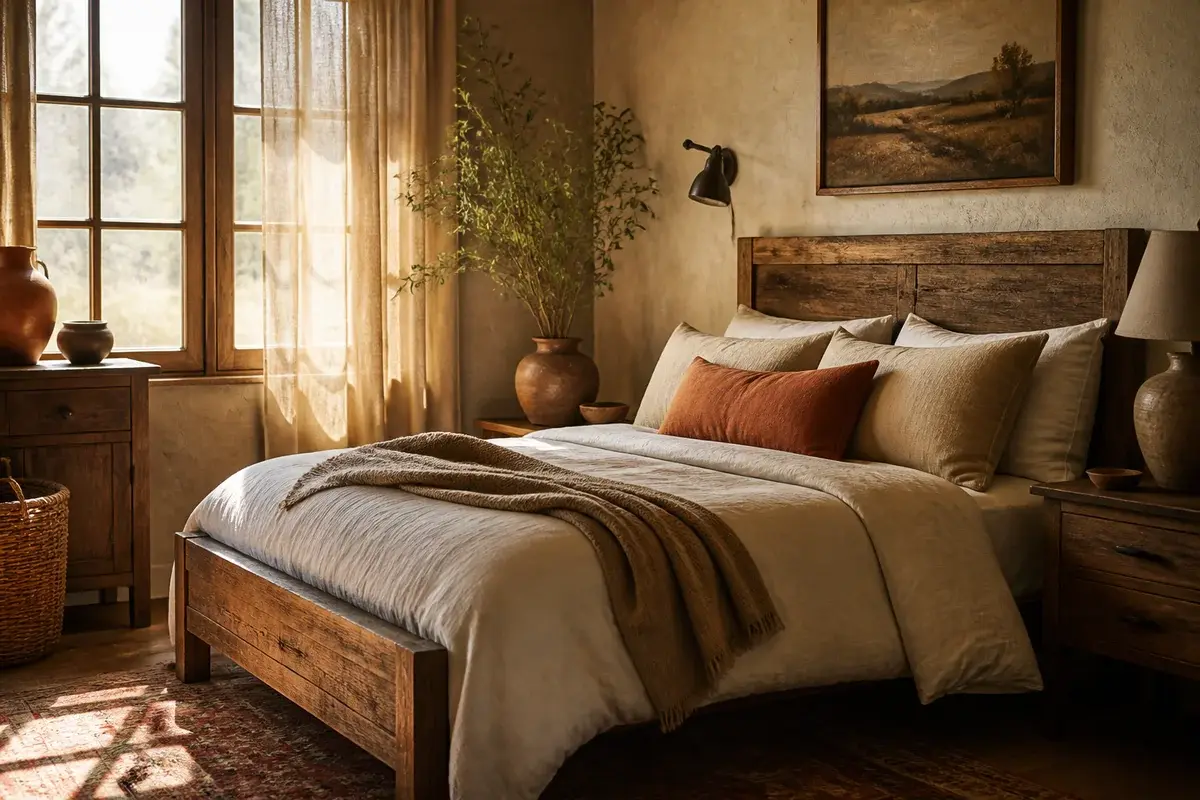
Your bedroom is probably around 10 by 11 feet, with one window on the long wall and a door that swings open across the floor. You can't drill into the plaster behind the bed, so the wall is off limits for heavy shelves. That rules out the usual maximalist move of stacking a gallery of framed prints and a bookcase full of objects above the headboard. What's left is fabric, floor, and the window, and that's where the whole look has to live. Done well, maximalist bedroom ideas for a small room come down to layers of pattern held together by one repeated color and a few sizes that never fight each other.
Pick one color that every print has to carry
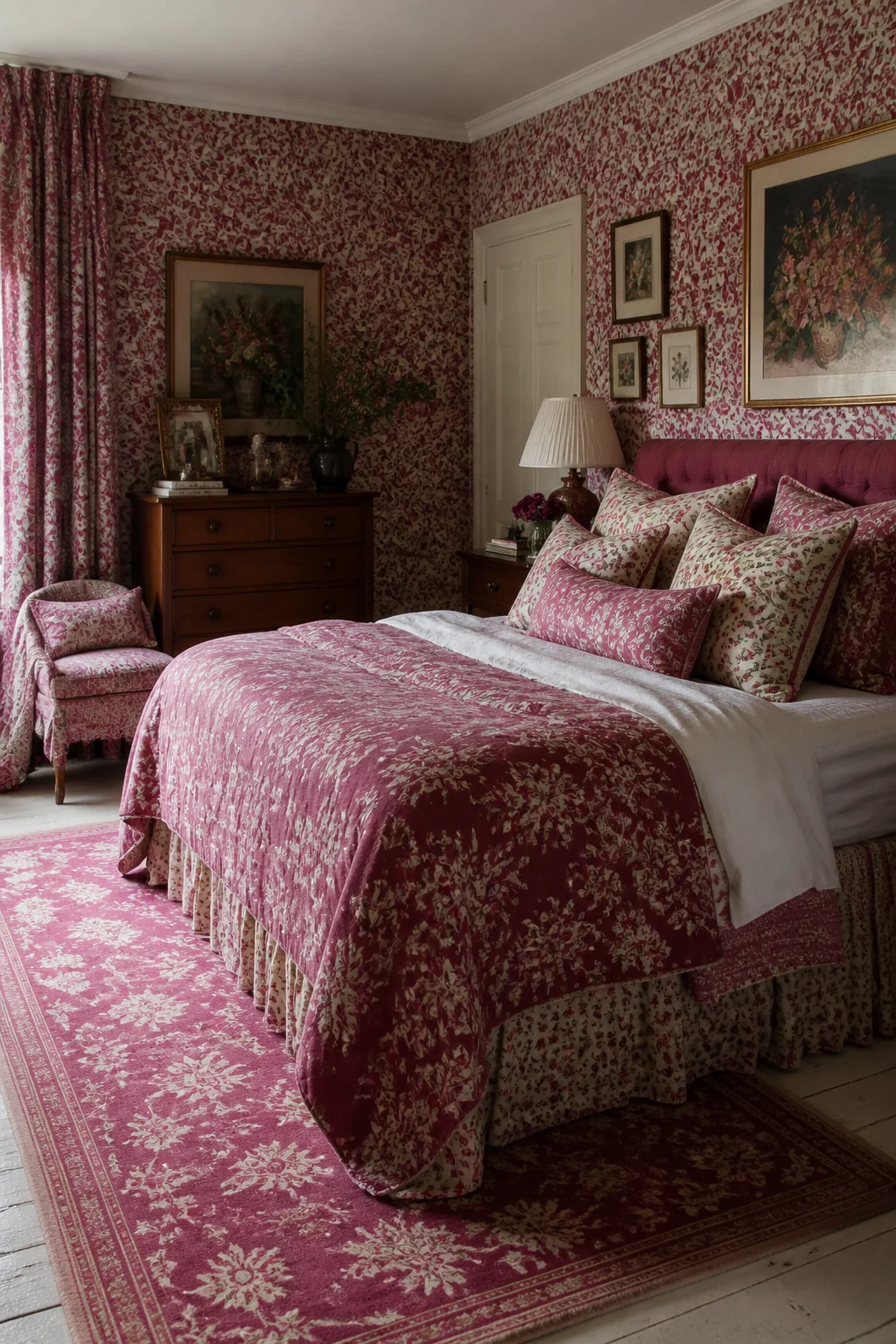
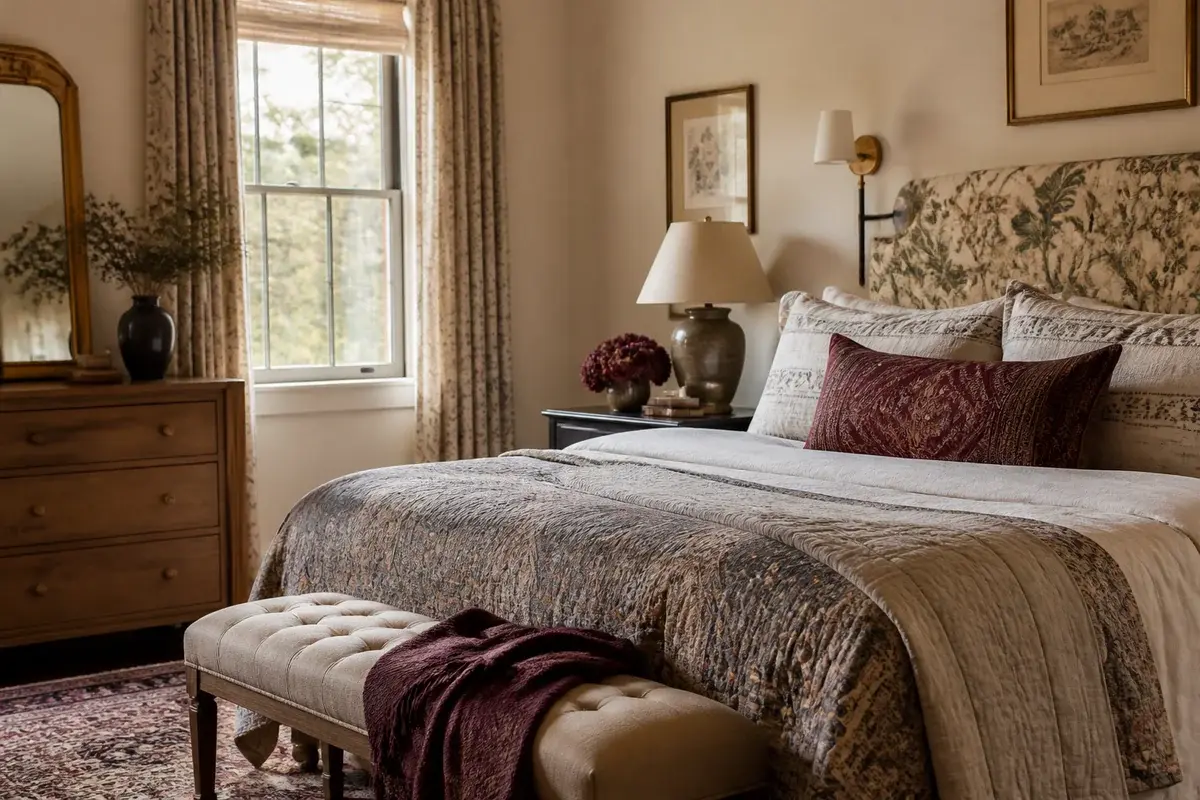
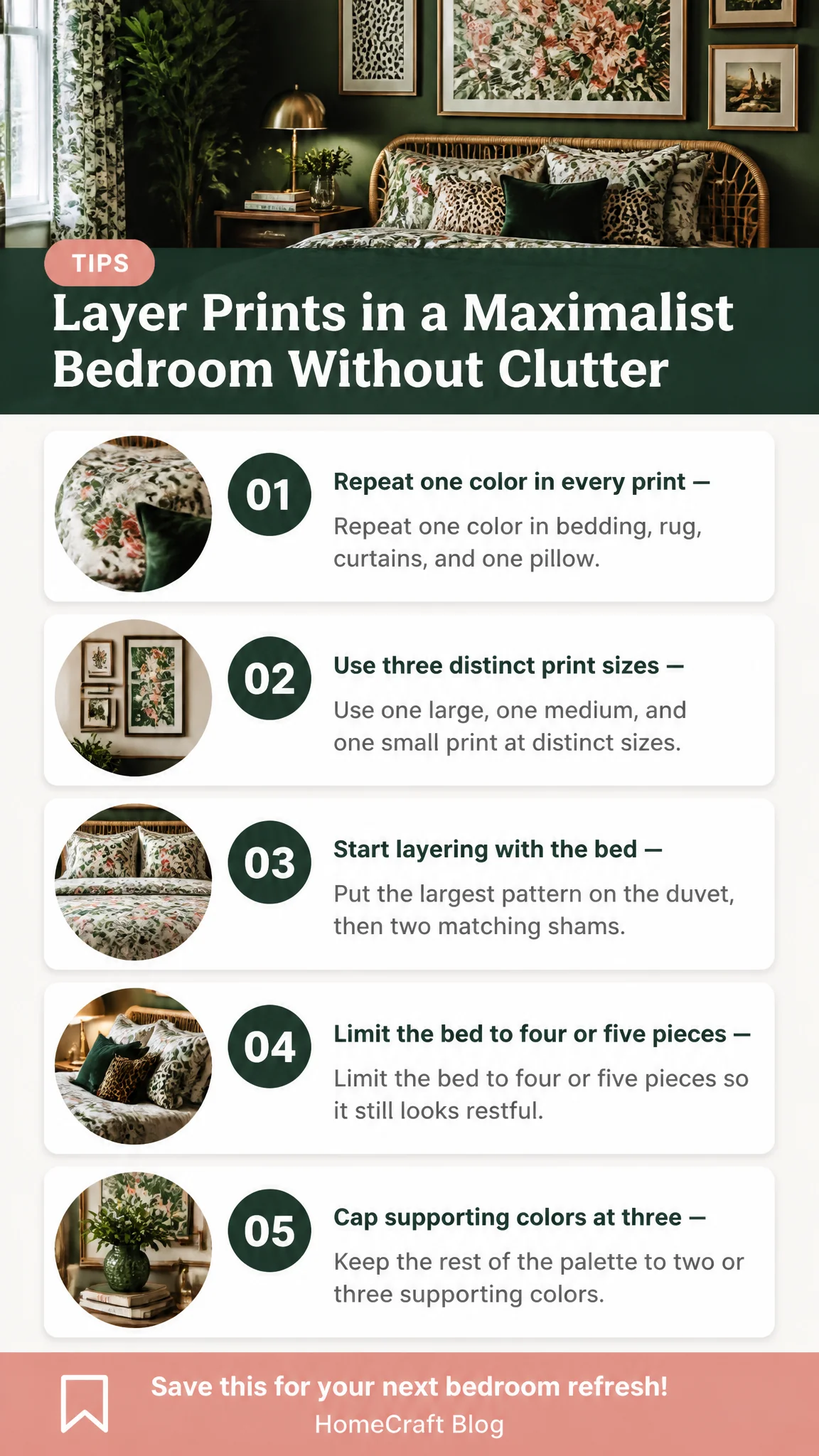
Choose a single color that appears in every pattern you put in the room. It can be a deep rust, a dusty blue, or a sage green, but it has to show up in the bedding, the rug, the curtains, and at least one pillow. When the colors don't repeat, a room full of prints reads as noise. When one color repeats, the eye has a place to rest even when the surfaces are busy.
Keep the rest of the palette to two or three supporting colors. A maximalist room with six or seven colors can work in a big living room, but in a small bedroom it tips into clutter fast.
Scale is what keeps prints from fighting
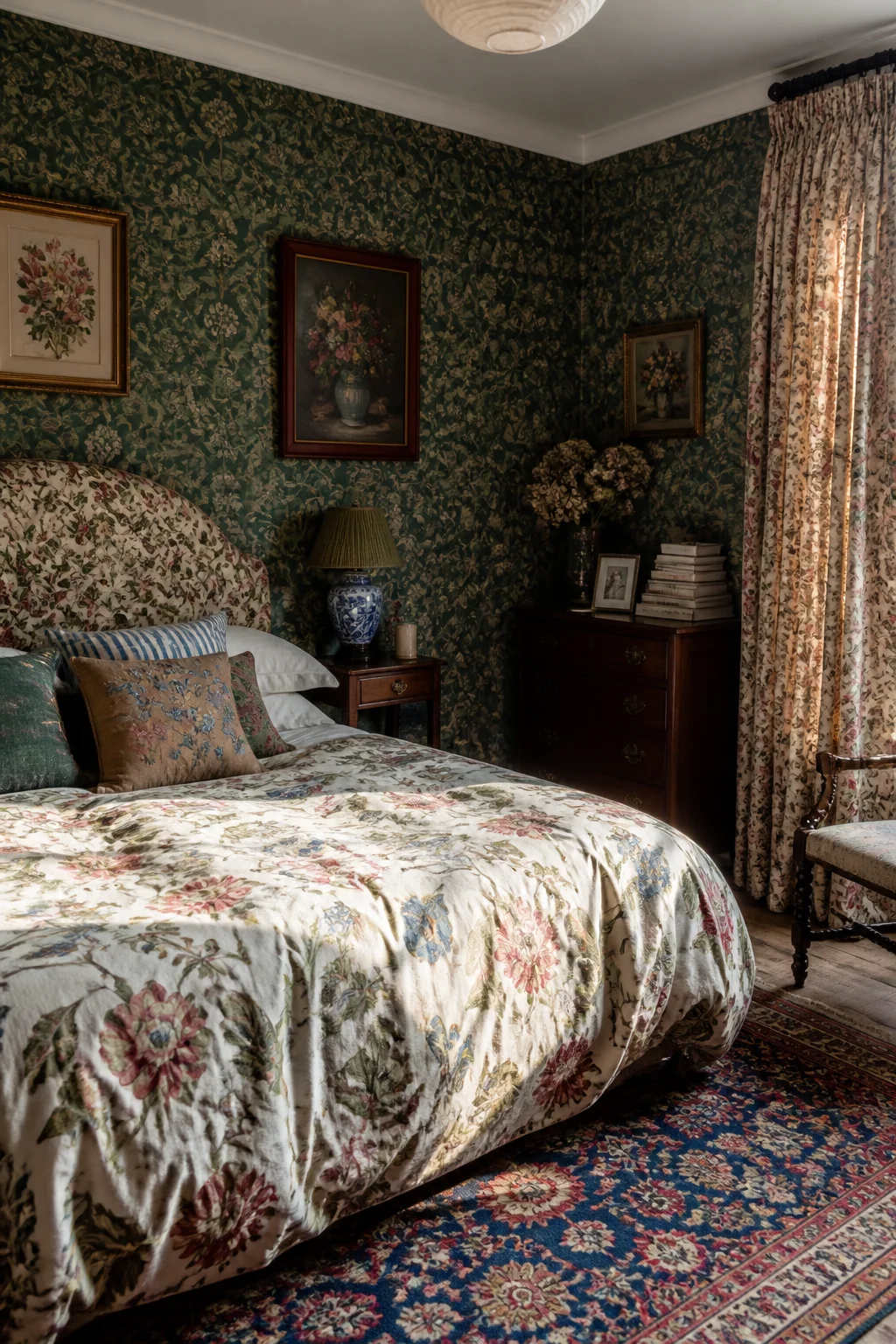
Scale is the single biggest reason layered patterns either sing or argue. Use one large print, one medium print, and one small print, and never let two of them sit at the same size. A large floral duvet cover, a medium stripe on the curtains, and a tight geometric on the pillows give you three distinct sizes that the eye can sort without effort. Most maximalist bedroom ideas that fall flat do so because of scale, not color.
Three medium-scale prints in one room cause the most trouble. Each one looks fine alone, but together they blur into a single vibrating surface. If two of your patterns feel like they're competing, check whether they're the same size before you change anything else.
Bedding is where the layering starts
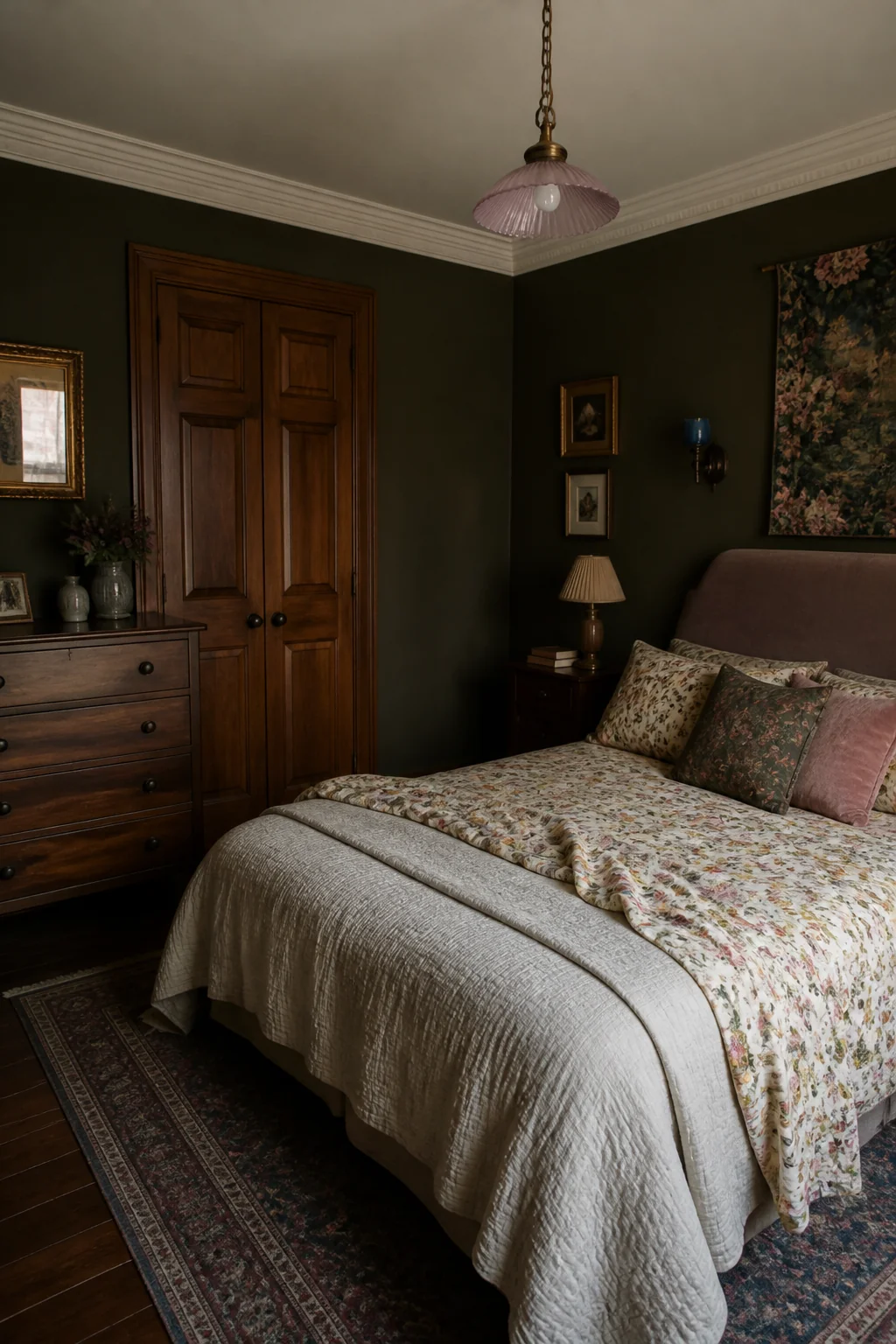
Start with the bed, because it takes up the most visual space in the room. Put the largest pattern here, usually a duvet cover or quilt. Add two standard shams in the same fabric or a close relative, then one lumbar or accent pillow in the medium or small print. The pillows are where most people overdo it, so go easy on them.
Keep the bed to about four or five pieces in total. More than that and the bed starts to look like a display rather than a place to sleep. A quilt folded across the foot of the bed in a third pattern is a good way to add a layer without adding a new surface to the room.
The rug decides whether the room reads as one room
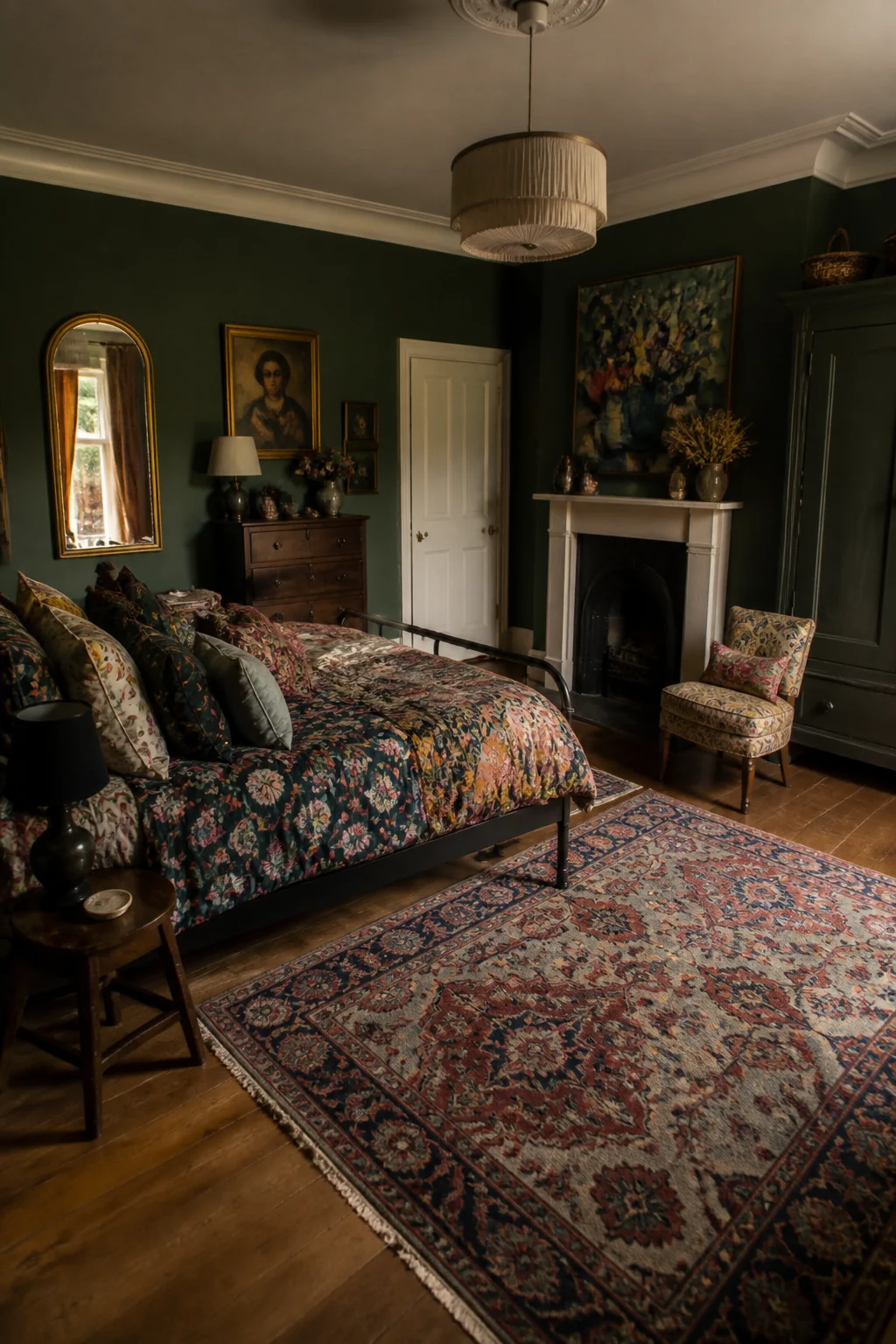
A rug is the largest flat surface in a small bedroom, so its size matters more than its pattern. For a queen bed in a 10 by 11 foot room, an 8 by 10 foot rug is the size we'd pick. It should extend about 18 to 24 inches beyond each side and the foot of the bed, so you step onto fabric when you get up in the morning.
A smaller rug, like a 5 by 7, floats in the middle of the floor and makes the room look like it's missing something. The pattern on the rug should be the medium or small print, never the largest one, or it will compete with the bedding. (A flat-weave wool or a low-pile synthetic in a patterned design is the easiest to keep clean in a bedroom.)
Check your door swing before you buy. If the door opens over the rug, the rug will get stepped on and dragged every time someone walks in. Leave at least 24 inches of clear floor between the bed and the nearest wall so you can walk around it without turning sideways.
Curtains and the rod frame the window
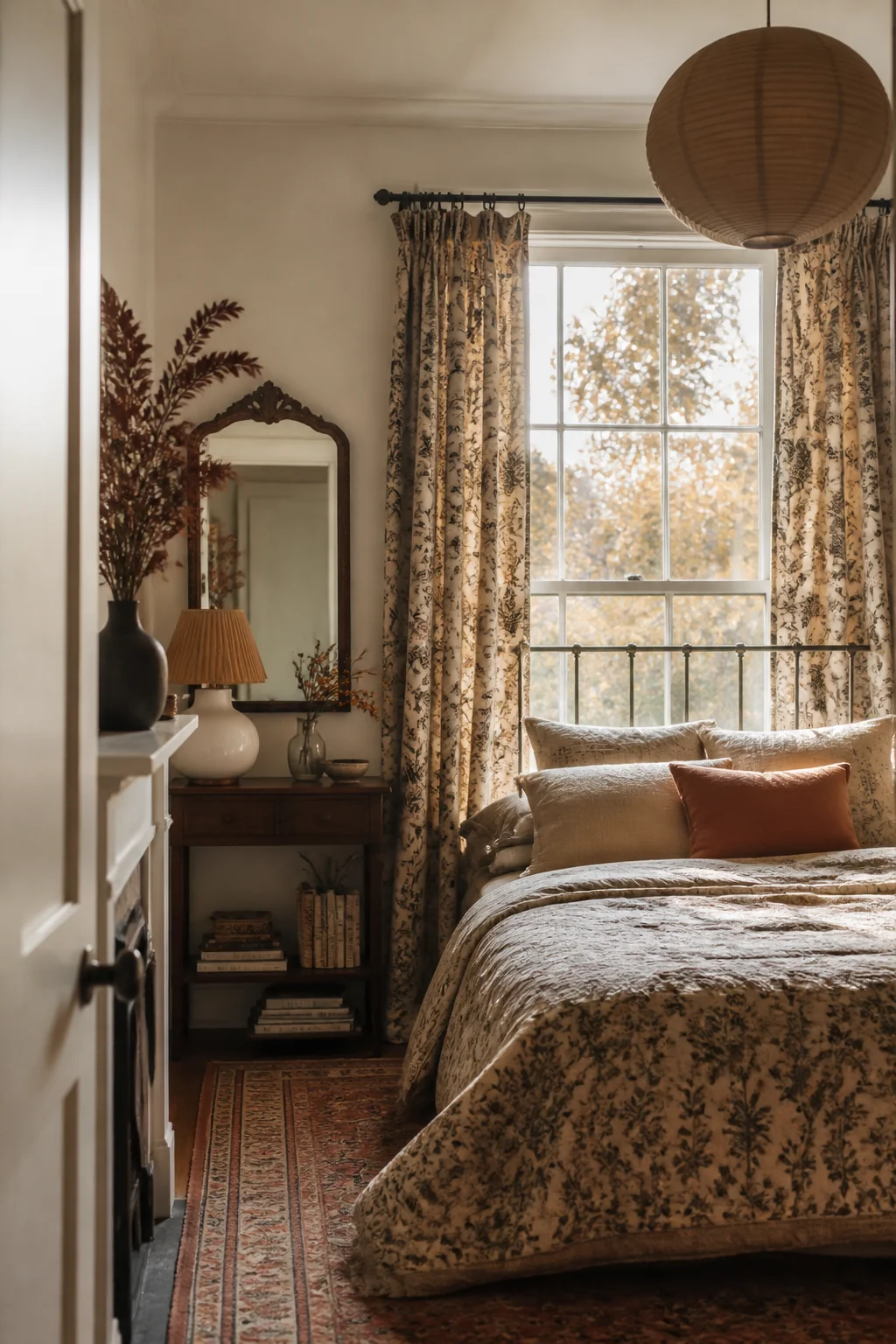
Curtains are the one place where a bold pattern can go almost anywhere in the room without crowding the bed. Mount the rod 4 to 6 inches above the top of the window frame, and extend it 6 to 12 inches past each side of the frame. (Tape a sheet of paper to the wall at that height first. It looks wrong until you see it.) That makes the window look bigger and lets the fabric fall in full folds instead of being squeezed against the glass.
Hang the curtains to the floor or just above it. Curtains that stop well above the sill make a small room look unfinished. If your curtains are the largest pattern, the bedding should drop down to a medium print so the window doesn't overpower the bed.
For more on window options in a bedroom, see our bedroom window treatment ideas.
What to hang above the bed without drilling
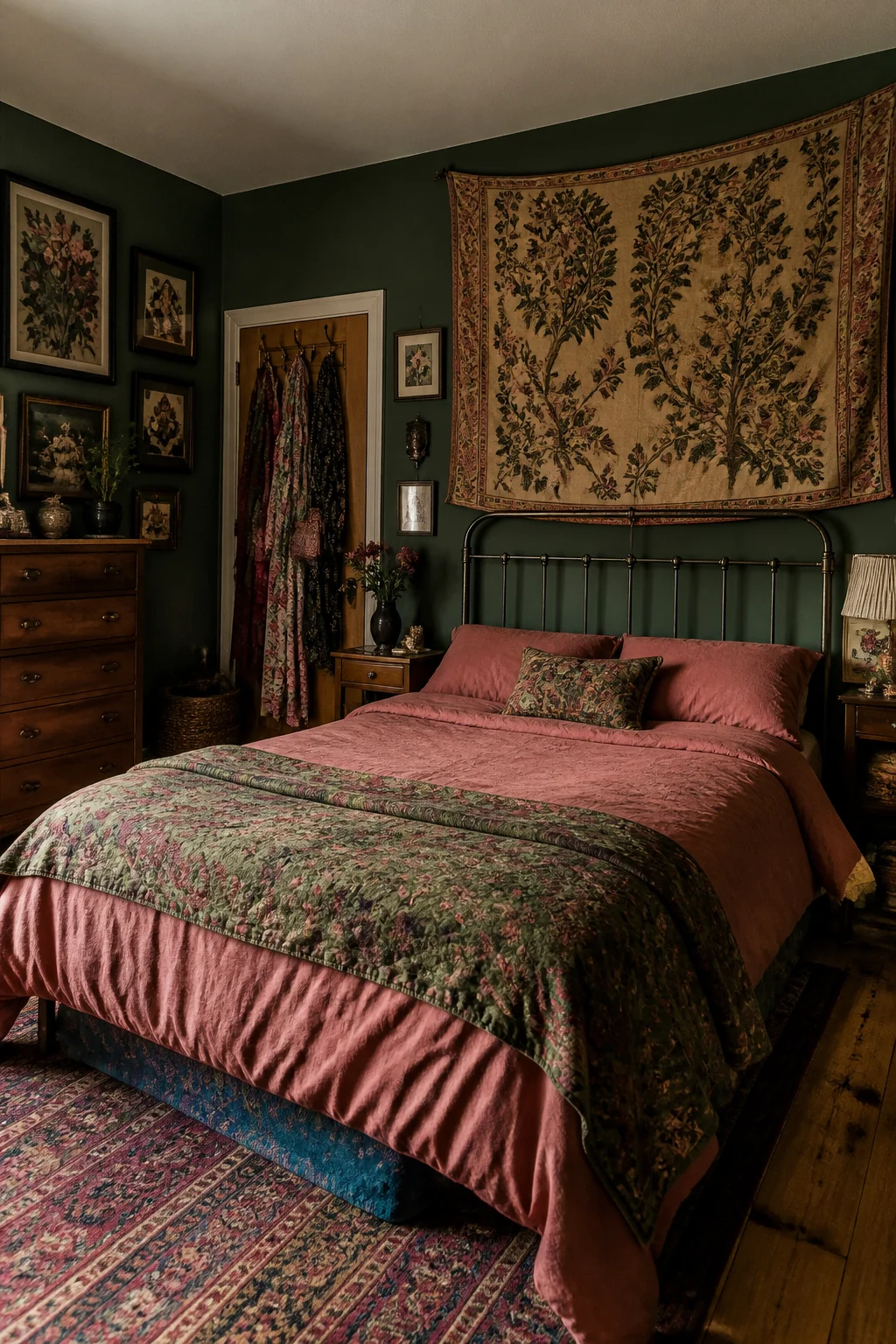
Art over a bed is where a rental bedroom usually runs out of options. You can lean a large framed piece on the floor or on a dresser, which looks deliberate in a maximalist room. If you want something hung, use a picture ledge or a set of removable hooks rated above the weight of the frame. Anything heavy, like a mirror or a loaded shelf, needs studs or anchors rated well above its weight, and anything over the bed should be secured against falling.
Keep the wall above the bed to one or two pieces. A pattern-heavy room already has a lot happening at the level of the bed, so a wall of small frames adds one more layer than the eye can read.
Where it goes wrong: too many patterned surfaces
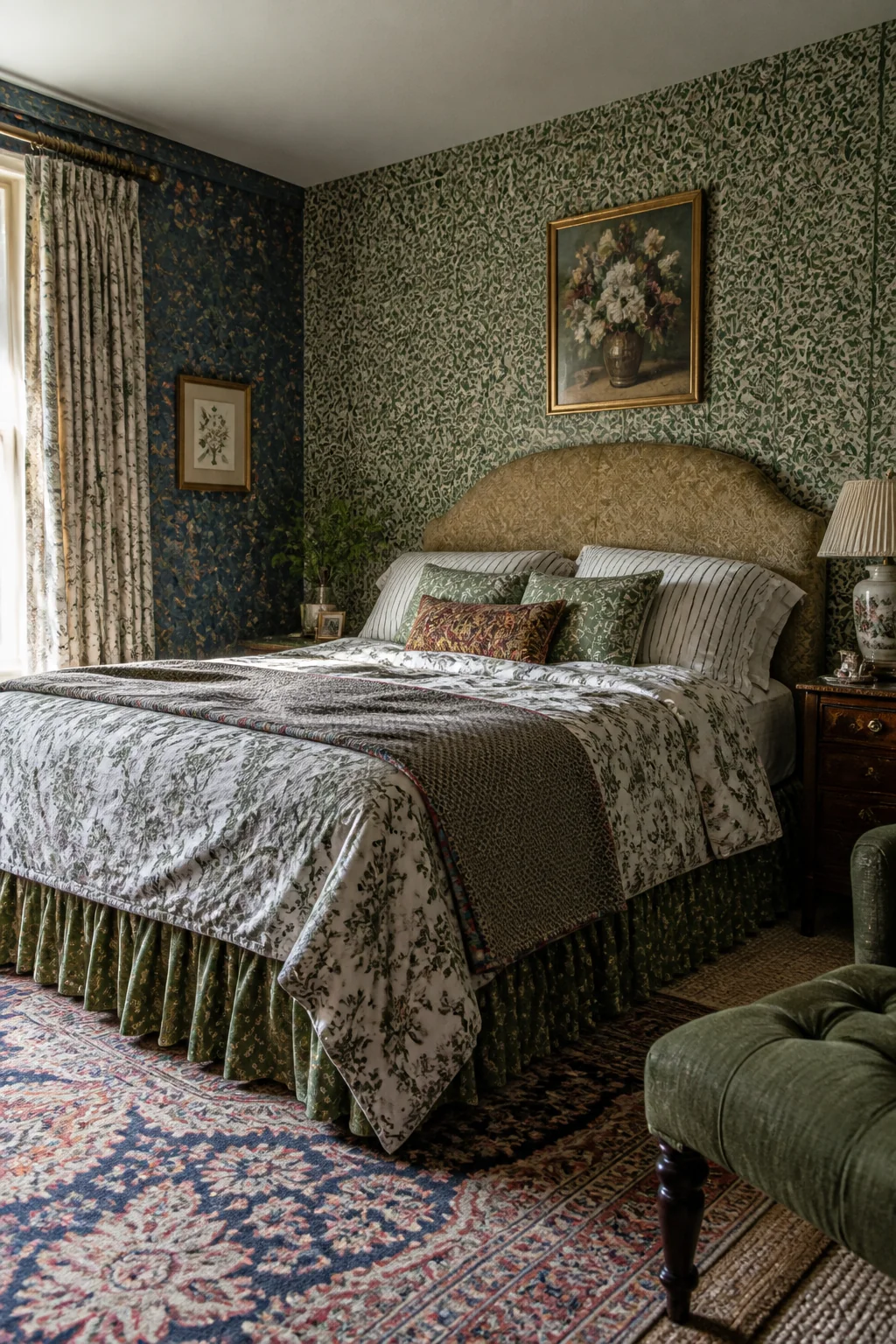
The most common way a maximalist bedroom turns cluttered is when every surface carries a pattern. The bedding is patterned, the rug is patterned, the curtains are patterned, and then the nightstand lamp shade, the throw on the chair, and the tray on the dresser are patterned too. That's six or seven prints in a space where the eye has nowhere to land.
Give the nightstands and the dresser a solid base, such as a plain ceramic lamp base, a wood tray, or a linen-colored shade. Pick one lamp shade with pattern, not both. Solid surfaces let the printed ones stand out.
Ask yourself which pattern you'd notice first when you walk in. If the answer is the bed, the curtains, and the rug at once, pull one of them back to a solid or a quieter print.
The trade-off worth accepting
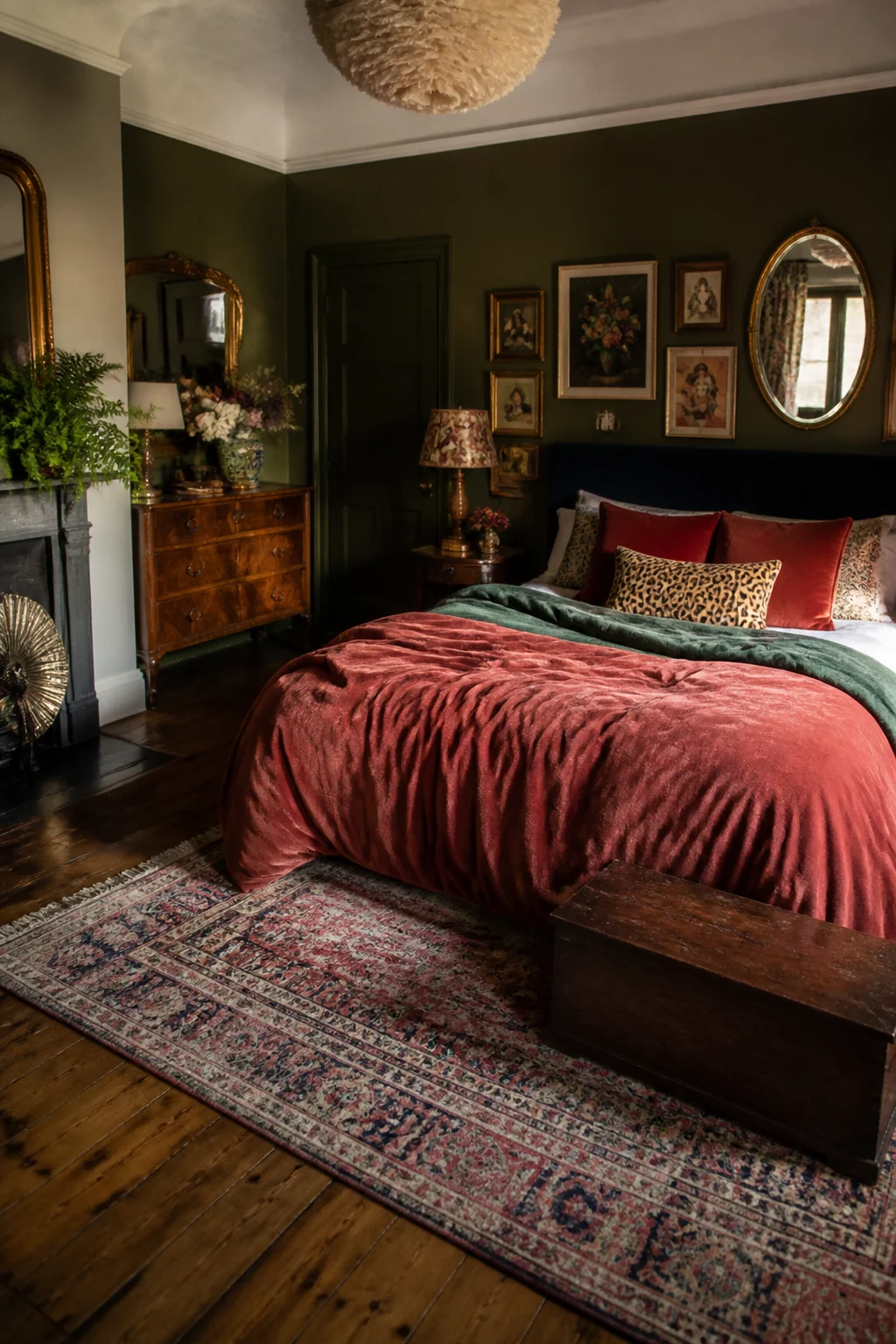
Maximalist bedroom ideas like these ask you to give up some calm. You'll see more pattern when you wake up, more color when you walk in, and more fabric to clean. The floor will look busier than a plain neutral room, and the bed will take up more of your attention than it does when it's dressed in white linen.
Save this for your next project
That's the trade. In return you get a room that feels like it was chosen rather than assembled, and that's what the look is for. The repeated color holds the patterns together, the scale keeps them apart, and the rug and curtains do the work that wall art can't do in a rental. If you want to see how other rooms handle pattern and furniture together, our traditional bedroom furniture ideas cover the other side of the same question.