How to Decorate a Tiny Bedroom Without Making It Feel Cramped
Tiny bedroom decorating ideas that make small spaces feel bigger: rug sizing, sconce heights, mirror placement, and the clearances your furniture needs.
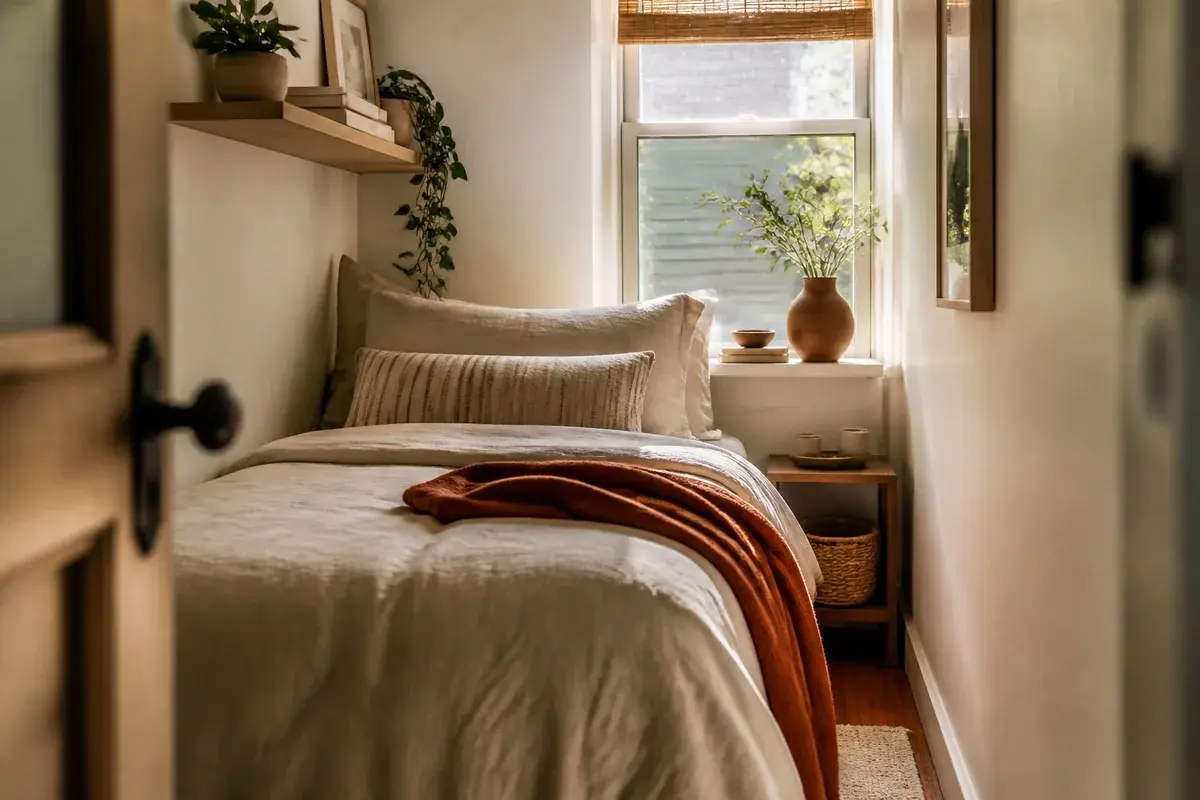
A tiny bedroom is usually somewhere around 9x11 feet, and a queen bed swallows most of that before anything else goes in. The frame alone is 60 by 80 inches. Add a nightstand and a dresser and what's left is walking lanes.
The good news is that almost nothing on the fix list is expensive or permanent. Most of it is placement: how high things hang, how far apart the light sources sit, how much bare floor you can see from the doorway. Here's what works when the room is genuinely small, and just as usefully, where each idea stops working.
Vertical Space Is Your Secret Weapon
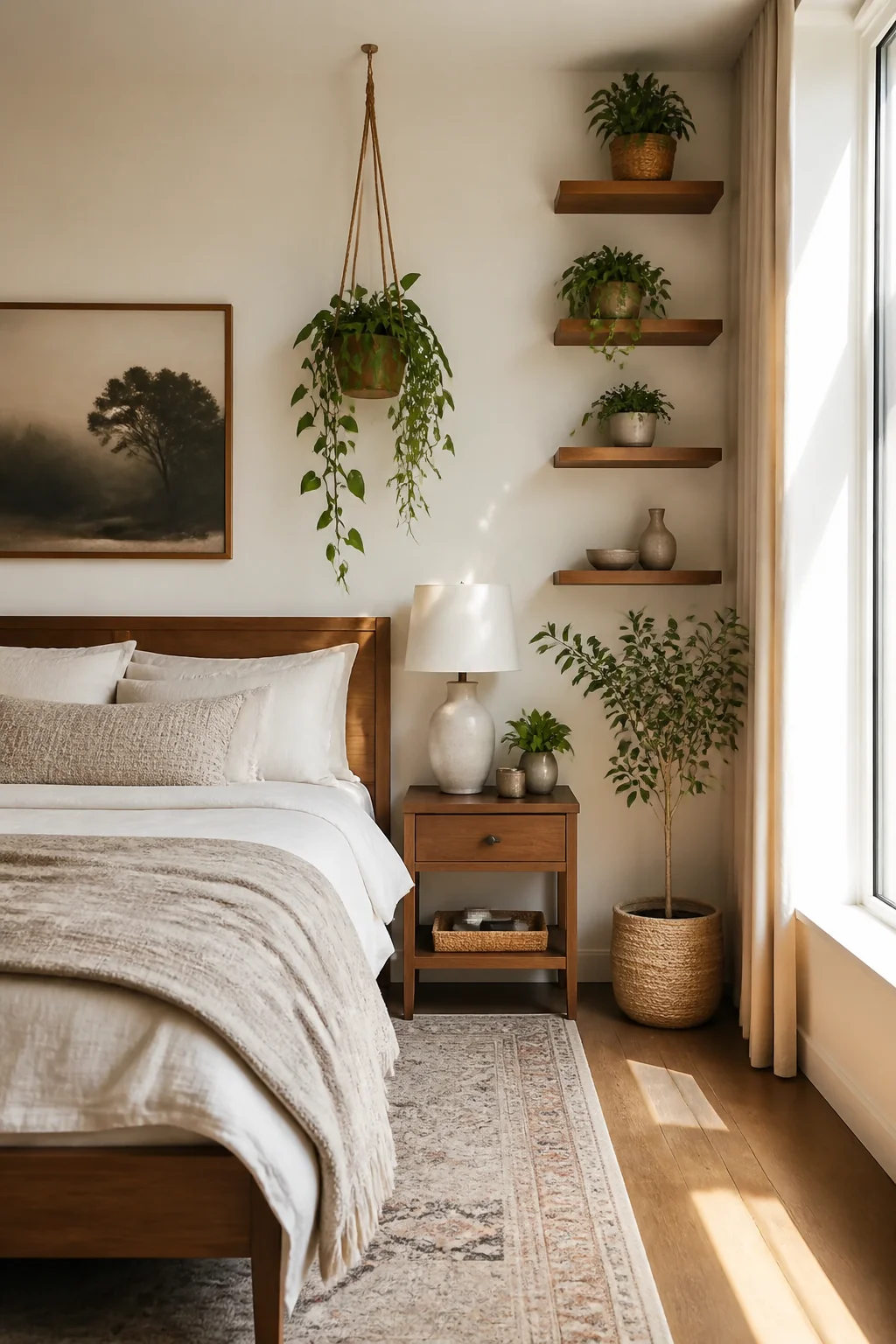
The usual instinct in a small room is to keep everything low and minimal, on the theory that a low sightline reads as roomy. In a 9x11 bedroom it tends to backfire. Low furniture eats the floor you need for walking and leaves four blank walls doing nothing at all.
Start above the nightstand. A floating shelf hung 18 to 24 inches above the surface clears a table lamp and still puts a book within reach from bed. Higher up, a second shelf sitting 12 to 14 inches below the ceiling becomes real storage for things you touch twice a year: spare bedding, off-season sweaters in a lidded box. Wall-mounted lamps free the nightstand top completely, which counts for a lot when that nightstand is only 16 inches wide.
Tall narrow bookcases beat squat dressers for the same reason. A unit 12 inches deep and 72 inches tall holds roughly what a 36-inch dresser does while handing back a foot of floor, and painted MDF versions run $60 to $150. The catch is tipping. Anything over about 4 feet tall needs an anti-tip strap screwed into a stud, and in a room this size you'll brush past it every single day.
The Right Rug Anchors Everything
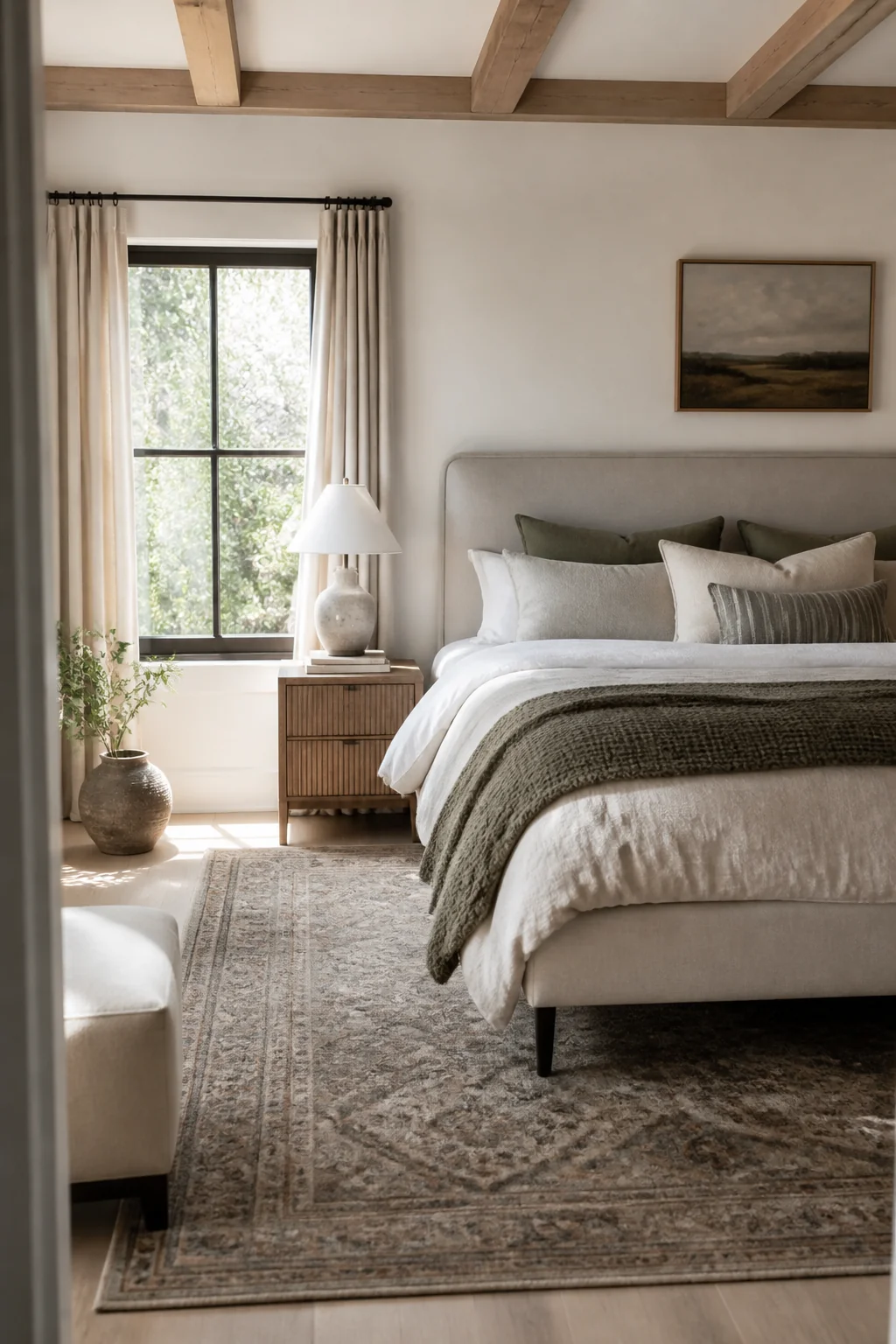
Your rug should define the space, not disappear into it. The common miss is a 5x7 shoved halfway under a queen, which ends up reading as an island stranded in the middle of the floor and chops the room into unrelated pieces.
The sizing rule is easy to remember. Run the rug under the bottom two thirds of the bed so it emerges with 18 to 24 inches showing along both sides and at the foot. For a queen at 60 by 80 inches, that means an 8x10. For a full or a twin pushed into a corner, a 6x9 laid crosswise usually covers it. Measure the walkable gap first: with less than 20 inches between the bed and the opposite wall, drop a size rather than buckling a rug up against the baseboard.
Budget $90 to $200 for an 8x10 in low-pile synthetic, more for wool. Pile height is not a detail here. Anything over about half an inch thick will jam a door that swings inward, and in a tiny bedroom the door almost always does. Cream, oatmeal, soft gray, or undyed jute bounces light back; dark rugs pull the floor visually downward.
Less Furniture Means More Breathing Room
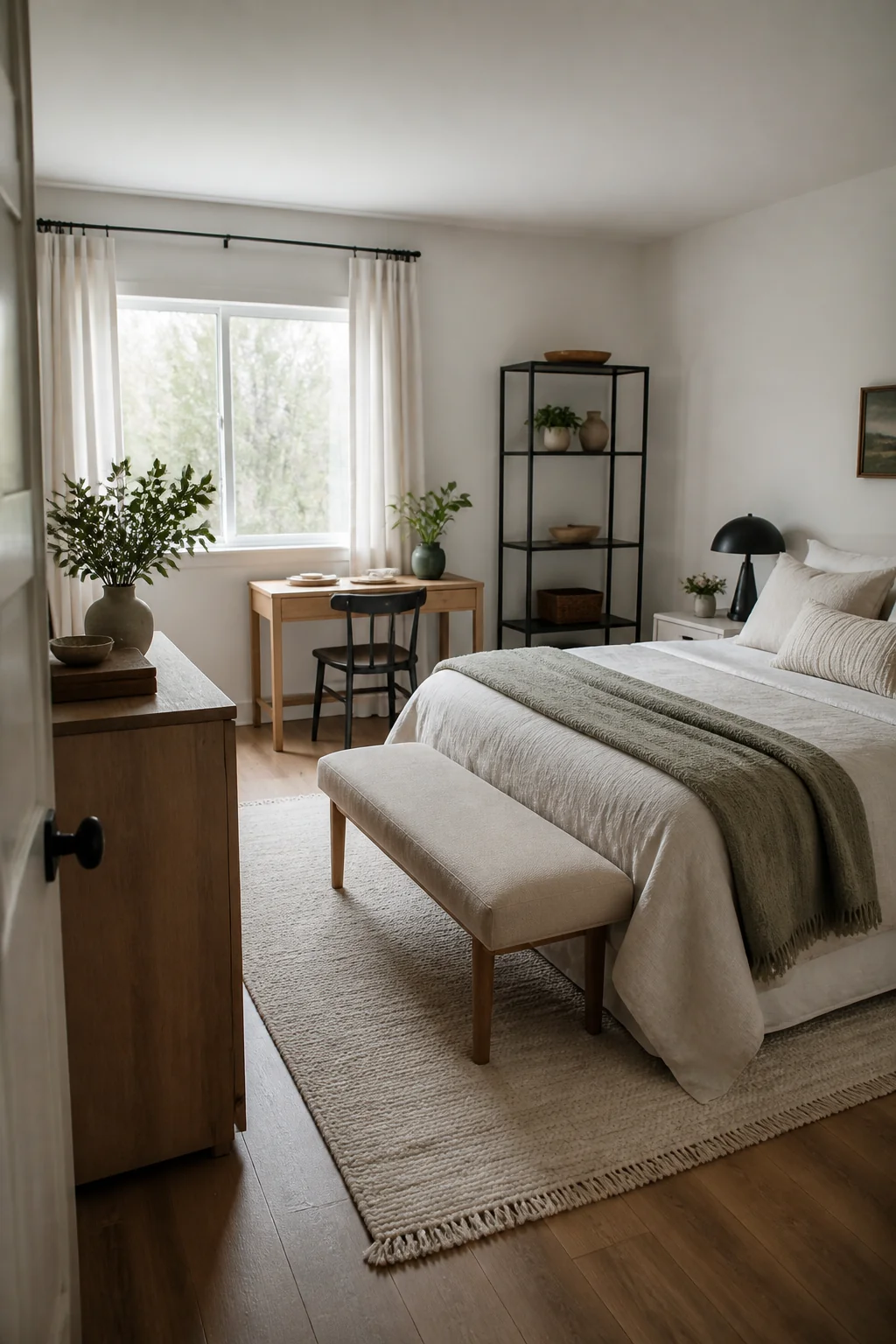
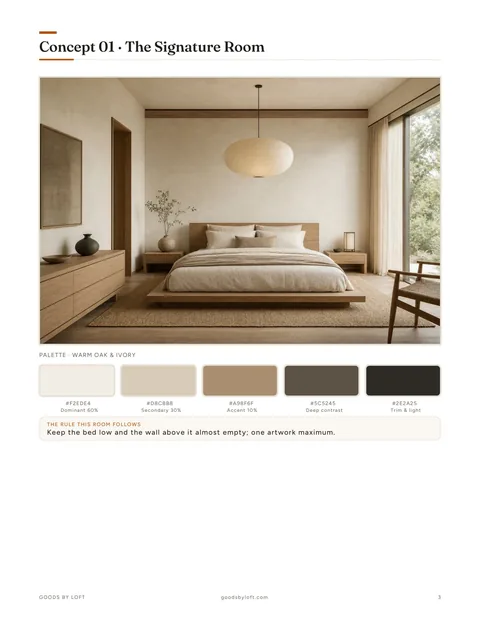
You don't need a dresser, two nightstands, a desk, and a storage bench crammed into one small room. Furniture you have to edge sideways around costs you more comfort than it ever returns in storage.
Clearances tell you what genuinely fits. Leave at least 24 inches to walk along one side of the bed, and closer to 30 on the side you actually get out on. A dresser needs its drawer depth plus roughly 12 inches of standing room in front, so a 20-inch drawer wants about 32 inches of clear floor to be usable. Do that arithmetic in the store, not after delivery.
When the numbers refuse to work, cut back to three pieces: bed, one nightstand, one dresser. A single nightstand on the side you enter from looks deliberate rather than lopsided, and it returns close to two feet of floor.
Then ask each survivor to do two jobs. A storage ottoman at the foot of the bed is a seat and a blanket box. A bed frame with under-drawers holds about what a small dresser holds, which can retire the dresser entirely. Those drawers usually need 30 inches of pull-out room, so check the side you'd be opening them on before you commit.
Layered Lighting Beats One Bright Ceiling Fixture
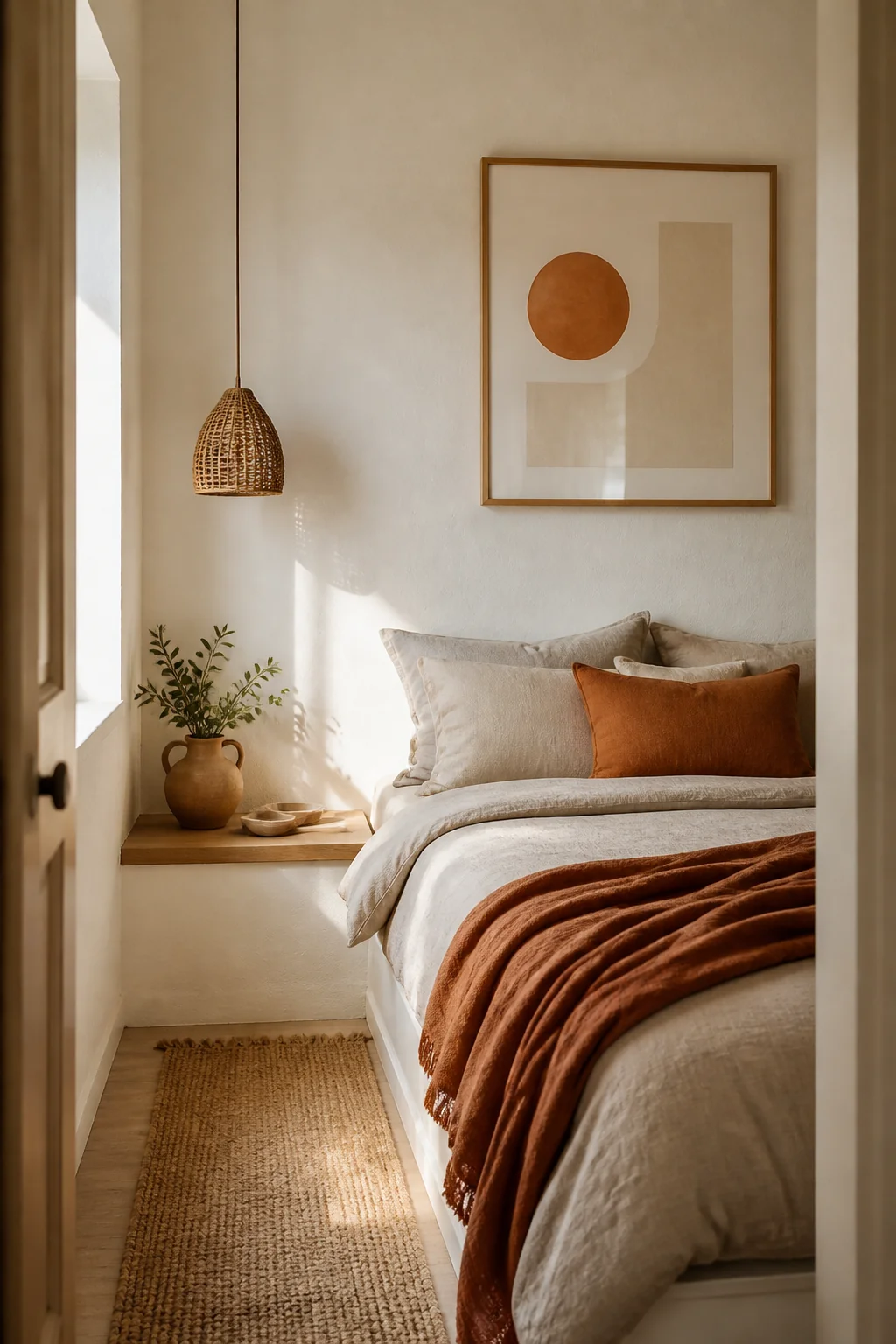
A single bright fixture overhead is what makes a small bedroom feel like a waiting room. One source directly above throws hard shadows down the walls, and hard shadows draw the corners in, so the room reads as a box.
Spread the light out instead. Three modest sources beat one strong one: a dimmable overhead for cleaning and finding socks, a sconce on each side of the bed, and a low lamp you can read by. Sconces sit best with the bottom of the shade 30 to 36 inches above the mattress, roughly seated shoulder height, so the light lands on your book instead of your eyes. Plug-in versions run about $30 each and need no electrician, which matters if you rent.
Bulbs do as much work as fixtures. Stay in the 2700K to 3000K warm white range; the 4000K and up bulbs sold as daylight are what feel clinical. Around 450 to 800 lumens per bedside source is plenty for reading without glare.
Daylight is the free layer. Swap heavy curtains for sheer or light-filtering panels, and when you pick the rod, size it to the wall rather than to the window: 4 to 6 inches of height above the frame, and enough length to run past the opening on both sides so the gathered fabric lands on plaster instead of over the pane. In a room this small that choice buys back a few inches of usable daylight, which is worth considerably more than the ten dollars the longer rod costs.
Where Color Belongs in a Small Bedroom
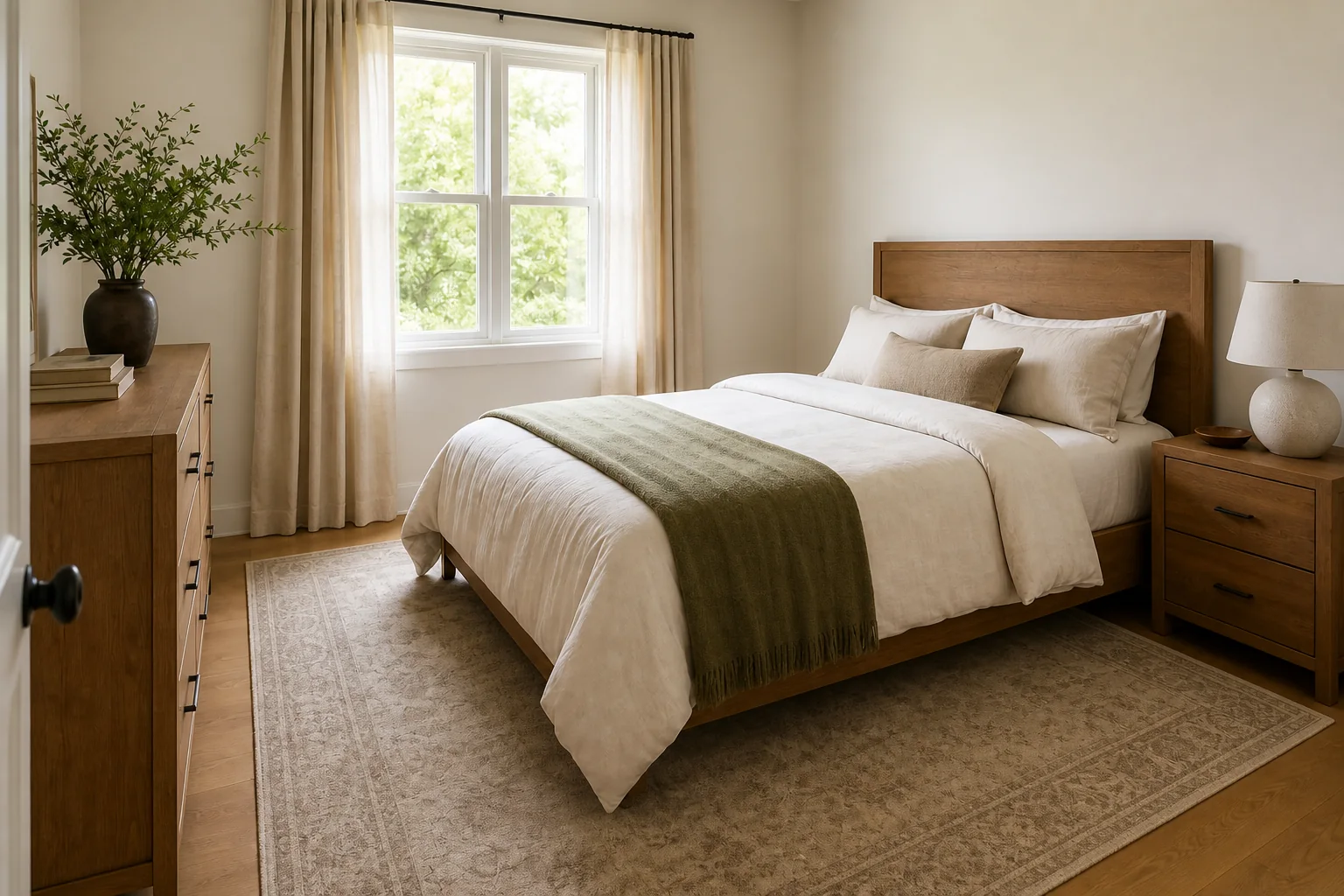
Wall color decides where the edge of the room appears to sit. A soft warm white with just the tiniest hint of gray sounds dull on a paint chip and reads as calm across four walls, because a pale surface returns most of the light that hits it rather than soaking it up. That's the whole mechanism. Less absorbed light, less visible boundary.
If white feels cold to you, pale sage, soft blue, and warm cream behave the same way. Turn the chip over and check the light reflectance value; anything in the 70s or above is doing the job. Finish matters too. Matte hides the wavy plaster you get in older buildings but scuffs wherever a bed frame touches it, so eggshell is the safer call in a room where furniture sits flush against the wall.
Put the bold color into things you can swap: a quilt, a pillow cover, a print above the dresser. Repainting a room this size is one gallon and an afternoon, roughly $45 to $75, but you'll still redo the pillows far more often than the walls.
An accent wall behind the bed adds depth as long as the other three stay light. Skip it on the wall you face walking in, since that one closes the room toward you.
Mirrors Aren't Just Decorative
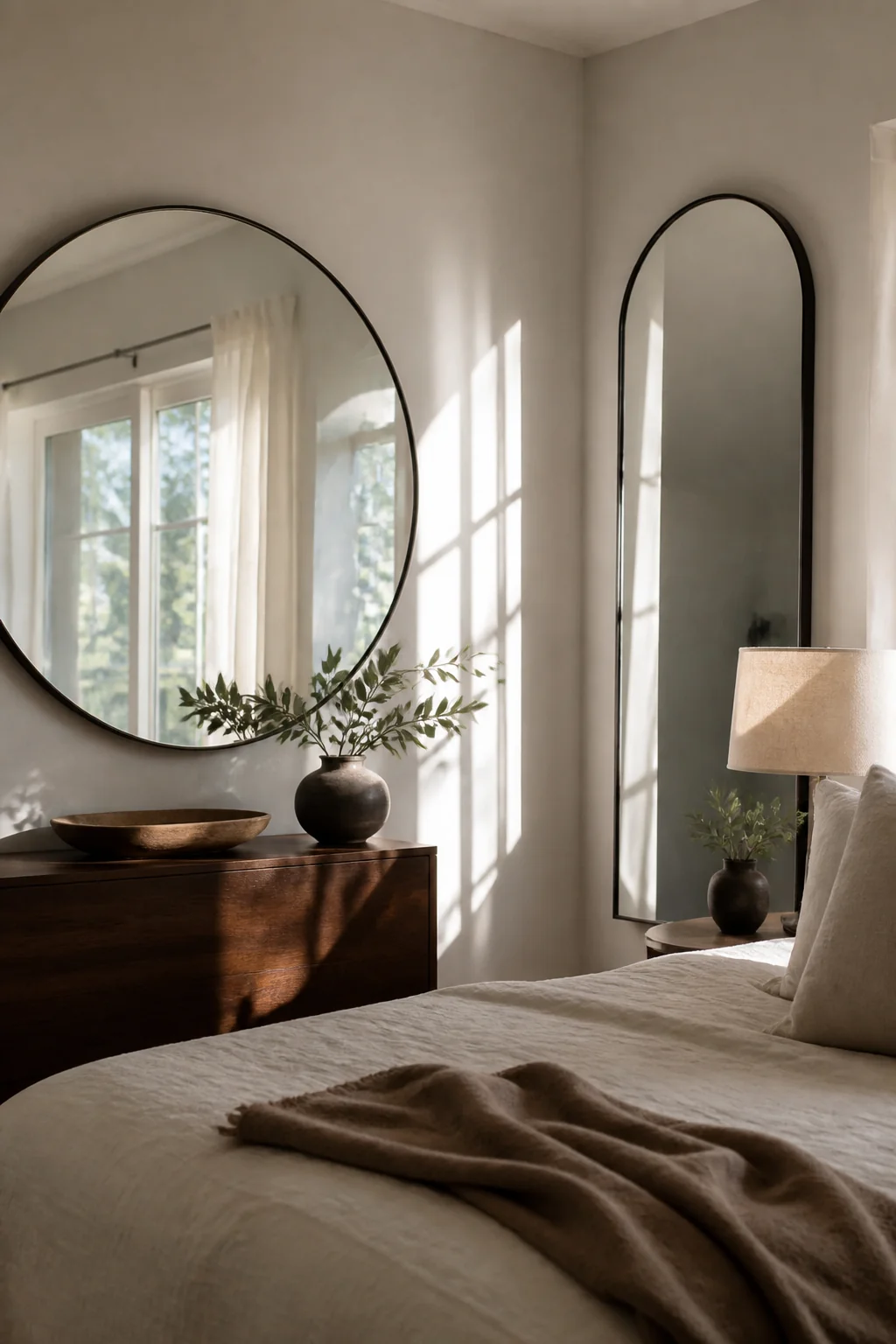
A mirror doesn't add light, it redirects it, and in a small room that distinction is worth holding onto. Hang one on the wall facing your window and the daylight that would have died against blank plaster gets thrown back across the floor instead. Put one on the wall opposite the bed and you pick up apparent depth, because your eye reads the reflected wall as more room behind it.
Placement is where this goes sideways. A mirror shows you whatever it faces, so aim it at the window, a doorway, or a clear stretch of wall, never at a loaded dresser top or the chair where laundry lives. It will double that just as faithfully.
The centering height for anything you actually look into, 57 to 60 inches up, is what decides which mirror to bring home. Measure the clear wall above your dresser first, and if the piece you like can't sit centered on that line without crowding the ceiling, buy a full-length one instead and lean it. A slight angle against the wall reads softer than hanging flat, but strap the top edge to a stud so it can't walk forward on a rug.
Simple frames feel less busy than ornate ones when the wall is small. A 24x36-inch mirror runs $30 to $80, and a leaning 30x70 floor mirror $90 to $180. Both cost less than repainting, and the difference shows the same afternoon you hang them.
Declutter Ruthlessly and Keep It That Way
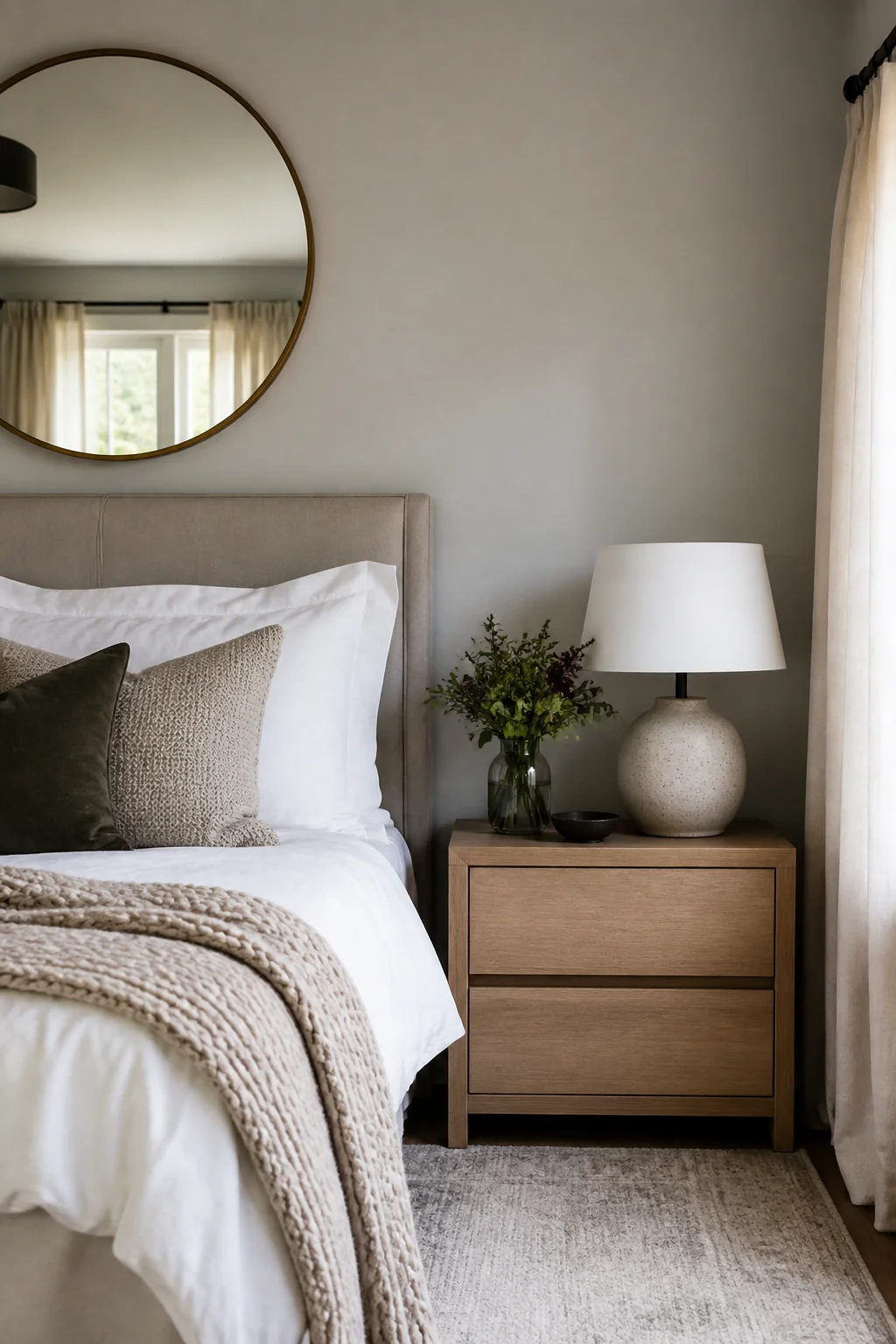
This isn't decoration advice, it's maintenance. A tiny bedroom has no slack in it. In a 9x11 room your flat surfaces add up to maybe 6 square feet total: one nightstand top, one dresser top, a windowsill. All of it is visible from the doorway at once, which is why the same pile that vanishes in a big room reads as chaos here.
Work surface by surface rather than by category, since categories send you rummaging through the closet and you lose the afternoon. Clear the nightstand down to bare wood, then put back only what you touch at night: a lamp, a glass, one book. Do the dresser next and cap it at three objects. Anything still homeless goes into a box under the bed for thirty days. If you haven't opened that box by day thirty, it has answered the question for you.
Then hold the line with one in, one out. New throw pillow, old throw pillow leaves. It sounds fussy for a room this size, but small rooms can't absorb slow accumulation the way large ones do, and the alternative is repeating the whole sweep every spring.
Keep this guide handy
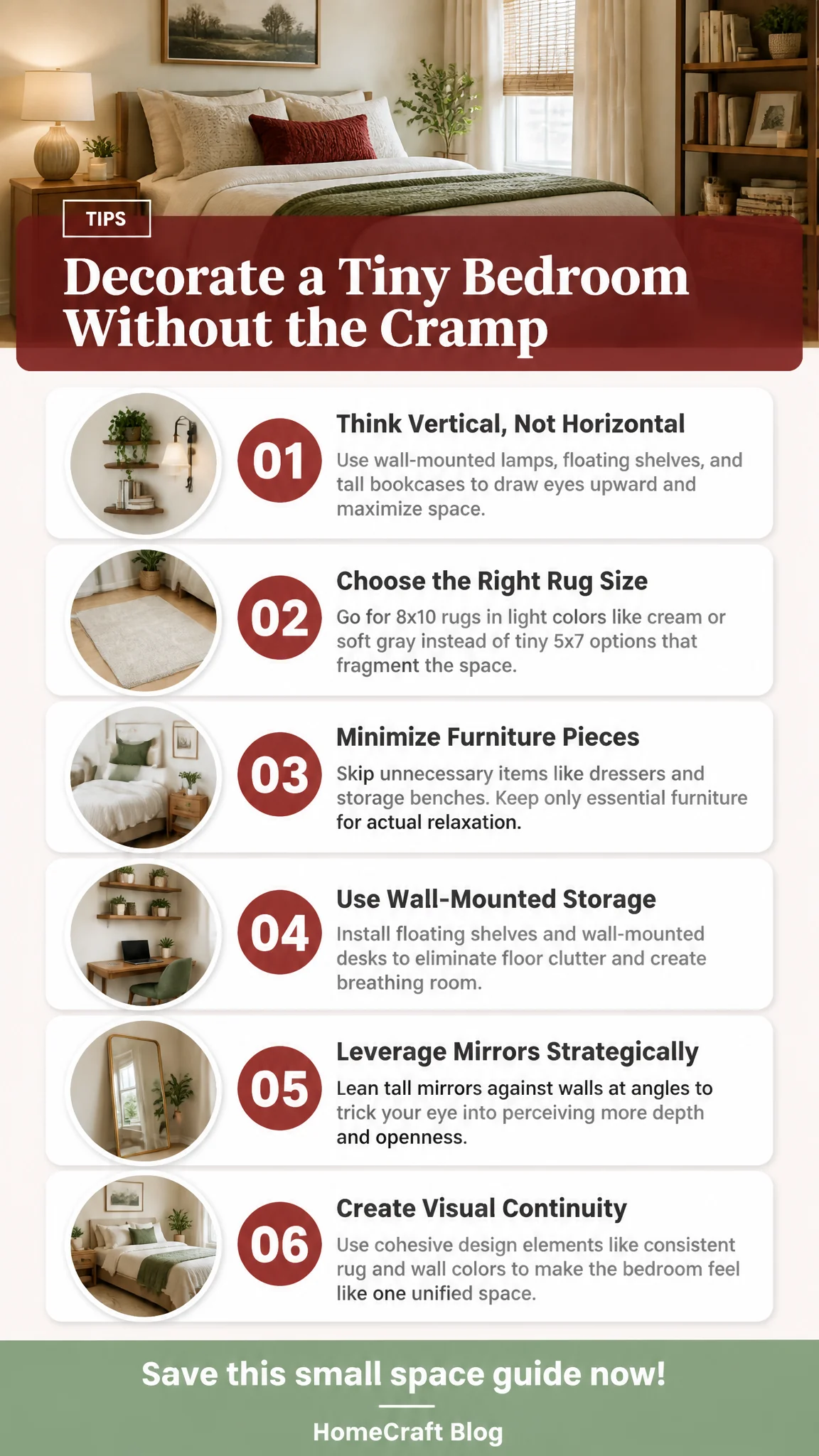
Of everything here, lighting is the cheapest lever and the one you notice at ten at night. Two plug-in sconces and a pair of warm 2700K bulbs come in under $70 and don't require moving a single piece of furniture. The rug, the paint, and the ruthlessly empty nightstand can wait for a weekend you have to spare.
Ideas fade by Friday. A plan finishes the room.
You just read a full guide to your bedroom. Saving ideas will not change it; a plan will. The Home Decor Collection is every planning tool we make, for every room in the house, in one download, so the after photos below stop being other people's rooms.
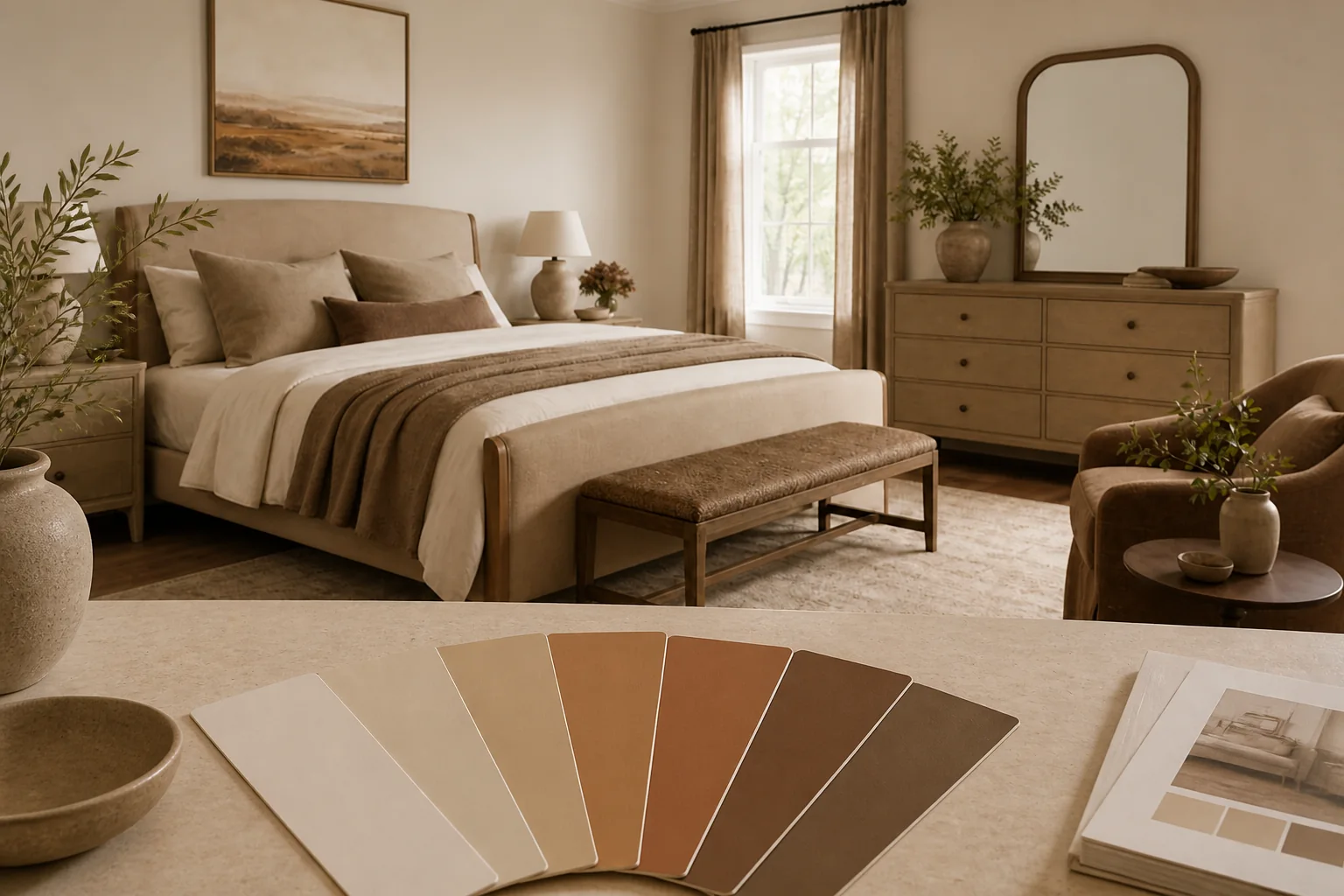
- Six room Style Kits, each with layout, palette and shopping list$114
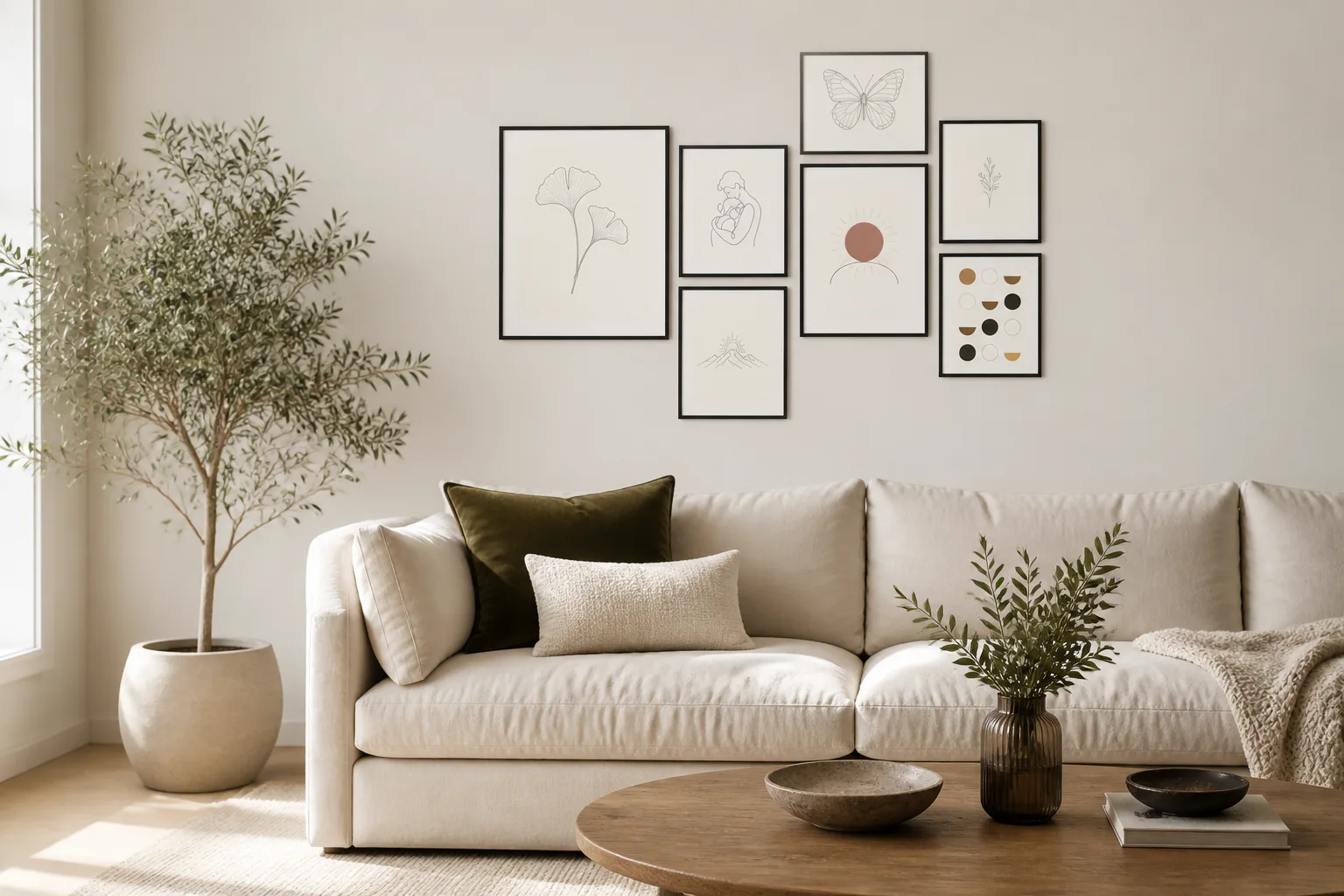
- The Gallery Wall Studio: 200 prints + 15 measured layouts$29
- The Room Makeover System: 40 solved room layouts + workbook$29
- The Color Palette Handbook: 60 palettes shown in real rooms$19
- The Whole-Home Reset: 40 printable organizing checklists$19
- The Decorator's Cheat Sheets: the 40 measurements that matter$9
- All eleven products, bought separately
$219$97
A single hour with an interior designer costs more than the entire Collection, and this one keeps answering for every room you will ever decorate. Free updates included as the products grow. And if it is not for you, the 14 day money back promise means you simply get a refund.