7 Entryway Decor Ideas That Hold Up to Daily Use (Plus What to Skip)
Seven entryway decor ideas with real measurements and prices, plus the pieces worth skipping. Build a welcoming entrance without the clutter.
This post contains affiliate links. As an Amazon Associate I earn from qualifying purchases. If you buy through our links, we may earn a commission at no extra cost to you.
An entryway is easy to write off as a hallway, a strip of floor between the front door and the rooms you care about. It's also the first thing a guest sees and the last thing you look at on your way out, and when there's nowhere to hang a coat, the coat ends up on the floor.
What follows are the seven pieces that hold up to daily traffic, with the measurements and prices you'll want before you buy anything, plus the ones that photograph beautifully and fall apart within a month.
A Real Bench (Not a Decorative One)
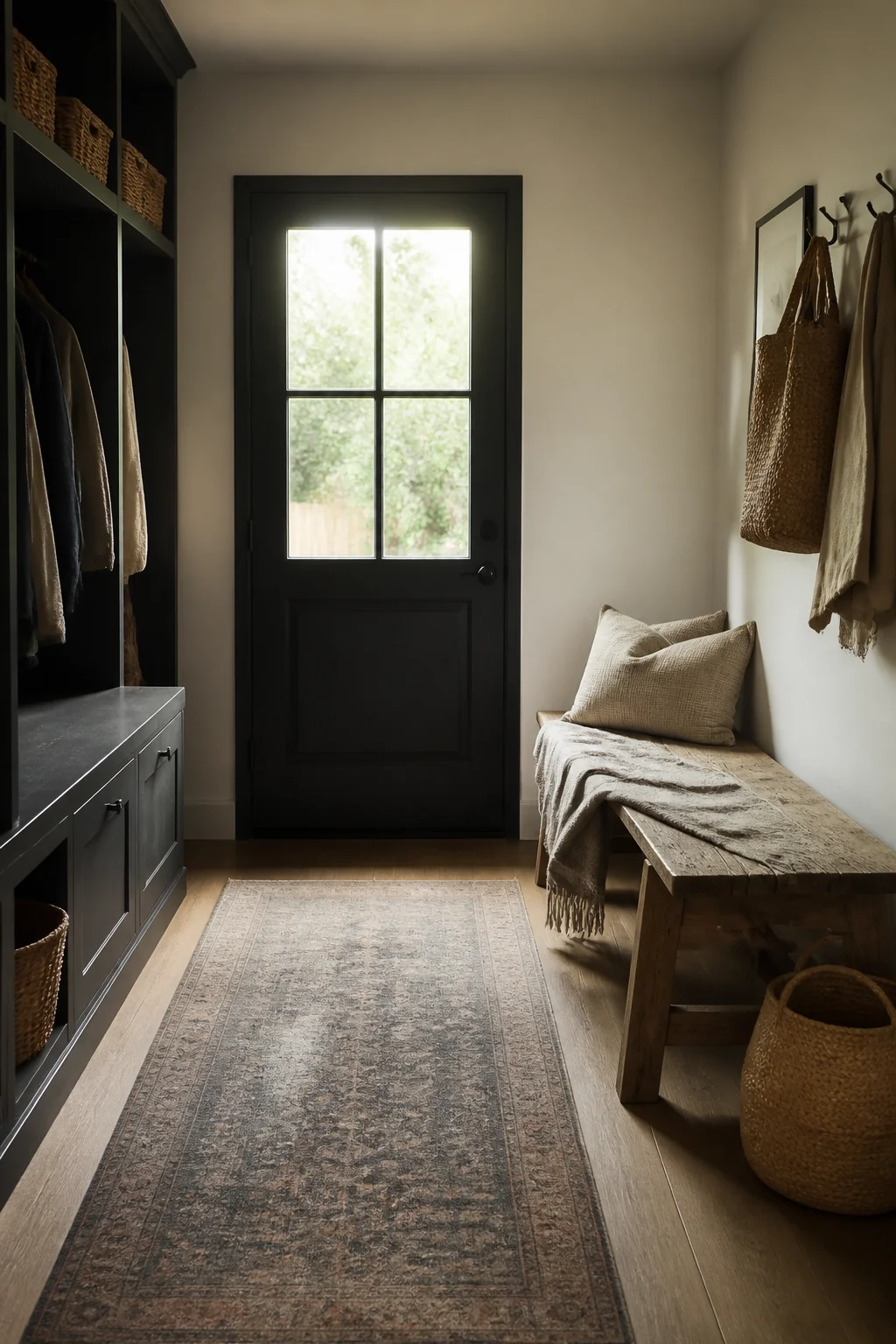
The usual mistake is buying the bench for the photo. A $400 mid-century teak bench is genuinely beautiful and holds nothing but guilt: sit on it in wet jeans and you'll spend the evening thinking about the finish. It becomes a coat pile, then a package shelf, then furniture you walk around.
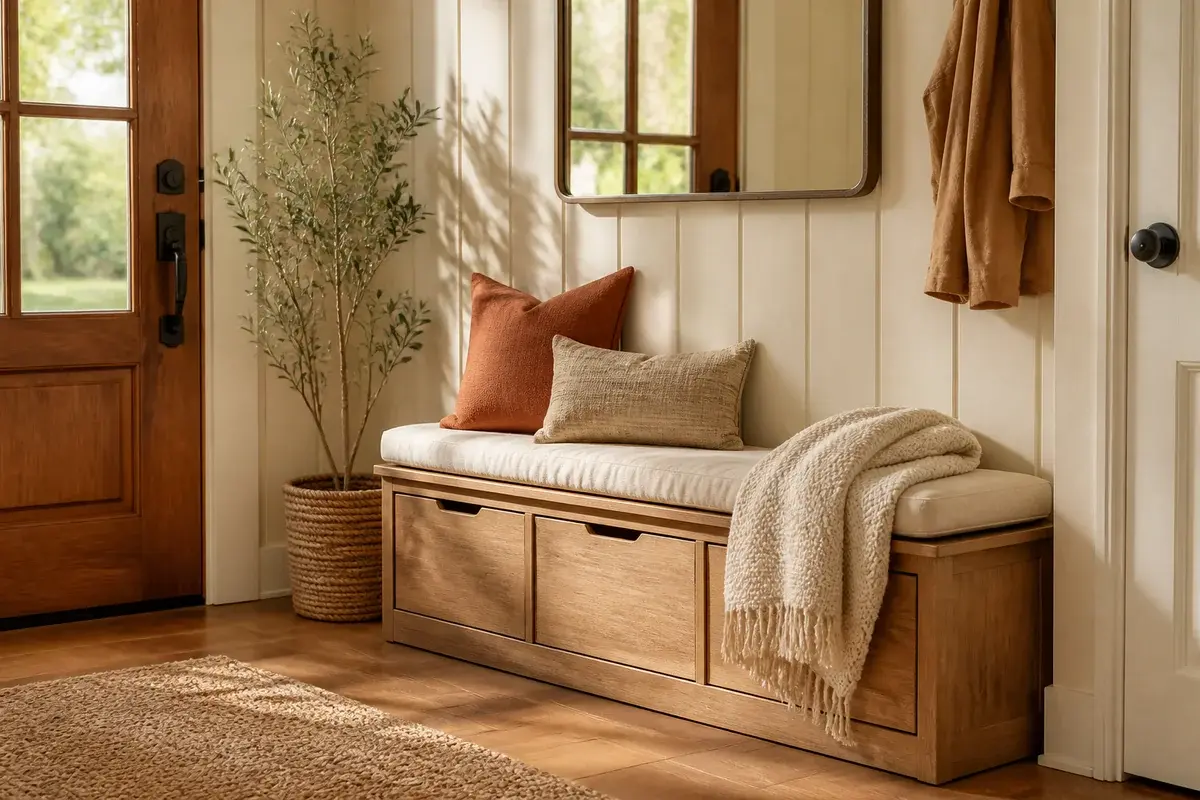
The version that survives is boring and upholstered. Around $180 at Wayfair gets you a bench in performance fabric, a tightly woven synthetic with a stain-resistant finish, so spilled coffee and wet dog paws sit on the surface long enough to wipe off instead of soaking into the weave. Storage underneath, whether that's open cubbies or a lift-top seat, is what keeps shoes off the floor rather than lined up beside it.
Measure before you fall for anything. Entry benches typically run 15 to 18 inches deep with an 18-inch seat height, which is chair height and comfortable for pulling boots off. Trace the arc of your door swing on the floor, then leave at least 36 inches of clear walking path in front of the bench. If your hall is narrower than about 40 inches, a bench turns it into a squeeze. Hooks and a closed shoe cabinet do more work in that footprint. Hardware-store hooks cost a couple of dollars each, and our budget entryway ideas turn five of them and a dowel into a coat rack.
A Coat Rack That Holds Real Coats
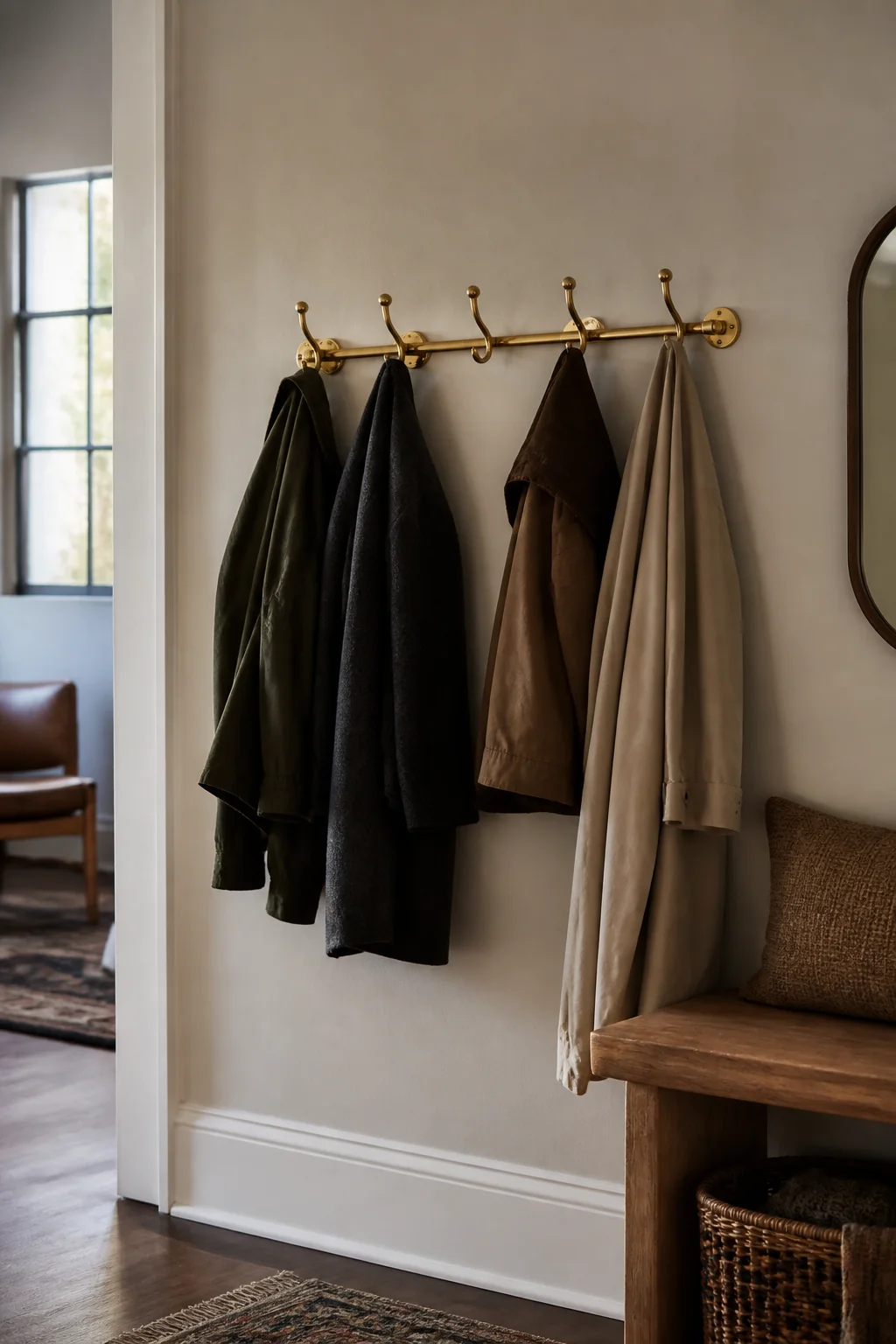
Those slim wooden pegs with three hooks are decoration wearing a job title. One winter coat, one crossbody bag and a scarf, and you're already out of room, so the fourth thing lands on the bench and stays there.
Wall-mounted hooks handle far more. Space them about 12 inches apart so a bulky parka on one doesn't smother its neighbor, and plan on six hooks for a household of two or three. Solid brass hooks from Schoolhouse Electric run about $15 each, which adds up fast, though brass doesn't chip the way painted steel does when a bag strap drags across it every day. A zinc hardware-store hook at $4 does the same job if you're filling six spots at once.
Height decides whether they get used. Around 60 to 66 inches from the floor lets most adults hang a coat without stretching. If kids come through this door, add a second row at roughly 40 inches so their jackets stop ending up over the banister. Hit studs where you can, or use toggle bolts rated above 30 pounds. Plastic drywall anchors pull loose under a soaked wool coat, usually taking a chunk of wall with them.
A Mirror (But Make It Matter)
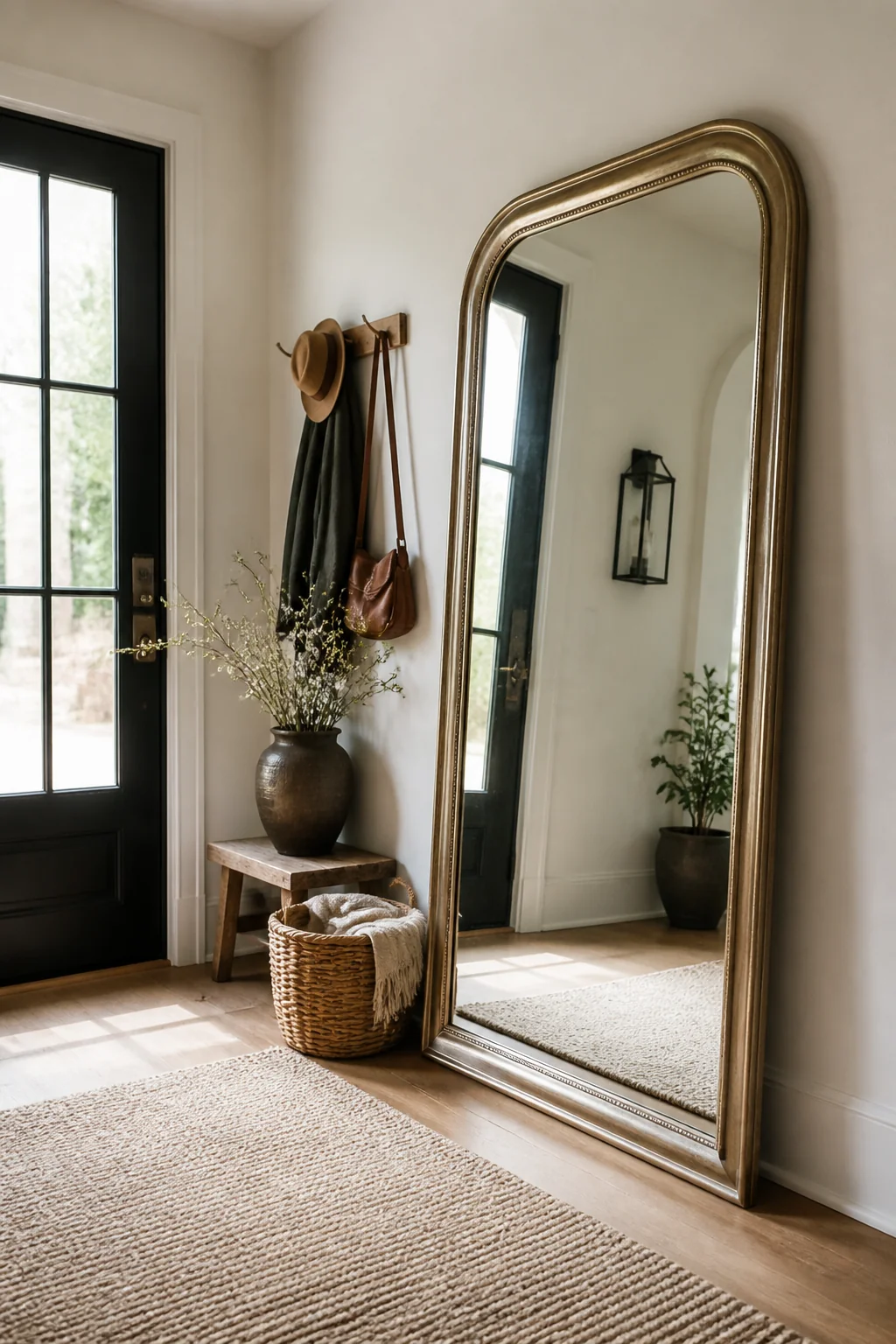
A mirror earns its wall twice over. It bounces whatever daylight comes through the door glass deeper into a dim hall, and it's the last check before you step outside, which is a thing everyone does and nobody plans for.
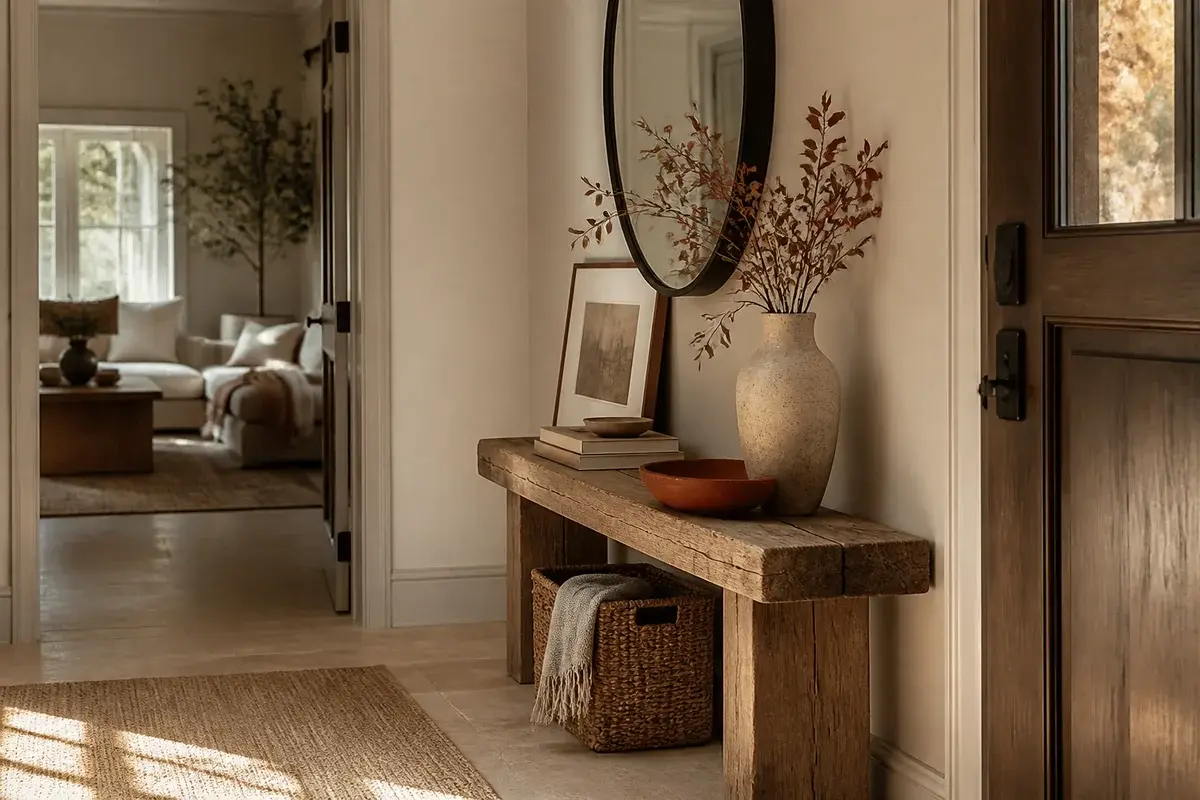
Hang it with the center about 60 inches off the floor. That's standard gallery height and lands near eye level for most adults, so a tall partner still sees their collar and a shorter one still sees their face. Size is where people flinch. A small round mirror floating over a bench reads timid. Match the mirror to roughly the width of the furniture beneath it, or two-thirds of that width at absolute minimum, so the pieces look related instead of randomly hung.
A large rectangular mirror in a light oak frame runs around $120 at West Elm, and IKEA carries similar proportions closer to $40. The reflective part is identical, so spend the difference only on a frame you love. One caution: a mirror hung directly facing the front door will reflect the street and passing headlights after dark, which reads as movement out of the corner of your eye. A side wall is usually the calmer choice.
A Small Table for Keys (and Only Keys)
A decorative catch-all bowl sounds tidy and works for roughly a week. Then it's keys, receipts, a hair tie and a mystery USB drive in a heap at eye level, and you're digging through it every morning.
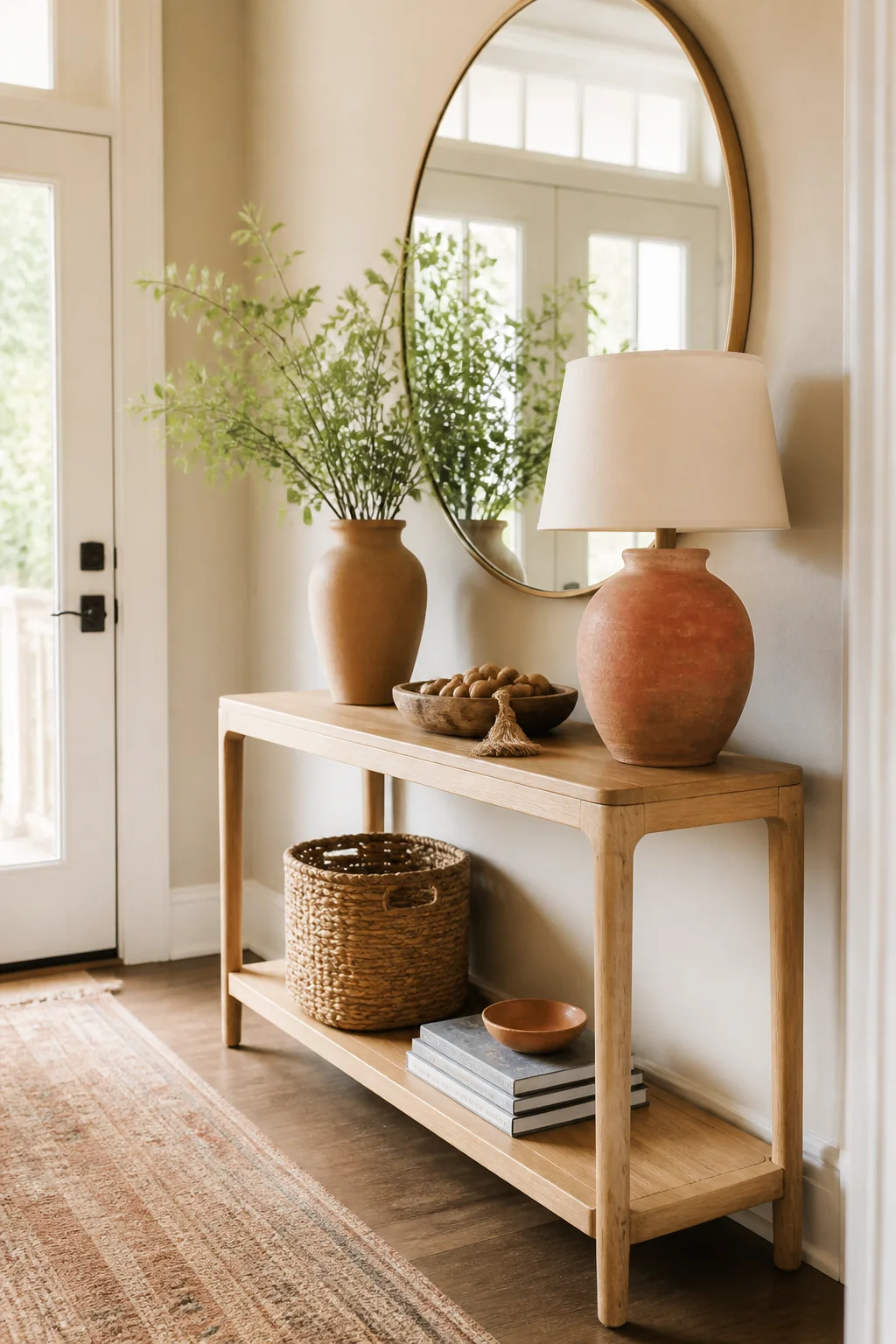
A small brass tray, the kind sold for jewelry and usually about 8 inches across, does the opposite job. It's too small to accumulate. Keys fit, nothing else does, and the boundary enforces itself. Paper needs a different destination the same day it arrives: sort mail standing up, and move anything that needs action to the home office instead of parking it here.
Keep the surface underneath deliberately narrow. Console tables made for entries run 10 to 14 inches deep, which holds a tray and a lamp and refuses to hold shopping bags. Anything past 16 inches becomes storage whether you meant it to or not. Leave at least 30 inches of walking clearance as you pass it, and if your hallway can't spare that, a floating shelf 6 inches deep at about 40 inches high holds the tray and keeps the floor completely clear.
Good Lighting That Doesn't Cost $600
Plenty of entryways have no overhead fixture at all, just whatever daylight leaks through the door glass. After dark that means walking into a cave and feeling along the wall for a switch in the next room.
A simple pendant solves it for about $89 at Rejuvenation, and big-box versions start closer to $40. Hang the bottom of the shade around 72 inches from the floor: high enough to walk under, low enough to light faces instead of the ceiling. On ceilings above 9 feet, add roughly 3 inches of drop per additional foot so the fixture doesn't float.
The bulb does more work than the fixture does. Look for 2700K on the box, often labeled soft white, which reads warm and slightly yellow like an old incandescent. Anything from 4000K up skews blue and gives a hallway a parking-garage quality. Around 800 lumens, the equivalent of a 60-watt bulb, is plenty for a standard entry. Renting, or working with no junction box overhead? A plug-in wall sconce or a small lamp on the console gives you the same warm pool of light with no electrician and no holes in the ceiling.
Greenery (One Plant. Not Ten.)
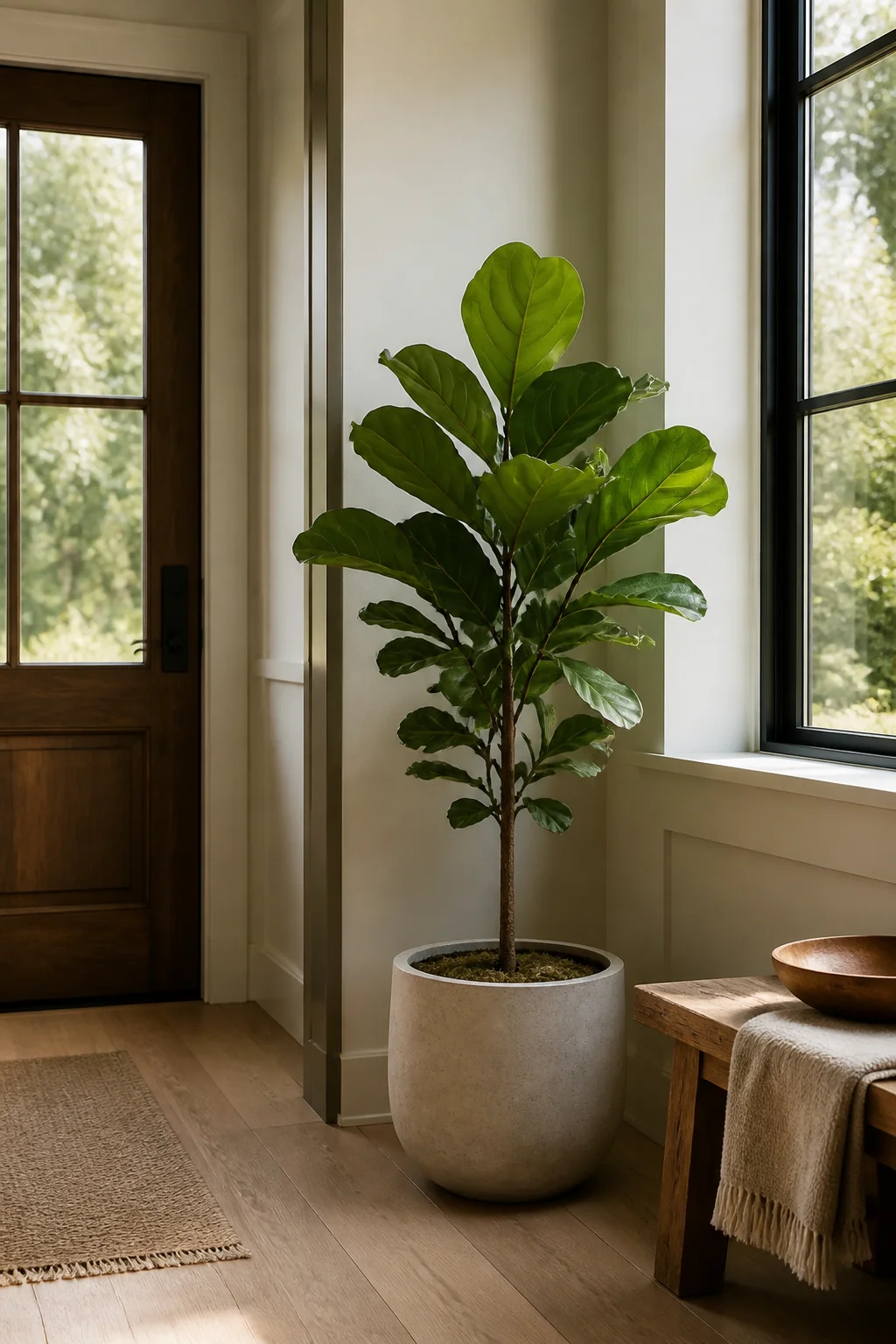
Entryways are hard on plants, which is why so many of them die there. It's the coldest part of the house in winter, it takes a blast of outside air every time the door opens, and it's usually lit by one small window at best. Ten plants in those conditions become ten dying plants and a row of pots you feel bad about.
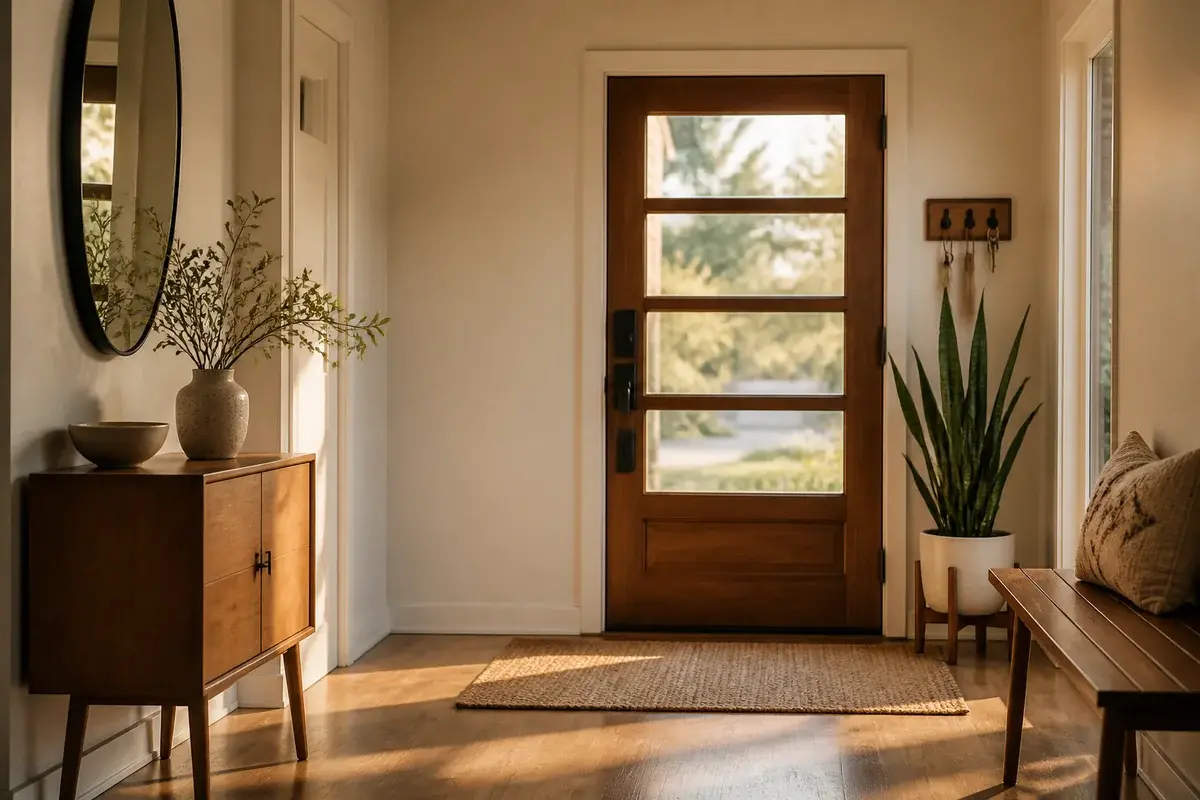
One is the right number, and the species matters more than the pot. A snake plant tolerates low light and prefers to dry out completely between drinks, which suits a spot you walk past rather than tend. A ZZ plant behaves the same way. Both shrug off a stretch of neglect that would finish a fern or a calathea. Water roughly every three weeks in summer and once a month in winter, and check that the top two inches of soil are dry first. Rot from overwatering ends more entryway plants than drought ever does.
Use a pot with a drainage hole and a saucer under it. A 10-inch ceramic pot runs $20 to $35 and the plant itself is usually $15 to $30. Keep it out of the door's swing path so it doesn't get knocked over, and away from a heating vent, which browns the leaf tips within weeks.
What to Skip in Your Entryway
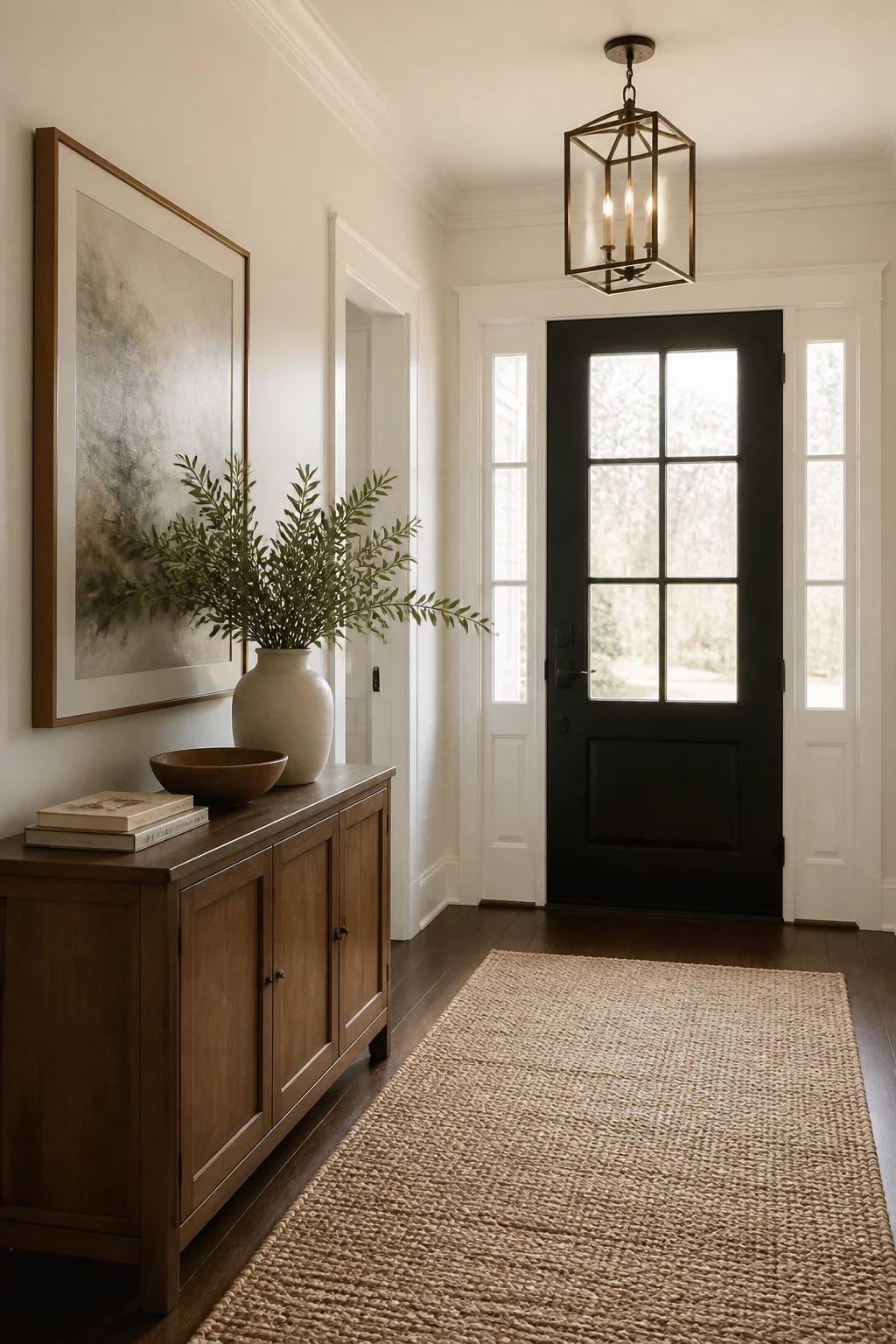
Skip the open shoe rack, or at least the visible one. A row of shoes by the front door reads as clutter however neatly it's lined up, and the smell has nowhere to go in a small space with no airflow. A closed cabinet 8 to 10 inches deep sits flat against the wall, holds two or three pairs per shelf, and keeps the rest in a closet.
Skip fussy art that needs upkeep. Anything with fabric, fine detail or open shelving is sitting in the dustiest, most brushed-past corner of the house, and you'll be cleaning it on a morning you're already late.
Skip the runner without a rug pad, too. Entry rugs slide on hard floors and curl at the corners, right where people are carrying bags and not looking down. A felt-and-rubber pad costs around $20 and ends the problem.
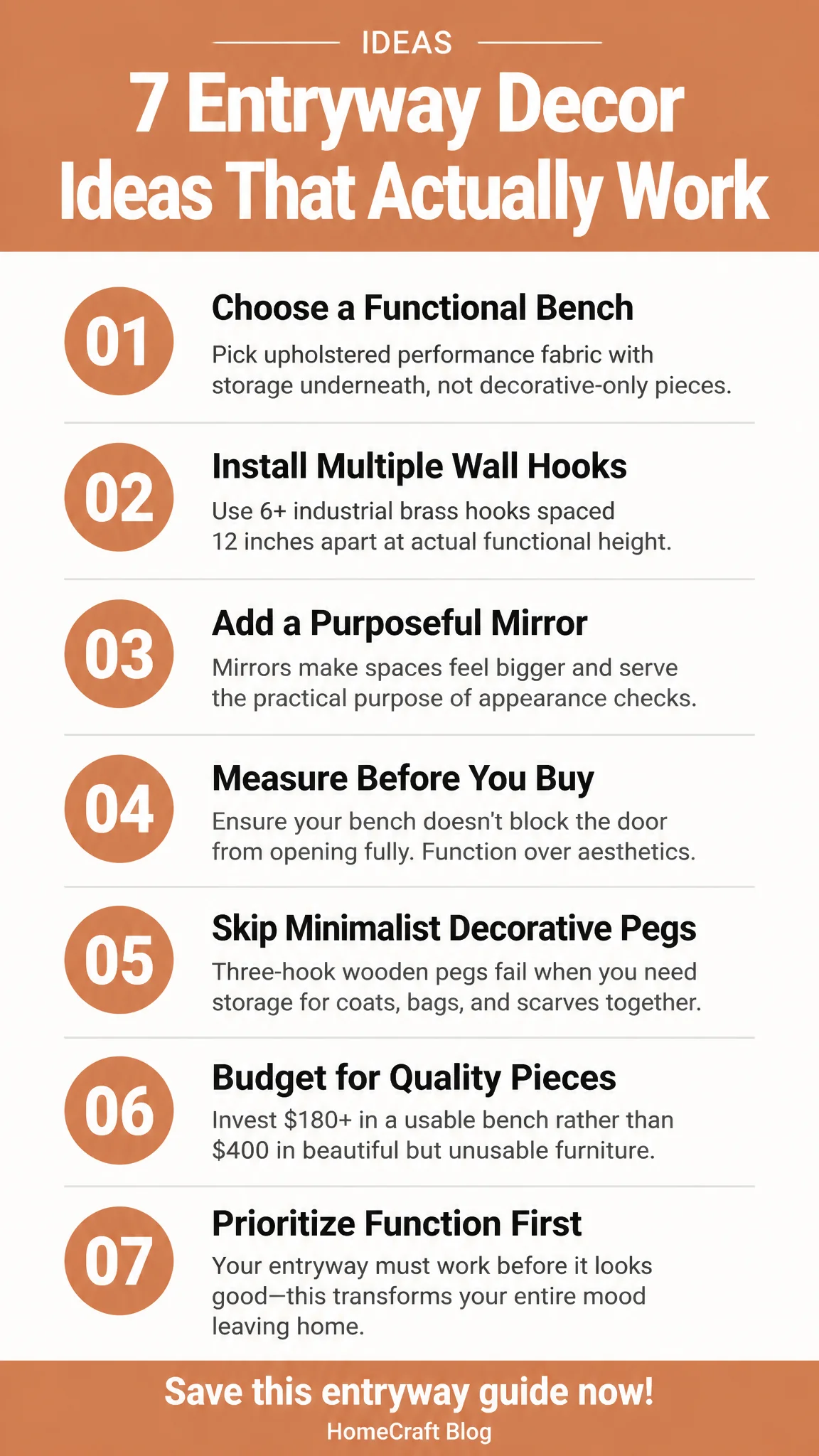
Take the guide with you
And skip anything that stops the door from opening fully. A console that catches the door at 80 degrees will irritate you every single day of the year, long after you've stopped noticing how it looks.