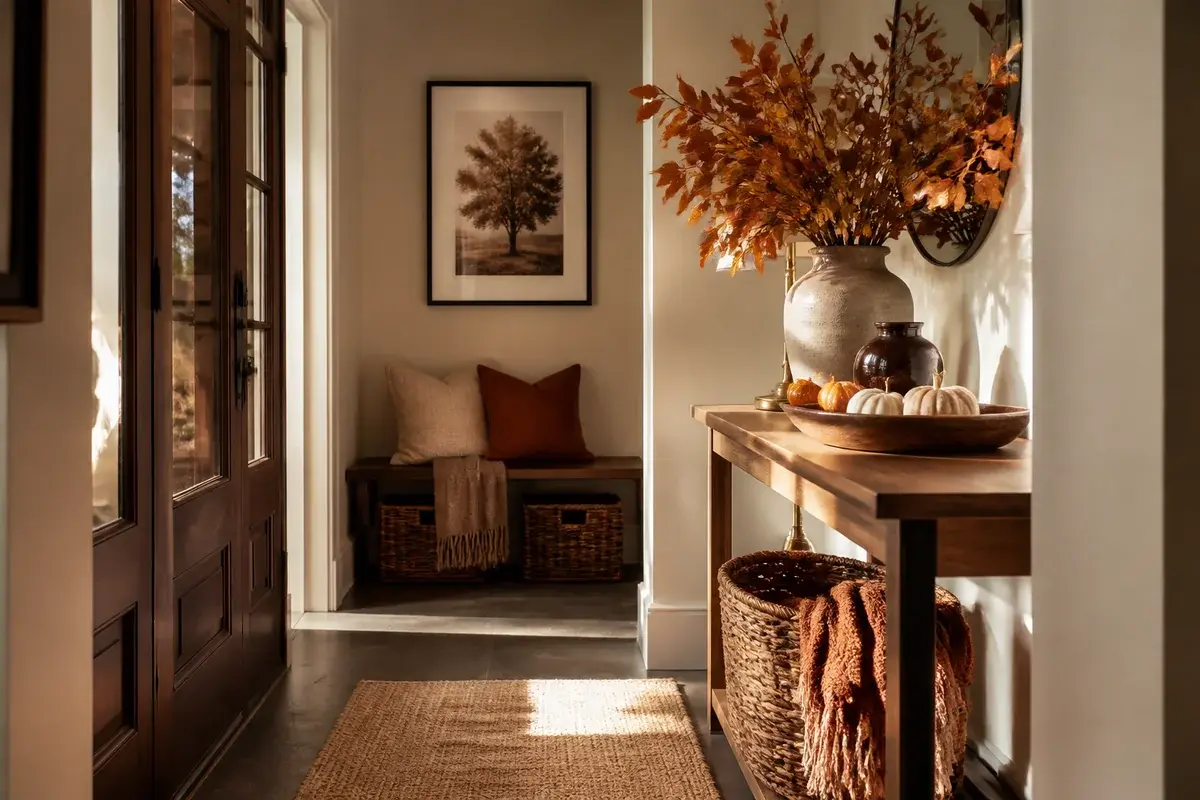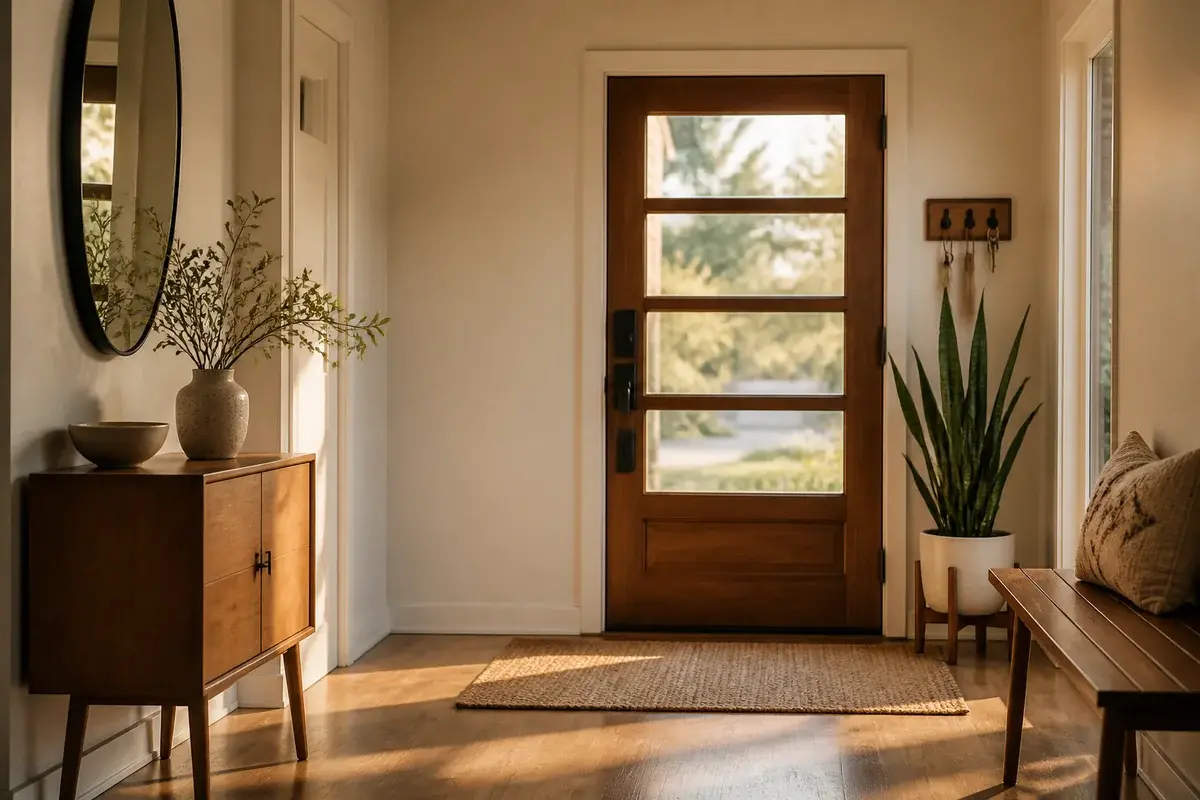
10 Charming Entryway Benches With Storage That Hide the Mess
Hide shoes, bags, and winter gear in an entryway bench with storage that looks polished in any space. Here are ten styles that work.
Your entryway is the first thing you see when you walk in, and it's usually where everything lands. Shoes pile up. Bags drop. Coats heap on a chair. Winter gear multiplies across the floor. An entryway bench with storage solves this by giving you a place to sit, take off your shoes, and stash everything underneath or inside. The right one does two jobs at once: it looks intentional enough to set the tone for your home, and it actually swallows the clutter that would otherwise sprawl across your floor. Here are 10 entryway benches with storage that earn their space.
1. A Low Wooden Bench With Cubbies Underneath
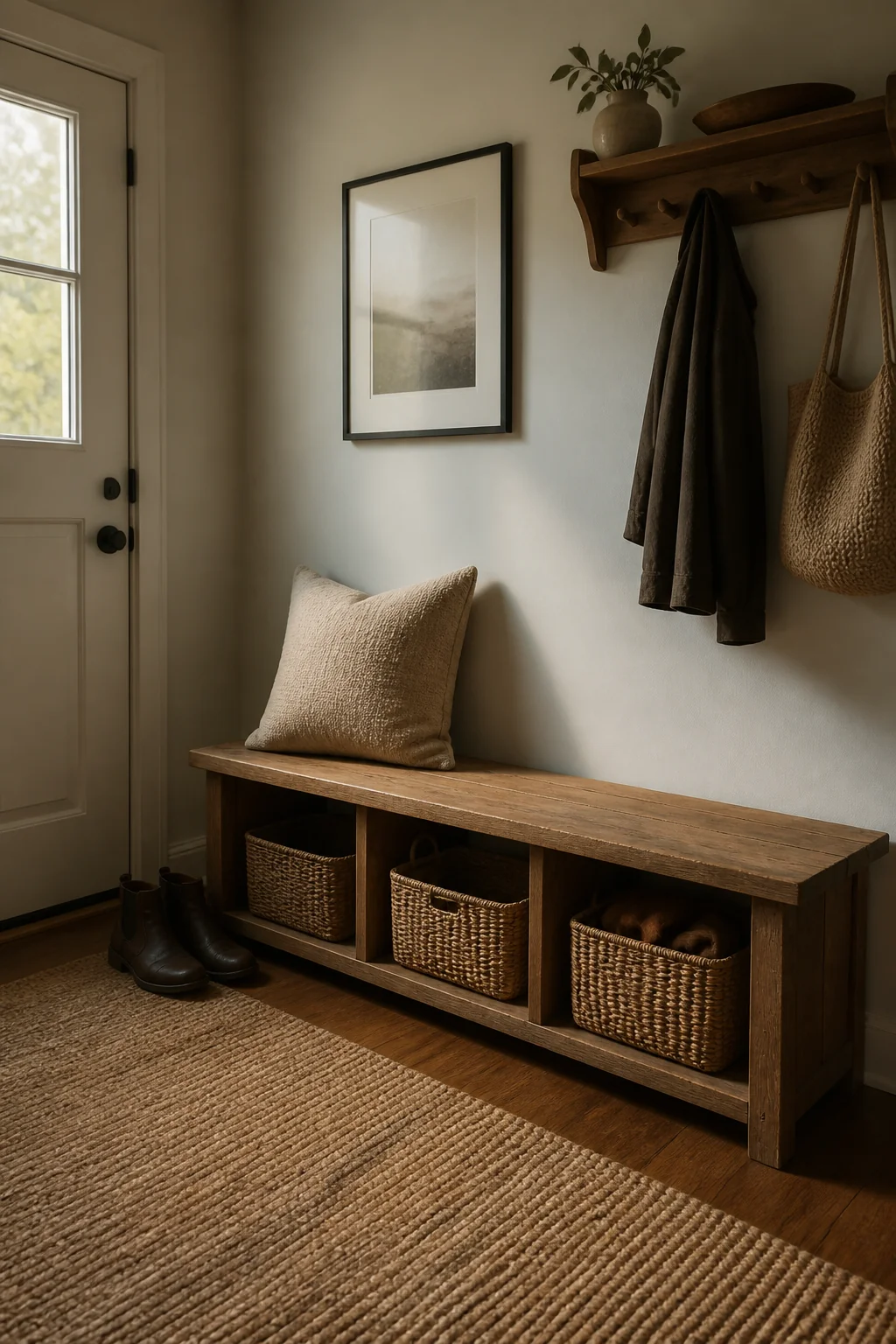
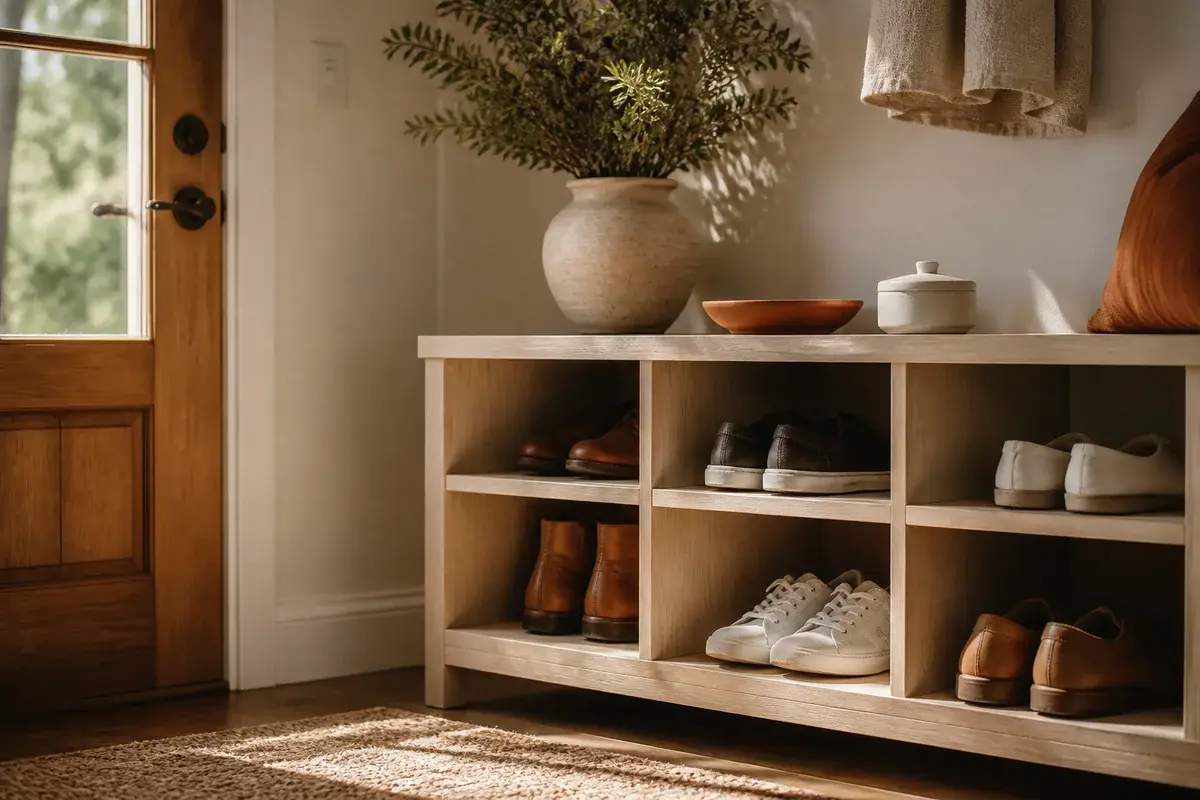
This is the straightforward workhorse. A simple bench frame at about 18 inches tall with open cubbies or shelves built into the base gives you visible storage that doesn't require doors or drawers. You can see what's in there at a glance and toss shoes or bags in without ceremony. Most run 42 to 60 inches wide, so they fit comfortably in a standard entryway. Wood looks warm and grounded, and it works with almost any decor style. The catch is that open storage means whatever you put in there shows, so baskets or bins help hide the visual clutter (and they cost about $15 to $40 per piece). This works best in entryways where you're okay with a more casual, lived-in look.
2. A Padded Bench With a Hinged Lift-Top
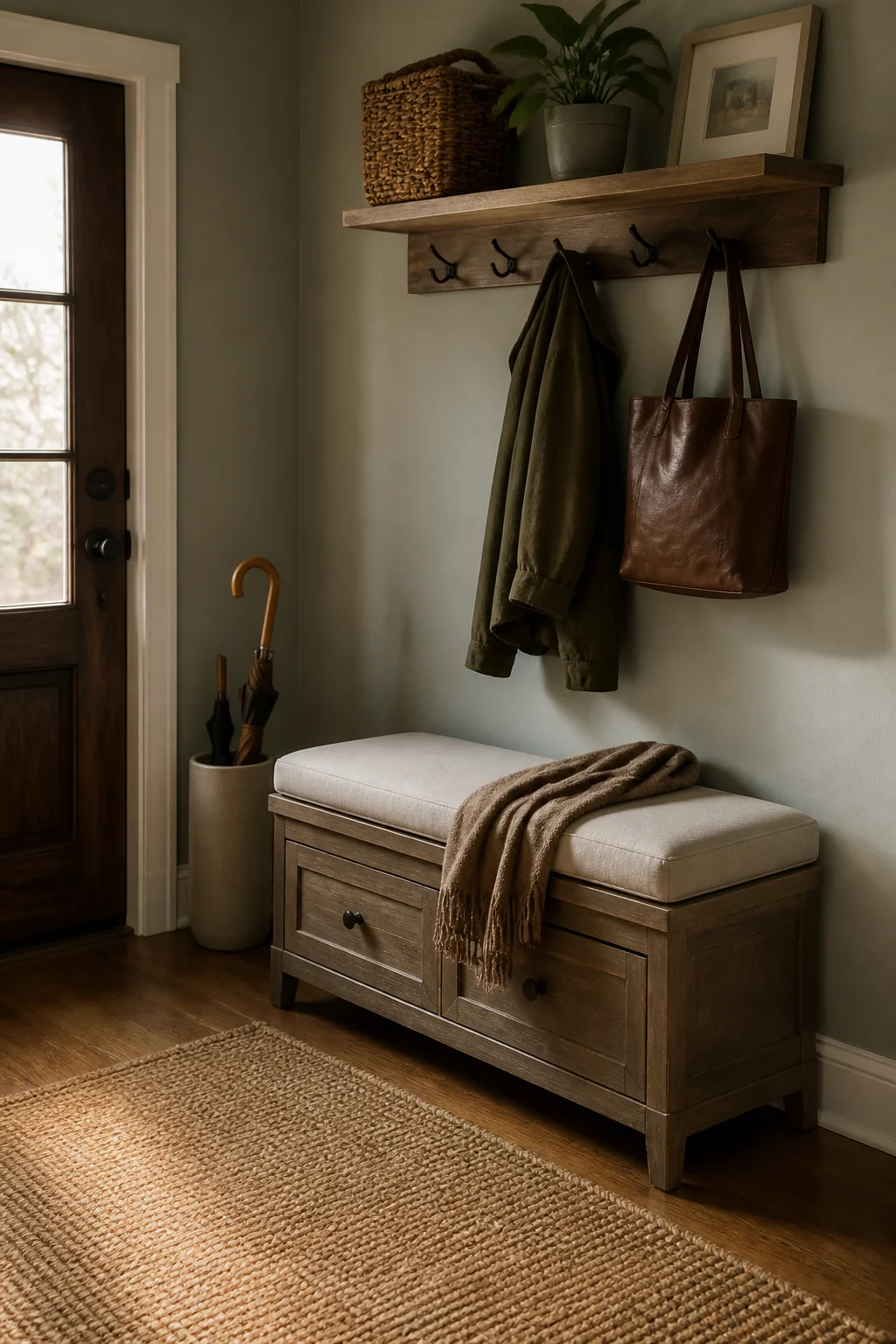
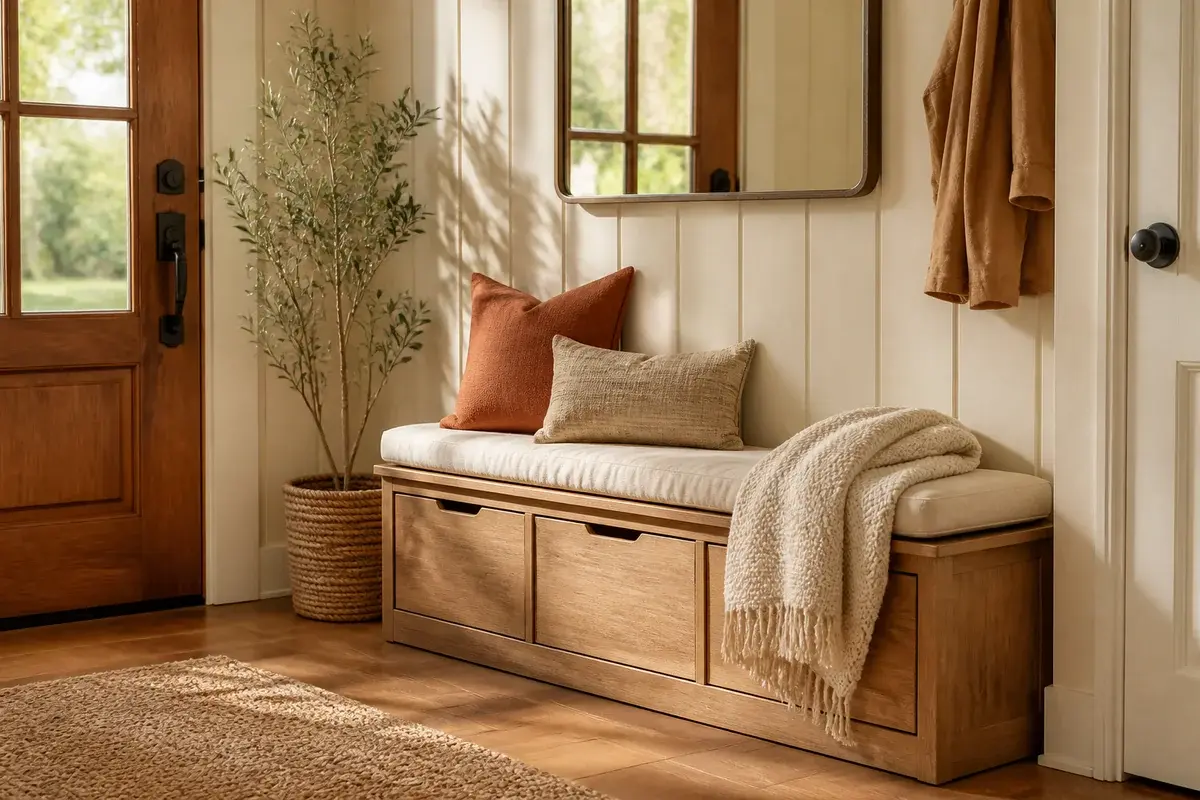
This one looks like a bench and functions like a chest. You sit on the padded top, and everything stores inside. Hinged lids open from the top, so you're not kneeling to pull things out like you would with a lower cubby shelf. Most of these are about 16 to 18 inches tall, sized so you can actually sit on them comfortably while you change shoes. They usually run $120 to $350 depending on material and finish. The main limitation: if you fill it to the brim, you have to dig through the top layer to find what's underneath. An entryway bench with storage in this style works better in small entryways where you're not storing a huge volume of things. Tall apartments and compact homes get the most use out of this design.
3. A Long Low Cabinet With Doors and a Bench Seat On Top
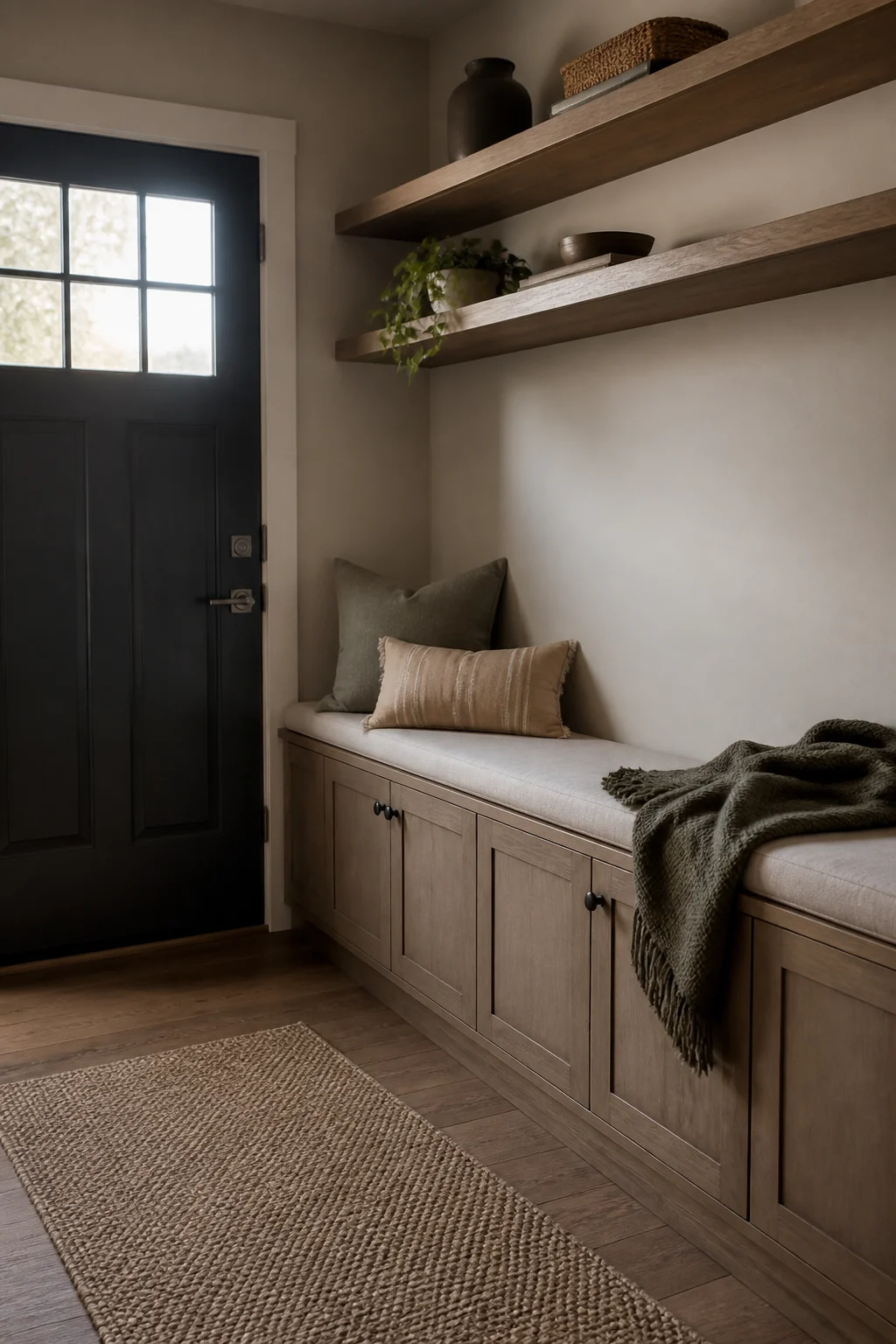
This is a hybrid: a closed cabinet base with a cushioned seat built on top. Doors hide whatever's inside, so shoes, scarves, and random mail stay out of sight. The cabinet part usually has two to four compartments, sometimes with adjustable shelves inside. You're looking at $200 to $500 for a decent one, depending on whether you pick solid wood or veneer. The downside is that you have to open doors every time you want to grab something, which is slower than an open cubby system. But if you want everything hidden and you have the room depth for it, this style of entryway bench with storage is the cleanest looking option. They usually need 16 to 20 inches of depth, so measure your entryway first.
4. A Narrow Floating Bench With Drawers Underneath
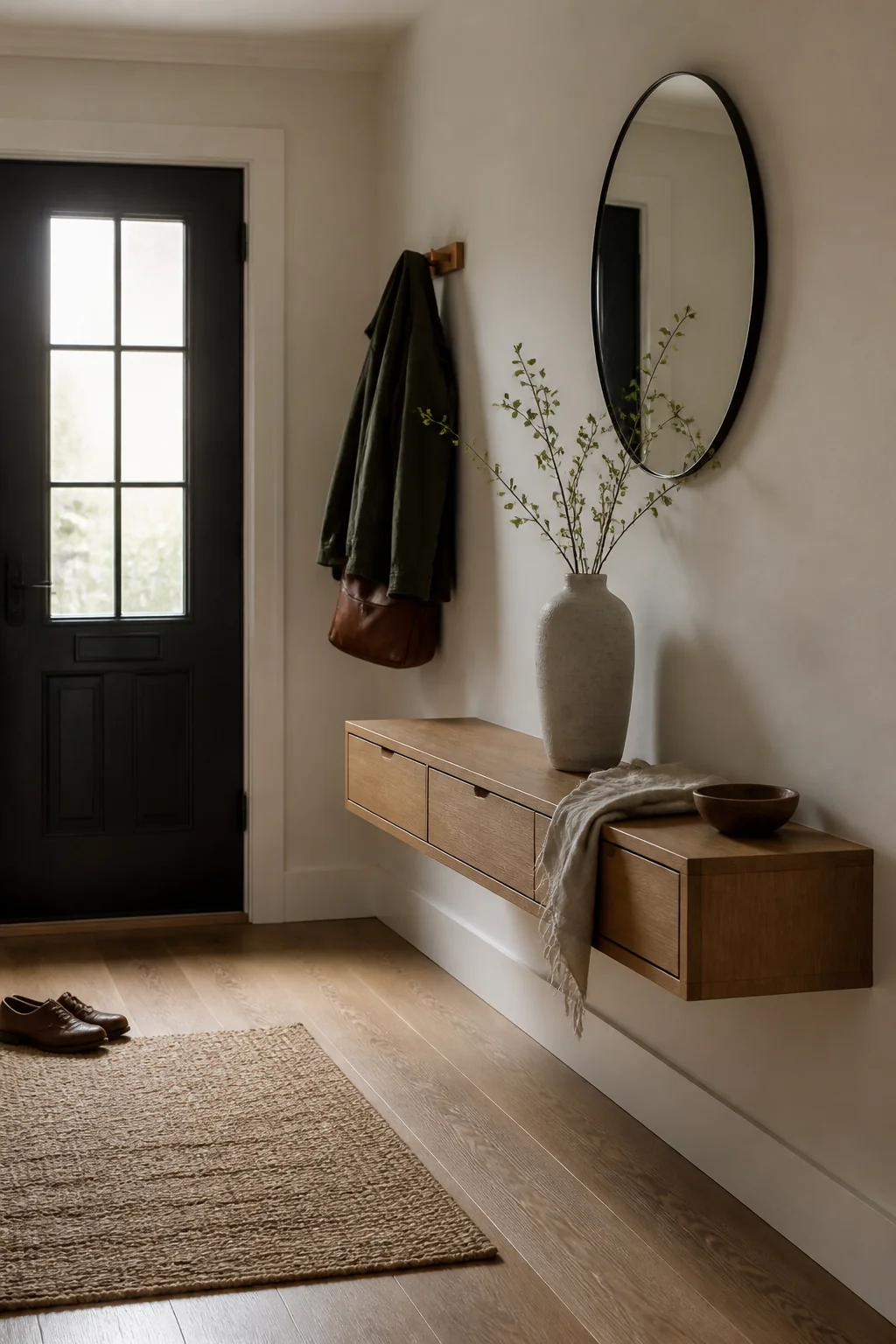
This one mounts to the wall and hangs above the floor, giving you storage in the form of shallow drawers built directly into the bench structure. You get the openness of a floating piece (no visual weight, easier to sweep under) plus hidden storage for small things like keys, scarves, and gloves. Most float between 10 and 16 inches above the floor, which is low enough to sit on but high enough to make your entryway feel spacious. They run about $150 to $300 and work best in smaller spaces where you need every inch to breathe. The real limitation: they can only hold lightweight items, so don't count on storing heavy boots or winter coats here. For a rental, this floating entryway bench with storage is an excellent option since it needs only wall anchors and no floor footprint.
5. A Bench With Woven Baskets That Slide Underneath
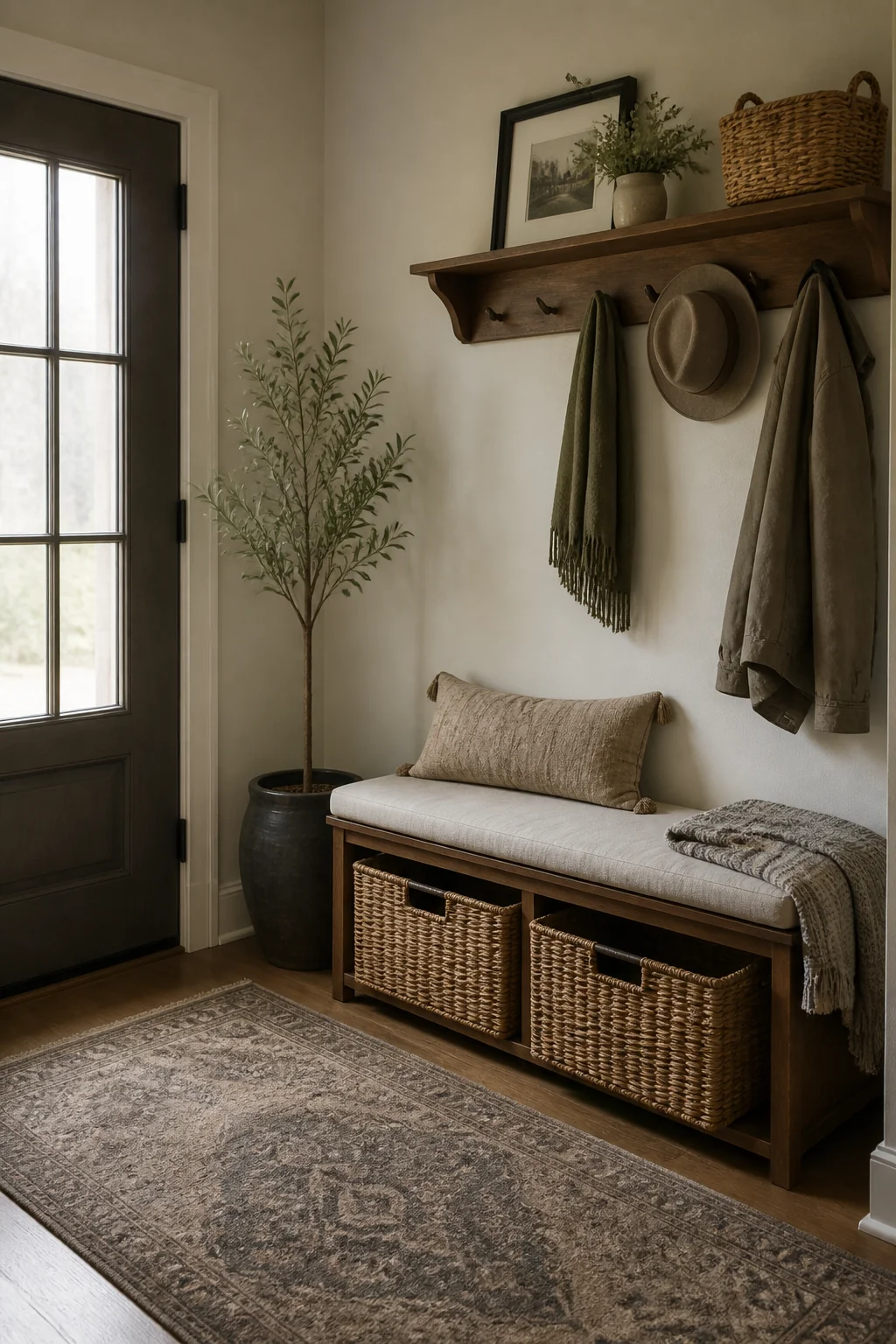
This is a simple wooden or metal frame bench with a solid seat, paired with woven baskets that tuck into an open shelf below. The baskets do the actual storage work, and you can pull them out whenever you need something. You can buy these as a set or build it yourself with a bench and separate baskets. Priced around $120 to $350 for a matched set, or cheaper if you mix and match. Woven baskets add texture and a casual, organized feeling. The catch is that the baskets take up visual space, so this style reads busier than a closed cabinet. It also needs more room because the baskets sit flush underneath, so you can't use the footprint for anything else. This works great in farmhouse or coastal spaces where a little texture and warmth feels right.
6. A Leather or Upholstered Bench With Storage Built Into the Frame
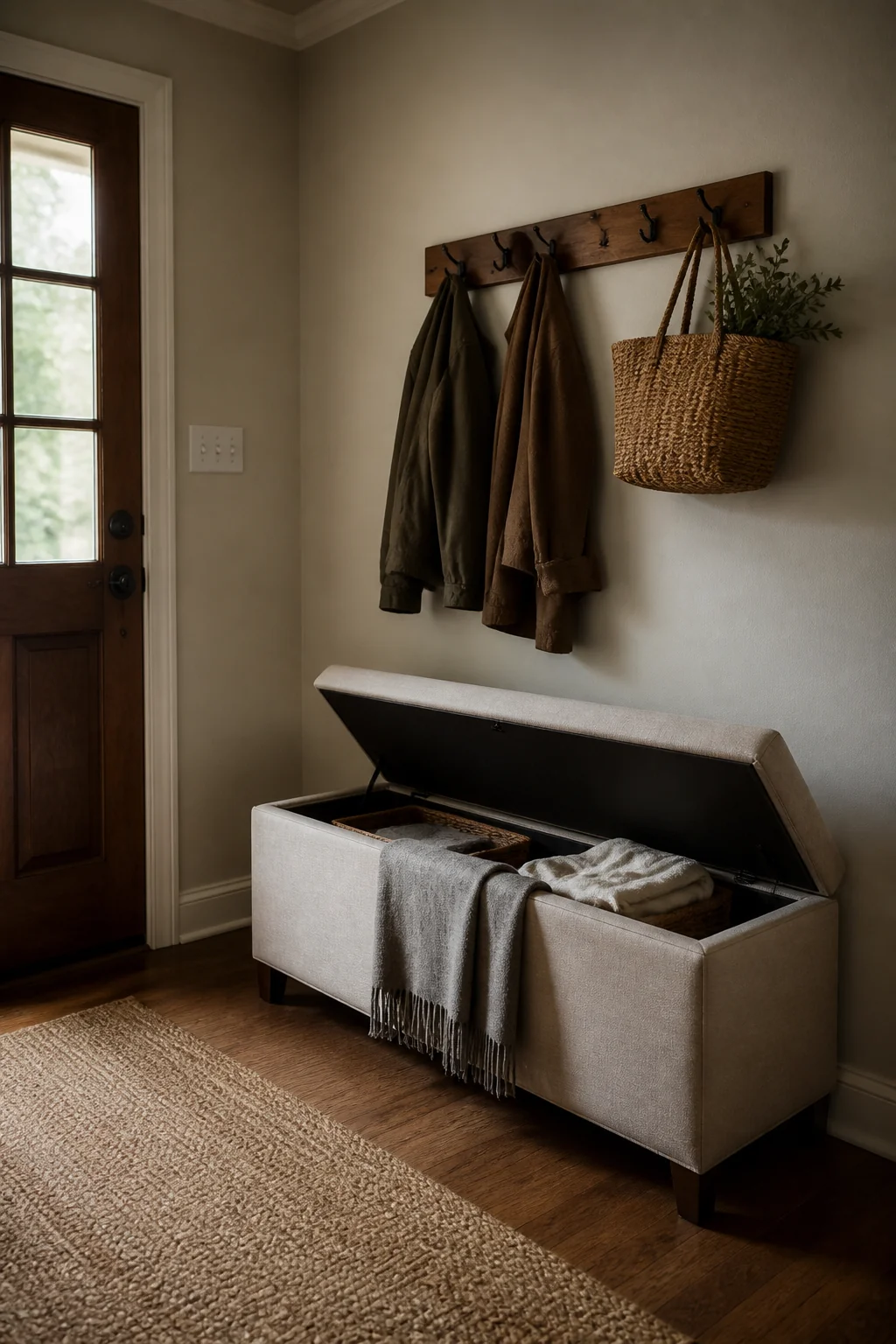
This one prioritizes how it looks and feels. A well-made upholstered bench in leather or linen with storage compartments hidden in the wooden base or frame gives you luxury without the clutter. You're sitting on something that feels good and looks polished, while shoes and bags disappear into the structure underneath. Most decent ones cost between $300 and $700, and they can last years with basic care. The downside: upholstered surfaces need vacuuming, and leather needs conditioning to stay supple. In a high-traffic entryway where boots are constantly muddy, this is a higher-maintenance choice. But in a drier climate or a more formal entryway, it creates an impression that your home is put together before anyone even takes a step inside.
7. A Bench With Cubbies and Hooks Above for Coats
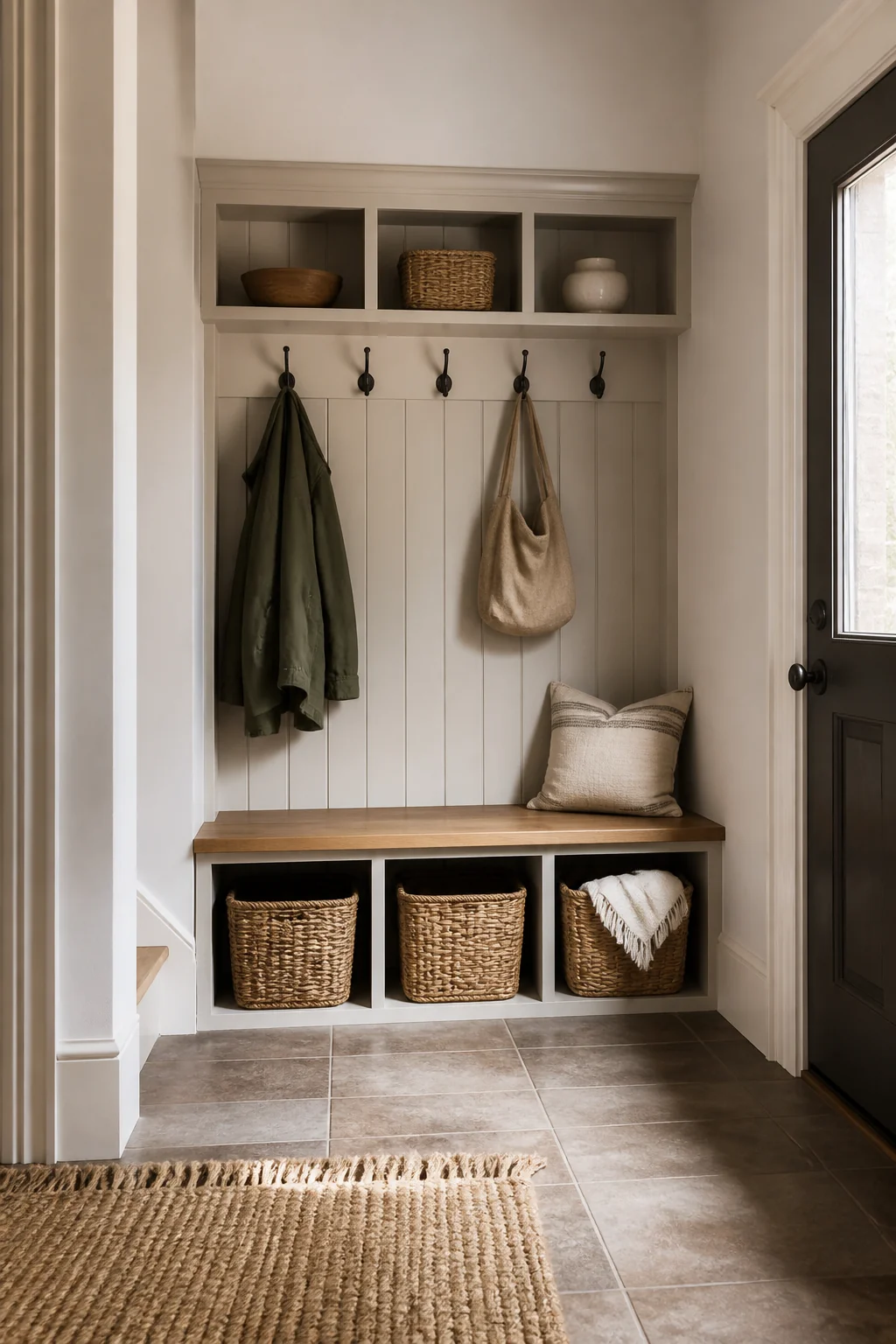
This one extends storage vertically by adding hooks or a coat rail above the bench itself, so you're storing both at seat level and at arm reach. The bench sits on the floor with cubbies or shelves underneath, and hooks mount directly to the wall or to an attached shelf above the seat. This doubles your storage capacity without taking up any additional floor space. Most run $150 to $400, depending on whether they're a single integrated unit or separate pieces you assemble. It works brilliantly in narrow entryways where you're tight on width but can go taller. The danger is overloading the wall hooks with heavy coats in a rental, so check what your walls can actually support before you hang ten winter jackets there.
8. A Bench Seat With A Drawer And Open Cubby Below
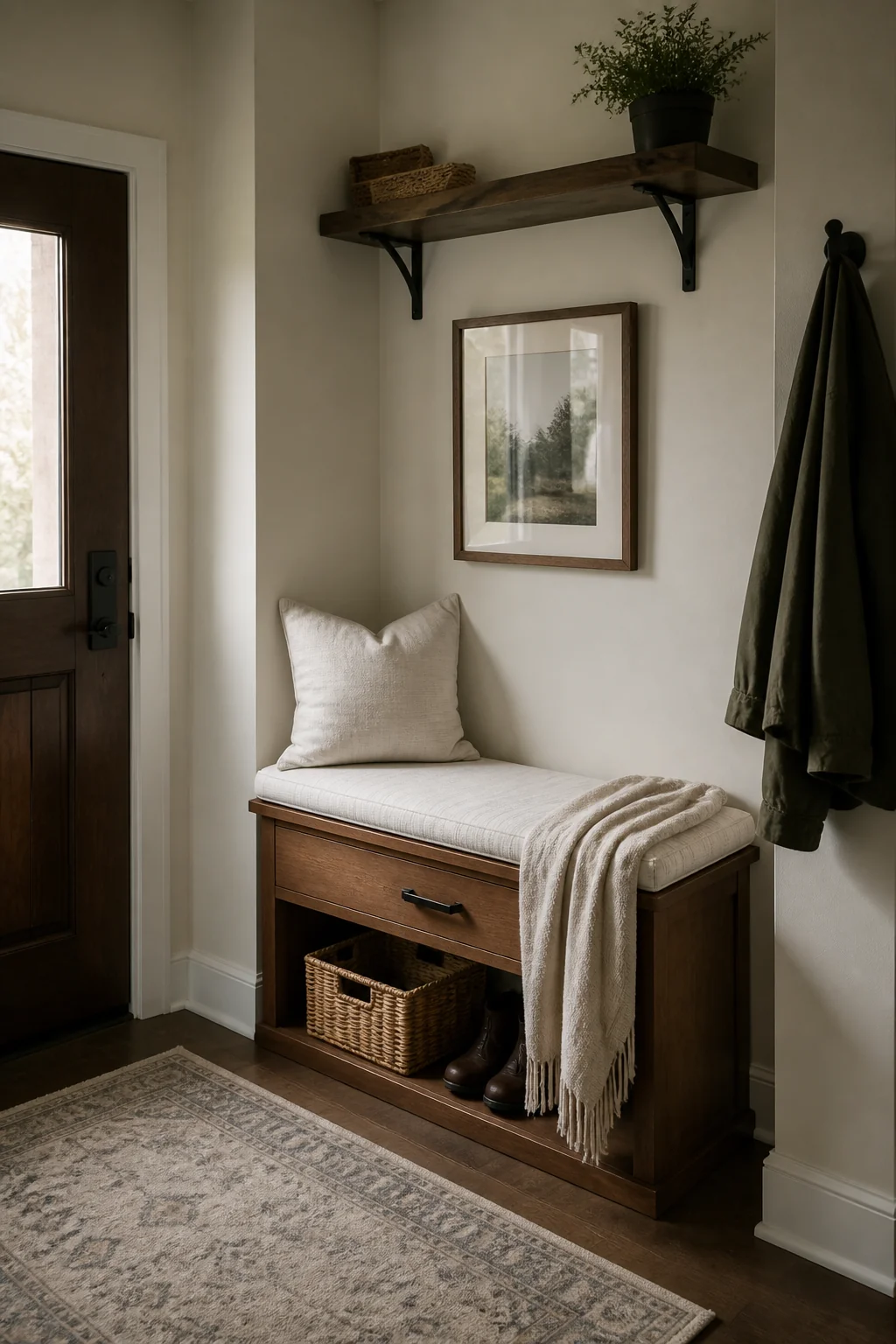
This is a split design: a drawer in the main bench frame for small items like keys and gloves, plus an open cubby or shelf underneath for shoes and bags. The drawer keeps your most-grabbed items contained and tidy, while the cubby handles the volume. It's a practical middle ground between fully open and fully closed storage. You'll find this entryway bench with storage for about $100 to $300, and it works well in medium-sized entryways where you need quick access to some things but don't want everything on display. The trade-off: a drawer takes longer to open than reaching straight into an open shelf, so if you're always in a rush, you might skip it and toss things into the cubby instead. This setup suits households where different people have different morning routines and different storage habits.
9. A Slim Bench With Baskets on A Lower Shelf And A Back Support
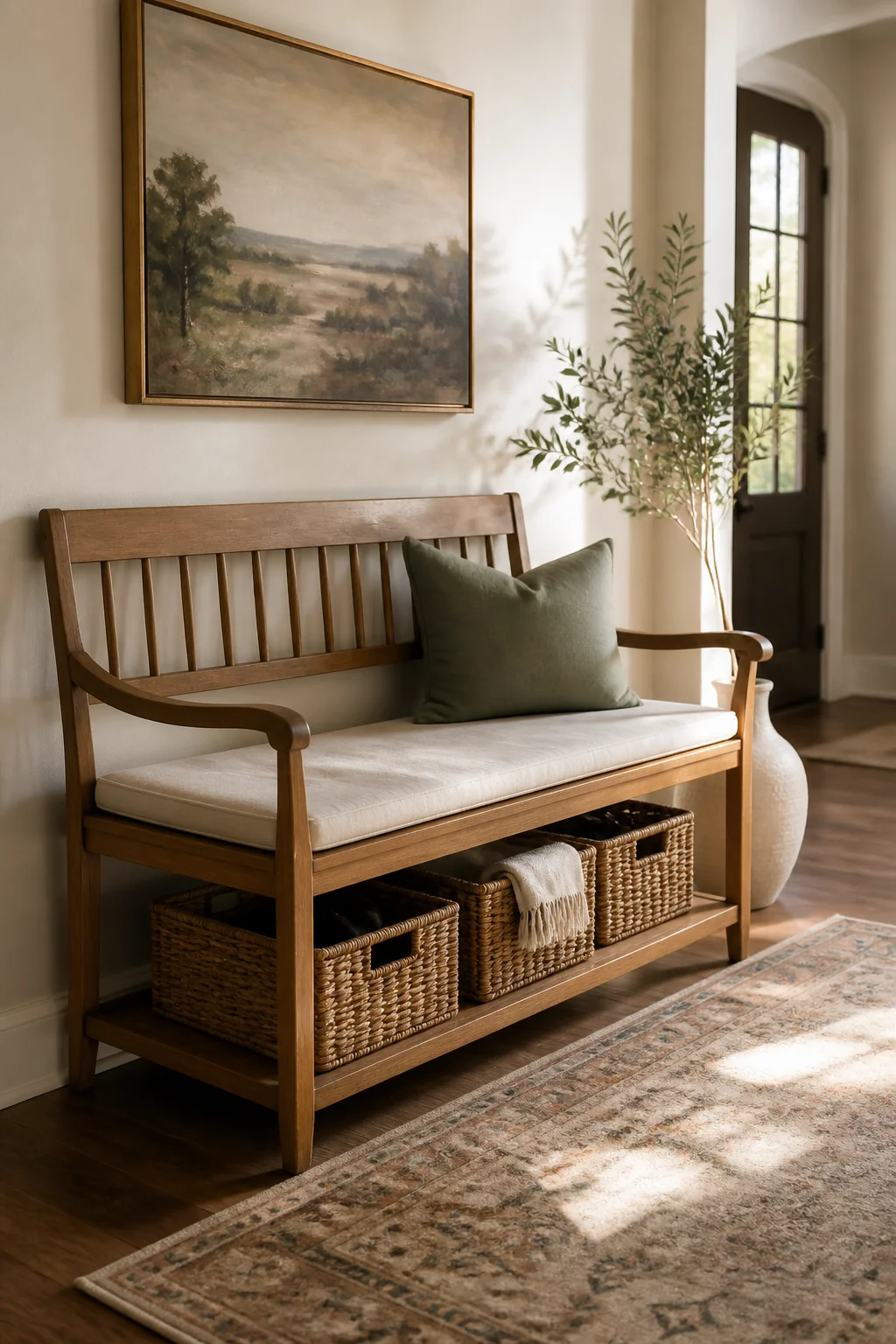
This bench is narrow and deep, designed to fit against a wall without jutting into your entryway too far. The seat is supported by a wooden frame that holds baskets on a lower shelf, and there's a back support (or backrest) so people can actually lean while they're sitting. This is closer to a real bench than some of the others, making it more comfortable for actually sitting down. Most run 36 to 48 inches long and about 14 to 18 inches deep. Price ranges from $180 to $400. The benefit is that it feels like real furniture, not just a storage solution. The limit is that baskets under a bench with a backrest can be harder to access, so you'll want to reserve this style for things you don't pull out constantly. It's ideal for a hallway or foyer where people actually pause to sit, not just drop and dash.
10. A Metal Frame Bench With A Wooden Seat And Woven Cubbies
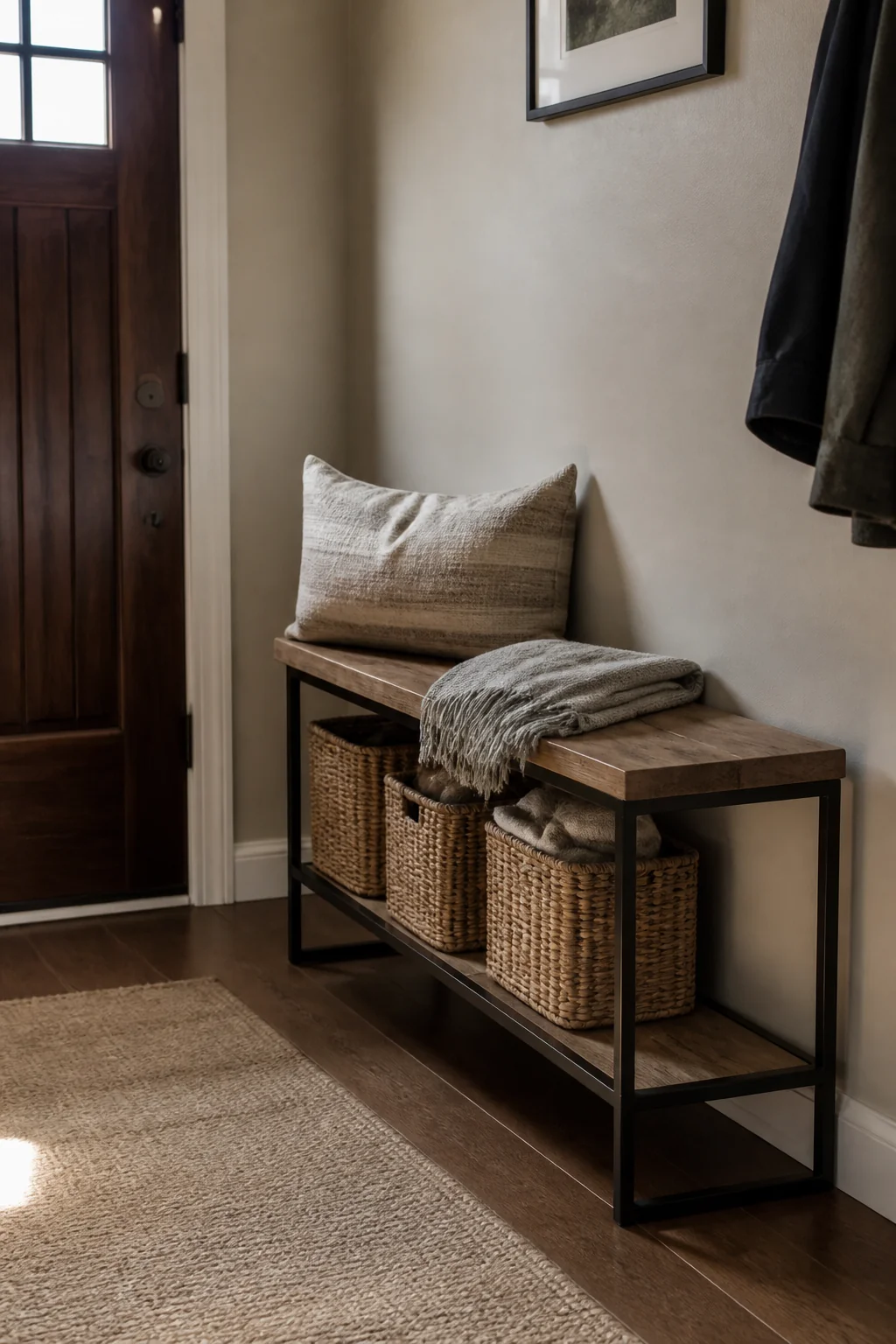
This combines industrial framing with warm textures. A metal (usually steel or iron) frame holds the structure, while wooden slats form the seat, and woven cubbies or shelves below add softness and storage. It's a look that works in modern, industrial, and mid-century spaces. Most cost between $200 and $500. The weaving adds a craft element without being fussy, and metal doesn't hold water if your entryway gets wet from snow or rain. That makes it more durable than wood-only options in climates where moisture is a reality. The downside is that metal conducts temperature, so a cold entryway means a cold bench seat. In mild climates this isn't an issue, but if your entryway is unheated or gets icy, you might want to add a cushion or throw over it.
Save this for your next project
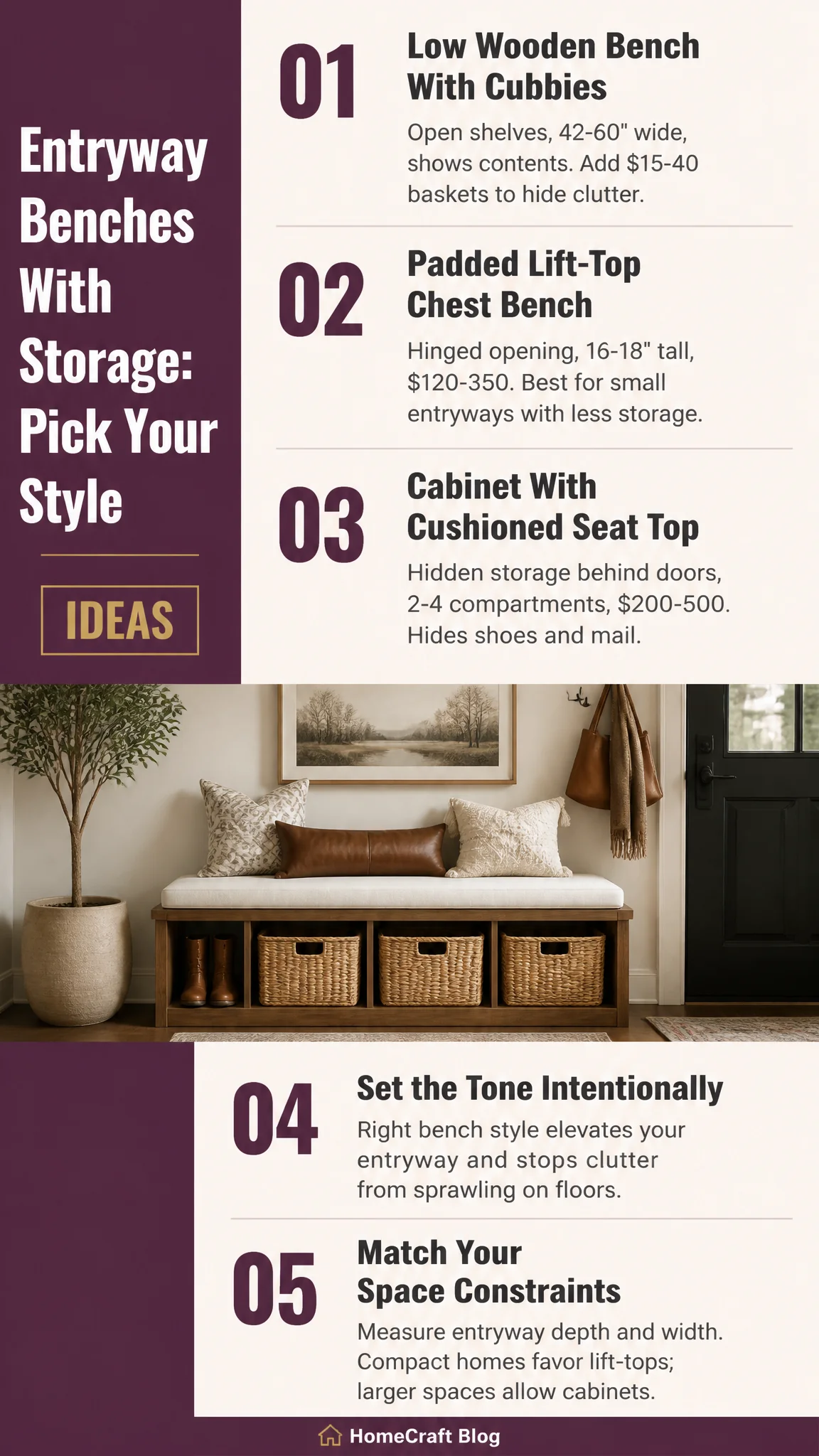
Your choice depends on what your entryway can actually hold and what you really need to store. A narrow hallway with three people and winter coats needs something vertical with hooks or a taller frame. A small apartment where the entryway is barely a landing needs a floating or slim bench that doesn't eat the room. A larger house with a proper foyer can support a deeper cabinet-style bench that looks like a real piece of furniture. In rentals, floating benches and open cubbies avoid damage to walls, while cushioned styles work when you don't plan to be there long and don't want to invest. Whatever you pick, make sure the depth doesn't force people to squeeze around it when they're taking off shoes.