11 Charming Fall Entryway Decor Ideas With Limited Wall Space
Make your fall entryway decor work in tight spaces with floor, door, and furniture tricks instead of wall decorations.
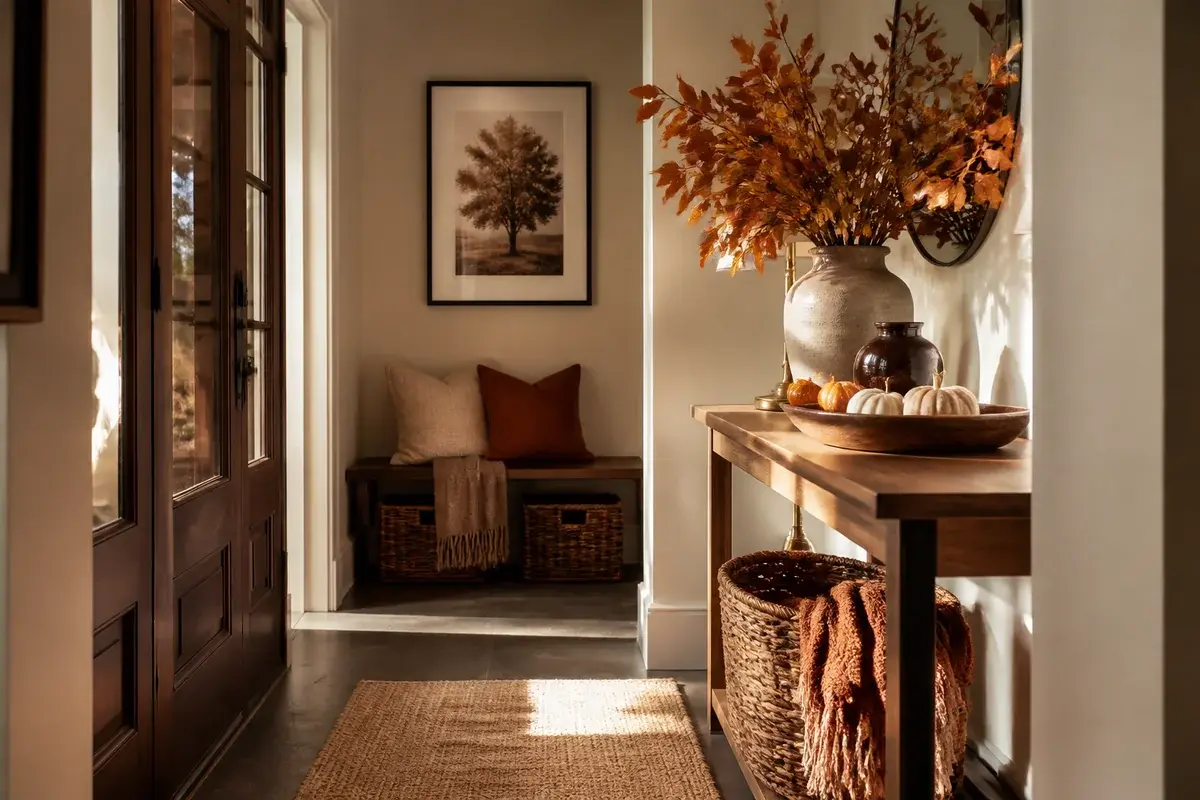
When you don't have much wall space, the trick is working with what's actually there: the floor, the door frame, furniture pieces, and the light coming through your entryway. Most small entryways fail because people try to decorate walls that aren't visible until you're already inside, or they clutter the one small table with too many things. This list is for you if you're renting, if your entryway is a narrow hall, or if a coat closet and a single wall are all you've got to work with. These ideas work in apartments, small houses, and places where your entryway is really just a pass-through.
1. Layer a floor runner with a small fall-colored rug
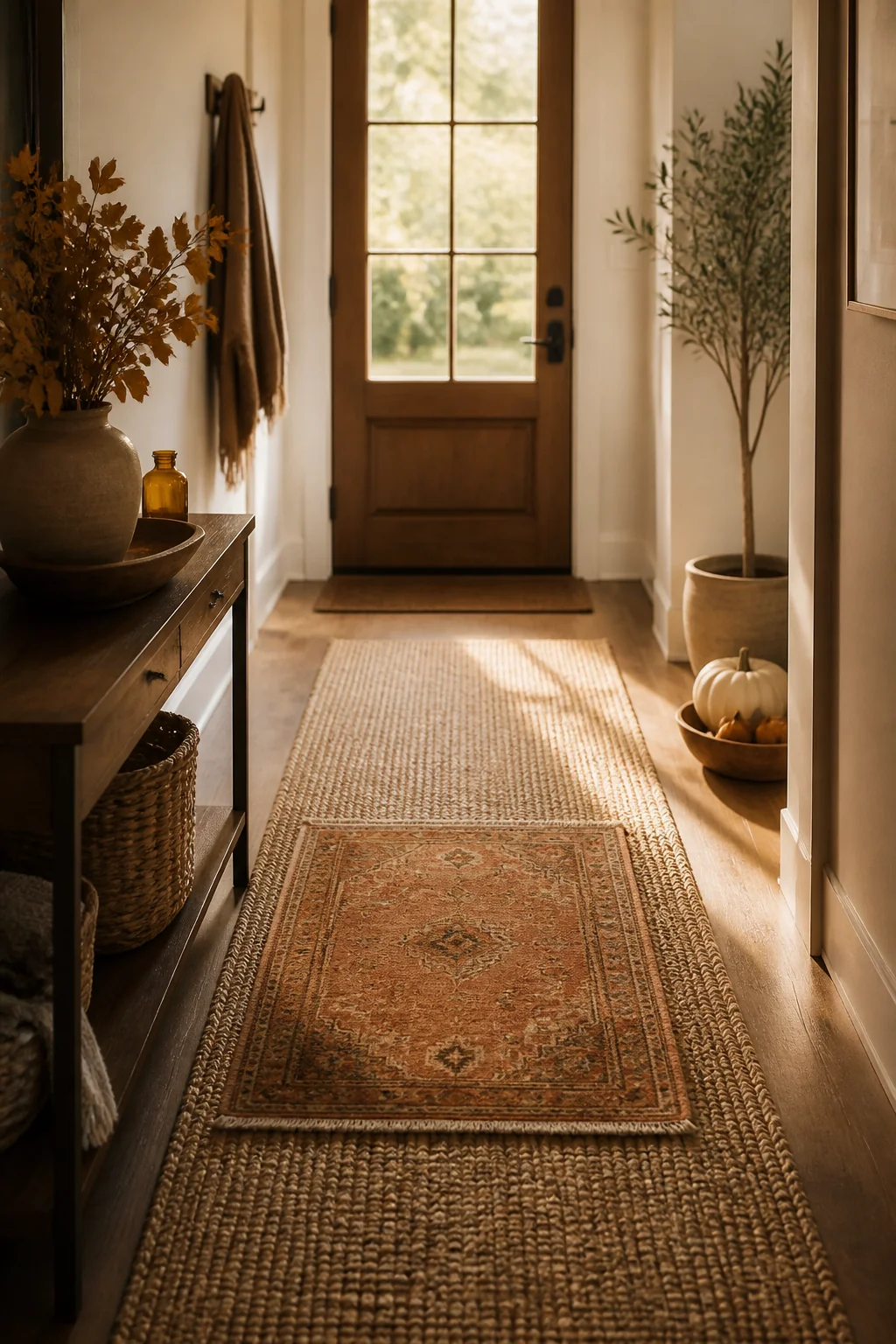
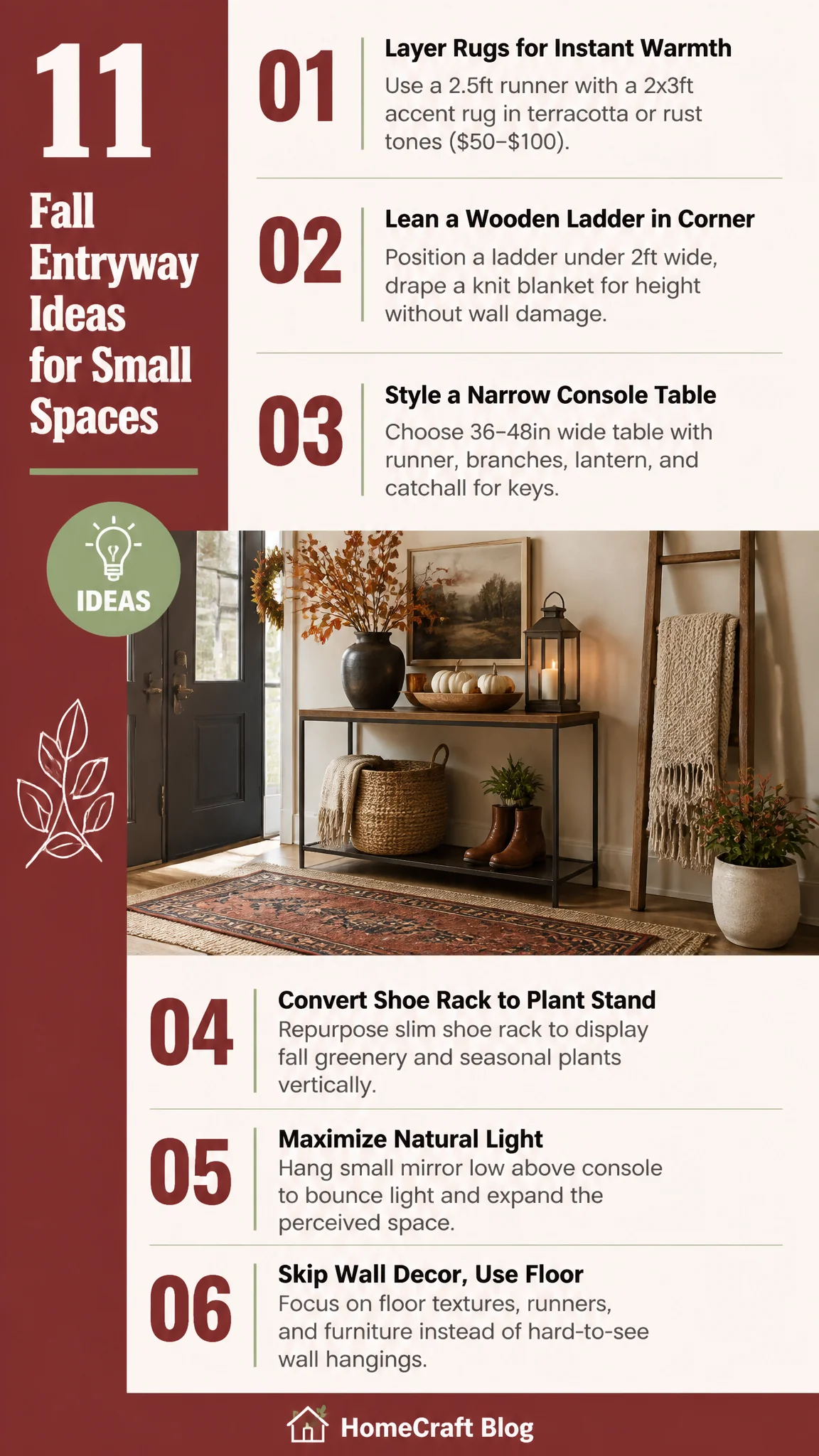
A runner takes up almost no wall space but stops dirt at the door. Layer a fall-colored runner (about 2 1/2 feet wide and 6 to 8 feet long, roughly $50 to $100) with a smaller accent rug on top to catch the eye when someone walks in. The smaller rug should be about 2 by 3 feet and sit in front of your outer door or at the threshold. Choose warm terracotta, burnt orange, or deep rust. The layered effect fills the space without hanging anything, and runners are easy to pull up if you're renting. If light comes in from above or the side, the texture and color read right away.
2. Hang a narrow wooden ladder against the short wall
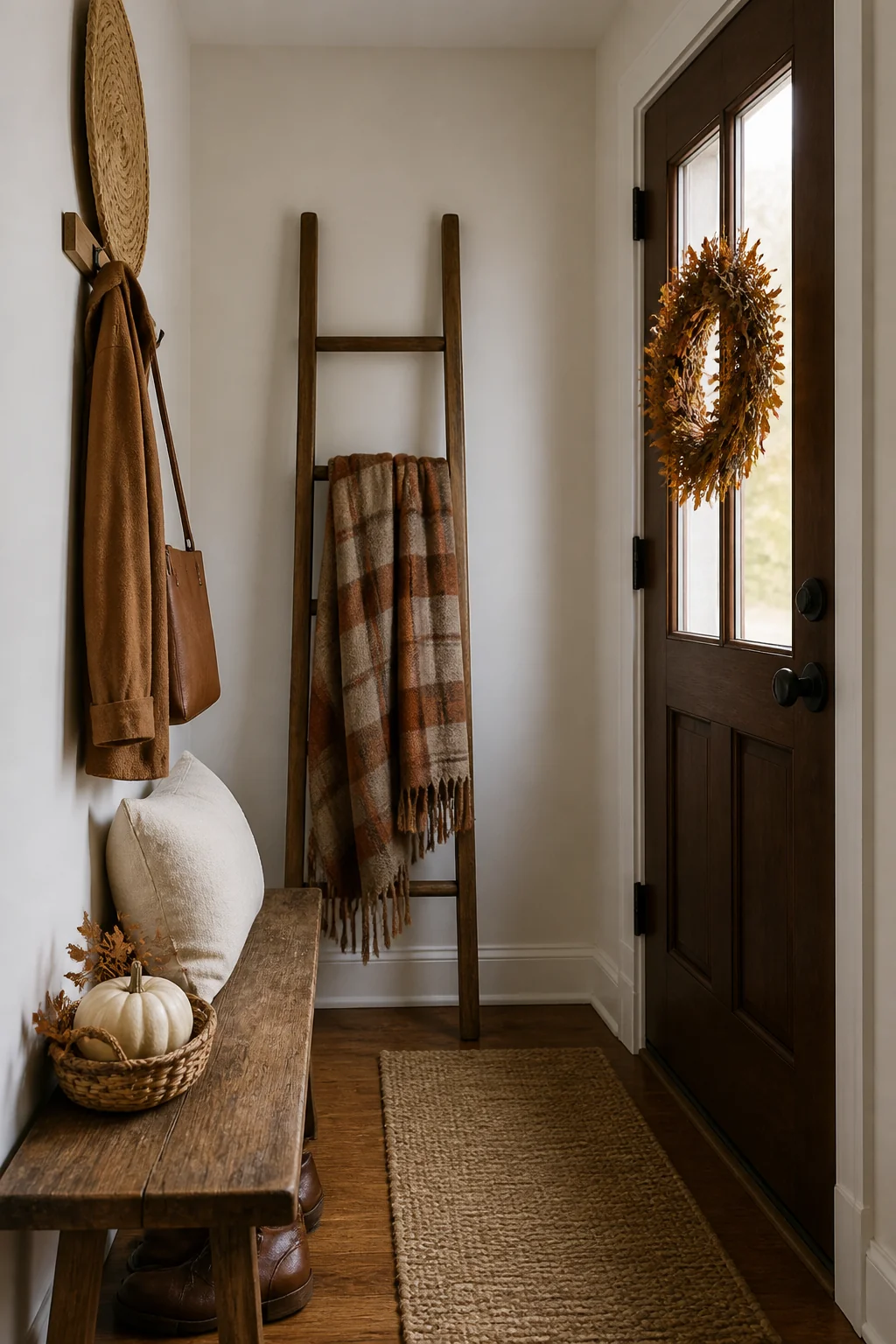
A wooden ladder leans without screwing into studs and works in renters' entryways. Lean it at a slight angle in the corner or against the wall next to your door. Drape a chunky knit blanket or a plaid throw over two rungs so it's visible as soon as someone enters. The ladder takes up minimal floor space (most are under 2 feet wide) and creates instant height without eating into a hallway. You can swap the blanket seasonally, and the whole setup leaves no nail holes. This works best when your entryway wall is short and your ceiling is normal height; if you have a closet door that swings open, position the ladder on the other side so it doesn't get in the way.
3. Style a small console table instead of the walls
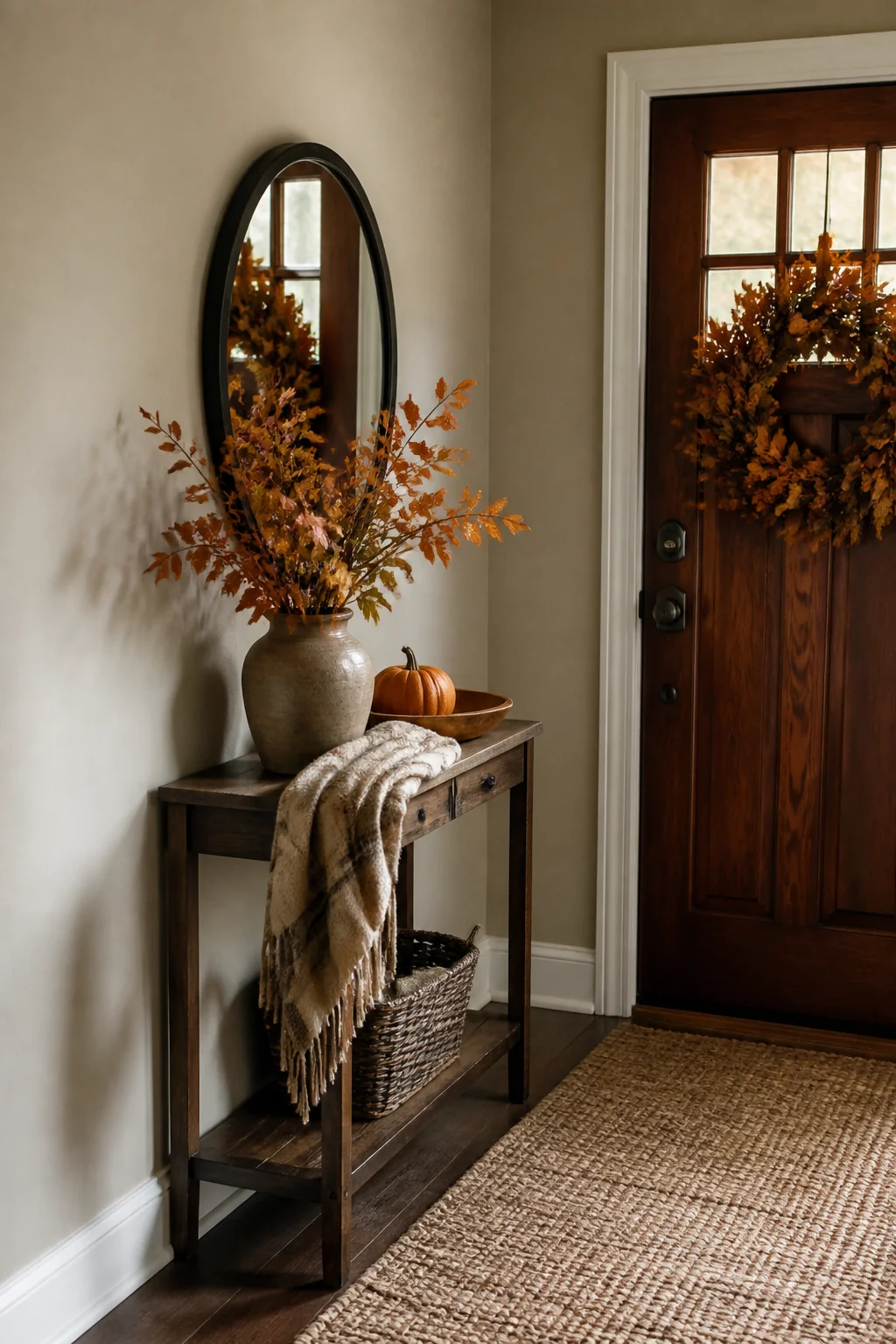
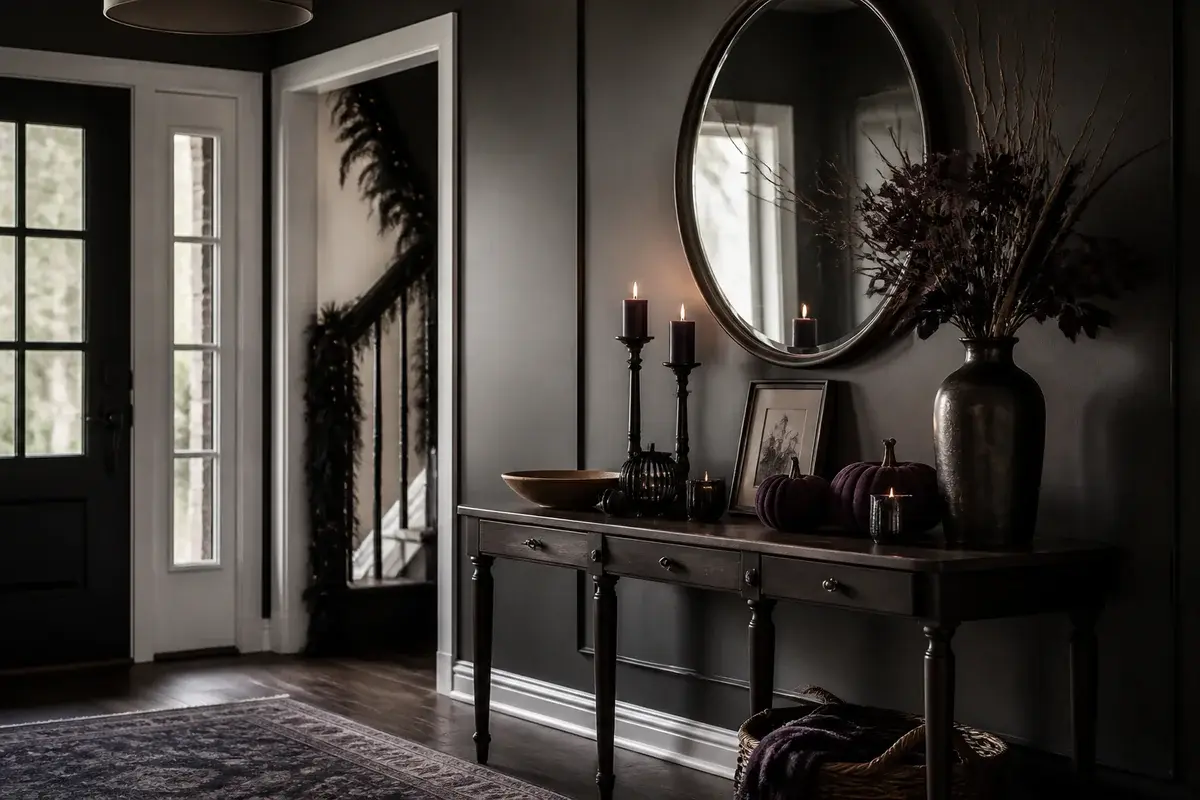
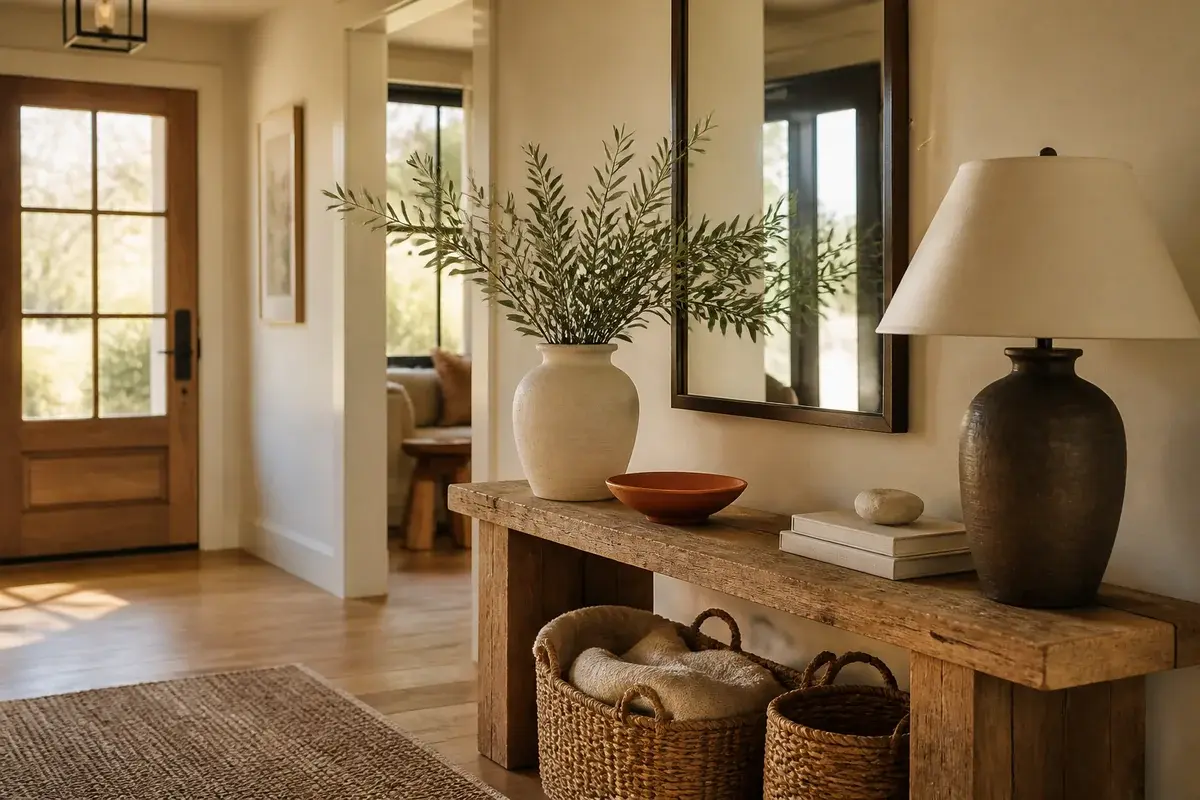
Skip trying to decorate walls and instead layer objects on a narrow console that fits beside your door or under a small window. Start with a table about 12 to 16 inches deep and 36 to 48 inches wide (these run about $150 to $250 for solid wood). Top it with a table runner, a small vase with fall branches, a lantern with a battery candle, and a catchall dish for keys. The console becomes your focal point. The wall behind it stays mostly bare, and you've created a functional landing spot that reads as finished. A small mirror hung low above the table bounces light and makes the space feel bigger without taking up floor area.
4. Use a narrow shoe rack as a plant stand for fall greenery
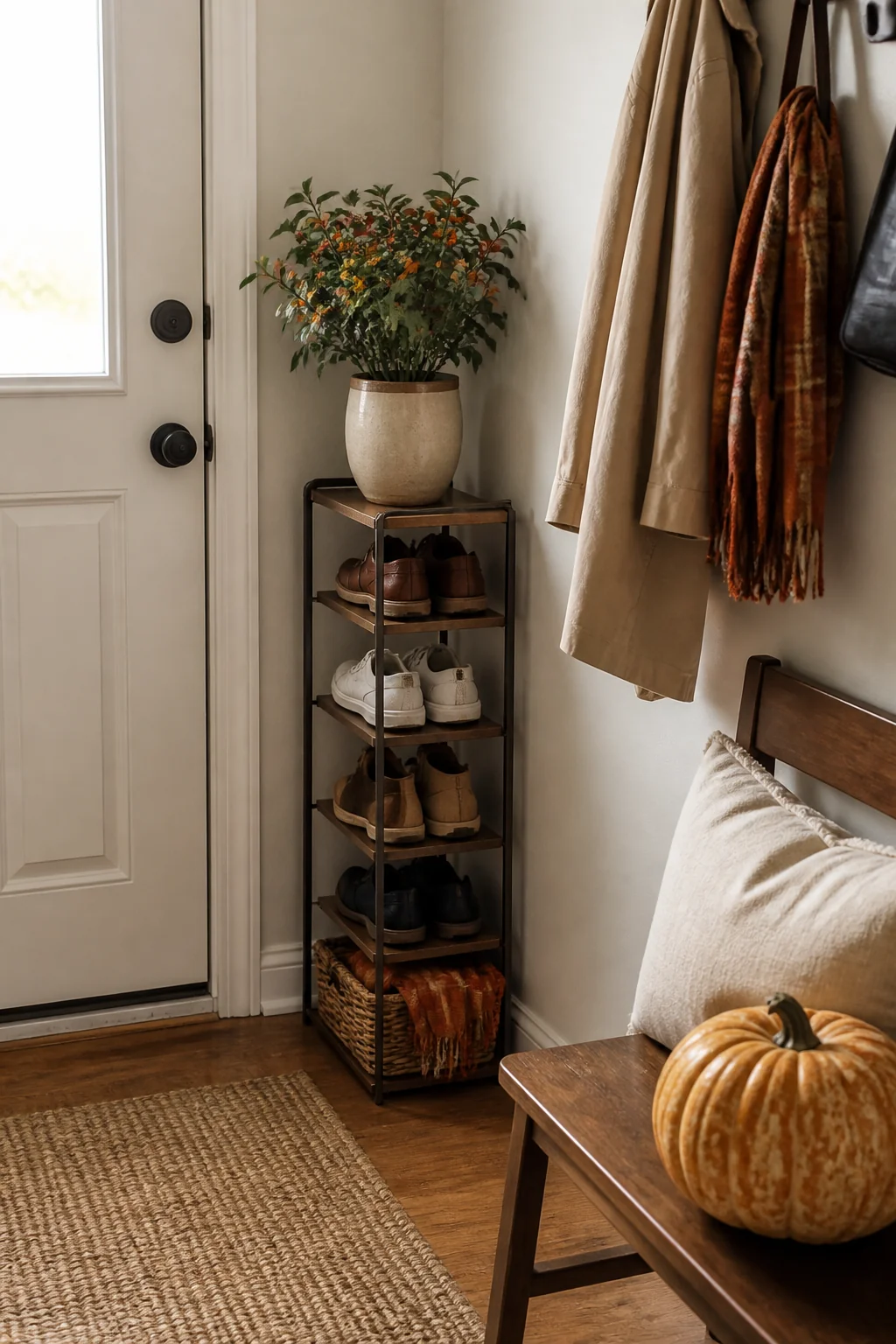
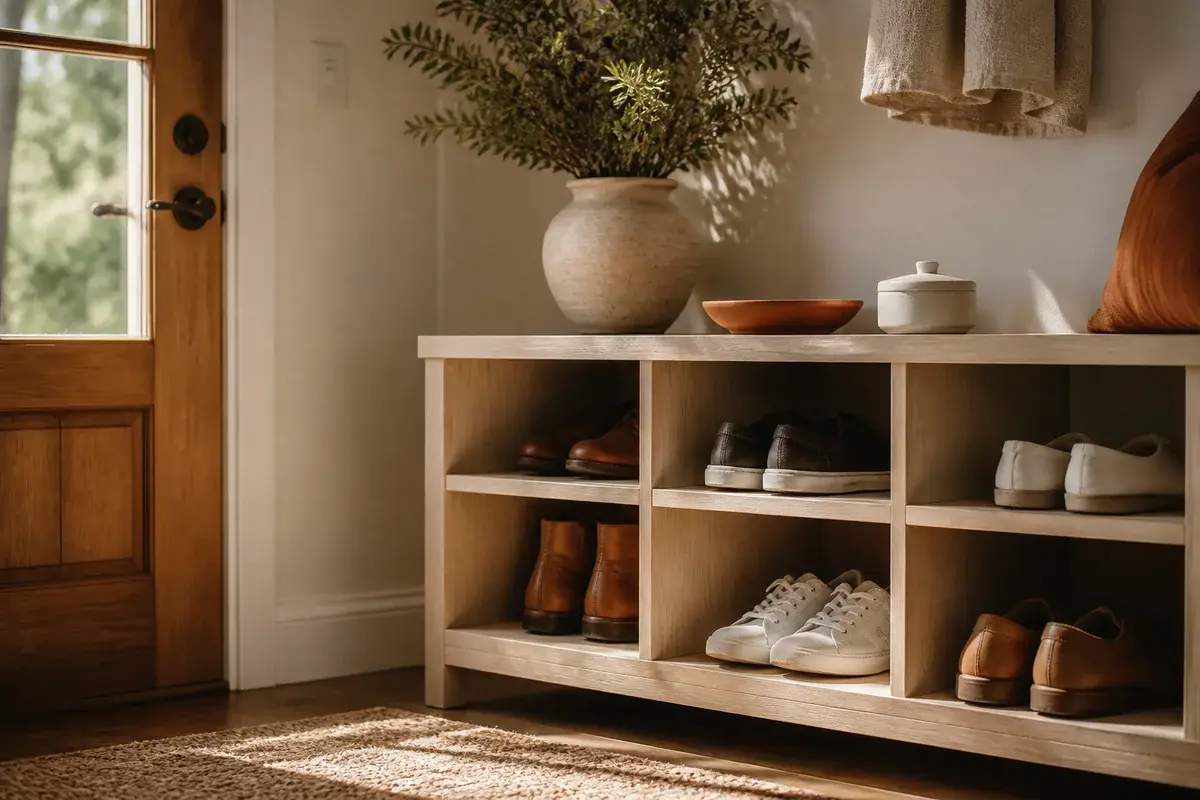
A slim shoe rack with three to five tiers isn't just for shoes. In a tight entryway, use it to hold small potted plants, dried fall leaves in glass bottles, or a mix of both. These racks are usually about 24 inches wide and 36 to 48 inches tall, and they cost $30 to $60. Place it in a corner or beside your closet so it doesn't block foot traffic. Stack terracotta pots with ornamental grasses or mums on one tier, arrange small pumpkins on another, and tuck in branches of hypericum berries or wheat stalks. The vertical storage works well when you have almost no floor space, and it keeps fallen leaves contained in one spot instead of scattered across a table.
5. Hang a wreath slightly off-center on your door
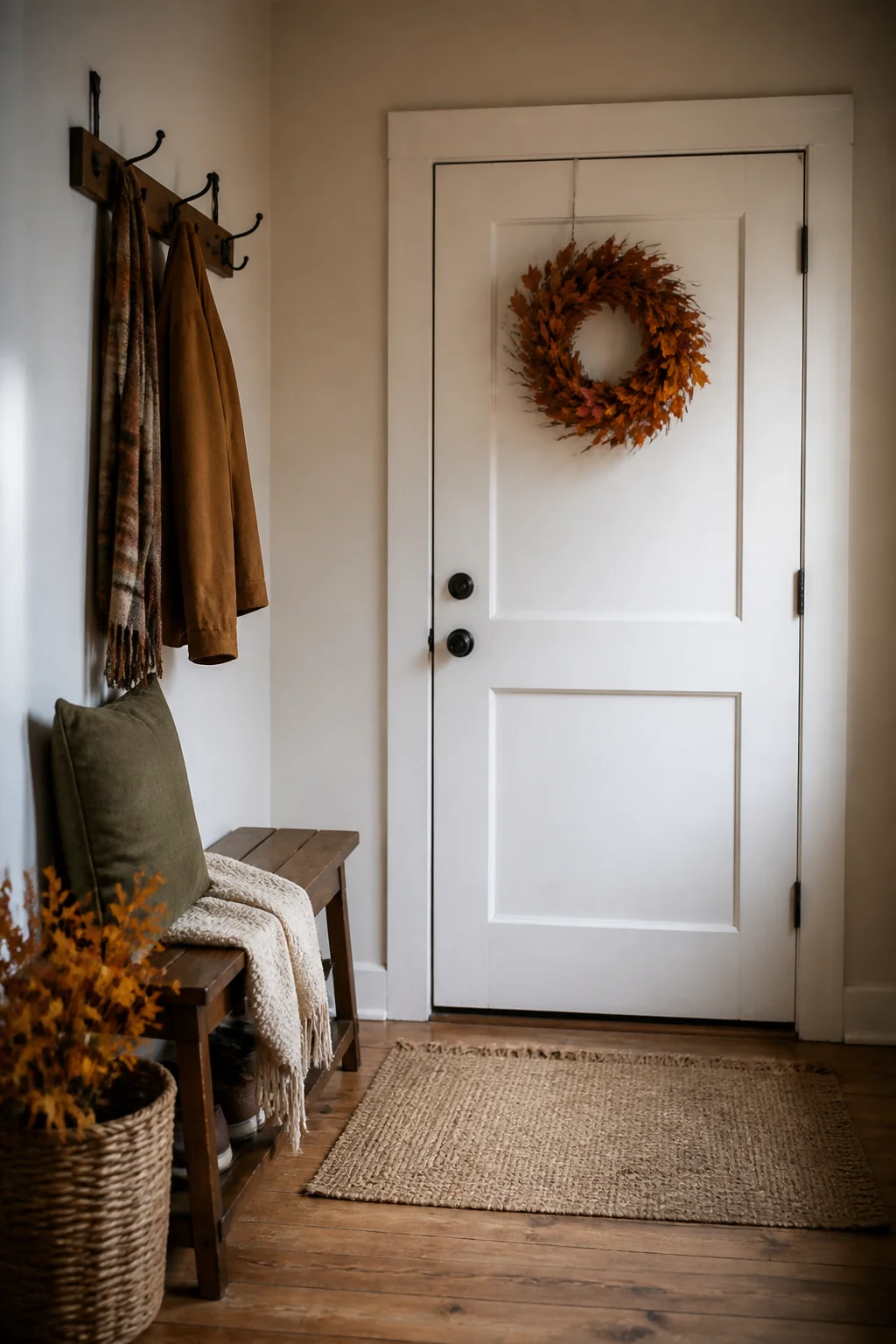
Your front door is prime real estate in a small entryway because it doesn't eat into any wall space. Hang a fall wreath at eye level off-center rather than dead center; it's more interesting and makes the door feel intentional. A 20-inch wreath with burnt leaves, berries, and twigs (about $40 to $80) reads from the sidewalk and the inside hallway both. Choose a wreath where the backing is minimal so it doesn't stick way out into your entryway. If you can't nail into the door, use a thin over-the-door wreath hanger that holds the weight without damage. A wreath gives you all the seasonal impact with zero wall space used.
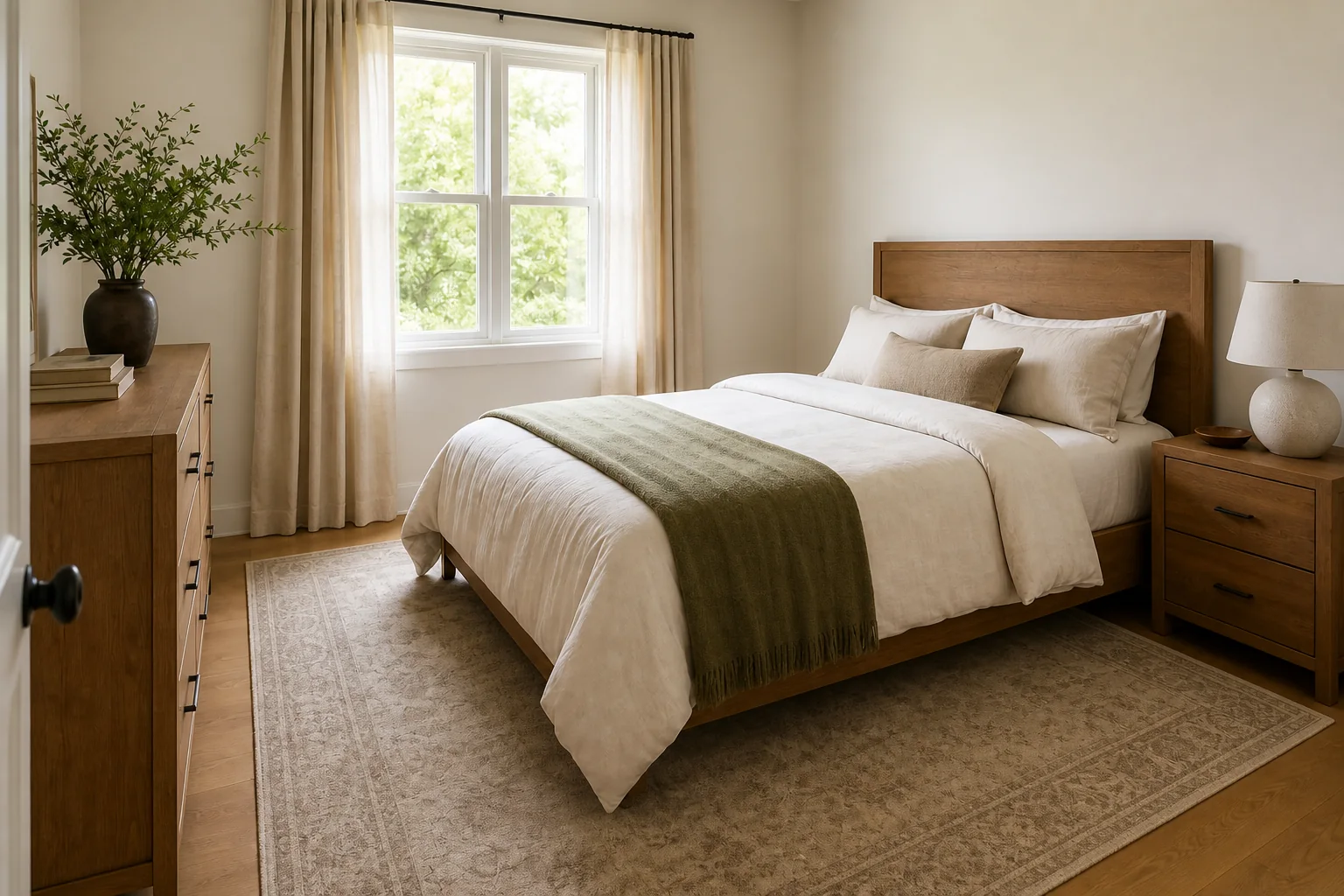
6. Create a low shelf arrangement with fall objects on your existing furniture
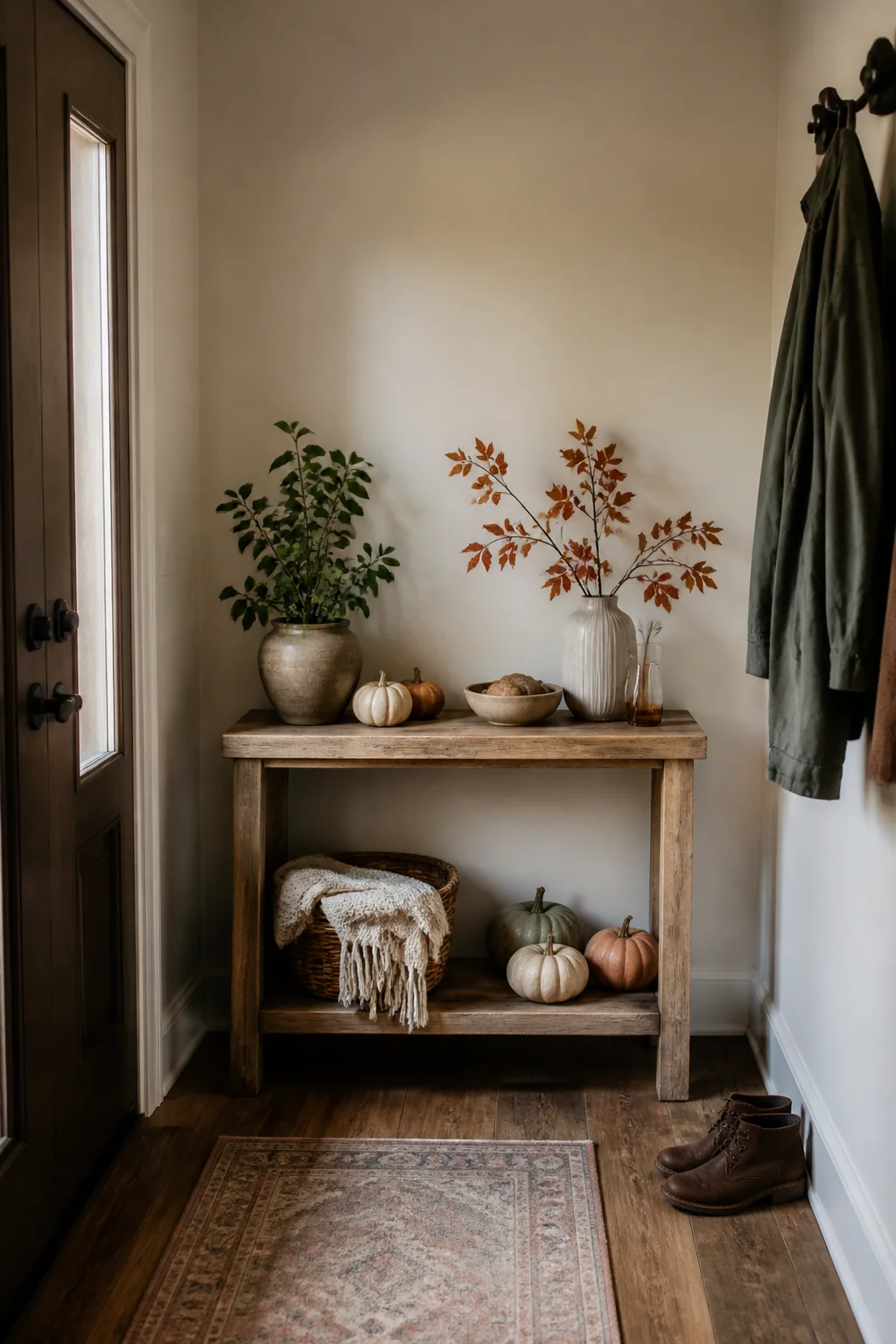
If you have a table or any horizontal surface, group objects in a tight cluster: a small lantern, one or two potted plants, a wooden box, a stack of books with a fall cover facing out. (You're looking at maybe $15 to $40 total for these objects if you already have some.) The key is keeping everything low so it doesn't block sightlines in a narrow hall. Use odd numbers: three items, five items, not four. Place the tallest object in the back and work shorter toward the front. This arrangement works in a 2-foot-wide hall as long as it sits on a table you already own and doesn't spill onto the floor.
7. Place lanterns on the floor beside the door
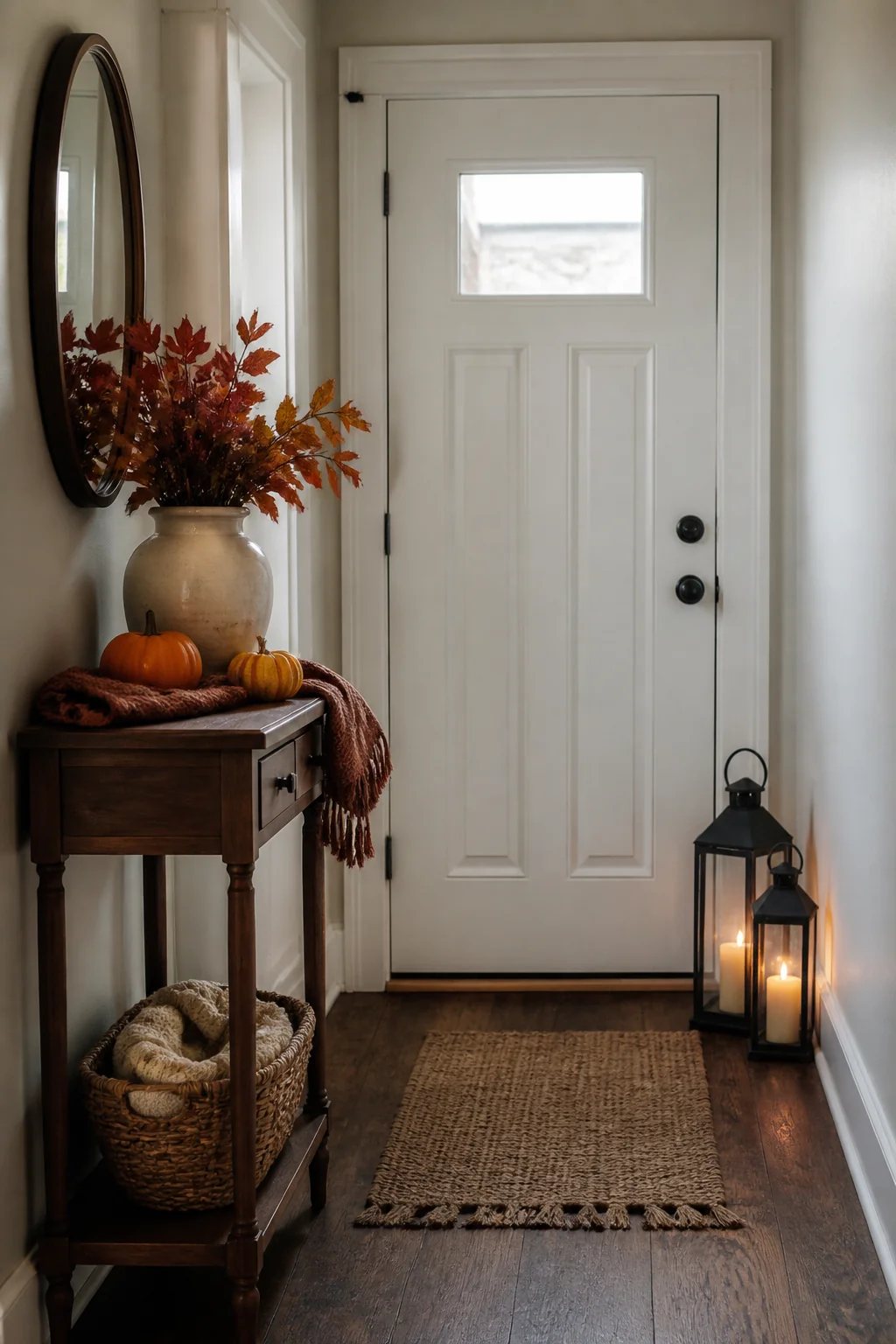
When wall space and table space are gone, the floor is what you've got left. Set one or two tall lanterns (about 24 to 30 inches, $30 to $50 each) on either side of your inside door, or beside your outer door if you have a sheltered porch. Fill them with fall branches, battery candles, or strings of tiny lights. This draws the eye down to the threshold and creates a sense of arrival without using any wall or horizontal surface. Lanterns stay out of the foot traffic path if you position them snug against the wall or in a corner. This idea only works if you have a little floor space to spare, but most entryways have a 12-inch buffer beside the door.
8. Attach a slim wall-mounted shelf for seasonal rotation
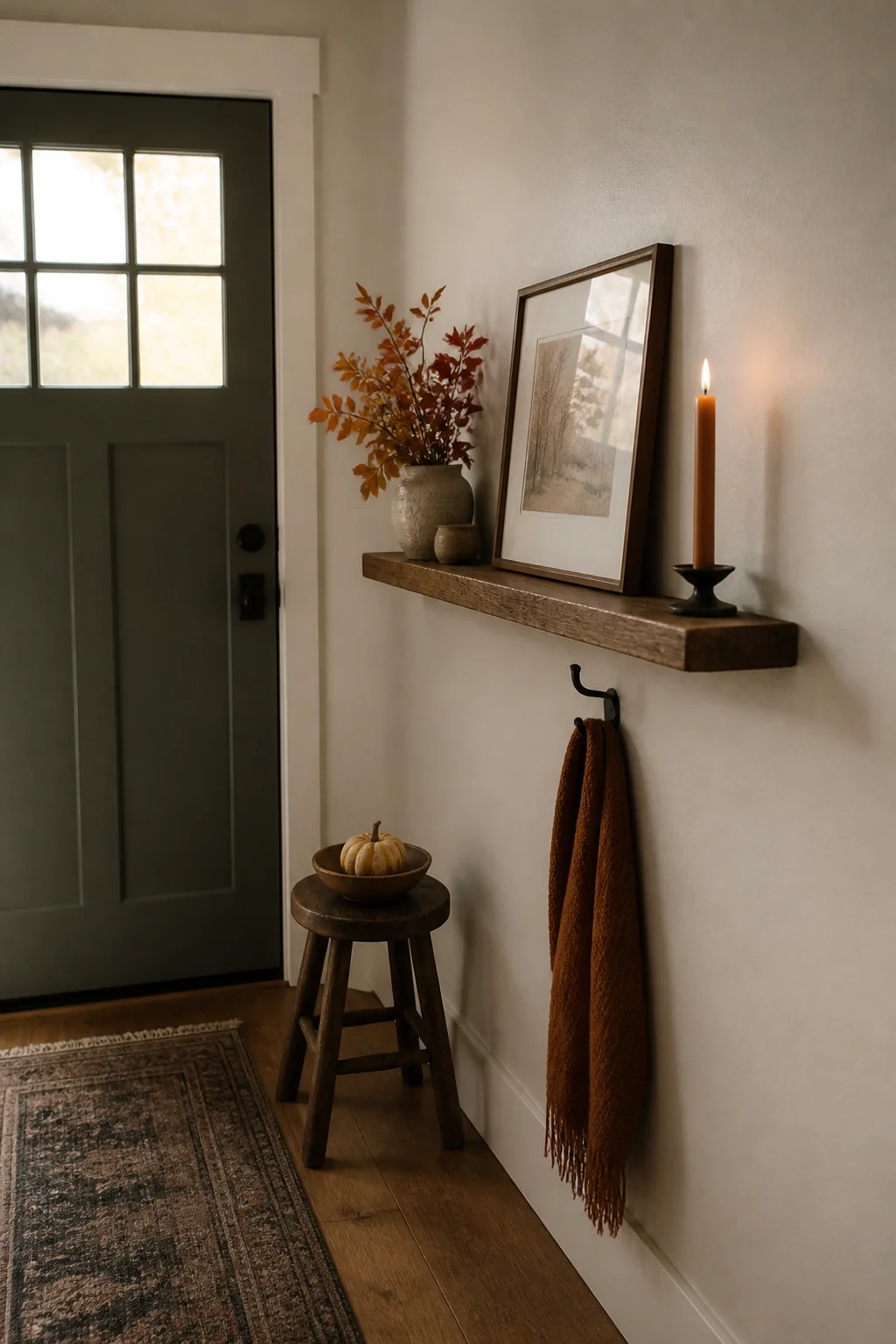
A slim floating shelf about 8 inches deep and 24 to 36 inches wide (around $40 to $80) mounts at eye level and uses almost no wall real estate. It stays narrow enough that someone walking past barely brushes it. Stack three to four small objects on it: a lantern, a potted succulent, a fall candle, and a small framed print. Rotate the items each week if you like, or keep the same arrangement all season. The shelf is barely visible from the sides, so it works in tight hallways. If you're renting, a removable shelf adhesive system ($15 to $25) avoids holes. Make sure the objects on top don't stick out far enough to block shoulders when people walk past.
9. Hang harvest or fall branches from a ceiling hook
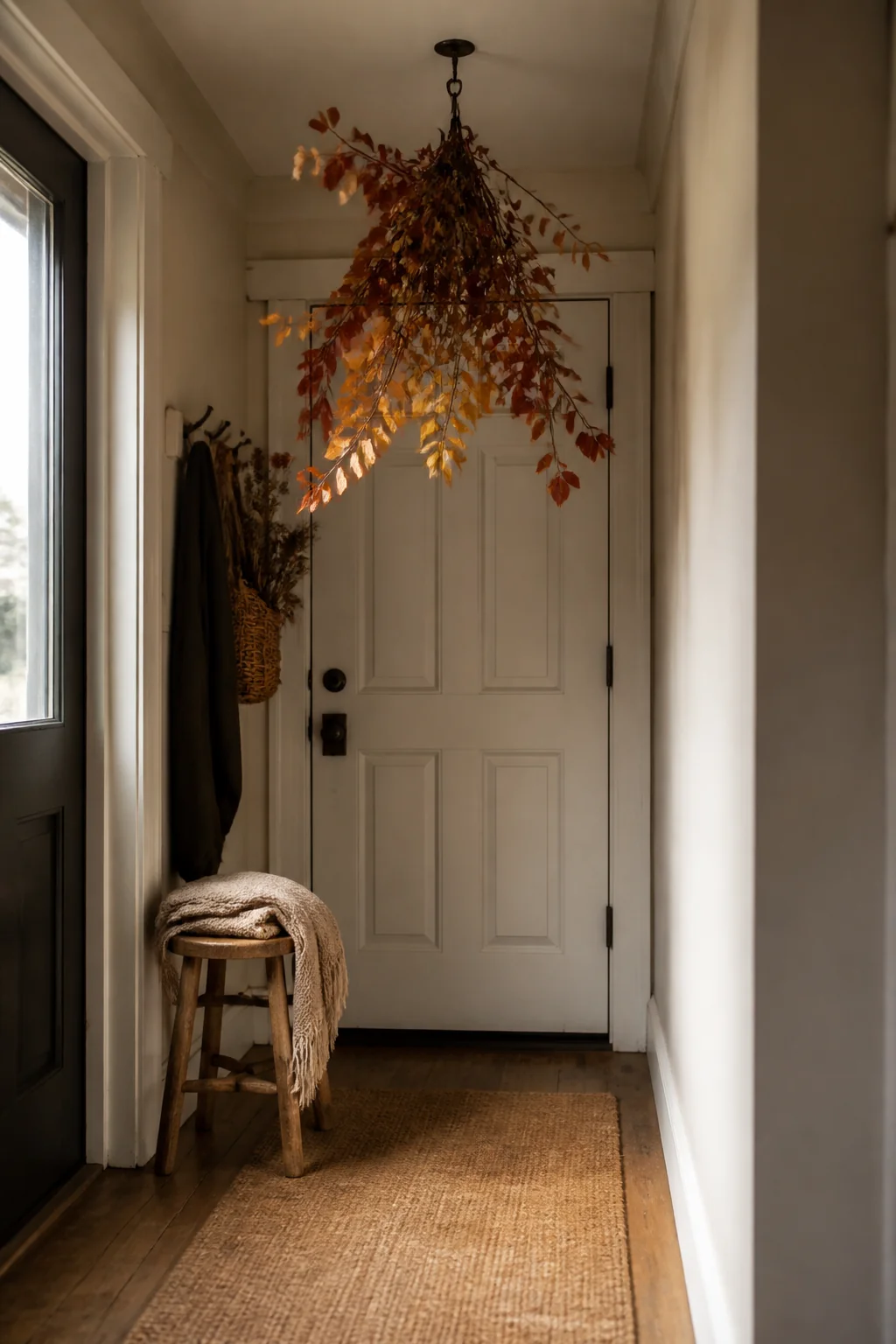
If you have high ceilings in your entry and can reach with a step stool, a single ceiling hook holds a bundle of long fall branches tied together with twine or leather cord. This costs almost nothing if you gather branches from outside, or about $20 to $40 if you buy them dried from a florist. The branches hang down about 12 to 18 inches and create a natural focal point above the door or in the middle of your foyer. Branches don't block a doorway, don't eat wall space, and read as deliberately seasonal. The downside is that tall people might hit their heads, so know your ceiling height and position this only in an open area. This is best for foyers with at least 8 feet of clearance.
10. Use a doormat as your only floor decoration
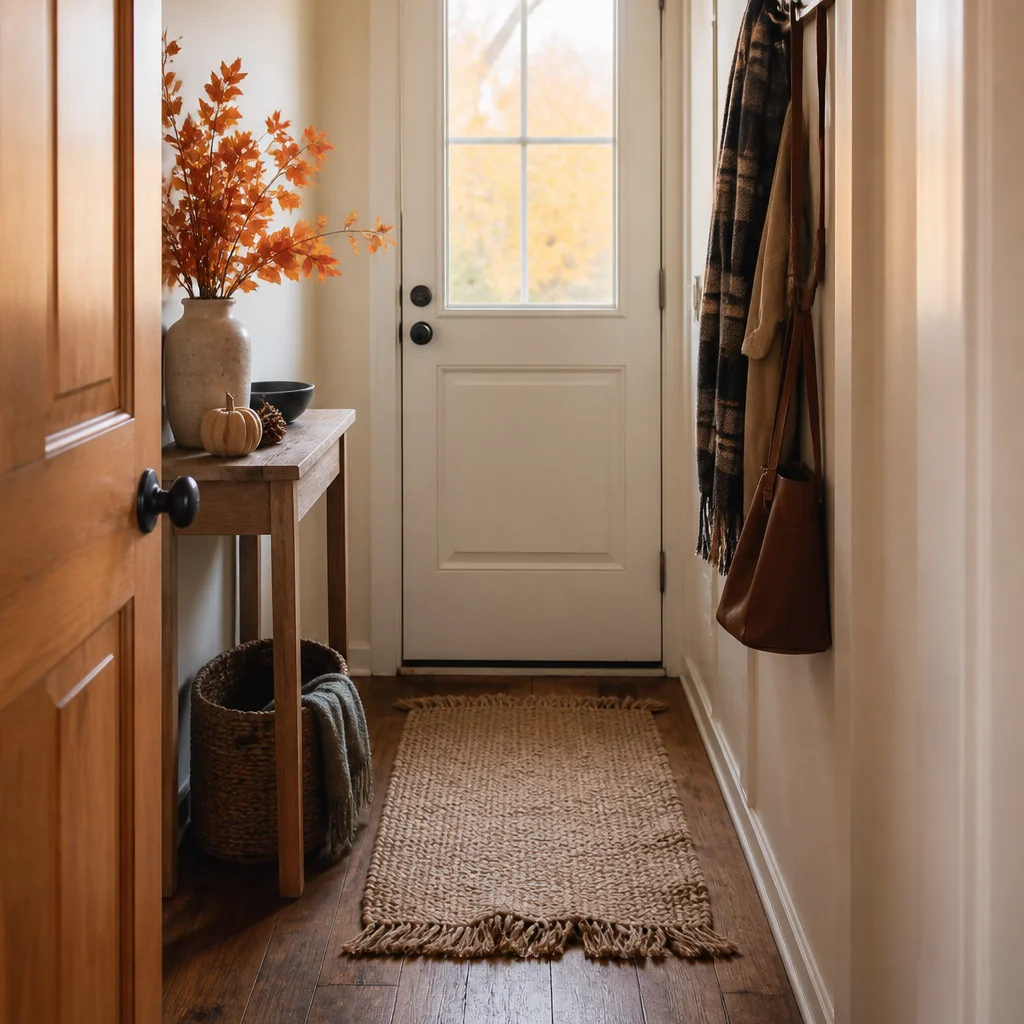
A thick, beautiful fall-colored doormat serves double duty: it's functional and decorative. Choose one in rust, deep gold, or charcoal with a pattern that reads from the street (about 24 by 36 inches, $25 to $50). Place it just inside your door or just outside on a dry porch. A single, high-quality mat does more work than trying to layer rugs or add extra objects. It signals that someone lives here and cares about the details. If your entryway is only 4 feet long, a single mat plus one small object on a nearby surface is enough. This approach works best in tight spaces where less really does read better.
11. Prop a fall-themed art print or wooden sign in a corner
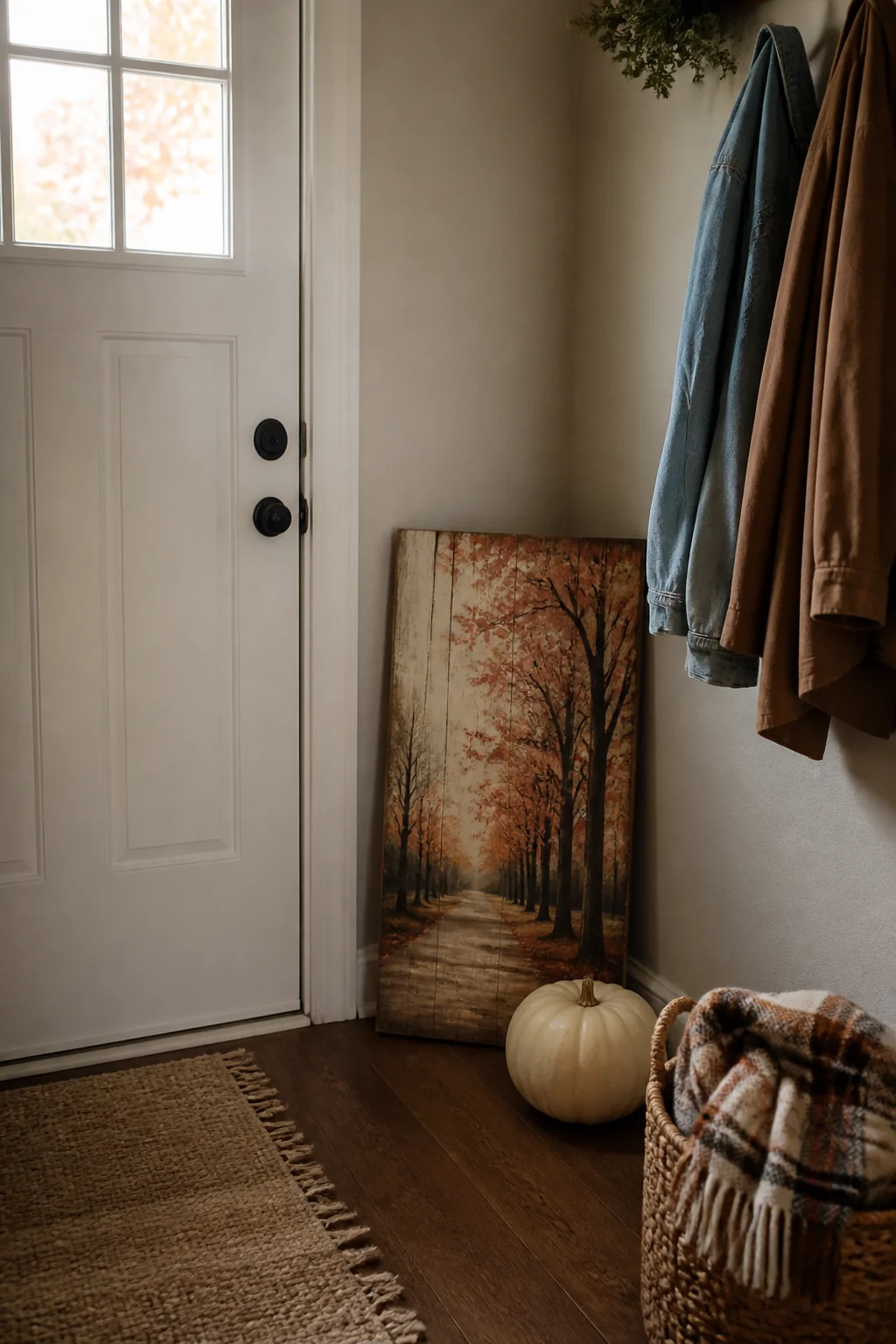
A wooden sign or fall-themed art print (about 12 by 18 inches, $15 to $40) leans in the corner where your entryway walls meet. No nail holes, no drilling, and it takes up maybe 2 square feet of floor space. Choose something with fall colors or text that ties into the season ("gather," "grateful," "harvest"). Stand it on its own or lean it against a small stand. This works well in corners that would otherwise be empty or dark. Swap it out seasonally or flip it to a new image each month. The sign stays visible from the hallway but doesn't block traffic or take up any wall surface.
Save the full guide
Small entryways and rentals have different constraints than spacious foyers you own. In a narrow hall, vertical storage and floor-level decoration matter more than wall hangings, and layering multiple small objects usually crowds the space. In a rented apartment, removable solutions (runners, leaners, shelves on adhesive) beat anything that leaves holes. In a foyer where people move through quickly, a single strong focal point (a wreath, a runner, a ladder with one blanket) reads better than a fussy collection. Start with what your space actually needs: a place to set things down, a visual entry point, and one or two objects that signal the season without stopping traffic.
Ideas fade by Friday. A plan finishes the room.
You just read a full guide to your entryway. Saving ideas will not change it; a plan will. The Home Decor Collection is every planning tool we make, for every room in the house, in one download, so the after photos below stop being other people's rooms.
- Six room Style Kits, each with layout, palette and shopping list$114
- The Gallery Wall Studio: 200 prints + 15 measured layouts$29
- The Room Makeover System: 40 solved room layouts + workbook$29
- The Color Palette Handbook: 60 palettes shown in real rooms$19
- The Whole-Home Reset: 40 printable organizing checklists$19
- The Decorator's Cheat Sheets: the 40 measurements that matter$9
- All eleven products, bought separately
$219$97
A single hour with an interior designer costs more than the entire Collection, and this one keeps answering for every room you will ever decorate. Free updates included as the products grow. And if it is not for you, the 14 day money back promise means you simply get a refund.