11 Charming DIY Fall Garland Ideas for Your Front Porch
Build fall garland that stays full and shaped all season with these 11 diy fall garland ideas using rope, leaves, and harvest materials.
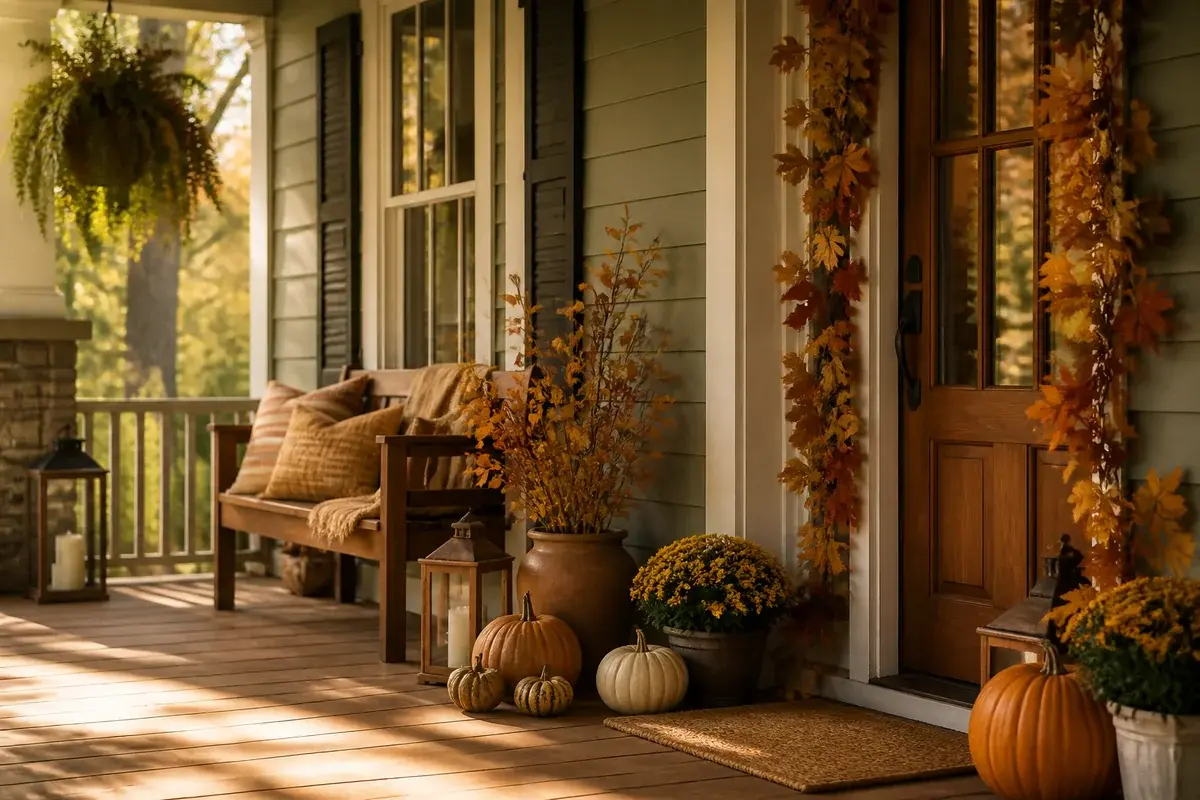
Most fall garlands fail because they look sparse or too uniform as they age. A thin strand of leaves reads thin all season. The fix is to build garlands thick enough that they hold their shape, use materials that don't drop or fade hard, and anchor them so wind doesn't unravel your work. Here are eleven designs that read full and finished from the street, not makeshift.
1. Wrap dried corn husks around a rope core
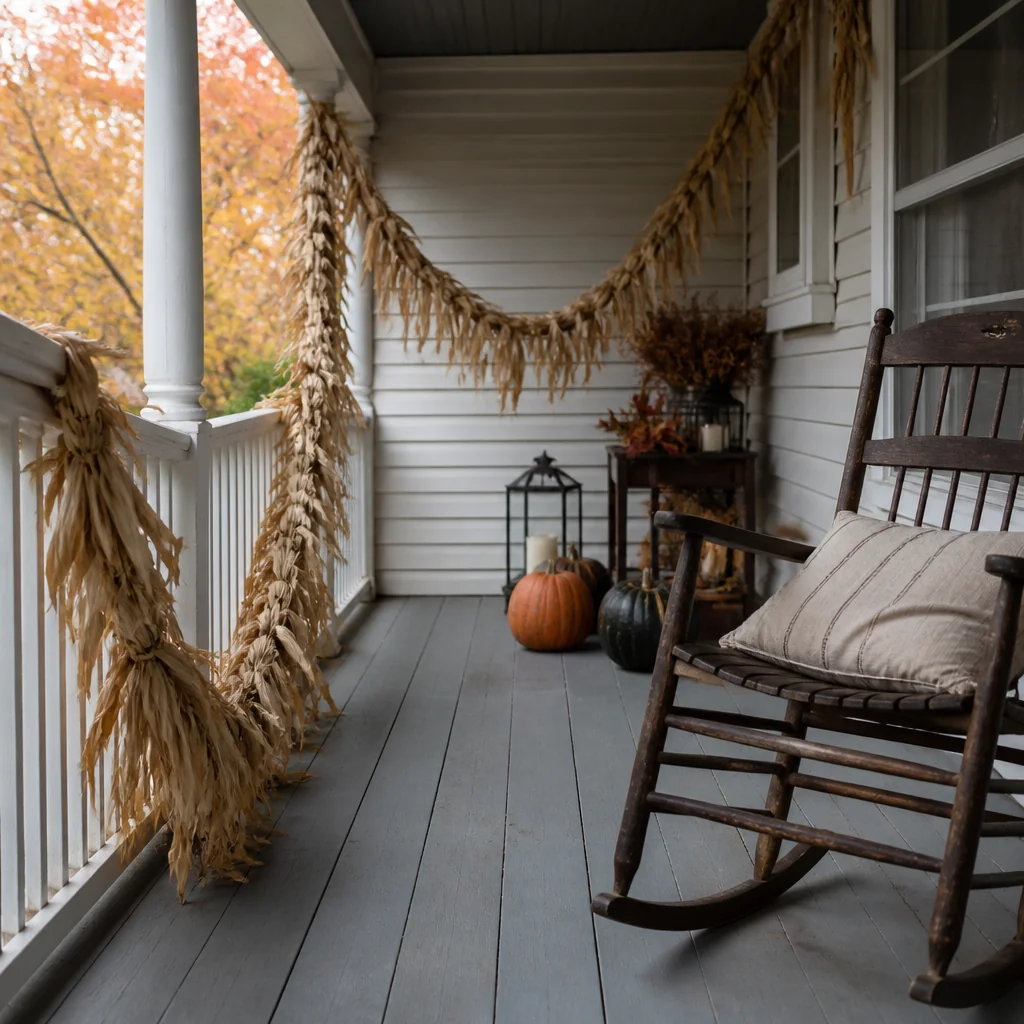
Start with a 6-foot length of 1/2-inch rope from the hardware store (about $3). Dry corn husks in the oven at 200 degrees for 45 minutes, then tie them on with twine, layering them so each piece overlaps the one below. This creates real density - you won't see the rope underneath. The husks stay pale and don't crisp to nothing by November the way fresh corn silks do. Space the bundles 3 to 4 inches apart so the rope reads as a backbone, not a gap. This method takes about two hours for a 6-foot run, and the finished garland weighs almost nothing, so mounting brackets can be light-duty.
2. Bundle wheat, pampas, and dried grasses at intervals
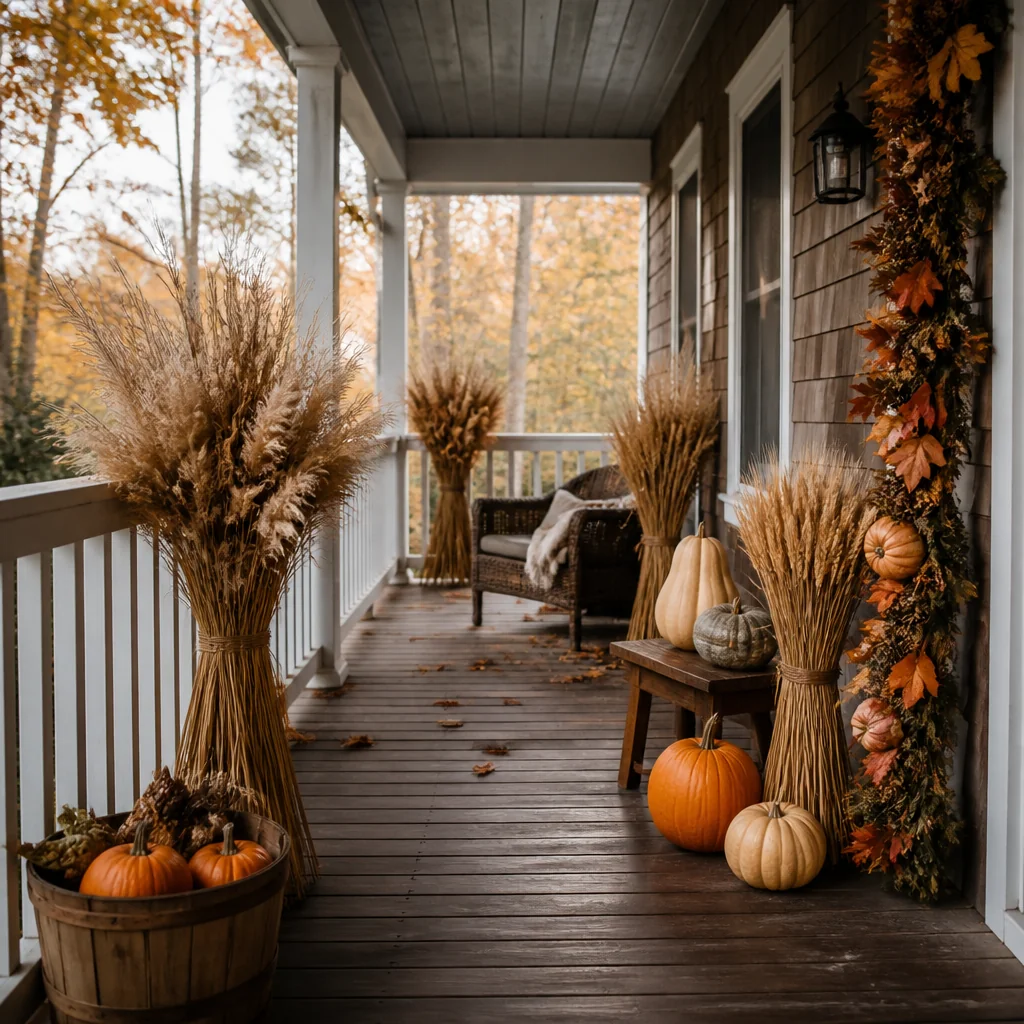
Gather three or four stems of wheat, three of pampas grass, and a handful of dried ornamental grass. Bind them tight at the base with floral wire, leaving 2 to 3 inches of stem showing. Space these bundles 8 inches apart along a rope, tying each bundle with twine over the wire. The height variation across the different grasses reads organic and full, even if the overall garland is thin. Pampas grass holds its shape through wind and won't collapse like fresh foliage does. Find these at grocery stores with a floral section or online; expect to spend $25 to $40 for enough to cover 8 feet.
3. String together a chain of burlap bows
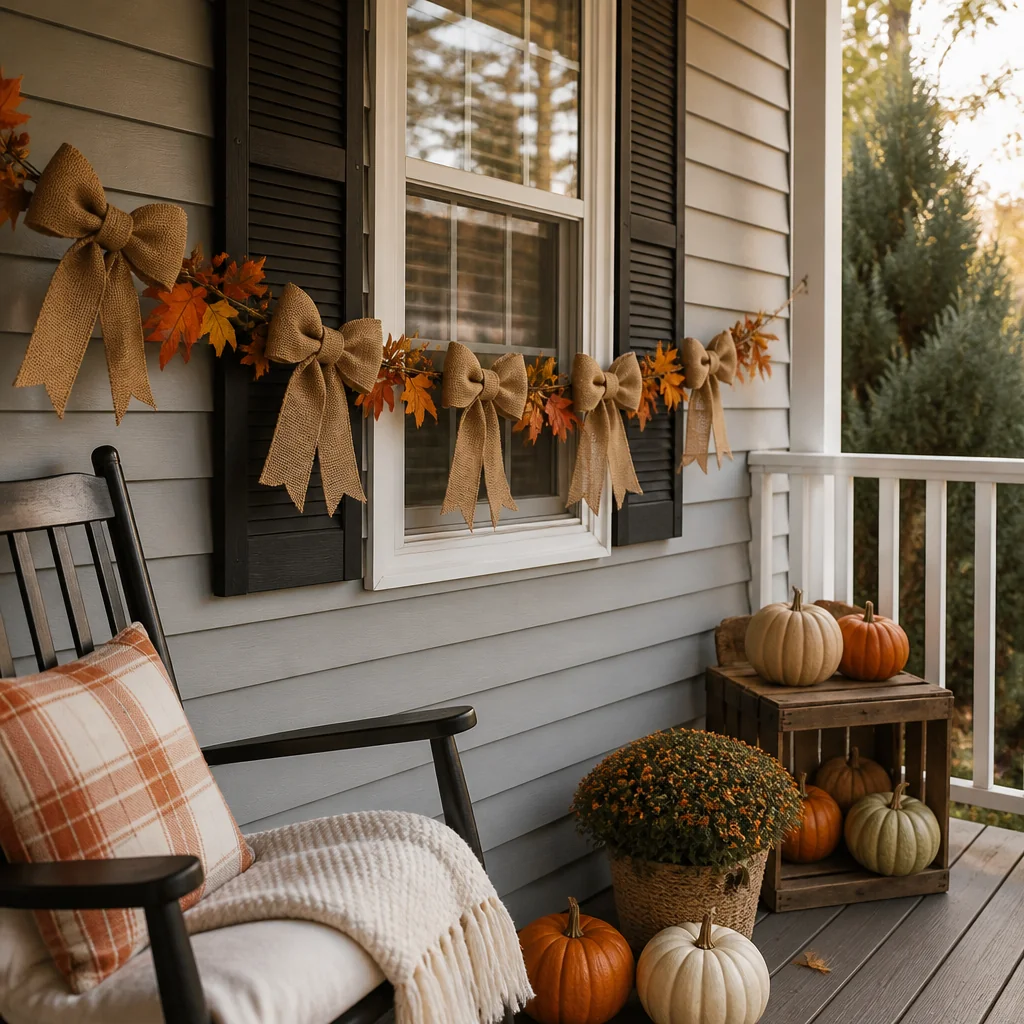
Cut burlap into strips roughly 3 inches wide and 12 inches long. Tie each strip into a bow, then thread twine or wire through the center of each bow. Space them 6 inches apart. The fabric catches light differently than vegetation, so your porch reads intentional and structured, not just "leaves tied to a rope." Burlap doesn't rot if it gets wet, and the color stays consistent through the season. A single roll of burlap fabric costs about $8 and makes enough bows for a 10-foot garland.
4. Layer newspaper leaves over a chicken wire frame
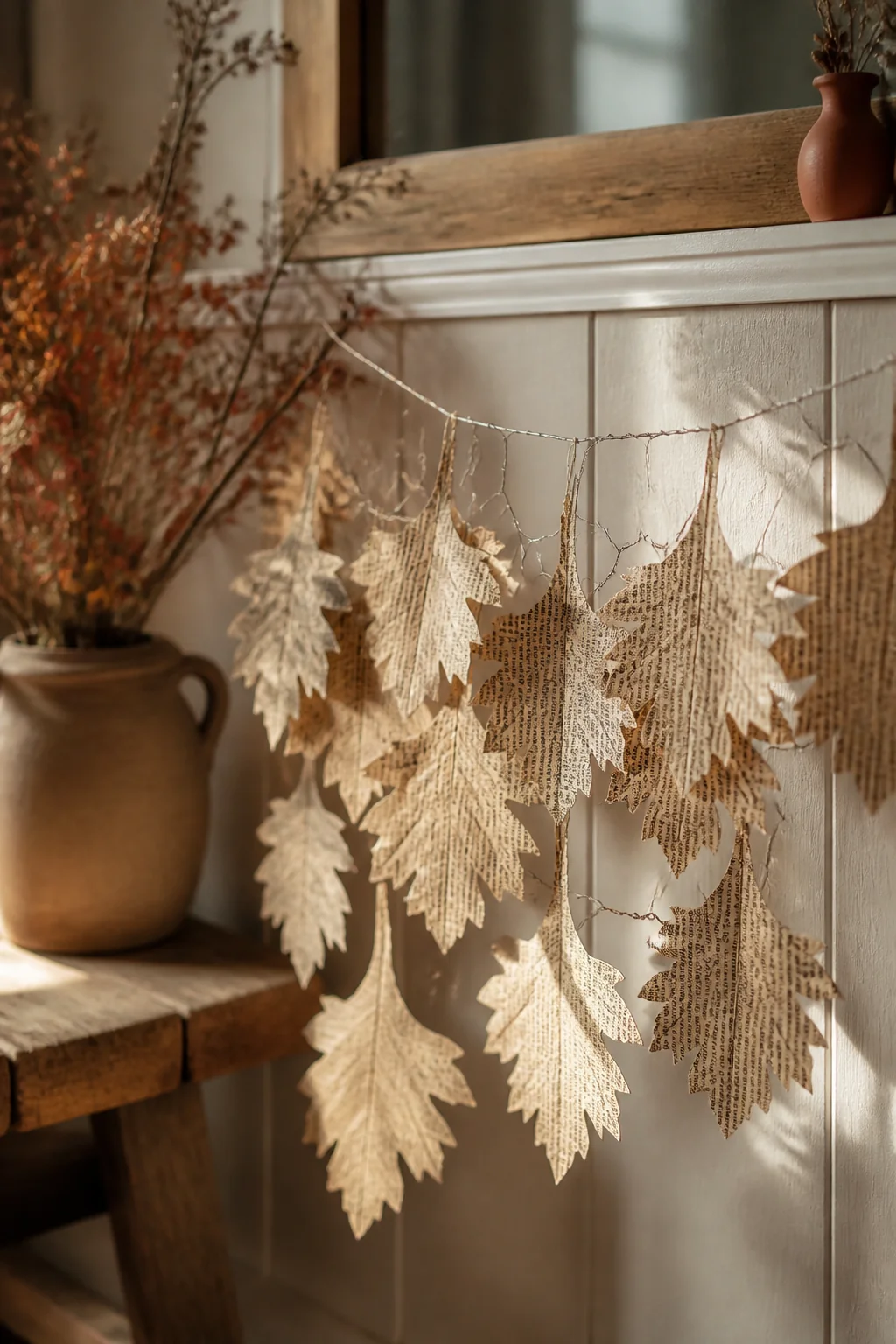
Crumple and fold old newspaper or kraft paper into leaf shapes, then hot-glue them onto a 4-inch-wide strip of chicken wire. Vary the sizes from postage-stamp small to your palm-sized. Paint them in deep oranges, reds, and browns. The layering gives you genuine depth - from the street, this reads as three-dimensional foliage, not flat. Newspaper is free if you have it, and a can of spray paint costs $5. This approach works best on a porch with a roof or an overhang; direct rain eventually softens the paper, though it takes weeks.
5. Attach real branches with small preserved leaves
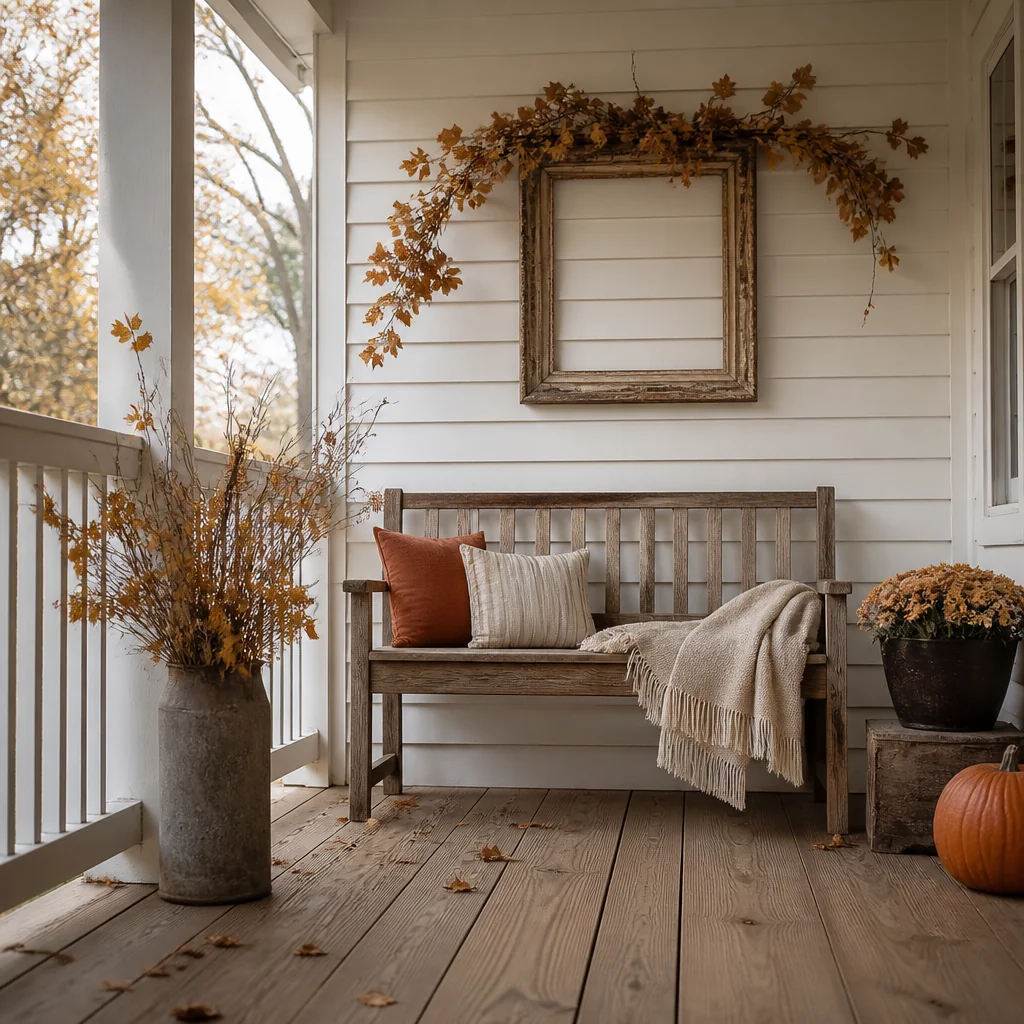
Gather branches 3 to 4 feet long and 1/2 inch in diameter from your yard or a park. Strip most of the foliage. Tie them horizontally along a wire frame using floral tape. Fill the gaps with small preserved leaves (sold at craft stores for about $10 per bundle) hot-glued or wired on. Preserved leaves don't turn to powder or drop, so the garland looks intentional through late November. The bare branches give structure; the preserved leaves add warmth. This garland weighs more than rope-based designs, so check that your mounting hardware can handle 8 to 10 pounds for an 8-foot length.
6. Alternate cranberries and small gourds on a wire strand
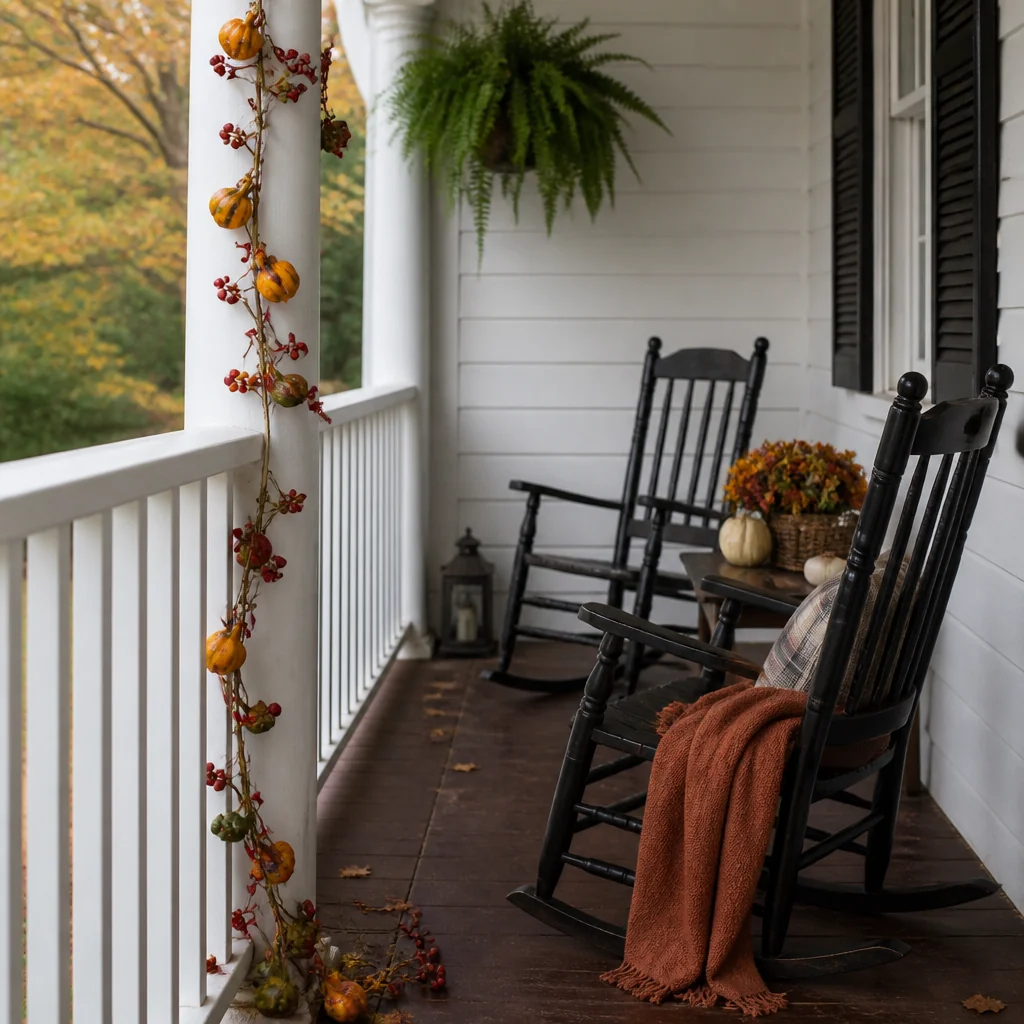
Thread a sturdy floral wire through the center of small faux cranberries, mini pumpkins, and baby gourds, spacing them 3 to 4 inches apart. This method sounds delicate but holds up because the gourds and berries don't absorb water. Real cranberries work too but will eventually shrivel and drop. A bundle of faux berries and gourds runs $15 to $20 and covers 6 to 8 feet. The repetition creates rhythm; the color stays bright (unlike fresh berries, which fade or turn black). This works especially well if your porch gets direct afternoon sun, since faux materials won't bleach as noticeably as dried leaves.
7. Weave fabric scraps through a grid of twine
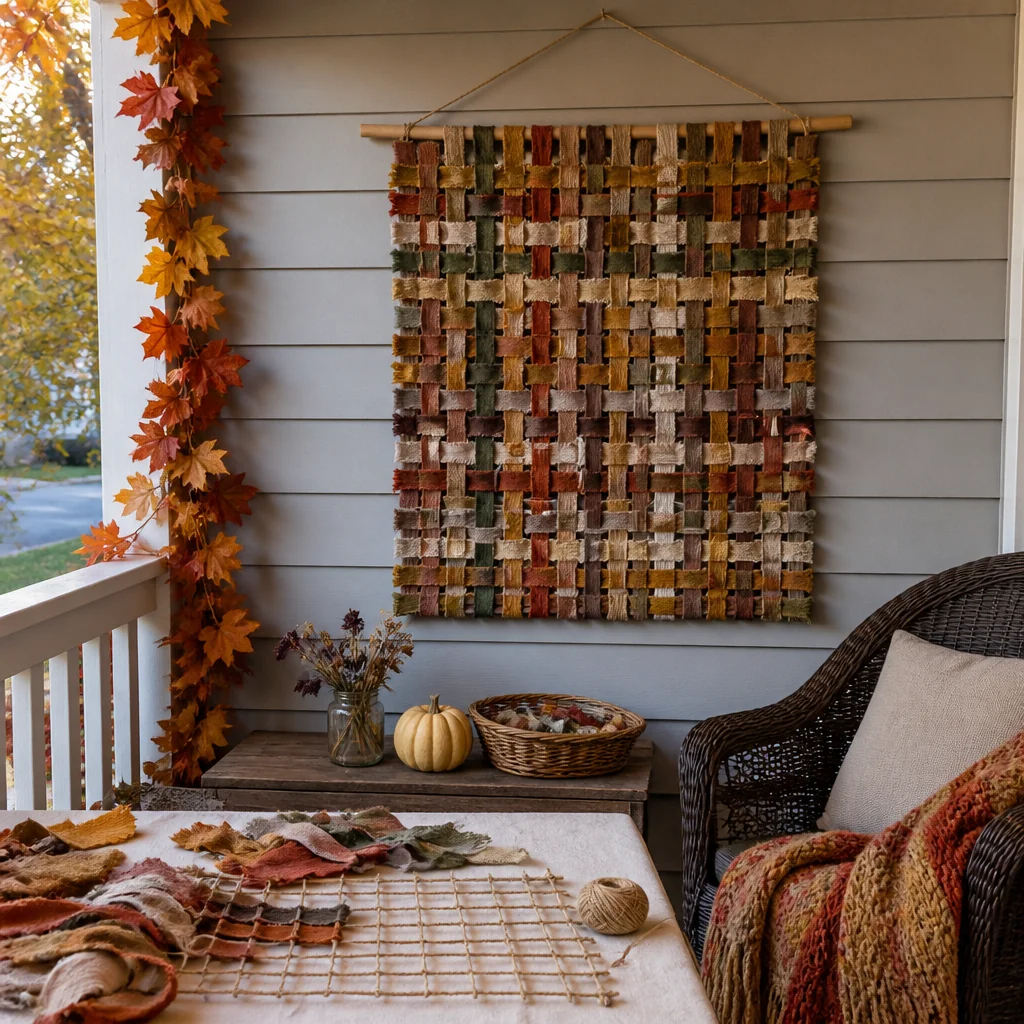
Create a 3-foot-wide grid by tying twine horizontally and vertically at 2-inch intervals between two sturdy posts or brackets. Tear fabric scraps - plaids, solids, stripes - into 2-inch-wide ribbons and weave them through the grid. The layering creates pattern and movement. You control the density by how many strips you weave in. This isn't technically a garland, but it functions as one and reads as intentional wall art. Fabric scraps cost nothing if you have them; a small bundle of fabric from a thrift store costs $3 to $5. Wind won't undo this because the weaving is locked in by intersecting twine.
8. Hot-glue fall leaves to a foam backing board
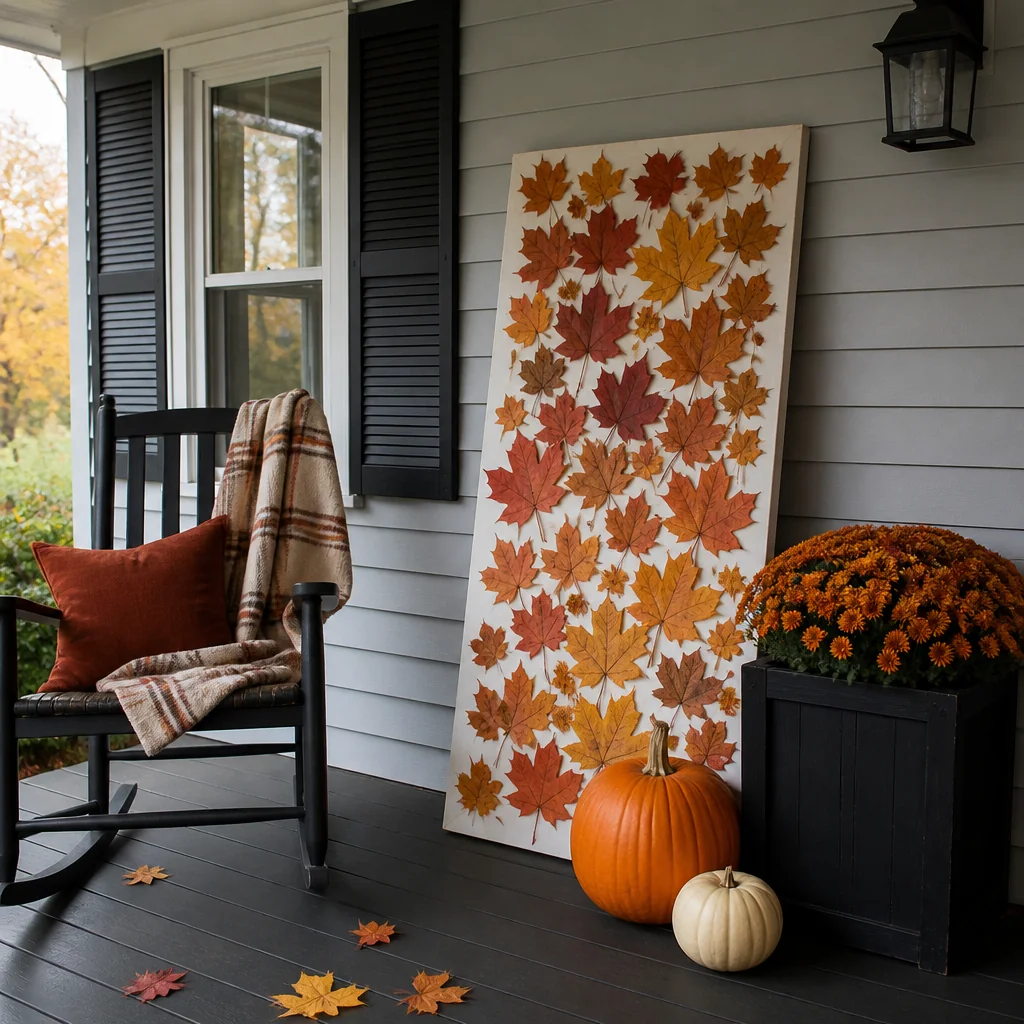
Use a 4-inch-wide strip of foam insulation (the pink or blue stuff from a hardware store, about $15 for a 4-foot length). Collect real fall leaves and press them between newspaper for 24 hours. Hot-glue them to the foam so they overlap like shingles on a roof. Do this in the shade the day you plan to hang it; direct sun dries the glue too fast and creates gaps. Real leaves start to crisp and curl after two to three weeks, but the dense overlapping means you won't see the damage until late October. This is genuinely attractive mounted against a dark-painted porch wall or a shadier section.
9. Build a garland from painted paper leaves and faux berries
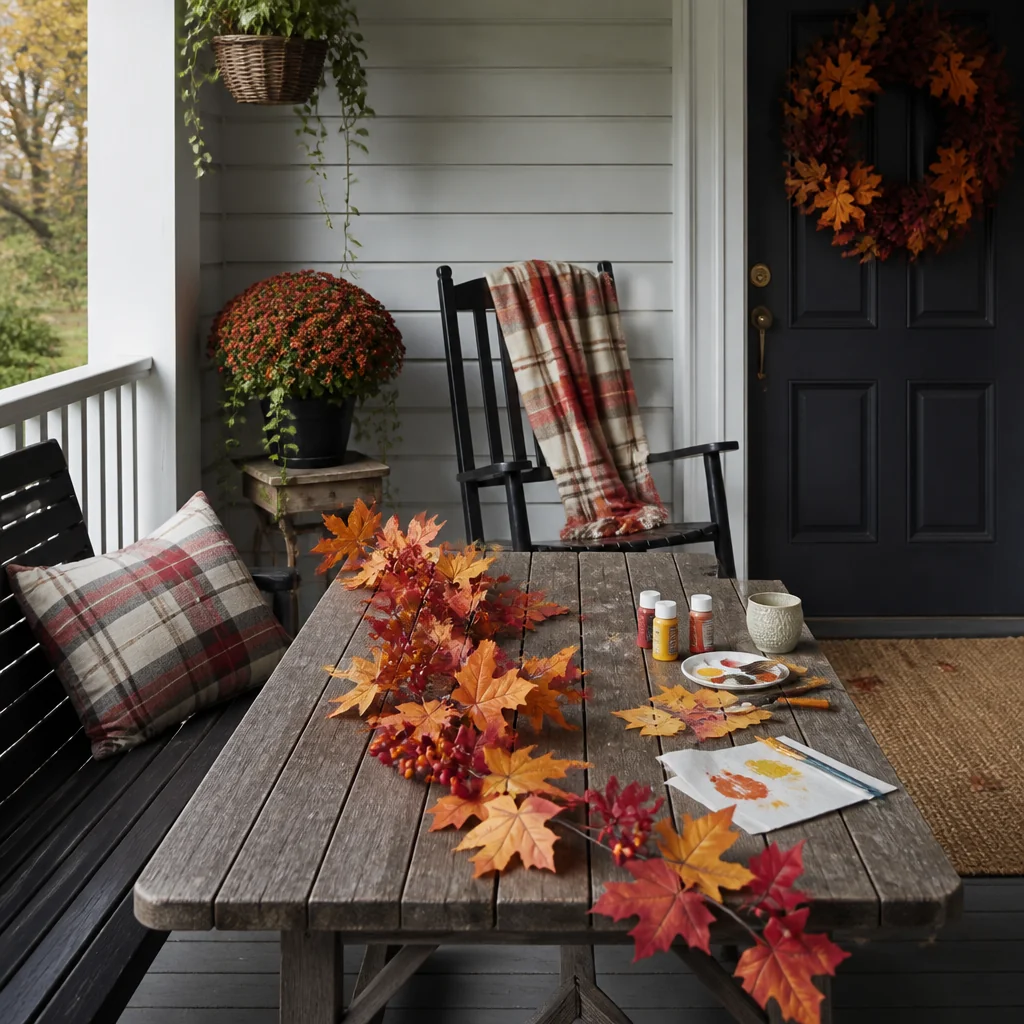
Cut leaves from cardstock or heavyweight paper in oak, maple, and birch shapes. Paint them in watercolor washes of rust, gold, deep red, and burgundy. Let them dry completely. String them on twine or fishing line, spacing them 4 inches apart, and wire on faux berry clusters between every few leaves. Painted paper doesn't fade and doesn't drop leaves. You control the exact palette, so it can match your front door color or your planters precisely. This takes several hours to make but costs under $10 in supplies. It works beautifully on covered porches where it won't get soaked.
10. Tie off sections of leather cord with dried herbs and flowers
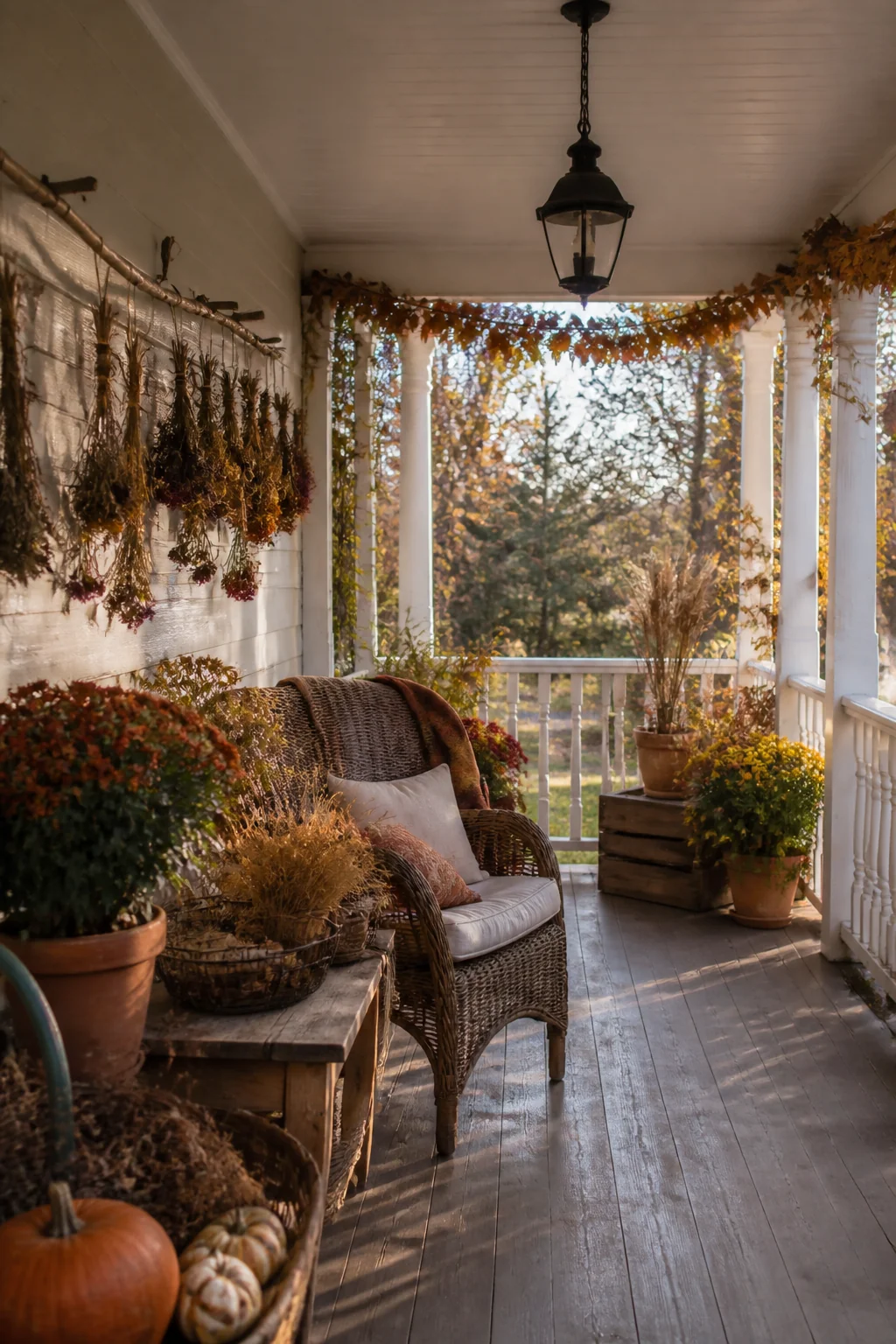
Use 1/4-inch leather cord as your base. Every 6 inches, bundle together a few stems of dried rosemary, sage, or lavender mixed with dried flowers like statice or baby's breath. Bind each bundle tight with matching cord, leaving 3 inches of the plants showing. Leather doesn't rot and reads expensive, even though a 10-foot length costs about $12. The herbs release scent when the sun warms them, which is an unexpected bonus. This garland is lighter and thinner than rope-based designs but still reads full because the herb texture catches light.
11. Stack and tie small grapevine wreaths along a jute rope
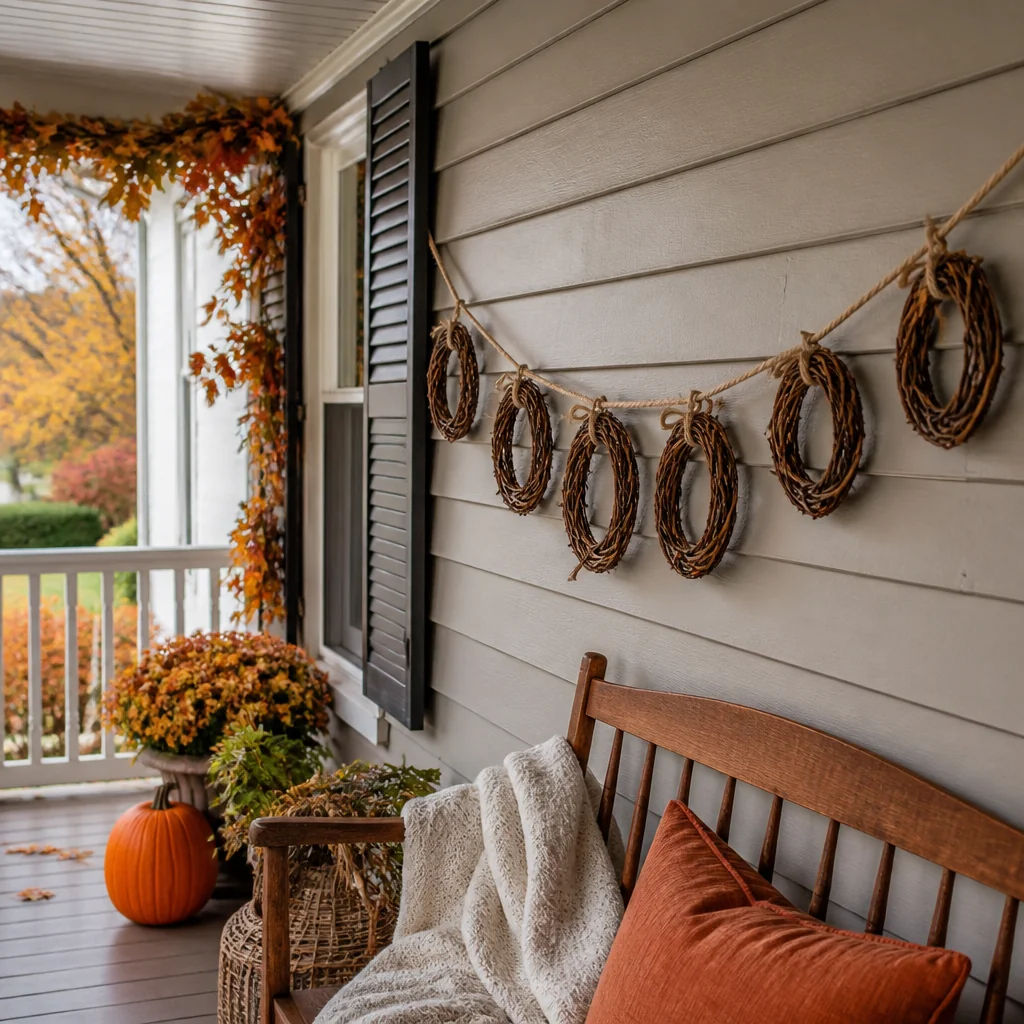
Purchase 6-inch grapevine wreaths (about $2 to $3 each) and space them 4 inches apart along a 6-foot length of jute rope, tying each wreath on with twine. Fill the centers with faux berries, a small preserved leaf spray, or a small burlap bow. You'll need about 12 wreaths for 6 feet. The repetition reads organized and graphic. Grapevine holds its shape through weather better than fresh foliage, and the dimensional wreaths give you real depth from a distance. Cost runs $30 to $40 total, but the garland lasts year after year if you store it indoors.
Keep this guide handy
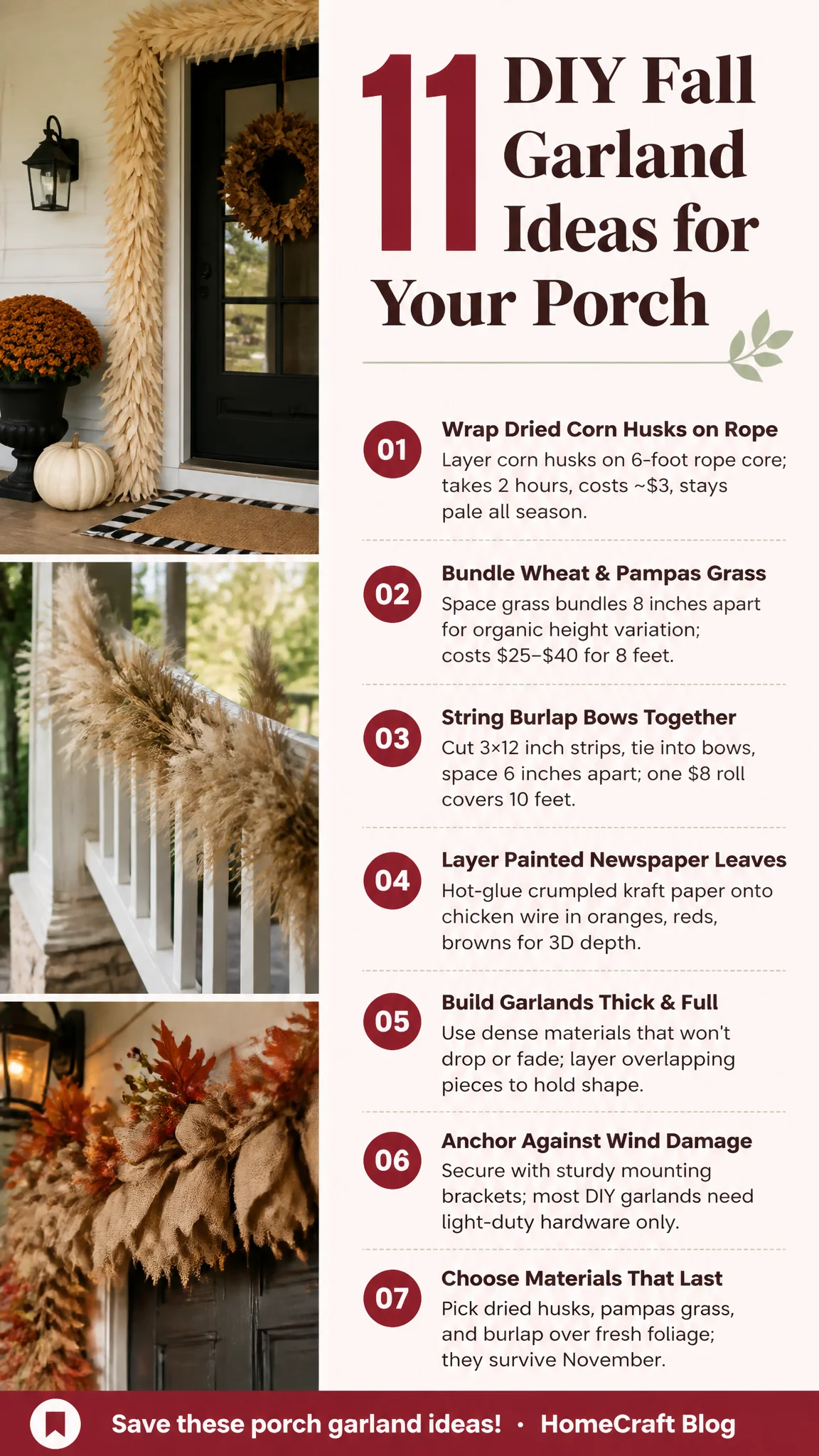
Fall garlands ask you to accept that most materials will shift slightly in color or texture as the season deepens. Real leaves crisp at the edges. Burlap fades a touch. Painted surfaces age. What you get instead is a porch that looks intentional through October and November, reads rich from the street, and doesn't collapse in wind or rain. That trade is worth the material cost and the assembly time.
Ideas fade by Friday. A plan finishes the room.
You just read a full guide to your home. Saving ideas will not change it; a plan will. The Home Decor Collection is every planning tool we make, for every room in the house, in one download, so the after photos below stop being other people's rooms.


- Six room Style Kits, each with layout, palette and shopping list$114
- The Gallery Wall Studio: 200 prints + 15 measured layouts$29
- The Room Makeover System: 40 solved room layouts + workbook$29
- The Color Palette Handbook: 60 palettes shown in real rooms$19
- The Whole-Home Reset: 40 printable organizing checklists$19
- The Decorator's Cheat Sheets: the 40 measurements that matter$9
- All eleven products, bought separately
$219$97
A single hour with an interior designer costs more than the entire Collection, and this one keeps answering for every room you will ever decorate. Free updates included as the products grow. And if it is not for you, the 14 day money back promise means you simply get a refund.