11 Rustic DIY Christmas Planter Ideas for Front Porch Steps
Short on step space? These diy christmas planter ideas use low, heavy pots with evergreen, red twig dogwood, and pinecones that stay put in strong wind.
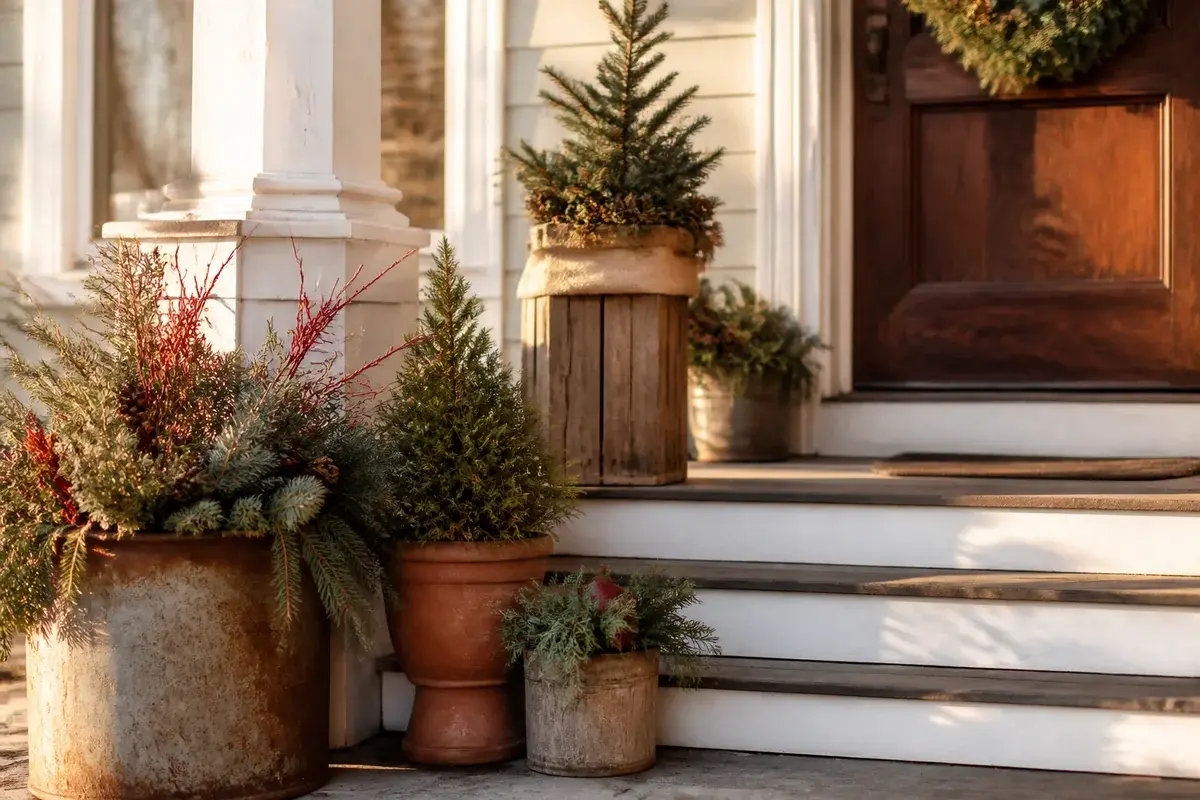
Set a tall, full planter on the top step of a narrow porch and the first gust tips it onto the walkway. That's the version that fails: too much height, too much width, and a tread that's only about 11 inches deep. The version that works keeps each planter low, heavy, and pushed to the outer edge of the step, where it frames the stairs without sitting in the path. You're working with a few limits here: a short run of steps, a door that needs a clear 36 inches, and a stoop that takes rain, frost, and road salt from November through February. Every idea below is built around those limits. You can picture each one on your own steps before you pull a single branch from the cart.
 8-page guide
Free style guide
Stop buying things that don’t go together.
Print the 2-minute quiz, circle the words you love, and find your style. Then see what makes a room look like it.
- A print-and-circle quiz, 5 styles
- Each style shown as a finished room
- Palette, 4 key pieces, one rule
Free. Arrives by email in a minute or two, plus our ideas and occasional shop offers. Unsubscribe anytime. Privacy
1. Stacked wooden crates at the bottom step corners
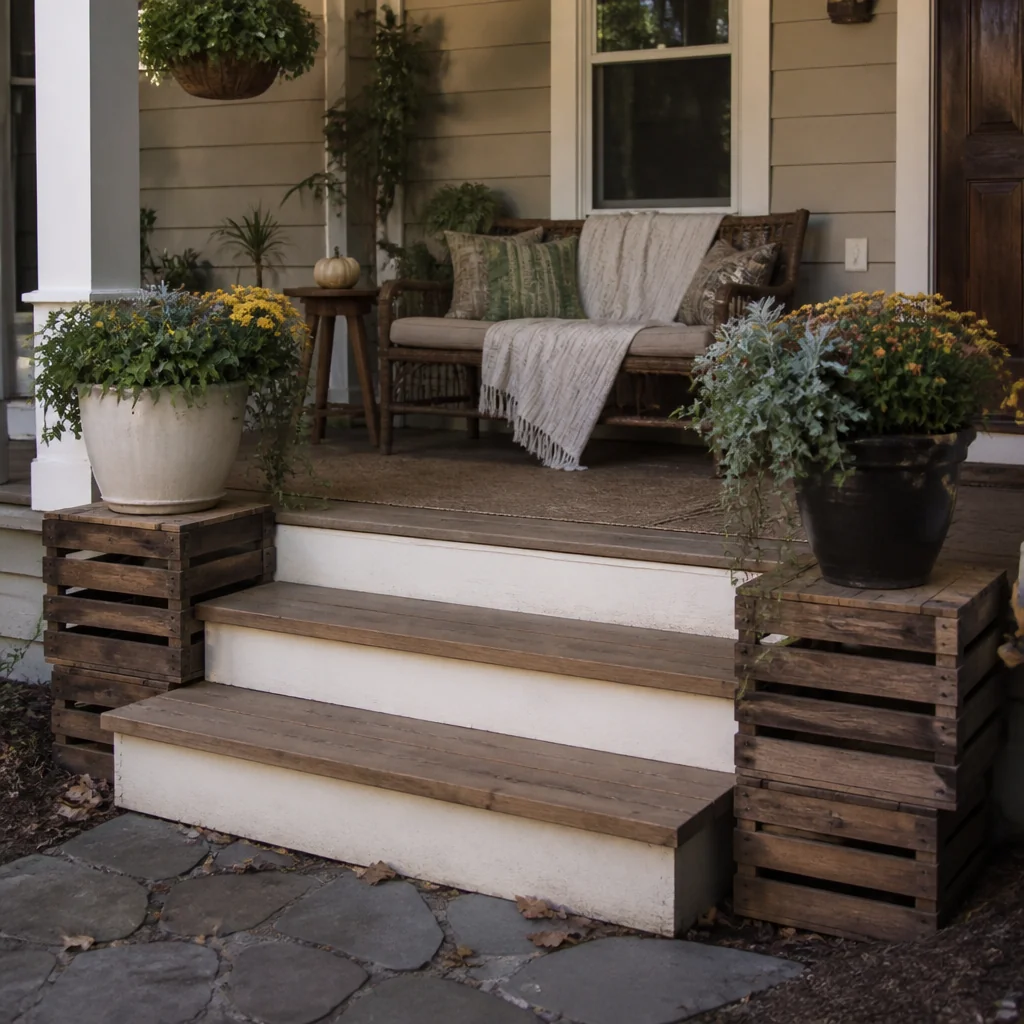
Two weathered wooden crates, one stacked on the other, sitting at each end of the bottom step give you a farmhouse look that doesn't shout. Pick untreated pine with gaps between the slats, roughly 12 by 12 inches, and fill them with a loose tumble of noble fir, dried hydrangea heads, and a few rust-colored pinecones. The crate's horizontal lines echo the step edge, and the mass stays low enough that wind won't lift it. Drill two drainage holes in each crate, line the inside with weed barrier fabric so soil doesn't sift through the slats, and keep each stack under 18 inches tall. The common mistake is setting a crate with its front corner hanging over the tread, where one bump from a dog or a kid sends it onto the walkway.
2. Galvanized tub of birch and cedar on the landing
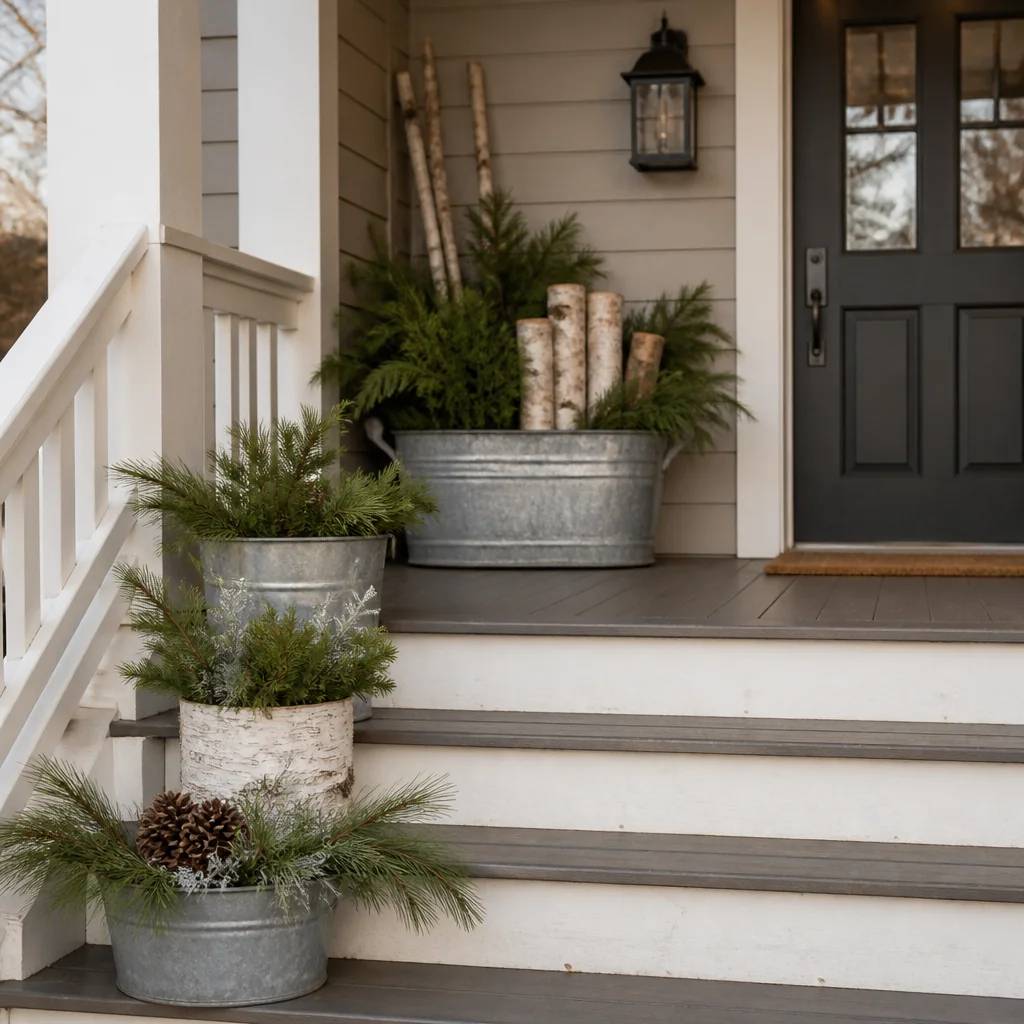
A galvanized steel tub, about 20 inches across, set on the landing beside the top step brings in cool metal against a warm front door. Fill it with cedar boughs and three or four white birch branches cut to 24 to 30 inches, so the pale trunks stand above the greens. The silver finish catches porch light at night and makes the whole corner look cold and crisp, which is the point. Sit a plastic nursery pot inside the tub so water collects at the bottom of the pot and doesn't rust through the metal. (Galvanized tubs are sold at most hardware stores, and the plain finish works better here than painted versions.) Keep the tub at least 36 inches from the door's swing path.
3. Resin urn with a dense upright juniper
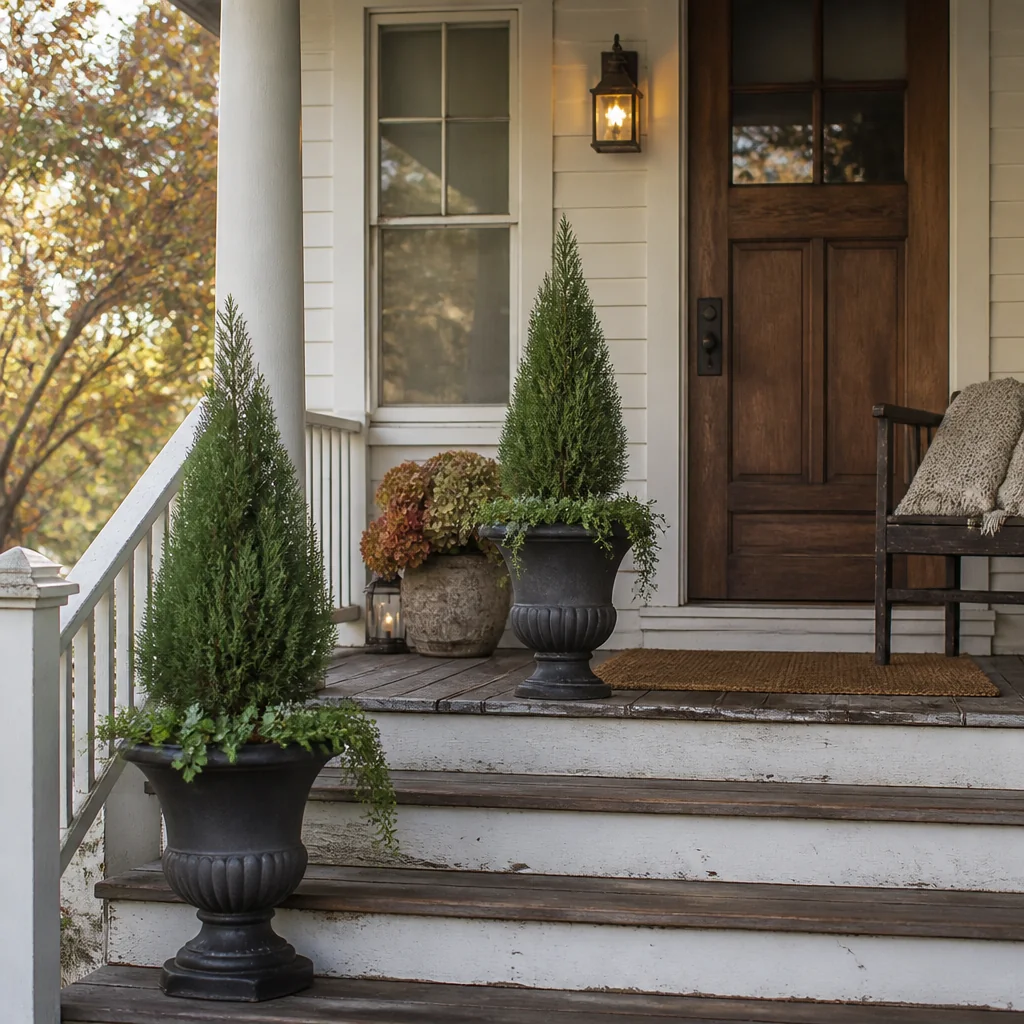
A tall urn, somewhere between 18 and 24 inches high, planted with a single upright juniper or blue spruce gives your steps a strong vertical line. The shape echoes the height of the door and keeps the stairs from looking low and wide. Stone-look urns are heavy enough to crack a thin tread, so put this one on the landing instead of on a step. Look for resin or fiberglass urns that mimic weathered stone, since they weigh a fraction of the real thing and stay put in wind. Wrap the base of the tree in a few strands of warm white lights, then plug them into an outdoor outlet with a GFCI. A conifer this size pairs well with a diy christmas tree ideas setup inside the front window.
4. Half wine barrel with a young pine wrapped in lights
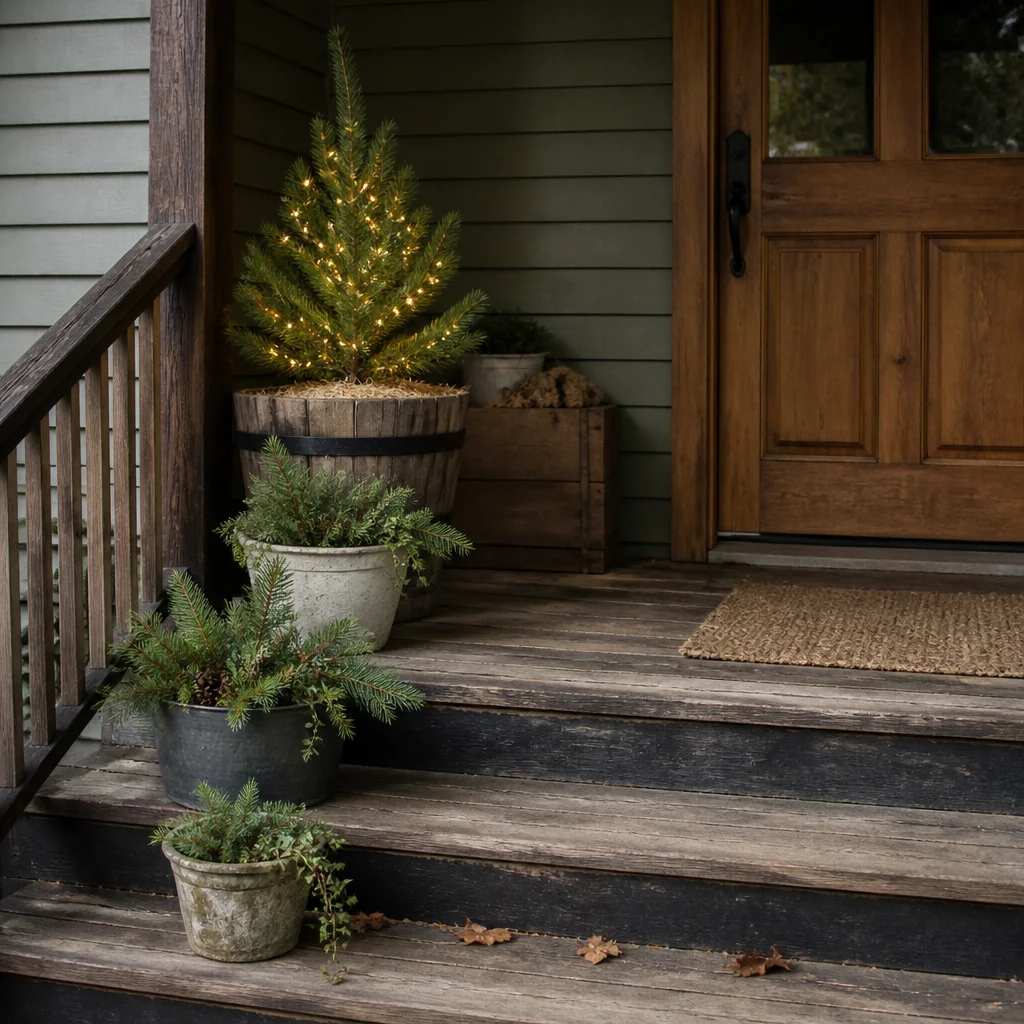
An oak half barrel, about 24 inches across, works as a grounded base for a 4 to 5 foot pine at the foot of the steps. Barrels are wide and sturdy, so they handle a tall tree better than most planters. The warm wood tone reads as rustic against cool stone or brick, and the pine's dark green silhouette stands out at dusk. A tree this height gets top-heavy once it's wet, so fill the bottom of the barrel with gravel or sandbags before you add soil, and set the barrel against the house wall if you can. Wrap the trunk from base to crown with lights, then tie a few cedar sprigs around the rim to hide the soil line.
5. Burlap-wrapped buckets in matched pairs
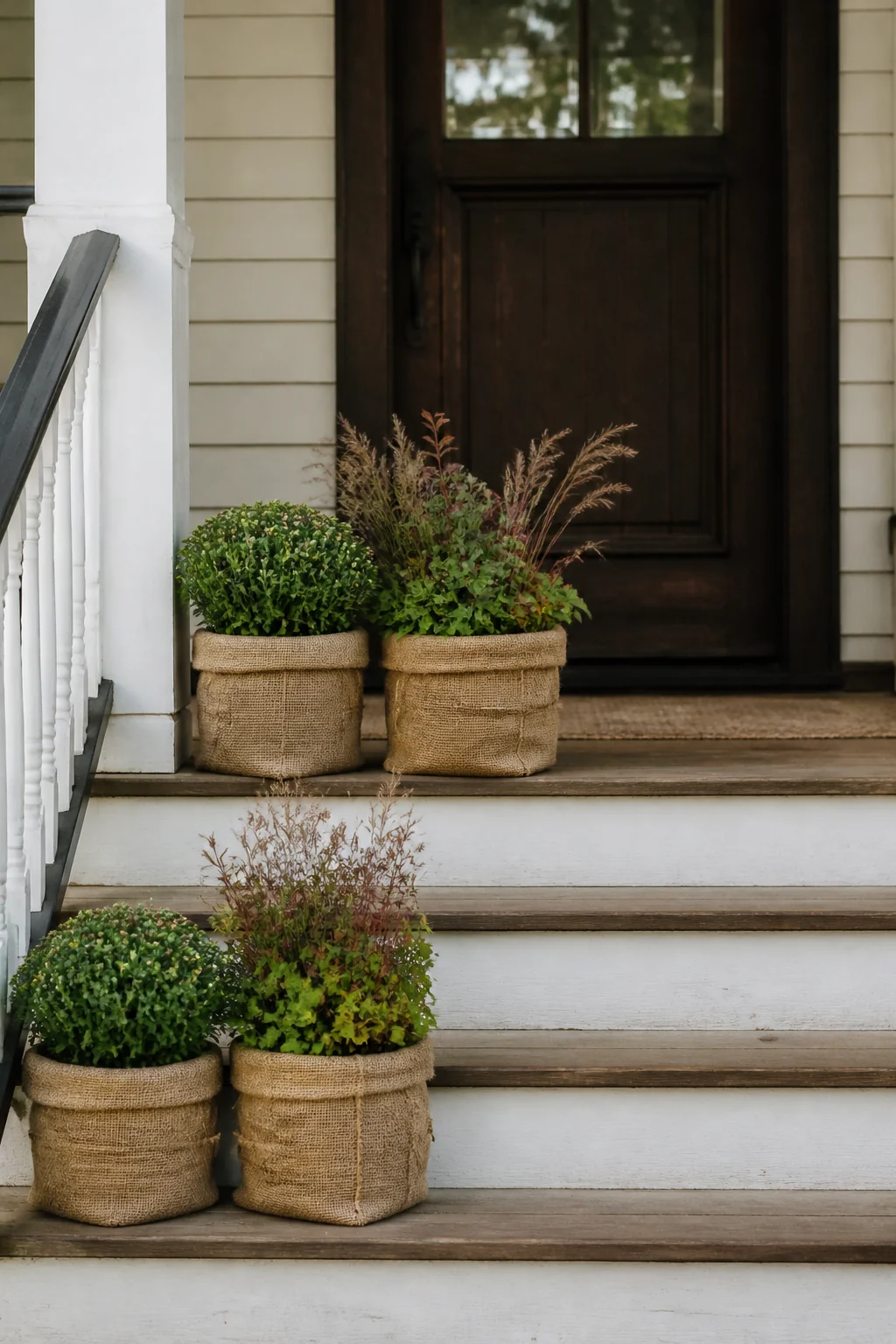
Two galvanized buckets, about 10 inches tall, wrapped in burlap and tied with jute twine, placed on either side of the top step make a symmetrical frame for the door. Matched pairs read as intentional, and they give the entry a balanced look that a single pot can't. Plant each bucket with the same mix so the pair looks like one design: winterberry branches with red berries, a little boxwood, and a sprig of eucalyptus for silver contrast. Leave about 3 feet of clear walkway between the buckets and the stair rail, and check that the burlap won't drag on the bottom step when someone walks past. Swap wet burlap for a dry layer after a hard rain, since it stays damp and smells musty for days.
6. A low cedar trough running along the stair side
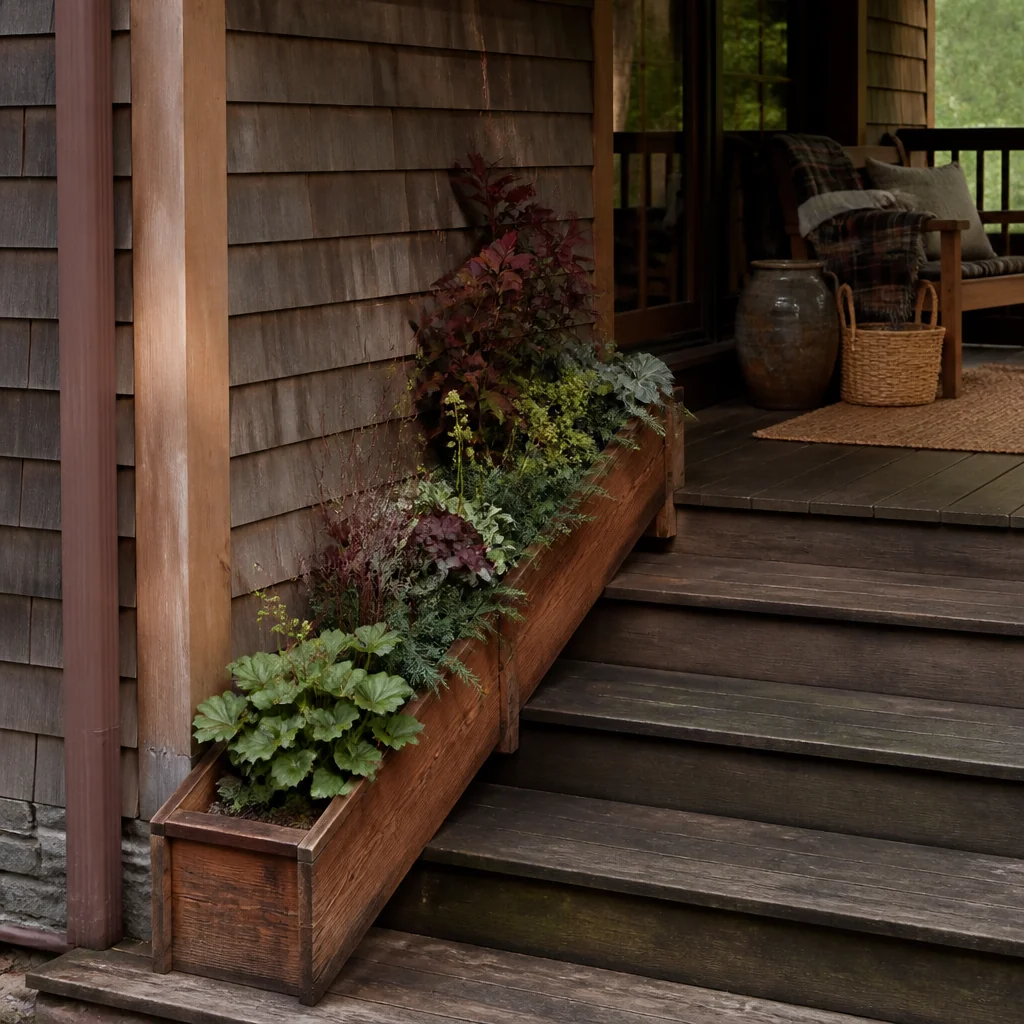
A long, shallow cedar trough, around 36 inches long and 8 inches deep, placed on the ground along the outside edge of the stairs gives you a planter that follows the line of the steps instead of fighting it. Fill it with a continuous run of fresh cut evergreens, such as cedar, fir, and variegated boxwood, so the eye reads the trough as one band of green. Its low profile means it never blocks the walkway and it won't tip in a storm. Cedar holds up well outdoors without treatment, which is the main reason to choose it over pine for an exposed spot. Set the trough on a level base of crushed stone so water runs off and the wood stays dry underneath.
7. Shepherd's hook lantern with a flameless candle
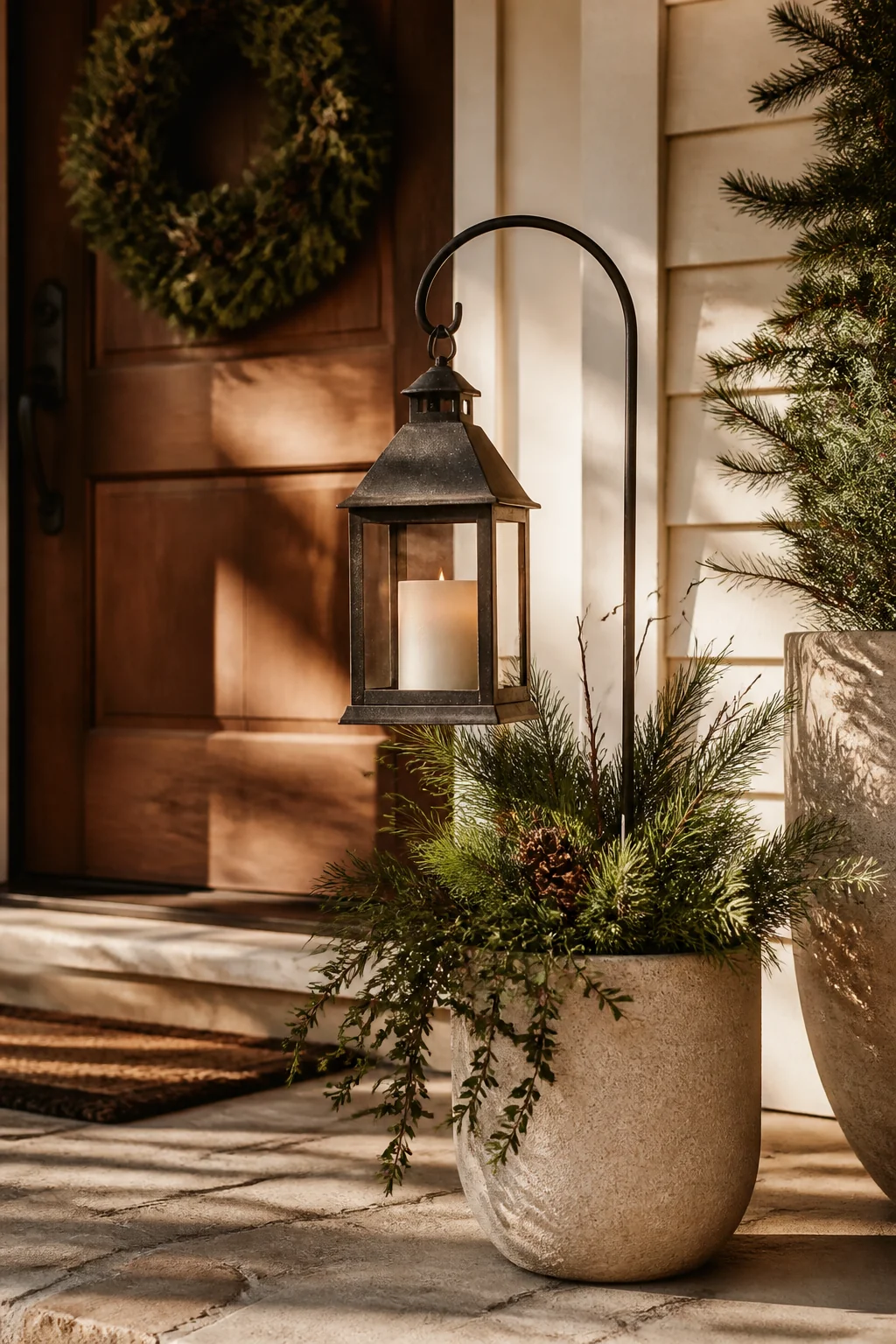
A black iron shepherd's hook, about 4 feet tall, set beside the bottom step, with a lantern hanging from the top, adds height at ground level without a planter at all. Wrap the hook's base in cedar garland and tuck a few pinecones into the greens, so the bottom of the hook looks finished. The lantern gives warm light that brightens the steps for anyone coming up after dark. Use a flameless candle with a timer, not a real flame, and keep every bit of greenery at least 12 inches from the light source. Hang the lantern from a hook screwed into the post or wall, rated for the weight of the lantern plus a little extra for wind.
8. Weathered wooden sled propped against the bottom step
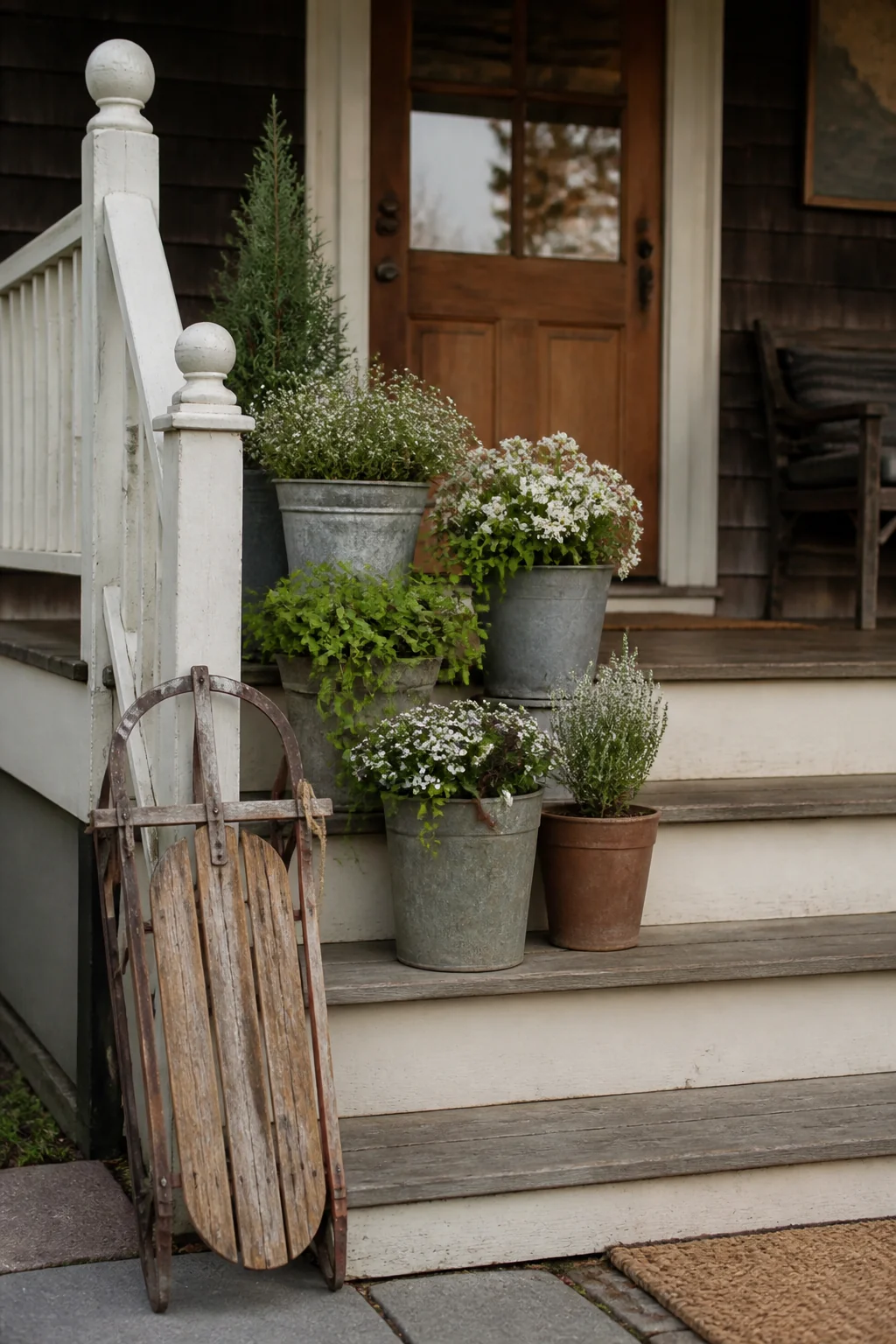
An old wooden sled, leaned against the bottom step with its runners tilted up, gives you a playful, rustic silhouette that works on a stoop with very little room. Fill the sled's bed with three or four small pots of evergreens, tucked in with a few red berry sprigs and a bit of moss. The sled's curved runners echo a stair rail, and the mix of wood and green looks warm against a painted front door. Choose a sled with a flat bed and a sturdy frame, since the planters rest on it and need a stable base. Lean it against the house or a post so it can't slide down the steps when someone brushes past.
9. Tall milk can planter on the landing
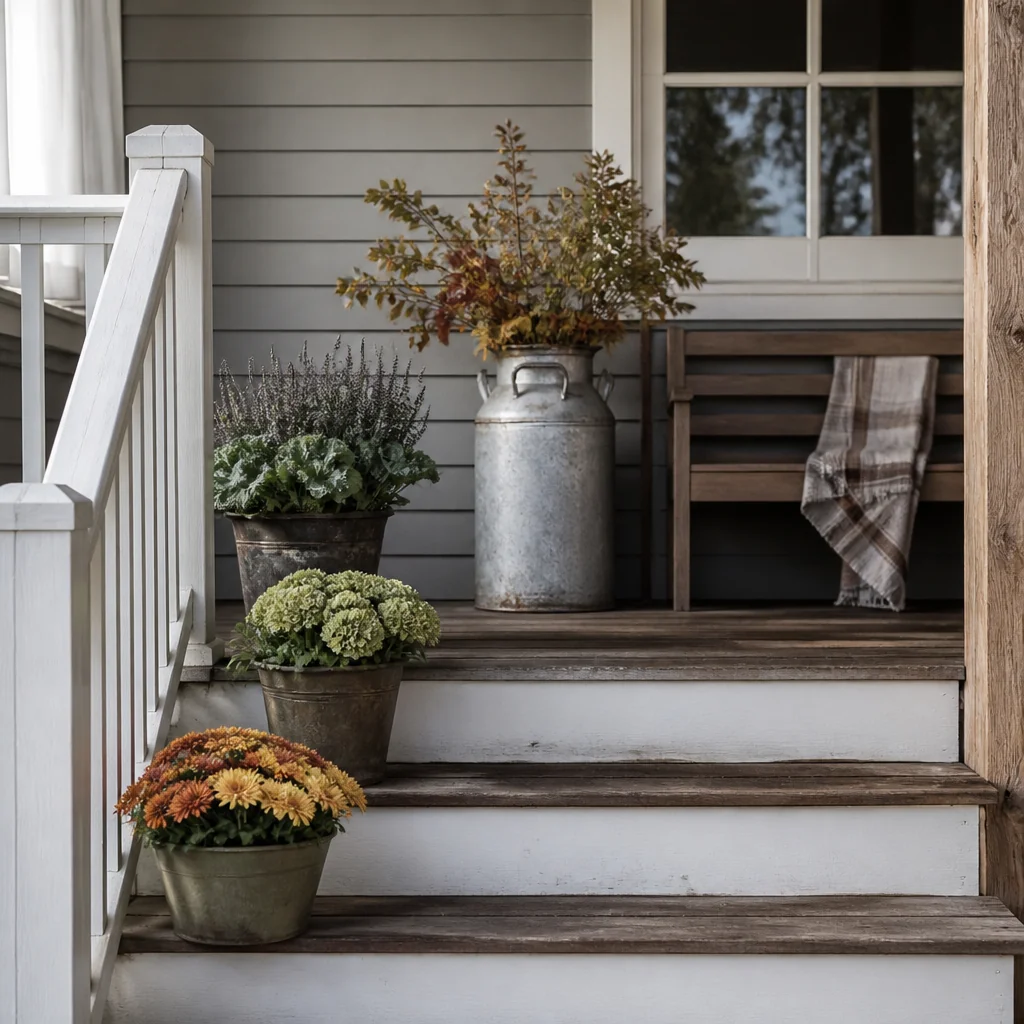
A galvanized milk can, roughly 16 inches across and 24 inches tall, stands on the landing with a cluster of noble fir and red dogwood stems pushed through the top opening. The narrow neck makes the greens look full without spilling over the rim, and the tall cylinder adds a vertical accent that suits a short flight of steps. Galvanized finish and red dogwood make a cool and warm pair that stands out in the winter gray. (Milk cans are heavy once filled, so decide on the spot before you add soil.) Fill the bottom with a few inches of gravel, then pot the greens in a plastic nursery pot that slides out for watering and cleaning.
10. Stepladder with planters on the rungs
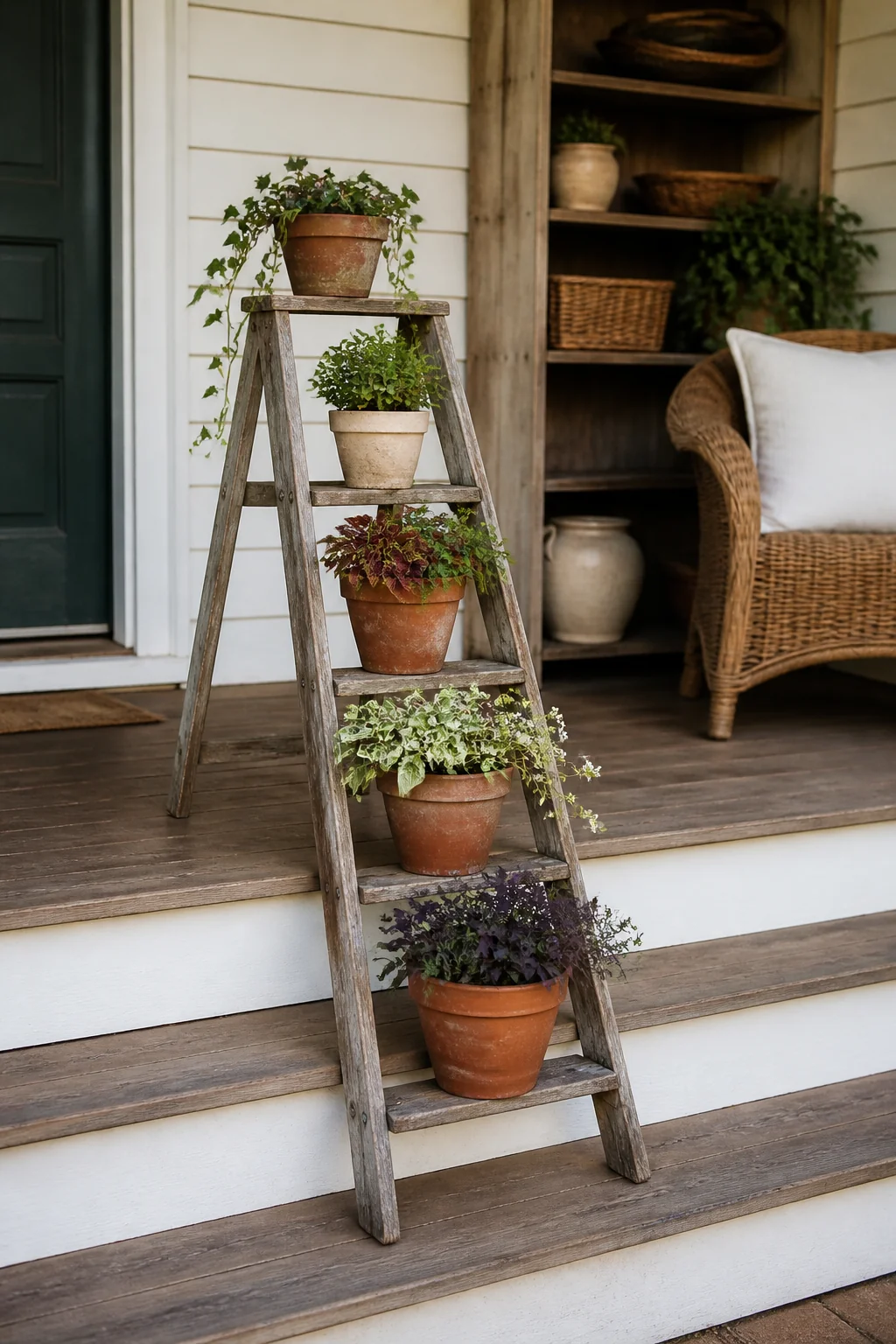
A weathered wooden stepladder, two or three rungs tall, leaned against the wall beside the stairs holds small planters on its rungs like shelves. Each rung gets a short terracotta pot or a tin can filled with a single evergreen or a bundle of dried grasses, so the ladder reads as a tiered display. The vertical stack adds height along the wall without taking any floor space. The common mistake is leaning the ladder without securing it, which lets a gust or a bumped step send the whole thing down the stairs. Strap the ladder to the wall with a ratchet strap or a heavy-duty anchor, and keep the bottom feet off the tread edge.
11. Terracotta pots grouped in three sizes on the top step
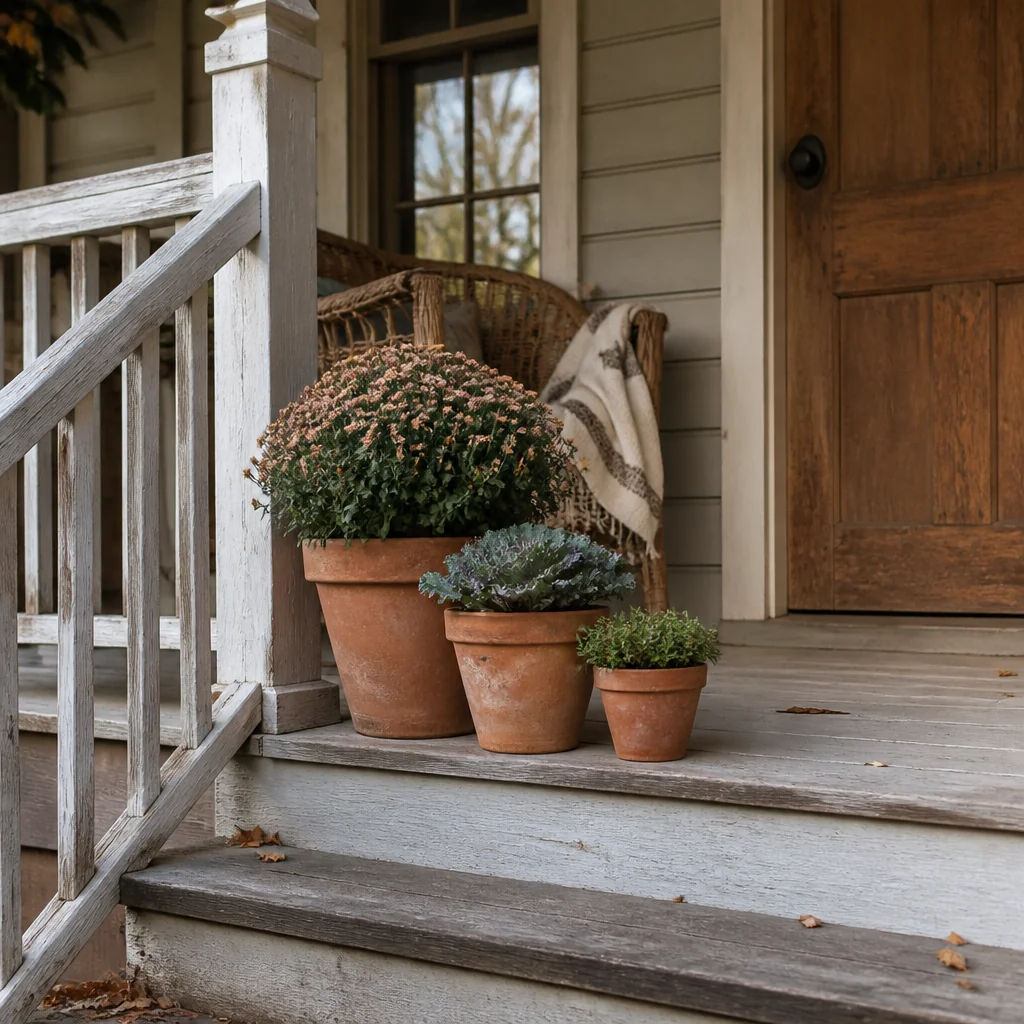
Three terracotta pots in graduated sizes, roughly 6, 9, and 12 inches across, grouped together on the top step give you a layered cluster that looks deliberate from the sidewalk. Plant the largest with a tall variegated boxwood, the middle with ivy trailing over the rim, and the smallest with a tuft of frosted fern or thyme. The clay tones warm up the stone or concrete of the steps, and the mix of heights keeps the eye moving across the group. Keep the cluster to the top step only, and leave a clear 36 inches of walkway beside it. Clay dries out fast in winter wind, so check the smallest pot first, since it runs out of moisture sooner than the others.
Save the full guide
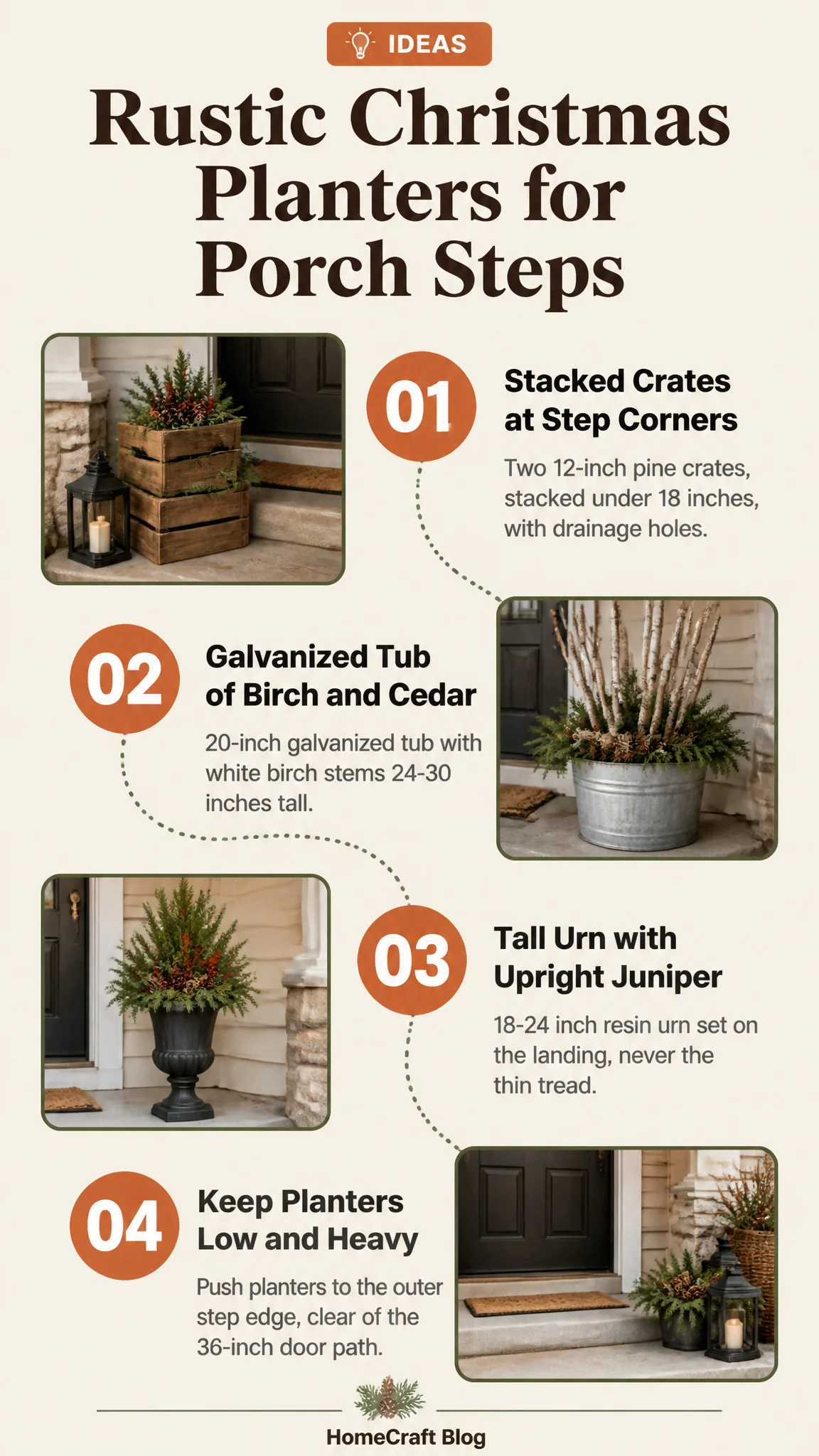
Winter greens do need care. Cut evergreens drop needles onto the steps, so you'll sweep more often than you would with a plain planter, and cut boughs dry out in heated, dry air faster than you expect. Plan on refreshing the greens every two to three weeks and carrying the heaviest pots indoors during a hard freeze. That's extra work, but these looks read clearly from the street, and the warm light and bright red berries carry the whole entry through the darkest weeks of the year. If your door sits close to a tree, the black christmas tree ideas make a sharp counterpoint to this kind of rustic setup.
The room images in this post are illustrations made with AI.