15 Black Christmas Tree Ideas for Living Rooms, Entryways and Dining Nooks
Fifteen black christmas tree ideas for living rooms, entryways, and dining nooks, with the walls, rugs, and ornaments that stop a dark tree looking like a hole.
This post contains affiliate links. As an Amazon Associate I earn from qualifying purchases. If you buy through our links, we may earn a commission at no extra cost to you.
A black tree dropped into a room with nothing else dark in it looks like a hole. You see it in the corner by the window: a tall, flat silhouette against cream walls, a pale rug, and an oatmeal sofa, so the eye has nowhere to rest. The ornaments sink into the branches and the whole corner reads as unfinished. Black works in December, but only when the room has enough contrast and enough repeated darks to hold it. The ideas below are looks we keep coming back to, with the reason each one works and the sizes that make it fit an ordinary room.

Free printable kit
Finish the wall above your bed this weekend
- 10 boho prints in terracotta and sage
- Layouts for full, queen and king beds
- Frame sizes and spacing worked out
Plus our emails with ideas and occasional shop offers. Unsubscribe anytime. Privacy
1. Set the black tree against warm white walls
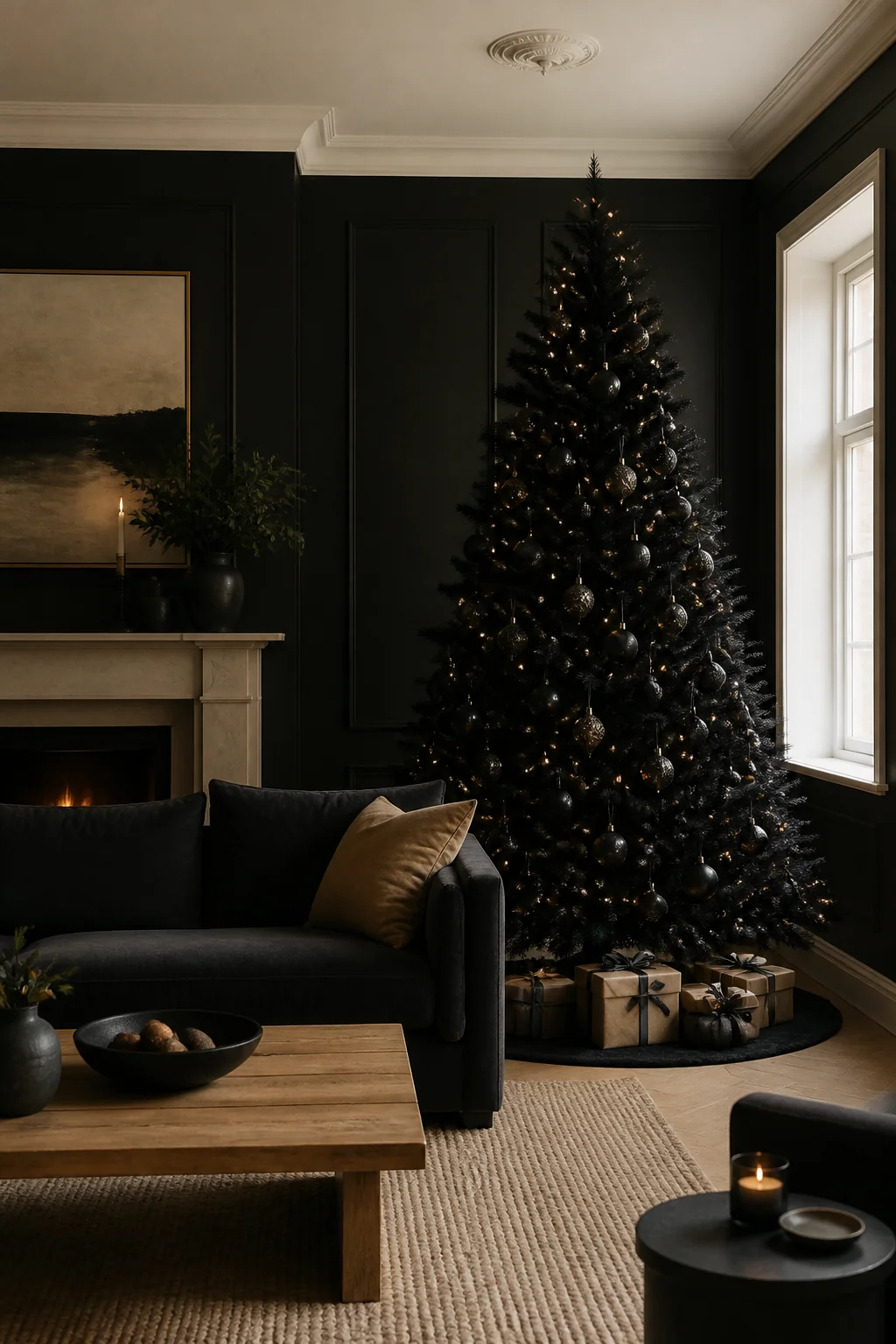
Warm white walls turn a black tree into a deliberate silhouette. The dark shape reads clearly because it has something light to measure against. Pick a paint with a cream or yellow undertone, since a cool blue-white makes black look flat and gray once the lights come on. Place the tree about 18 inches out from the wall so the bulbs throw a soft shadow on the paint instead of pressing into it. Measure the corner before you commit: a 6.5 foot tree needs about 4 feet of width at the base once you add the stand and a little breathing room.
2. Frame the black tree in a bay window
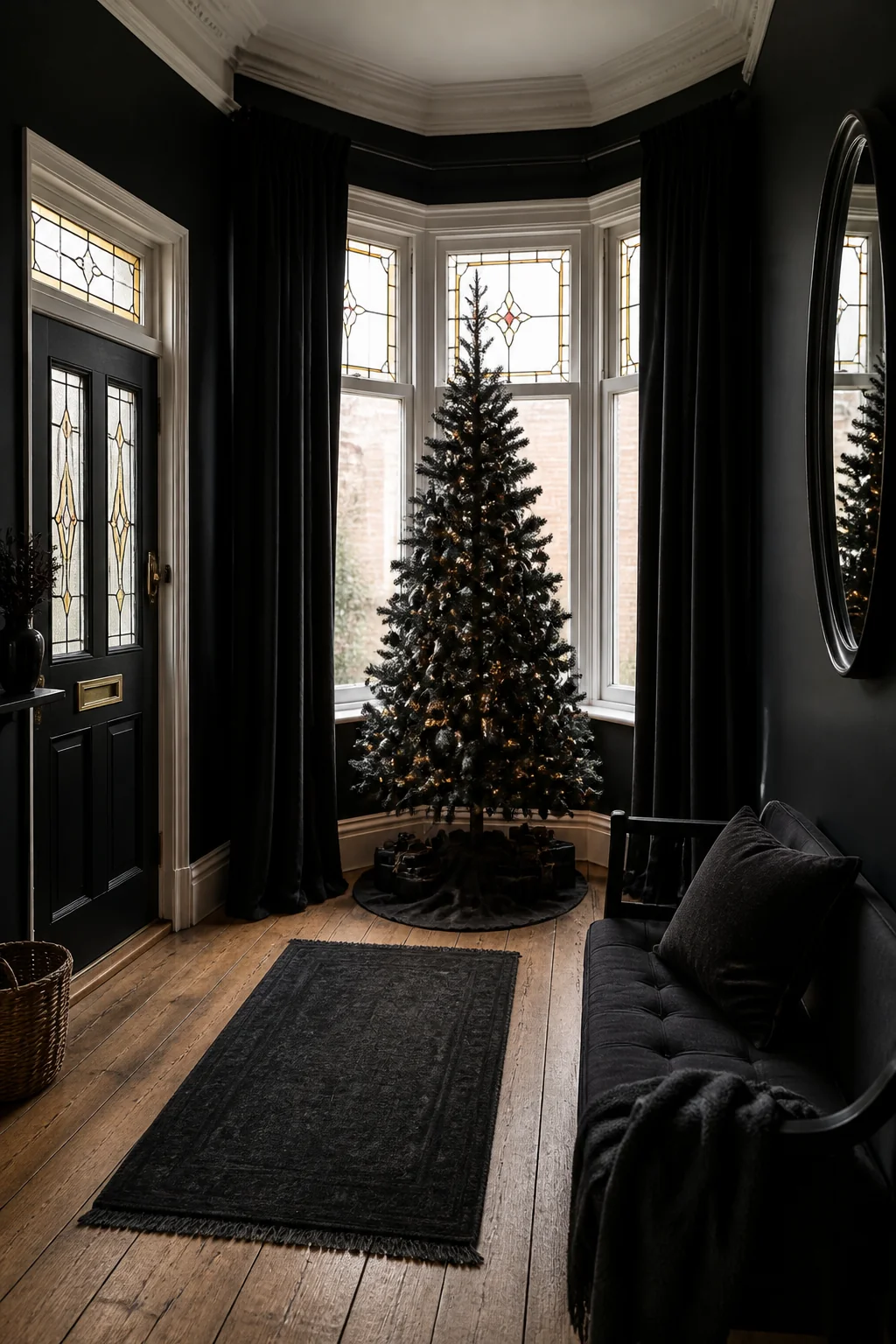
A bay window gives the tree a frame, and the glass behind it pulls the dark shape into the outline of the room. From the street the tree reads as one dark column against lit glass. Keep it at least 12 inches back from the panes so the branches don't brush the cold glass, and so the lights aren't reflected into a black window and lost. Sheer linen panels work better than heavy drapes here, because the tree needs to stay visible from outside. Check the stand against the sill height before you buy, since many bay sills sit low.
3. Use warm white lights and nothing else
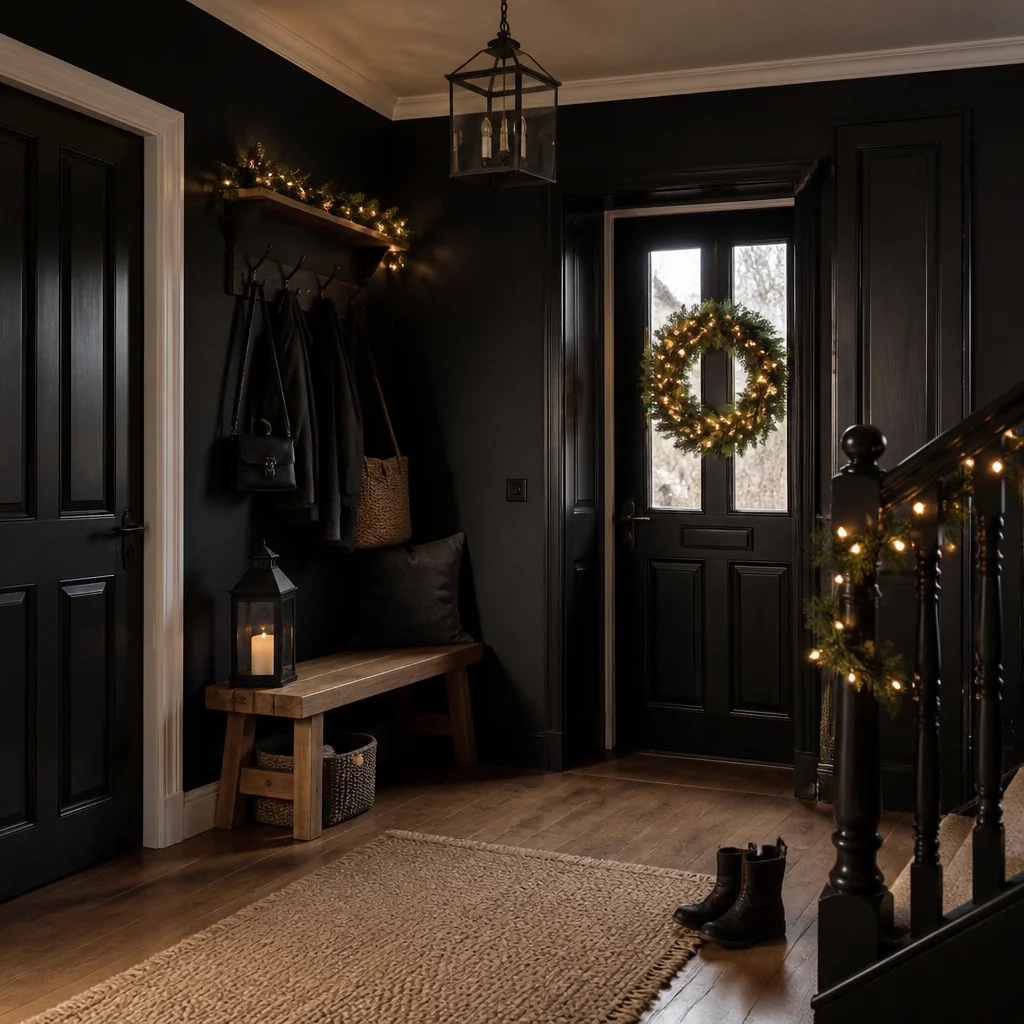
Wrap the tree in one color of light and the tree stays one shape. Multicolor strings split the silhouette into little patches and make the black look spotty. Choose 2700K warm white, which is the color temperature printed on most warm white boxes, and skip the cool white entirely. (Mixing cool and warm strings on the same tree is the most common lighting mistake here, and it shows up as blue patches in the lower branches.) Plan on one string for roughly every foot of tree height, then check the fit with the lights on before you add ornaments.
4. Hang brass and gold ornaments in one metal
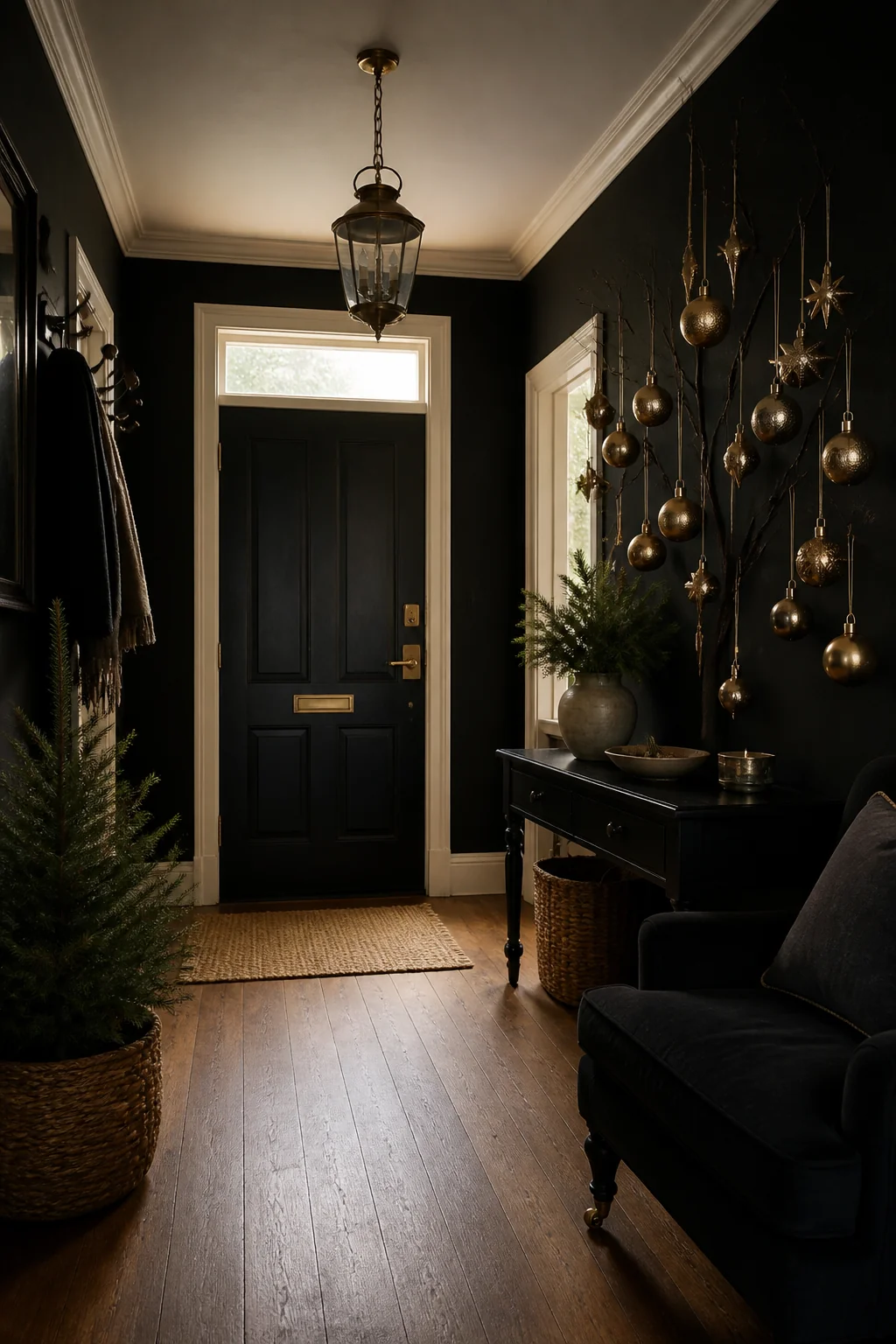
Brass balls, fluted gold glass and small gold bells give the tree points of brightness against the matte black. The metal catches the light from the strings and makes the tree glint from across the room. Stick to one metal. Brass, rose gold and silver together read busy, while one finish looks chosen. Buy in matching sizes, hang them in clusters of three, and push the largest pieces deep into the middle of the tree where they catch light from inside the branches.
5. Go monochrome with clear glass and white
Clear glass and white are the two colors that sit best on black, because white gives high contrast and clear glass reflects light without adding a new hue. Hang clear baubles, white velvet ribbon and white berries, and leave out anything colored. Too many small ornaments turn a black tree gray from a distance, so use fewer, larger pieces, around 3 to 4 inches across. Space them 6 to 8 inches apart so each one reads as a single point instead of a cluster.
6. Stand a slim black tree in the entryway
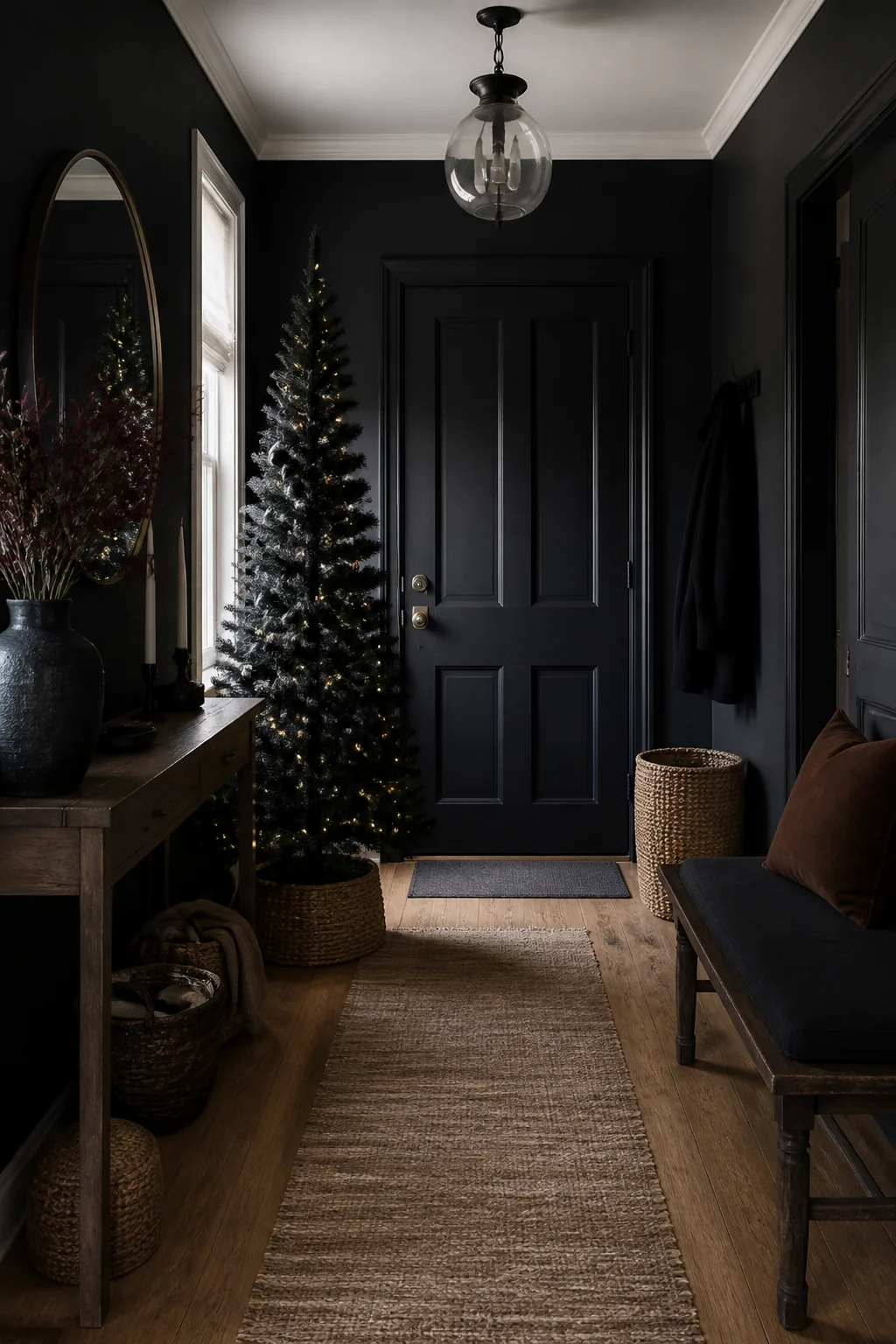
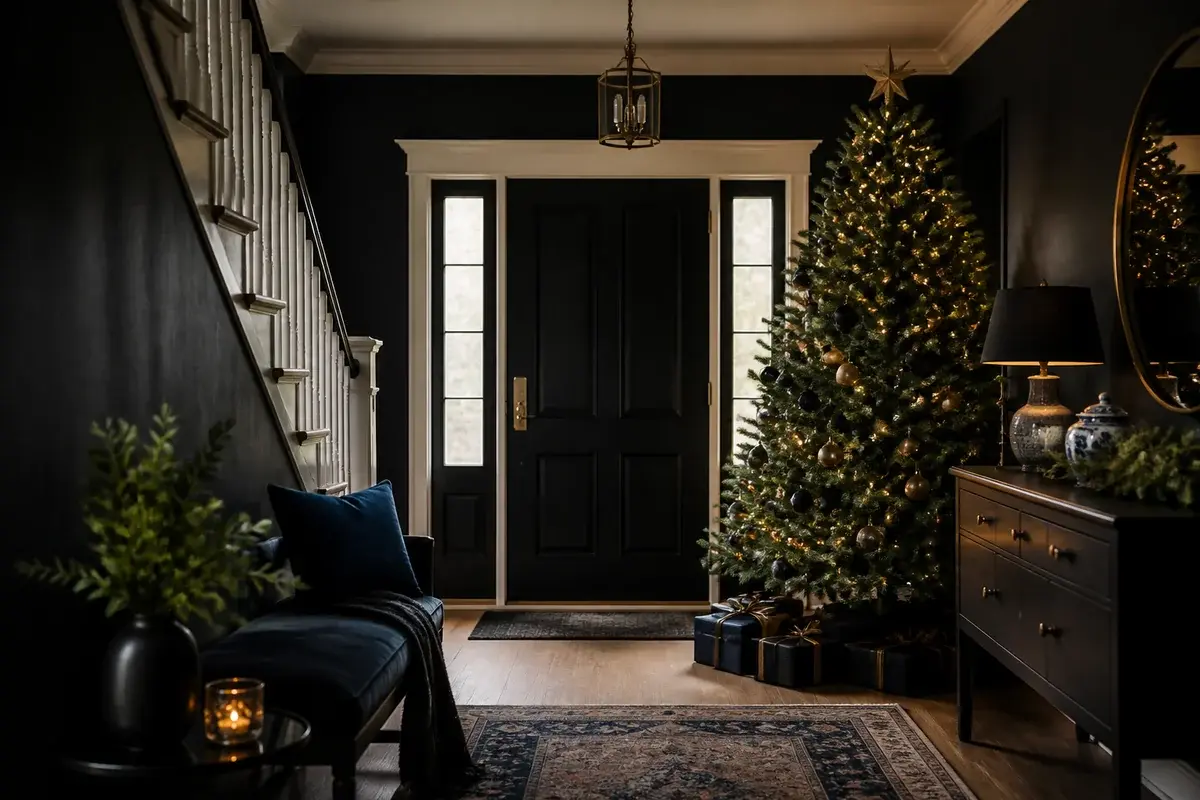
An entryway is the one place where the tree is seen in a single glance as you walk in. A slim tree, about 2 to 3 feet wide at the base, suits a narrow hall and doesn't crowd the floor. Set it beside a bench or a console table so the tree has a landing spot and the table holds a bowl for keys. Keep the tree out of the door swing, and leave at least 36 inches of clear floor for the hallway path. The most common mistake is putting the tree where the coats hang, which makes every arrival a small obstacle course.
7. Hang a black tree beside a dining pendant
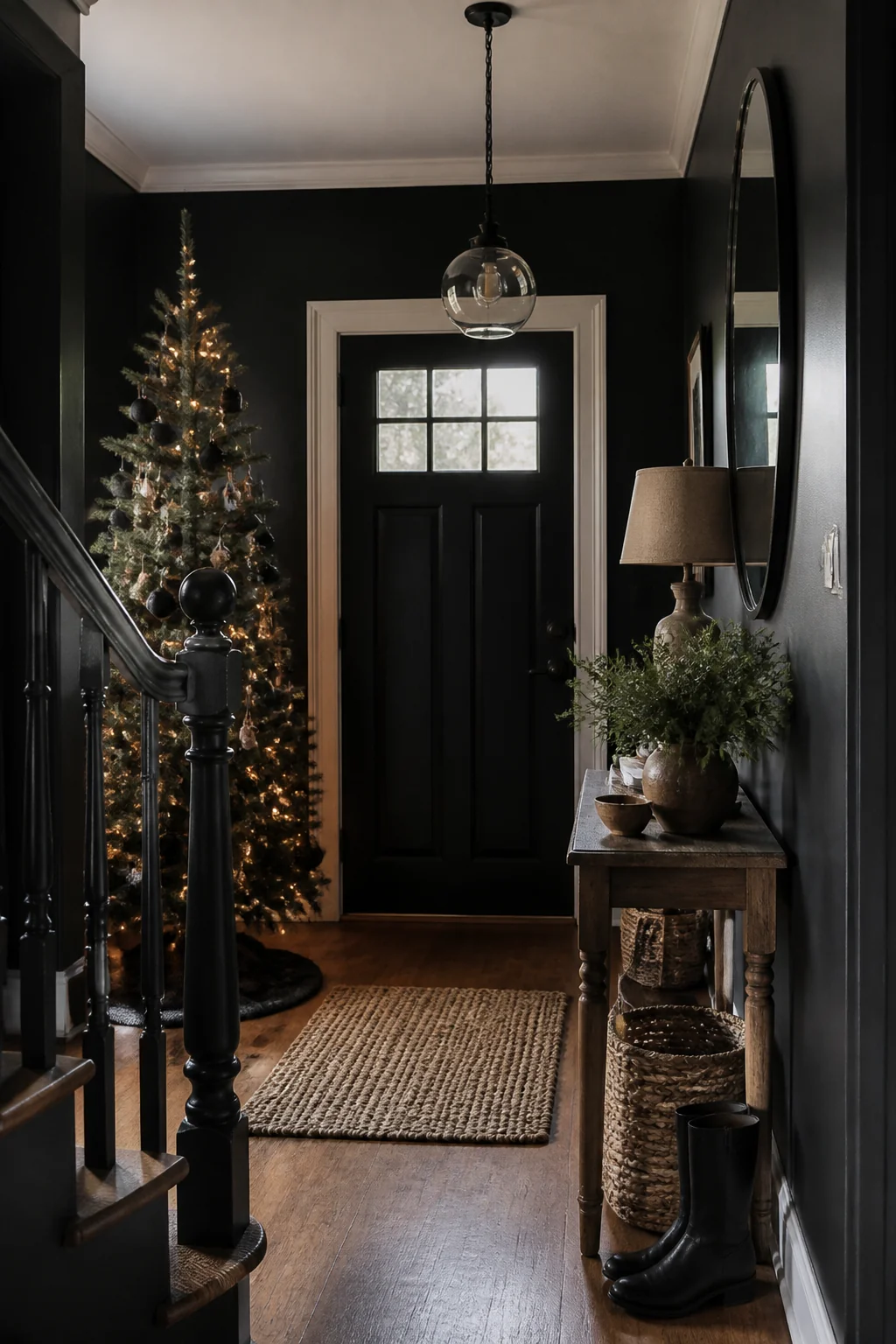
In a dining nook, a 4 to 5 foot black tree sits in the corner and shares the room with the pendant over the table. The pendant's warm glow lights the tree from the side, and the lamp's shape echoes the tree's round tip. Give the tree 24 inches of clearance from the chair backs when the chairs are pulled out, because a tree that touches a chair ends up with a crooked lower skirt. Keep the pendant clear of the branches, and wire the tree's lights so the plug isn't behind the table.
8. Put the tree on a round linen skirt
A cream or oatmeal linen skirt softens the base of a black tree and gives the eye a ring of light to rest on. The round shape echoes the circle of the tree from above. Pick a skirt around 52 inches across for a 6 to 7 foot tree, so it covers the stand and reaches a few inches past the lowest branches. Avoid flat red or green skirts here, because they cut the tree off from the floor and make the black look like a cutout. (Linen wrinkles, so store it folded, not crushed in a box.)
9. Raise the tree on a low wooden platform
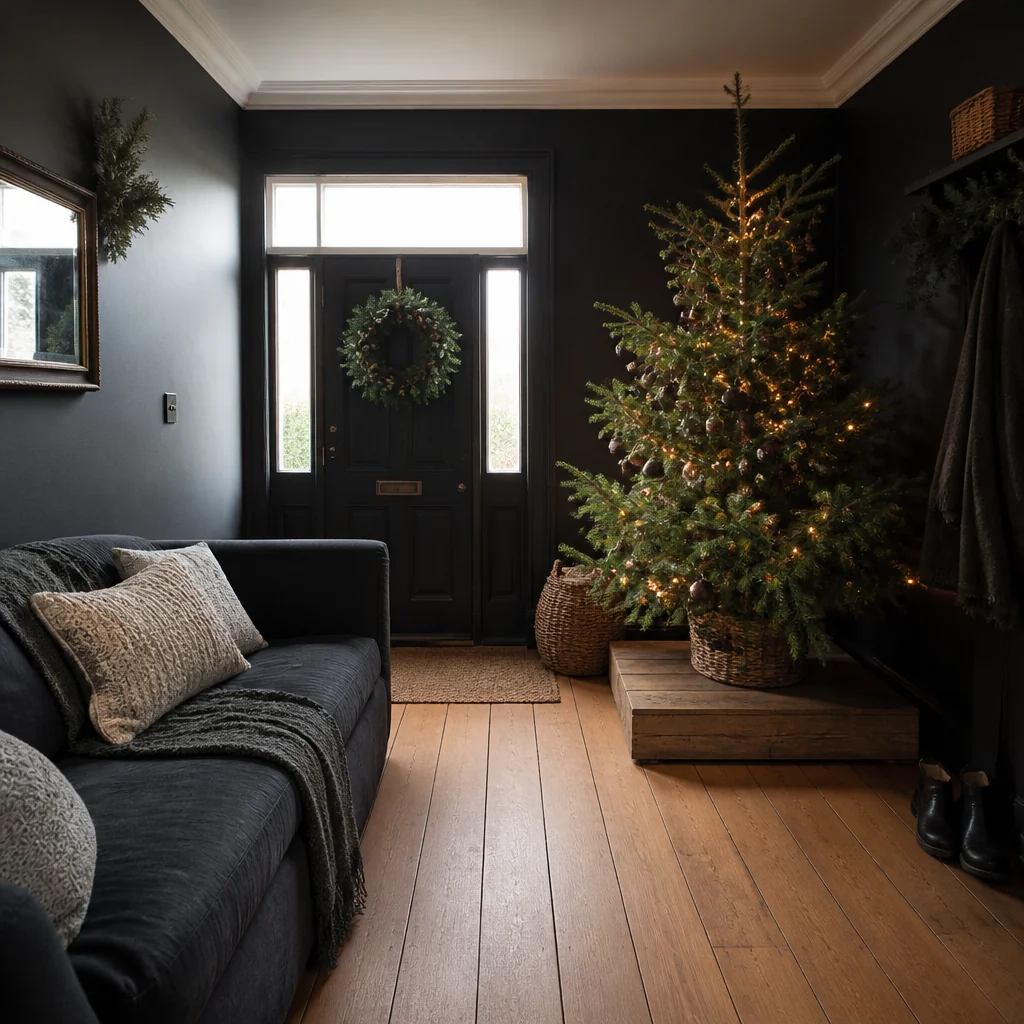
A round or square wooden plinth, 8 to 12 inches high, lifts the tree and changes its silhouette. The eye travels up the trunk instead of settling on the carpet. Oak, walnut or painted pine all work, and a natural finish sits well against black. Make the platform about 2 inches wider than the tree's base on each side, so the stand disappears under the wood. This works best in a living room with a low sofa, because the tree rises above the furniture line.
10. Reflect the tree in a leaning floor mirror
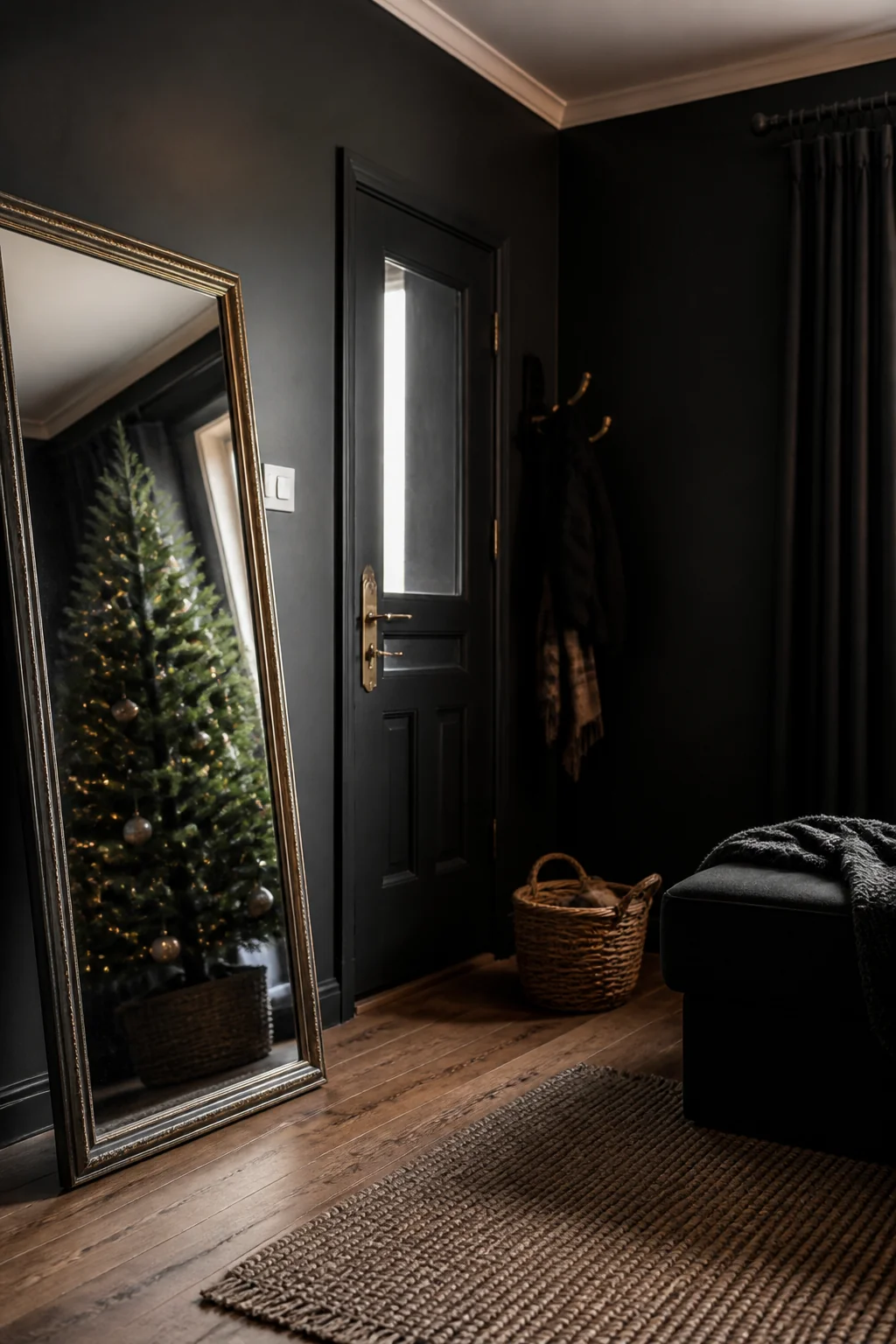
A tall mirror angled toward the tree doubles the dark shape and adds depth, so the corner feels like a small grove. Lean the mirror against a wall at an angle that catches the tree from the seating area, not the window. A floor mirror is heavy, so anchor it to a wall stud with a strap rated above its weight. Avoid placing the mirror across from a window at night, because it will reflect the dark glass and the tree will vanish into the reflection.
11. Mix dried eucalyptus and cream ribbon
Dried eucalyptus sprigs in silver-green and cream organza bows give the tree a softer, textural look. Matte dried leaves against glossy ornaments add depth that a single material can't. Tuck three to five stems into each section, with the stems pointing outward so they catch the light. Keep all dried greenery at least 12 inches from any bulb or flame, since dry foliage burns quickly and sits close to the lights on a tree.
12. Hang wood, rattan and terracotta ornaments
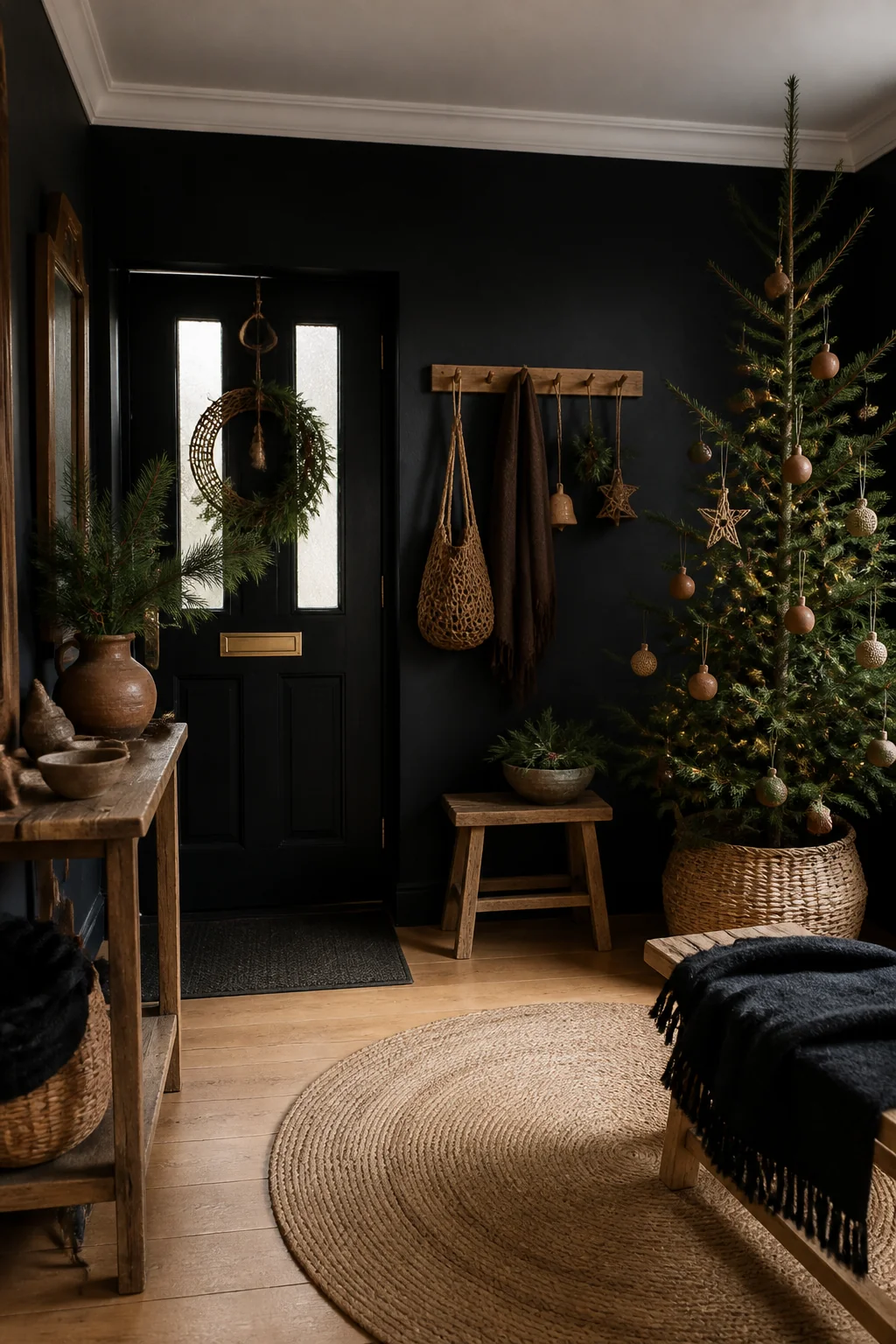
This is the natural palette: wood beads, rattan stars and terracotta bells against black. The earthy colors warm the tree and make it feel like it belongs in a room with linen and clay pots. Keep the palette to three materials, not five, so the tree reads as calm instead of crafty. Wood beads in 1 to 2 inch sizes work well at the tips, and 4 inch rattan stars look good on the upper branches. For more hands-on options, our diy christmas decor ideas cover simple versions of these pieces.
13. Dust the branches with white flocking
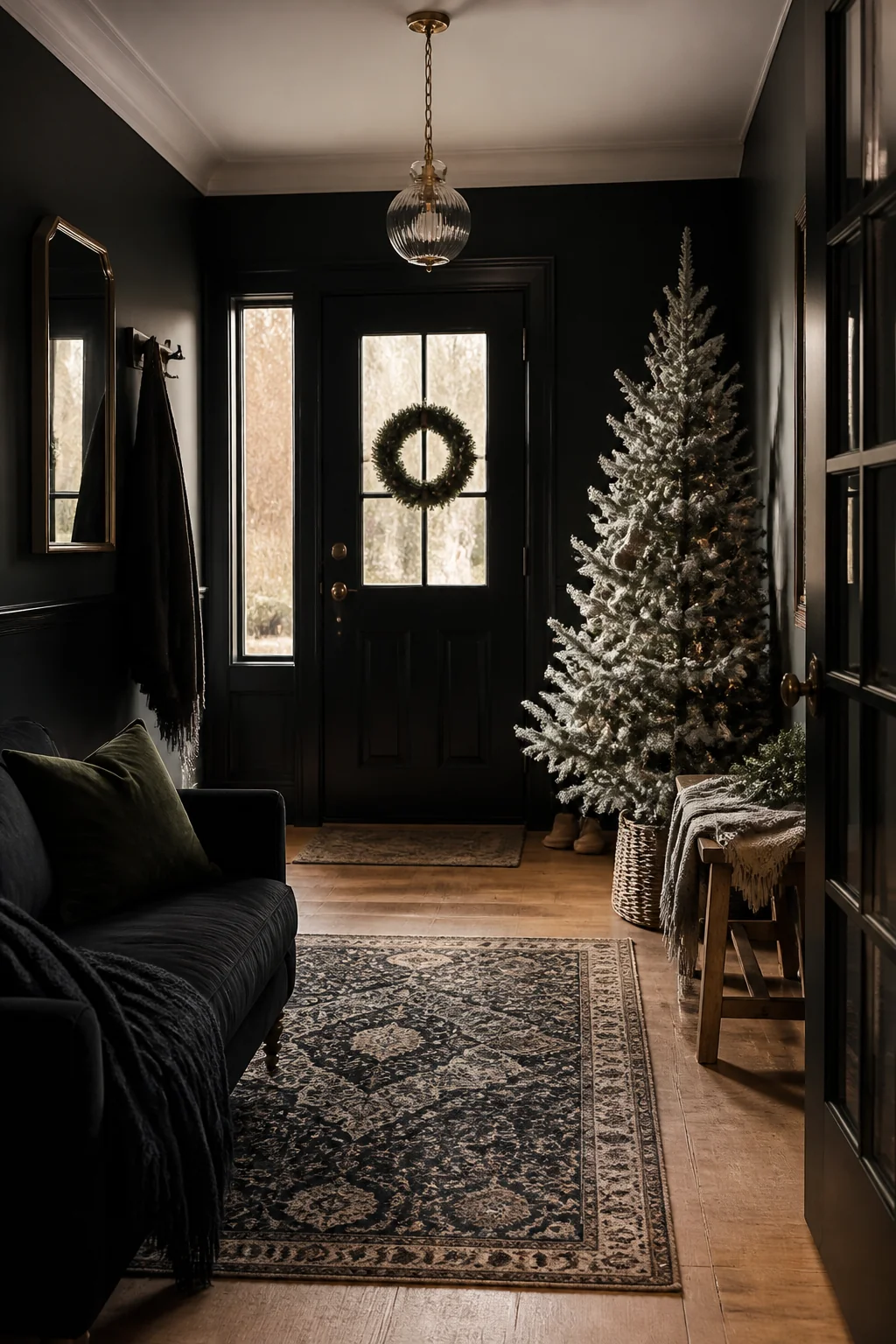
White flocking looks like light snow settling on the branches. The white flecks soften the tree's outline and catch the light from the strings. Flocking sprays are aerosols, so use them outdoors or with windows fully open, and let the tree dry flat on a drop cloth before bringing it inside. (Flocked trees shed a little white dust for weeks, so vacuum the rug nearby.) We would skip flocking on a tree you plan to keep for years, because the coat wears unevenly and is hard to refresh.
14. Echo the tree with a dark sideboard
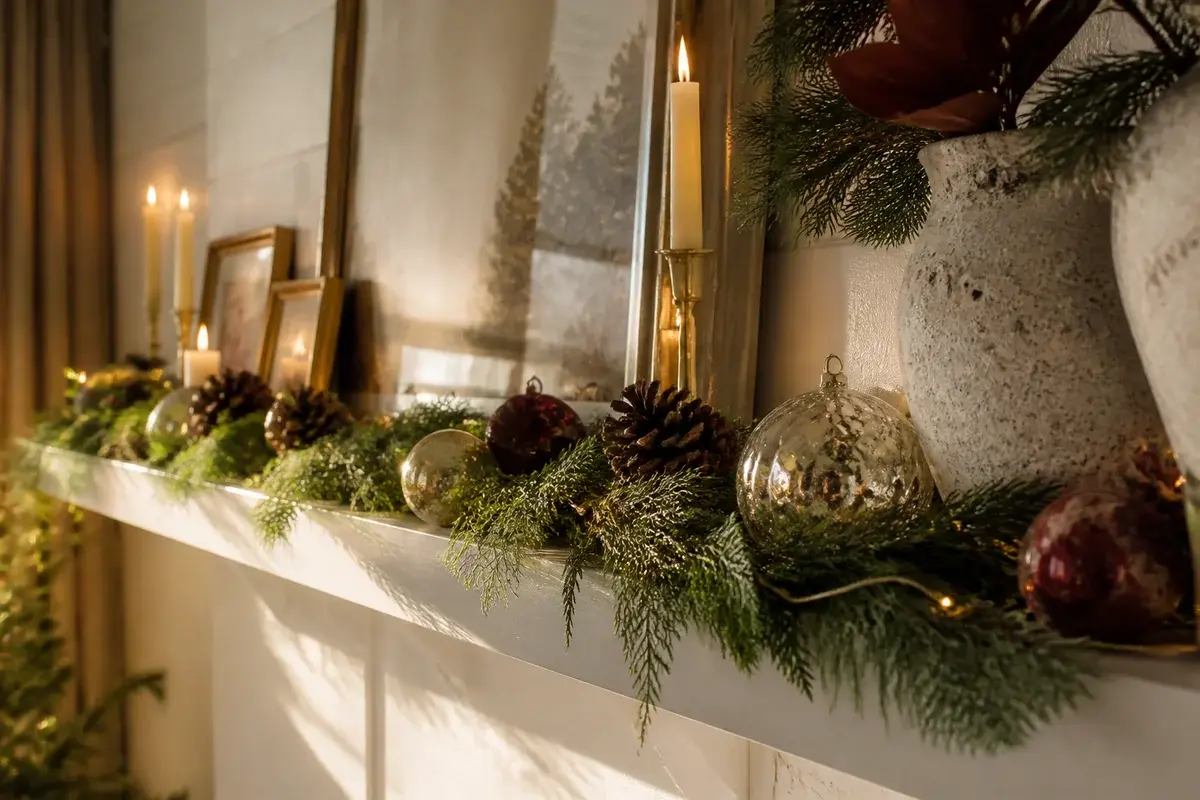
A black or deep espresso sideboard placed beside the tree ties the two together. Repeating the dark makes the tree look planned, as though it belongs to the room rather than being dropped into it. A sideboard about 60 to 72 inches long works in a living room, with the tree 12 to 18 inches from one end. Top the sideboard with a small garland and a few candles, and anchor the piece to a wall stud because it's tall and top-heavy. Our christmas mantle ideas show the same dark-and-light balance on a fireplace.
15. Carry the black into the dining nook table
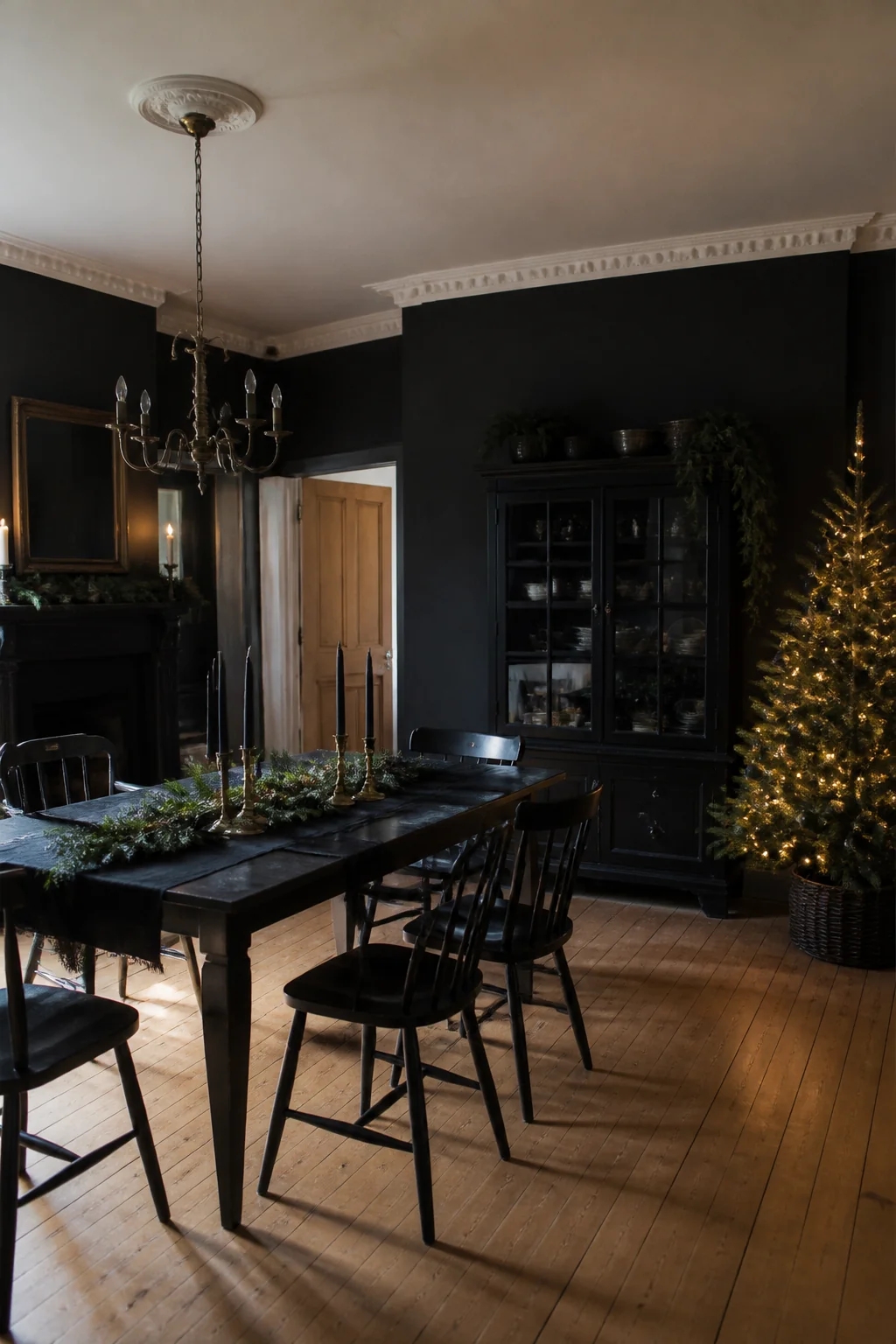
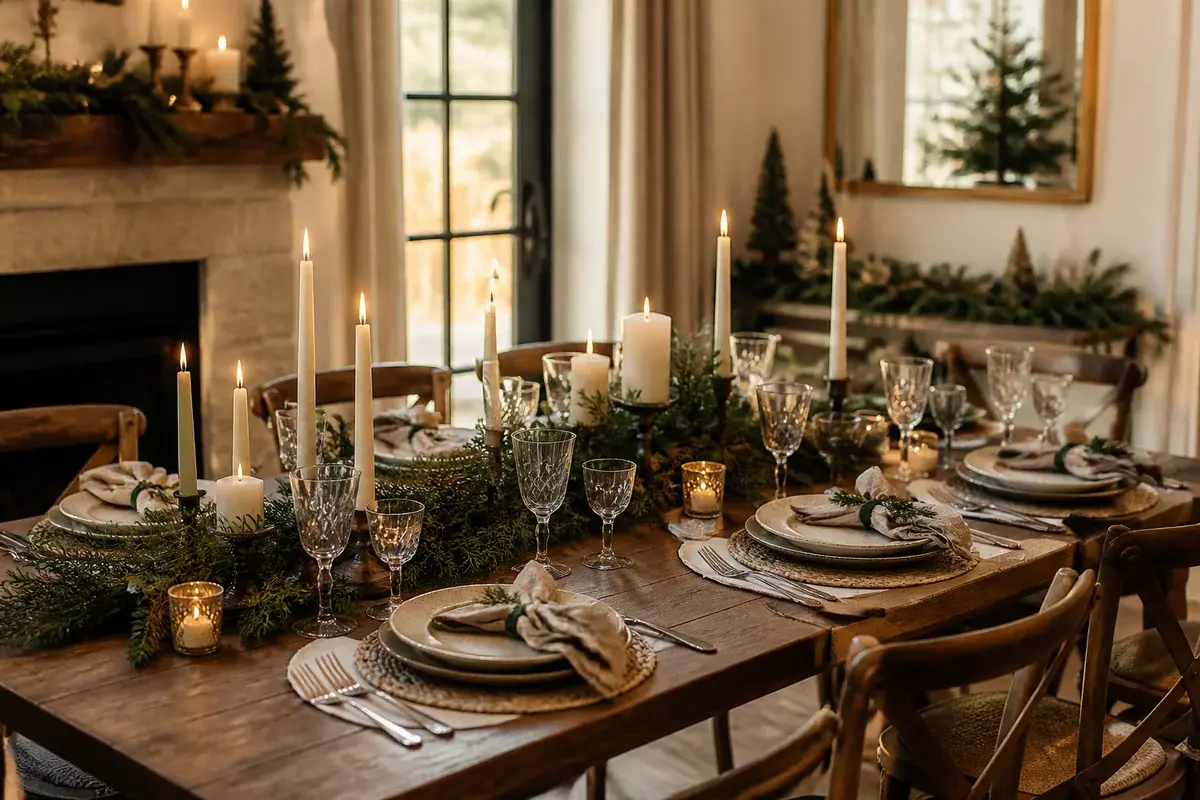
A charcoal or black table runner, 12 to 16 inches wide and long enough to hang 10 to 12 inches past each end of a 60 inch table, connects the nook to the tree. Pair it with white plates and black napkins so the table repeats the tree's contrast. Use flameless candles, or keep real ones at least 12 inches from the tree and any greenery. Our christmas table setting ideas go deeper on layering the table for the season.
The whole guide in one image
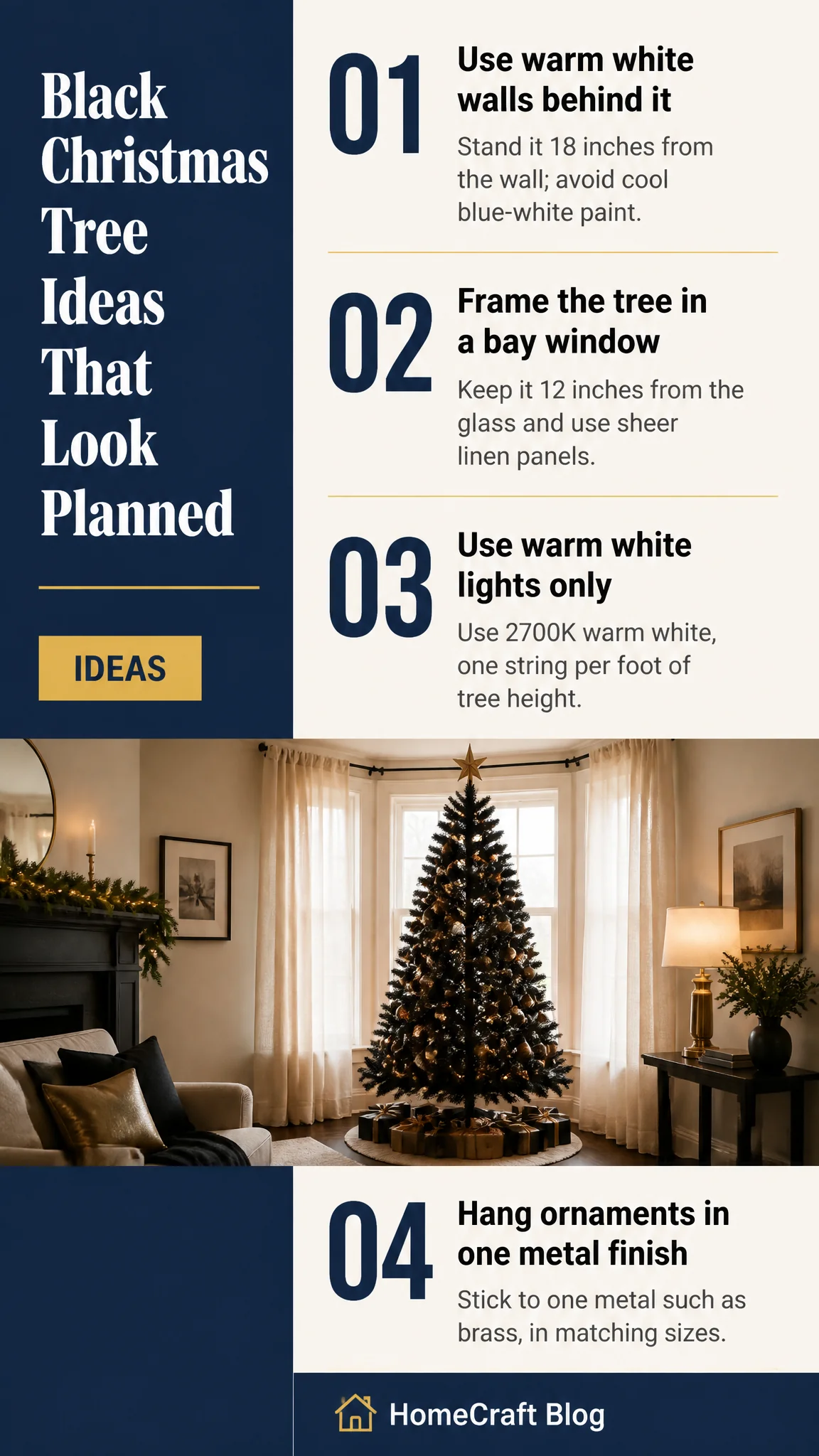
Before you buy anything, measure the floor to the lowest point of your ceiling, then subtract the height of the tree stand and about 6 inches for a topper. That number tells you the tallest tree that will fit without bending. Measure the clearance on each side of the tree too, aiming for at least 24 inches to any walkway or chair.