15 Christmas Table Setting Ideas for Round, Square and Narrow Dining Tables
Fifteen christmas table setting ideas sized for round, square and narrow tables, with seating for four to eight. You'll see which layouts to skip and why.
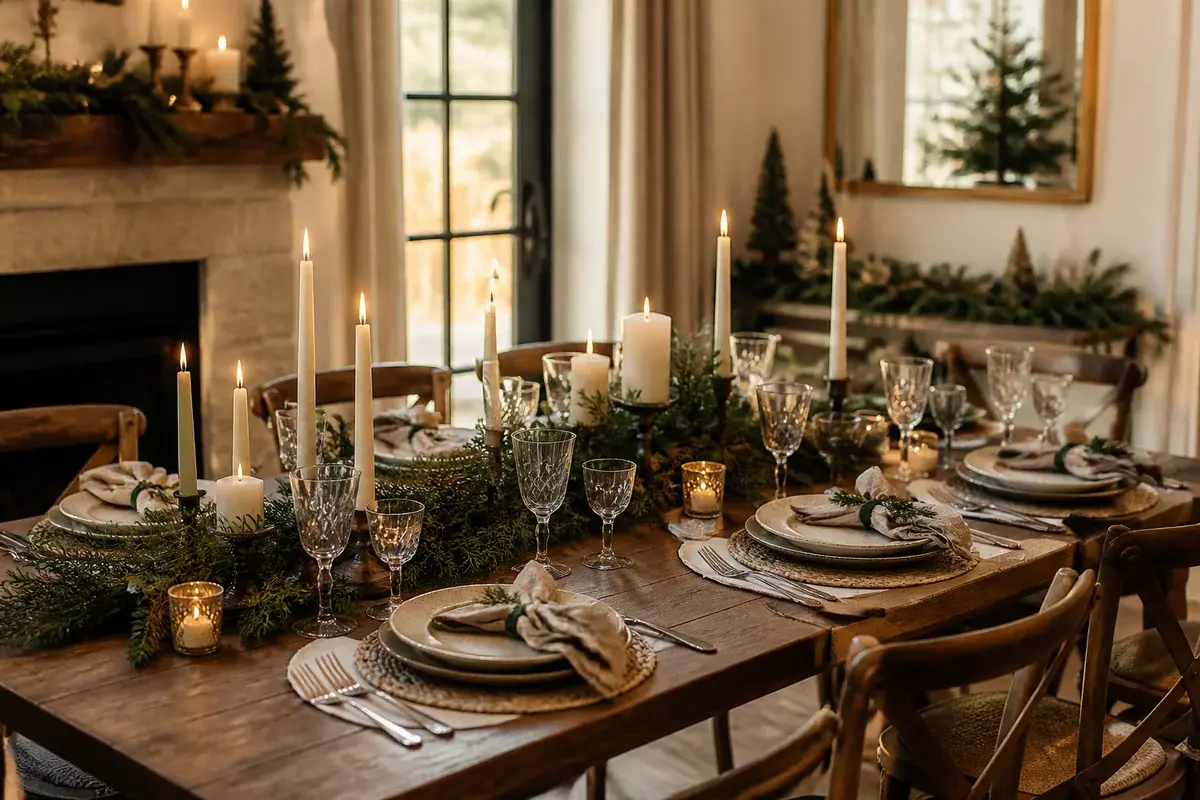
Keep every centerpiece low enough that people can see each other across the table. That one rule decides whether a holiday table looks generous or looks like a wall, and it applies to round, square and narrow tables alike. These 15 ideas are for anyone hosting a holiday meal for four to eight people, whether in a formal dining room, a kitchen nook or the end of a living room. Each entry gives you the look, why it works and the sizes that make it fit. We also say which ones we would skip, and why.
1. Set a low, wide centerpiece on a round table
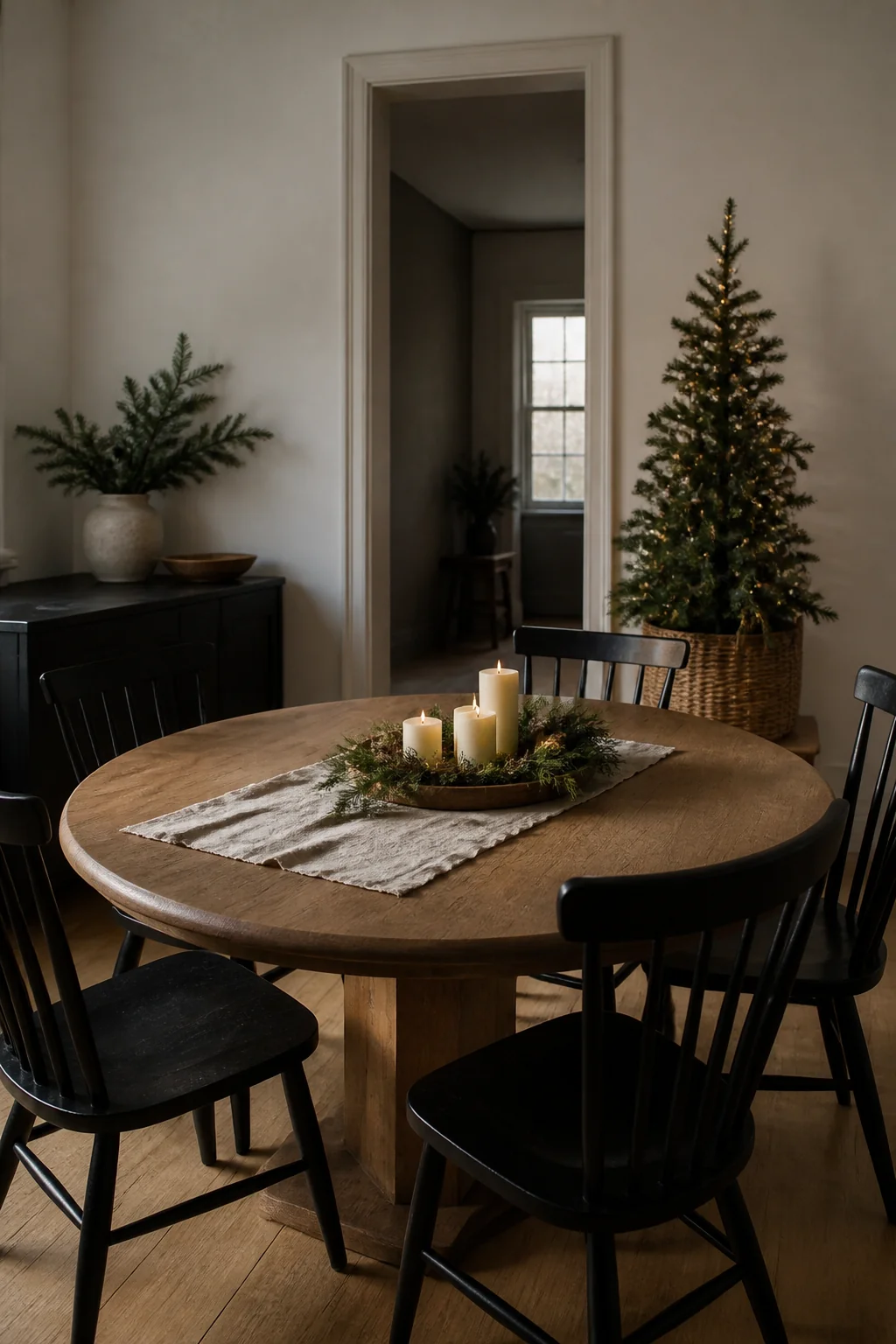
A round table has no ends and no corners, so the eye lands in the middle. Put one low, wide arrangement there and the whole table reads as finished. Picture a cream cloth over a 48-inch round, with a shallow birch tray holding fir sprigs, white ranunculus and two short taper candles. The greenery spills just past the tray's edge, so the setup feels soft instead of boxed in. Look for a tray 16 to 20 inches across, which leaves room for plates. Keep the tallest stem under 10 inches. Use flameless candles, or keep a real flame at least 12 inches from the greenery and blow it out when you leave the room. Is your round table 48 inches or 60? That decides how wide the tray can go.
2. Let a floor-length cloth fall all the way around a round table
A round cloth with a full drop hides the base and the legs, so the table reads as one solid piece. The color runs unbroken from the tabletop to the floor, with the chairs tucked just under the hem. For a 60-inch round at the standard 30-inch table height, you want a 120-inch round cloth, which gives a 30-inch drop. Linen or heavy cotton sateen holds that length without looking limp. A cloth that stops at the knee reads as a mistake, so measure the drop before you buy. (A 120-inch round costs more than most table runners, so plan the budget around it.)
3. Stack chargers under plates with a folded napkin tucked in
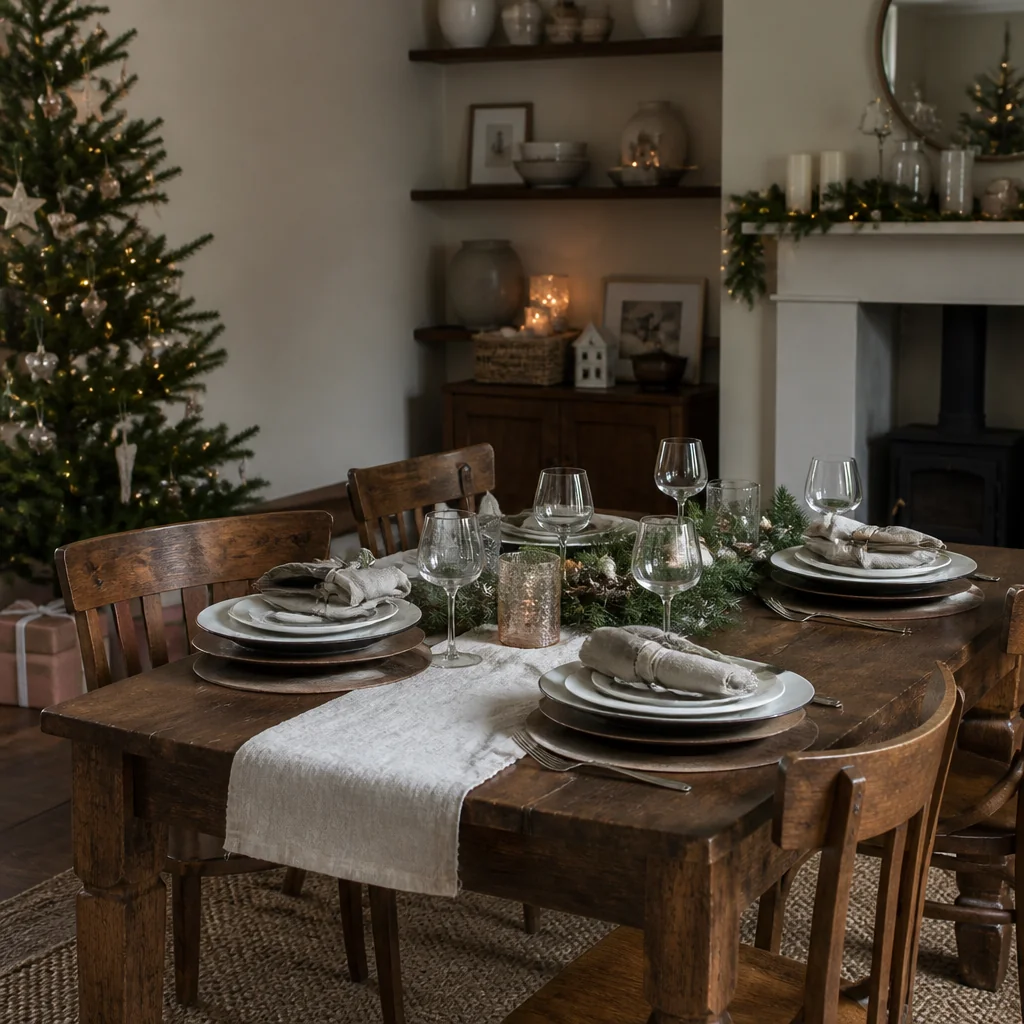
Each seat gets a layered base: a charger, a dinner plate on top, and a napkin standing in the gap between them. Height at every seat is what makes a round table look dressed, because that is where guests look. Use a 13-inch charger under a 10.5-inch dinner plate, which leaves a thin rim of metal or wood showing around the edge. Gold, pewter or matte wood gives the base a warm tone. A 20-inch square napkin in a linen shade folds into a tall rectangle that stands up well. We would skip plastic chargers, because they look flat next to real china.
4. Cross two runners over a square table
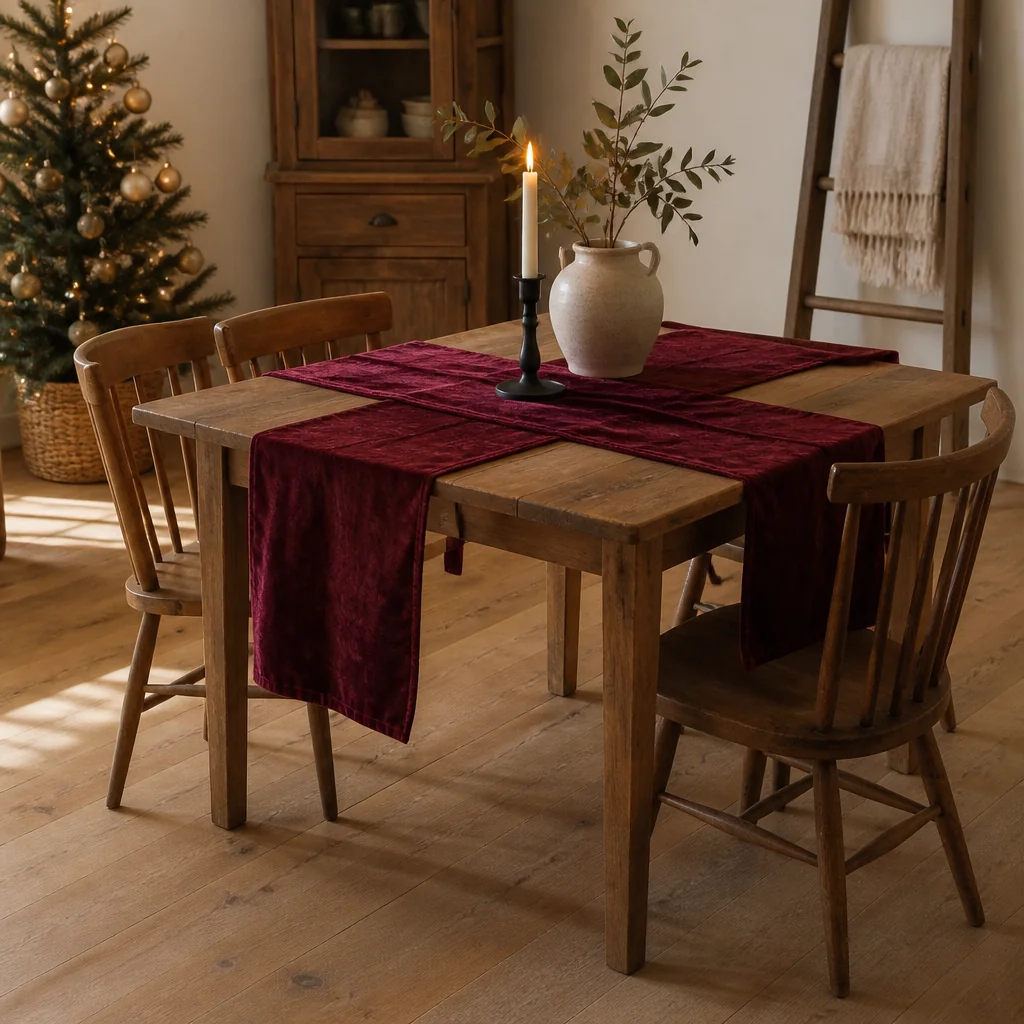
A square table has four equal sides, so it tends to look even and a little flat unless something gives it direction. Two runners laid in an X across the top do that job. Picture two 14-inch-wide runners in deep green velvet crossing at the center of a 36-inch square, each running about 60 inches so the ends drape over opposite edges. The crossing point becomes the focal point, and the four seats sit in the open triangles between the arms. Use one fabric for both runners so the crossing reads as a single design. Set a small bowl or one low candle exactly on the crossing. We would skip this on a table under 30 inches, because the arms crowd the place settings.
5. Place four bud vases near the corners of a square table
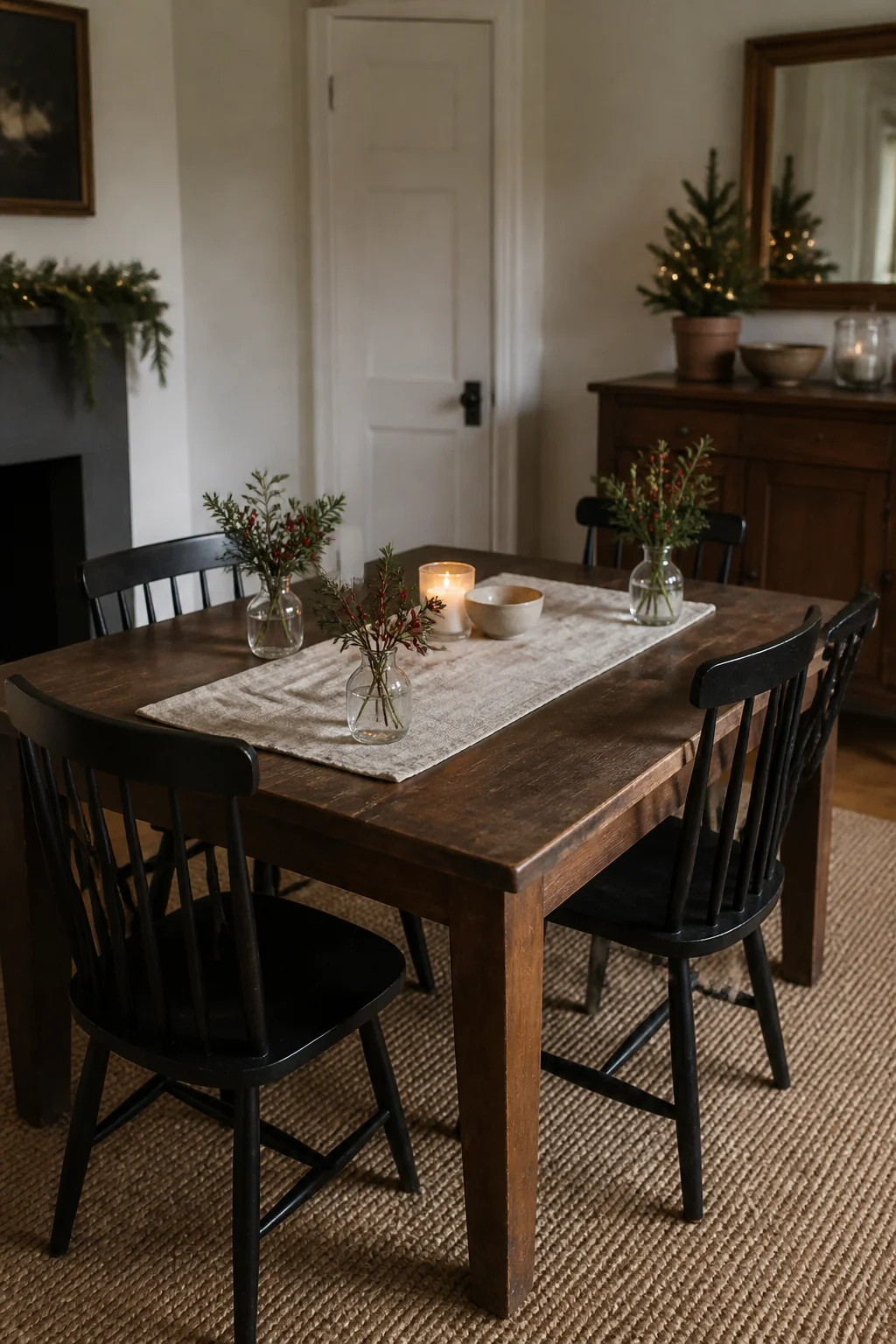
Repetition works on a square table because each seat gets its own small bloom. Set four bud vases, each 4 to 5 inches tall, about 8 inches in from each corner along the diagonal. The look is light and even: clear glass with a single white hydrangea stem, or bottle-green glass holding rosemary and a branch of red berries. Keep each vase out of the path of the plate, because a vase in front of a dinner plate gets knocked over during the reach for bread. Choose narrow bases so the vases don't block the view across the corner. Change the water every other day so the stems stay fresh through dinner.
6. Mix two plaids for placemats and napkins
Plaid at seat level gives a square table a warm, layered look without any centerpiece. Use a large-scale tartan on the placemats, about 12 by 18 inches, and a smaller plaid in the same color family on the napkins. Picture forest green and cream on the mats, with a thin red and green check napkin folded on each plate. The scale rule does the work here: one bold pattern, one small pattern, and nothing else. (Plaid placemats are easy to find in December, but check the weave, because thin ones slide on a varnished table.) We would skip two bold plaids of similar size, since the eye has nowhere to rest.
7. Run a slim evergreen garland down a narrow table
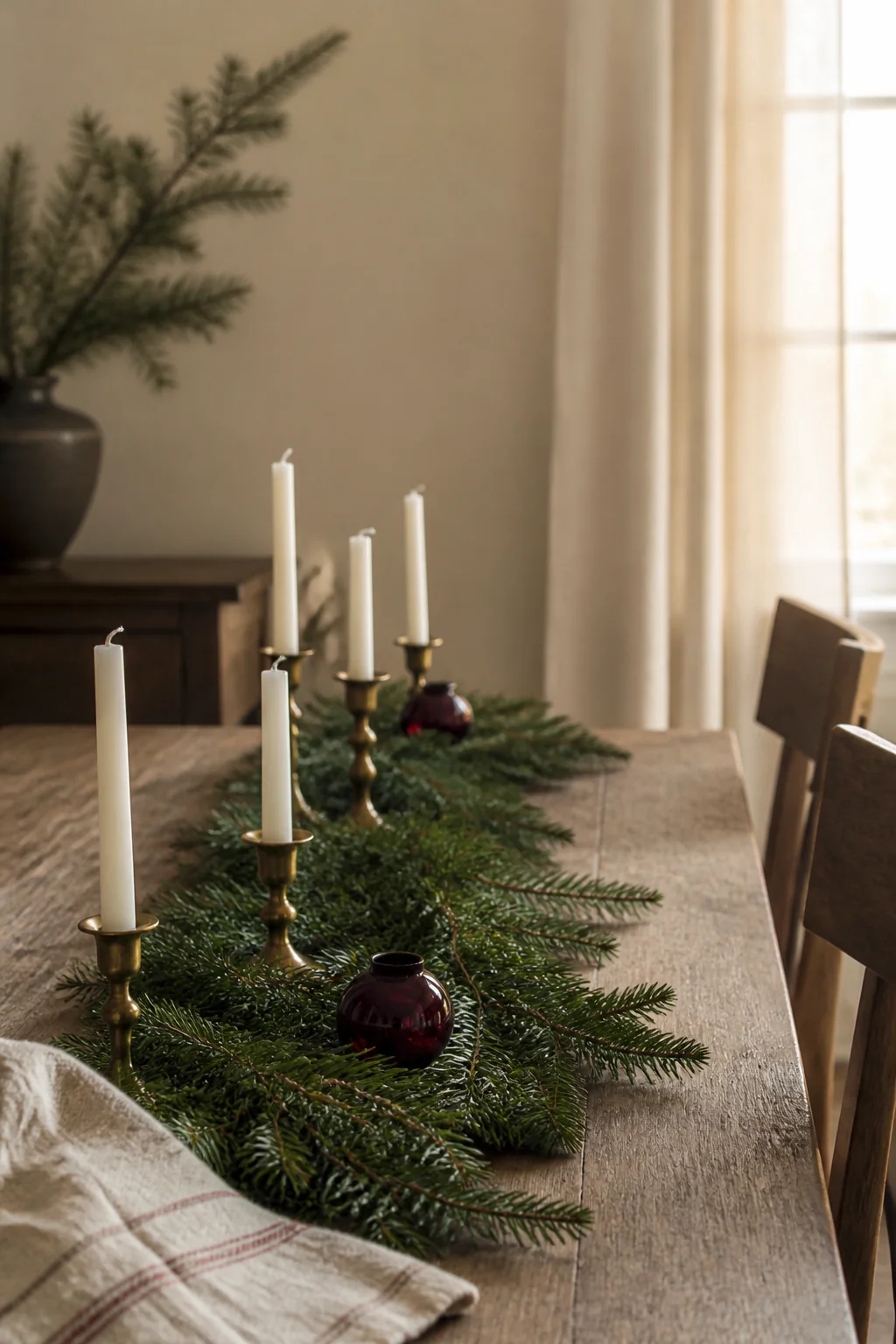
A narrow table reads as a long line, so a line down the center makes it look intentional rather than just long. Lay a slim evergreen garland no more than 6 inches wide along the middle of a 36-inch by 72-inch table. Tuck white berries or small pinecones into the greenery about every 12 inches. Leave the ends bare so the garland stops short of the end seats. Choose a fir or cedar garland with fine needles, because a thick, dense one eats up the 36-inch width and pushes plates toward the edge. Keep the garland under 4 inches tall so each guest can see across.
8. Anchor both ends of a narrow table with lanterns
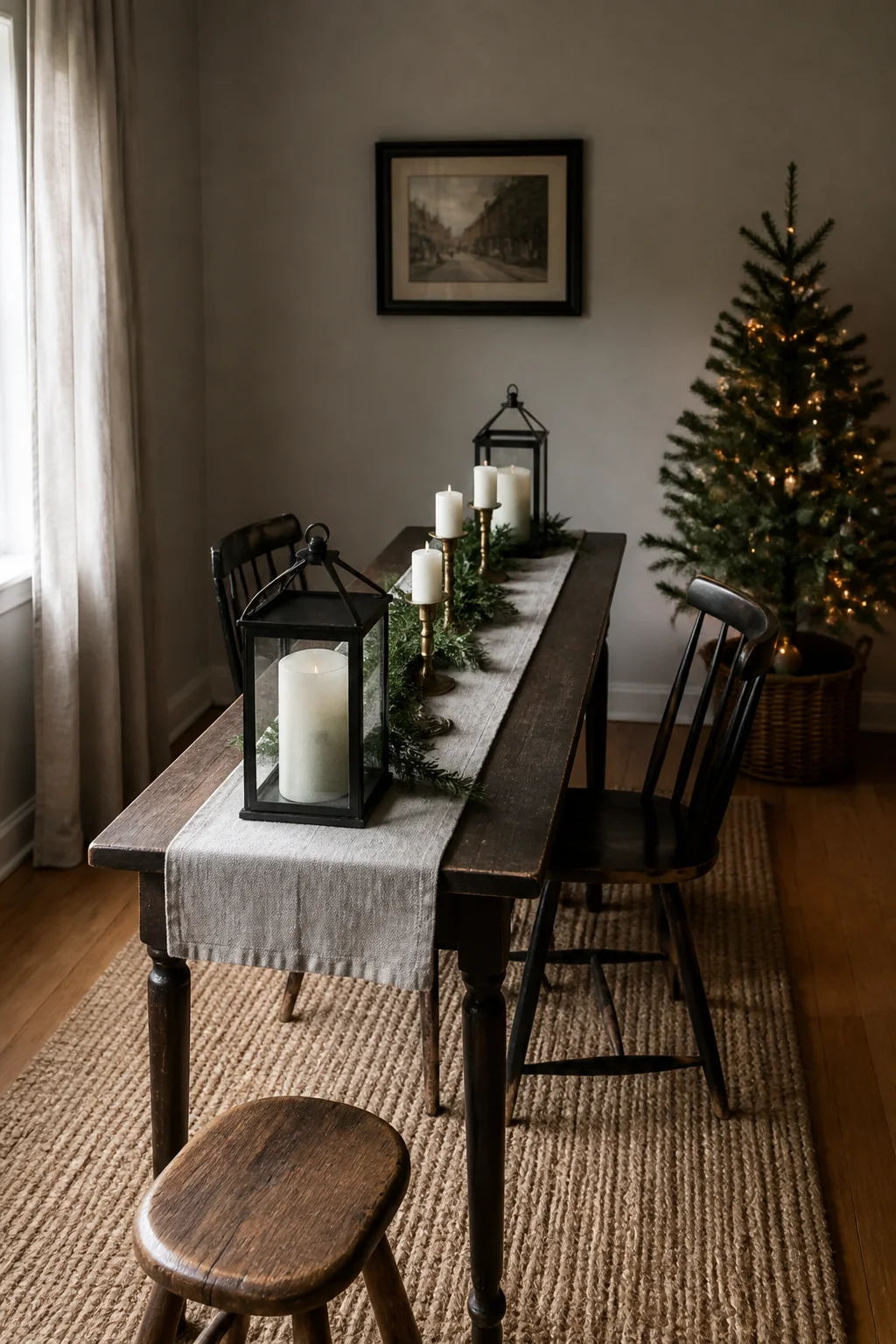
Lanterns at each end frame a narrow table and tell the eye where it starts and stops. Use two matching lanterns about 12 inches tall, with pillar candles or flameless pillars inside. Set each one about 8 inches in from the end, so the person seated at the head has room for a plate and glass. Pick lanterns with a wide, solid foot, because a tall, narrow one tips easily when someone reaches across. The look is warm and balanced: metal or glass at each end, a little greenery between them, and nothing else along the middle. Keep any real flame at least 12 inches from greenery, and blow it out when you leave the room.
9. Tuck name cards into small pinecones
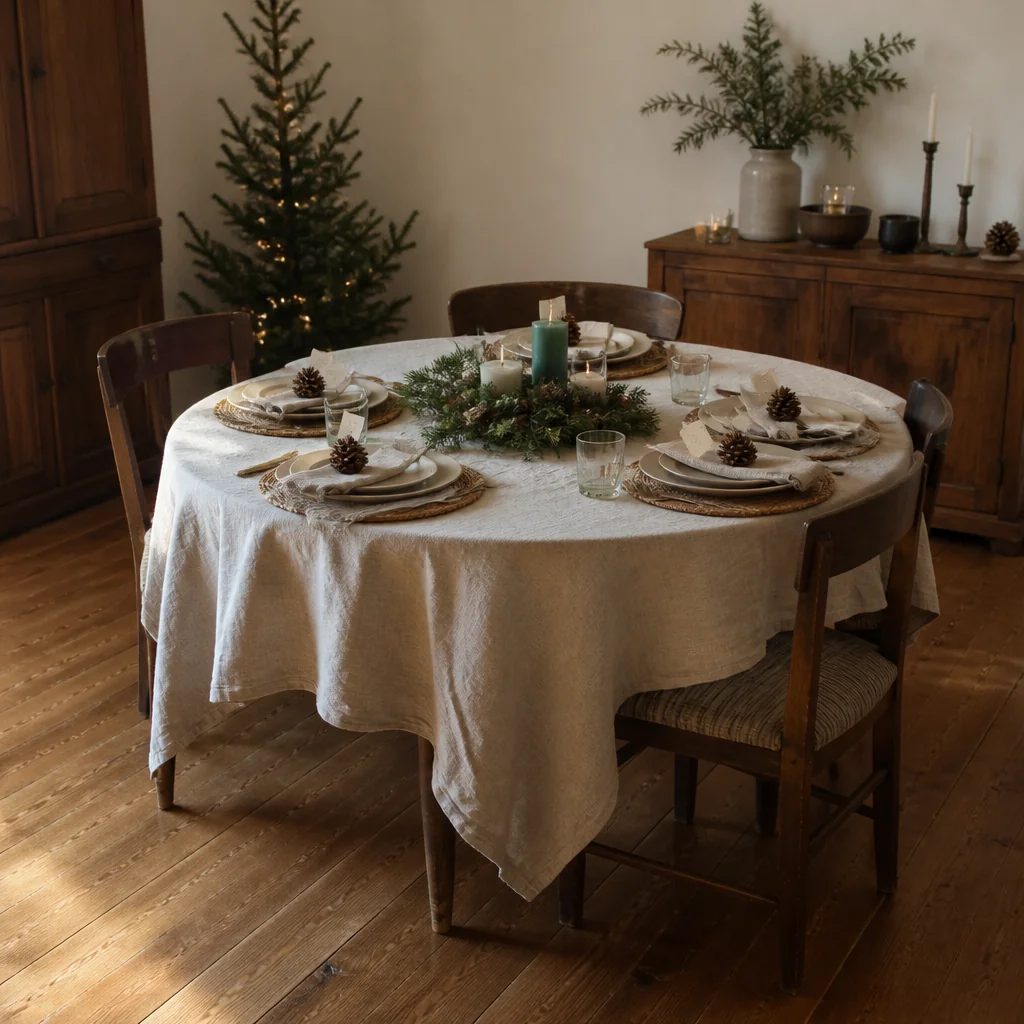
Place cards can be part of the decor instead of a loose piece of paper beside each plate. Tuck a small card into the open scales of a pinecone, one at each setting. The look is natural and a little playful: brown cones on cream linen, with the handwriting visible from the chair. Choose cones about 2 to 3 inches tall so they sit flat and don't roll off the table. Use cardstock that stands up on its own, and write with a fine-tip pen, since thick markers smear on the cone. This works on any table shape, and it gives every seat a small, personal detail.
10. Mix brass with clear glass for a warm, polished table
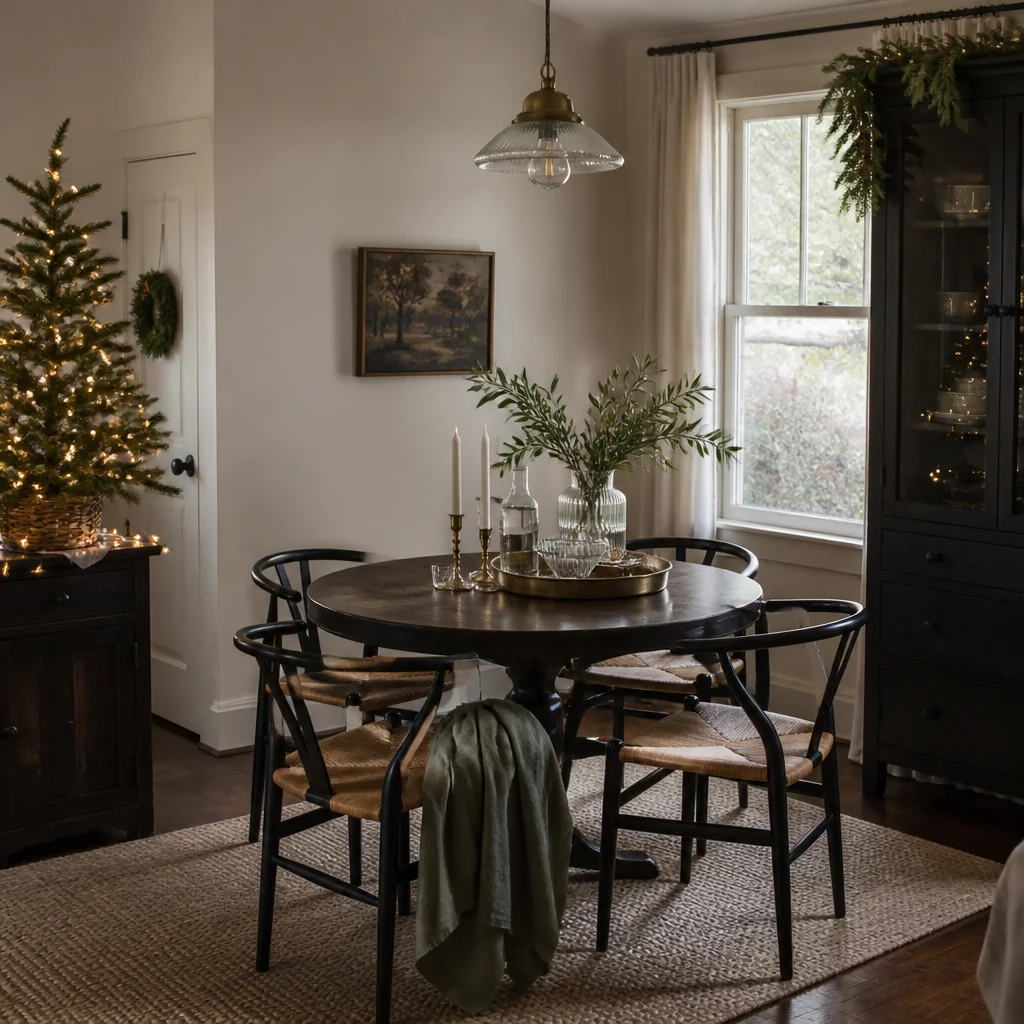
Brass and clear glass together give a dining table a warm sheen without adding any color. Pair brass candlesticks or a brass tray with clear water glasses and a few glass votives. The light passes through the glass and catches on the metal, which looks like candlelight even when the candles are small. Keep the metals to one finish, brass or gold only, because brass next to silver on the same table looks accidental. Glassware with a thin rim reads lighter on dark wood than a thick tumbler does. We would skip more than two metallic finishes on any single table.
11. Lay moss and wood slices on a burlap runner
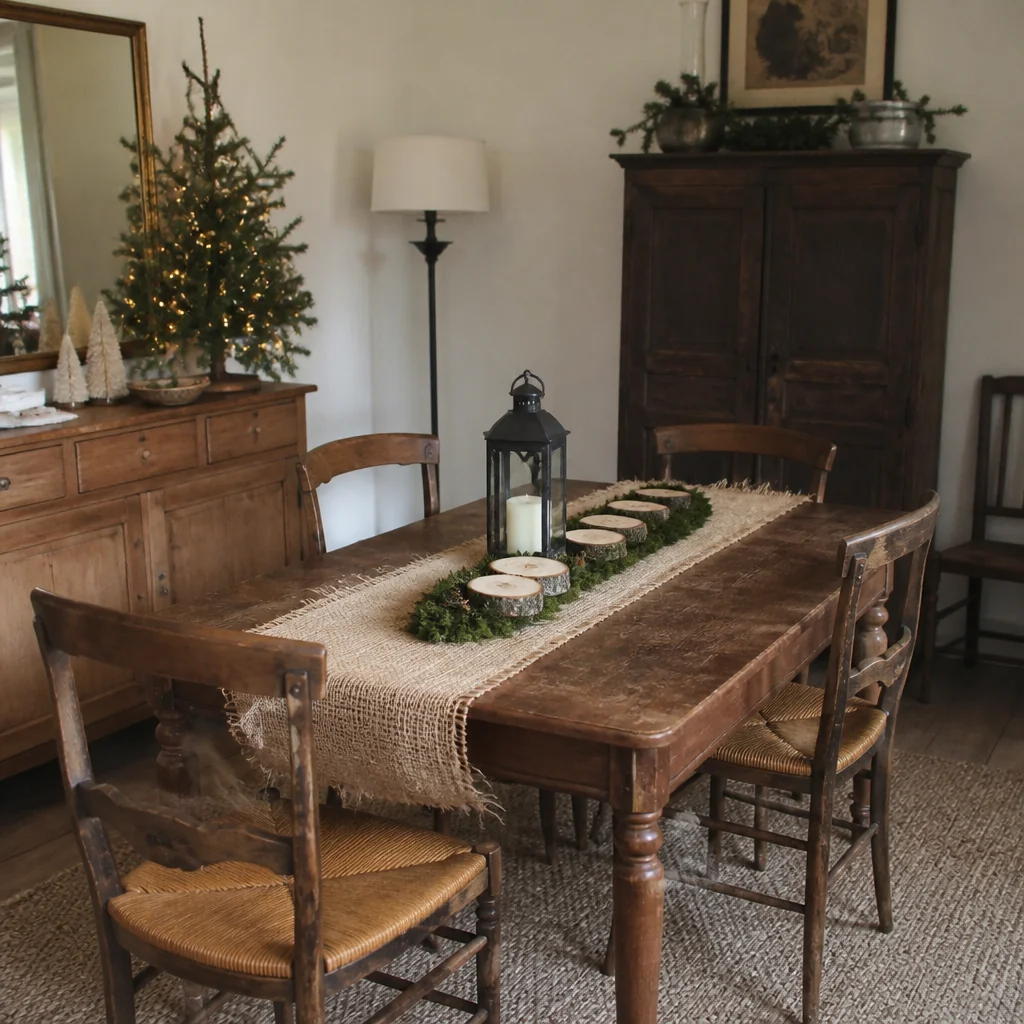
A woodland table looks best when it is low, textured and a little uneven. Lay a 14-inch burlap runner down the middle, then scatter moss in clumps with four or five wood slices about 1 inch thick set between them. Picture oatmeal burlap, gray-green moss, pale birch slices and one clear glass bottle holding a pine sprig. The texture carries the whole design, so the piece needs no bright color. Moss dries out fast under warm lamps, so mist it lightly every couple of days and keep it away from radiators. For wood and runner choices in more detail, see our rustic dining table decor guide.
12. Build an all-white table from texture alone
An all-white table depends on texture, since every element is the same color. Start with a white or ivory linen cloth, then add white ceramic plates with a raised rim, white ranunculus, white pillar candles and a row of pale eucalyptus. The look is clean and calm, and the variety of surfaces keeps it from looking empty. Give each object a different finish: matte ceramic, glossy glass, soft linen, waxy candle. Keep the same finish from repeating across four whites, since that reads as a mistake. This works best in a bright room, where the white can catch the light.
13. Use jewel-tone velvet for a formal dinner
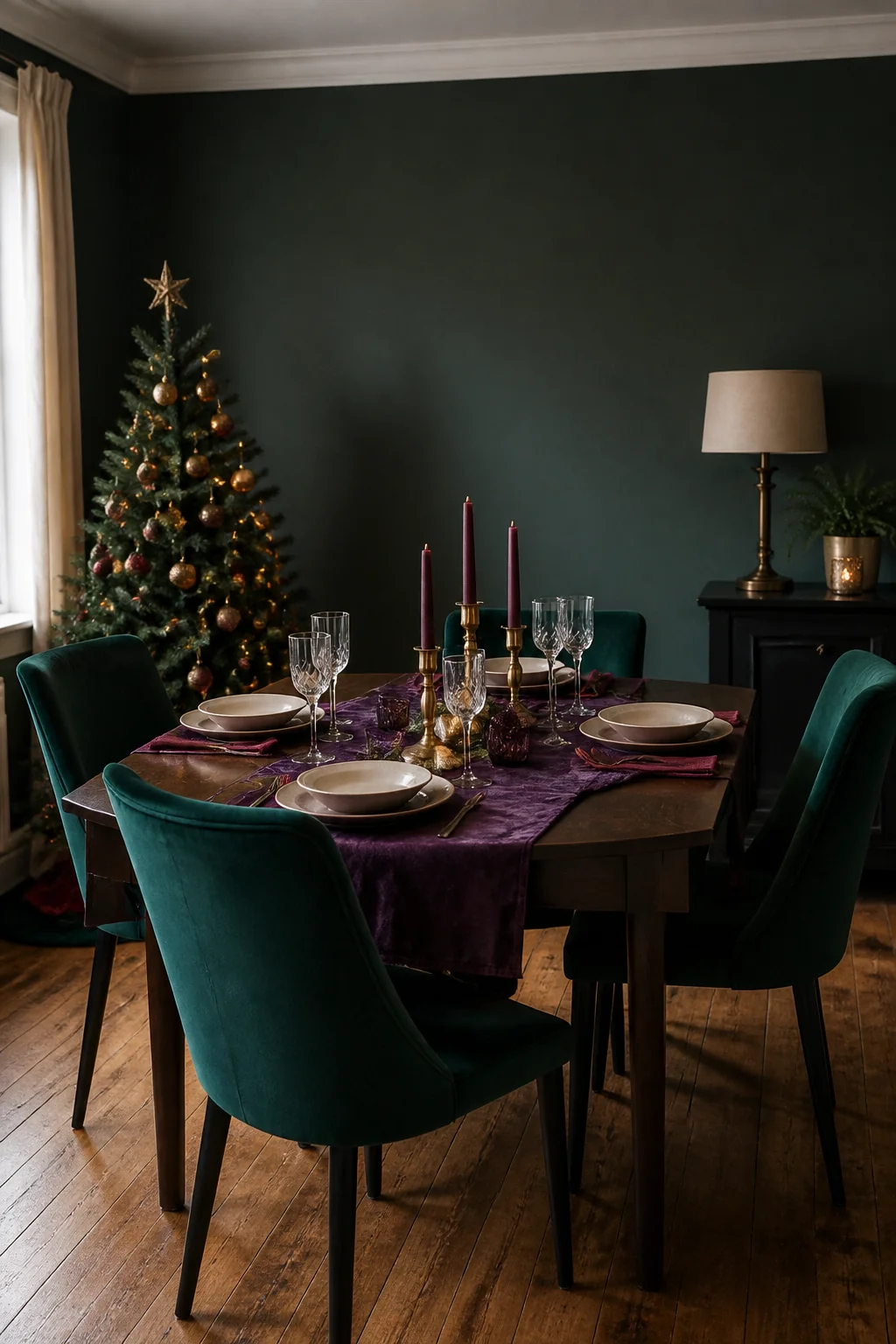
Deep velvet in emerald, burgundy or navy makes a formal table feel rich without any sparkle. Use a velvet runner about 16 inches wide on a rectangular or square table, and set the napkins in a matching fabric. Picture emerald velvet under gold flatware, with cream dinnerware for contrast. Velvet soaks up light, so the table needs warm overhead light or a pair of candles to show it off. Pick a shade from the same family as one object already in the room, and keep the velvet to the runner and napkins only. We would skip velvet cloths on a round table, because the weight pulls the drape into awkward folds at the edge.
14. Line a narrow table with clementines and cinnamon
Citrus and cinnamon bring a fresh, spiced smell to a table that already runs long and thin. Set a shallow wooden tray about 6 inches wide down the center of a narrow table, and fill it with clementines, a few cinnamon sticks and small sprigs of bay. The look is bright orange against deep green, with the cinnamon sticks adding texture. Keep the tray no wider than 6 inches so the platters and serving bowls still fit. Set out the fruit just before guests sit, since it looks tired after a couple of hours. Keep the tray low enough that guests can see past it.
15. Mix vintage china for a collected look
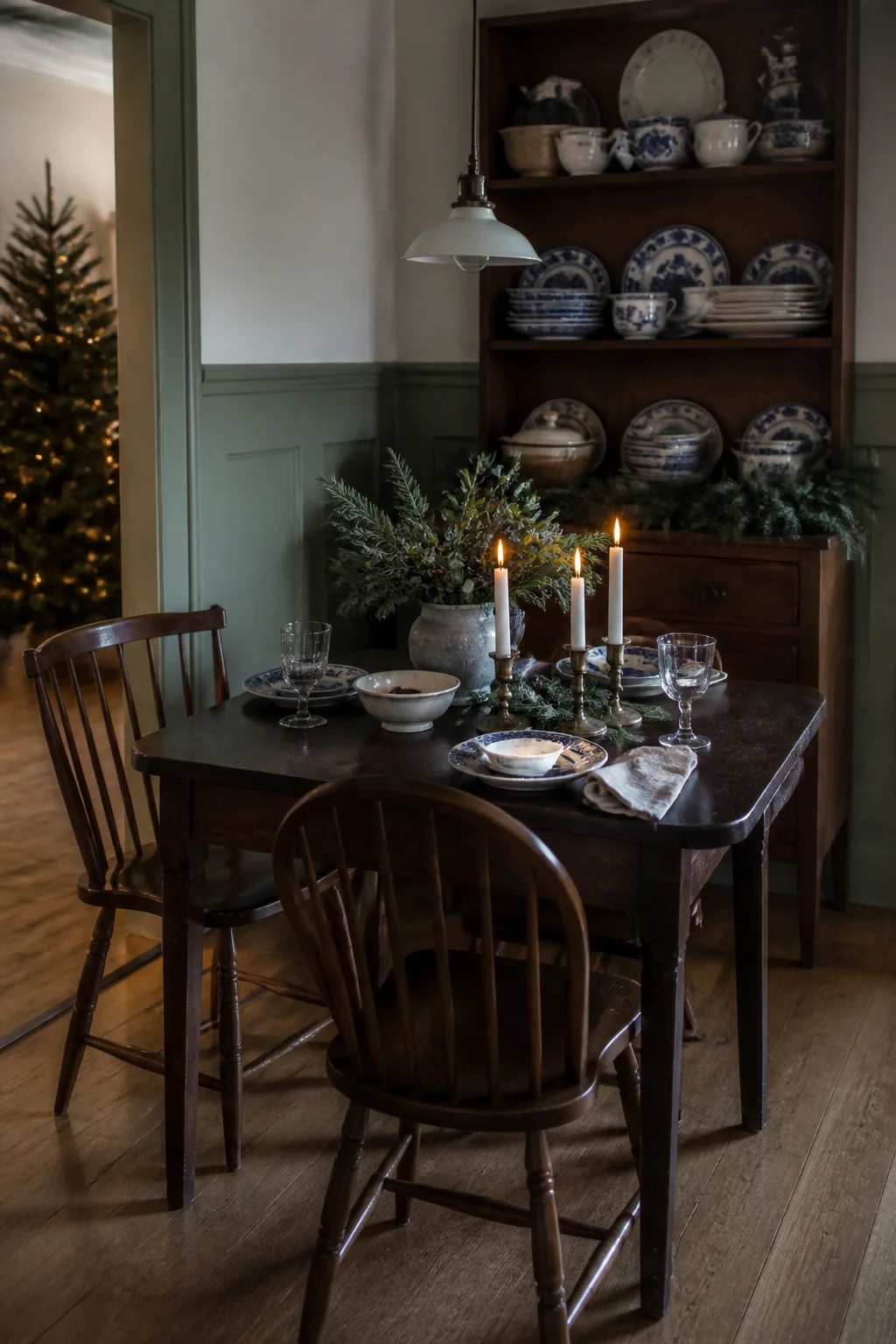
Mismatched china gives a table a collected feel, as if the pieces were gathered over many years. Use one base color, such as white or cream, and let the patterns vary from seat to seat. The mix looks chosen when the plates share a rim shape or a color, so the table doesn't read as random. Pair each plate with a napkin in one shared color, and keep the total to three or four patterns. Check the rim of any secondhand plate for chips before you set it out, because a chipped edge catches on the lip of a glass. We would skip more than four patterns, since the table starts to look like a flea market.
Keep this guide handy
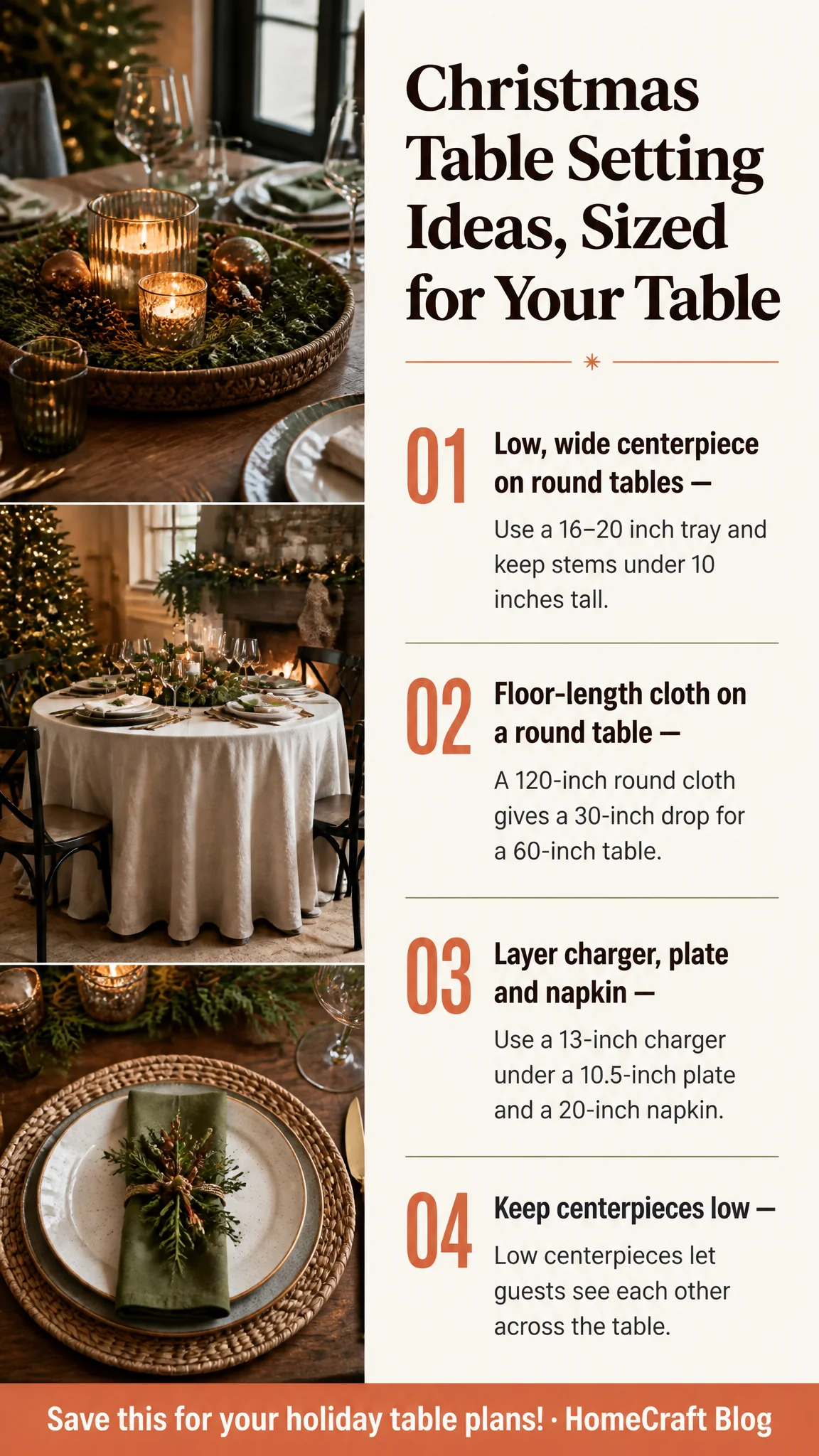
The mistake that ruins most of these setups is a centerpiece taller than a seated guest's eye line. It looks full from the doorway, then blocks every face across the table. Keep the tallest piece low enough to see past from your chair, and the rest of the table will sit right. If the same greenery is carrying into the living room, our christmas living room decor ideas show how to keep the two rooms in step.