How to Style a Rustic Dining Table So It Looks Intentional Between Dinner Parties
Keep your rustic dining table styled between meals with decor that feels lived-in, not staged or temporary.
This post contains affiliate links. As an Amazon Associate I earn from qualifying purchases. If you buy through our links, we may earn a commission — at no extra cost to you.
A dining table sits in the middle of your room doing nothing most of the time. That empty surface becomes a catch-all for mail, bags, and whatever didn't find a home elsewhere. The real constraint you're working with is that the table has to function - it's where you eat, where you work, where things land - so whatever decor you put on it needs to disappear when you need the space, and look intentional when it's there. Rustic style works here because it doesn't demand precious objects or fussy arrangements. Wood, linen, and simple vessels look good whether they're sitting there for a week or rearranged for dinner guests. The trick is choosing pieces that have a job, so the table feels styled, not frozen.
Start with a runner that's actually linen
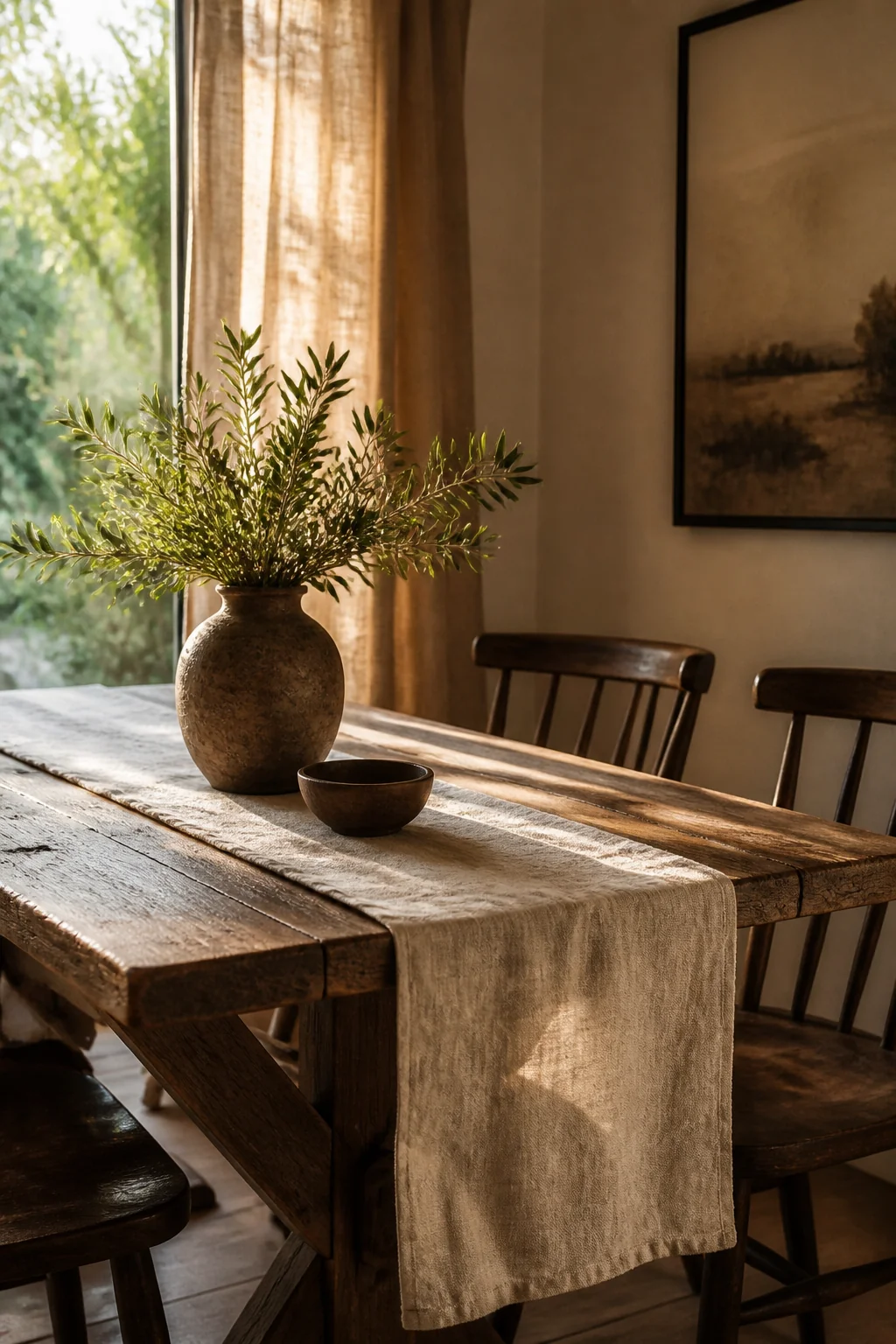
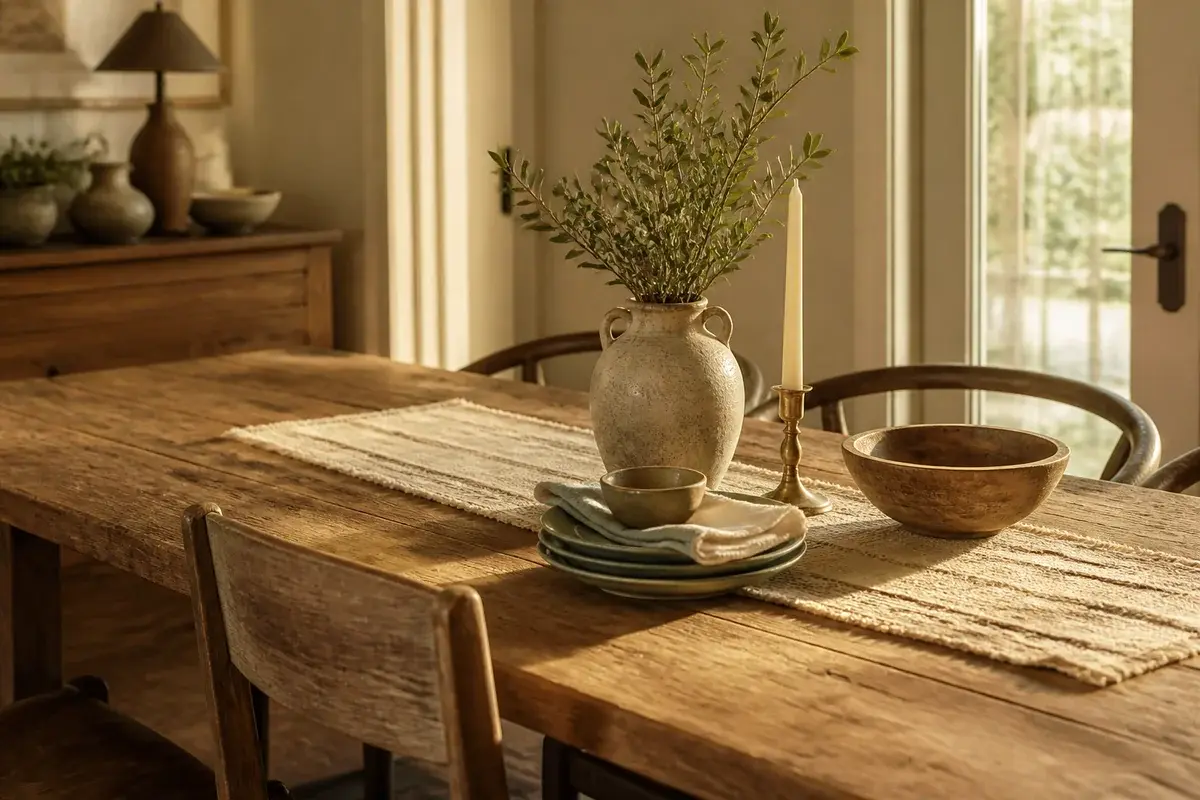
A table runner isn't decorative if it doesn't anchor the whole thing. Cotton-linen blend runners, about 14 inches wide, sit in the center and frame everything else. The blend matters because linen alone wrinkles heavily and linen-cotton stays flatter with less fussing. Natural, cream, or warm white reads rustic and doesn't show dust the way darker colors do. You can move it aside when you need the full table, and it's narrow enough that it never blocks sight lines across the table. A good one runs $35-55 and lasts years if you throw it in the washer on delicate.
(The runner shouldn't reach the edges of the table - stop about 12 inches short on each end so it looks intentional, not like a tablecloth that didn't fit.)
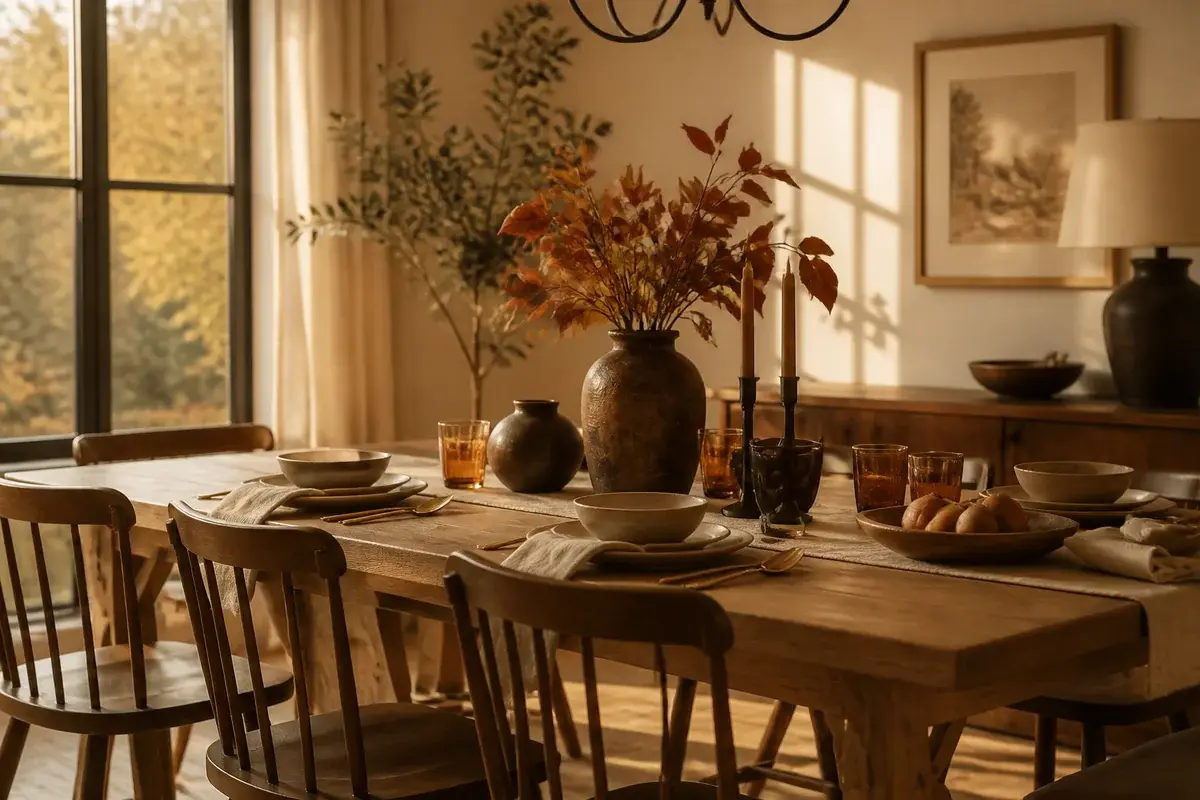
Candles in different heights, all the same material
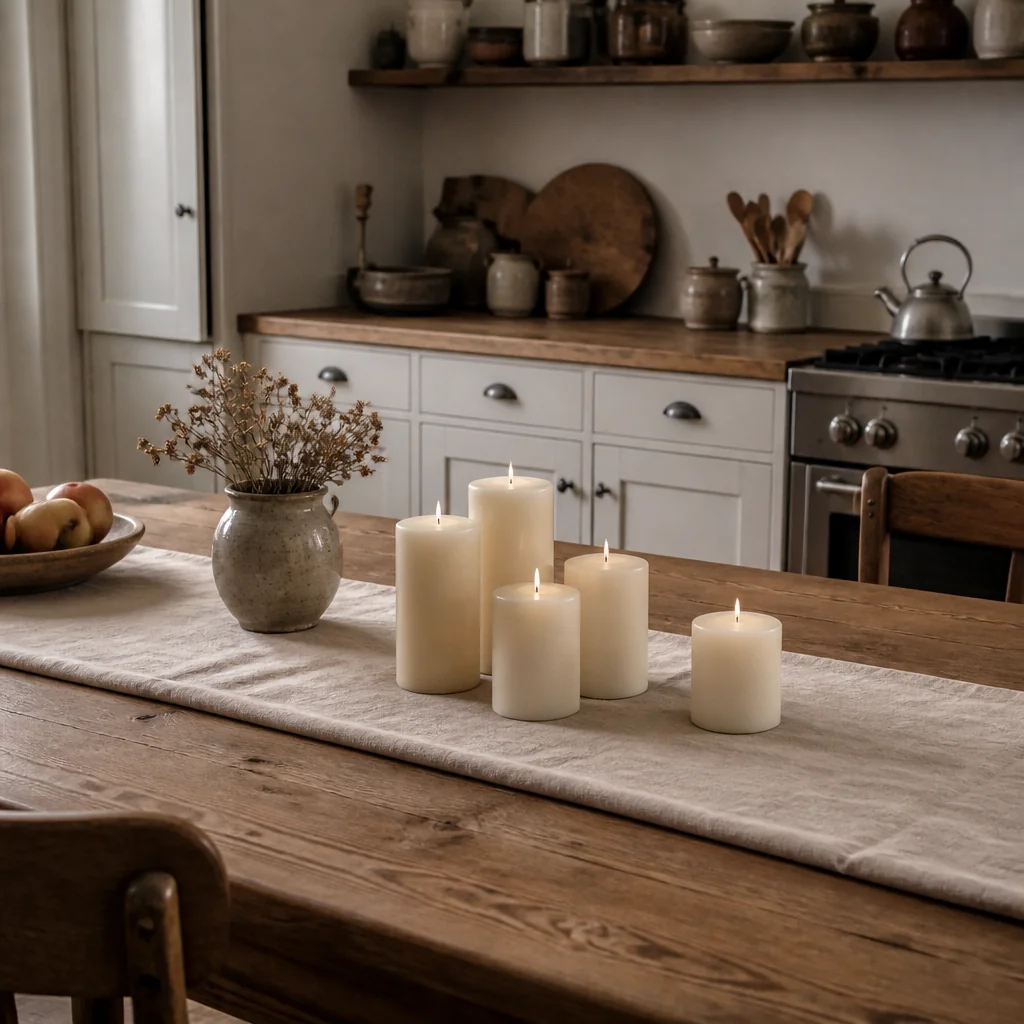
Three candles of different heights create visual interest without looking like you set a scene. Stick to pillar candles in cream, white, or soft gray - the same color family matters here. A 4-inch, 6-inch, and 8-inch pillar clustered together on one side of the runner reads rustic and substantial. Cream wax (not paraffin) looks better and burns slower. You can light them for dinner, blow them out after, and they'll sit there looking intentional for days. Place them so they're not directly in someone's line of sight if the table gets used for eating that night.
A wooden board with one simple thing on it
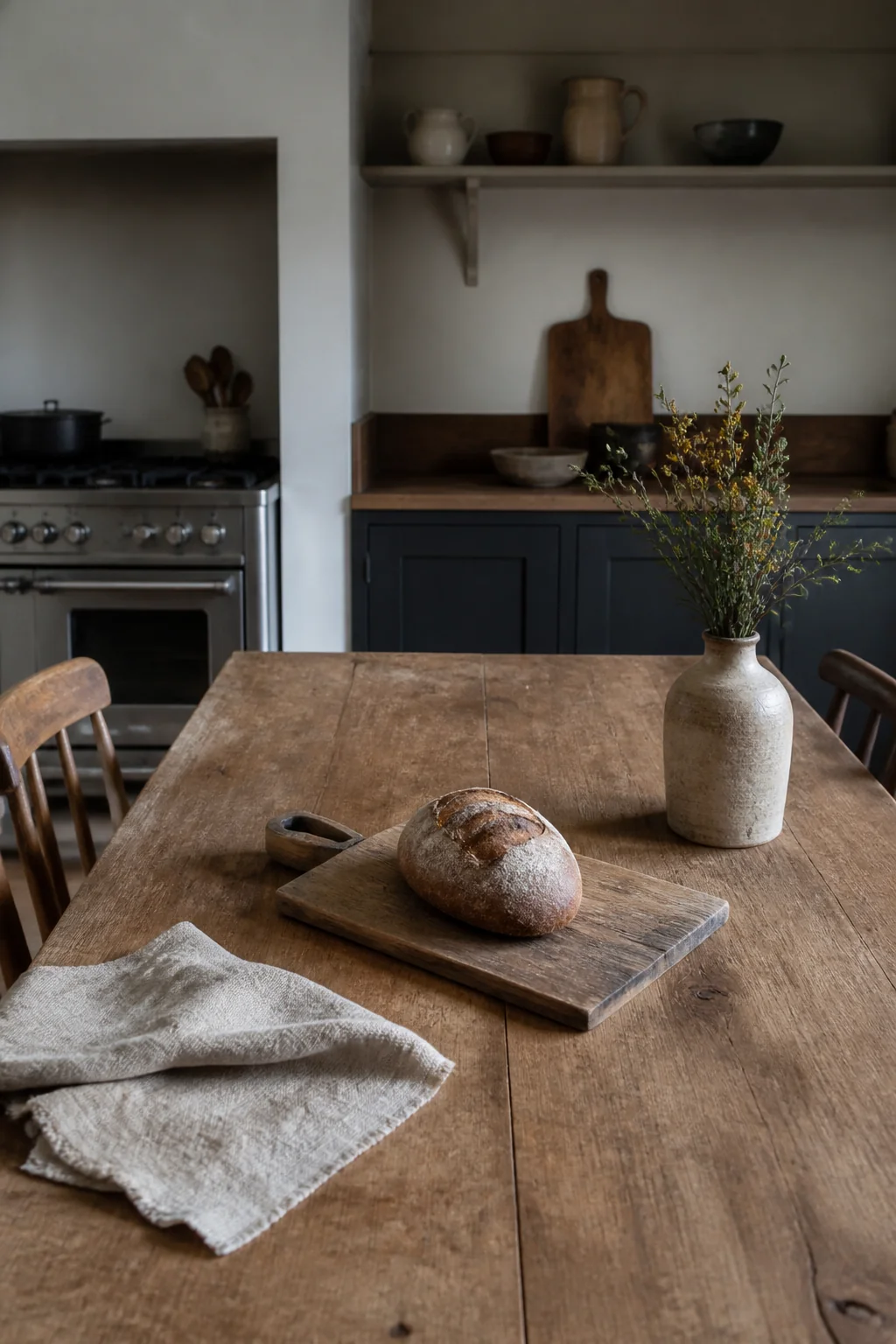
Rustic tables work best when you're repeating materials, so add a wooden cutting board or serving board - about 16 by 12 inches - as a secondary anchor. Place one object on it: a small vase with dried branches, a shallow ceramic bowl, or a stack of linen napkins. The empty space around the object matters as much as the object itself. This breaks up the visual weight and gives the table a "gathered" feeling without clutter. The board itself does the styling work, so the thing on it can stay for weeks.
Keep a fabric element that's functional
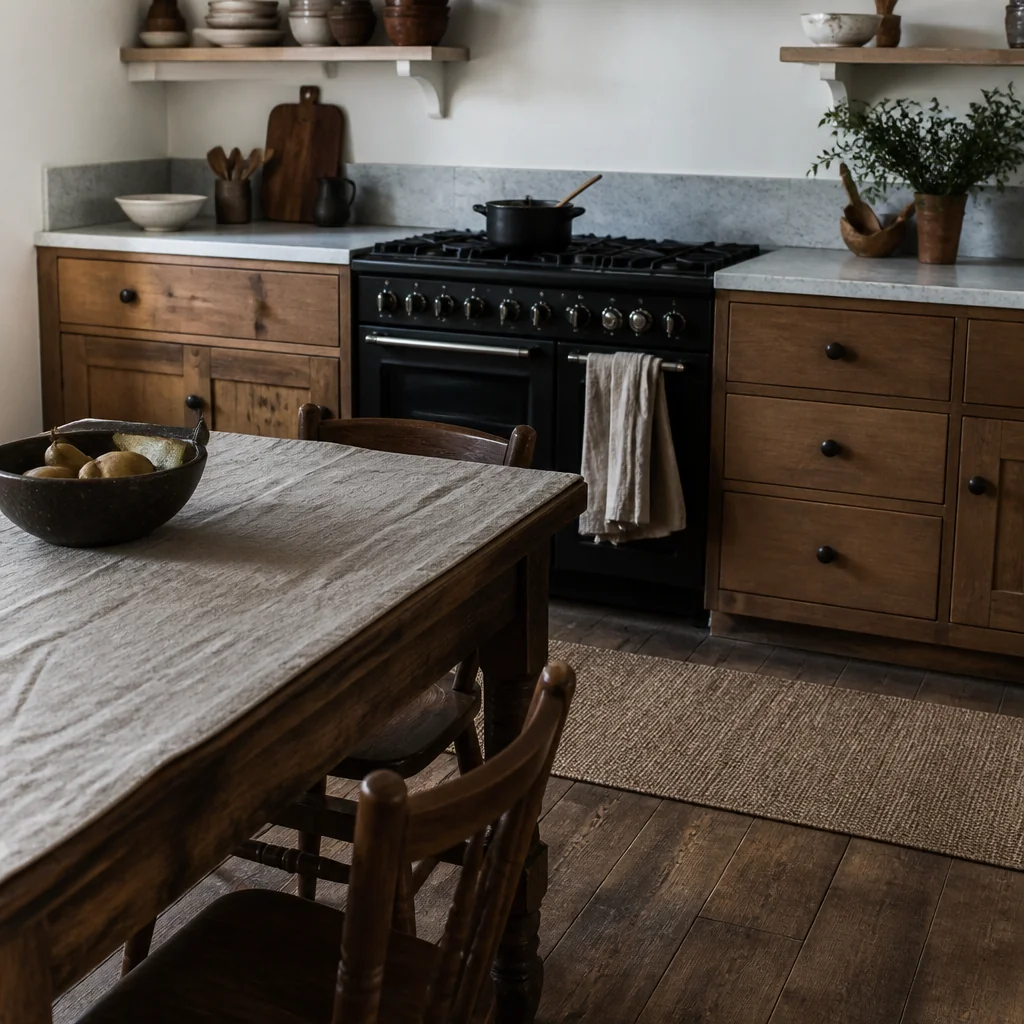
Linen napkins folded loosely beside the runner give you texture and color without requiring a full table setting. Bundle three or four in a matte ceramic napkin ring or tie them with twine. You can grab them when you eat, so they're not fussy decor - they're tools that happen to look good. Buy them in warm white or cream, about 20 by 20 inches, for roughly $15-25 per set of four. They'll soften with washing and look better over time.
Glass or ceramic vessels stay empty or nearly empty
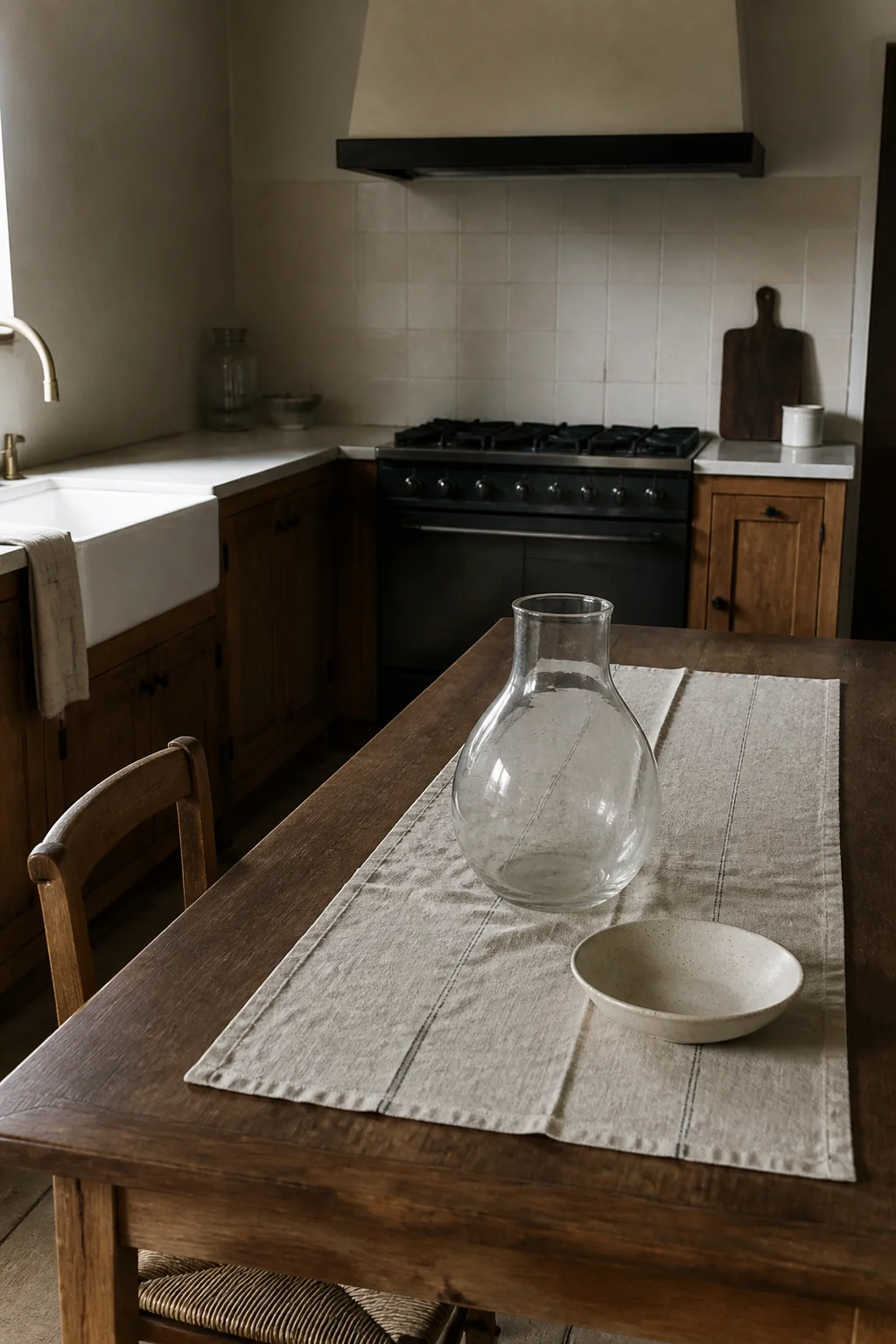
A clear glass vase, a ceramic pitcher, or a squat pottery bowl sits better on a rustic table than a full arrangement. If you fill it, use something sparse: three stems of eucalyptus, a single branch, or nothing at all. The vessel itself is doing the decorative work. Empty or nearly empty reads intentional and collected rather than florist-arranged. Group two or three different shapes together on one corner of the runner. This approach means nothing wilts, nothing needs water, and the table looks the same on Tuesday as it does on Saturday.
(If you're keeping dried branches year-round, replace them when they start dropping - usually every 6-8 weeks - so the table never tips into neglected-looking.)
A small wooden box or tray corrals the rest
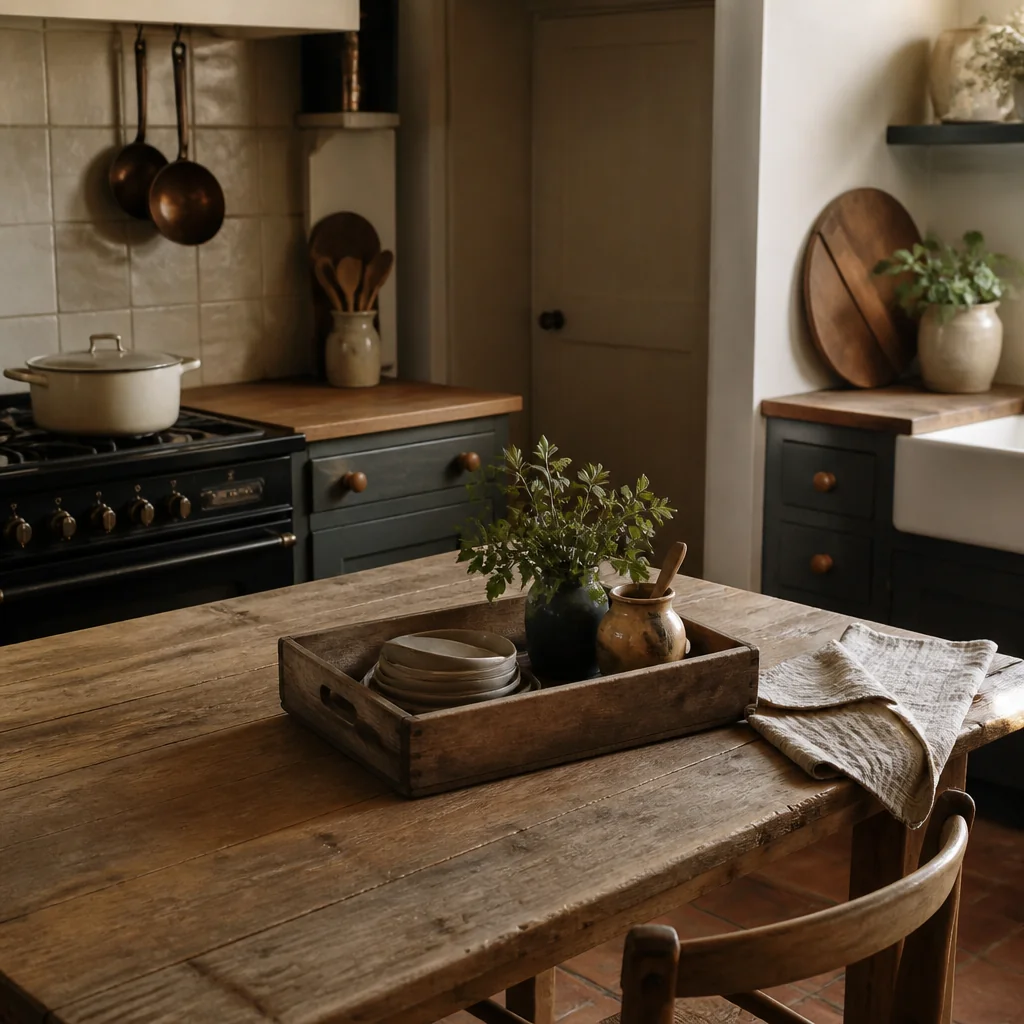
Everything else - salt and pepper, a small note, a pen - goes into a simple wooden box or shallow tray. Unpainted wood or a light stain keeps things rustic. This prevents the table from looking like a junk drawer and contains the visual chaos. You can slide it to the side when you eat, or leave it there if it's something you use every day. The box itself becomes part of the decor because it's holding something intentional.
Repeat the wood tones you already have
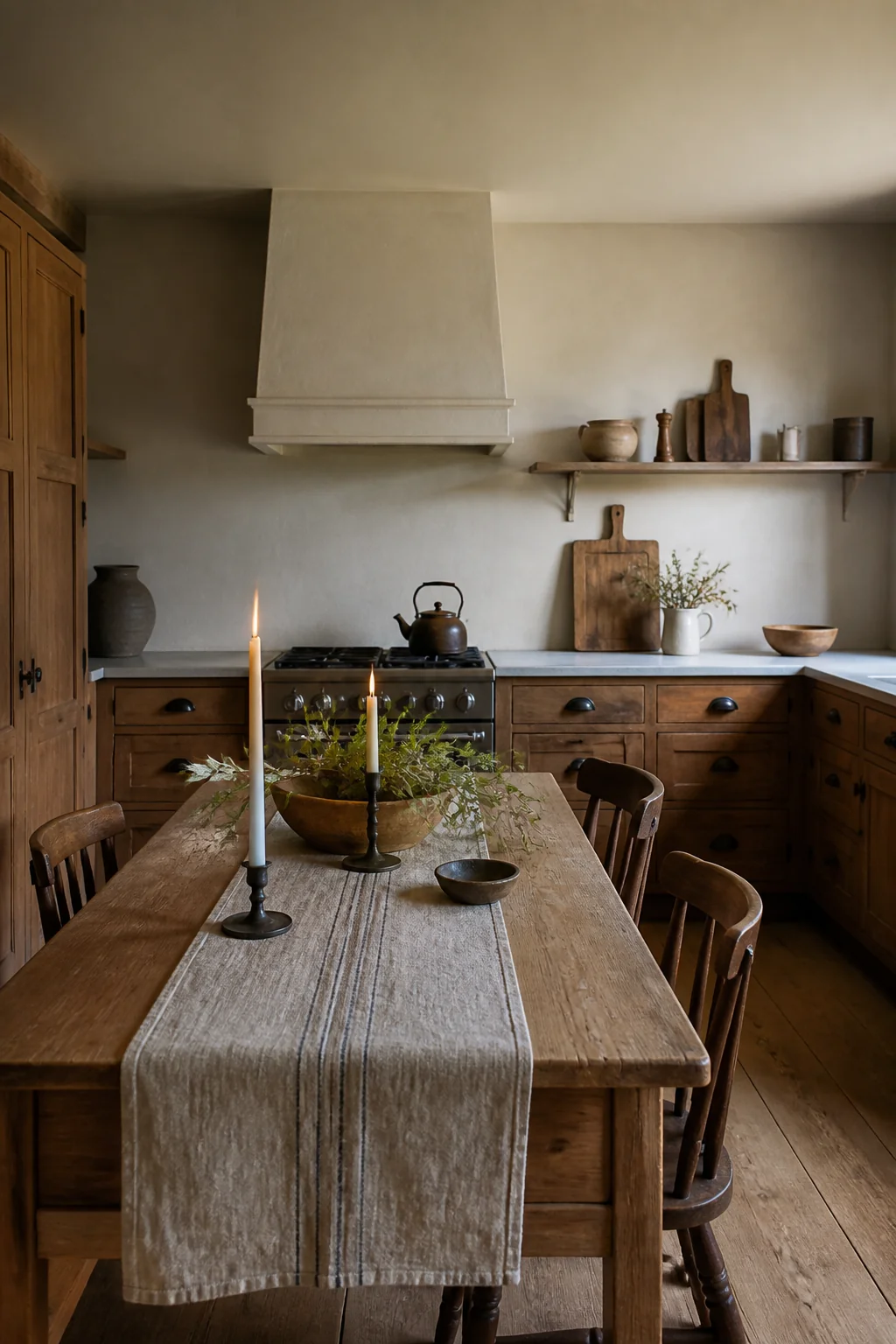
Rustic isn't a color palette as much as it's a material palette. Look at the wood of your table and pick up that undertone in everything you add. If your table is honey-toned oak, choose runners and boards in warm cream or tan and avoid cool grays. If it's darker walnut, pair it with cooler whites or greiges. This cohesion is what makes a styled table look like it belongs there instead of looking like a display. You're not creating contrast - you're building on what's already there.
Save the full guide
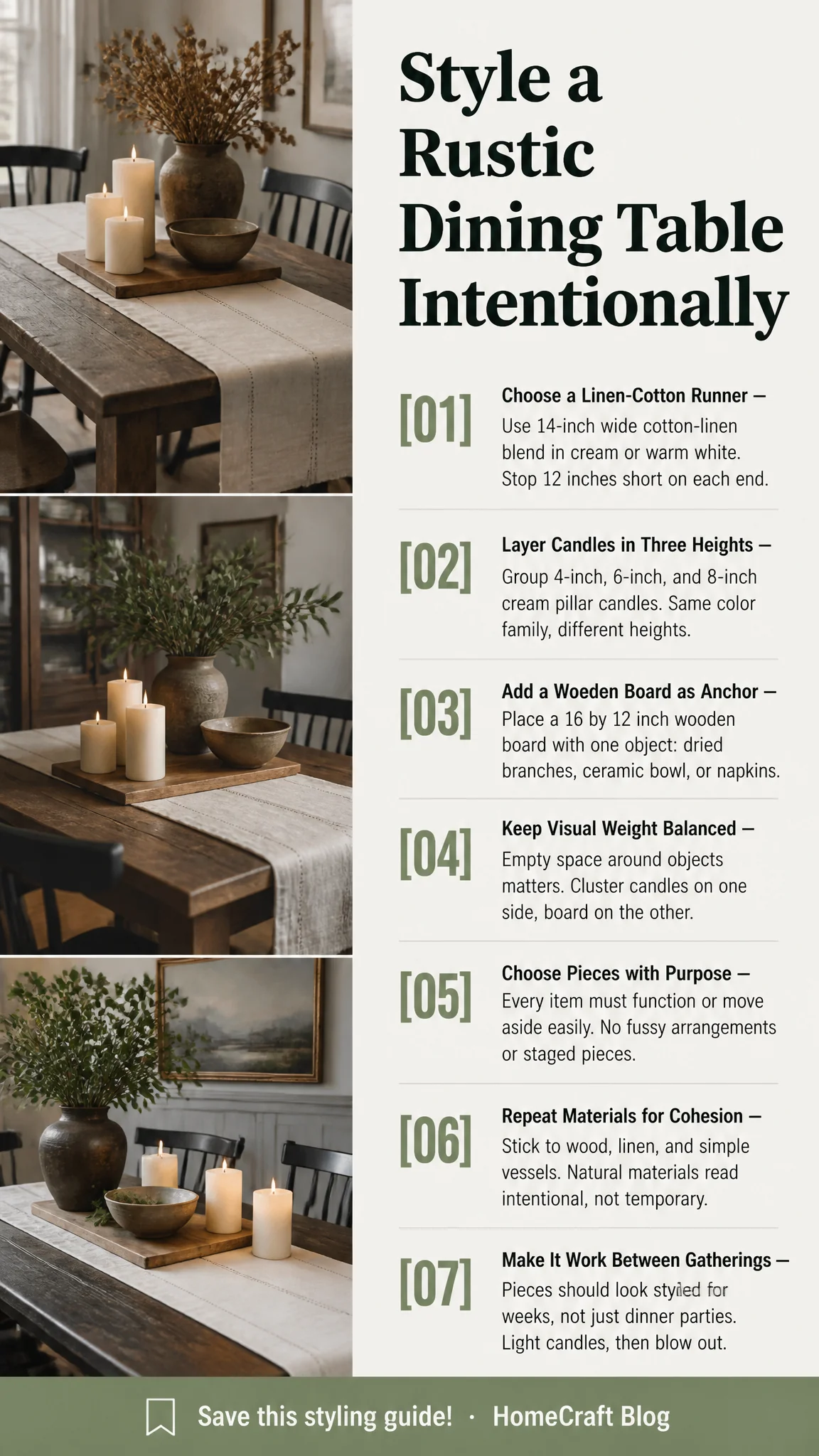
The result is a table that works. The runner and napkins move aside when you need space. The candles light for guests and burn down to stubs before you replace them. The vessels sit there gathering dust if they need to, or you swap them for something new. Nothing demands maintenance, nothing looks staged, and nothing blocks the table from being used. That's the point of styling a dining table that actually has to function.