Make Your Christmas Living Room Feel Festive Without the Clutter
Balance festive christmas living room decor with breathing room. Skip the clutter and keep your space livable during the holidays.

Your living room is the hardest room to decorate for Christmas. It's where you spend actual time - watching TV, reading, having people over - which means you can't just turn it into a holiday display and call it a day. Most living rooms don't have endless wall space either (that sofa takes up real footage), and if your room gets afternoon light from the west, you're fighting glare on metallic ornaments and tinsel all day. The constraint here is real: you need festive, but you need functional. That rules out a lot of the overcrowded approaches people reflexively reach for - the swags on every doorway, the garland draped across every surface, the seventeen different types of décor competing for attention all at once.
The good news is that a living room that feels festive without clutter is actually easier to pull off than a living room buried in Christmas stuff. It just takes one clear decision up front: establish one visual anchor, then build everything else around restraint.
One Statement Piece, Not Ten Small Ones
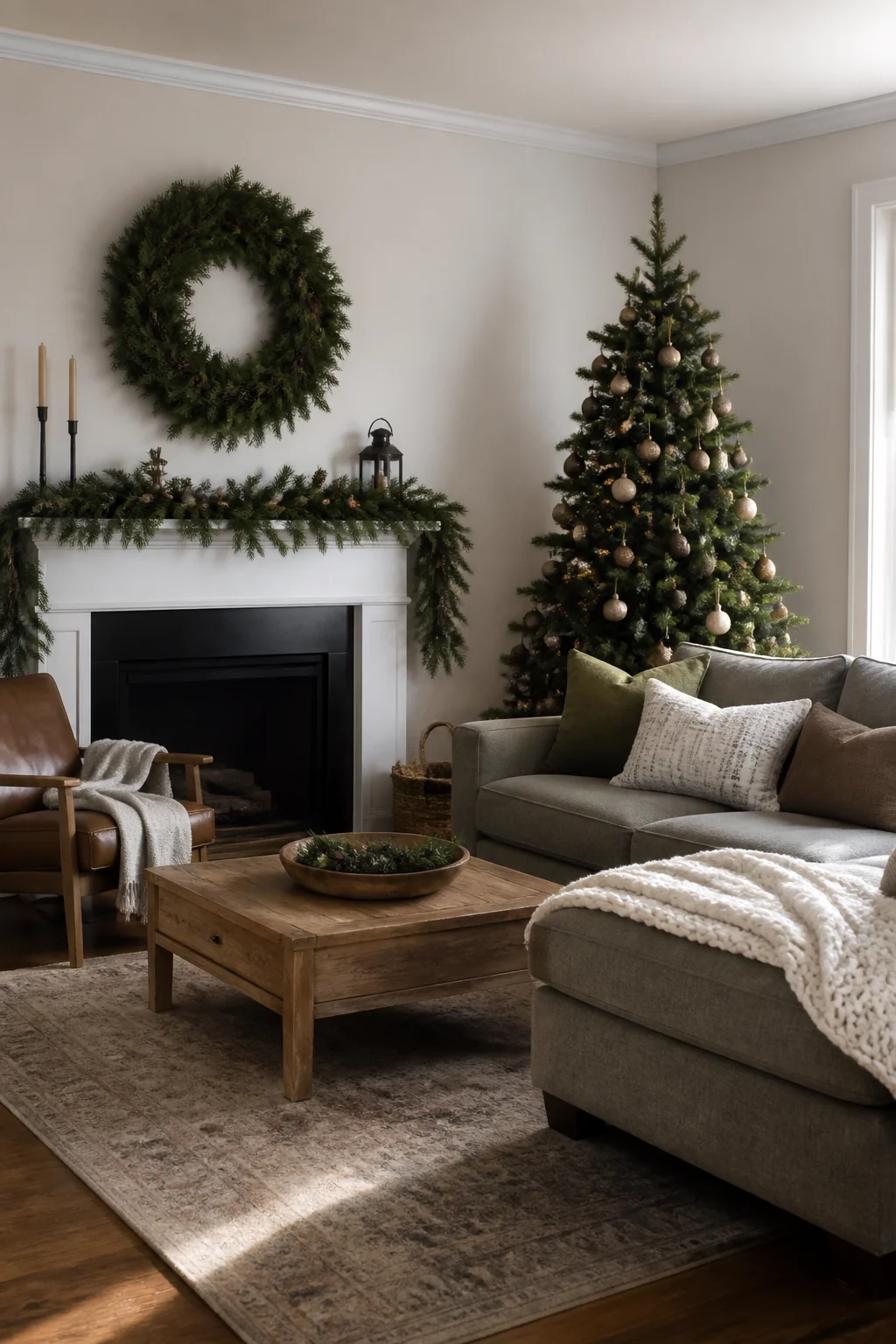
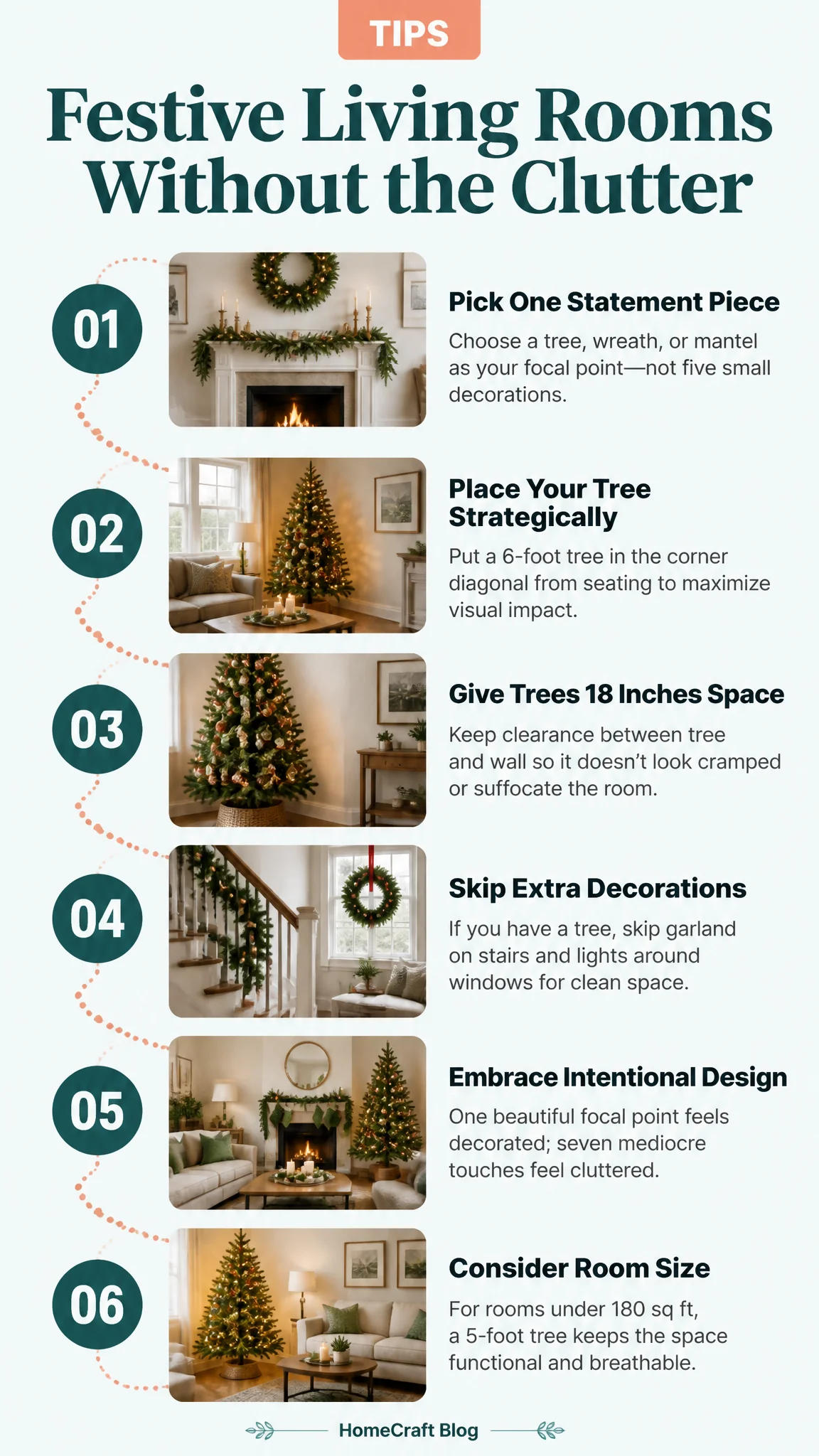
Your living room needs one thing that's unmistakably Christmas. Not five things. One.
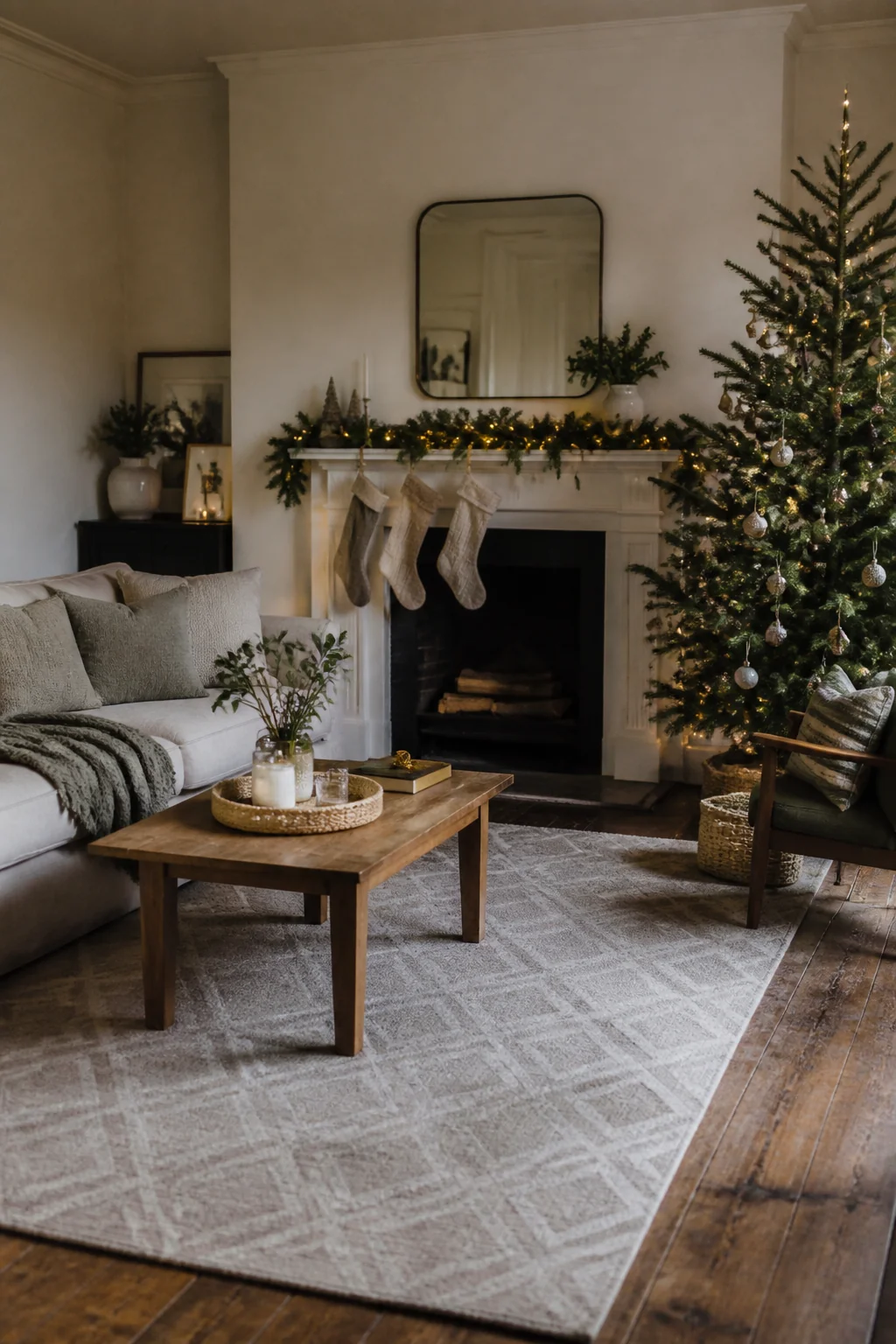
That might be a tree in the corner (a real one takes up less visual real estate than you'd think - a 6-foot tree with a decent spread is only 3 feet wide), or a substantial wreath on the wall above your sofa, or a fireplace mantel that's genuinely dressed. The key is picking something substantial enough that it justifies itself visually, so everything else in the room can stay quiet.
If you go with a tree, you don't need garland on the staircase, lights around the window frame, and a decorated console table. If you go with a mantel, you don't need to also dress the bookcase. This isn't about being minimal for its own sake - it's about making the space feel intentional instead of overstuffed.
The mistake most people make is thinking they need visual Christmas everywhere or it won't feel festive enough. You don't. One beautiful focal point makes a room feel decorated. Seven mediocre touches make it feel cluttered.
Where to Put Your Tree If Space Is Tight
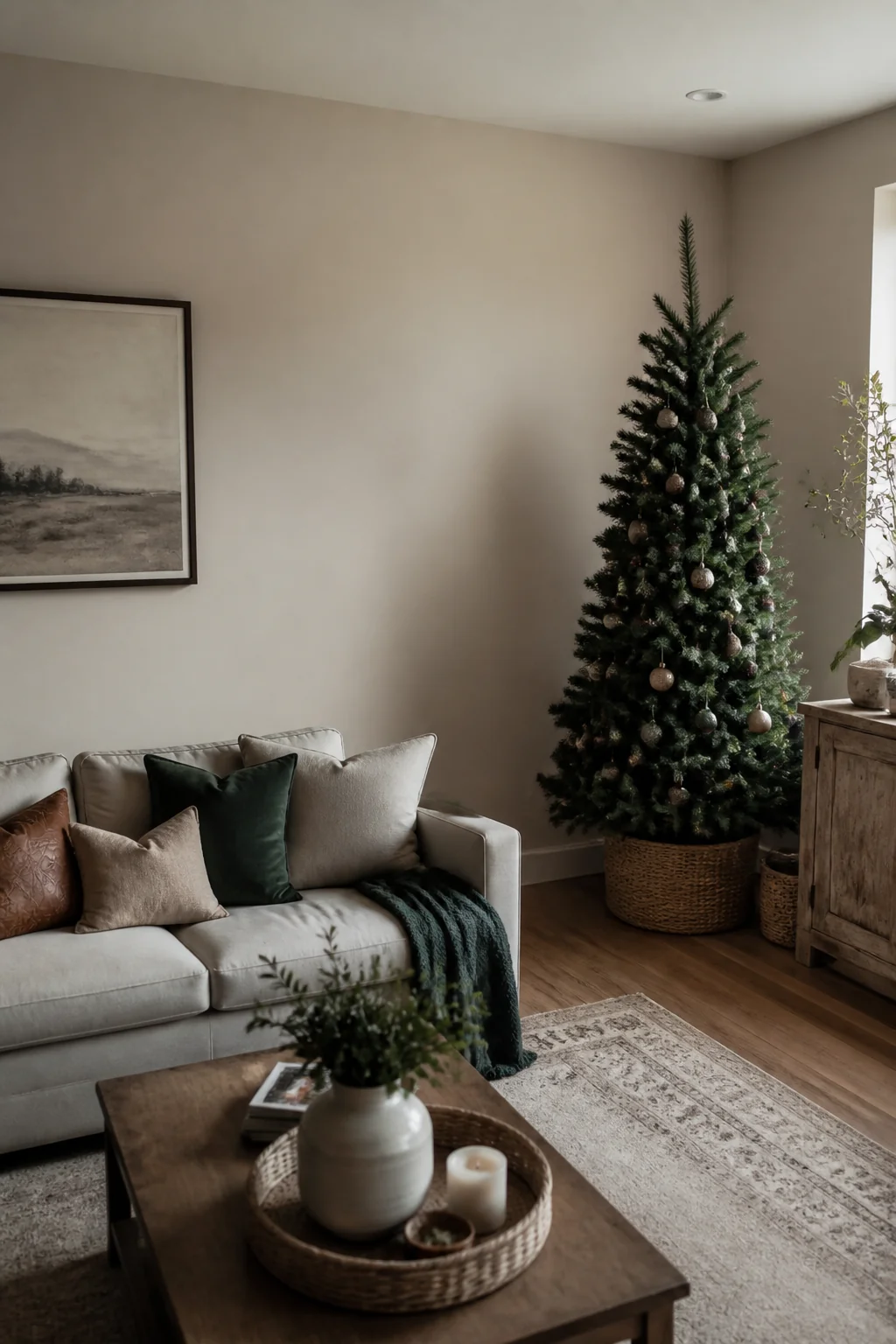
A corner is usually your answer. Put the tree in the corner diagonal from your seating, not directly across from your sofa - that keeps it from blocking sightlines while still making it a natural focal point when you walk in.
Make sure there's at least 18 inches of clearance between the back of the tree and the wall behind it. That's not just so you can water it; it's so the shape doesn't look cramped and the tree doesn't look like it's suffocating the room. A tree that's too close to the wall reads as smaller than it is.
If your living room is genuinely small (under 180 square feet), consider a 5-foot tree instead of a 6-foot one. You're not sacrificing much visually, and you reclaim floor space and sight lines. A well-shaped 5-footer with good density looks fuller than a leggy 6-footer anyway.
Lights Without the Cord Chaos
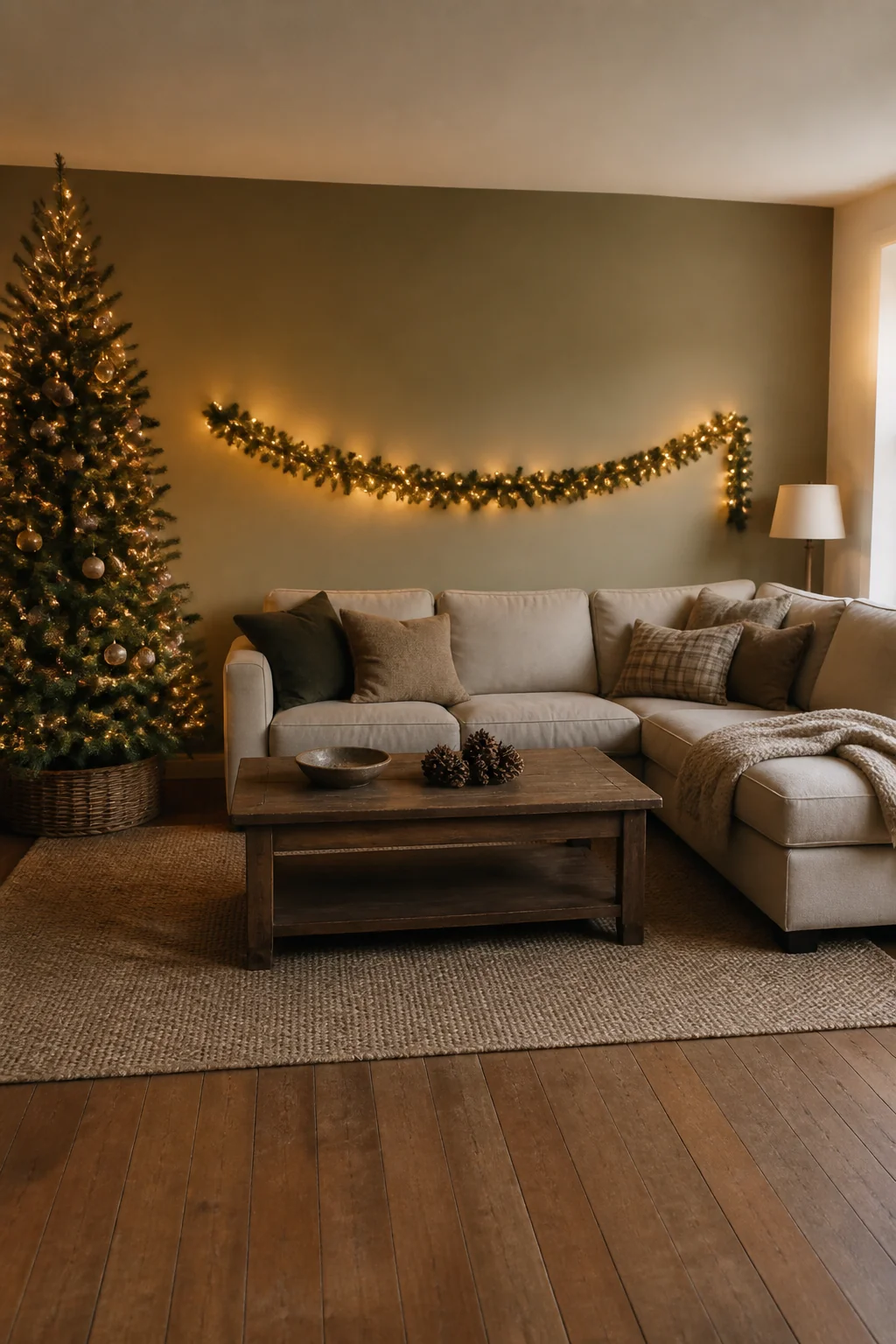
String lights do two things well in a living room: they add soft ambient light in the evenings, and they telegraph "festive" without taking up any floor space. The problem most people run into is cords. A 50-foot string of lights has roughly 49 feet of cord to hide, and most living rooms don't have enough furniture depth to bury it.
Run lights along the tree perimeter only - not the wall behind it. That keeps cords contained to wherever your tree sits, and you're not snaking extension cords across the floor or behind your sofa. Warm white lights (around 2700K color temperature) read as intentional and comfortable. Cool white reads like you're decorating an office.
One string of lights, well-placed, does more work than three strings distributed around the room.
The Mantel Doesn't Need to Be Dense
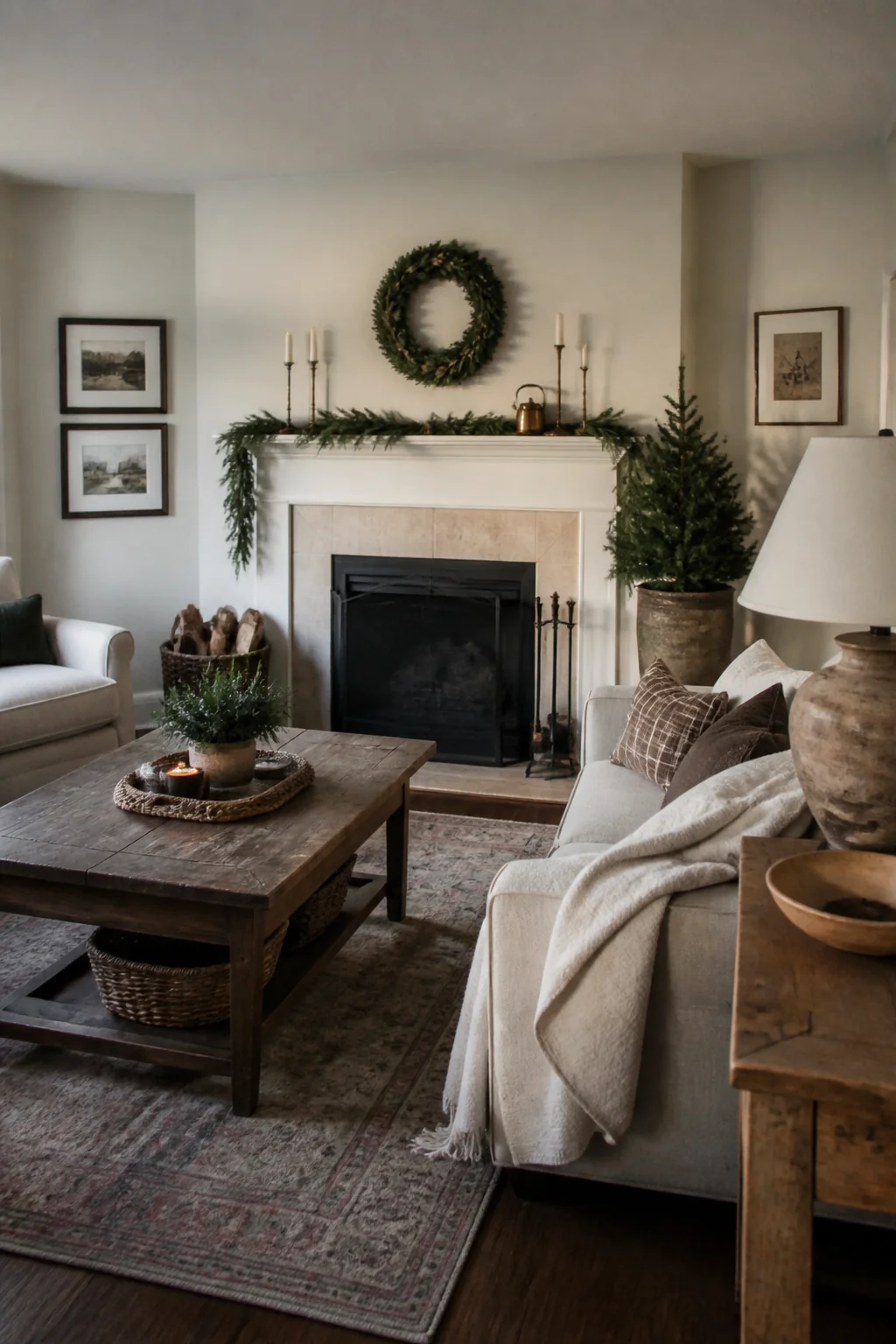
A dressed mantel is one of the easiest focal points in a living room because it's already at eye level and visually separate from the rest of the room. You don't need to crowd it.
Try this: a wreath in the center, candles (real or good-quality battery ones, about $8-12 each) on either side, and one or two greenery bunches tucked where they naturally fall. That's enough. You're aiming for breathing room, not a holiday store display.
If you don't have a fireplace, a tall console table or a shelf at roughly eye level works the same way. Keep it to fewer than five objects, and leave actual space between them. Your eye needs room to land and rest, or the mantel just looks messy.
Stockings and Greenery Instead of Garland

Garland is decorating's version of a shortcut that usually backfires. It takes up real space, it collects dust all month, and it makes rooms feel smaller because it visually crowds the walls.
Swap it for a few bunches of fresh greenery in a tall vase near a window, or loosely gathered and tied with a ribbon on a side table. Fresh evergreen costs about $15-25 a bundle and lasts all season. It gives you that green-and-texture thing Christmas is supposed to have without the commitment of installation.
Stockings - even just two or three hung with simple hooks on a wall or a shelf - are small, high-impact, and they don't take up any floor space. They're also instantly recognizable as Christmas without being overwrought.
What Color Actually Works in a Living Room
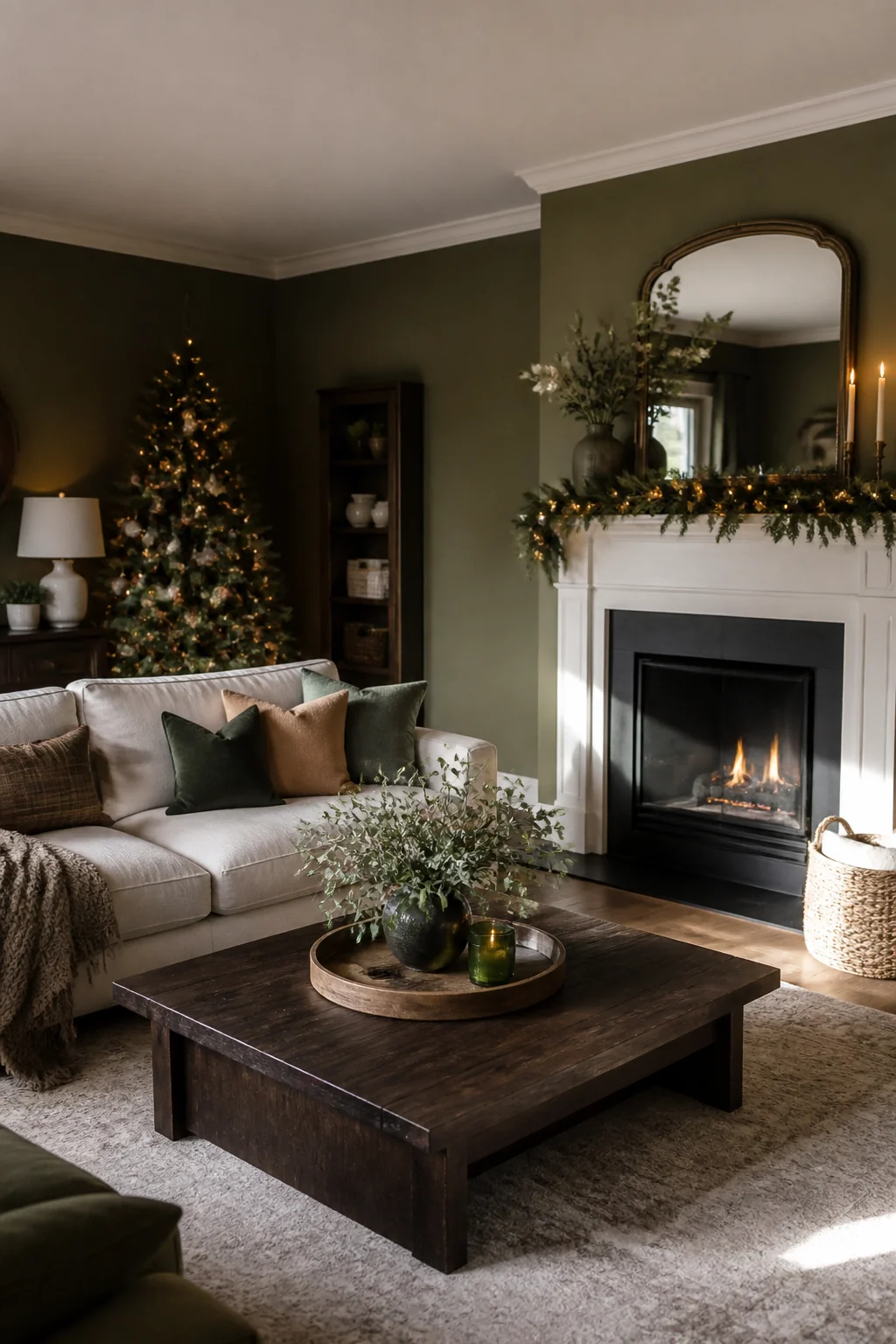
Warm neutrals with pops of deep jewel tones or forest green read as festive without clashing with furniture you already own.
If your sofa is gray or tan, gold and deep green on the tree and mantel work with it, not against it. If your walls are white or off-white, burgundy or forest green feels richer and more intentional than bright red. Metallics (gold, copper, bronze) work everywhere, but don't layer them - pick one and stick with it on ornaments and accents.
The rooms that feel most cluttered are the ones that tried to work in five different Christmas color stories at once. Pick two main colors and your room stays coherent. That color discipline matters more than you'd expect when building out christmas living room decor that actually feels intentional.
Clear Surfaces When You Can
This is where the restraint pays off in a way you'll actually feel every day, not just on Instagram.
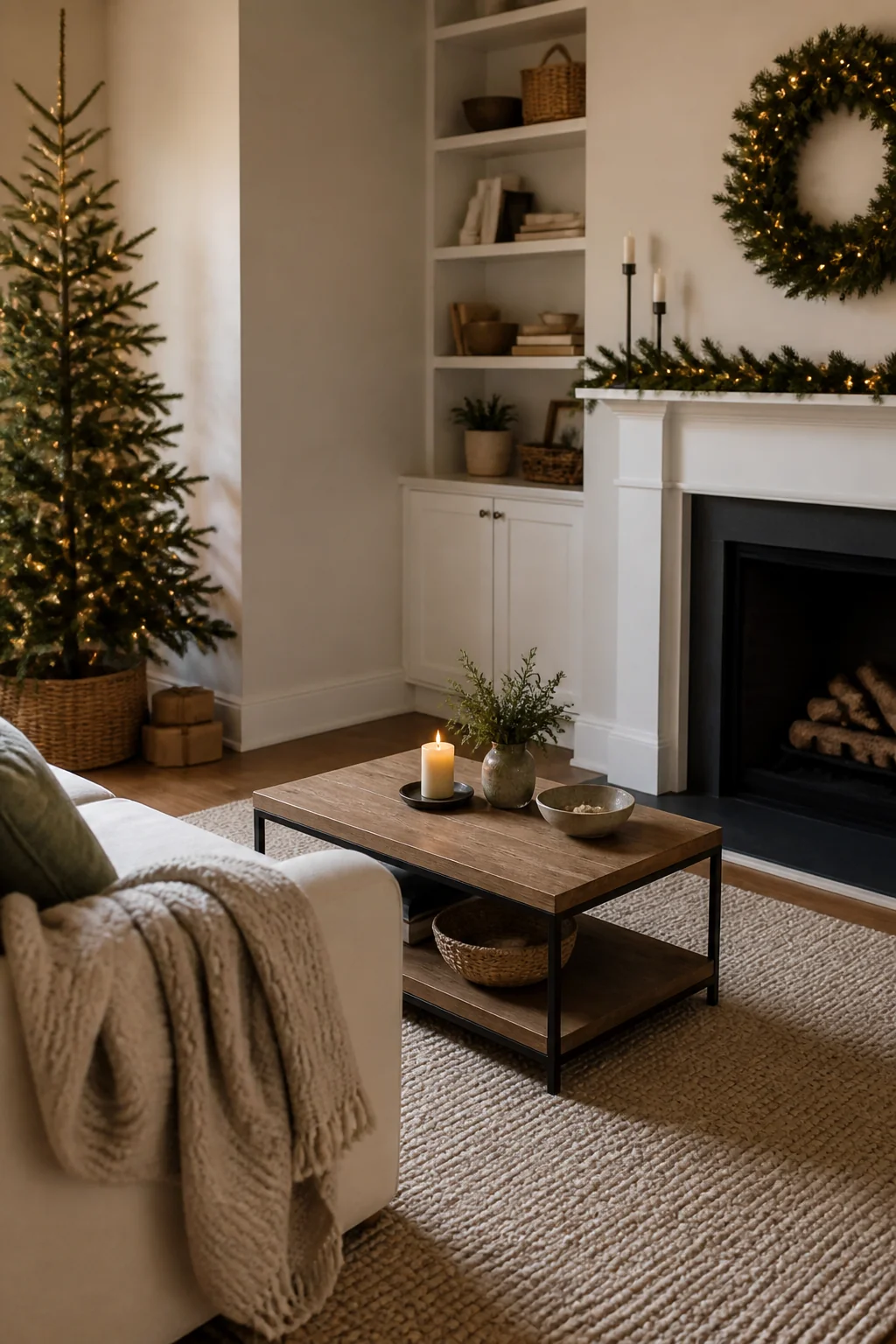
Keep your coffee table mostly clear. If you want one small festive touch - a votive candle, a single small decoration - fine. But your living room has to function for TV watching, conversation, and setting a drink down. A coffee table covered in holiday items stops being functional fast.
Same with the side tables and bookcase shelves. A room that feels festive but still usable is one where you haven't had to move something to sit down. Functional space is what separates "tastefully decorated" from "can't sit anywhere."
The Two-Week Window Works Better Than a Month
A living room decorated for Christmas feels fresh and exciting for about two weeks. After that, you stop noticing it and decoration becomes background noise you're tired of vacuuming around.
Pin this for later
Waiting until mid-December to decorate means your christmas living room decor stays genuinely festive during the time you're actually living in it. Early decoration in November tends to lose its impact by the time Christmas arrives. Taking it down in early January won't feel melancholy if the display didn't overstay its welcome in the first place.
Ideas fade by Friday. A plan finishes the room.
You just read a full guide to your living room. Saving ideas will not change it; a plan will. The Home Decor Collection is every planning tool we make, for every room in the house, in one download, so the after photos below stop being other people's rooms.

- Six room Style Kits, each with layout, palette and shopping list$82
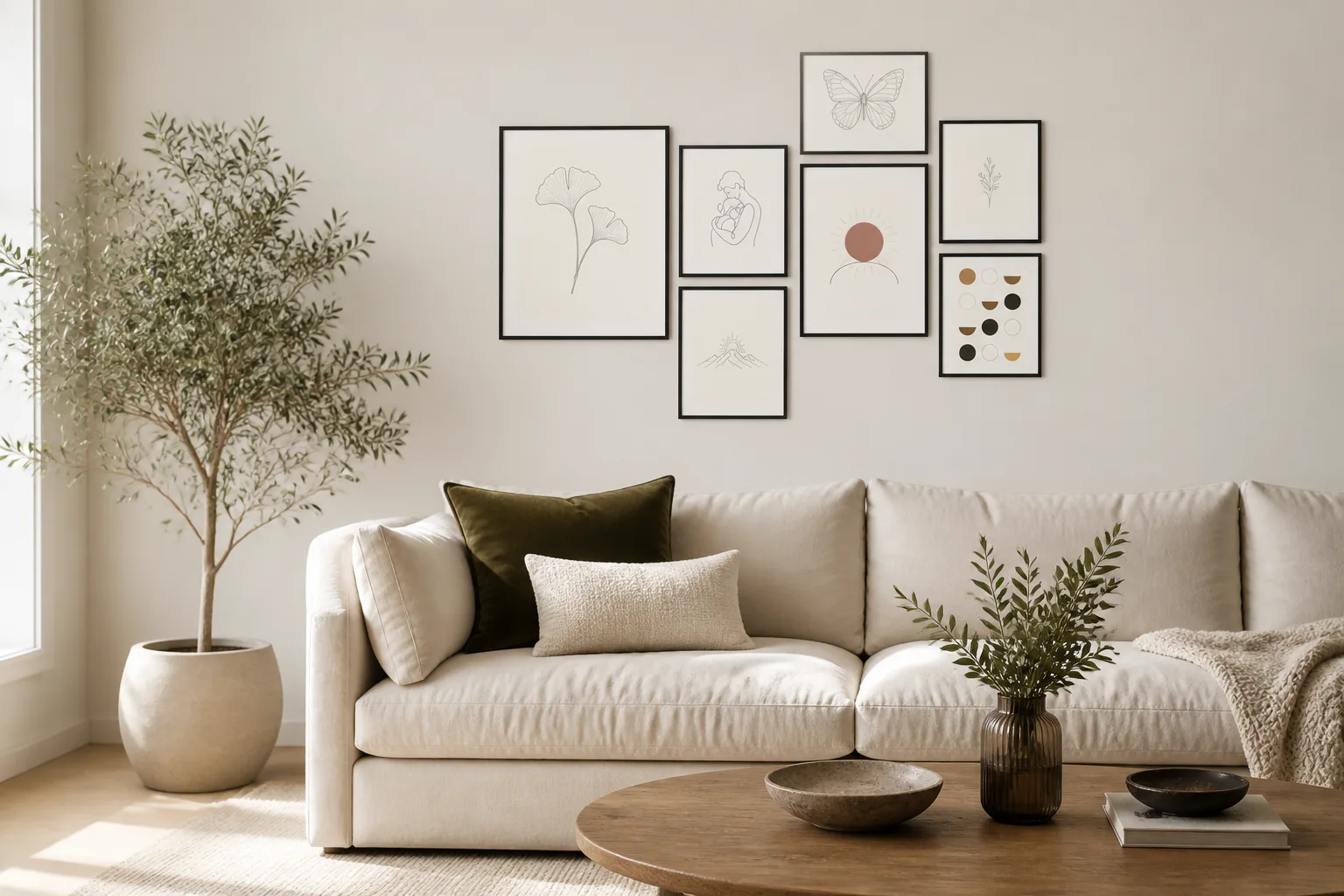
- The Gallery Wall Studio: 200 prints + 15 measured layouts$24
- The Room Makeover System: 40 solved room layouts + workbook$29
- The Color Palette Handbook: 60 palettes shown in real rooms$19
- The Whole-Home Reset: 40 printable organizing checklists$9
- The Decorator's Cheat Sheets: the 40 measurements that matter$9
- All eleven products, bought separately
$172$69
A single hour with an interior designer costs more than the entire Collection, and this one keeps answering for every room you will ever decorate. Free updates included as the products grow. And if it is not for you, the 14 day money back promise means you simply get a refund.