How to Create a Maximalist Living Room Without the Chaos
Learn how to build a maximalist living room that feels intentional, not cluttered. Real strategies for layering color, art, and texture beautifully.
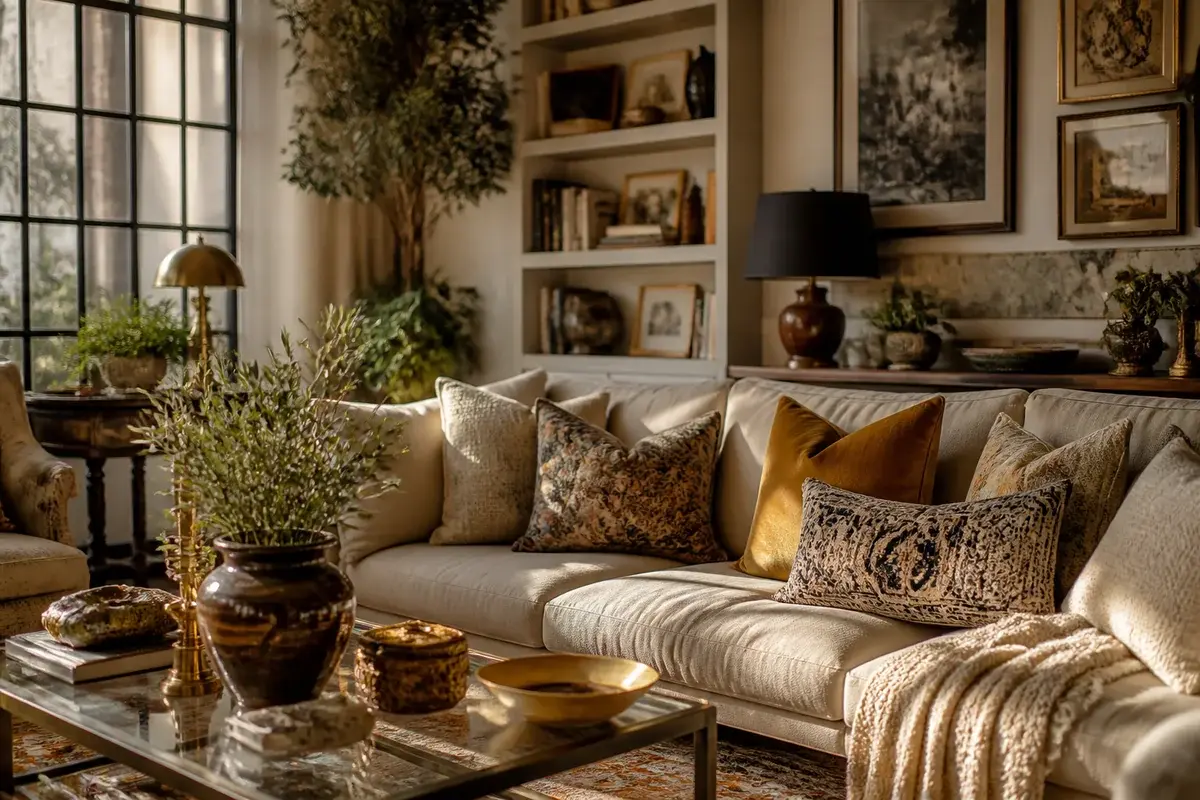
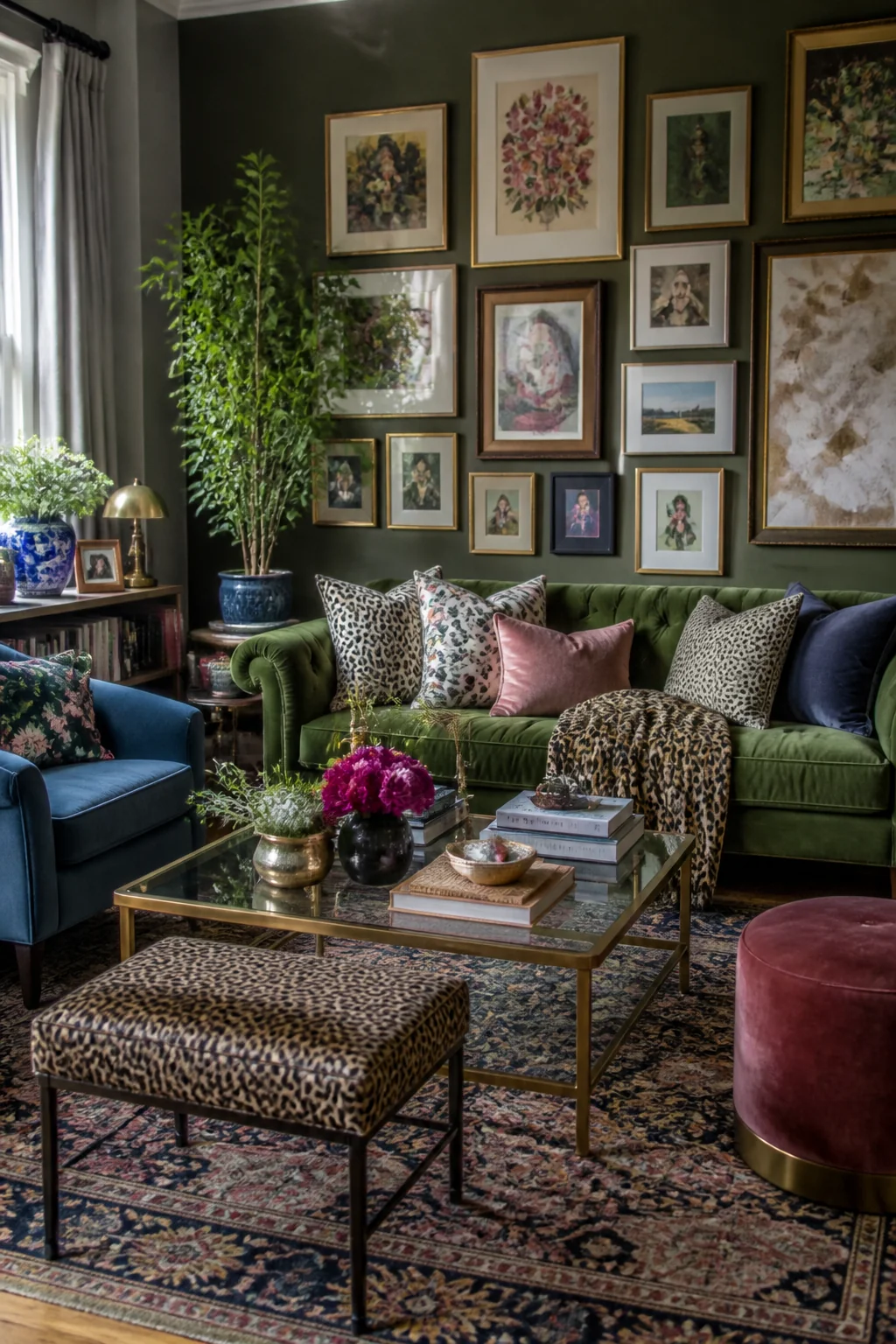
Walk into a maximalist living room that's been done well and your first reaction is usually alarm. Every wall covered. Books on every surface. Art hung three deep behind the sofa. Pattern layered on pattern. Then a few seconds pass, the room settles, and you realize it's working.
That gap between alarm and recognition is the whole game. Maximalism isn't cramming in everything you own and calling it a style. It's being deliberate about abundance, knowing why each piece earns its spot. The distance between a room that reads as too much stuff and one that reads as a collection comes down to a handful of decisions about color, scale, texture, and where your eye gets to rest.
If you're drawn to the look but afraid of ending up with chaos, here's how those decisions fit together.
Layer Color Without Making Your Eyes Hurt
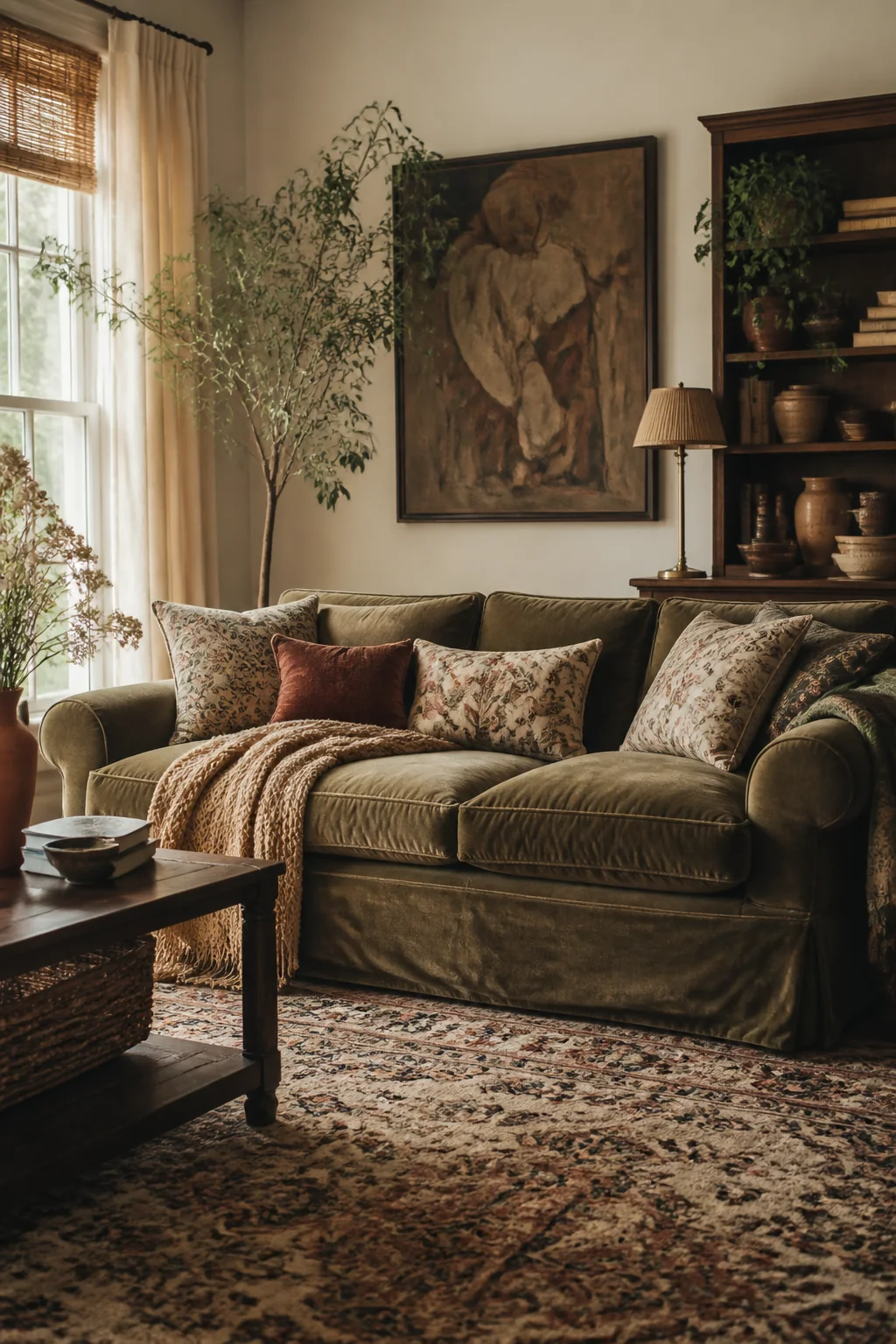
The secret isn't avoiding color. It's committing to a color story where the colors have something in common.
Start with a base. That doesn't mean beige walls, though it can. It means picking three colors that share one quality: all deeply saturated, all muted, or all warm. Jewel tones work because emerald, sapphire and burgundy sit at a similar depth, so no single one shouts over the others. A saturated emerald beside a chalky pastel is where rooms come apart, because the two are playing different games.
Then repeat. Each of your three colors should appear in at least three separate places and at different sizes: emerald in the rug, again in a pillow, again in one painting. Repetition is the signal that reads as chosen rather than accumulated.
Pick a quieter fourth color, a warm gold, a cream, an oatmeal, and give it the big calm surfaces: curtains, the largest wall, the sofa. That's your rest stop. Wild accents come last and stay small. A teal lampshade. A printed throw. A run of orange book spines. Small enough that if one lands wrong you can carry it out of the room in one hand.
Test before you commit. Sample pots cost $6 to $10 and a gallon of decent interior latex runs $45 to $75, so paint two 2 foot squares on opposite walls and live with them for a full day. A north facing room pulls almost any color cooler and greyer than the chip promised.
Art Doesn't Have to Match to Feel Cohesive
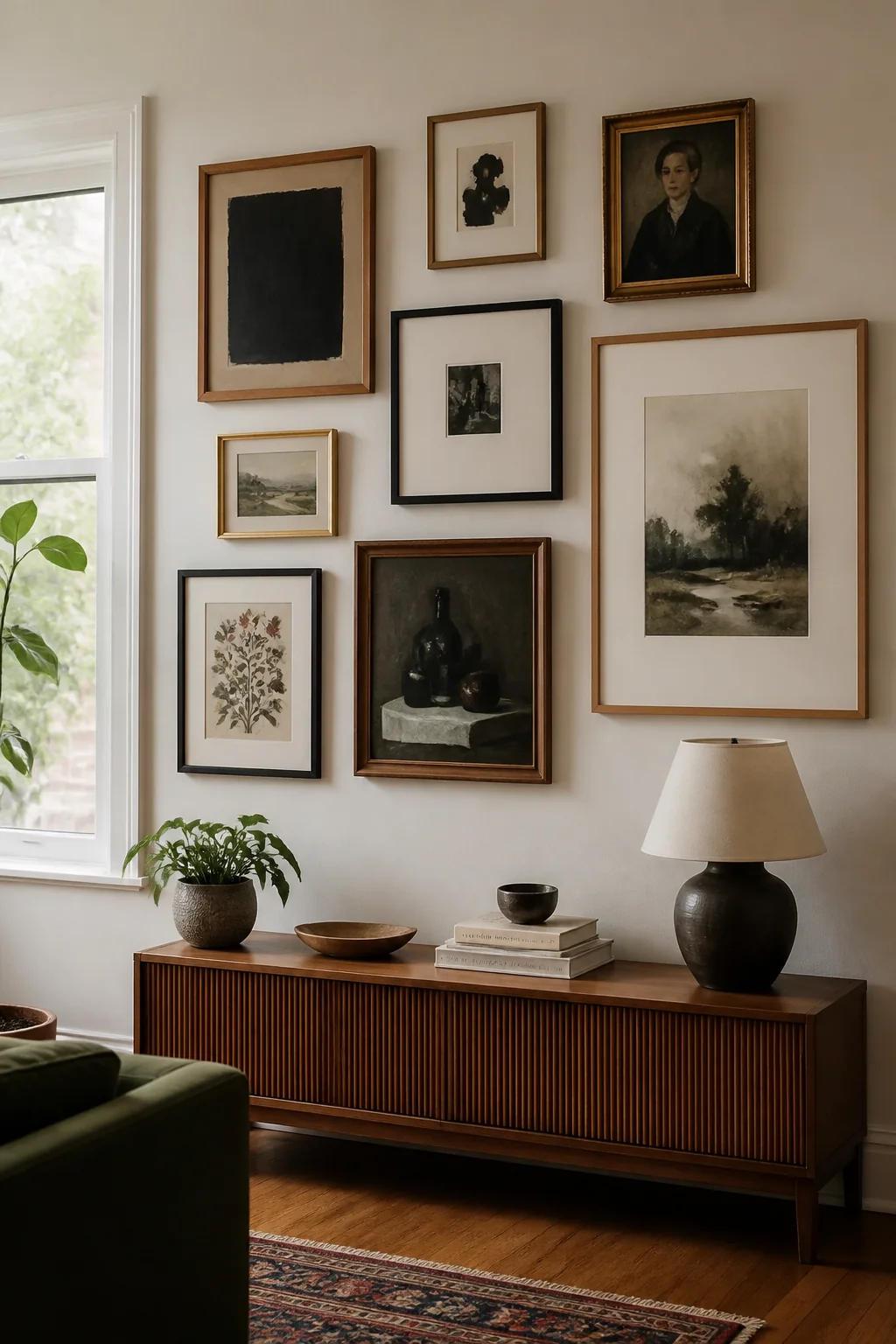
This is where people get nervous. "Won't a gallery wall look messy?" Not if you give it structure.
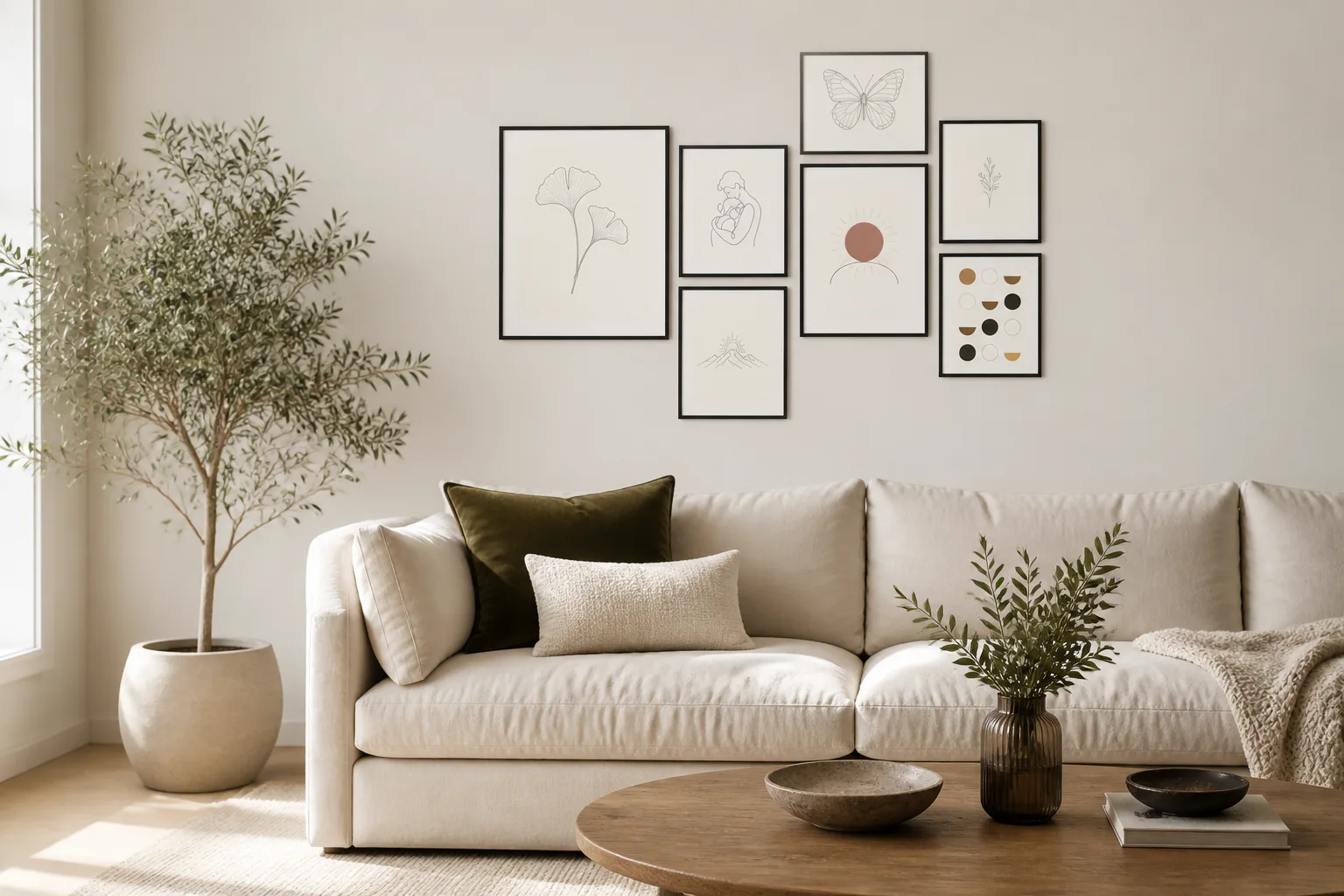
The structure can be visual rather than literal. Matching every frame is one way, and a dull one. Matching tone is stronger: black and white photography, a bold abstract and a botanical print sit together happily when they share a palette or a mood. A wall where every piece is warm, earthy and slightly faded reads as a collection even when the pieces span a century.
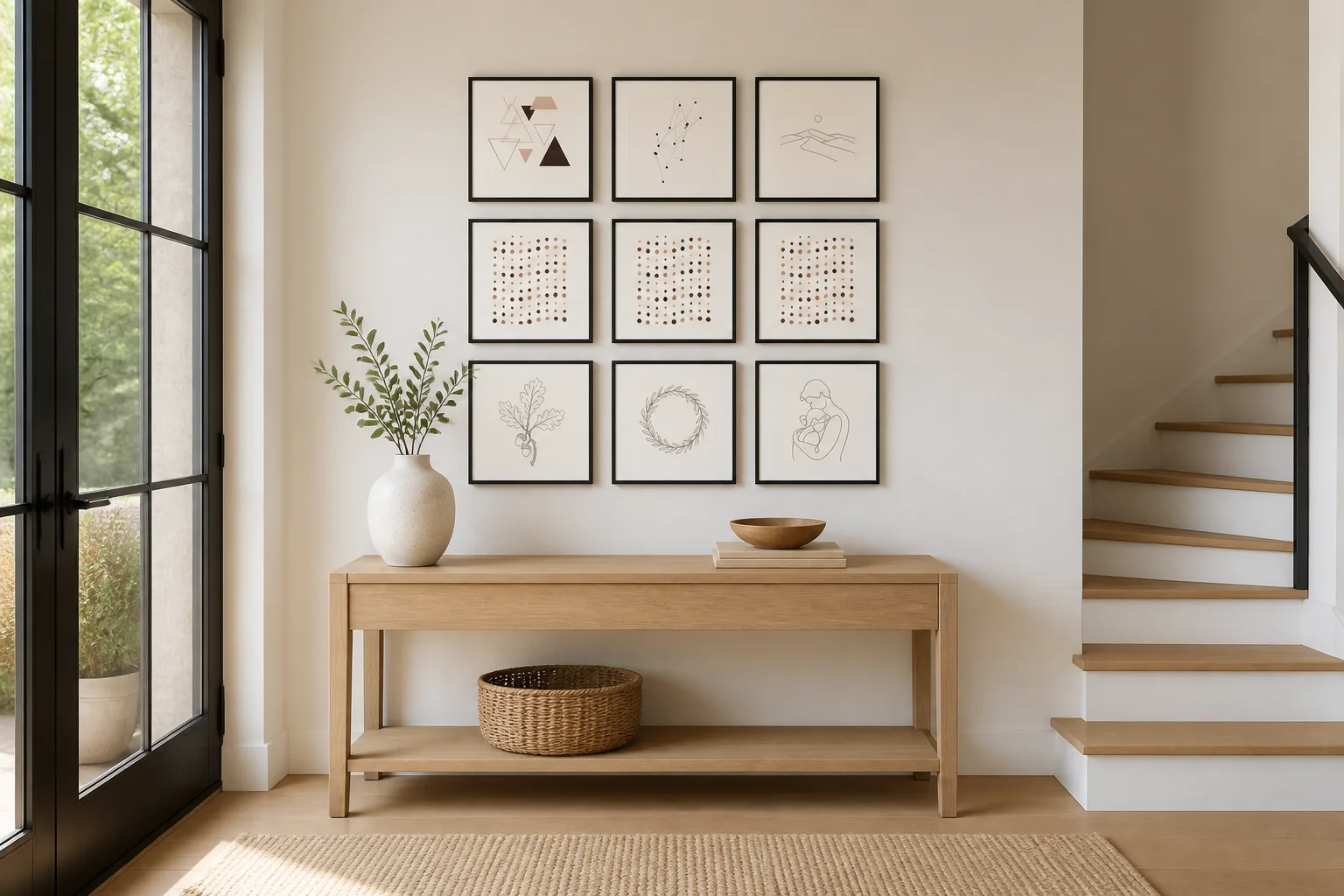
Measure first. Cut newspaper or kraft paper to the size of each frame and tape those shapes to the wall before a single hole goes in. A 6 by 8 foot section of wall comfortably carries six to nine pieces. Keep 2 to 3 inches between frames, because wider and the group scatters, tighter and it turns into one smudge. Treat the whole cluster as a single rectangle and hang it so the center of that rectangle sits 57 to 60 inches off the floor, roughly average eye level. Over a sofa, leave 8 to 10 inches of clear air above the back cushions so nobody knocks a frame with their head.
Frames are where the budget goes. Thrifted frames run $3 to $10 each and take spray paint well; custom framing one 16 by 20 print starts near $150.
Patterns Can Coexist, Seriously
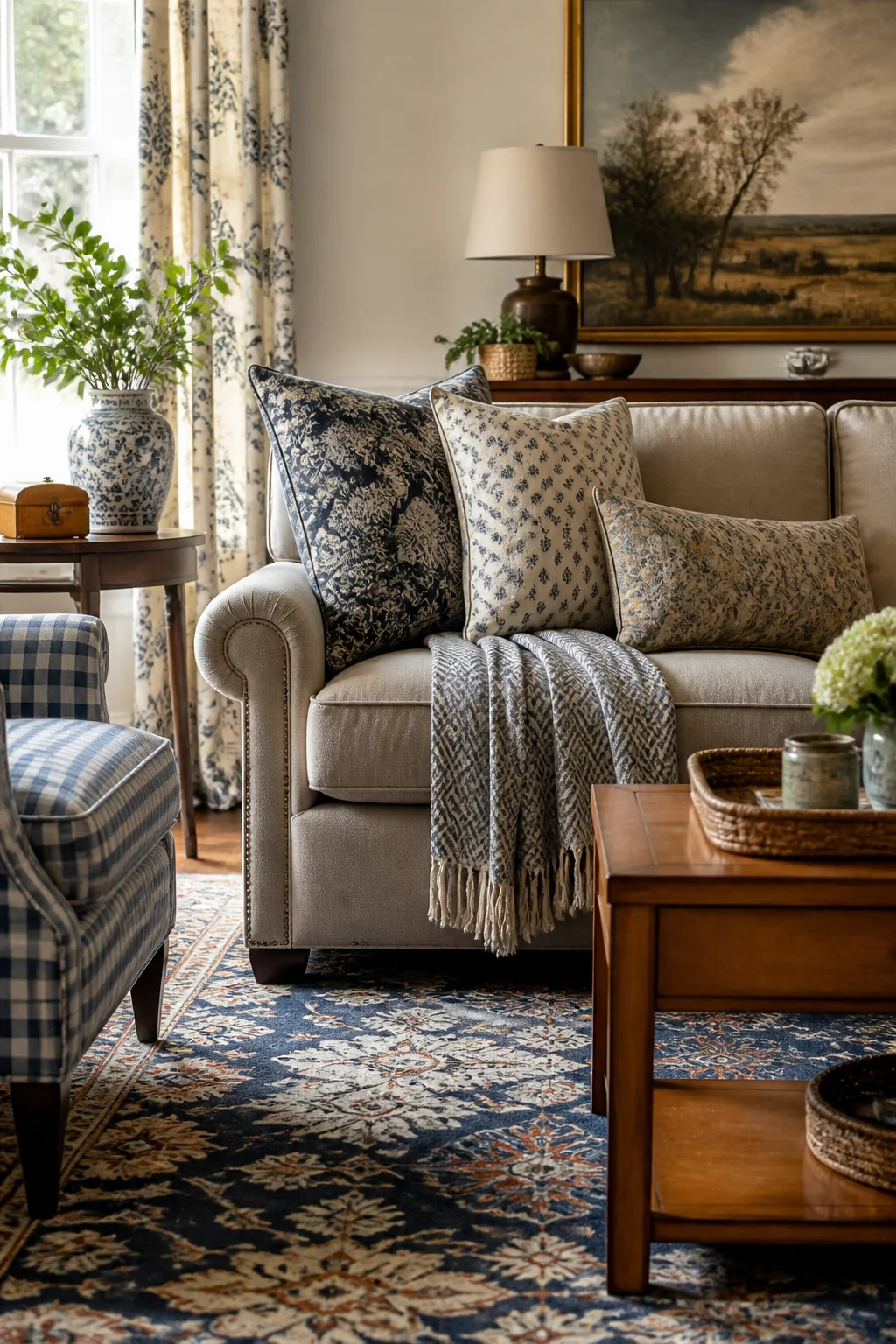
Patterns get along when they share either a color or a clear difference in scale. A big graphic print, a small geometric and a stripe can sit in one room without fighting as long as they're pulled from the same color family. Where it goes wrong is two patterns at nearly the same size: a 4 inch floral beside a 4 inch medallion reads as visual static, because your eye can't work out which one it's meant to look at.
So vary the repeat on purpose. Something large, with a repeat of 8 to 12 inches, is your anchor and belongs on the biggest surface that can carry it. Something small, a 1 inch dot or a fine check, becomes the supporting layer. A stripe behaves like a neutral in most rooms and can go almost anywhere, which is why striped upholstery survives next to a floral curtain.
Build it in three layers. One bold pattern you genuinely love. One calmer pattern sharing at least one color with the first. Then a solid or near solid to hold the two apart. Three is plenty; six competing prints is where the room collapses.
Pillow covers are the cheap way to test a combination. At $15 to $30 each, swapping four of them costs far less than being wrong about a sofa.
Texture Is Your Secret Weapon
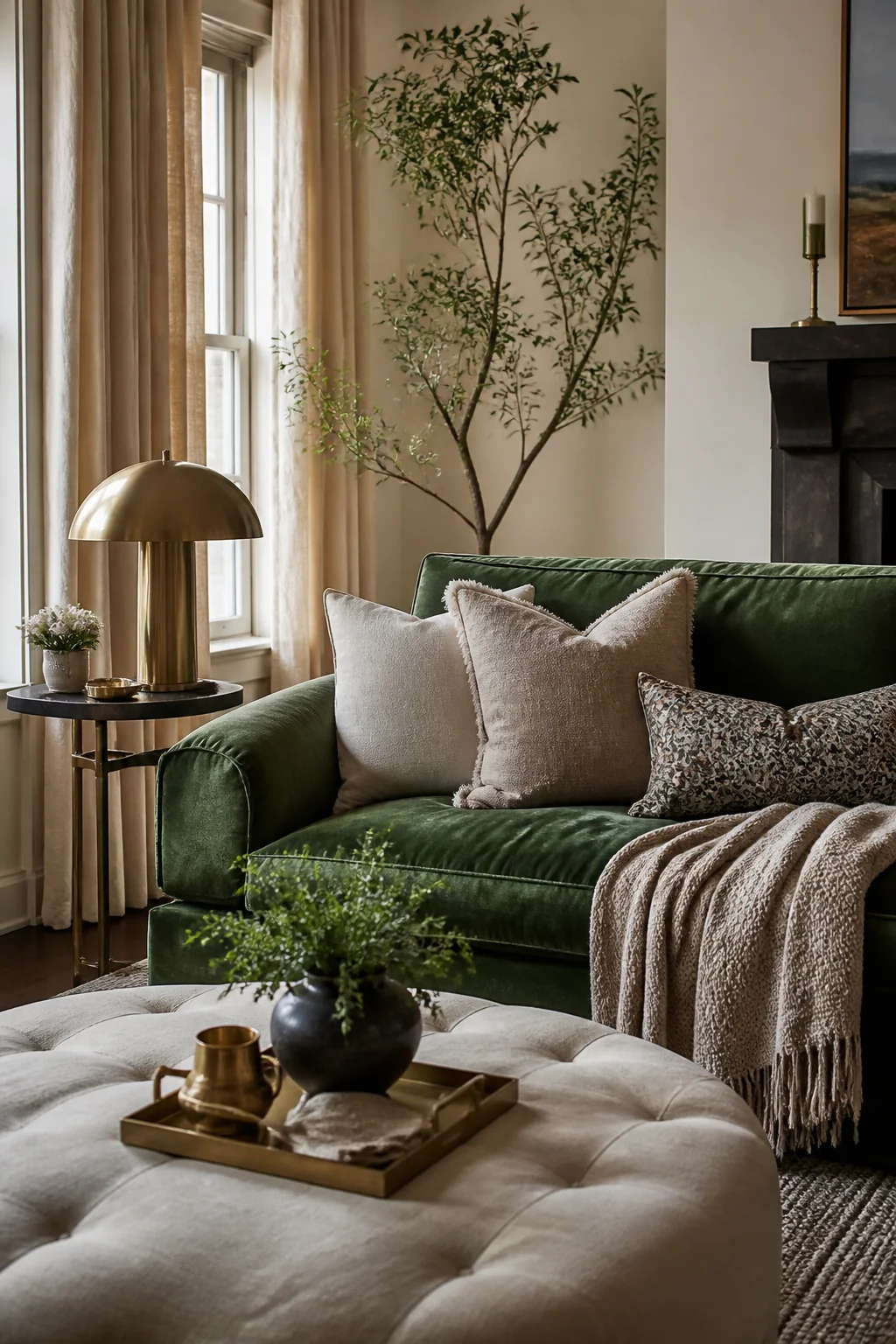
Two rooms can hold the same amount of stuff and only one of them will look flat. The difference is usually texture, and it comes down to light.
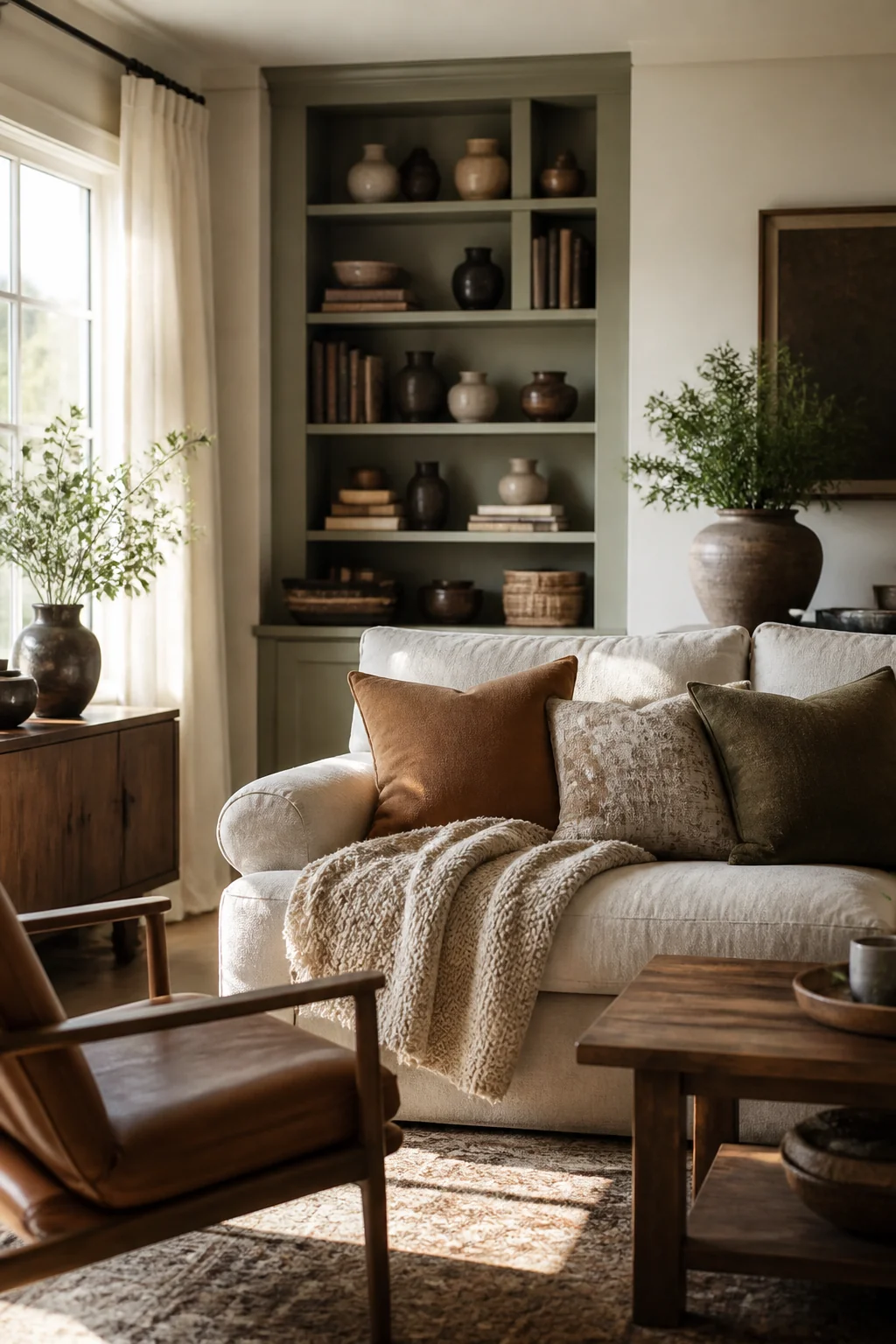
Different surfaces do different things with light. Velvet and wool swallow it, so they read deep and quiet. Brass, glass and glazed ceramic bounce it back, so they read as small sparks. Linen and jute break it into a fine grain. Put all three behaviors in one room and your eye gets a path to travel instead of one solid wall of objects.
A workable mix for a living room: one velvet or leather upholstered piece, one rough natural fiber underfoot, one loosely woven textile, and something metallic. A jute rug at 5 by 8 feet costs roughly $120 to $250 and gives a smooth sofa something to sit against. A wool throw at $40 to $90 does more for a room than another cushion will.
The trade-offs are real, so know them going in. Cotton backed velvet grabs pet hair and shows every seat mark. Linen creases the moment anyone sits down, which is either the charm or the problem depending on you. Jute sheds for its first few weeks and is rough on bare feet. Handle the fabric in person where you can; a swatch tells you more than any photo.
Know Where Your "Breathing Room" Lives
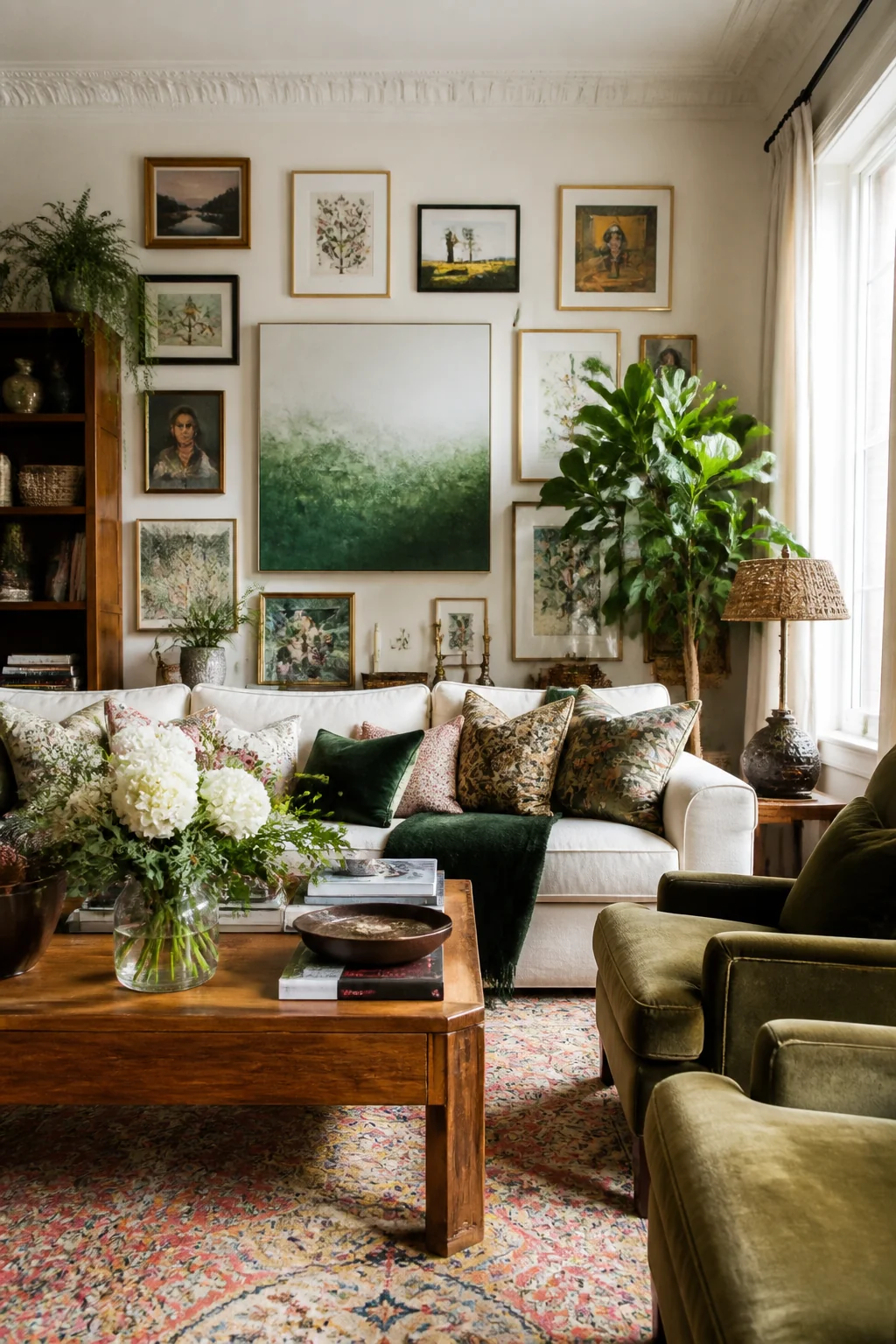
Filling every single surface is the most common way maximalism tips into chaos. The fix is to pick one area that stays calmer than the rest, then defend it.
Calmer doesn't mean empty. It means fewer objects with more space around each one: a shelf holding three things instead of eleven, one large canvas where a grid could have gone, a coffee table with a stack of books and nothing else. Your eye needs a place to stop. If you don't choose that place, the room chooses it for you and usually picks badly.
Floor space counts as breathing room too, and it's the kind that gets eaten first. Keep 30 to 36 inches of clear walkway along the main path through the room, and 14 to 18 inches between the sofa and the coffee table so people can pass without turning sideways. A room can carry an enormous amount of pattern and still feel calm if you can cross it without detouring around anything.
Then check the sightline. Stand in the doorway and notice what you see first. That view should be the piece you love most, not the pile of things that had nowhere else to go.
The Ruler Test for Authenticity
Here's the question that separates a collection from an accumulation: would you keep this if nobody ever came over?
Go item by item. The gallery wall, the shelf of books, the six pillows on the sofa. Anything kept purely because it looks like the sort of thing a decorated room should contain is dead weight, and dead weight is exactly what makes a full room read as cluttered instead of rich.
Make it a procedure rather than a mood. Clear one surface completely into a box, the mantel, one shelf, the coffee table, and leave it bare for two weeks. Then bring back only the objects you reached for or missed looking at. Less comes back than went in, and the surface still looks full, because the pieces that return get more room around them and read louder for it.
Be honest about the exception, though. An ugly thing you love stays. The chipped mug from a trip, the painting nobody else likes, the lamp your grandmother had. Those are what make a maximalist room read as a person rather than a showroom. It's the pieces with no story attached that go first.
Furniture Anchors Everything
A maximalist room needs strong bones. If the sofa is undersized or the shelving flexes under a row of hardbacks, adding more only amplifies the mess.
Look at what's carrying the weight. A kiln dried hardwood sofa frame with sinuous spring or eight way hand tied suspension will outlast three flat pack sofas. Expect $800 to $1,200 new, and often half that secondhand for a better frame than anything new at the same price. For shelving, a solid wood or plywood shelf 11 to 12 inches deep holds books without bowing, while particleboard sags visibly within a year or two under a full load. Keep unsupported spans to around 30 inches, or add a center support.
Anything tall gets strapped to a stud. A loaded bookcase is genuinely heavy and tips forward fast; an anti tip kit costs under $15 and takes ten minutes.
Scale counts as much as strength. In a busy room, a few large pieces read as calm and a scatter of small ones reads as noise, so one generous sofa beats two small chairs and a loveseat every time.
Save the full guide
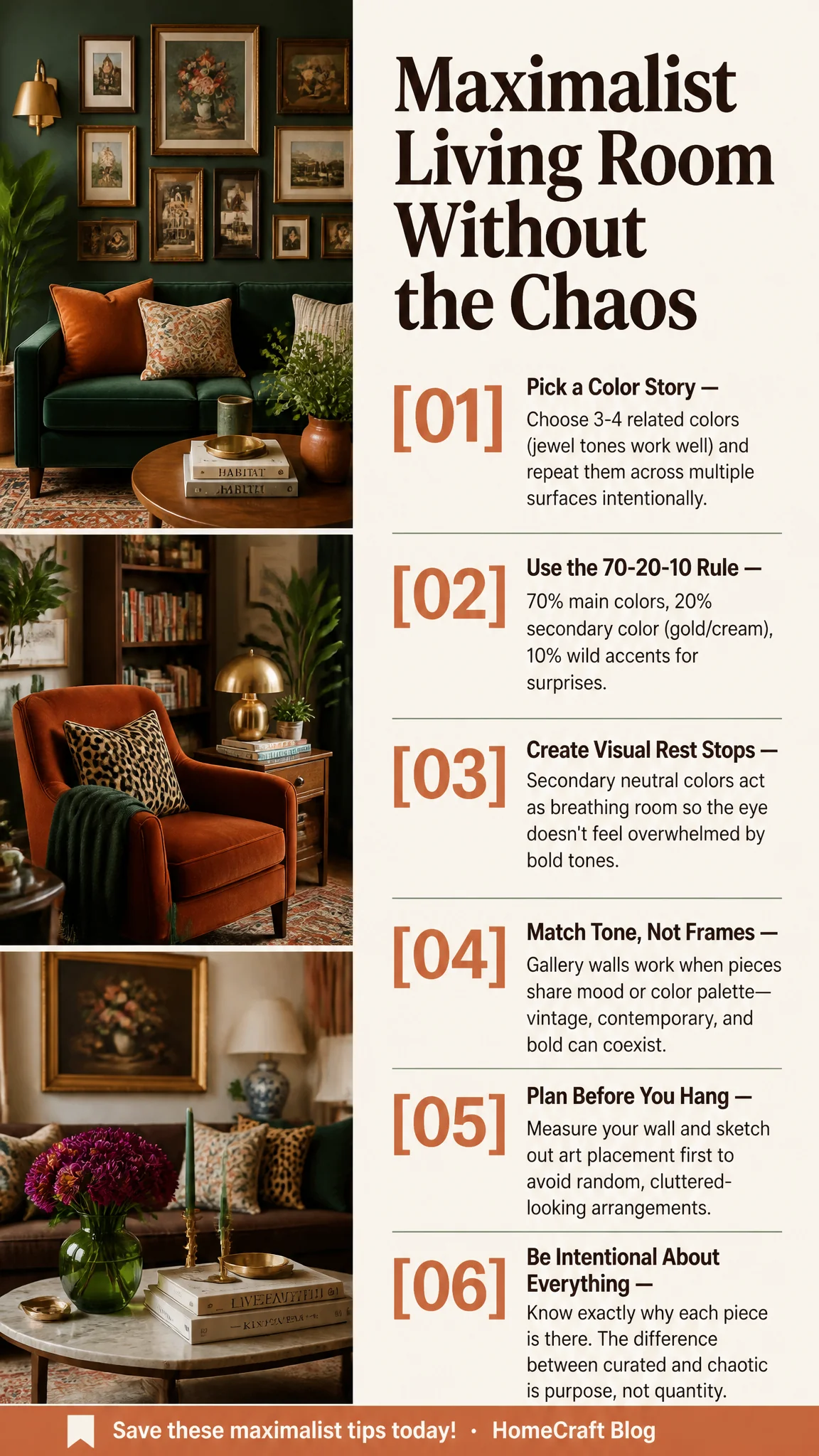
None of this works as a shopping list. A maximalist living room that holds up is one where the color story repeats, the patterns differ in scale, the textures do different things with light, and there's one quiet corner to land on. The rest is your own taste doing its job. And if the room ever stops feeling like yours and starts feeling like an assignment, that's the signal to take something out rather than add.
Ideas fade by Friday. A plan finishes the room.
You just read a full guide to your living room. Saving ideas will not change it; a plan will. The Home Decor Collection is every planning tool we make, for every room in the house, in one download, so the after photos below stop being other people's rooms.
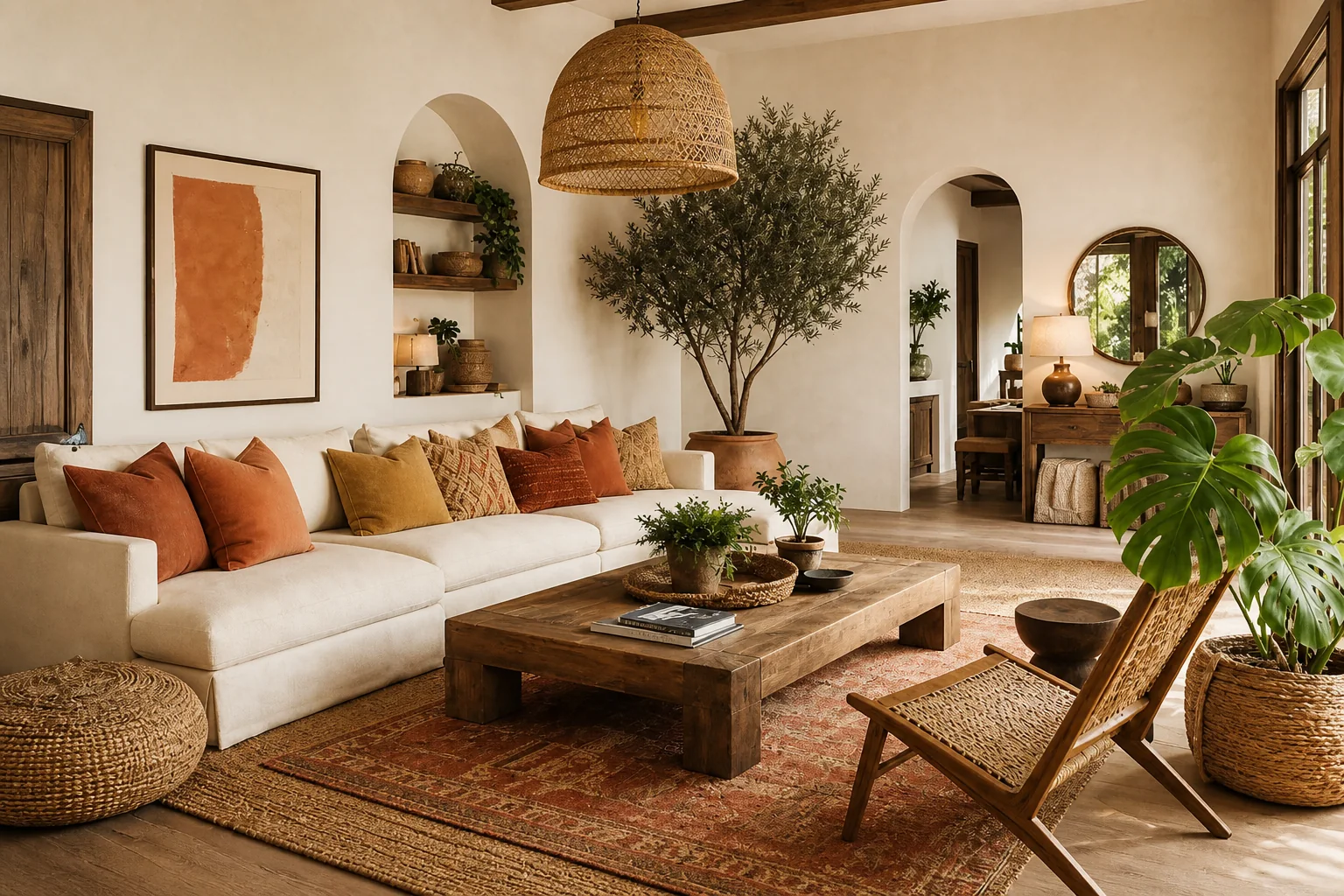
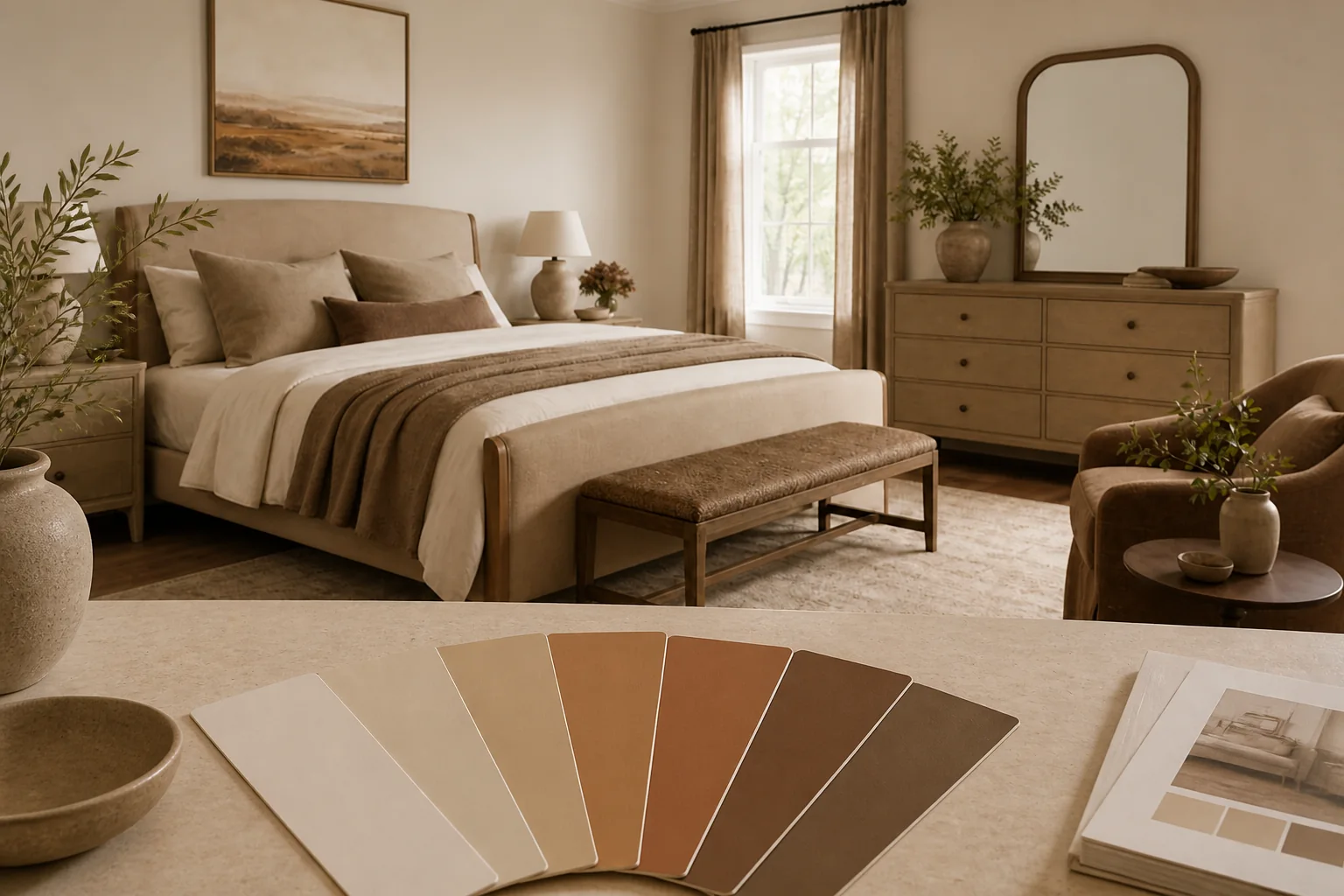
- Six room Style Kits, each with layout, palette and shopping list$114
- The Gallery Wall Studio: 200 prints + 15 measured layouts$29
- The Room Makeover System: 40 solved room layouts + workbook$29
- The Color Palette Handbook: 60 palettes shown in real rooms$19
- The Whole-Home Reset: 40 printable organizing checklists$19
- The Decorator's Cheat Sheets: the 40 measurements that matter$9
- All eleven products, bought separately
$219$97
A single hour with an interior designer costs more than the entire Collection, and this one keeps answering for every room you will ever decorate. Free updates included as the products grow. And if it is not for you, the 14 day money back promise means you simply get a refund.