Create a Scandinavian Living Room That Feels Lived-In, Not Sparse
Scandinavian living room ideas that skip the cold, empty feeling. Add texture, warm lighting, and comfortable pieces that actually invite you to stay.
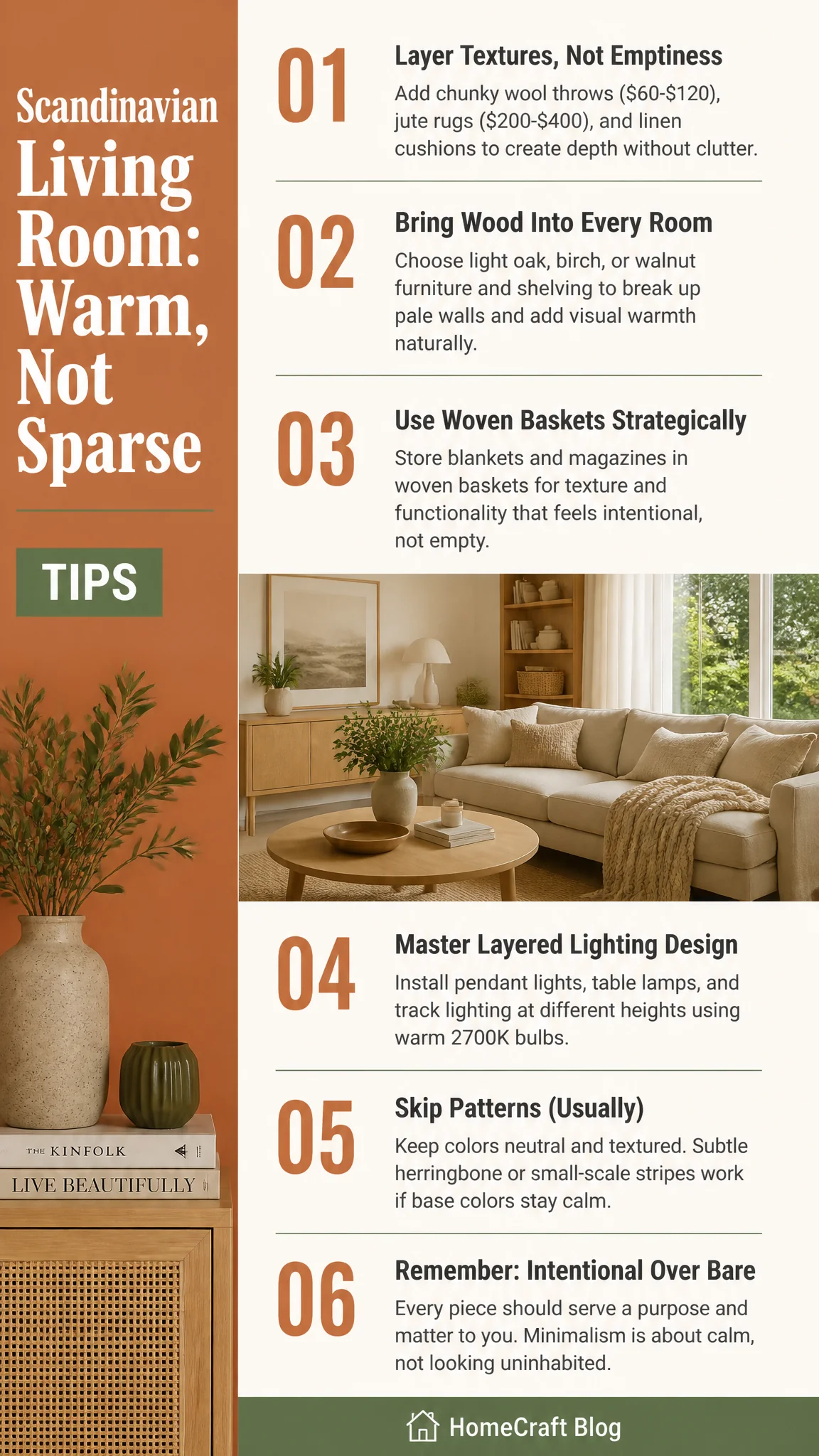
The sparse Scandinavian living room shows up everywhere: white walls, one sofa, a single framed print, and so much empty floor you could ice skate on it. It looks clean. It also looks like nobody lives there. The version that works keeps the bones of Scandinavian design - the clean lines, the light palette, the functional furniture - but adds the texture, warmth, and depth that actually make a room feel like home. You don't need to choose between calm and comfort. You need to layer. Good scandinavian living room ideas balance minimalism with genuine livability.
Why Minimal Doesn't Mean Empty
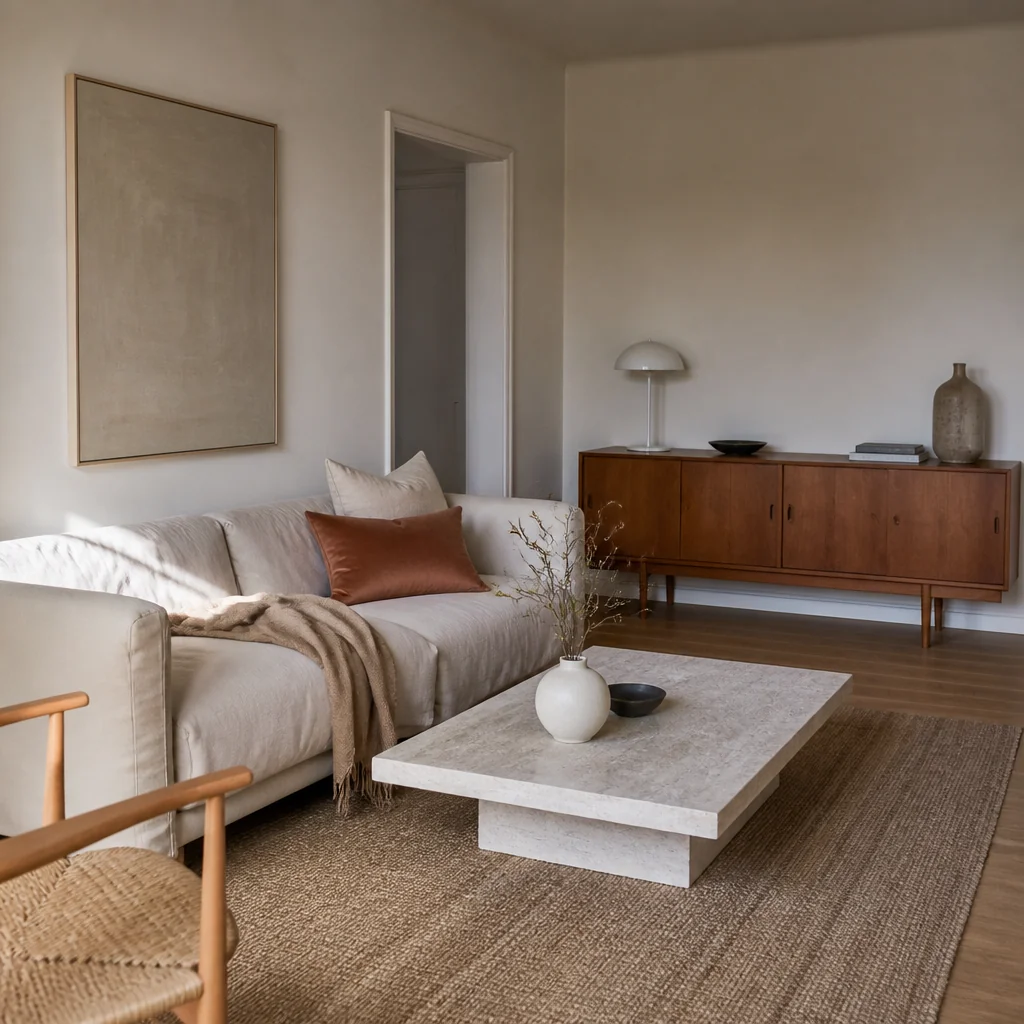
Minimalism and Scandinavian design aren't the same thing. Scandinavian rooms are intentional, not bare. Every piece serves a purpose and gets chosen carefully, but that doesn't mean restraint takes priority over living. You can have a quiet, uncluttered room that still feels generous and warm.
The mistake is treating white walls and clean surfaces as the whole point. They're not. They're the backdrop. What matters is what you do with the space: the textures you bring in, the layers of light, the objects that genuinely matter to you. A Scandinavian living room that feels lived-in has depth without feeling crowded. Strong scandinavian living room ideas recognize that empty isn't the same as calm.
Start with Texture, Not Emptiness
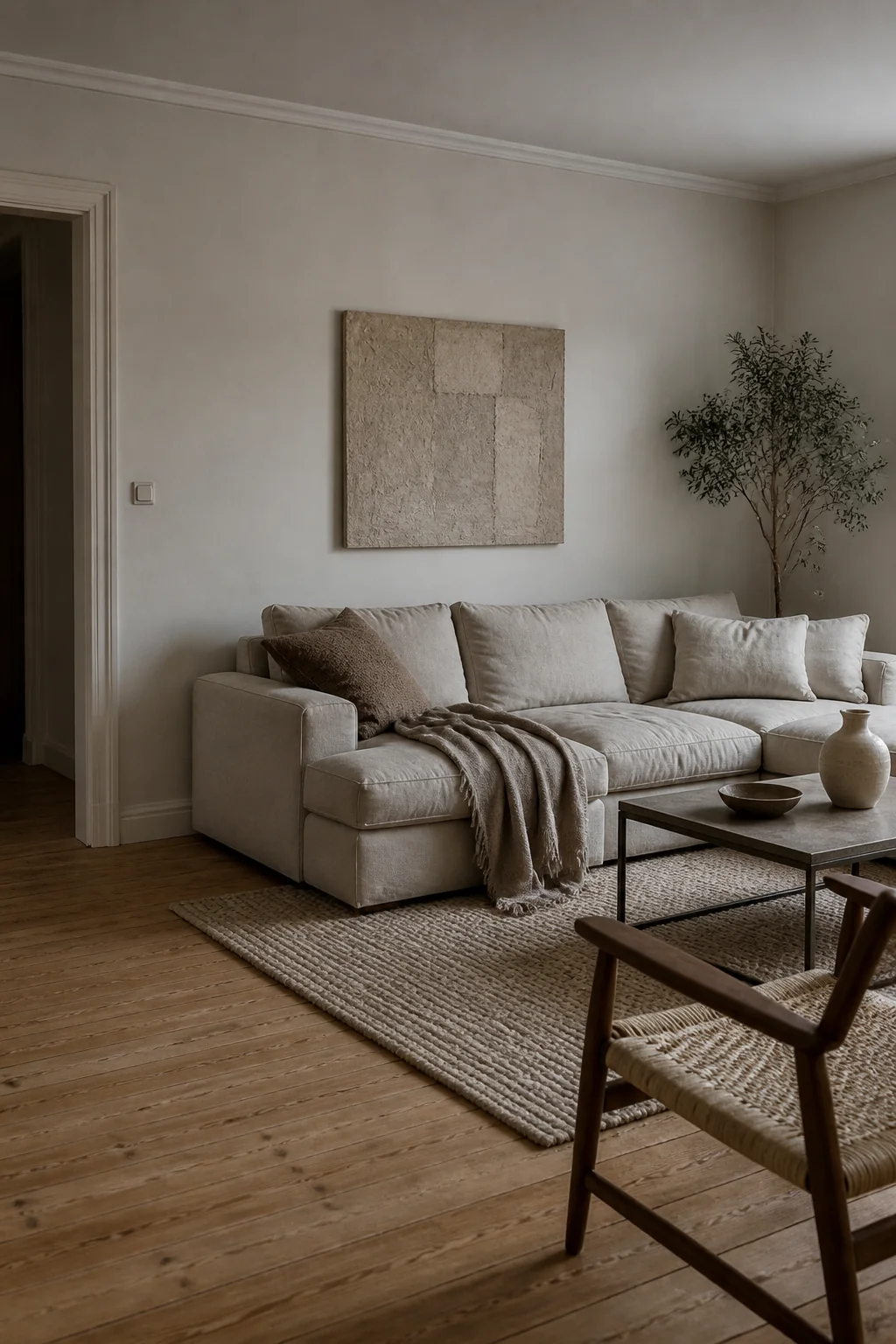
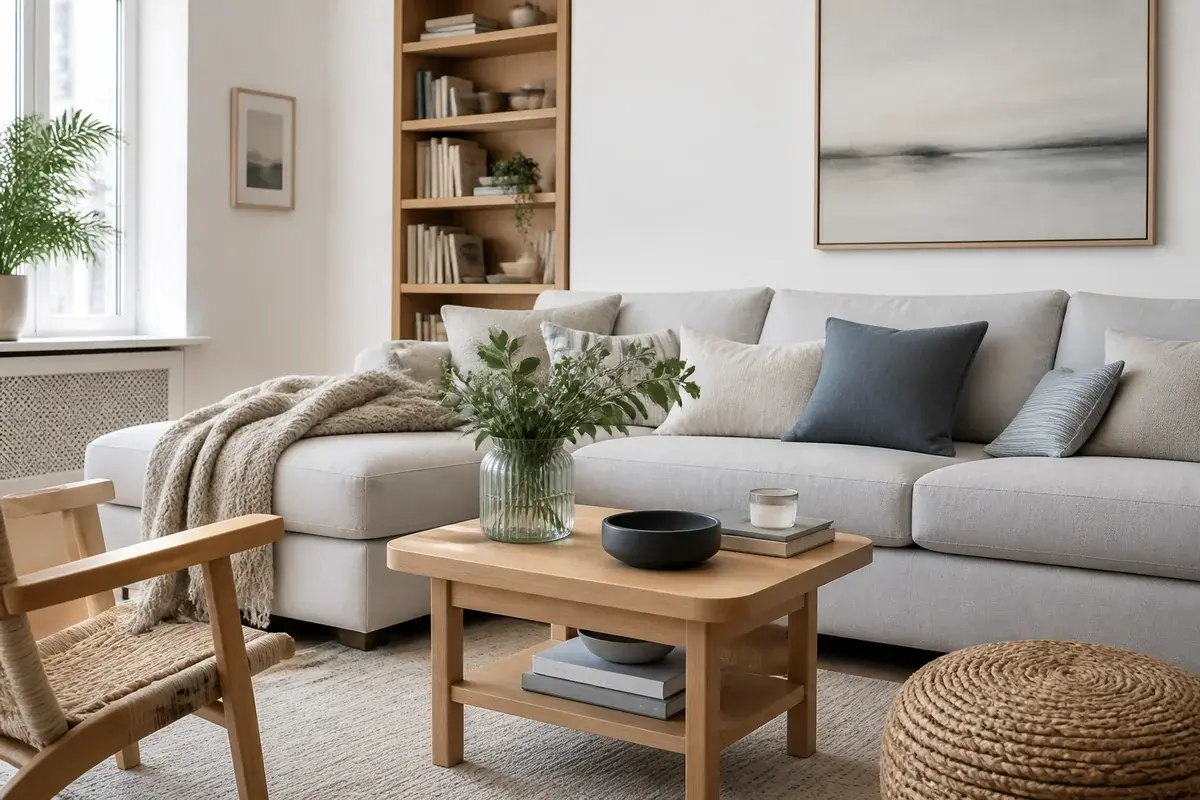
Smooth surfaces bounce sound and make a room feel cold. Your walls might be pale, but your textiles shouldn't match. Layer in a chunky wool throw over your sofa - about $60 to $120 for a quality one. Add a jute or wool area rug underneath (area rugs typically run 8 by 10 feet, though room size varies; expect around $200 to $400). Pile on some linen cushions in cream, soft gray, and natural white.
Wood is non-negotiable here. A coffee table in light oak or birch, a side table in walnut, even just open shelving with the grain showing - these interrupt the visual quiet without adding clutter. Woven baskets holding blankets or magazines add another layer of texture and actually store things you need.
(Scandinavian rooms often skip patterned fabric entirely, which is usually smart, but a subtle herringbone or small-scale stripe works if the base colors stay neutral.)
Layered Light as Core Strategy
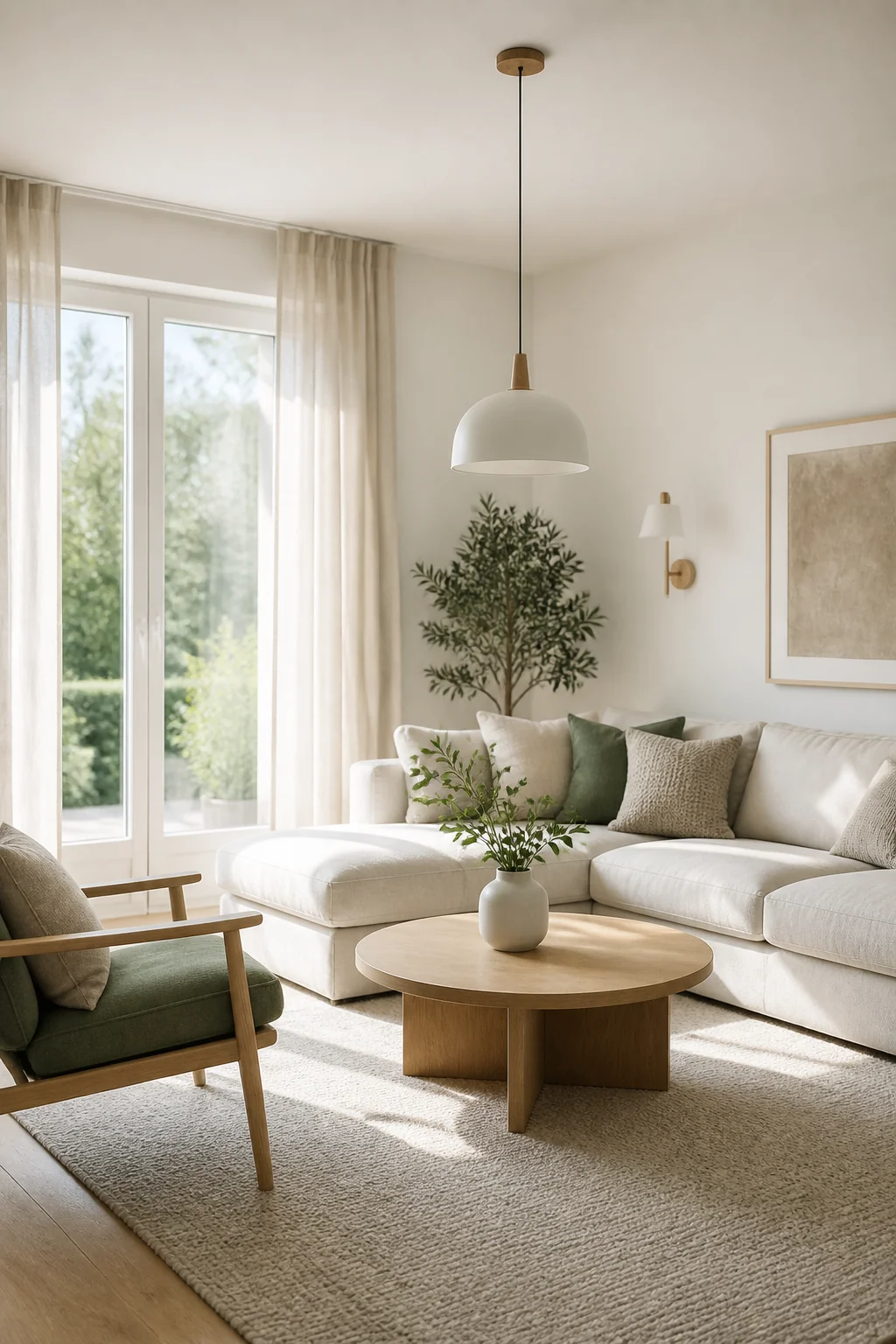
Flat, bright overhead lighting turns a Scandinavian room into a waiting room. You need layered light from different sources at different heights. A pendant or two hanging over a reading corner, a table lamp on a console behind the sofa, maybe track lighting along one wall if you have dark winter months where natural light dips early.
Warm-toned bulbs matter more than the fixture itself. Look for 2700K color temperature bulbs (they cost about $8 to $15 each). Cool, clinical light works against everything else you're building here. The point isn't to be bright. It's to be warm enough that the room pulls you in.
Candles in glass holders scattered across a side table cost almost nothing and shift how a space feels after dark. You're not aiming for cozy-cottage energy, but you're not aiming for a gallery either.
Choose One Real Focal Point
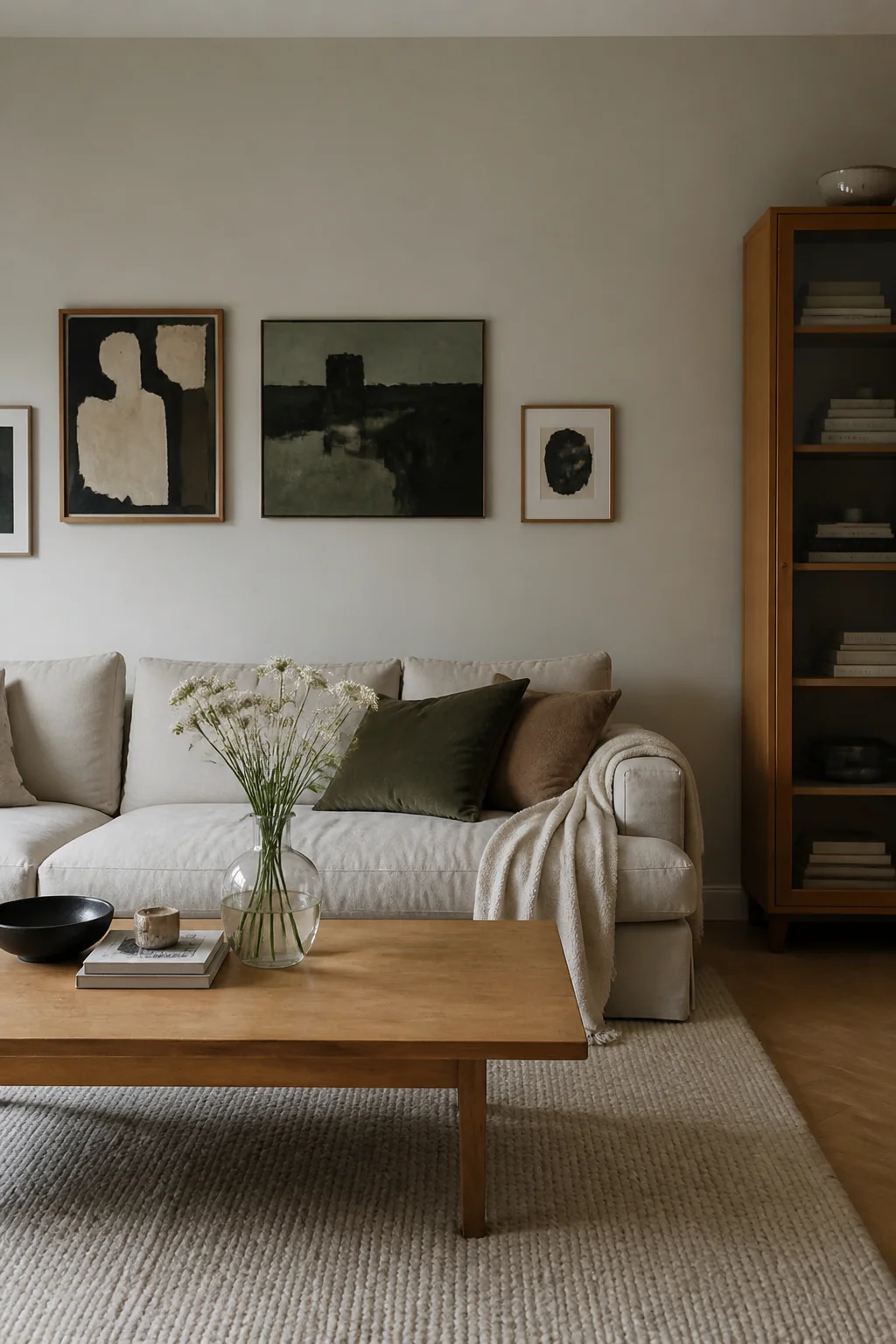
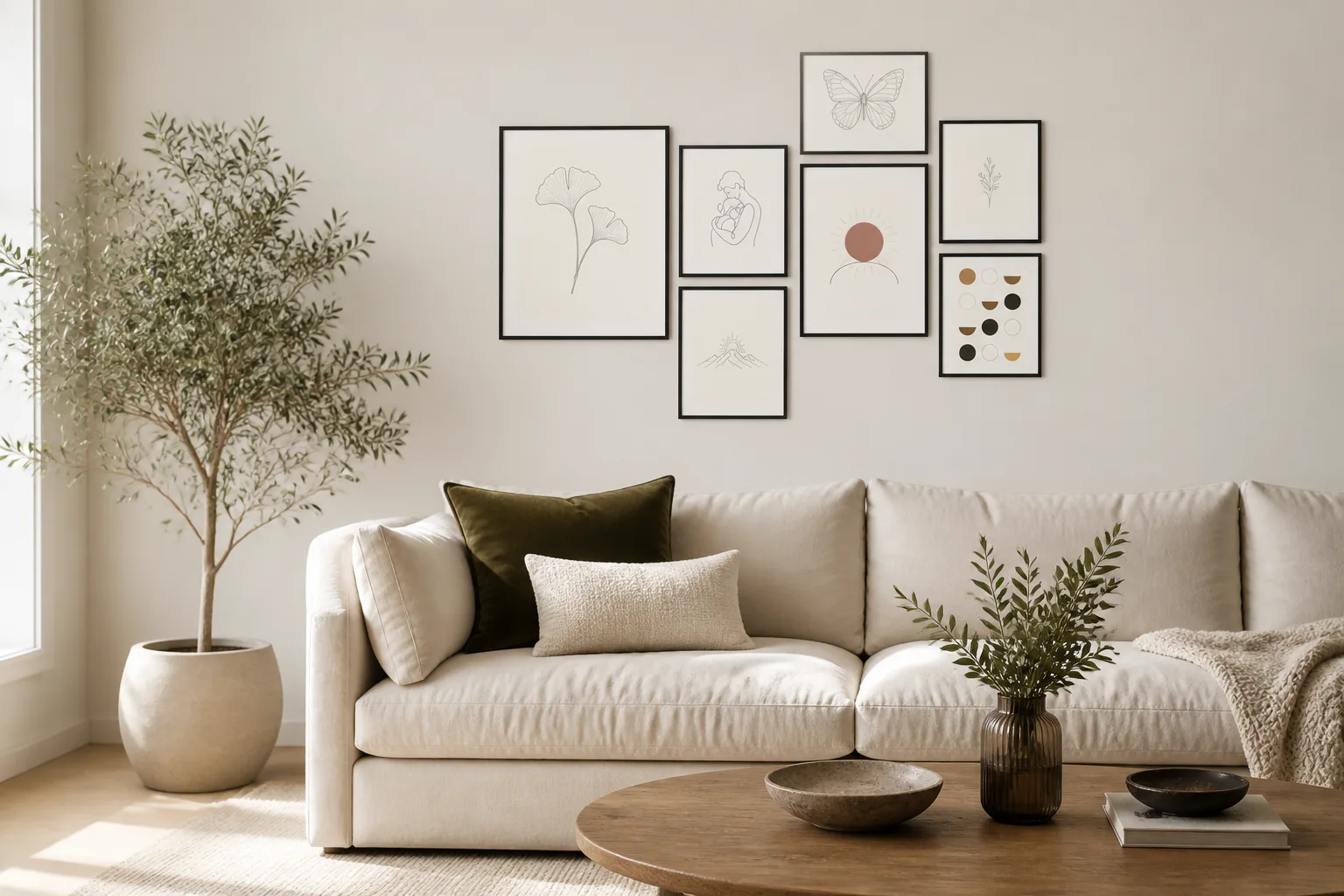
A Scandinavian room doesn't need busy walls. Pick one: a gallery wall of simple black frames with prints or photographs, or a single large landscape painting, or floating shelves styled with a few beautiful objects. That's it. One thing that stops your eye when you walk in.
Fill the rest of the walls with quiet. Let them breathe. This is where the restraint actually lives - not in emptiness, but in knowing what deserves attention. When you apply scandinavian living room ideas well, most of your walls remain still and unadorned.
Furniture That Invites You to Sit
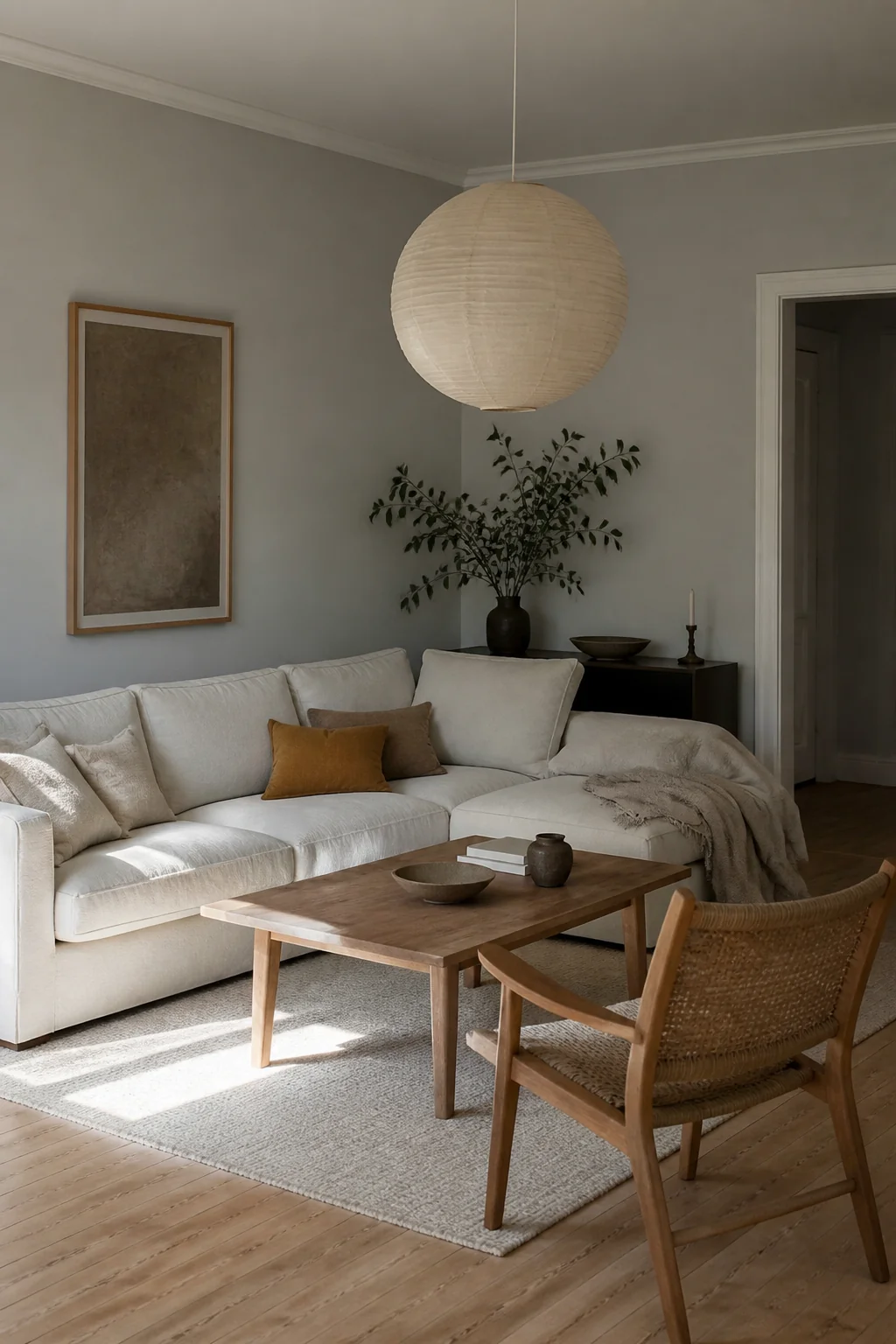
Your sofa should be comfortable enough to actually use. Midcentury-modern style works beautifully here - taper legs, clean lines, but deep enough that you can curl up. A good sectional in light gray linen costs between $800 and $1,500, and it's worth it because you'll sit on it constantly.
Add a side table for your coffee or book. A low pouf at the foot of the sofa. A reading chair if the room allows it. These aren't decorative. They're the reason the room exists. Scandinavian design respects function, and a living room that's hard to actually live in fails at the most basic level.
Natural Materials Over Everything
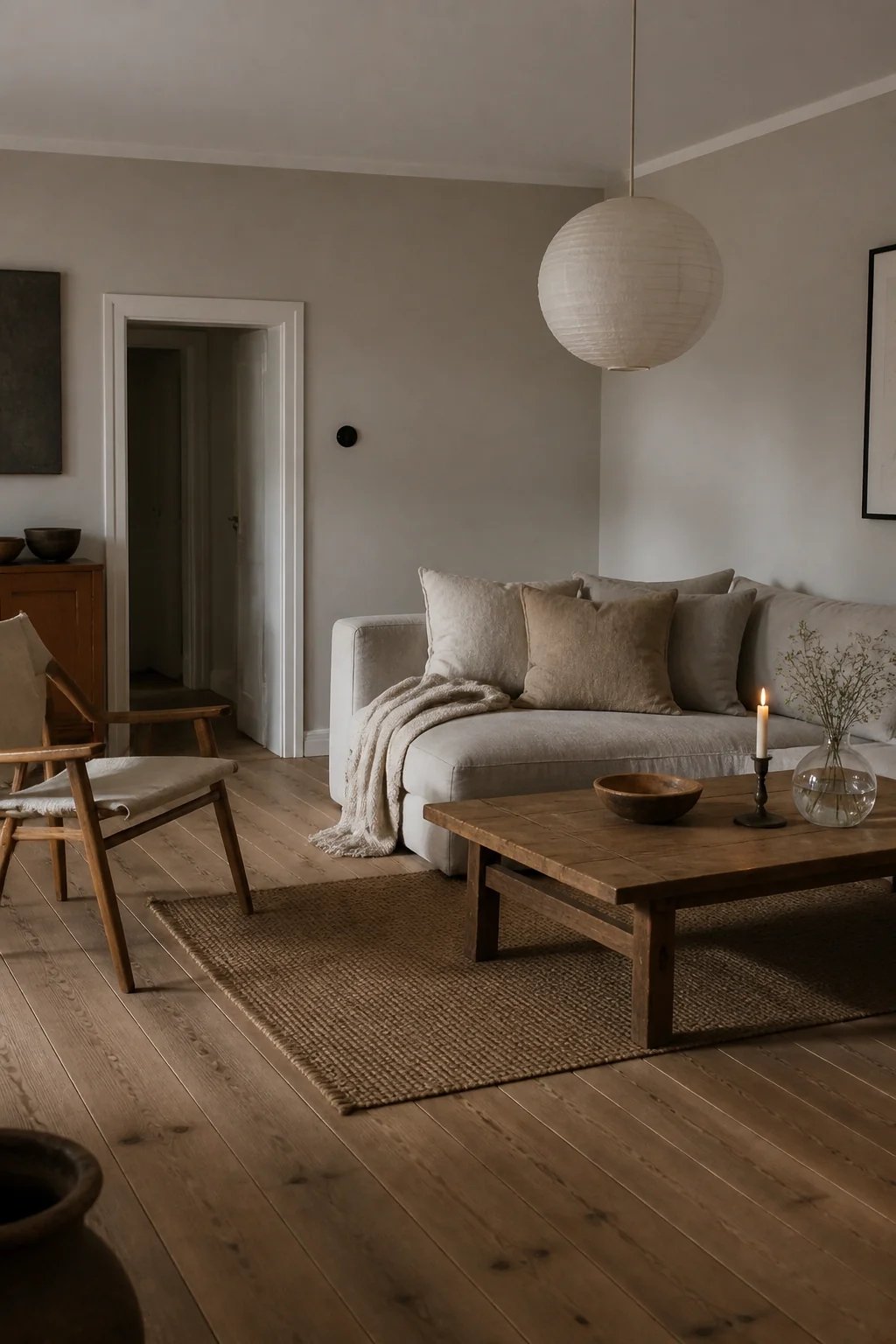
Pale wood, linen, wool, leather, stone, and metal - these are your materials. Avoid anything that feels plastic or shiny (except for that one glass candle holder, maybe). A coffee table in marble or light concrete, a side table in solid oak, cushion covers in linen that wrinkles slightly - these materials age visibly and remind you that the room is meant to be used.
Bring In Green, But Keep It Calm
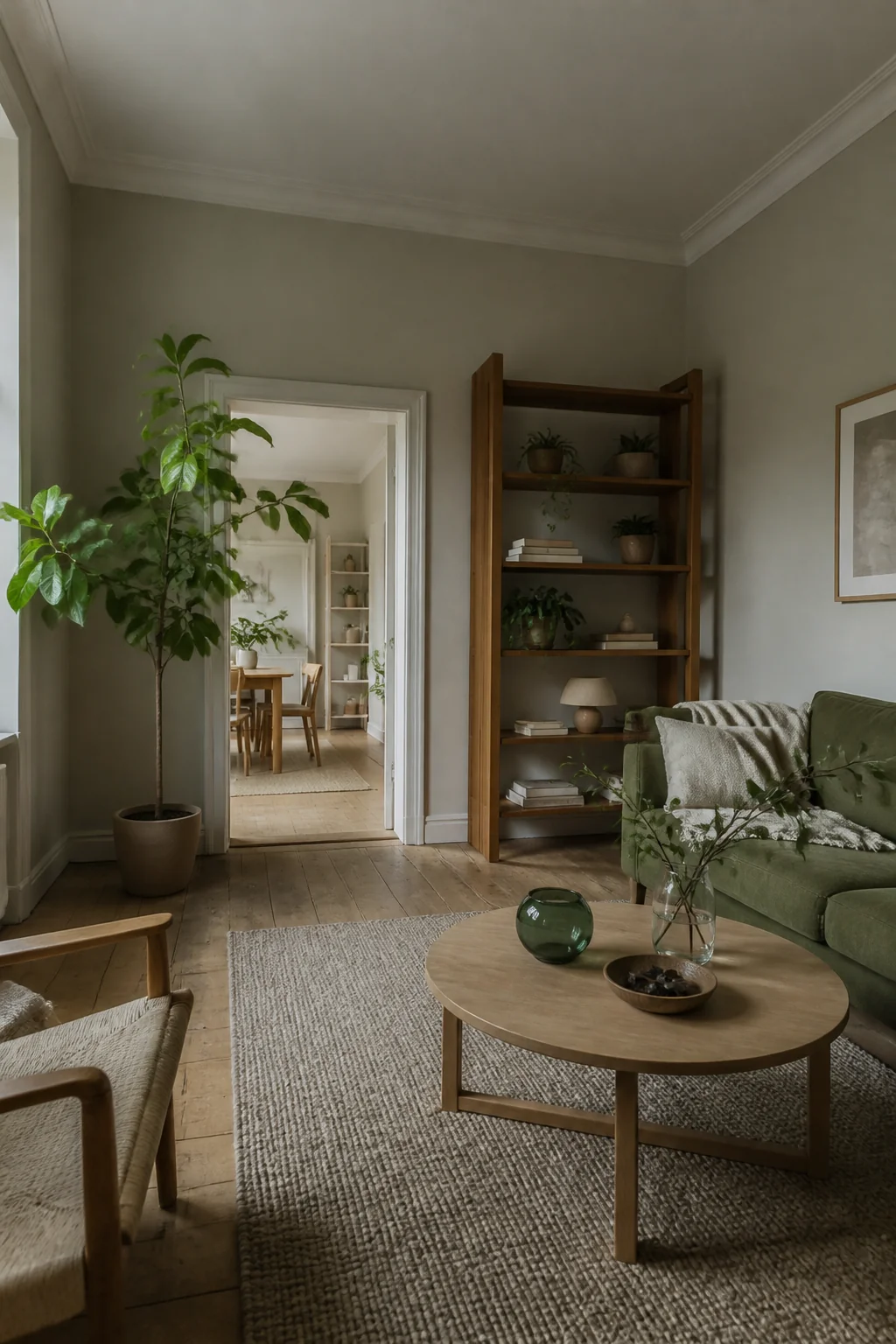
A living plant or two works in a Scandinavian room, but skip the jungle look. One tall fiddle leaf fig in a corner, or a small pothos trailing from a shelf, or three or four smaller plants grouped on a windowsill. Keep them in simple ceramic pots in white, gray, or natural clay (about $15 to $40 each). Overwatered plants create damage - check soil moisture once a week and water only when the top inch feels dry.
They're there because they're living things, not because they fill space.
Objects That Matter
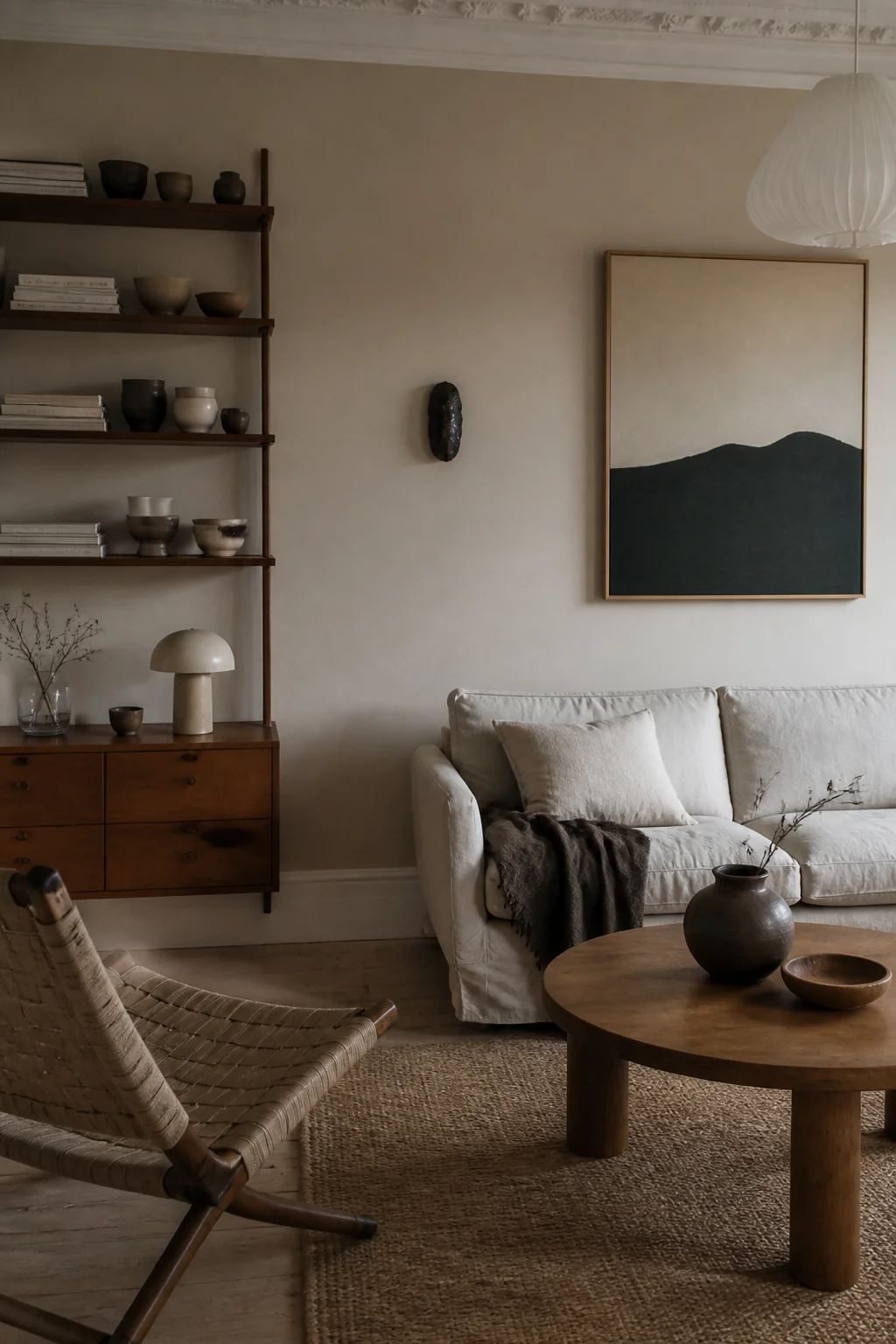
A Scandinavian room isn't empty of personal things - it's selective about them. A stack of three art books on the coffee table. A ceramic bowl holding a few smooth stones. A wooden box for remotes. A framed photograph or two on a shelf. These objects work because they're chosen, not because they're everywhere.
(Avoid small decorative items with no function - the little sculptures and figurines that sit on shelves for no reason.)
Take the guide with you
Show what you use or what you genuinely love. A lived-in Scandinavian room respects your attention and the attention of anyone who enters it.
Ideas fade by Friday. A plan finishes the room.
You just read a full guide to your living room. Saving ideas will not change it; a plan will. The Home Decor Collection is every planning tool we make, for every room in the house, in one download, so the after photos below stop being other people's rooms.
- Six room Style Kits, each with layout, palette and shopping list$114
- The Gallery Wall Studio: 200 prints + 15 measured layouts$29
- The Room Makeover System: 40 solved room layouts + workbook$29
- The Color Palette Handbook: 60 palettes shown in real rooms$19
- The Whole-Home Reset: 40 printable organizing checklists$19
- The Decorator's Cheat Sheets: the 40 measurements that matter$9
- All eleven products, bought separately
$219$97
A single hour with an interior designer costs more than the entire Collection, and this one keeps answering for every room you will ever decorate. Free updates included as the products grow. And if it is not for you, the 14 day money back promise means you simply get a refund.