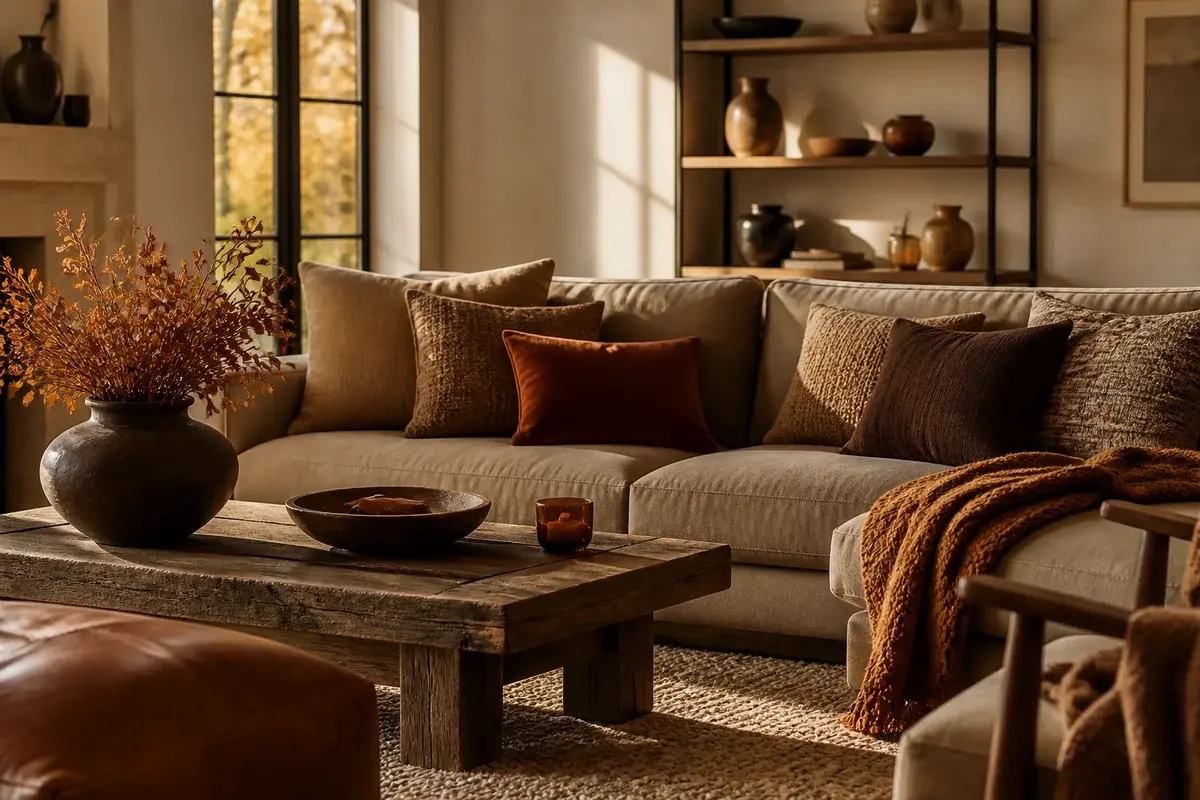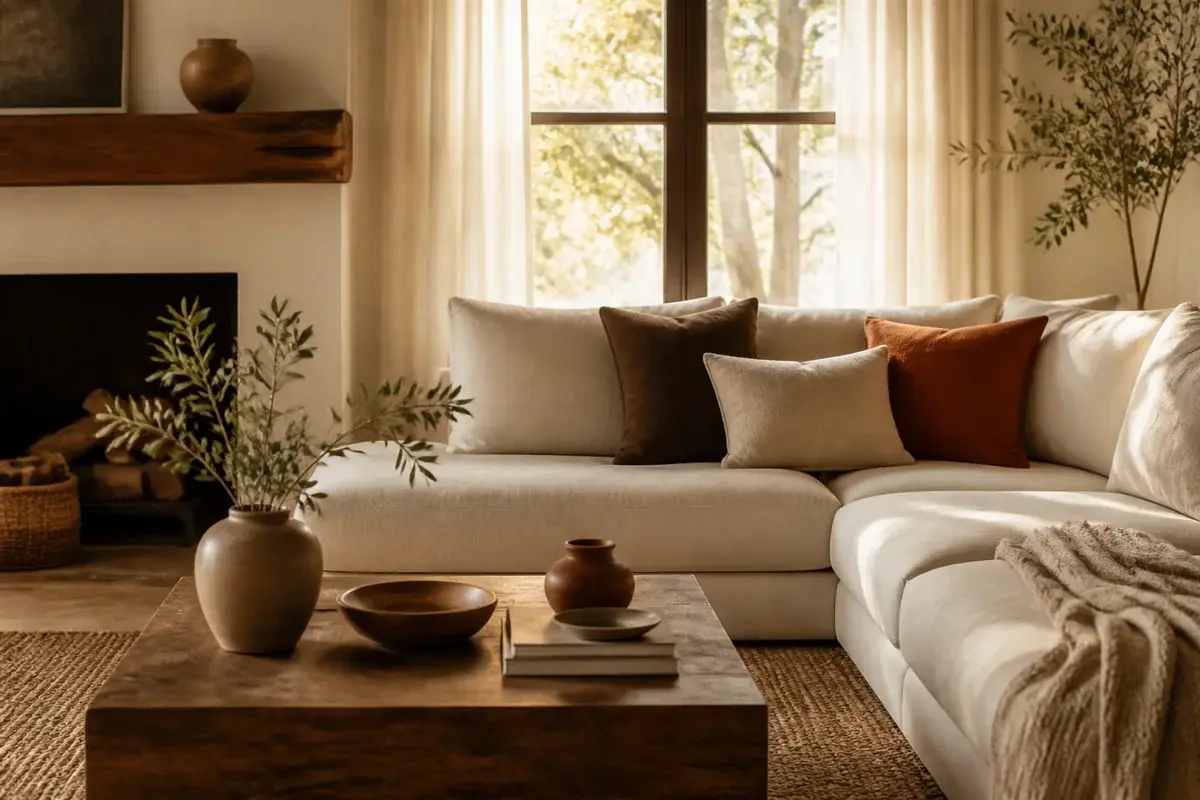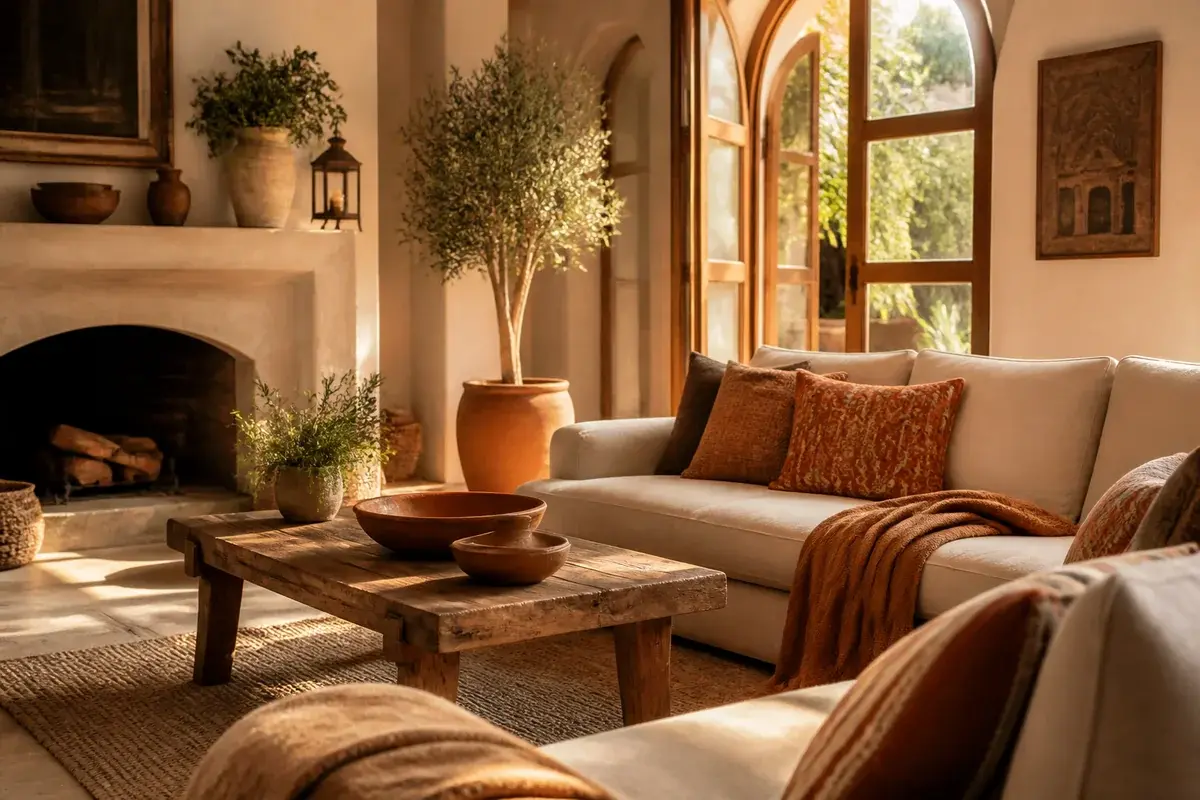
10 Warm Cozy Autumn Living Room Ideas With Low Natural Light
Build a cozy autumn living room that glows without relying on windows. Warm layering, rich textures, and earthy tones brighten dark spaces.
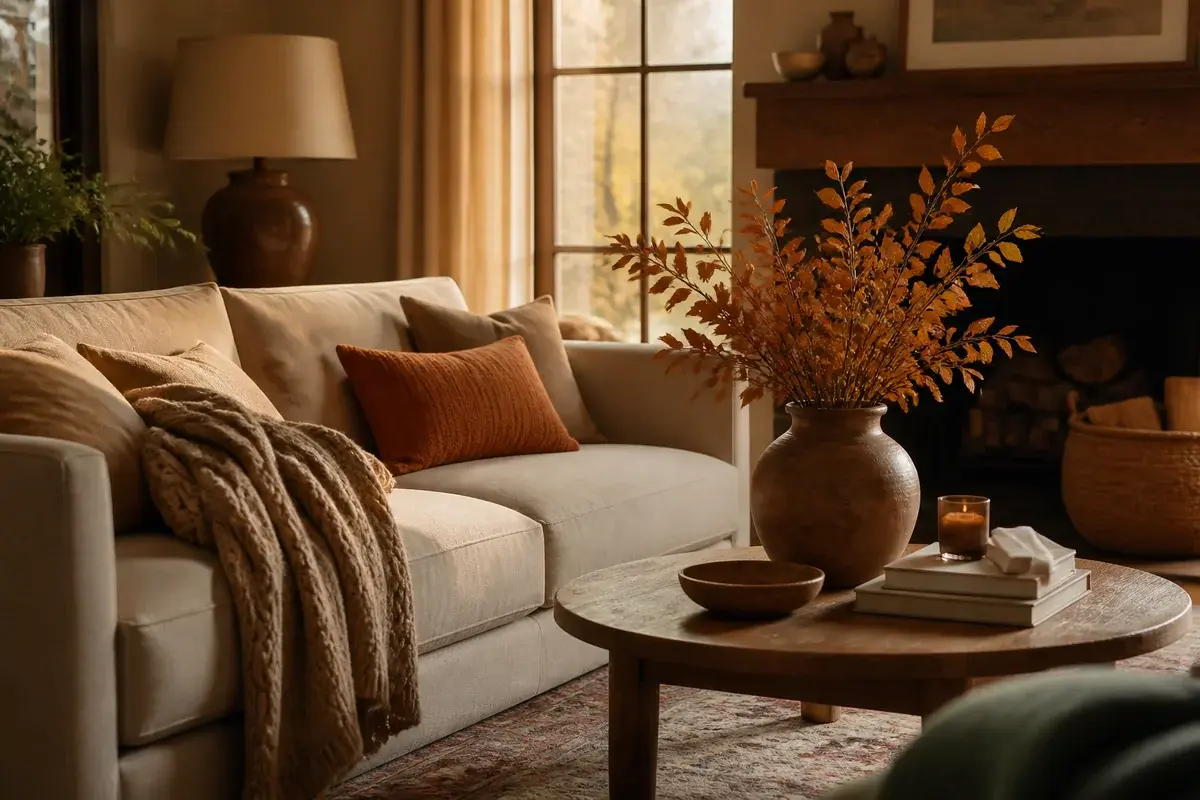
A cozy autumn living room glows from within, layered with warm light and wrapped in texture, even when your windows face north or sit under a tree. The problem with low light is that many people assume it means you're stuck with a dim, cold space. It doesn't. Low natural light just means you need to be intentional about artificial lighting, color, and the fabrics you choose. The room won't feel dark if you plan for it upfront.
1. Install three separate light sources at different heights
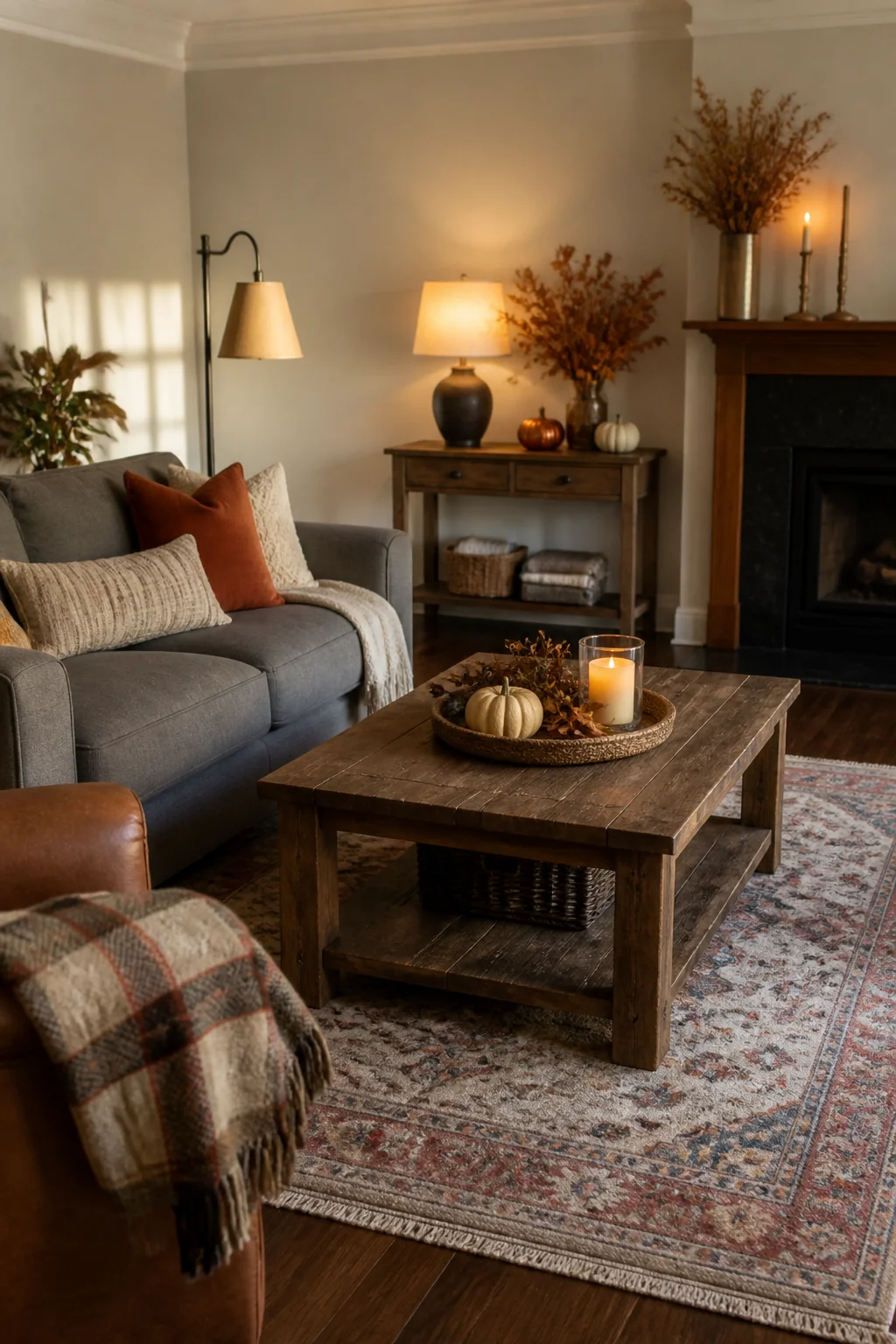
Layering light is how you fight the gloom. You need ambient light (overhead or from a tall lamp), task light (next to where you sit), and accent light (a low lamp on a console, a candle, or wall sconces). In a low-light room, a single overhead fixture feels harsh and leaves corners dark. Three sources at ceiling level, eye level, and table height let you brighten the whole space without it feeling flat.
Place your ambient light as a dimmer-controlled ceiling fixture or a tall arc lamp that curves over your seating. Add a floor lamp beside your reading chair. Put a small table lamp or swing-arm wall sconce 48 inches from the floor near where you sit. (Wall sconces cost about $60 to $150 each, installed.) Multiple light sources create brightness because light bouncing from different angles fills a room more effectively than one source cranked up high.
2. Choose warm white bulbs instead of daylight
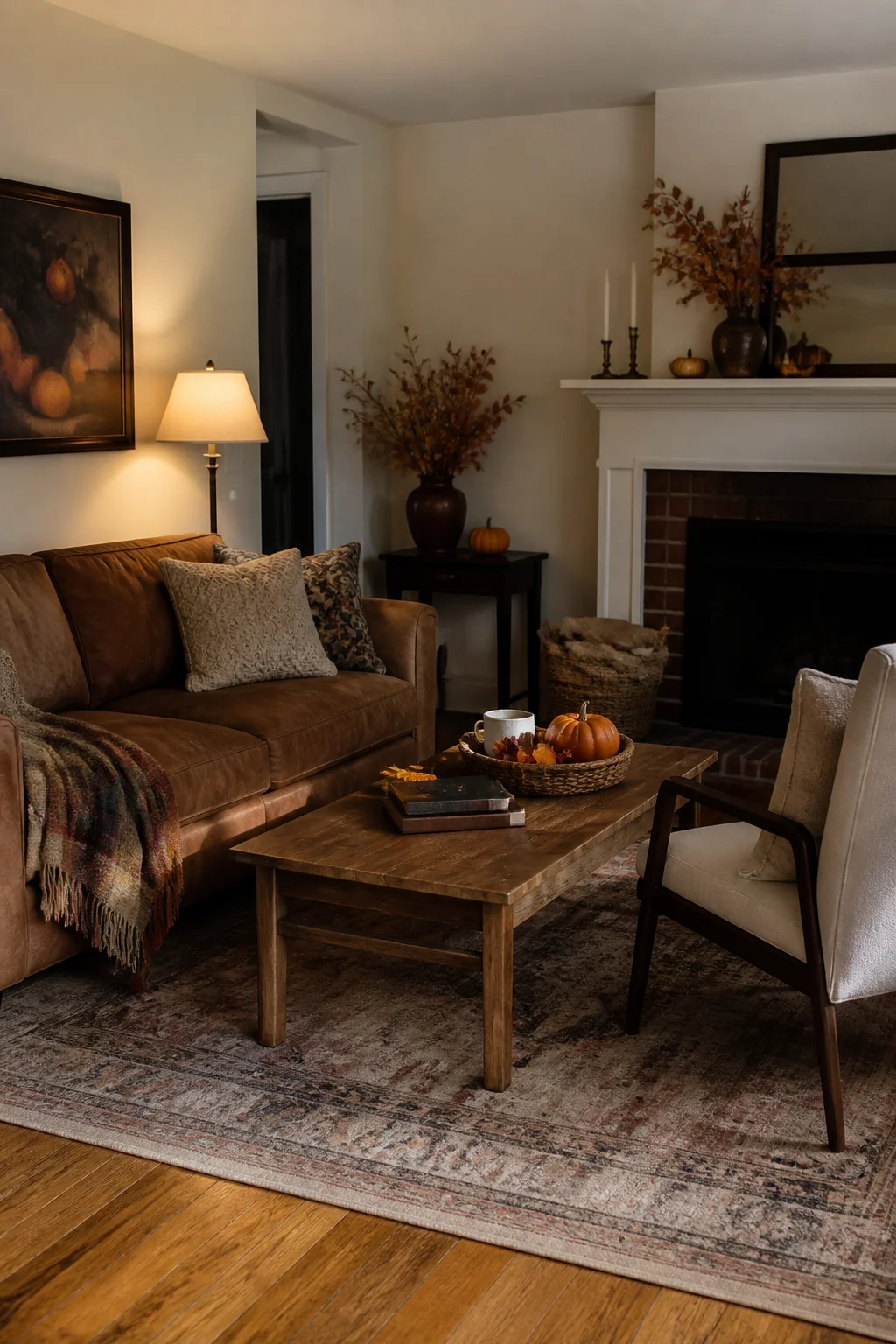
Your bulb temperature matters as much as how many bulbs you have. Daylight bulbs (5000K) feel clinical in a room without much sun. Warm white (2700K) reads as cozy and looks like candlelight or the end-of-day sun, even at noon. Every bulb in your layers should be warm white unless it's a reading task lamp, which can be 3000K.
Test bulbs before buying a case of them. A single warm white bulb in a table lamp will show you the difference immediately. You can get quality warm white bulbs in standard shapes for about $4 to $8 each at any hardware store. The color shift alone changes whether a room with low natural light feels depressing or intentional. This detail matters more than you'd expect.
3. Paint walls a warm earthy tone instead of white or grey
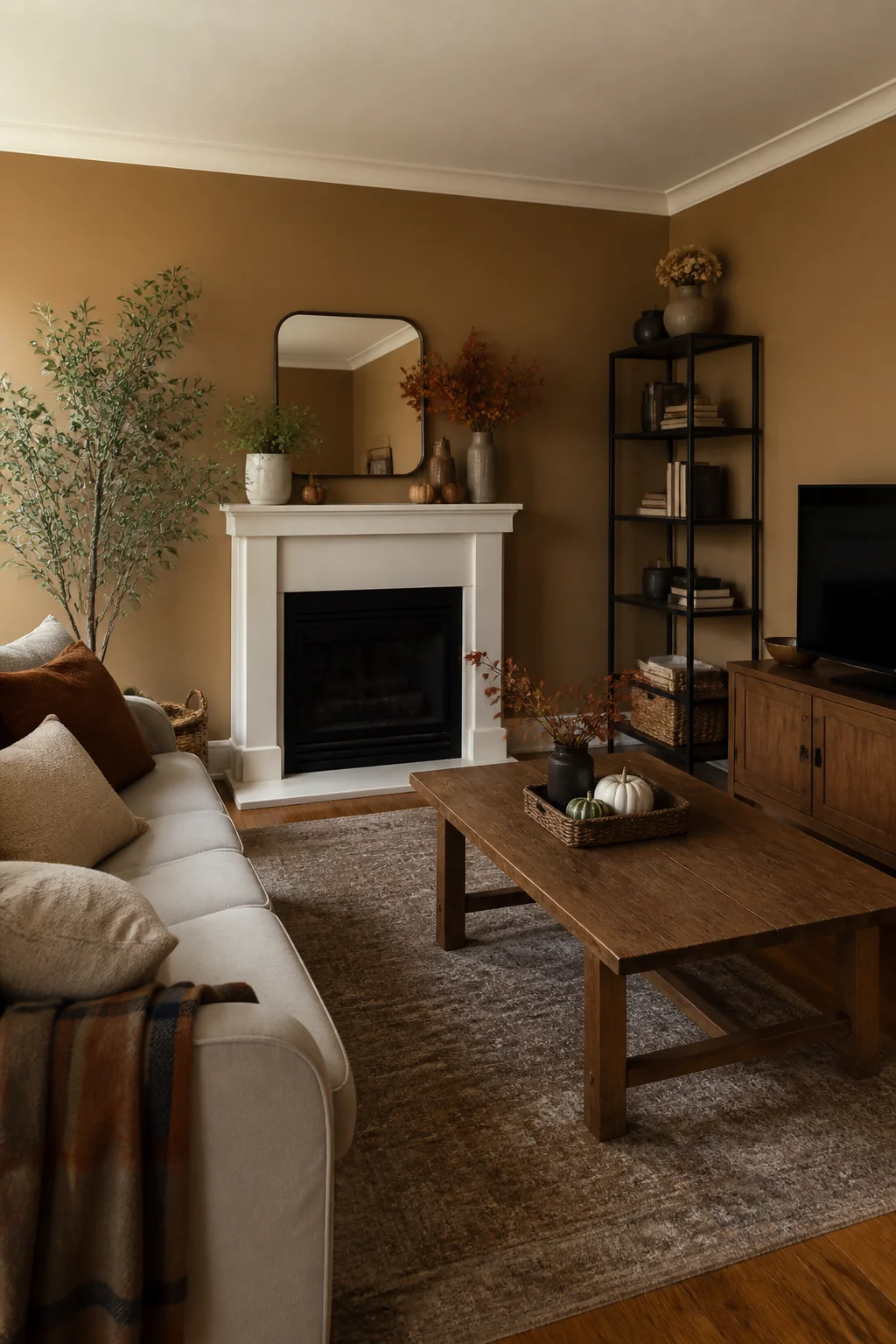
White and cool grey amplify the feeling of dim light. Warm neutrals absorb and redirect light in a way that makes a room feel fuller. Think warm taupe, terracotta, sage, ochre, warm cream, or soft warm brown. These colors don't have to be dark to work. A warm taupe that's considerably lighter than the trim still feels warmer than a cool grey at the same lightness level.
In a low-light room, avoid cool undertones. Check the paint swatch next to your actual walls at three times of day if you can. What looks okay under the store's fluorescent lights can read as flat or yellowish in your living room. One gallon of paint costs $35 to $60 depending on quality. A quality interior paint (Sherwin-Williams, Benjamin Moore, or equivalent) covers around 350-400 square feet, which is most living rooms.
4. Layer in wool, linen, and velvet fabrics for depth and softness
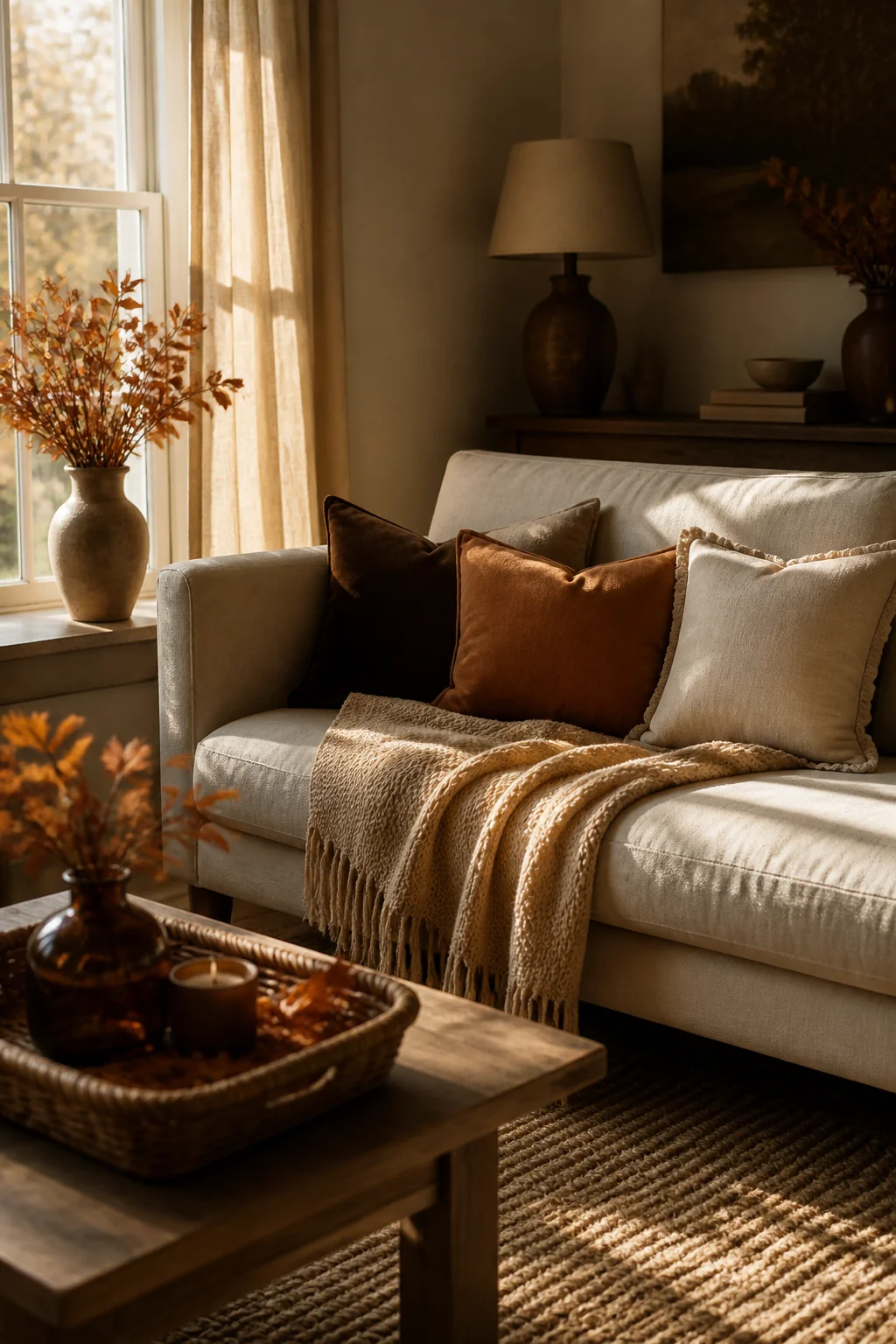
Low light bounces differently off different textures. Smooth surfaces like leather or polished cotton can look cold and reflective under artificial light. Matte, slightly nubby fabrics like wool, linen, and velvet absorb and diffuse light, which makes a room feel warmer and less clinical. They also add visual depth, so the room doesn't read as flat.
Choose at least two different fabric textures for seating: maybe a wool area rug under your sofa, a linen throw pillow, and a velvet ottoman (about $250 to $400 for a quality midsize ottoman). These layered textures slow your eye down and make the space feel richer. Smooth, shiny fabrics are fine as an accent, but your main seating and large surfaces should have some tooth to them.
5. Use an area rug that's warm-toned and slightly darker than your walls
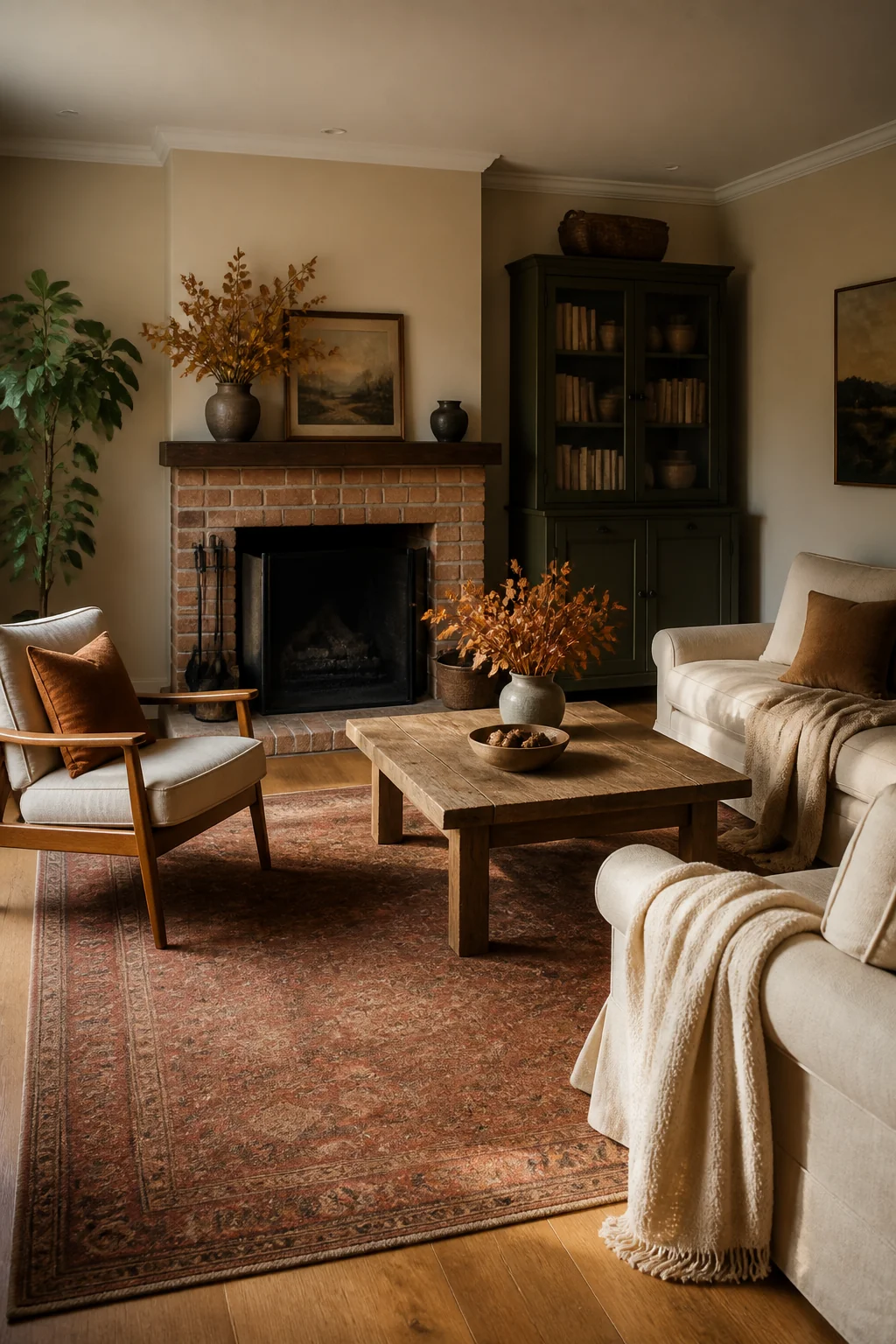
A rug does three things in a low-light room: it anchors the seating group, it adds warmth underfoot, and it signals to your eye that this is a contained, complete space. In dim light, a pale rug reads as washed out. A rug that's one or two shades deeper than your walls grounds the room and makes it feel intentional rather than accidental.
Choose warm tones: rust, burnt orange, warm brown, terracotta, or deep gold. Natural fibers like jute or wool hold color better under artificial light than synthetic blends. A quality 8x10 wool rug runs $400 to $800. (Jute is cheaper but less soft underfoot.) The rug should extend at least 18 inches in front of your sofa and under the front legs of your chairs so the seating group reads as one zone.
6. Add brass or copper metallic accents instead of chrome or nickel
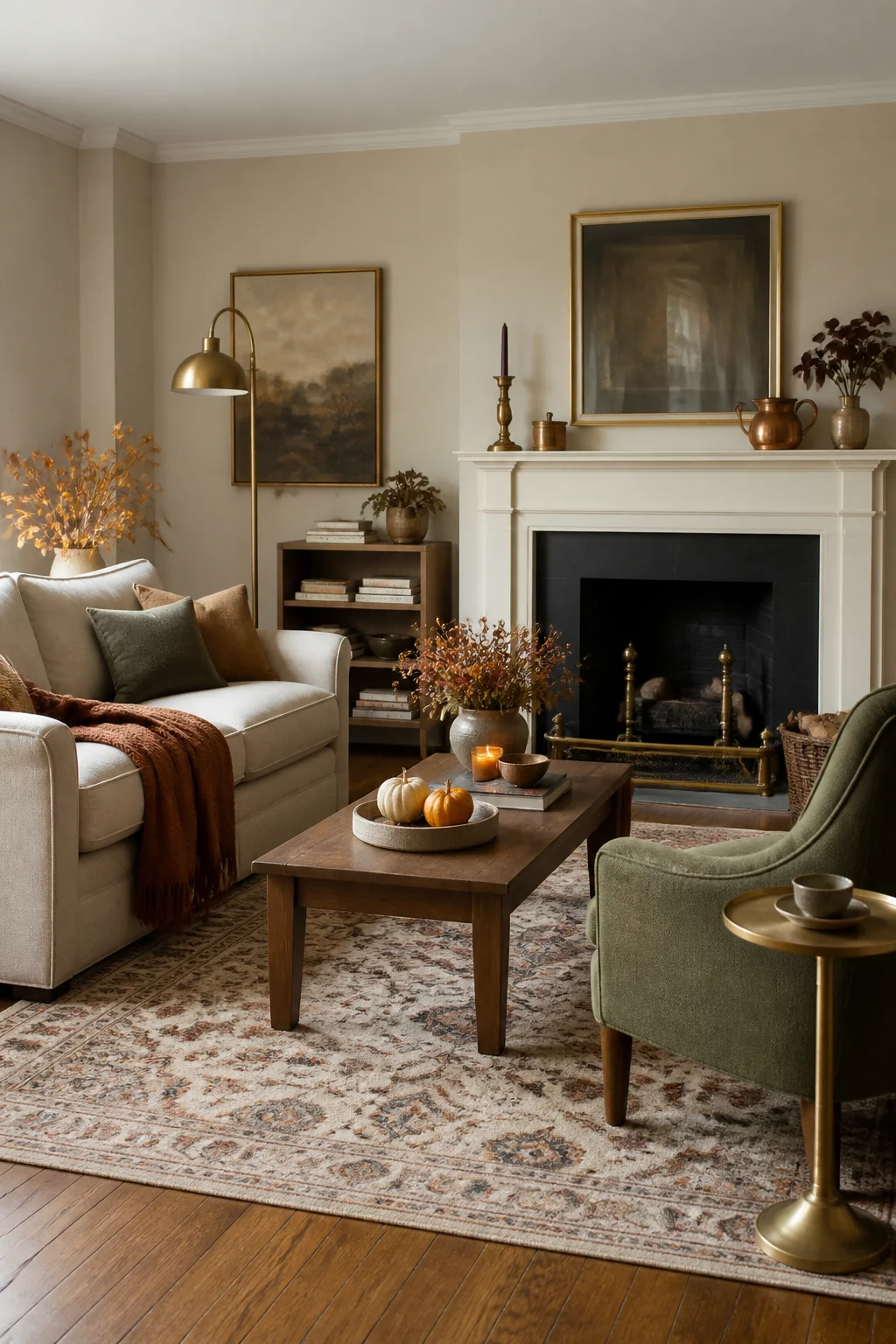
Chrome and brushed nickel reflect light in a clinical, modern way. Brass and copper warm up the room and pair naturally with autumn colors. A brass floor lamp base, brass picture frames, copper candle holders, or a brass-trimmed mirror all read as warm and intentional in a low-light space.
Brass and copper don't have to match exactly, and they don't have to be expensive. A brass curtain rod runs $30 to $80. Brass lamp bases cost $40 to $120. Copper or brass candlesticks are $10 to $30 per pair. Mixed metals are fine, but if your room is full of chrome fixtures, it'll feel cold no matter what else you do. Swap one or two key pieces to brass to shift the whole temperature of the light.
7. Hang curtains that filter light rather than block it completely
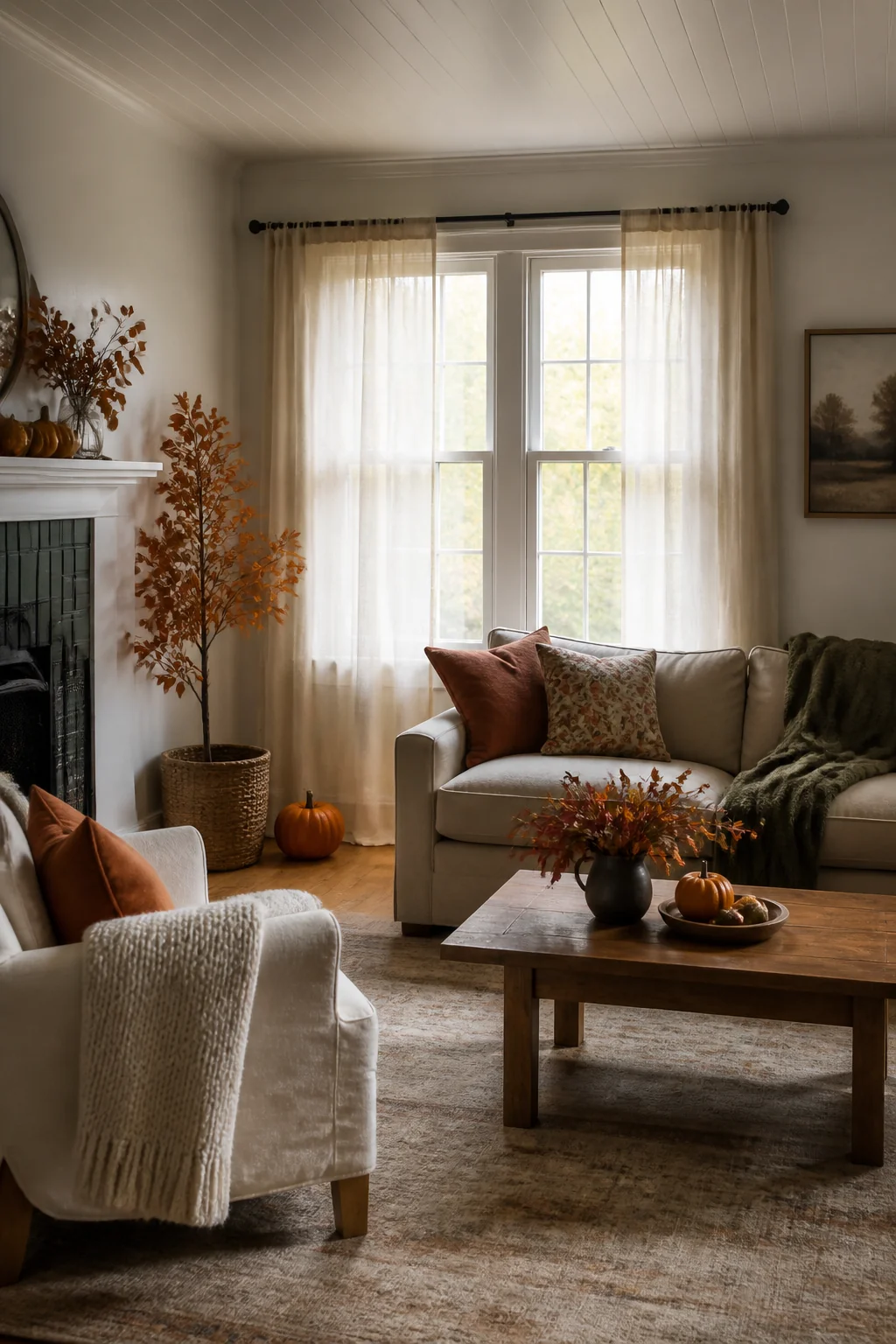
Heavy blackout curtains work if you need to darken the room, but in a low-light living room, they make the problem worse. Lightweight linen, linen-blend, or semi-sheer curtains let what little natural light you have filter through while still giving you privacy and a finished look. They also add texture and softness to the windows. Full-length curtains hung from ceiling to floor, or from about 4 inches above the window frame to 2 inches below the baseboard, make windows look bigger and the ceiling taller.
A pair of linen curtains costs about $80 to $200 depending on the size and quality. Avoid thin, cheap polyester—it reads as flimsy and shows wrinkles.
8. Create a focal point with a fireplace surround or a large mirror
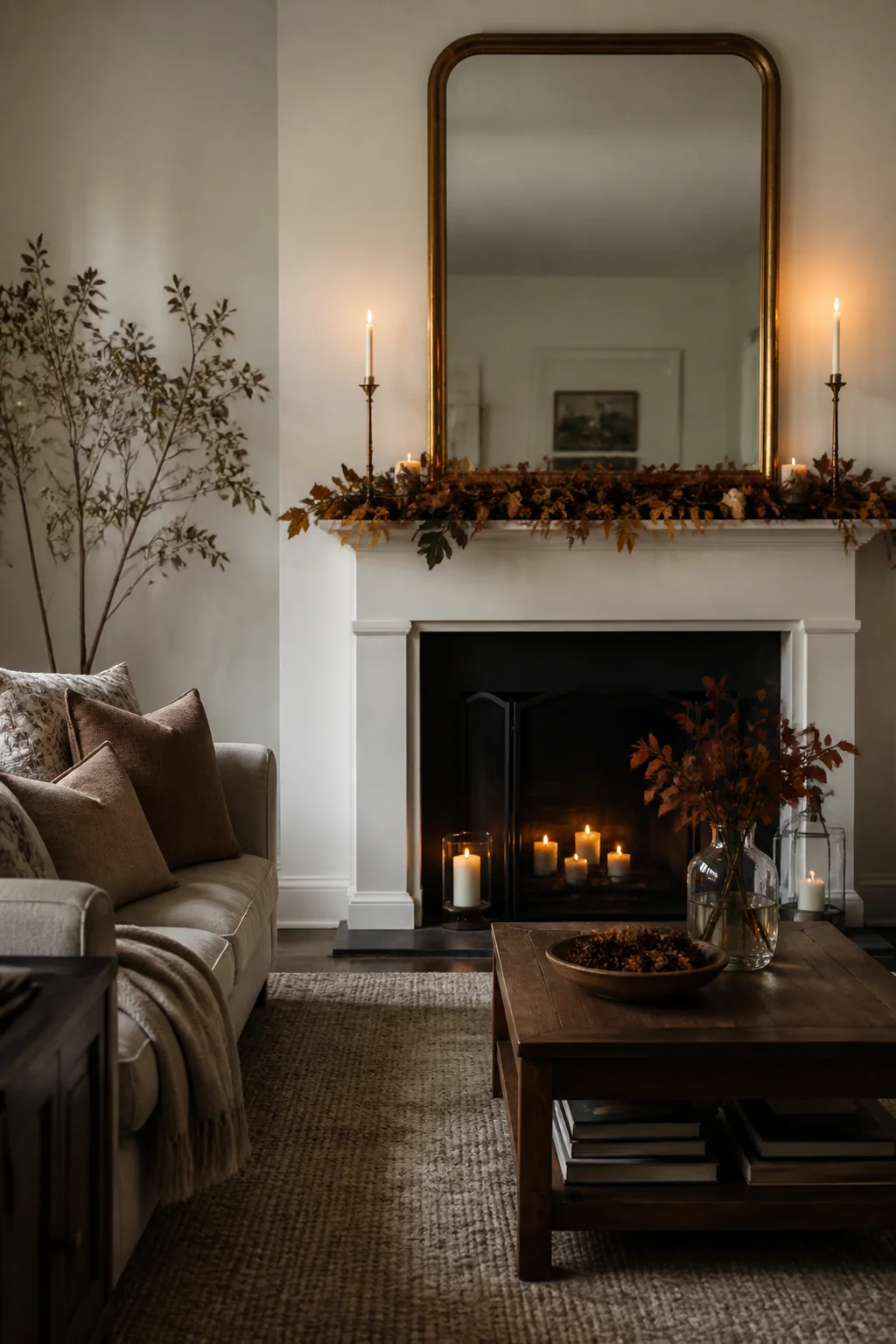
A fireplace with a lit fire or candles inside creates its own warm light and draws your eye the moment you walk in. If you don't have a fireplace, a large mirror opposite or beside your seating reflects the light from your lamps back into the room and makes the space feel less enclosed. The mirror should be at least 36 inches wide to be effective.
Position the mirror across from a light source (a lamp or window) so it bounces light back. A good-quality large mirror with a wooden or brass frame costs $150 to $400. Even without a fireplace, this single piece does more than almost anything else to brighten a dim room because it actually multiplies the light you already have.
9. Keep clutter minimal and surfaces clear so light has space to move
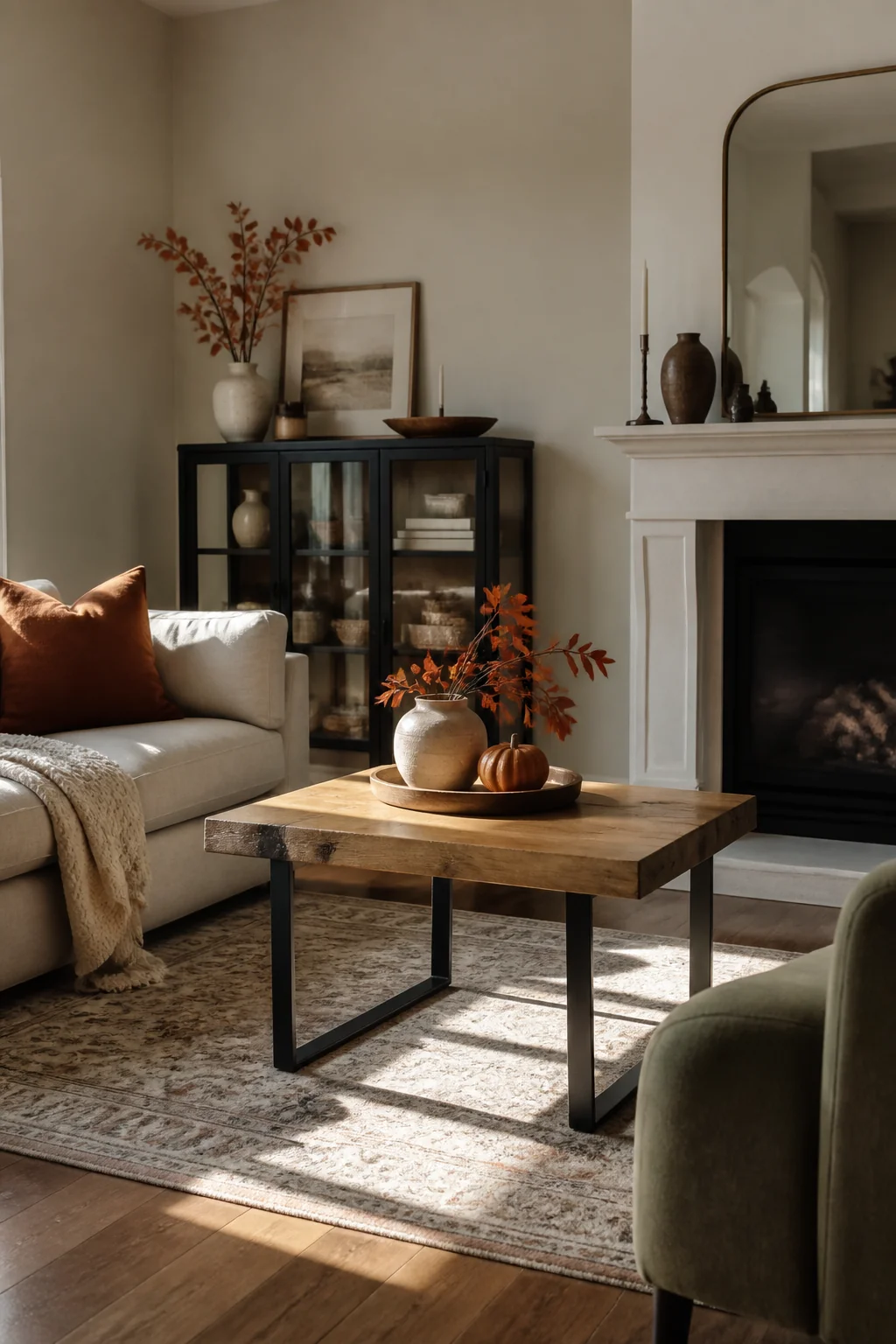
Every object in the room casts a shadow and breaks up the light. A cluttered living room in low light feels cramped and dark. Clear coffee tables, hidden storage, and a simple seating layout let the light you've created travel freely across the room instead of getting trapped behind things.
This doesn't mean spartan or cold. It means one or two good objects per surface instead of ten. A console table with a lamp, a bowl, and a framed photo reads as intentional. The same table buried under mail, books, candles, and decor reads as chaotic, and the light can't do its job. This is free and makes every other thing on this list work harder.
10. Light candles and keep them lit during evening hours
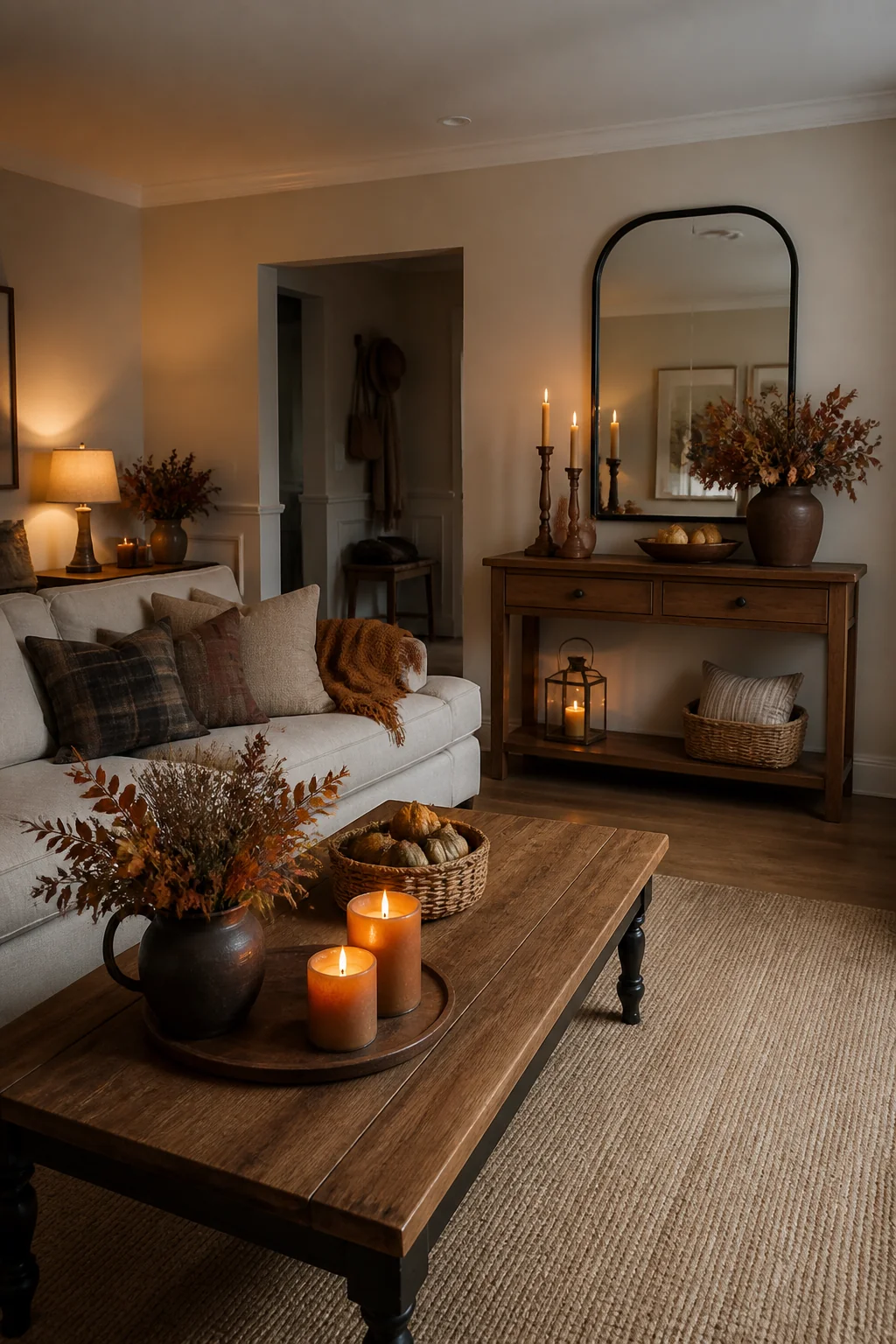
Real flame adds both actual warmth and visual warmth in a way no lamp quite matches. Candles pull focus and make a room feel lived-in and intentional. They also add scent, which ties autumn to your room on a sensory level. A room with lit candles reads as cozy because candles signal care and intention.
Scented candles in autumn fragrances (wood smoke, cinnamon, apple, cedar, vetiver) cost $15 to $40 each. Unscented candles run $8 to $15. Place them in groups of three on a side table or console, or scatter them in holders around the room (never directly on surfaces without protection). You won't keep them lit all day, but during the hours you actually use the room, they change the whole feeling from dim to warm.
The whole guide in one image
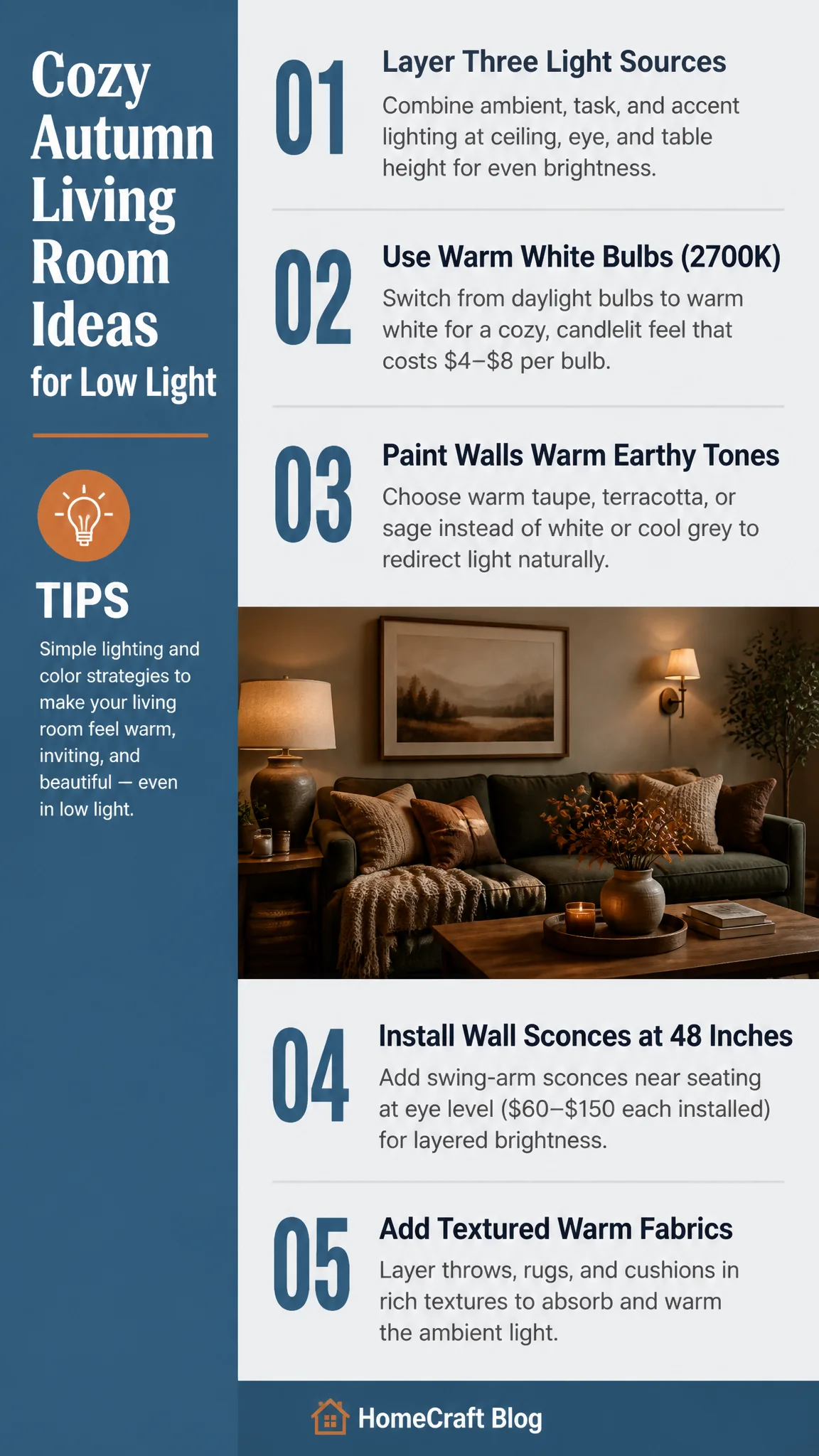
The success of a cozy autumn living room in low light depends on whether you commit to artificial light as a design element instead of a backup. If you treat lighting as an afterthought and expect the room to feel cozy from a single overhead fixture, it won't. Layers of warm light, warm color, good fabric, and a few focal points create a room that actually draws you in, low natural light or not. The wall color and light layers matter most because those two things reset the tone for everything else.
Ideas fade by Friday. A plan finishes the room.
You just read a full guide to your living room. Saving ideas will not change it; a plan will. The Home Decor Collection is every planning tool we make, for every room in the house, in one download, so the after photos below stop being other people's rooms.
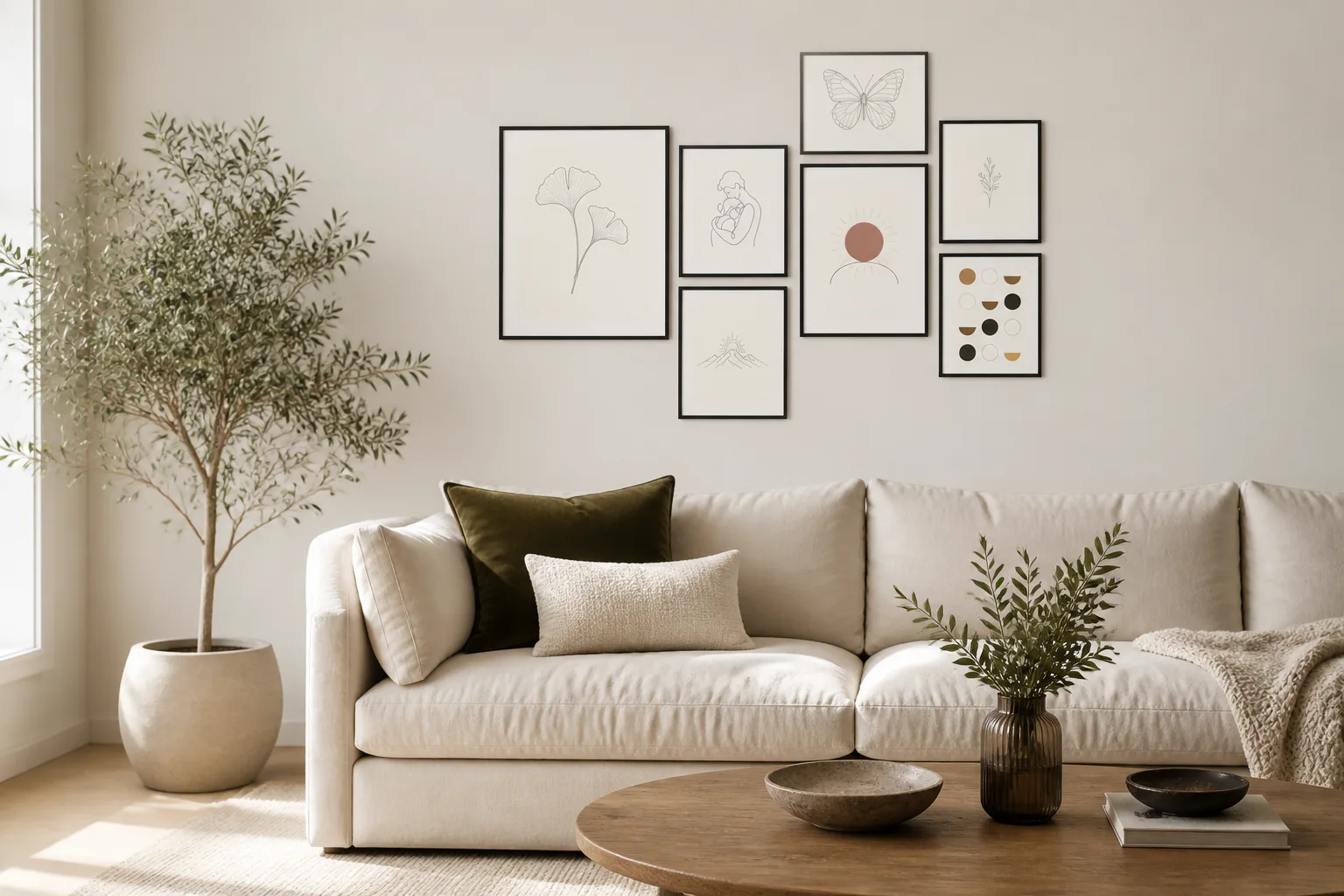
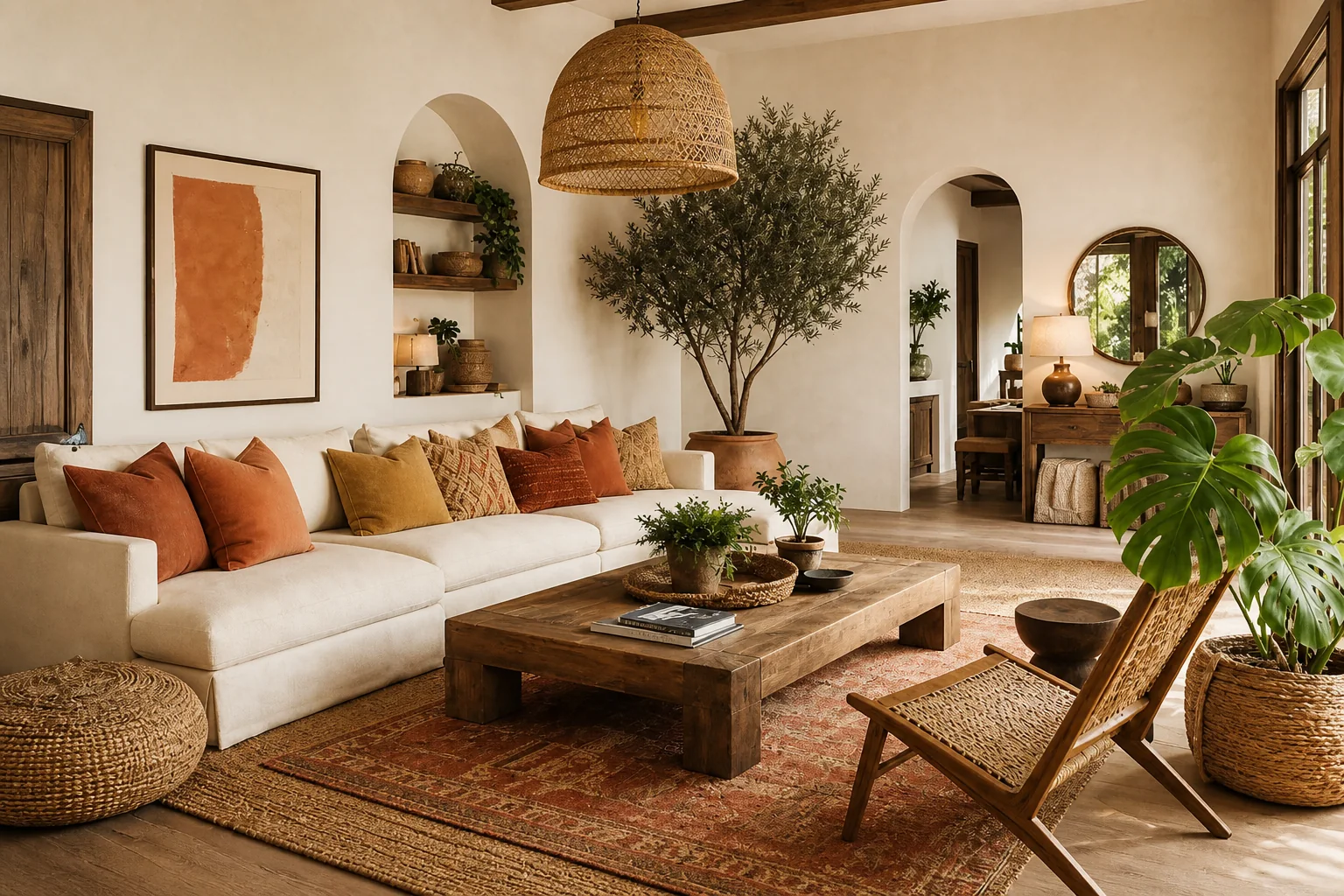
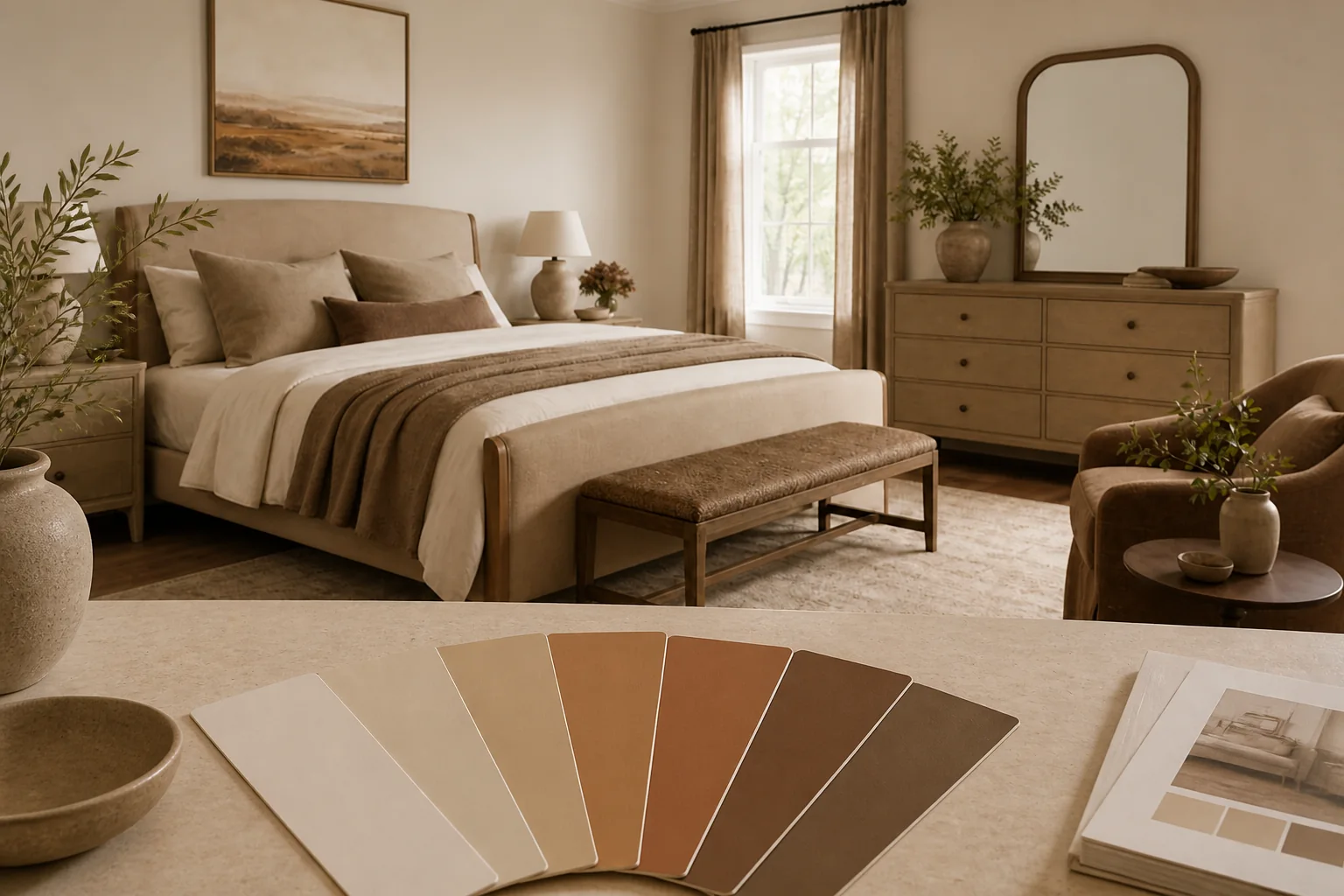
- Six room Style Kits, each with layout, palette and shopping list$114
- The Gallery Wall Studio: 200 prints + 15 measured layouts$29
- The Room Makeover System: 40 solved room layouts + workbook$29
- The Color Palette Handbook: 60 palettes shown in real rooms$19
- The Whole-Home Reset: 40 printable organizing checklists$19
- The Decorator's Cheat Sheets: the 40 measurements that matter$9
- All eleven products, bought separately
$219$97
A single hour with an interior designer costs more than the entire Collection, and this one keeps answering for every room you will ever decorate. Free updates included as the products grow. And if it is not for you, the 14 day money back promise means you simply get a refund.