
8 Cozy Living Room Window Seat Ideas for Rentals Where You Can't Drill
Renting with a window that begs for a seat but no drilling allowed? Here's a look at freestanding living room window seat ideas that you can take with you.

Your living room has a window that begs for a place to sit, and your lease says no holes in the walls. That leaves you stuck between two options. One is the built-in window seat, with shelves and drawers tucked under a cushioned bench. The other is a freestanding setup that looks just as settled but leaves the paint alone. We're going to settle it here. The freestanding route wins for most renters, because nearly every look a built-in can give you also works with pieces you can take with you when you move. Below are eight ideas, each with the look, why it works, and how to get it without a drill.
 8-page guide
Free style guide
Stop buying things that don’t go together.
Print the 2-minute quiz, circle the words you love, and find your style. Then see what makes a room look like it.
- A print-and-circle quiz, 5 styles
- Each style shown as a finished room
- Palette, 4 key pieces, one rule
Free. Arrives by email in a minute or two, plus our ideas and occasional shop offers. Unsubscribe anytime. Privacy
1. Set a low linen bench under a wide window
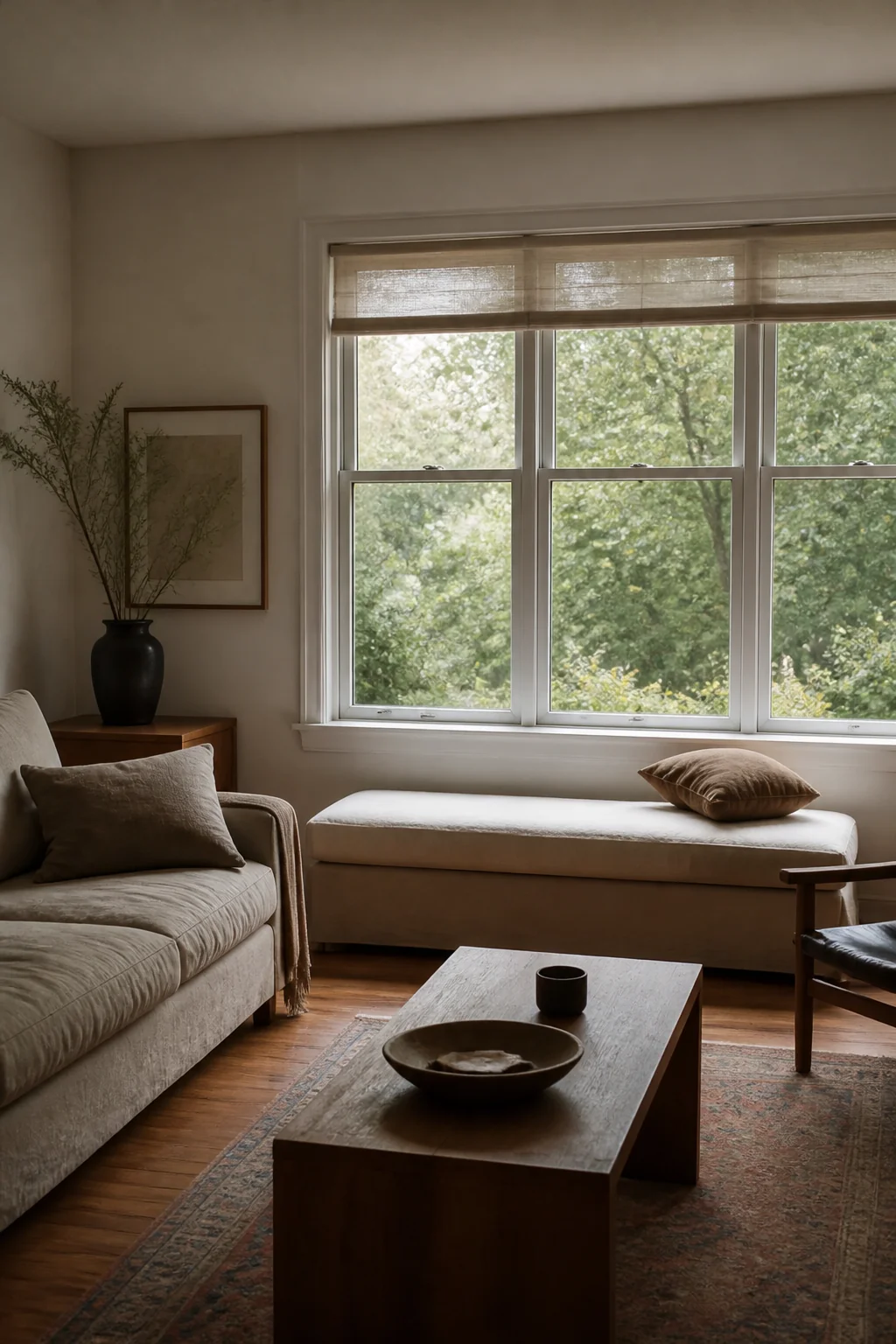
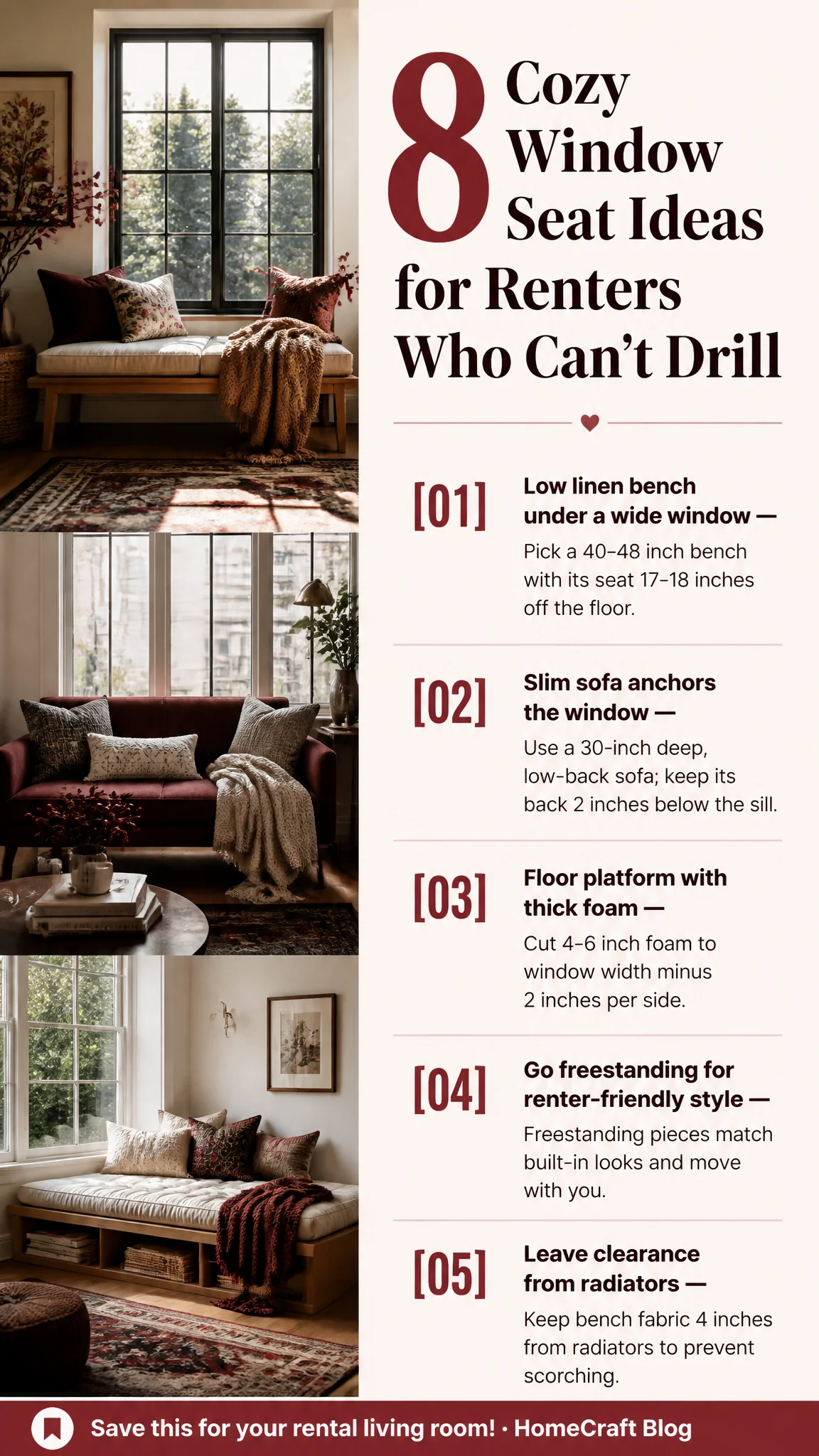
Picture a bench with a cream linen cushion on a pale oak frame, sitting under a window that's at least 48 inches wide. The seat should land about 17 to 18 inches off the floor. That lower line pulls the eye along the wall and makes the window look taller than it is. Soft fabric against light wood keeps the whole corner feeling calm instead of busy.
To get it at home, look for a bench 40 to 48 inches long. Leave about 4 inches of clearance from any radiator so the fabric doesn't scorch. Choose a cushion at least 3 inches thick. A 1-inch pad on an 18-inch-deep seat is the mistake we see most, and it makes the bench feel like a board. Does your window sit above a radiator? If it does, measure that gap before you shop.
2. Slide a slim sofa under the window
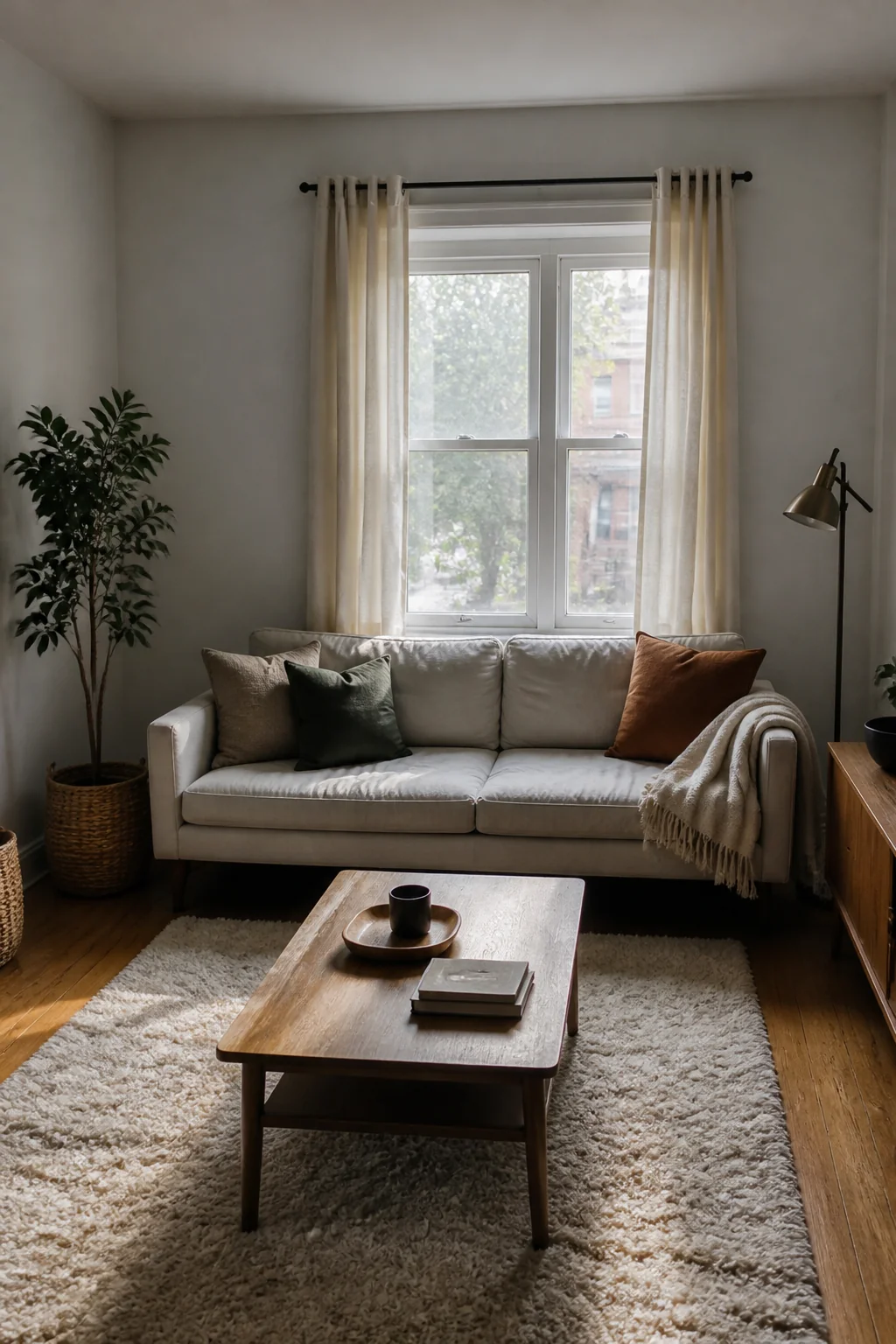
A sofa with a 30-inch depth and a low back can sit flat against the wall under the window and become the room's main seat. Upholster it in rust, mustard or deep green velvet, and the window reads as the anchor of the room. Turn the sofa so its back faces the room, and it also works as a soft divider between the window and the rest of the space.
The fit matters more than the color. Measure the floor to the sill, then make sure the sofa's back sits at least 2 inches below it so light still crosses the seat. Watch the arms too. High arms can block the lower panes and make the window feel closed off. A sofa like this is usually the priciest piece in the room, so measure twice before you commit.
3. Build a floor platform with a thick mattress
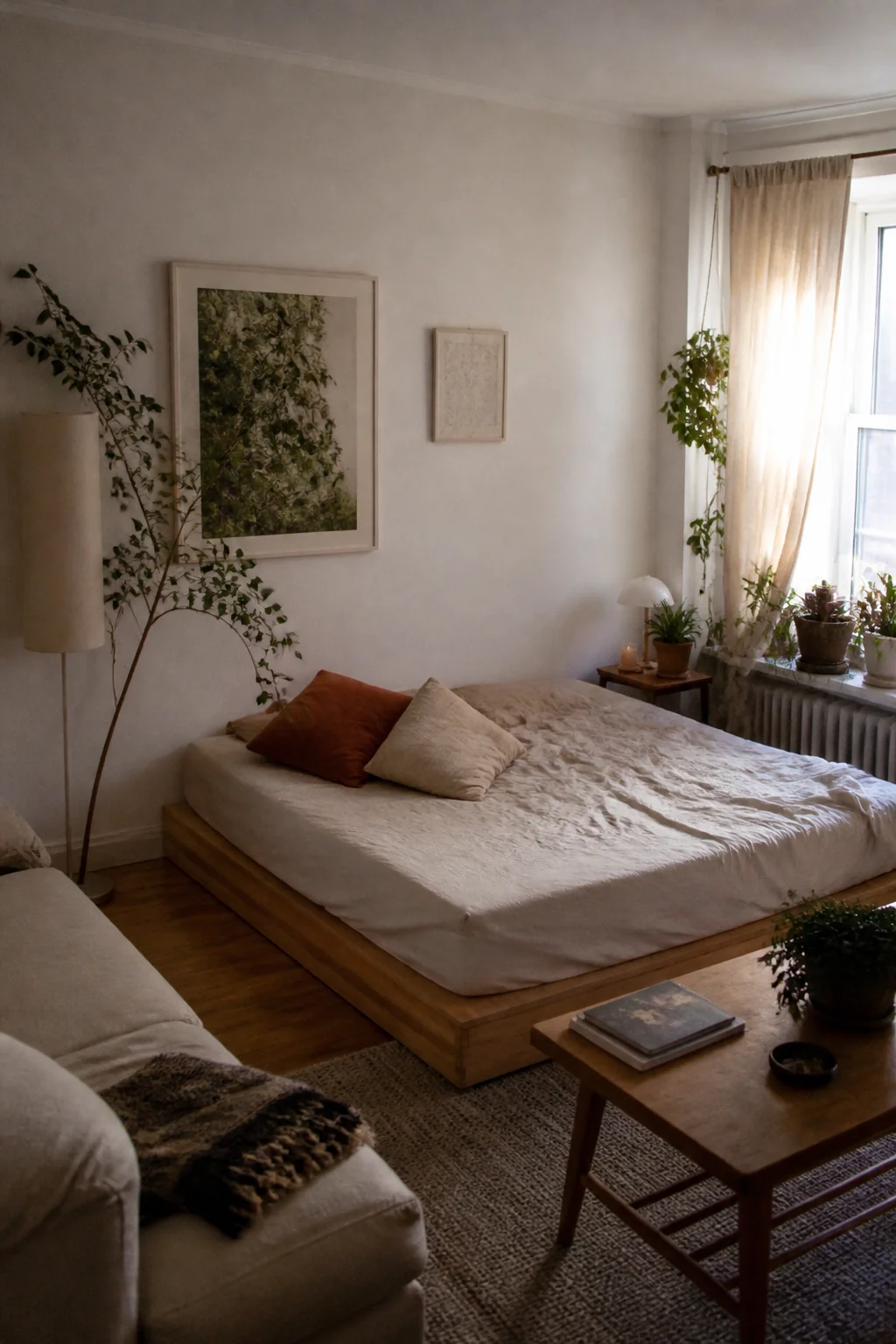
Think low, wide and quiet. A platform about 8 inches high, covered in a 4 to 6 inch foam mattress and a few boost pillows, runs the full width of the window. Pair it with a floor-length linen curtain and the setup has a calm, Japandi feel that suits small apartments with clean lines.
Cut the foam to the exact width of the window opening, minus about 2 inches on each side. Keep the mattress at least 6 inches away from the glass. Cold winter glass can collect condensation, and a wet foam edge takes a long time to dry. Choose a cotton or washable linen cover so you can pull it off and wash it.
4. Turn a leather storage trunk into a seat
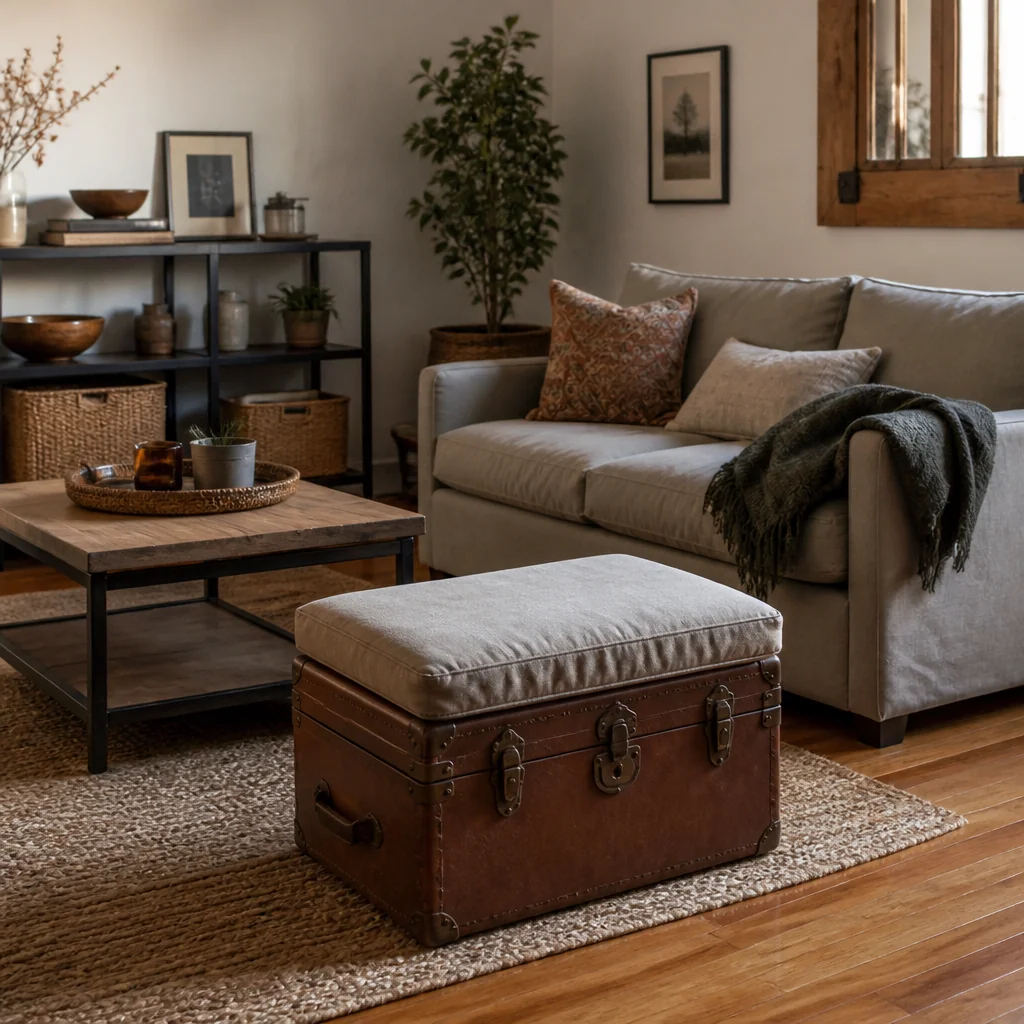
A trunk 36 to 42 inches wide and about 18 inches tall works as both seating and storage. The surface is warm and a little worn, which gives the room some history without any effort on your part. Add a flat foam cushion on top, tie it down with a few ribbon ties, and the trunk becomes the room's most useful piece of furniture.
Check that the lid lifts easily and won't snap shut on a finger. Look for a lid with a soft-close hinge or one that lifts off completely. Leather trunks can crack when they sit in hard afternoon sun for months, so keep yours out of direct glare. A cushion that's too thin will feel like sitting on a crate, so go for the same 3 to 4 inches you'd use anywhere else.
5. Lay a pine plank across two cube units
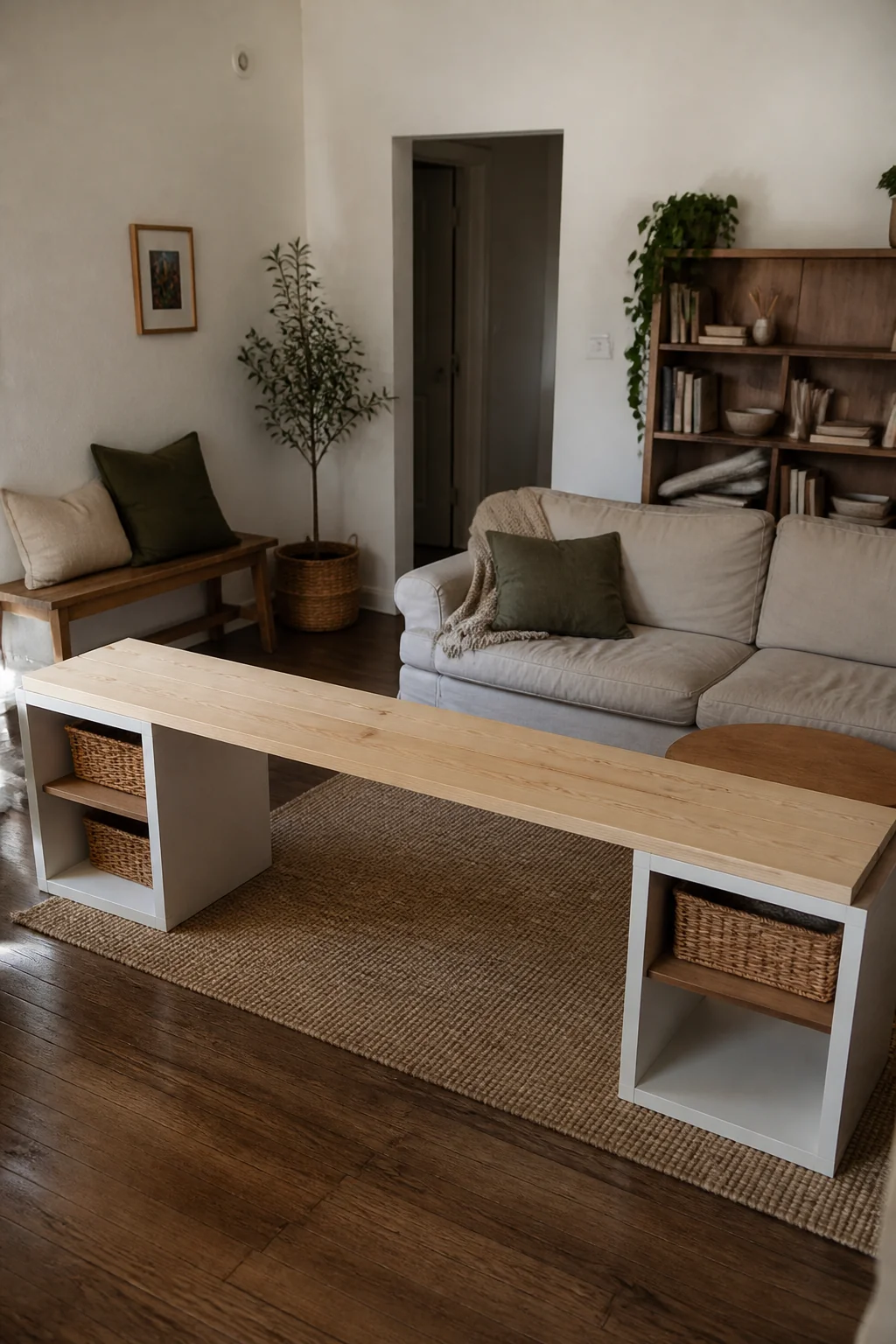
Two cube organizers, each about 13 inches square, side by side under the window, with a 1-by-12 pine board across the top. Stain the board a warm honey tone and add a cushion. The result looks built in, with clean horizontal lines and a bit of warmth from the wood. Store books and baskets in the cubes and the bench stays useful.
Keep the stack one layer high, which is what most renters can manage without anchoring anything. If you add a second layer, anchor the cube units to a wall stud with a furniture anchor. Pine boards usually come in 8-foot lengths, so ask the store to cut one to your window's width. If you pick up an old painted board secondhand, test it for lead before you sand it.
6. Hang floor-length linen on a tension rod above the seat
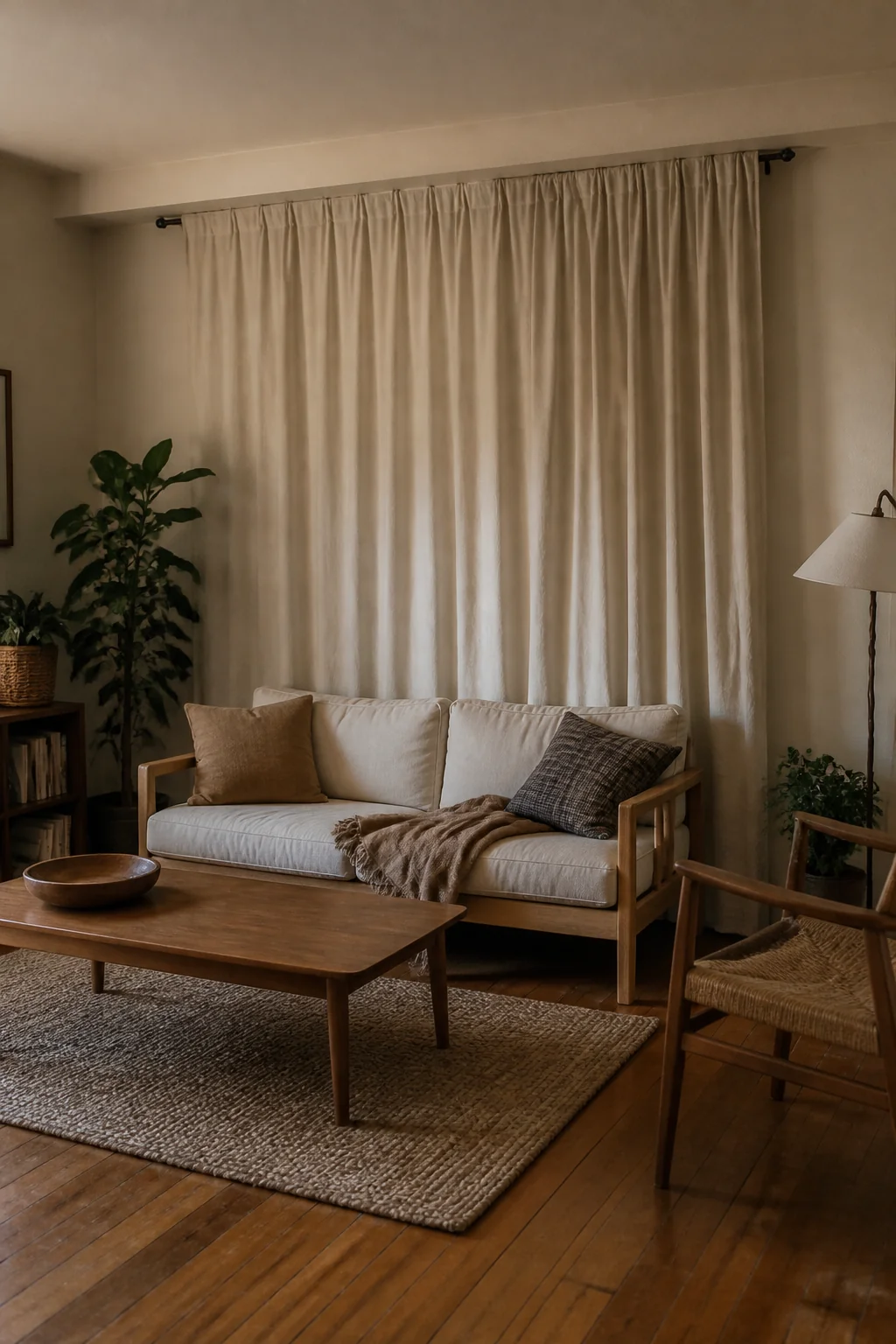
A tension rod mounted inside the window frame, or just above it, holds lightweight linen panels that run to within about 2 inches of the floor. The panels frame the seat and make the ceiling look taller. Light linen moves when the window opens, which gives the room a soft, breathing quality that heavier drapes can't match.
Mount the rod 4 to 6 inches above the top of the frame, not right at the edge. A rod set too low makes the window look smaller. Tension rods are rated for light loads, so choose cotton or linen rather than lined velvet. Measure the frame width and buy a rod that extends about 2 inches past each side of the window.
7. Wrap a curved cushion around a bay window
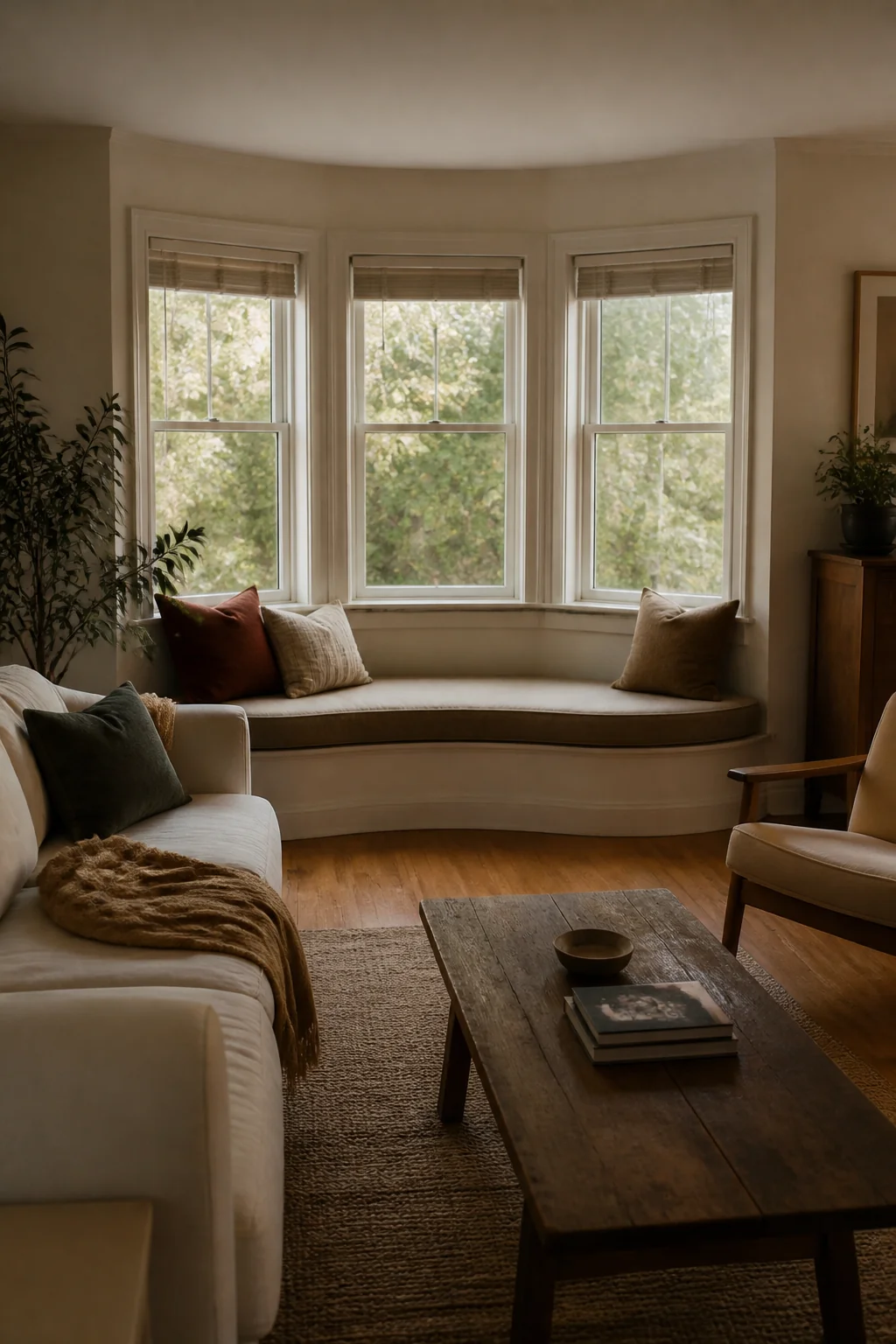
A bay window creates a natural nook, and a cushioned bench that follows its angles fills it without gaps. Upholster the bench in bouclé or a nubby wool blend, then add a few round boost pillows to soften the corners. The bay becomes the room's reading spot, and the curve keeps the space from feeling boxy.
Measure each angle of the bay before you order anything, because most stock cushions are rectangular. A foam shop can cut a custom foam pad to your exact measurements, which costs far less than a custom built bench. A straight bench pushed into a bay leaves dead space in both corners, so skip that shortcut. Keep the seat depth around 18 inches so there's room to sit cross-legged.
8. Layer a rattan bench with baskets and a plug-in lamp
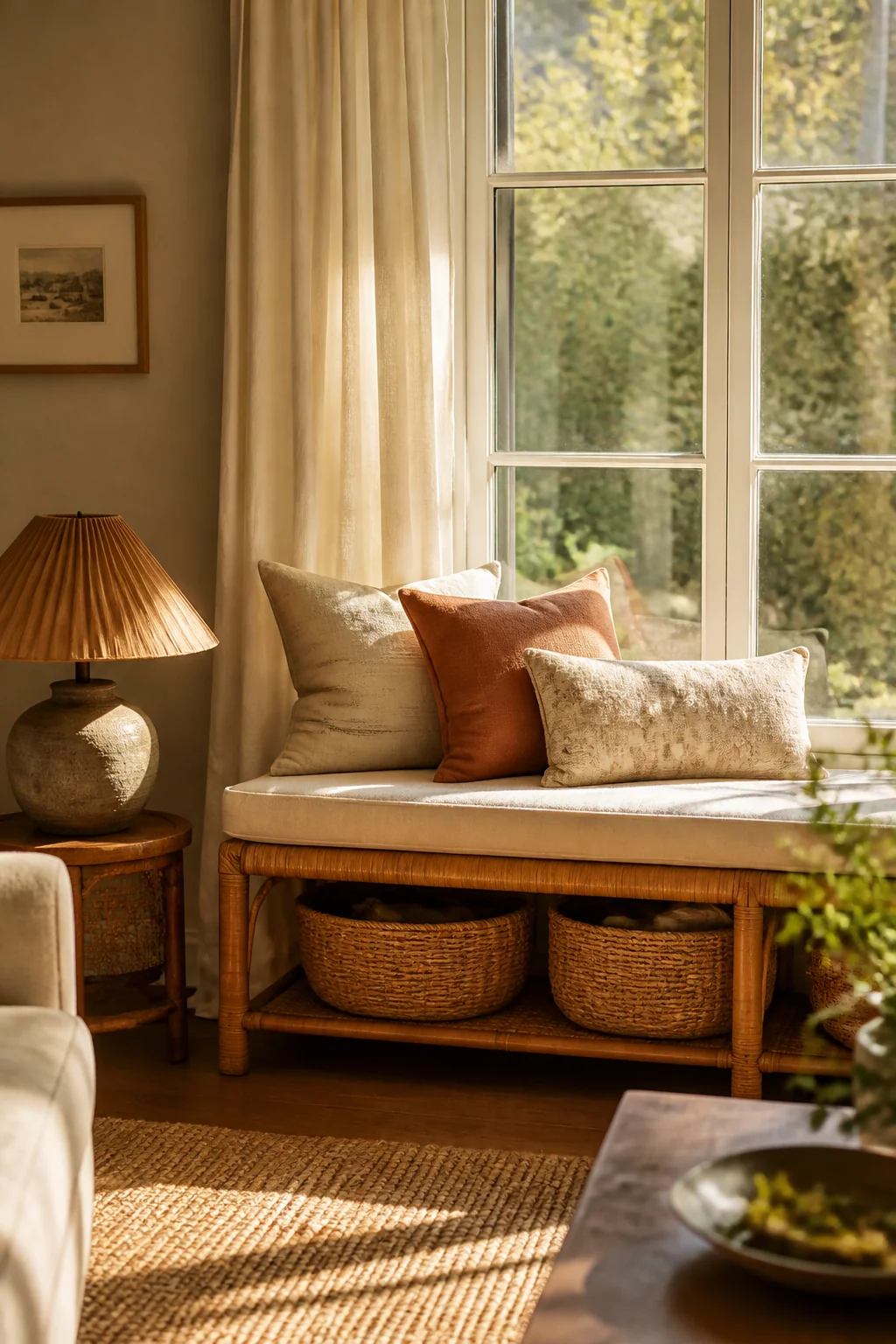
A rattan bench, 36 to 42 inches wide, sits under the window with two or three woven baskets tucked beneath it for throws and magazines. A plug-in floor lamp about 6 feet to one side gives the seat its own light at night. Rattan adds texture that a cushion alone can't, and the baskets soften the look so the bench doesn't feel bare.
Run the lamp cord along the baseboard and keep it in a cord cover, not under the rug where it can get pinched or overheat. Rattan benches often shed small bits of weave when they're new, so vacuum the surface before you add cushions. The baskets also give you a place to store things, so the bench earns its floor space.
Keep this guide handy
The right window seat depends on the room you're working with. In a small living room, a 36-inch bench with a slim cushion keeps about 4 feet of walkway clear in an 11 by 12 room. A sofa under the window only makes sense when the room has enough space for the sofa and a path to the door. In a rental, favor the pieces you can move, like a trunk, a bench or a tension rod. In a house with a built-in nook, you can go heavier, because the bench becomes part of the room.
The room images in this post are illustrations made with AI.