12 Warm Living Room Ideas That Don't Cost a Fortune
Cozy living room ideas that mostly cost nothing extra. Layer your lighting, size the rug to your seating, mix fabric textures, rearrange what you own.
This post contains affiliate links. As an Amazon Associate I earn from qualifying purchases. If you buy through our links, we may earn a commission at no extra cost to you.
A living room can be clean, matched and perfectly tidy, and still feel like a waiting room. Usually there's nothing wrong with the furniture. What's missing is contrast: light coming from more than one height, fabric your hand wants to touch, and seating that faces itself instead of hugging the walls. All three are cheap to fix, and a good share of the work is just moving what you already own. The twelve ideas below run roughly in order of how much warmth you get for the money, and each one carries the sizes and prices you need to tell whether it fits your room before you buy.
1. Layer your lighting with lamps instead of overhead lights
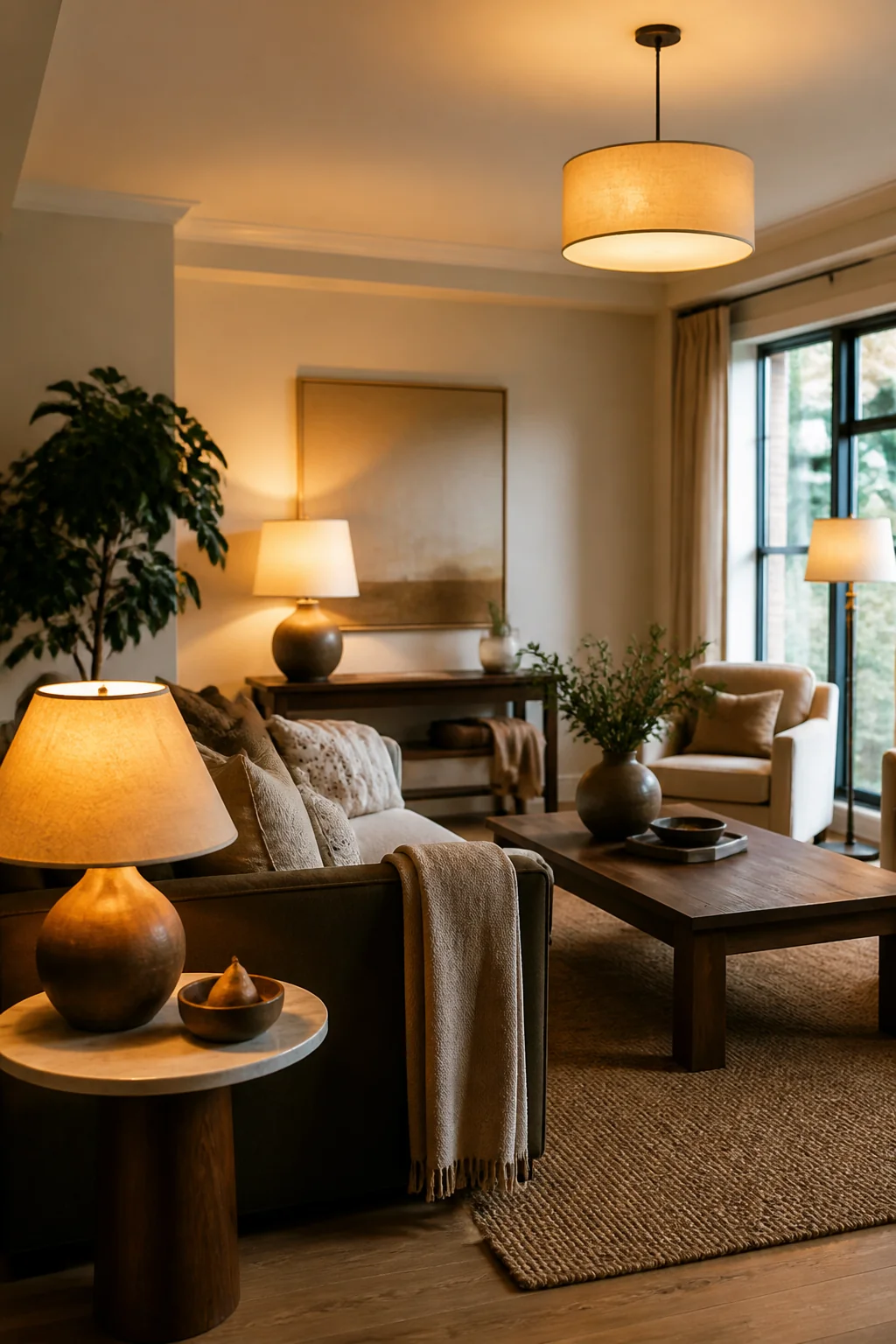
A ceiling fixture throws light straight down from eight or nine feet up. That flattens every surface in the room and drops shadows under people's eyes, which is why the same room feels harsher with the big light on. Lamps fix it by putting the light source at the height you're actually sitting.
Aim for three sources at three heights: a floor lamp of about 58 to 64 inches in a corner ($30 to $60), a table lamp next to the sofa ($20 to $40), and something low, whether that's candles, a small picture light or string lights.
The bulbs matter more than the lamps. Look for 2700K on the box and 450 to 800 lumens per lamp, and buy them all in one trip. A single 4000K daylight bulb mixed in with warm ones reads as a mistake rather than a layer, and it's the most common reason a lamp-lit room still looks off. A fabric shade softens the glare that clear glass won't.
2. Throw down a large area rug to anchor the space
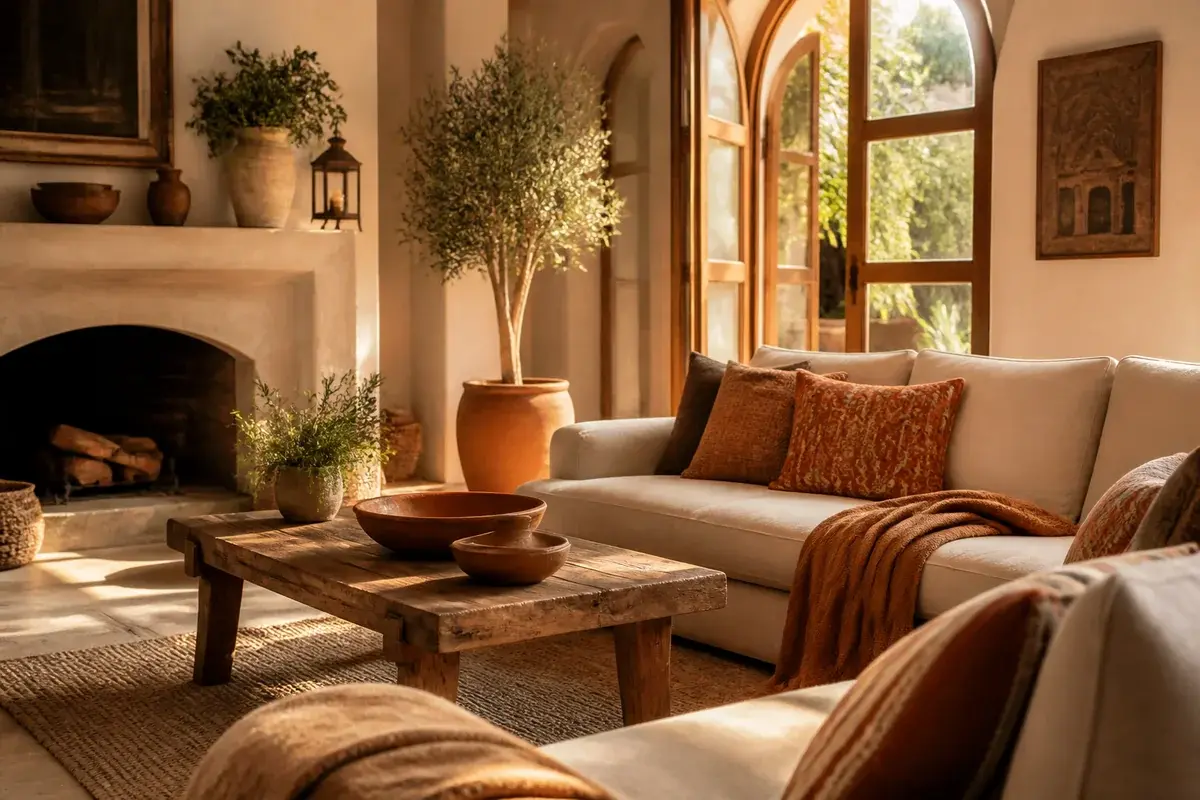
A rug is what tells your eye that the sofa and the chairs belong to each other. Measure the seating group before you shop, because size is the whole game here. A standard 84 inch sofa plus two chairs wants an 8x10, which runs $80 to $150 at IKEA, Wayfair or on Facebook Marketplace. The 5x7 that looks affordable online ends up floating under the coffee table like a bath mat, and it makes the room read smaller than bare floor did.
Placement is simple. The front legs of every seat should sit on the rug, six to eight inches in at least, and you want 12 to 18 inches of bare floor showing between the rug edge and the wall.
Add a rug pad, around $25 to $40 in that size. Without one the corners curl within a month and the whole thing creeps toward the window every time someone sits down. Check your door swing too: pile over about half an inch will catch on a door that opens inward.
3. Swap fabric textures - linen, wool, cotton
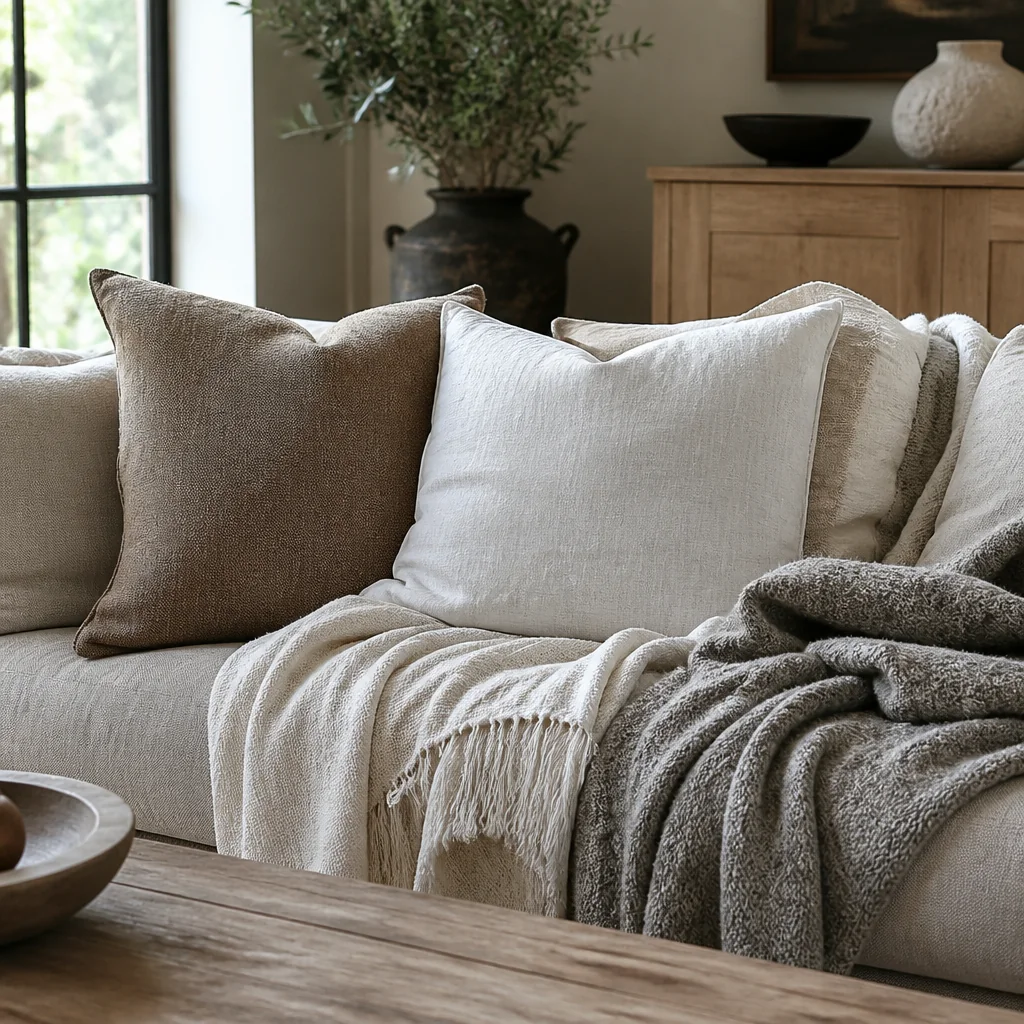
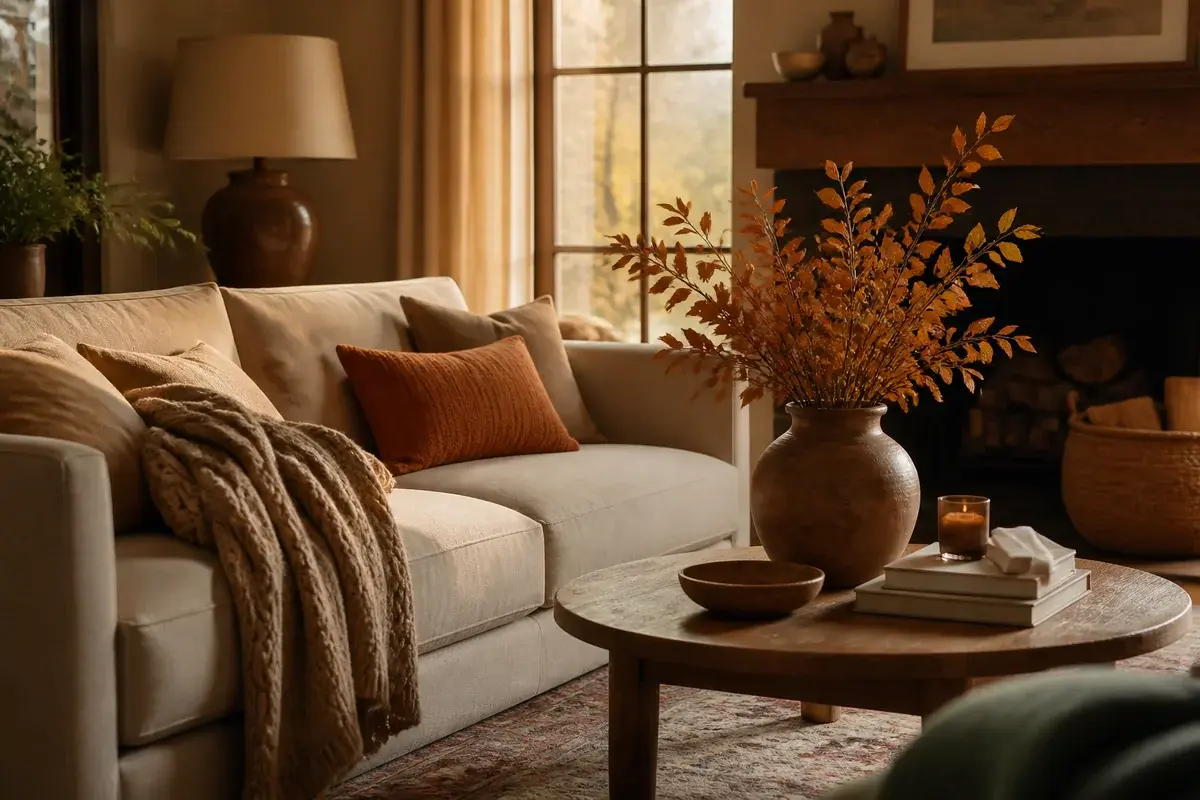
Leather and glass reflect light and stay cool to the touch, so a room built around them reads cool whatever color you paint it. Texture is what the eye registers as comfort before you sit down, and the fix is weave variety rather than more stuff. Three different textures in one warm color family beat six pillows in six colors every time.
Start with a chunky knit throw over the back or one arm of the sofa ($25 to $50). Add two linen pillow covers ($15 to $25 each), then one wool or waffle cotton piece ($20 to $40). Linen creases the moment you sit on it and softens with every wash, which is the lived-in part. Wool holds its loft and won't flatten after a week of nightly use the way cheap acrylic does.
The flat, empty corners you see on a sofa full of brand new pillows come from matching insert to cover exactly. Go up two inches instead, a 20 inch insert into an 18 inch cover, and the fill has somewhere to push.
4. Add a coffee table that does real work
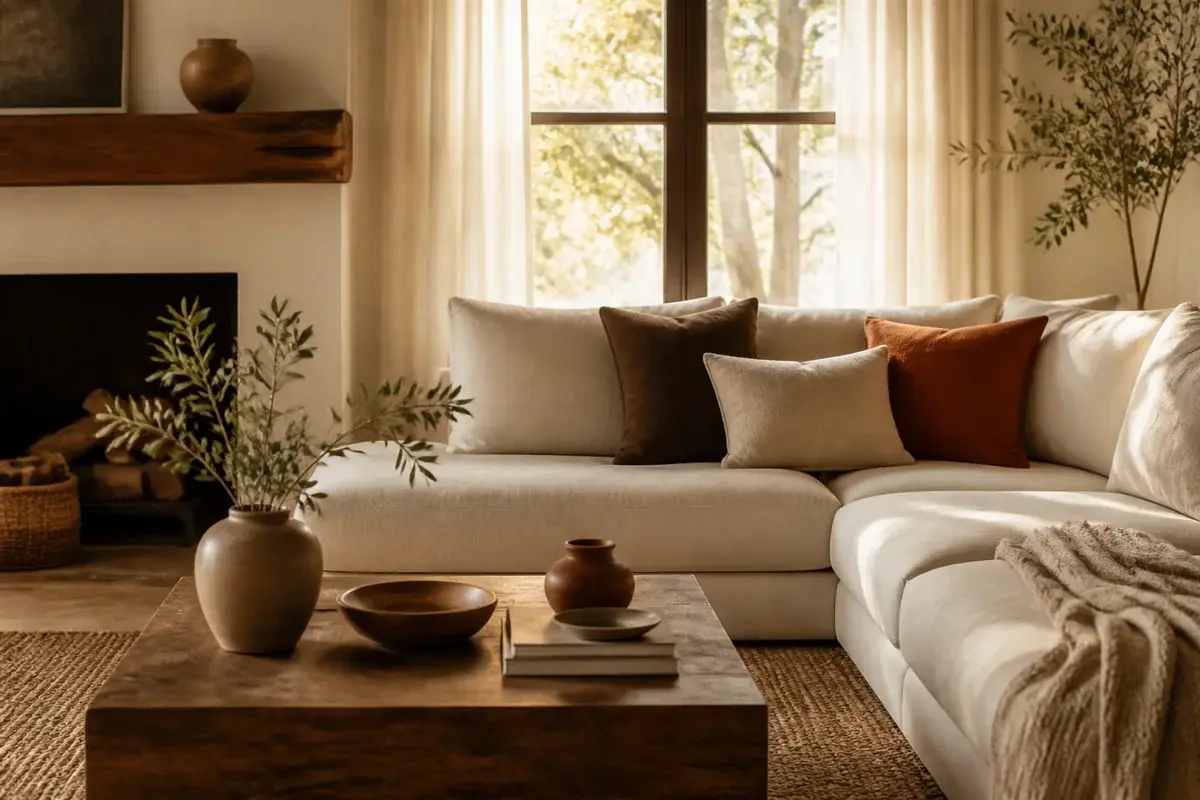
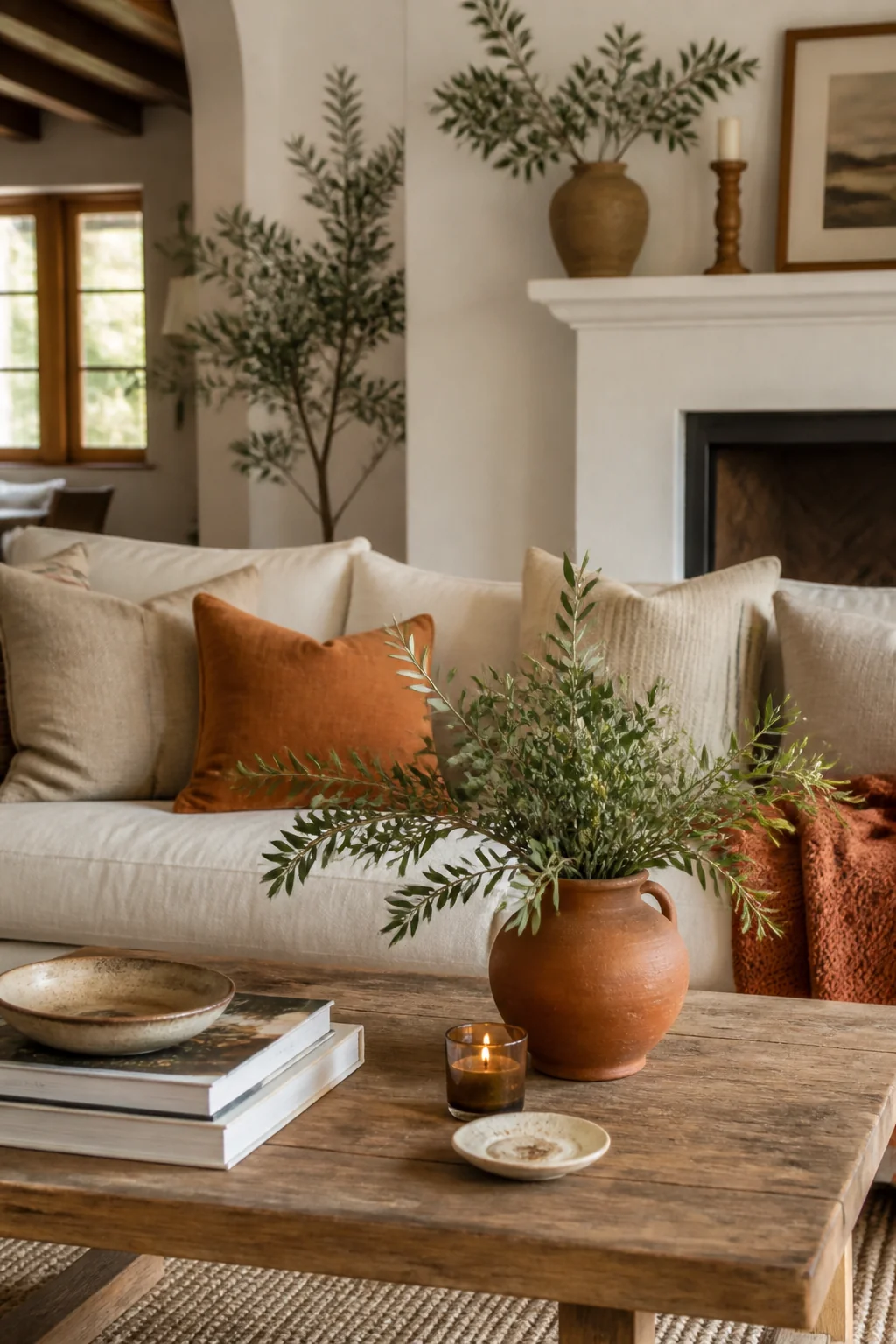
A coffee table isn't decoration. It holds a mug, a stack of books and your heels, and it only manages that if it's sized to the sofa. Run the table about two thirds of the sofa's length, so 48 to 54 inches for an 84 inch sofa, and keep the top within an inch or two of the seat height, which lands at 17 to 19 inches on most sofas. Leave 16 to 18 inches of gap between the sofa edge and the table so you can get past without turning sideways.
Solid wood in the $60 to $120 range, often secondhand, works better than glass here. Glass shows every fingerprint, bounces light straight back and stays cold under your hand. An oiled or waxed wood top hides rings and can be brought back with a $12 can of furniture wax and ten minutes of rubbing.
Small footprint rooms have a real trade-off: a tiny cube table looks tidy but holds nothing, and if a walkway cuts through the room, a round table saves shins.
5. Hang artwork at eye level in clusters
One lonely frame centered on a big wall makes the wall look emptier, not fuller. A cluster of three to five pieces in different sizes fills the space and gives you something worth standing in front of. Thrift stores, estate sales and Etsy sell framed art for $5 to $15 a piece, and a plain frame with a wide mat around a small print reads far more expensive than a bare poster of the same size.
A cluster measured down from the ceiling ends up wherever the ceiling happens to be, which is how art creeps above the sightline; measure up from the floor instead and put the center of the arrangement at 57 to 60 inches. Leave two to three inches of wall between frames so the cluster reads as one shape instead of scattered pieces. Over a sofa, the gap is what gives it away, since art floating a foot and a half above the cushions reads as unrelated to the furniture underneath it, so bring the bottom edge to eight to ten inches above the back cushion and let the group span about two thirds of the sofa width.
Cut paper templates to size and tape them up first. Ten minutes of that saves a wall pocked with nail holes.
6. Bring in plants (real or good fakes)
Living things break up flat paint and hard furniture edges better than anything you can buy in a box. The trick is matching the plant to the light you have, not the light you wish you had.
A pothos ($10 to $15 in a six inch pot) trails happily six feet from a window and wants water every seven to ten days. A snake plant will forgive a dim corner and a forgotten month. A fiddle leaf fig ($40 to $80) needs bright indirect light within about three feet of an east or south facing window, and it drops leaves within a few weeks anywhere darker, which is how so many of them end up on the curb. Monstera sits between the two, happy at four to six feet from a bright window.
Leave whatever you buy in its plastic nursery pot with the drainage holes, then drop that inside a decorative cachepot so it can't sit in standing water. Good fakes run $25 to $60. Look for fabric or latex leaves rather than shiny molded plastic, and dust them monthly or they go visibly gray.
7. Use warm paint colors or wallpaper on one accent wall
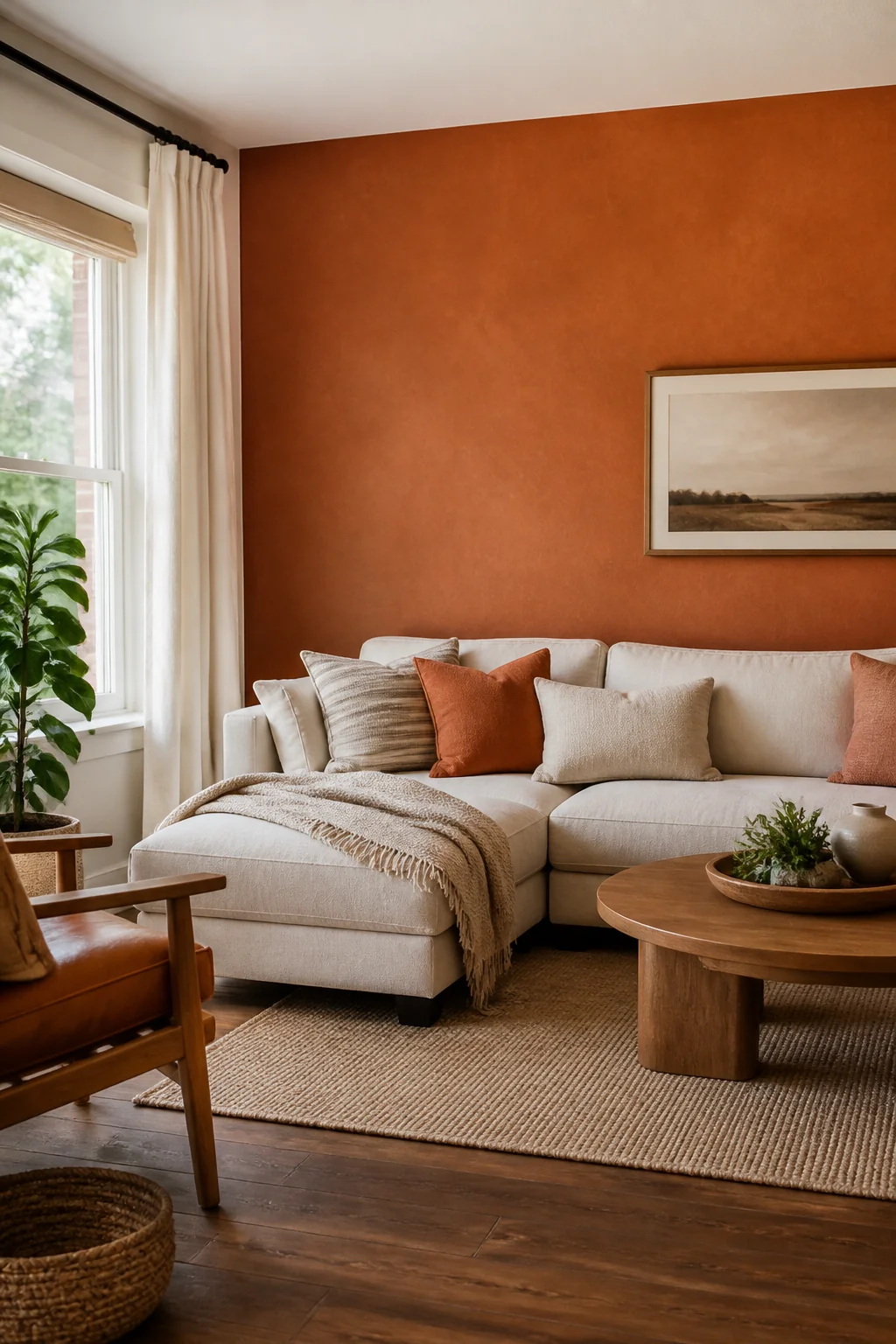
Pick the wall you look at while you're sitting down, usually the one behind the TV or opposite the sofa, and leave the window wall alone. Painting behind a window backlights the color all day and you'll only ever see it in silhouette. Warm terracotta, soft sage and a warm greige all sit well with wood floors and brass hardware.
Costs are small, and the waste is usually quantity rather than price: a gallon at $30 to $45 stretches across 350 to 400 square feet, far more wall than one accent wall has, which is why so many of these projects end with most of a can drying out in the garage. A quart runs $18 to $25 and covers roughly 100 square feet in one coat, so a single wall usually takes a quart and a bit for two coats. Budget about $25 more for a roller, a two and a half inch angled brush, tape and a drop cloth.
Test before you commit. A $5 peel-and-stick sample or a 12 inch painted square, checked once in daylight and once at night under your lamps, tells you more than any paper chip. Choose eggshell: it hides roller marks and wipes clean, while flat scuffs where the sofa touches it.
8. Pile books on your coffee table and side tables
Books add color, height and something to talk about for close to nothing. Thrift shops and library sales price hardcovers at 50 cents to $2, and the ones already on your shelves work just as well.
On a coffee table, four to six books laid flat make a stack three to four inches tall, which is the right height to sit a small bowl, a candle or a trailing plant on top of. Largest on the bottom, edges lined up at the front, spines facing the sofa. On side tables, two or three is plenty, since anything taller tips when someone reaches past it.
For shelves, alternate a few vertical runs with horizontal stacks and leave about a third of each shelf empty, because a packed shelf reads as storage rather than display. Pull the dust jackets off hardcovers when the cloth underneath is the better color. Skip the rainbow sort and skip turning the spines to the wall: both look staged, and spines-in means you'll never pull one out again.
9. Swap in warm-toned throw pillows and blankets
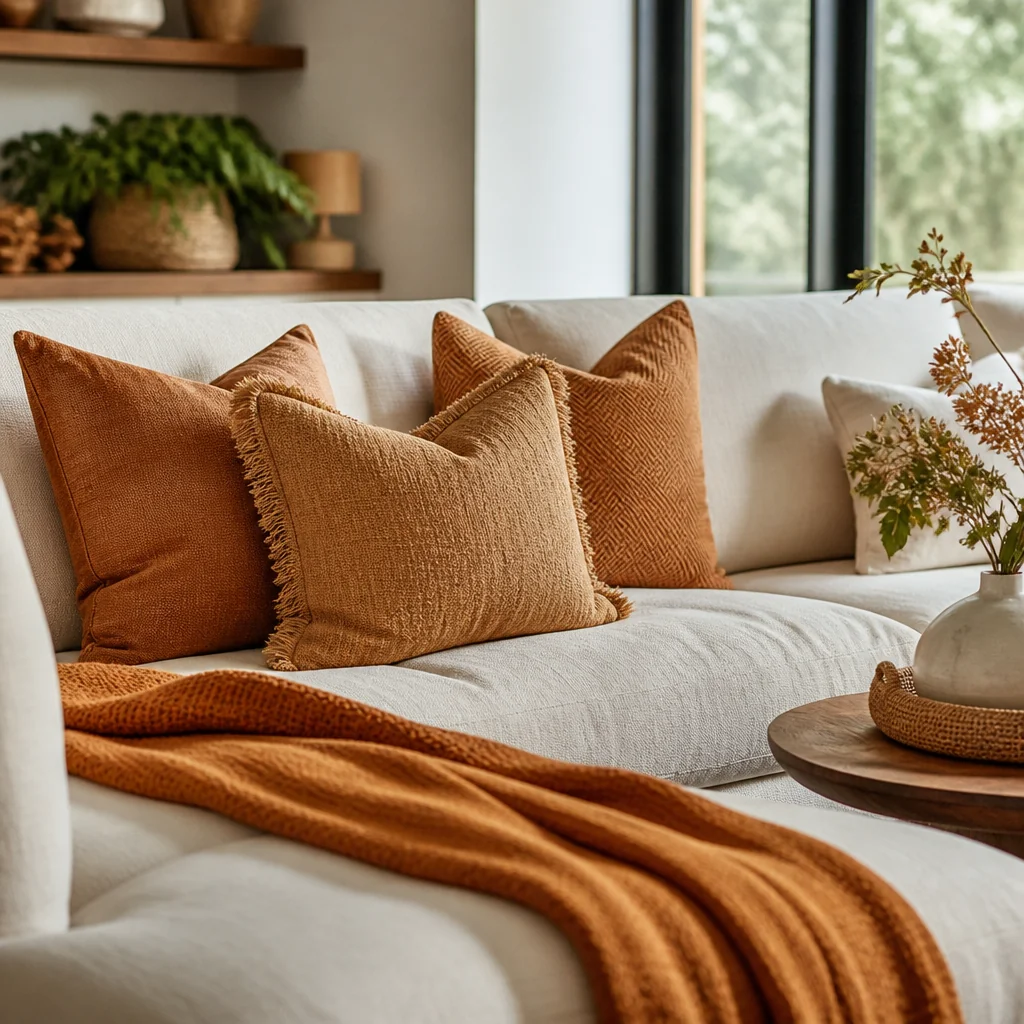
Warm pigments absorb more of the light hitting them instead of throwing it back, so mustard, burnt orange, rust and cream feel warmer to the eye than a cool gray or a bright white in the same room under the same lamp.
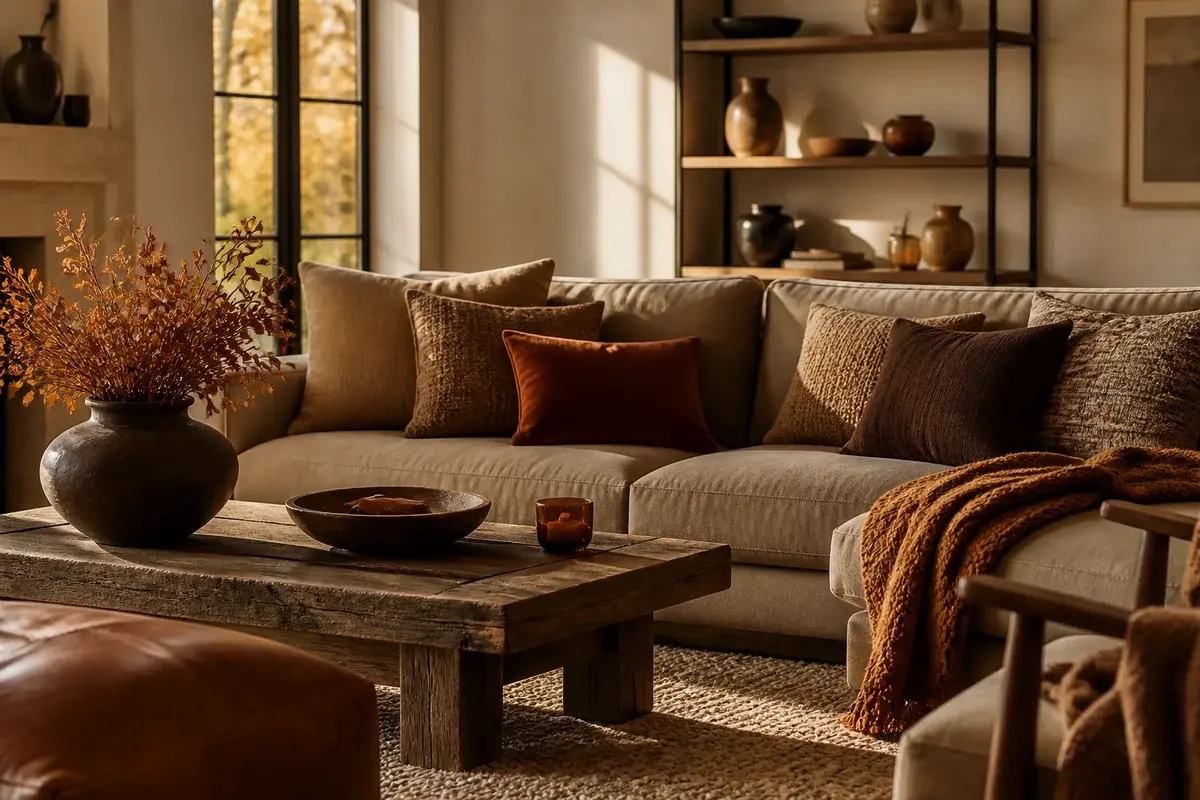
Buy covers and inserts separately. Covers run $15 to $25, polyester inserts $8 to $12, feather and down $15 to $20. Down settles into the corner of a sofa and holds the shape you leave it in, while polyester stays boxy and slips off the cushion. A three seat sofa takes about five: a pair of 20 inch squares in the outside corners, one 18 inch square, and a 12 by 20 lumbar you can lean on while you watch something. Odd numbers look less arranged than pairs.
For the throw, a 50 by 60 blanket folded in thirds over one arm covers more sofa than it looks like it should. Wash the covers before the first use so any shrinkage happens onto the insert rather than away from it, and skip the matching set.
10. Add a side table with a drawer for clutter control
Every sofa collects remotes, chargers, coasters and half-read magazines. One drawer is the difference between a room that stays calm on its own and one you have to tidy before anyone comes over.
Look for a small nightstand or side table 18 to 22 inches wide, with the top within about two inches of your sofa arm height, which is 24 to 26 inches on most sofas. Too low and you'll knock the mug over reaching down for it. Secondhand nightstands run $40 to $80 and are usually solid wood rather than veneered particleboard, so they take a sand and a coat of wax if the finish is tired.
Open-shelf versions look good in the shop and turn into a visible pile within a week, which is the whole thing you're trying to avoid. Run a power strip behind the table and bring one charging cable up through the back so no cord crosses the floor. Felt pads under the legs if you're on hard flooring, and keep 30 inches of walkway clear alongside.
11. Hang a mirror opposite a window to bounce light
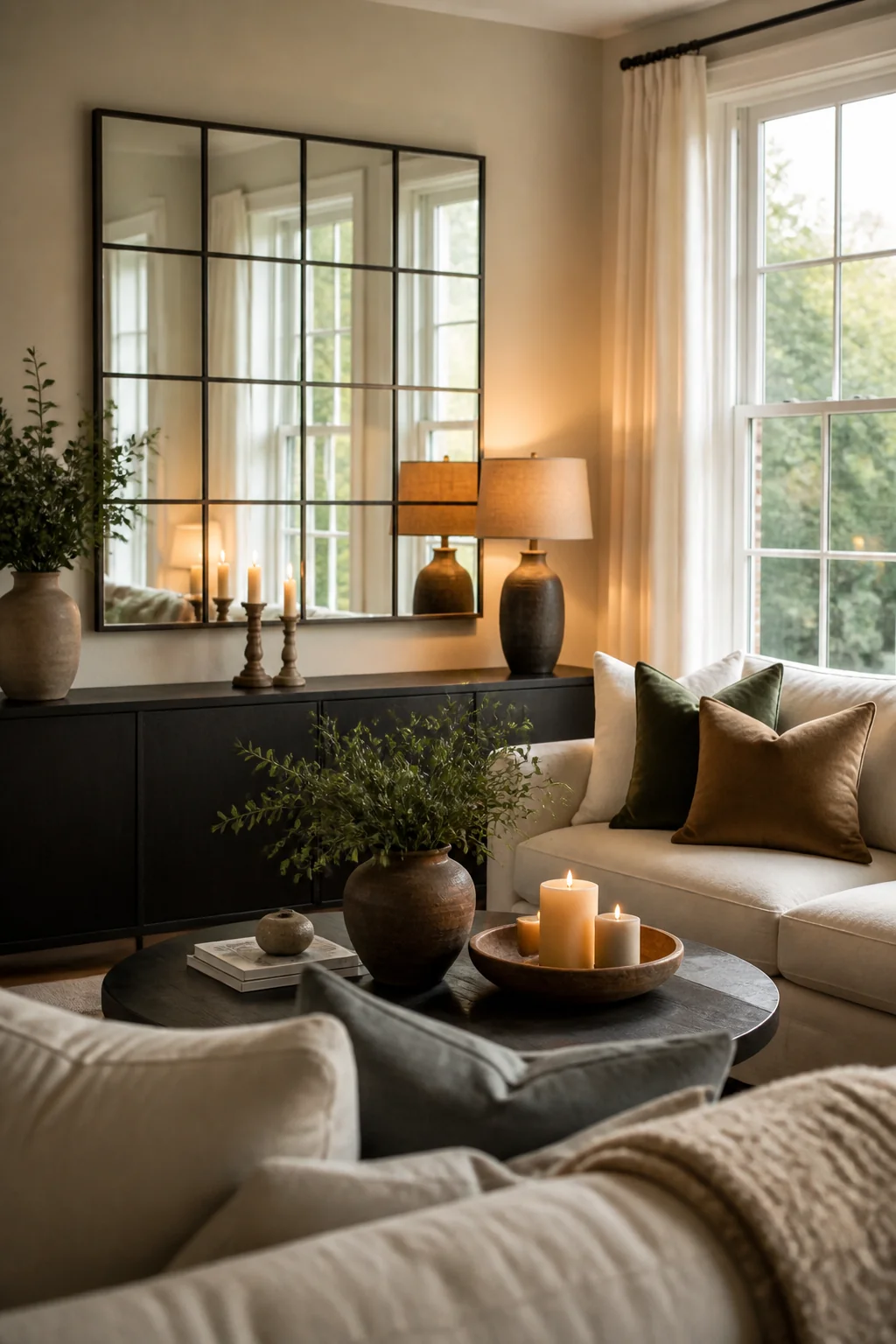
A mirror facing a window sends daylight back into the darker half of the room, which is why the far corner stops looking like a cave by mid-afternoon. Go reasonably big or don't bother: 24x36 inches is the floor, and wider reads better over a console or a sofa. Thrifted and flat-pack frames run $30 to $80.
What the mirror reflects is the whole point, and it's the step most people skip. Stand where you usually sit and look at the view in it before you drill. Trees, sky and the window frame are worth repeating. A cluttered console, the doorway into the bathroom or the TV screen are not, and a mirror aimed at a TV throws lamp glare straight back at you every evening.
Hang it with the center around 57 to 60 inches from the floor, or aligned with the midpoint of the window it faces. Anything over 20 pounds needs a stud or a toggle bolt rated to 50 pounds, never a single picture hook in drywall.
12. Create a reading nook with a chair and good light
A nook is three things arranged so you can sit down without moving anything first: a chair, a light and a surface. Four feet by four feet of corner is enough. A 30 to 34 inch wide armchair needs roughly 30 inches of depth, plus another 18 in front of it to get in and out comfortably. Used armchairs go for $50 to $150 through estate sales, Craigslist and Facebook Marketplace, and a solid frame under tired fabric is the better buy compared to a new chair that already wobbles.
Put the floor lamp behind your shoulder rather than in front of you, with the bottom of the shade at 47 to 49 inches so the bulb stays out of your sightline while you read. Eight hundred to a thousand lumens at 2700K is bright enough for small print without going clinical.
Then a side table 24 to 26 inches high, wide enough for a mug and a book, and a footstool ($30 to $60) if the chair doesn't recline. Angle the chair toward the window or the rest of the room, never at a blank wall.
Take the guide with you
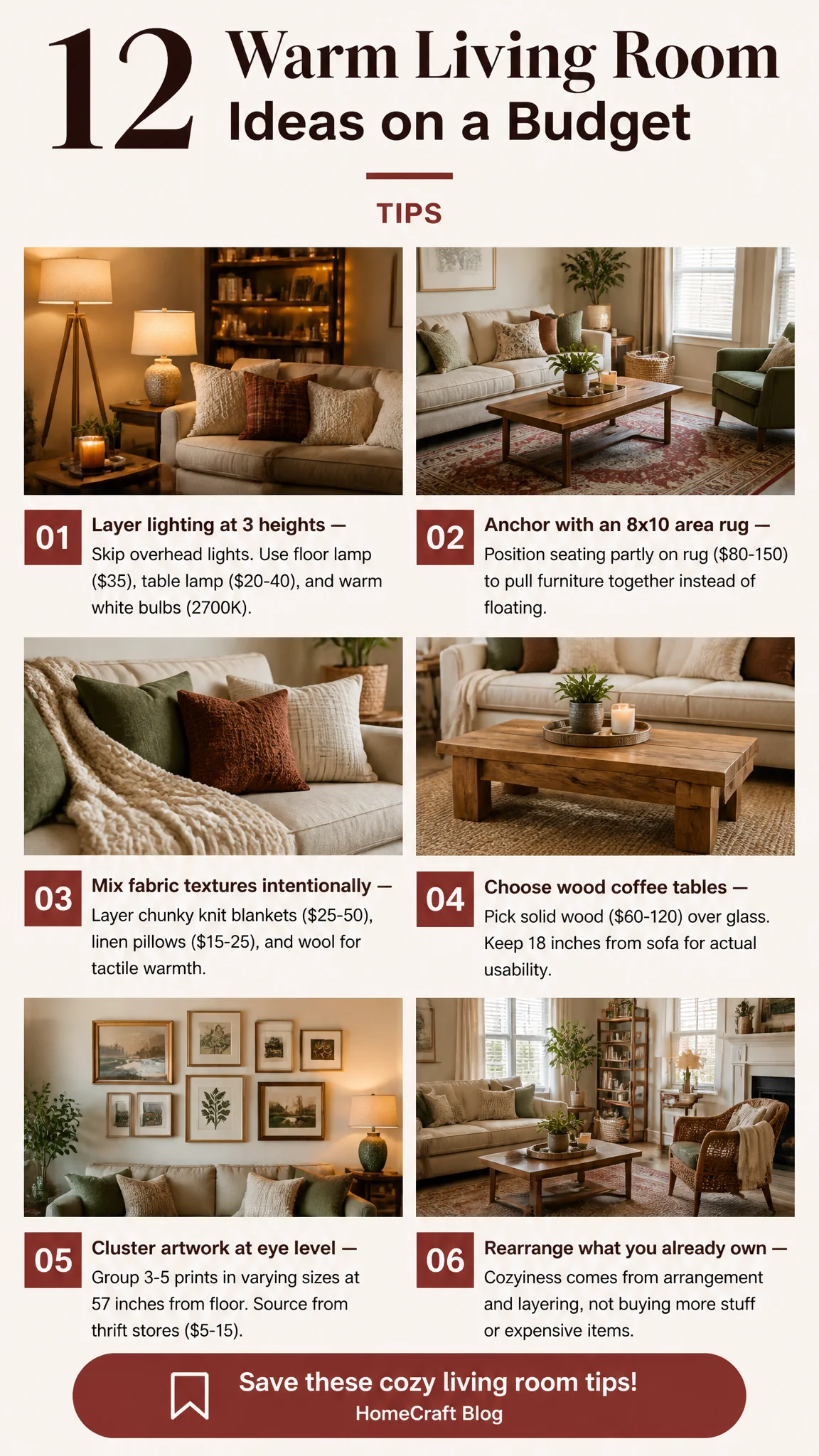
If only two of these ever happen, make them the lamps and the rug. Light at seated height and a rug big enough to hold the furniture do more for how a room feels than any single piece you could buy, and both are easy to undo if you get the size wrong. Everything else layers on top at whatever pace your budget sets.