18 Warm Fall Living Room Decorating Ideas for Cozy Gatherings
Eighteen fall living room decorating ideas for a cozier gathering spot, with real sizes and prices for throws, lighting, rugs and warm color.
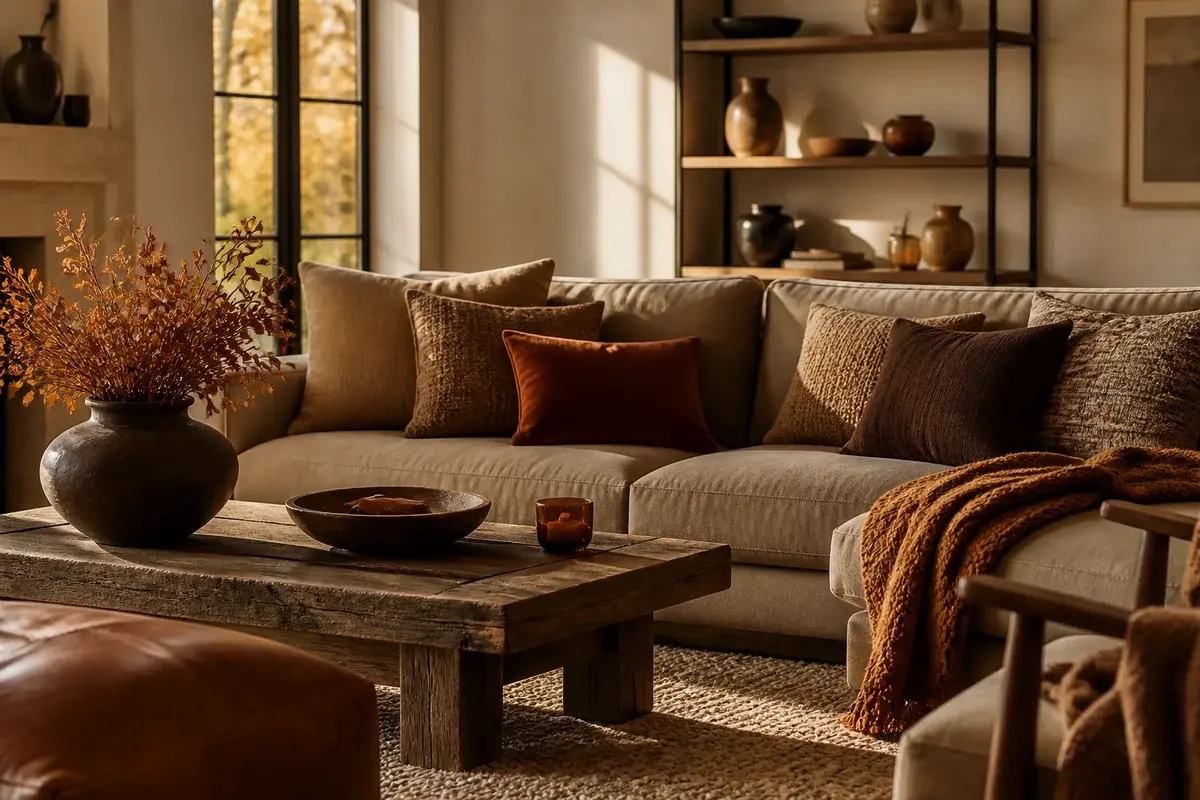
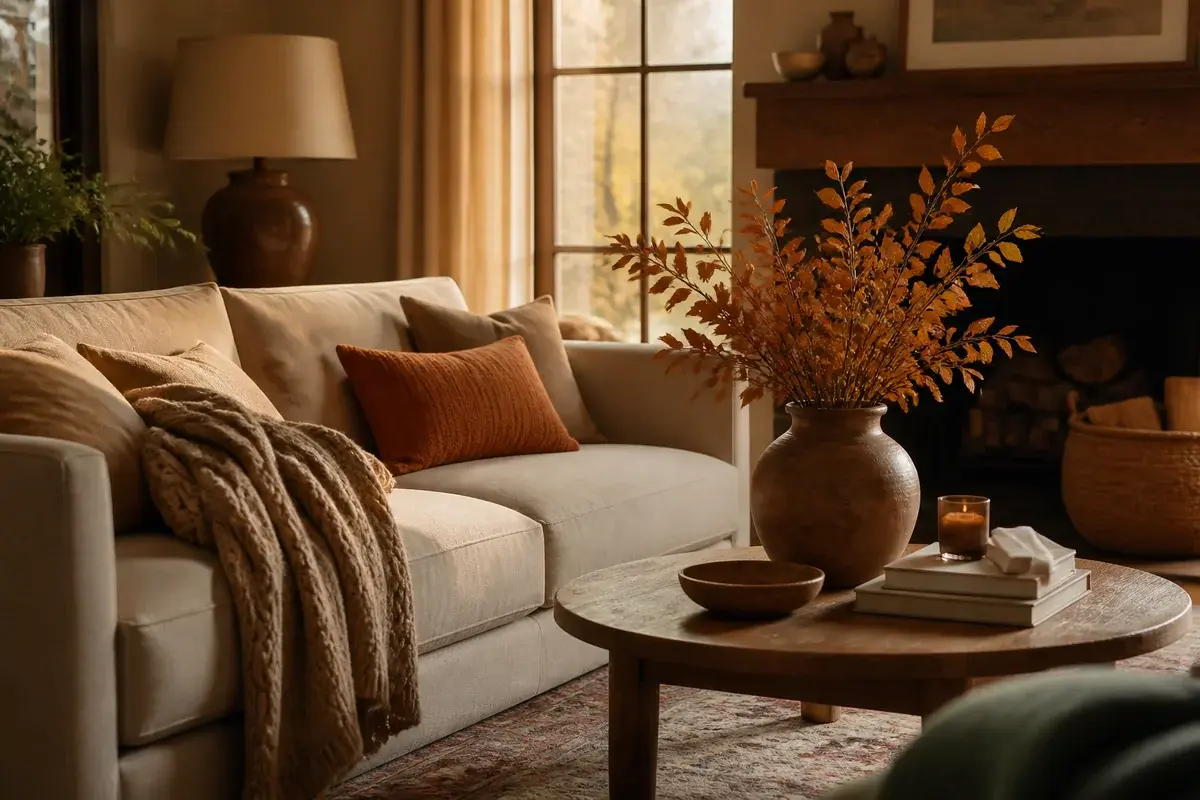
The light drops earlier every evening, the air picks up an edge, and the living room that felt easy and bright in July starts to read thin. That's the gap fall decorating fills. It isn't about matching your couch to pumpkins. It's about layering in textures, colors, and lighting that make people settle in and stay longer than they planned. The 18 ideas below run from a $3 bulb swap to a weekend with a paint roller, with the sizes and prices worked out, so you can start wherever your room and your budget meet.
1. Swap out white curtains for heavy linen in warm gold or rust
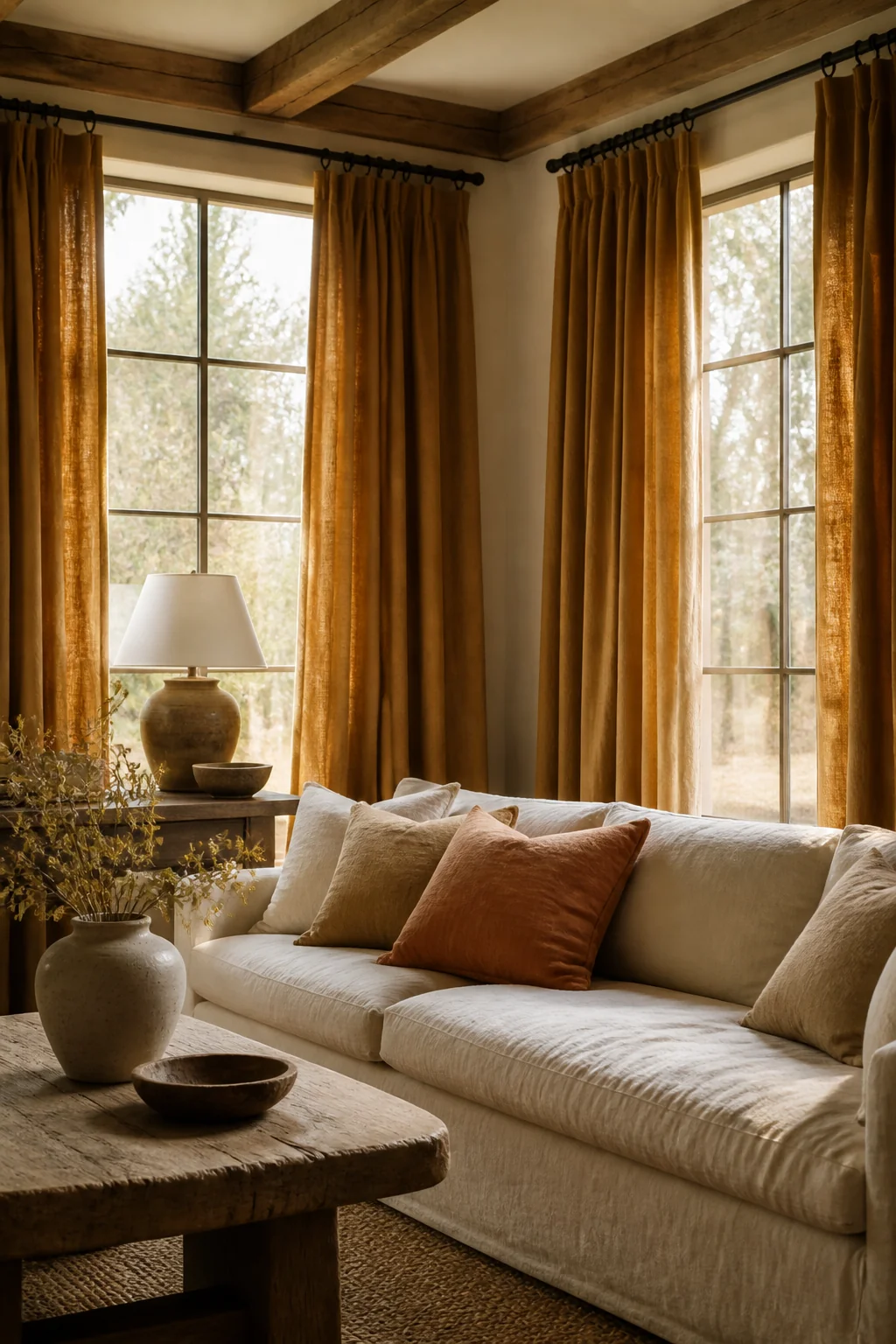
Light fabric reads cold once the sun sits lower in the sky. Heavy linen in gold, rust, or deep terracotta filters that low afternoon glare and softens every hard edge in the room. Measure before you order. Two panels that only just meet across the window hang flat and skimpy no matter what the fabric cost, so buy for combined panel width of about twice the window width, and let the rod run 4 to 6 inches past the frame on each side so the open panels clear the glass rather than shading it. Set the rod 4 to 6 inches above the frame, or halfway to the ceiling if you want the window to read taller. Panels run about $35 to $60 each, so most windows land between $70 and $120. One warning about real linen: it arrives creased and it fades. Steam it before hanging, and add a liner on any south-facing window, where rust dyes wash out first.
2. Add a layered throw blanket situation on your sofa
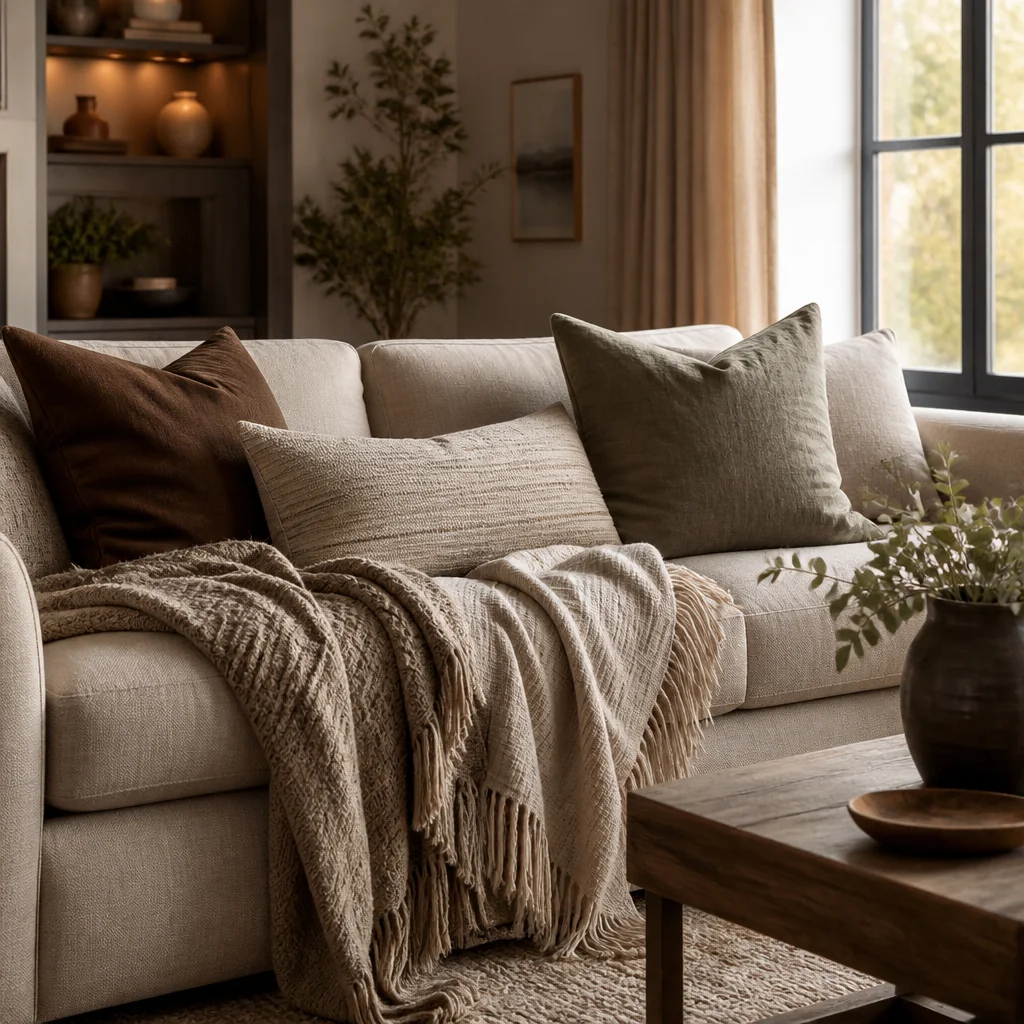
One throw isn't enough. Stack three: a chunky knit in cream, a plaid in burnt orange, a wool blend in charcoal. A standard throw is 50 by 60 inches, which covers one adult. If your sofa is 84 inches or wider, look for 50 by 70 so the drape doesn't look undersized against all that upholstery. Hang one over the arm at an angle with roughly a third of it falling toward the floor, then fold the other two into a basket at the end of the sofa, so a guest can take one without dismantling the arrangement. Cotton and acrylic knits run $20 to $45; lambswool starts around $80 and keeps its shape for years rather than seasons. Watch the scale, though. Three throws on a loveseat under 72 inches reads as unfolded laundry, so stop at two there. Loose open-weave knits also snag on watches and rings.
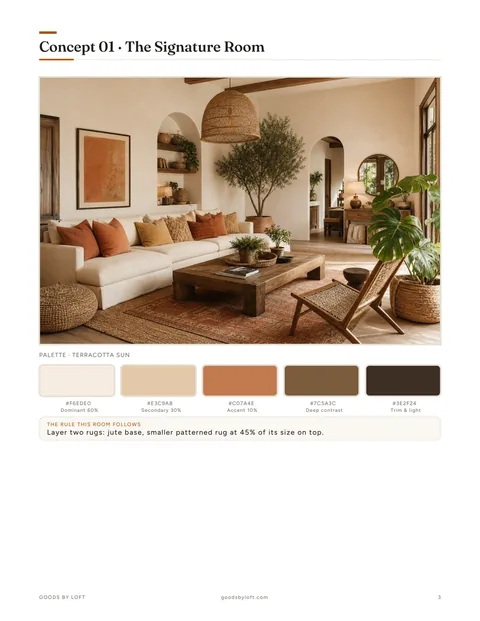
3. Bring in a 5x7 area rug in warm tones
Your summer sisal can go into storage. A wool rug in rust, caramel, or a rust-and-cream stripe grounds the seating group and takes the chill off the floor, which sisal never does once the heating comes on. Size it by the furniture, not the room: the front legs of the sofa and both chairs should sit on the rug. That usually means a 5x7 works for a seating group up to about 8 feet wide, and you want an 8x10 once the sofa alone is 84 inches. Leave 12 to 18 inches of bare floor between the rug edge and the wall so the room still breathes. Budget $200 to $400 for a new 5x7 in wool, plus $30 to $50 for a felt and rubber pad. Don't skip the pad. That extra quarter inch of cushion is most of what makes a rug feel warm underfoot. New wool sheds for two or three months, so vacuum with the beater bar off until it settles.
4. String warm Edison bulb lights in one corner
Not overhead. Corner accent lighting. Warm Edison bulbs at 2700K, or 2200K if you want the deep amber look, hung loosely over a bookshelf or along one wall give you a second layer of light that a ceiling fixture can't produce. A twelve-bulb S14 strand spans 12 to 24 feet and costs $25 to $40; the commercial-grade versions use heavier cord and won't sag by December. Hang it with adhesive cord clips, about $6 for twenty, spaced every 18 to 24 inches, and let each span swag 4 to 6 inches so it looks deliberate instead of pulled tight like a clothesline. Add an inline dimmer or a smart plug for around $15 and the strand becomes your evening light instead of a decoration. Keep the bulbs above roughly six feet, though. At seated eye level, an exposed filament glares straight into your face and the whole effect turns into squinting.
5. Group candles on the coffee table in odd numbers
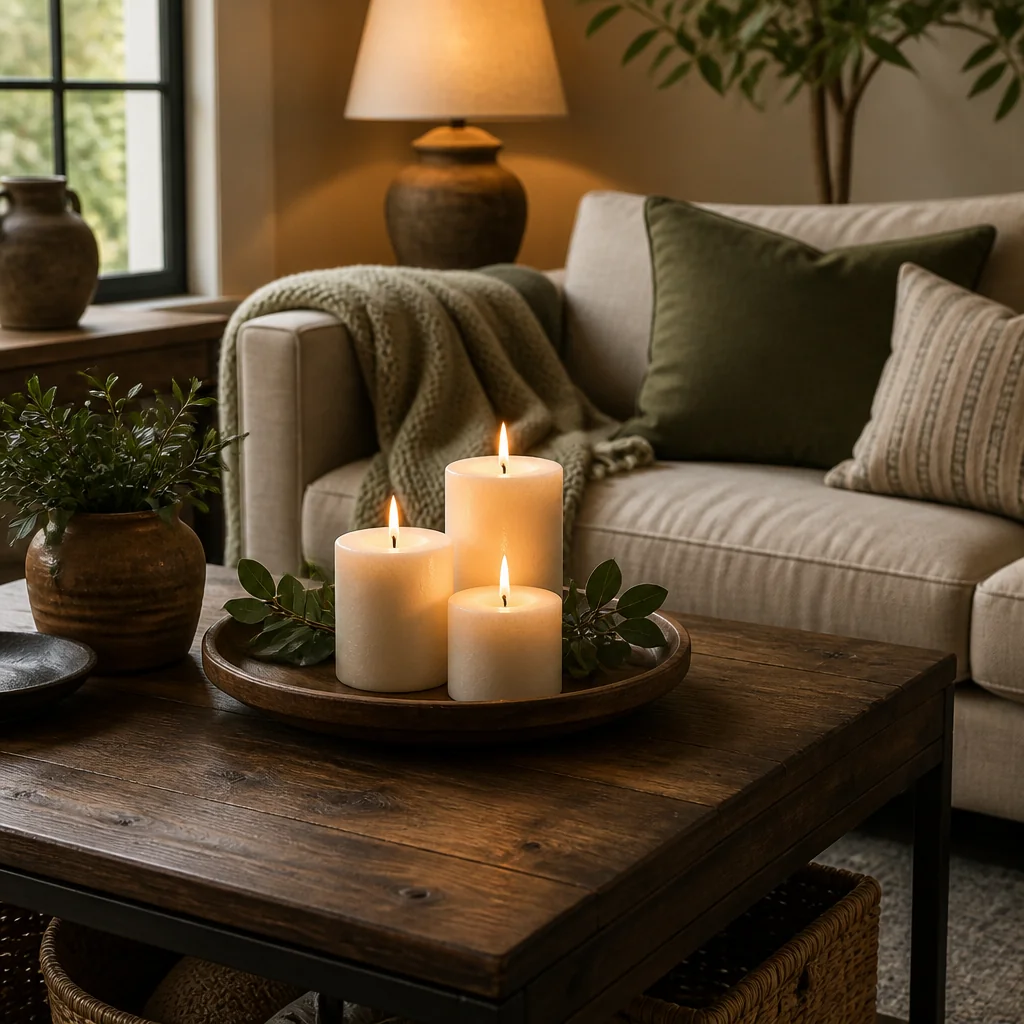
Three pillar candles. Five tea lights. Seven votives. Odd numbers read as composed rather than symmetrical. Vary the height while you're at it: a 3-inch, a 6-inch, and a 9-inch pillar together look arranged, where three identical candles look like stock. Set the group on a 12 to 18 inch wood or brass tray so it reads as one object and stray wax lands somewhere wipeable. Keep 4 to 6 inches between pillars, because candles set closer soften each other's sides and slump. Trim every wick to a quarter inch before lighting, or you'll get soot on the glass and a grey shadow on the ceiling above. On a soy pillar's first burn, give it about an hour per inch of diameter so the melt pool reaches the edge; cut that short and it tunnels for the rest of its life. Cinnamon, clove, and apple suit the season. With pets or small kids in the room, flameless LEDs on a timer give you the same flicker.
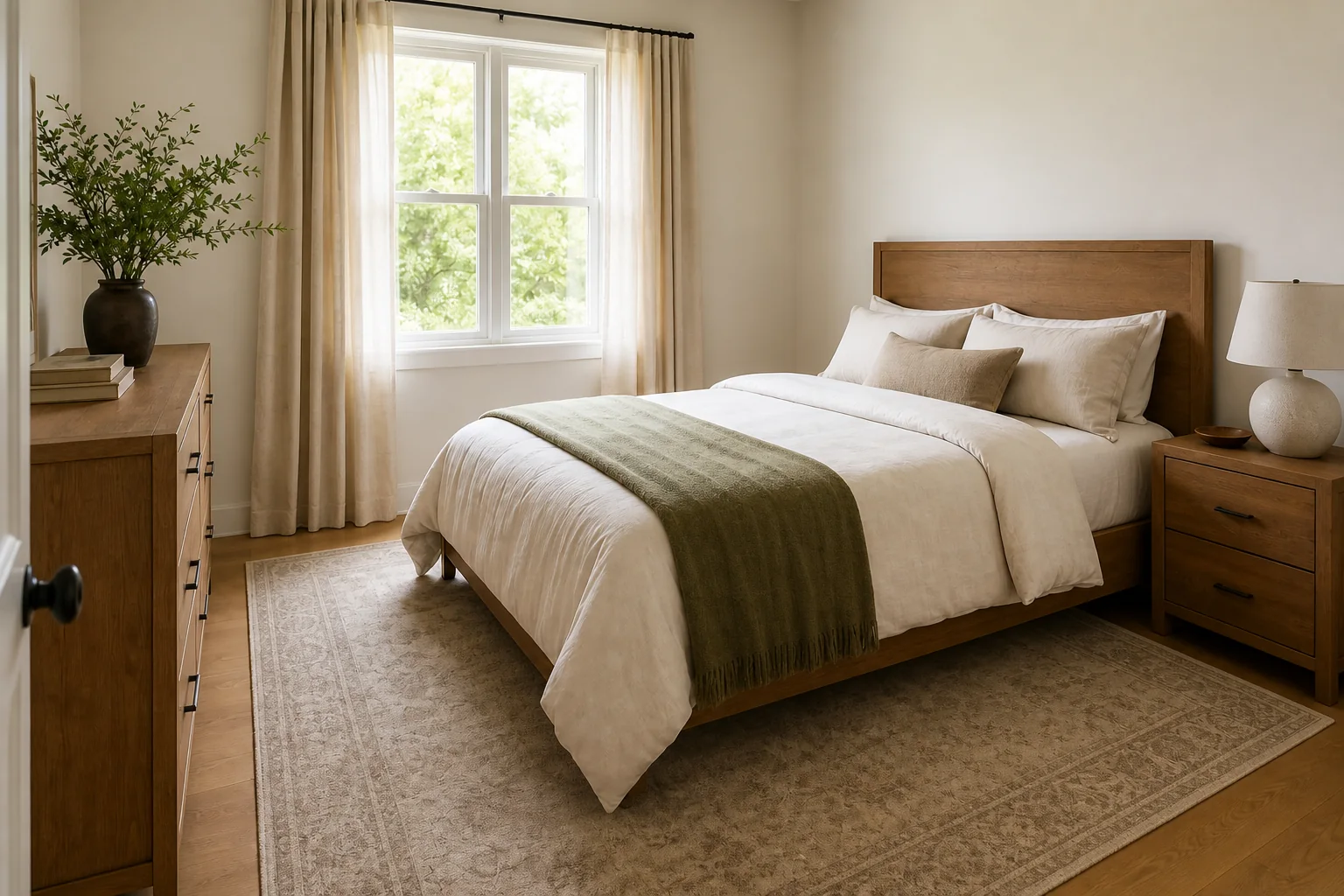
6. Swap out throw pillow covers for fall textures and patterns
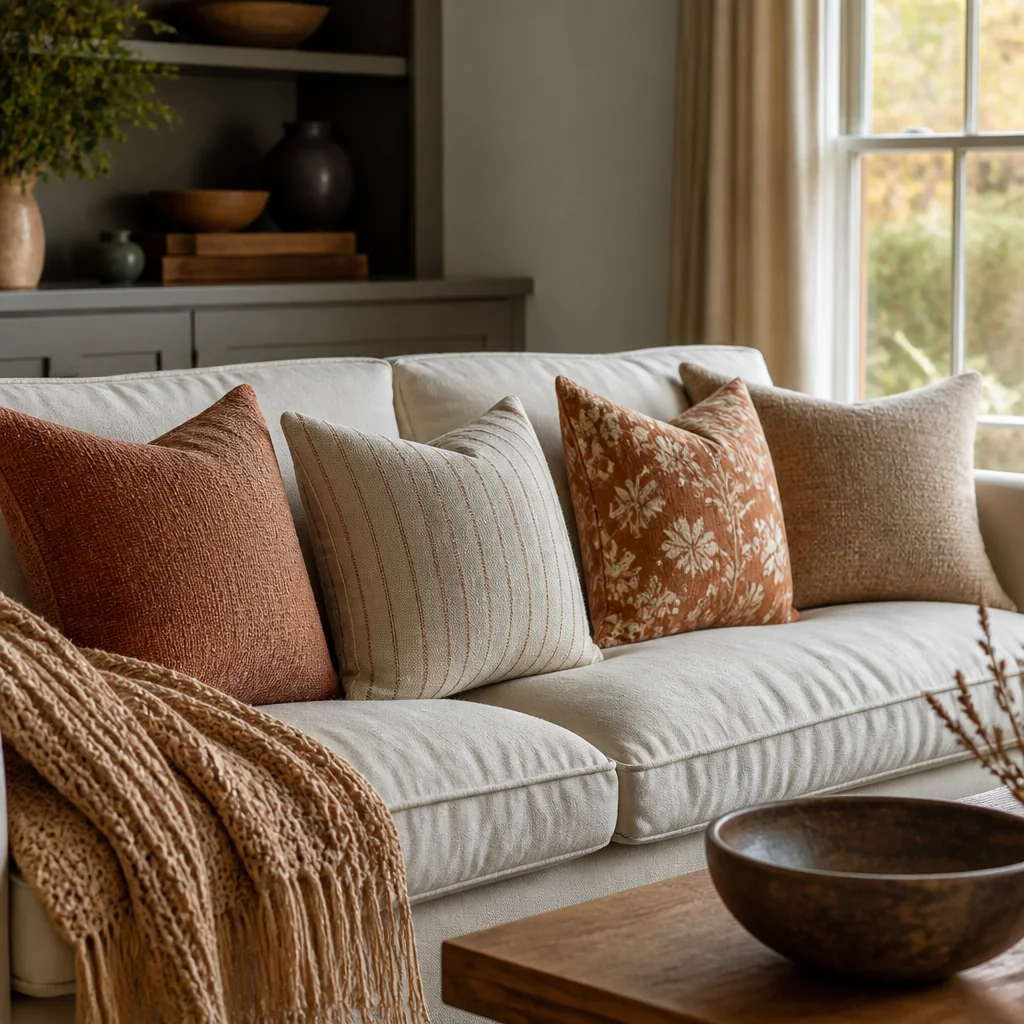
Lose the light linen. Wool, corduroy, and heavyweight cotton in cream, sage, rust, and chocolate carry the season better, and covers cost a fraction of new pillows. Standard sizing is 20 inches for a normal sofa and 22 to 24 on a deep sectional. The insert is where this goes wrong, because the shelf label pairs cover and insert one to one and nobody questions it. Go up 2 inches, a 22-inch insert inside a 20-inch cover, and the pillow fills its own corners instead of collapsing into a limp square. Down-alternative inserts cost $10 to $15, feather runs about $20, covers $15 to $35. Mix one large-scale pattern, one stripe or ribbed texture, and one solid, then keep an odd count per sofa: five on a three-seater, arranged two, two, and one. Wash the covers before they touch a cream sofa, since deep rust dyes can bleed the first time. Skip polyester velvet on a sofa in daily use; it crushes and holds every handprint.
7. Paint an accent wall in a warm, muted tone
If you're open to something permanent, one wall in muted sage, warm taupe, or soft mustard resets the temperature of the whole room. Pick the wall with no windows, or the one behind the sofa or fireplace, so the color reads as a backdrop rather than a stripe. Test before you commit: peel-and-stick samples cost about $5, sample pots about $8. Paint a 12 by 12 inch patch and look at it after dark under your own lamps, because a muted green that feels calm at noon can turn grey under 2700K bulbs. Matte and eggshell hide drywall texture better than satin does. What eats the weekend is taping and drying rather than rolling, which is the part people underestimate; the paint itself is a small line item, since a gallon reaches 350 to 400 square feet and one wall needs a quart or the first half of a gallon at $40 to $80. The trade-off worth weighing: a deep color on the wall you face from the sofa makes a small room feel shorter, so put it behind you instead.
8. Hang botanical or nature prints in a simple gallery layout
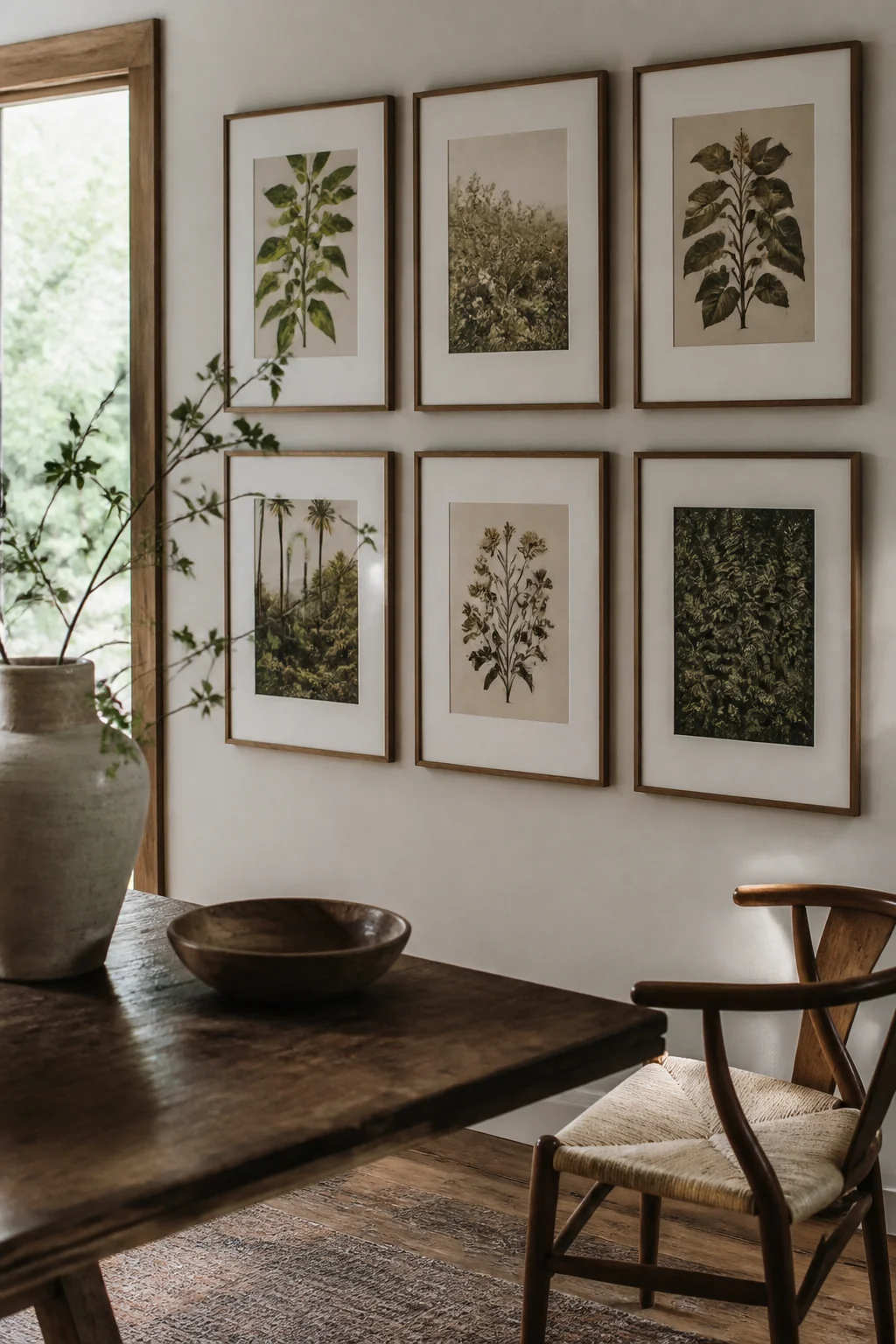
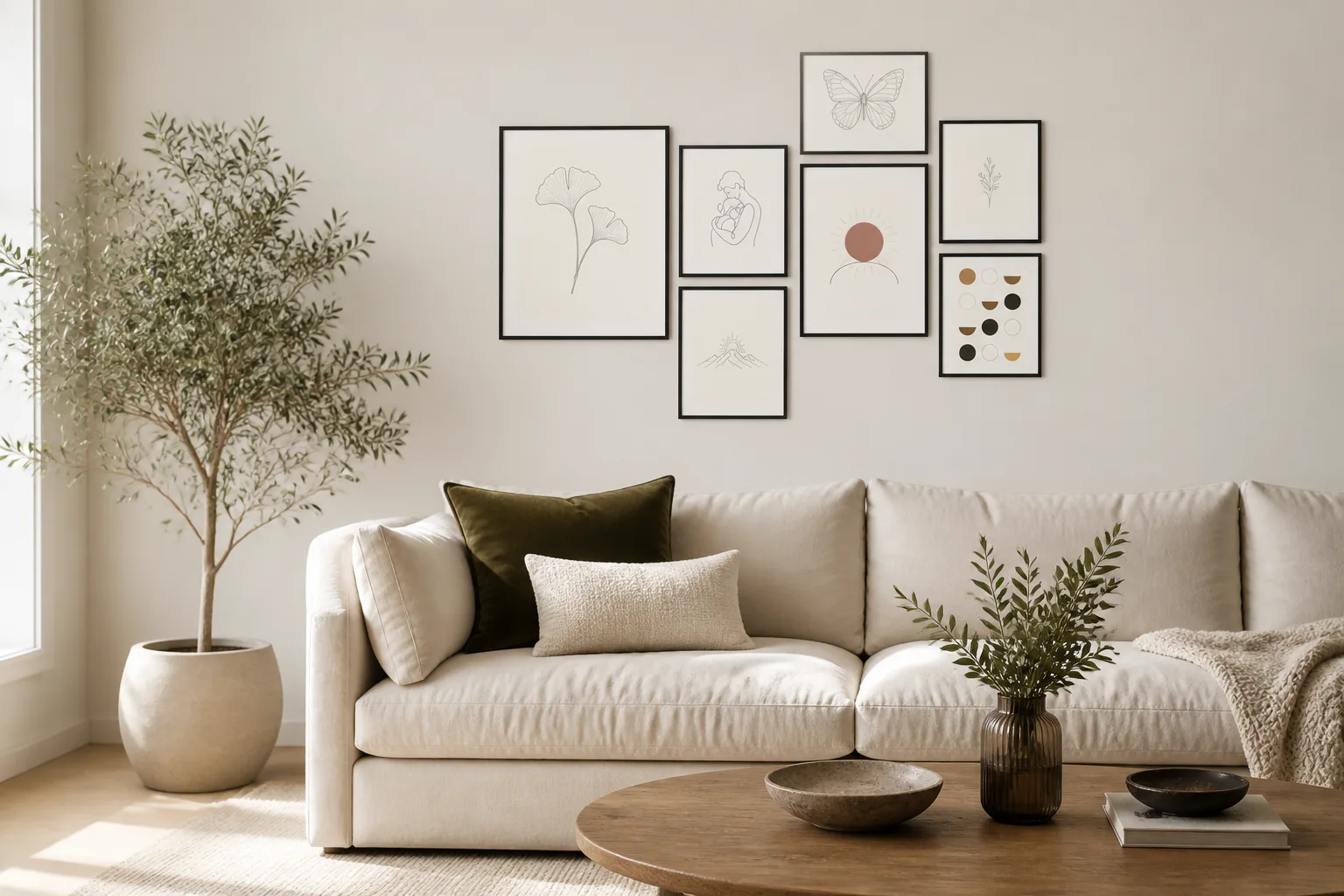
Three to five prints of leaves, trees, or mushrooms in natural wood frames. A group that spreads wider than the sofa below it is what makes a wall look crowded rather than styled, so hold the total width to about two-thirds of the sofa. Center the arrangement 57 to 60 inches off the floor, or sit its bottom edge 8 to 10 inches above the sofa back if that's the wall you're using. Space the frames 2 to 3 inches apart. Any wider and the group stops reading as a single piece and starts looking like scattered art. Lay the whole layout on the floor first, or cut kraft paper rectangles and tape them up, so you can move things around before you put holes in drywall. Prints from independent artists run $10 to $30, frames $15 to $40, and a 2-inch mat is what makes an inexpensive print look considered. Keep the frame finish consistent: mixed wood and black metal on one wall reads as an accident unless the room repeats both elsewhere.
9. Cluster books on side tables with bookends
Books don't have to live on shelves. Two or three stacked flat on a side table, no more than about 4 inches tall so a lamp base still clears them, plus a short vertical run held up by a ceramic or brass bookend, gives the corner weight and color without adding another object to dust. Put one small thing on top of the flat stack, a brass dish, a coaster set, a pair of reading glasses, and the pile stops looking abandoned and starts looking placed. Thrifted coffee table books on nature, gardens, or travel cost $3 to $8, which lets you choose by spine color and size rather than by subject; new ones run $25 to $40. Turn or remove glossy dust jackets when the cloth underneath is quieter. One rule worth holding to: leave 6 inches of clear tabletop for a mug. A 16-inch table stacked full is a photograph, not a place to set down coffee.
10. Add a wood-burning or electric fireplace insert if you don't have one
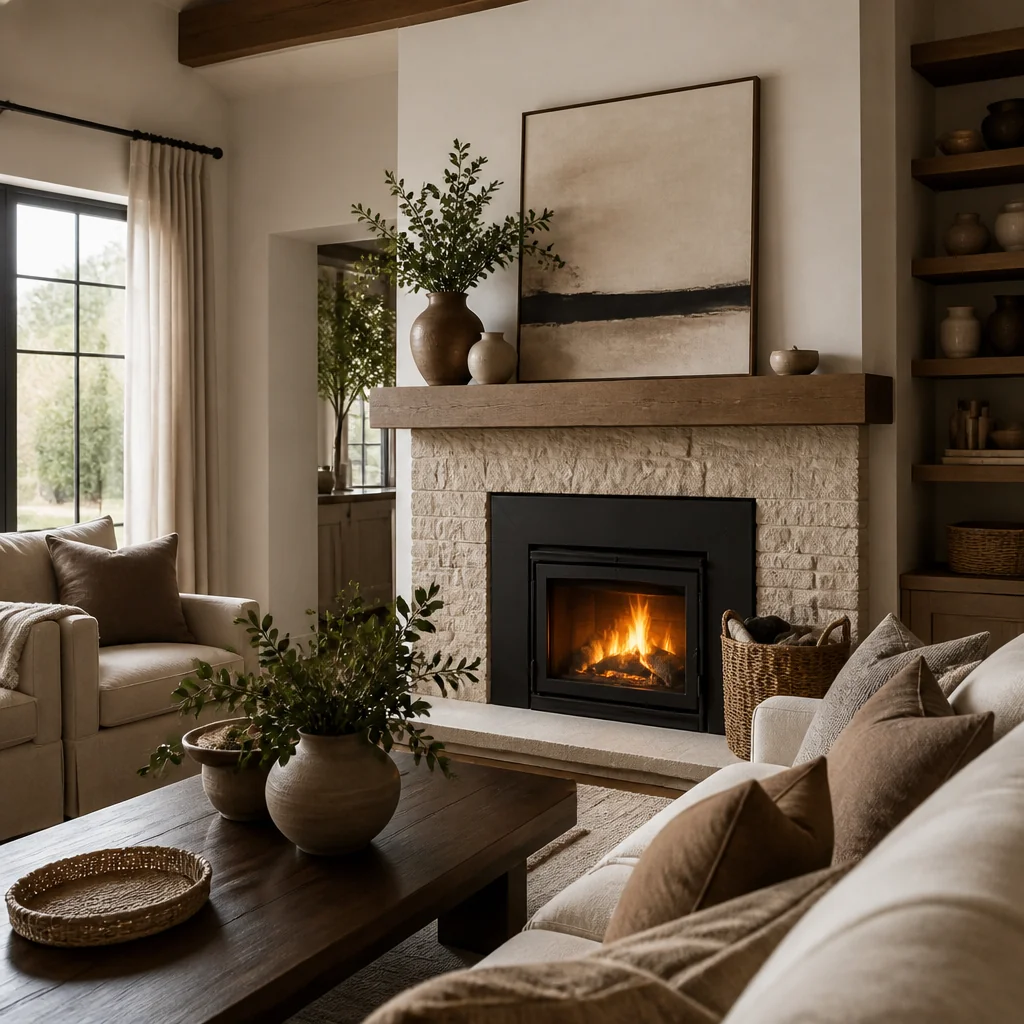
If your living room has a fireplace, use it. If not, an electric insert dropped into an unused firebox, or a freestanding electric stove in a corner, costs $100 to $300 and plugs into a standard outlet. Measure the firebox opening first, width, height, and depth at the back, because inserts are sized tightly and returning one is a two-person job. Most units pull about 1500 watts on high, roughly 5,000 BTU, which takes the chill off a 300 to 400 square foot room but will not heat a house. That's 12.5 amps, so don't share the circuit with a space heater unless you enjoy resetting breakers. Run it in flame-only mode, with the heating element off, and it costs pennies an evening. That's the setting you'll use most. A working wood fire is a different level of commitment: a sweep and inspection runs $150 to $300 a year, and skipping it is how chimney fires start.
11. Layer in a woven wall hanging above the sofa
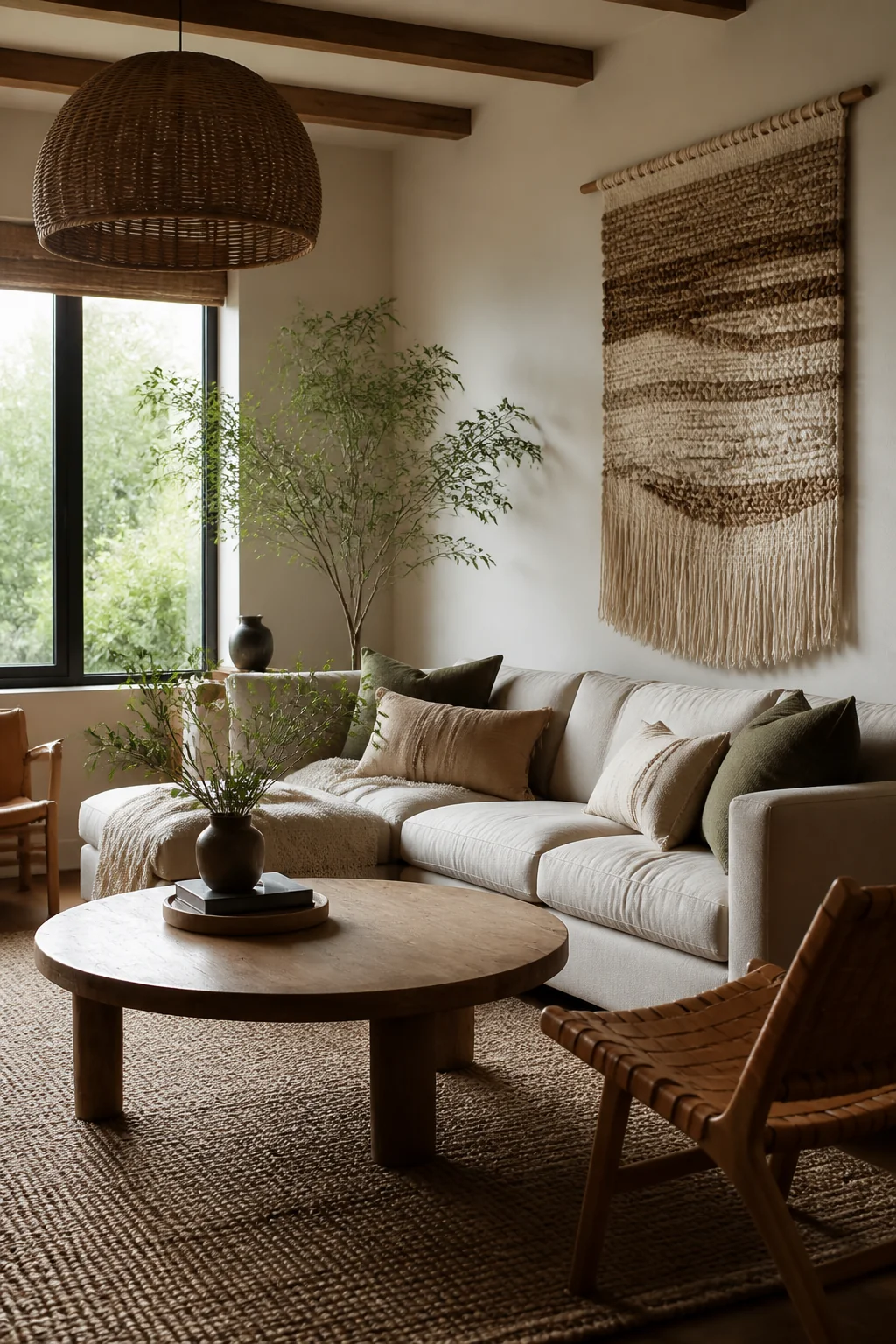
A cream or rust-toned woven piece brings warmth and texture to a wall where a framed print would only add another rectangle. Scale it to the furniture. Anything much narrower than two-thirds of the sofa width floats up there looking lost, and the bottom edge wants to land 8 to 10 inches above the sofa back so the two read as a pair rather than as two separate decisions. Secondhand and vintage-inspired pieces run $30 to $80. Wool and jute hold their shape, while loose cotton roving stretches and sags over a season. Anything over about 3 pounds deserves two anchors instead of one nail, one near each end of the dowel, so the top rail stays level under its own weight. Two things to plan for: natural dyes fade quickly in direct afternoon sun, and woven texture catches dust, so run the vacuum brush attachment over it monthly. Shipping creases steam out in minutes.
12. Switch out your light bulbs to warm white (2700K) throughout
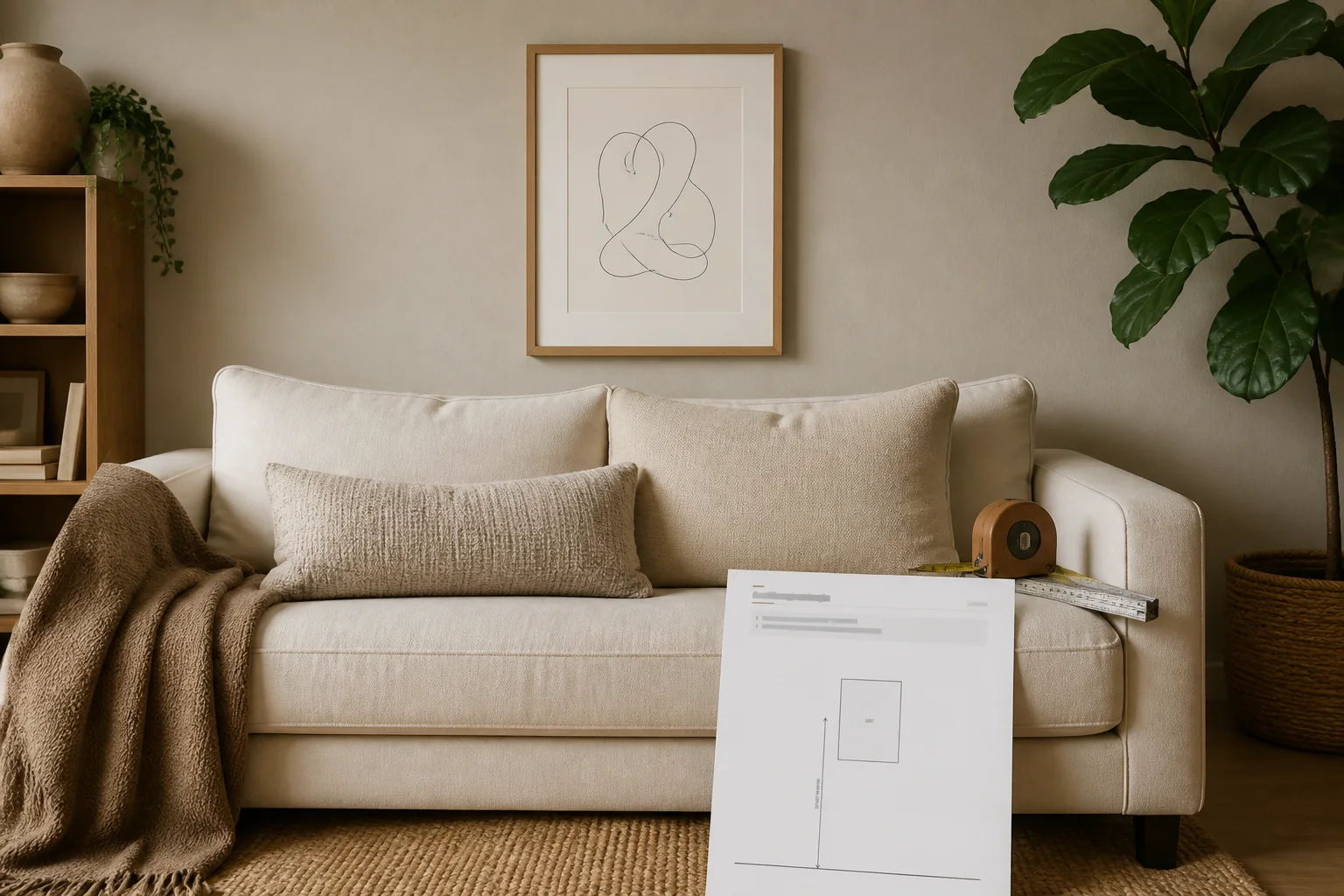
This is the cheapest idea here and it shifts how every other color in the room reads. Warm white LEDs at 2700K cost $2 to $5 each, so a full room of eight bulbs runs $16 to $40. Shop by lumens, not watts: about 800 lumens replaces an old 60-watt bulb in a table lamp, and 450 is plenty for accent fixtures. Check the box for CRI 90 or higher, because low-CRI bulbs flatten reds and browns into mud, which is exactly the palette you're trying to build with the rug and the throws. If a fixture sits on a dimmer, buy bulbs labeled dimmable or you'll get flicker and a faint buzz at low settings. Do the entire room in one pass: overhead, side lamps, the reading lamp, the one in the closet you forgot about. A single 4000K bulb left behind shows up as a cold blue patch on the wall, and once you notice it you can't stop noticing it.
13. Create a small styling nook with fall branches and a floor vase
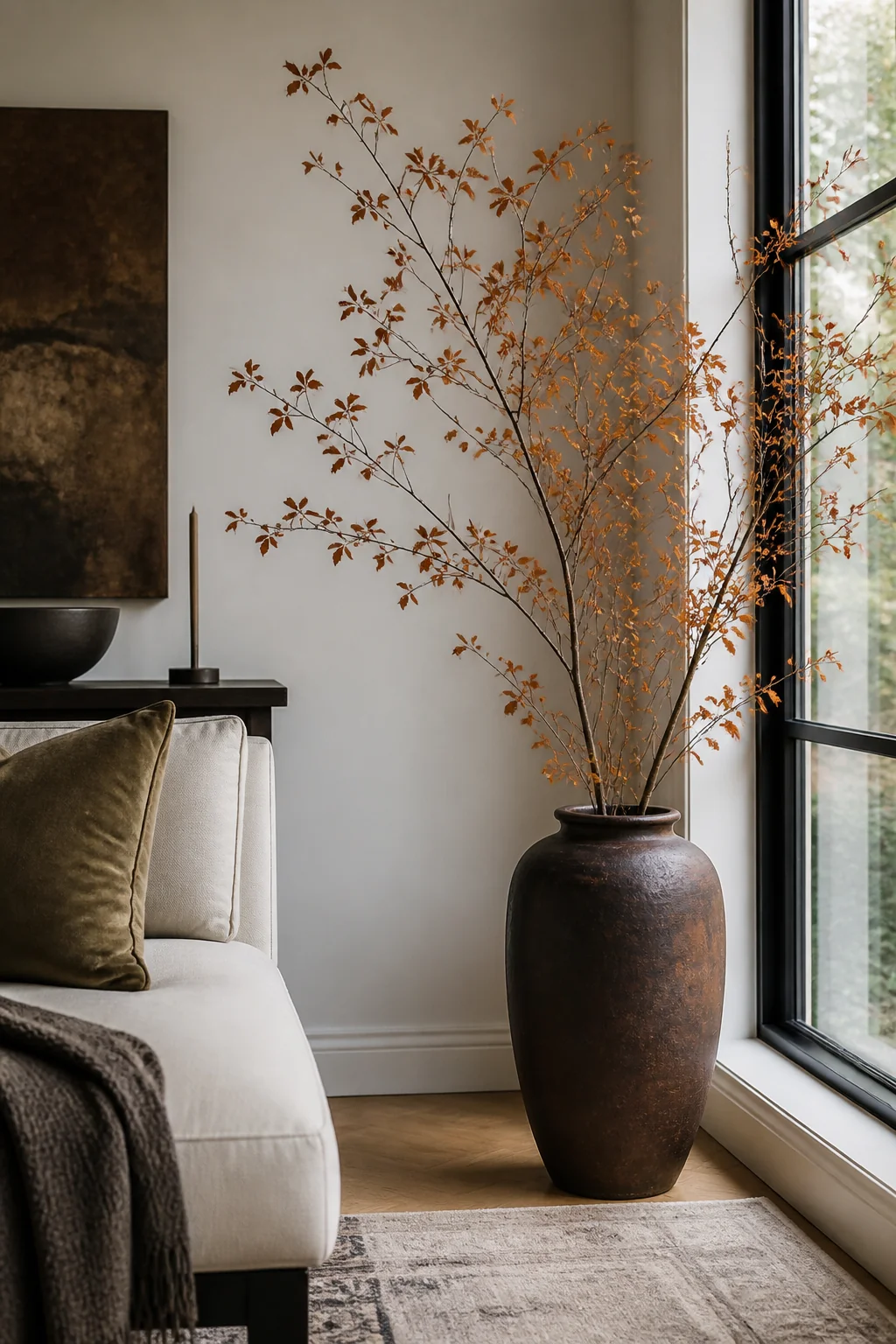
Fill a tall vase with branches, dried grasses, or foliage cut from the yard. For a table, 10 to 14 inches of vase is right; standing in a corner on the floor, go 18 to 24 inches. Cut the stems so the finished arrangement stands about one and a half to two times the height of the vase, slice each one at an angle, and strip off anything that would sit below the waterline and rot. Height is the point here, since a tall arrangement fills blank wall space that would otherwise need furniture. Branches are free. Vases run $15 to $40, and a narrow neck holds a loose bundle upright where a wide mouth lets every stem flop outward. If you're set on a wide vase, crisscross clear tape over the opening to make a grid and drop stems into the squares. Pampas and other dried grasses shed constantly; a light pass of cheap hairspray cuts that down. Shake off anything you bring in from outside and check for egg cases.
14. Layer area rugs if you're renting and can't paint
Under the main 5x7, add a smaller 3x5 in a contrasting texture, and the floor gets depth without anyone touching a paintbrush. The pairing that works most reliably is a flat natural fiber base, jute or seagrass, with a softer wool or vintage-style rug on top, either centered under the coffee table or set at an angle to break up all the parallel lines. A jute 5x7 costs $80 to $150 and a small wool topper $60 to $120, so the whole floor comes in under what one good rug would run. Keep the pile difference modest. A thin flatweave laid over a plush rug ripples within a week and turns into a trip hazard right where people walk. Put a felt and rubber pad under the base and gripper tape at the corners of the top layer. On vinyl plank or laminate, choose a felt-only pad, since rubber backing can react with the floor finish and leave marks a landlord will find at move-out.
15. Switch your sofa orientation to face the window if possible
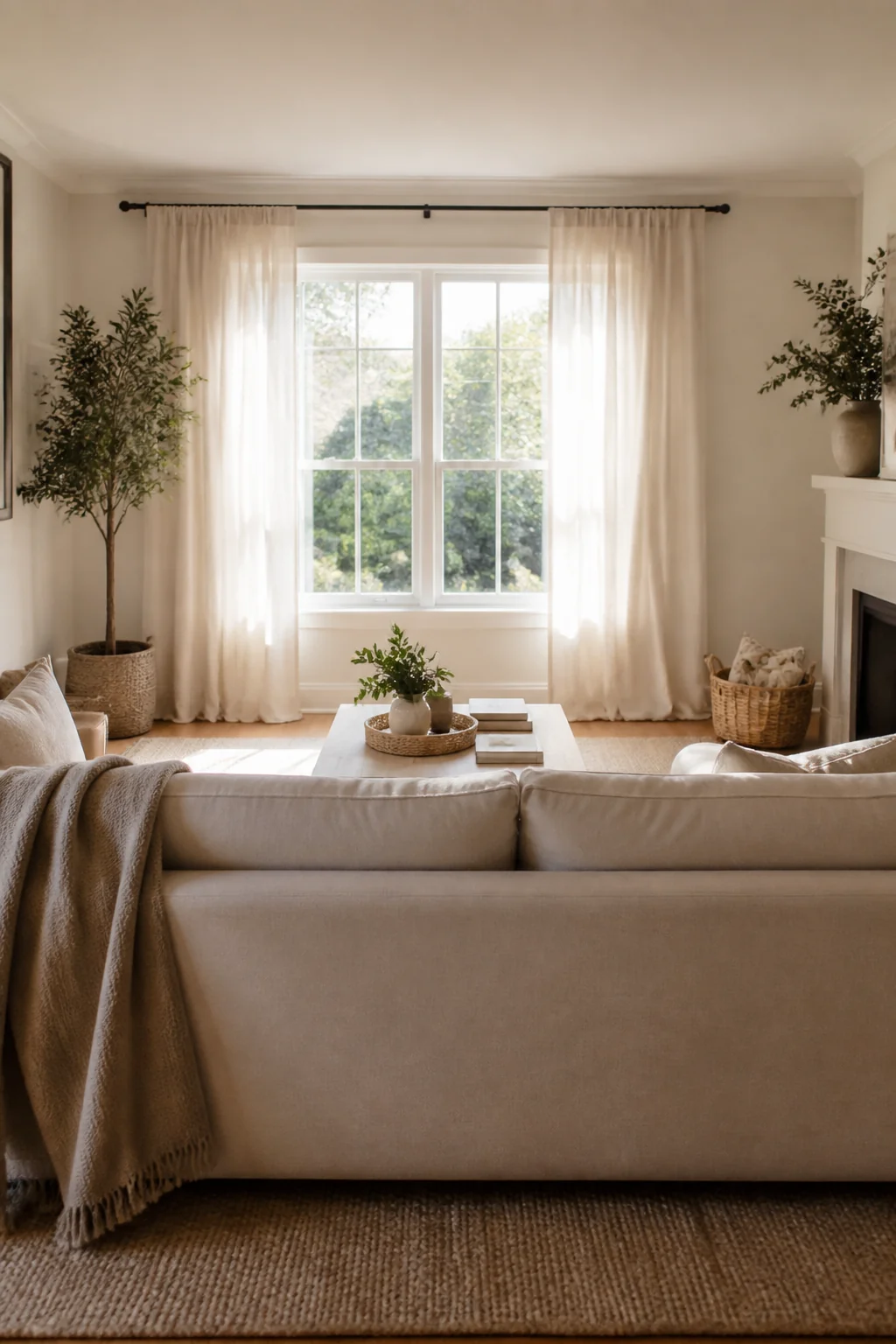
Sometimes the best decorating move costs nothing, because it's rearranging what's already there. Turning the sofa to face a window makes daylight the focal point instead of the television, and the room reads open rather than organized around a black rectangle. Before you drag anything, check the clearances: 14 to 18 inches between the sofa front and the coffee table so knees fit, and 30 to 36 inches for any walkway running behind it. If the sofa's back ends up facing a doorway, a console table 30 to 32 inches high behind it finishes that edge instead of leaving a raw upholstered wall. Slip $8 felt sliders under the legs first, because hardwood scratches on the first pull. Two things can rule this out. A sofa parked in front of a radiator or floor vent blocks the heat you're about to want, so leave at least 6 inches, and if a screen faces that window, afternoon glare will send you straight back to the old layout.
16. Add a side table with a ceramic table lamp and a coffee table book
A mismatched accent table beside a reading chair, thrifted if you can find one, gives an empty corner a reason to exist. Match the height to the chair. Most sofa and chair arms sit 24 to 26 inches off the floor, and a table within about 2 inches of that is comfortable to reach without looking. Diameter matters more than people expect: a 12-inch top can't hold a lamp base and a mug at the same time, so look for 16 to 18 inches. For the lamp, aim to have the bottom of the shade at roughly eye level when you're seated, which usually means 24 to 27 inches from tabletop to shade, with an 800-lumen 2700K bulb if anyone actually reads there. Thrifted tables run $20 to $40 and a ceramic or brass lamp $30 to $60. Clip the cord down the back leg and add a small three-outlet extension, so the corner doesn't come with a trip line across the walkway.
17. Drape a faux fur throw over one chair or the sofa arm
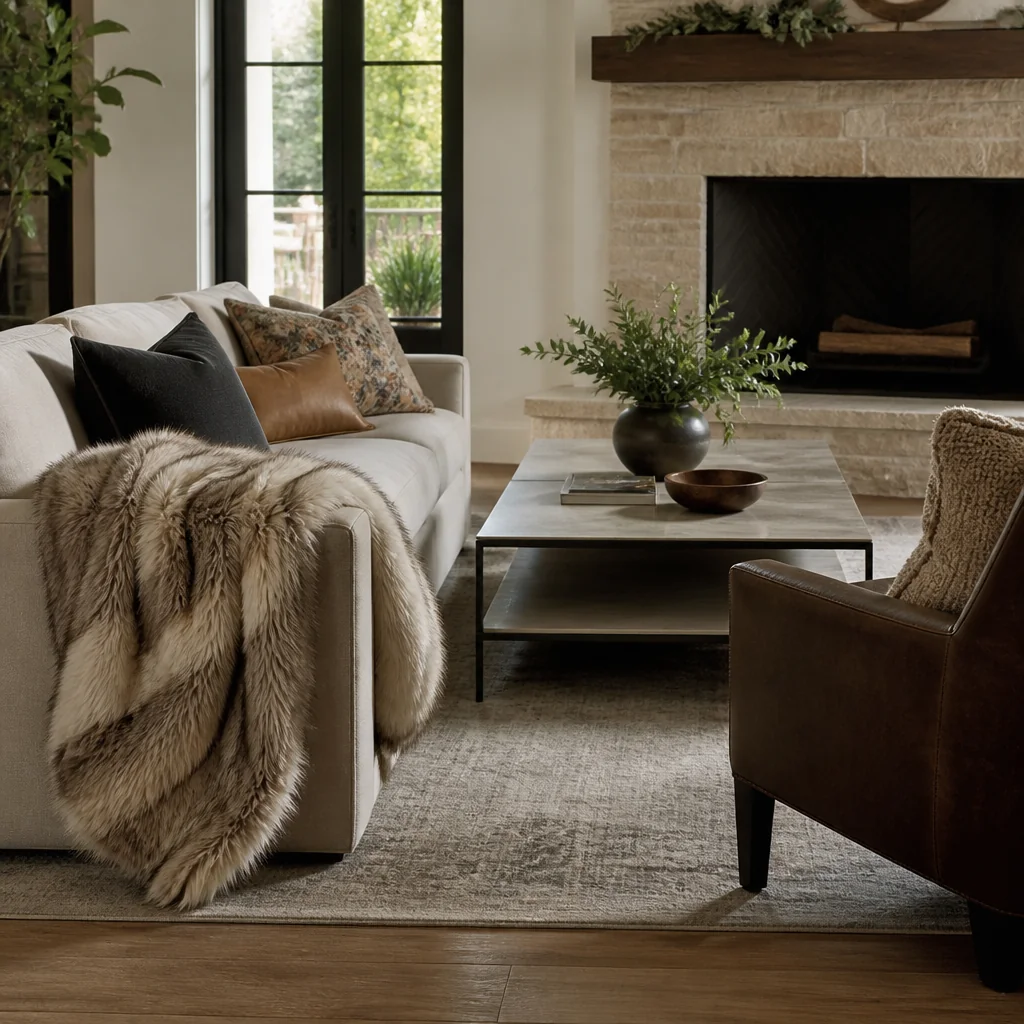
One faux fur throw in cream, caramel, or grey gives you tactile contrast against all that knit and wool, without the cost of the real thing. Most measure 50 by 60 inches and run $25 to $60. Check the backing before you buy: a knit backing drapes and folds around a chair arm, while a stiff woven backing hangs like a board and refuses to settle. Drape it diagonally over the chair back with about a third pooling on the seat, so it looks used rather than displayed. Care is where these get destroyed. Machine wash cold on gentle, skip fabric softener because it mats the pile, and air dry only. A dryer's heat melts modacrylic fibers into crunchy clumps that never brush out. A pet slicker brush revives flattened pile in a couple of minutes. Expect shedding onto dark clothes for the first few weeks, and know that cats treat long fringe as a personal project.
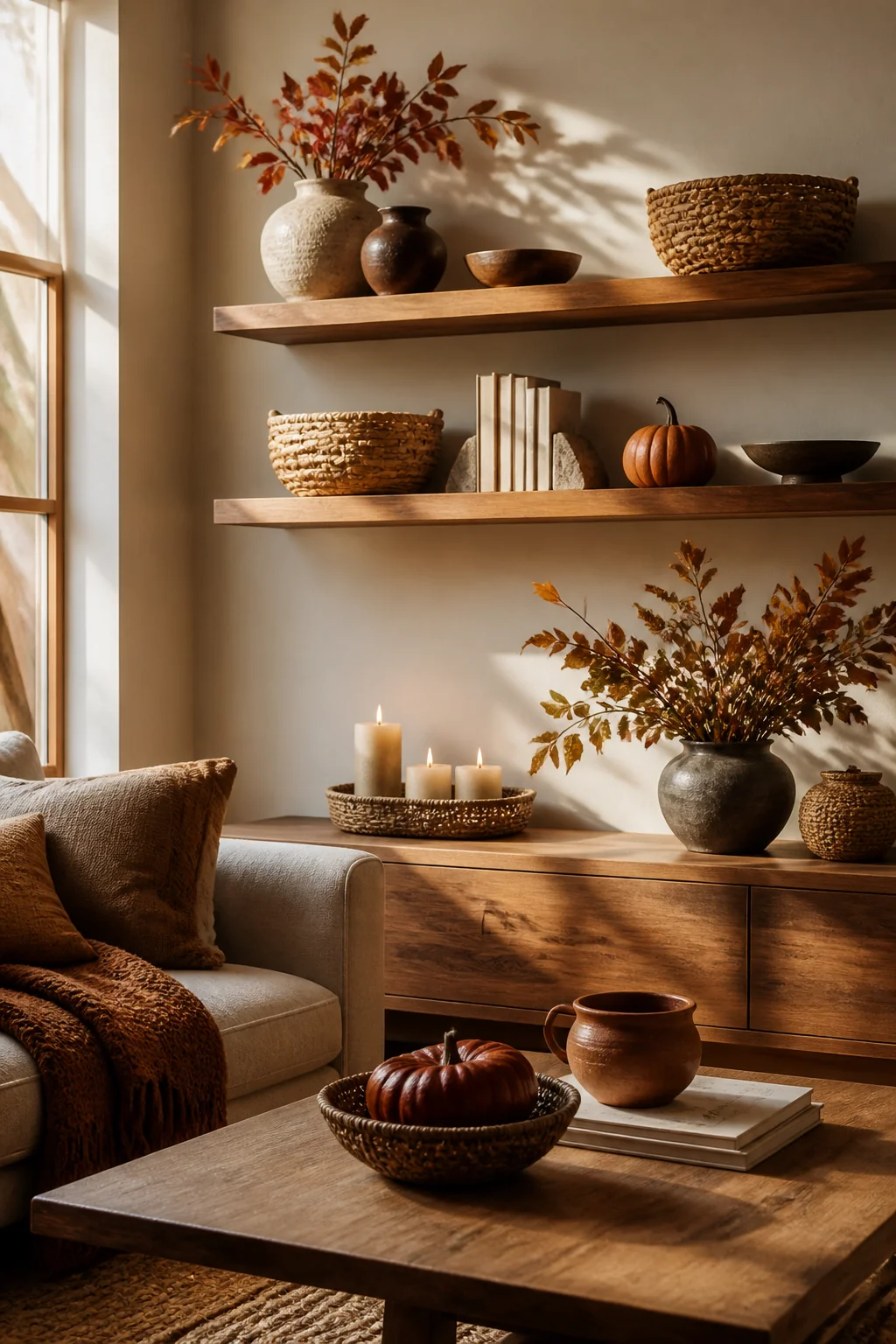
18. Install floating shelves with fall decor and storage baskets
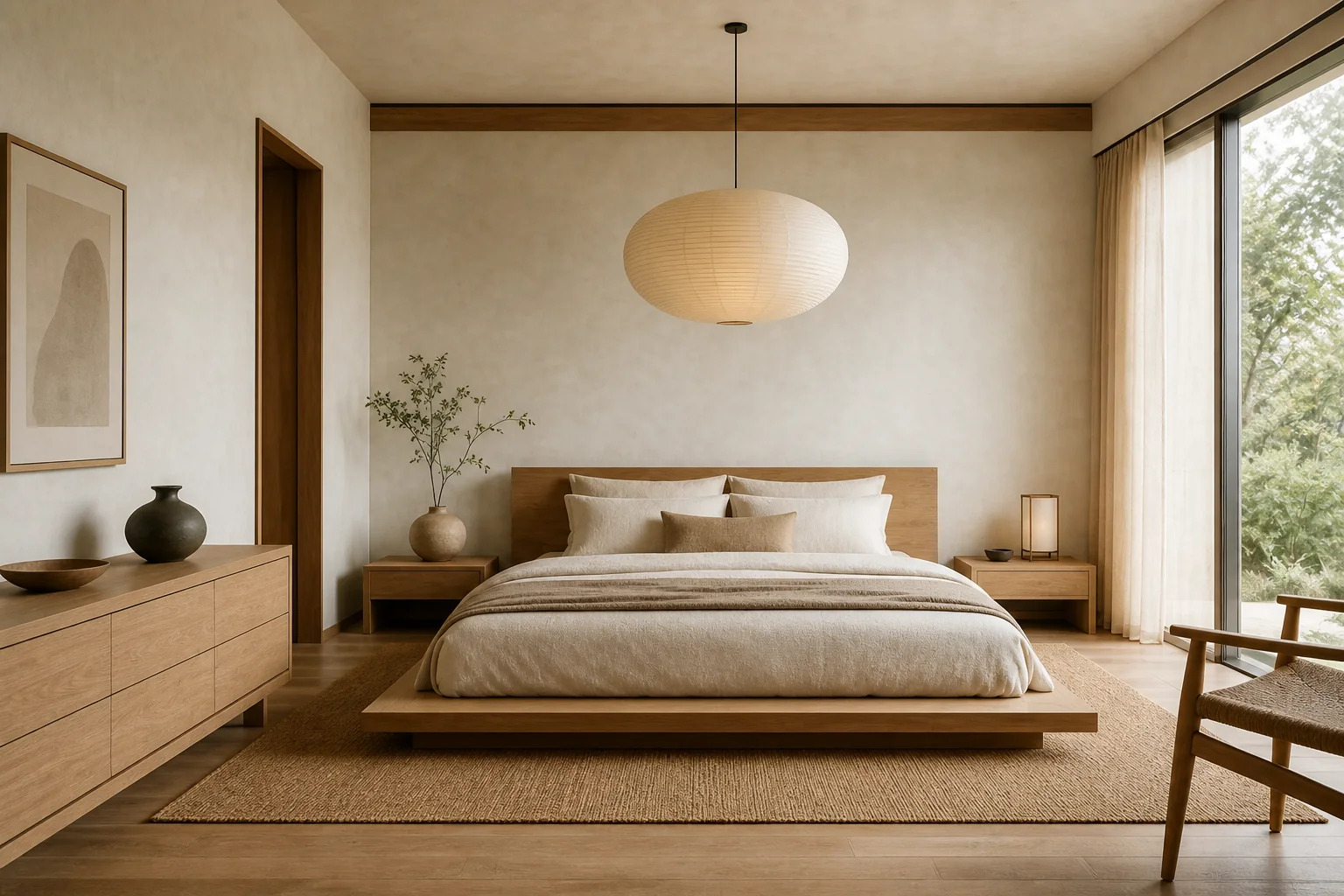
Two or three shelves above a side table or in a corner give books, candles, and baskets a home without putting more furniture on the floor. Shelves 24 to 36 inches long are the practical range, spaced 12 to 16 inches apart vertically, with the lowest one 18 to 24 inches above the table so a lamp fits underneath. They cost $25 to $60 each. Find the studs, usually 16 inches on center, and anchor into at least one of them. A 24-inch floating shelf held by drywall anchors alone tops out around 20 to 25 pounds, and a row of hardcovers passes that quickly. Loading weight at the front edge is what makes those shelves pitch forward and pull out of the wall. When you style them, leave visible gaps between groupings rather than filling every inch, or the wall ends up busier than the room it's meant to calm. Underneath, seagrass or rattan baskets 14 to 16 inches square swallow the chargers and remotes.
Save this for your next project
If only two of these ideas ever make it off the list, let them be the bulbs and the throws. Warm light and something soft within arm's reach do more for how a room feels in October than any amount of seasonal decor on the mantel, and together they cost less than a single pillow insert. The bigger items deserve more patience. A rug, a fireplace insert, a set of lined linen panels: measure twice, price them across a few stores, and remember that the rug in particular is a decision you'll be walking on for years.
Ideas fade by Friday. A plan finishes the room.
You just read a full guide to your living room. Saving ideas will not change it; a plan will. The Home Decor Collection is every planning tool we make, for every room in the house, in one download, so the after photos below stop being other people's rooms.
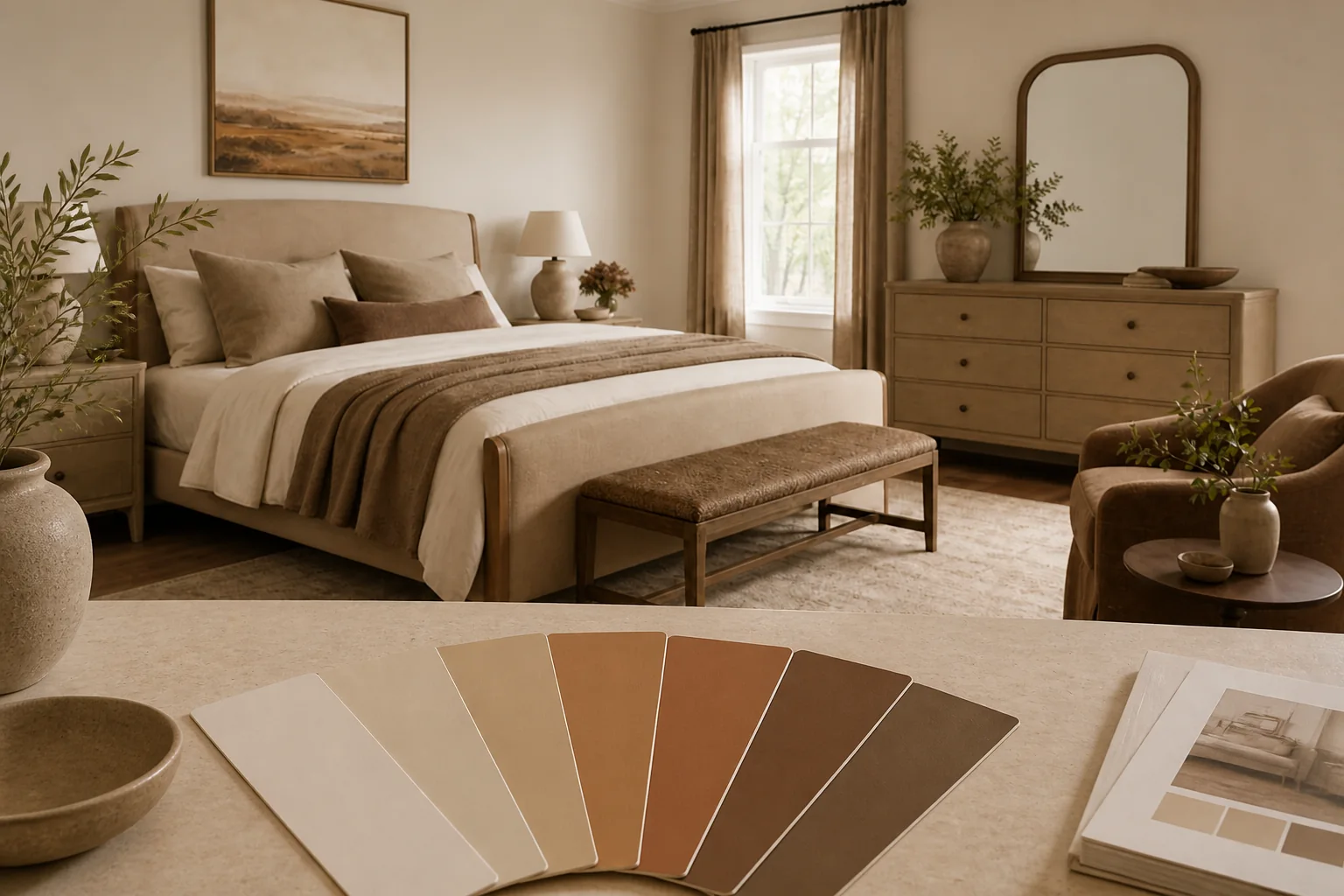
- Six room Style Kits, each with layout, palette and shopping list$114
- The Gallery Wall Studio: 200 prints + 15 measured layouts$29
- The Room Makeover System: 40 solved room layouts + workbook$29
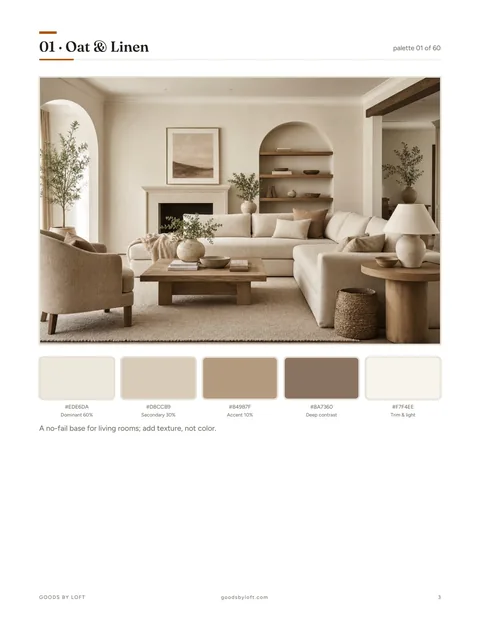
- The Color Palette Handbook: 60 palettes shown in real rooms$19
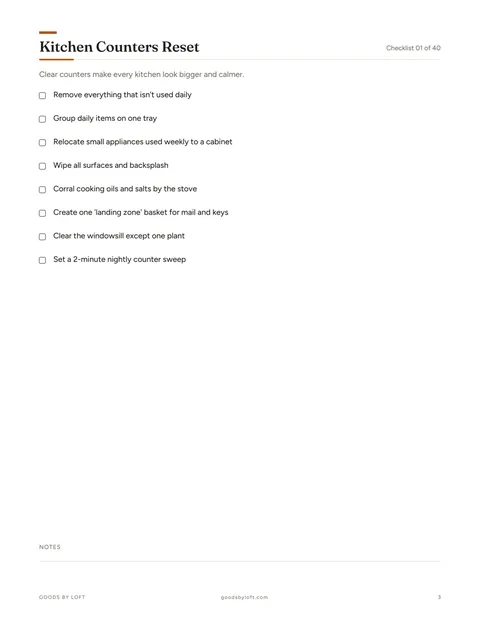
- The Whole-Home Reset: 40 printable organizing checklists$19
- The Decorator's Cheat Sheets: the 40 measurements that matter$9
- All eleven products, bought separately
$219$97
A single hour with an interior designer costs more than the entire Collection, and this one keeps answering for every room you will ever decorate. Free updates included as the products grow. And if it is not for you, the 14 day money back promise means you simply get a refund.