19 Relaxed Boho Living Room Decor Ideas for a Layered, Lived-In Space
Boho living room decor ideas with the numbers attached: rug sizes, sofa heights, bulb temperatures and prices for a relaxed, layered space that never reads cluttered.
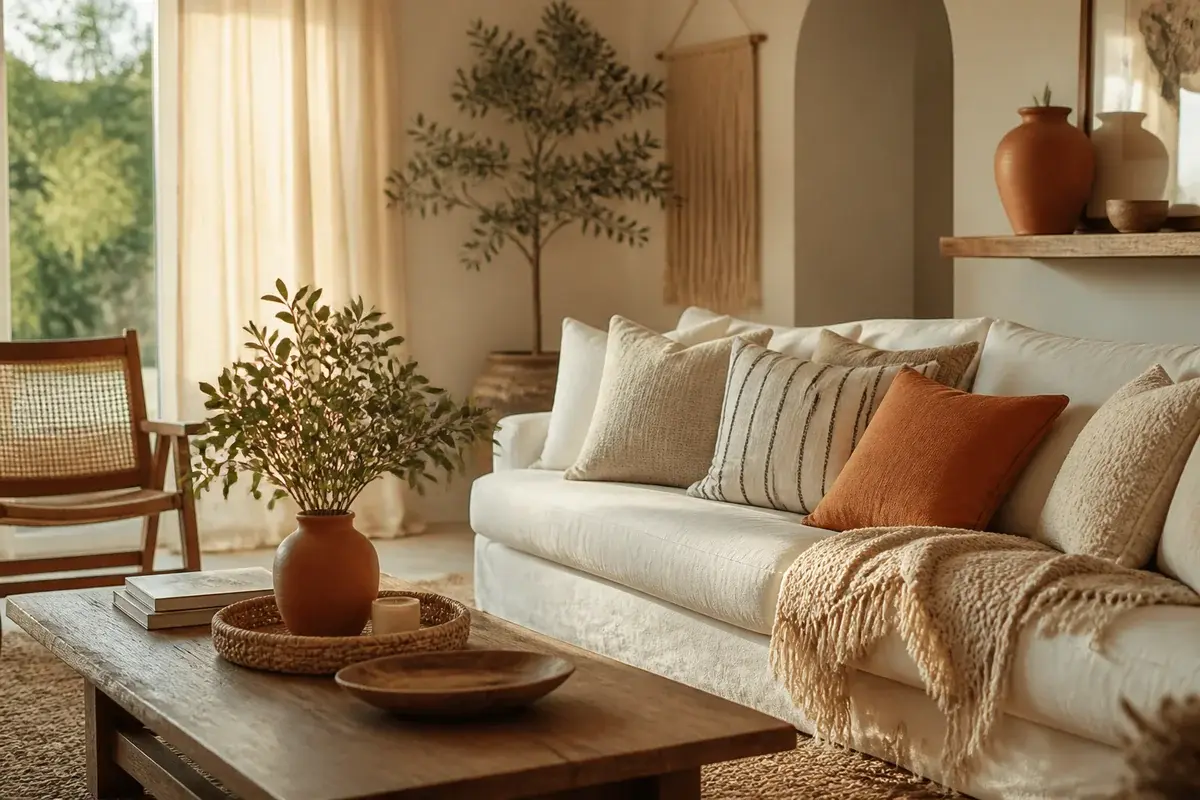
Boho gets misread as an excuse to buy more stuff. It isn't. The rooms that land are the ones that look collected without turning your living room into a dusty thrift store, and that comes down to letting things breathe and mixing pieces at genuinely different scales. Most of the work is sizing and light: a rug big enough that the front legs of your seating sit on it, a sofa back low enough to see over, bulbs warm enough that jute reads gold instead of grey. Here are nineteen ideas with the numbers attached, so you can tell before you spend anything whether a piece will fit the room you already have.
1. Layer a neutral foundation with warm undertones
Start with walls in cream, warm white, or soft taupe rather than a cool grey-white. The undertone matters more than the name on the can: grey-based whites pull the yellow out of jute, rattan, and honey-toned wood, so every natural material you layer in afterward looks dusty instead of golden. Shades like White Dove or Alabaster sit in that warm range. Buy a sample pot for about $8, paint a 12 by 12 inch square of poster board, then move it around the room and look at it at 9am and again at 8pm under lamplight, because north-facing rooms shift a warm white noticeably cooler. Paint is sold by the gallon but spent by the coat, and the second coat is not optional over a color change. Each coat pulls 350 to 400 square feet out of a can, which puts a 12 by 15 foot room at two gallons of eggshell, $50 to $75 apiece, to get both. Eggshell also wipes clean, which flat paint does not.
2. Mix woven textures in different scales
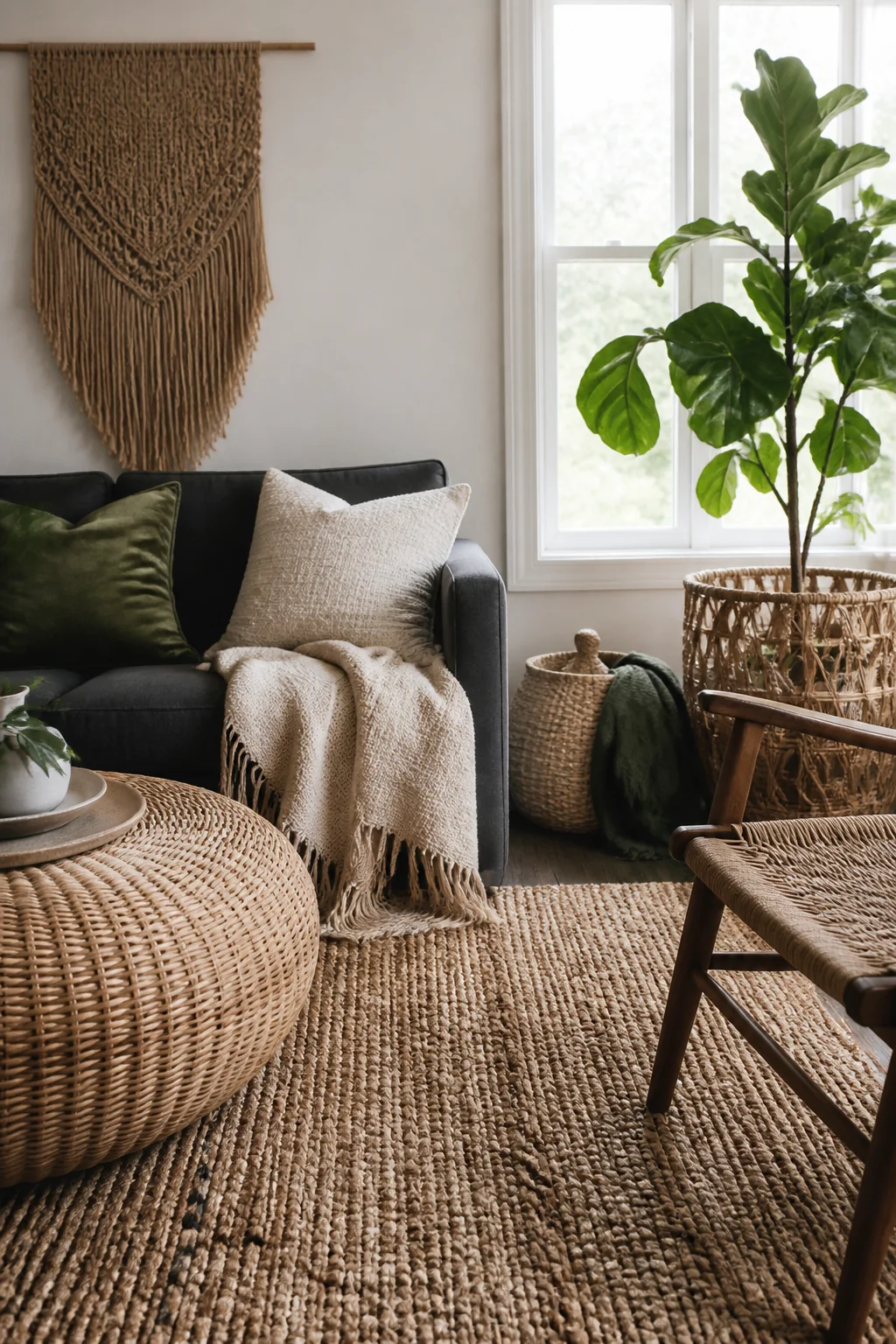
Three scales is the working rule: something large underfoot, something medium at eye level, something small you can pick up. An 8x10 jute rug ($200 to $400) covers the floor plane, a 36 inch wide woven wall hanging holds the wall, and a pair of 18 to 20 inch poufs bridges the gap between them. Keep the weaves genuinely different too. A loose chunky jute next to a tight flatweave next to knotted cotton macrame reads as layered, while three similar baskets just read as a matching set. The trade-off with jute is what it feels like: it sheds for the first month or two and it's scratchy on bare feet, so put a washable cotton flatweave on top where your feet land. Jute also stains and stiffens once it gets wet, which rules it out under a plant that drips.
3. Bring in plants (live, not fake)
Pothos, snake plants, and ficus survive ordinary apartment conditions, which matters far more than how they look in a photo. A snake plant handles a spot 6 to 8 feet from a window and wants water every three to four weeks. Pothos trails from a shelf and drinks every 7 to 10 days; in a dim corner it slows down rather than dying, which is why it forgives beginners. The one that shifts a room is a floor plant: a ficus or rubber tree in a 10 to 12 inch pot, set within 3 to 5 feet of an east or south window, costs $60 to $120 and functions like furniture. Ficus drops leaves when it's moved or when it sits in a draft, so keep it clear of HVAC vents and choose its spot once. Any pot going on wood needs a saucer underneath.
4. Hang macrame plant hangers from the ceiling
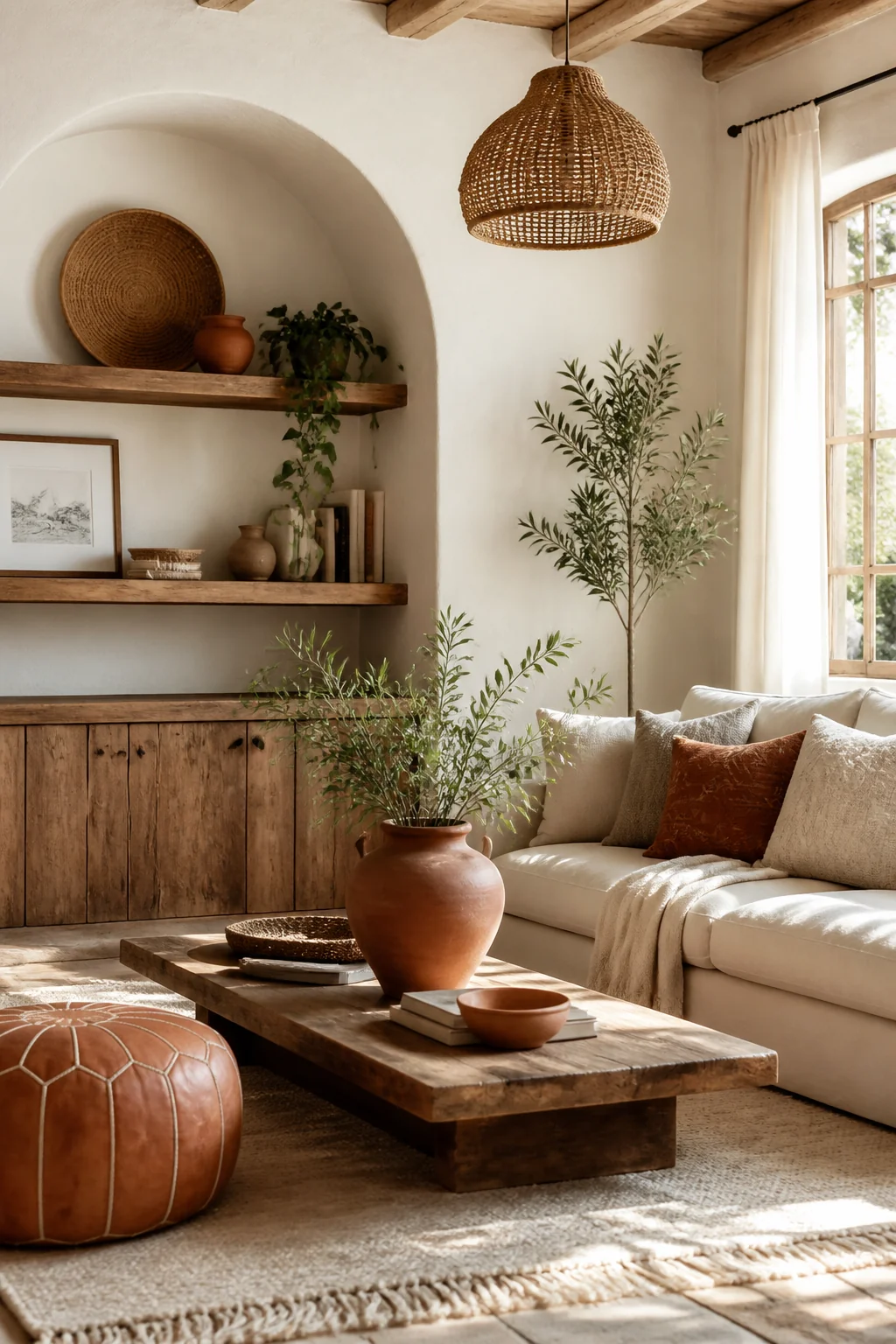
Cotton macrame hangers cost $15 to $25 for a 36 to 42 inch length, so the real expense is the hardware. A 10 inch pot with damp soil weighs 12 to 18 pounds, well past what a plain adhesive ceiling hook can carry. Screw into a joist where you can find one, or use a toggle bolt rated for at least 50 pounds and tighten until the flange sits flush against the drywall. Hang it near a window for light, with the base of the pot around five and a half to six feet off the floor: high enough to walk under, low enough to water without dragging a chair over. Keep the pot about 12 inches back from cold glass in winter. The usual failure is drips, so use a cache pot with no drainage hole, or wedge a saucer inside the sling.
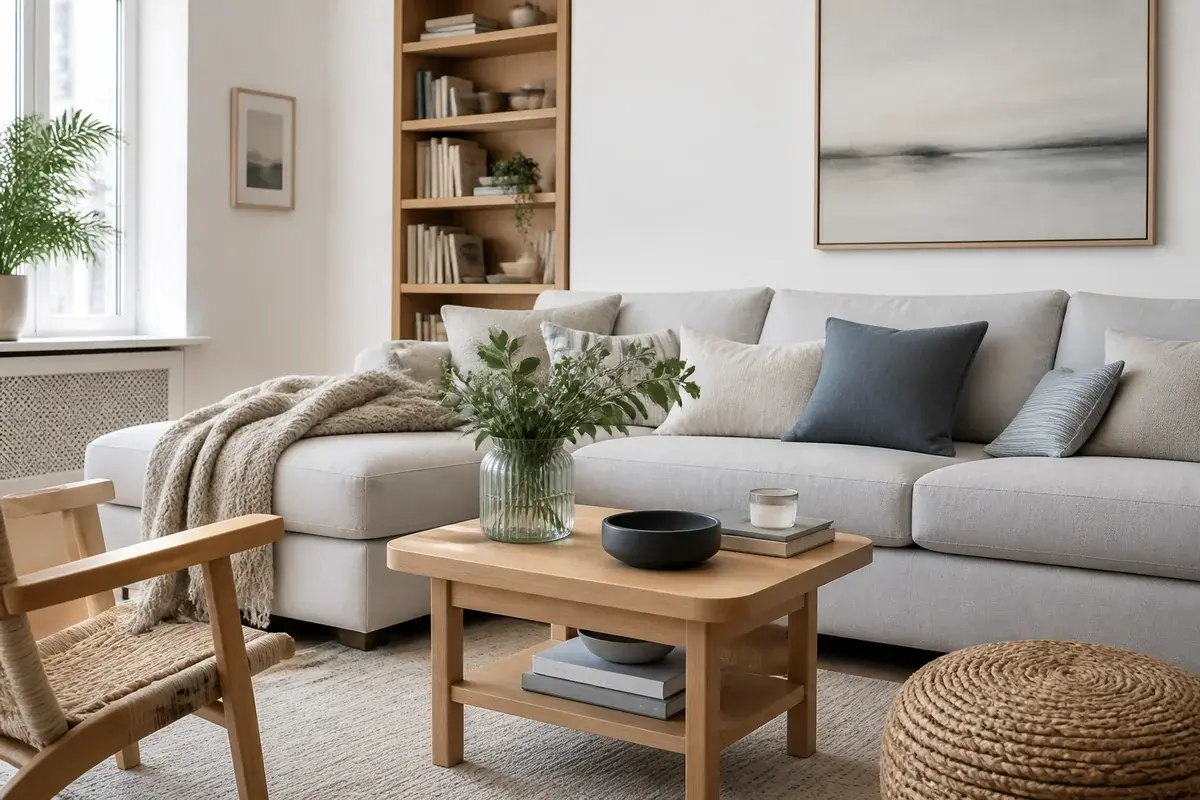
5. Choose a low-profile sofa or daybed
Judge this one by the numbers, not the silhouette. A low-profile three-seater sits at 15 to 17 inches at the seat with a back under 30 inches, against 36 inches or more on a chunky sectional, and that six inch difference is exactly what lets you see across the room. A depth of 36 to 40 inches still gives you the sink-in feel without eating the floor. A 78 to 84 inch frame suits most living rooms and lands between $600 and $1,400.
Cream linen looks right and behaves badly. Ask for a linen-blend performance weave rated around 50,000 double rubs, or buy a washable slipcover if there are pets in the house. Earth tones hide more. Whichever you pick, leave 30 to 36 inches of walkway around the frame and 14 to 18 inches between the front edge and the coffee table.
6. Add a patterned area rug with fringe
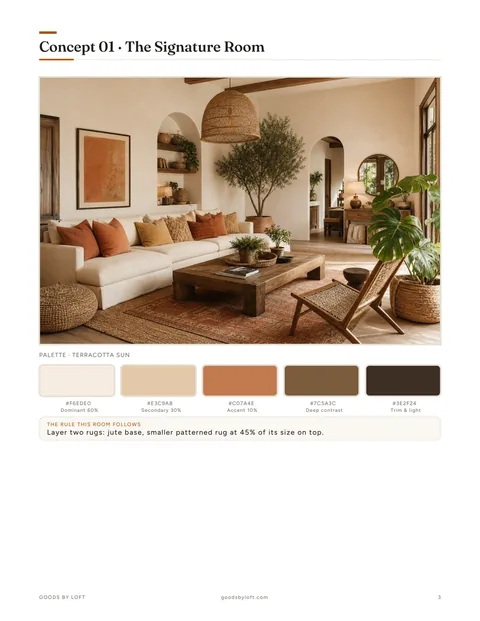
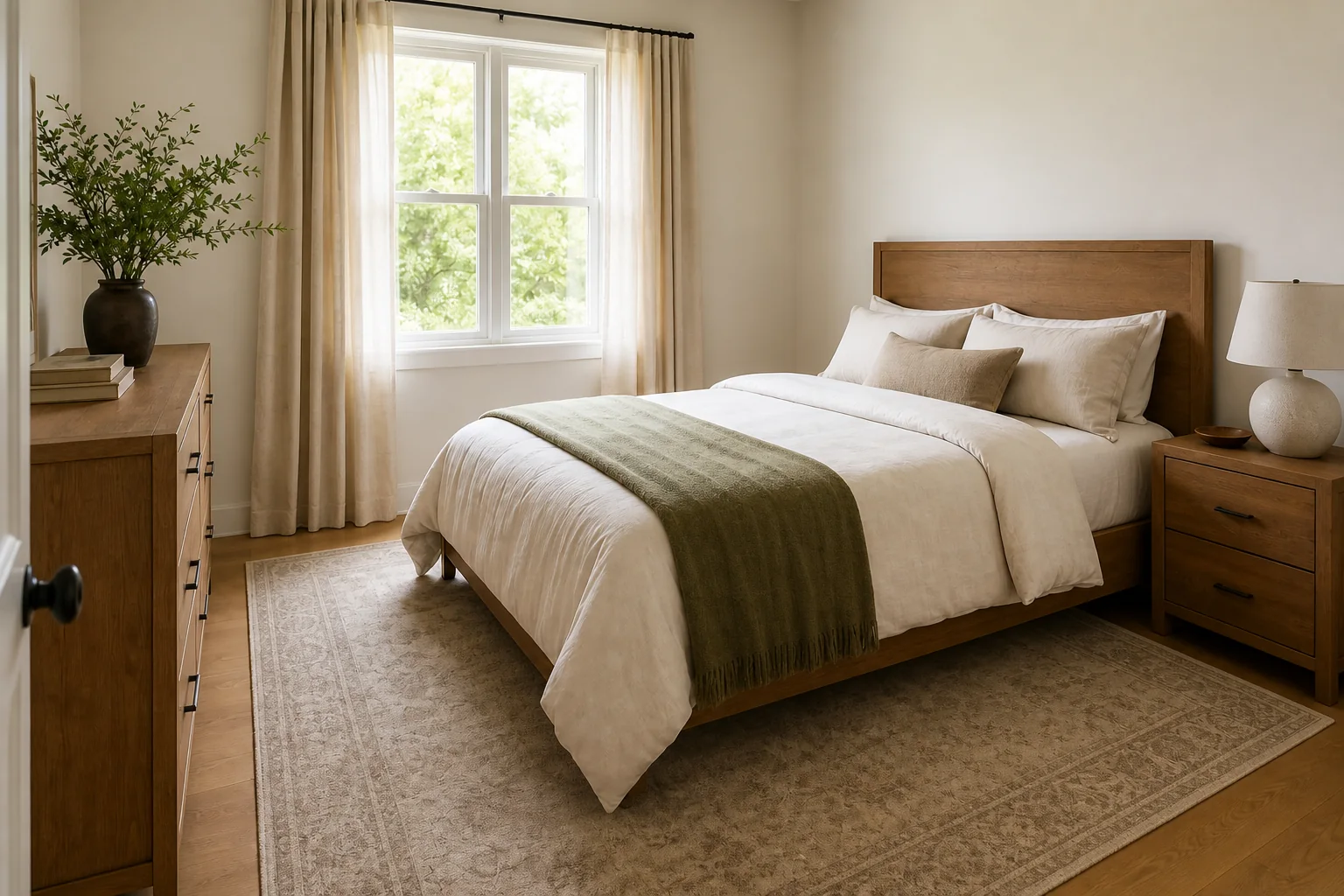
Geometric or tribal patterns in rust, ochre, or navy on a natural ground do the heavy lifting here, and the fringe keeps the edge from reading as a hard stop. Size is where most rooms go wrong. A 5x7 at $80 to $150 only works for a small seating group; in an average living room it floats in the middle like a bath mat. The rule that holds: the front legs of every seat should land on the rug, which for a standard sofa-plus-two-chairs layout means 8x10. Add a quarter inch felt and rubber pad, roughly $40 to $60 at that size, or the rug creeps every time someone sits down and the fringe curls under. Vacuum with the beater bar switched off, since spinning bristles chew fringe apart within a season. Layering a patterned wool rug over a bigger jute one gets you the size and the pattern together.
7. Layer throw pillows in odd numbers
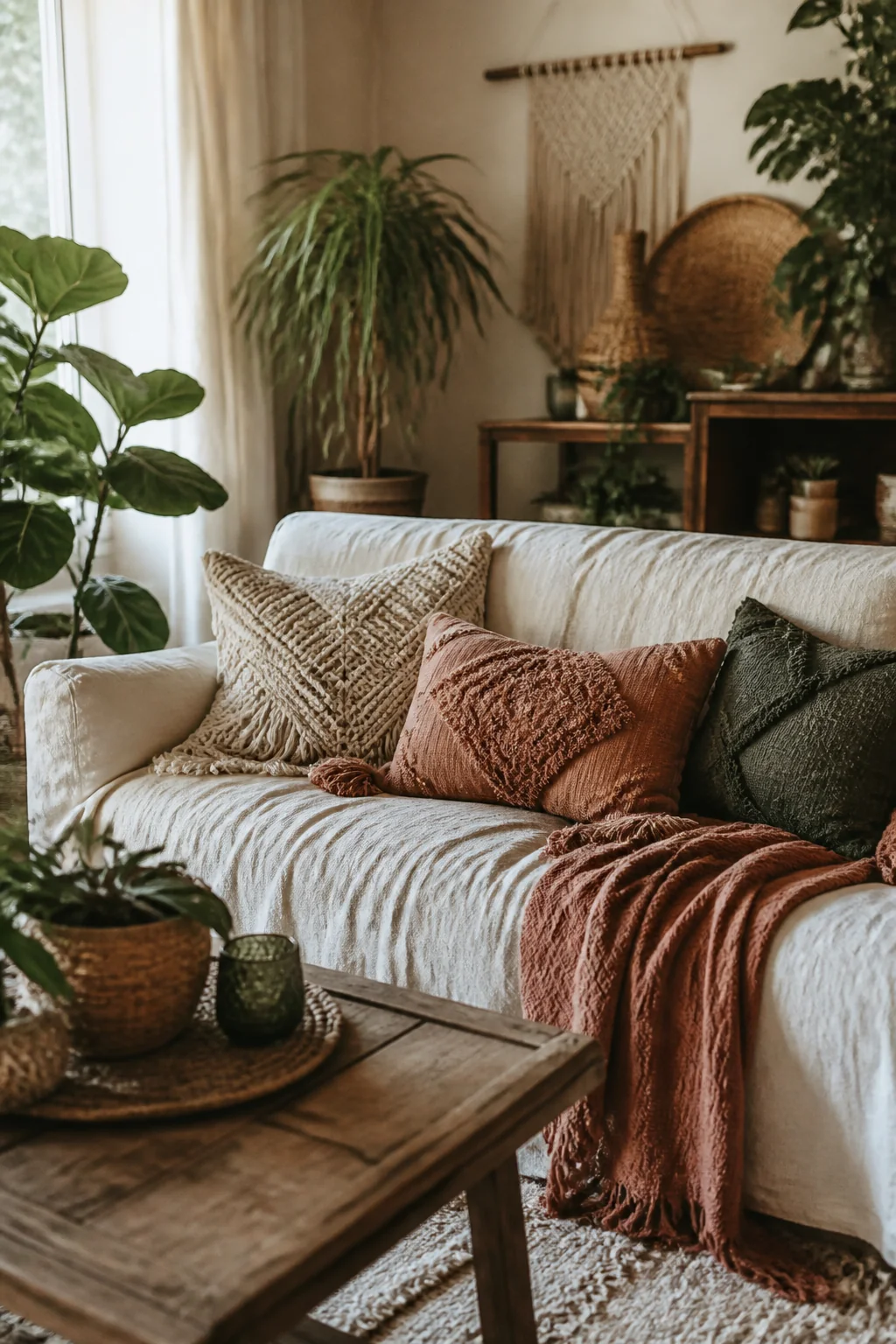
Odd numbers work because the eye stops trying to pair things up. Three across an 84 inch sofa is plenty, five suits a daybed or a deep sectional, and seven is for a window seat. Sizing does more than the count: two 20 or 22 inch squares in the corners plus one 12 by 20 lumbar in the middle holds together without looking staged. That soft slump you're after is just a slightly overstuffed cover, which is why the insert has to run two inches over: a 20 inch cover takes a 22 inch feather-down. Match the two sizes and you get a flat pillow with pointy corners instead. Inserts run $12 to $20 each and covers $15 to $30, so a three-pillow refresh comes in under $100. Vary the material as well as the print: one linen, one cotton stripe, one macrame or tufted. And leave room to sit. Once pillows take half the seat, guests pile them on the floor.
8. Install floating shelves for books and decor
Depth decides what a shelf can hold in practice. Eight to ten inches takes hardcover books and a small plant; six inches is decor only, and paperbacks will overhang the edge. Standard 24, 36, and 48 inch lengths cost roughly $25 to $70 each in solid pine or oak veneer. Find the studs, which sit 16 inches on center in most homes, and hit at least two: a floating bracket into two studs carries 30 to 50 pounds, while drywall anchors alone top out near 10 to 15 pounds, and a row of books passes that fast. Space shelves 12 to 16 inches apart so you can reach in without knocking things over. When you style them, leave about a third of each shelf empty and lay two or three books flat as a riser for a plant or a small bowl. Fill every inch and the wall reads like a catalog page.
9. Use warm lighting with Edison bulbs or rattan shades
Harsh overhead light flattens everything you just layered. Warm bulbs at 2700K in the 450 to 800 lumen range are the fix, and anything above 3000K pulls jute, rattan, and honey wood toward grey-green. Build three sources at different heights instead of relying on one ceiling fixture: a table lamp 26 to 30 inches tall, so the bottom of the shade sits near eye level when you're seated, a floor lamp at roughly 60 inches, and the overhead on a dimmer, which is a $20 to $25 switch and half an hour with the breaker off. Rattan or woven pendants at $60 to $150 cast pattern across the ceiling after dark, and that shadow is most of the appeal. Give a pendant 7 feet of clearance in any walking path. One caution on Edison bulbs: a bare filament at seated eye level is glare, so use frosted glass or hang it above sightline.
10. Create a gallery wall with mirrors and frames
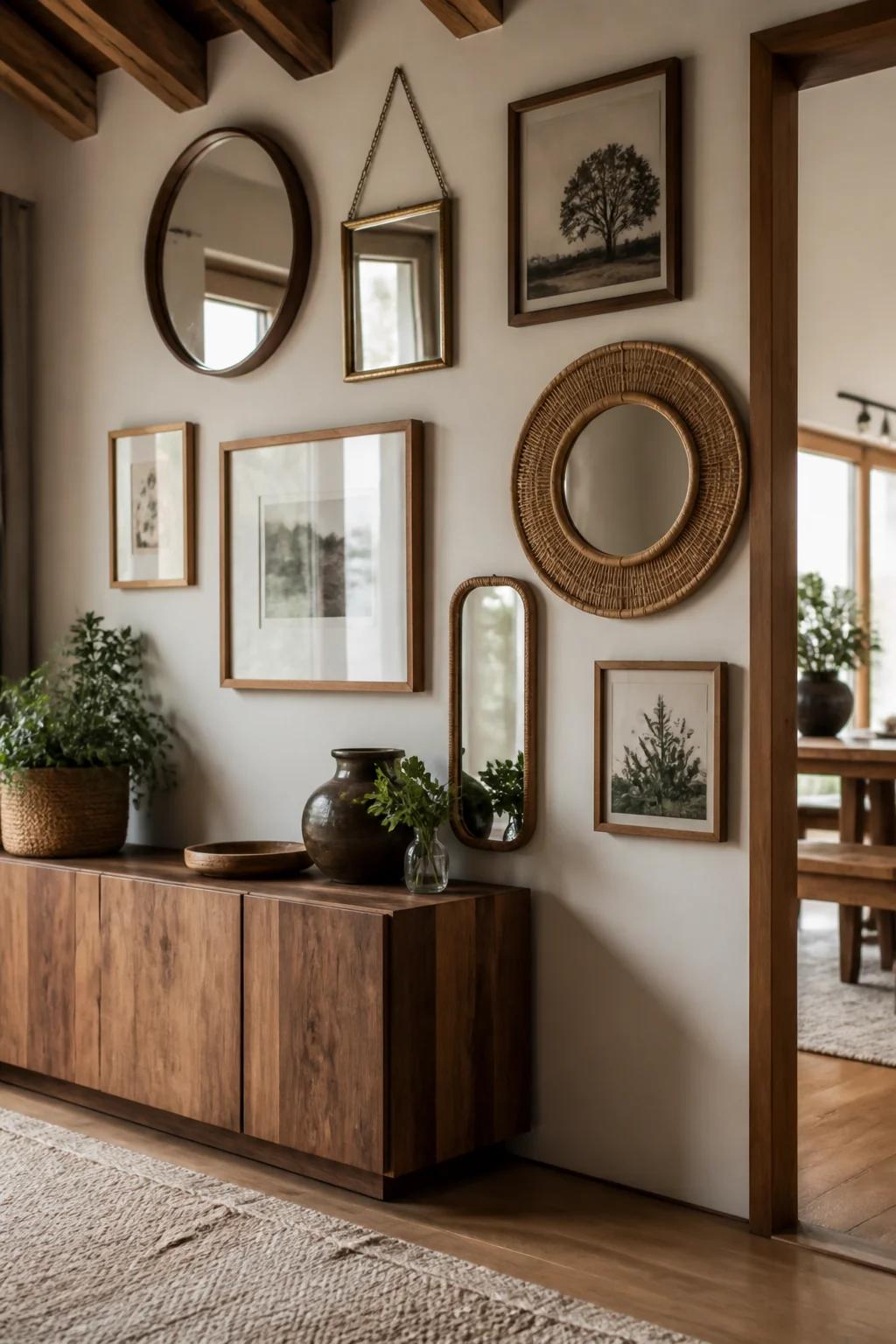
Mix wood frames, a rattan-wrapped mirror, and a woven piece or two so the wall isn't all glass and paper. Renting? Lean the whole arrangement along a console or a 4 inch picture ledge ($25 to $40) instead of putting holes in the plaster. When you do hang, remember galleries settled on their height because it meets an average standing eye and not because it measures neatly, so bring the visual center of the group to 57 to 60 inches off the floor and keep 2 to 3 inch gaps between frames, which lets the cluster read as one shape rather than scattered pieces. Cut paper templates and tape them up first; twenty minutes there saves a wall full of patched holes. Mirrors over 20 pounds need a stud or a heavy-duty anchor, not a nail. Before committing, sit down on the sofa and look at what the mirror reflects: a rattan mirror aimed at a blank ceiling or a fan is a wasted piece.
11. Add a low wooden coffee table
Height first: 16 to 18 inches, which puts the top an inch or two below the seat of a low sofa. Go taller than the cushion and a relaxed sofa becomes awkward to reach across. Length should run about two-thirds of the sofa, so a 78 inch sofa takes a table around 48 to 52 inches, with 18 inches of leg room between the two. Reclaimed teak or mango wood in a honey or natural finish costs $150 to $300. Mango is soft and dents under a dropped remote, so it wants an oil or wax finish refreshed every 6 to 12 months; a lacquered top resists more but loses the matte look that suits this style. Two 14 to 16 inch woven cube stools tuck underneath for extra seating if there's an inch of clearance above them. With small kids in the house, a round table saves shins.
12. Drape a vintage textile or throw blanket over the sofa
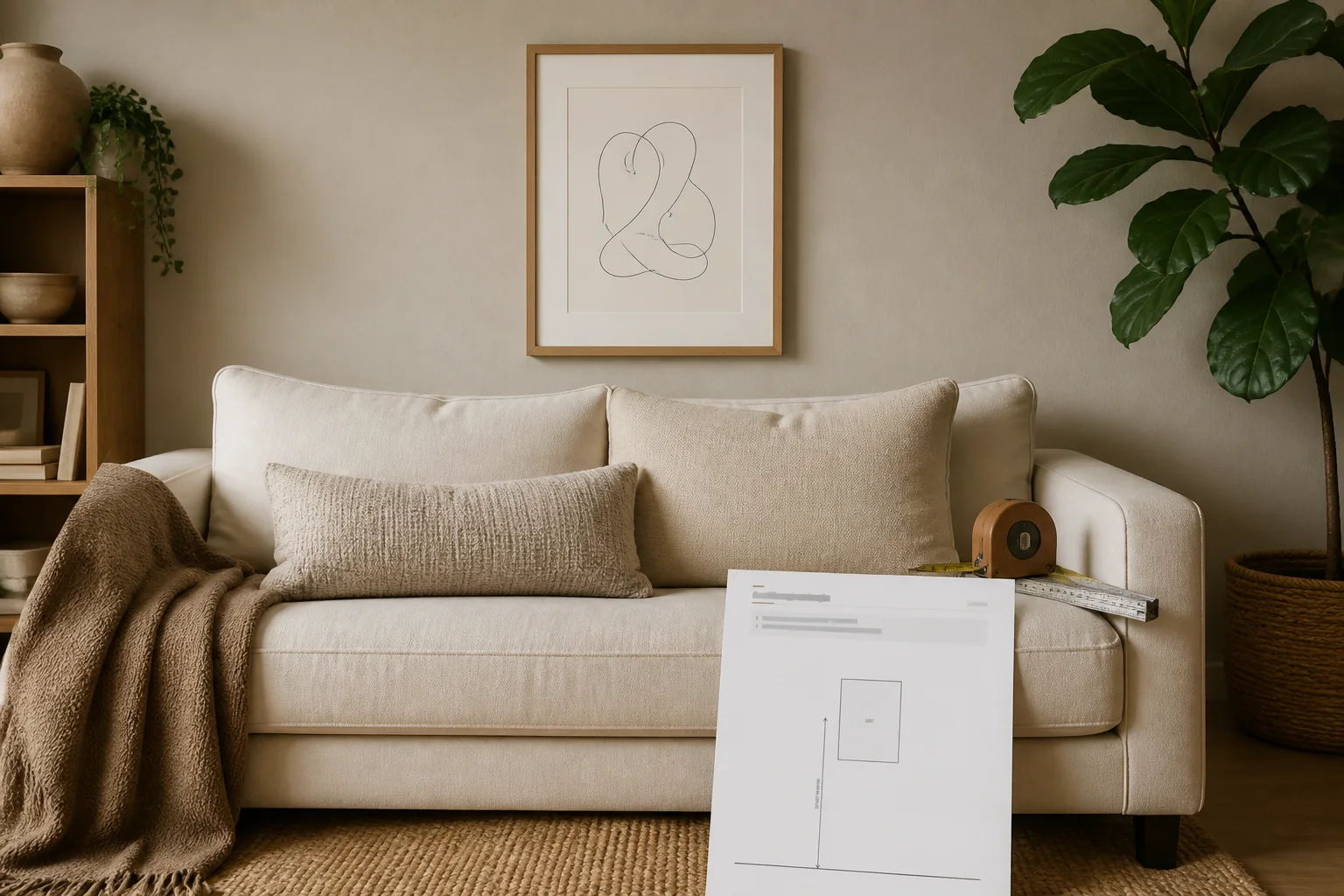
A hand-woven throw or a kilim over one arm brings in color without touching the upholstery underneath, which is the cheap way out of a sofa you've gone off. Thrifted cotton and wool throws go for $20 to $60; a genuine vintage kilim runs $150 to $400 and behaves completely differently. Kilim is flat and stiff, so it holds an angle instead of falling into folds. If yours refuses to drape, move it to the back of a chair or use it as a floor runner and put a softer wool or slubby cotton on the sofa instead. Fold on the diagonal, hang it over one arm, and let 12 to 18 inches spill toward the floor so it reads as used rather than placed. Test old wool before washing: press a damp white cloth on a corner for thirty seconds, and if dye lifts, hand wash cold with no agitation.
13. Hang string lights or paper lanterns
Warm white is the whole game here. Check the box for 2200K to 2700K, because a cool blue-white string reads dorm room no matter how good the rest of the room is. A 15 to 20 foot span covers one corner or one wall and costs $20 to $40; G40 bulbs in shatterproof plastic survive being knocked, which glass ones don't. Support the run every 24 to 36 inches with adhesive hooks rated for a pound, and plan it so the plug end finishes near an outlet rather than crossing a walkway with a cord. A $12 mechanical timer or smart plug means you're not reaching behind the sofa every night. Paper lanterns follow the same logic at 12 to 16 inches across, hung at 7 feet or higher so nobody walks into one, with a few inches of air between the paper and any bulb that runs hot.
14. Style a console table behind the sofa
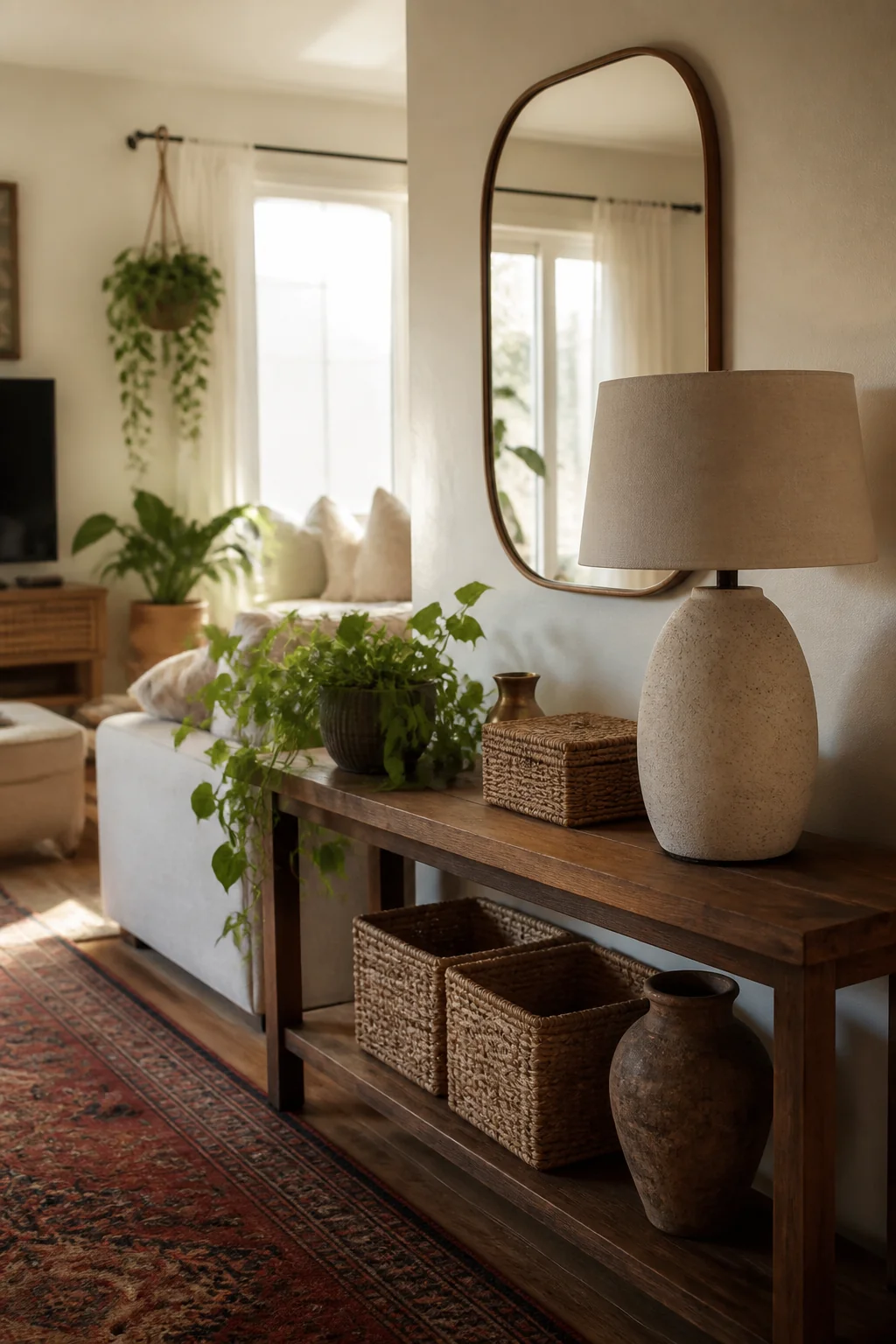
Match the console height to the sofa back, or sit it an inch below, which usually lands at 28 to 32 inches. Depth is the number that decides whether this works at all: 12 to 16 inches, no more, with 3 to 4 inches left between the table and the sofa back so lamp cords drop out of sight down the gap. Length at roughly two-thirds of the sofa keeps the proportion right, and solid wood or cane-front pieces run $120 to $300. Style it in three heights: a table lamp at one end, a stack of three books with a small mirror or bowl leaning behind, a trailing plant at the other end, and one stretch left deliberately empty. The catch is floating the sofa at all. With less than 30 inches between the sofa back and the wall, a console swallows the walkway, so skip it.
15. Use woven wall baskets for storage and style
Hang three or four flat woven bowls in mixed sizes, roughly 12 to 18 inches across, at $15 to $50 each. Cluster them off-center with 2 to 4 inch gaps and let one sit lower than the rest, so the group has a shape instead of reading as a tidy row. Most come with no hanger, so thread a loop of picture wire or a sawtooth hook through the back weave with a zip tie, then hang on a 1.5 inch screw set in a drywall anchor rated for 20 pounds. Be honest about the storage part, though: a shallow wall bowl holds nothing useful, and a basket deep enough for blankets and magazines is too heavy and too bulky to sit flat against a wall. Keep the deep ones on the floor beside the sofa or on a shelf. Light from the side brings out the weave.
16. Add a vintage wooden ladder as a blanket display
A 5 to 6 foot wooden ladder holds three or four throws and costs $30 to $60 secondhand. Lean it at roughly 10 to 15 degrees, which puts the feet 12 to 18 inches out from the baseboard, and stick felt pads on the bottom rails so it doesn't skate across hard floors. With toddlers or a large dog around, drive a small L-bracket into the wall behind the top rung and be done worrying. Old ladders need prep. Anything painted before 1978 may carry lead, so leave that paint sealed and undisturbed or have it tested rather than sanding it in your living room. Bare wood just wants 120 grit then 220 grit along the rungs to kill splinters, plus a wipe of clear wax. It occupies about 20 inches of floor, which makes a corner the right home for it and a doorway the wrong one.
17. Layer in patterned curtains with texture
Where you mount the rod matters more than the pattern you choose. Your eye reads the rod as the top of the window and the panel edges as its sides, so the hardware settles the proportions before the fabric gets a vote: 4 to 6 inches above the frame, or halfway between frame and ceiling if you have the height, with 8 to 12 inches of run past each side so open panels sit on wall instead of daylight. Combined panel width should be two to two and a half times the window width, or the fabric hangs flat instead of folding. Linen or cotton panels in stripes, diamonds, or a small geometric cost $30 to $60 each. Hem them to break half an inch above the floor, or let them puddle an inch if you prefer the softer line and don't mind vacuuming around them. The honest downside of linen is that it wrinkles by design, and unlined linen fades in a strong south window within a couple of seasons, so line it there.
18. Create a cozy reading nook with a floor cushion and basket of books
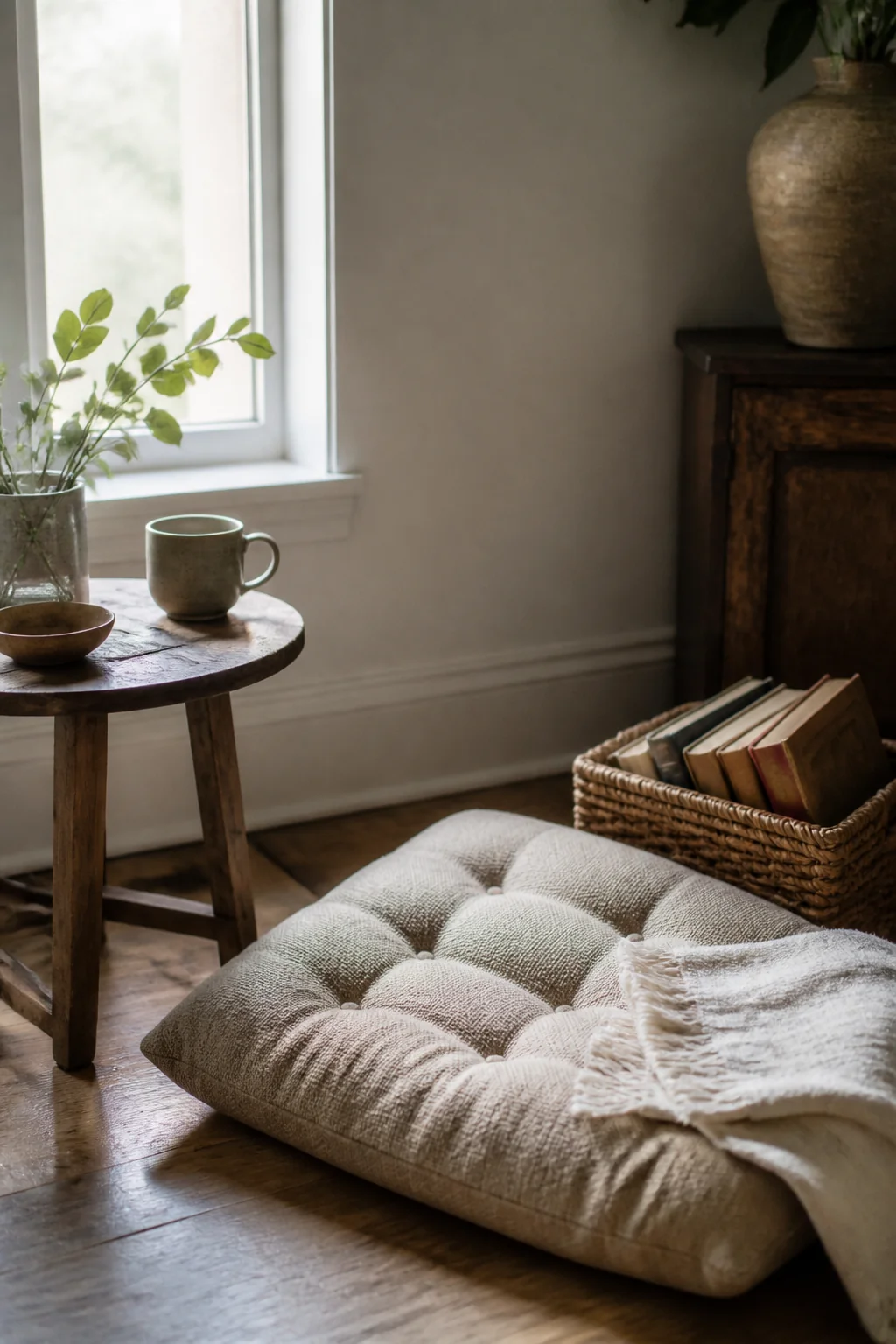
Set aside about a 4 by 4 foot corner. A 24 inch floor cushion, 6 to 8 inches thick, costs $60 to $120 and wants a rug underneath or the floor still feels cold through it. Add a side table 20 to 24 inches tall, which is elbow height when you're sitting on the floor, and a 14 to 16 inch woven basket for your current reads. Then light it properly: a floor lamp with an 800 lumen 2700K bulb angled to come over your shoulder rather than into your eyes is the difference between a nook people use and one that only photographs well. Floor seating is harder on knees than it looks in pictures. If getting up off the floor is a chore, swap the cushion for a 16 to 18 inch pouf or a low armless chair and leave the rest of the setup exactly as it is.
19. Mix metals loosely: brass, copper, and wood only
Two metals plus wood is the ceiling. Brass, copper, and warm natural timber share the same undertone, while chrome and polished nickel read cold against jute and rattan. Repeat each finish at least three times around the room, spread in a loose triangle, so a single copper plant hanger doesn't look like a leftover. Know what you're buying, too: unlacquered brass darkens over a year or two into a soft patina, lacquered brass stays bright but can't be polished back once the coating scratches, and copper shifts noticeably within months. Bar Keepers Friend or lemon and salt takes either back to shine if the aging bothers you. Brass-toned spray paint chips at every corner, so solid brass or an antique-brass powder coat is worth the extra $10 or $15 a piece. Chrome fixtures you inherited can stay; a room fighting itself looks worse than a mixed one.
Save the full guide

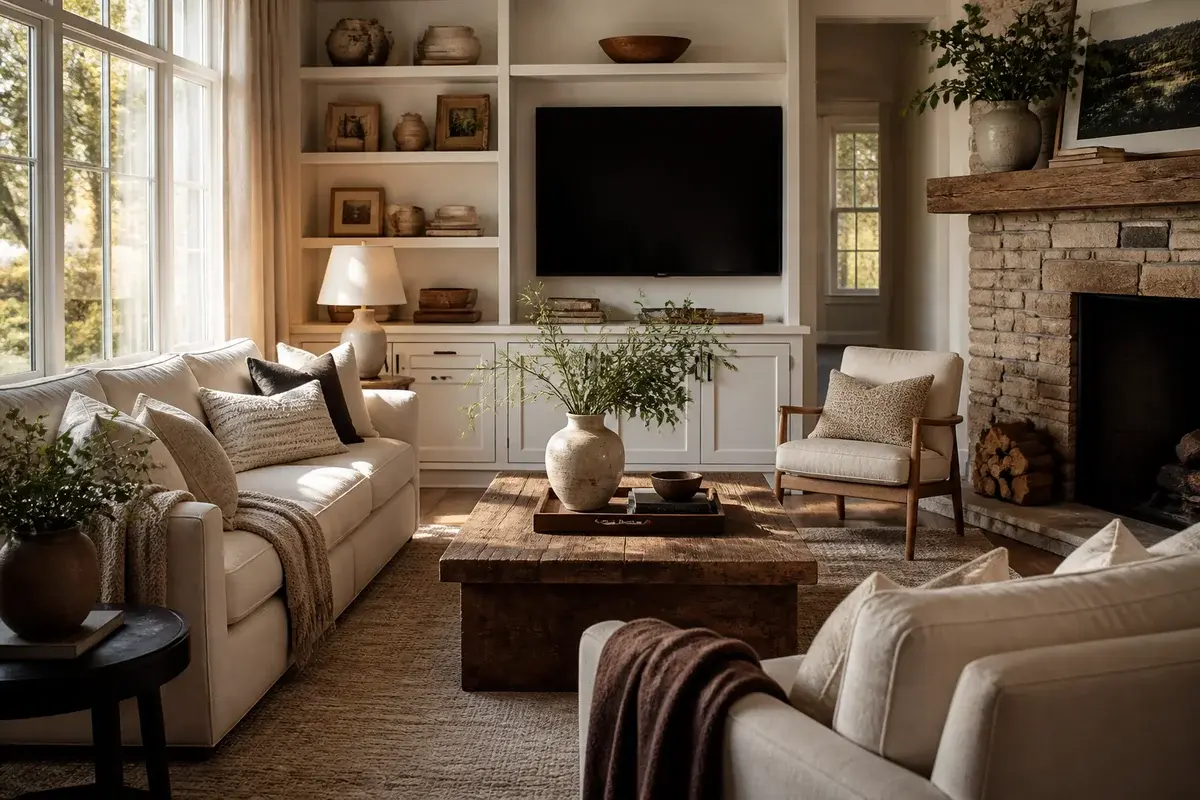
The thing that separates a boho room from a cluttered one is the empty space between objects. A shelf with three things on it, one basket cluster on a wall, a corner given over to a single large plant: those read as collected. A room where every surface is loaded reads as busy, however good the individual pieces are. Nineteen ideas is a menu, not a checklist, and most living rooms only need five or six of them. What you leave out is doing as much work as what you buy.
Ideas fade by Friday. A plan finishes the room.
You just read a full guide to your living room. Saving ideas will not change it; a plan will. The Home Decor Collection is every planning tool we make, for every room in the house, in one download, so the after photos below stop being other people's rooms.
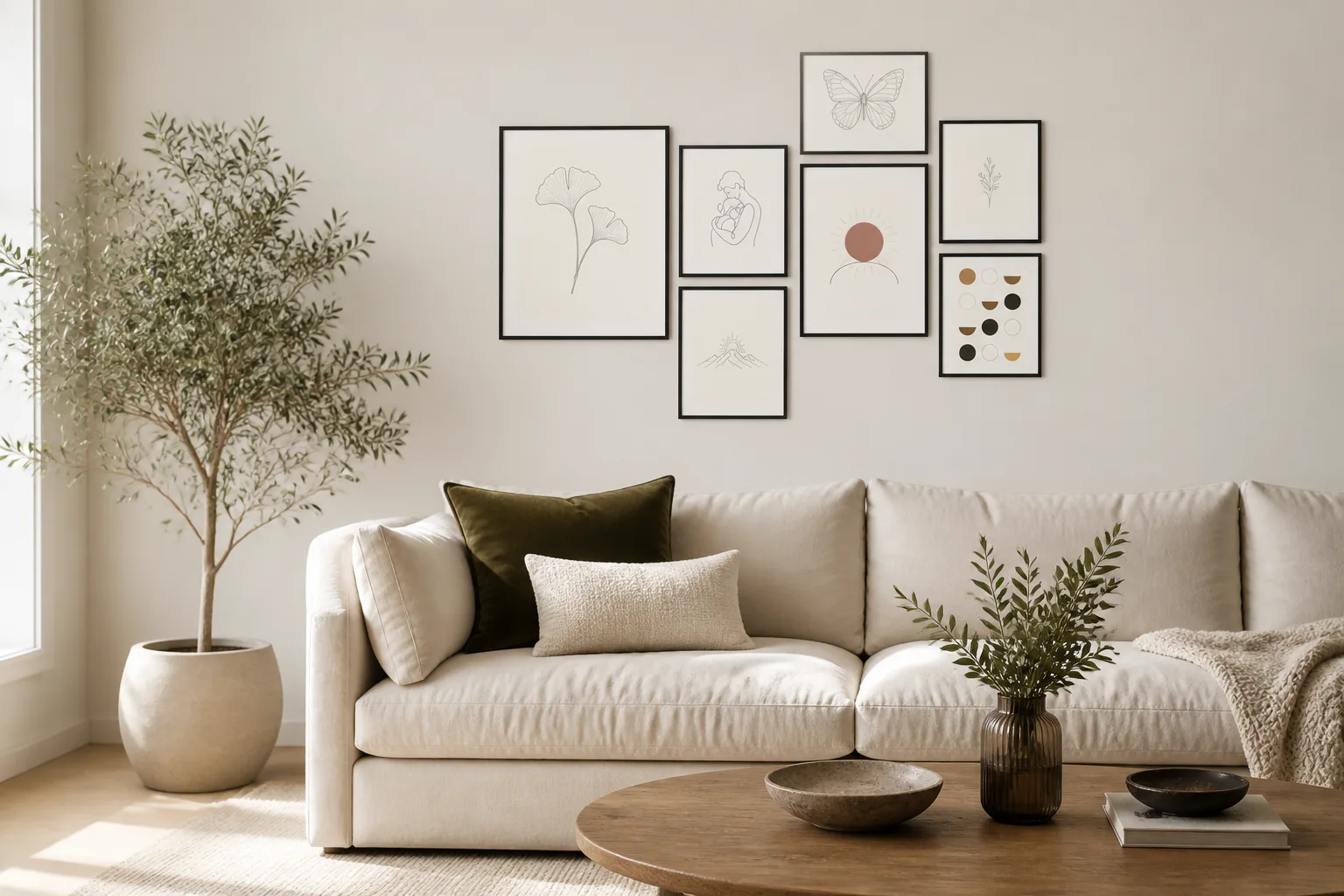
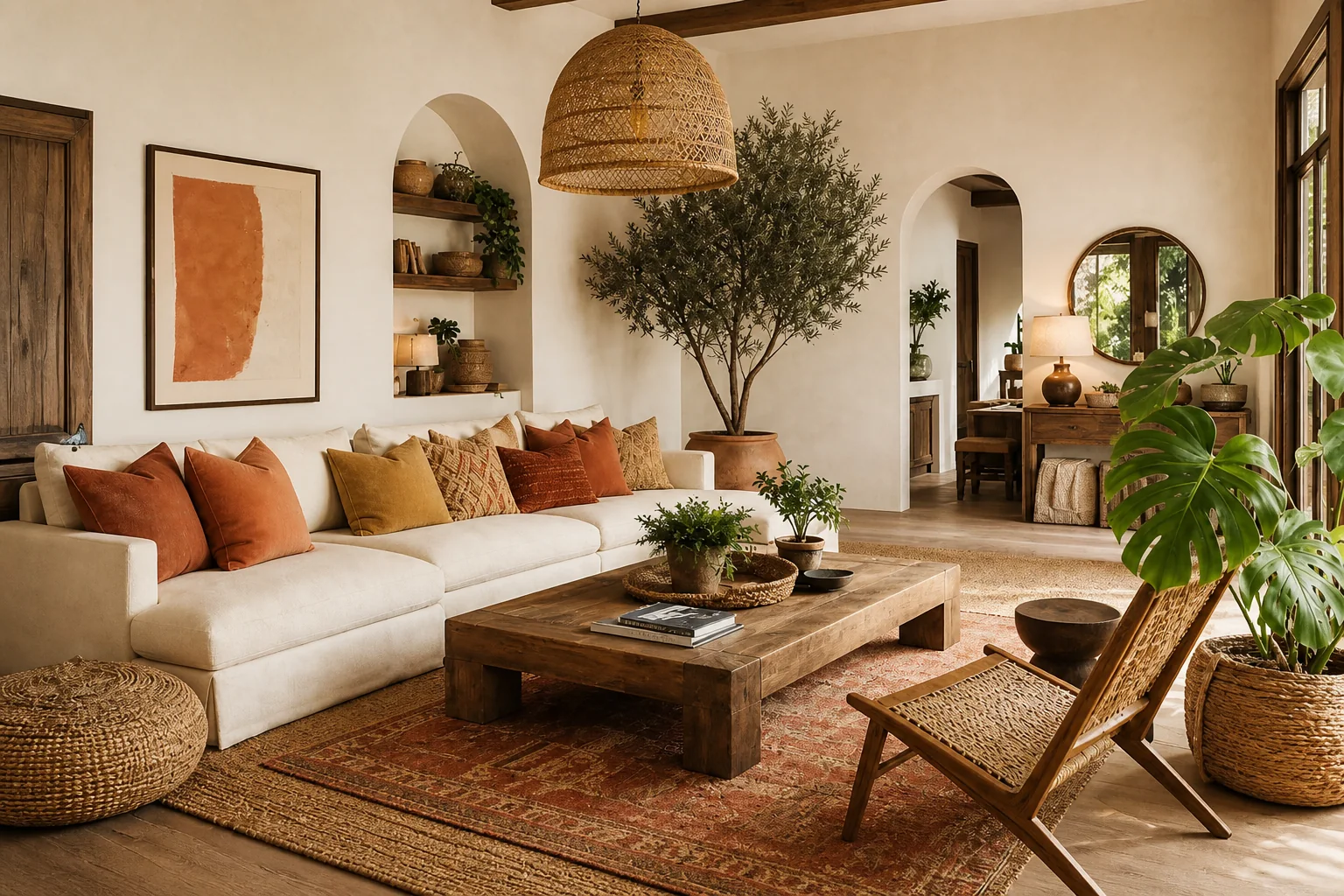
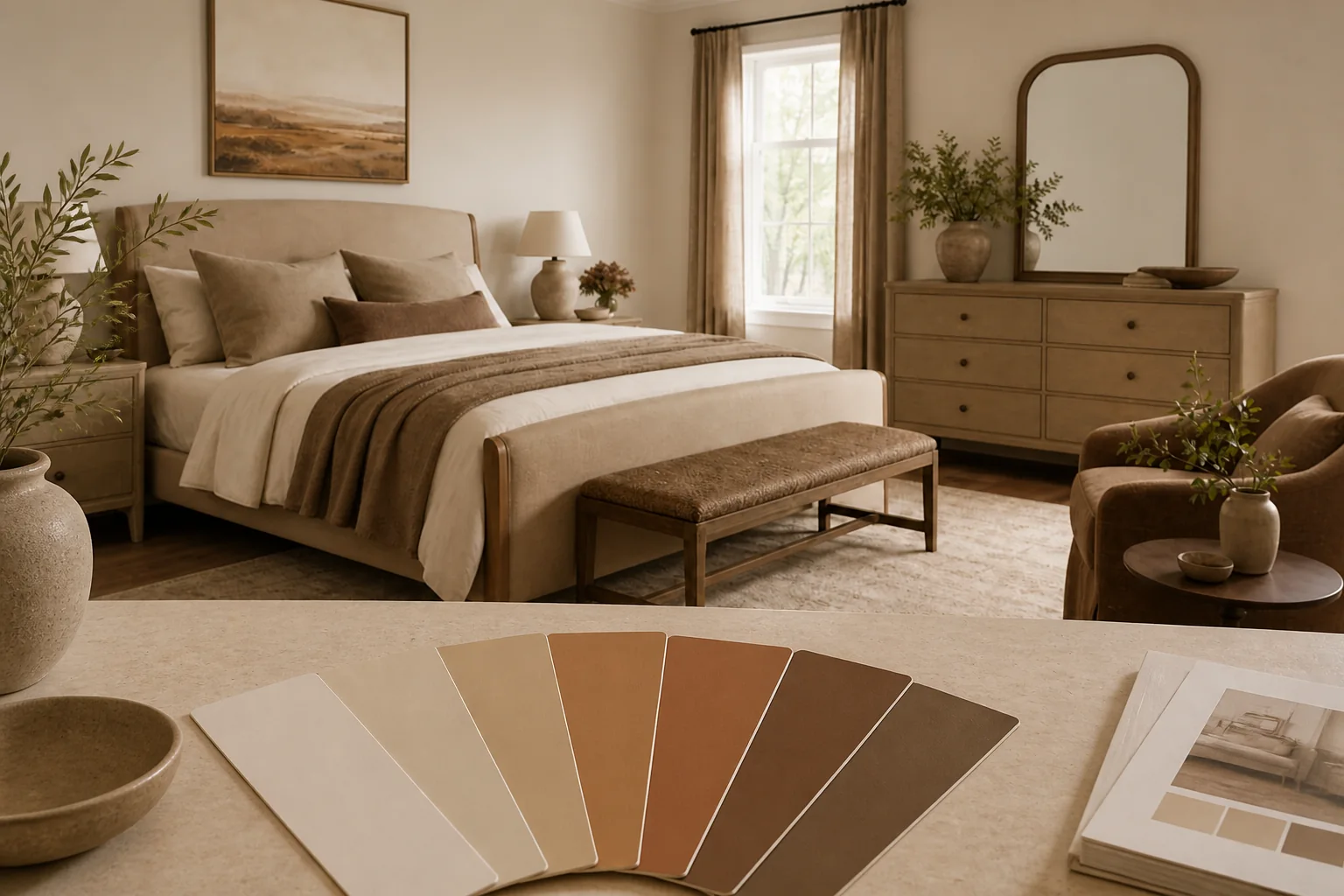
- Six room Style Kits, each with layout, palette and shopping list$114
- The Gallery Wall Studio: 200 prints + 15 measured layouts$29
- The Room Makeover System: 40 solved room layouts + workbook$29
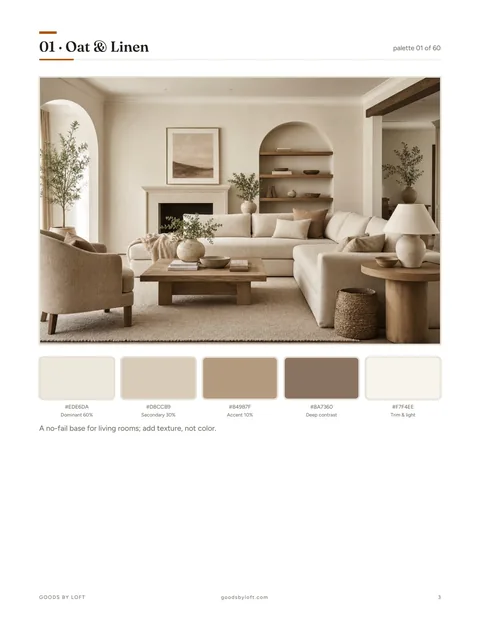
- The Color Palette Handbook: 60 palettes shown in real rooms$19
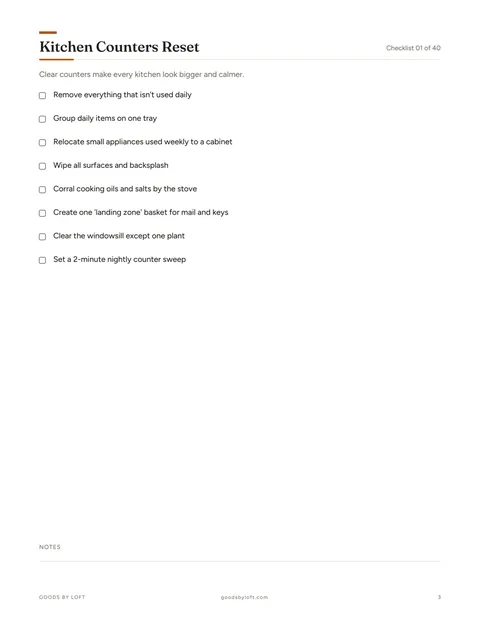
- The Whole-Home Reset: 40 printable organizing checklists$19
- The Decorator's Cheat Sheets: the 40 measurements that matter$9
- All eleven products, bought separately
$219$97
A single hour with an interior designer costs more than the entire Collection, and this one keeps answering for every room you will ever decorate. Free updates included as the products grow. And if it is not for you, the 14 day money back promise means you simply get a refund.