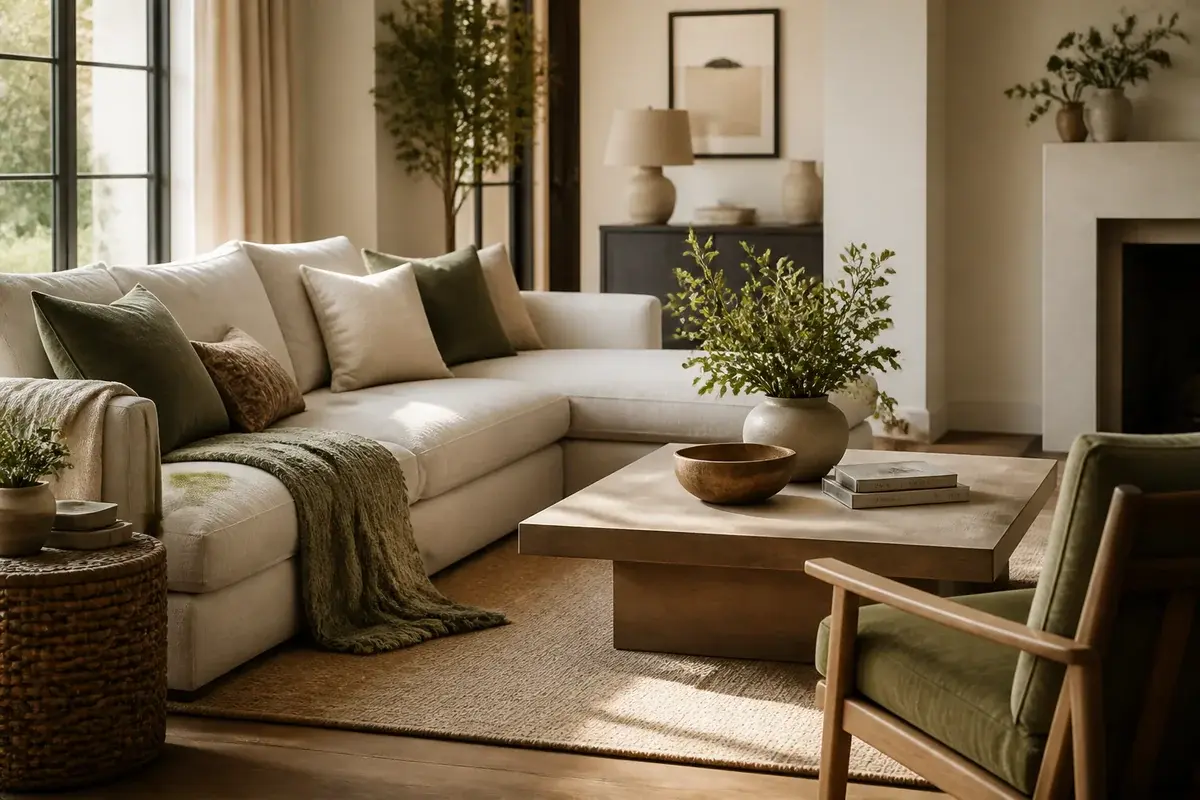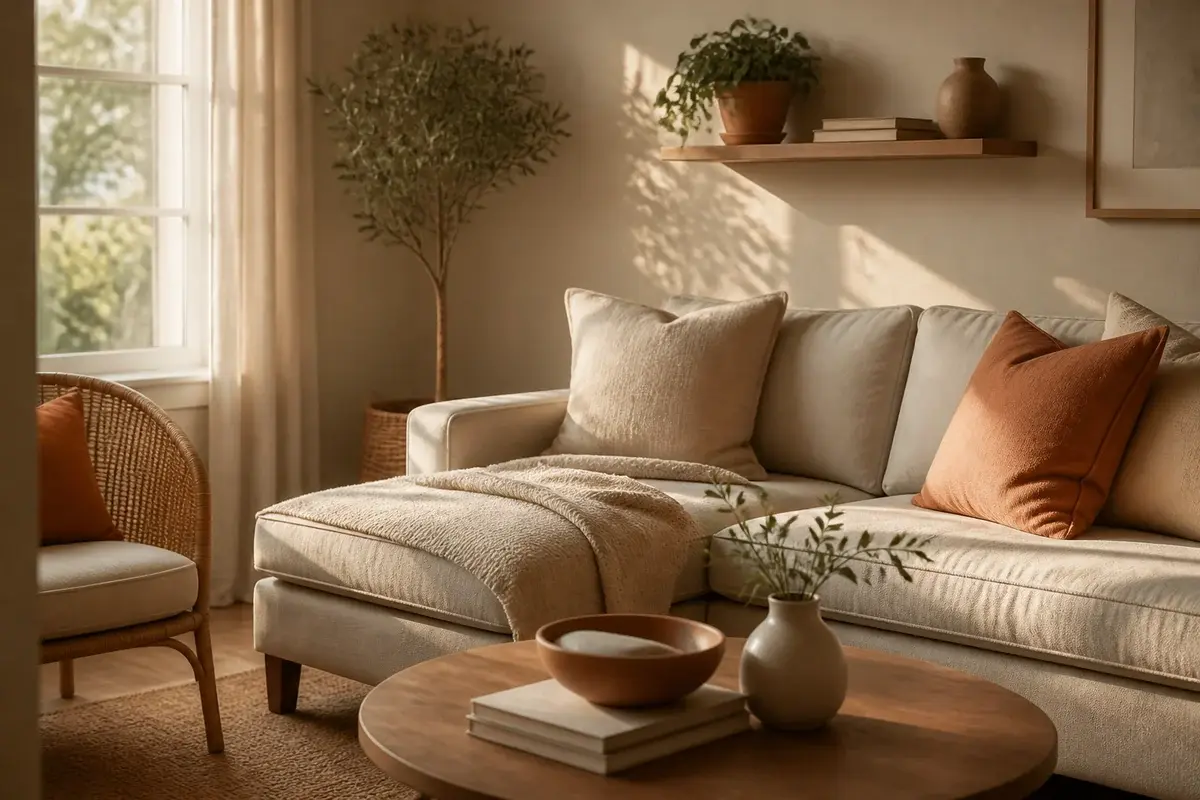
7 Small Living Room Ideas That Work in 200 Sq Ft
Seven practical small living room ideas for 200 sq ft, with the measurements, prices and clearances to check before you buy anything.
This post contains affiliate links. As an Amazon Associate I earn from qualifying purchases. If you buy through our links, we may earn a commission at no extra cost to you.
Two hundred square feet is roughly the size of a one-car garage, and in a lot of apartments that one rectangle is the living room, the dining room and the office at once. At that scale most of the standard advice stops applying. You can't zone with rugs when there's one rug's worth of floor, and you can't buy your way out of it with a bigger sofa.
What does work is narrower and more physical: furniture that holds something, walls doing real work, light reaching the corners, and a clear line from the door to the far wall. The seven below are in the order we'd tackle them, with the measurements and prices worth checking before anything gets carried up a staircase.
1. Choose Furniture That Does Double Duty
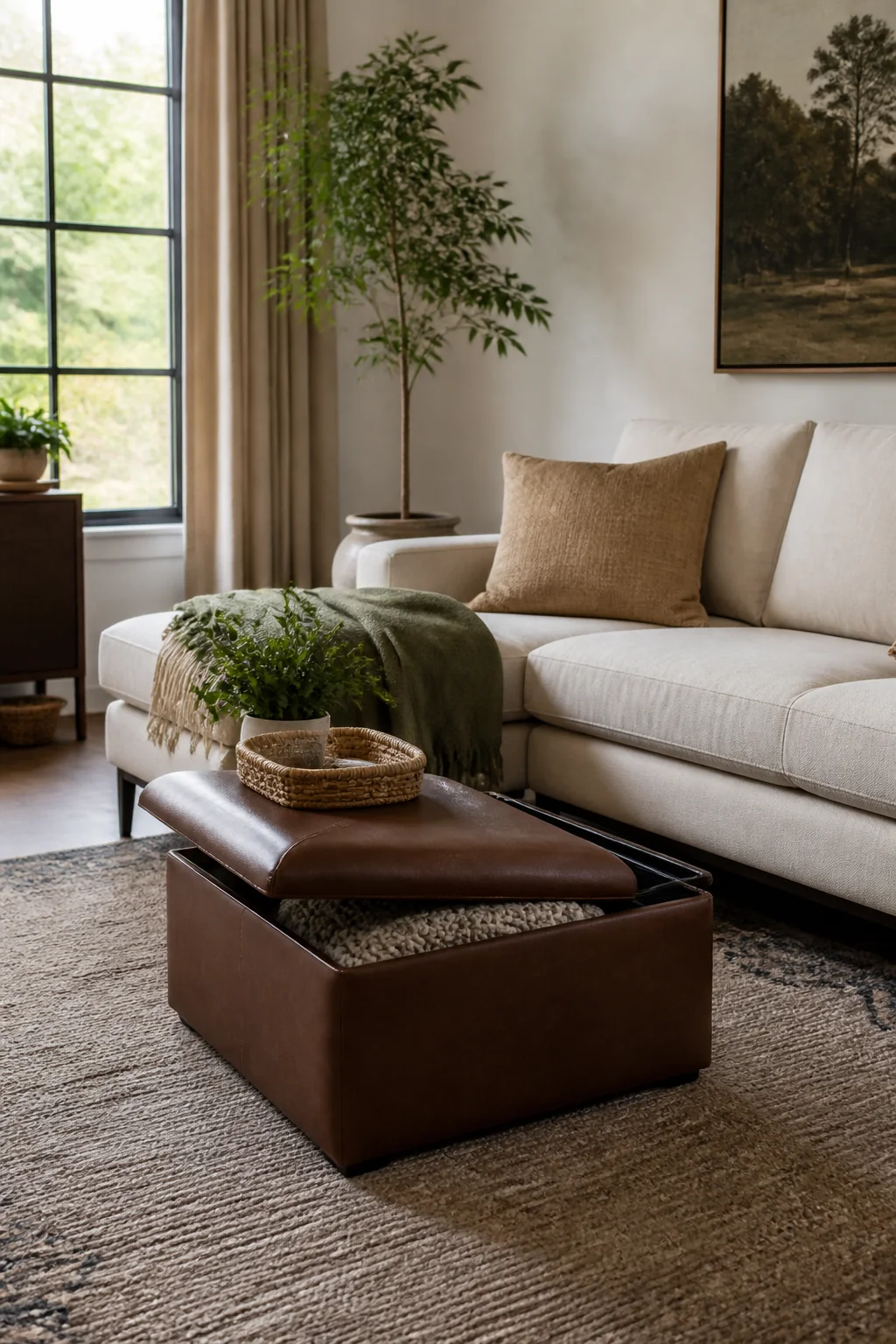
A purely decorative coffee table is the easiest floor space in the room to lose. A 48 by 24 inch table takes eight square feet on its own, and once you add the 30 inches of walking clearance the traffic path needs on at least one side, it's closer to twelve. In a 200 square foot room that's a lot of floor to hand over to something holding one throw pillow.
A storage ottoman does the same job and gives the floor back. Look for one around 36 by 24 inches and 17 to 18 inches tall, which puts the lid within an inch or two of a standard sofa seat so it works as a footrest, a surface with a tray on top, and a perch when there are more people than chairs. Expect $150 to $350 for one with a hinged lid and a hardwood frame. The $60 versions usually have stapled fiberboard tops that bow within a year of anyone sitting on them.
Apply the same test everywhere else: nesting tables that pull apart when guests arrive, a sleeper sofa if people stay over, a storage bench by the door for boots and seasonal decor. The trade-off is access. Anything under a lid means clearing the lid first, so blankets and board games belong in there, and the remote does not.
2. Put Storage Up the Walls
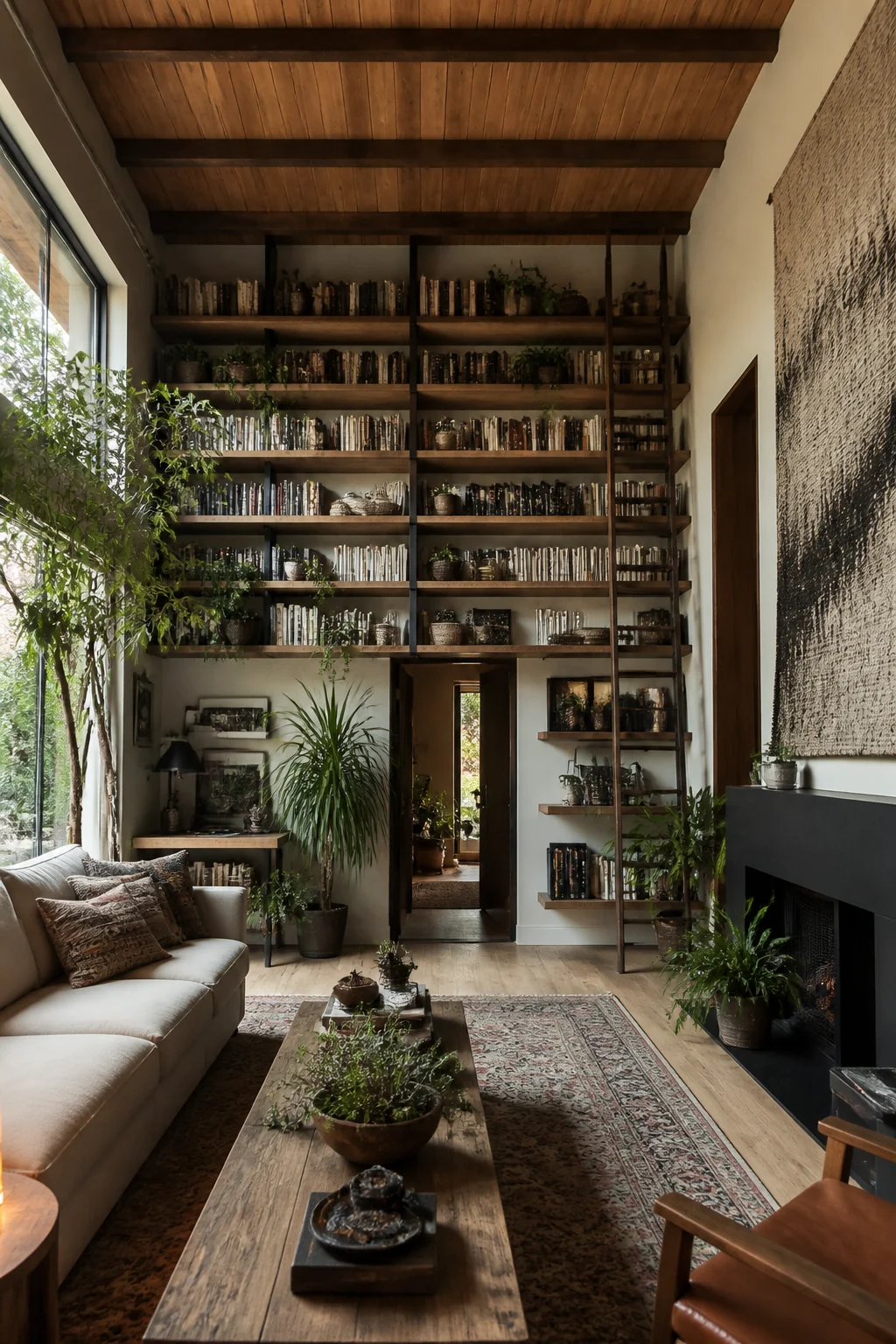
When the floor is spoken for, look at the wall above about 48 inches, because in most small living rooms it's completely empty. Running shelves up to a 9 foot ceiling turns one wall into the storage the room doesn't have. Wall-mounting the TV and building shelving around it releases the entire footprint a console would have eaten.
Floating shelves run roughly $15 to $40 each. Depth matters more than length here: 8 inches carries books and small frames, 10 to 12 inches carries baskets, and anything deeper starts leaning into the room and catching shoulders. Anchor the brackets into studs where you can find them, usually at 16 inch centers, and use toggle bolts rated for at least 50 pounds in bare drywall. A shelf that pulls out of drywall takes a plate-sized chunk of the wall with it, which is an expensive way to lose a deposit.
Then leave gaps. A shelf loaded edge to edge reads as a storage unit; a shelf with a stack of books, one plant and eight inches of nothing reads as a room. Stop the top shelf 12 to 18 inches below the ceiling so the line doesn't close in overhead. If you use a freestanding bookcase instead, anything that tall gets an anti-tip strap screwed into a stud, the same advice the CPSC's Anchor It campaign gives for every piece with shelves or drawers.
3. Add Light at Three Heights
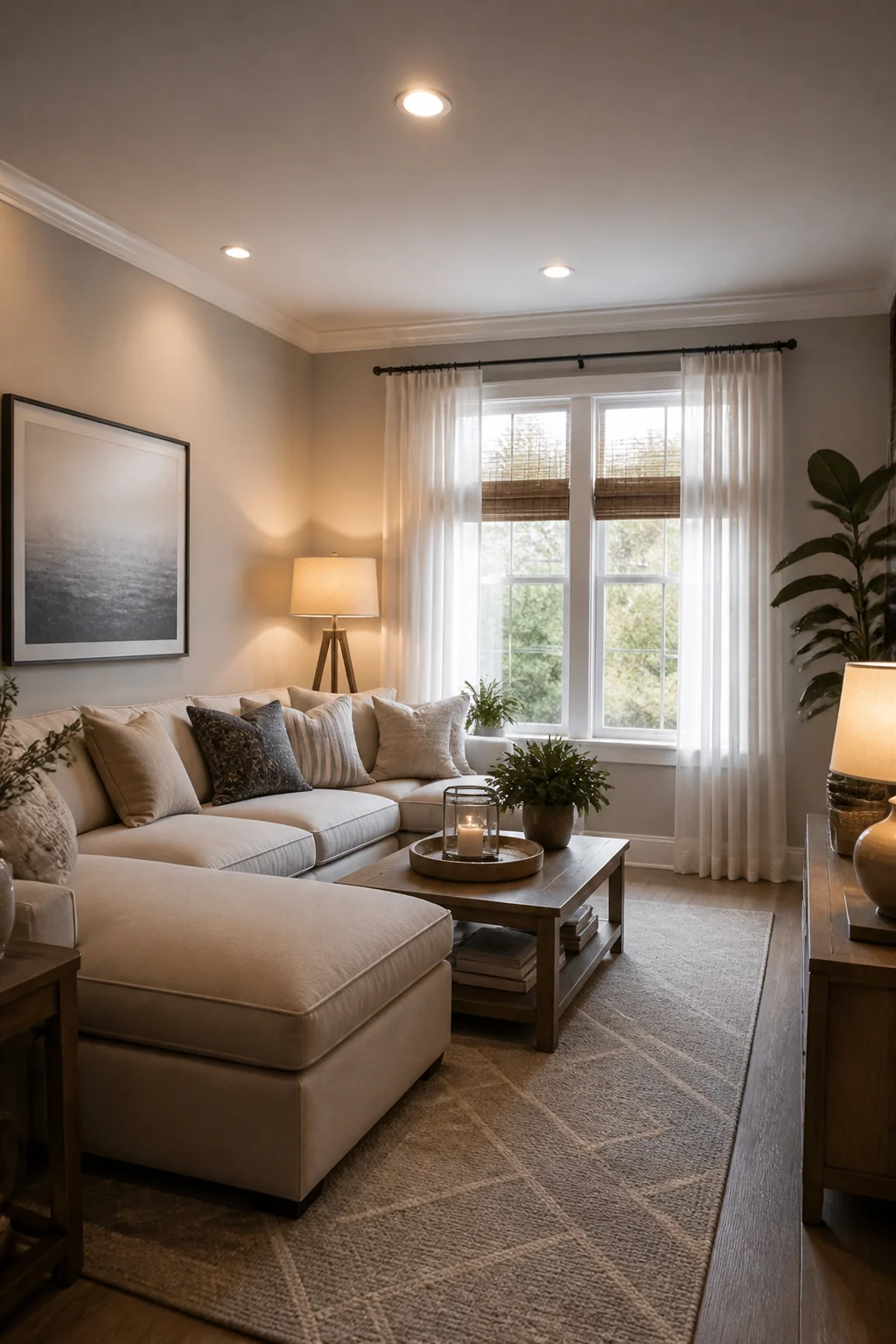
A single ceiling fixture flattens a small room. It drops light straight onto the middle of the floor and leaves the corners dark, and dark corners are exactly what makes the walls feel close.
Three sources at three different heights fix that. An arc floor lamp reaching around 80 inches puts light over the sofa without needing a side table under it. A table lamp 24 to 28 inches tall sits at reading height. A clip light or a battery puck on a shelf lifts the corner the other two can't reach. Budget roughly $60 to $90 for the arc lamp, $30 to $50 for the table lamp, and $15 for the shelf light, and put the two floor-level ones on plug-in dimmers at about $12 each.
Use 2700K bulbs in all of them, around 800 lumens each. Mixing 2700K with 4000K in one small room is the most common lighting mistake in a rental: the cooler bulb reads cold and bluish beside the warm one and the whole room looks unfinished. During the day, a mirror on the wall facing the window pushes daylight toward the darkest corner, which is the cheapest fix on this entire list.
4. Paint the Walls a Pale, Muted Color
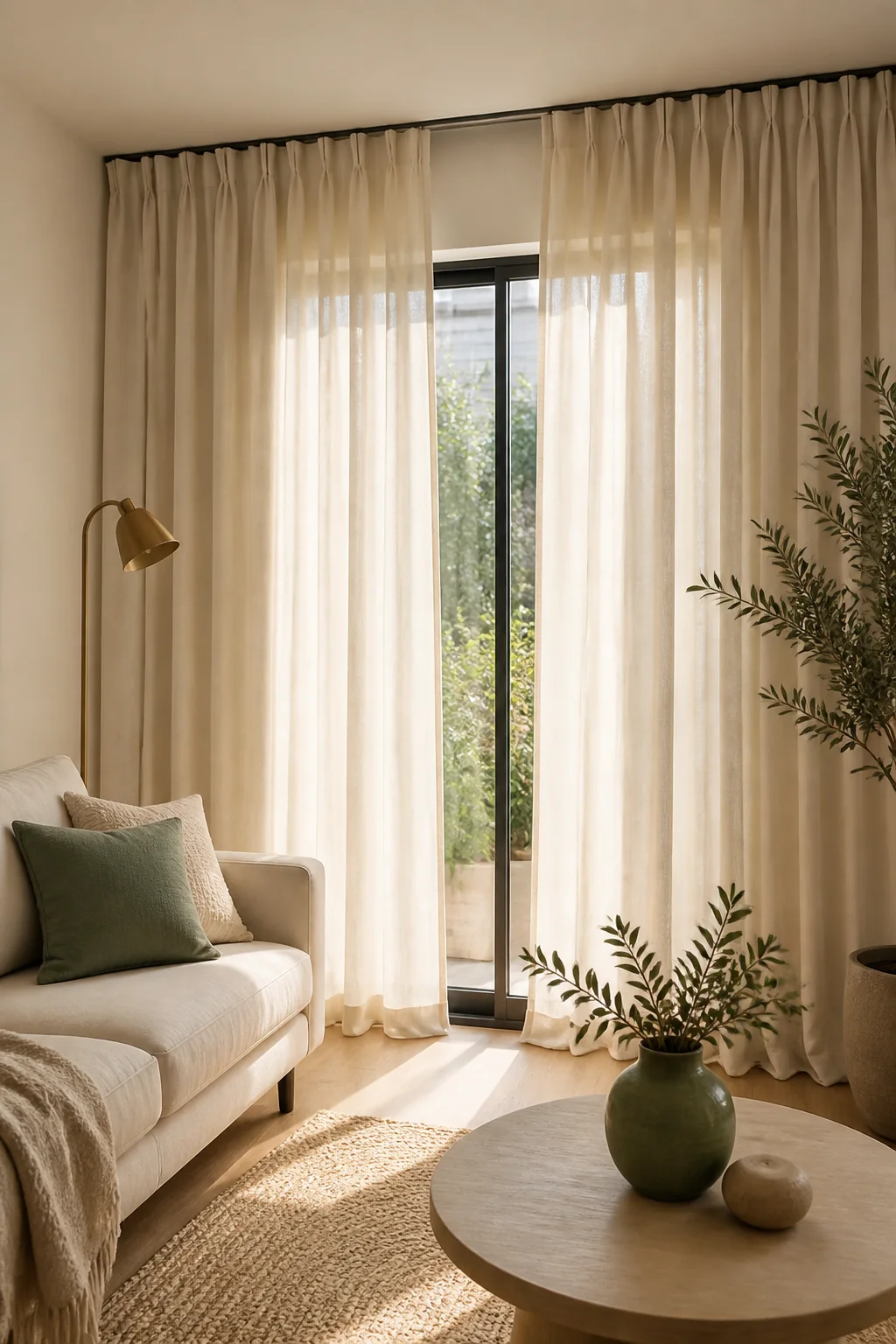
Pale, muted walls read as farther away because they bounce more of the light already in the room instead of soaking it up. That's the whole mechanism, and there's a number for it. Light reflectance value is printed on the back of most paint chips, and anything in the 55 to 70 range gives you that effect: a soft sage, a warm cream, a dusty blue, a gentle taupe. Below about 40 the wall starts absorbing light and pulling in toward you.
Flat white isn't the automatic answer. It shows every scuff at sofa height, and under 2700K bulbs a cool-based white can read gray and slightly grubby at night. Deep colors do close a room in, though one dark wall behind the sofa can work when the other three stay pale, since you never look at the wall you're sitting against.
Buy sample pots at $6 to $9 and paint a 12 inch square on two different walls, then check them at night under your own lamps rather than under store lighting. A gallon of interior eggshell runs $25 to $50 and covers about 350 square feet, so a room this size needs two gallons for full coverage. Keep the saturated colors for a pillow or a print.
5. Clear the Floor One Surface at a Time
In 200 square feet there's no spare cupboard quietly absorbing the overflow, so anything you're not using is sitting where you can see it. That's the real difference between a small room and a large one, and it's why the same amount of stuff behaves so differently here.
The method that works is one surface at a time. Clear it completely onto the floor, then put back only what does a job or what you genuinely like looking at. Shelves first, then the coffee table or ottoman lid, then whatever has collected by the door. Trying to do the entire room in a single afternoon nearly always stalls halfway, and a half-sorted room is worse than the one you started with because every pile is now homeless.
Watch for the quietly large things rather than the small ones: a floor fan in December, a second set of dining chairs, a printer, a stack of shipping boxes. One item with a 24 inch footprint costs you more usable floor than a dozen small objects on a shelf. Anything you keep needs somewhere to live when it isn't in use, which is where that storage ottoman and the entry bench earn their price. A room like this can feel cozy instead of cramped, but only once the floor is visible.
6. Give Each Corner a Job
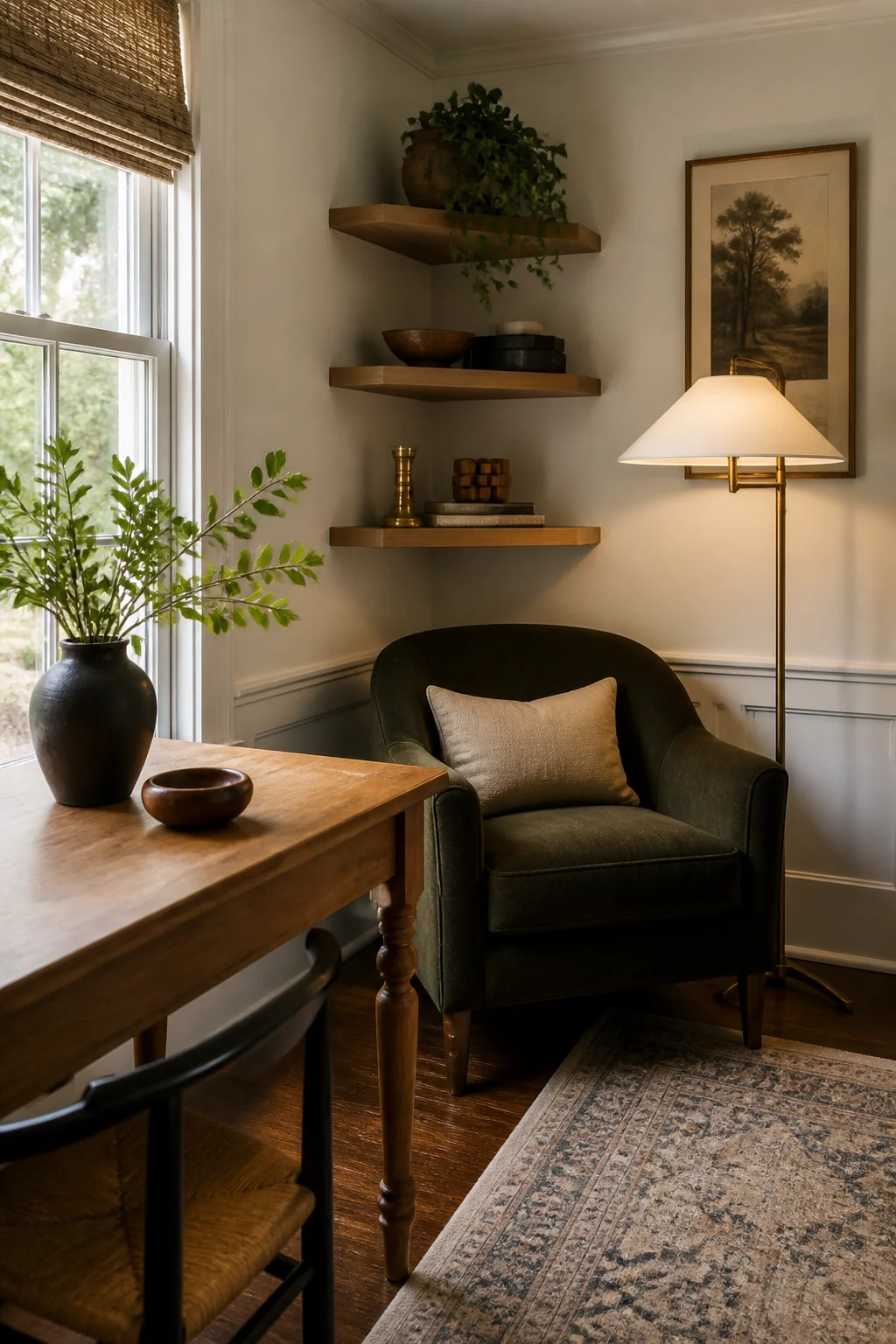
A corner is dead only until something claims it. The gap beside a radiator, or between a window and the wall it meets, is usually 30 to 36 inches wide, and that's enough for a chair or a narrow shelf unit without touching the main walkway at all.
A reading corner needs three things sized to each other. A chair with a seat depth around 20 inches so the front edge doesn't push into the path. A side table 20 to 24 inches tall, roughly level with the chair arm, so you can set a mug down without looking. And its own light, since the corner is the part of the room the ceiling fixture never reaches. Secondhand armchairs go for $80 to $150 and a small side table is $30 to $60 new. Leave at least 18 inches of clear floor in front of the chair or nobody sits there twice.
If the corner is narrower than about 30 inches, a corner shelf unit at $80 to $150 uses it better than any seat will. Both options suit a rental: neither needs more than a wall anchor. By a radiator, keep fabric and paper a few inches clear of the fins.
7. Keep the View From the Door Clear
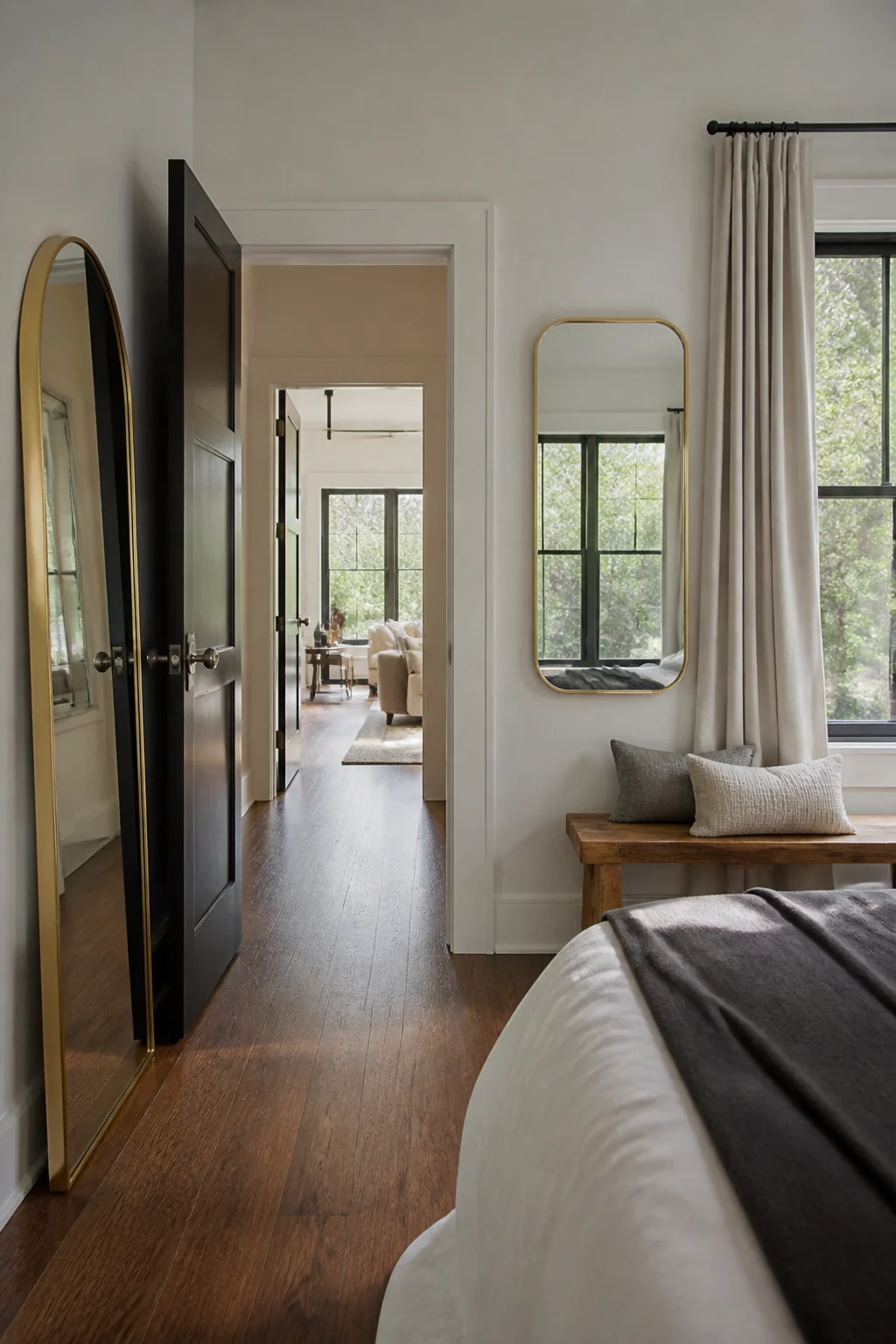
A sightline is just the view from the doorway to the far wall. When that line runs clean, you read the room to its full depth as you walk in. When a bookcase back or a tall chair interrupts it two steps inside, the room ends there as far as your eye is concerned, whatever the floor plan says.
The practical version: keep anything over 42 inches tall out of the path between the door and the opposite wall, and hold 30 to 36 inches of clear walkway through the middle of the room. A sofa floated three or four inches off the wall with a lamp behind it still reads open, because you can see the wall past it. A tall shelving unit parked near the entry doesn't, which is why that wall of storage from earlier belongs on a side wall rather than the one you face walking in.
A mirror on the wall opposite the window carries the view outward, and that's why it works better there than on a side wall. Around $45 to $120 buys a large hung or leaning one. Along the sightline itself, keep surfaces sparse: a few larger objects with space around them hold together from across the room, while a scatter of small ones just reads as mess.
Pin this for later
If only one of these gets done, make it the furniture. A 200 square foot room survives the wrong paint color and a badly placed mirror without much complaint. What it can't absorb is a piece taking up floor and giving nothing back, because there's no second room for the overflow to go and hide in. Measure the piece you're least sure about, measure the walkway beside it, and the decision usually makes itself.