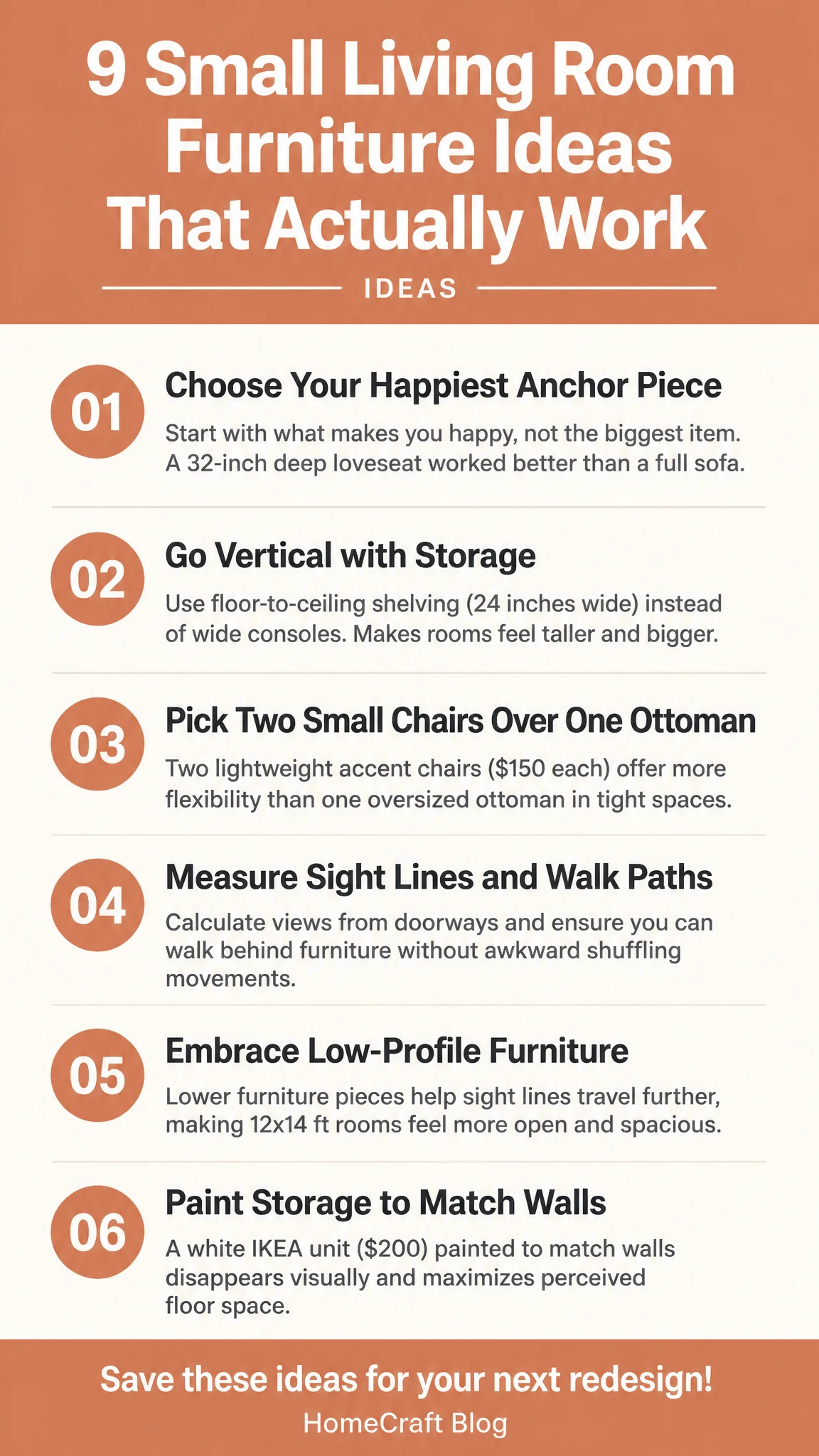
Small Living Room Furniture Ideas That Keep the Floor Walkable
Small living room furniture ideas built around depth and clearance: loveseat depths, narrow console tables, nesting tables and floor-to-ceiling storage, with real sizes and prices.

This post contains affiliate links. As an Amazon Associate I earn from qualifying purchases. If you buy through our links, we may earn a commission at no extra cost to you.
A small living room usually fails on depth more than square footage. A standard sofa runs 38 to 40 inches front to back, a coffee table wants 15 to 18 inches of clearance in front of it, and in a room measuring roughly 11 by 13 feet those two numbers alone swallow the walkway. Swap in shallower pieces and the floor plan opens up without a single wall coming down.
So the ideas below are organized around measurements rather than looks: how deep a piece is, how much clear floor it leaves, and what the shallow version costs compared to the standard one. The prices are typical retail ranges, and nearly every piece here has a cheaper secondhand equivalent if you are willing to carry a tape measure to the pickup.
Choose the Anchor Piece First, and Not by Size

The conventional advice is to start with the sofa and fill in around it. That works in a big room. In a tight one, the anchor should be whichever piece you sit in most, sized to the walkway it leaves behind.
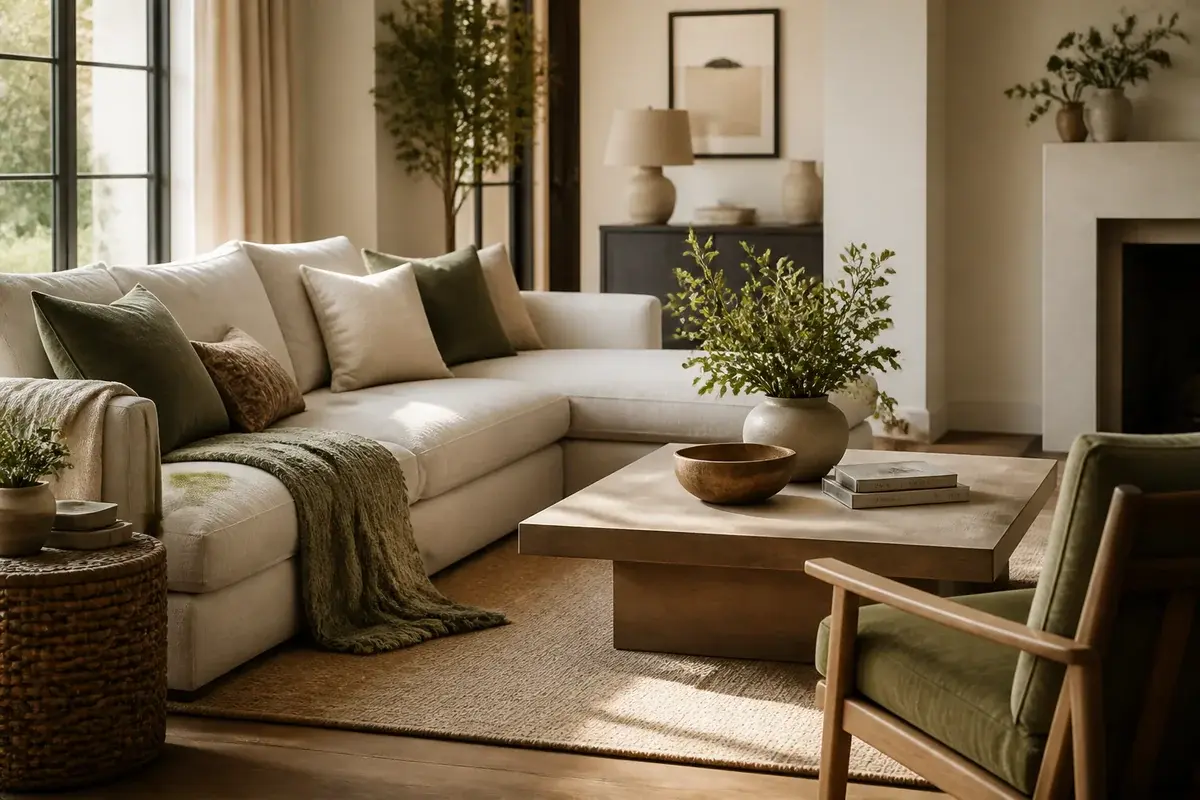
A low-profile loveseat often makes a better anchor than a full sofa, and depth is the number that decides it: 32 inches instead of the usual 38 to 40. Those six inches are the difference between squeezing past and walking past, because a main path needs 30 to 36 inches of clear floor and even a secondary path wants 24. Expect $400 to $600 new for a well-built 32-inch loveseat, and a fraction of that at an estate sale.
Before you commit, tape the footprint onto the floor in painter's tape and live with it for two days. If you catch yourself turning sideways to reach the window, the piece is too deep, however good it looks in the listing photo.
Vertical Storage Beats a Wide Media Console
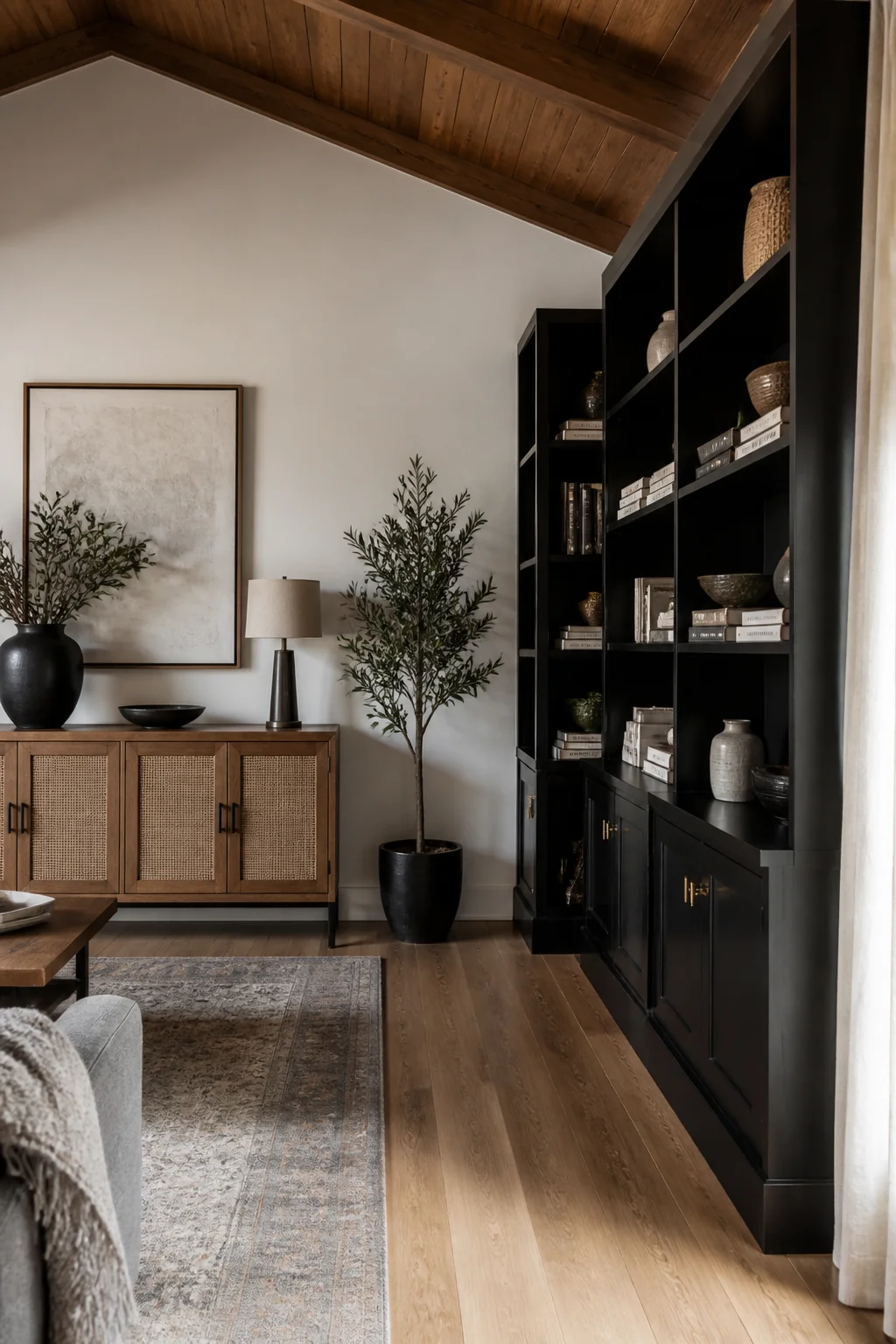
The default buy is a long, low media console, and it is the piece that makes a small room feel heavy. It claims five or six feet of wall at knee height, right in the band your eye reads as floor.
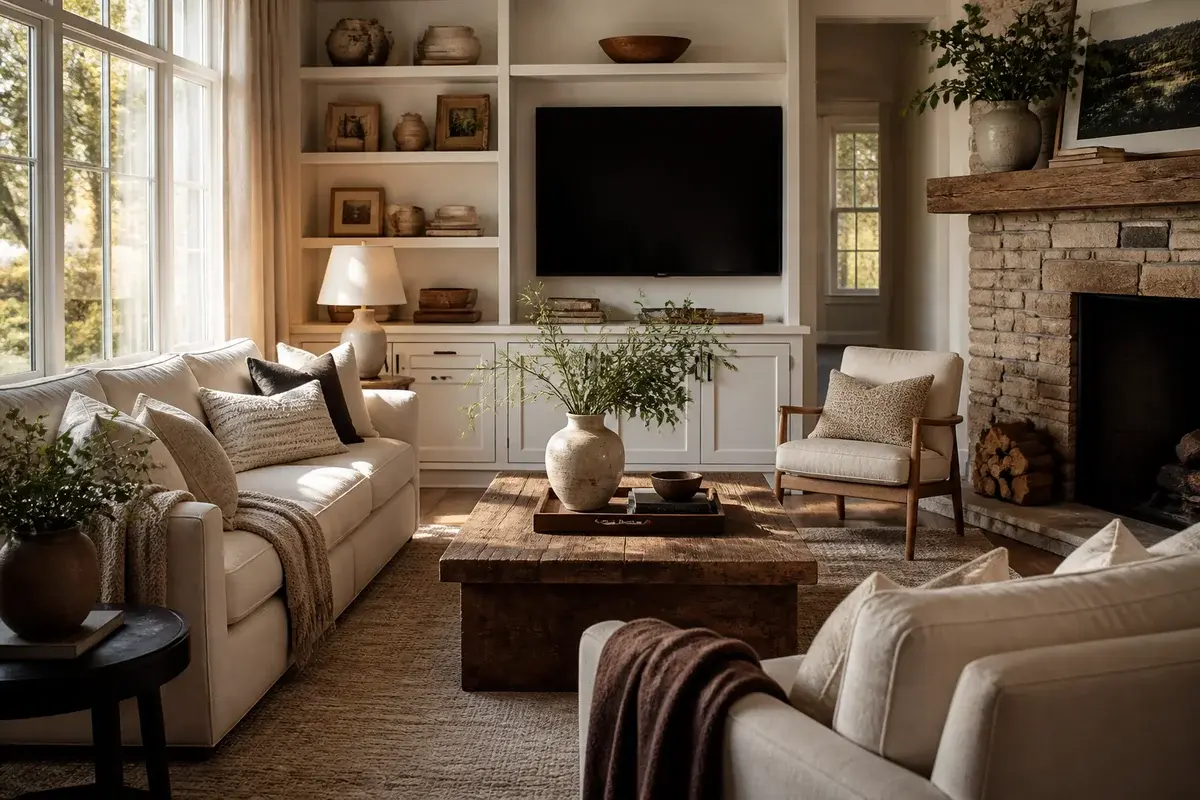
Send the storage up instead. A narrow bookcase, 24 to 30 inches wide and run floor to ceiling, holds the same media gear plus books and a few objects while standing on about four square feet. Basic flat-pack units start around $150 to $250, and painting the case the same color as the wall lets it recede rather than sit there as a dark rectangle. A tall, narrow case is exactly the shape that tips, so screw the anti-tip strap from the box into a wall stud before you load the shelves (CPSC's Anchor It).
Two cautions before you load it. Anything taller than roughly 4 feet needs an anti-tip bracket screwed into a stud, which is not optional with children or a cat that climbs. And keep the top two shelves light. Heavy objects at eye level drag the visual weight straight back down, which undoes the reason you went vertical in the first place.
Two Small Chairs Beat One Big Ottoman Every Time
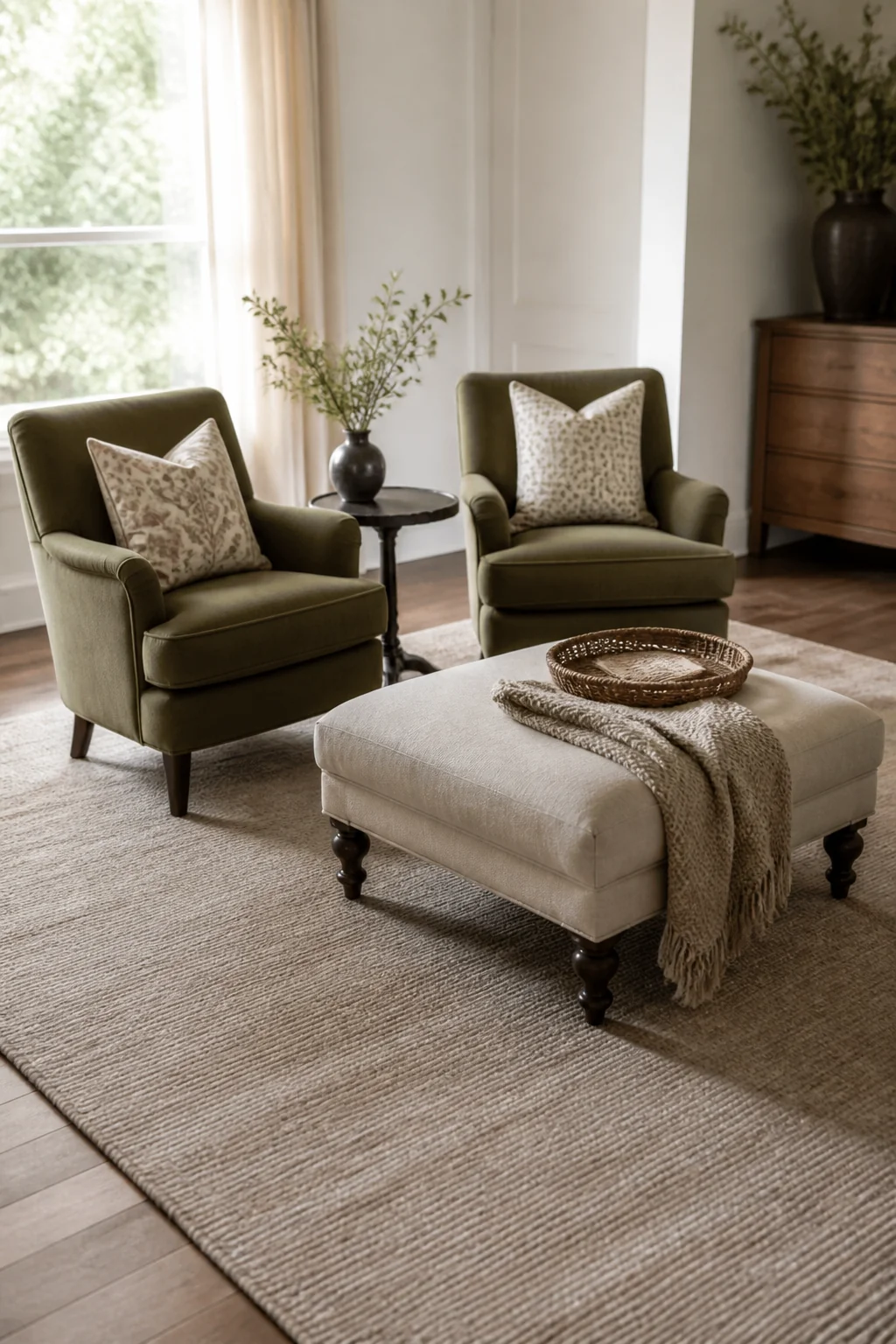
An oversized ottoman does one job in one place. Two lightweight accent chairs do several, and they weigh little enough to reposition with one hand.
Look for chairs under about 25 pounds with a footprint near 26 by 28 inches, upholstered in something plain so they read as quiet rather than as two more patterns competing for the room. Simple armless or low-arm styles run $120 to $200 each. Angle them toward the loveseat for television, turn them to face each other when someone visits, and slide them into a corner when you want the floor clear for a yoga mat.
The trade-off is real, though. You give up the ottoman's flat surface and its hidden storage. If you put your feet up every evening or need somewhere to stash throws and controllers, a storage ottoman around 24 inches square earns its place and the chairs do not. Decide by how you use the room on an ordinary weeknight, not by how it photographs.
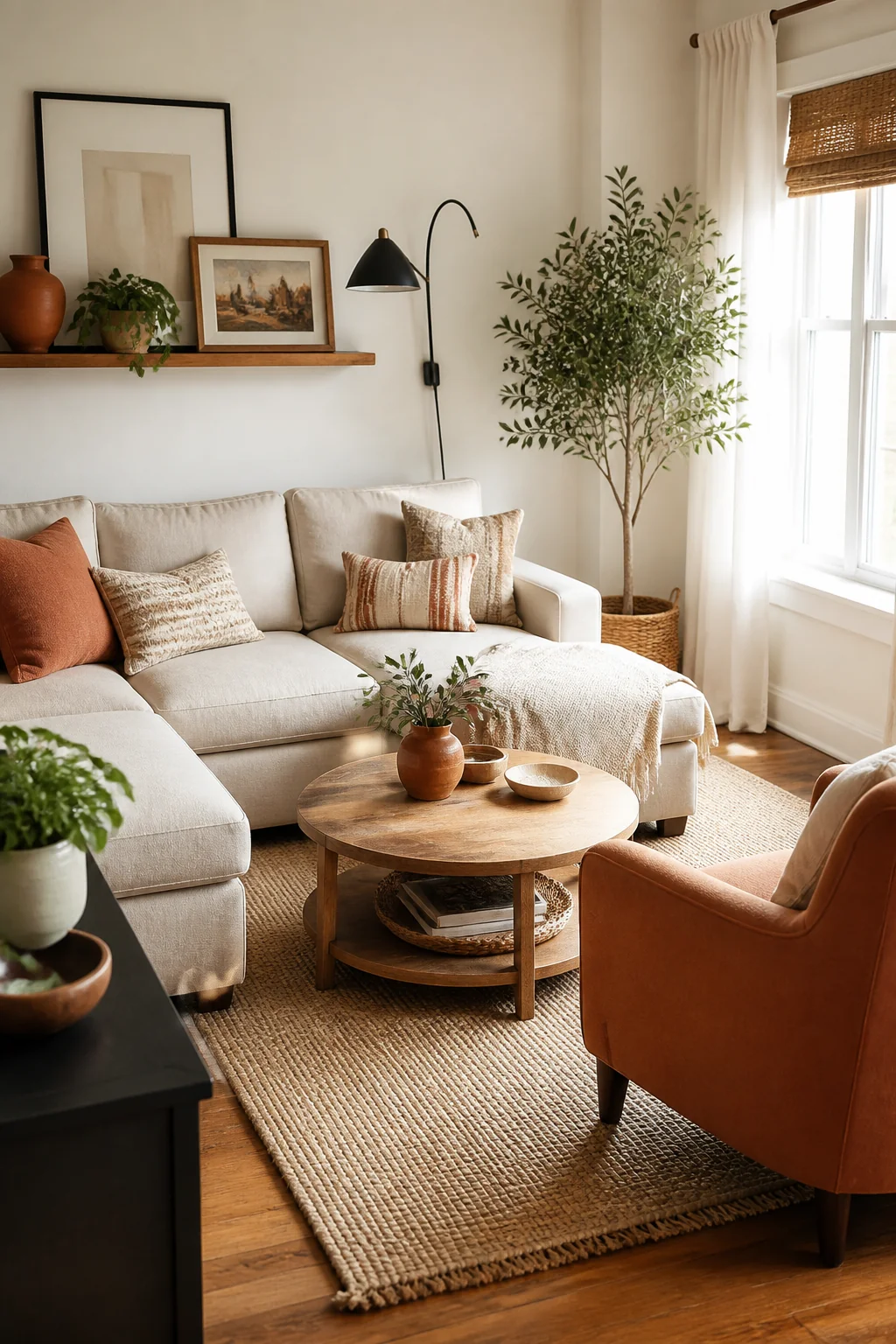
Mirrors Aren't Just Decoration, They're Furniture Too
Mirrors get written off as filler, but a big one behaves like a piece of furniture. It claims wall space, it needs a plan, and it does a job you would otherwise buy something else for.
Size is what separates a decorative mirror from a useful one. A leaning floor mirror around 36 by 48 inches, or larger, throws real daylight back across the room and doubles as the place you check your coat on the way out. Anything much smaller just reads as a picture frame. Hang or lean it on the wall opposite your main window rather than beside it, so it catches light instead of reflecting a blank wall. Leaning models start near $100 to $180 and skip installation entirely.
Two failure modes worth knowing. A mirror aimed at a cluttered corner doubles the clutter, so look at what it will reflect before you set it down. And a leaning mirror slides on hard floors, so put felt or rubber pads under the base and strap the top to the wall if there are kids around.
Nesting Tables Give You Options Without the Bulk
The coffee table is the piece that turns a small room into an obstacle course. A standard 48-inch rectangle wants 15 to 18 inches of clearance from the front of the seating, and in a tight layout that clearance has to come out of the walkway.
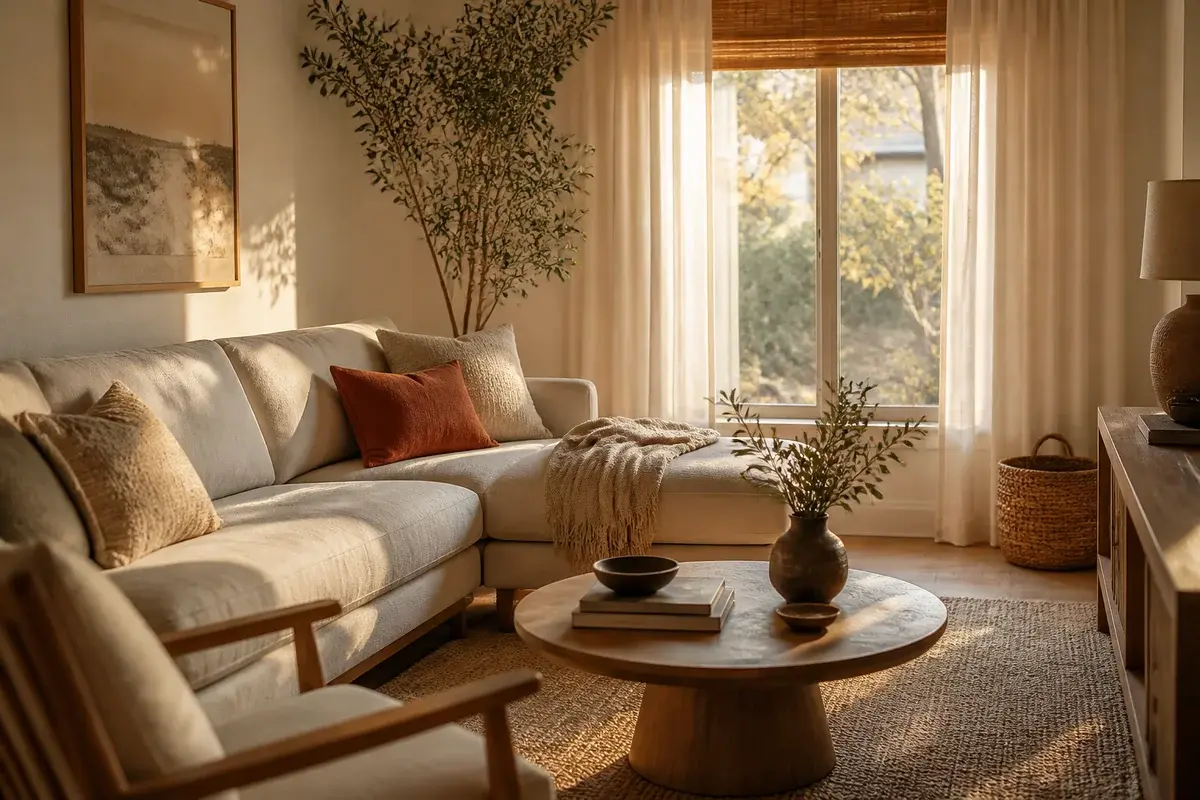
Nesting tables get around it by being three tables that live as one. Pull the largest out for a laptop, add the second when someone visits, then slide all three back together and the floor is open again. Sets typically run $120 to $250 depending on whether the tops are veneer, solid wood or tempered glass. Metal frames with wood tops tend to be lightest, which matters when you are moving them several times a day.
Check two numbers before you buy. The nested footprint should be about 20 by 20 inches or less, or you have simply bought a small coffee table with extra steps. And the tops want to land within a couple of inches of your seat height, roughly 17 to 19 inches, so setting a mug down is not a stretch.
Don't Ignore Wall-Mounted Everything
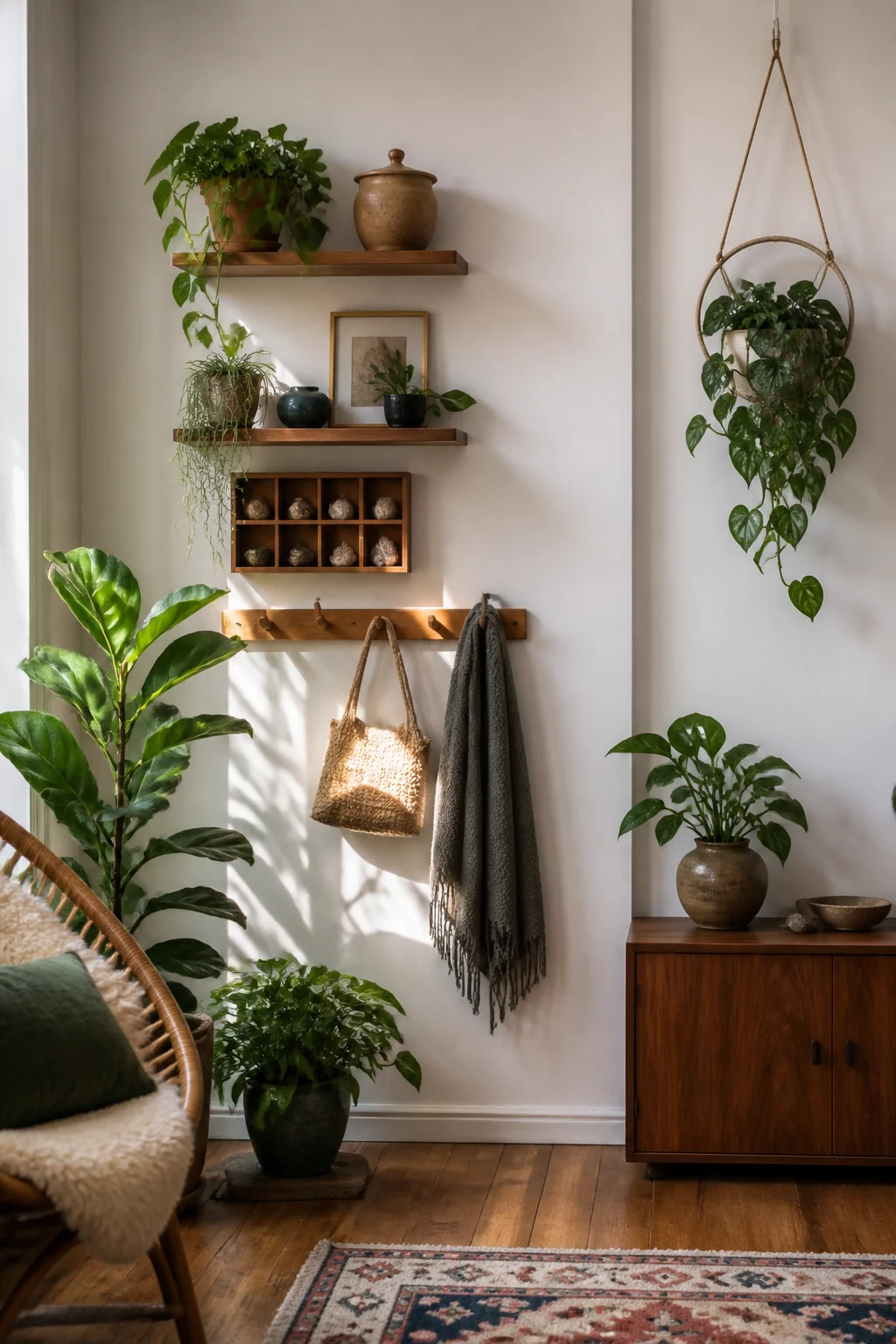
Floating shelves, wall-mounted desks and hanging organizers share one advantage: they store things without touching the floor, and clear floor is exactly what a small room is short of.
A run of three floating shelves above the seating costs roughly $40 to $90 for the boards and brackets. Set the lowest one at least 18 inches above the back of the loveseat so nobody catches their head standing up, and space the rest 12 to 14 inches apart. Every bracket goes into a stud, or into a heavy-duty toggle rated for the load. Standard drywall anchors will sag under a row of hardbacks inside a year, and the sag shows.
Where this goes wrong is depth and weight. Keep shelves to 8 inches deep or less over seating so they do not loom over anyone sitting there, and load the heavy items on the lowest shelf. A wall packed solid at head height makes the room feel narrower than the console you took out to make room for it.
A Small Console Table Works Here, If It's Thin Enough
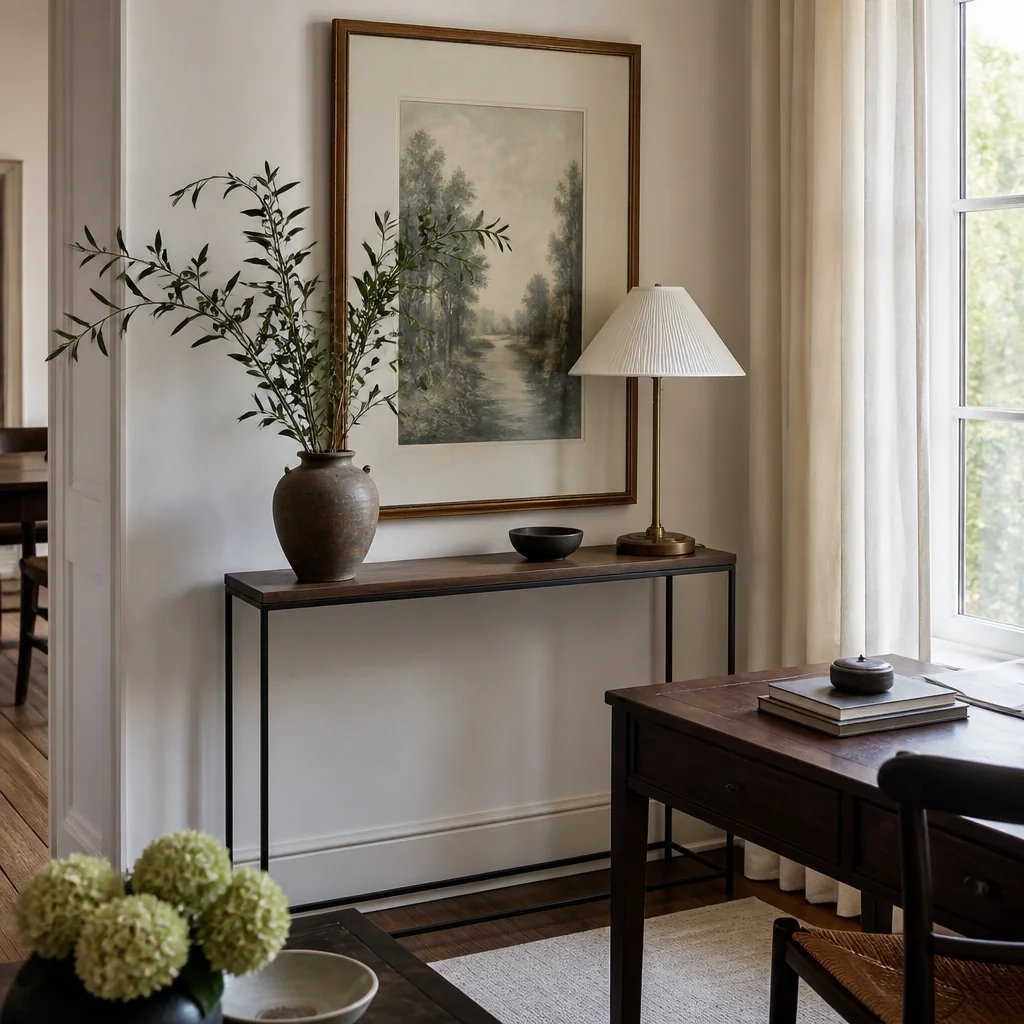
Console tables look like a luxury in a room this size, and at stock dimensions they are. The usual depth is 14 to 16 inches, which is a desk pretending to be a table, and it will narrow a walkway to nothing.
The narrow ones change the math. At 10 inches deep, a console sits behind the loveseat against the wall and takes keys, mail and a small lamp without crossing into the path. Expect $100 to $180 for a plain metal-and-wood version, and treat the sub-12-inch depth as the spec you search on, ahead of the style.
Two practical notes. Measure the height of the loveseat back first, because a console standing taller than the sofa back looks like a mistake from the doorway; 28 to 30 inches usually sits right. And a table this shallow tips easily when someone leans on it, so either screw the rear rail into the wall or pick one with a lower stretcher shelf that keeps the weight down near the floor.
Depth is the number that decides most of this. Length and width are what people measure, but depth is what determines whether you walk through a room or edge around it. Write down the depth of every piece you are weighing up, set it against the clearance it would leave, and a surprising number of the decisions make themselves.
One last thing worth doing before you shop: measure the real wall, not the one you remember. Baseboards, radiators, register vents and door swings all steal inches that never appear on a floor plan, and they are the reason a piece that fits on paper arrives and does not.
Save this for your next project