11 Apartment Decorating Ideas That Work in a Rental
Eleven apartment decorating ideas for renters, with real prices, rug sizes, hanging heights and the reversible way to do each one so your deposit survives.
This post contains affiliate links. As an Amazon Associate I earn from qualifying purchases. If you buy through our links, we may earn a commission at no extra cost to you.
A blank beige rental is a hard place to start. The walls are landlord white, the lighting is one sad ceiling fixture, and most of what you'd love to change isn't technically yours to change. What's left is still a lot: paint you can put back, lighting you can unplug, rugs and textiles that roll up and move with you.
Below are 11 ideas that hold up in a rental, with the prices, sizes and hanging heights that make each one look deliberate instead of temporary. Start wherever the room bothers you most.
1. Paint One Accent Wall (But Make It Count)
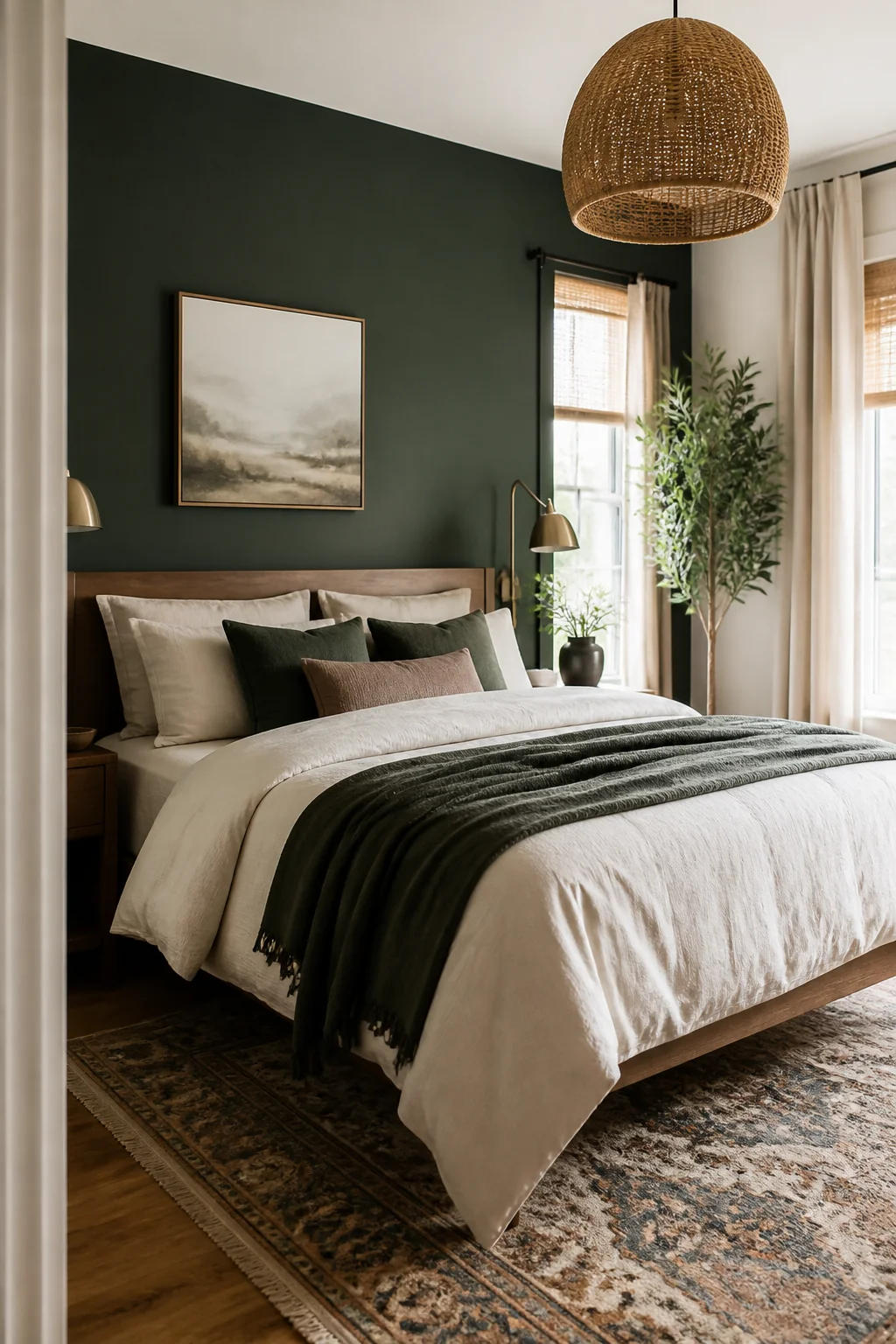
Paint is the cheapest square footage you will ever change, because a wall is the largest continuous surface in the room. Get permission in writing first, and expect the lease to require the original color back when you leave. That return coat is part of the true cost, so budget for two gallons rather than one.
Buy a single gallon for one 10 by 8 foot wall and you will still have paint in the can after the second coat, since it stretches across 350 to 400 square feet. Figure $35 to $50 a gallon for decent interior latex, plus about $12 for a 2 inch angled sash brush and a roll of painter's tape. Eggshell wipes clean and is the safer choice in a hallway or a bedroom you dust often; flat matte hides uneven drywall but scuffs where furniture touches it.
Choose the wall you face, not the wall with the window in it. A deep color on the window wall absorbs the daylight coming through, while the same shade behind a bed or a sofa works as a backdrop. Skip the color of the season and pick colors from nature around you, since those are the ones that still look right in year three.
2. Layer Your Lighting Strategically
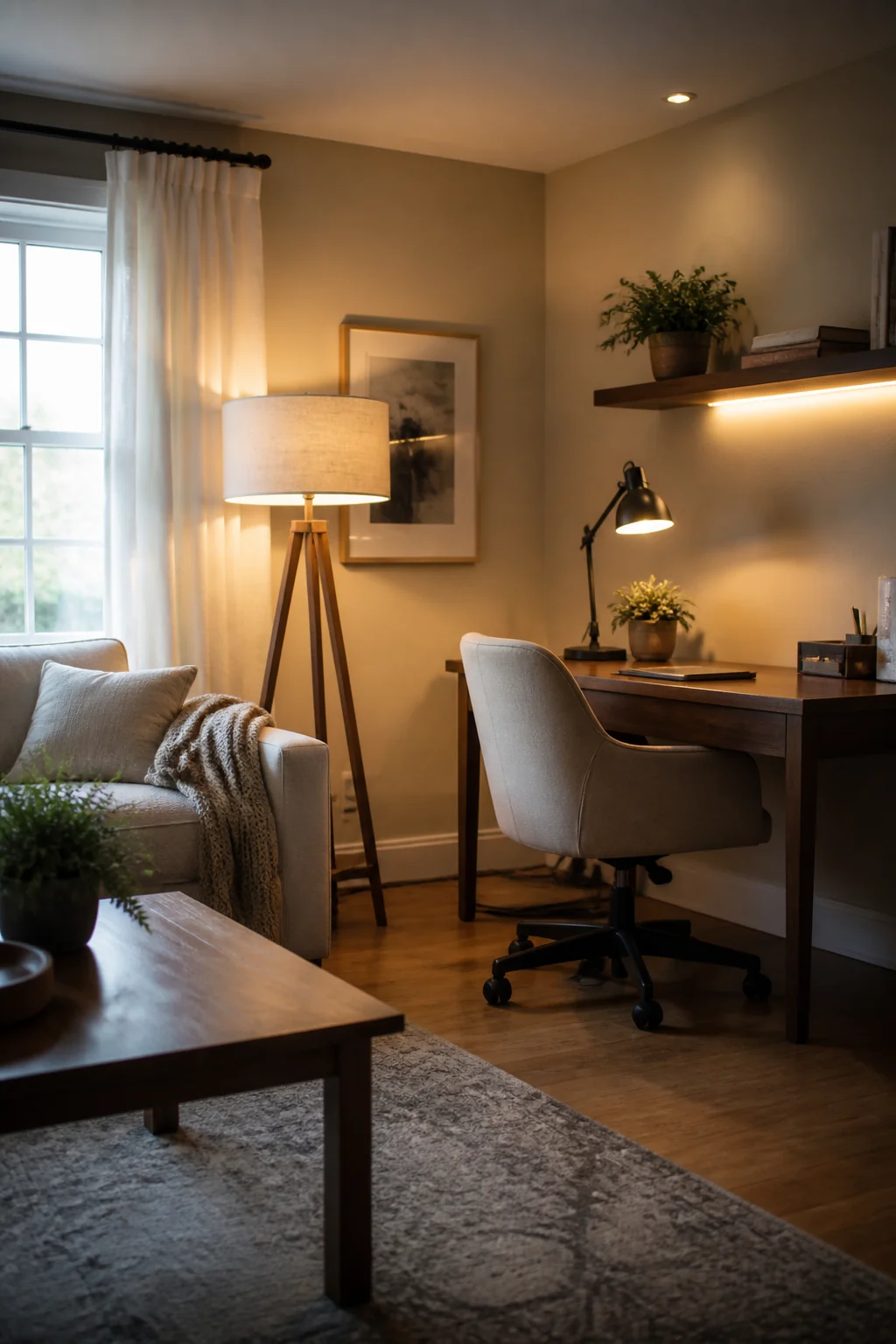
One overhead fixture is the reason so many rentals feel like waiting rooms. All the light falls from a single point in the ceiling, so faces, corners and countertops get the same flat treatment. Three sources at three different heights fix that faster than any furniture purchase.
Build it in layers. Ambient first: a floor lamp, $50 to $70, in the corner diagonally across from your seating. Task second: a table or desk lamp around $40 to $60, with the bottom of the shade near eye level when you're seated, roughly 40 to 42 inches off the floor, so the bulb never glares at you. Accent last, and this is the cheap one, a string of warm-white Edison bulbs or a small shelf lamp for under $20.
The bulb matters more than the fixture. Look for 2700K to 3000K on the box for warm light; 4000K and above is the blue-white that makes a living room read like an office. An 800 lumen bulb is the old 60 watt. Add a plug-in dimmer for about $15 and a single lamp covers both bright and low, which is the flexibility a small apartment needs when one room does four jobs.
3. Invest in One Really Good Piece of Furniture
Five cheap pieces and one solid piece often cost about the same. The difference shows up in year two, when the cheap ones have sagging seats, stripped screw holes and a frame that shifts every time someone sits down.
If that one good piece is a sofa, expect $700 to $1,200 for something that survives a move. Three things tell you which side of that line you're on: a kiln-dried hardwood frame instead of particleboard, sinuous or eight-way hand-tied springs instead of webbing alone, and seat foam at 1.8 pound density or higher. Removable, washable covers are worth paying for in a rental, where a spill on a fixed cover is permanent.
Measure before you order, not after. Most apartment doorways are 30 to 32 inches wide, and a sofa has to clear that on its side or its back; measure the stairwell turn and the elevator depth too, or delivery leaves it in the lobby. The honest trade-off is that one good purchase means the side tables, the lamps and the bookshelf all wait a few months. We'd still take the wait over buying the same room twice.
4. Use Rugs to Define Spaces
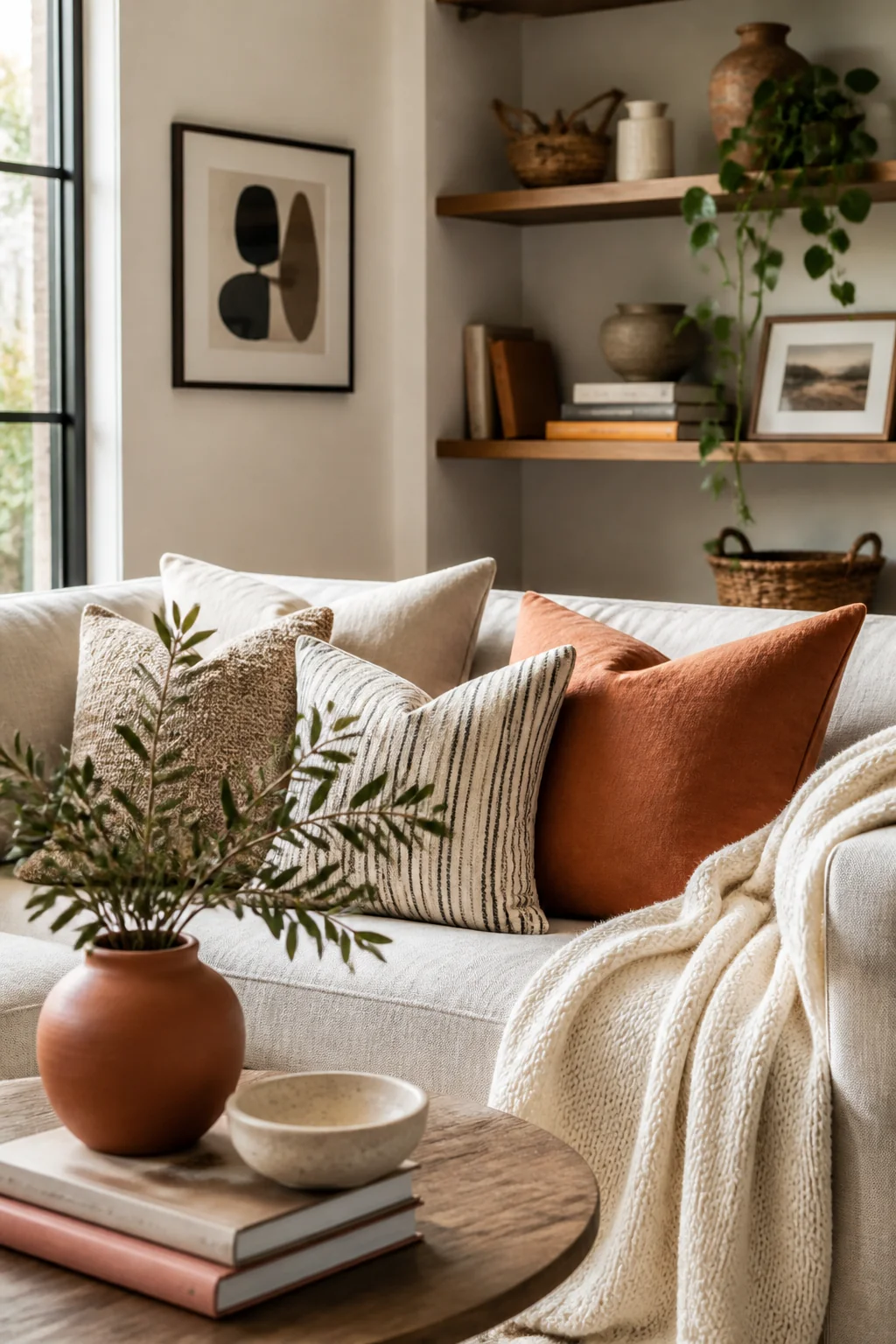
An open floor plan reads as one undefined room until something draws the borders. A rug does that job without a single hole in the wall, and it rolls up and moves with you when the lease ends.
Size is where this usually goes wrong, and our rug size calculator works it out from your furniture. In a living zone, go large enough that at least the front legs of the sofa and chairs sit on the rug, which normally means 8 by 10 feet and rarely smaller than 5 by 8. A rug that floats in the middle with all the furniture off it makes the room look smaller, not bigger. Leave 12 to 18 inches of bare floor between the rug edge and the walls so the space still breathes. Under a queen bed, an 8 by 10 lets 18 to 24 inches show on each side where your feet land in the morning, or two 2.5 by 7 foot runners do the same job for less money.
Secondhand rugs run $20 to $50 and often have better texture than anything new at that price. Add a $30 rug pad: it stops sliding, adds cushion underfoot, and keeps dye off the floor you want your deposit back on. Keep the pile under half an inch anywhere a door has to swing over it.
5. Add Plants (Even If You Think You'll Kill Them)
Most first plants die of kindness rather than neglect. Too much water rots the roots, and a decorative pot with no drainage hole guarantees it, because the excess has nowhere to go. The fix is simple: leave the plant in its plastic nursery pot, drop that inside the pretty ceramic one, and lift it out to water at the sink.
Start with the three that forgive you. Pothos trails off a shelf and droops visibly when it's thirsty, which is a useful warning system while you learn. Snake plants want water every two to three weeks and tolerate a north-facing window. ZZ plants store water in thick underground rhizomes and would honestly rather be forgotten for a month. A 4 to 6 inch pot of any of them runs $10 to $20 at a hardware store, less than most decor objects that size.
The habit that keeps them alive is checking instead of scheduling: push a finger two inches into the soil and only water if it comes out dry. With a cat or dog in the apartment, check the ASPCA's list before you buy: it lists pothos and snake plants as toxic to both, and the spider plant as a pet-safe alternative. Leave fiddle leaf figs until you've kept something green for a full year. They drop leaves over a cold draft, a move across the room, or any real change in light.
6. Create a Gallery Wall the Right Way
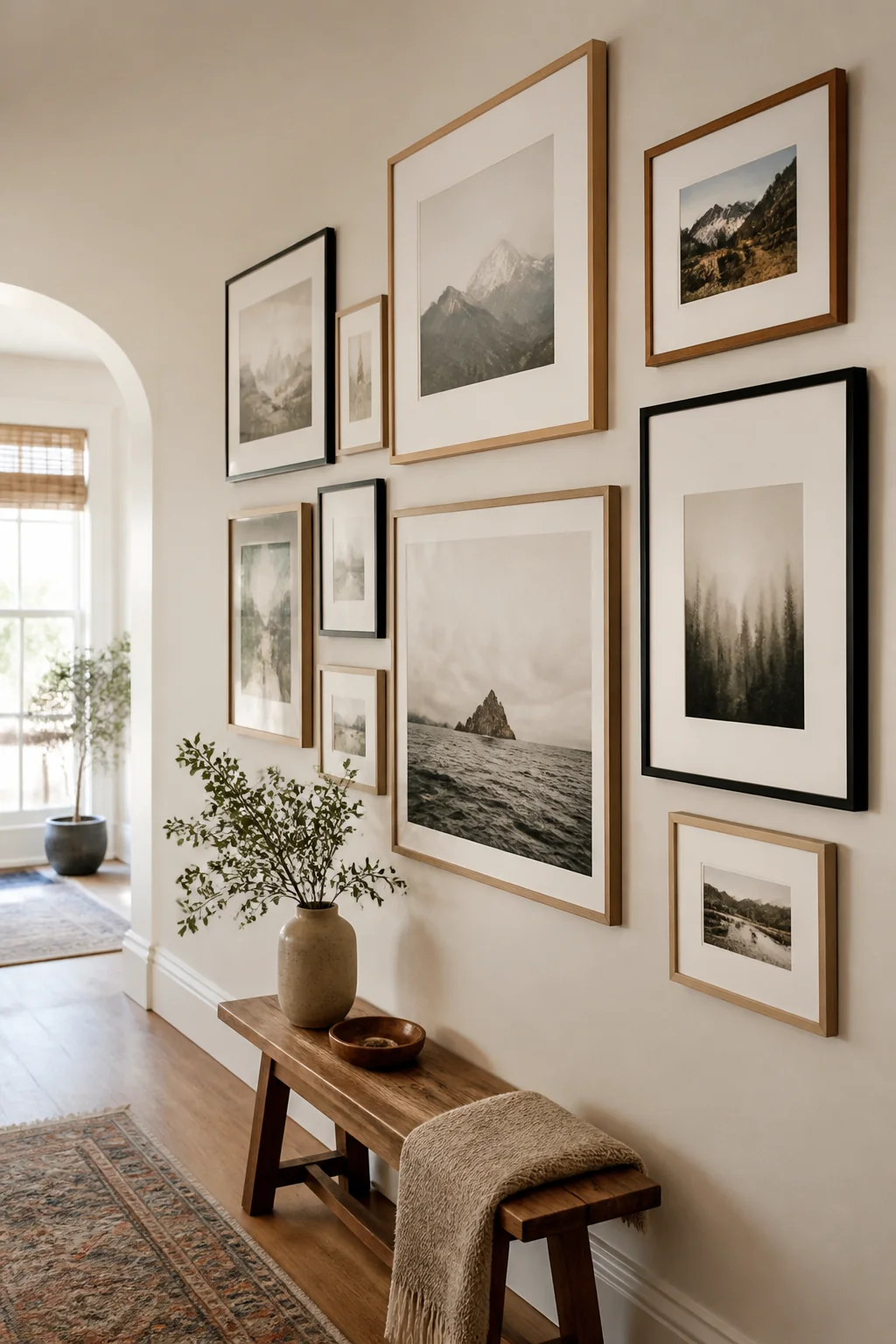
Gallery walls fail on spacing, not on taste. Frames hung by eye drift a little in every direction, and the eye reads that drift as clutter no matter how good the art is.
So lay the whole arrangement on the floor first and shuffle it until it holds together. Then trace each frame onto craft paper or newspaper, tape the templates to the wall, and live with them for a day before a single nail goes in. Hold the gaps between frames to a steady 2 to 3 inches, and float the center of the whole grouping around 57 to 60 inches up, which is where a standing eye lands without you thinking about it. Above a sofa, start the bottom row 8 to 10 inches clear of the back cushions and let the block run about two thirds as wide as the seat underneath.
Nothing has to match. Mixed frame finishes, mixed print sizes and a blend of photographs and art are what stop it looking like a hotel corridor. For renting, adhesive picture strips are rated per pair: the common large size holds 16 pounds with four pairs on one frame, about 4 pounds a pair, and they peel off cleanly if you pull straight down. Anything heavier needs a drywall anchor and a $6 tube of lightweight spackle on your way out.
7. Swap Out Hardware and Small Details
Cabinet pulls, curtain rods and switch plates are the details your eye registers before it registers anything you spent real money on. They're also the closest thing to a renovation a lease will tolerate, as long as the originals go back before you hand over the keys.
Before you buy twenty pulls, measure the center-to-center distance between the existing screw holes. Common spacings are 3 inches (76mm), 96mm and 128mm, and a pull that misses by even 20mm means drilling fresh holes in your landlord's cabinet doors. Buy one, hold it up to the hole spacing, then order the rest. Warm brass or matte black pulls run $3 to $8 each, so a small kitchen lands somewhere between $60 and $160. Put the old hardware and its screws in a labeled bag at the back of a closet the same day.
Curtain rods return even more per dollar, and our curtain size calculator gives the rod length and panel width for your window. Set the new one high, clearing the top of the frame by 4 to 6 inches, and run it 8 to 12 inches wide of the casing on either side so the gathered fabric parks on plaster and leaves every inch of glass uncovered. Switch plate covers are $2 to $4 and need one screwdriver.
8. Hang Mirrors Strategically
A mirror doesn't create light, it redirects whatever the room already has. That one distinction tells you where to hang it. Directly opposite a window, it sends daylight back across the room. Perpendicular to a window, it throws that light onto a dark wall. Facing a cluttered corner, it just gives you two cluttered corners, which is how a mirror can make a space feel busier rather than bigger.
Secondhand mirrors run $5 to $25, and a heavy old frame usually looks better than a new one at four times the price. A decent full-length leaner is $40 to $90. Center the glass at the height you already gave the frames, 57 to 60 inches to the middle, and it will line up with everything else on the wall. Over a console or a dresser, choose a mirror that covers roughly two thirds of the piece beneath it and leave 4 to 8 inches of bare wall in between.
Weight is the part people skip. Anything over 20 pounds belongs on a stud or a rated toggle anchor, never a single nail, so run a stud finder before you commit to a spot. A full-length leaner should be strapped to the wall if a pet or a child can knock into it, the same rule the CPSC's Anchor It campaign gives for tall furniture.
9. Use Floating Shelves for Storage + Style
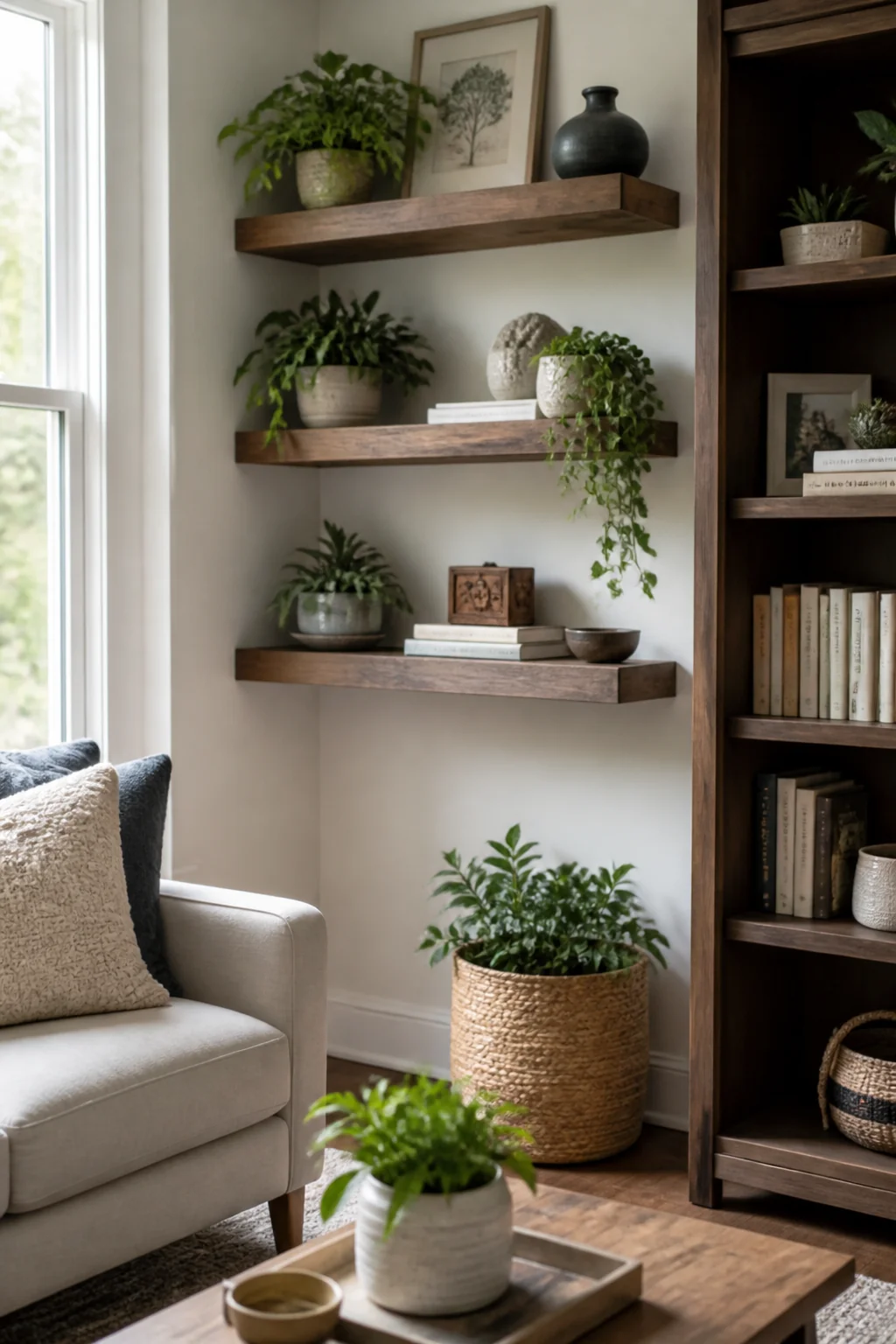
Three floating shelves do the work of a bookcase without eating any floor space, which is the whole argument for them in a small apartment. A 24 to 36 inch shelf runs $20 to $35, and the concealed bracket usually comes in the box.
Load capacity is the detail worth getting right. A floating shelf screwed into a stud carries 40 to 50 pounds comfortably. The same shelf on drywall anchors alone is closer to 15 to 20 pounds, which covers a few plants and a stack of paperbacks but not a run of hardcovers. Studs sit 16 inches apart on center in most apartment walls, so find them with a stud finder before you decide where the shelf goes, rather than after.
Space shelves 10 to 12 inches apart vertically if books are going on them, and mount the lowest one 16 to 18 inches above a desktop so you can still work underneath. When you style them, leave about a third of the length empty; a full shelf reads as storage, a slightly empty one reads as a display. At move-out, the anchor holes fill with spackle in ten minutes.
10. Invest in Quality Textiles
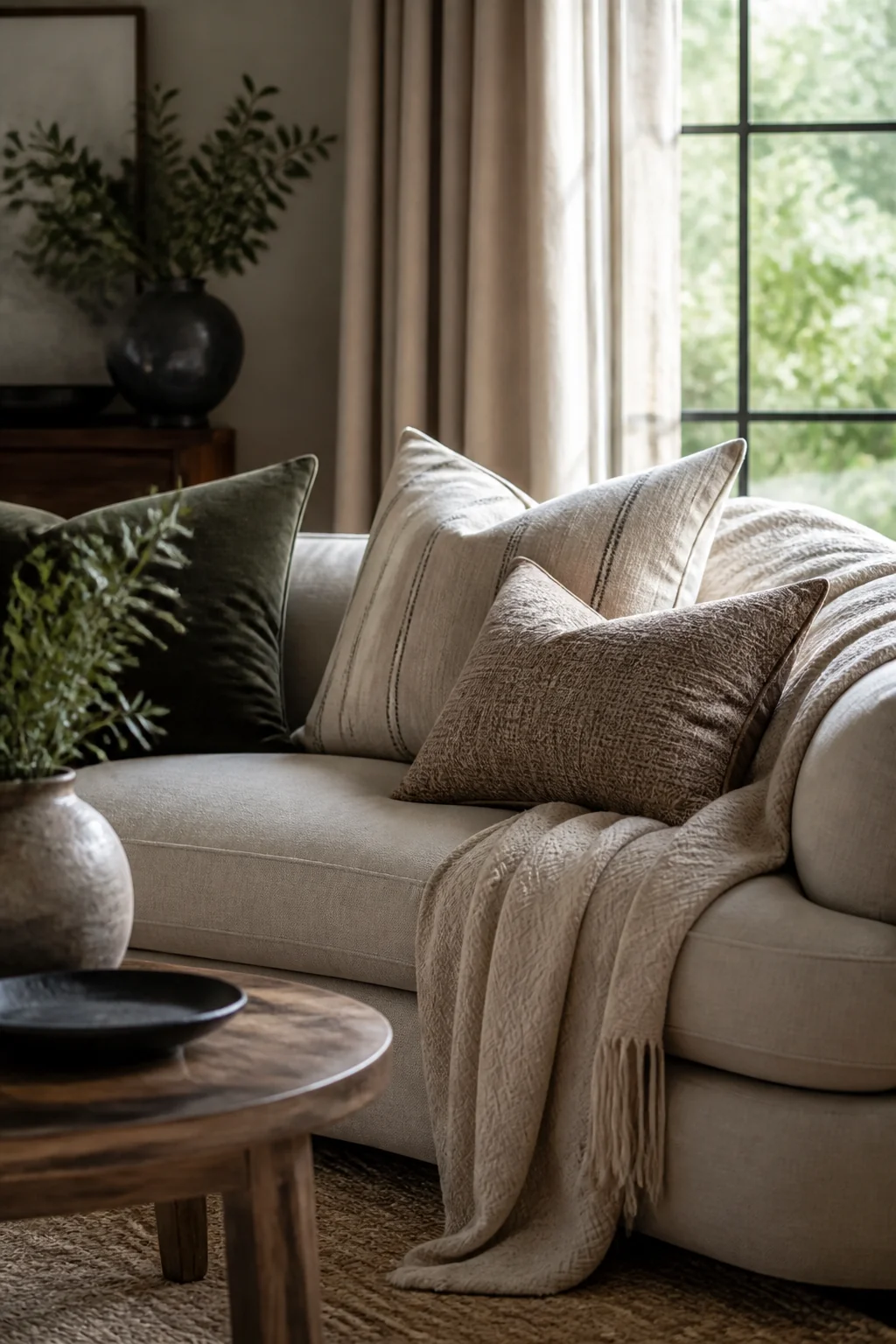
Textiles are the fastest color change available in a rental and the easiest thing to take with you. They also expose cheapness faster than anything else in the room, because these are the surfaces you touch every day.
Curtains earn their money on length and fullness. Buy panels that reach the floor or stop a half inch shy of it, and add up their combined width to two or two and a half times the window, or the fabric hangs flat instead of falling into folds. Cotton or linen-blend panels run $25 to $50 a pair, and a blackout liner is worth it in any bedroom facing a streetlight or a parking lot.
Size pillow inserts up before you order, a 20 inch down-alternative going inside an 18 inch cover, and the corners fill out the way they do in photographs. That runs roughly $12 for the fill plus $15 to $25 for the cover itself. On throws, wool or heavy cotton at $60 to $90 keeps its surface for years, while cheap acrylic pills across the seat cushion within a season and never recovers.
11. Create One Small Moment of Beauty You Didn't Expect
The rooms nobody bothers decorating are where a small effort pays off most, because there's no expectation to compete with. A rental bathroom is the obvious candidate.
A 24 inch wooden ledge above the sink costs $15 to $30 and holds three things well: a candle, a small plant, and soap in something other than the bottle it came in. Mount it 12 to 16 inches above the backsplash so it clears the faucet and stays out of the splash zone. Choose sealed wood, teak or bamboo, because raw pine cups and warps in a room that gets steamed twice a day. A pothos cutting in a jam jar is the right plant for the spot, since it lives on humidity and copes with the weak light most bathrooms get.
The same logic works anywhere else nobody looks. A shallow tray by the door for keys and mail, a small lamp on top of the fridge, two books and a bud vase on a windowsill. All of it is cheap, all of it comes with you, and it's the last thing you see on your way out the door.
If the budget only stretches to one of these, we'd put it into lighting. Nothing else on the list does as much for how a room feels after dark, and a lamp is the one purchase that costs you nothing at move-out and asks no permission from anyone.
Take the guide with you
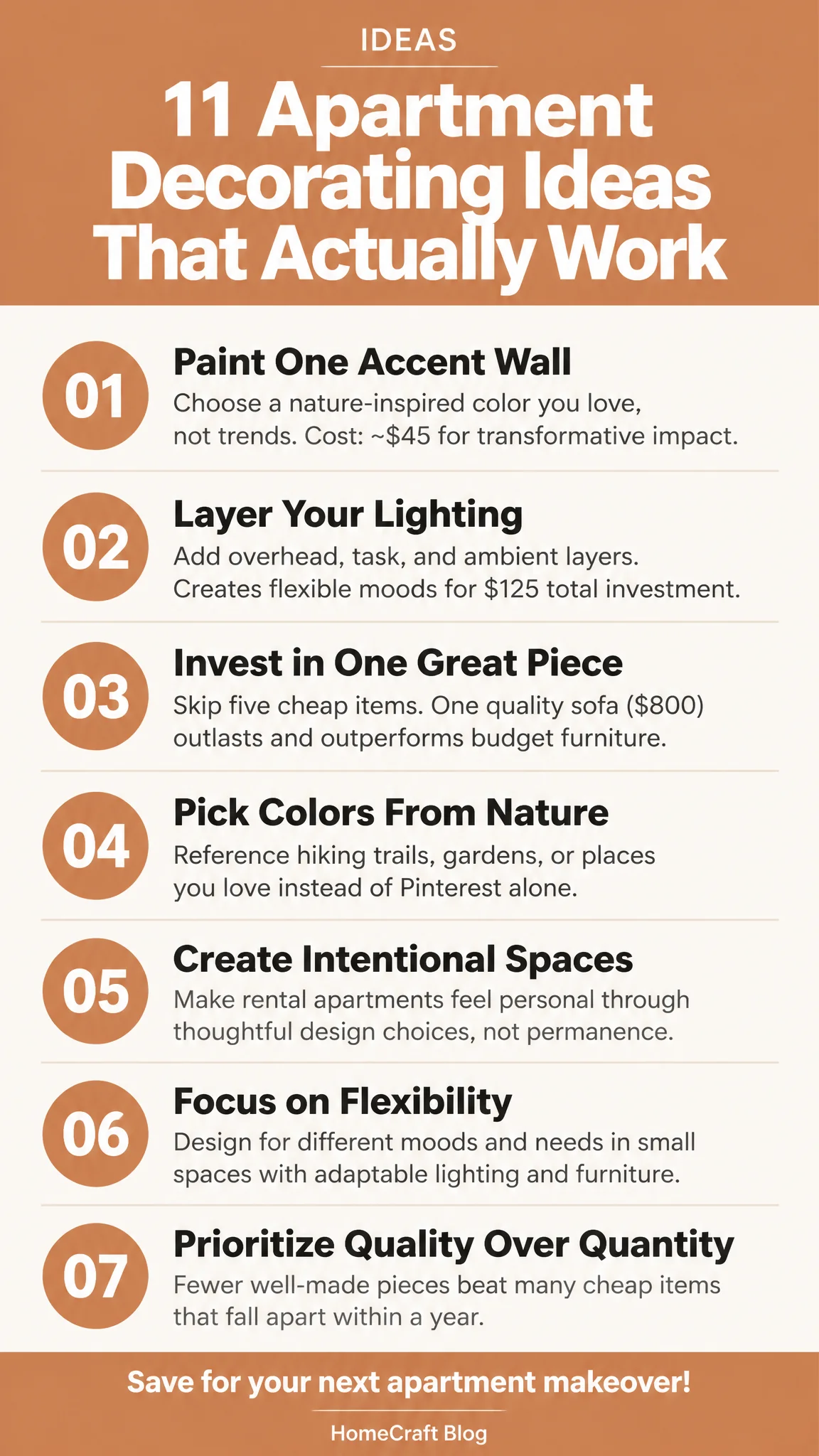
Everything else can arrive slowly. Rugs and textiles leave with you, hardware goes back in its bag, paint gets a return coat, and the holes close with spackle. For more on laying out the rooms themselves, our guides to small living room ideas and bedroom decor on a budget go deeper on furniture arrangement and where the money is best spent.