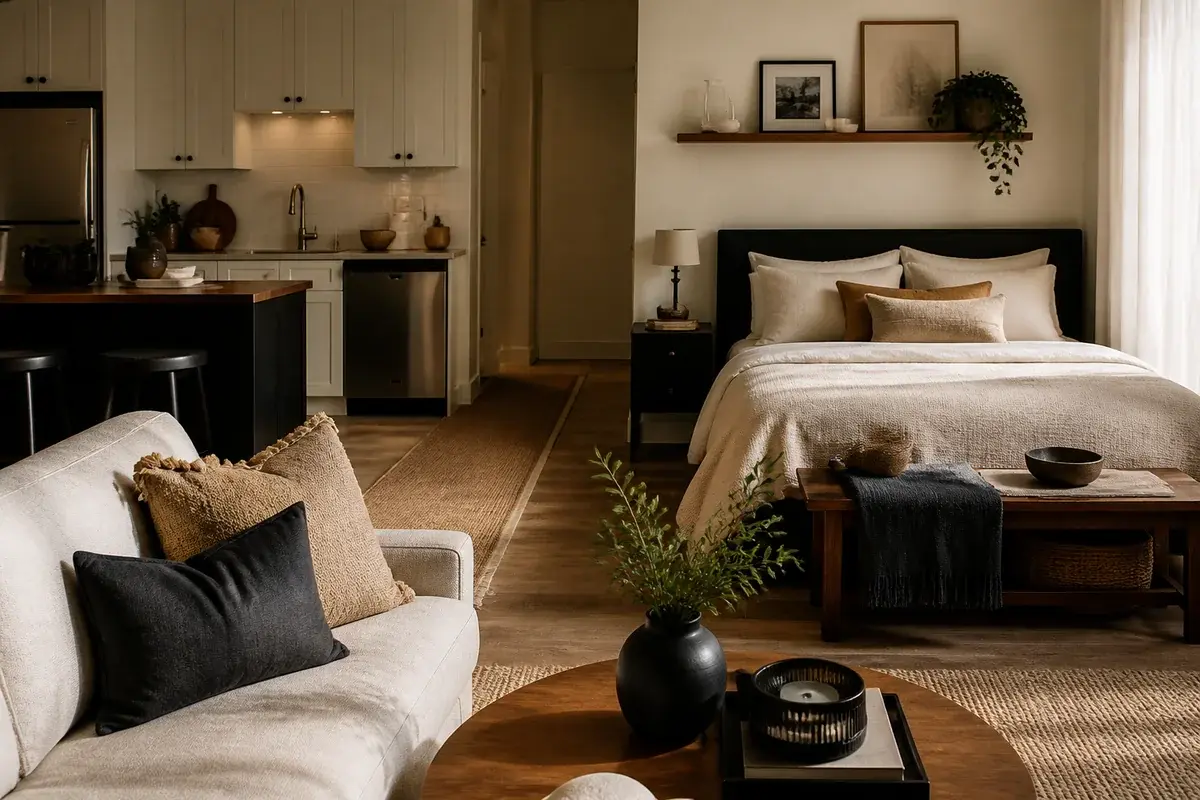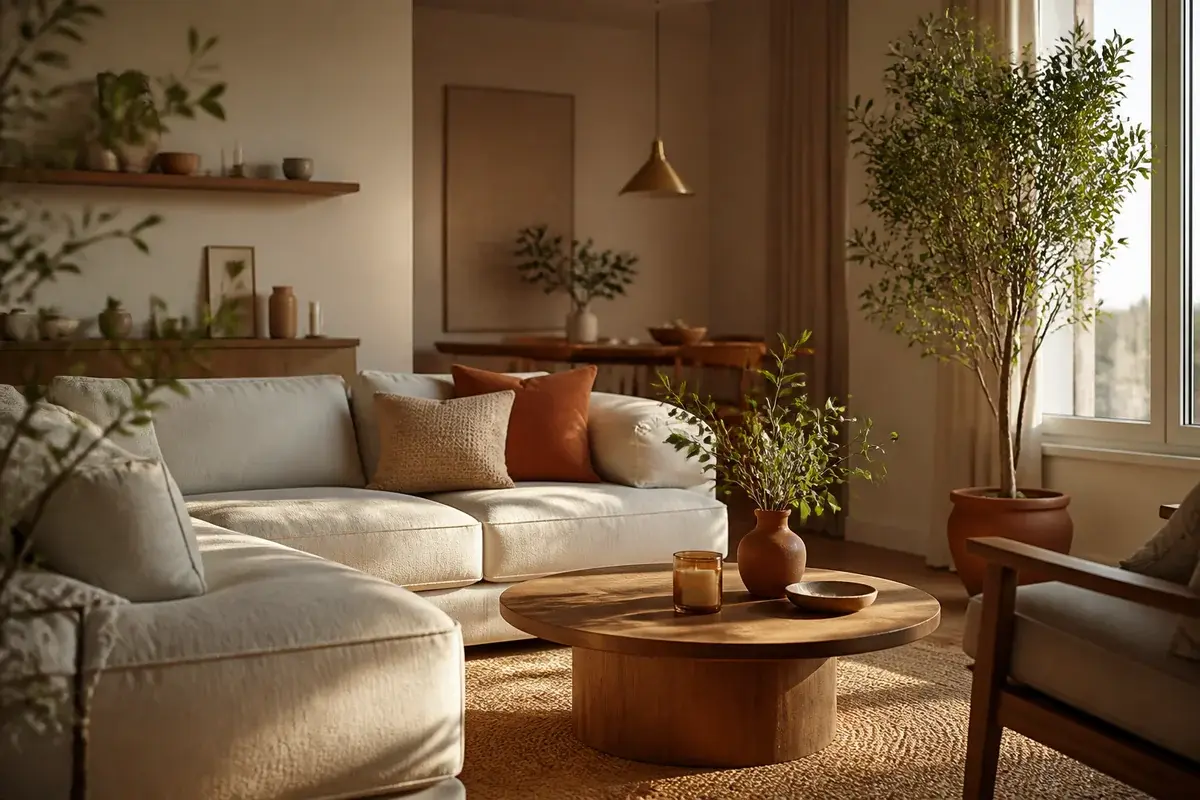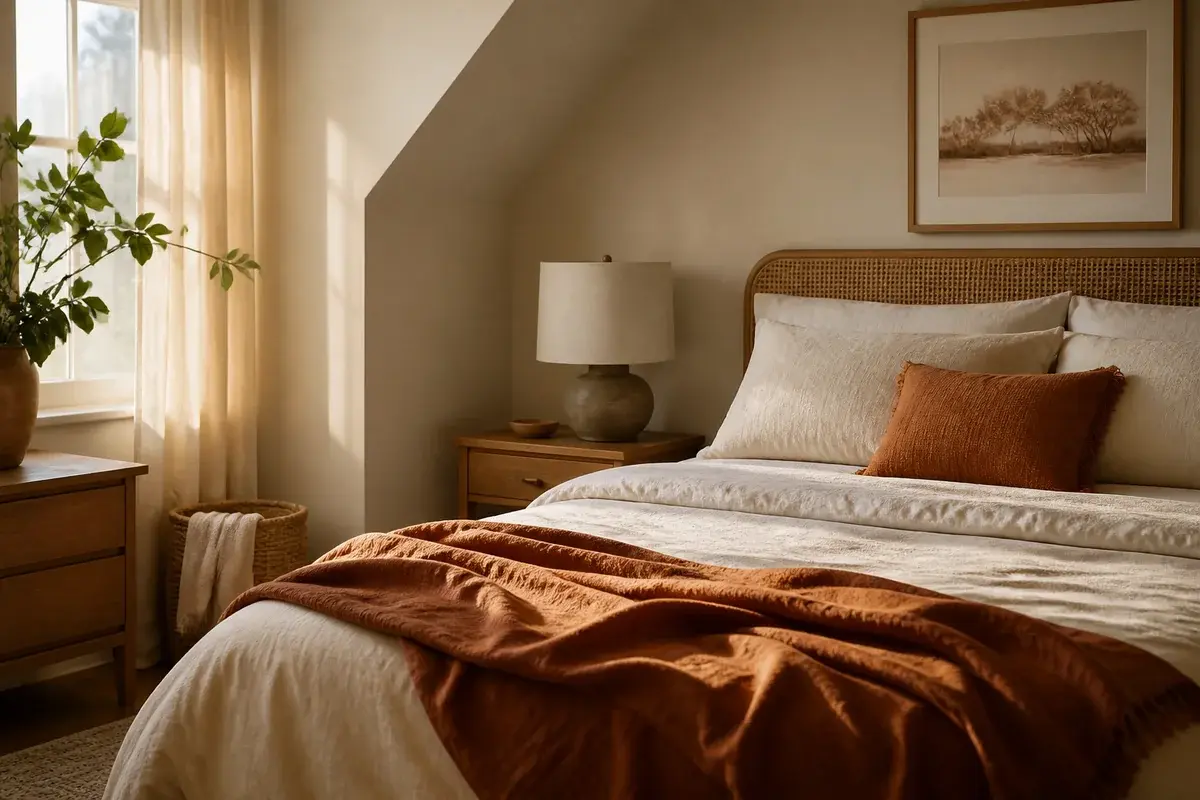
31 Budget-Friendly College Apartment Decor Ideas Under $200
31 college apartment decor ideas under $200, with real prices, real sizes, and damage-free hanging methods that keep your deposit intact.
This post contains affiliate links. As an Amazon Associate I earn from qualifying purchases. If you buy through our links, we may earn a commission at no extra cost to you.
The rooms that look expensive usually aren't. What they have is warm light instead of the overhead fixture, something soft on the floor, and a few things at eye level that belong to the person living there. All three of those are cheap. What makes decorating feel expensive is buying the wrong size, then buying it again.
College apartments are strange spaces: not quite home, not quite temporary, and almost always rented under a lease that charges you for holes in the drywall. The reversible fixes in our apartment decorating ideas apply here as well, from paint you can put back to pulls that go back in a labeled bag. So everything below carries a price, a measurement, and a way to put it up that comes back down cleanly. Here are thirty-one ideas that fit inside about $200.
1. Hang string lights in a geometric pattern
A 33-foot copper-wire strand with 100 LEDs runs $12 to $18, and a thicker fairy-light strand tops out around $25. Buy warm white at 2700K, not the 6000K daylight version, which reads blue and clinical against a white dorm wall. Geometry is what separates this from a dorm cliche: pick a triangle or a square roughly 36 inches on each side, mark the corners in pencil, then run clear adhesive clips every 10 to 12 inches along each leg so the wire holds a straight line instead of sagging into a droop. Plug-in strands beat battery packs, which eat three AA cells about every two weeks at four hours a night. Never run the wire under bedding or behind a rug, and skip incandescent strands entirely since most leases ban them and LEDs stay cool to the touch. Even small dorm rooms feel warmer once the ceiling fixture stays off.
2. Grab a 5x7 secondhand rug from a thrift store
Thrift stores price rugs at $10 to $30, against $80 to $150 for the same size new. A 5x7 covers the walking area of a typical 10x12 bedroom and still leaves 12 to 18 inches of bare floor showing at the edges, which is what keeps the room from looking carpeted wall to wall. Inspect before you buy: flip a corner and look at the backing, because a latex backing that flakes into orange crumbs in your hand is done and will shed on the floor forever. Then smell it. Wool holds pet odor and smoke, and most laundromats will not take a rug that size. Budget a hose-down outside and a full day of drying flat, or about $25 for a rented upholstery cleaner. Add a $12 non-slip pad underneath or a thin rug slides on laminate every time you get out of bed. Even a slightly worn rug beats bare floor for warmth and echo.
3. Lean large posters against your wall instead of framing them
A frame for a 24x36 print costs $30 to $60, which is more than most of this list. Leaning skips that entirely. You need a surface at least 4 inches deep to set the poster on, so a dresser top, a low bookshelf, or the floor against the wall all work. Set the base out 2 to 3 inches from the wall so the lean angle holds; flush against the wall it slowly slides down. The real failure here is paper. An unbacked poster curls at the corners within a month and then slumps forward like a wilting leaf. Fix it for about $6 with a sheet of foam board cut to size using a utility knife and a metal straightedge, attached with double-sided tape at the four corners only, since taping the whole back makes the paper buckle as the humidity swings. Weight the bottom edge with a few books, and never lean one where a door swings.
4. Fill empty wall space with a fabric panel for under $20
Printed cotton runs $6 to $9 a yard, so two or three yards covers a big blank wall for under $20. A ready-made tapestry at roughly 51x60 inches lands in the same range, and a thrifted flat sheet costs about $4 if you don't mind ironing. Iron it either way, because packaging fold lines show as hard creases under any light. For hanging, don't stick adhesive strips directly to the cloth. Tape or stitch a length of grosgrain ribbon along the top edge and mount the strips to that, so the pull is spread across the whole width instead of tearing at four points. Better still, fold a 2-inch hem, slide a half-inch wooden dowel through it, and rest the dowel on two adhesive hooks. Press each strip for 30 seconds and wait an hour before loading it. Textured or freshly painted walls will not hold adhesive, and neither will a humid bathroom wall.
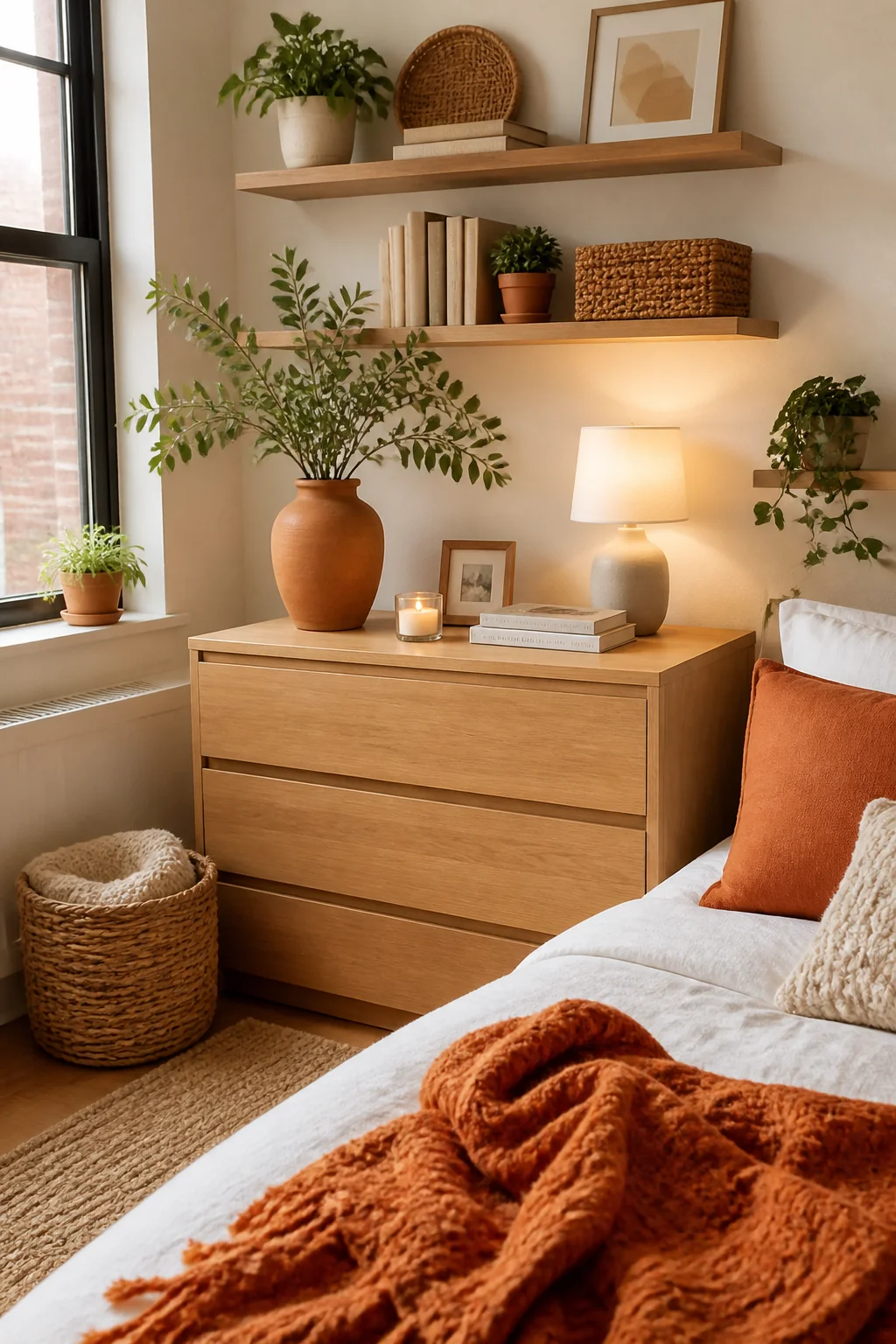
5. Use floating shelves to display books and small plants
Three floating shelves from a hardware store run about $10 each, plus brackets or hidden hardware. Weight is the part people skip: a linear foot of paperbacks weighs close to 10 pounds, and a standard drywall anchor is rated for about 10 pounds on its own. So put books on the lowest shelf where two anchors carry the load, and keep the top shelf for a small plant, a candle, and a framed photo. Stagger them 10 to 14 inches apart vertically so you can reach in and dust. The common mistake is packing them wall to wall; fill roughly two thirds of each shelf and let the rest sit empty, and the whole arrangement reads as styled rather than as storage. Slip a cork coaster or a saucer under any plant, since a single overflow leaves a dark ring in a raw pine shelf that never sands out. A tub of spackle is $4 at move-out.
6. Make a gallery wall with printed Instagram photos
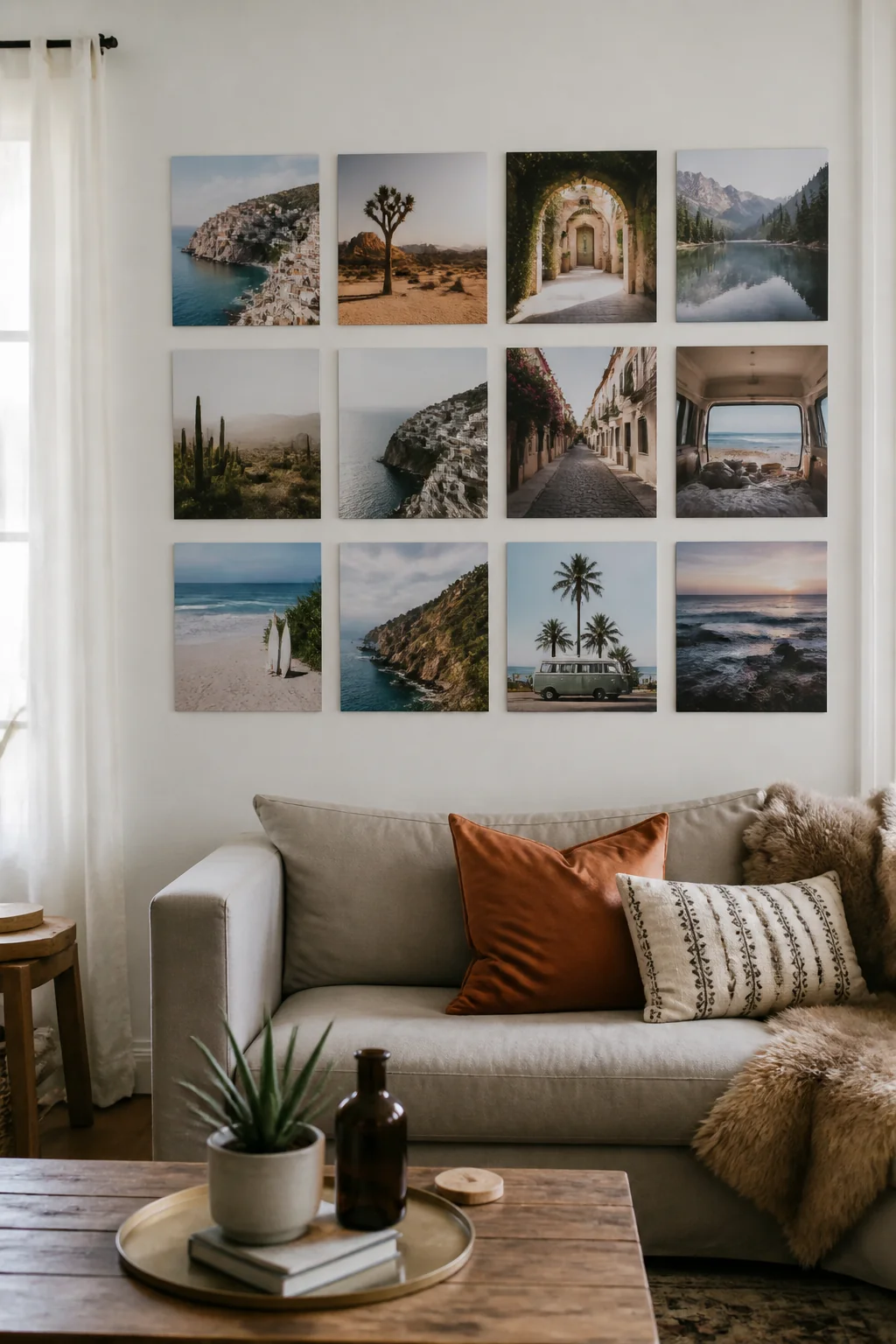
Drugstore prints cost $0.20 to $0.39 each in 4x6, so twenty of them come to under $8 and print in about an hour at the in-store kiosk. Instagram photos are square, usually 1080 pixels, so order 4x4 square prints or accept that a 4x6 order crops the top and bottom off every shot. Don't size up past 5x7, because 1080 pixels stretched that far goes visibly soft. Lay the whole set out on the floor before anything touches the wall. Keep a consistent 2-inch gap between prints and keep the outer boundary a clean rectangle, since a ragged edge is what makes a gallery wall look accidental. Hang with washi tape or removable poster strips; standard clear tape pulls paint when it comes off. One caution worth knowing: drugstore prints on a wall that gets direct afternoon sun fade noticeably within a couple of semesters.
7. Toss a chunky knit throw blanket on your bed or chair
Target and TJ Maxx keep these between $20 and $35. Size first: a 50x60 throw covers a twin XL on the diagonal, but on a full or queen it looks like a napkin, so step up to 60x80 there. Fiber decides how long it lasts. Acrylic chenille is the cheapest and pills into little balls by the end of the first semester. Cotton chunky knit resists pilling but stretches out of shape if you hang it over a chair back for months. A wool blend is warmest and the most expensive of the three. Big open loops also snag on rings, watch clasps, and Velcro. Wash it cold in a mesh bag and lay it flat to dry, because a hot dryer crushes the loft permanently and you get a flat mat back. To style it, fold in thirds lengthwise, lay it across the lower third of the bed, and let 8 to 10 inches hang over the side.
8. Place a full-length mirror against the wall propped on a chair
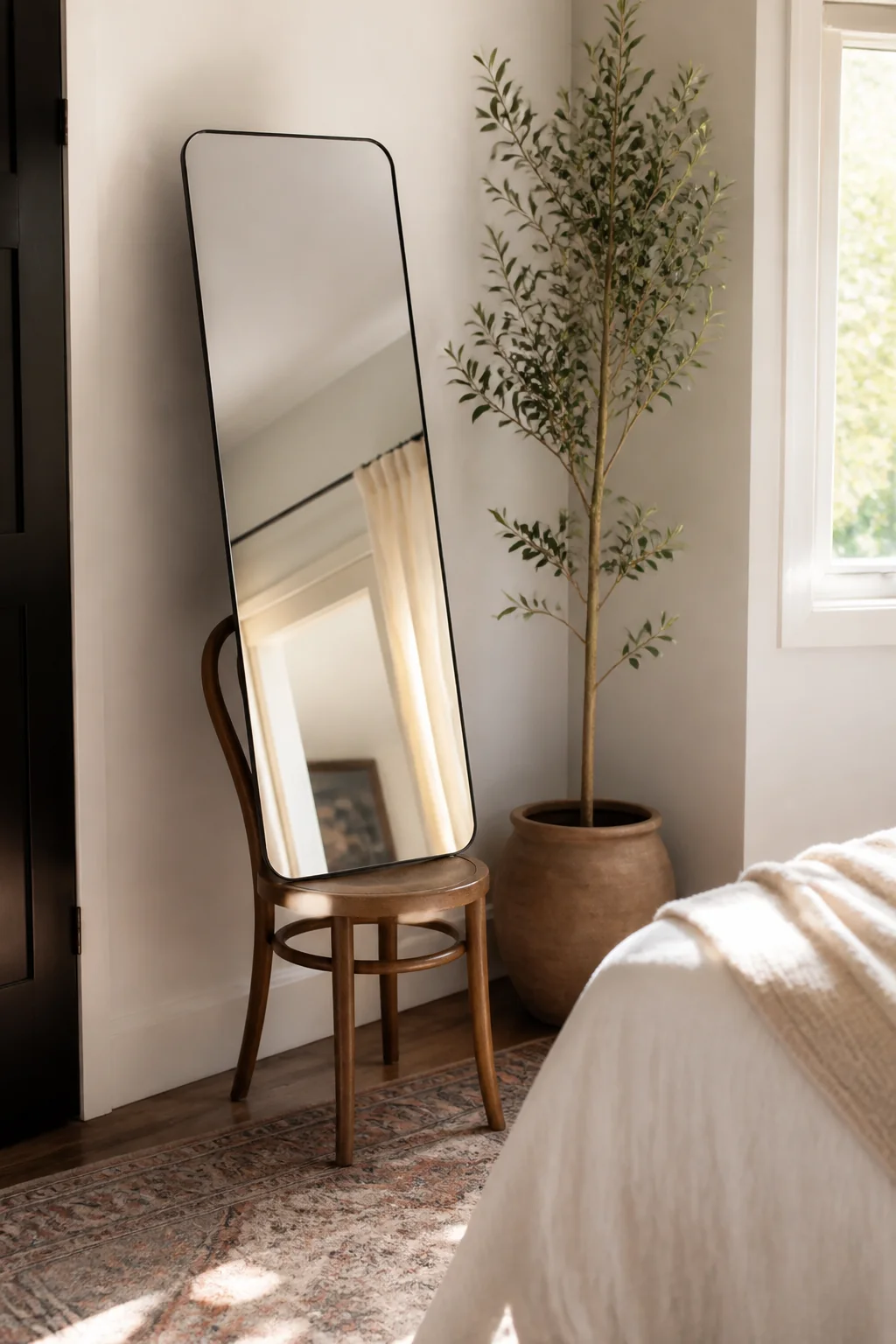
A 12x48 or 20x60 leaning mirror costs $15 to $40 and needs no wall hardware, which is the whole appeal in a rental. Set the base 3 to 4 inches out from the wall, and put it on carpet rather than laminate so the feet grip. Then secure it anyway. Cheap tall mirrors with thin plastic frames are top-heavy and tip if a door slams or someone knocks the bed; a $5 nylon furniture safety strap and one drywall anchor solves it, and this is not a place to improvise. Placement does the work: set it perpendicular to the window rather than facing a blank wall, so it picks up daylight and pushes it back into the dark side of the room. If you find a frameless one secondhand, check the backing board is still fully attached, since a loose backing means the silvering is already lifting at the edges and dark blotches will spread.
9. Swap out your basic white pillowcases for patterned ones
Buy covers, not whole pillows. Covers run $8 to $15 each, so two or three come to $25 to $40, and they pack flat when you move. A cover cut to match its insert has slack in it from day one, and slack is what shows up as a sag across the middle within a week. Go 2 inches over instead: a 20-inch insert inside an 18-inch cover has to fill the corners, and it stays plump because of it. Envelope backs are cheaper than hidden zippers and far easier to strip for washing, which matters when the pillow lives on a bed you also eat on. Cotton canvas and linen blends wash cold and keep their shape. Velvet crushes into permanent shine marks where you lean, and anything sequined shreds a fitted sheet. For arrangement, two 20-inch squares at the back with one 12x20 lumbar in front reads better than a matched pair. Wash covers cold and skip the dryer, since printed cotton shrinks about half an inch.
10. Add a clip light to your headboard for reading
Clamp lamps cost $12 to $20, but check the jaw before you order. Most open to somewhere between 1 and 2 inches, and a lofted metal bed rail is often about 1.25 inches while a padded upholstered headboard can be 4 inches thick and simply will not fit. Measure yours with a ruler. Get a gooseneck version so you can aim the beam down at the page instead of across the room at a sleeping roommate. For the bulb, an LED in the 450 to 800 lumen range at 2700K gives you enough to read by without the blue cast that keeps you up. Halogen and incandescent clip lamps are banned in a lot of residence halls precisely because the shade gets hot enough to scorch bedding. Run the cord down the bed frame with a few $4 velcro ties so it isn't looping across the floor where you step at night.
11. Hang fabric from corner to corner above your headboard
Two yards of printed cotton from a craft store costs about $8. Voile or chiffon at $4 to $6 a yard is the better pick here, because it's light enough to swag properly and it filters lamplight instead of blocking it. Mount two adhesive hooks in the upper wall corners, roughly 12 inches down from the ceiling, and drape the fabric corner to corner behind the bed with enough slack that it curves rather than pulling flat. Steam or iron the creases out first or the packaging folds read as wrinkles from across the room. A few limits: popcorn or textured ceilings shed their coating and will not hold an adhesive hook at all, so keep everything on the walls in that case. And keep the fabric a good foot away from any bulb, radiator, or baseboard heater. Most housing contracts explicitly prohibit anything draped over a heat source.
12. Use removable wallpaper on one accent wall
Peel-and-stick wallpaper runs $25 to $40 per roll, and a roll typically covers 18 to 30 square feet. An 8-foot by 10-foot accent wall is 80 square feet, so you need three or four rolls, or $75 to $160, and you should add about 15 percent for matching the pattern repeat. That makes this the single biggest line item on the list, worth budgeting for deliberately. Wipe the wall with a damp cloth and let it dry fully. Then draw a plumb line with a level and start from that, not from the corner, because corners in old buildings are never square and the pattern will drift visibly by the third strip. Peel about 12 inches of backing at a time and smooth outward from the center with a plastic squeegee. Here's the part to test first: it will not bond to textured or orange-peel walls, it fails on paint less than 30 days old, and on cheap flat builder paint it can lift the paint on removal. Stick a 6-inch test square inside a closet and pull it a week later.
13. Create a plant corner with affordable small plants
Grocery stores sell 4-inch pots for $5 to $8, and the species matters more than the price. Snake plants and ZZ plants go two to three weeks between waterings and tolerate a north-facing window, which is exactly the abuse a semester schedule delivers. Pothos wilts dramatically as a warning and then recovers within hours of a drink, so it's forgiving of the forgetful. Skip fiddle leaf figs entirely; they drop leaves over a draft, a move, or a bad mood. Leave each plant in its plastic nursery pot and drop that inside a $3 to $6 decorative cachepot with a saucer, because planting straight into a pot with no drainage hole is how most dorm plants die. Group three at staggered heights, using an upturned milk crate or a stack of books to lift one, and keep the cluster within 3 or 4 feet of the window. A windowless room is the case where this doesn't work, and a good faux stem is the honest answer there.
14. Hang a metal wire grid on your wall for $15
A 15x18 inch steel grid runs $12 to $18 and usually ships with a handful of S-hooks and clips; a 25x37 version is closer to $25. Add a $4 bag of mini clothespins and you can clip photos, postcards, ticket stubs, and fabric scraps and rearrange the whole thing in five minutes. Mount it with one adhesive hook per corner and keep the total load under about 2 pounds, which is a lot of paper but not a lot of anything else. The failure mode is predictable: people buy the little grid shelf accessories, load them with a water bottle or a stack of books, and the thin wire bows into a permanent curve that never straightens. Hang it 18 to 24 inches above the desktop so everything on it stays within arm's reach while you're seated. Black powder-coated grids show every fingerprint and dust line; white ones scuff instead. Either way, wipe it with a dry cloth, not a wet one, since the cut wire ends rust.
15. Drape string lights across your window frame
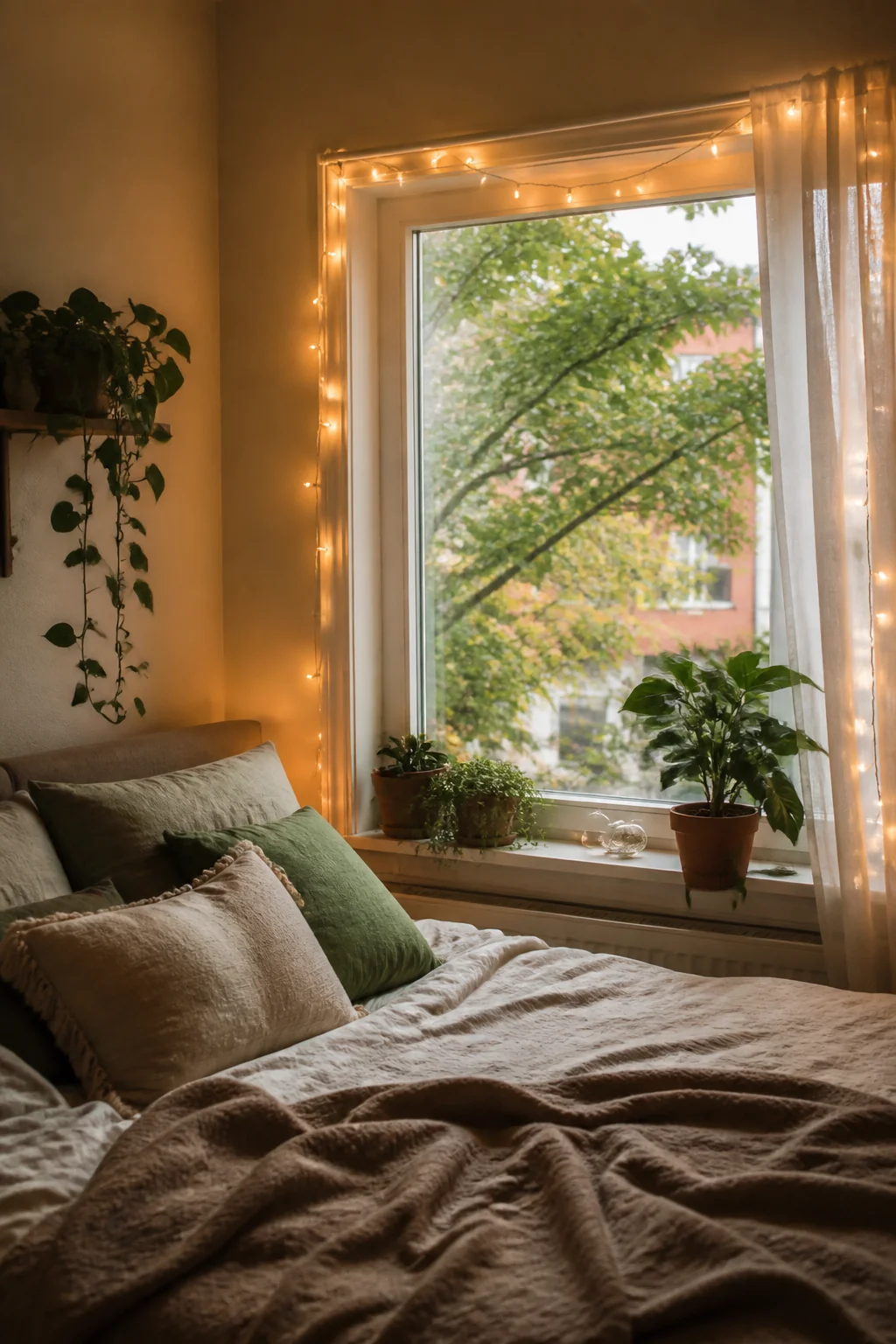
Running the strand around the window instead of over the bed costs the same $15 to $25 and turns the darkest rectangle in the room into the brightest one after sunset. Measure first: a standard 36x60 window has a perimeter of about 16 feet, so a 33-foot strand doubles back on itself and you'll want the slack tucked, not looped. A curtain-style strand of 300 LEDs at roughly 9.8 by 9.8 feet costs $18 to $25 and hangs behind a sheer panel for a diffused version. Clip to the painted trim rather than the wall, every 10 to 12 inches, because trim paint releases adhesive far more cleanly than flat wall paint. Do not tape across the sash or trap the wire in the track if the window opens, and stay off the glass itself, since a cold pane sweats in winter and condensation is what makes clips let go in January. Pick a strand with an inline switch or a remote so you're not groping behind the bed every night.
16. Buy a decorative floor cushion for under $25
One 24 or 28-inch round floor pillow gives you a second seat without a second chair, which matters in a room where the desk chair is the only place a guest can sit. Fill is the whole story at this price. A $15 cushion stuffed with loose polyester fiber compresses to a pancake inside one semester and never recovers. Look for shredded foam fill instead, or buy a cover-only version for $18 to $22 and stuff it yourself with off-season clothes, which doubles as storage. You want 6 to 8 inches of loft when it's sitting empty; anything thinner is a rug you sit on, not a cushion. Choose a cotton canvas cover with a zipper you can really pull off and wash, because a floor cushion collects hair, crumbs, and shoe dirt faster than anything else in the room. Faux fur and velvet look great for about three weeks and then can't be cleaned.
17. Use removable adhesive hooks to hang a decorative scarf
Thrift scarves go for $2 to $5, and the two shapes behave differently. A large square silk-blend scarf is usually about 35x35 inches and hangs as a diamond or a flat panel. A rectangular one at roughly 12x60 inches swags beautifully across a wider span. Set three adhesive hooks in a straight line, using a strip of painter's tape as a guide so you don't eyeball it crooked, then thread the fabric through so it dips between hooks rather than pulling taut. Silk and rayon snag on the raw edge of a cheap plastic hook, so loop a short piece of ribbon around the hook and tie the scarf to that. Steam it before it goes up, since thrift scarves arrive folded into hard creases. The one real rule: keep it at least 12 inches away from any bulb, desk lamp, or radiator. Draped fabric near a heat source is exactly the thing your housing contract warns about.
18. Frame one single large piece of art on your main wall
A framed 8x10 or 11x14 print costs $15 to $30, and hanging it correctly costs nothing. Rented walls run tall and blank, which pulls a lone frame upward until it's drifting near the ceiling. Measure up from the floor instead of eyeballing the empty middle, and the image centers at 57 to 60 inches. If it hangs above a desk or dresser, drop that and leave 6 to 8 inches of wall between the furniture top and the bottom of the frame, so the two read as one group instead of two unrelated objects. Scale is where a single piece usually fails, because a print gets judged against whatever sits below it: against a 48-inch desk an 11x14 shrinks to a postage stamp, and you need something spanning about two thirds of that furniture, so roughly 30 inches across. The cheap fix is a ready-made frame with an 8x10 opening and a wide mat that finishes at 16x20, around $20, which buys you the presence without buying a bigger print. Resist the urge to add a second one.
19. Add a small desk lamp with a fabric shade
A decent desk lamp runs $20 to $35, and the fabric shade is doing real work, not just softening the look. It diffuses the bulb so you don't get a hard hotspot bouncing off a glossy laptop screen. Aim for 400 to 800 lumens at 3000K to 4000K, which is warmer than a classroom fluorescent but cool enough to keep you alert over a problem set. Height matters more than wattage: the bottom edge of the shade should sit about at eye level when you're seated, roughly 15 to 17 inches above the desk surface, so the bulb itself stays out of your line of sight. Pick an unlined linen or cotton shade in white or cream, since those pass light through the sides and fill the whole desk. A dark or foil-lined shade throws light straight up and down and leaves the corners of your work dim. Use an LED bulb only, because a hot incandescent will scorch a paper-backed shade from the inside.
20. Hang your scarves, belts, or hats on adhesive hooks
This one is free, since you already own the things. A pack of six to eight adhesive hooks costs about $8, each rated for 3 to 5 pounds, which comfortably holds a stack of ball caps at roughly a pound but will not hold a wet wool coat. Space hat hooks 4 to 6 inches apart so the brims don't crush each other, and run the row at 60 to 66 inches high to clear a dresser top. Group by color rather than by category, because a gradient of scarves reads as a deliberate display while a mixed jumble reads as laundry. Two cautions. Adhesive hooks pull paint off if you yank them straight out; the tab is meant to be pulled slowly downward for 10 to 12 inches until the strip stretches and releases. And they won't hold on wallpaper, textured plaster, or unpainted brick, so test one low on the wall before committing to a whole row.
21. Use cardboard storage boxes covered in fabric
Plain moving boxes cost $1.50 to $3 each, and fabric or contact paper adds $5 to $8 a roll, so the whole project lands around $20 to $30. Measure the shelf before you buy: a standard closet shelf is 12 to 16 inches deep, so a 12x12x12 or 12x15x10 box fits where a big moving carton won't. Reinforce the bottom with packing tape in an H pattern first, because a cardboard bottom blows out the moment you load books into it. Cut a hand-hole in one side before covering, then finish that edge with tape so it doesn't fray. To cover, cut your fabric with 2 inches of overhang all round, run a line of hot glue along only the top and bottom edges, fold the corners the way you'd wrap a gift, and tuck the overhang inside the rim. Two honest limits: they crush if you stack heavy things on top, and in a damp basement laundry room they warp within weeks.
22. Place a small bookshelf horizontally as a headboard shelf
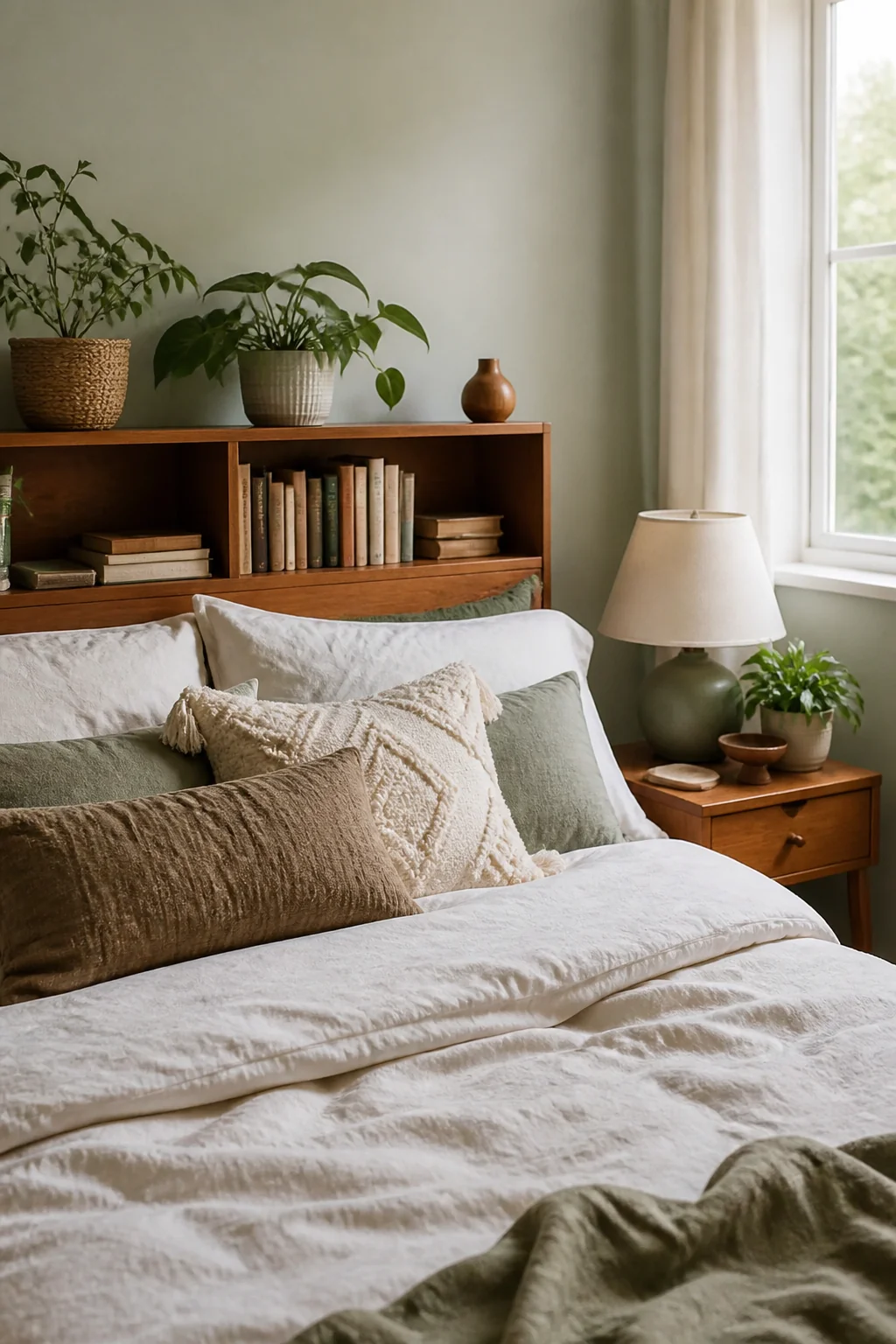
A narrow shelf, 6 to 8 inches deep and 30 to 36 inches wide, costs $15 to $25 and turns the wall behind the bed into a nightstand you don't have floor space for. Mount it 12 to 18 inches above the mattress top. Lower than that and you will crack your head sitting up; higher and you can't reach anything from bed. This is the one spot on the whole list where adhesive mounting is not acceptable. Find a stud if you can, or use toggle or molly bolts rated 25 to 30 pounds each, and load it to a fraction of that. Keep what goes up there light and low profile: books lying flat, a lamp with a wide base, a small clock. No glass, no candles, nothing that rolls. If you sleep in a lofted bed with less than 8 feet of ceiling, skip this entirely, since there's no vertical room left to sit up under a shelf.
23. Hang paper lanterns in corners for soft ambient light
Paper lanterns cost $8 to $15 each in the common 12 to 16 inch diameters, against $60 and up for a hard-wired pendant. You'll need a way to light them: a plug-in cord kit with socket and inline switch runs $8 to $12, or a battery puck light at about $6 for three if there's no outlet within reach. Use LED bulbs and nothing else. Rice paper wrapped around a hot incandescent is a genuine fire hazard and most leases name it specifically. Allow about 18 inches of clearance between a 16-inch lantern and the wall so it hangs as a sphere rather than squashing against the corner. Ceiling adhesive hooks fail on popcorn ceilings, so hang from an existing curtain rod or a corner-mounted hook instead. Rice paper yellows over a year or two and dents easily, though a light pass with a steamer pops most accordion creases back out.
24. Stand dried flower stems in a small vase on your shelf
Dried bunches run $3 to $8 for bunny tails, wheat, or eucalyptus, while a single pampas plume is $6 to $10 on its own. A thrifted vase adds $2 to $4. The proportion rule is simple: trim the stems so the arrangement stands about one and a half times the height of the vase, which for a 6-inch vase means cutting to roughly 9 inches above the rim. Cut at an angle with sharp scissors, since dried stems crush and split under dull blades. Never add water. Dried stems wick moisture straight up and rot from the inside, and a vase with an inch of forgotten water at the bottom is how a nice arrangement goes moldy. Keep them out of direct afternoon sun, which bleaches color out within a semester, and out of a steamy bathroom, where eucalyptus goes limp. Pampas sheds constantly; a light mist of cheap hairspray sets the plume.
25. Use adhesive contact paper to pattern your dresser drawers
Contact paper costs $5 to $8 a roll, and a standard 18-inch by 9-foot roll lines three or four dresser drawers. Measure each drawer bottom, add a quarter inch on every side, and cut using the printed grid on the backing paper with a metal straightedge; freehand cuts wander and the gap shows. To apply, peel back only 3 or 4 inches, line up one long edge, then smooth outward with a credit card as you pull the backing away, working the air toward the open end. A bubble you can't chase out gets pricked with a pin and pressed flat. Here's the catch worth knowing in a rental: contact paper bonds hard to raw particleboard and tears the fibers off when removed. If the dresser isn't yours, lay a sheet of kraft or parchment down first, or use non-adhesive shelf liner at about $6 instead. The vinyl also seals in that old-wood smell, which is half the reason to bother.
26. Hang a cloth organizer behind your door for storage and texture
An over-door organizer costs $15 to $25 and typically measures about 20x60 inches with 20 to 24 pockets. Measure the door thickness before you buy, because most hooks are cut for doors between 1.25 and 1.75 inches, and a fire-rated residence hall door can run thicker than that, in which case the hook simply won't seat. Check the top clearance too: with the organizer hanging, the door has to still swing shut against the frame, and if there's a stop or the door opens against a wall, it won't. Keep the loaded weight under 10 to 15 pounds. Past that the steel hooks flex open, and worse, they gouge the paint on the top edge of the door, which is a documented lease-damage charge at move-out. Slip felt pads over the hook contact points for a couple of dollars. The pockets are the right size for chargers, cables, skincare, and snacks, which frees the whole desktop.
27. Create a mood board corner with a corkboard and photos
A framed 17x23 cork panel runs $10 to $15, and a 24x36 is closer to $20 to $25. Cheaper still, a $6 pack of cork tiles glued onto a scrap of plywood gives you any shape you want. Thickness is the spec that matters. Quarter-inch cork lets a standard push pin poke straight through into the wall behind it, leaving a grid of little dents you'll be patching at move-out, so either buy the half-inch self-healing kind or back it with a sheet of foam board. An empty cork board weighs only 2 to 3 pounds, so four adhesive strips at the corners hold it fine, but remember the weight climbs as you load it and adhesive ratings assume a static load. Mount it above the desk where you'll look at it. And keep changing what's on it. A mood board nobody has touched since September stops being a mood board and becomes wall clutter.
28. Swap your standard desk chair cushion for a colored one
A seat pad costs $12 to $20, and the specs separate the ones that last from the ones that flatten. Look for memory foam 1.5 to 2 inches thick with a non-slip backing and, critically, ties at the back corners. Without ties it slides forward every time you shift and you spend the semester repositioning it. Measure your seat first. Most pads come in 16x16 or 17x17, and a pad wider than the chair curls up at the edges and looks sloppy. Gel-infused foam runs noticeably cooler than plain foam over a three-hour study session. One thing people miss: adding 2 inches under you changes your whole relationship to the desk. If your elbows now sit above the desktop, drop the chair height to compensate or your shoulders will ache by week three. A removable, washable cover matters more here than the color does.
29. Hang a small metal shelf above your nightstand for a plant
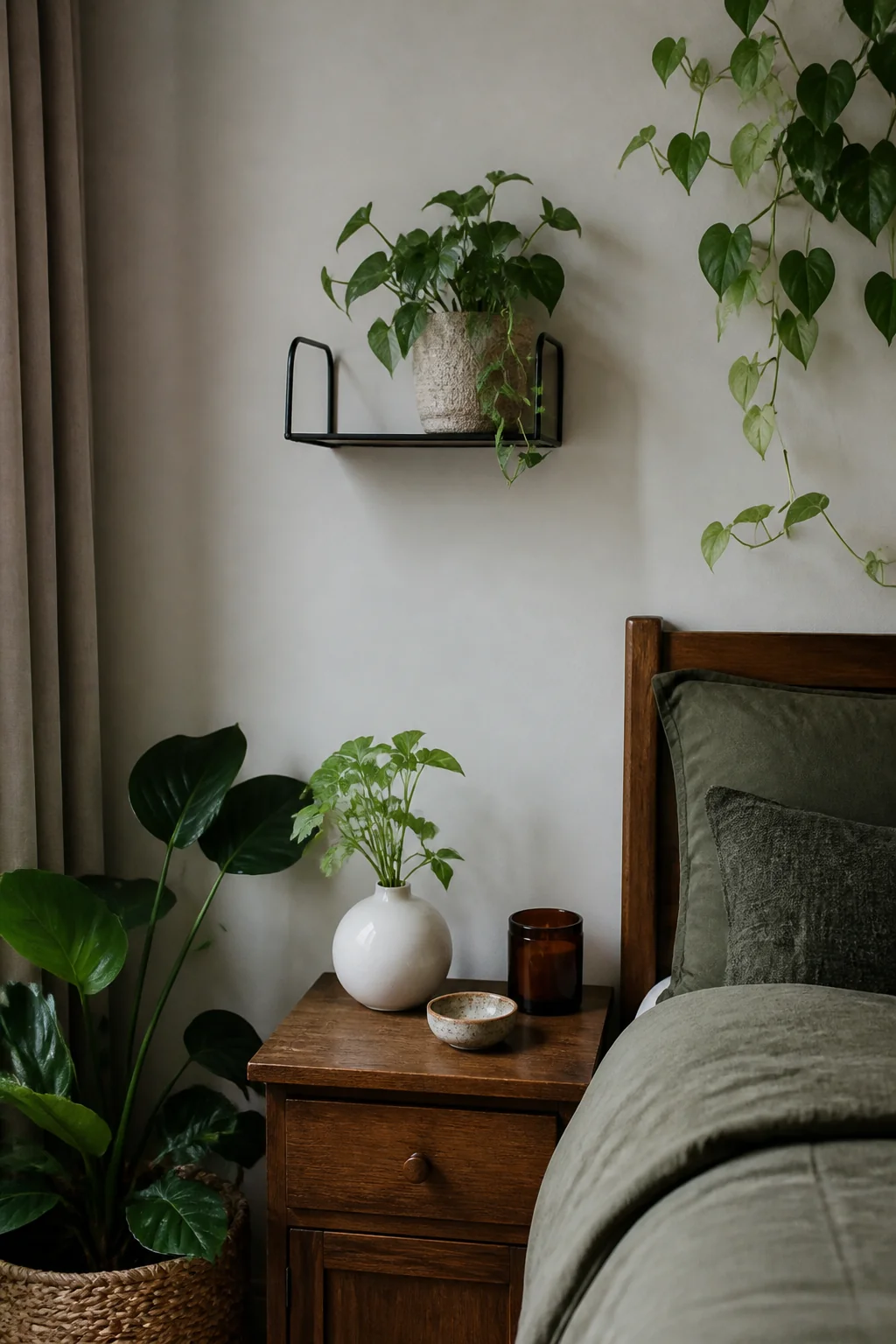
A 12-inch metal shelf costs $10 to $18 and buys you greenery without giving up the nightstand surface you need for a glass of water. Mount it 14 to 18 inches above the nightstand so you can still reach in and set a lamp or a book down underneath. A 4-inch pot with damp soil weighs 2 to 3 pounds, so a pair of drywall anchors rated 10 pounds each is more than enough. Adhesive shelves are not, and this is worth being firm about, since their rated capacity drops with a damp, uneven load and they tend to let go in the middle of the night. Put a saucer or cork coaster under the pot; a small overflow onto a nightstand ruins whatever book is sitting there. Check the shelf isn't tucked into the headboard's shadow, because a plant in a dark pocket stretches leggy within a month. Trailing pothos looks best from a raised shelf anyway.
30. Use a decorative rug or yoga mat under your desk chair
A thin flat-weave rug costs $15 to $25, or a standard 24x68 inch yoga mat runs $15 to $20 and cuts down to 24x36 with sharp scissors and a straightedge. Aim for something around 36x48 inches so it covers the full arc your chair travels. What you own decides which one to buy. If your chair rolls on casters, a thin rug rucks up into a ripple in front of the wheels and shreds along the fold within a semester, so you want either a hard plastic chair mat at $20 to $30 or a genuinely low-pile rug with a rubber-backed pad under it. A yoga mat's grippy surface stops casters dead, which is fine under a fixed four-leg chair and infuriating under a rolling one. The practical payoff beyond the look: caster wheels leave gray scuff tracks in laminate and vinyl plank, and that comes out of your deposit.
31. String a rope across one corner and hang small plants or photos
Ten feet of quarter-inch to three-eighths-inch cotton rope costs $5 to $8, and fifty mini clothespins add about $4. Anchor it 6 to 8 inches down from the ceiling in the corner. Pay attention to the direction of pull here: a corner-to-corner line tugs the anchor outward, away from the wall, and outward pull is exactly where adhesive strips are weakest. For paper and photos, two hooks rated 3 to 5 pounds hold. For anything heavier, use screw hooks with drywall anchors instead. Expect a 6-foot span hung with photos to sag 3 or 4 inches in the middle, and leave it, because a rope pulled drum-tight looks like a laundry line rather than a display. Real potted plants are too heavy; a 4-inch pot at 2 to 3 pounds drags the whole line into a V. Air plants weigh an ounce or two and need no soil, so those work. Just don't run it across a walkway at head height.
One caution before any of this goes on a wall: read the damage clause in your lease or housing contract. Adhesive strips that come off cleanly from smooth latex paint can lift the finish off flat builder paint, peel-and-stick paper leaves ghosting on a wall painted within the last month, and an over-door organizer that dents the door edge shows up on the move-out inspection whether or not anyone noticed it in October. Test anything sticky on a six-inch patch inside a closet and check it a week later. Keep a $4 tub of spackle and the paint code, if the office will give it to you.
The whole guide in one image
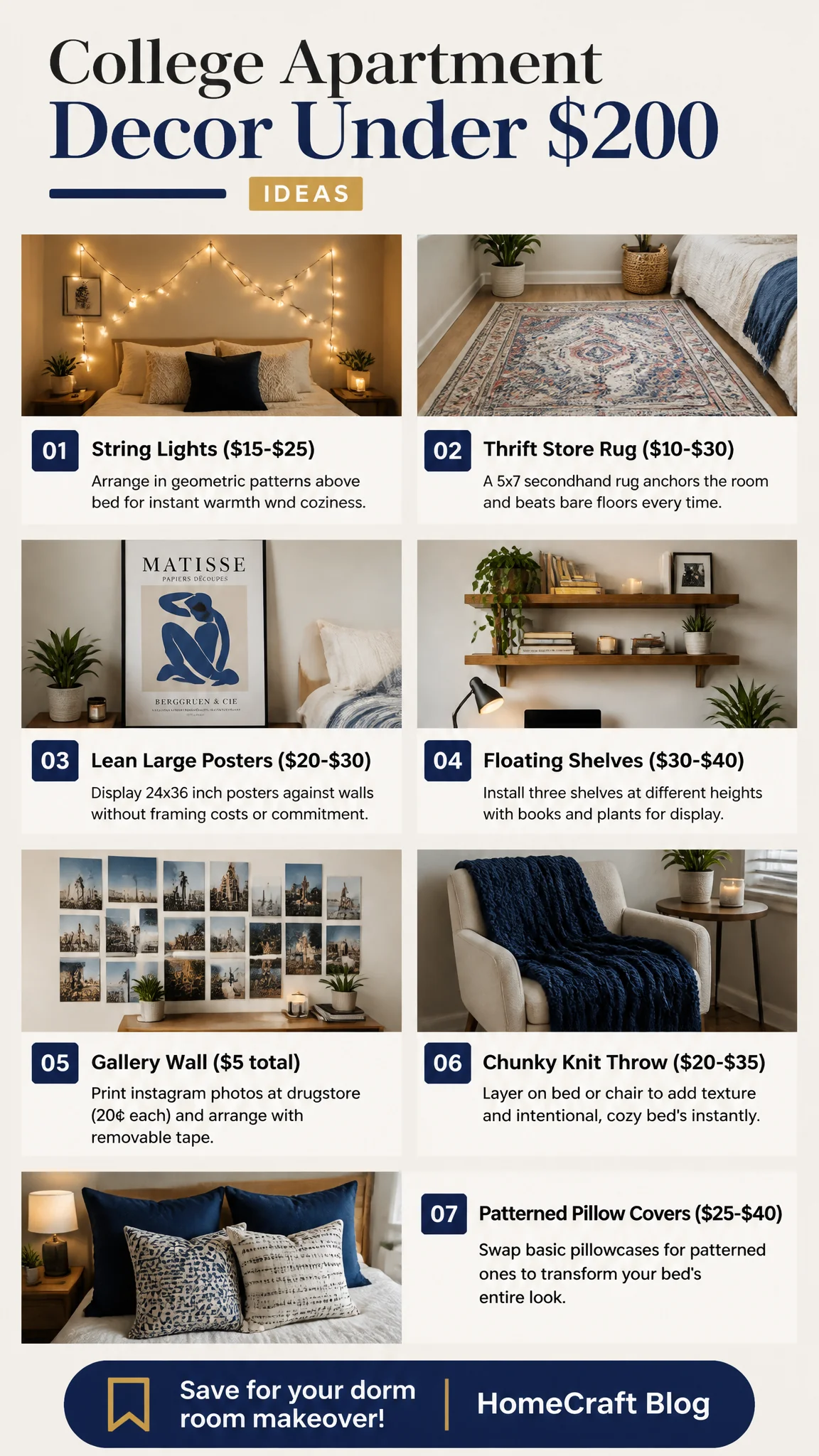
If you're deciding what to buy first, buy the light. A warm 2700K strand or a single clip lamp does more for how a rented room reads at night than anything else on this list, because the overhead fixture is usually the one thing you can't replace and the one thing making it look institutional. Everything after that is layering.