How to Make a Living Room Feel Finished Without a Matching Set
Ditch the matching set and see how a walnut side table, wool rug and brass lamp give your living room inspo ideas a finished look without the sameness.
This post contains affiliate links. As an Amazon Associate I earn from qualifying purchases. If you buy through our links, we may earn a commission at no extra cost to you.
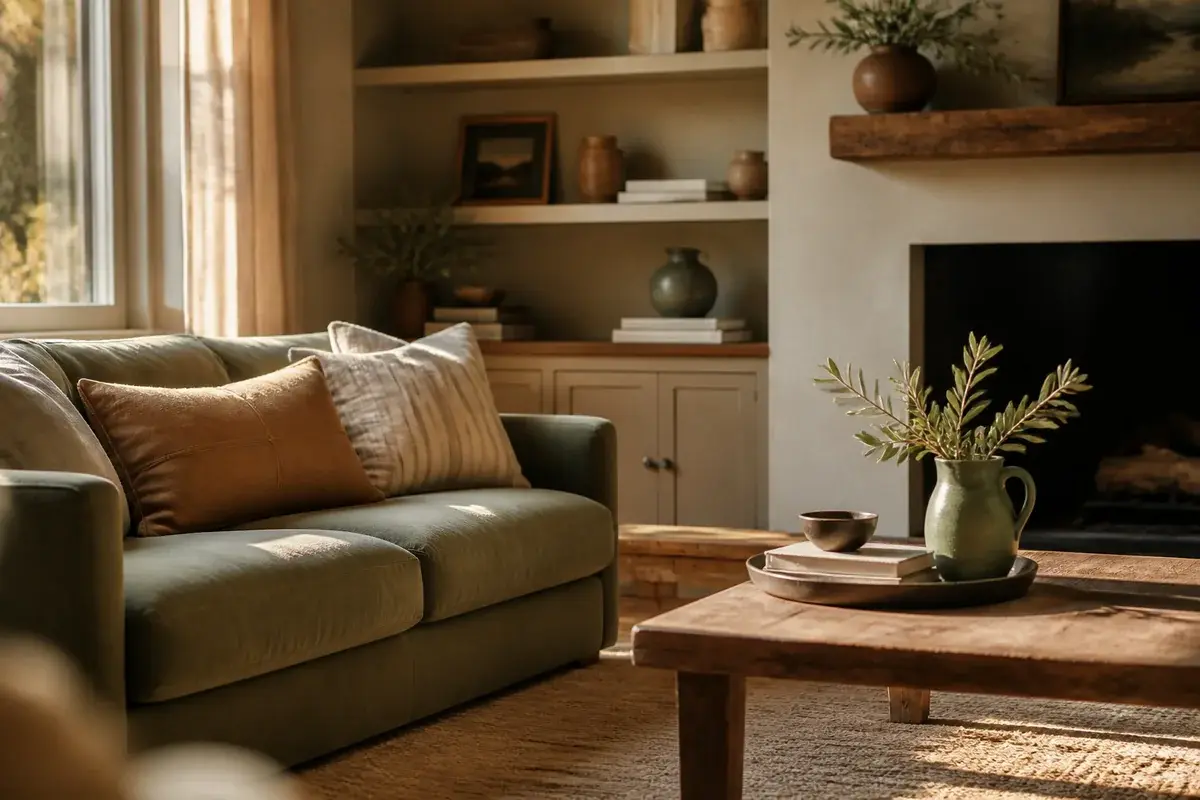
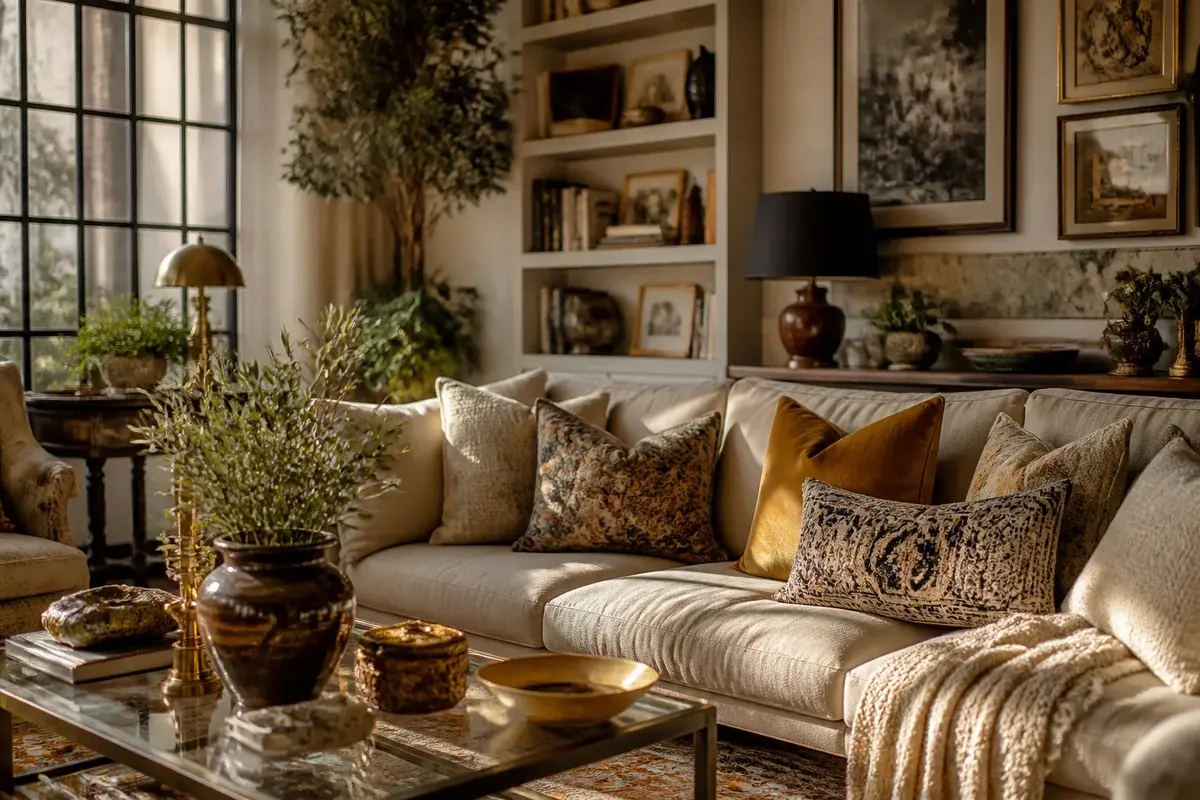
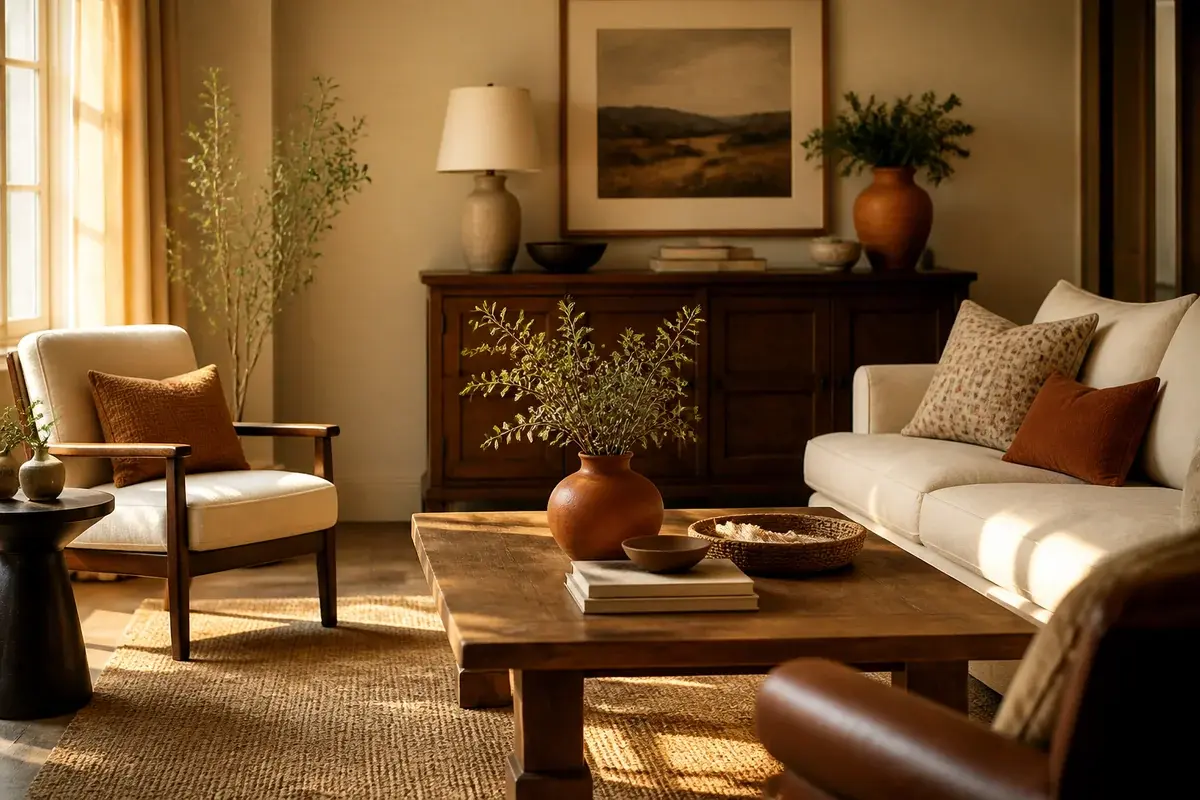
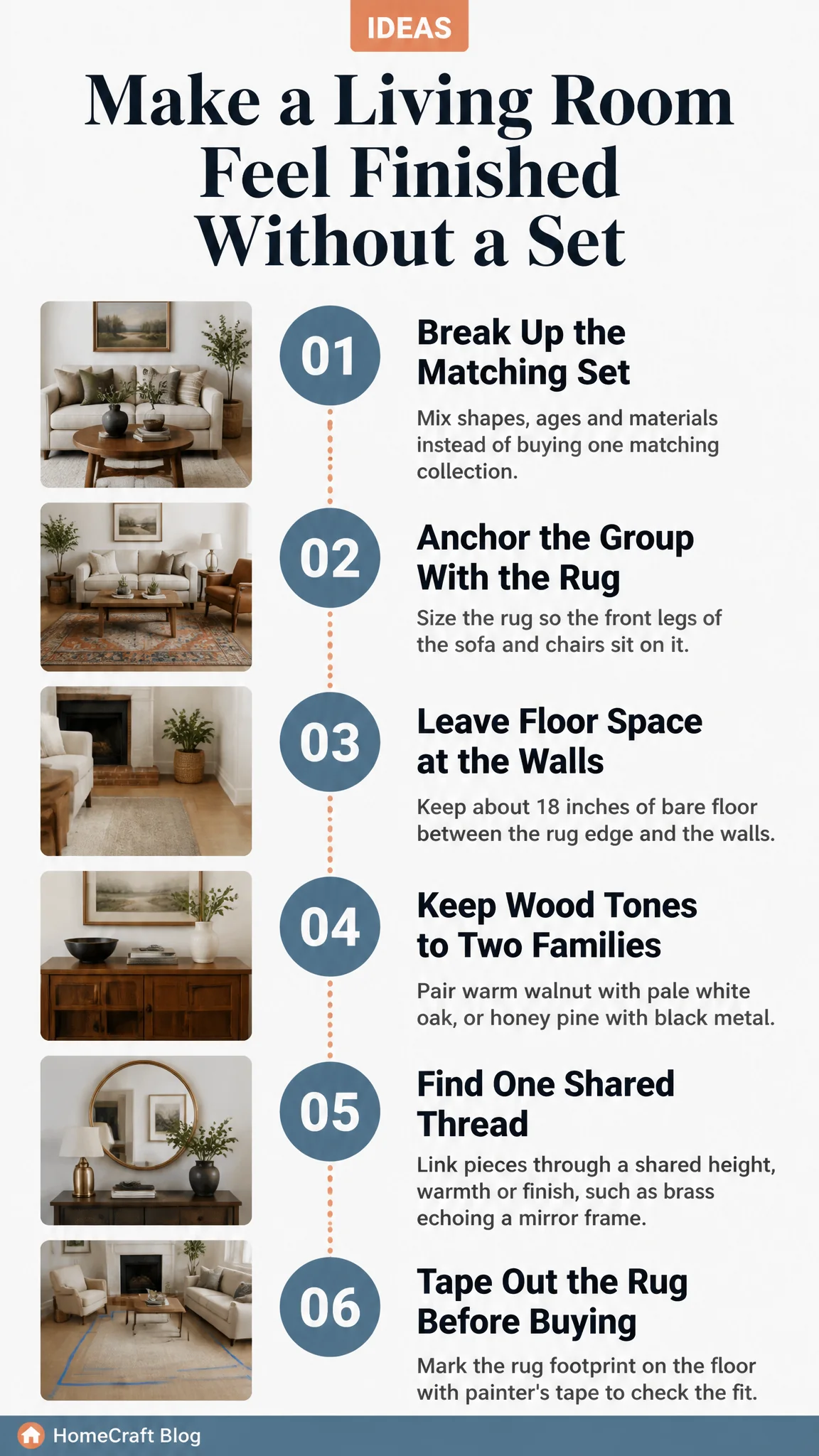
Pull a sofa, two matching armchairs, and a coffee table from the same collection into one room and you'll get a space that looks complete on paper and flat in person. Everything agrees with everything, so nothing leads the eye. The version that works mixes a few pieces with a clear relationship and lets the rest differ in shape, age and material. A walnut side table beside a painted cabinet, a wool rug under a linen sofa, a brass lamp that echoes the frame of a mirror: each piece is different, but they share a height, a warmth or a finish. That shared thread is what makes a room look collected instead of assembled. You can plan it before you buy anything. The rest of these living room inspo ideas show you how.
 8-page guide
Free style guide
Stop buying things that don’t go together.
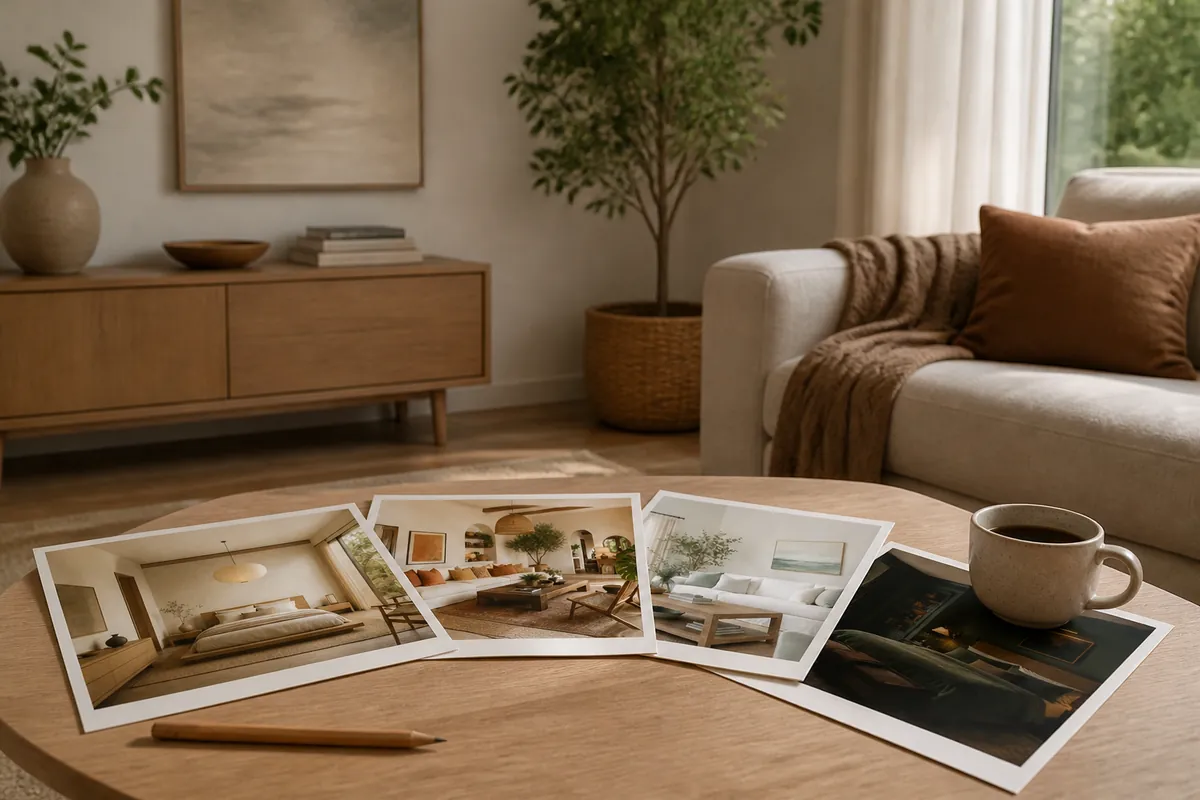
Print the 2-minute quiz, circle the words you love, and find your style. Then see what makes a room look like it.
- A print-and-circle quiz, 5 styles
- Each style shown as a finished room
- Palette, 4 key pieces, one rule
Free. Arrives by email in a minute or two, plus our ideas and occasional shop offers. Unsubscribe anytime. Privacy
Why a Matching Set Makes a Room Feel Unfinished
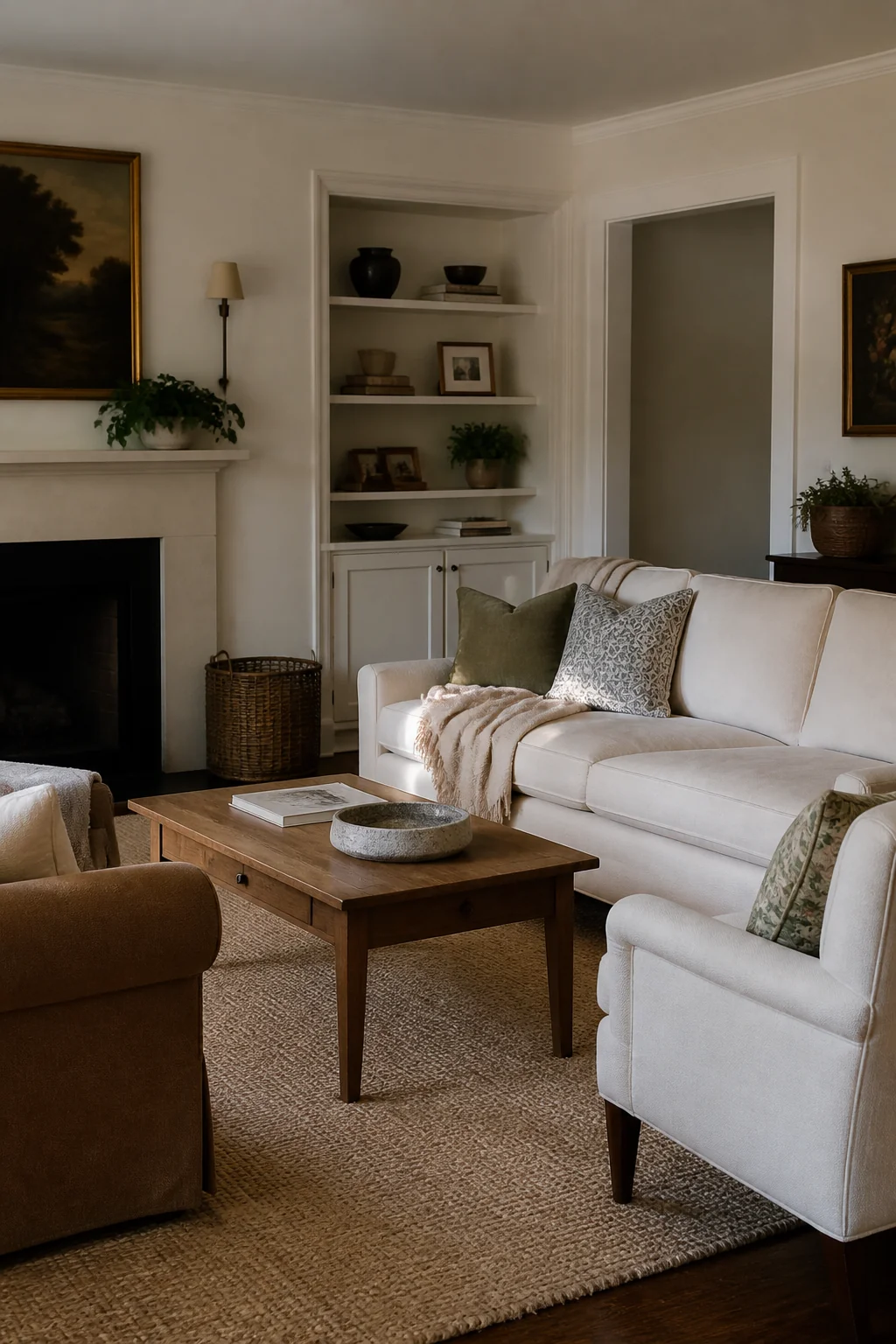
A matching set gives the eye one message, repeated four or five times. Once someone has taken in the sofa, the chairs and the table, there's nothing left to look at. The room feels finished in the way a hotel lobby does, which is pleasant for a minute and then forgettable. What reads as finished in a living room is contrast that has a reason behind it. Different shapes, different wood tones and different textures give the eye a route through the room, and that route is what keeps people looking and sitting.
Start With the Rug, Because It Sets the Size
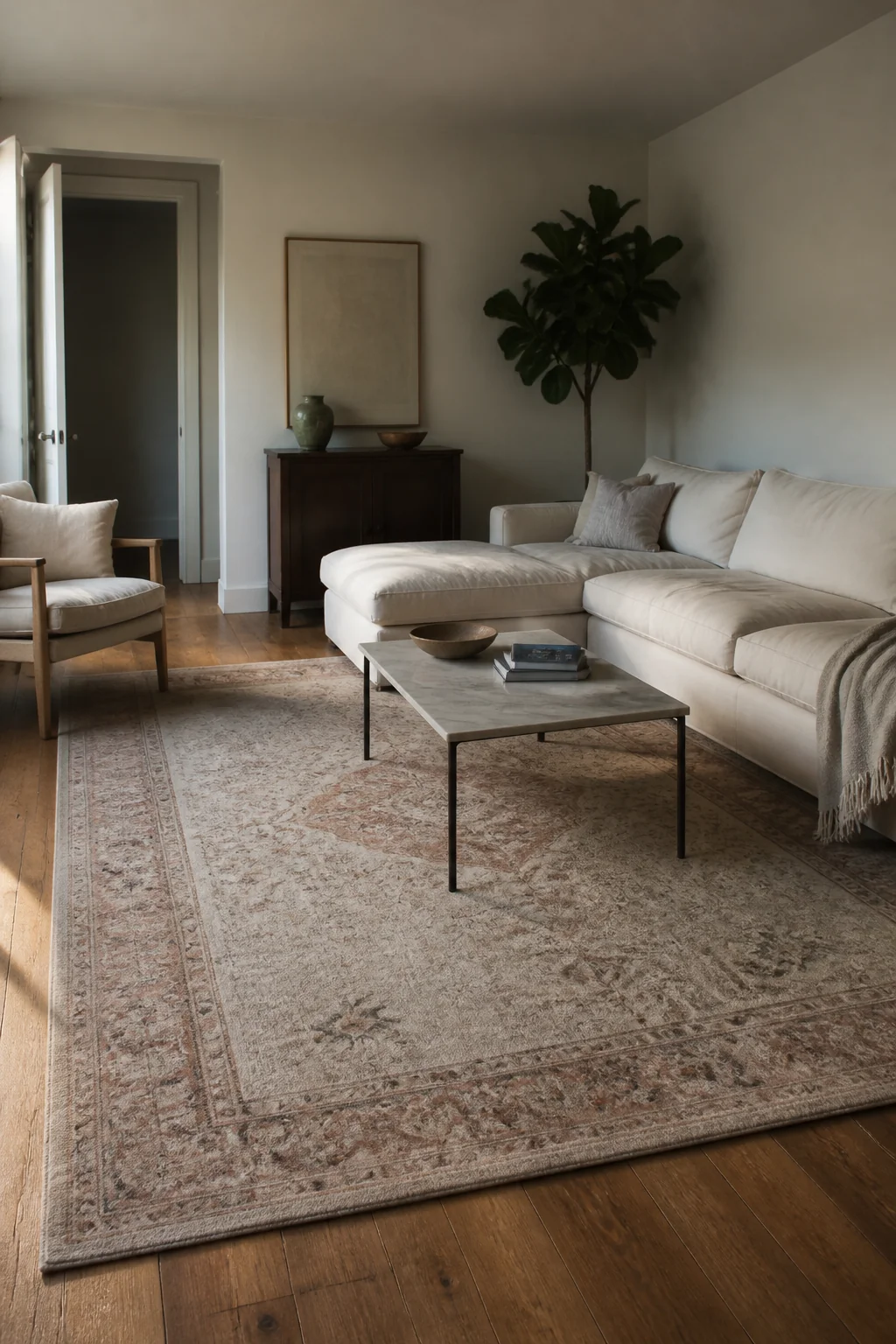
Choose the rug before anything else, since it decides how big the seating group can be. As a rule of thumb, the front legs of the sofa and chairs should sit on the rug, so the whole group feels anchored. In a living room roughly 12 by 14 feet, a 9 by 12 rug is the usual fit for a sofa with two chairs. A 5 by 8 rug under the same group looks like a placemat, and it leaves the furniture floating.
Leave about 18 inches of bare floor between the rug edge and the walls, so the room still reads as a room. (Painter's tape on the floor shows you a rug footprint faster than any size chart does.) Rugs that are too small are the most common mistake in this whole process, and it's the one that makes an otherwise good room feel unfinished.
Mix Wood Tones in Two Families, Not Five
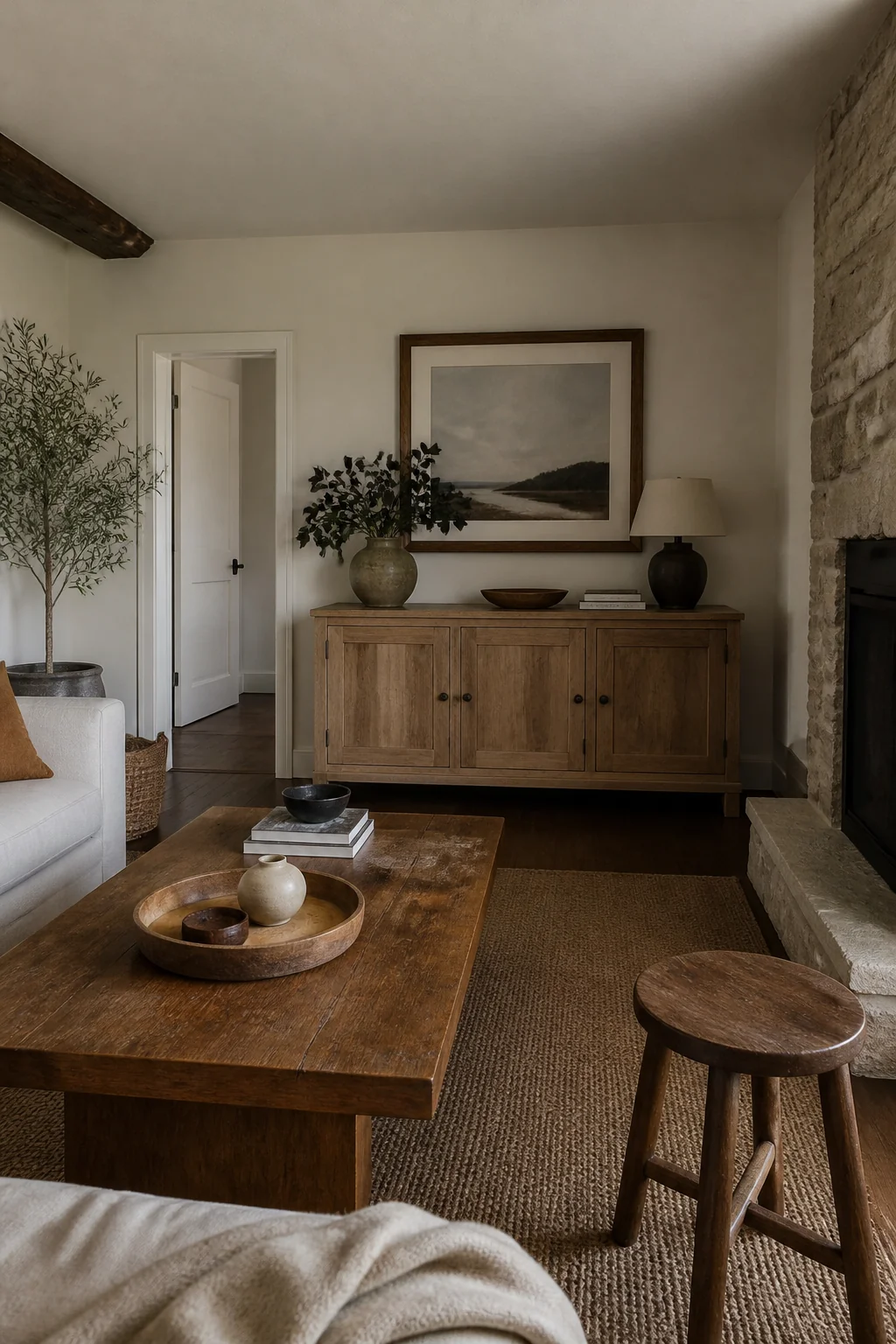
Of the living room inspo ideas that work, the simplest is this: pick two wood tones and let everything else fall into one of them. A warm walnut and a pale white oak work together. So do a honey pine and a black metal frame, since black is a neutral that carries across wood families. Five different woods in one room looks accidental, even when each piece was chosen on purpose.
We would skip any piece in a third wood tone unless it's small, like a stool or a tray. The room needs a clear pattern in the wood, and a third finish breaks it.
Give Each Piece a Different Silhouette
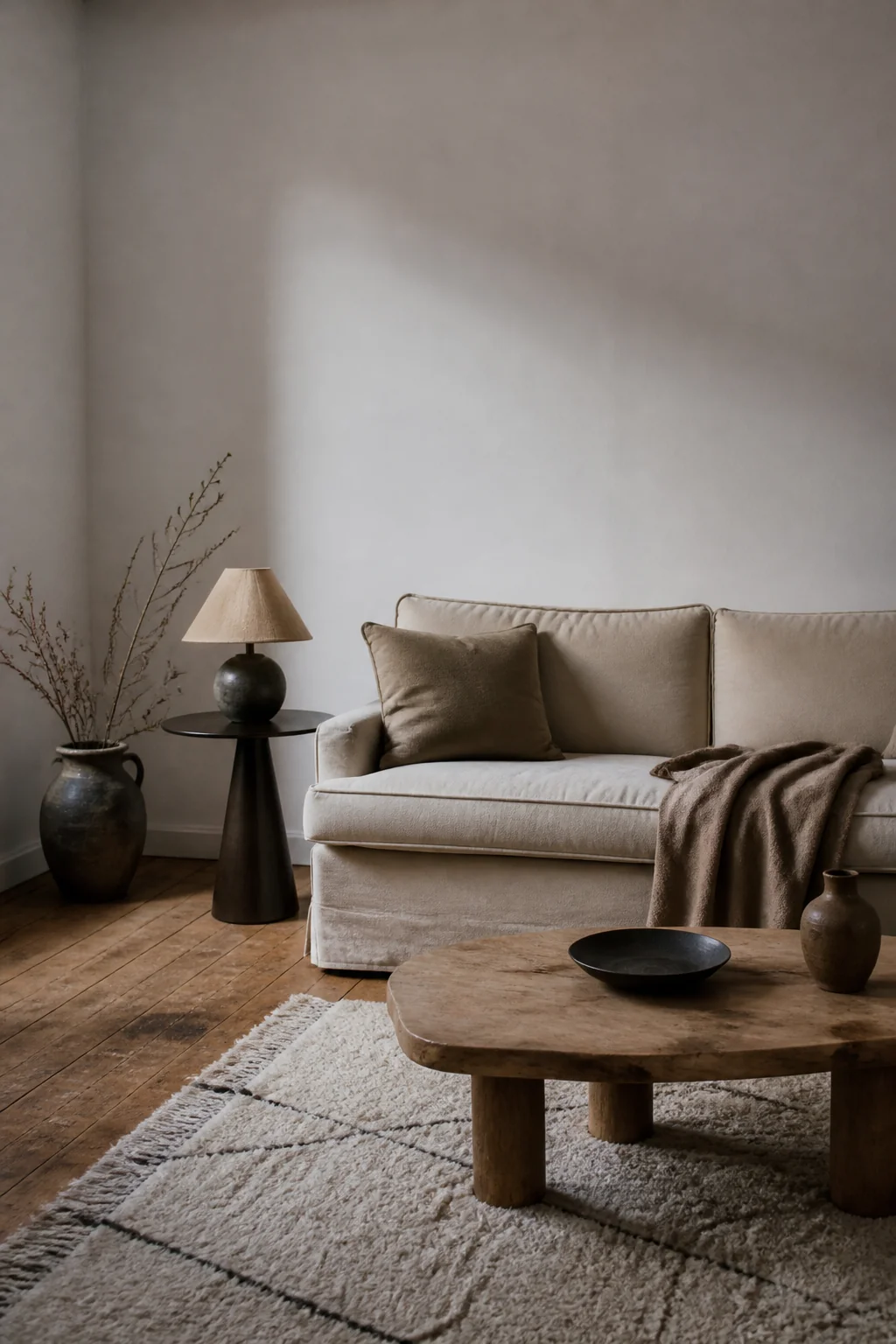
Shape does more for a room than color does. Set a low, boxy sofa against a rounded armchair. Add a tall, slim floor lamp and a squat ceramic vase, and the eye has plenty to work with. None of those pieces need to match. They only need to differ in a way you can see from across the room.
Look at the outline of each piece against the wall behind it. If three of them are rectangles, change one. A round side table, a curved chair back or a lamp with a tapered base will break up a row of straight lines without adding any clutter.
Set the Coffee Table to the Sofa, Not the Other Way Around
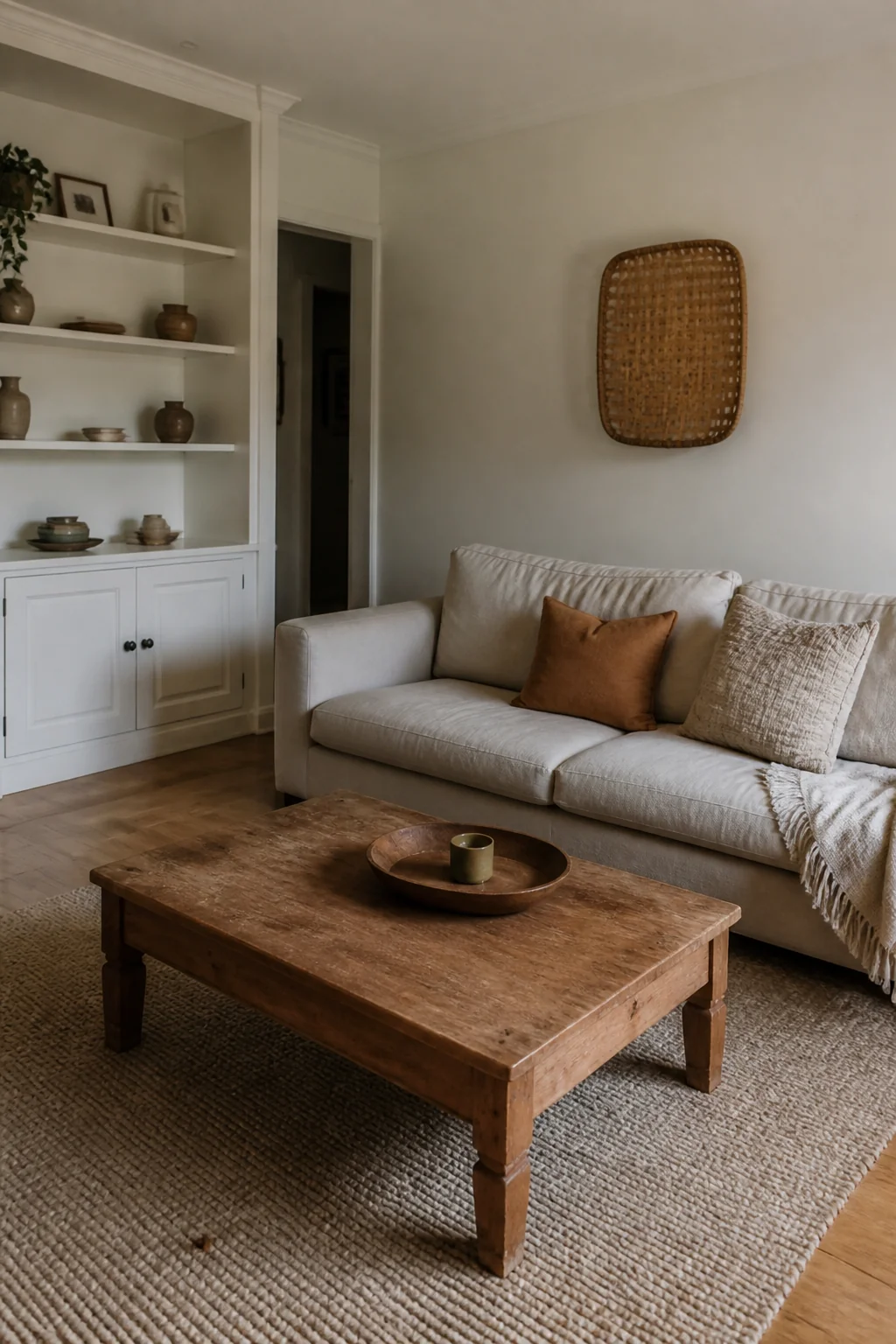
Keep the coffee table about 14 to 18 inches from the front edge of the sofa, close enough that you can reach a drink without leaning. Its top should sit a little below the top of the sofa seat cushion, usually 2 to 4 inches lower. That relationship makes the table look like it belongs to the sofa, even when the two come from different stores.
(A glass top looks lighter in a small room, but it shows every fingerprint and dust ring, so plan to wipe it often.) A round table softens a room with angular furniture, while a rectangle works best when the sofa is long and the room has a clear walkway.
Lighting Is Where Most Living Rooms Go Flat
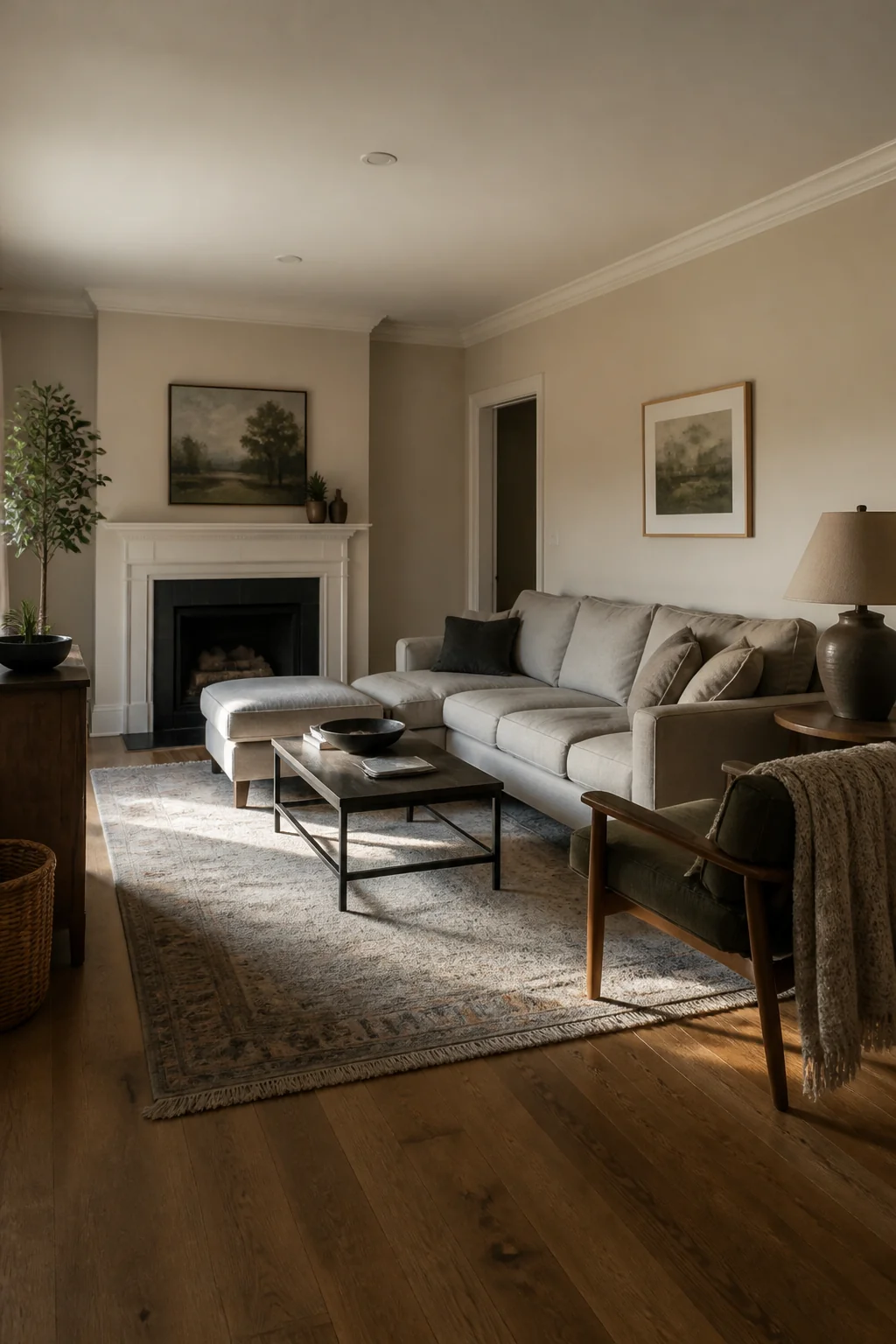
Most living rooms that feel flat have only one light source, usually the ceiling fixture. Add at least two more: a lamp at each end of the sofa, or a floor lamp beside a chair, so the light sits at seated eye level instead of high overhead. A floor lamp that reaches just above the sofa back usually gives the right balance.
Use warm bulbs, around 2700K, so the wood tones and textiles look like themselves at night. If you're adding a hardwired fixture or a new junction box, switch off the breaker first or bring in a licensed electrician. Plug-in lamps should go straight into a wall outlet, not an extension cord.
Hang Art and Mirrors to the Sofa, Not the Wall
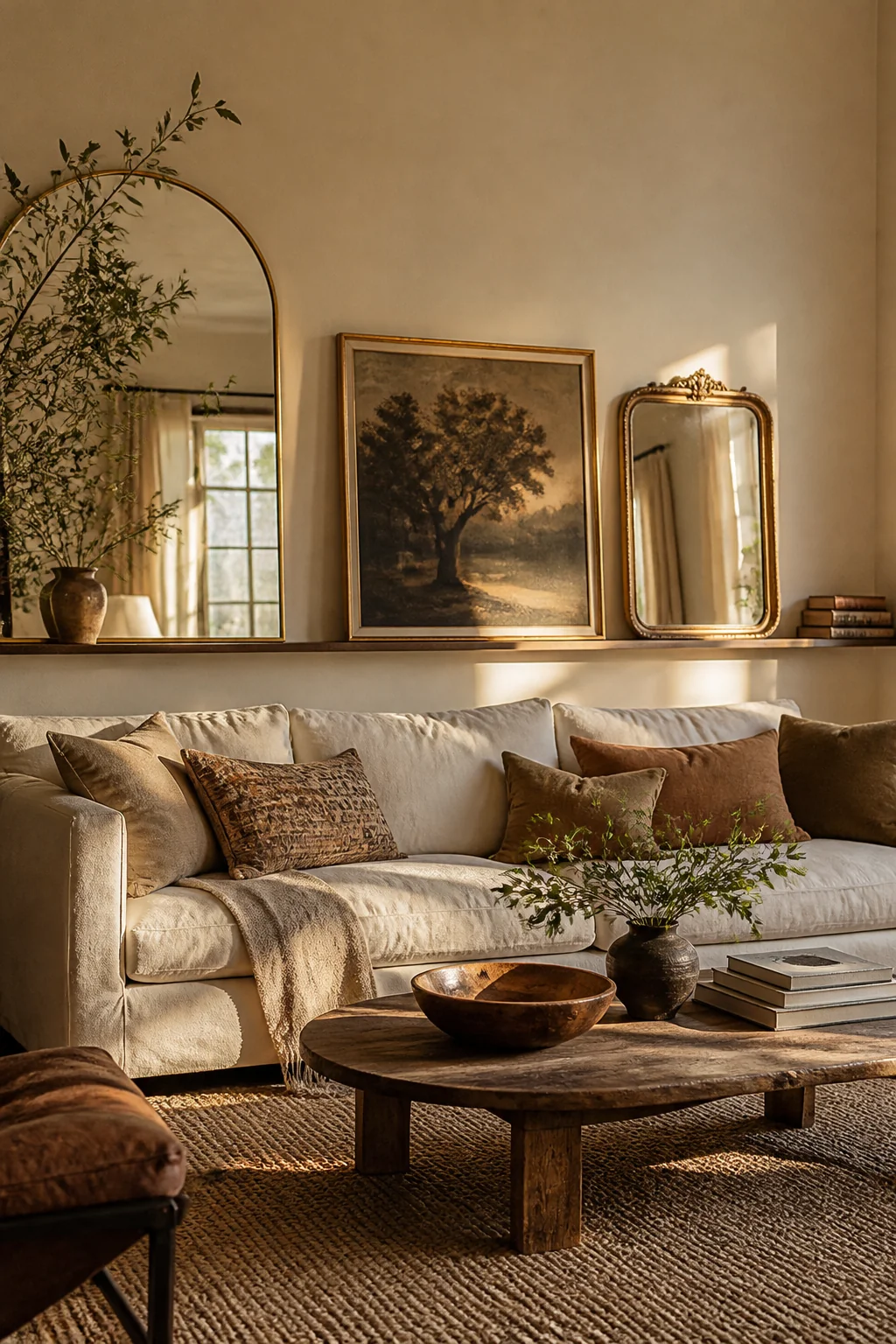
Center the art over the sofa with its bottom edge about 8 to 10 inches above the sofa back. For most pieces, a center line around 57 inches from the floor keeps the art at a comfortable eye level. Art hung too high floats above the furniture and looks like it belongs to a different room.
Mirrors and framed pieces over a sofa are heavy enough to matter. Fasten them into wall studs or use anchors rated above the weight of the piece, not the weight printed on the box. A loaded shelf above a sofa needs the same care.
Repeat One Color Three Times Instead of Painting an Accent Wall
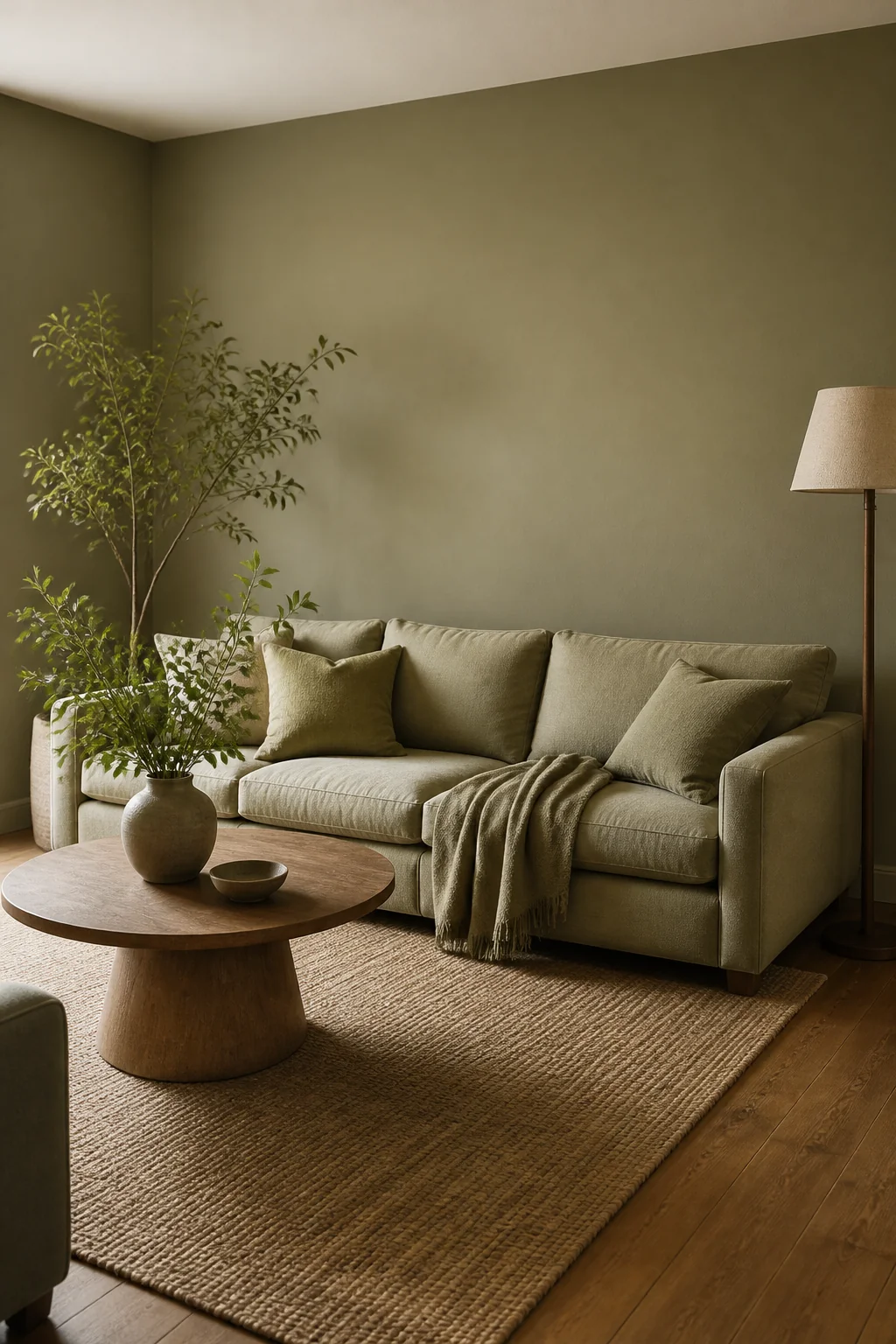
We would skip the accent wall in most living rooms. It sets one surface apart and makes the rest of the room look like background. A better move is to pick one color from your rug or sofa and repeat it three times around the room: a pillow on the sofa, a vase on a side table, a book spine on a shelf.
That repeat carries the eye across the room, and it lets the mismatched pieces look like they were chosen together. If you want more living room inspo ideas that handle this kind of mixing well, our industrial living room ideas show how metal and wood can share a palette, and our living room window seat ideas show how a window nook can become its own focal point.
Take the guide with you
The mistake that ruins this for most people is buying the whole room in one trip from one collection, then trying to fix the flatness with more accessories. Accessories can't create a thread that the furniture never had. Choose the shared element first, then let the sofa, chairs and tables differ in shape and wood.
The room images in this post are illustrations made with AI.