5 Clever Spooky Halloween Home Decor Ideas for Living Rooms
5 spooky Halloween home decor ideas that look intentional in your living room without feeling overdone or cluttered.
This post contains affiliate links. As an Amazon Associate I earn from qualifying purchases. If you buy through our links, we may earn a commission at no extra cost to you.
A living room dressed for Halloween should feel deliberate and a little eerie, not like a costume store exploded in your space. The usual mistake is treating the room like a blank canvas for every decoration you own, which ends in clashing styles, too many focal points, and decoration piled on decoration. The good version is cleaner: the Halloween mood comes from a few strong choices, placed with thought about what your eye lands on first and how you move through the space. If the mantel is your focal point, the afternoon Halloween mantel plan goes into more detail.
 8-page guide
Free style guide
Stop buying things that don’t go together.
Print the 2-minute quiz, circle the words you love, and find your style. Then see what makes a room look like it.
- A print-and-circle quiz, 5 styles
- Each style shown as a finished room
- Palette, 4 key pieces, one rule
Free. Arrives by email in a minute or two, plus our ideas and occasional shop offers. Unsubscribe anytime. Privacy
1. Swap your throw pillows for darker, textured ones
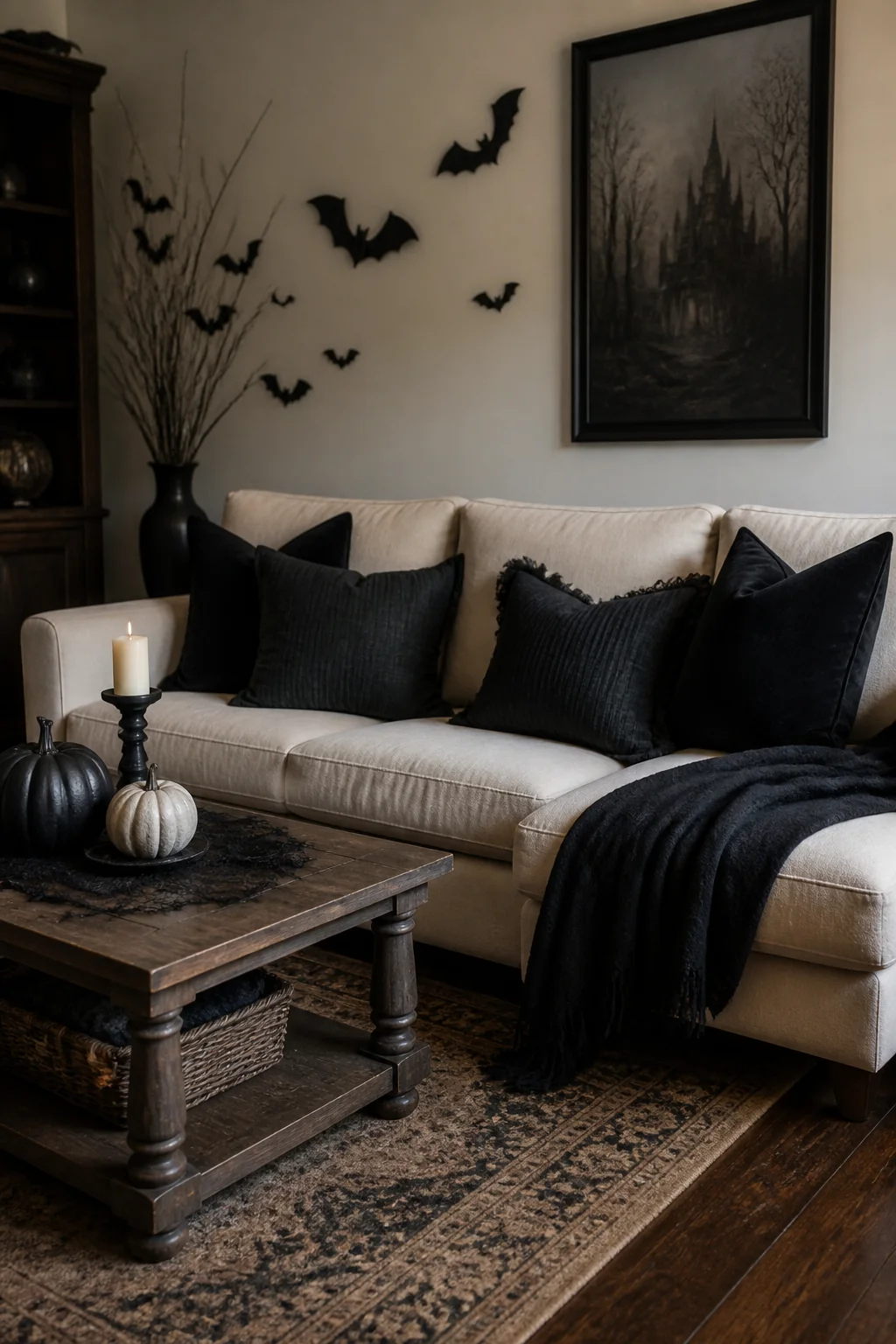
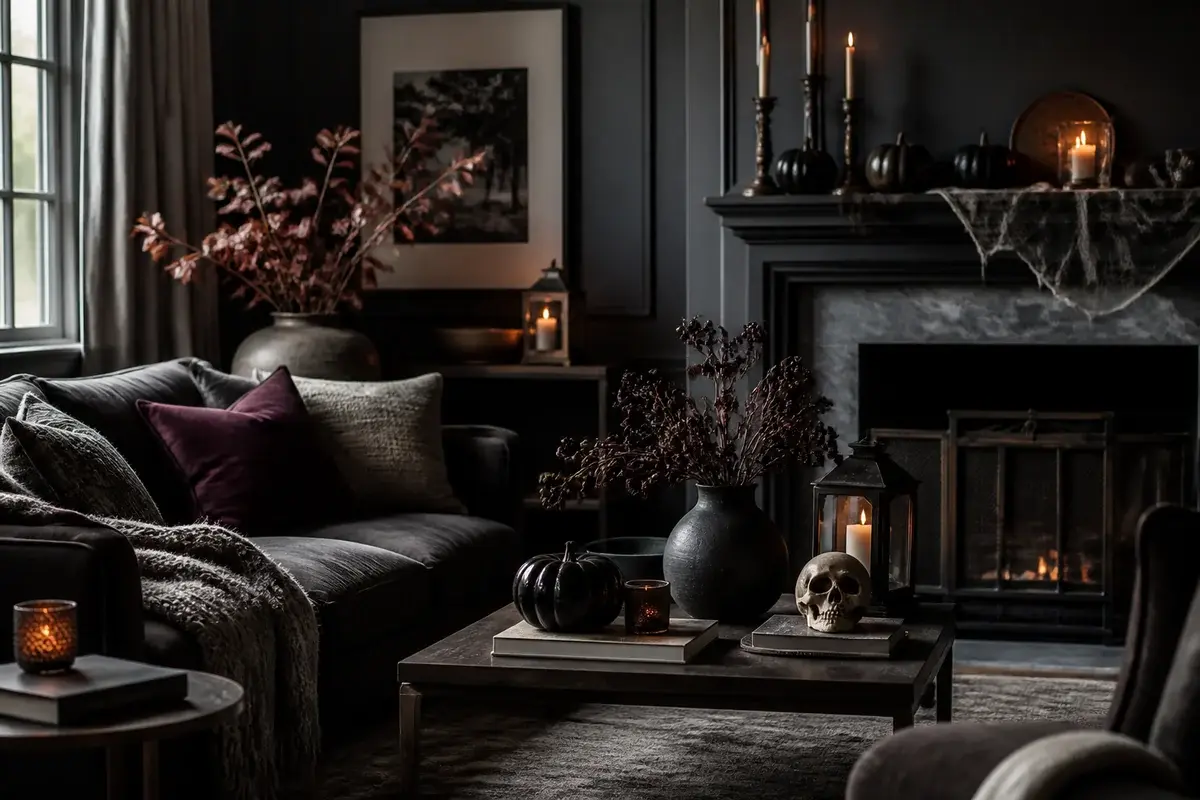
The fastest way to shift your living room's mood is to pull off the pillows you have and replace them with ones in black, deep charcoal, or dark burgundy. Look for pillows with a little texture, like velvet or linen with a raised weave, that catch light differently than your usual fabrics. You'll want about 4 to 6 pillows depending on the size of your sofa, clustered at one end or distributed evenly along the back. This keeps the room from feeling costume-y; it reads as autumn, only moodier.
The reason this works is that pillows sit at eye level and take up visual real estate without eating up floor space. They're already part of how you furnish a sofa, so swapping them doesn't feel like adding clutter. (Dark textiles do show dust and pet hair faster, so factor in a quick vacuum or lint roller before guests come over.) The cost runs about $20 to $50 per pillow if you're buying from mainstream home retailers, so a full swap across your sofa lands somewhere around $100 to $250. The beauty is that these pillows work just fine in November and December too, so you're not buying something one-off for one month.
2. Use tall black candles in corners and by the fireplace
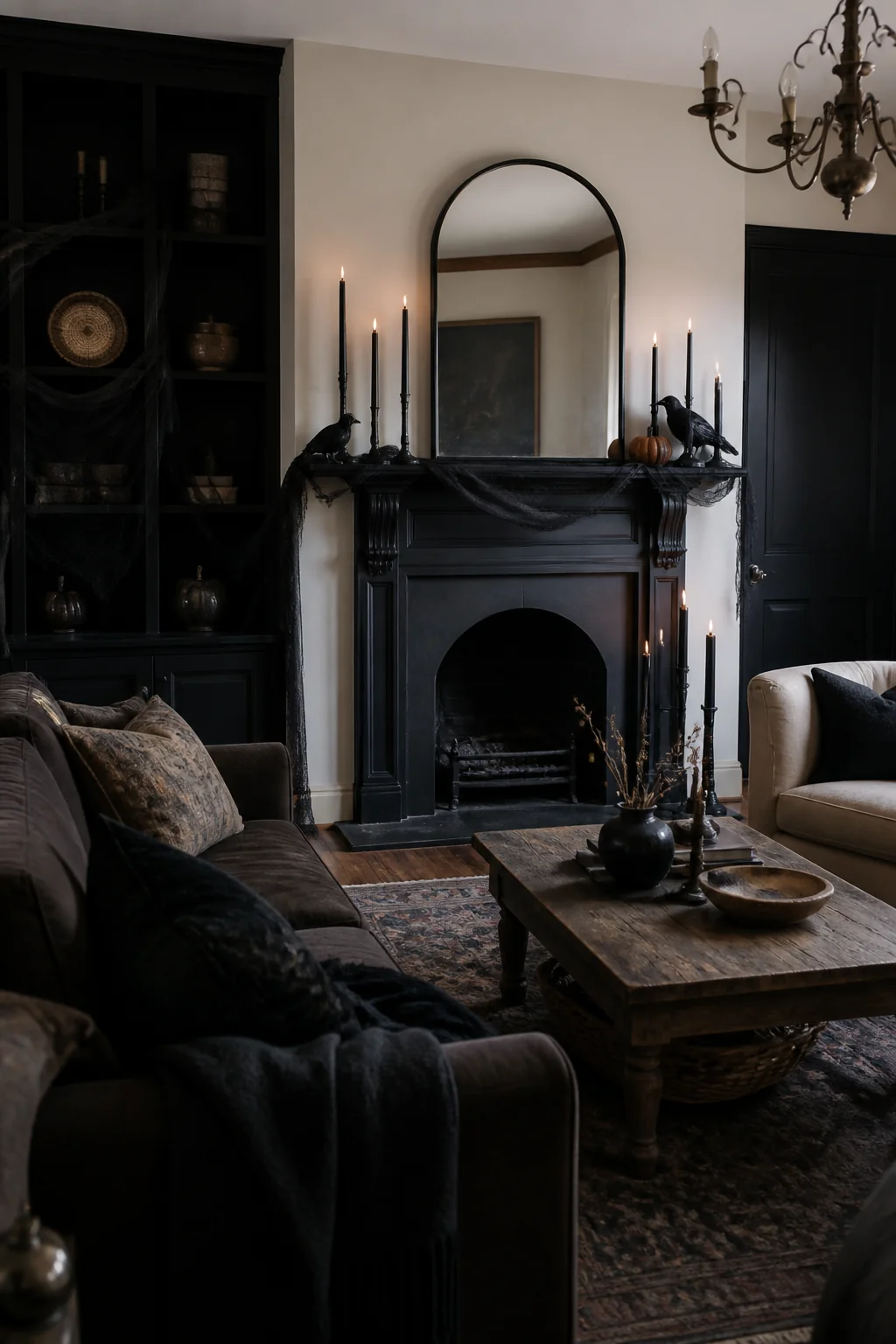
Black taper candles or thick black pillars placed in the corners of your room and along your fireplace mantel create pools of visual weight that anchor the space. You don't need scent; you need height and shadow. Real flame changes how light falls across your walls and furniture, which is what makes the room feel different. Near curtains, greenery or a fireplace you're using, switch to LED tapers; a real candle needs at least 12 inches from anything that can burn and should never burn unattended (NFPA candle safety). Unscented black candles run about $3 to $8 each depending on size, and you'll want anywhere from 6 to 12 throughout the room depending on how large it is.
The mistake here is using too many small votives scattered across side tables. They don't look planned; they look as if you were worried you hadn't decorated enough. Go bigger and fewer instead. Pillar candles that are at least 3 inches in diameter and 4 to 6 inches tall make a real visual statement. Position them where you won't knock them over or hide them behind furniture; corners work well because they're usually empty space anyway. If you have a fireplace, line the mantel with black candles at varying heights so the eye has something to follow. (Battery-operated pillar candles work if you have kids or pets and want to skip the real flame entirely.) The candles stay lit only when you're home and awake, which keeps things safe and also means you're not wasting them when no one's around to see them.
3. Hang a dark fabric backdrop behind a seating area or console table
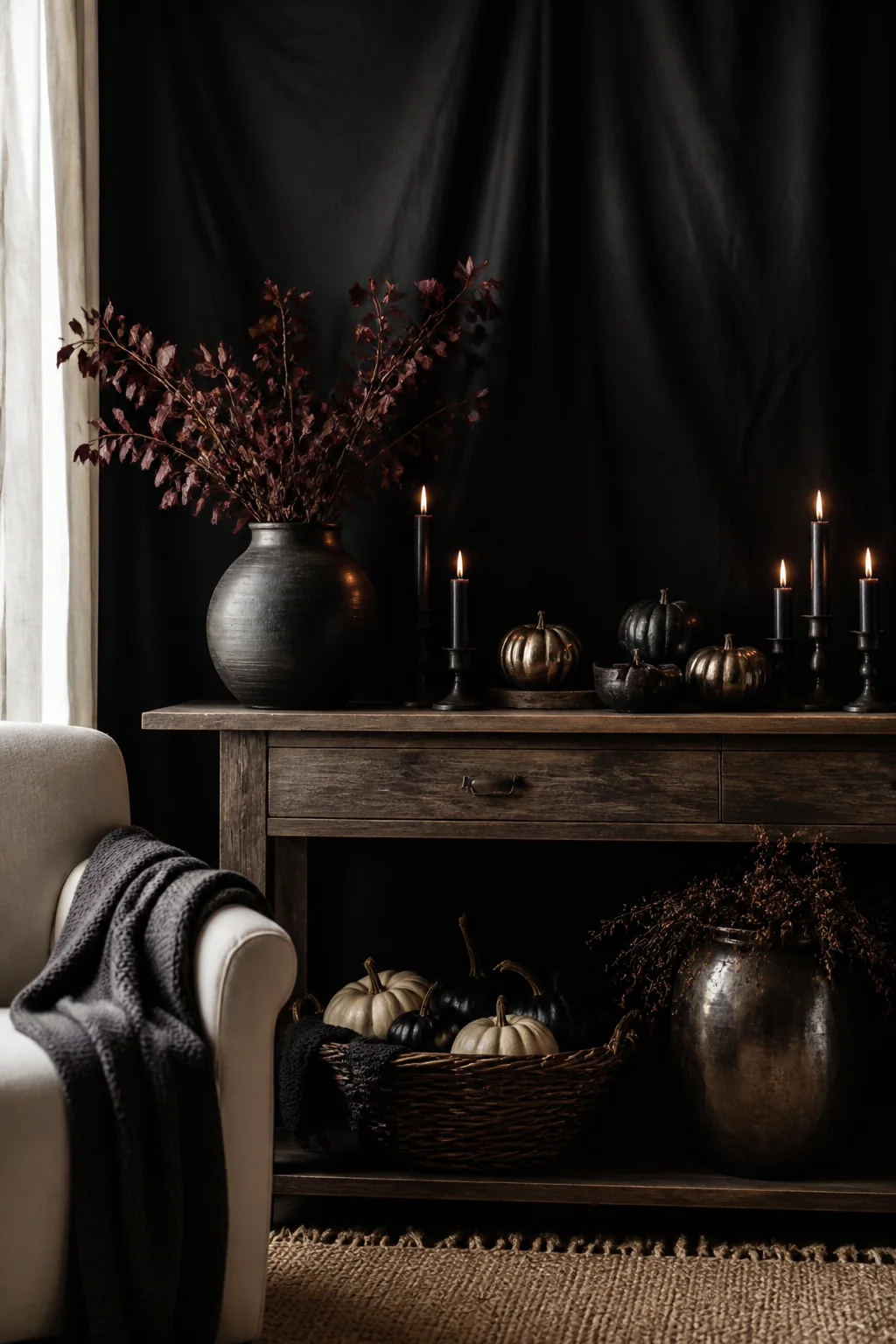
Draping a piece of black, deep gray, or charcoal linen or cotton behind your main seating area or a console table creates a backdrop that feels intentional and moody without being cartoonish. You're not covering your whole wall - just the space behind your sofa or a 4-to-6-foot section behind a console or accent chair. Use a curtain rod mounted into the wall or into the top of a bookshelf to hang it, so it's taut and clean-looking.
This creates visual depth and frames the space. It's also what keeps the room from looking scattered - a backdrop gives everything in front of it a sense of boundary and purpose. Heavy cotton or linen costs about $15 to $30 per yard, and you'll likely need 3 to 5 yards depending on how wide your seating area is. A basic curtain rod runs $20 to $40. The mounting hardware is another $10 to $15. What ruins this idea is using thin, plasticky fabric that wrinkles or bunches - go for weight and substance so it hangs properly. This works best in rooms where you have wall space that isn't already crammed with windows or doorways. If your living room is heavy on doors and windows, a backdrop won't have anywhere natural to live.
4. Layer in artwork with a spooky mood, not spooky subjects
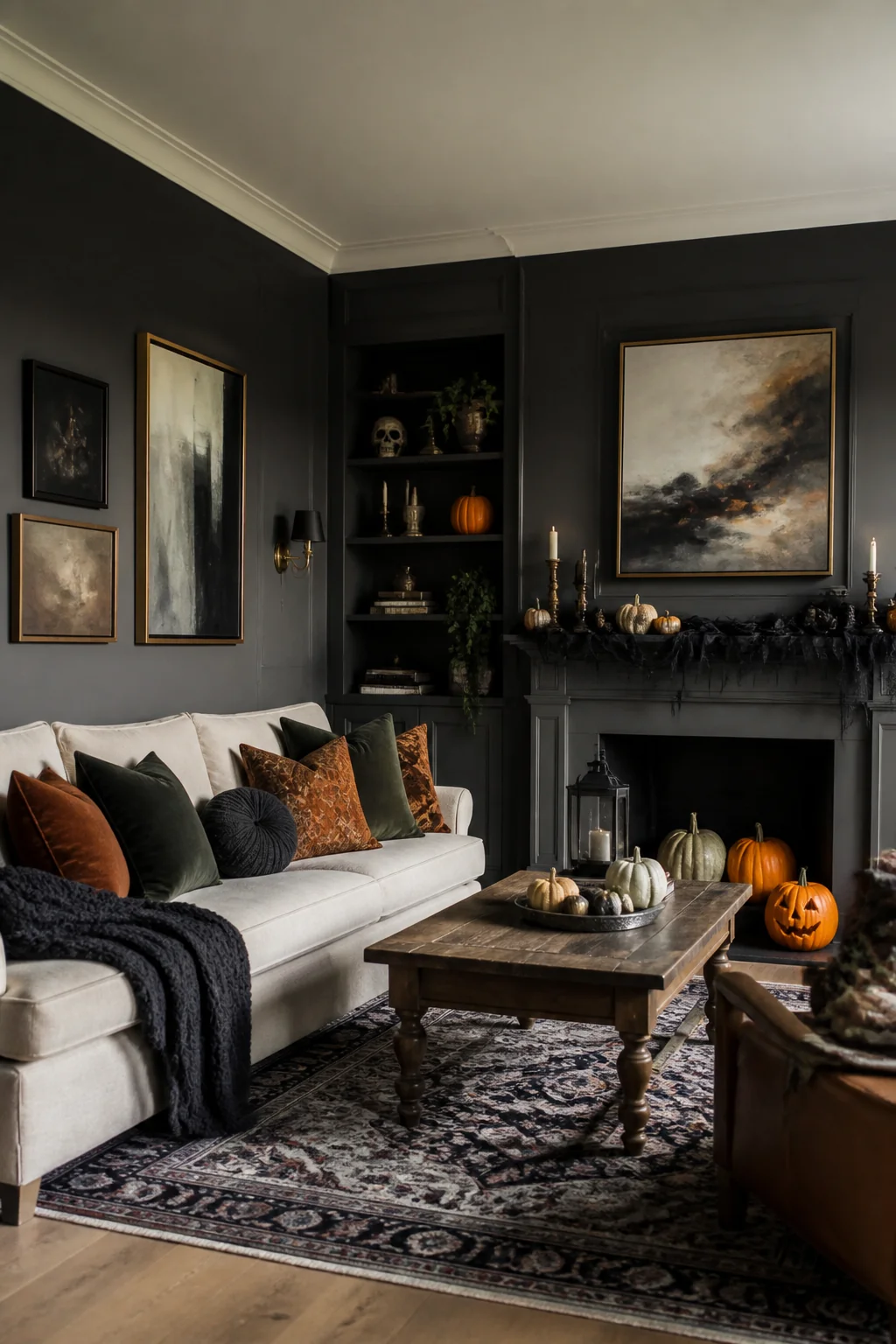
Instead of hanging cartoon ghosts or store-bought Halloween prints, choose artwork in black, grays, and deep jewel tones that feels atmospheric. Botanical prints with dark backgrounds, moody landscapes, abstract pieces in black and charcoal, or even oversized portraits in muted tones all work. The point is the mood, not the holiday. This is how you get a room that feels right for October without screaming "trick-or-treat."
Swap out 2 to 4 pieces from your current rotation, or add new frames to walls that feel bare. You can find artwork like this at places like Etsy, Minted, or mainstream retailers like Target and West Elm for anywhere from $30 to $150 per print depending on size and artist. Frame it simply - black frames or natural wood frames work best - and hang the pieces at eye level so they feel intentional, not random. The mistake people make is mixing a spooky-subject print (like a skeleton or a haunted house) with one moody landscape piece. The clash pulls the room in two directions at once. Pick one visual language and stick with it across all the artwork you're displaying. If one wall already has a gallery of family photos or existing art, don't mess with it - keep your new pieces to a clear secondary area so the room doesn't feel cluttered.
5. Group votives with greenery on your coffee table or console
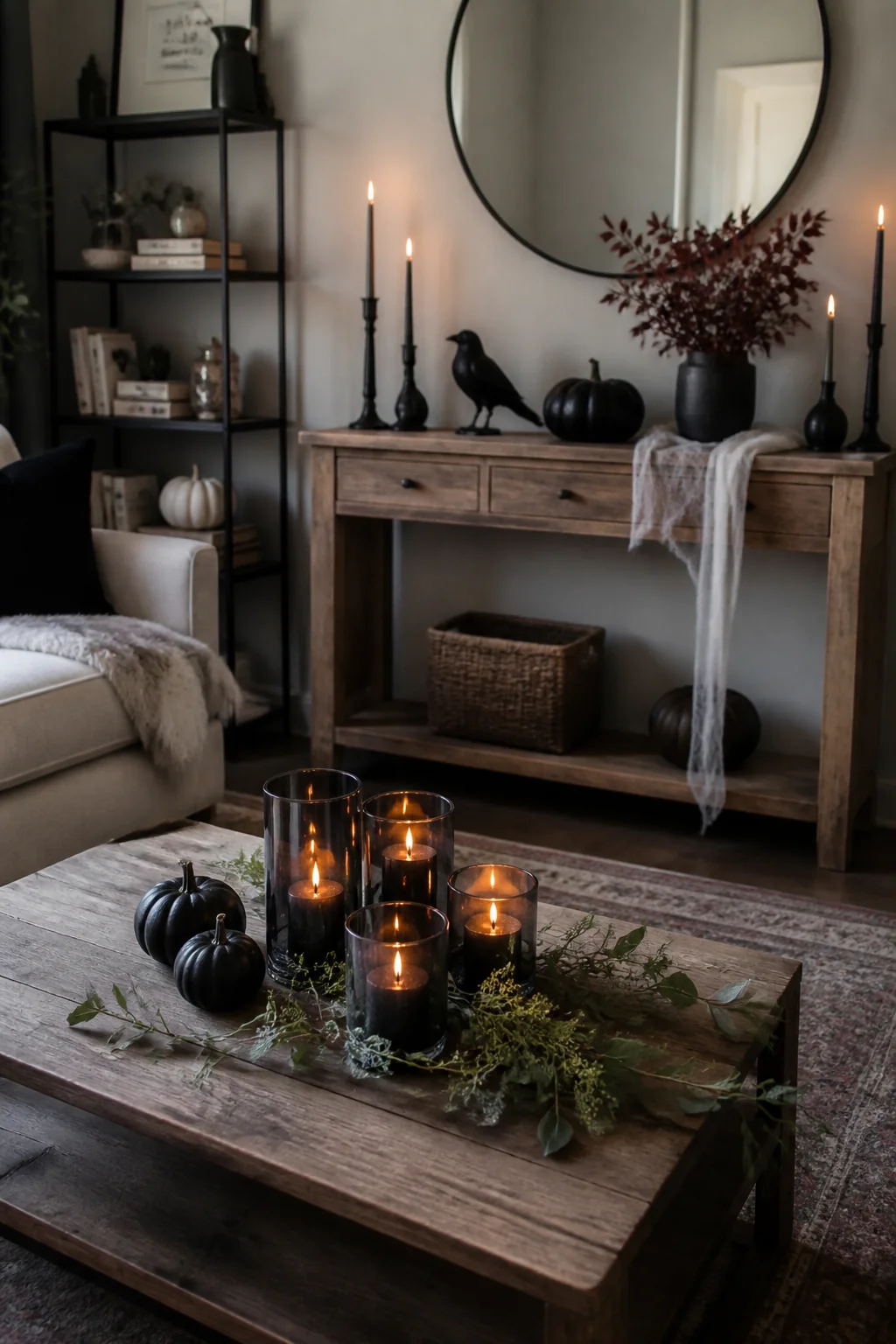
Take clusters of short black or dark green candles in glass votives and group them with fresh greenery - eucalyptus branches, dark ivy, black-painted branches, or even simple green foliage from your yard. Arrange them down the center of your coffee table or along a console table in the room. The candles provide the dark, the greenery provides life and texture, and together they create a small vignette that looks purposeful. Dry branches and foliage catch quickly, so either keep every leaf well clear of the flames or use flameless votives for this arrangement.
This works because it's one place your eye lands, so the room doesn't feel sparse, but it's contained. You're not decorating the entire table - you're creating one strong centerpiece. The cost is minimal if you're using greenery from outside or dried branches you already have; if you're buying it, budget about $20 to $40 for a mixed arrangement of fresh branches and greenery. Votives run about $2 to $4 each, and you'll want 5 to 8 clustered together to feel substantial. Keep the arrangement narrow enough that it doesn't block sight lines across the table - you still want to be able to actually use the table without moving decoration everywhere. This idea falls flat if you pile it too high or use too many different heights; keep things low and relatively uniform so it reads as one balanced piece, not a cluttered collection.
Save the full guide
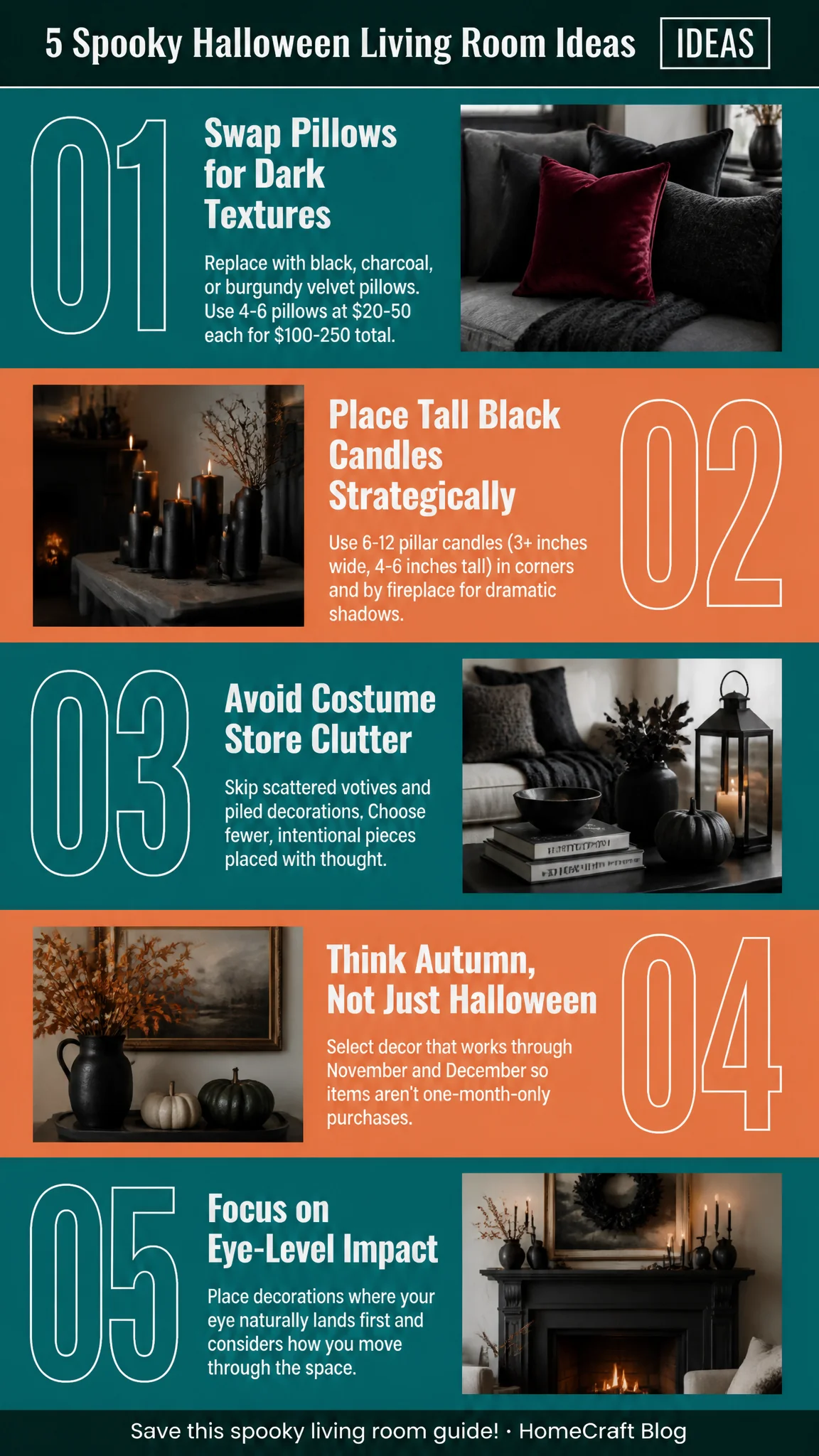
Your living room should feel like somewhere you still want to sit and relax, not like you've turned it into a haunted house attraction. The room you end up with has darker tones running through it, pools of candlelight creating shadow, and a sense of intentionality in every piece of decoration. When someone walks in, they notice the mood before they notice any single decoration. That's how you know the room works.
The room images in this post are illustrations made with AI.