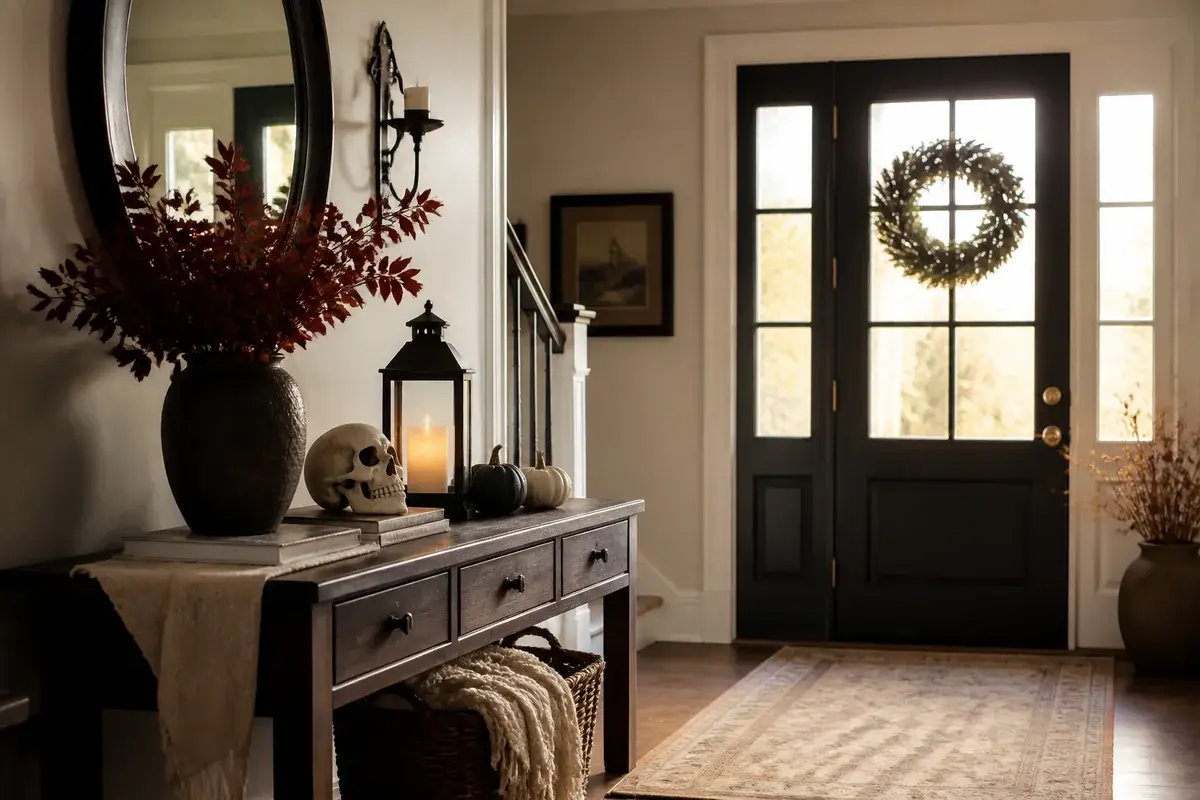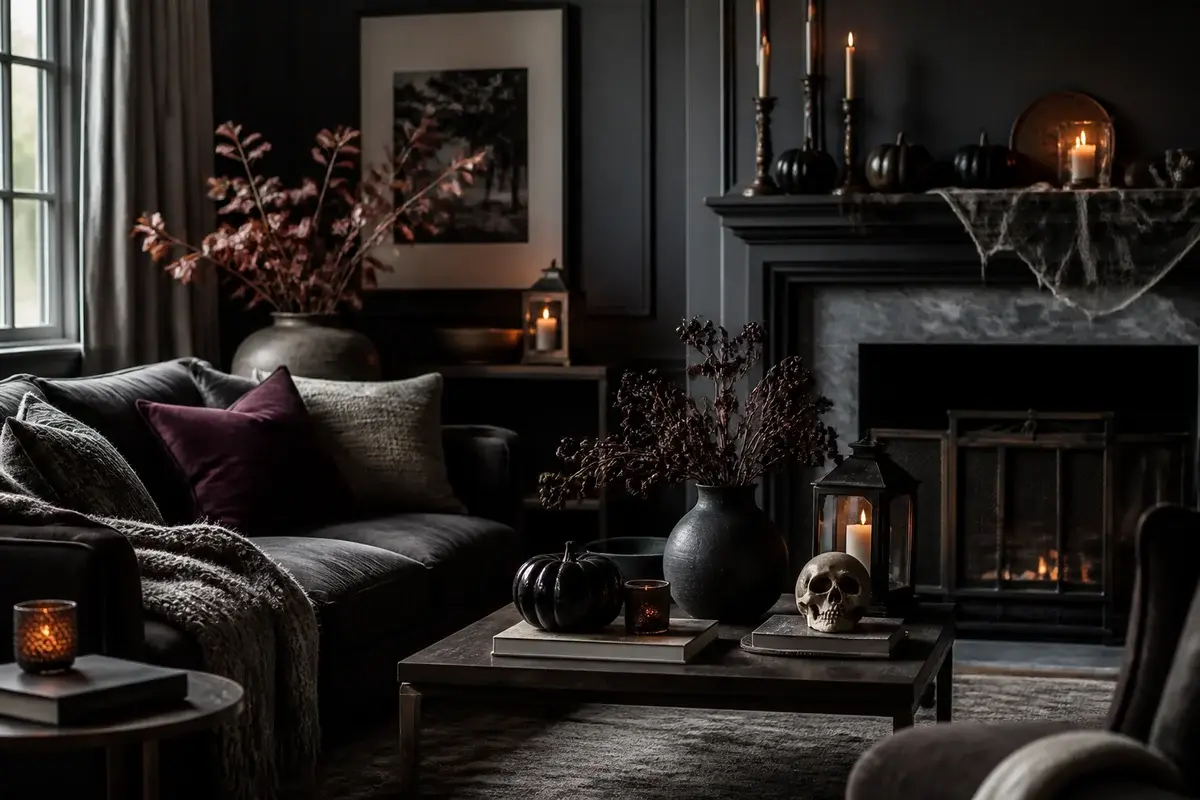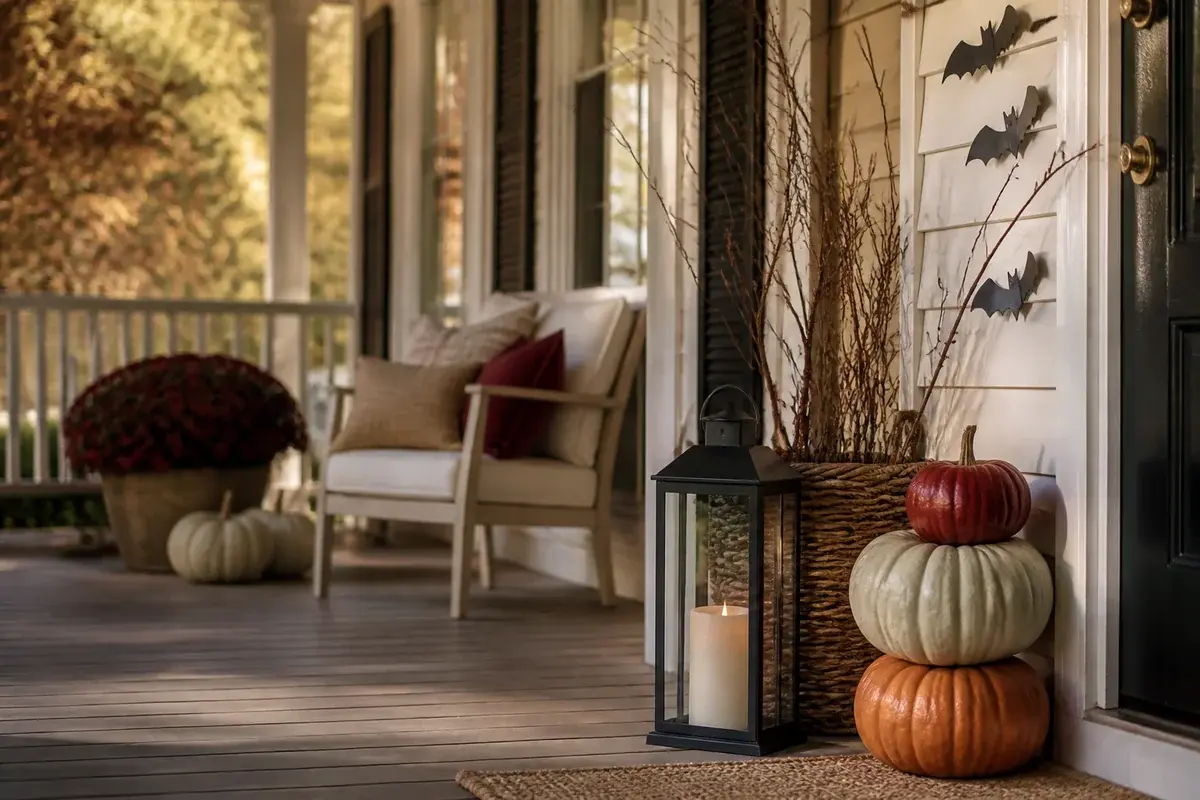
Style Your Mantel for Halloween in an Afternoon: A Decorating Plan
Build halloween mantel decor in one afternoon using a layering strategy that looks intentional, not cluttered.
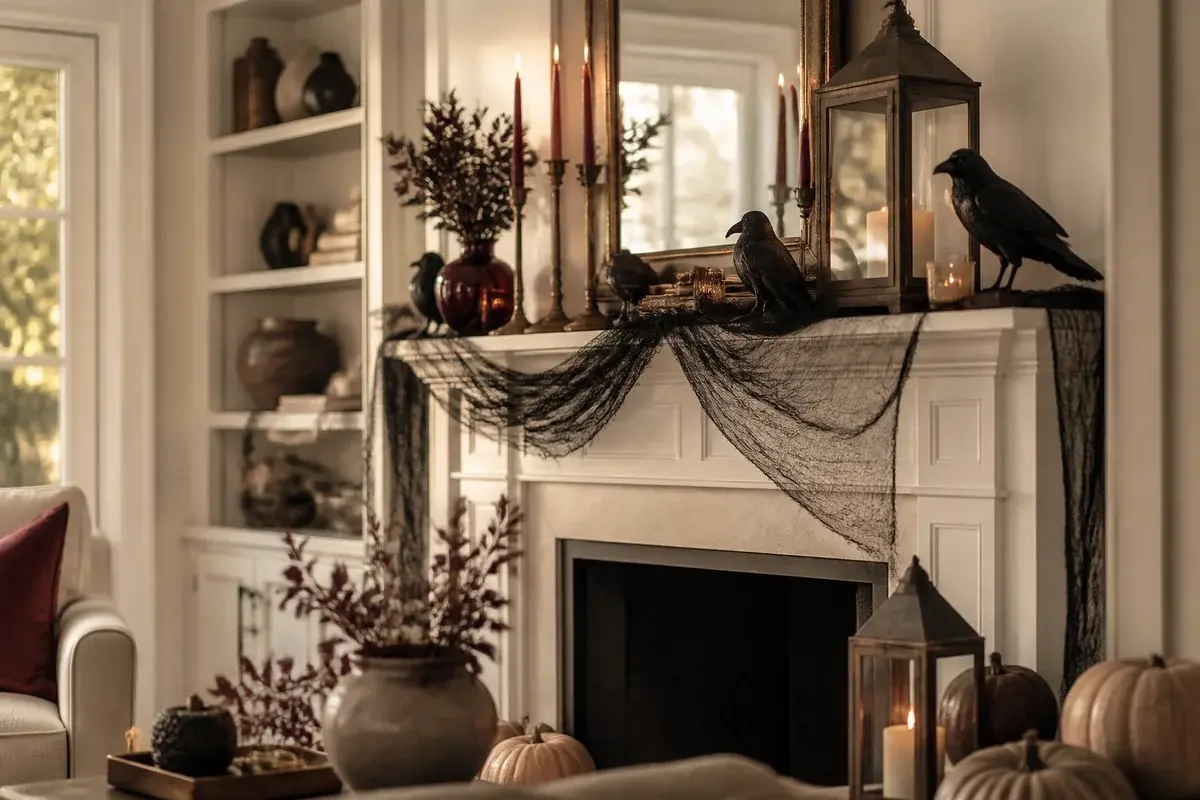
You're looking at your mantel and seeing blank space. You could leave it bare, or you could spend the afternoon building something that reads as intentional and seasonal without looking cluttered. The thing holding you back isn't skill or time - it's knowing where to start when you've got maybe three hours and no desire to overthink it.
This isn't about finding ten tiny pumpkins or spray-painting branches. It's about the actual structure that makes halloween mantel decor feel finished: what goes in the middle, what anchors the ends, and how to add depth without the whole thing tipping into chaos. You'll build it in layers, starting with the biggest pieces first, which means you're done faster and the proportions actually work.
Center with one large focal point
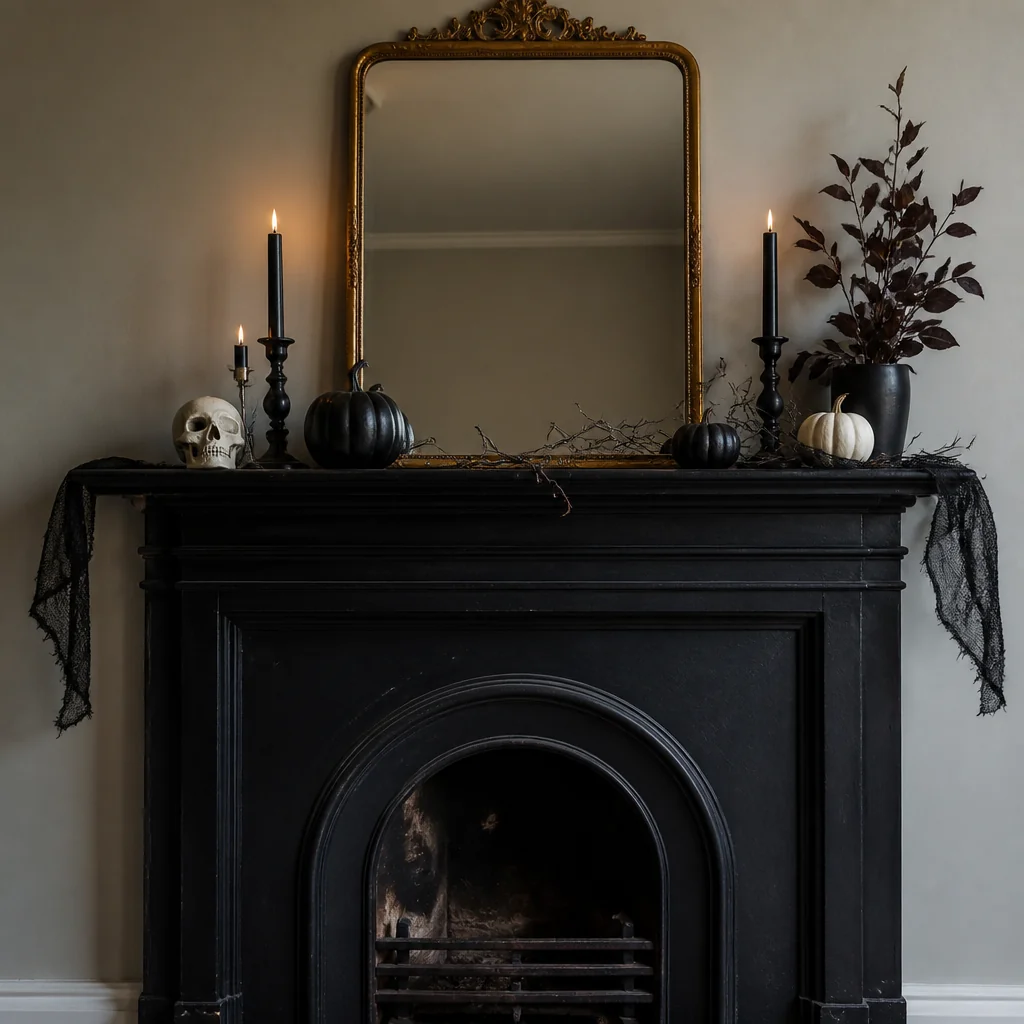
The mantel's middle is where every eye lands first. That focal point needs to be taller than it is wide and substantial enough that it doesn't look like you're decorating with scraps (about 18-24 inches tall works for most mantels, roughly 12-16 inches wide).
A tall glass hurricane with candles stacked inside, a vintage wooden pumpkin, or a potted topiary-style arrangement of branches all work. The point is that it should be something you could photograph by itself and it would read as complete. This isn't filler - it's the anchor that makes the rest of the mantel possible.
Place it dead center. Not slightly off-center for visual interest (that's interior design overthinking). Center gives you a clean frame for what goes on either side.
Flank it with matching items, one on each end
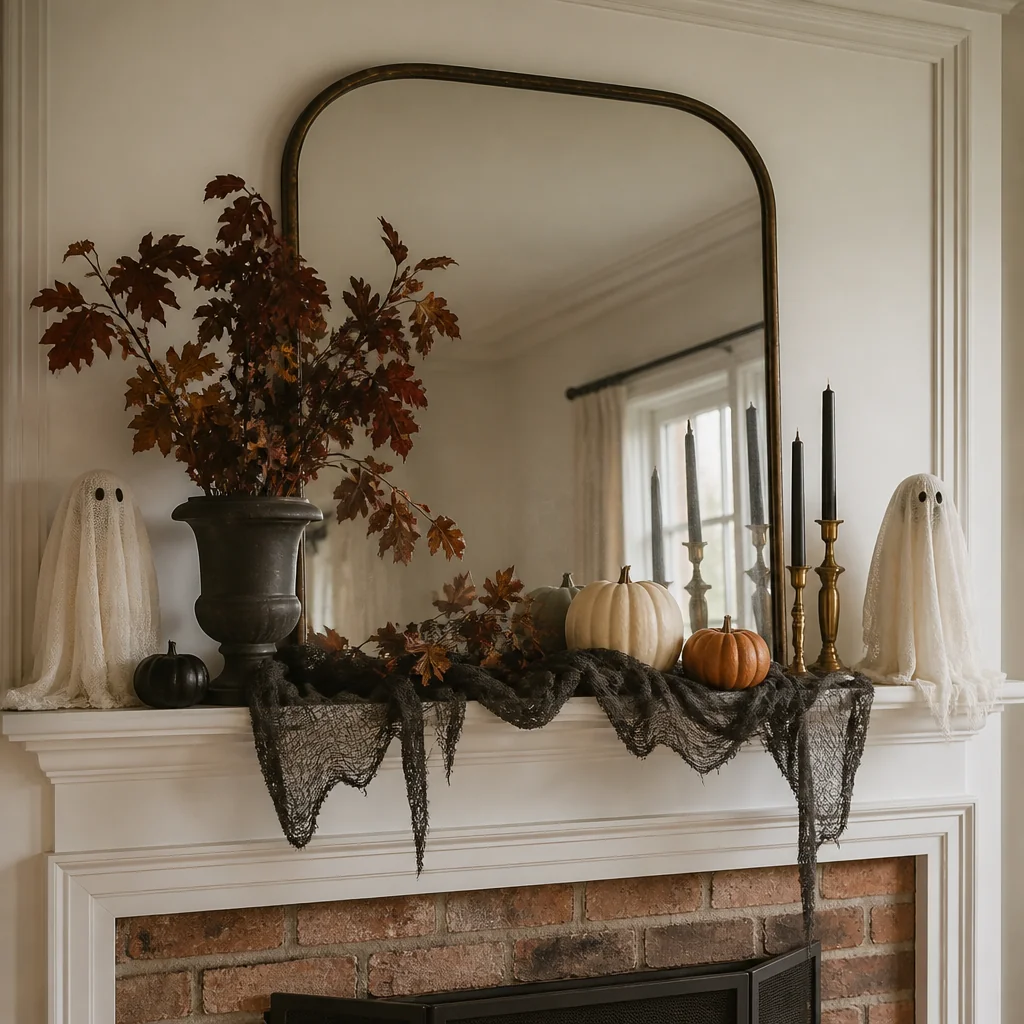
Now that you have a center, you need visual weight on both sides. This is where "matching" saves you - it doesn't mean identical, it means they're clearly a pair. Two black candlesticks. Two small lanterns. Two stacks of old books tied with twine. Two white ceramic pumpkins about 6-8 inches tall.
These sit about 12-18 inches from each end of the mantel, leaving breathing room between them and the edge (so nothing falls, and it doesn't look crowded). Make them the second-tallest things on your mantel, after the center piece.
Matching pairs create instant rhythm without effort. Your eye moves: left anchor, center, right anchor. Done. The mantel looks designed.
Fill the gaps with smaller seasonal pieces
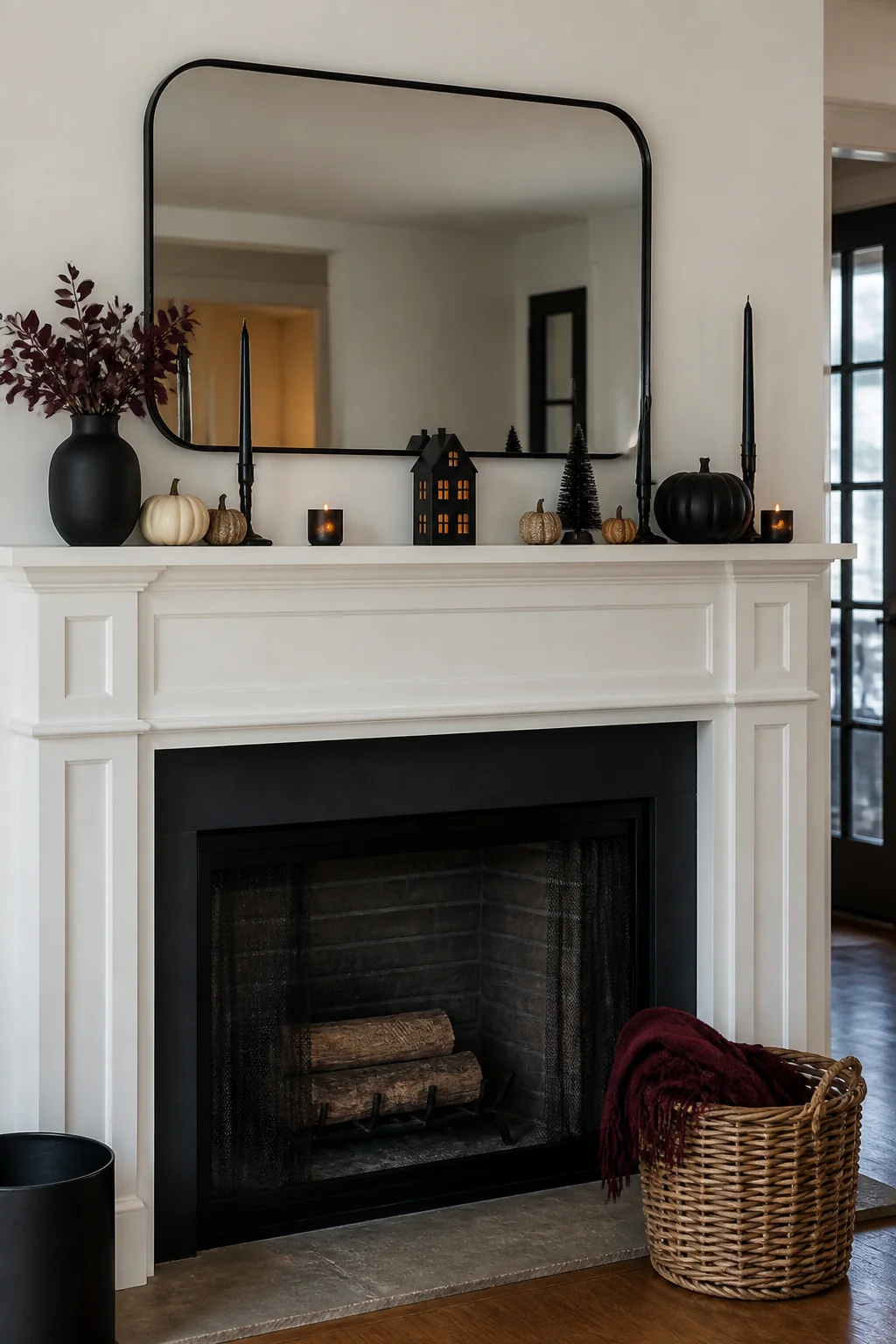
Now you have a structure. The spaces between your anchors are where the smaller things live: tea lights in small holders, sprigs of hypericum berries or dried wheat, a small ceramic owl, single pumpkins in varying sizes (about 3-5 inches), or a short vase with branches.
Keep these pieces low enough that they don't block sightlines to the center piece. Vary the heights slightly so it doesn't look like a flat shelf display, but nothing should stick up taller than your flanking pieces.
Don't cluster everything on one side. Distribute the small stuff loosely across the whole mantel, leaning slightly heavier on the side toward the room's main seating (if it's a living room fireplace) so the composition feels intentional.
Choose a color story and stick to it
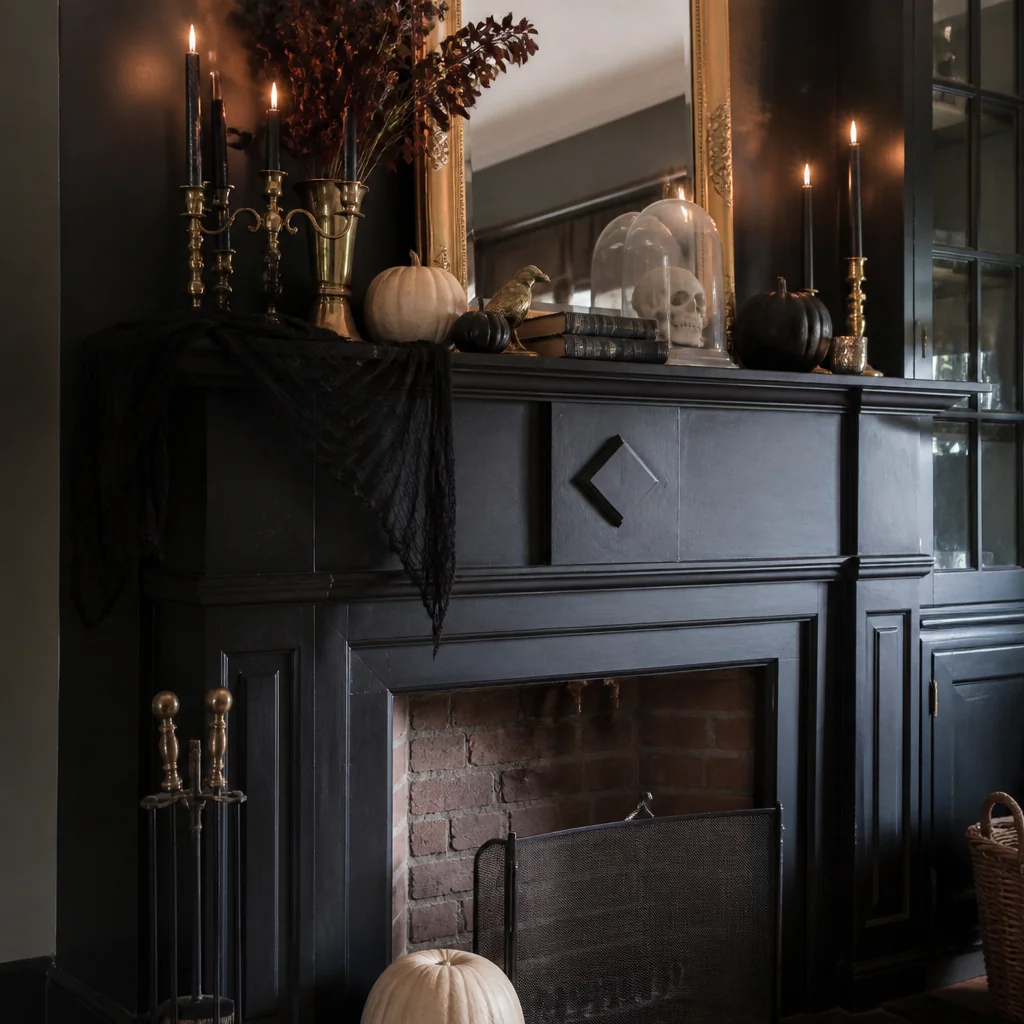
Black, cream, rust, and deep green. Orange, burgundy, and gold. Deep purple, black, and white. Select three colors and use only those three. Everything else is distraction.
This matters way more than it sounds. A mantel with seven different colors reads as random. The same mantel with three colors reads as cohesive. You're not buying new things here - you're just being choosy about what you display.
If your candlesticks are brass, your pumpkins can be orange or rust-colored, but not both orange and burgundy and also a cream-colored ceramic piece. Stay tight. (This is why having a focal point helps: it sets the tone, and everything else follows.)
Add one unexpected texture or material
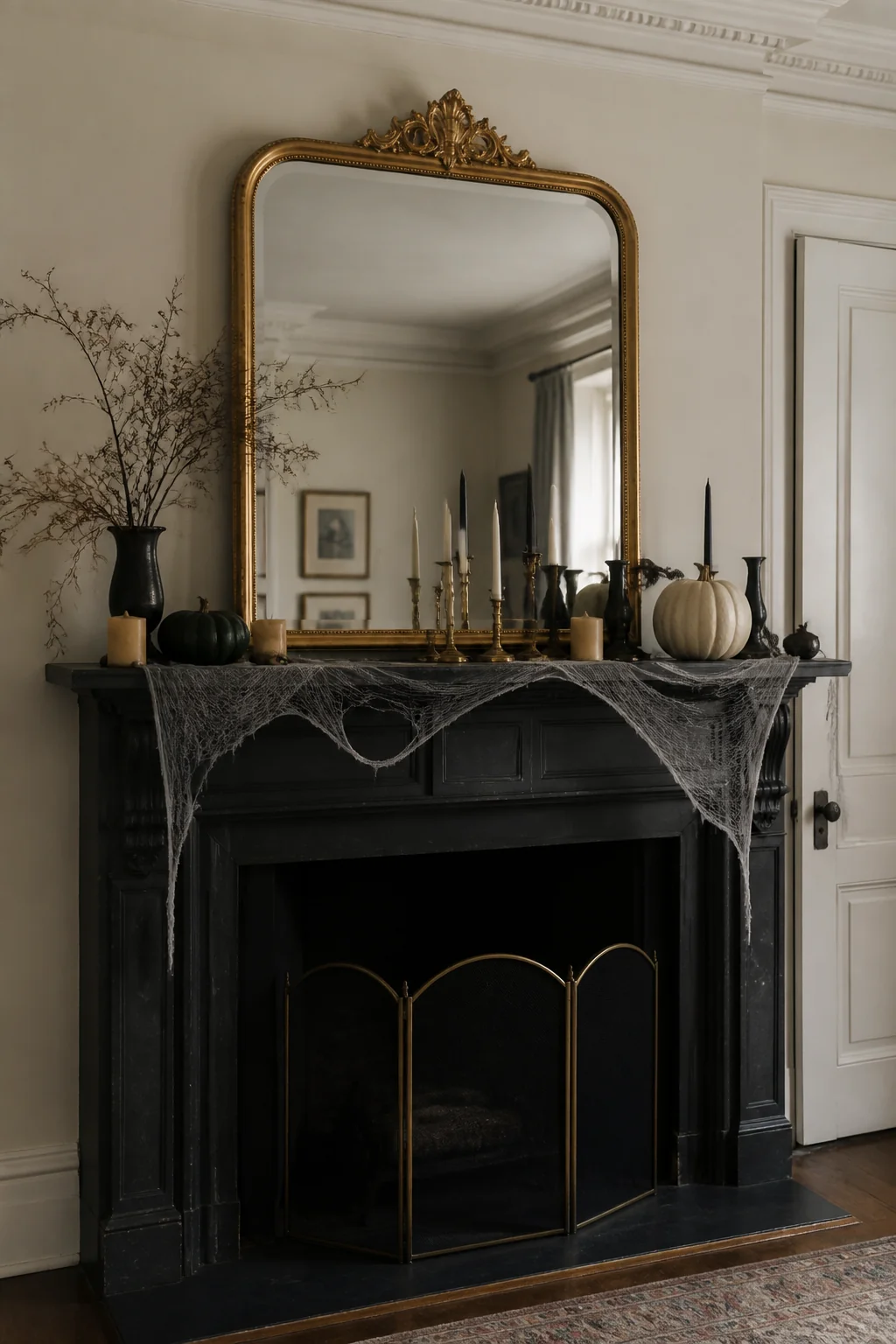
Everything so far has been seasonal standard. Now add something that's not obviously autumn so your halloween mantel decor doesn't feel costume-y or too thematic.
A gold-framed mirror leaning behind the center piece. A small stack of vintage books with cloth covers. A wooden bowl. A brass sculpture. Something that's just good-looking and happens to sit there alongside the pumpkins.
This keeps the mantel from reading like a decoration and more like a curated shelf that just happens to reflect what season it is. The juxtaposition between seasonal pieces and a non-seasonal object prevents the whole thing from feeling like temporary decoration.
Light matters more than you think
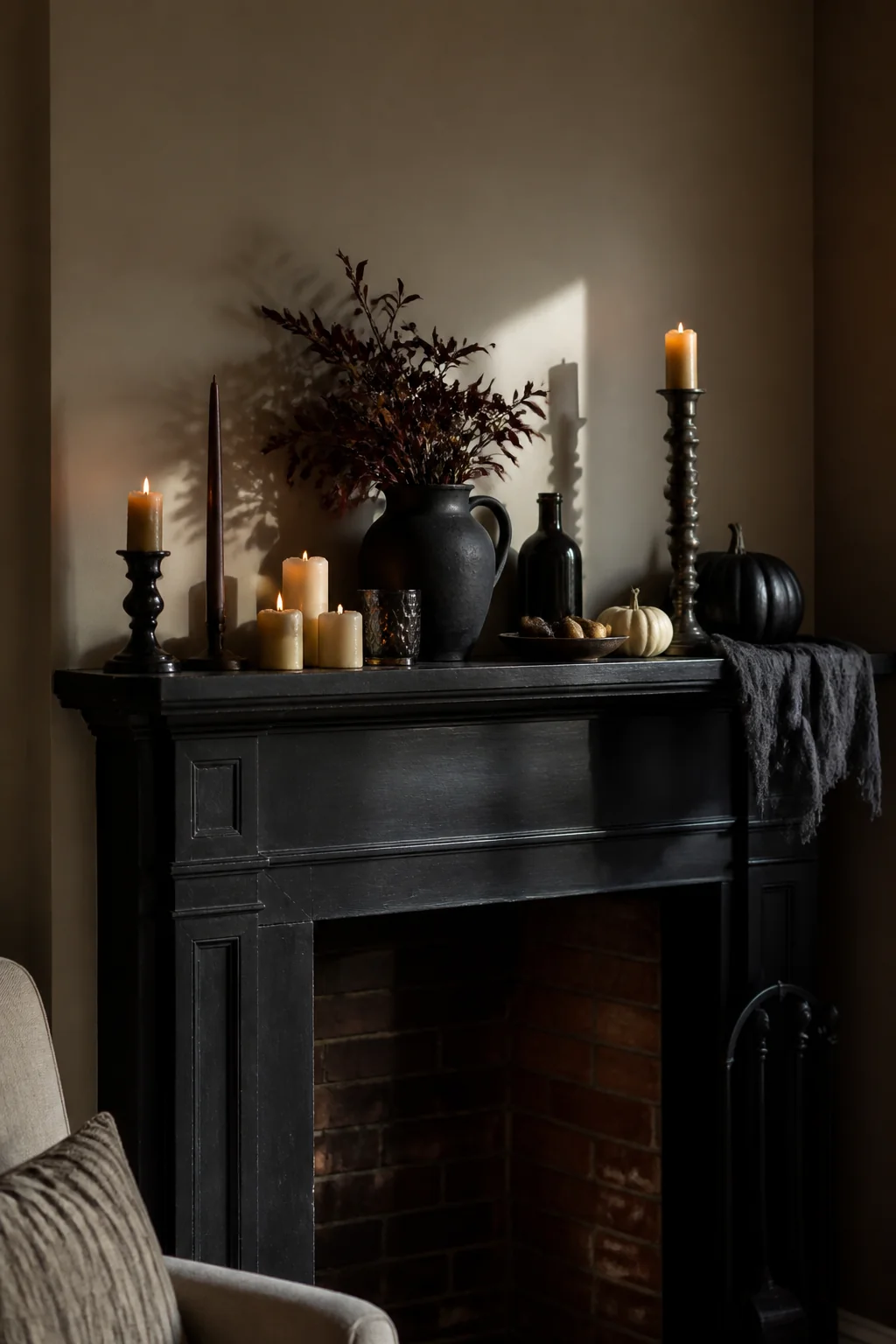
You can go full darkness with black and deep orange, and the mantel will disappear into the wall at night. That's a real problem. You need some reflection or glow, even if it's just candlelight.
Lit candles grouped together cast enough light that the whole mantel becomes visible after dark. If open flames aren't safe for your space, small battery-operated candles with timers offer a safer alternative.
The light doesn't have to be bright. It just has to exist, so the mantel reads as intentional in the evening and not like an absence.
Keep it spare enough to clean
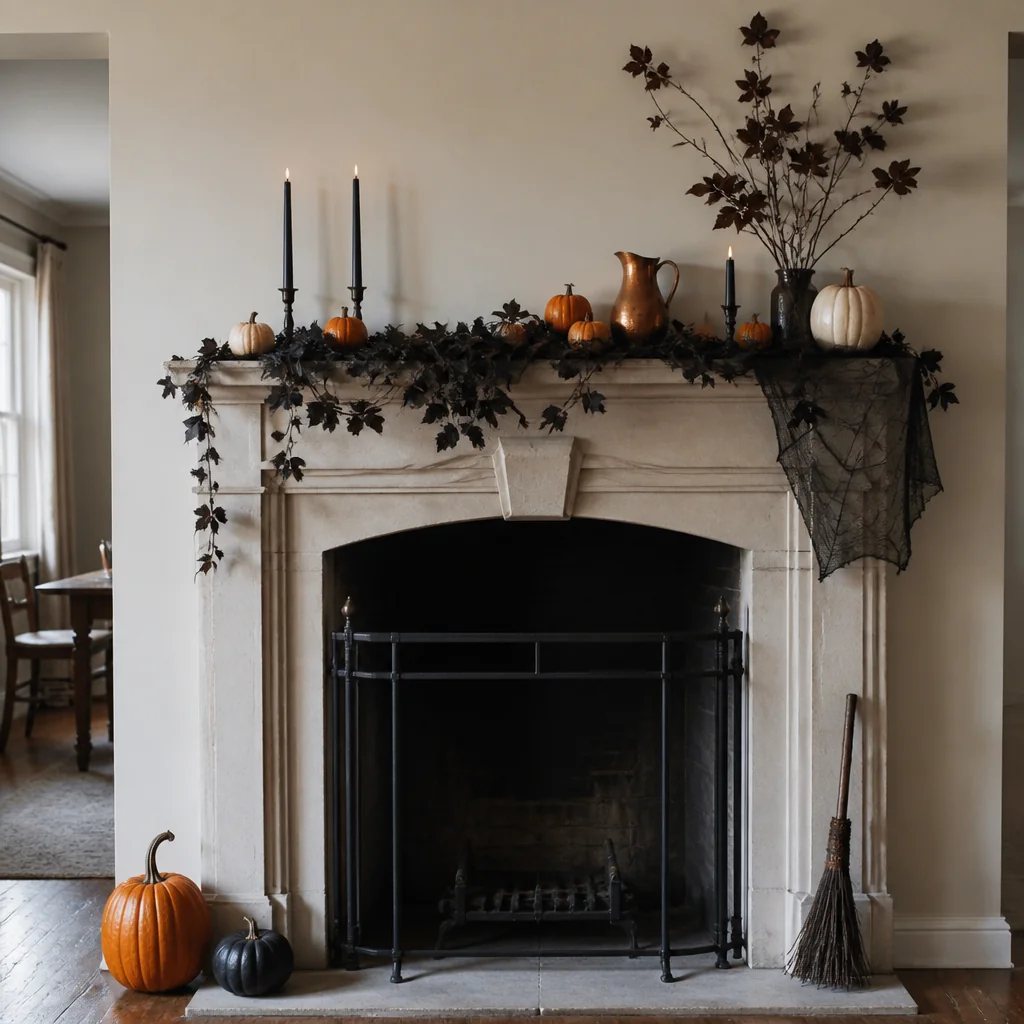
Here's what people get wrong with mantels: they decorate so densely that dusting becomes a nightmare. You can't move anything because there's no space, so dust just accumulates in layers and you stop looking at it.
Space between objects - real air - is not a decorating mistake. It's what makes a mantel feel calm instead of cluttered. Leave visible empty space across your halloween mantel decor. That breathing room is intentional, not sparse.
This also means you can actually maintain it. A quick sweep with a soft brush takes two minutes. The whole thing stays fresh all through October and into November without becoming a chore.
Rethink the mantel shape you have
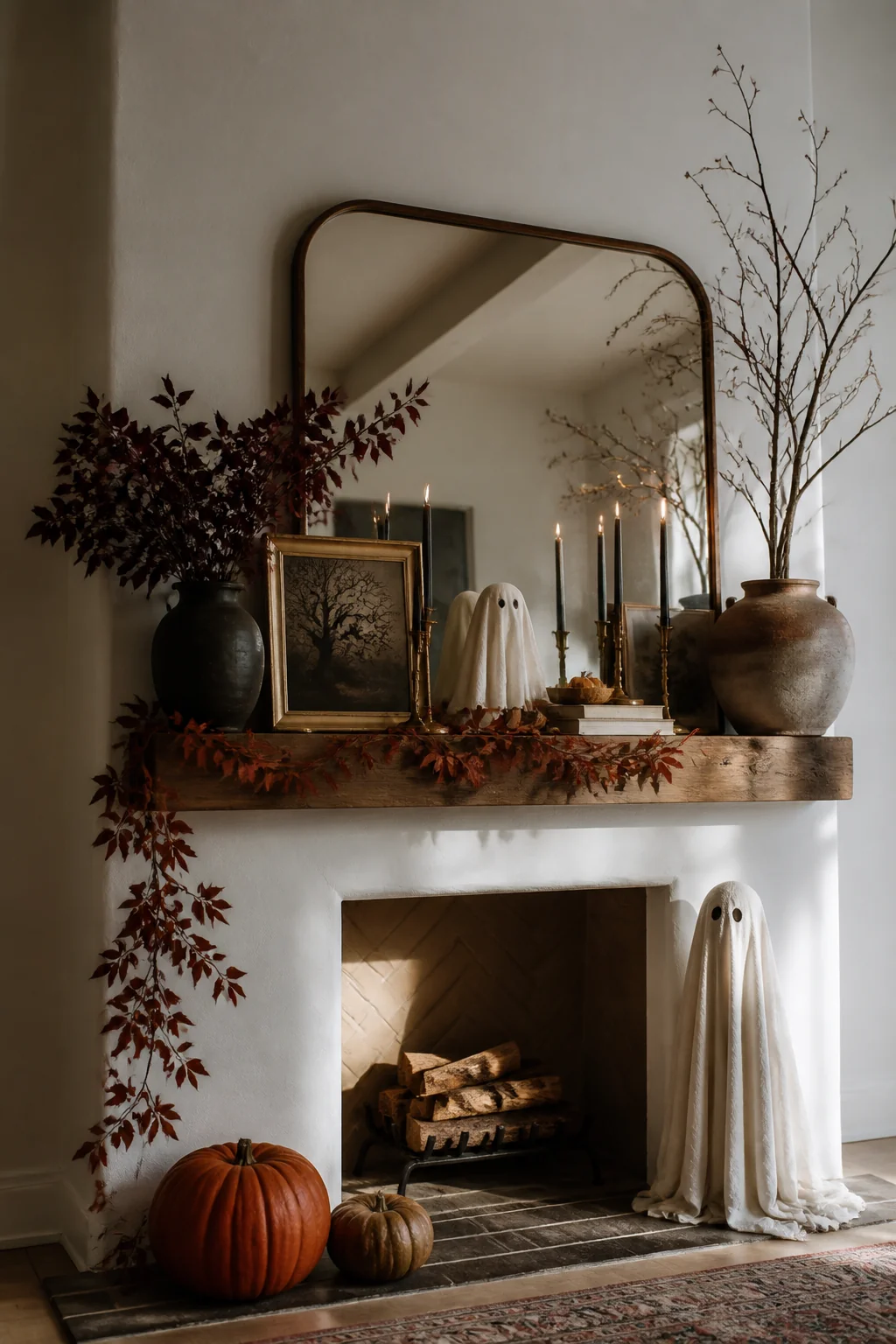
A long horizontal mantel (6 feet or more) needs a different rhythm than a short one. Width changes the math. On a long mantel, you might anchor the ends and create two smaller groupings in the middle, rather than one tall center piece. A short mantel needs everything to play together more tightly - fewer pieces, bigger impact per item.
A mantel in a bedroom reads differently than one in a living room. In a bedroom, smaller and quieter usually works better; the room doesn't need to broadcast the season. A living room mantel is fair game for more visual weight and presence. Rental apartments mean nothing you use can require hanging or fastening to the mantel itself - everything has to sit there freely. A house mantel gives you more flexibility for anchoring pieces if you want to.
Keep this guide handy
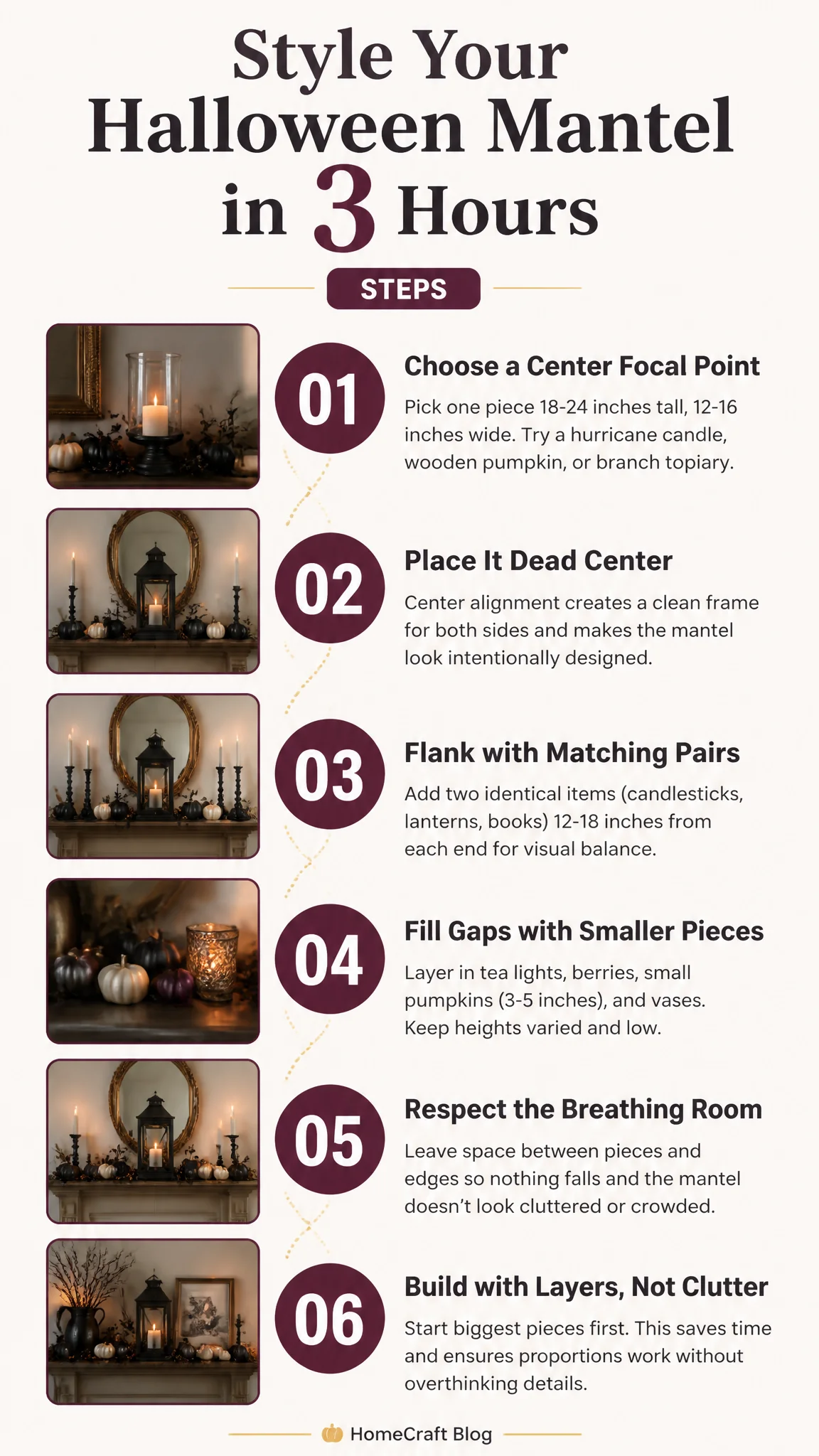
The structure matters more than the volume. Three pieces that work together will always outweigh ten pieces scattered without intention.
Ideas fade by Friday. A plan finishes the room.
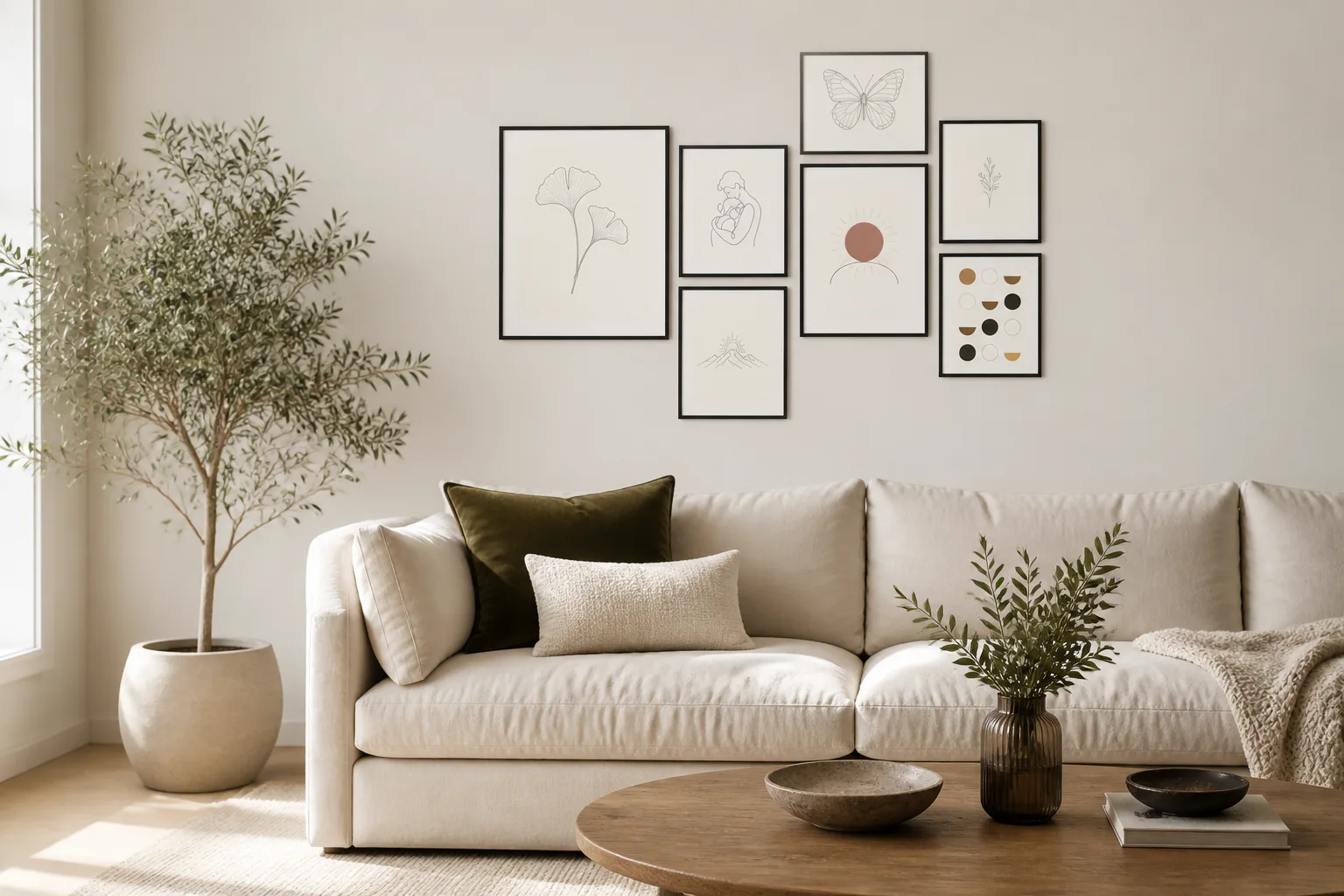
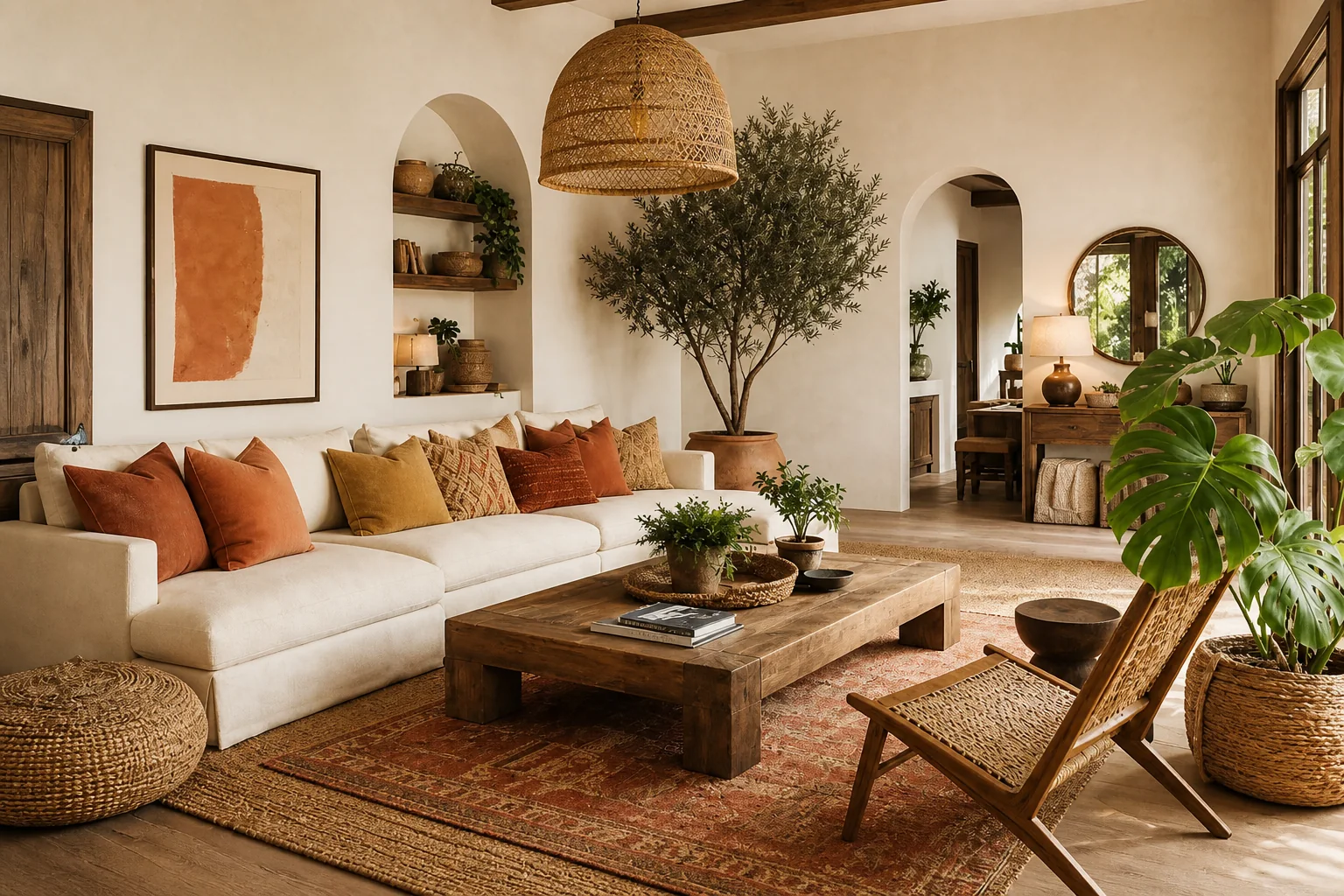
You just read a full guide to your home. Saving ideas will not change it; a plan will. The Home Decor Collection is every planning tool we make, for every room in the house, in one download, so the after photos below stop being other people's rooms.
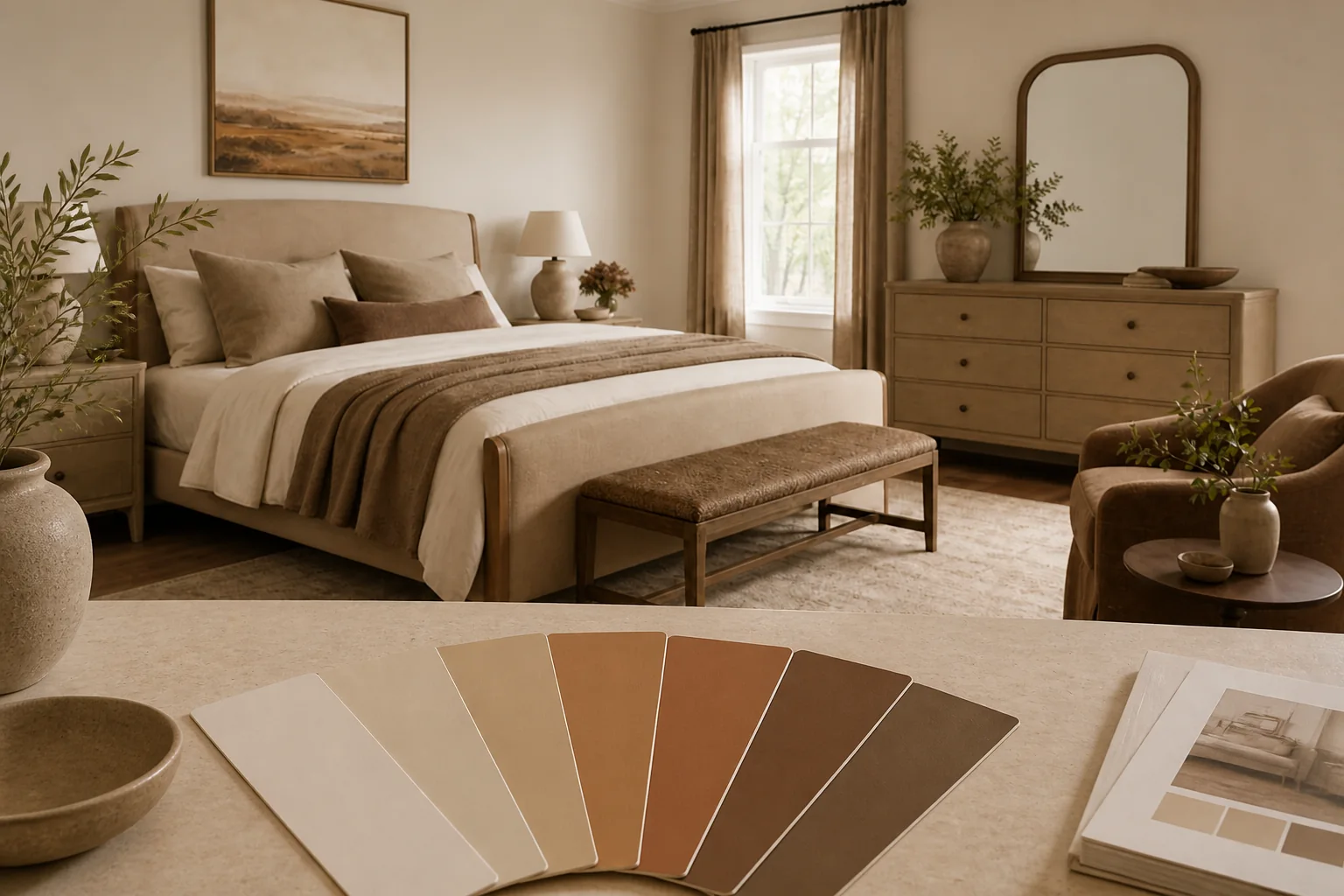
- Six room Style Kits, each with layout, palette and shopping list$114
- The Gallery Wall Studio: 200 prints + 15 measured layouts$29
- The Room Makeover System: 40 solved room layouts + workbook$29
- The Color Palette Handbook: 60 palettes shown in real rooms$19
- The Whole-Home Reset: 40 printable organizing checklists$19
- The Decorator's Cheat Sheets: the 40 measurements that matter$9
- All eleven products, bought separately
$219$97
A single hour with an interior designer costs more than the entire Collection, and this one keeps answering for every room you will ever decorate. Free updates included as the products grow. And if it is not for you, the 14 day money back promise means you simply get a refund.