14 Evergreen and Ribbon DIY Christmas Garland Ideas That Fill a Mantel
Your mantel garland should look full, not thin or sagging. These 14 diy christmas garland ideas mix evergreen and ribbon, with a shopping list for each.
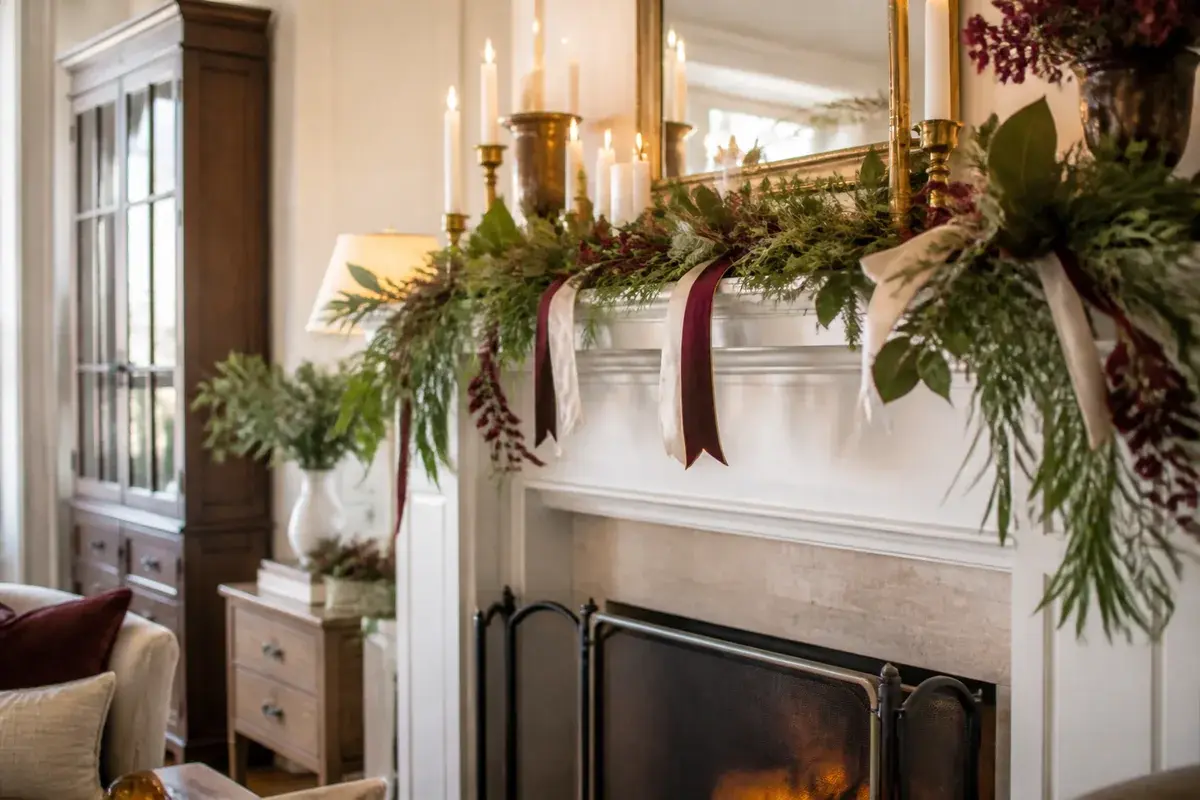
The good version of a mantel garland looks like it grew there. The greenery sits full and even, it spills a little over the edges, and the eye lands on the fireplace instead of the tangle of branches. Most people get close to that look and then stop short. The garland ends up too thin for the mantel, it sags in the middle after a day, or the ribbon fights with the greenery instead of framing it. The ideas below are built to avoid those problems. Each one starts with the look, explains why it holds together, and then gives you the size, spacing, or material to get it right in an ordinary room.
 8-page guide
Free style guide
Stop buying things that don’t go together.
Print the 2-minute quiz, circle the words you love, and find your style. Then see what makes a room look like it.
- A print-and-circle quiz, 5 styles
- Each style shown as a finished room
- Palette, 4 key pieces, one rule
Free. Arrives by email in a minute or two, plus our ideas and occasional shop offers. Unsubscribe anytime. Privacy
1. Full cedar rope with a fat center cluster
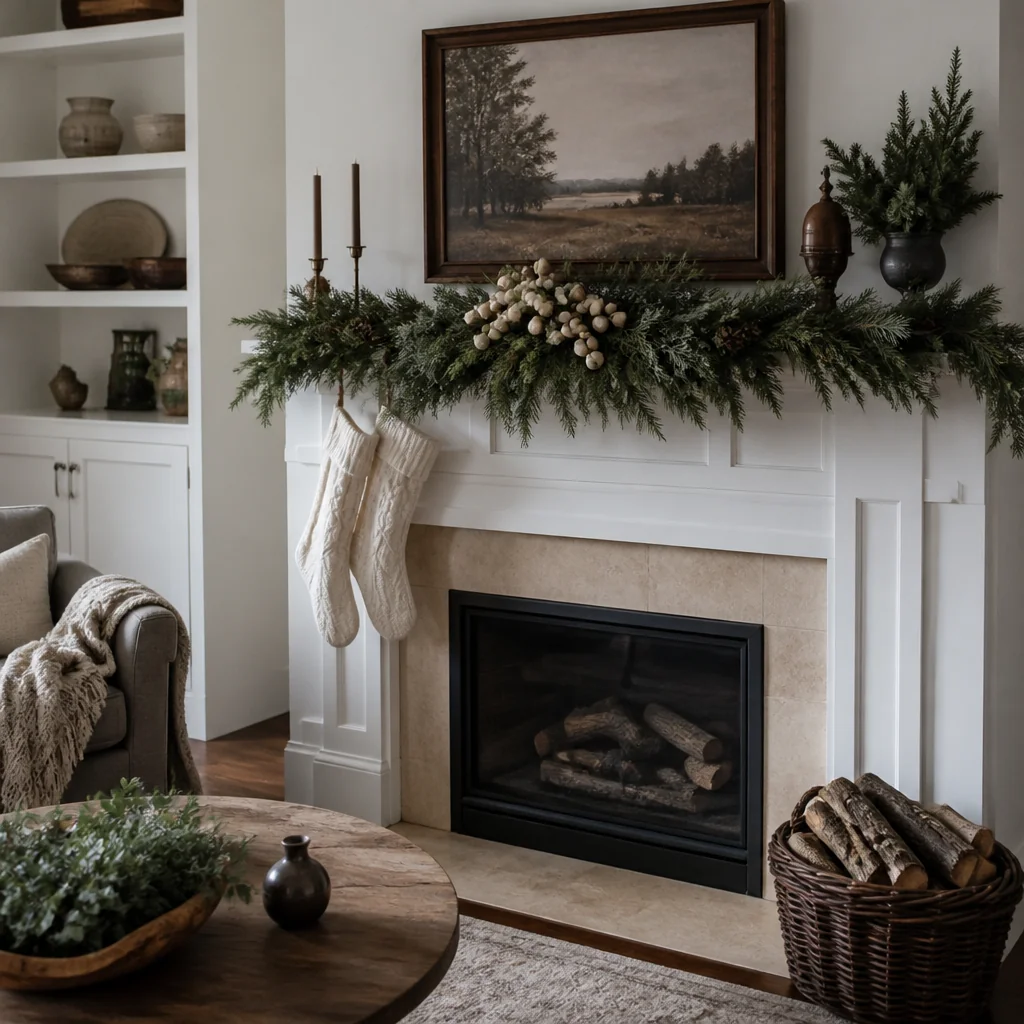
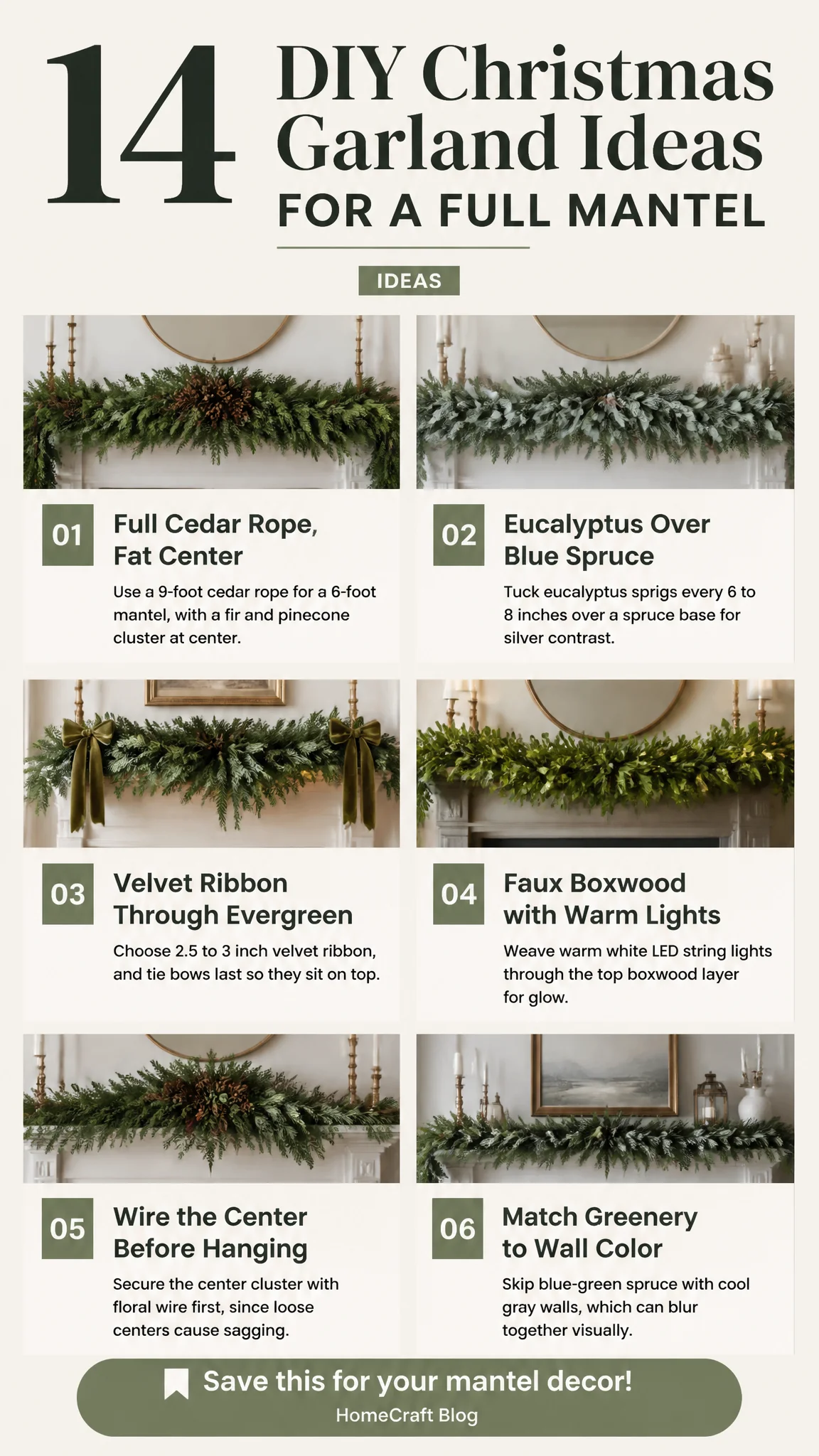
Picture a dense, dark green rope of cedar running the full length of the mantel, with a bigger bundle of fir tips and pinecones sitting dead center. The ends taper off past the mantel edges, so the whole piece looks like it was draped rather than set down. The center cluster gives your eye a clear focal point, and the thinner ends keep the piece from looking heavy. For a standard mantel about 6 feet long, look for a rope at least 9 feet long so you have enough left to drape over each end. Wire the cluster on with floral wire before you hang anything, because a loose center is what makes these sag.
2. Silvery eucalyptus layered over blue spruce
This one is a cool, quiet mix: blue-green spruce tips underneath, with dusty silver eucalyptus laid across the top. The contrast works because the eucalyptus is lighter and softer, so the garland reads as two textures instead of one flat green. Put the spruce in first as a base, then tuck the eucalyptus in short sprigs every 6 to 8 inches so the silver shows along the whole length. It suits a room with white walls or warm wood tones, where the green can sit back a little. Skip it in a room with cool gray walls, since the blue-green and gray can blur together.
3. Velvet ribbon wrapped through the evergreen
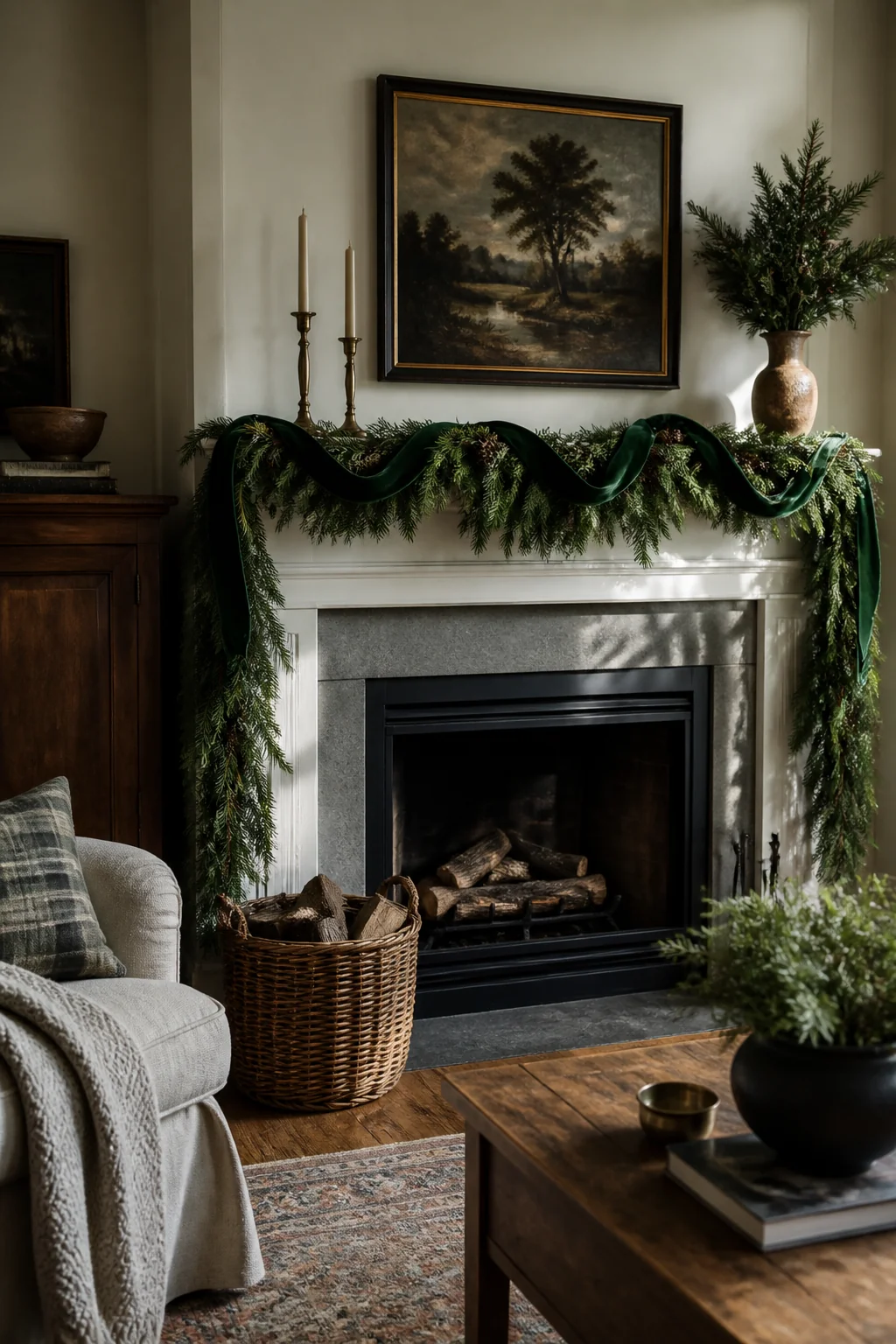
Here the garland is mostly greenery, but a wide velvet ribbon winds through it in a loose spiral, with a full bow at one or two points. The velvet catches light in a way plain fabric doesn't, so the garland looks richer even from across the room. Choose a ribbon 2.5 to 3 inches wide so it reads at mantel distance. Thinner ribbon disappears into the branches. Wrap the ribbon before you attach the garland to the mantel, then tie the bows last so they sit on top of the greenery, not underneath.
4. Faux boxwood with warm white lights
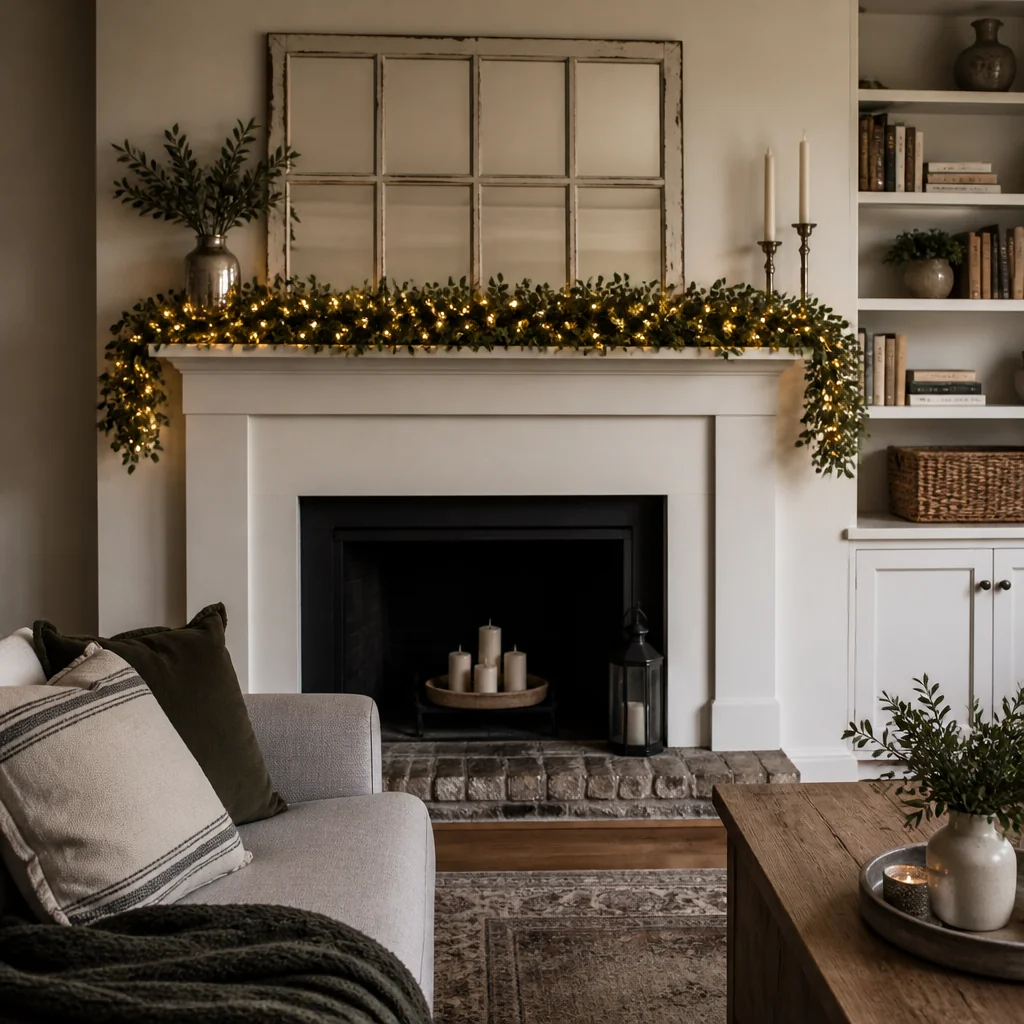
Faux boxwood gives you a tight, sculpted look that real greenery rarely holds for a whole season. Pair it with warm white LED string lights woven through the top layer. The light sits in the dense leaves and makes the whole piece glow after dark without any flame. Use battery or plug-in LEDs rated for indoor use, and run the cord along the back of the mantel so it doesn't show. If you plug the lights into an outlet, keep the cord clear of heat sources and keep the plug accessible.
5. Pinecones and cinnamon sticks strung on jute
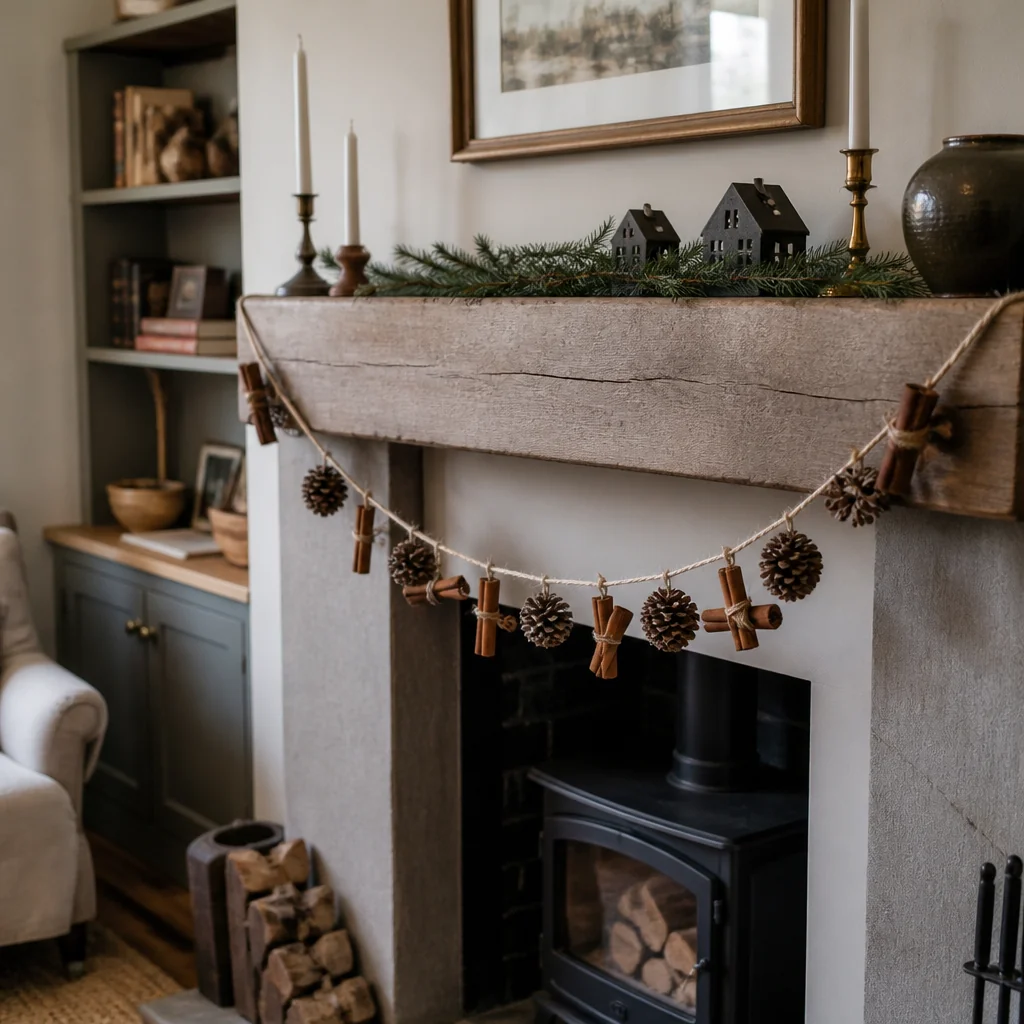
This garland is built from small, heavy pieces: pinecones of mixed sizes, cinnamon sticks tied in bundles, and dried orange slices on natural jute. The texture is rough and warm, which suits a brick or stone fireplace better than a painted wood surround. String the pieces about 4 inches apart so the garland looks deliberate, not crowded. Mix at least three pinecone sizes so the line has rhythm. Keep this one away from any open flame, because cinnamon and dried citrus can scorch, and keep it at least 12 inches from a candle or fireplace opening.
6. Magnolia leaves with a matte gold tip
Magnolia leaves are glossy and broad, so they make a bold garland with very few pieces. The look here is simple: a single row of dark leaves, each one dipped or lightly painted at the tip with matte gold. The gold catches the fire or the lamplight without shouting. Work the leaves in overlapping pairs so the garland looks full with fewer stems. If you paint the tips, do it outdoors or with a window open, and let the leaves dry flat on newspaper, because oily rags and spray paint both need that care.
7. A lopsided swag that hangs off center
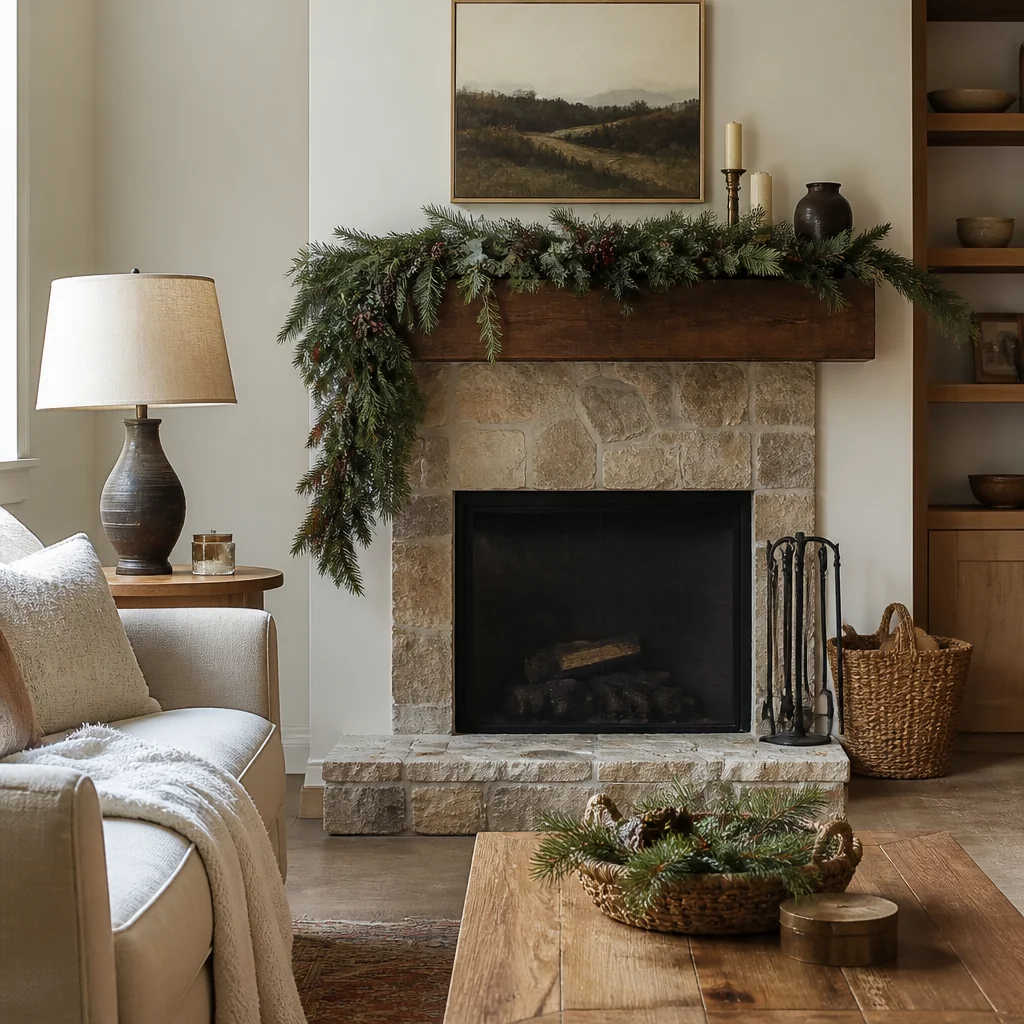
Instead of a garland that runs evenly across the mantel, this version starts heavy on one side and tapers down to a thin tail on the other. The swag dips lower on the short end, and the fuller side sits near a lamp or a candle group so the visual weight balances. Asymmetry keeps a formal mantel from feeling stiff. Hang the heavy end about 12 inches above the mantel shelf, then let the tail fall 4 to 6 inches below the shelf line. The off-center version works best where the mantel has something tall at one end, like a clock or a framed print.
8. Faux berry picks in red and white
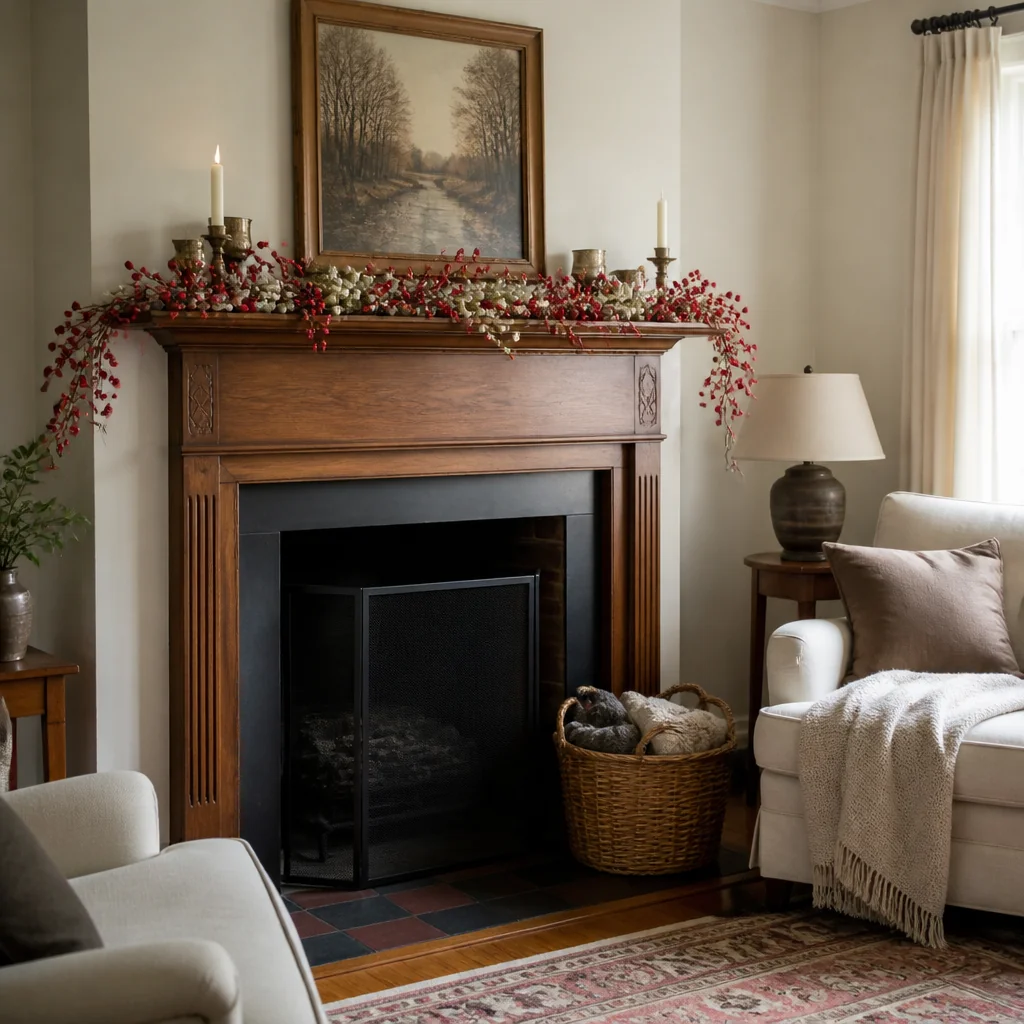
This garland uses short picks of faux red berries, white berries, and small holly leaves, wired into a green base at even intervals. The berries add a warm color pop without needing lots of ornaments. Space the picks about 5 inches apart and keep them mostly on the front edge, where people will see them. Real holly berries can be toxic to pets and children, so faux berries are the safer choice when cats or toddlers wander near the fireplace. Choose berries with a matte finish, because glossy ones look plastic under lamplight.
9. All white with frosted branches
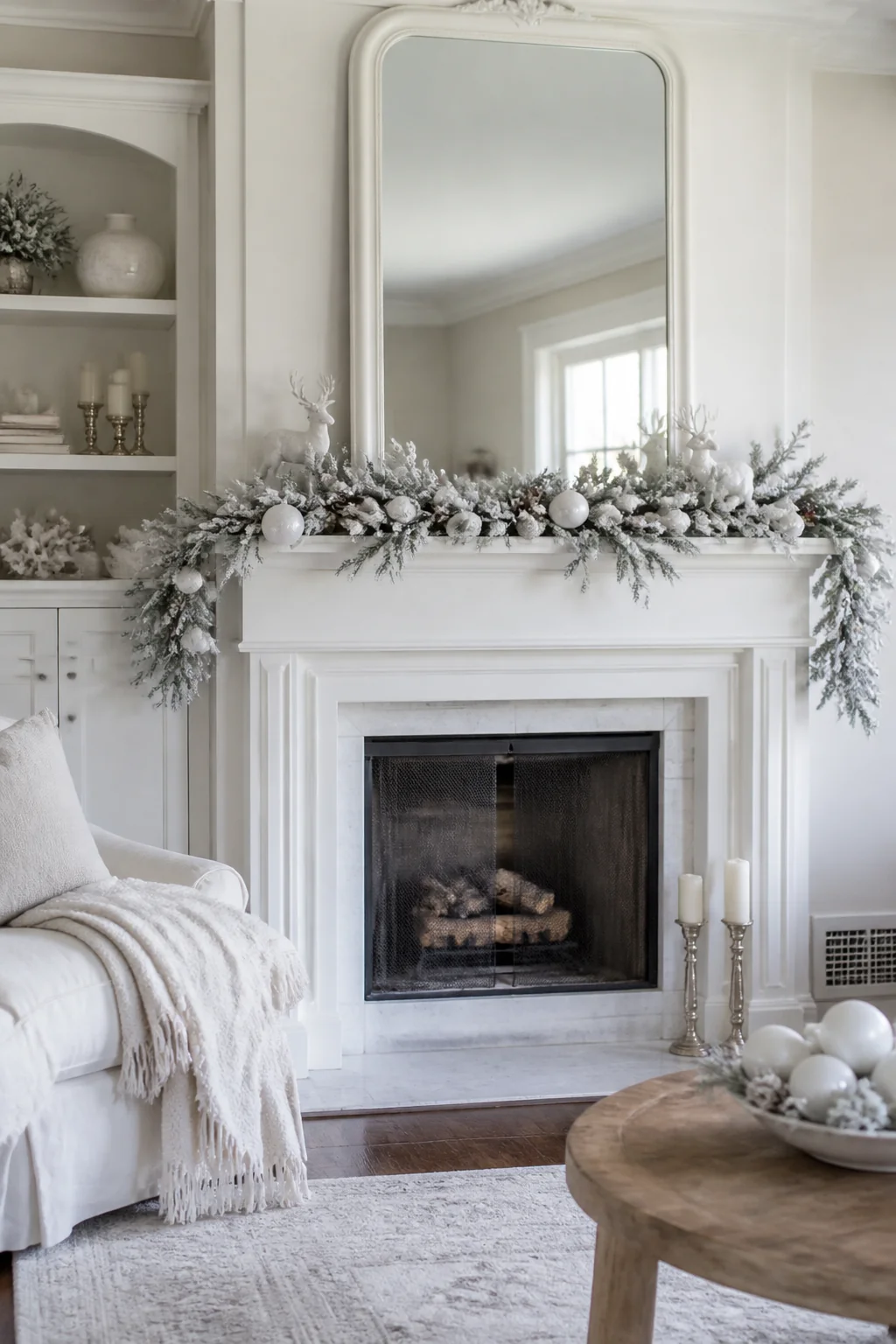
A white garland is a choice that asks for restraint. Use frosted or white-tipped branches, add white pinecones, and keep any ribbon in the same white or ivory. Nothing in the garland competes with the color of the wall, so the mantel reads as one soft shape. This works best in a room with warm white or cream walls, where the frost tone looks intentional instead of stark. In a room with very cool light, the white can look blue, so check the garland under your evening lamps before you commit.
10. Plaid ribbon woven through a bottle-green garland
A bottle-green garland is one of the most classic looks for a mantel, and a plaid ribbon woven through it adds a bit of pattern without going busy. Use a ribbon with a red, green, and cream plaid and keep it to one long run, not several short bows. Thread the ribbon through the branches in a loose weave, so it appears at intervals along the length. Keep the plaid scale small, about 1 inch per check, or it will overpower the greenery in a room with a low ceiling.
11. Hanging ornaments from the garland tails
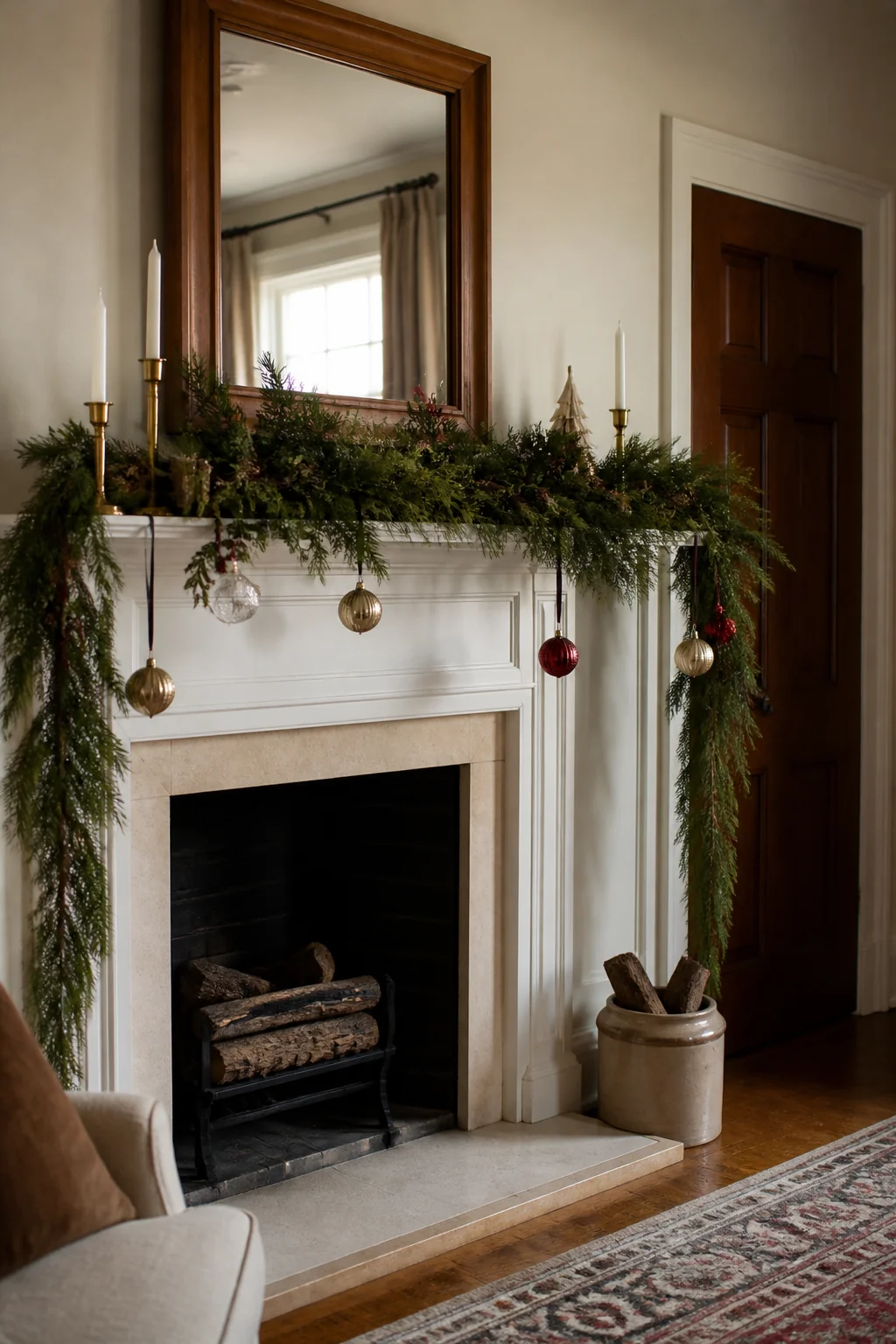
Here the garland itself is simple, but a few glass ornaments hang from wire loops at the ends and the midpoint of the garland. The ornaments lower the visual line and make the piece feel more finished. Use lightweight glass or shatterproof ornaments, because heavy ones pull a garland out of shape. Hang each one from a short wire that lets it sit about 2 inches below the garland edge. If your mantel sits near a door or a busy walkway, skip the hanging ornaments, since they tend to swing into people as they pass.
12. Garland framing the mirror above the mantel
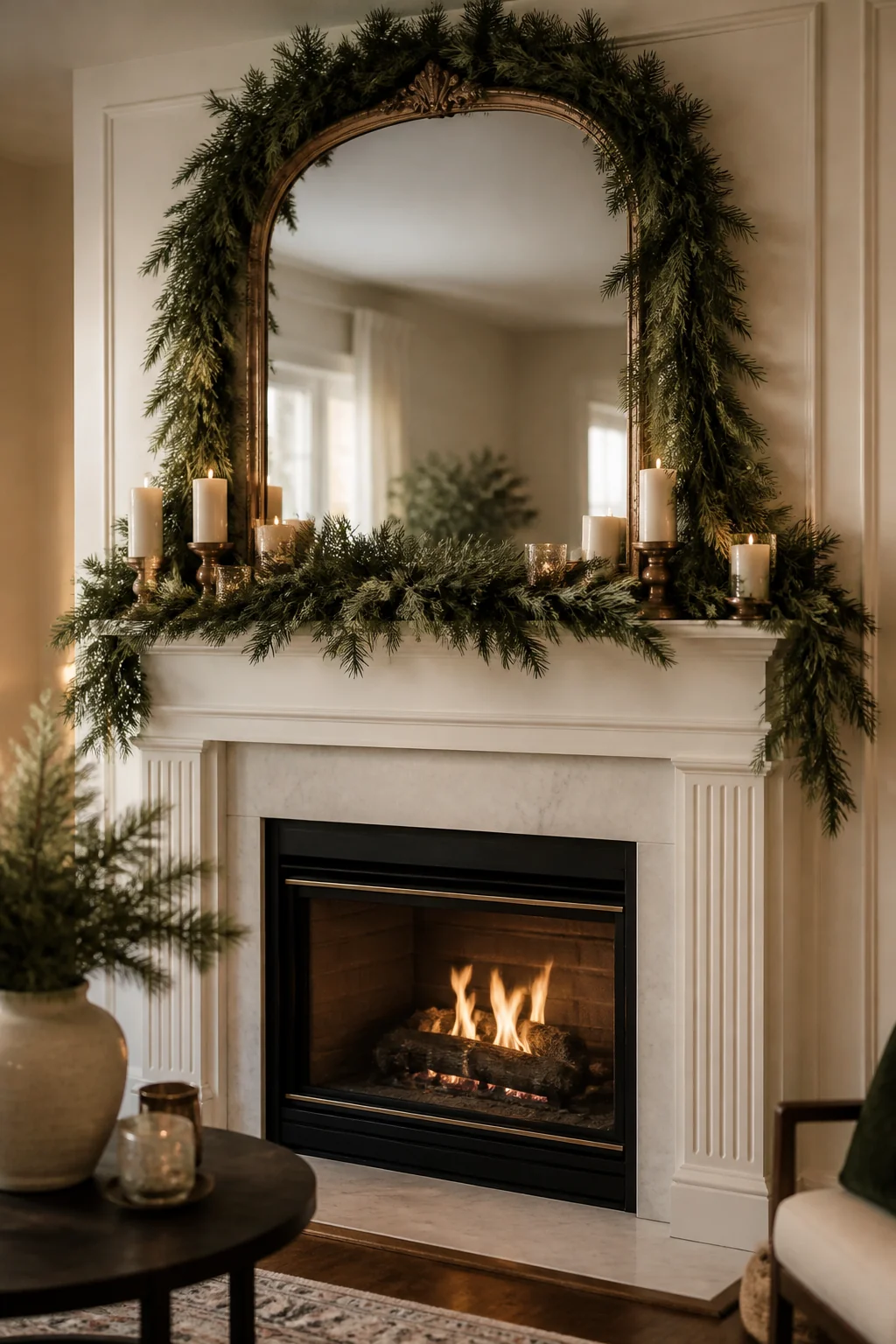
Sometimes the mantel isn't the best place to put the garland. This idea wraps the garland around the frame of a mirror or large piece of art hung above the fireplace, so the greenery frames the whole wall instead of sitting on a shelf. Use a lighter garland here, around 3 to 4 inches thick, so it doesn't crowd the mirror. Secure it with clear wire to the frame, not with nails into the glass. If the mirror is heavy, check that its hanging hardware is rated above the total weight of the mirror plus the garland, since the added greenery adds more load than you'd expect.
13. Taper candles in brass holders beside the garland
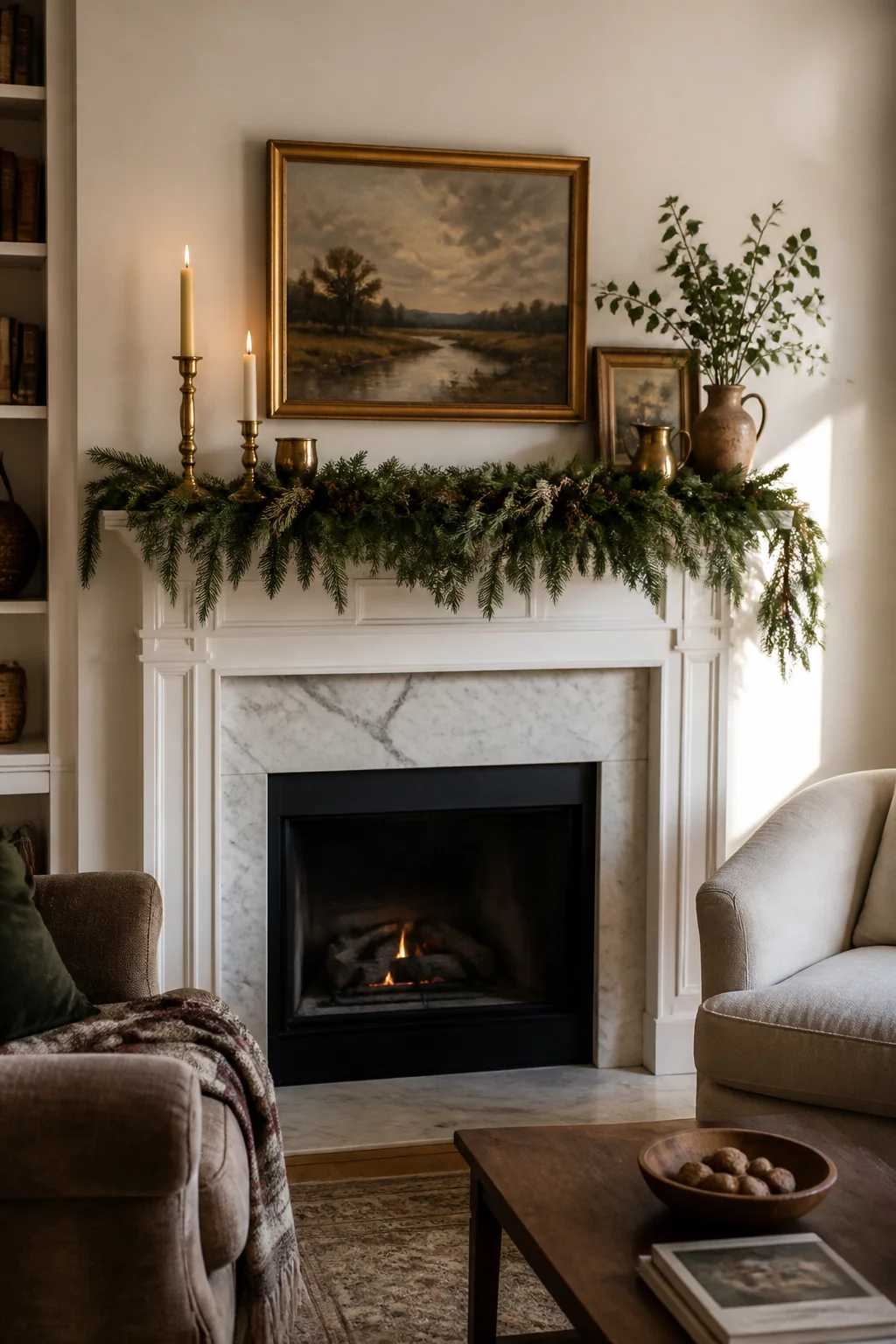
This look sits the garland at the back of the mantel and places taper candles in brass holders at each end. The brass and warm candlelight pick up the gold in the greenery, and the candles give the eye a second layer of height. Because the flame is open, keep the candles at least 12 inches from any part of the garland, and put them out before you leave the room. For a safer version, use flameless taper candles with a warm flicker, which look nearly the same from across the room.
14. A sheer tulle overlay on a fuller garland
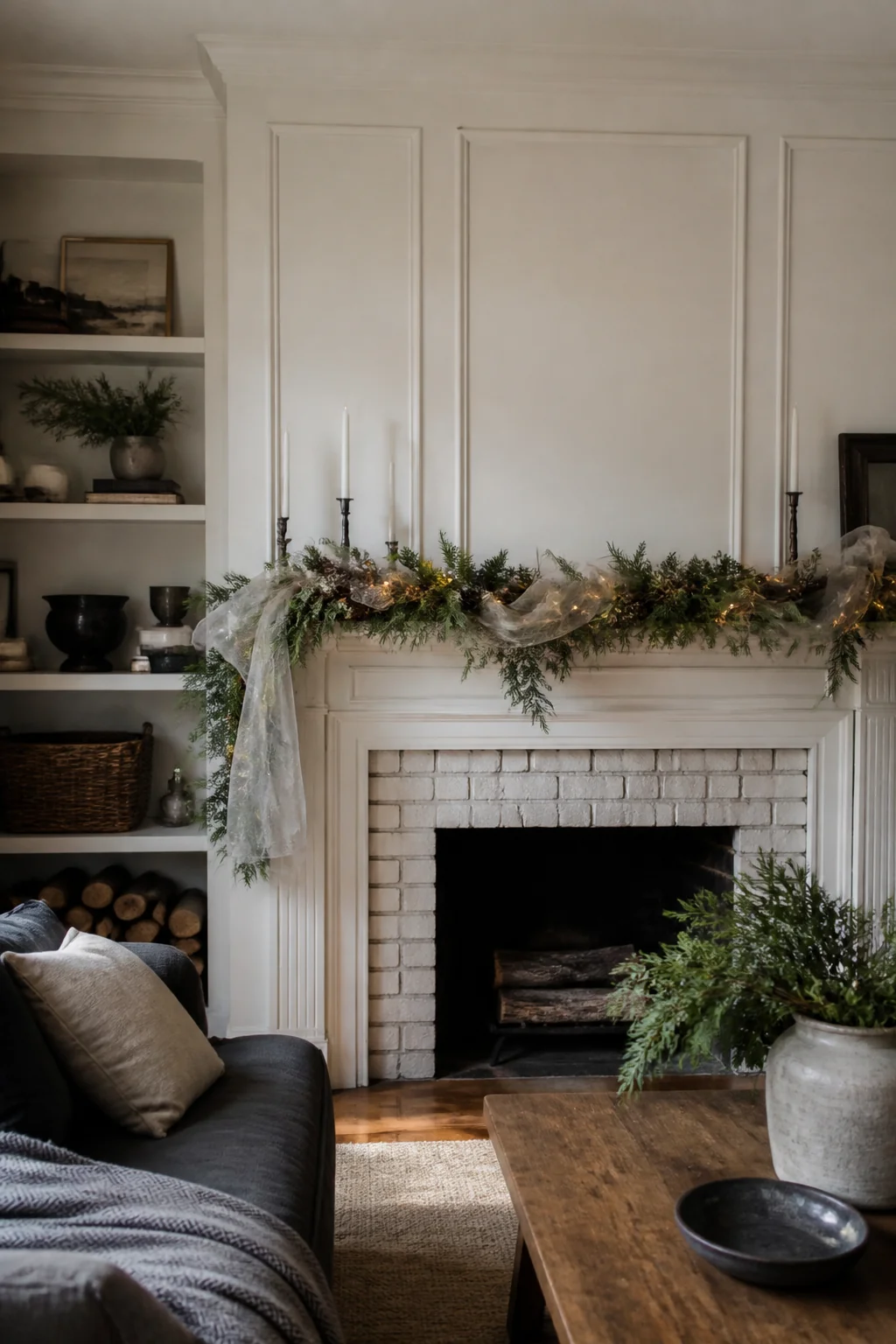
The last idea softens a heavy garland with a sheer tulle ribbon laid across the top. The tulle catches light and blurs the edges of the greenery, so the piece looks misty rather than solid. Choose a tulle in a neutral like ivory or pale gold, about 6 inches wide, and gather it loosely every 12 to 18 inches so it puffs slightly. This works best in a room with a lot of natural light, where the tulle shows. In a dim room, the tulle tends to disappear, and you'll get more out of a solid ribbon instead.
Take the guide with you
The right garland depends on the room more than on the greenery. In a small living room, a full, dense rope can crowd the mantel and block the sightline to the fire, so a thinner garland with one strong accent usually reads better. In a larger room with a wide, high mantel, the same thin garland can look lost, and a fuller piece with a clear center cluster fills the wall properly. Rentals ask for a different approach too. If you can't drill into the wall, a garland that rests on the mantel shelf and uses clip-on hooks or a tension rod keeps the piece steady without damage. In a house you own, you can use wall anchors for a heavier mirror or frame wrap. Measure the mantel depth first, then match the garland to the space in front of the fireplace, not just the length of the shelf.
The room images in this post are illustrations made with AI.