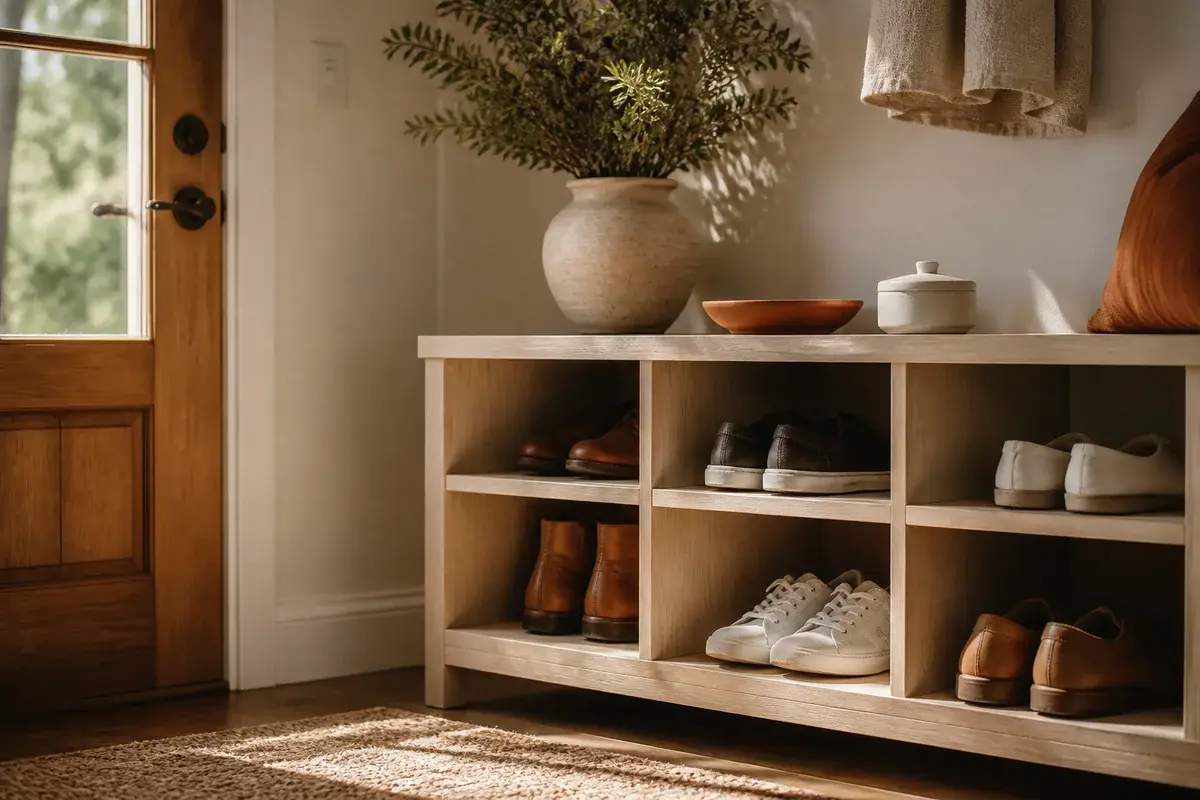
13 Chic Mid Century Modern Entryway Ideas for Small Spaces
Scale mid century modern entryway ideas to fit tight spaces with smart console placement, mirrors, lighting, and storage solutions.
This post contains affiliate links. As an Amazon Associate I earn from qualifying purchases. If you buy through our links, we may earn a commission — at no extra cost to you.
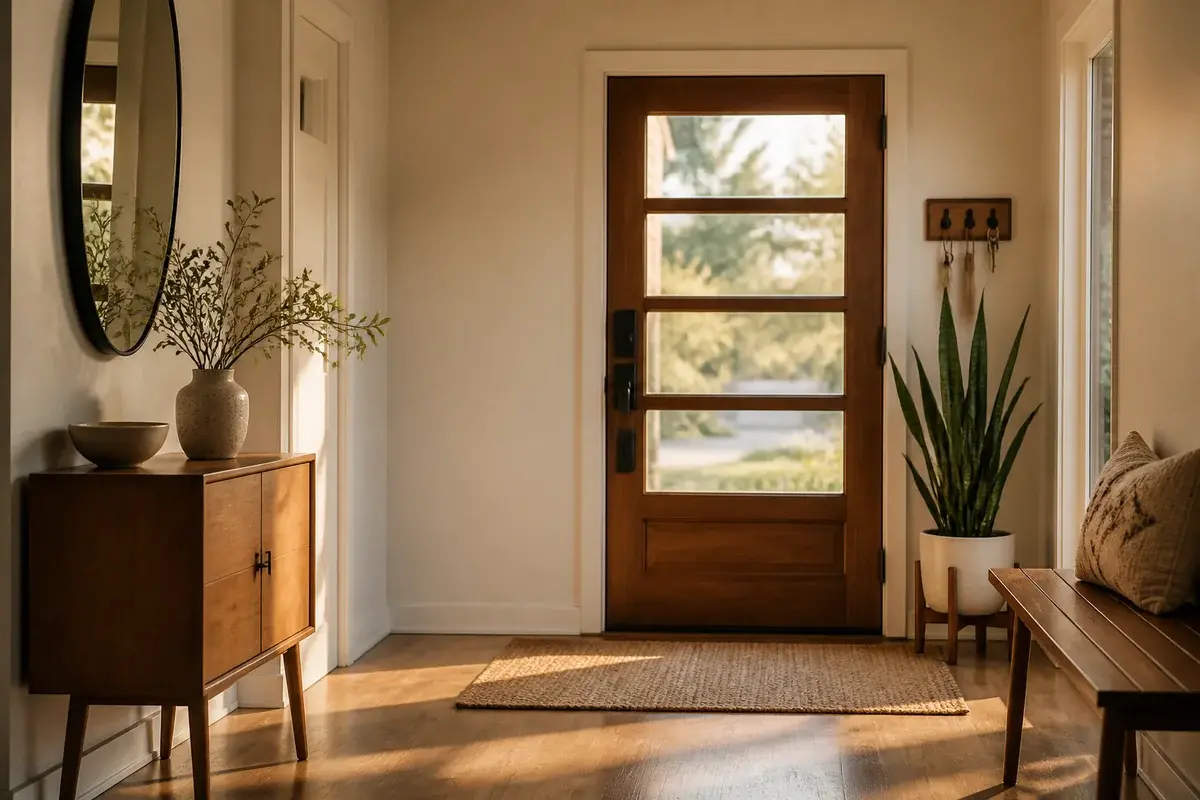
A small entryway that tries to do mid century modern often feels like it's trying to do everything at once: tapered legs on a console that shouldn't be there, a mirror that's too ornate for the wall, pendant lights hung too low so they read clunky instead of clean, furniture that crowds the path to the door. The bones of mid century design are actually ideal for tight entries, clean lines, functionality first, zero fuss, but the details have to be precise. Scale down, clear the sightlines, and you've got an entry that feels both purposeful and open.
1. Hang a Large Mirror at Eye Level, Slightly High
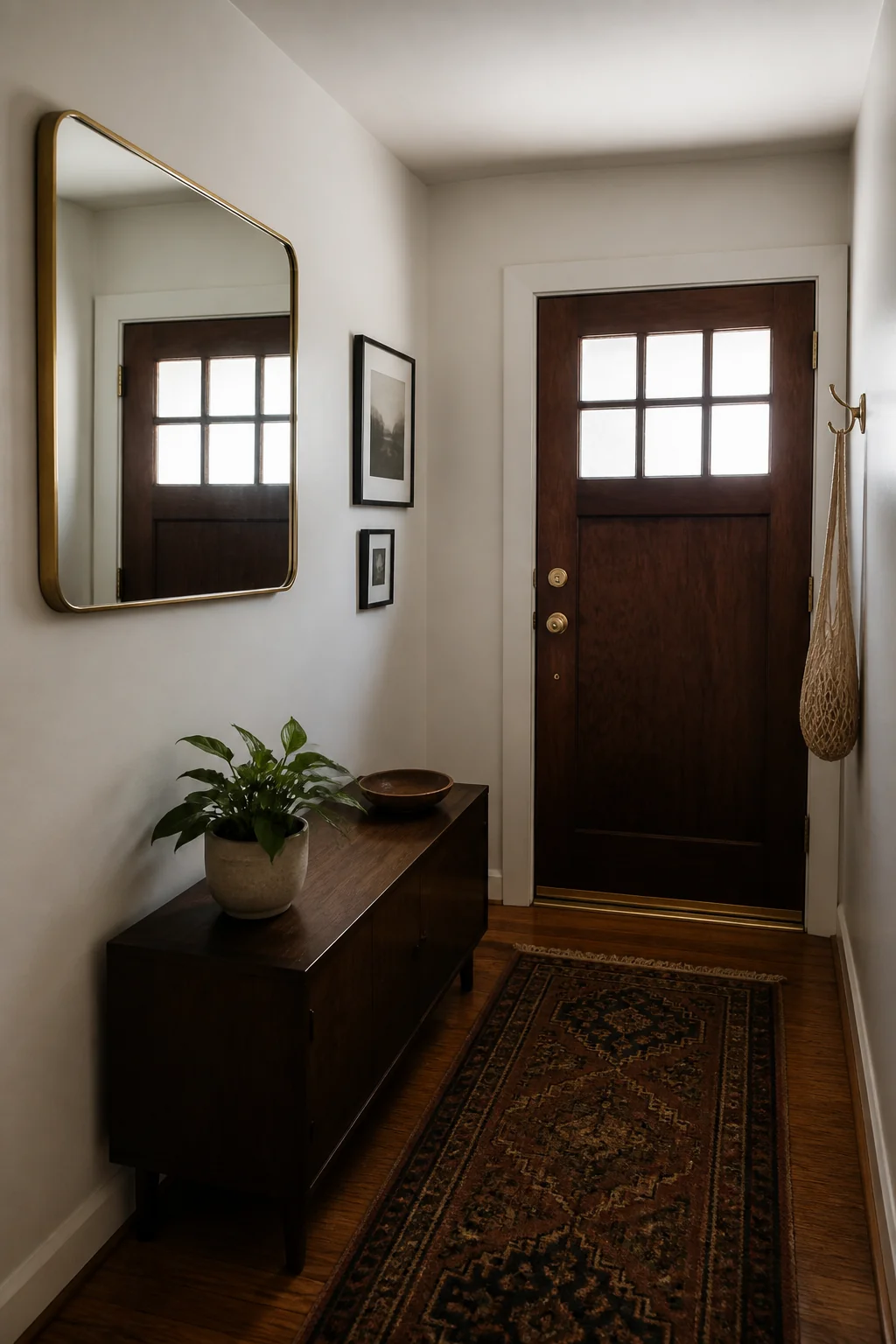
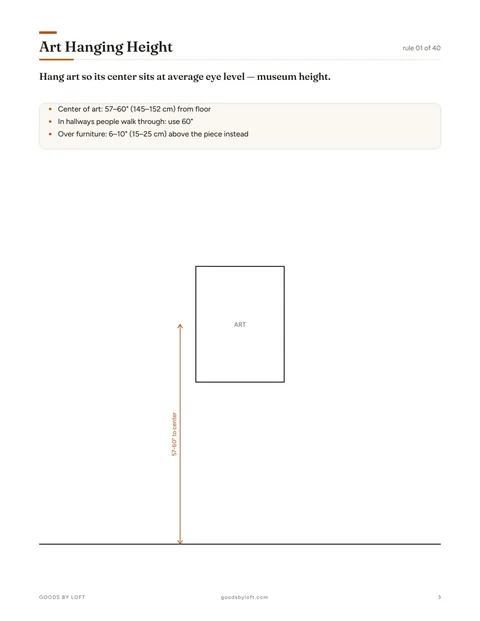
A 24-by-36-inch mirror in a simple metal frame opens up a cramped entry instantly. The catch: hang it so the center sits just above eye level, around 57 to 60 inches from the floor. Too low and it reads cluttered; too high and it stops serving you. Mid century frames work best in thin brass, chrome, or walnut wood, nothing ornate. The mirror should be the only wall-mounted thing in that zone besides hooks. (A common mistake is layering in wall art, a shelf, and a mirror all fighting for attention.) The light bounces, the room stretches, and you've bought yourself breathing room with almost nothing.
2. Choose a Console Table No Deeper Than 12 Inches
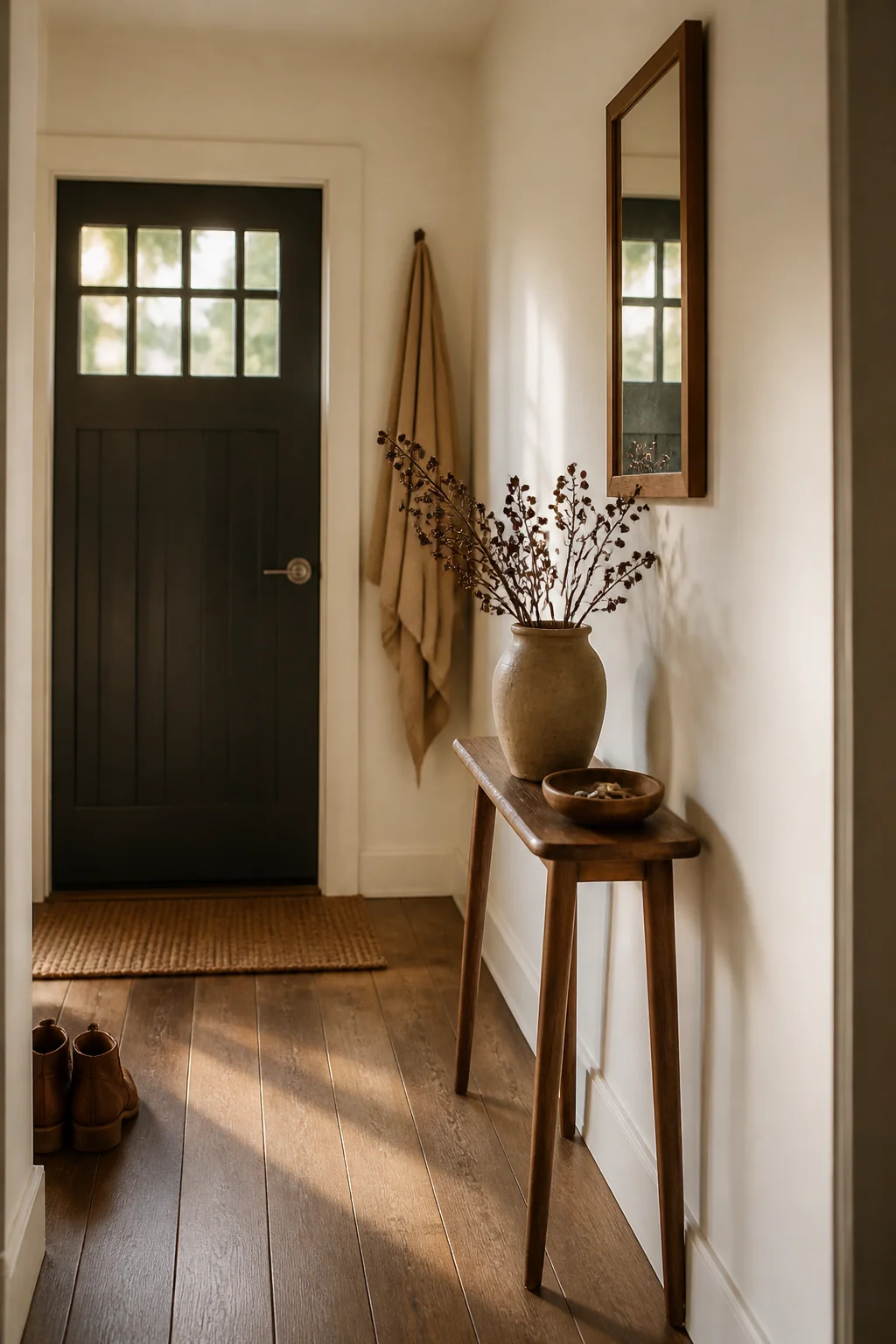
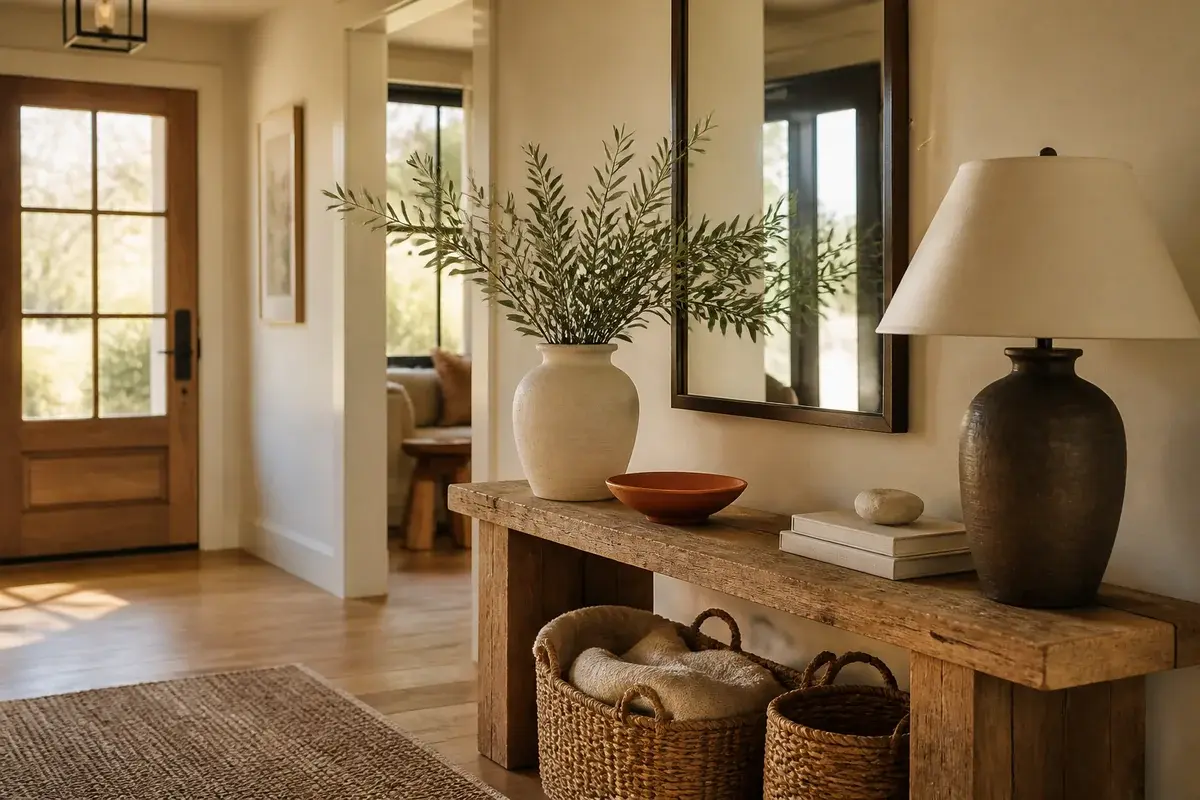
Console tables in mid century design usually sit 28 to 30 inches tall and run the full width of the wall, but in a small entry that's a traffic problem. Pick one that's 12 inches deep maximum, in walnut, teak, or a light oak. Angled or tapered legs are the signature move, and they matter because they show the floor, which keeps the entry from feeling blocked. A 48-inch-wide console in a 6-by-10-foot entryway works; a 60-inch-wide one suffocates it. Leave the surface nearly bare: maybe a small tray for keys, nothing else. Clutter on top makes even a shallow table feel like an obstacle.
3. Install Floating Shelves in Pairs, Not Rows
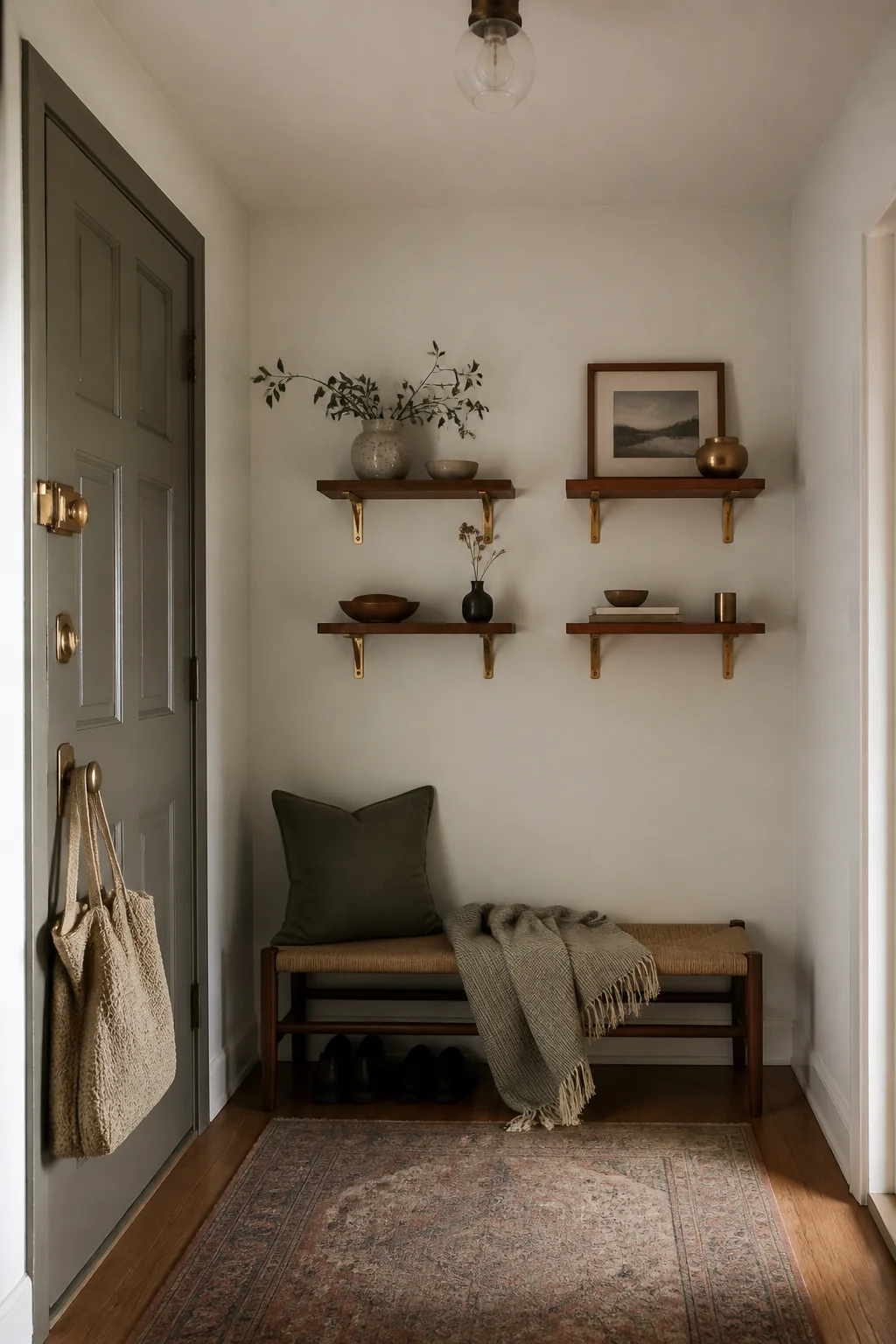
Two floating shelves, each about 24 inches long and 10 inches deep, hung at 40 and 55 inches high, create vertical storage without the visual weight of a whole wall of shelving. Use simple brackets (the kind that don't protrude more than 3 inches) in matte black or brushed brass. The shelves themselves can be wood with clean lines, no trim. Space them far enough apart that the wall shows between them. One item per shelf, maybe a folded textile, a single plant, a small ceramic piece. Empty space is the point. Too many objects turn shelves into dust traps that read cluttered.
4. Add a Mid Tone Runner Rug, About 2.5 by 6 Feet
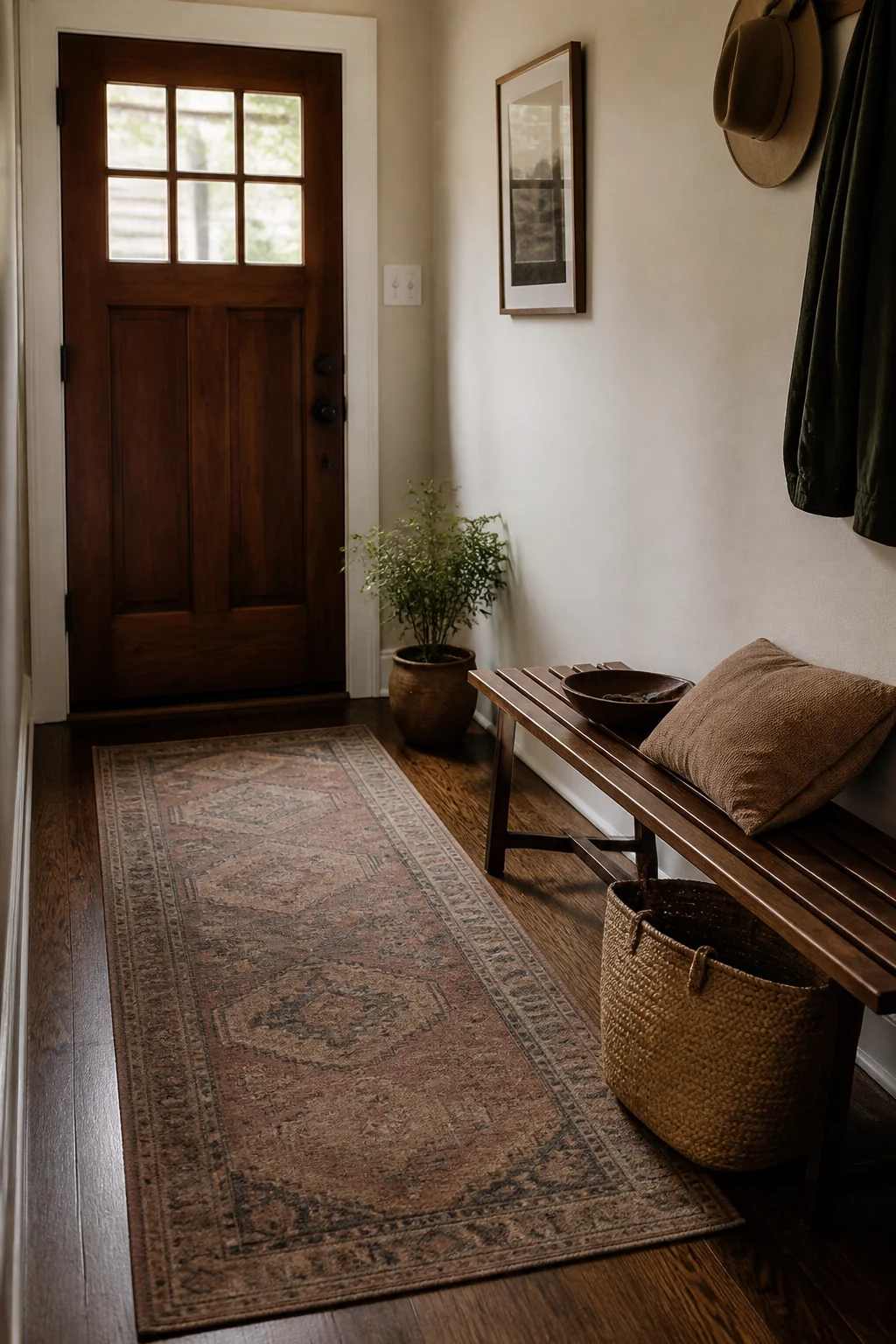
The rug is almost always too small in a small entryway, and that's what makes the whole entry read cramped. A runner in wool or a wool blend, 2.5 to 3 feet wide and at least 6 feet long, anchors the space and defines the entry as its own zone. Pick warm grays, soft terracottas, or muted blues, nothing so bright it fights the wall. The rug edge should sit a few inches from the door frame on both sides. Make sure it's thin enough not to trip when the door swings open. Quality runners from a specialty retailer run about $180 to $400; worth every dollar for the proportion it brings.
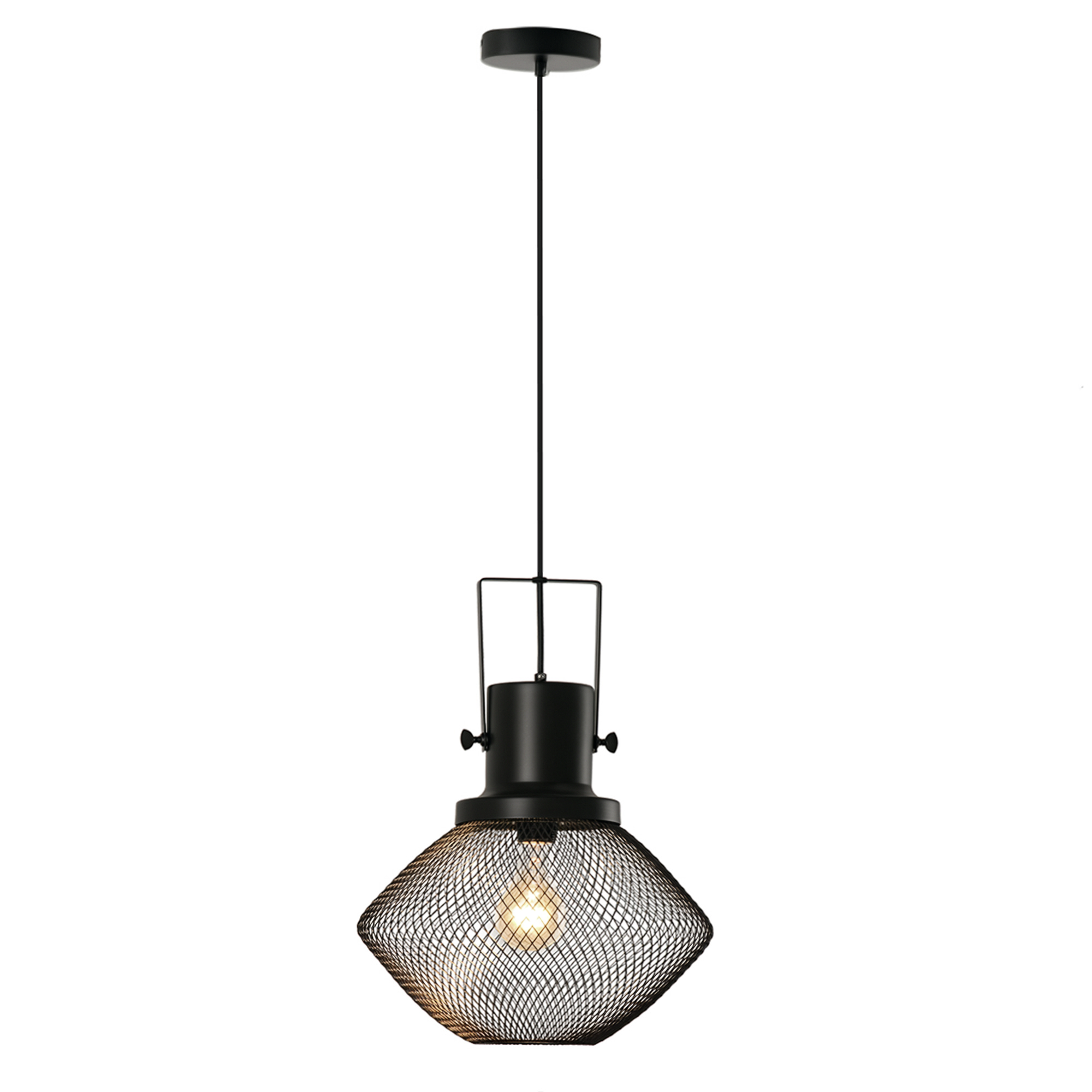
5. Mount a Single Pendant Light Off Center
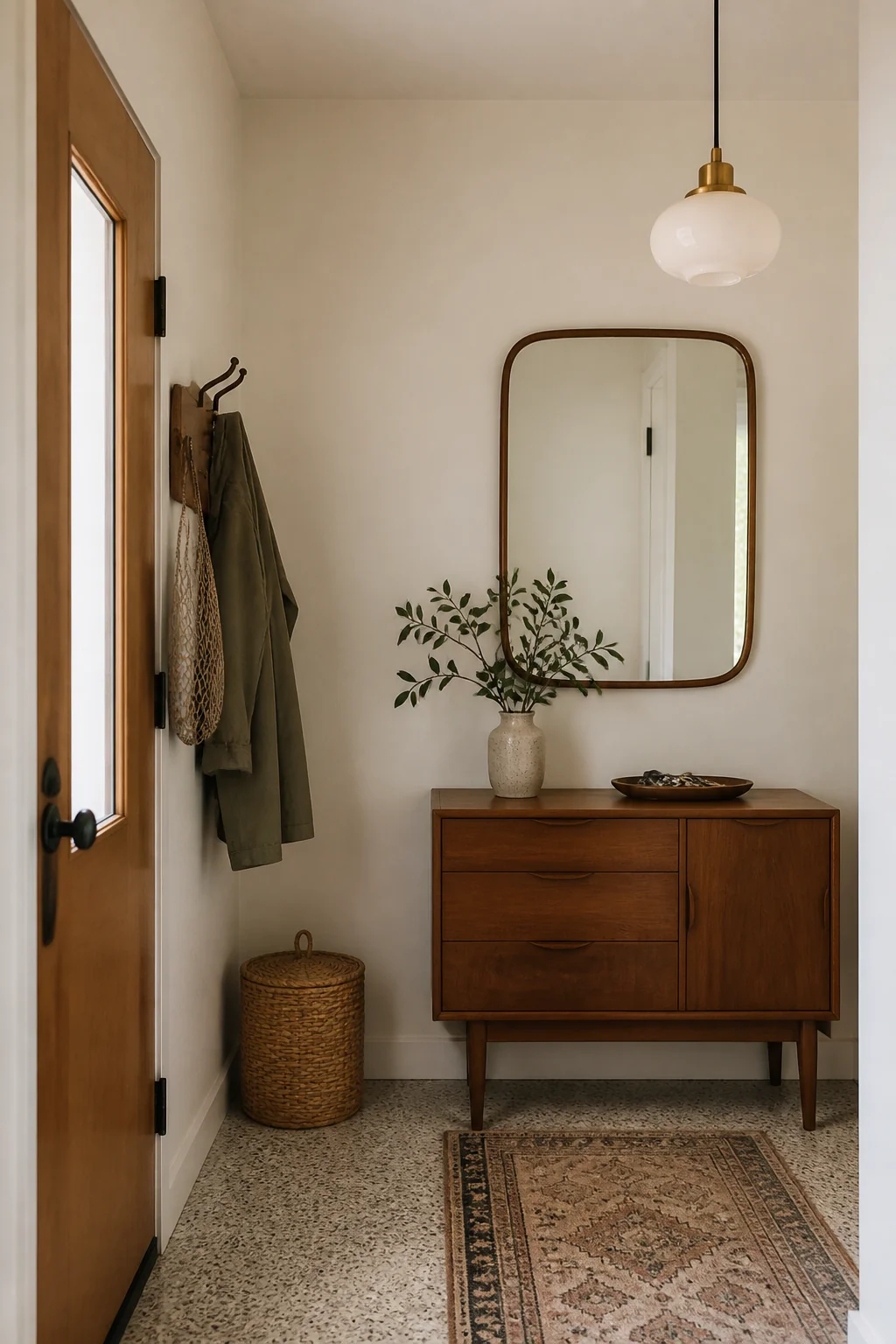
One pendant, hung about 24 inches from the nearest wall and 7 feet from the floor, casts light without making the entry feel club-like. Look for glass, ceramic, or a simple metal drum shade in a warm finish. Off-center placement is the mid century move that nobody tries but should: it pulls the eye past the center point and makes the space feel wider. An entry that's 5 feet wide can handle a 12-inch-diameter shade; 6 feet wide, go up to 14 inches. Too large and it looms; too small and it looks like an afterthought.
6. Use Peg Board or a Coat Hook Rail Instead of a Coat Closet
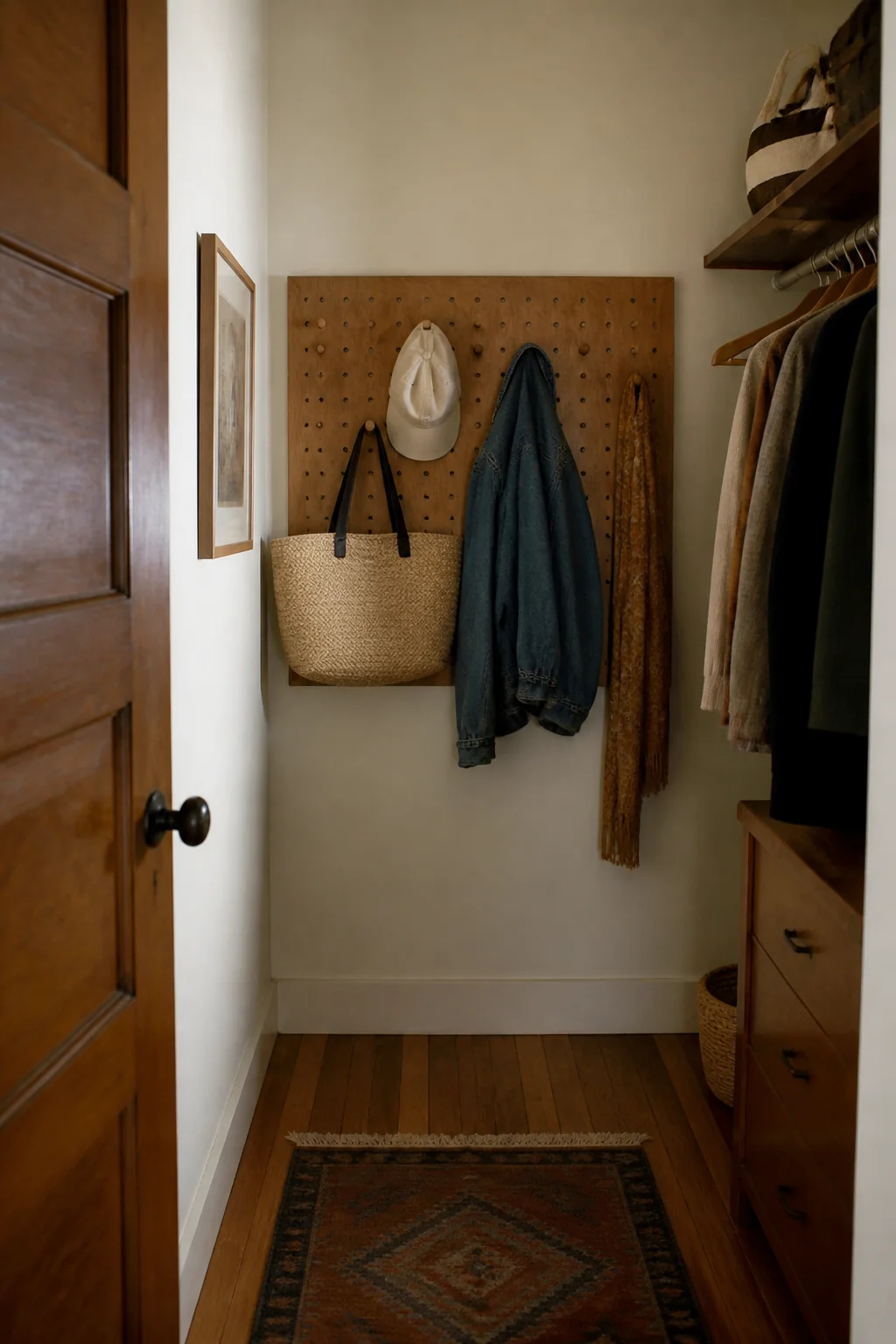
Peg board is not modern, but a simple wooden rail with turned wooden pegs or metal hook sets is pure mid century. Mount one rail at 65 inches high, high enough that coats don't drag the floor, low enough to reach easily. Space pegs 6 inches apart. Walnut or blonde wood shows the aesthetic best. A single rail, maybe 36 to 48 inches long, keeps the entry readable. Three coats hanging looks full; eight coats looks like you're storing your life at the door. If a guest closet isn't an option, vertical hanging is the visual solution.
7. Paint the Back Wall in a Warm Neutral, Not White
A white back wall in a small entry feels institutional. Soft warm grays (like greige), pale warm tans, or very soft ochre create enclosure without darkness. The wall needs enough color to anchor the space but not enough to make it feel smaller. Mid century design loved these tones because they're restful and let the furniture breathe. If your entry gets strong south-facing light, a barely-there warm gray works; if it's dim, lean into the ochre side. One wall painted this way, with everything else white or pale, gives the entry a sense of purpose.
8. Skip the Accent Wall, Use the Floor Instead
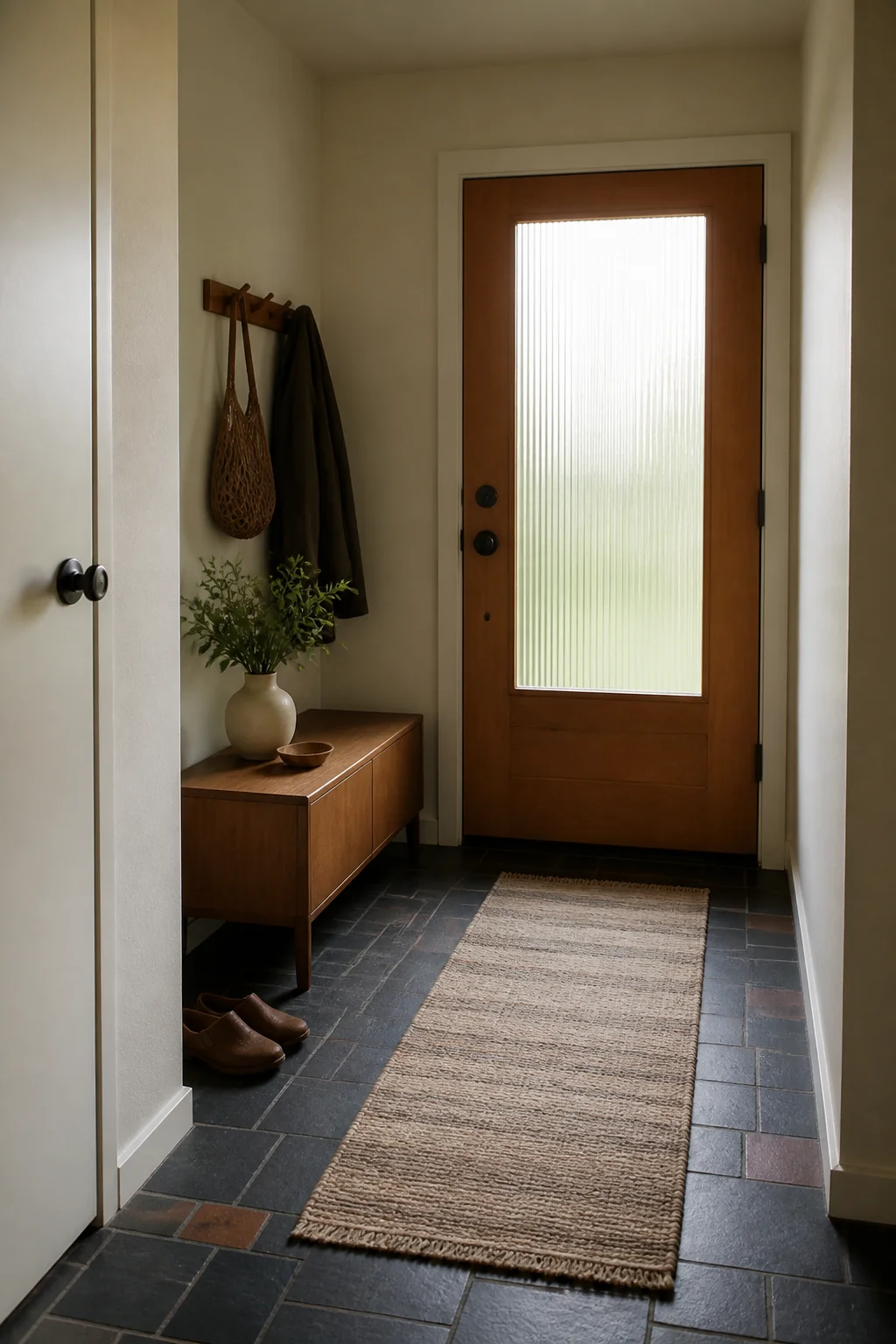
The mistake most small entries make is painting an accent wall, which chops the space in half visually. Instead, commit to a floor that has color or texture. A polished concrete floor stained in warm gray, a herringbone-pattern wood floor, or even a solid-color tile that matches your runner rug creates the whole mood from the bottom up. The eye travels down when it enters, registers the interesting floor, and then reads the walls as one calm plane. This is a bigger investment than paint, but it's what actually makes the entry feel intentional rather than cramped.
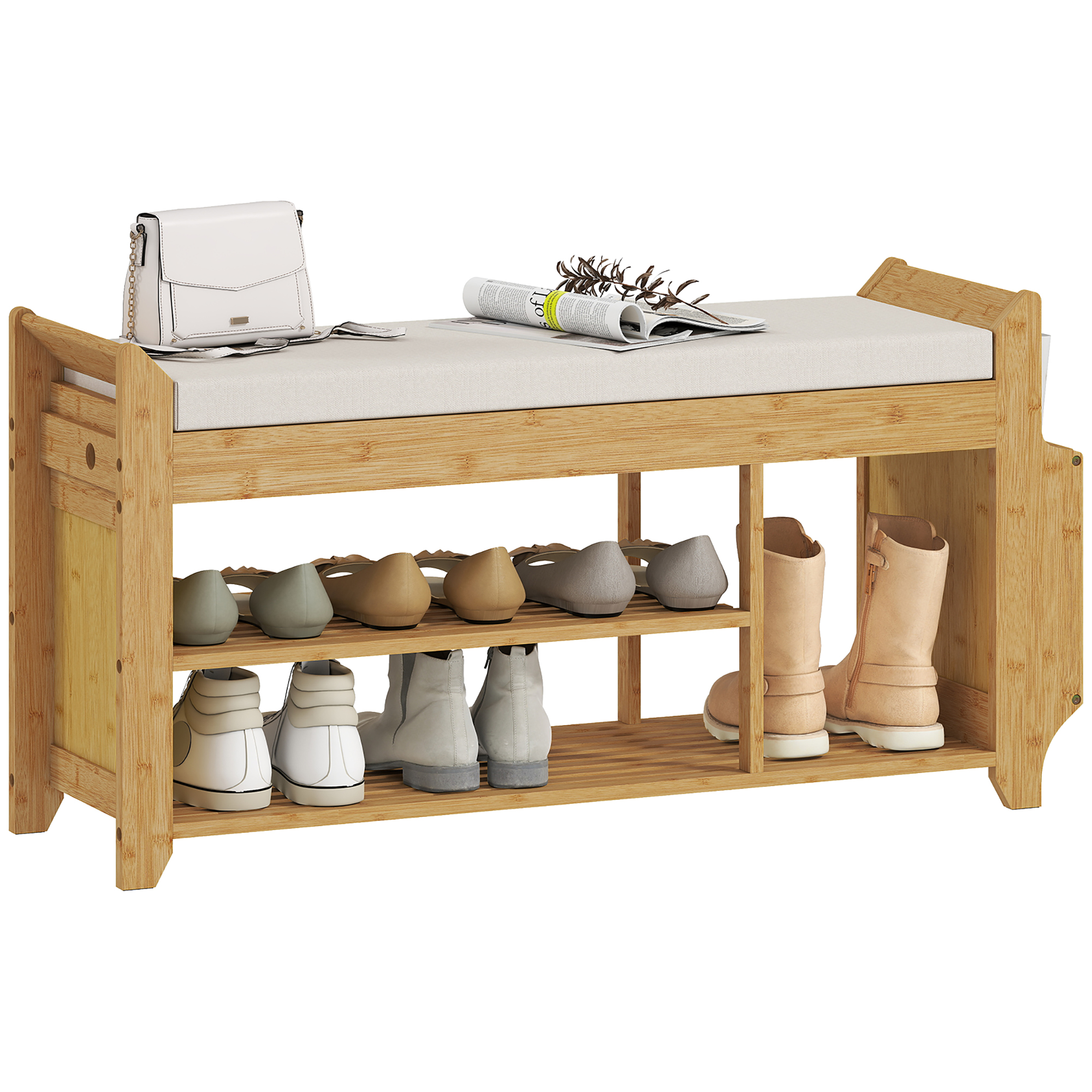
9. Add a Floating Bench with Storage, Not a Traditional Seat
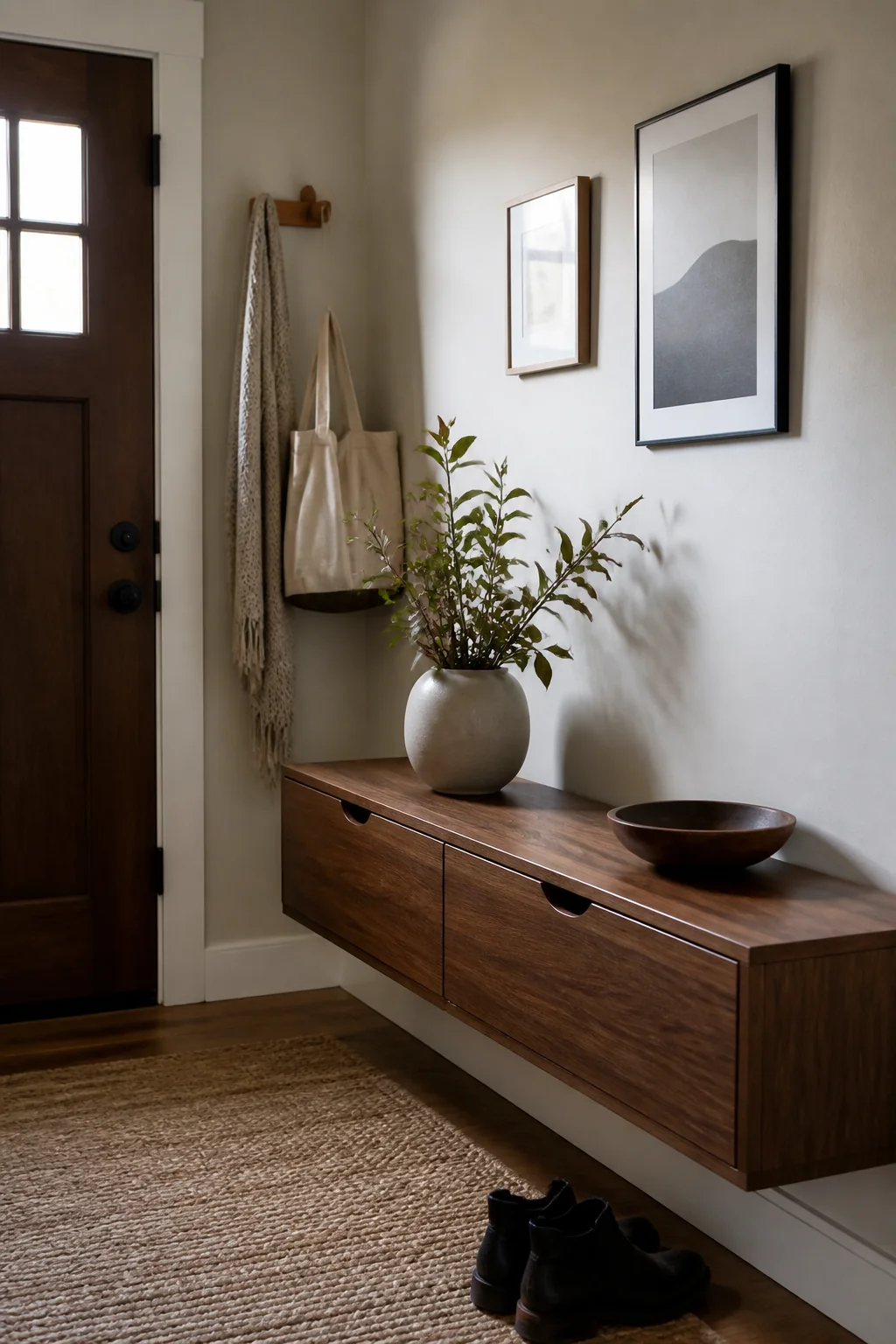
A low bench, 18 inches tall, about 36 inches wide, with a hinged seat that opens to hidden storage, sits against the wall opposite the main door without blocking anything. Look for frames in walnut with upholstered seats in leather or linen, no legs visible (the mid century look). Walnut veneer plywood boxes with metal brackets make the DIY version work too. A bench lets you sit to take off shoes and stores boots, gloves, or bags inside without creating a visual pile. The key is keeping the top bare; it's not a side table.
10. Hang Artwork in a Single Vertical Pair, Not a Scattered Group
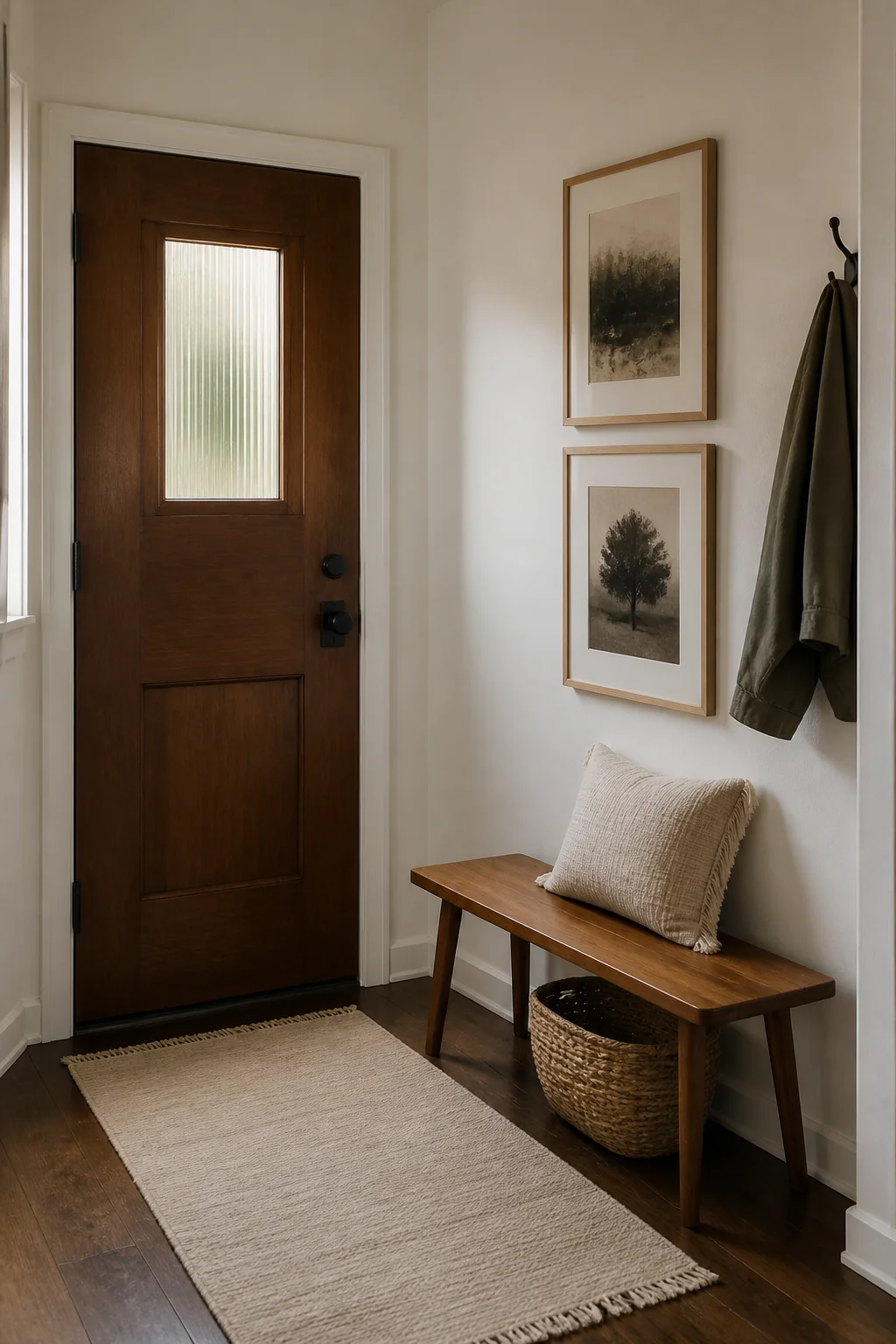
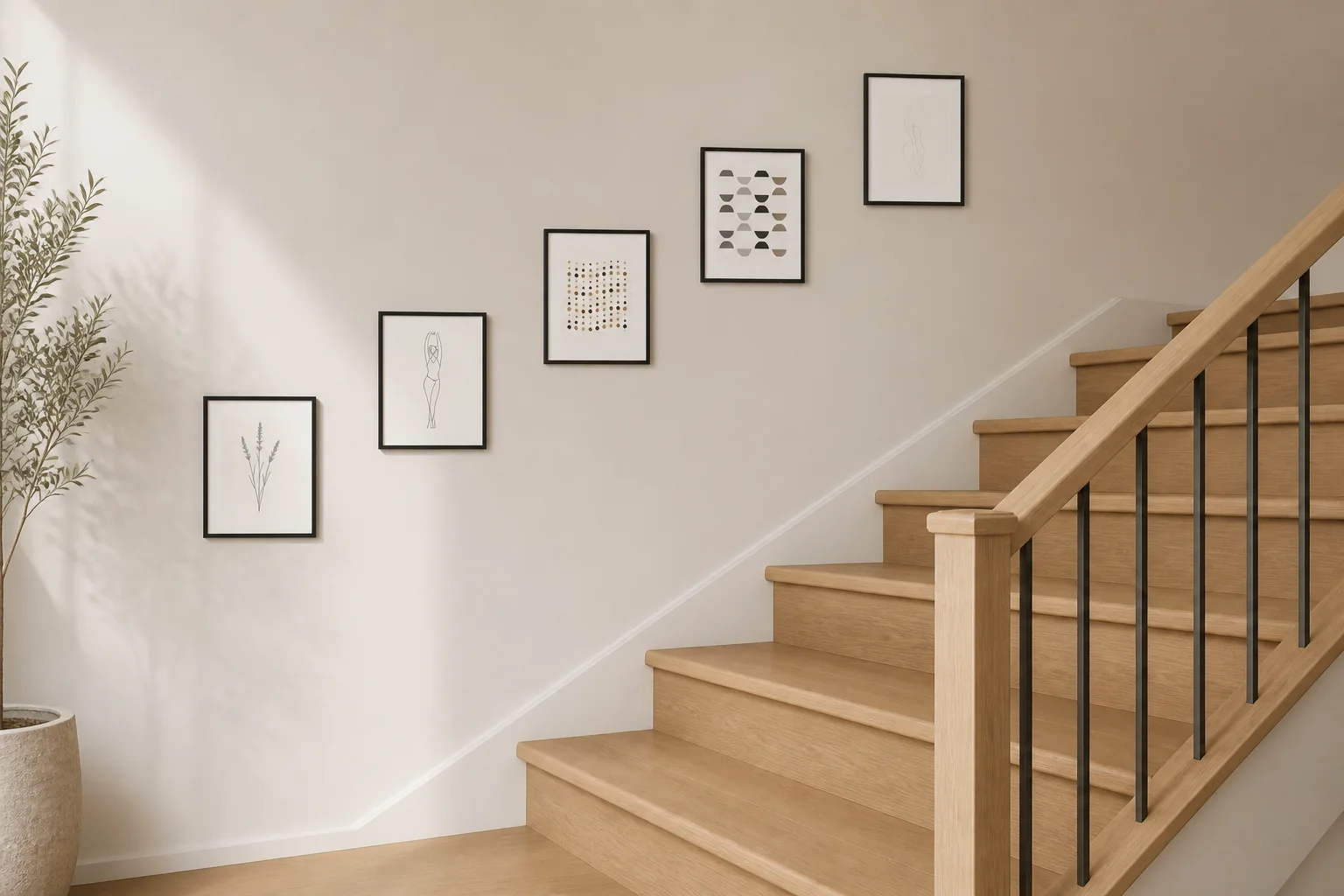
Two framed prints, 16 by 20 inches each, hung vertically 18 inches apart and centered on a side wall (not the main wall you see on entry), create a finished look without clutter. Black or natural wood frames in simple designs work; ornate gold frames fight the aesthetic. The bottom of the lower frame should sit at about 54 inches from the floor. Paired art feels deliberate in a small space; a salon wall of six different prints reads chaotic. Keep the subjects simple: geometric patterns, botanical prints, or abstract work in your color palette.
11. Choose a Door Mat That Aligns with the Rug Width
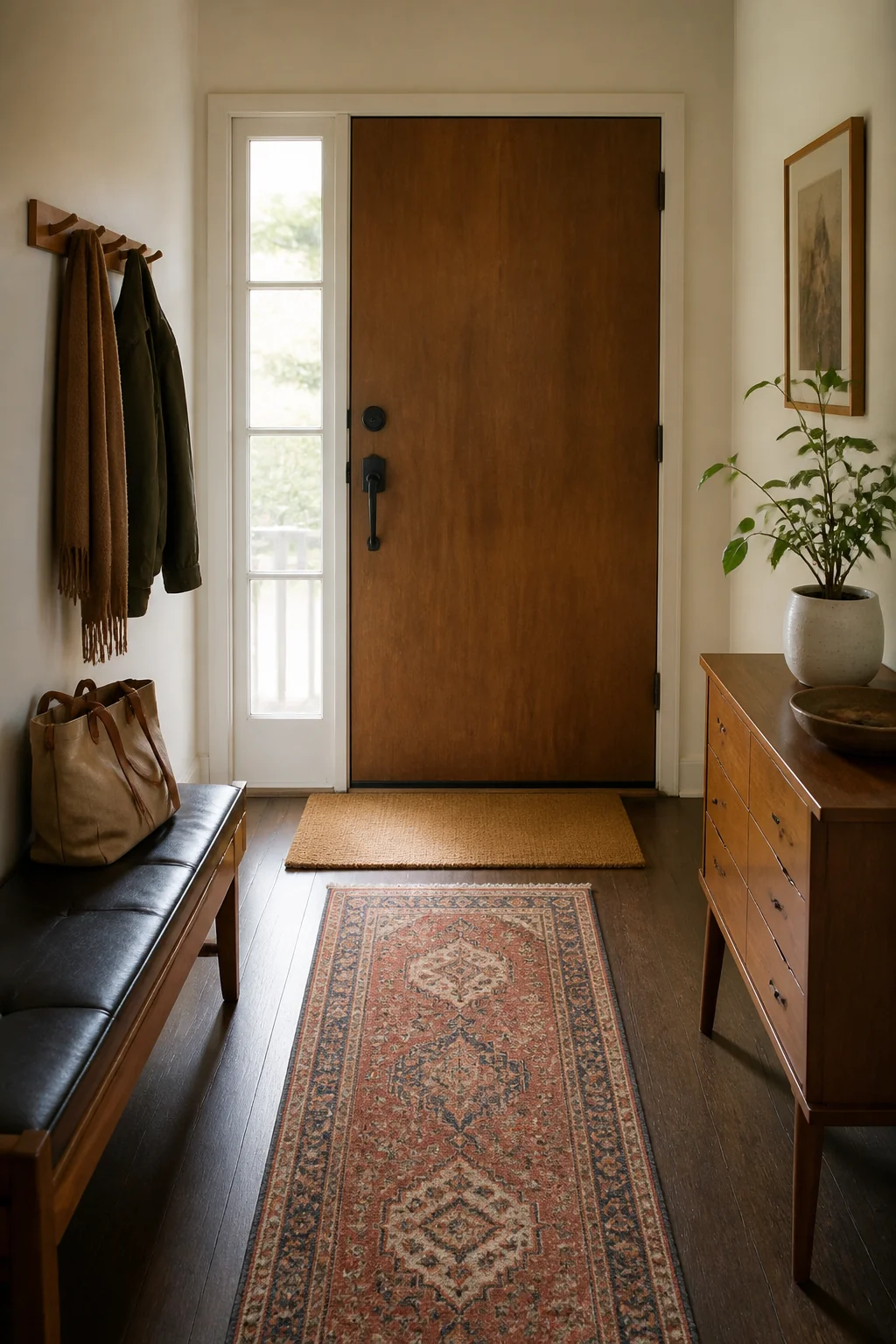
Your entry rug sits inside; the door mat sits outside. Pick an outdoor mat that's the same width as your runner (2.5 to 3 feet) so the whole entry reads as one coordinated zone when the door is open. Natural rubber, sisal, or wool blend mats in neutral tones last longer than thin fabric ones and don't skid. At 36 inches wide and 24 inches deep, a quality mat costs about $60 to $120. A mat that's too narrow or too long throws off the whole entry's proportions and suggests the space wasn't planned.
12. Install Recessed Lighting or Flush Mounts, Not Overhead Fixtures
A single recessed light or a small flush-mount fixture (4 to 5 inches in diameter) in brushed nickel or matte black sits flush with the ceiling and doesn't break the line of the room. Mid century entries are tight, and hanging light fixtures consume visual space. Recessed lights placed 3 feet from the back wall light the mirror and the console table without casting shadows. Pair one overhead light with the pendant you installed elsewhere for layered, balanced light. Dimmer switches let you dial the mood.
13. Add a Single Plant in a Large Ceramic Planter
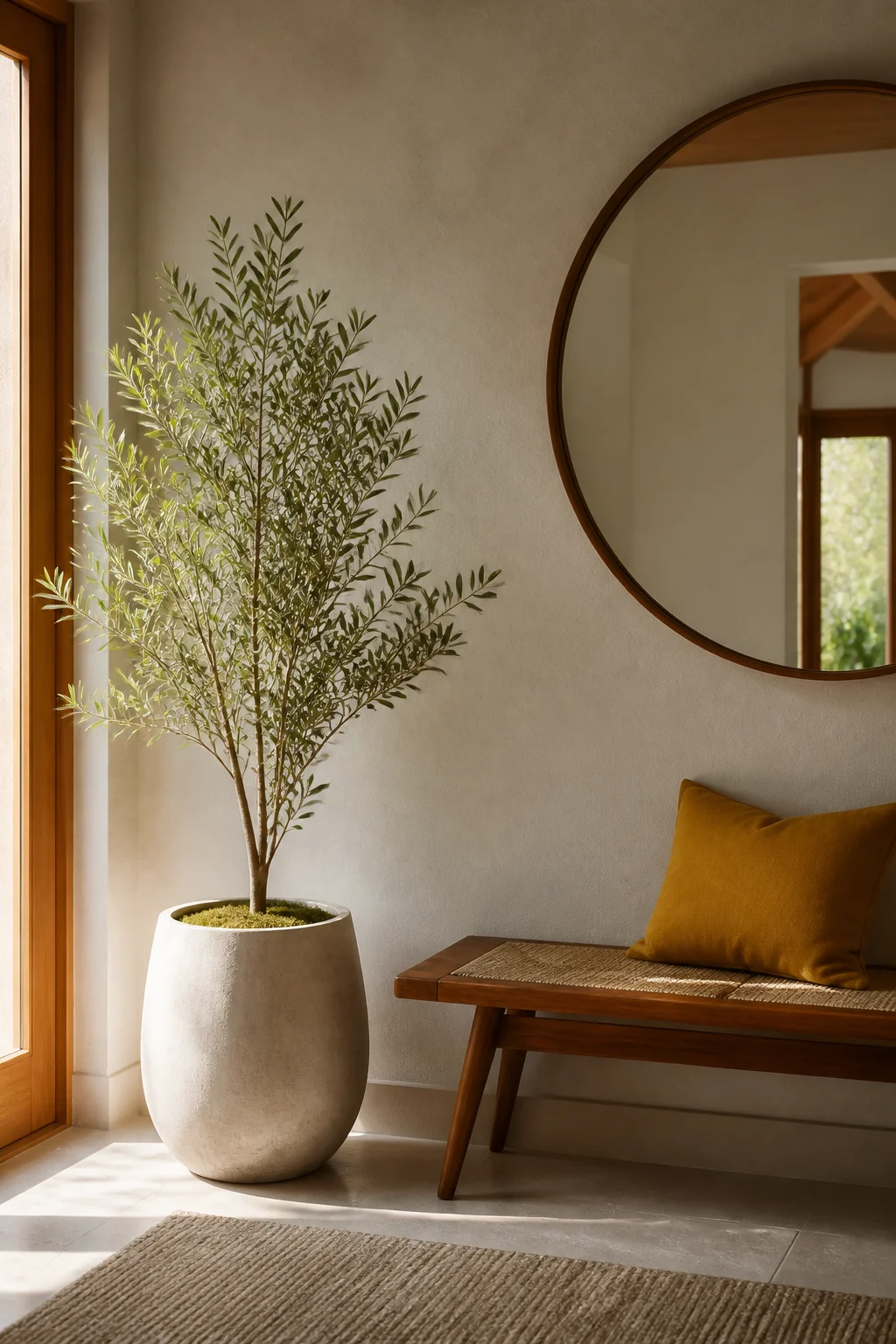
One tall plant, a Rubber Tree, Bird of Paradise, or even a tall Fiddle Leaf Fig if light allows, in a ceramic pot 12 to 14 inches in diameter breaks up the hard geometry of the entry and softens the mid century lines. The planter should be a solid color in cream, warm gray, or soft green, no pattern. Place it in a corner or beside the bench, never in the path to the door. A living plant reads fresher than dried florals; it brings the eye to a vertical point that makes the ceiling feel higher. Water it on a schedule so you're not maintaining a brown stick.
Pin this for later
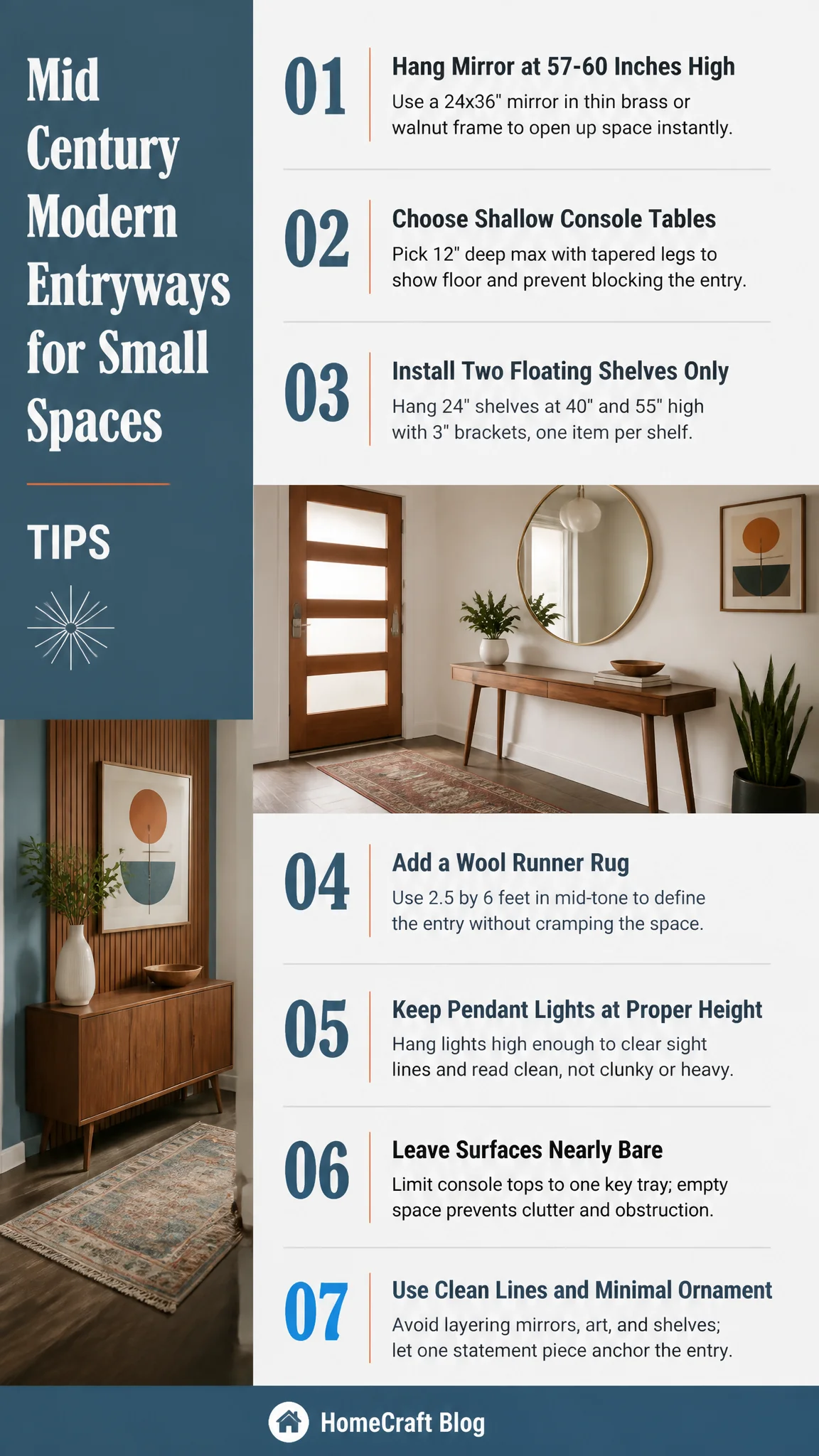
Once these pieces land, your small entry becomes the opposite of cramped: it's curated. The mirror opens the sight line. The rug anchors the floor. The console sits light and purposeful. Hooks and shelves handle what needs handling, and nothing sits idle as decoration. The bones of mid century design, proportion, function, clean lines, are exactly what a tight entry needs. You've created a room that works and looks it.
Ideas fade by Friday. A plan finishes the room.
You just read a full guide to your entryway. Saving ideas will not change it; a plan will. The Home Decor Collection is every planning tool we make, for every room in the house, in one download, so the after photos below stop being other people's rooms.
- Six room Style Kits, each with layout, palette and shopping list$82
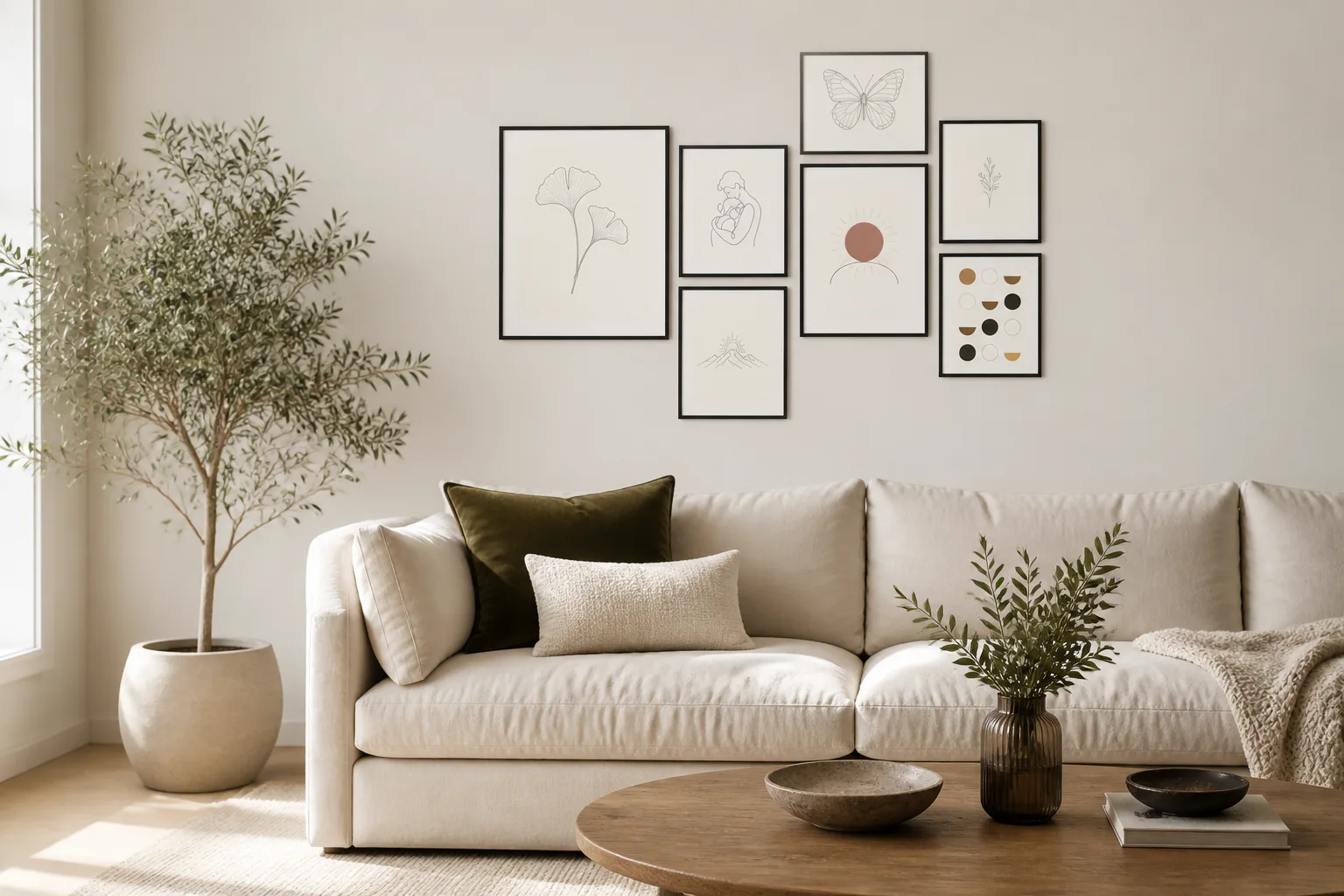
- The Gallery Wall Studio: 200 prints + 15 measured layouts$24
- The Room Makeover System: 40 solved room layouts + workbook$29
- The Color Palette Handbook: 60 palettes shown in real rooms$19
- The Whole-Home Reset: 40 printable organizing checklists$9
- The Decorator's Cheat Sheets: the 40 measurements that matter$9
- All eleven products, bought separately
$172$69
A single hour with an interior designer costs more than the entire Collection, and this one keeps answering for every room you will ever decorate. Free updates included as the products grow. And if it is not for you, the 14 day money back promise means you simply get a refund.