15 Chic Mid Century Modern Bathroom Ideas That Hold Up
15 mid-century modern bathroom ideas for small spaces and tight budgets, with the fixtures, tile and finishes that hold up.
This post contains affiliate links. As an Amazon Associate I earn from qualifying purchases. If you buy through our links, we may earn a commission at no extra cost to you.
Mid century modern bathrooms are hard to get right. The style pulls from the 1950s and '60s, so it's easy to end up with fixtures and colors that look dated instead of timeless. Common mistakes are treating the bathroom like a showroom and forgetting it needs to work, or picking retro pieces that sound good in theory but wear out fast in a damp room. In practice, mid century modern works best when you lean on clean lines, minimal hardware, and a tight color palette, then let real materials do the heavy lifting.
You don't need a full reno to pull this off. A few smart swaps, like a new vanity, the right lighting and the correct tile, can make the whole room click. Here are 15 ideas that will actually hold up.
1. Install a floating vanity with tapered legs
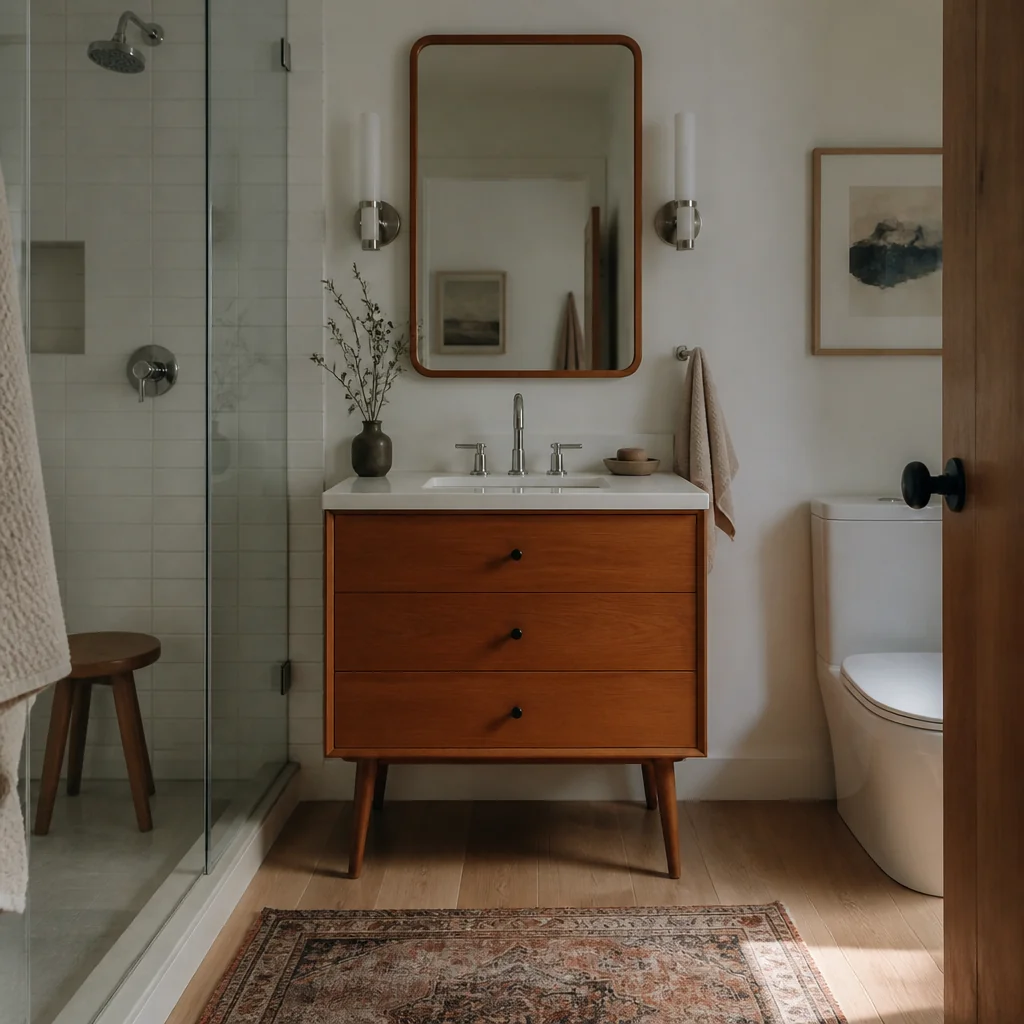
A floating vanity is the signature mid century move, and the legs are what sell it: four tapered posts angled slightly outward, usually in walnut or teak-stained wood, under a clean rectangular box 36 to 48 inches wide. Keep the legs 12 to 15 inches tall so a strip of clear floor shows underneath. That gap does the visual work; a cabinet sitting flat on the tile reads like any other cabinet. Expect $450 to $1,200 for a solid unit with a plain ceramic or concrete top, and nothing fussy on the sink itself.
Two things to check before you order. Wall-hung models need blocking behind the drywall, a 2x6 screwed between the studs, so a legged version that also bolts to the wall is far easier to install in a bathroom you aren't already opening up. And measure your drain height. Existing waste lines often sit 18 to 20 inches off the floor, and a shallow floating cabinet can put the P-trap exactly where the top drawer wants to be.
2. Choose square or geometric wall tiles in one neutral color
Square tile in a single neutral is what most bathrooms of the era used: 4x4 or 6x6 in white, cream, soft gray, or pale green, run in a straight grid or a half-offset. Ceramic costs about $3 to $8 a square foot, porcelain $6 to $12, and either behaves fine on a wall. Keep the grout joints narrow, 1/16 to 1/8 inch, so the field reads as one surface rather than a waffle.
Plan the layout before a single tile goes up. Find the center of the wall, dry-lay a full row along the floor, then shift your starting point so you don't finish with a sliver thinner than half a tile in the corner. That one detail is what makes a DIY tile job look like a DIY tile job. Geometric shapes were everywhere in the period, so a hexagon or an elongated square is fair game, but mixing two or three tile colors is where this goes wrong. One color, one shape, and let the grid be the pattern.
3. Hang a large mirror with a simple wood or metal frame
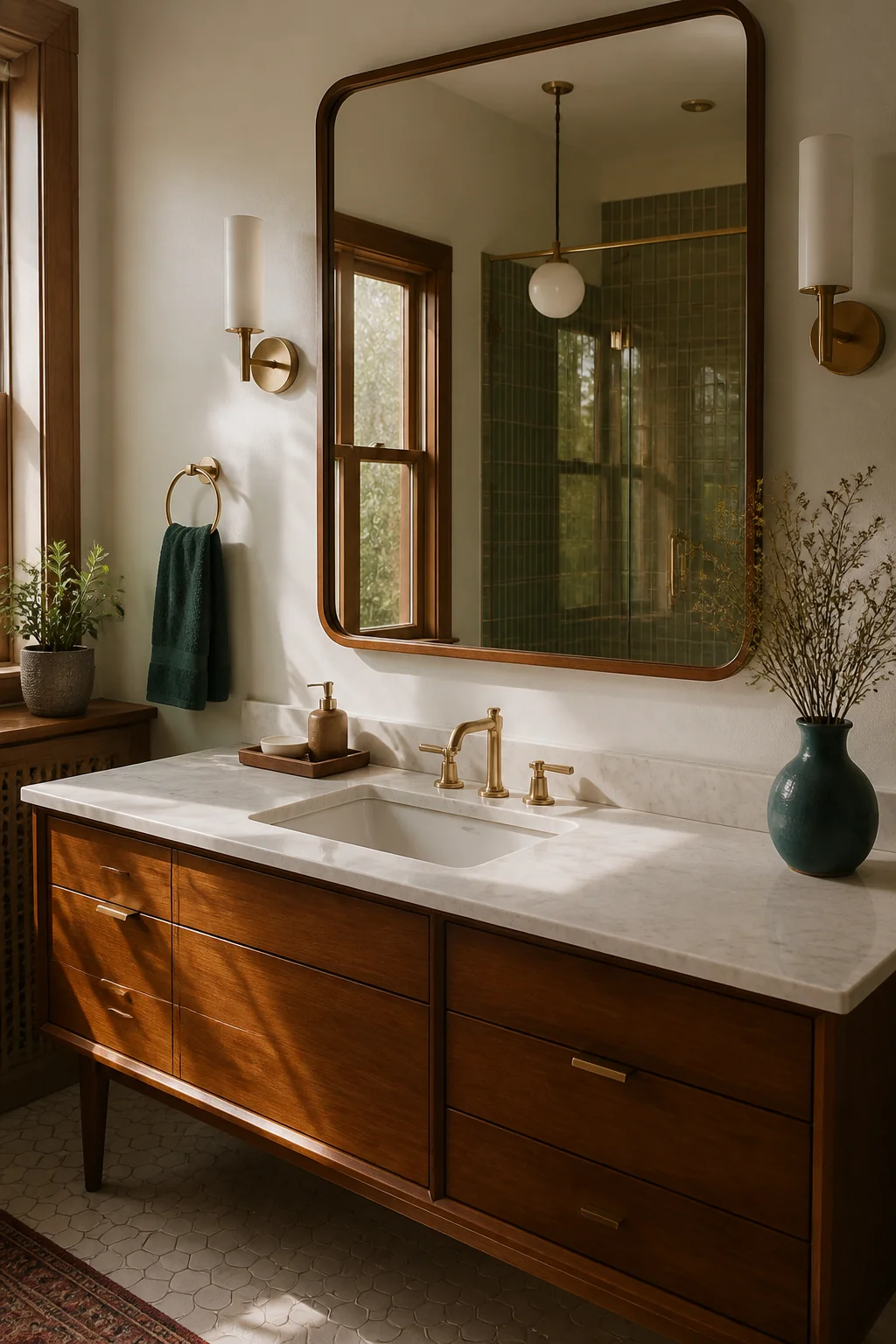
Hang a mirror 24 to 36 inches wide in a frame you'd barely notice: 1 to 2 inches of natural wood or brushed brass, rectangular, no bevel, no ornament. Size it to the vanity, ideally 2 to 4 inches narrower than the counter on each side, and set the center of the glass 60 to 65 inches off the floor so it lands at eye level for most people. A framed piece that size runs $90 to $250. Use a French cleat rather than two keyhole slots; a heavy mirror hung on wire never stays level.
This is where a lot of bathrooms go sideways. An ornate gold mirror in a room that's otherwise all straight lines fights everything around it, and the space starts to feel like two styles arguing. Watch the frame material too. Veneer and MDF frames swell and lift at the corners within a couple of years in a room with a daily shower and a weak exhaust fan. Solid wood or metal survives the steam.
4. Add a single-stem floor lamp beside the vanity
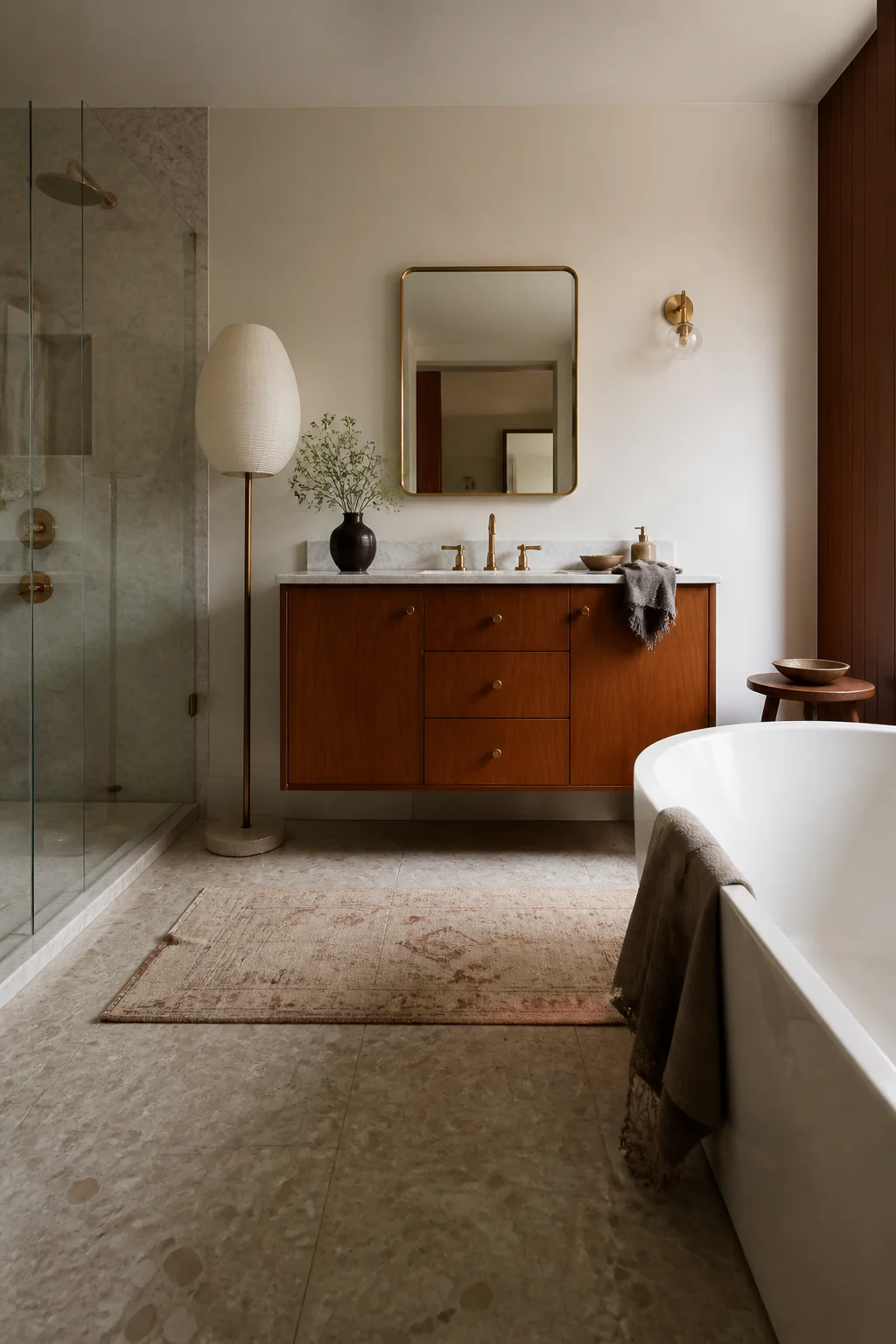
Floor lighting is the detail almost nobody puts in a bathroom, which is exactly why it works. A tall arc or tripod lamp in brushed brass, chrome, or black metal brings the era into the room without eating counter space. Keep the shade simple and cylindrical, roughly 8 to 10 inches tall, and set the base about 2 feet back from the vanity edge so the light reaches your face instead of bouncing off the mirror. A 2700K bulb around 800 lumens gives the warm, faintly golden light the period is remembered for.
There are two hard limits. The fixture has to be damp-rated and plugged into a GFCI outlet, and it needs to sit at least 3 feet clear of the tub or shower opening; a standard living-room lamp is not rated for this room. And in anything under about 40 square feet, a floor lamp plus a cord crossing the walkway reads as clutter. Budget $70 to $180 for a damp-rated one.
5. Install a pedestal sink if space allows
Pedestal sinks are period-correct and they open up the floor: a narrow column, a plain ceramic bowl, usually 24 to 30 inches wide and taking roughly half the footprint of a vanity. Most run $150 to $400, and add $30 to $60 for a chrome P-trap and matching supply lines, because with a pedestal your plumbing is on display and cheap plastic shows.
Installation asks more than it looks like it should. The pedestal steadies the bowl but doesn't carry its weight, so you need blocking in the wall behind the sink to take the load, which means opening drywall if none is there. The real trade-off is storage: no drawers, no under-counter bin, and about 4 inches of ledge for a soap dish. In a powder room or a guest bath that's a fair swap. In the only bathroom a family shares, plan a medicine cabinet and a shelf at the same time or the counter clutter simply relocates to the tub edge.
6. Use subway tile in a simple running-bond pattern
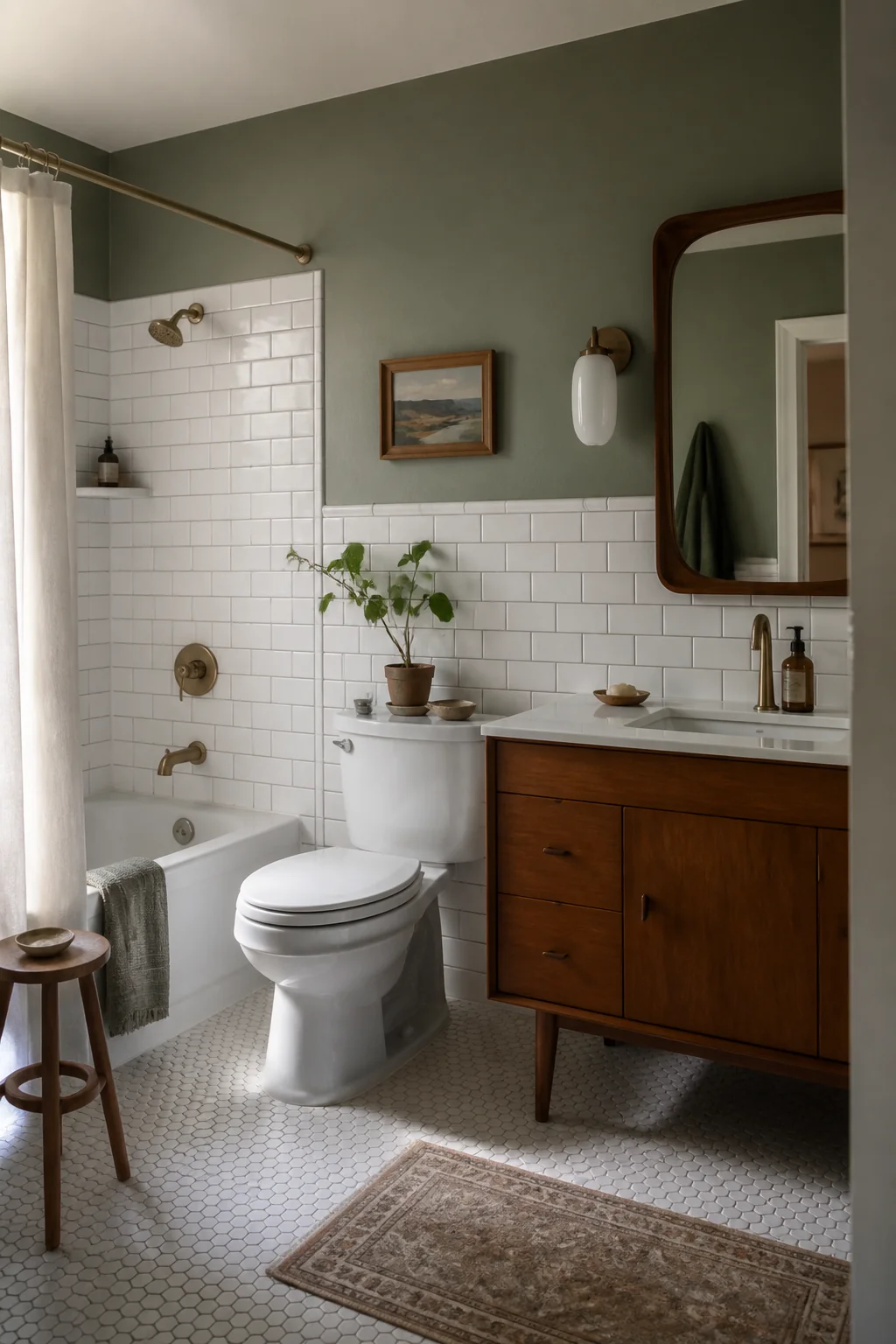
3x6 white or cream subway tile, laid horizontally in a standard running bond, is about as period-correct as tile gets, and it's cheap: $2 to $6 a square foot for ceramic. Run it to 48 inches, or 36 to 42 if your window sill sits low, then finish the top edge with bullnose tile or a slim metal trim so a raw glazed edge never shows. Paint the wall above in a soft neutral.
Offset each row by a third of a tile rather than a half. Longer tiles usually bow a hair in the middle, and a half-offset puts that high point against a neighbor's corner, which is where you get lippage you can feel with a fingertip. Keep the grout joint at 1/16 inch. What all this buys you is a low horizontal band around the room that grounds everything above it and stops the space from feeling fragile or over-decorated.
7. Paint walls a soft, muted color like sage or soft gray
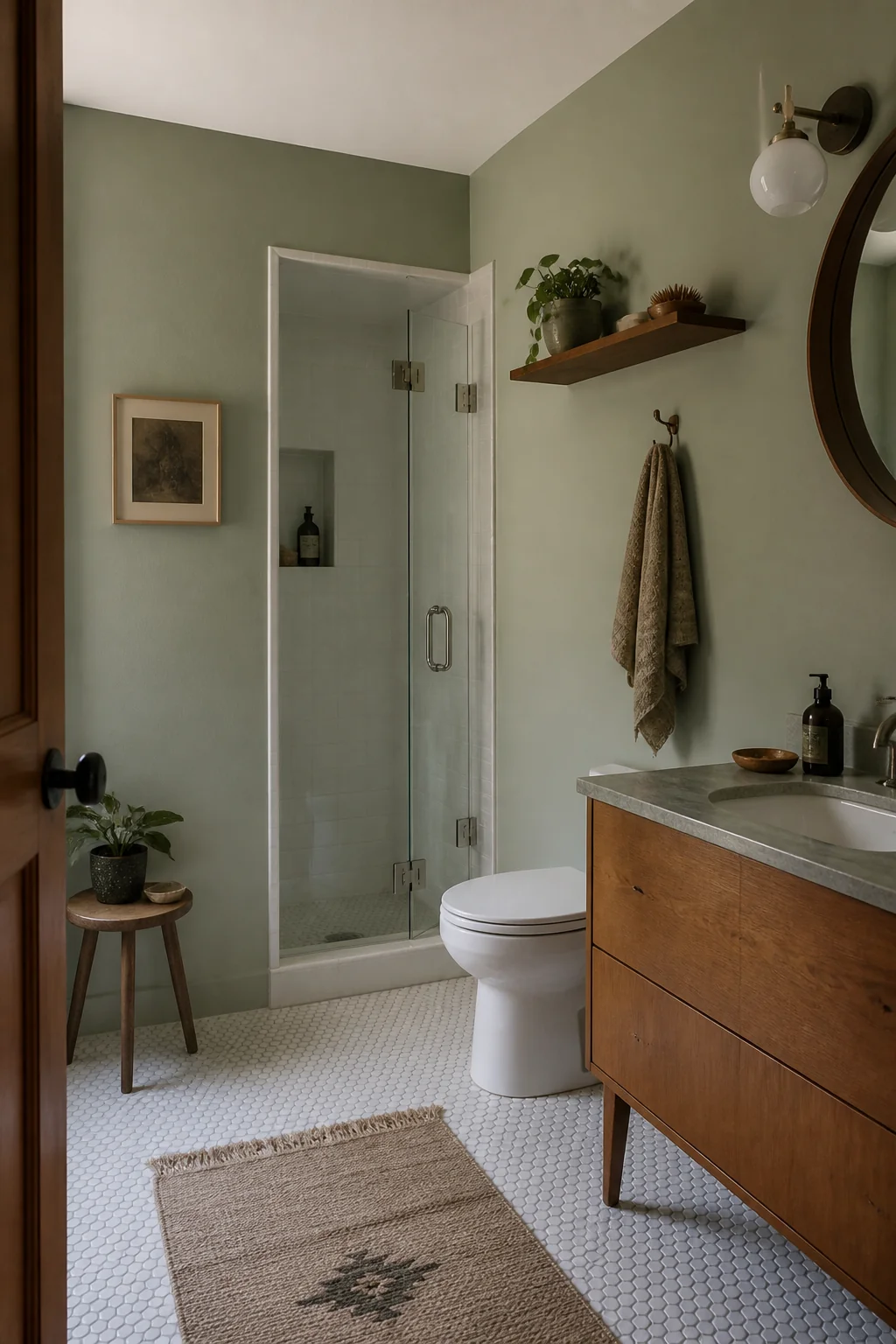
Warm white, soft sage, pale gray, and creamy beige all belong here. Pure white is the one to avoid, since it goes flat and clinical under bathroom lighting. What you want is an almost-neutral with a hint of warmth carried in the undertone. Benjamin Moore Swiss Coffee and Sherwin-Williams Accessible Beige are the usual reference points. A sample pot is about $8 and a gallon runs $45 to $75, which covers a typical bathroom with a second coat to spare.
Paint a 12 by 12 inch patch on two different walls before you commit, and look at it in daylight and again under the vanity light at night, because a green undertone can read gray after dark. On finish: a true flat matches the era, but a bathroom gets wiped down constantly, so a matte or eggshell bath paint with mildewcide in it is the version that survives. Glossy walls bounce light in a way that undercuts the whole look.
8. Choose fixtures in brushed brass or chrome
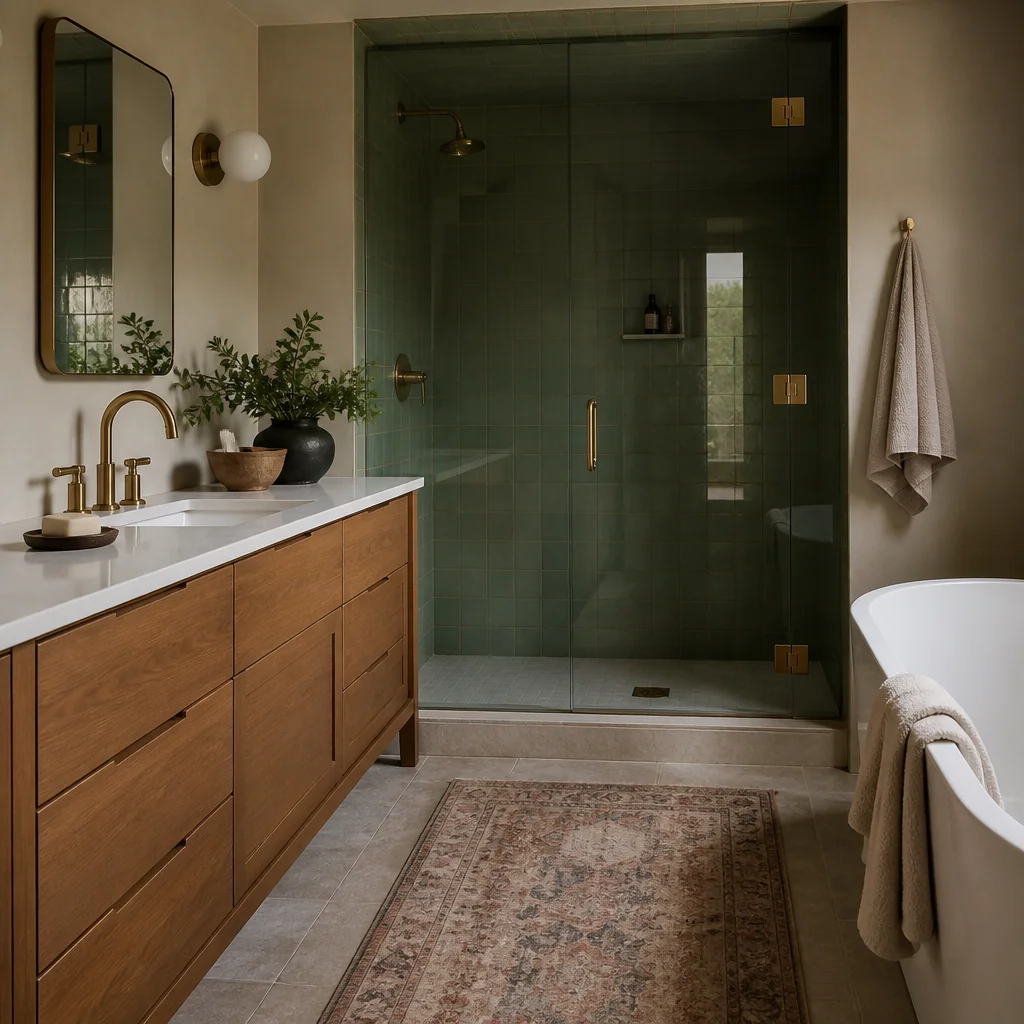
Pick one metal and stay with it: faucet, towel bar, ring, hooks, cabinet pulls, even the shower arm. Brushed brass and chrome are both period-correct, and brushed anything hides the water spots and fingerprints that polished finishes advertise all day. A brushed brass single-handle faucet runs $80 to $200, towel bars $25 to $60 each.
Count the holes in your sink before you order. A single-hole faucet won't cover a 3-hole deck without an escutcheon plate, a widespread set needs 8 inches between the outer holes, and a centerset needs 4. One more thing worth knowing: unlacquered brass is a living finish that darkens unevenly wherever hands touch it, which some people love and some people polish back every month. PVD brass keeps its color and costs a little more upfront. Matching the metal throughout is what makes a room look decided rather than assembled from whatever was on sale that weekend.
9. Install a narrow medicine cabinet with a mirror door
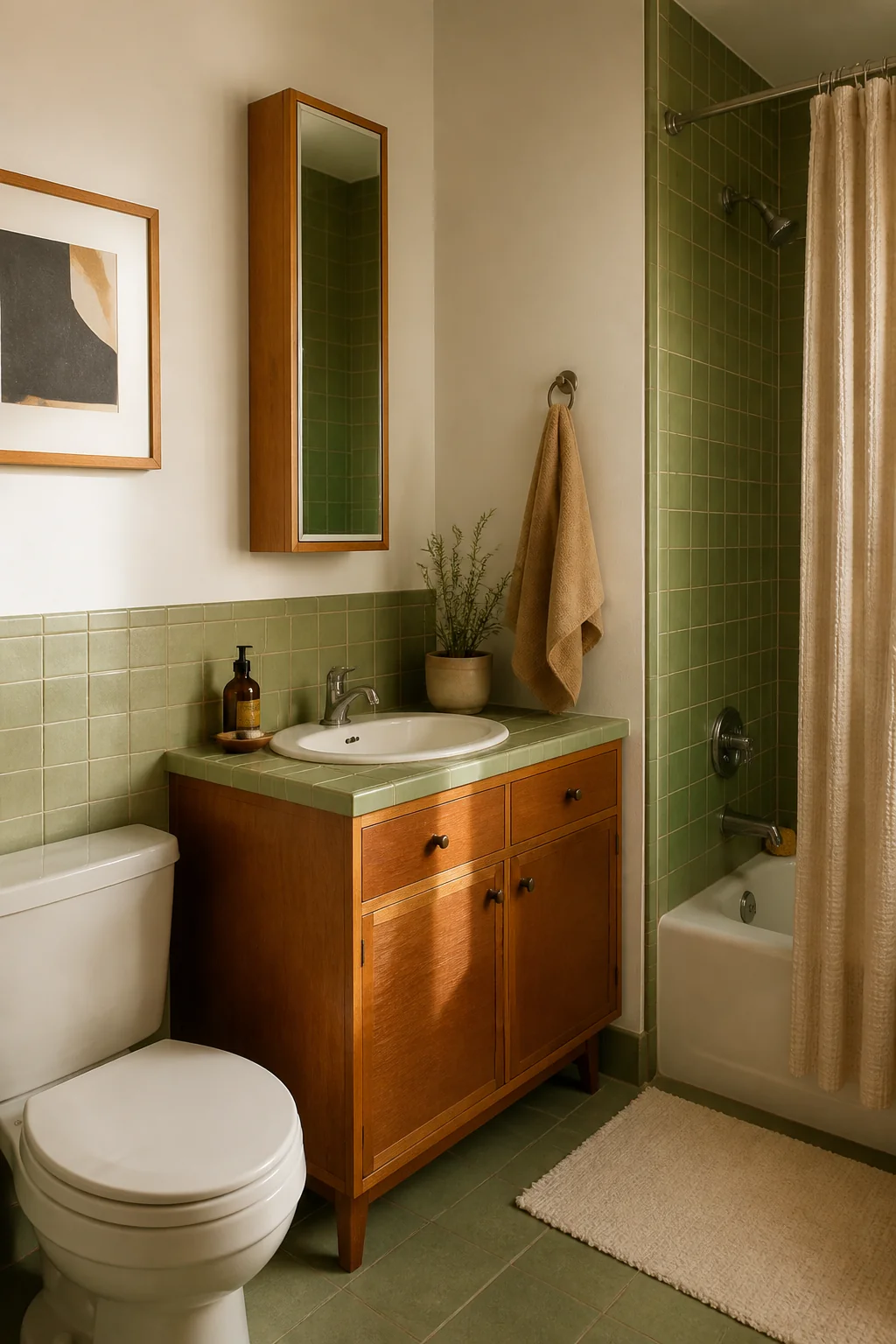
A narrow medicine cabinet with a clean rectangular mirrored door gives you storage and a second reflective surface without a single shelf showing from the outside. A 20x26 inch unit in natural wood or chrome runs $60 to $150.
Recessed looks better, sitting flush with the wall, but it only works where the framing allows. Standard 2x4 studs give you about 3.5 inches of depth and 14.5 inches of clear width between them, and you can't cut into a wall carrying supply lines or the vent stack, which is very often the wall directly behind the sink. Surface-mount is the honest answer there, and a slim 4 to 5 inch deep box barely reads as bulky. Center it over the sink rather than over the vanity if those two aren't lined up, and leave 6 to 8 inches between the countertop and the bottom edge so a soap dispenser fits underneath without hitting the door.
10. Add a low shelf or simple open shelving above the toilet
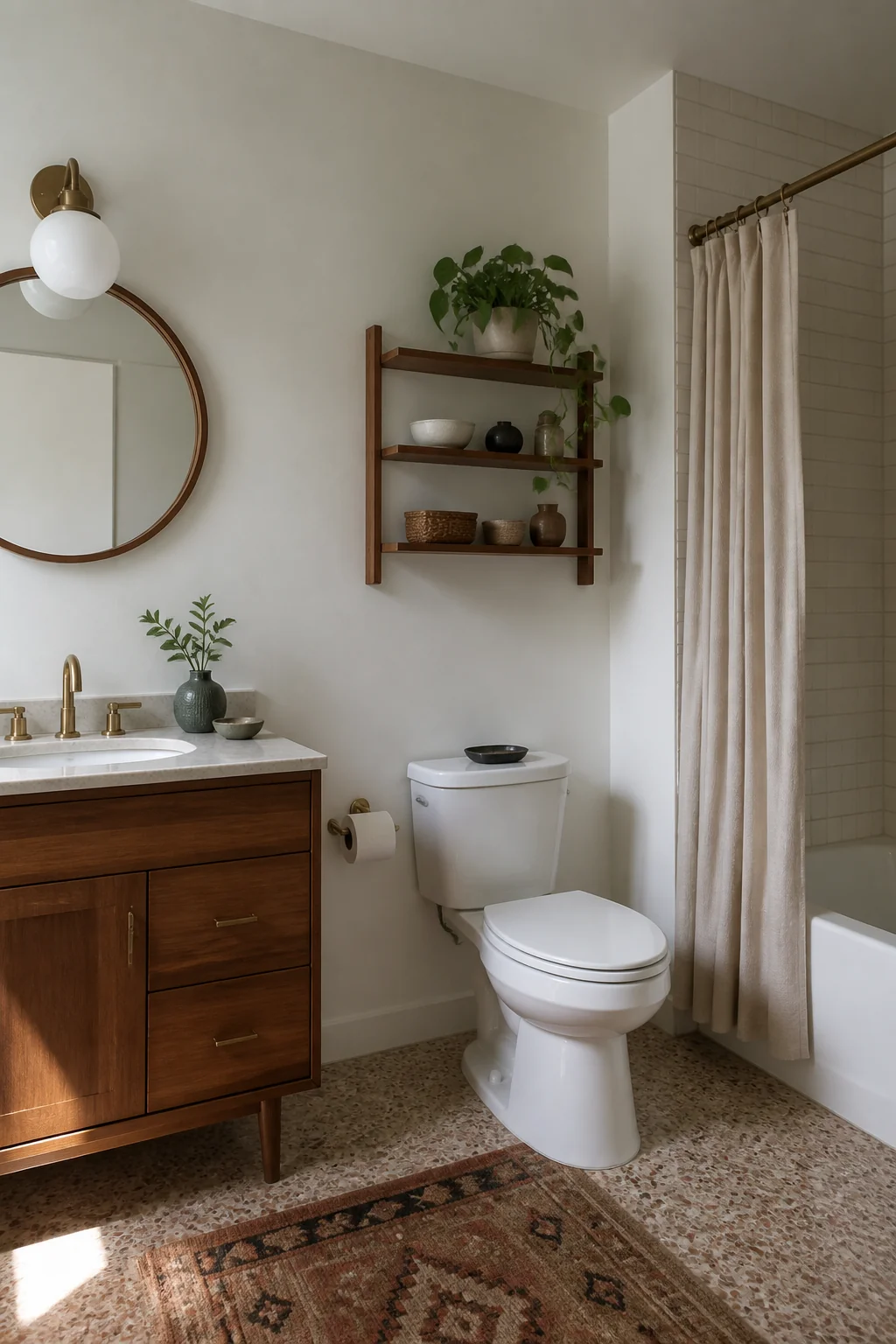
One wooden shelf above the toilet, walnut or light oak, 12 to 14 inches deep, carries everything the room needs on display and nothing else: a folded hand towel, a small plant, a ceramic jar for cotton balls. Open shelving keeps you honest, which suits a style built on clean lines and no excess. Figure $30 to $80 for a solid wood shelf with brackets in the same metal as your fixtures.
Mount the lowest shelf about 12 inches above the tank lid so you can still lift the lid to reach the flapper valve, which is the repair you will eventually be doing. Hit a stud if you can. If you can't, use toggle bolts rated for at least 50 pounds, since a 30 inch shelf plus a full ceramic vessel adds up faster than people expect. And keep anything small and tippable off the front edge. A bottle that goes into an open toilet is a genuinely bad afternoon.
11. Layer in black or dark gray grout for subtle contrast
Dark grout against light tile gives you a grid instead of a blank wall, and it does it without introducing another color to the room. Charcoal or near-black is the range worth staying inside; go fully black and the lines start to look drawn on with a marker.
In a bathroom, use epoxy grout rather than cement. It costs more, roughly $45 to $65 a unit against $15 for a bag of cement grout, and it's stickier to work with, with about a 45 minute window before it starts to set. In exchange it doesn't absorb water, never needs resealing, and won't blotch or leach white salts across the joints the way dark cement grout does behind a sink. One precaution: dark grout can permanently stain porous or crackle-glazed tile. Wipe a grout release over the tile faces first and test on a spare piece. Sanded grout for joints over 1/8 inch, unsanded below that.
12. Install simple white or cream wainscoting below painted wall
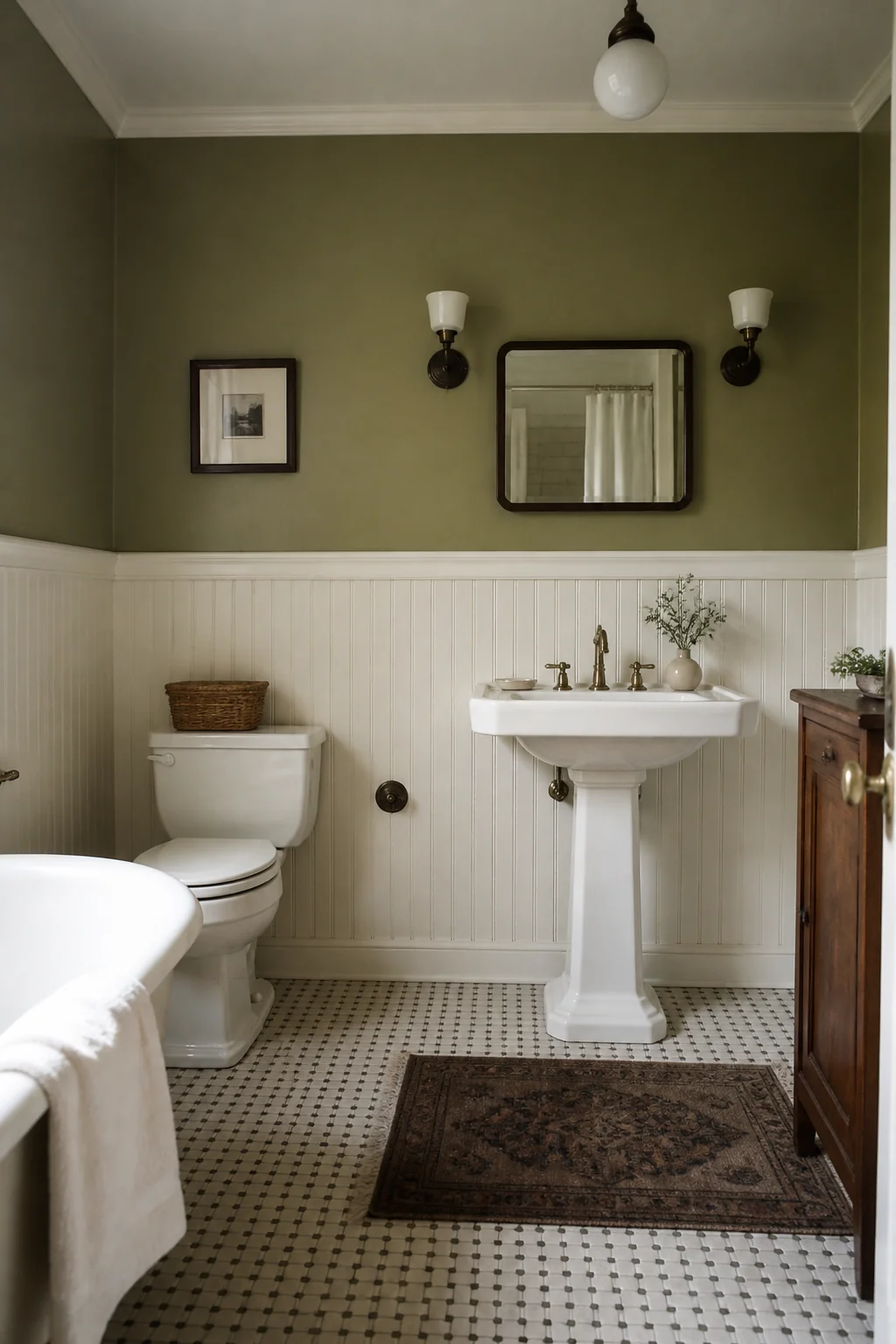
Wainscoting in crisp white or cream, run 36 to 40 inches up the wall with a soft neutral painted above, recalls a vintage bathroom without tipping into costume. Materials and labor land around $300 to $600 for an average room if you do most of the work yourself.
A note on which profile to buy. Fine-bead beadboard reads more Victorian cottage than 1955, so a wide flat panel, or vertical boards spaced 3 inches or more apart with a simple square cap rail, sits much closer to the period. Material choice matters near the shower: MDF panel swells and mushrooms along the bottom edge the moment water finds a cut end, so use PVC trim board or primed poplar anywhere in the splash zone. Prime all six sides before installing, and caulk the top of the cap rail and both end joints so nothing wicks in behind the panel.
13. Choose a compact freestanding soaking tub if your layout allows it
Picture a cast-iron soaking tub in white or soft gray, 54 to 60 inches long and around 30 inches deep, standing alone against the wall with its feet showing in polished chrome or matte black. No surround, no tile enclosure. It reads unmistakably mid century and makes a quiet focal point rather than a loud one.
Weight is the catch. Cast iron runs 300 to 400 pounds empty and closer to 800 with water and a person in it, so on an upper floor it's worth having someone check the joist size and span before you order. An acrylic freestanding tub weighs 70 to 100 pounds and gives you the same silhouette, though it sheds heat faster during a long soak. Budget $900 to $3,000 for the tub itself and another $300 to $600 for a floor-mounted filler and its rough-in. Leave 4 to 6 inches between the tub and the wall so you can actually clean behind it.
14. Hang a simple rod and light curtain over the window
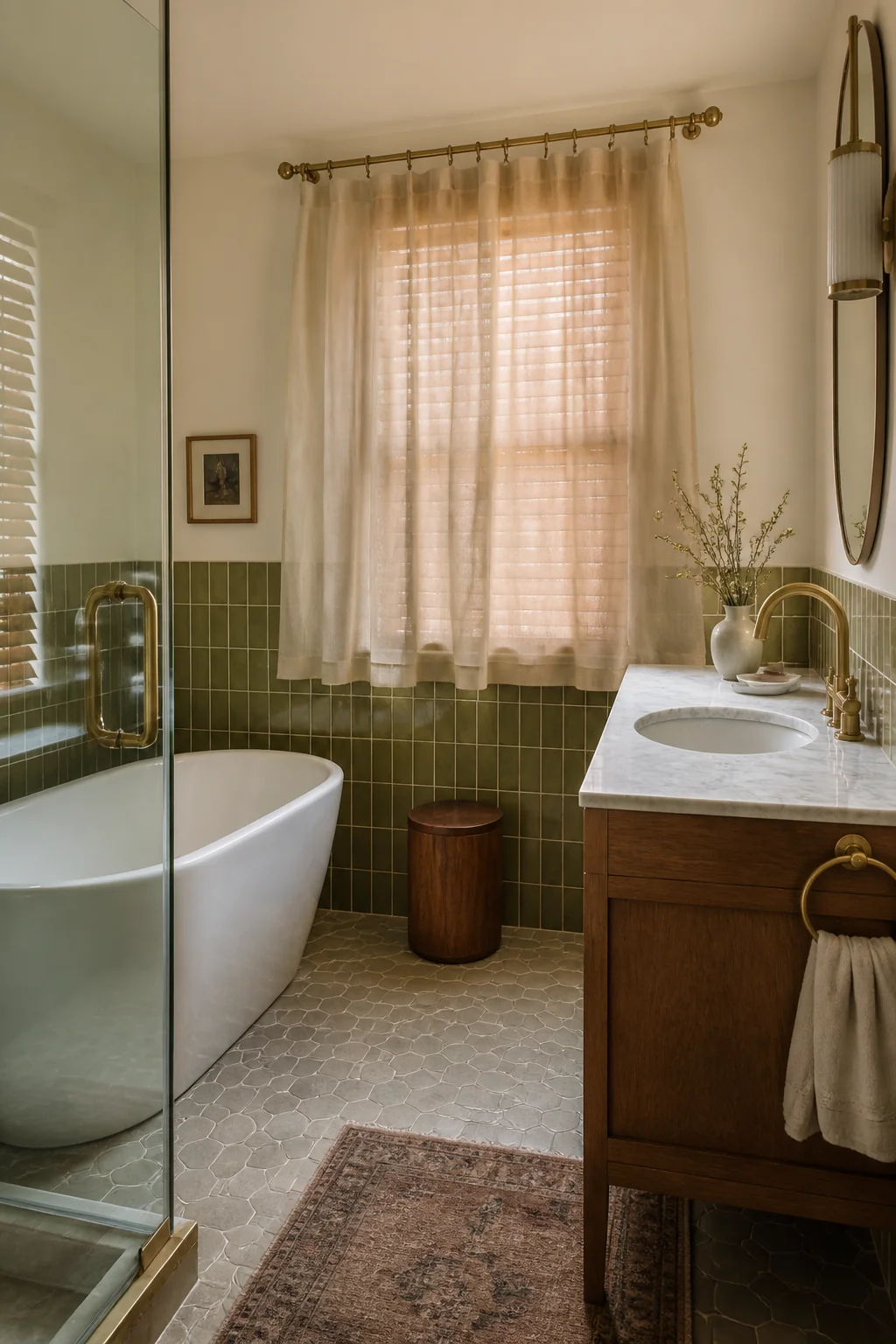
Blinds add slats and cords to a room built on clean lines, so a thin brass or chrome rod carrying one linen or cotton panel in white, cream, or a pale neutral is the better call. Mount the rod 4 to 6 inches above the frame and let it run about 4 inches past each side, so the fabric stacks off the glass and the window looks wider than it is. The panel should just brush the sill.
Two practical points. Linen at that weight goes sheer once the light is on inside at night, so if the window faces a neighbor, pair it with frosted privacy film on the lower pane, which costs $15 to $25 a roll and goes on with soapy water and a squeegee. And choose a fabric you can machine wash. Cotton and linen hold humidity, and in a bathroom without a working exhaust fan they spot with mildew along the hem within a season or two.
15. Add a small potted plant or ceramic accent on a shelf
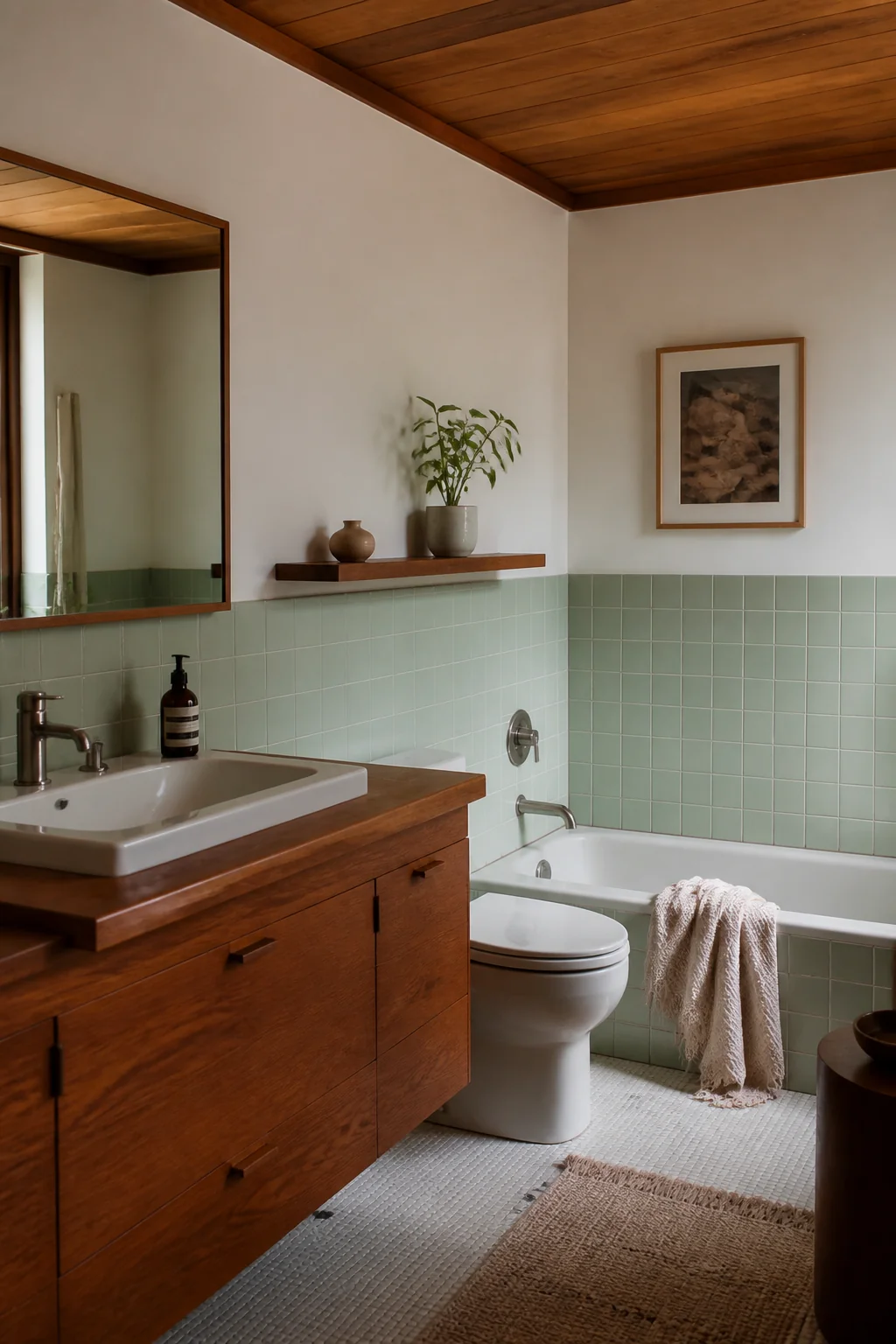
One plant, one vessel, nothing more. A snake plant or a small ceramic piece in soft white or gray, round or gently geometric, sitting on the shelf or the vanity edge is all this style asks for. Interiors of the era brought in living things without ever crowding a surface. One plant, not five. One ceramic vessel, not a collection.
Snake plants are the safest bet in a bathroom: they tolerate low light, want water only every two or three weeks, and the ambient humidity works in their favor. Pothos handles steam happily but still needs a window or a few brighter hours somewhere else each week. Succulents are the common mistake, since constant moisture and no direct sun rots them from the base within months. A 5 to 7 inch ceramic pot costs $12 to $30, and if it has no drainage hole, leave the plant in its nursery pot and drop the whole thing inside. Restraint is the entire point.
Keep this guide handy
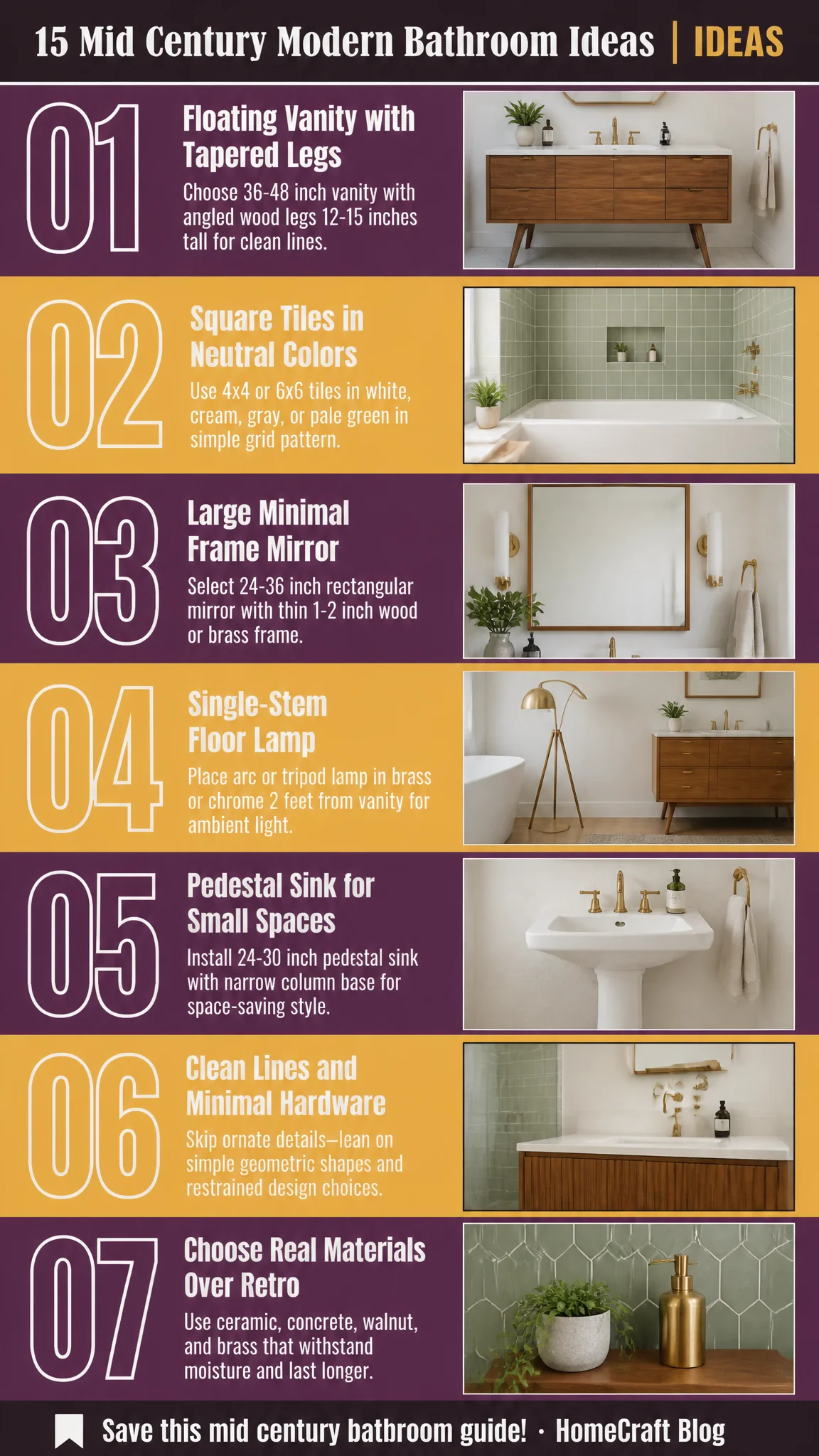
If there's one place to spend attention rather than money, it's the pairing of finishes: one metal everywhere, one tile color, one wall color with warmth in the undertone. That accounts for most of what the eye reads as mid century. And the thing that undoes these bathrooms fastest isn't a styling misstep, it's water. An MDF vanity edge that swells, a veneer mirror frame lifting at the corner, cement grout going blotchy behind the sink. Choose materials that can take a damp room, and the clean lines stay clean.