25 Timeless Mid-Century Modern Dining Room Ideas Worth Copying
25 mid-century modern dining room ideas with real measurements and prices: tapered-leg tables, warm wood, pendant heights, rug sizing and lighting that works.
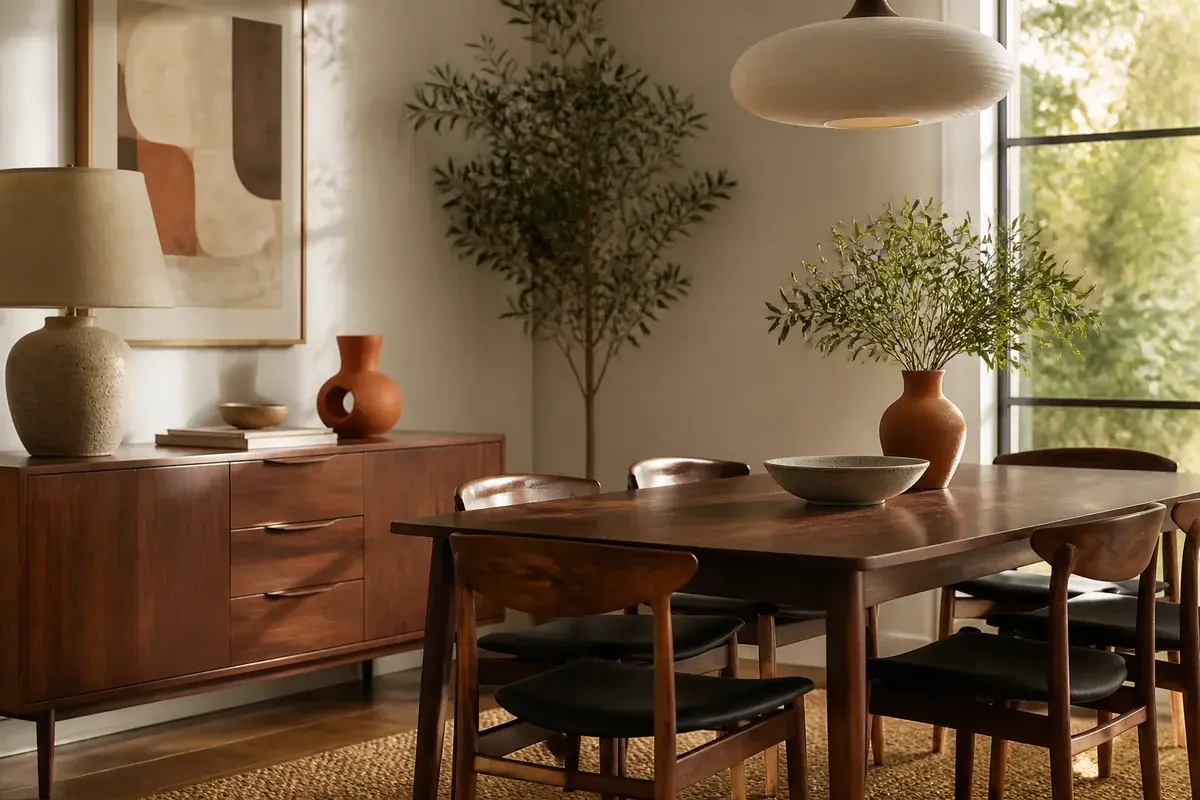
Mid-century modern keeps working in dining rooms for a plain structural reason: the furniture stands on legs. Tables, credenzas and chairs all lift off the floor, so you see the wall and the floor behind them, and the room reads larger than its square footage. Add warm wood, one good light overhead, and not much else, and the whole thing settles.
The other bit of good news is that a dining room is a short list of decisions. One table, a few chairs, one fixture, one rug, one thing on the wall. Get those five right and the small stuff barely registers. Here are 25 ideas, with the measurements and prices that go with them.
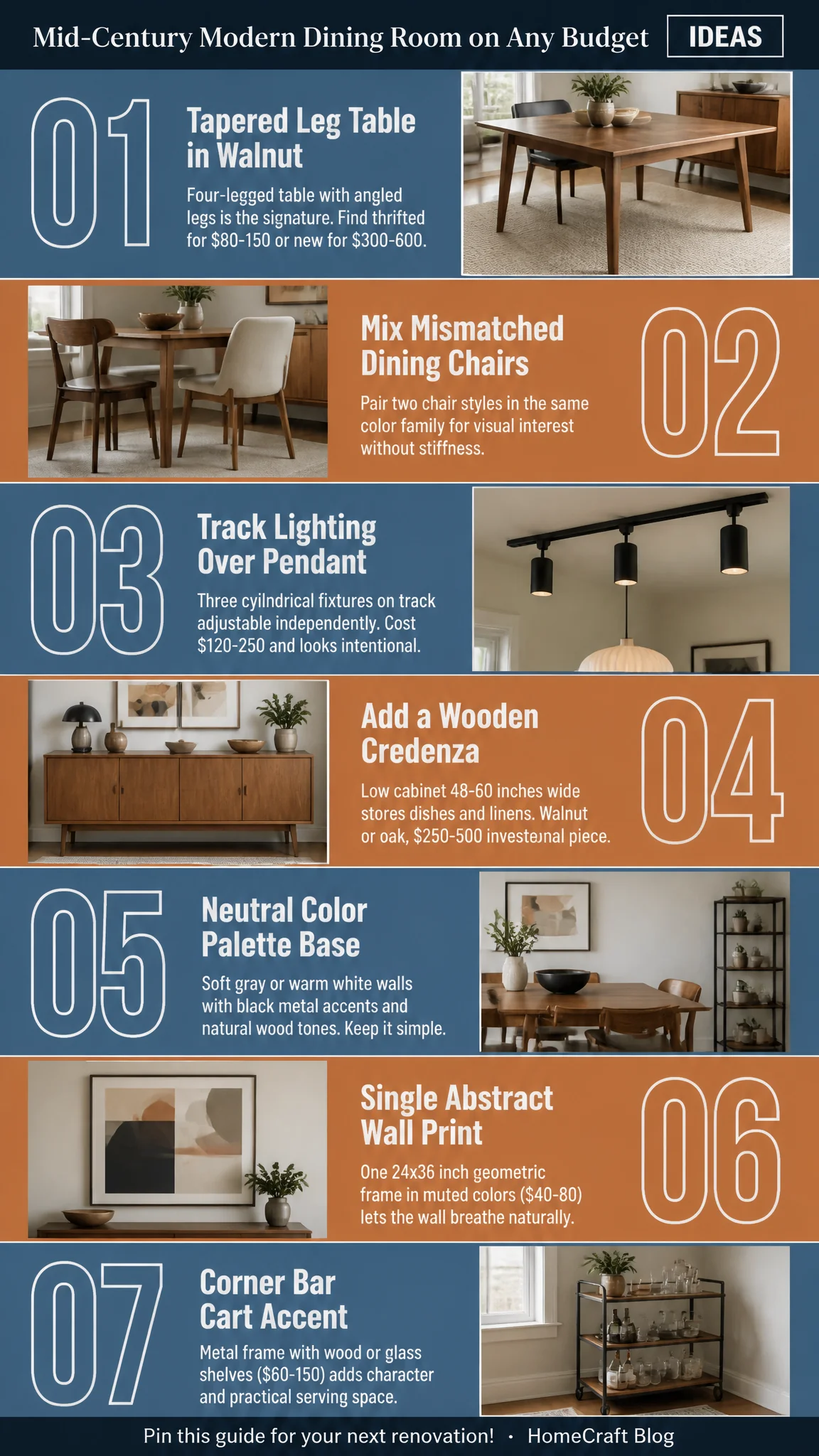
1. Choose a tapered leg table in walnut or teak
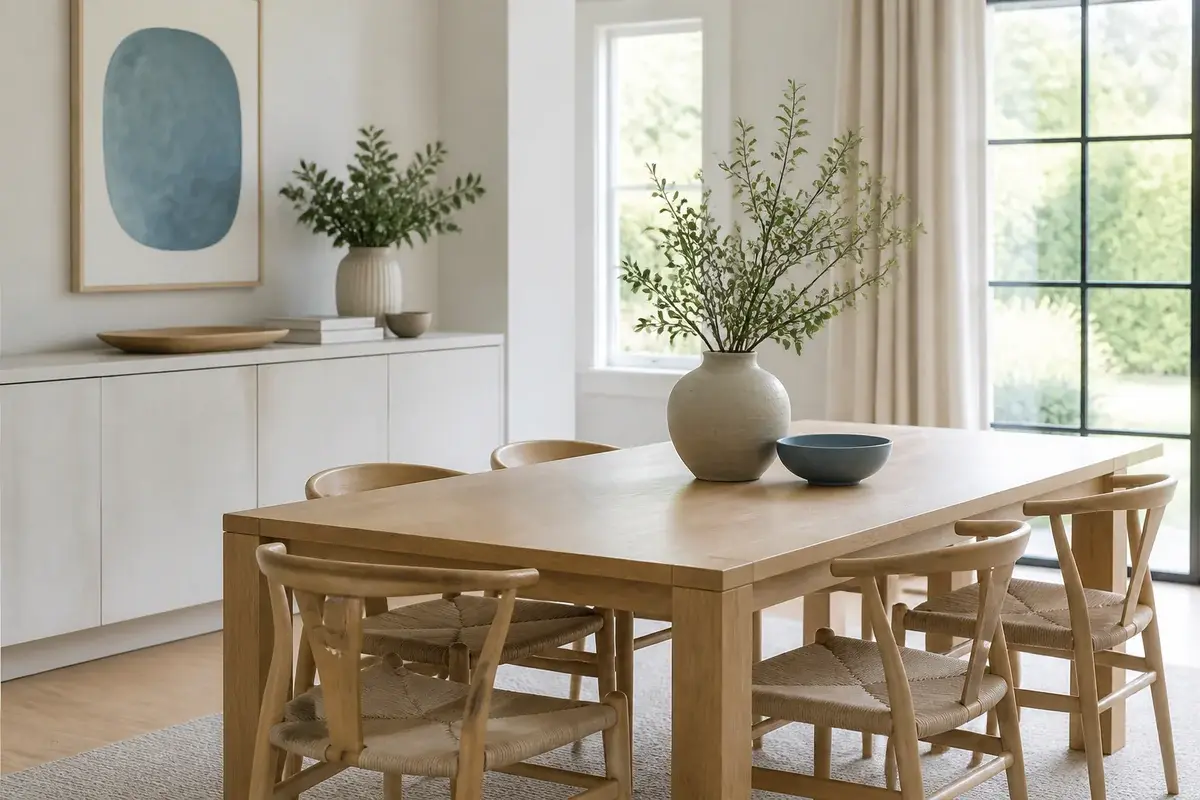
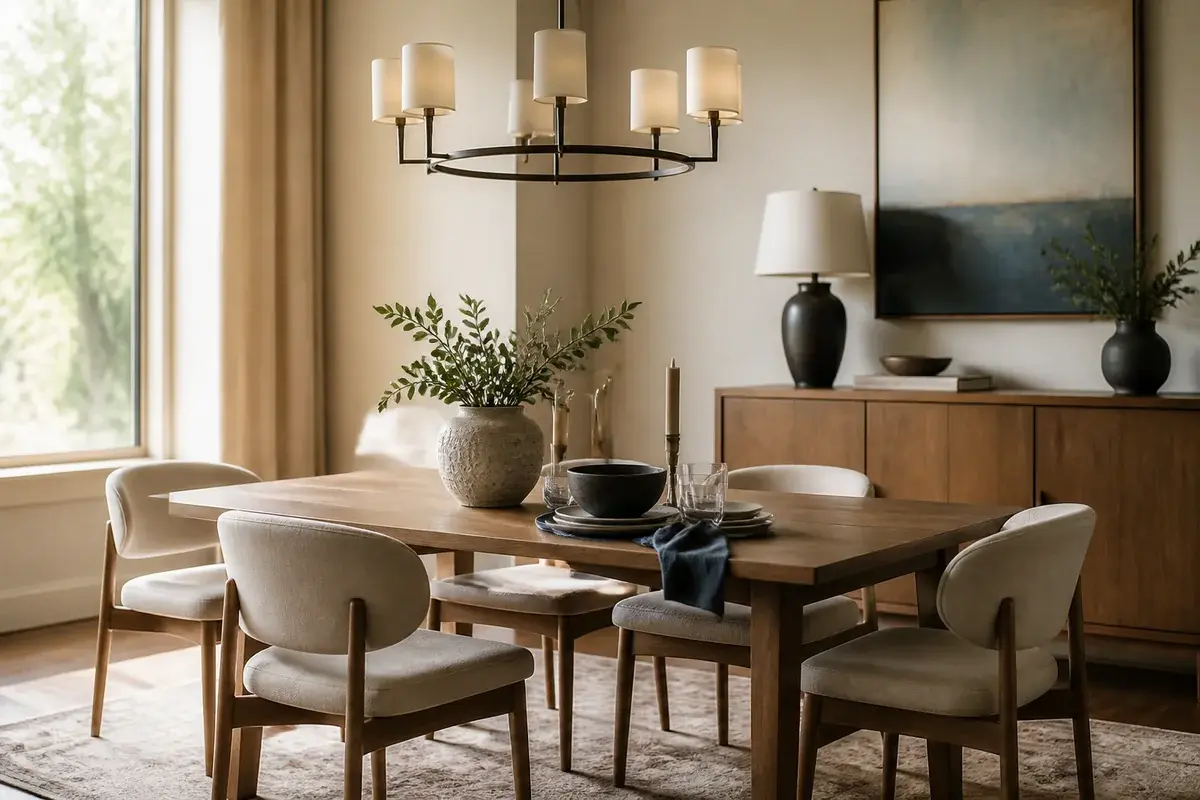
The giveaway is the leg. It meets the top at a slight outward angle and tapers toward the floor, so the table looks like it's standing rather than sitting. Walnut and teak both go warm under lamplight, and teak's natural oils shrug off the odd water ring that would mark an oak top. New tables in that shape run about $300 to $600 online. Thrifted ones in decent shape land at $80 to $150, usually because someone sanded through the veneer on one corner, so check the edges before you hand over cash: a paper-thin veneer can't be refinished. Then size it for your room rather than the showroom. Leave at least 36 inches between the table edge and the nearest wall so chairs can pull out, and 42 to 48 inches where people need to walk behind seated guests. A 36 by 60 inch top seats six at a comfortable 24 inches per person.
2. Pair mismatched dining chairs
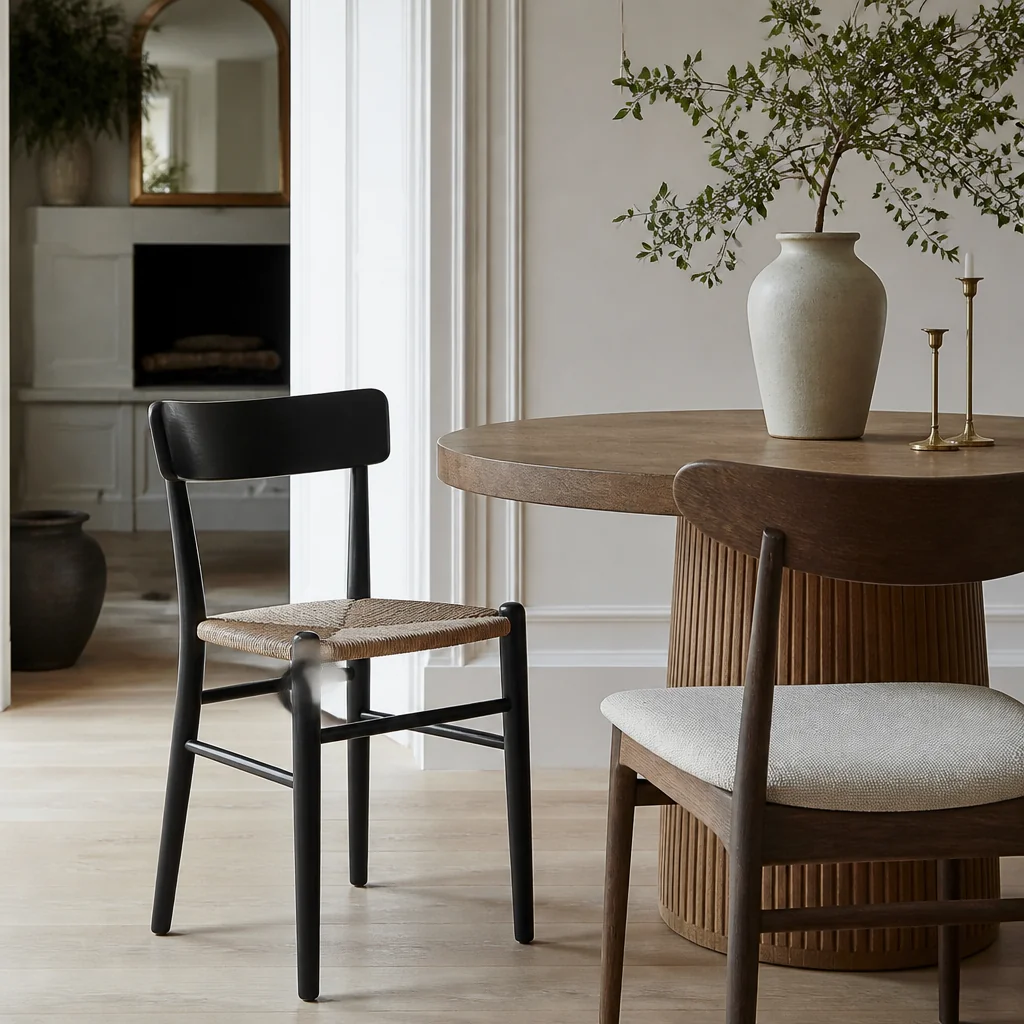
Buying six identical chairs is the fastest way to make a dining room look like a catalogue page. Pull two styles instead and let one thing tie them together: the same color family, the same wood tone, or the same seat height. Eames-style molded shells beside a pair of Windsor-backs, both in soft gray, is the version most people land on. The number that keeps it from going wrong is seat height. Aim for 17 to 19 inches from floor to seat, and check that every chair leaves 10 to 12 inches of clearance under the tabletop, or the taller ones trap knees. Watch arm width too, since a chair with arms has to slide under a 29 inch apron and plenty won't. Reproduction shells cost $80 to $150 each. Secondhand Windsors turn up at $25 to $60 and take paint well, which is how you get the color family to line up.
3. Install track lighting instead of a chandelier
A single pendant lights the middle of the table and leaves both ends in shadow, which is why a track with three small cylindrical heads often serves a long table better. A 4 foot track runs $40 to $70 and heads are $20 to $35 each, so the finished run lands around $120 to $250. Center it over the tabletop, not over the room, and space the heads so one sits above each end and one in the middle. Aim them slightly inward so light pools on the table instead of in anyone's eyes. The trade-off is honest: track reads more contemporary than mid-century, so keep the heads small, cylindrical and in black or brushed brass rather than the bulbous white kind. One practical bonus is that if your ceiling box sits off-center over the table, a track's mounting plate covers the old box and the light still lands in the right place.
4. Hang a small-scale abstract print above the sideboard
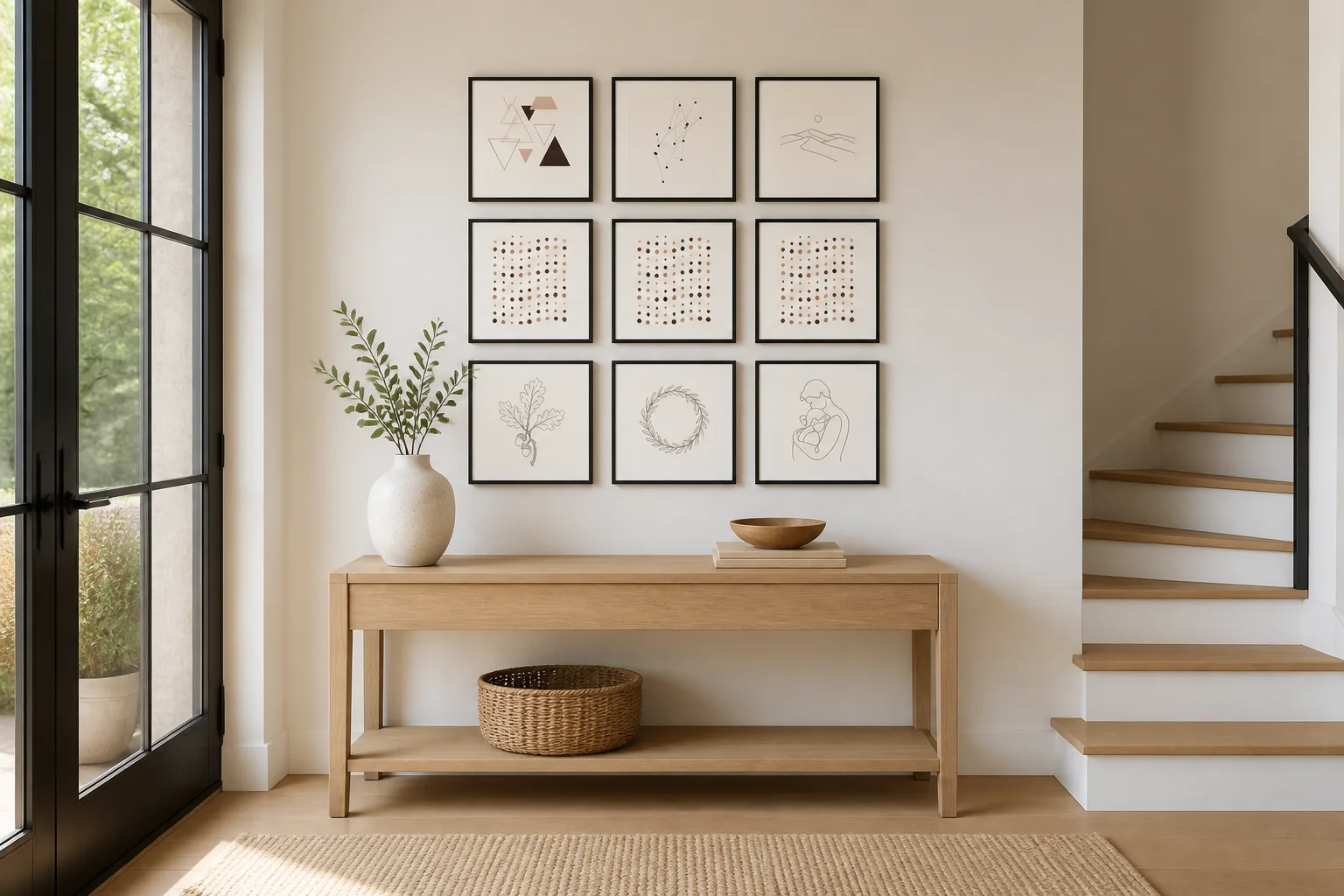
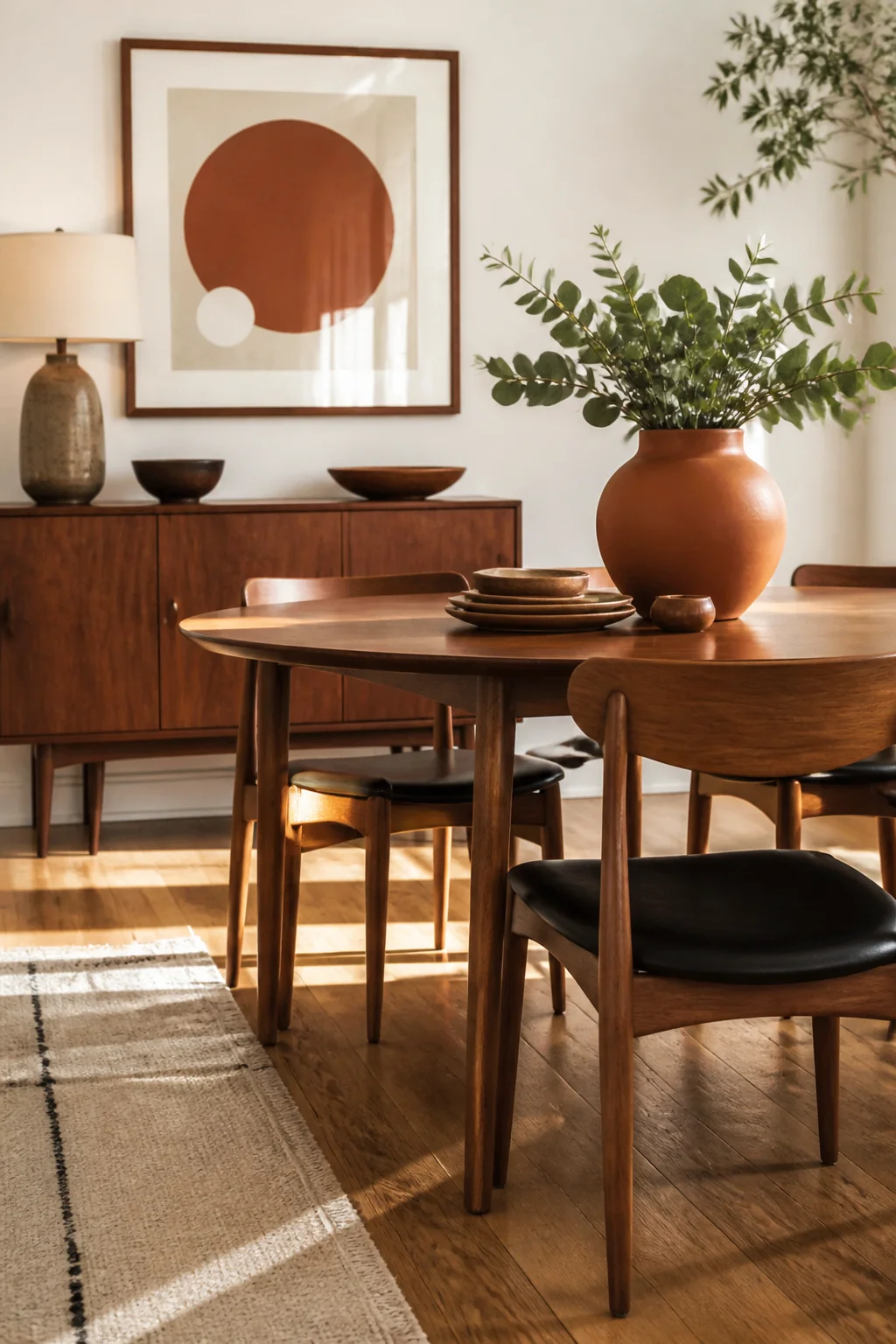
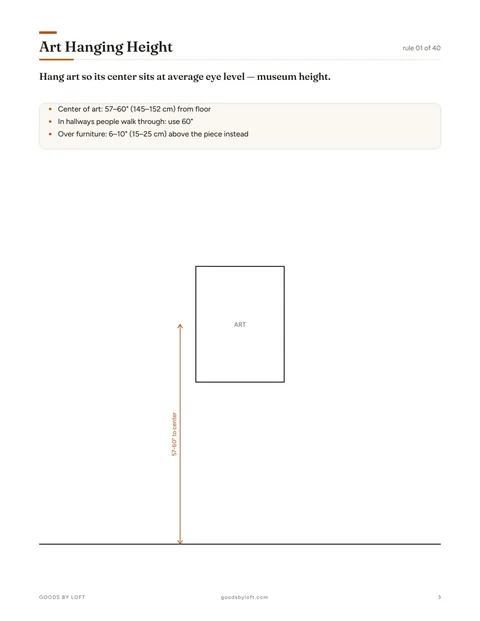
One frame, placed with care, beats nine small ones in a grid. A 24 by 36 inch print with a geometric or organic shape in muted colors costs about $40 to $80 framed, and it gives the sideboard something to answer to. Hang it so the bottom edge sits 6 to 10 inches above the furniture top, which keeps the two pieces reading as one group rather than two unrelated objects. On open wall with no furniture beneath, a center point of 57 to 60 inches puts the image at standing eye level. Drop it an inch or two if the only time you see that wall you are seated at the table. Width matters as much as height: two thirds of the sideboard is the span to aim for, so a 60 inch credenza wants art in the 36 to 40 inch range, and anything narrower looks stranded. A credenza already carrying a lamp at one end and a plant at the other is the case for ignoring the ratio, since those objects claim the width and a narrower frame centered between them reads cleaner. Hang from two D-rings rather than a single center hook, or the frame drifts crooked every time a door slams.
5. Add a wooden credenza for storage and style
A credenza does the job a china cabinet used to do, without the top-heavy bulk. Look for one 48 to 60 inches wide, about 30 inches tall and 16 to 18 inches deep, in walnut or white oak. Secondhand runs $250 to $500, solid new starts closer to $600. Depth is the number to check: 18 inches swallows dinner plates lying flat, while a 14 inch case forces you to stack them on edge where they chip. Sliding doors are the period detail worth hunting for, but they only ever open half the case, so keep what you reach for daily on the outer thirds. Before you buy anything vintage, pull a drawer right out and look at the joinery. Dovetails and a solid back panel mean it survives another forty years. Stapled particleboard with a printed woodgrain will not, and no amount of oil rescues it.
6. Use a simple white or cream tablecloth in a solid color
Linen beats cotton here for a specific reason. The fibers are stiffer, so the cloth falls in soft folds instead of clinging flat to the table, and it takes a wrinkle without looking rumpled. A decent mid-weight linen cloth costs $30 to $60 and lasts years. Measure your tabletop and add 20 to 24 inches to each dimension, which gives a 10 to 12 inch drop all round: enough to look finished, short enough that nobody's lap catches it standing up. For a 36 by 60 inch table, that's roughly a 60 by 84 inch cloth. Cream and soft gray sit better against walnut than bright white, which can look chalky next to warm wood. Wash it warm, tumble it half dry, then put it back on the table damp. It flattens itself and you never touch an iron.
7. Place a small bar cart in the corner
A cart parked in the corner earns its floor space twice over: it stores the glassware that has nowhere else to live, and it becomes the serving surface when the table is full. Look for a metal frame with two or three tiers and wood or glass shelves, roughly 30 to 33 inches tall and 30 inches wide, for $60 to $150. That height is worth measuring, because a cart near tabletop level lets you pour without stooping while a low one becomes a shin hazard. Casters are worth the extra $20, since a cart you can roll to the table is a cart you use. Load the heavy bottles on the bottom shelf and the glasses up top, not the reverse, or the whole thing goes tippy the moment a wheel meets a rug edge. Brass or black frames suit the era better than chrome, which drifts toward a 1980s look.
8. Go with a neutral color palette: blacks, grays, and warm woods
Paint is where people overreach. Soft gray or warm white walls give the wood somewhere to sit and let the furniture do the talking. Look for a warm white with a hint of yellow in it, or a greige with a light reflectance value in the 60 to 75 range, so the room doesn't go cold once the sun moves off that side of the house. Eggshell hides roller marks better than flat and wipes clean where chair backs rub. Then hold the discipline: black metal in the fixture and the chair legs, warm wood in the table and credenza, and nothing else competing. Three tones is the entire scheme. Most dining rooms take two gallons at $30 to $60 each, because a gallon stretches to 350 to 400 square feet and you are putting on two coats. One is enough only when the new color sits close to the old one and the second pass is really touch-up. Brush a two-foot square on the wall you look at most and check it at night under your own bulbs before you commit.
9. Swap standard baseboards for flat, minimal trim
Ornate colonial baseboard fights everything else in this room. Flat stock, 3 to 4 inches tall with a small square edge, keeps the sight line quiet and costs $1.20 to $2.50 per linear foot in primed MDF. A 12 by 14 foot room needs about 50 feet, so material lands near $75, and a carpenter will do the tear-out, cut, nail and caulk in a day for roughly $300 to $600. Two cautions before you order. Old plaster walls are rarely straight, so plan on caulking the top edge and filling every nail hole before paint, since skipping that step is what makes DIY trim look like DIY trim. And MDF drinks water, so if the dining room opens onto a mudroom or the floor gets mopped wet, pay the extra for primed pine. Painting the trim your wall color instead of white makes the walls read taller.
10. Install floating shelves for open storage
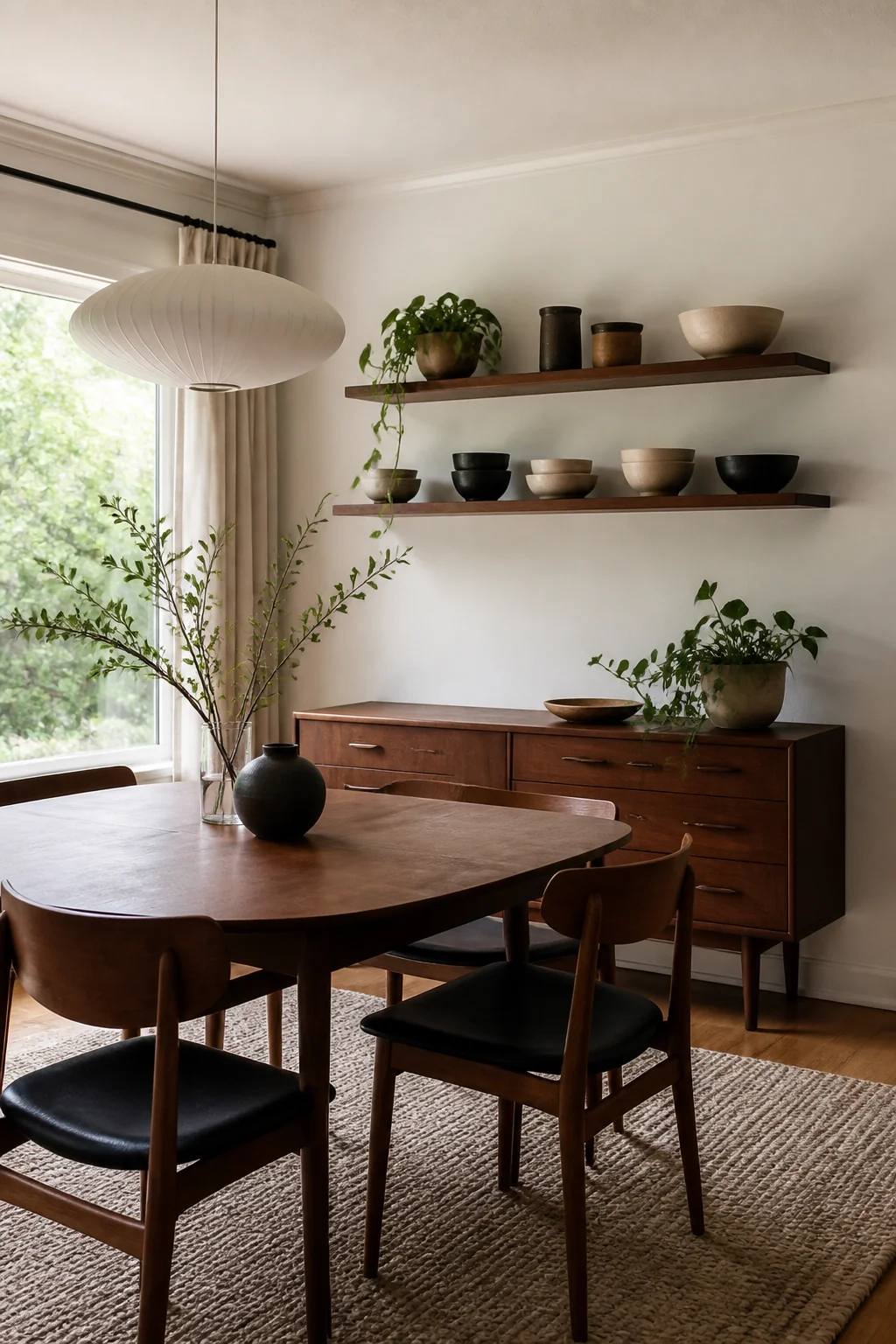
Two or three shelves above the sideboard turn storage into display without adding visual bulk. Keep them 24 to 36 inches long and 8 to 10 inches deep, which holds dinner plates upright and cookbooks flat, and space them 12 to 15 inches apart so a tall pitcher or a wine glass fits underneath. Budget $40 to $100 per shelf installed. The bracketless look comes from a steel rod bracket that buries inside the shelf body, and it lives or dies on what you screw it into. Hit two studs at 16 inches on center, or use toggle bolts rated for the load, because a 30 inch solid oak shelf with dishes on it is carrying 40 pounds before you have noticed. Plastic drywall anchors alone will sag inside a year, and the sag shows badly here, since a horizontal shelf line is exactly what the eye follows across a wall.
11. Add brass or gold accents through small objects
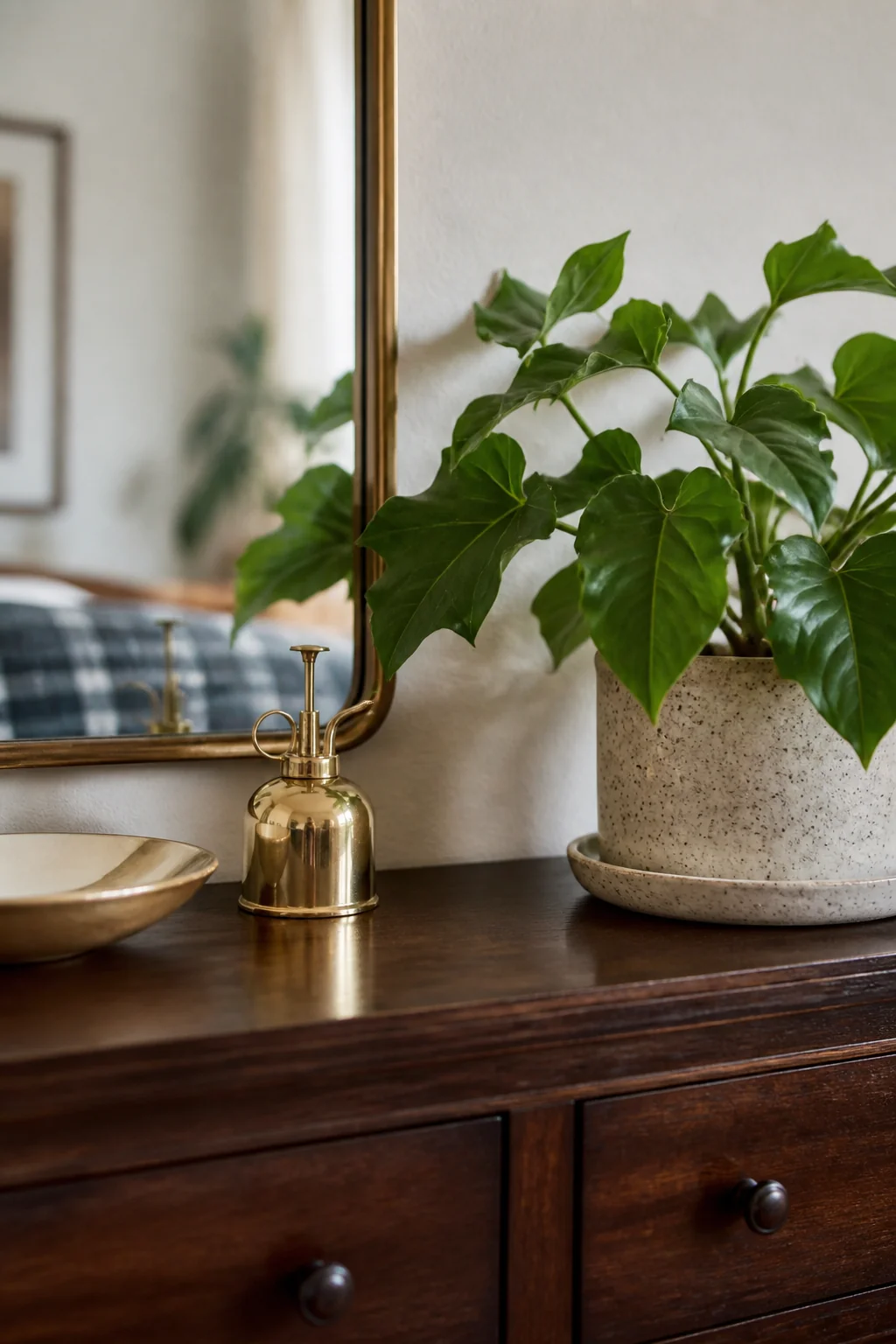
Brass works in small doses because it's the one warm metal that reads as light rather than hardware. A candlestick, a small tray, a plant stand on slim legs: three or four pieces at $15 to $40 each is the whole gesture. Cluster them instead of spacing them evenly around the room, and vary the heights so the group has a shape. The finish is the thing to check before buying. Unlacquered solid brass darkens over a few months into a soft brown patina, which some people love and others scrub back with lemon and salt twice a year. Lacquered brass stays bright, though the coating can cloud if it sits near a candle flame. Brass-plated steel is the cheap version and it wears through at the corners, so carry a magnet: if it sticks, it's plated. Then stop at four pieces, because past that the room starts to look like a gift shop.
12. Choose a geometric or abstract area rug in muted tones
Geometry in a muted palette is the era in a single object: cream, warm gray, soft mustard, rust. Wool wears best, hides crumbs, and springs back after a chair leg has stood on it, and a good one costs $150 to $400 in the smaller sizes. Size is where most dining rugs fail. The rug has to extend 24 to 36 inches past every edge of the table so the back legs of a pulled-out chair stay on it. Fall short and every chair catches on the border, and the rug slowly travels. That means a 5x8 only suits a small 36 by 48 inch table for four. A 36 by 60 inch table for six wants an 8x10, and anything with a leaf in it wants a 9x12. Add a felt-and-rubber pad at $40 to $80 to stop the sliding and absorb some chair drag. Skip high pile entirely, since a low flat weave is the only kind that vacuums clean under a table.
13. Use open shelving instead of a full china cabinet
In a small dining room, a full china cabinet eats about 20 inches of depth and blocks the wall from floor to ceiling. Open shelving does the same storage job on 10 inches and leaves wall visible above and below it, which is the usual fix once a room drops under roughly 12 feet wide. The trade is real, though. Everything on that shelf is on display, and it collects dust that a closed door would keep off. So edit hard: one stack of plates, a row of glasses, two or three objects with some height, and empty space between the groups. Give each shelf a job rather than filling it edge to edge. Good dishes you use twice a year belong behind credenza doors, not overhead. Keep the heaviest pieces on the lowest shelf too, both for the bracket load and because stoneware stacked at eye level makes the room feel top-heavy.
14. Install dimmer switches on all dining lights
At $20 to $40 a switch, a dimmer does more for a dining room than most furniture purchases, because the same fixture at full output is a work light and at 30 percent it's dinner. Buy an LED-rated dimmer rather than an old incandescent model. Standard leading-edge dimmers hum and flicker with LED bulbs, while a trailing-edge or ELV type fixes it for a few dollars more. Check the wattage rating too: one rated for 150 watts of LED handles far more bulbs than the number suggests, but a twelve-bulb Sputnik can still push past it. Swapping a switch is a 20 minute job if you're comfortable killing the breaker, testing the wires dead and telling line from load, and $100 to $200 for an electrician if you're not. One gotcha: if the fixture is on a three-way circuit with switches at both doors, you need a matching companion dimmer or only one switch will work.
15. Keep window treatments minimal and clean
Heavy drapes swallow the daylight that makes wood look good. A roller shade in natural linen, or a flat Roman shade in a solid color, does the job and stops at the window instead of dressing it. Decide inside or outside mount first, because the measurements differ. Inside mount looks cleanest but needs at least 2 inches of depth in the jamb, and you subtract about a quarter inch from the opening width so the shade clears the frame. Outside mount hides a crooked or ugly frame and blocks more side light: hang it 3 to 4 inches above the opening and 2 inches wider on each side. Light-filtering fabric keeps the daytime glow and still gives privacy in silhouette, which is usually right for a room you mostly use in the evening. Expect $40 to $120 per window for a decent cordless roller, and more once you pass 48 inches wide.
16. Add midcentury-style sideboards with hairpin legs
Hairpin legs give you the same lifted look as a tapered leg table, on a piece that holds things. A console or low sideboard on hairpins reads light because you can see floor underneath it, and that matters in a narrow room where every solid base makes the space feel tighter. Reproductions run $200 to $400. If you're building one by adding legs to a plain cabinet, buy 3-rod legs rather than 2-rod for anything over about 40 pounds, since 2-rod legs splay under load and never fully spring back. Standard heights are 16 inches for a bench and 28 inches for a console, and the raw steel versions want a coat of clear lacquer or they mark the floor with rust rings. Bolt them into solid wood or a hardwood cleat screwed across the underside, because those four small screws pull straight out of particleboard the first time somebody leans on the top.
17. Bring in one statement lighting fixture as a focal point
One fixture over the table is where the era announces itself: a Sputnik with its splayed arms, or a sculptural pendant in opal glass or a turned wood shade. Around $300 to $600 buys one that won't feel flimsy. Two numbers keep it right. Hang the bottom of the fixture 30 to 36 inches above the tabletop on a standard 8 foot ceiling, adding roughly 3 inches for each extra foot of ceiling height. And size it at about half to two thirds the width of the table, so a 36 inch wide top takes something 18 to 24 inches across. Sputniks hide a catch in the bulb count: twelve 40 watt equivalents is a lot of output, and without a dimmer it's unbearable at dinner. Check the weight against your ceiling box as well, because anything past about 35 pounds needs a fan-rated brace rather than the builder's plastic box.
18. Use woven placemats instead of a full tablecloth
Placemats let the wood show, which a full cloth never does. Jute, seagrass and woven rattan also bring a texture the room is usually short on once everything else is smooth wood and metal. A set of four costs $20 to $40, standard size is about 18 by 13 inches, and you want 24 inches of table width per person so elbows stay apart. Here's the practical catch: woven natural fiber is not wipe-clean. Rings soak into the weave, and a knocked-over glass of red is often the end of that mat. Round rattan sheds less than a loose jute weave, and a bound edge stays flat where a raw edge curls up at the corners after a few washes. Shake them out rather than putting them through the machine, and slide a cork trivet under anything straight from the oven, since heat scorches a pale seagrass weave brown in seconds.
19. Paint an accent wall in a warm, muted tone
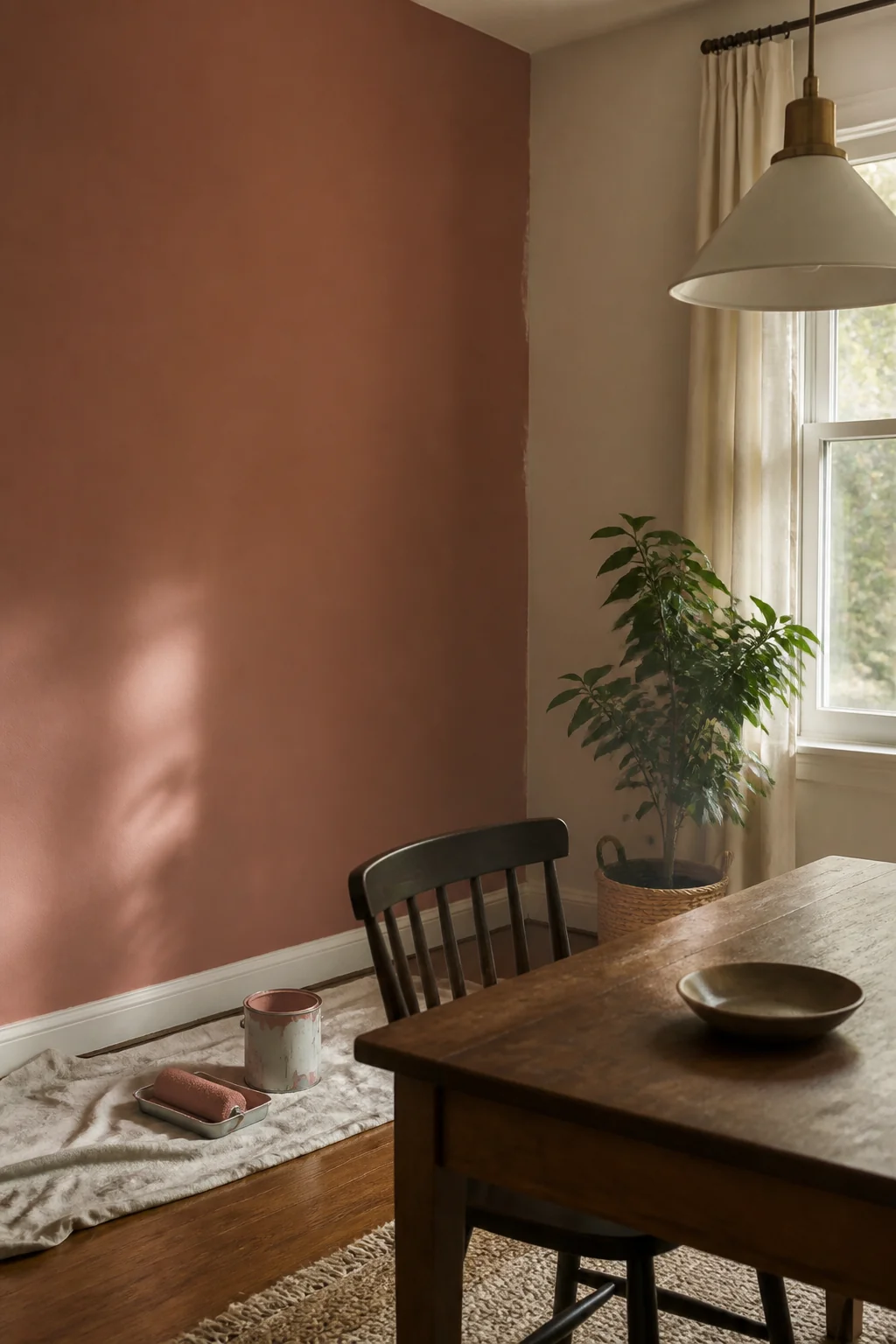
Skip the bold color. Warm taupe, soft sage and warm gray sit behind walnut without fighting it, and they still shift the whole room. A quart covers a single accent wall at $18 to $30, or a gallon at $30 to $60 once the wall passes about 120 square feet, plus a few hours for taping, cutting in and two coats. Choose the wall the table sits against, or the one behind the credenza, so the color has something in front of it. A bare wall painted a different shade just looks like an unfinished paint job. The failure mode here is saturation: a color that looks muted on a two-inch chip comes up several shades stronger across 100 square feet, and it keeps building as the second coat goes on. Paint a sample board, prop it against the wall, look at it after dark, and when in doubt go one step lighter than the chip you liked.
20. Display one large piece of wall art instead of many small ones
A single 36 by 48 inch canvas anchors a wall that six small frames only clutter. Good reproductions of period graphic prints run $60 to $150 framed, and an oversized image on a plain wall is the cheapest way to make a room look finished. Placement works like any large frame: a center 57 to 60 inches up on open wall, or 6 to 10 inches of breathing room above the furniture when it hangs over a piece. Over a low console those two numbers pull apart, and the gap is the one that wins, so let the center land higher than 60 inches rather than crowding the tabletop. Big frames are heavy, and a 36 by 48 with real glass can reach 25 pounds. Use two hooks set in about a third of the width from each edge to spread that load and keep the frame level, and catch a stud with at least one of them if you can. Glass also mirrors whatever is opposite, so sit down in your usual chair and check the reflection before you drive a nail.
21. Choose dining chairs with splayed legs and tapered backs
The silhouette is the whole point. Legs angle outward from the seat, and the back is simple and tips back a few degrees, which is why an unpadded wooden chair from this era can still be comfortable through a long dinner. New sets of four run $400 to $800. Thrifted ones land at $150 to $300 and usually need the joints re-glued, which is one evening with wood glue, a damp rag and a couple of ratchet straps pulled tight overnight. Check seat height first: 17 to 19 inches is standard, and against a 29 to 30 inch table that leaves the 10 to 12 inches of thigh room people need. Splayed legs also cover more floor than they appear to, so measure the footprint down at the floor rather than at the seat when you're working out whether six of them will fit around your table.
22. Add a low-profile buffet table or console
A low console under a window or along a wall catches the serving dishes, the napkins and the mail that would otherwise pile up on the table. Look for 36 to 48 inches wide and about 18 inches deep, at $150 to $350. Depth is the number that decides whether it works: at 18 inches you still keep a 36 inch walkway in a 12 foot room, while a 24 inch case turns that path into a squeeze past the chairs. If it goes under a window, measure up to the sill and stop 3 to 4 inches short so the trim isn't buried behind the top. Keeping the piece low, under about 32 inches, does something specific. It holds the visual weight near the floor and leaves the upper wall open, which is what gives a mid-century room its airy read. A tall hutch in the same spot does the reverse.
23. Use warm lighting temperatures (2700K bulbs)
Color temperature is the cheapest item on this list and one of the most noticeable. 2700K is the warm, faintly yellow light that flatters wood and skin, while 4000K and above pushes blue and turns walnut a flat gray. Bulbs cost $3 to $8 each. While you're reading the box, check two more numbers. CRI 90 or higher renders color honestly, so food on a white plate looks like food, and cheap CRI 80 bulbs are often why a room feels slightly wrong with no obvious cause. Then make sure it says dimmable if it's going on a dimmer, because a non-dimmable LED will buzz, strobe or simply fail early. Last, match every bulb in the room to the same temperature, including the lamp on the credenza. A single 3000K bulb in a 2700K room reads as a cold patch even though nobody can name what's off.
24. Hang pendant lights over each end of the table
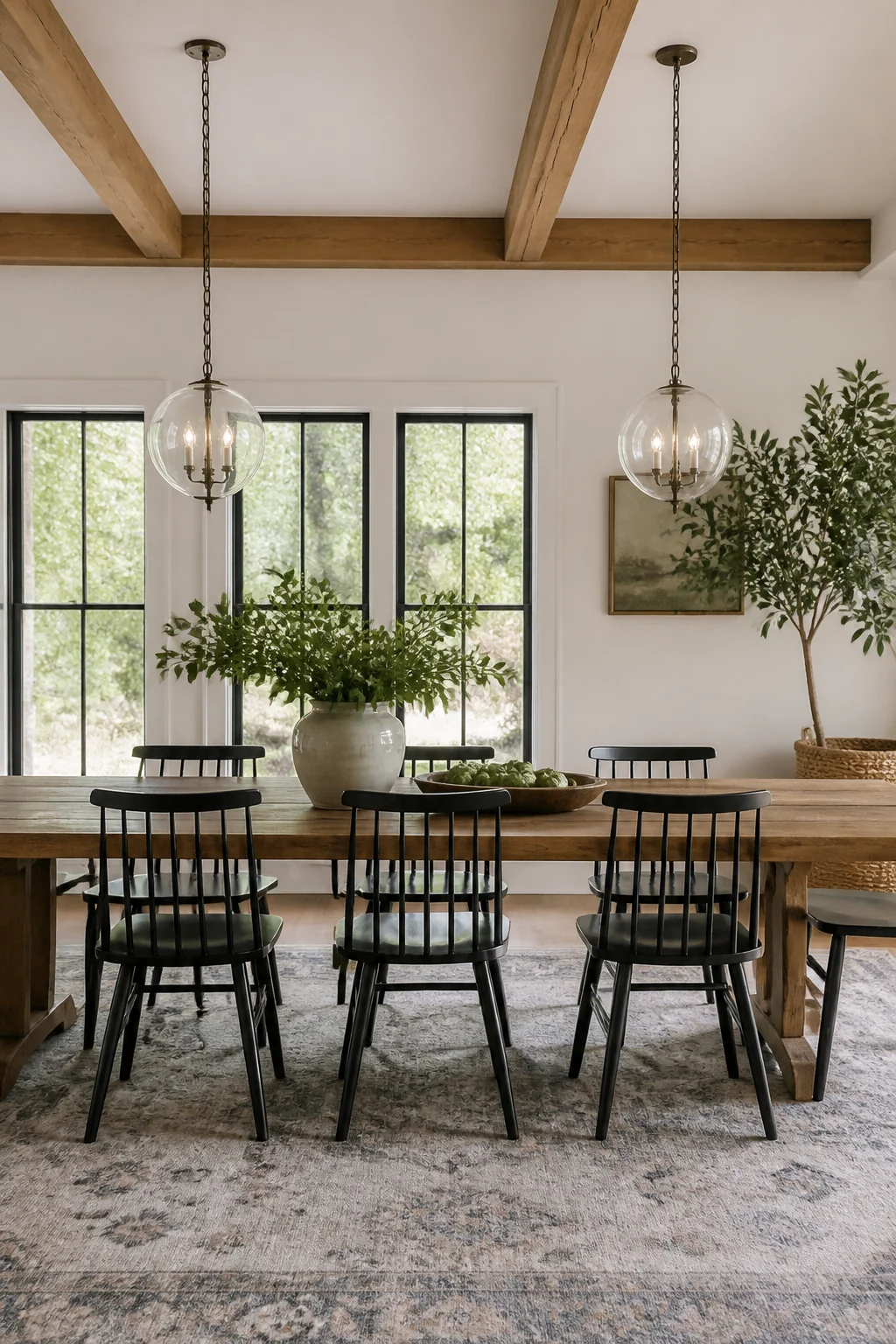
Two smaller pendants spread light along a long table where one central fixture leaves both ends dim. Plan on $100 to $200 for a pair. To space them, divide the table length into thirds and hang one at each division point, so a 72 inch table takes pendants roughly 24 inches apart and about 24 inches in from each end. Height follows the same rule as a single fixture: 30 to 36 inches from the tabletop to the bottom of the shade, which sits them below the eye line of anyone standing and above the eye line of everyone seated. The catch is wiring. Most dining rooms have exactly one ceiling box, so two pendants means either a second box with cable fished through the ceiling, or a plug-in kit with a swag hook and a visible cord you have to make peace with. Price that out before you fall for a pair.
25. Keep the space uncluttered and let furniture breathe
Empty floor is a design decision, not an unfinished room. Mid-century interiors read the way they do because the furniture stands apart and your eye can travel between the pieces. Hold 36 inches minimum between the table edge and any wall or furniture so chairs pull out cleanly, and 42 to 48 inches on whichever side people walk through. Then leave the corners mostly alone: one bar cart or a single plant is enough, and a chair plus a plant plus a floor lamp plus a basket in the same corner is exactly where the open feeling goes. On the table itself, keep anything permanent under about 12 inches tall so people can see each other across it. Taller centerpieces get shifted at every meal and end up living on the credenza anyway. If a surface holds more than three things, take one off and see whether you miss it.
Pin this for later
One last caution, because it's the mistake that undoes all the rest: mid-century pieces are easy to overbuy. Four tapered-leg objects in one room start competing, and the look collapses into a showroom. It holds together when a single good table, one well-hung light and a mostly empty wall are left alone to do the work. Whether the walnut is vintage or a reproduction matters far less than that restraint does.
Ideas fade by Friday. A plan finishes the room.
You just read a full guide to your kitchen. Saving ideas will not change it; a plan will. The Home Decor Collection is every planning tool we make, for every room in the house, in one download, so the after photos below stop being other people's rooms.
- Six room Style Kits, each with layout, palette and shopping list$114
- The Gallery Wall Studio: 200 prints + 15 measured layouts$29
- The Room Makeover System: 40 solved room layouts + workbook$29
- The Color Palette Handbook: 60 palettes shown in real rooms$19
- The Whole-Home Reset: 40 printable organizing checklists$19
- The Decorator's Cheat Sheets: the 40 measurements that matter$9
- All eleven products, bought separately
$219$97
A single hour with an interior designer costs more than the entire Collection, and this one keeps answering for every room you will ever decorate. Free updates included as the products grow. And if it is not for you, the 14 day money back promise means you simply get a refund.