5 Dining Room Decor Ideas Under $500 (With a Cost Breakdown)
Five dining room decor ideas that fit inside a $500 budget, with real prices, the clearances to measure first, and the mistakes that waste money.
This post contains affiliate links. As an Amazon Associate I earn from qualifying purchases. If you buy through our links, we may earn a commission at no extra cost to you.
The dining room is usually the last room in the house to get any attention. You use it every single day, which is exactly why decorating it never feels urgent, and then one evening you look up mid-meal and notice the bare walls, the one buzzing ceiling light, and the folding chair nobody wants to sit in. If you've already worked through the bedroom and the living room, this is almost always the room still waiting.
The good news is that a dining room responds faster to small changes than most rooms, because one piece of furniture is doing nearly all the work. Everything else is a layer around it. The five ideas below come to under $500 together if you buy carefully, and most of that money lands in two places: the rug and the lighting. Prices and clearances are included with each one, since a dining room that photographs well but knocks your chairs into the wall isn't finished.
Create a Statement Wall with Paint (Under $100)
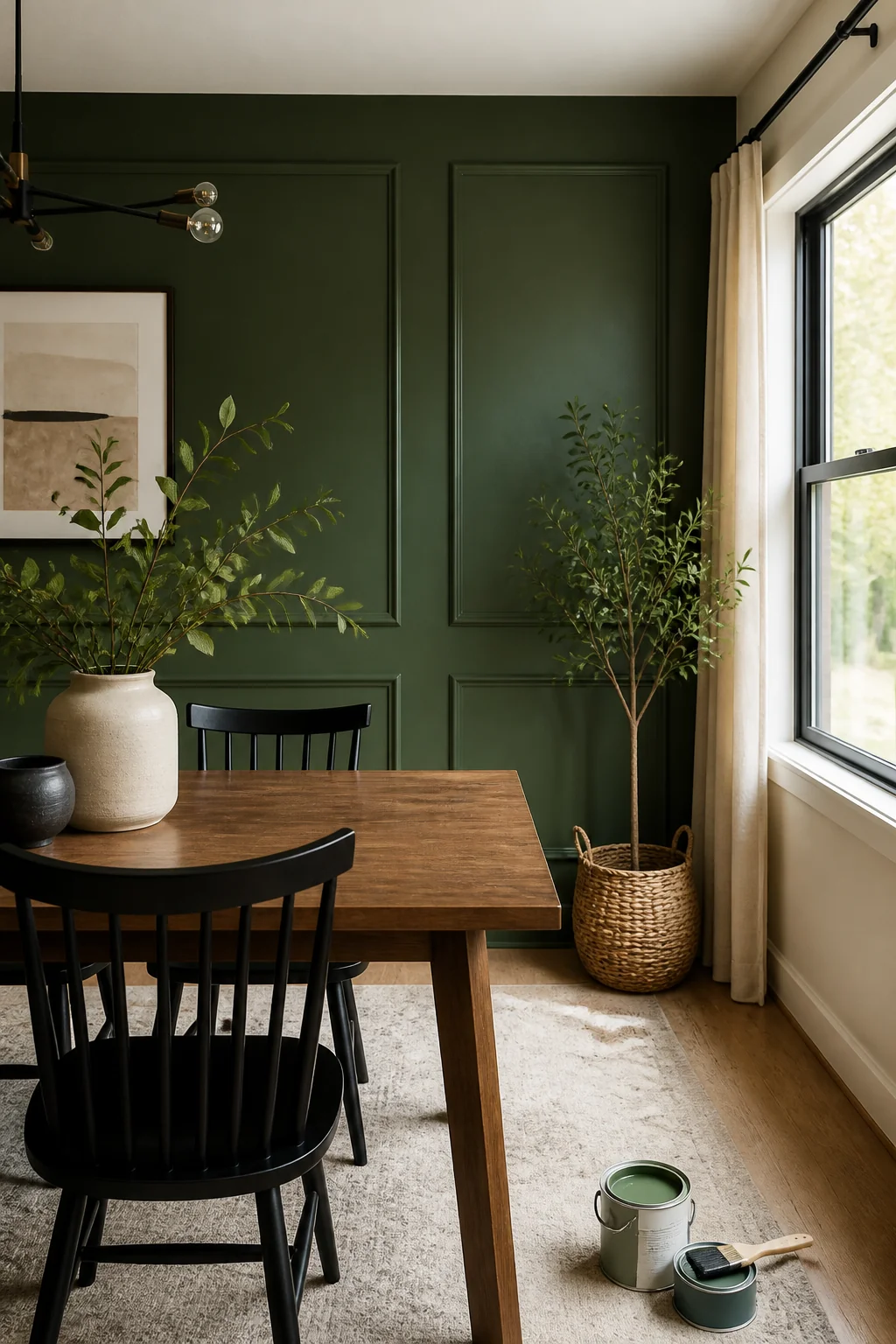
Paint is the cheapest square footage in the house. Running dry halfway up the second coat is the thing people brace for, and on a dining wall it almost never happens: you're covering something near 110 square feet against the 350 to 400 a gallon reaches, so one $35 to $45 can does both coats and leaves you touch-up paint for the chair rail scuffs. Add two $8 sample pots for testing and you're still under $65.
Choose the wall behind the table, the one you face from the doorway, not a wall broken up by a window or a doorframe. Fill nail holes, sand them flush, tape the ceiling line, cut in with a 2.5 inch angled brush, then roll two thin coats with about four hours between them. Skip flat finish here. It looks beautiful and it holds every fingerprint and sauce splatter within arm's reach of a chair, and it won't wipe clean. Eggshell or satin will.
The part worth slowing down for is the color test. Paint a 12 inch square, then look at it at 7 p.m. under your own bulbs. Deep navy and terracotta read far darker after sunset, and this is a room you mostly use after dark.
Layer Your Lighting with Thrifted Fixtures
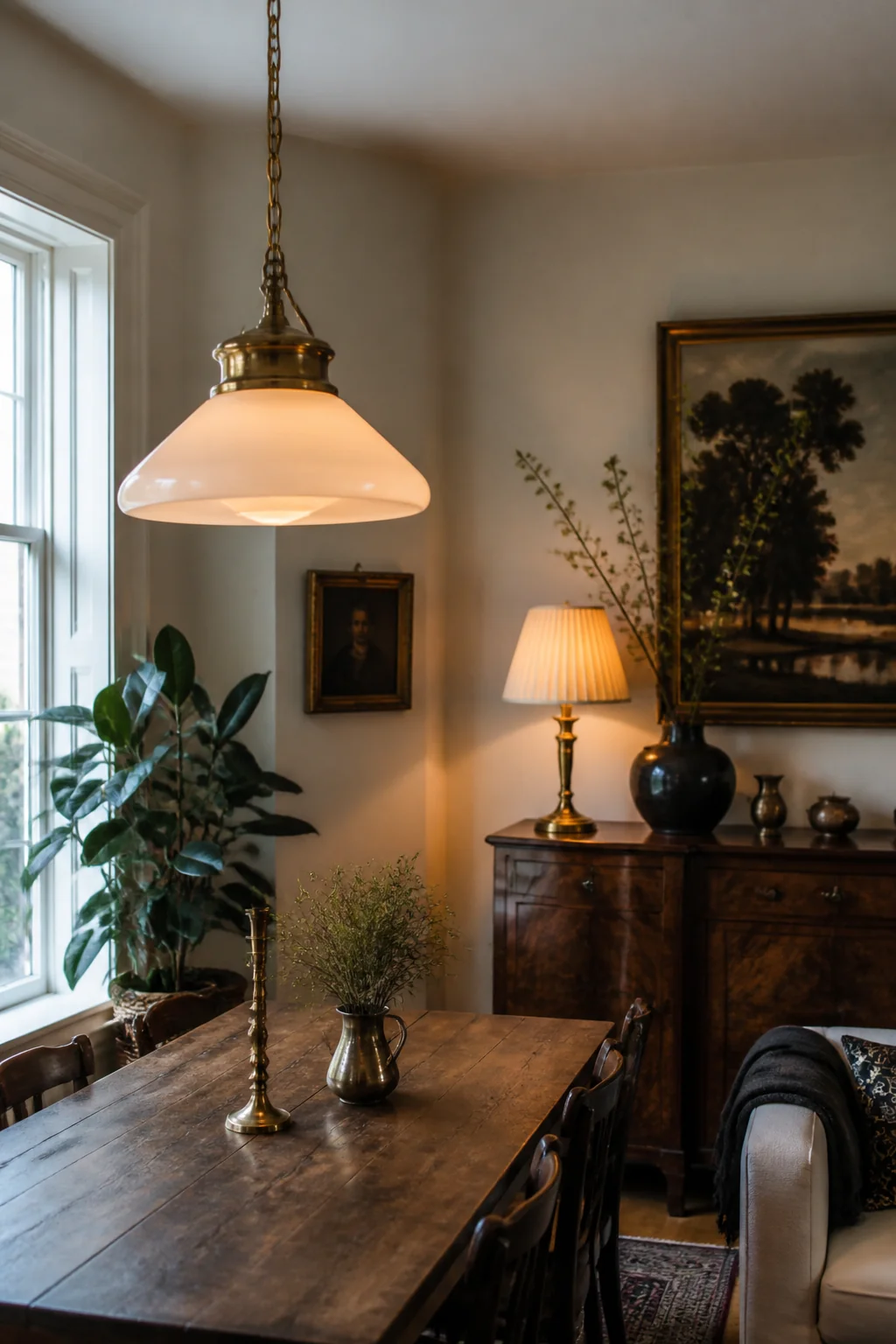
A single overhead fixture is what makes a dining room feel like a waiting area. One light source directly above throws shadows straight down onto faces, and no bulb swap fixes that. What fixes it is a second and third source at different heights.
Secondhand is where the money goes furthest here. Antique shops and Facebook Marketplace list brass and glass pendants in the $25 to $60 range, roughly a fifth of new, and a vintage pendant with one missing crystal still reads as the real thing from four feet away. A rewiring kit with socket, cloth cord, and canopy runs $15 to $25. Before you buy, bend the old wire gently. If the insulation cracks or flakes, it needs rewiring, and if there's no junction box where you want it, an electrician adds $75 to $150.
Hang the pendant 30 to 36 inches above the tabletop, and add 3 inches for every foot of ceiling above eight. Size it about half to two thirds the table width, so 18 to 24 inches across for a 36 inch table. Then put 2700K dimmable bulbs in everything.
Add Texture with a Secondhand Rug
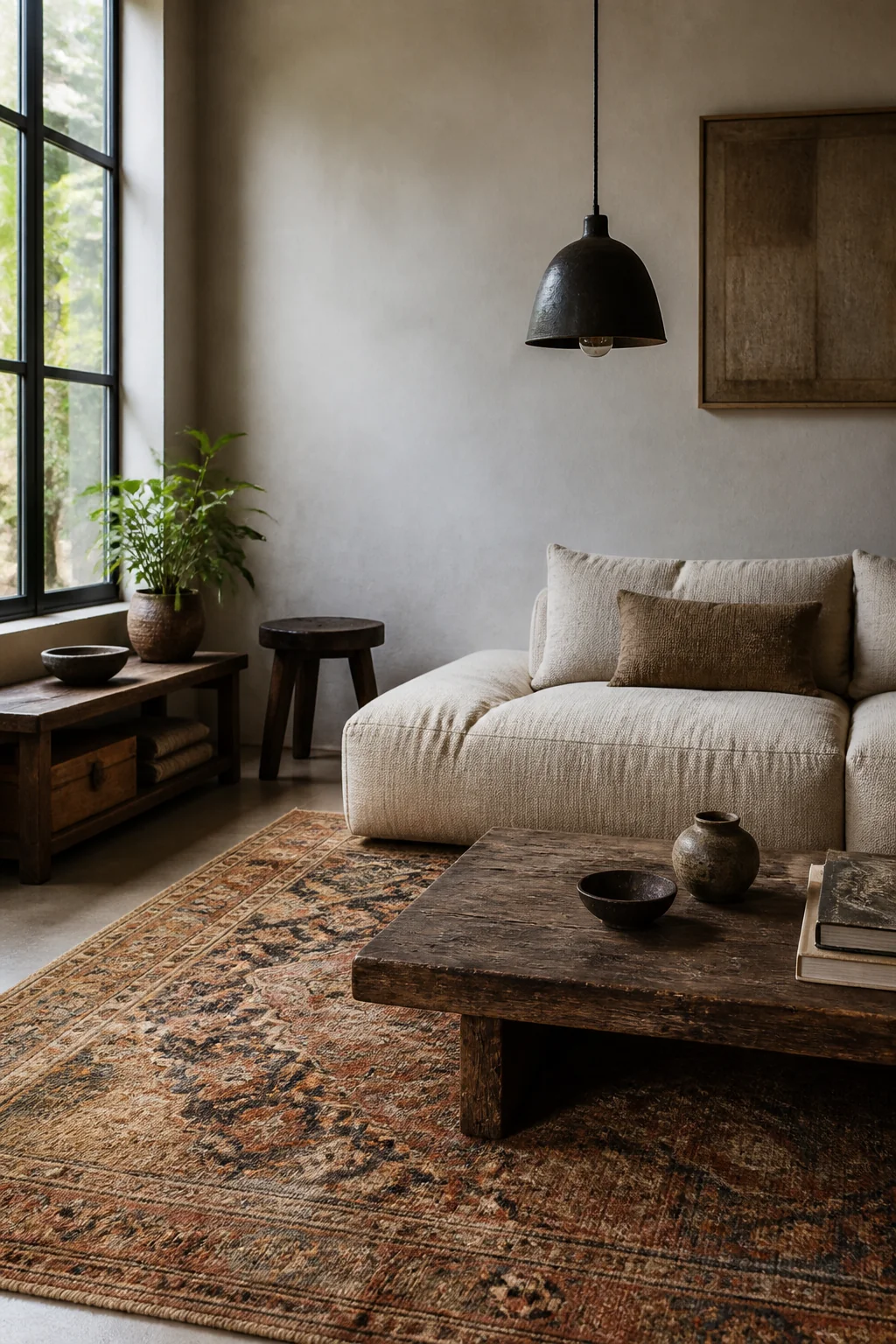
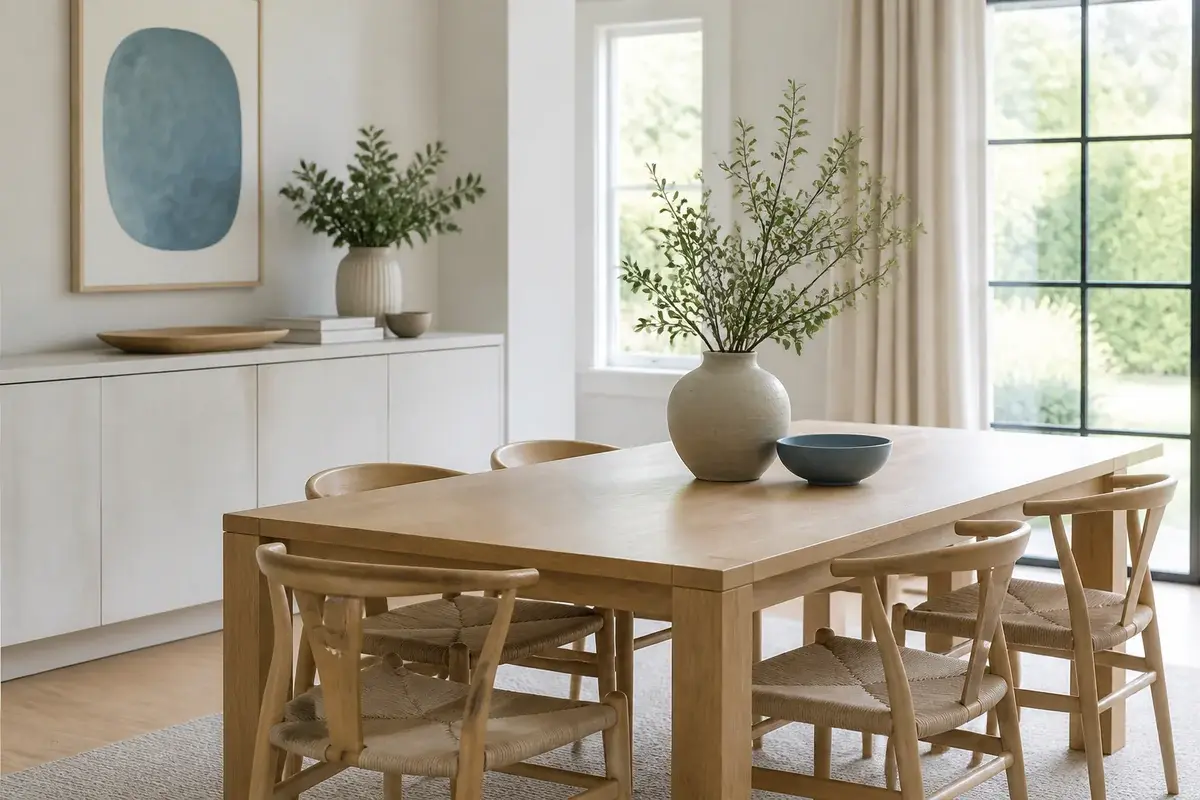
Size decides whether a dining rug works, and almost every cheap one fails on size rather than looks. The rug has to extend at least 24 inches past the table on all four sides so the back legs of a chair stay on it when someone pushes away from the table. Make it 30 inches if your chairs have arms. For a 6 foot rectangular table seating six, that's an 8 by 10 minimum. A 5 by 7 under the same table means every single chair catches the edge on the way out, and you'll hear it at every meal.
Fiber matters second. Wool springs back under chair legs instead of crushing flat, and its natural lanolin gives you a few seconds to blot a spill before it soaks in. Jute is cheap and rough, and it traps crumbs in the weave where a vacuum can't reach. Cotton flatweaves wash but show every stain.
Estate sales and Marketplace list vintage wool from about $80, against $300 and up new. Flex the back to check for dry rot, look for bald patches near the fringe, and smell it for mildew. Budget another $30 to $50 for a pad.
Style Your Table with Intentional Accessories
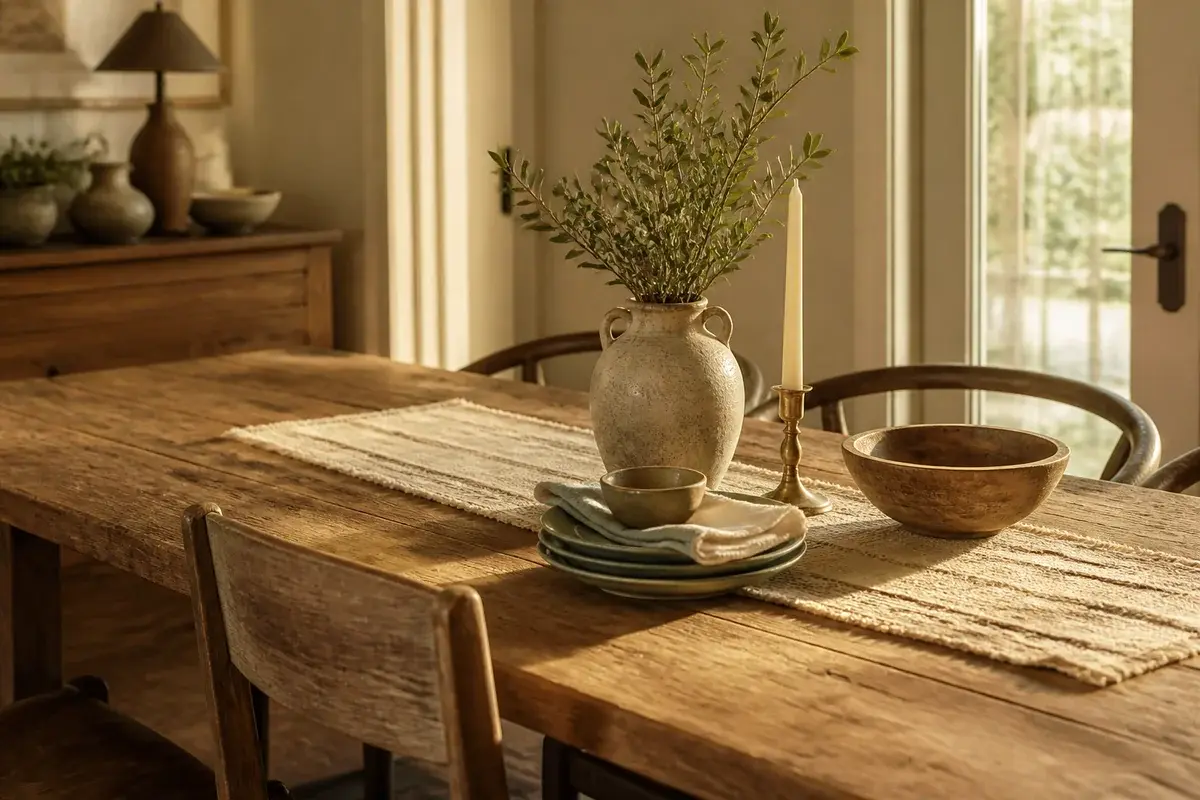
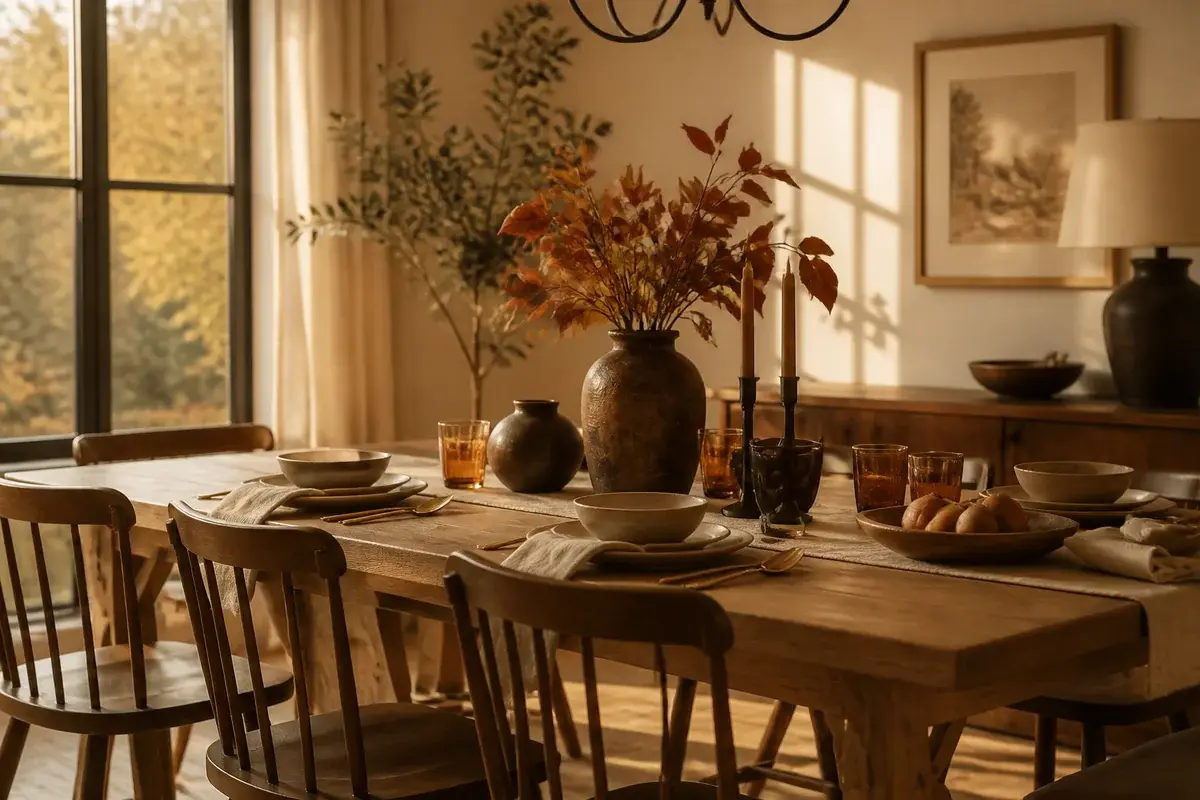
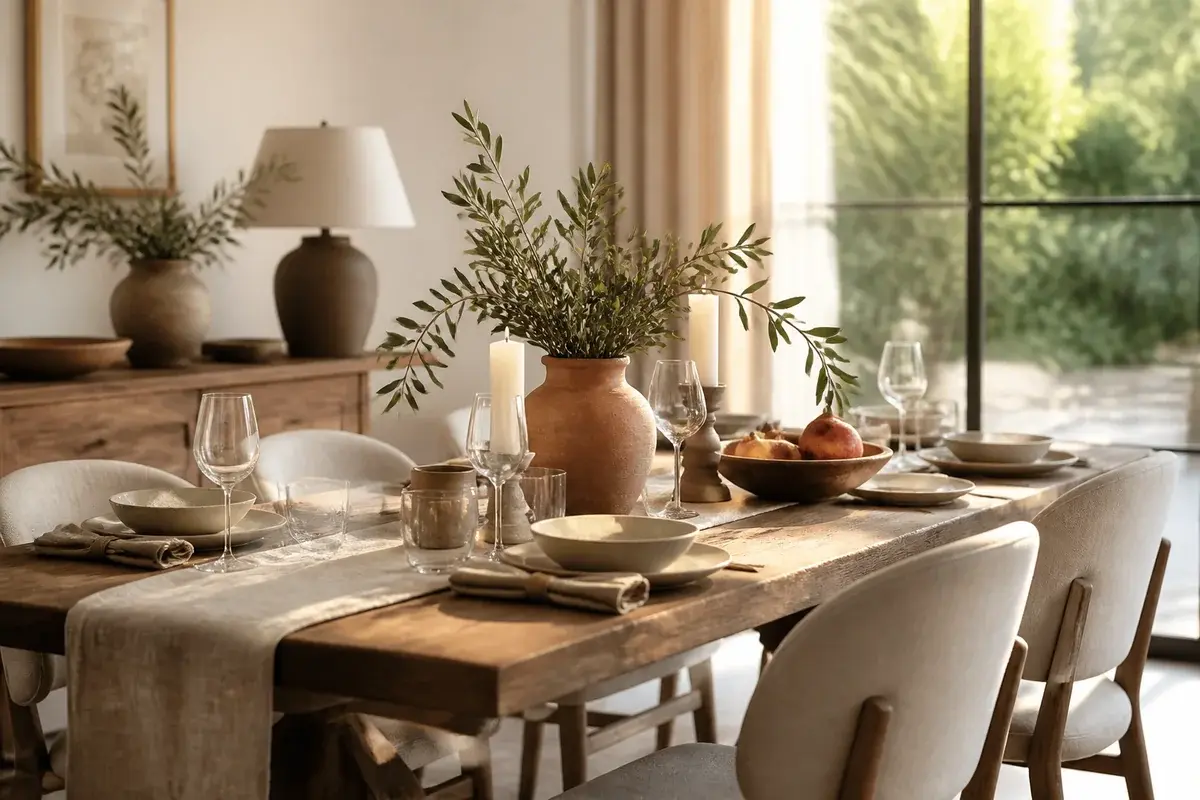
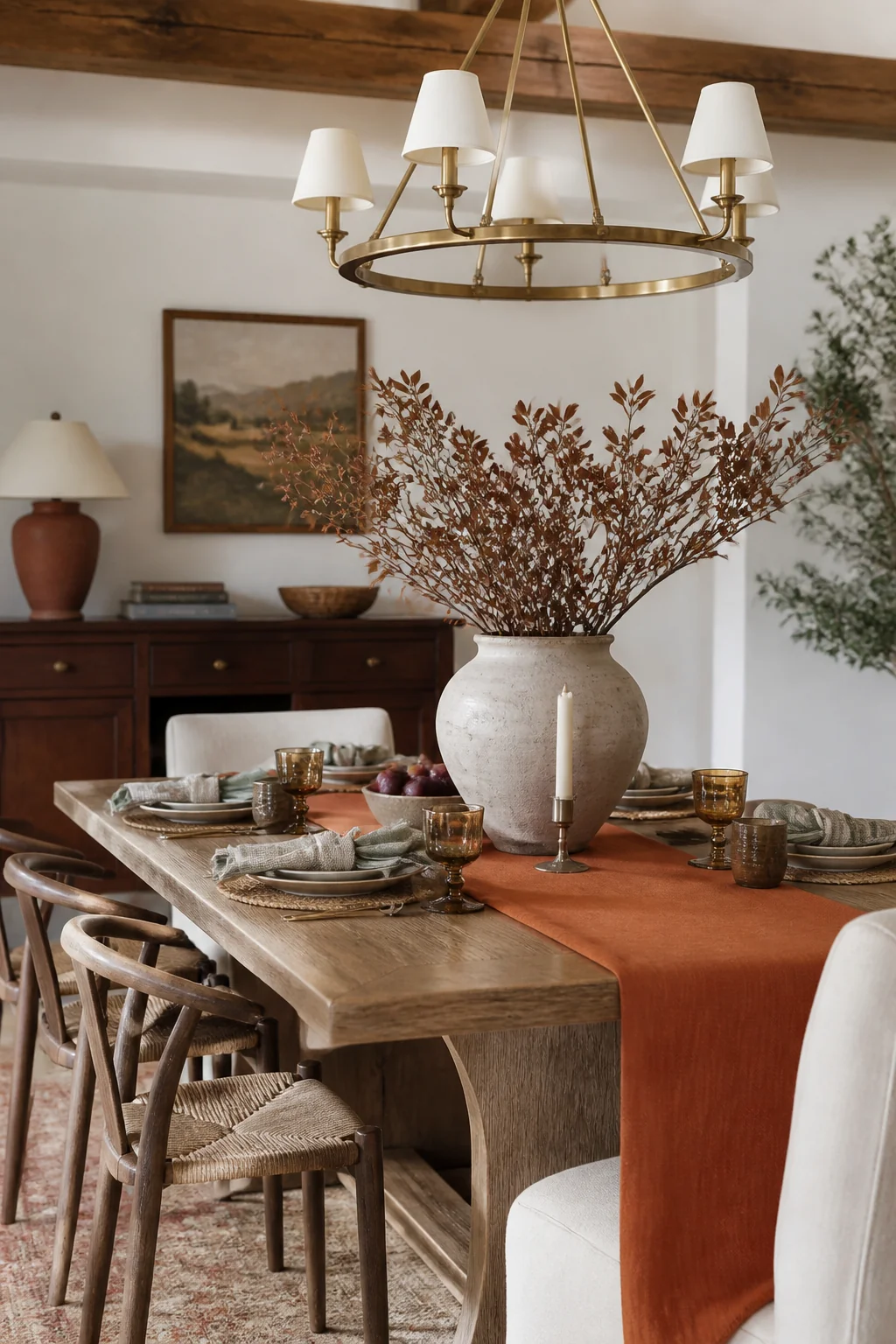
Around $120 buys a table setup you leave out permanently: a linen or linen blend tablecloth at $25 to $40, four ceramic dinner plates at $30 to $50, and wooden placemats with cloth napkins at $25 to $35. Everything else should come from what you already own. Candlesticks, a wooden bowl, a jug for whatever's flowering outside.
Two numbers keep it usable rather than decorative. Each place setting needs 24 inches of table width, so a 60 inch table seats two comfortably per long side and not three. And a centerpiece should sit under 12 inches tall, or else go tall and skinny above 24 inches on a stand, so people can talk across it instead of around it. Anything in the 12 to 24 inch band lands exactly at eye level.
Pick a narrow color story and stick to it, whether that's cream and raw wood or black and brass. If you can add a sideboard, secondhand ones start around $60 and give the room somewhere to put serving dishes, candles, and the pile of mail that would otherwise live on the table.
Hang a Simple Gallery Wall (Budget-Friendly)
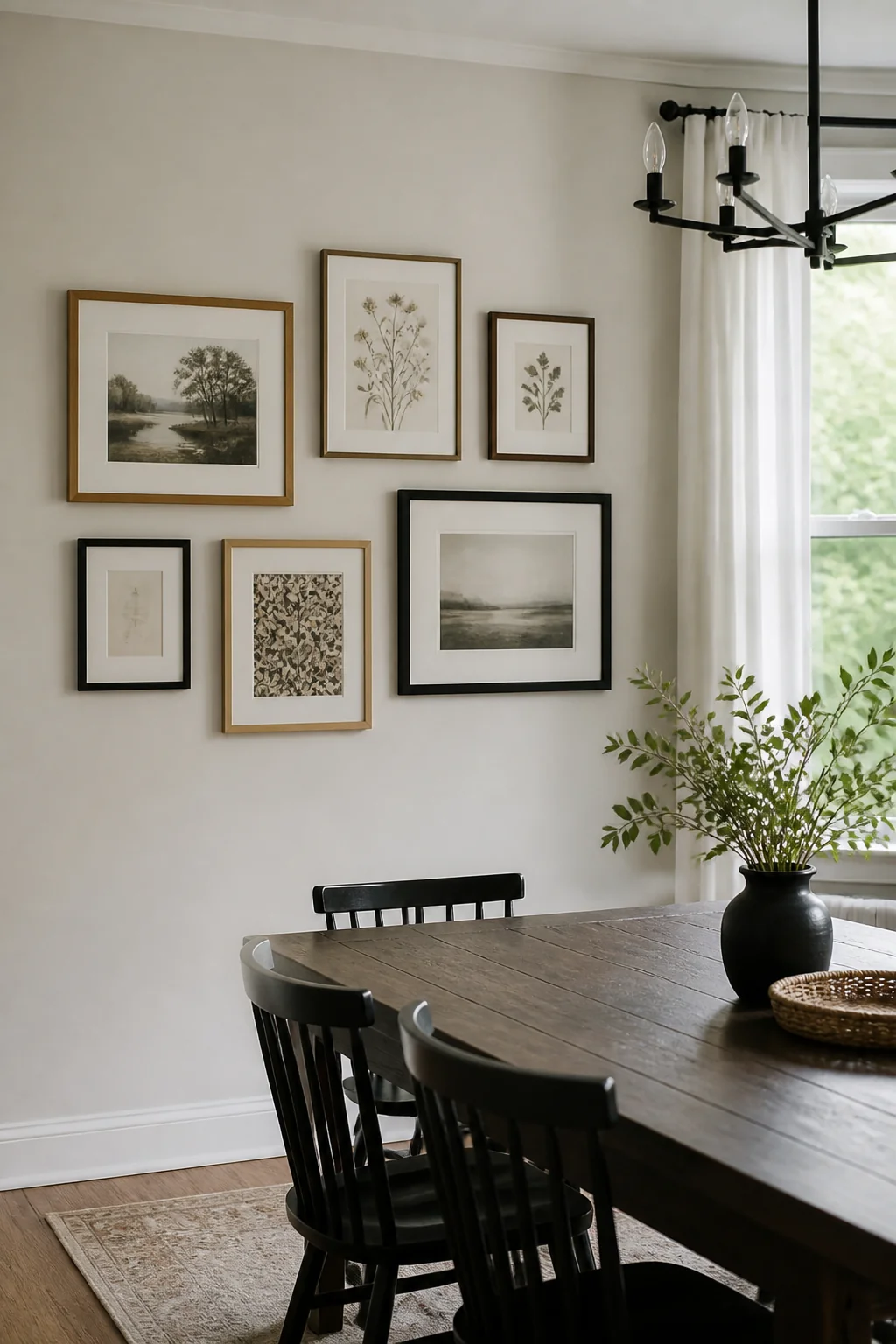
Five frames at $5 to $8 each plus 8 by 10 drugstore prints at roughly $3 apiece comes to about $55 for a whole wall. The art itself can be free: public domain botanical and architectural plates scan beautifully, and printing at a drugstore costs less than one framed piece from a home store.
Hanging is where these go wrong. Frames creep upward when you hang them at arm's height from a step stool, and a dining room is a room you look at sitting down, so bring the center of the whole arrangement back to 57 to 60 inches from the floor. Keep 2 to 3 inches of gap between frames so the group reads as one block instead of scattered pieces, and above a sideboard leave 8 to 10 inches between the furniture top and the bottom frame.
Lay the arrangement out on the floor first, trace each frame onto kraft paper, tape the paper to the wall, then drive your nails straight through it and tear it away. And watch the bottom edge in a dining room specifically. A frame hanging below about 40 inches will get knocked crooked by chair backs every time someone stands up. Two hooks per frame instead of one keeps them level.
Pin this for later
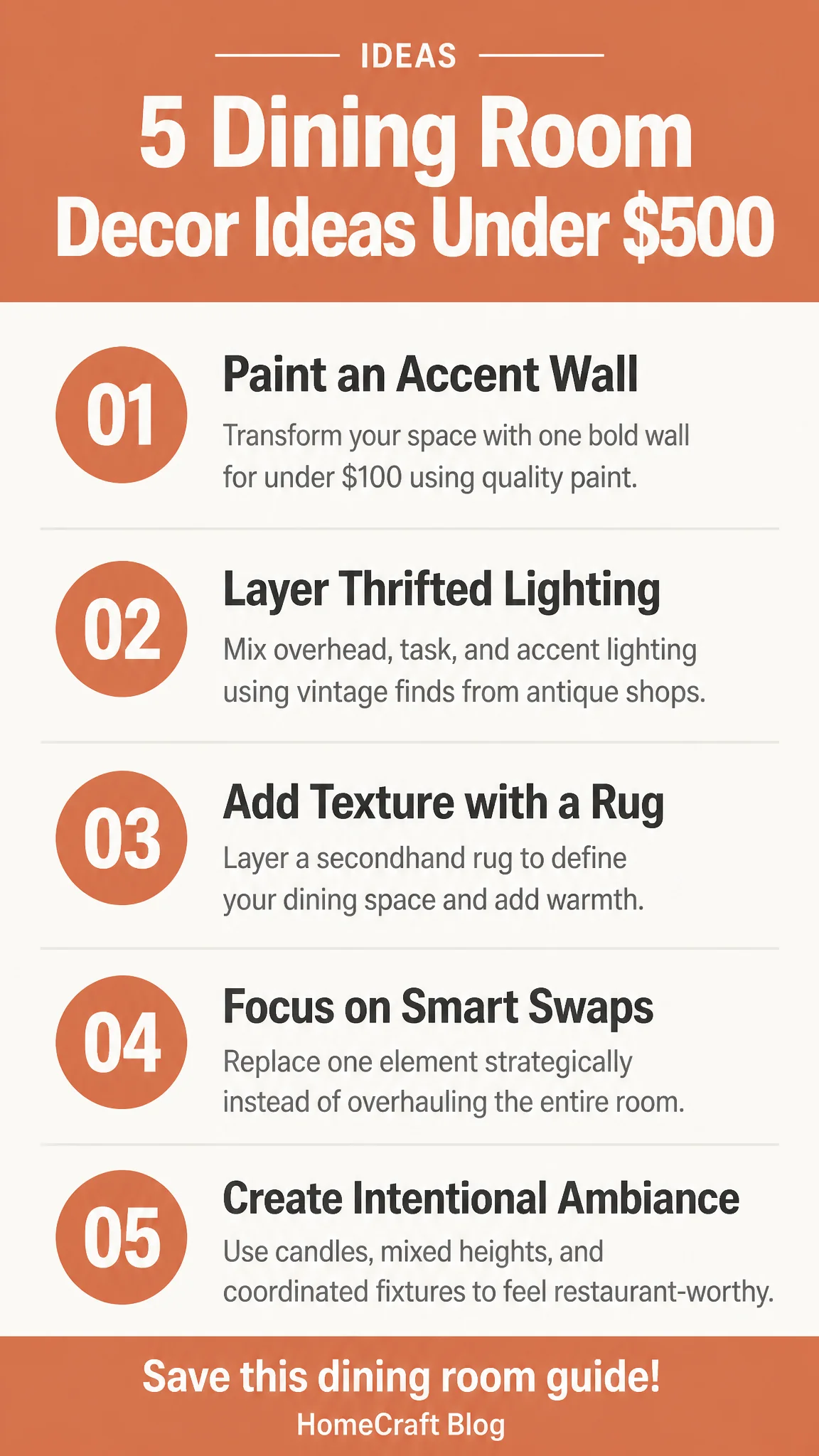
If you only check one thing before you spend, make it the tape measure. The clearances are what separate a dining room that works from one that just looks good in a photo: 24 inches of rug past the table on every side, 30 to 36 inches from tabletop to pendant, 24 inches of table width per seat. Get those wrong and the nicest wool rug in the county still catches your chairs. Get them right and even a $60 secondhand sideboard and a $3 print look deliberate.