11 Modern Contemporary Bathroom Vanity Ideas for Small Bathrooms
Small bathroom vanities don't have to sacrifice style. See 11 contemporary bathroom vanity ideas that fit tight spaces while looking sharp.
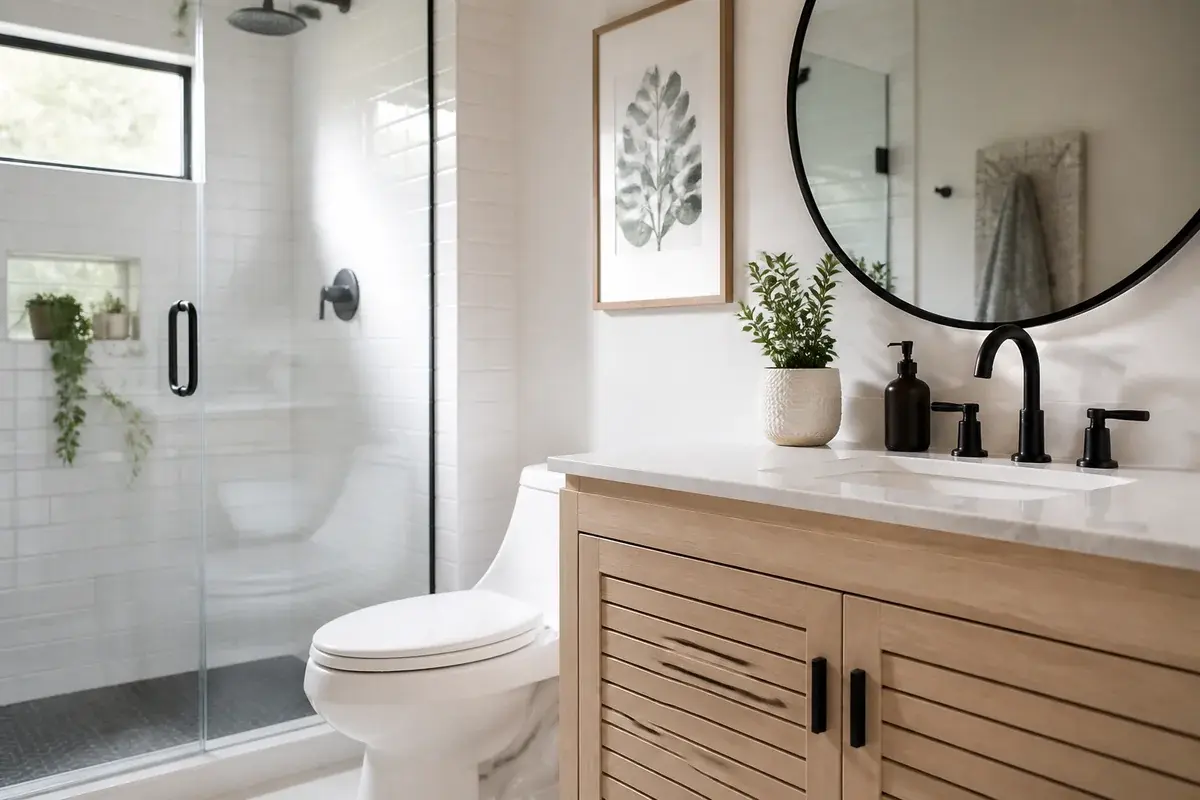
The vanity is the anchor of any bathroom, and in a small space it can either swallow the room or make it work harder. The best approach is to choose a vanity that does the heavy lifting itself: something with built-in storage, a clean profile, and a footprint that doesn't force you to turn sideways at the sink. A contemporary vanity in a small bathroom isn't about looking trendy for its own sake. It's about picking pieces that save space, catch light, and keep clutter hidden so the room feels larger than it actually is. Here are 11 ideas that work for tight square footage, from floating designs to corner solutions that won't leave you stranded.
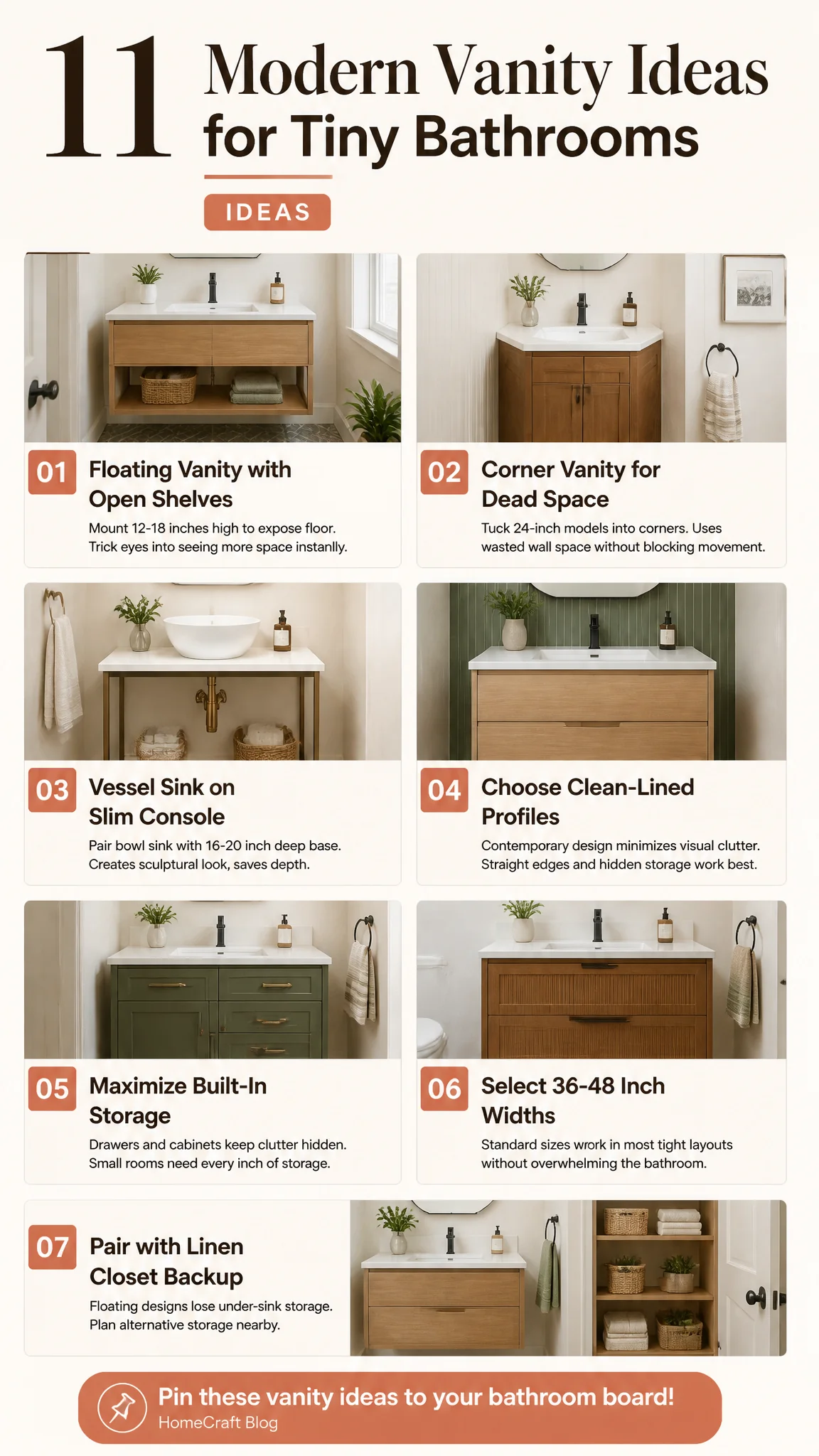
1. Floating vanity with open shelving below
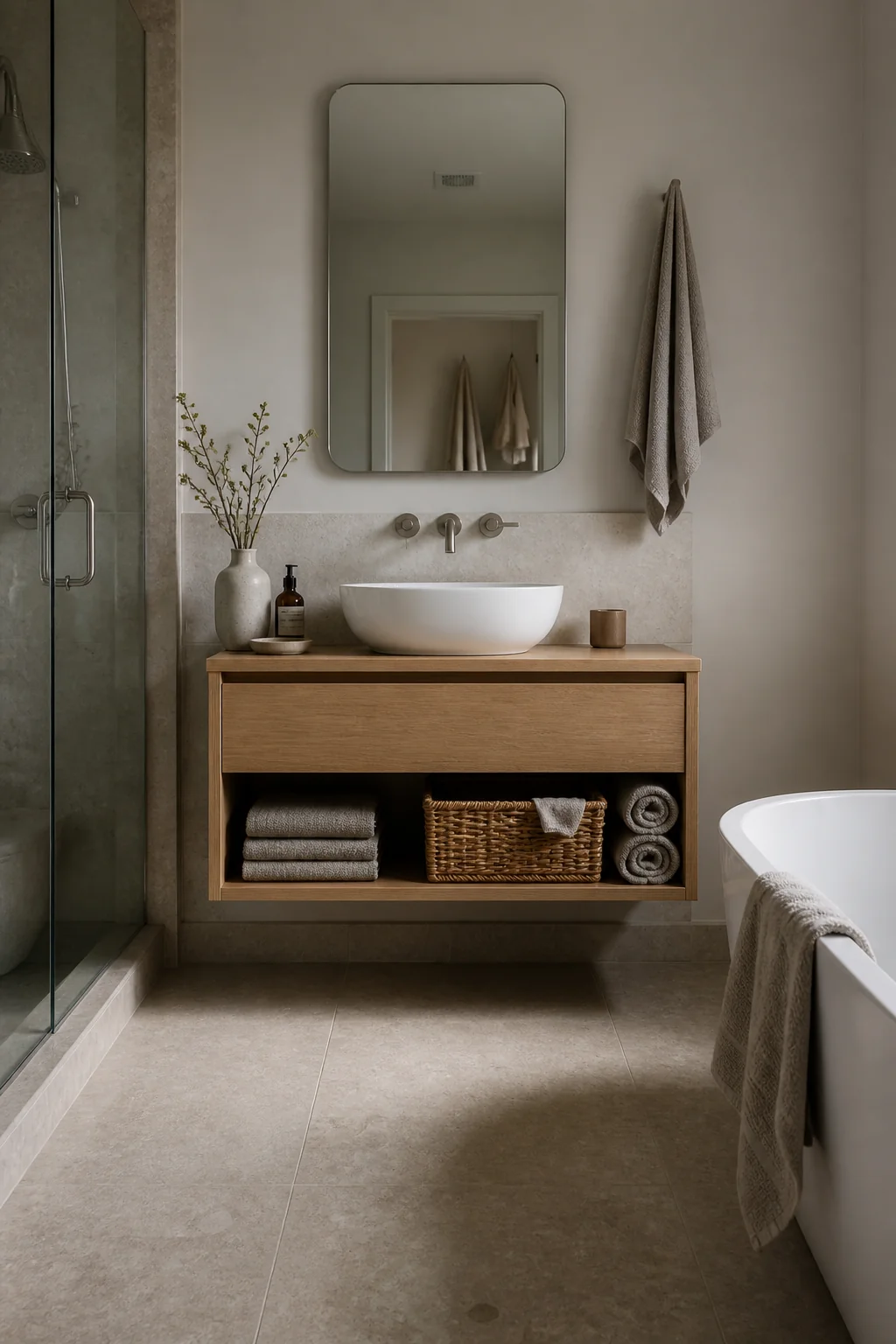
A floating vanity hovers 12 to 18 inches above the floor, and that gap is the whole point. It makes your floor visible, which tricks the eye into reading the room as airier and bigger. Keep the space below mostly open (one or two shelves at most) and your small bathroom suddenly looks less cramped. You'll need a stud or blocking in the wall to anchor the vanity securely, and most floating vanities run 36 to 48 inches wide, which works in most small bathrooms without overwhelming the wall. The downside: everything you need lives on those shelves or in drawers, so you lose the under-sink cabinet storage. It works best when you have a linen closet nearby or a medicine cabinet to pick up the slack.
2. Wall-mounted corner vanity
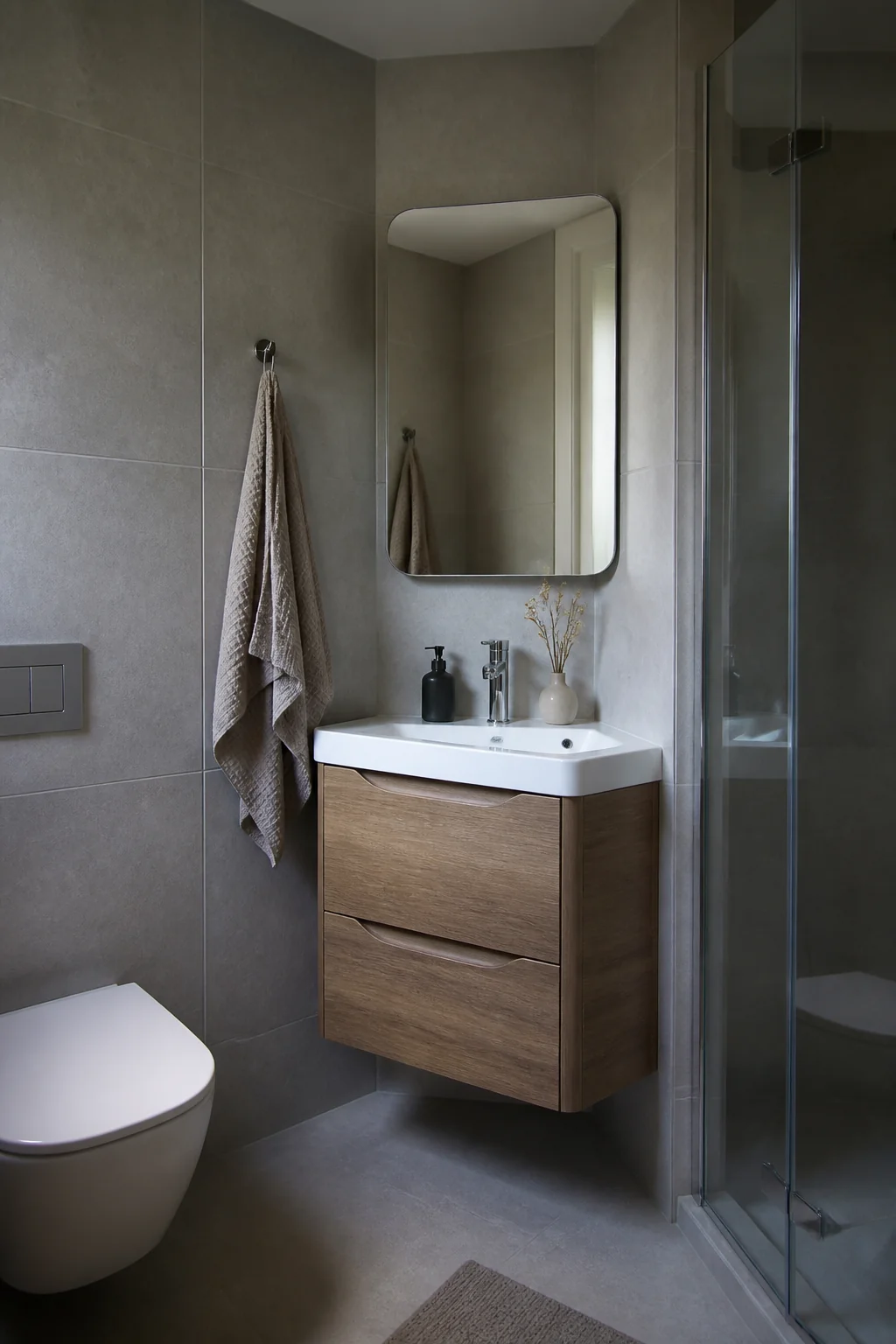
Corner vanities are the unsung heroes of small bathrooms. By tucking the sink into the corner where two walls meet, you're using dead space that serves no other purpose. A typical corner model runs 24 inches on each side and sits about 18 to 24 inches deep, leaving the rest of the wall open for movement. The contemporary versions have clean lines and often pair a corner sink with a single cabinet and mirror for a simplify look. The trap: corner vanities can be harder to find than standard models, and you lose easy access to one side. They're brilliant when the bathroom is truly tight and the toilet or tub is already eating up the other walls.
3. Narrow vessel sink on a slim console
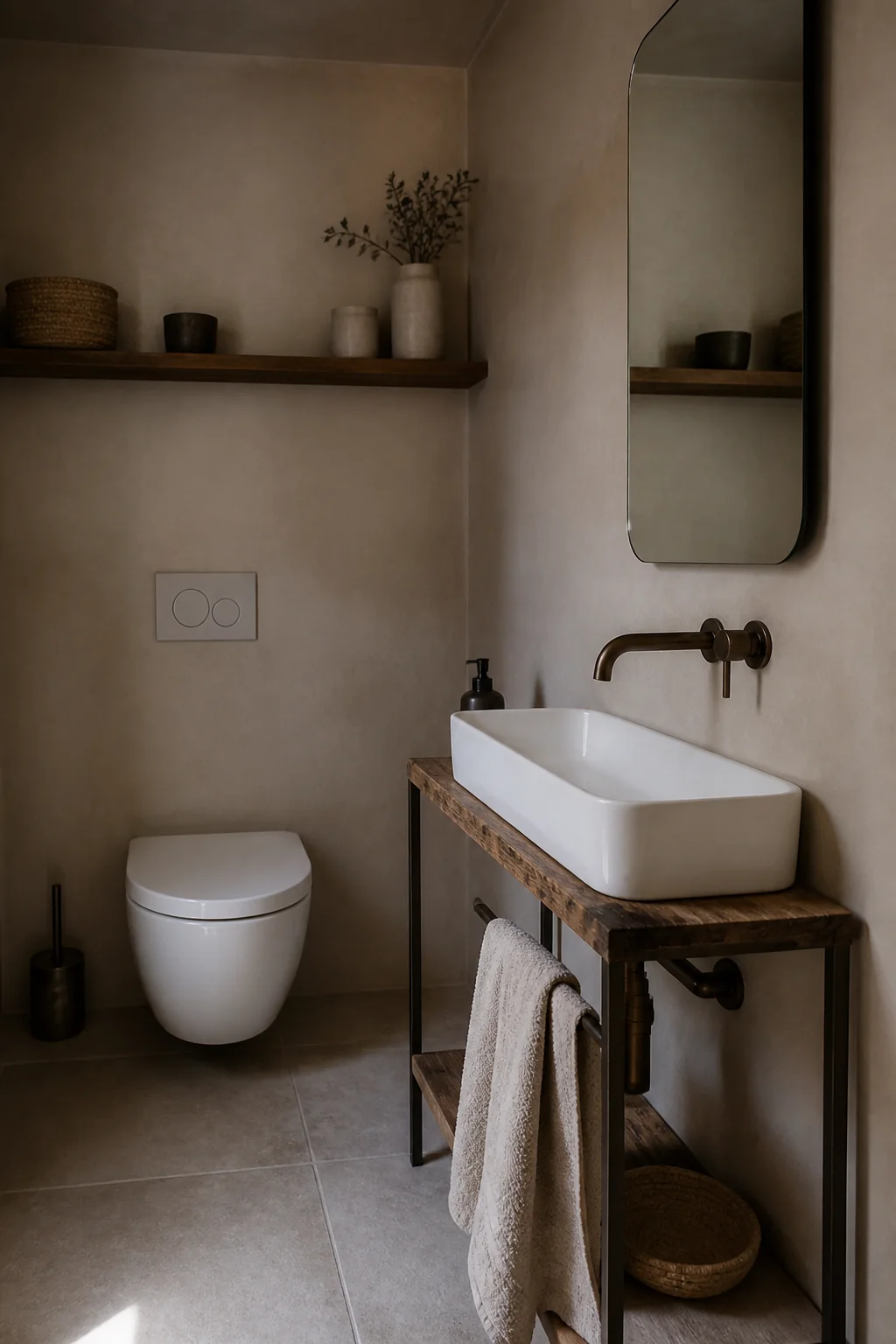
A vessel sink sits on top of the countertop like a bowl, which means you don't need as much counter depth to support it. Pair this with a slim console vanity (sometimes called a pedestal with a top shelf) that's only 16 to 20 inches deep, and you've got a vanity that doesn't project into the room. Vessel sinks run about 16 to 18 inches in diameter and create a sculptural moment in an otherwise minimal space. The contemporary aesthetic plays beautifully here: glossy white or matte black sinks against warm wood or brushed metal stands. What doesn't work is water splashing behind the sink onto the wall, so you'll want either a backing panel or a mirror that extends across the full width to catch drips.
4. Integrated sink and storage in a concrete vanity
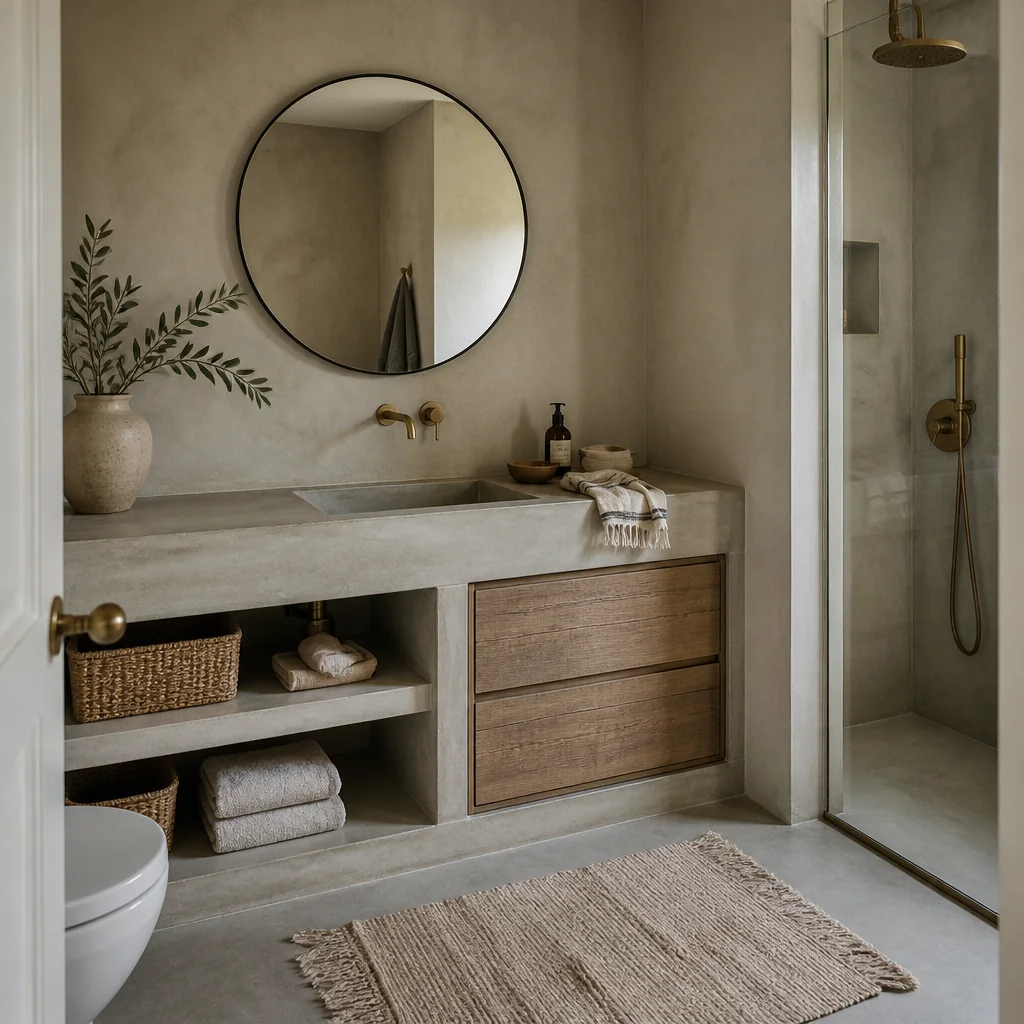
Concrete vanities are solid, sculptural, and completely contemporary. The sink integrates into the countertop surface as one continuous piece, so there are no seams where water hides. A concrete vanity usually costs between $800 and $2,000 for a custom piece, and the payoff is a vanity that feels like an object, not just cabinetry. In a small bathroom, a 36-inch concrete vanity with the sink molded into one end keeps things minimal and intentional. The trade-off: concrete needs sealing and can show water spots if you don't dry it after each use (practically nobody does this). It's also heavy, so wall mounting requires reinforcement. If you're willing to spend the time on maintenance, it reads as intentional rather than neglected.
5. Vanity with a single drawer and open storage below
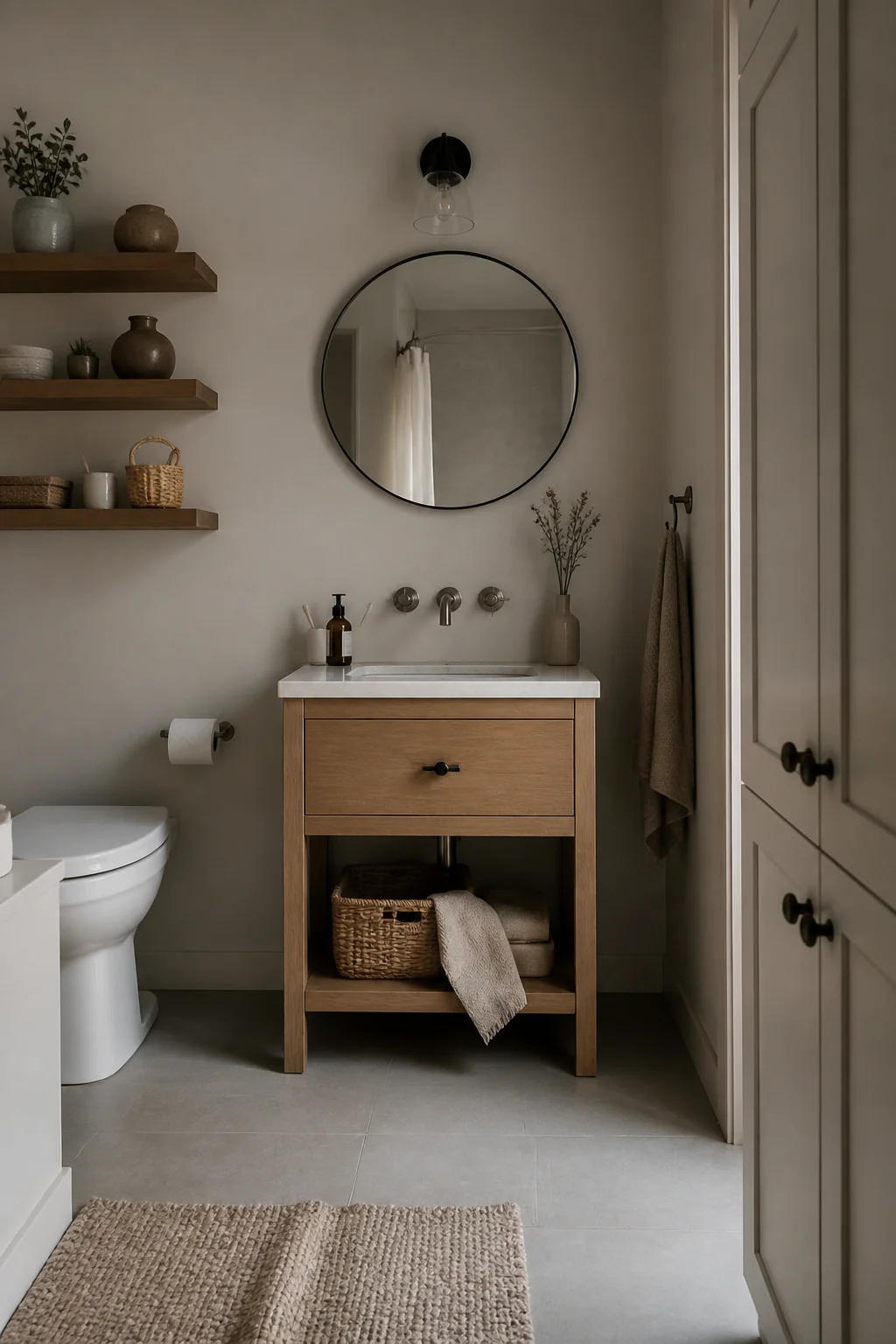
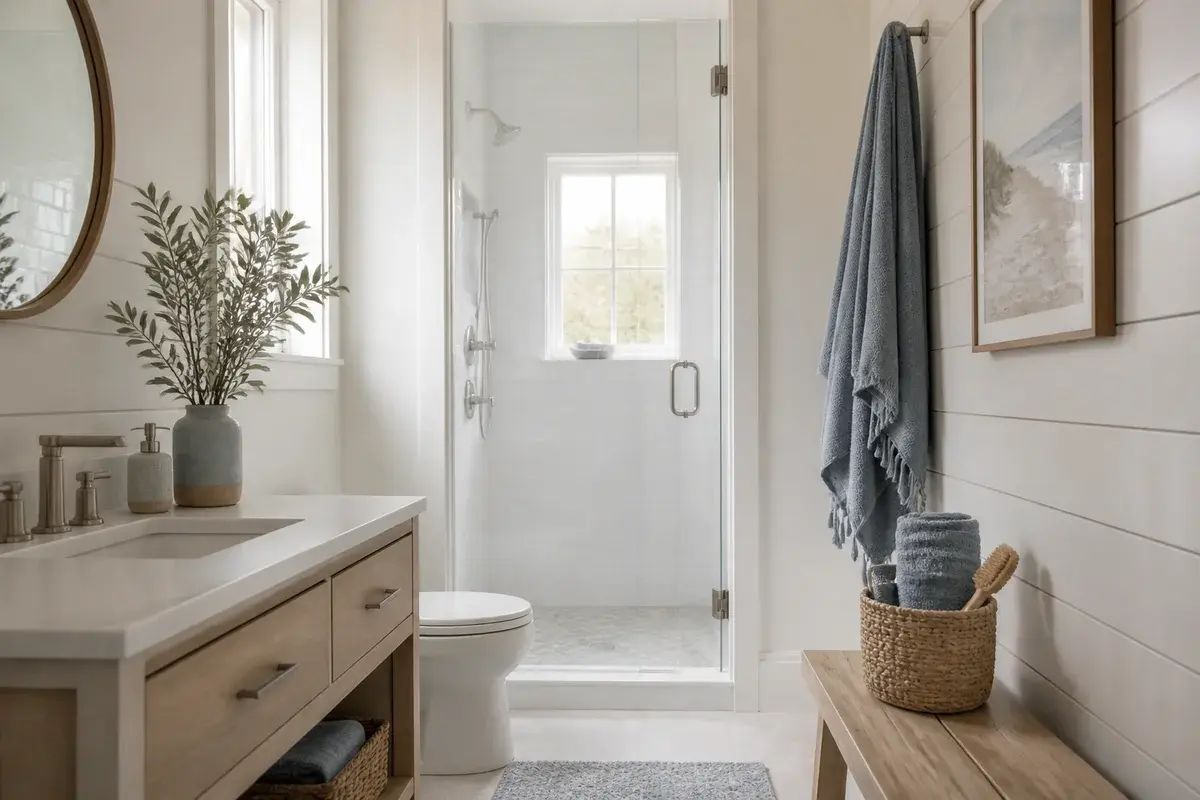
This is a working compromise for small spaces: one deep drawer for the items you use daily, and open shelving or open railing below for a basket of towels or toiletries. A 36-inch vanity with this layout gives you real storage without the visual weight of a full cabinet run. Contemporary versions pair this with tapered legs, a waterfall edge on the countertop, and minimal hardware so nothing disrupts the line. The drawer slides out fully, so you can reach everything without contorting. Open storage below means you see whatever sits there, so you're committed to keeping it neat. If you hate the sight of half-used bottles and spare rolls, this isn't your vanity.
6. Vanity with a mirror that doubles as a medicine cabinet
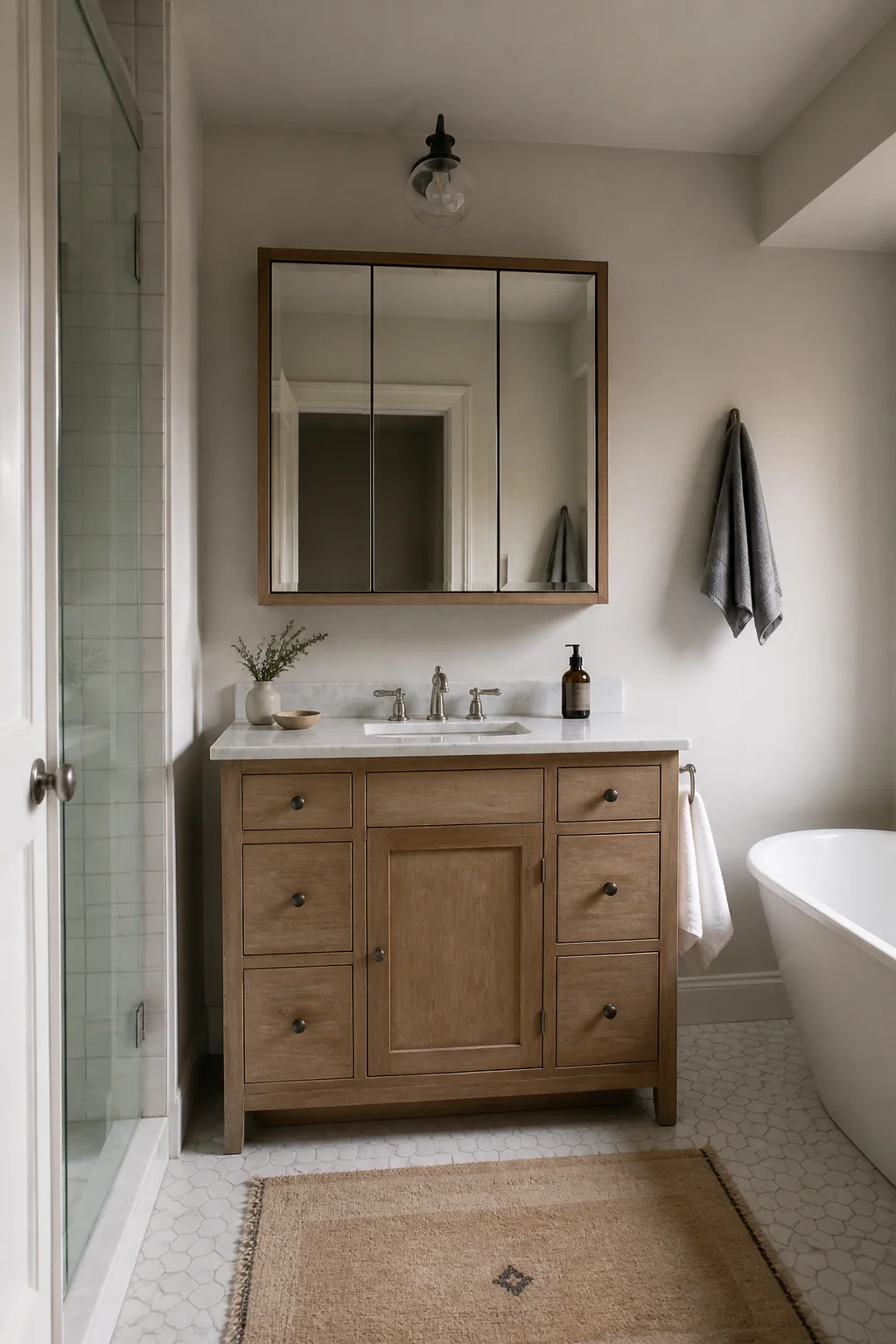
Not every medicine cabinet has to look like a medicine cabinet. Contemporary mirrors with hidden storage behind them keep the wall clean and your medications out of sight. A 30 x 36-inch mirror cabinet holds more than you'd expect and costs between $150 and $500 depending on the frame finish and hardware. The mirror itself reflects light and makes the bathroom feel larger, so you're solving two problems at once. The mistake many people make is leaving the cabinet door open or propped half-way to hide the mess inside. It defeats the purpose. Choose a vanity with a countertop deep enough to hold everyday items, and keep the cabinet strictly for things you reach for occasionally.
7. Undermount sink in a wood vanity
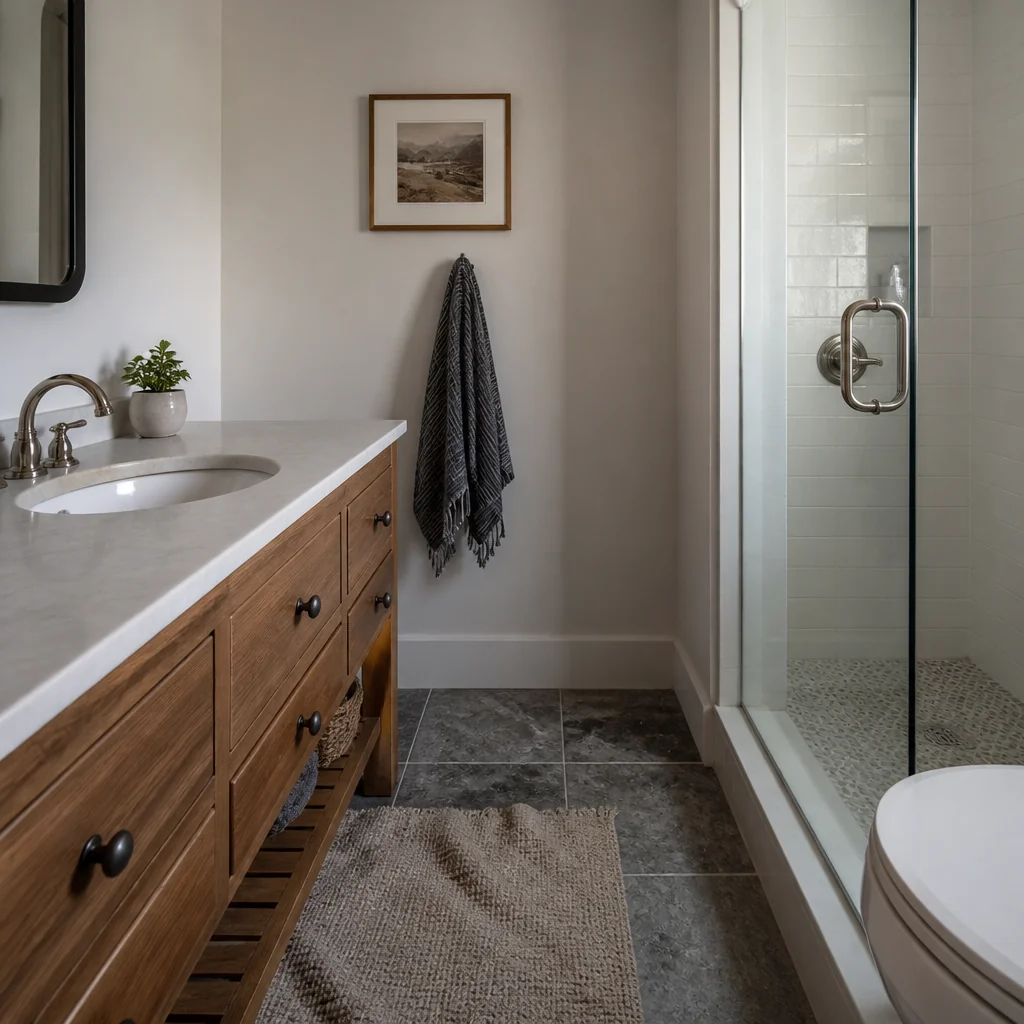
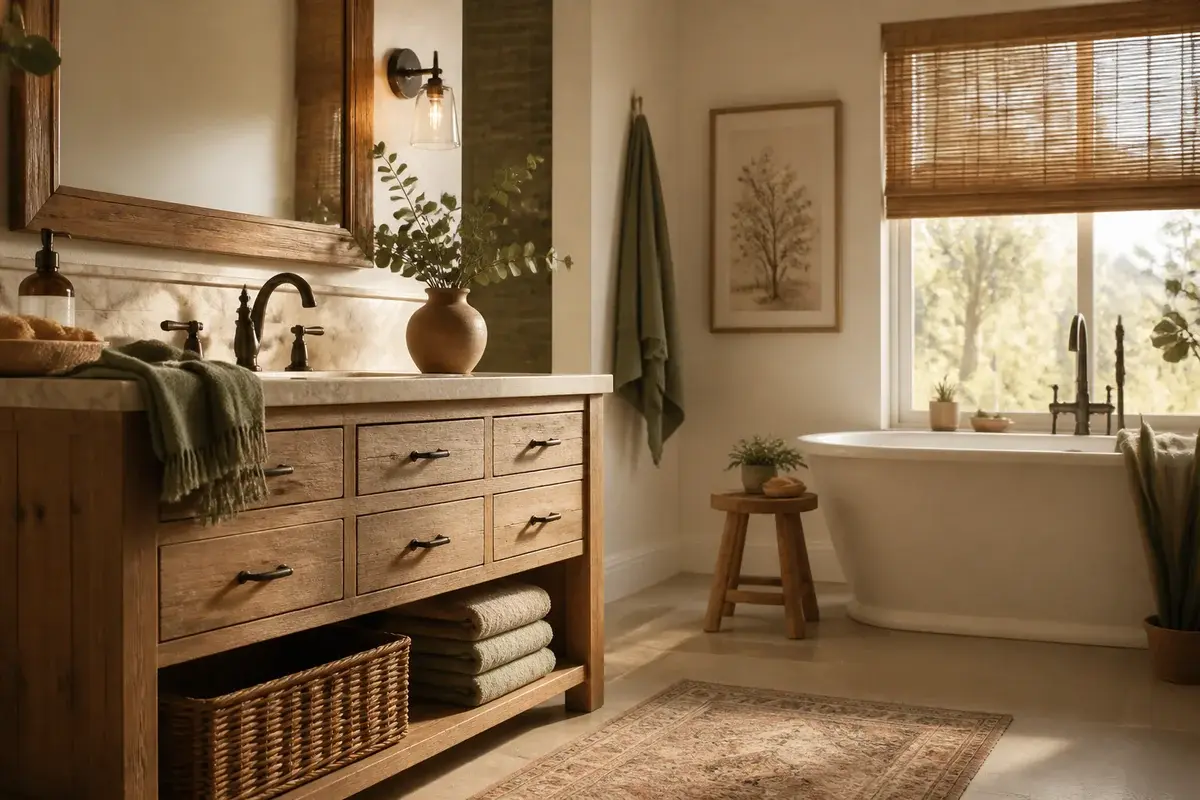
An undermount sink hangs beneath the countertop surface, which means water and debris slide straight off the counter into the sink with no edge to catch gunk. This is pure function, and it looks cleaner than a traditional rim-mounted sink. Pair it with a warm wood vanity (walnut, white oak, or bamboo) that's 36 to 42 inches wide, and the contemporary look leans earthy and warm rather than cold and minimal. Wood vanities in a small bathroom need ventilation and a bathroom exhaust fan running during and after showers to prevent moisture damage. Relative to a laminate or concrete vanity, wood costs more up front (expect $400 to $800 for a quality ready-made piece), but it ages beautifully and feels less temporary. If your bathroom has poor ventilation, choose a waterproof laminate instead and save the wood for drier rooms.
8. Vanity with a towel rail built into the frame
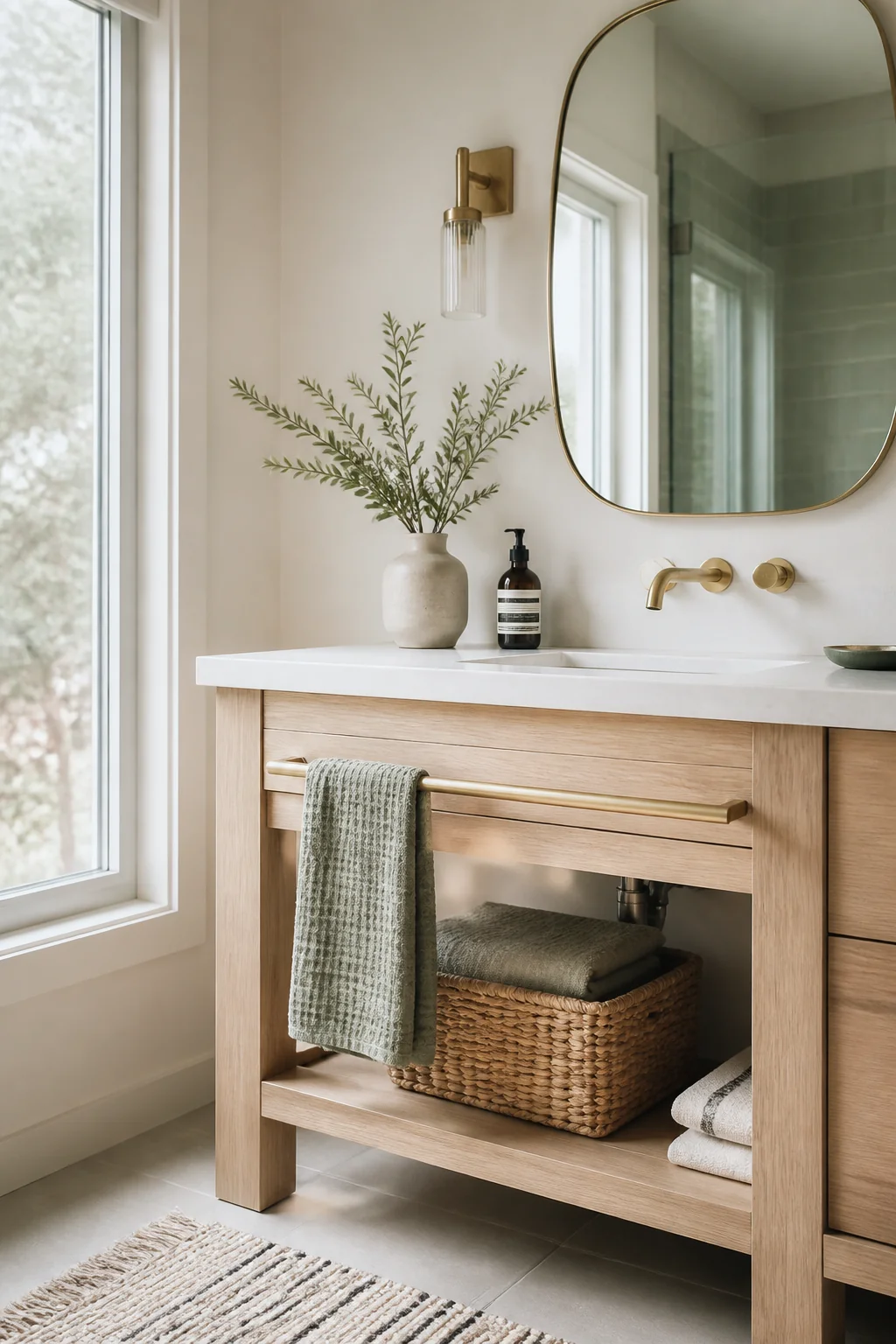
Contemporary vanities increasingly integrate functional elements that used to live on the wall. A vanity with a towel rail running down one side or across the bottom means you're not buying a separate wall-mounted towel bar, and you're creating a composed, coordinated look. This works especially well when the vanity is 42 to 48 inches wide and the rail is substantial enough to hold more than one towel. The look is cleaner because the rail is anchored to the vanity itself, not the wall, so there's no visual noise. The downside: if you ever want to replace the vanity, you'll need another piece with a built-in rail, or you'll have to fill and repair the mounting holes. It's also harder to adjust the rail height once it's installed.
9. Single-sink vanity with a divided mirror above
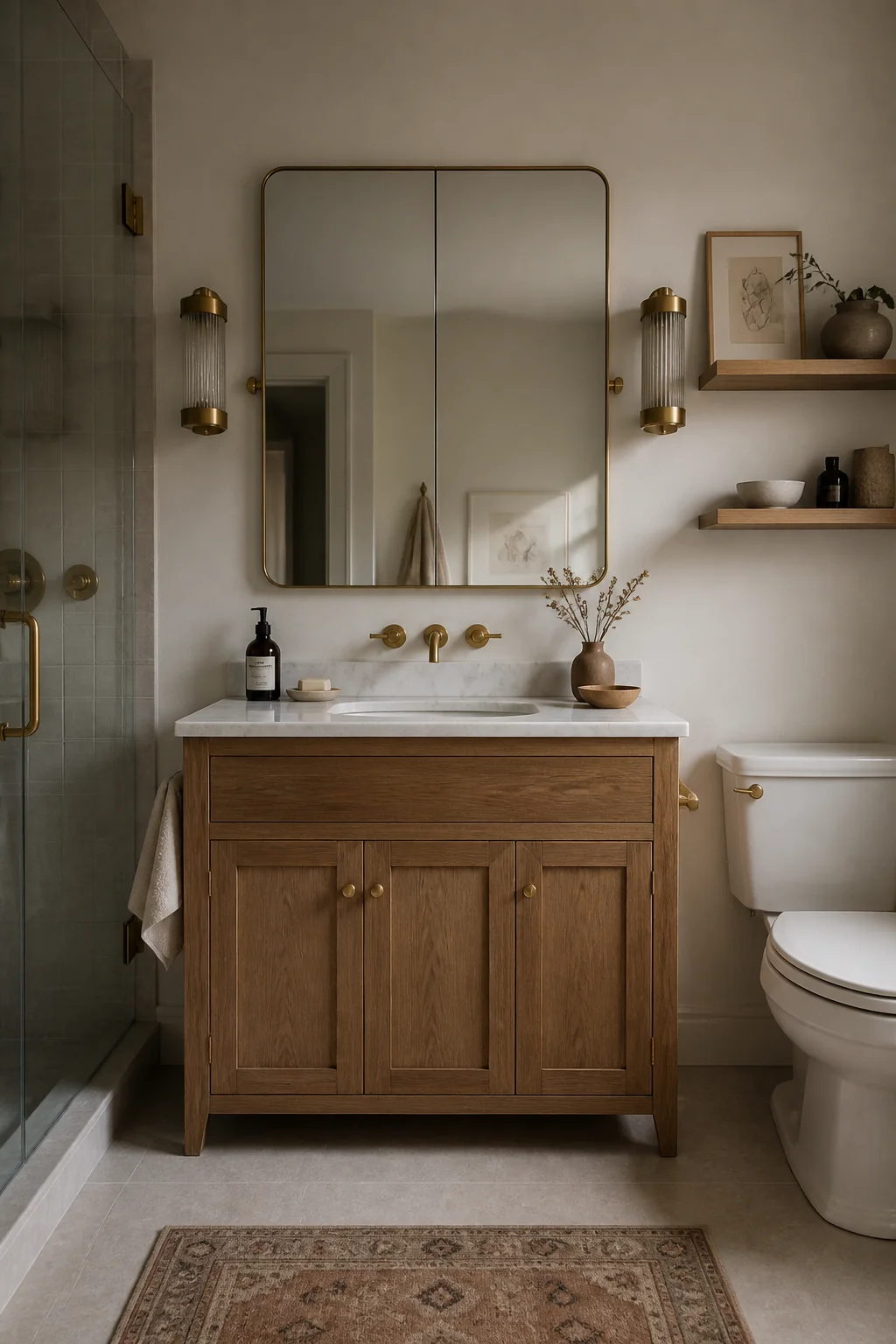
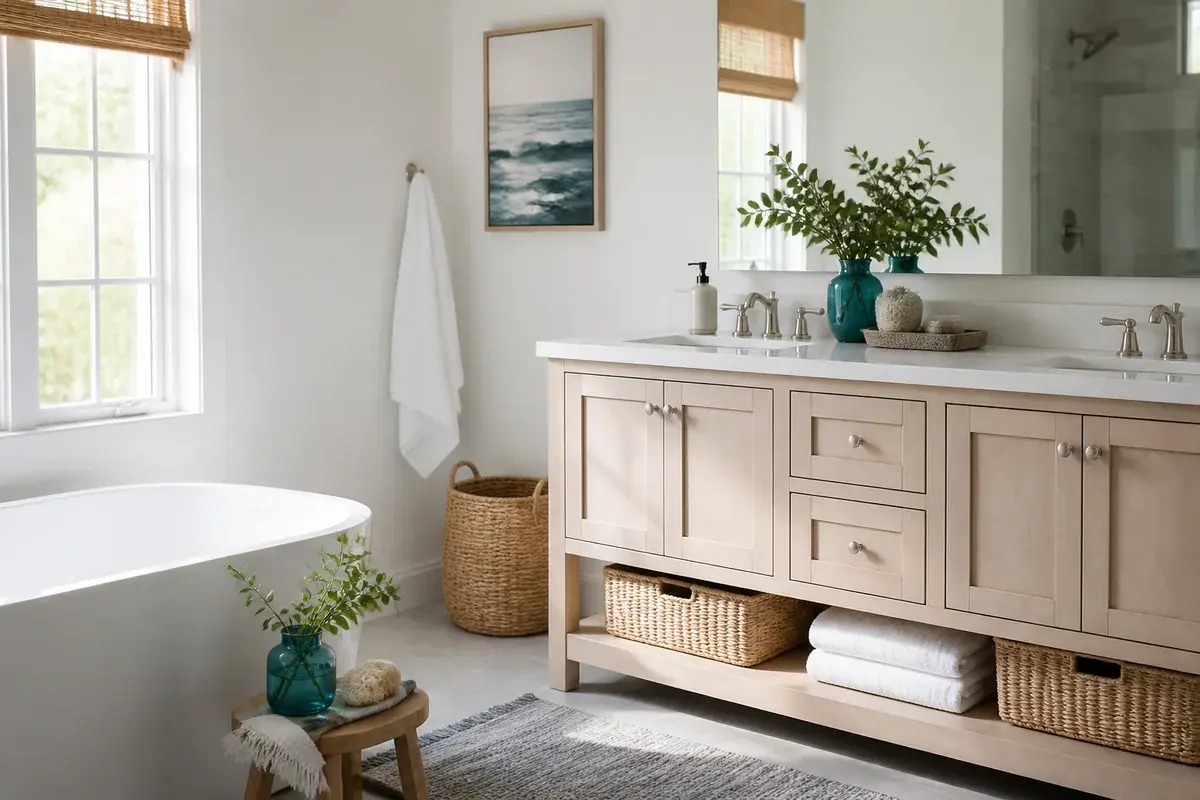
A divided mirror (two separate panels instead of one large rectangle) above a single-sink vanity keeps the composition from looking too symmetrical in a small space. This is a small shift, but it changes how the bathroom feels. A 36-inch vanity with two 18 x 30-inch mirrors on either side of a slim shelving unit creates rhythm without clutter. Contemporary mirrors often have thin metal frames in matte black, brushed brass, or stainless steel, which grounds the look and adds detail. The mirrors sit a few inches apart, and in that gap you can run a narrow shelf for plants or a soap dispenser. Two mirrors also mean two people can use the vanity at once without elbowing each other.
10. Corner sink with angled vanity cabinet
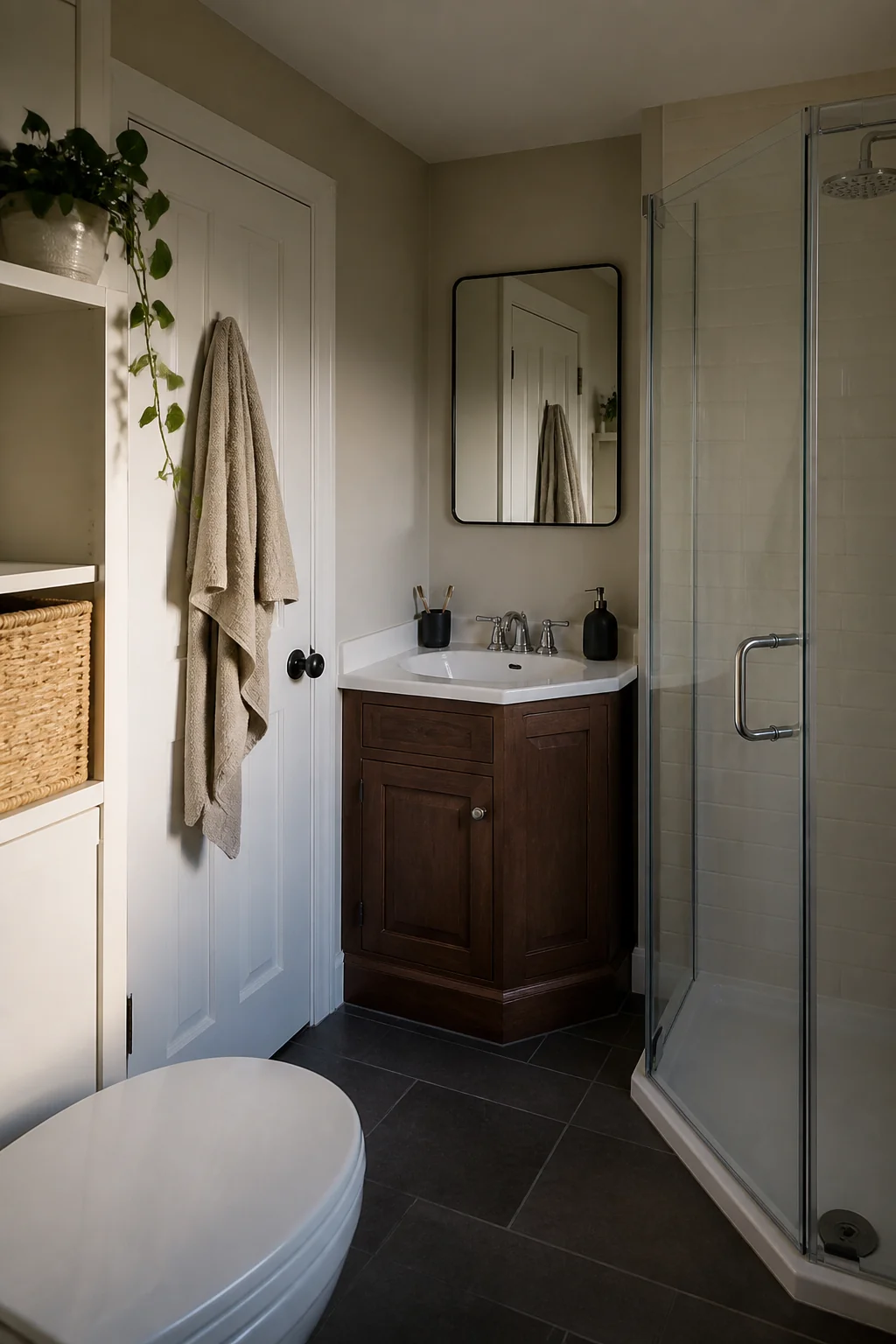
If you want corner storage that's more functional than a traditional corner vanity, an angled cabinet makes sense. Instead of facing the corner straight-on, the cabinet sits at a 45-degree angle, so you open the door toward the center of the room rather than into the wall. This angle eats up more floor space than a straight corner vanity, but it's far easier to access. A 24-inch angled corner vanity usually runs $500 to $1,200 depending on materials and hardware. The contemporary aesthetic works here because the angle itself is a design statement, especially in matte finishes like graphite or warm grays. The constraint: most angled cabinets are custom or semi-custom, so lead times can run 8 to 12 weeks.
11. Minimalist slab vanity with integrated lighting
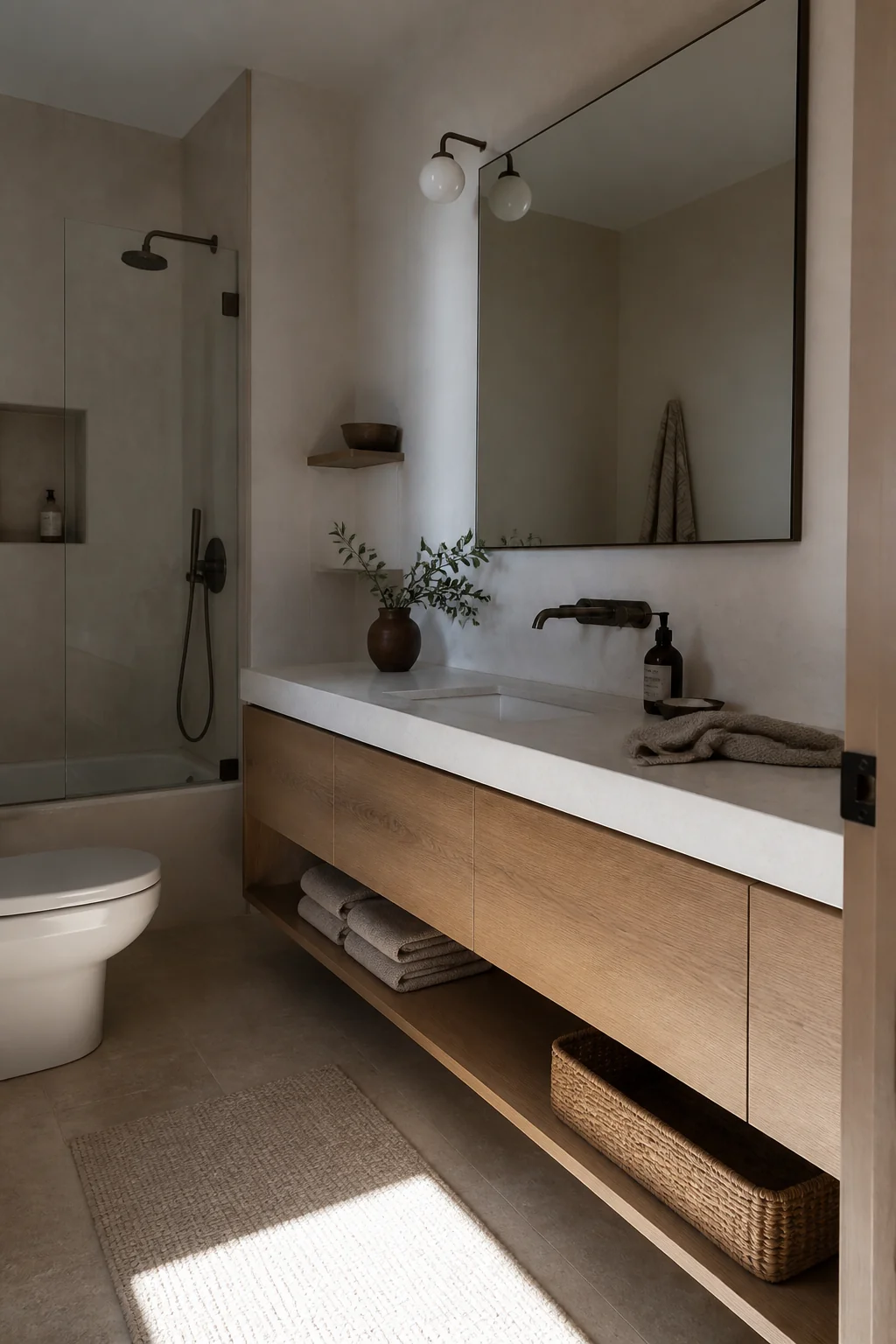
A slab vanity is one flat, uninterrupted surface with no handles, no visible joints, and storage recessed into the sides or back. Add integrated strip lighting underneath or behind the vanity, and you've got a piece that's more sculpture than furniture. Contemporary slab vanities run 36 to 48 inches wide and are usually made from lacquered plywood, metal, or engineered stone. The integrated lighting costs $300 to $600 extra but serves double duty: it lights your face at the mirror and creates an ambient glow that makes a small bathroom feel intentional rather than cramped. These vanities are pricey (often $1,000 to $2,500 for a quality piece), and they're unforgiving if you change your mind about the design. There's nowhere to hide a pipe or add a shelf later.
Save the full guide
Small bathrooms push you to choose vanities that work harder than they look, and a contemporary design does exactly that. You're trading decorative excess for clean lines and built-in function, which means your bathroom stays visually calm even when it's physically tight. Storage becomes sculpted into the piece rather than bolted on, and materials like concrete, wood, and metal read as intentional choices rather than surface decoration. The vanity you pick isn't the end of the design, but it sets the tone for everything else in the room. When it's minimal and purposeful, the whole space follows.
Ideas fade by Friday. A plan finishes the room.
You just read a full guide to your bathroom. Saving ideas will not change it; a plan will. The Home Decor Collection is every planning tool we make, for every room in the house, in one download, so the after photos below stop being other people's rooms.
- Six room Style Kits, each with layout, palette and shopping list$114
- The Gallery Wall Studio: 200 prints + 15 measured layouts$29
- The Room Makeover System: 40 solved room layouts + workbook$29
- The Color Palette Handbook: 60 palettes shown in real rooms$19
- The Whole-Home Reset: 40 printable organizing checklists$19
- The Decorator's Cheat Sheets: the 40 measurements that matter$9
- All eleven products, bought separately
$219$97
A single hour with an interior designer costs more than the entire Collection, and this one keeps answering for every room you will ever decorate. Free updates included as the products grow. And if it is not for you, the 14 day money back promise means you simply get a refund.