How to Pick Small Bathroom Paint Colors When the Room Has No Window
Without a window, paint looks different at night than at the store. Find which small bathroom paint colors keep their tone under bulbs and exhaust fans.
This post contains affiliate links. As an Amazon Associate I earn from qualifying purchases. If you buy through our links, we may earn a commission at no extra cost to you.
Note: The phrase "Here's how" appears in the description field of the frontmatter. I left the frontmatter unchanged because you asked me to preserve it exactly. If you want that phrase removed, change the description to something like "Small bathroom paint colors work best when you test them under the light you'll use. Pick a shade that holds up with no window."
title: "How to Pick Small Bathroom Paint Colors When the Room Has No Window" description: "Small bathroom paint colors work best when you test them under the light you'll use. Here's how to pick a shade that holds up with no window." keyword: "small bathroom paint colors" date: 2026-10-06
Small bathroom paint colors can look fine in the store and wrong at home. The paint chip that looks fresh in the store often turns flat and gray on a windowless bathroom wall. A cool white with blue undertones has nothing warm to balance it when daylight never reaches the room. Under a cool LED vanity bar it looks clinical, and your tile starts to look dingy by comparison. What works is a color with enough warmth and depth to hold its own under artificial light, chosen after you've seen it at night. In a room with no window, the light you bring in decides the color more than the chip does, so that's where we'd start.
 8-page PDF
Free palette kit
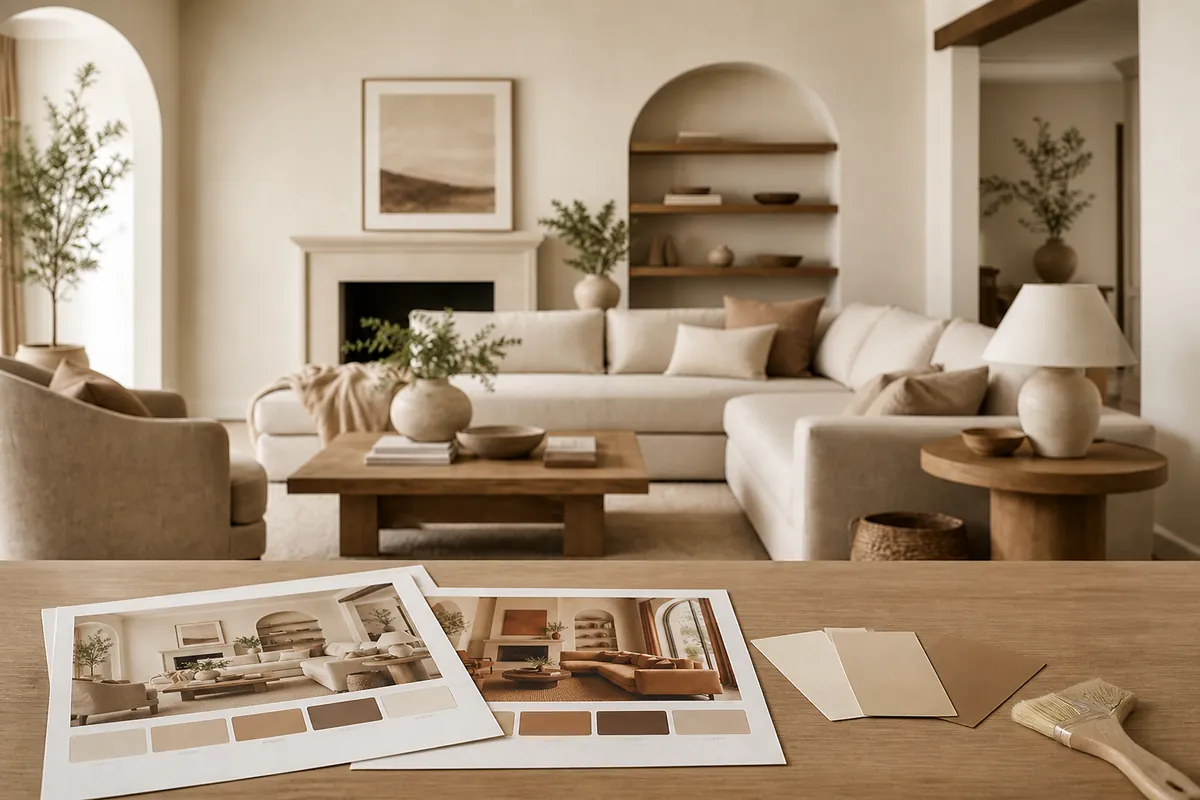
Pick a paint color you won’t regret.
See five palettes in finished rooms before you buy a single can, with every tone’s hex code and job.
- 5 palettes, each in a finished room
- 25 hex codes any store can mix
- The 60-30-10 rule, already applied
Free. Arrives by email in a minute or two, plus our ideas and occasional shop offers. Unsubscribe anytime. Privacy
Why Paint Chips Lie in a Room With No Daylight
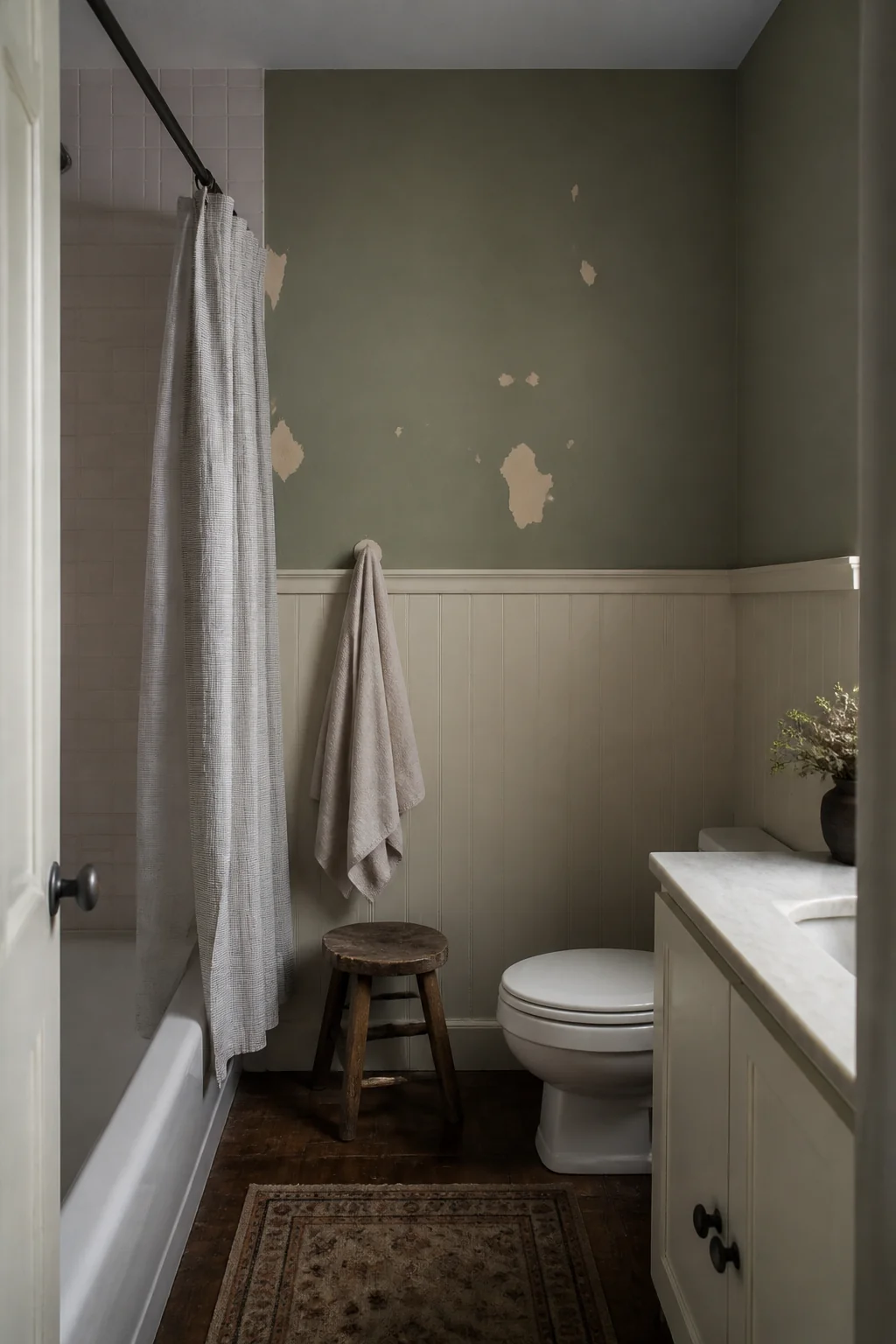
Store lighting is bright and neutral, so a chip looks like a clean version of itself. Your bathroom has one or two fixtures, and they probably run warmer or cooler than the store aisle. The paint reflects whatever light is in the room, not the light it was tested under.
Without a window, there's no daylight shift to soften the color through the day. The wall looks the same at 7 a.m. and 9 p.m. which is exactly why a mistake shows up so fast. A shade that reads as soft gray at noon can look like wet cement after dinner.
Warm Whites and Greige Are the Safe Pick, Not the Best One
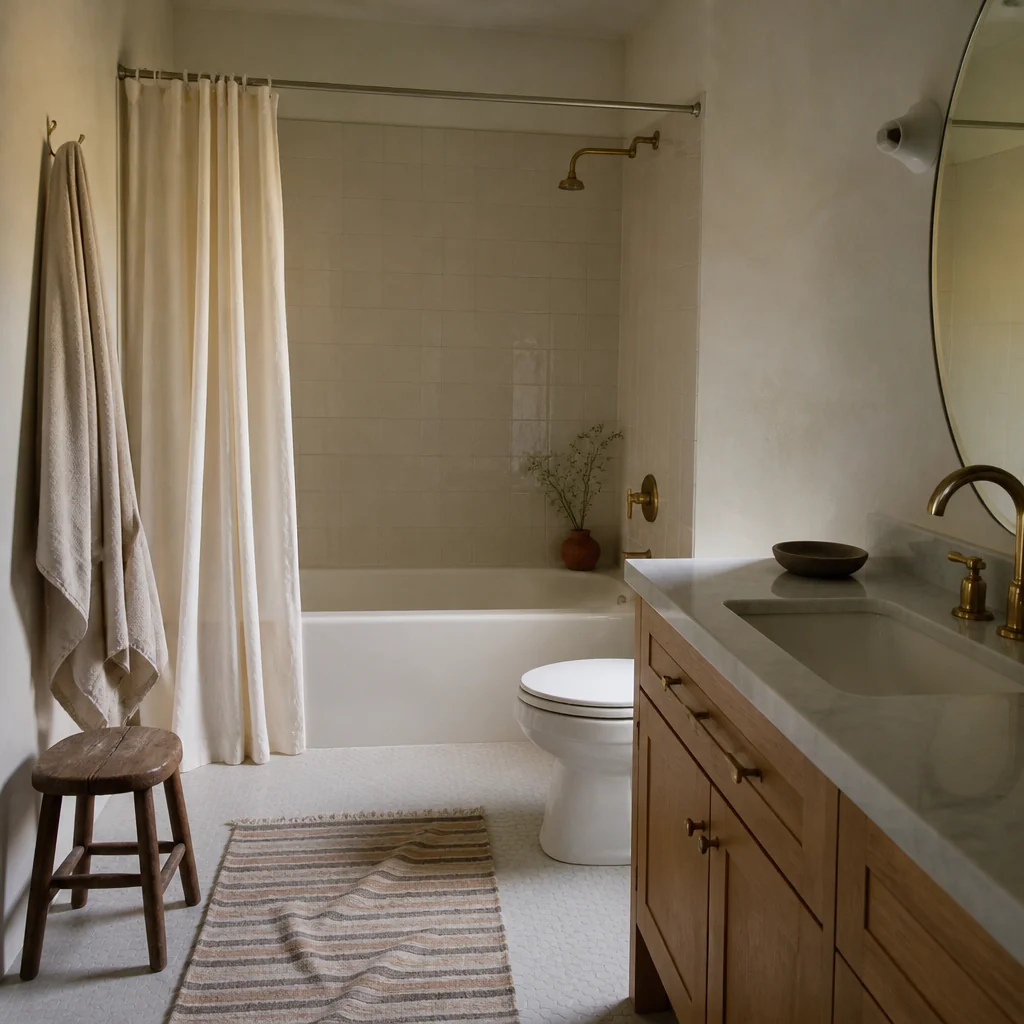
Warm white, soft greige, and creamy beige are the colors most people reach for first. They rarely look wrong, and that's the appeal. In a small bathroom they also make the room feel like nothing special happened, which is fine if that's the goal.
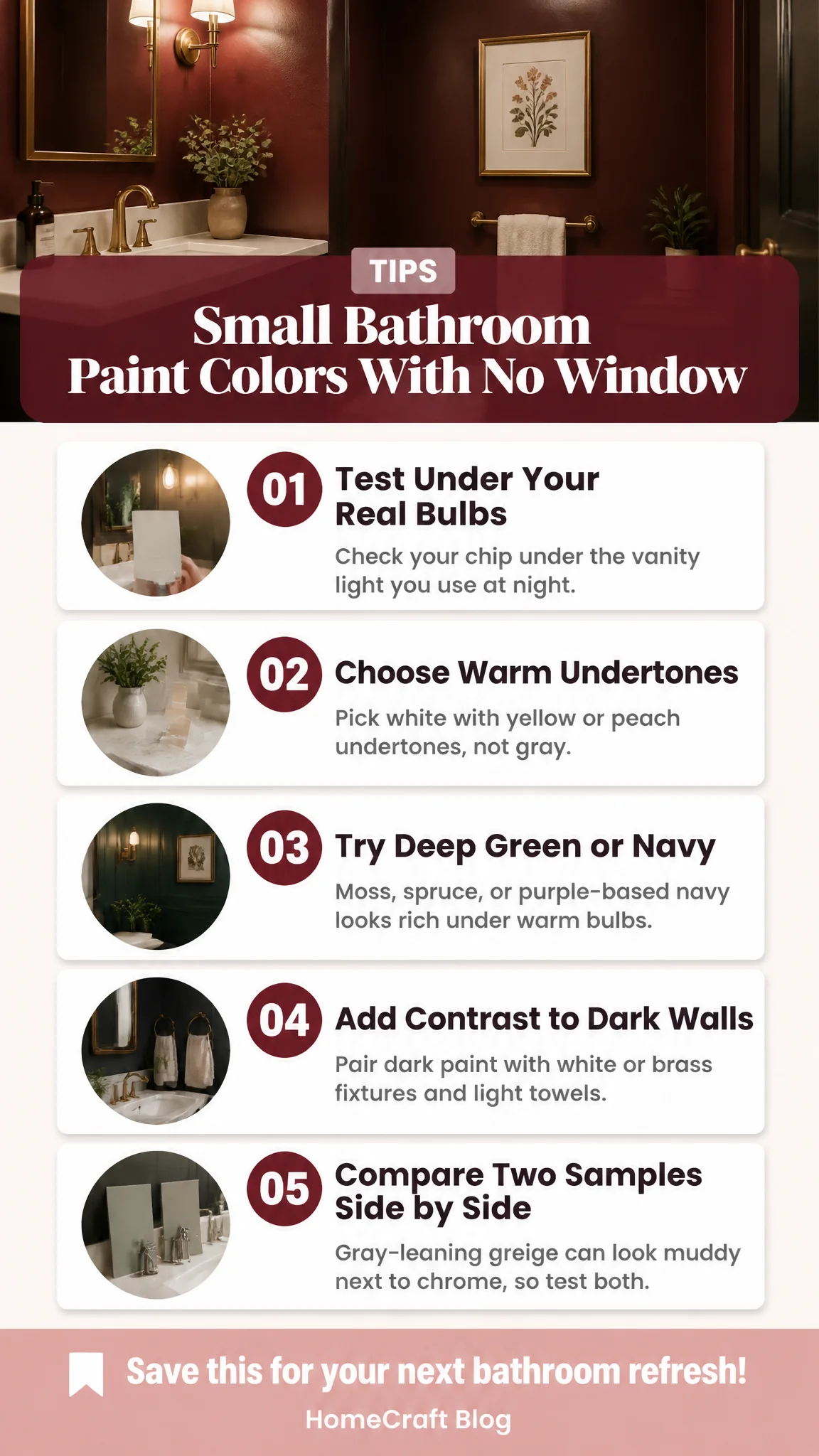
We'd still pick them carefully. Look for a white with a yellow or peach undertone, not a gray one, or the room drifts toward institutional. A greige that leans gray under cool light can look muddy next to chrome. Test two versions side by side before you commit.
Deep Green and Inky Navy Can Work Surprisingly Well
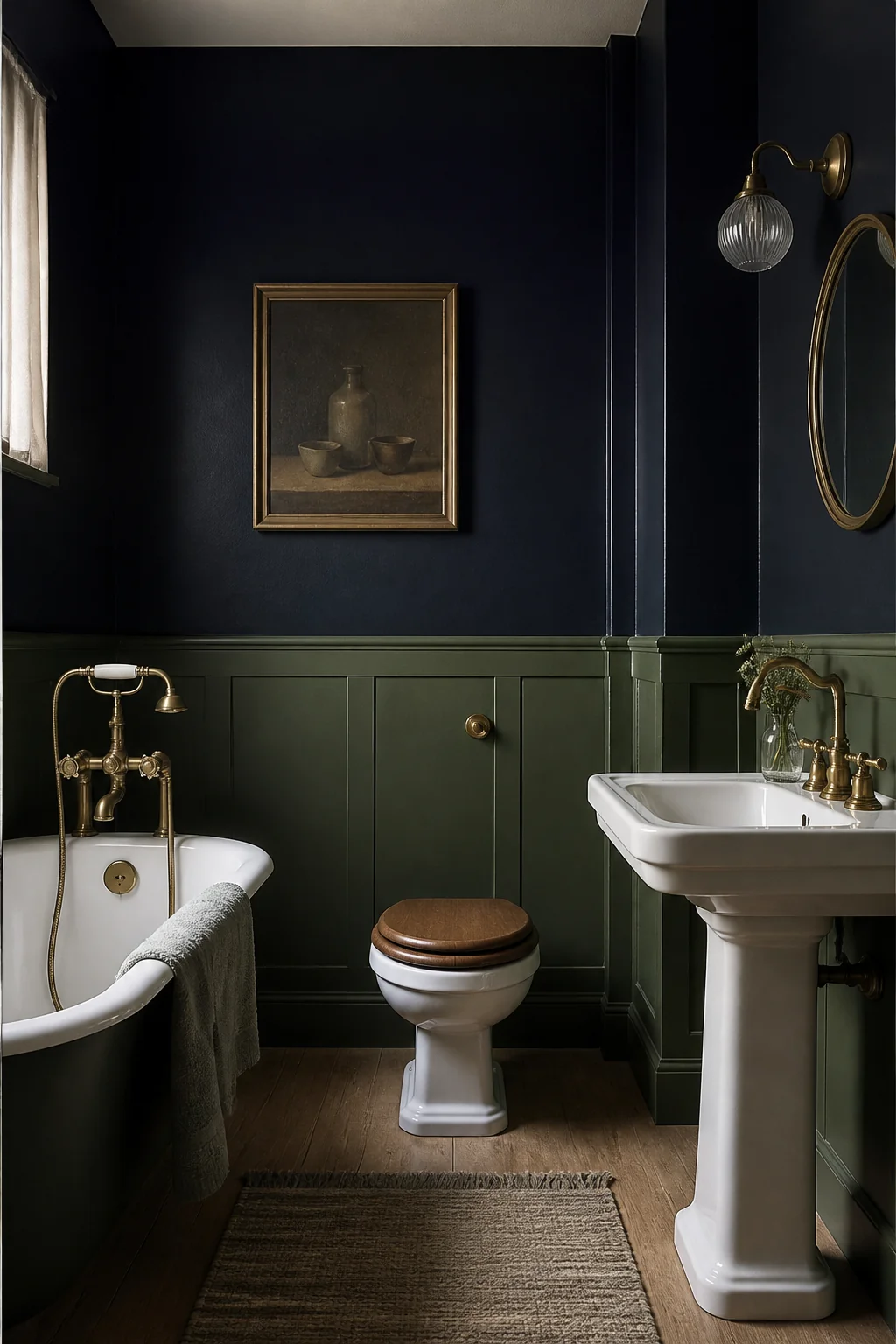
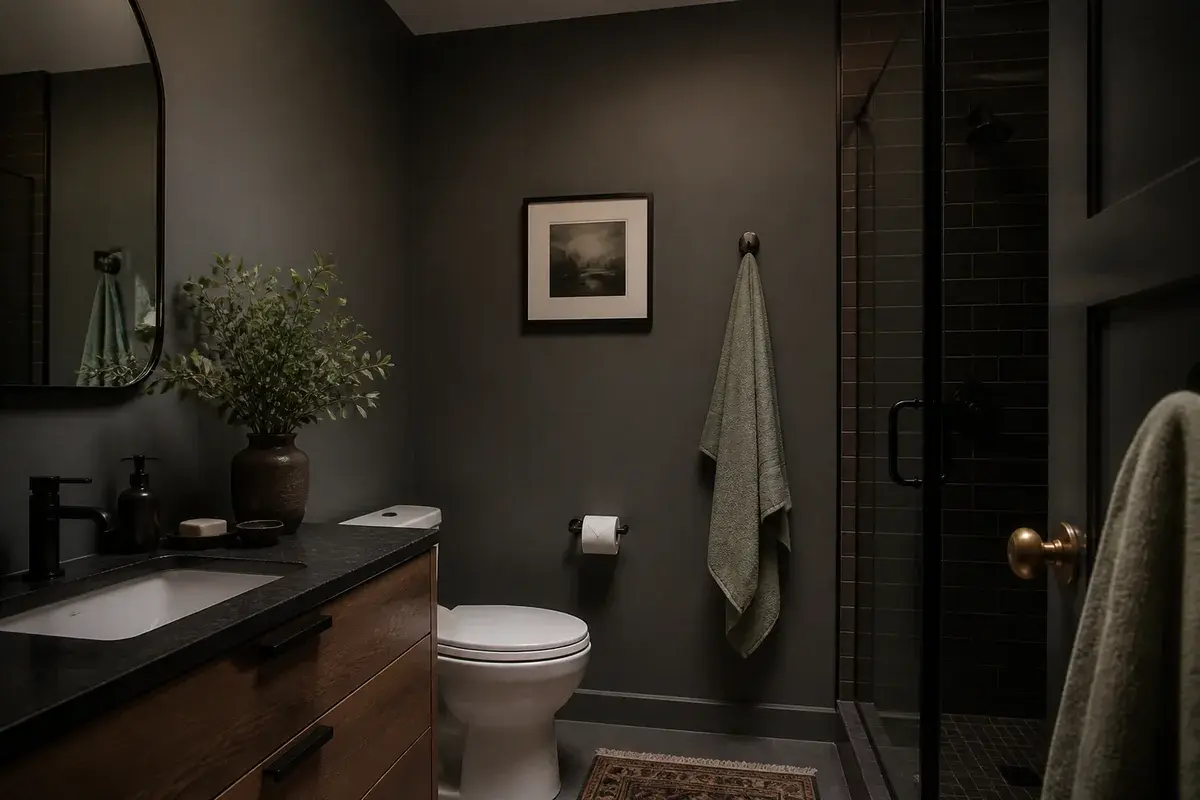
This is where a windowless room gets interesting. A deep green, something like a moss or spruce with a little black in it, looks rich and calm under warm bulbs. Navy with a slightly purple base does the same thing. The dark walls stop trying to be bright and start feeling like a jewel box.
The trick is contrast. Pair the dark wall with white or brass fixtures, a white vanity, or a light towel set. Without that contrast, the room can feel like a cave. With it, the color reads as a deliberate choice, not a gap in the design.
A bathroom this size usually reads best with paint on the walls only, with the ceiling left in a lighter white. That keeps the eye moving up and stops the room from closing in.
Skip the Bright Cool White and the Pale Blue
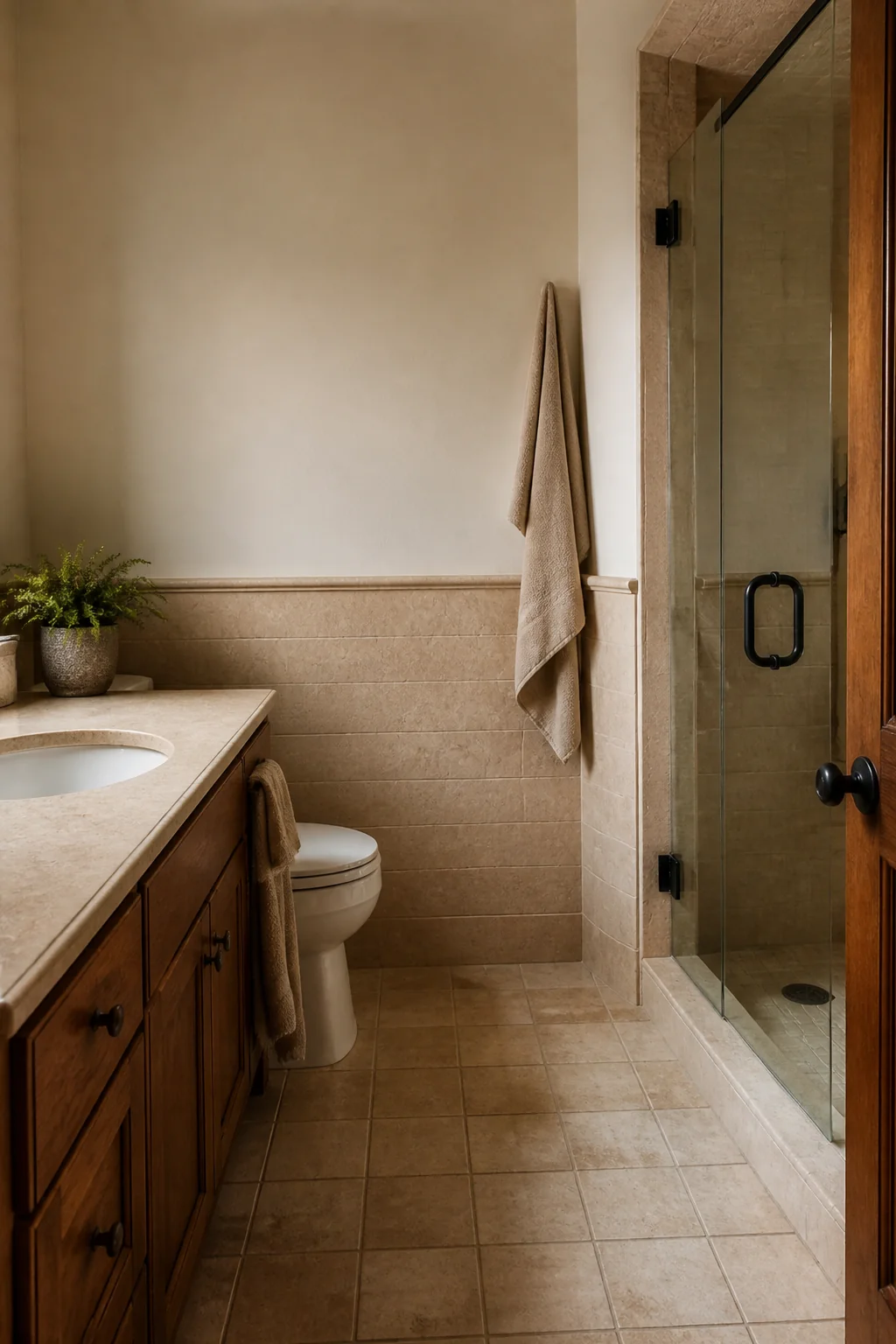
We'd skip the bright, cool white that's marketed as crisp or clean. Under a cool LED light it makes the room look like a medical supply closet. Pale blue has the same problem. It looks spa-like in a photo taken with daylight and washed out in an ordinary room at night.
Dark grout is a related mistake. A charcoal or black grout in a small bathroom draws a grid across every wall, and you notice it every single day. A grout a shade or two off your tile color is the calmer choice.
Lighting Decides the Color More Than the Paint Does
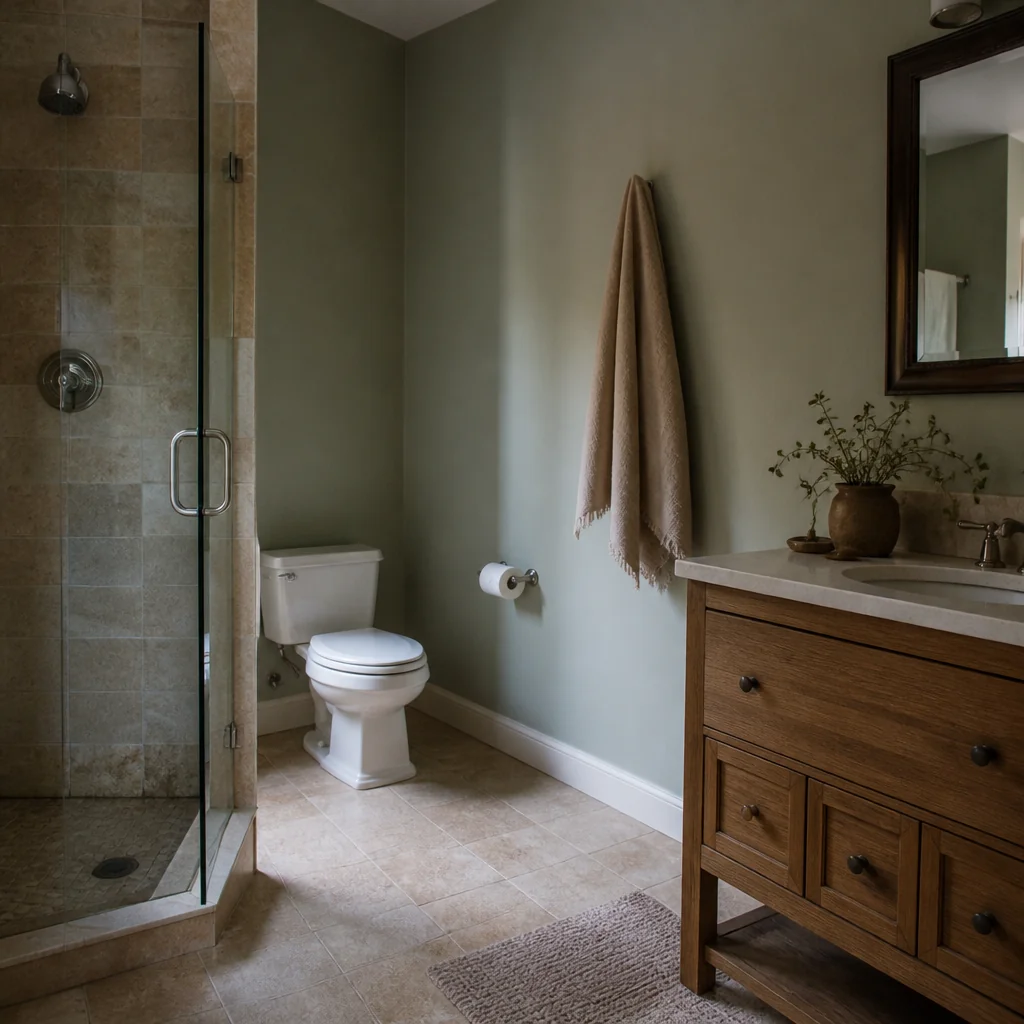
Before you buy a single sample, check the bulbs. Warm white bulbs around 2700K to 3000K make most colors look richer and closer to what you saw in the store. Cooler bulbs push everything toward blue and gray. Look for a color rendering index of 90 or higher on the box, which means colors show up more accurately.
If your vanity light is hardwired, replacing the fixture is a job for a licensed electrician, or at minimum the breaker should be off before you touch the wiring. Swapping bulbs is the easy fix. It's also the cheapest, so it's worth trying first. Changing the bulb is often the quickest way to correct the color.
Test Swatches Under the Light You'll Use at Night
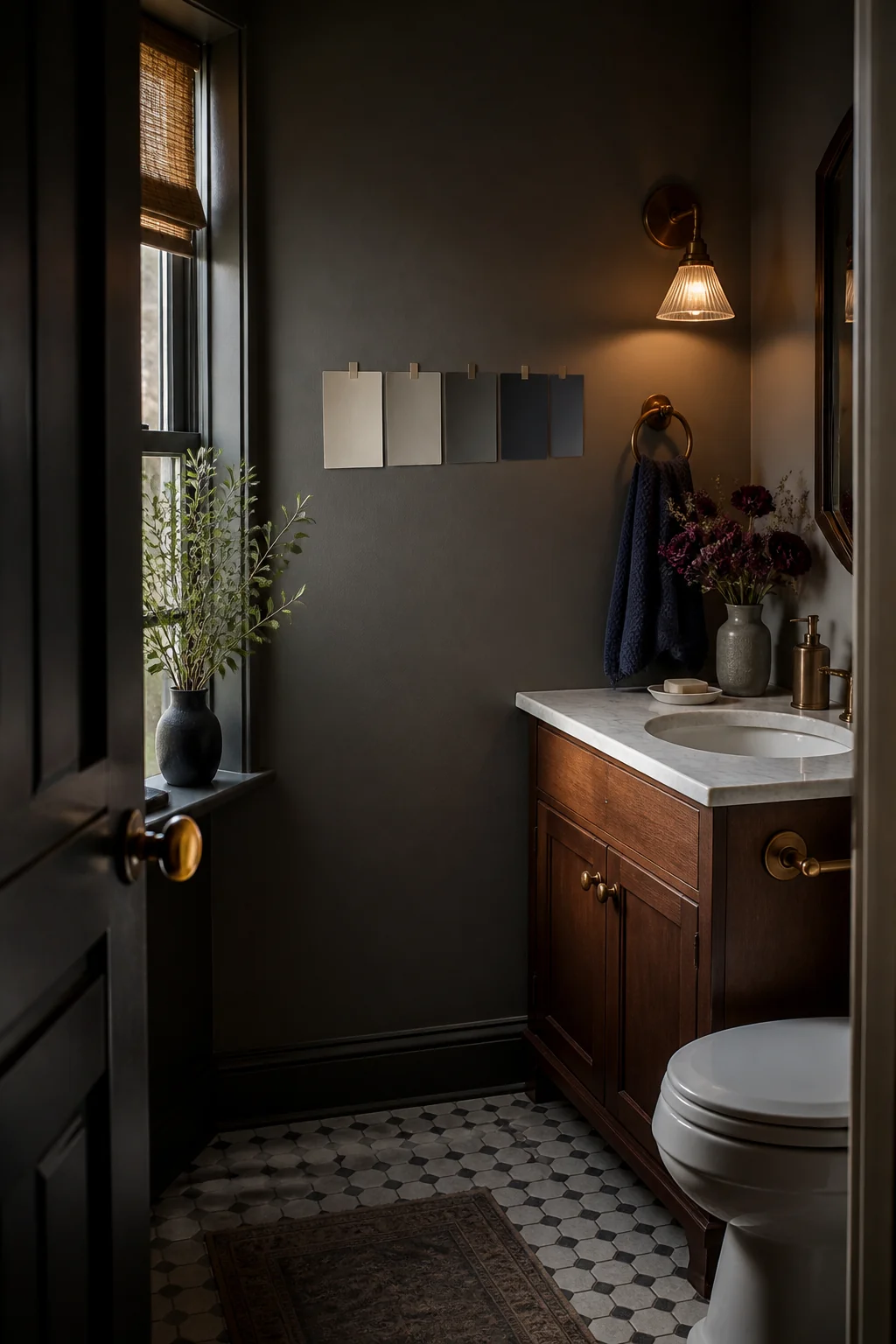
Paint a sample at least two feet square on the wall that gets the most light, and do it on more than one wall. A tiny chip tells you almost nothing. A larger swatch shows how the color changes from one side of the room to the other.
Look at it in the morning, in the evening with only the vanity light on, and at night with the fan off. If the color shifts into something you don't like at any of those times, move on. Keep the swatches up for at least a few days before you decide.
(Hold the sample next to your towels, tile, and toilet too. Anything with a strong undertone will show it.)
Finish and Ventilation Matter More Than You'd Expect
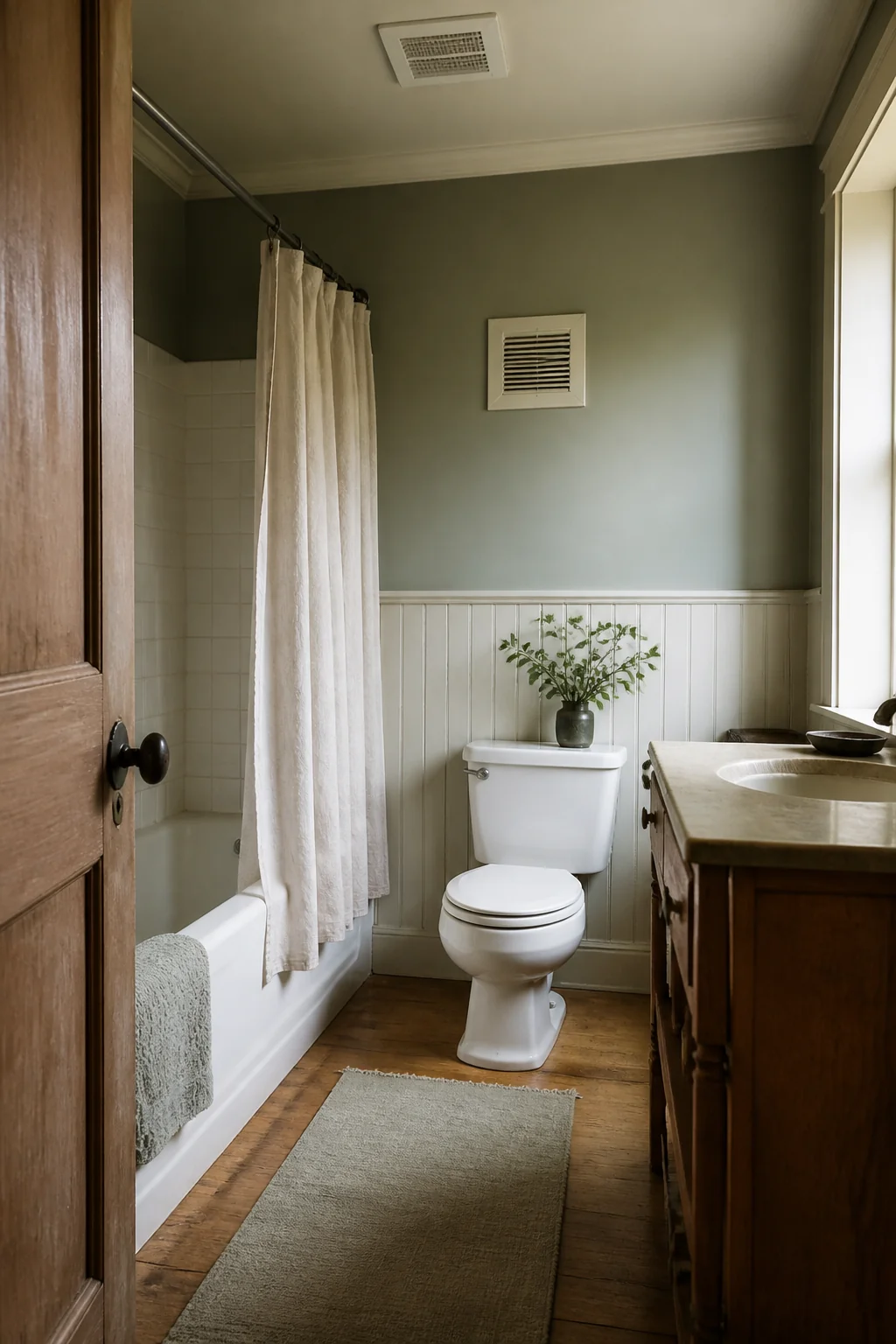
Use a washable finish, usually satin or eggshell on the walls, because bathrooms run humid and the walls take steam. Semi-gloss on trim and doors is common and holds up well to cleaning. Flat paint looks lovely on a sample but scrubs poorly over time.
Ventilation matters during painting too. Run the exhaust fan and keep the door open to the rest of the house. Paint and primer fumes build up quickly in a room with no window, so ventilate the space well before you spend time inside it.
If the walls have old paint, test it for lead before sanding, especially in a home built before 1978.
Pin this for later
A deep color in a windowless bathroom asks more of you than a pale one. You'll need the right bulbs, a bigger test swatch, and a little patience while you live with it for a few evenings. You'll also give up the easy brightness that a white room offers in daylight. What you get in return is a room that looks finished and intentional at night, when you're most likely to use it. For many windowless bathrooms, that trade is worth making. If you want more ideas for keeping the room uncluttered once the color is on the wall, our minimalist bathroom ideas cover storage and surfaces that suit a darker palette.
The room images in this post are illustrations made with AI.