8 Bright Coastal Small Bathroom Ideas for Tight Spaces
Coastal small bathroom ideas that maximize light and storage in tight spaces. See layouts, color schemes, and fixtures that make narrow rooms feel bigger.
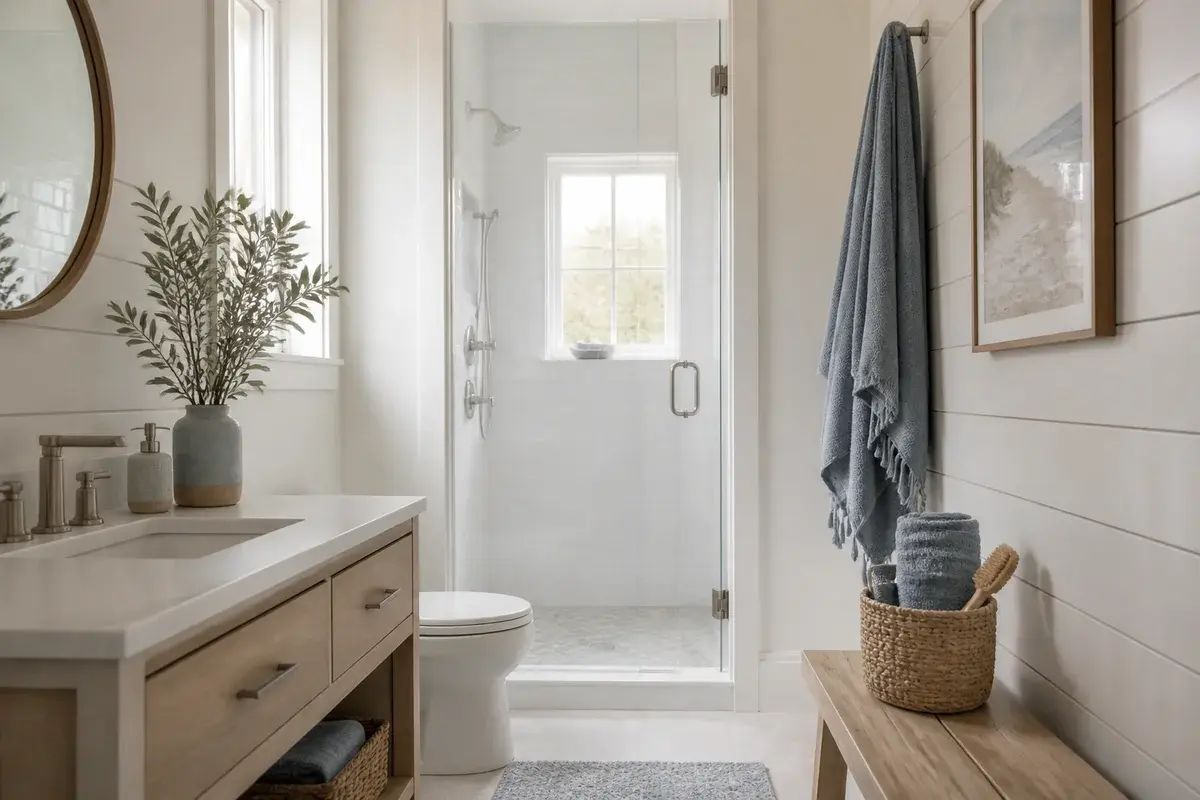
A small bathroom painted in dark colors or crammed with closed cabinetry feels smaller the moment you step in. The walls close in. A tiny window gets lost. The space reads as cramped and dim even if it's actually a reasonable size. Coastal design solves this by leaning on light, air, and surfaces that don't stop your eye, but only if you know how to make that actually work in a room where you can barely turn around. Here are eight ways to build that feeling in your small bathroom without wasting the clearance you've got.
1. Paint everything in off-white, cream, or pale blue
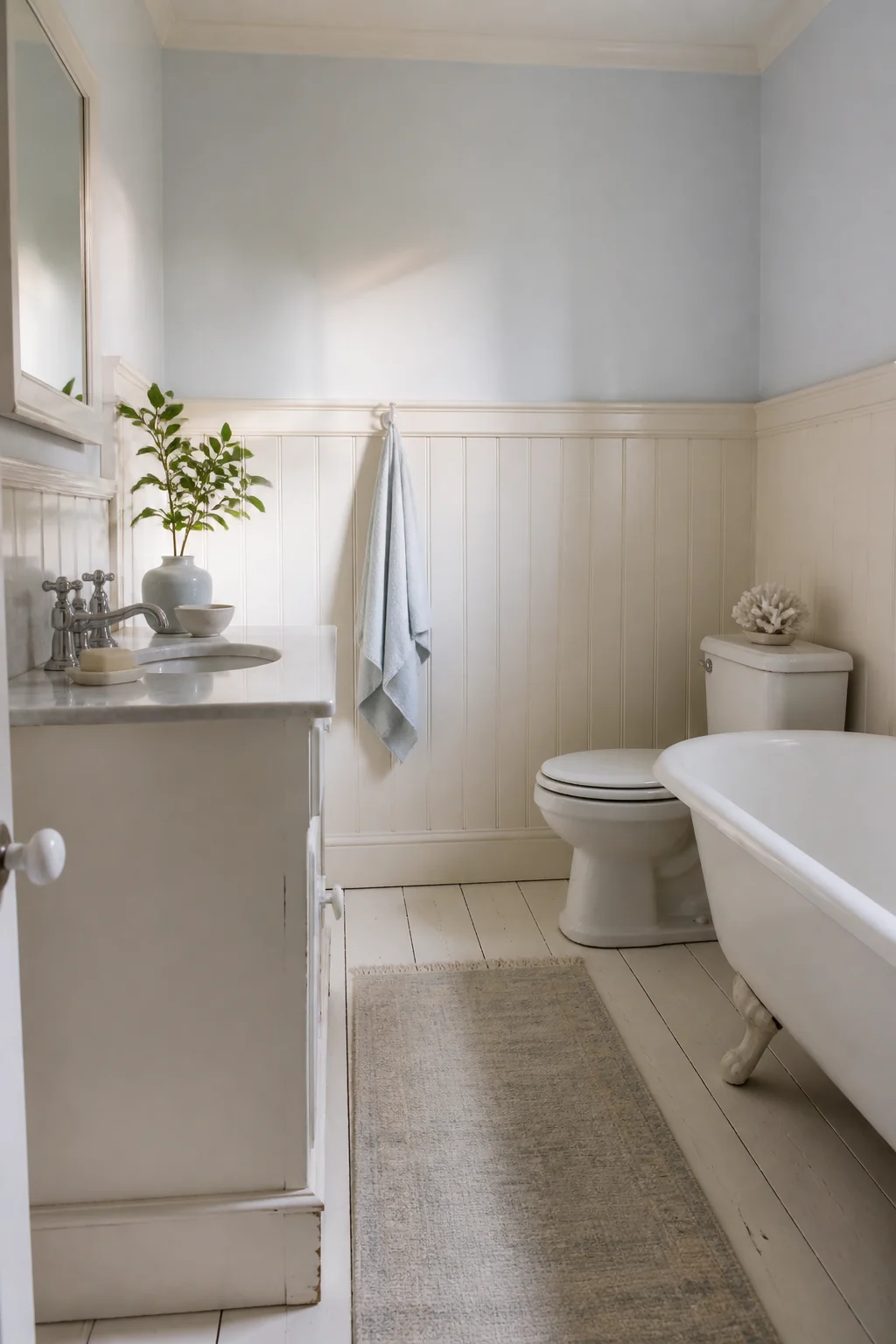
Your walls, ceiling, and trim should all be nearly the same color. Not pure white (that reads clinical), but something with warmth: cream with a hint of gray, off-white with a touch of beige, or a pale blue so washed it's almost white. The idea is that your eye doesn't stop at the boundaries between surfaces. Walls disappear.
Paint the ceiling the same color as the walls. Painting it white while walls are off-white creates a visual line that cuts your small room in half and makes it feel shorter. (A narrow bathroom especially needs this unity, since you want the space to read vertically.) Trim and baseboards get the same paint too.
This works because it's honest coastal design: the idea comes straight from coastal homes where walls, woodwork, and ceilings blur together in natural light. It costs nothing extra and takes no special installation. Your small room suddenly reads as a larger volume of space rather than a boxed-in corner.
2. Hang a large mirror above the sink or toilet area
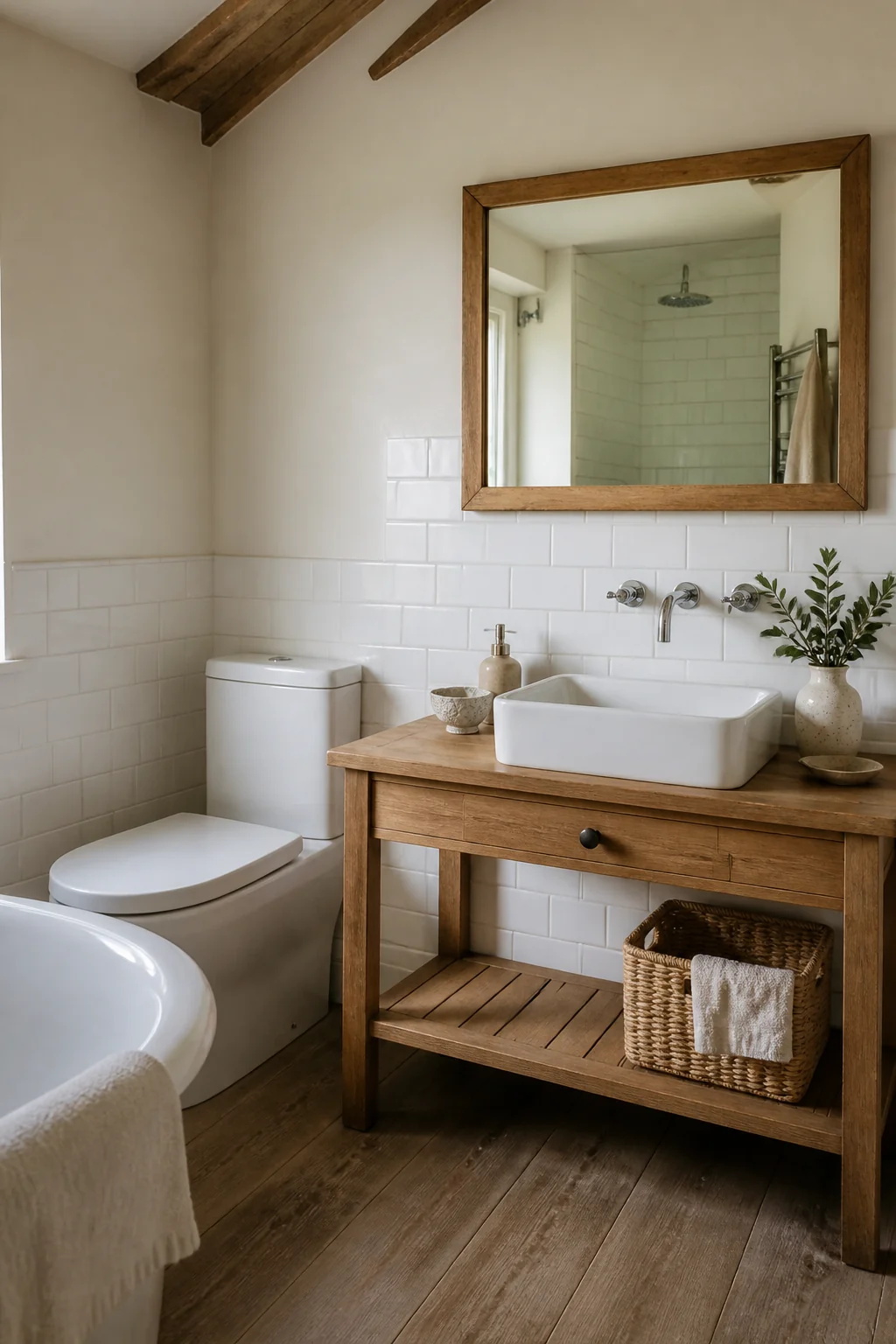
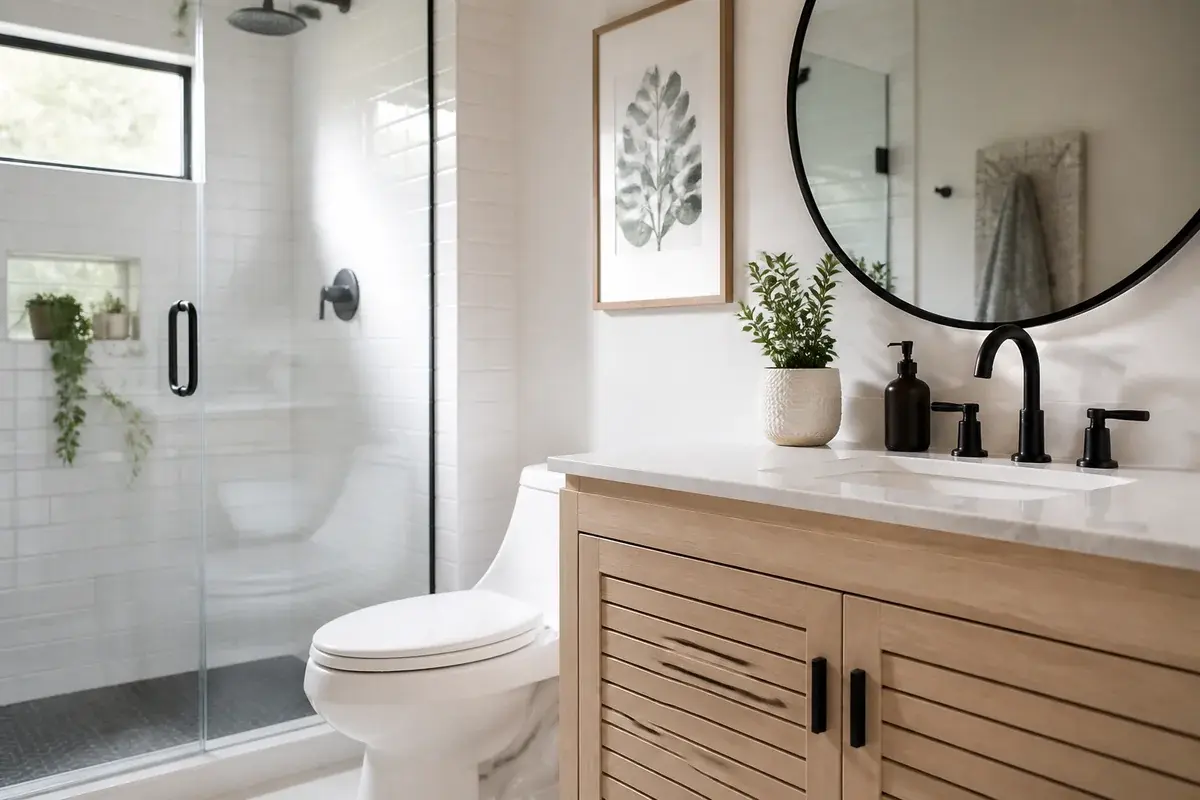
A mirror that covers most of the wall behind the sink (roughly 24 to 32 inches wide) bounces light across the room and makes your bathroom read as roughly twice the volume. Hang it framed in natural wood or white-painted wood to match your coastal palette.
The mistake is hanging a tiny medicine cabinet mirror and thinking that solves it. A small mirror reflects a small space. A large mirror reflects your whole bathroom back at you, including windows and light sources.
Mount it so the top sits a few inches below the ceiling. This uses your vertical space and prevents the frame from sitting awkwardly on the wall. The mirror should anchor the sink area without overwhelming the rest of the room. In a bathroom 5 feet wide, a 30-inch mirror is usually the right choice (about $60 to $150 for a decent framed version). Hang it high enough that you're not banging your head, but low enough that you can see yourself while standing.
3. Install open shelving instead of a closed medicine cabinet
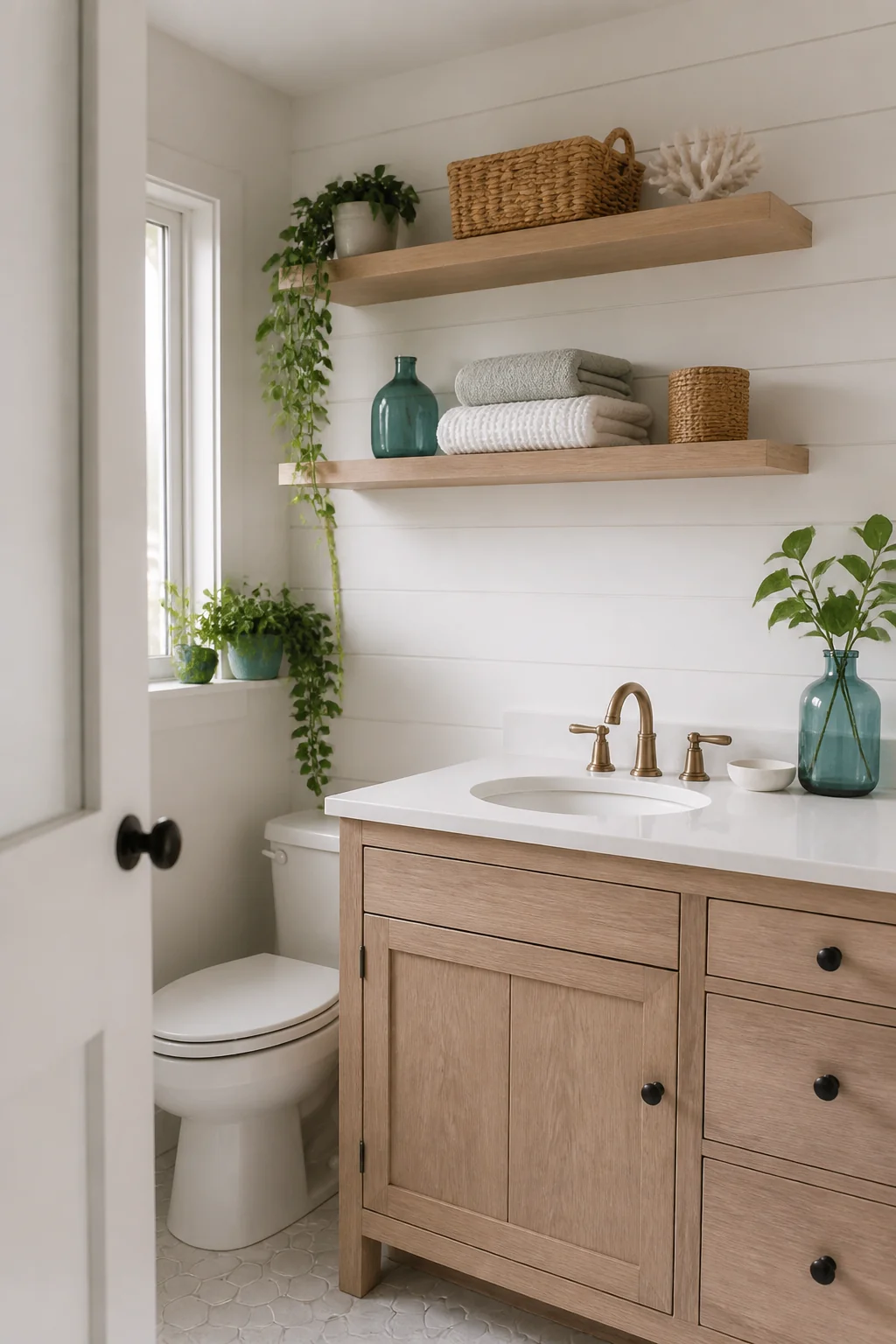
Replace a standard recessed medicine cabinet with 2 or 3 floating shelves in natural wood or white-painted wood. Stock them with rolled towels, clear glass jars for cotton rounds, and small wooden boxes for cotton swabs and clips. Nothing closed off.
Open shelving shows off your bathroom as a place where things belong, not a place where you hide clutter. Coastal design thrives on this honesty. Your eye travels through the room instead of stopping at a closed cabinet door.
This does require your bathroom to be genuinely tidy (things on view stay put), and it won't work if you have lots of bottles and products that look messy sitting out. But in a coastal bathroom, fewer products actually live out anyway. Shelves run about $40 to $80 each installed, and the payoff is real: your room feels open instead of cluttered. (If you're not ready to ditch the medicine cabinet, a mirror-fronted one in stainless steel or wood frame works better than plastic, since it reflects light instead of absorbing it.)
4. Choose a light wood vanity with legs, not a full pedestal
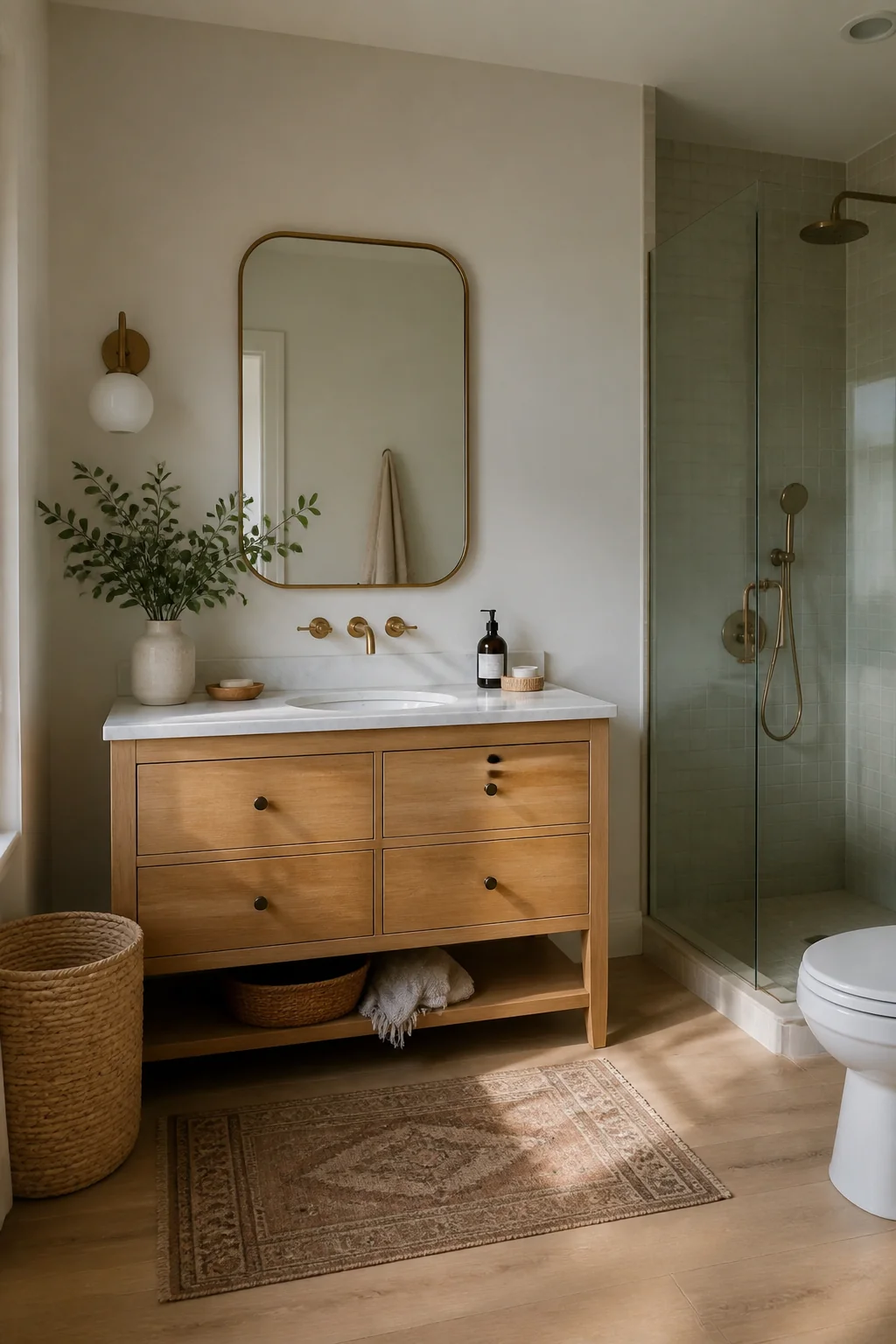
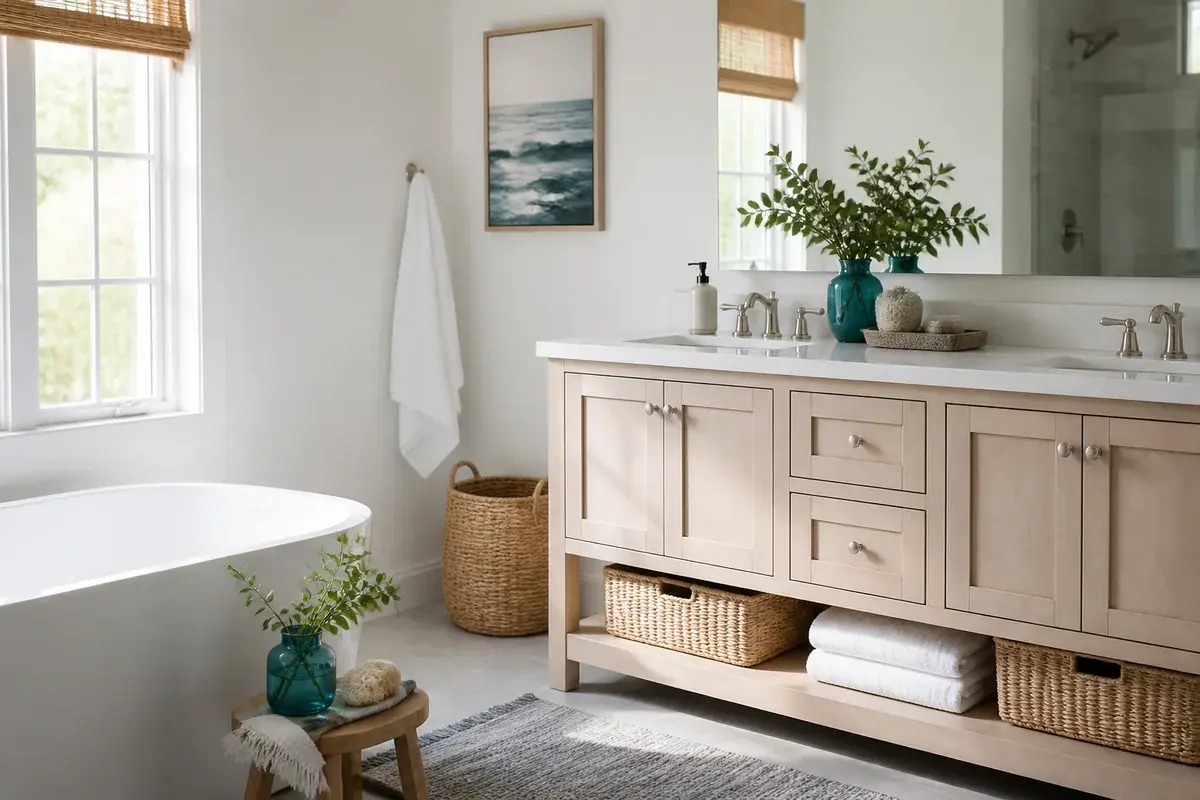
A wood vanity that sits on four or six legs (rather than a solid pedestal or cabinet) leaves a gap between the floor and the vanity bottom. This gap lets you see through to the floor, and that visual "breathing room" makes a small bathroom feel less boxed in.
Pick natural wood (oak, pine, or walnut tones) or white-painted wood. The legs should be tapered and simple, not chunky. Avoid vanities with a full skirt from top to bottom, which blocks the floor and steals the sense of space.
A 24-inch vanity with legs is standard in small bathrooms and usually costs $300 to $600. It's a bigger investment than a pedestal sink, but it gives you drawer storage and counter space you actually need. The open-leg design is what makes it work for coastal small spaces. A pedestal sink looks neat, but it gives you nowhere to put anything and wastes the opportunity to open up the room.
5. Use a single large window treatment instead of layering
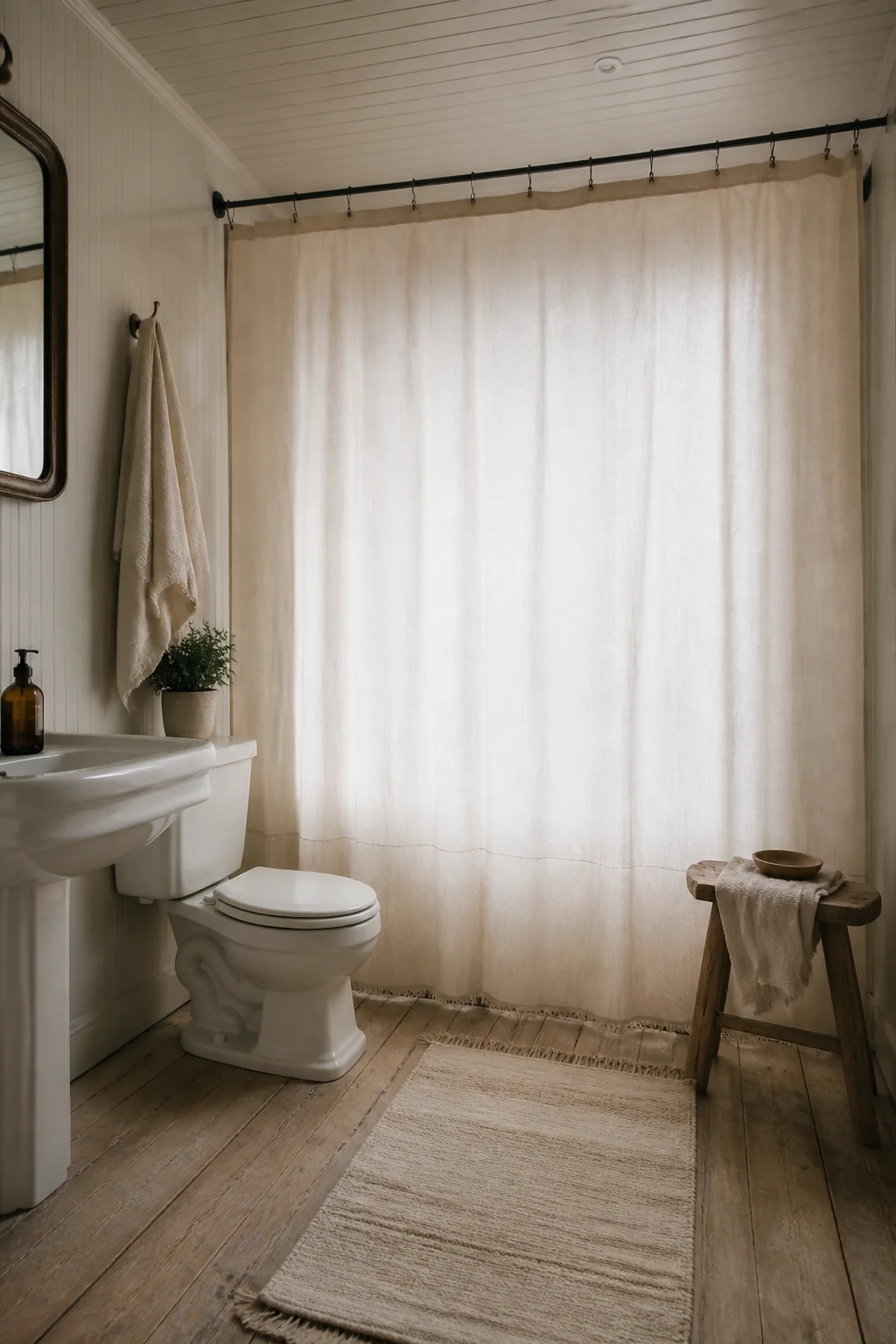
Don't pair heavy curtains with a roller shade. Pick one. Usually in a coastal bathroom, that's a light linen Roman shade in cream or natural linen color, or a thin white linen curtain panel hung high and wide on a simple rod.
A single light layer lets maximum natural light in (critical in a small room) while still giving you privacy when you need it. Layering, even light layers, creates visual bulk and makes a tight space feel crowded.
Hang the shade or curtain rod 2 to 3 inches below the ceiling and 6 inches wider than the window frame on each side. This makes the window look larger than it actually is. A decent linen Roman shade runs $80 to $180 depending on the size. A simple linen panel on a wood or brass rod costs about $40 to $100 for both. Either way, keep it light and simple.
6. Add shallow woven baskets under the sink for storage
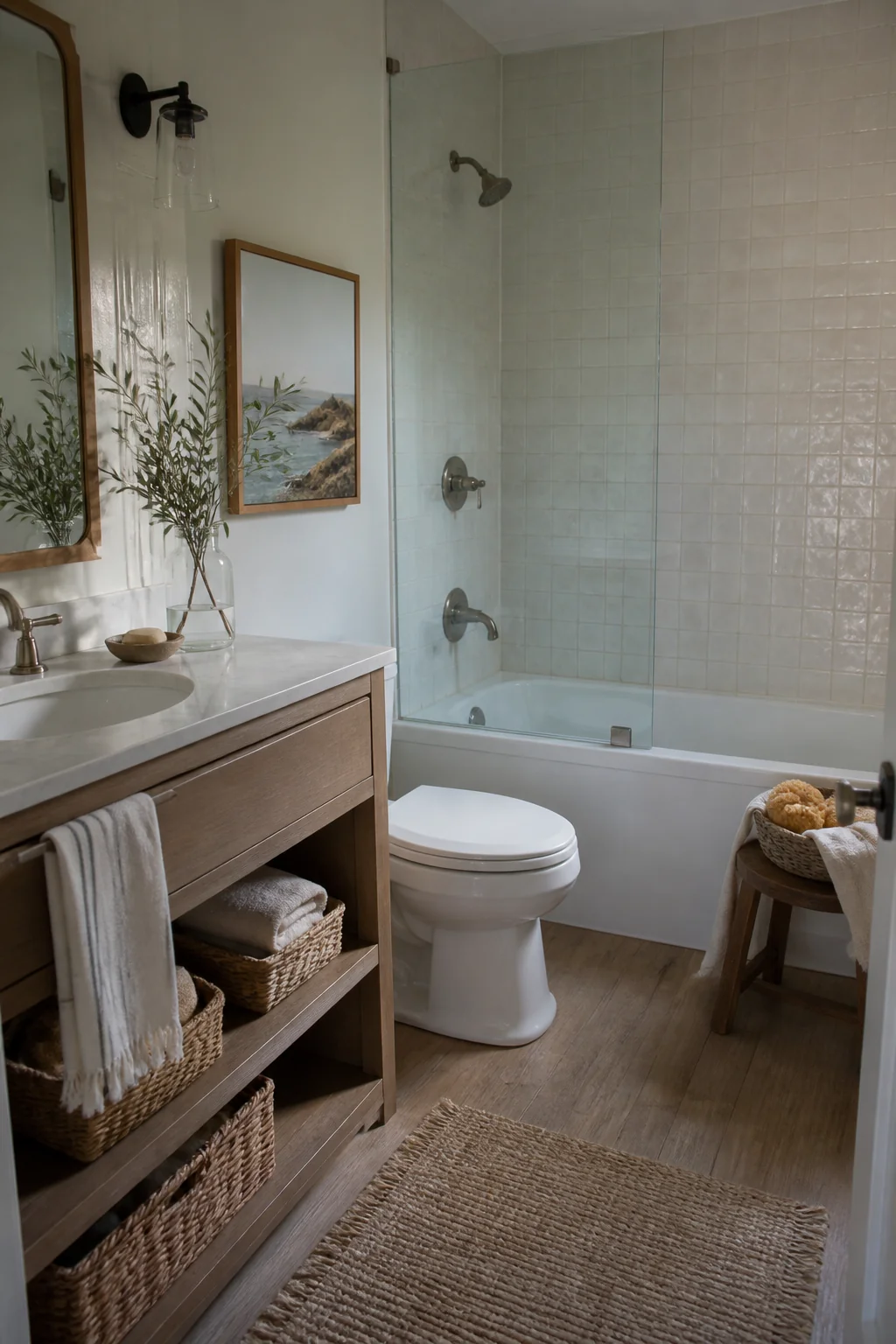
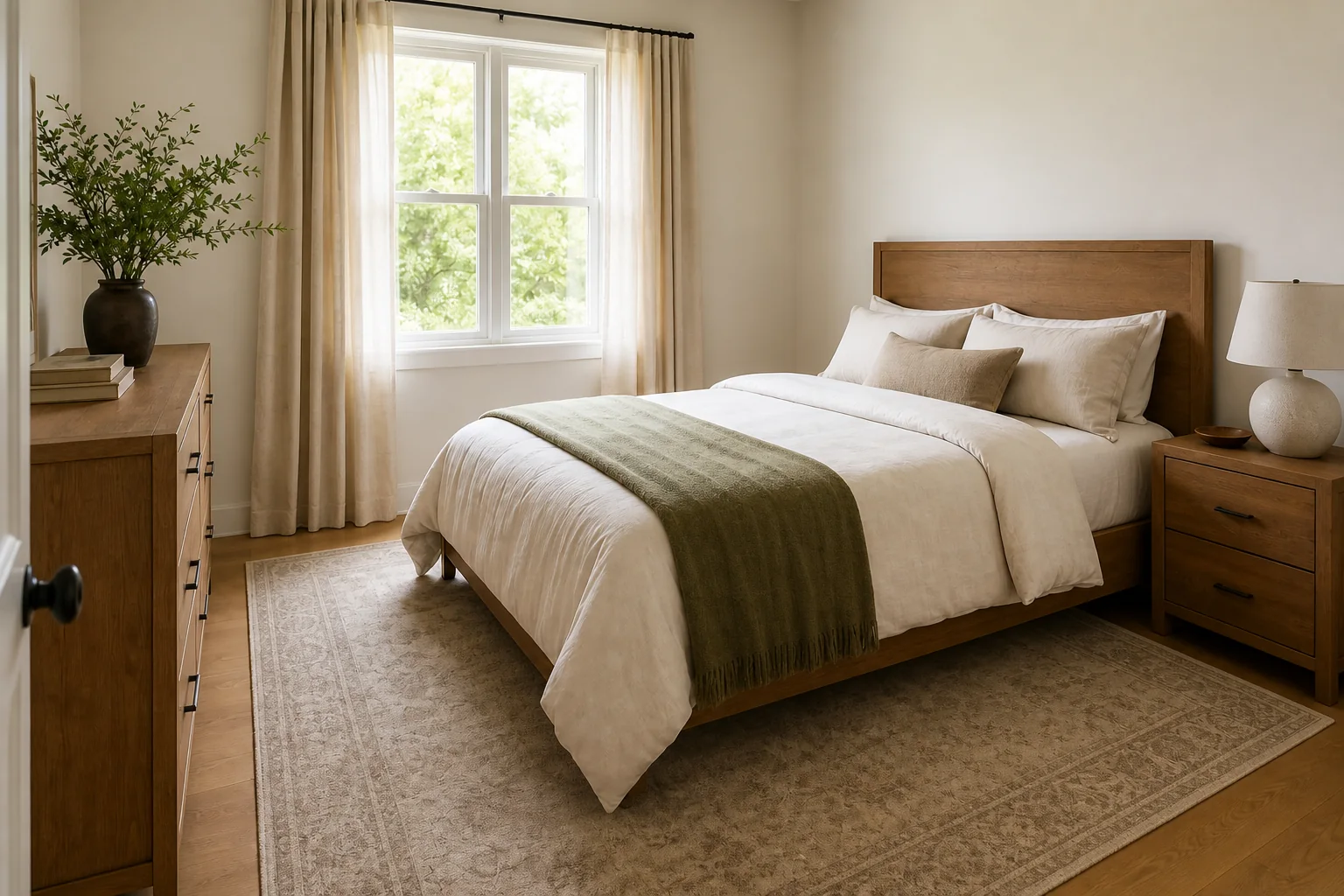
Woven seagrass or woven wood baskets that slide under the sink or vanity give you storage that's out of sight but easy to reach. They soften the visual feel of the room and solve the problem of small bathrooms having nowhere to put anything.
Measure the clearance under your vanity first. Most vanities have roughly 12 to 16 inches of vertical clearance. Baskets that are 10 to 12 inches tall slide in easily without pushing against the pipes. Store rolled hand towels, cleaning supplies, and extra toilet paper in them.
Woven baskets cost $25 to $60 each depending on size and material. They're a budget-friendly way to add storage and warmth without using cabinet space. The woven texture is inherently coastal. Unlike plastic bins, baskets look intentional and fit the aesthetic. Just make sure the weave is tight enough that you can't see the clutter inside.
7. Keep the shower or tub surround minimal and light
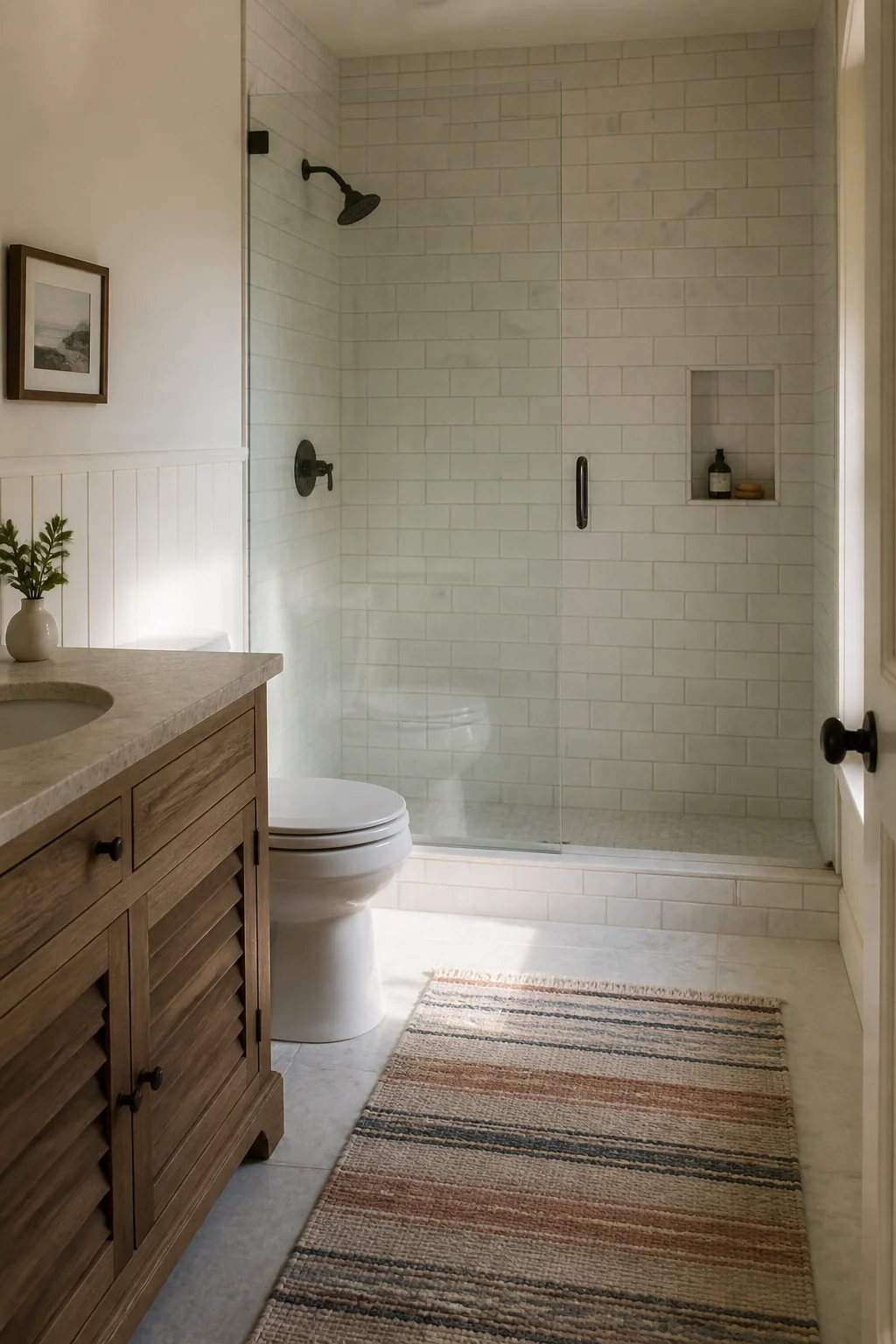
Use white subway tile, pale gray tile, or small hexagon tiles in white or cream. Grout should be white or very light gray, never dark (dark grout looks heavy in a small space and visually chops up the wall). Seal the grout so it stays bright.
The pattern should be simple: straight subway tile or a simple hexagon grid. No complicated mosaics or mixed patterns. Patterns fragment a small space and make it feel busier and smaller than it is.
A typical shower or tub wall is roughly 32 to 48 square feet. Budget $400 to $800 for materials and installation of simple tile in a small bathroom. The lighter your surround, the more the room reads as open and coastal. Avoid dark marble, dark tile, or anything with color variation, which creates visual noise in a confined space.
8. Install a pocket door or swing-out door instead of a standard swing door
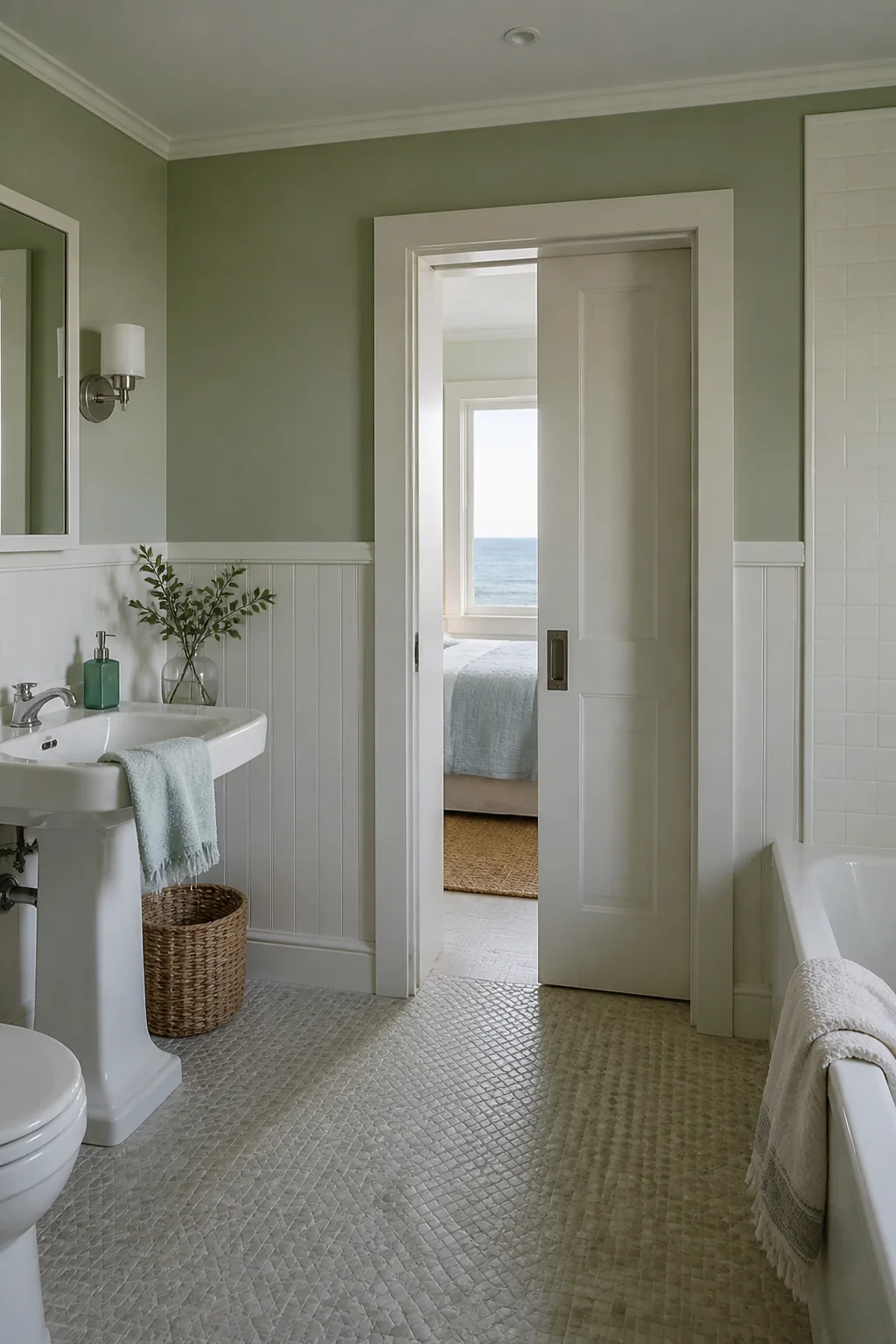
A standard bathroom door swings inward and steals floor space. A pocket door slides into the wall. A swing-out door (hinged on the outside) opens away from the bathroom. Either option leaves your small floor space unobstructed.
If you're renting or can't install a pocket door, at least hinge your existing door to swing outward if the hallway allows it. This tiny shift frees up the visual and physical space inside the bathroom. You can move more freely, and the room doesn't feel like a phone booth.
A pocket door runs $200 to $400 for the hardware and installation (not counting new drywall if you need it). It's a real change to your space. Standard swing-in doors take up roughly 15 square feet of usable floor when they're open. In a small bathroom, that's significant.
Save the full guide
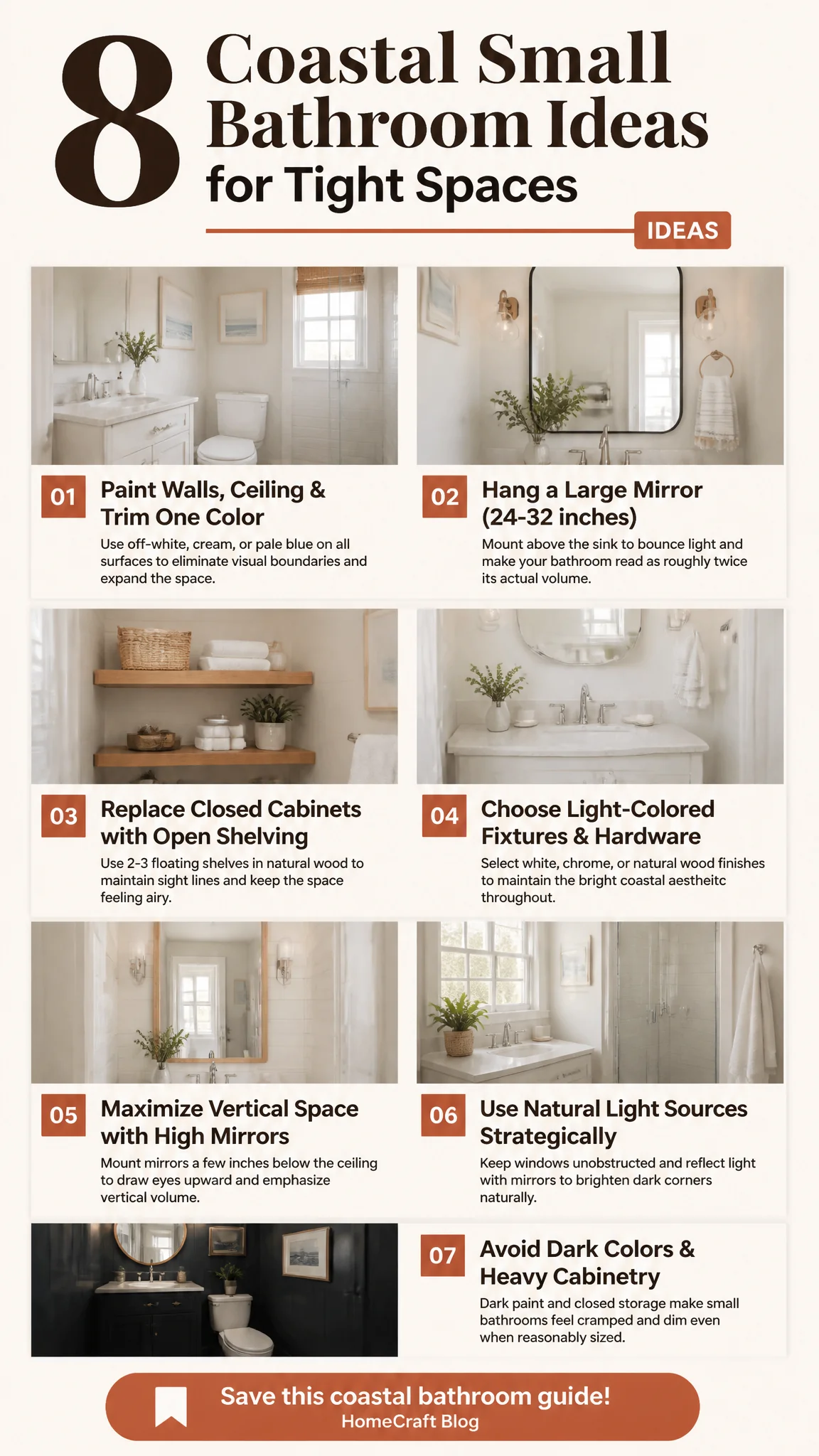
The real decision point for a coastal small bathroom comes down to color. Once your walls, ceiling, trim, and mirror all sit in that light, connected palette, everything else follows. Storage hides, surfaces open up, and light does its job. Skip the dark accent wall or moody colors, even if they're trending. Your small room needs air, not style points.
Ideas fade by Friday. A plan finishes the room.
You just read a full guide to your bathroom. Saving ideas will not change it; a plan will. The Home Decor Collection is every planning tool we make, for every room in the house, in one download, so the after photos below stop being other people's rooms.
- Six room Style Kits, each with layout, palette and shopping list$114
- The Gallery Wall Studio: 200 prints + 15 measured layouts$29
- The Room Makeover System: 40 solved room layouts + workbook$29
- The Color Palette Handbook: 60 palettes shown in real rooms$19
- The Whole-Home Reset: 40 printable organizing checklists$19
- The Decorator's Cheat Sheets: the 40 measurements that matter$9
- All eleven products, bought separately
$219$97
A single hour with an interior designer costs more than the entire Collection, and this one keeps answering for every room you will ever decorate. Free updates included as the products grow. And if it is not for you, the 14 day money back promise means you simply get a refund.