13 Brilliant Small Space Storage Furniture Ideas for Tight Hallways
Maximize your tight hallway with 13 practical storage furniture solutions that fit narrow spaces without eating into your walkway.
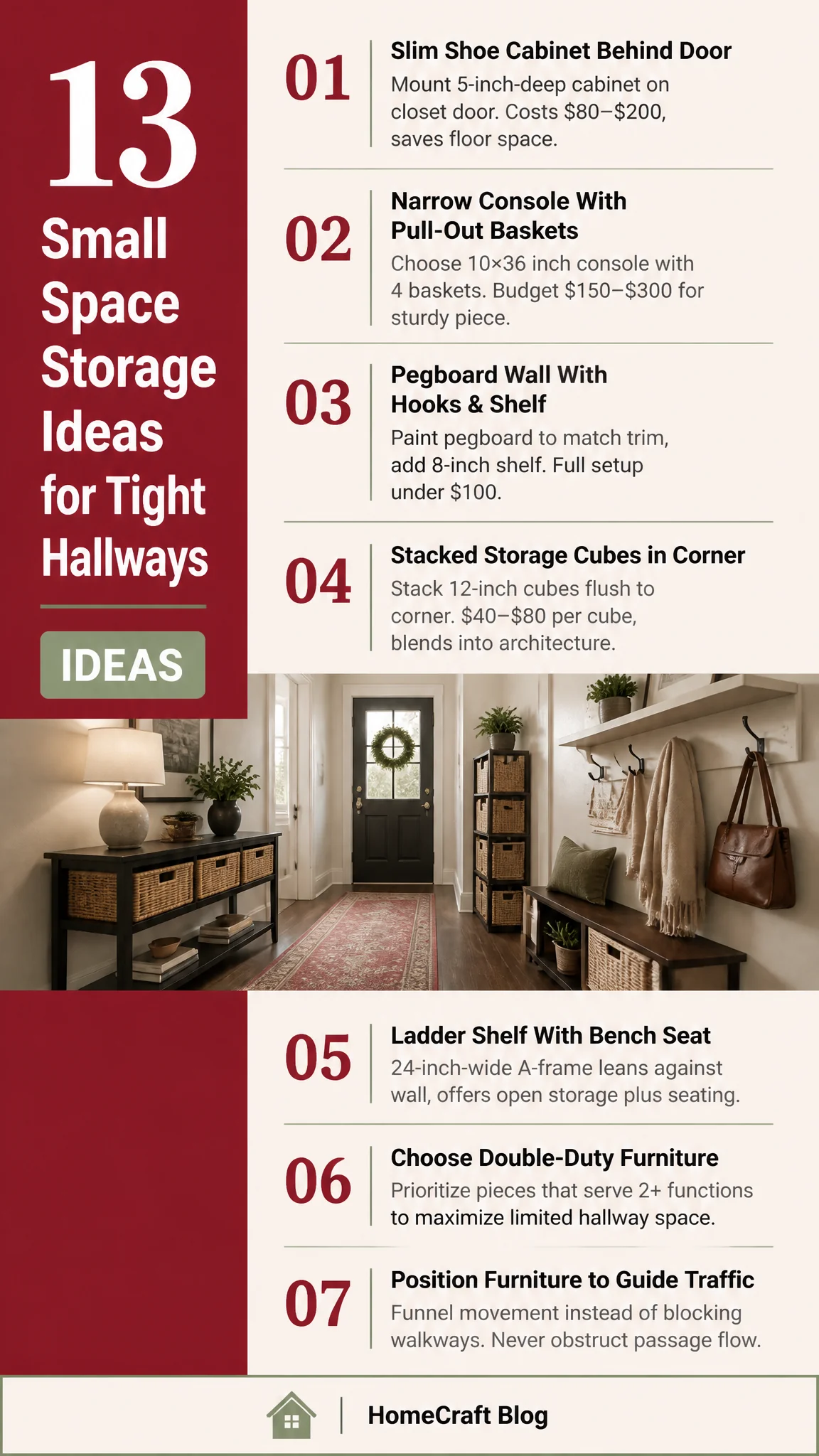
A narrow hallway doesn't need to stay cramped. The mistake most people make is treating hallway storage like an afterthought, cramming in a narrow console table or a wall of floating shelves that eat into the walkway. What actually works is choosing furniture that pulls double duty: pieces sized to your actual clearance, positioned to funnel traffic rather than block it, and built to hold what you really need. Here are thirteen storage solutions that fit tight spaces without making them feel tighter.
1. Slim vertical shoe cabinet that fits behind a door
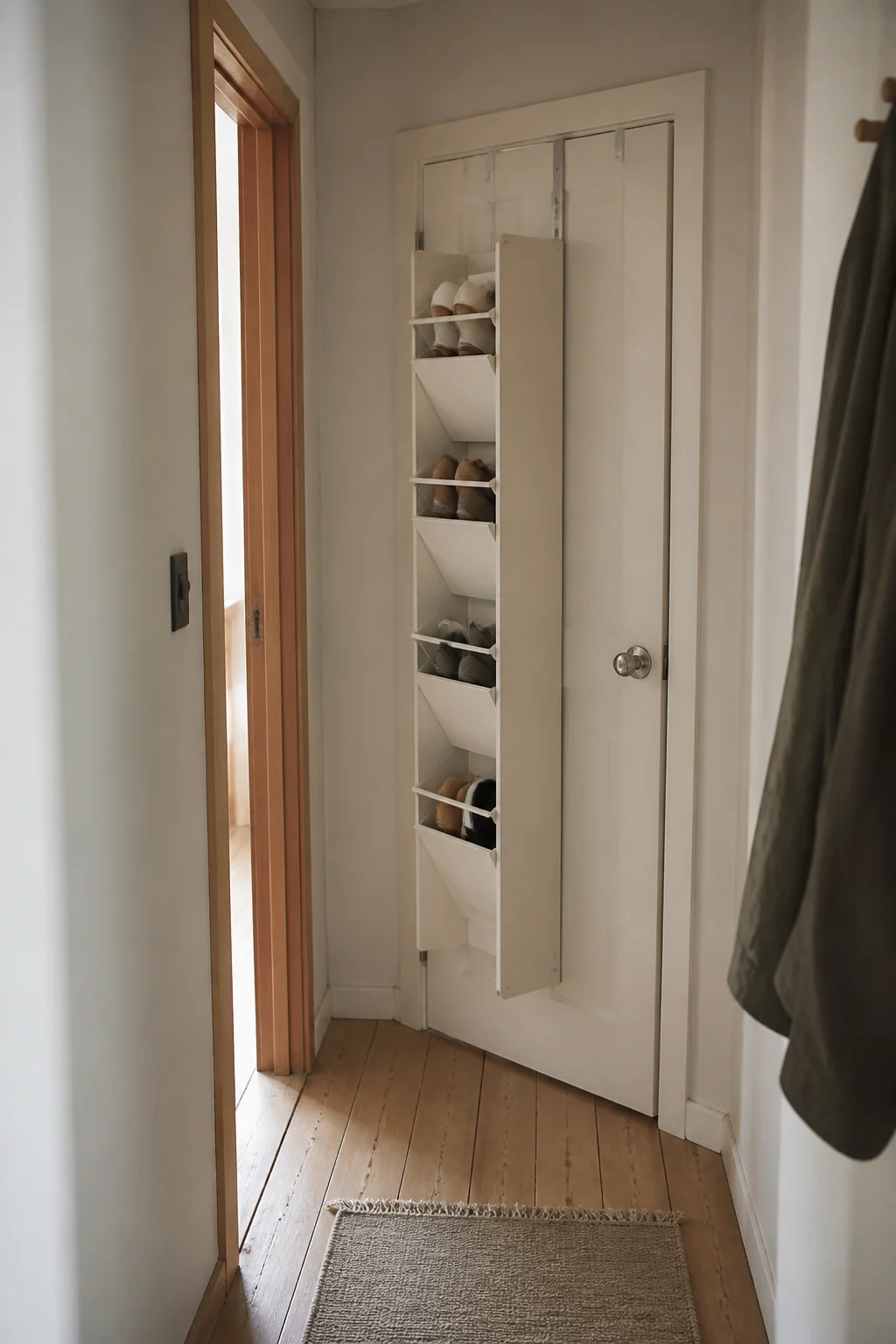
Mount a shallow cabinet on the inside of your hallway closet door or even the bathroom door at the end of your entry. A 5-inch-deep cabinet holds shoes on a slant, and it costs about $80 to $200 depending on height and finish. This keeps footwear out of sight without eating into your floor space, and it opens and closes with the door so you're not creating a permanent obstruction. The mistake people make here is buying one that's too deep, which causes it to swing open into the hallway and become a shin hazard.
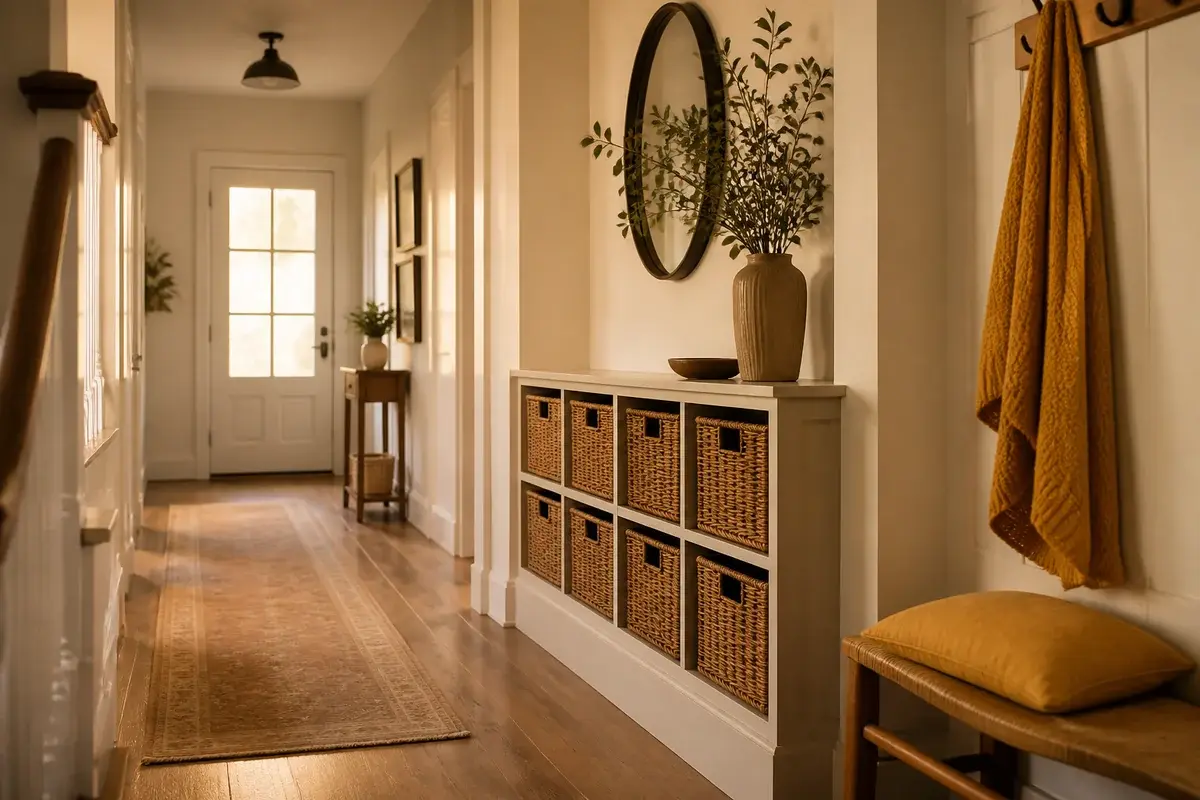
2. Narrow console with pull-out baskets underneath
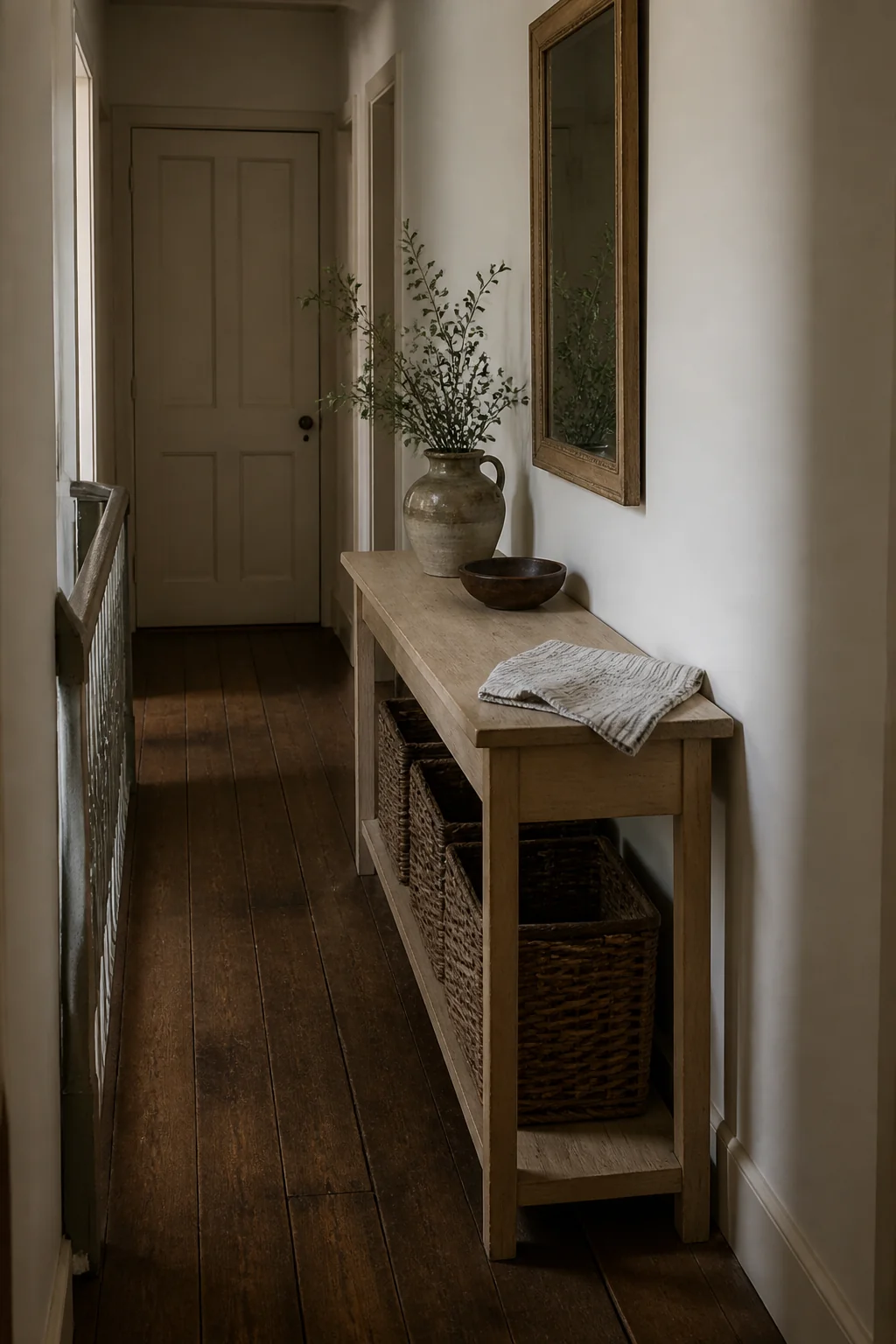
Choose a console table just 10 inches deep and 36 inches wide - roughly the size of a small desk - positioned against the longest wall. The baskets slide out like drawers for scarves, hats, or off-season items, and when they're pushed in you lose nothing to depth. Look for one with four baskets rather than shelves (baskets hide clutter better and weigh less when full). You'll spend about $150 to $300 for a sturdy one that won't wobble when someone pulls a basket out.
3. Pegboard wall with slim hooks and a narrow shelf
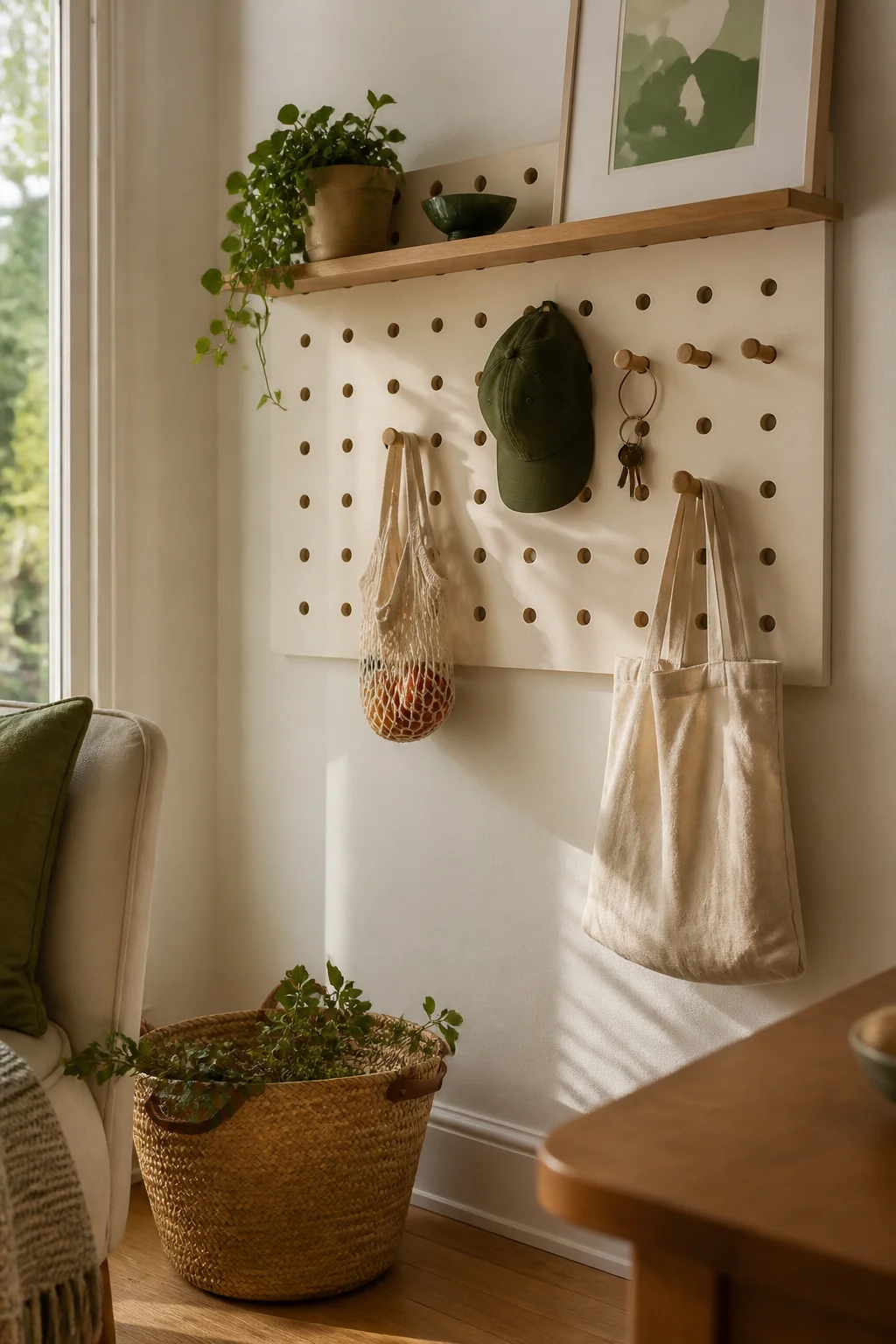
Cover one wall with pegboard painted to match your trim - white or cream reads as invisible in a narrow space. Install hooks for bags, keys, and umbrellas, and add a single 8-inch-deep shelf at eye level for decor or incoming mail. Pegboard costs about $20 a sheet and hooks run $2 to $5 each, so the whole wall setup runs under $100. The beauty is you can rearrange hooks as your needs change without drilling new holes.
4. Stacked storage cubes in a corner nook
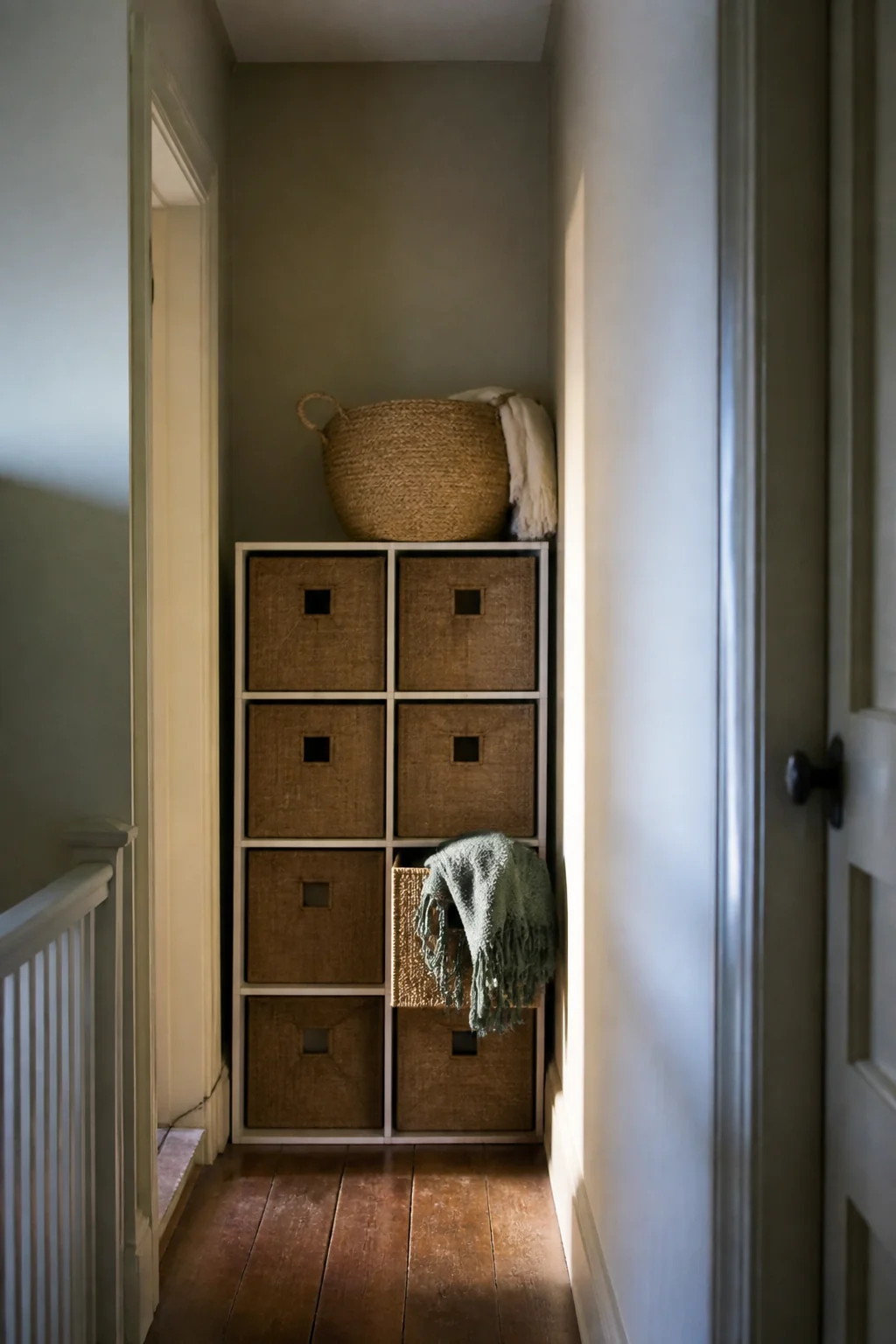
If your hallway widens at one end or has a corner, stack three or four storage cubes 12 inches wide. Paint them to match the wall so they read as part of the architecture rather than furniture sitting in the space. Fill some cubes with baskets and leave others open for display. The cubes don't stick out into the walkway if you position them flush to the corner, and they cost about $40 to $80 per cube depending on material.
5. Slim ladder shelf with open storage and a bench seat
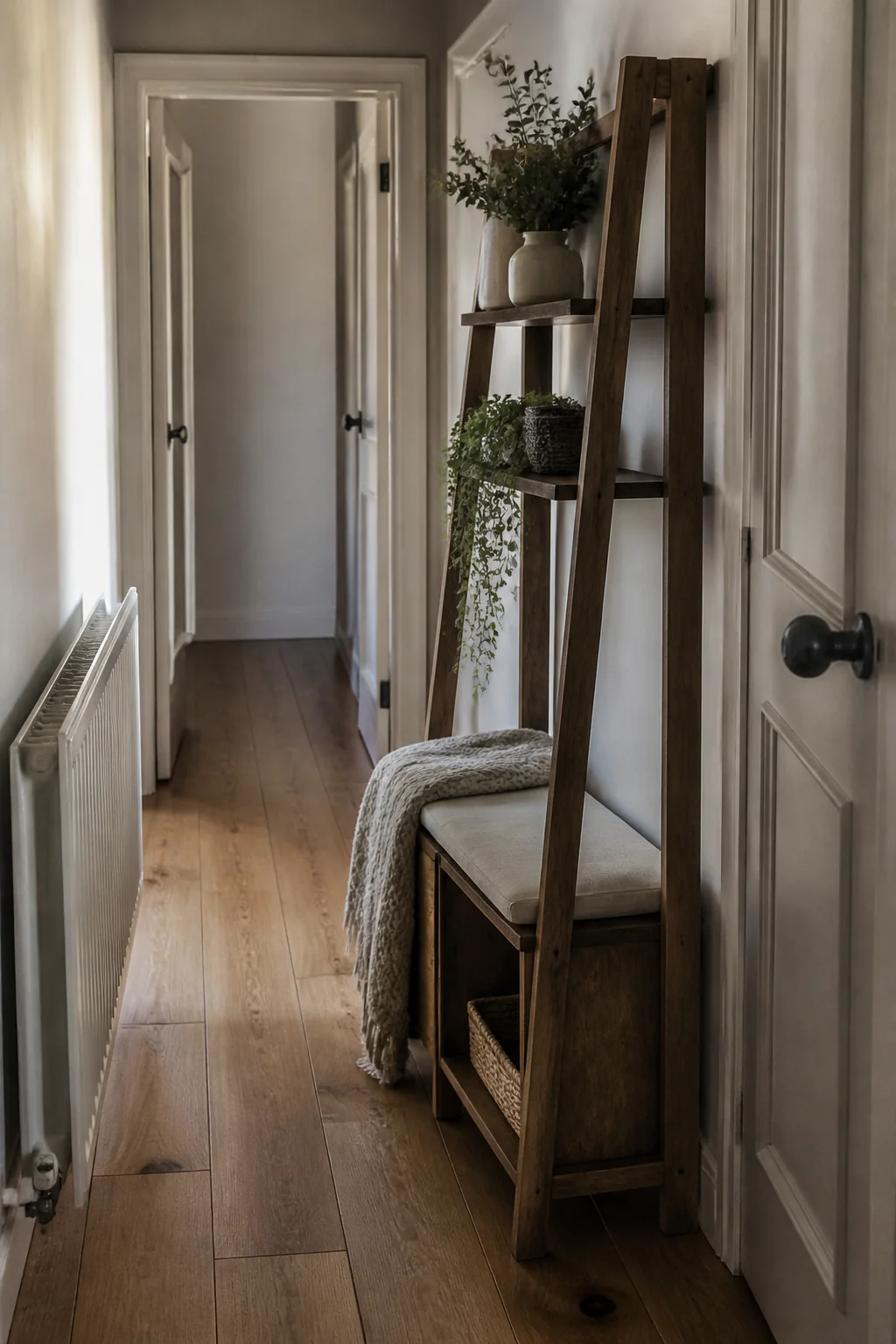
A narrow A-frame ladder shelf (about 24 inches wide) leans against the wall and offers shelves on both sides without the footprint of a traditional bookcase. The shelves are shallow, maybe 6 inches deep, so they don't eat into walkway space. Some versions include a bench seat at the bottom for putting on shoes. Expect to pay $120 to $250, and position it where light from a window or pendant can highlight the items stored there. The only drawback is they can feel flimsy if the angle isn't steep enough, so check weight ratings before buying.
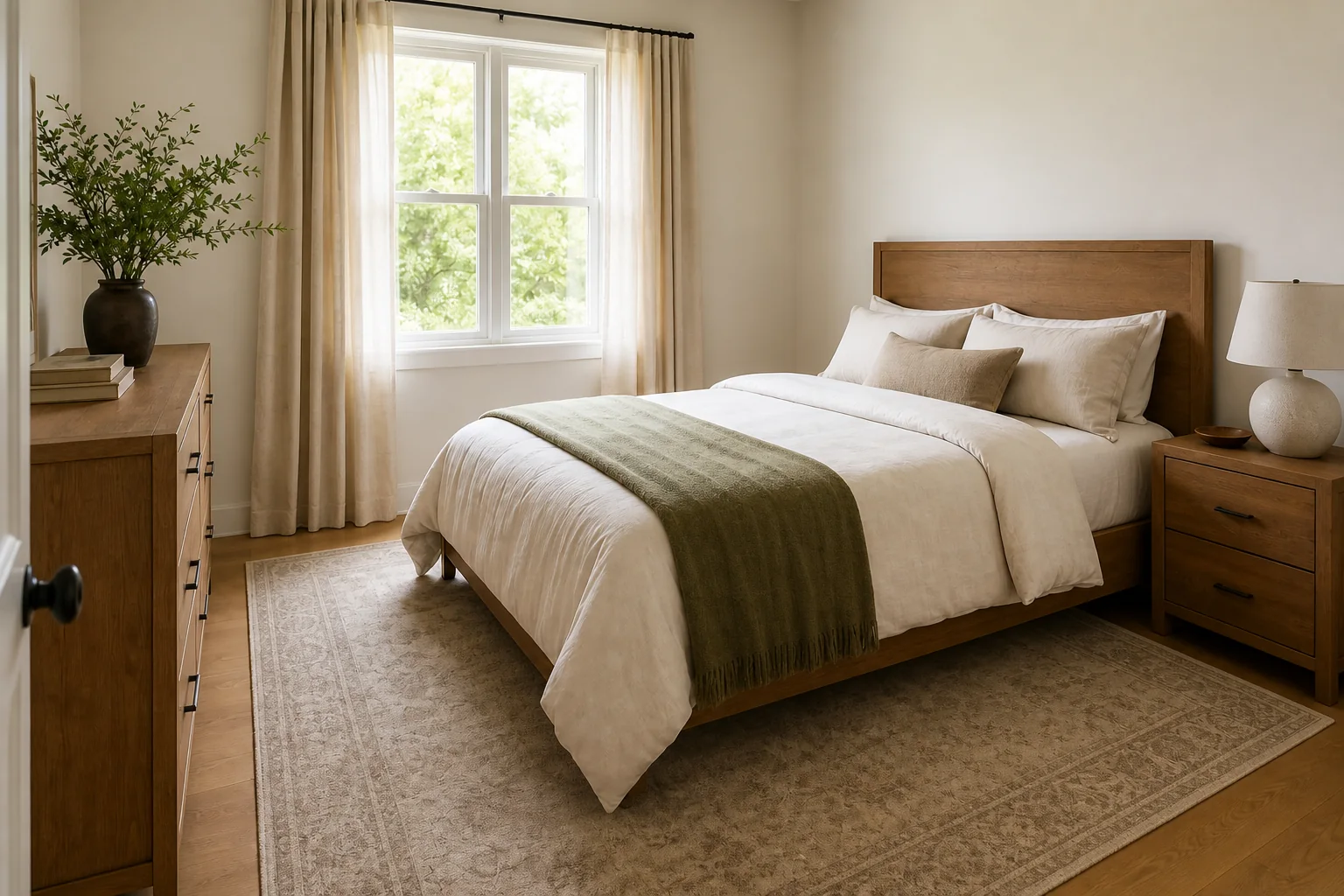
6. Wall-mounted coat rack with integrated hooks and a shelf
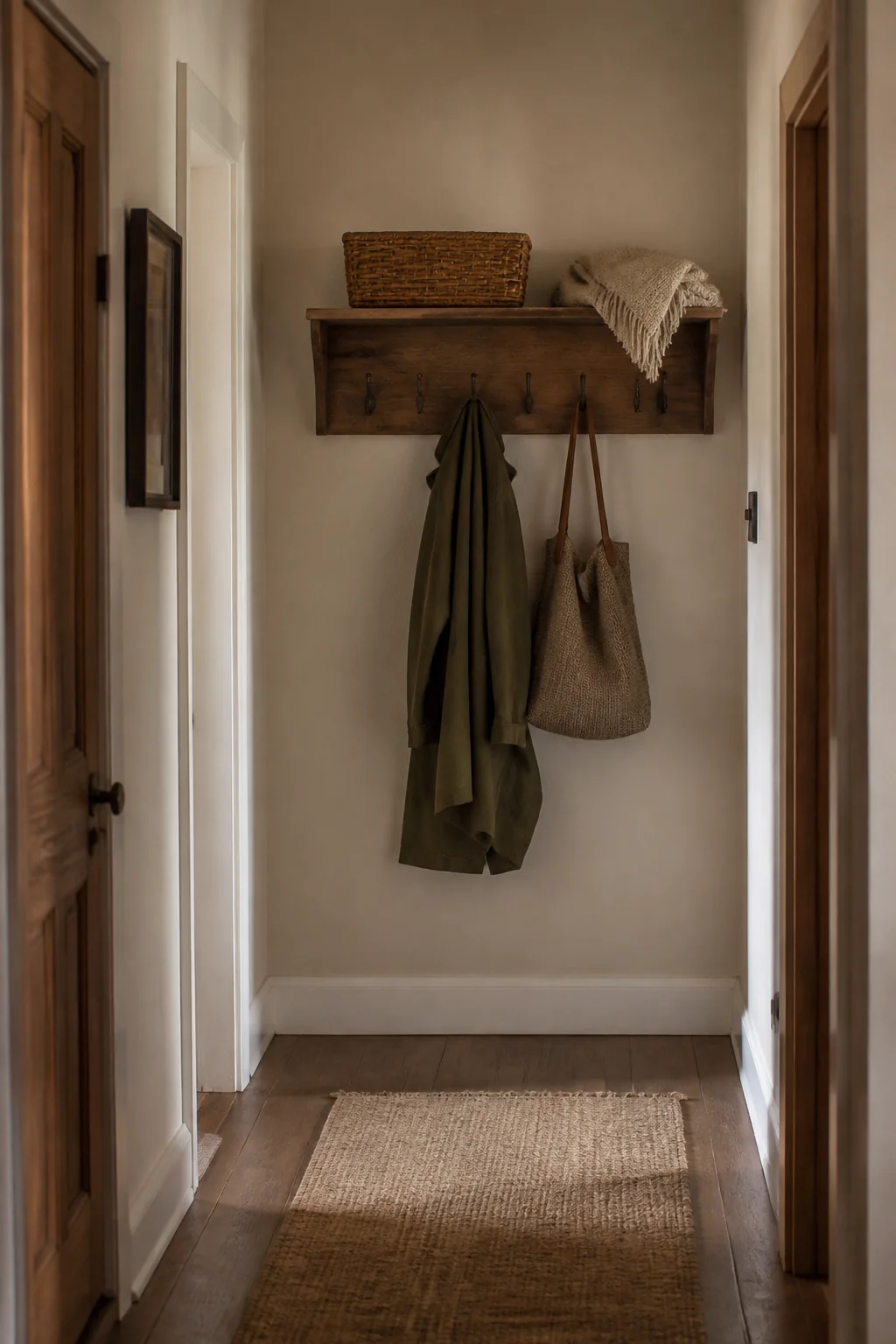
Instead of a freestanding coat stand, install a 36-inch-wide wall-mounted rack with five to seven hooks and a shelf above for hats or a basket for gloves. The whole piece uses just 6 inches of depth and about $60 to $120 buys a solid one in wood or metal. Position it at a height that lets coats hang without dragging on the floor - usually about 12 inches from the top of the rack to ceiling. Mount it between two doorways so it doesn't interfere with opening either door.
7. Thin wall-mounted filing cabinet for mail and paperwork
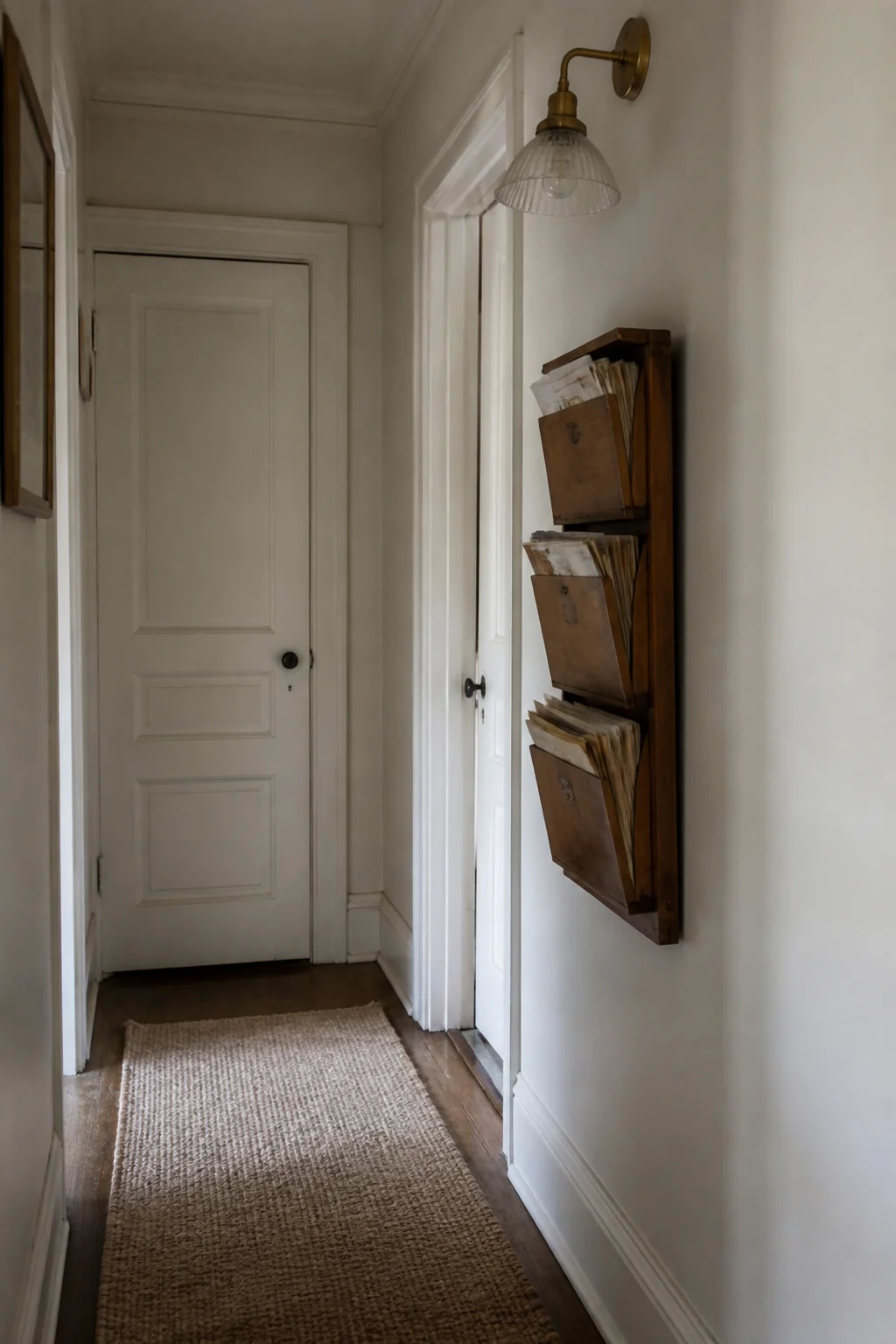
A compact metal filing cabinet 14 inches wide and 4 inches deep bolts to the wall at standing height, so you can file papers, bills, or takeout menus without a surface to set them on. These cost about $70 to $150 and work especially well in hallways that double as entryways or drop zones. Label the drawers clearly - "To Pay," "Medical," "Warranties" - so the system actually works. The cabinet should feel rock-solid when you pull a drawer, which means using quality wall anchors and screwing into studs if possible.
8. Tall narrow bookcase (20 inches wide or less)
Choose a bookcase that's taller than it is deep, something 20 inches wide and 72 inches tall. You're using vertical space that costs you nothing in floor clearance. Fill alternating shelves with baskets to hide clutter and leave some shelves open with spines facing out so the space reads as curated rather than crammed. A solid-wood version costs about $180 to $350, while metal-frame bookshelves run $100 to $200.
9. Bench with hidden storage and a back for hanging bags
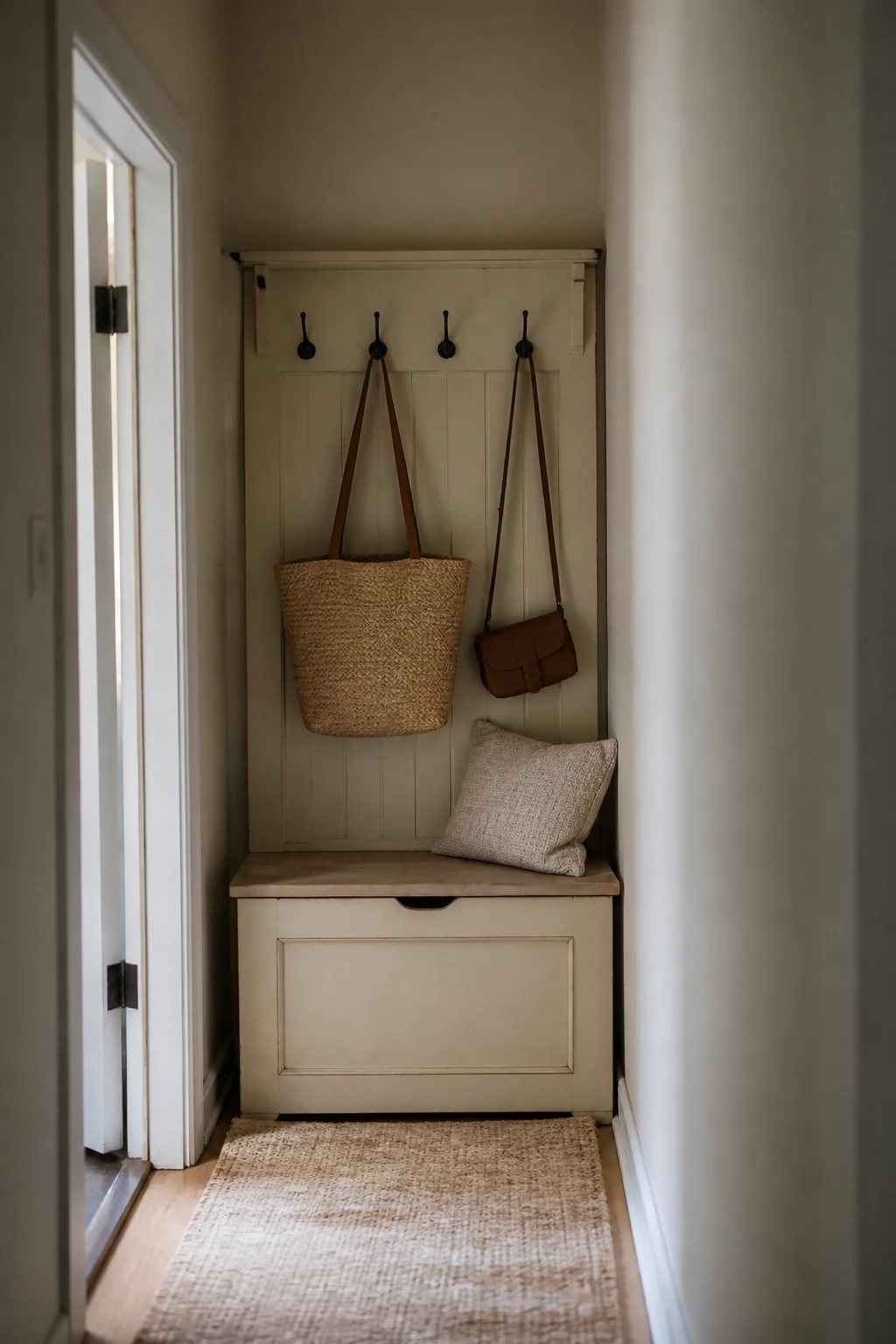
A low bench (around 18 inches tall) with a hinged seat that opens to a hidden compartment gives you seating for putting on shoes plus storage for off-season items or outdoor gear. The back of the bench can have two or three hooks for bags or coats. Size it to leave at least 24 inches of clear walkway on either side, so measure your hallway first. These run about $150 to $300 and should feel sturdy when you sit on them - if the hinges creak under weight, the quality is cutting corners.
10. Floating shelf at shoulder height for visual storage
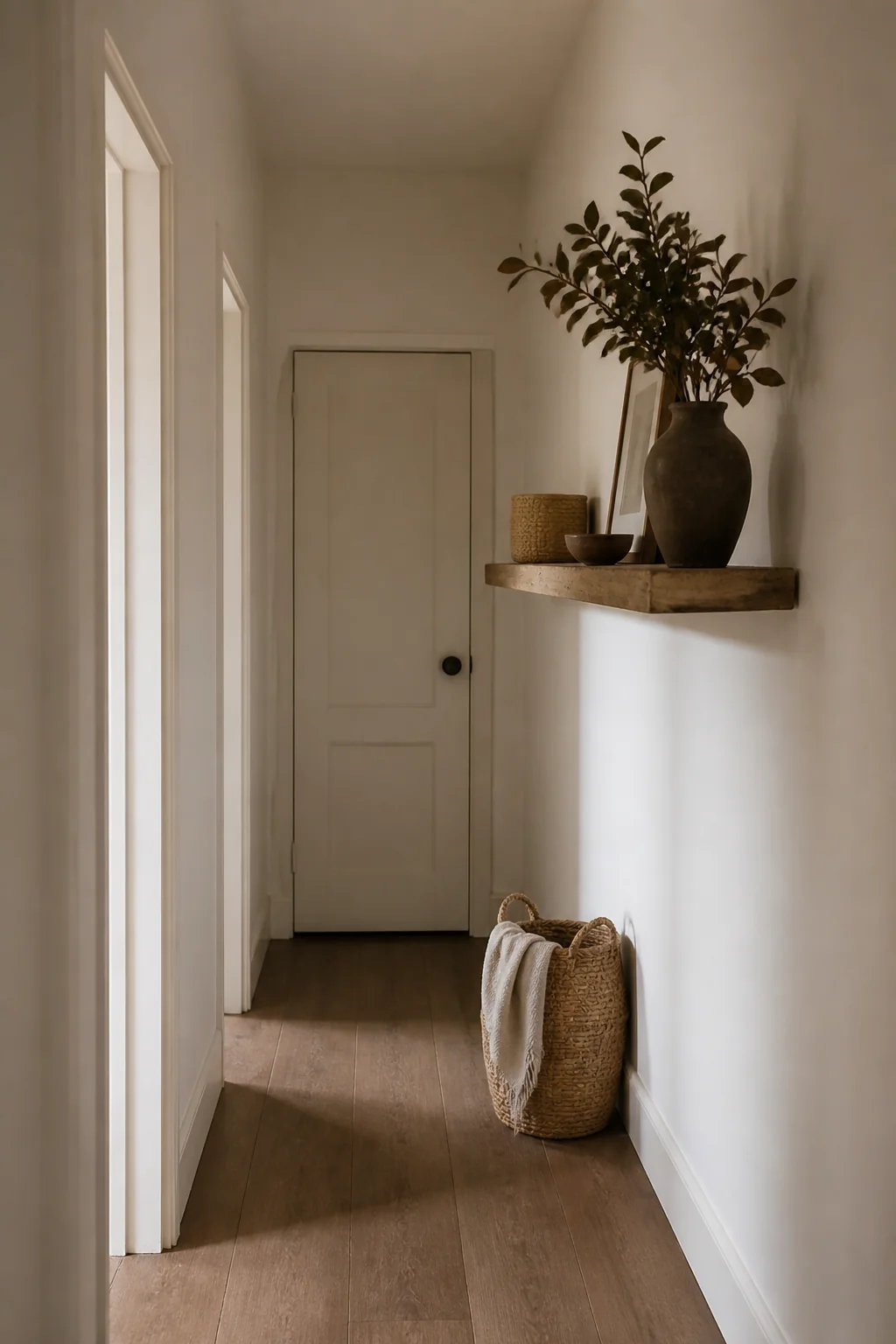
Mount a single 24-inch floating shelf at shoulder height along one wall - around 54 to 60 inches up from the floor. Keep it nearly empty with just a vase, a few books standing upright, or a small basket. This shelf works because it doesn't interrupt sight lines the way a shelf at waist height would, so the hallway doesn't feel crowded. The floating bracket itself costs about $15 to $40, and a quality wood shelf about $40 to $100. The room the shelf creates mentally is worth more than the storage it holds.
11. Under-stair storage boxes if you have basement or attic stairs
If your hallway has basement stairs, snap shallow storage boxes under the low end of the staircase. Each box might hold 25 to 35 pounds of off-season clothing or gear. Use clear plastic boxes so you can see what's inside without opening them, and label each one. The boxes stack to a height that doesn't create a tripping hazard, and at about $15 to $40 per box you can buy several. This is dead space that costs you nothing in walkway clearance.
12. Mirror with a thin shelf frame for double duty
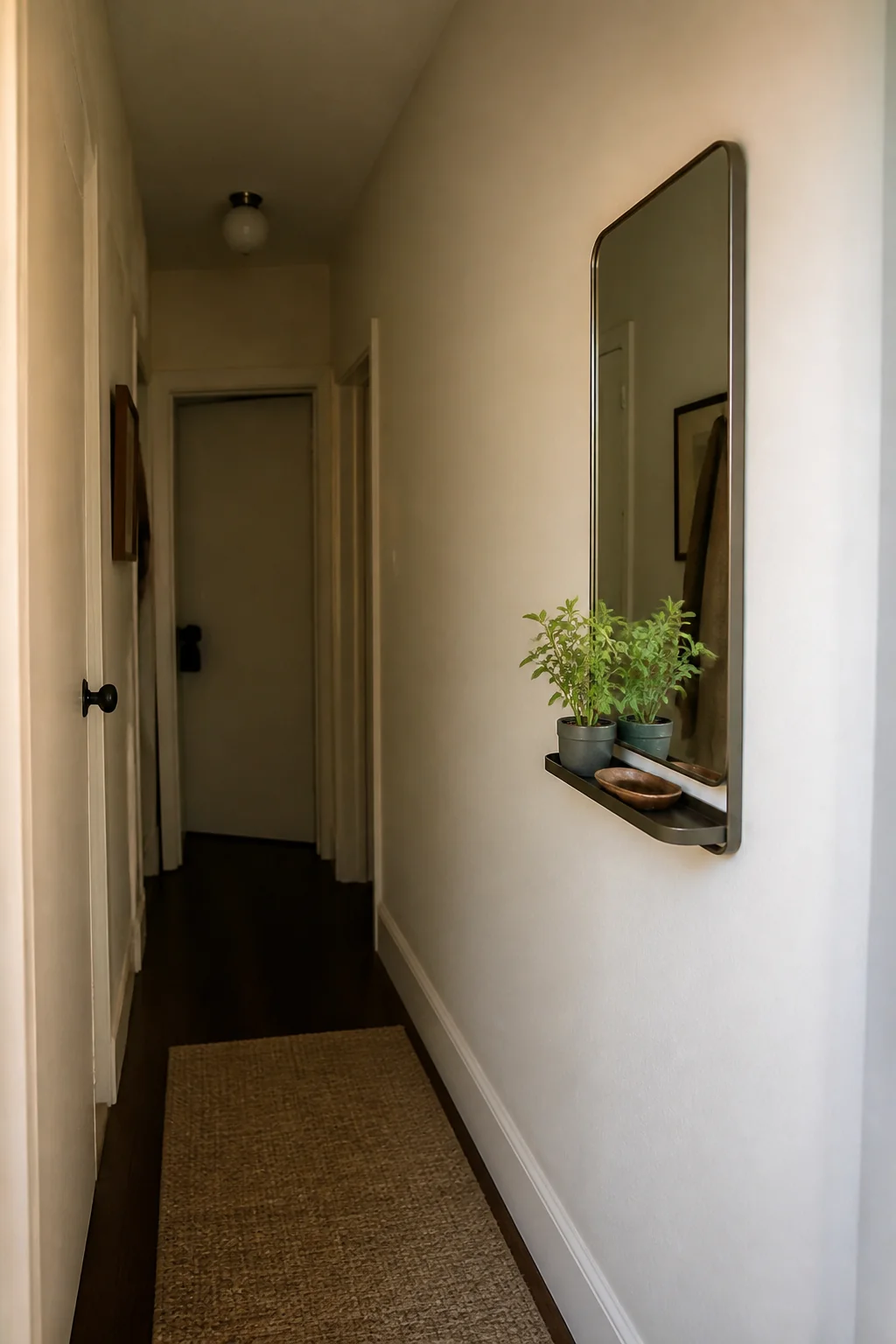
Mount a large mirror (36 inches wide minimum) on the longest wall with a slim shelf frame around the bottom - about 4 inches deep. The mirror makes the hallway feel wider and brighter, and the shelf holds a small plant, candles, or keys without adding visual weight. The shelf should sit about 48 inches from the floor so you can see it in the mirror and it doesn't block the lower half. A good mirror with frame costs about $80 to $200 and pays for itself in how much bigger the space feels.
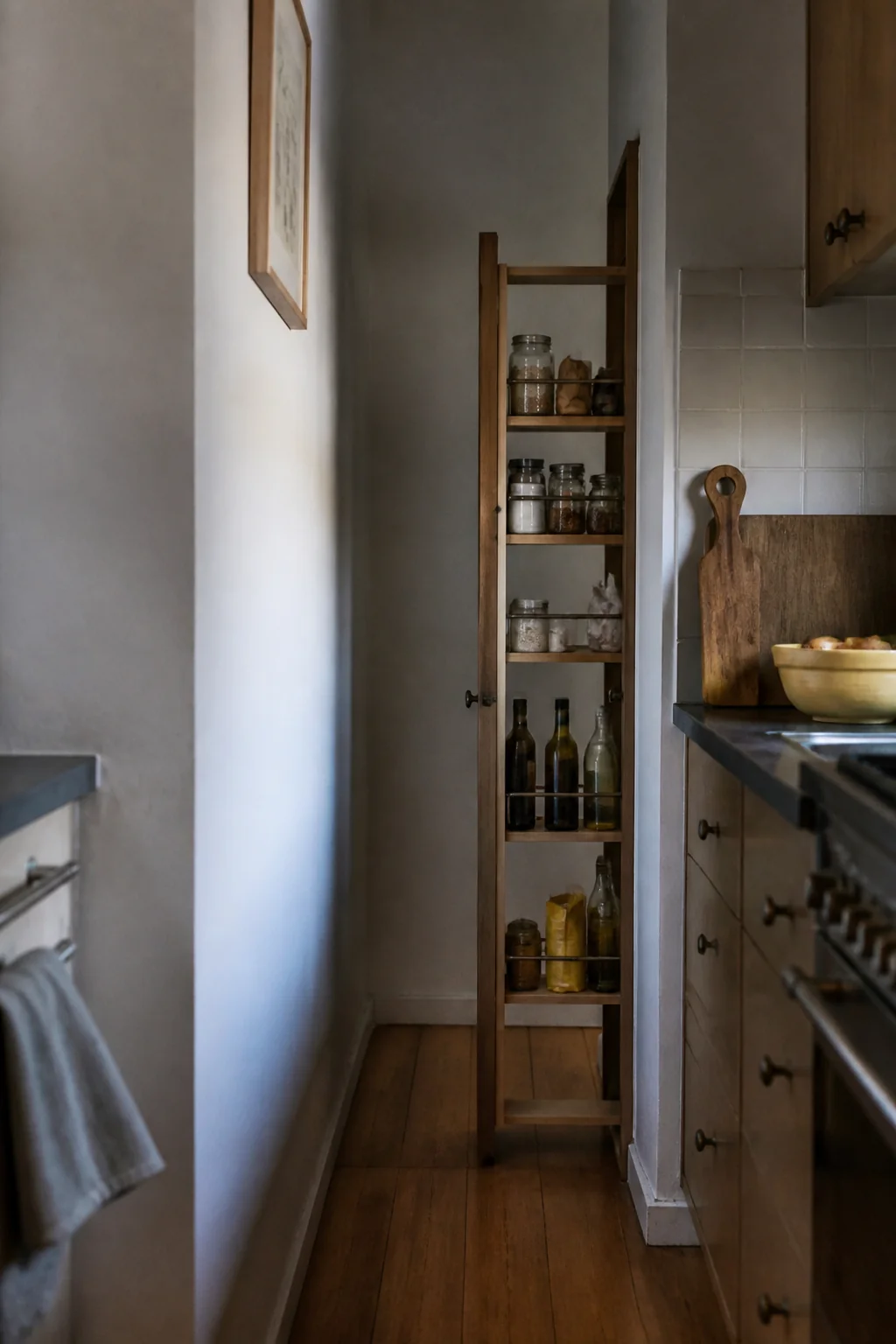
13. Slim pull-out pantry cabinet for shared household items
Save the full guide
In a hallway near a kitchen or main living area, a pull-out pantry cabinet just 9 inches deep slides out like a drawer and holds cleaning supplies, batteries, light bulbs, or seasonal items. When closed, it reads as a vertical gap in the wall rather than furniture. These run about $150 to $250 and mount directly to the wall studs so they don't tip when fully extended. The weight distributes as you pull, and the slides should glide smoothly without binding - test this before buying if you can.
Ideas fade by Friday. A plan finishes the room.
You just read a full guide to your small space. Saving ideas will not change it; a plan will. The Home Decor Collection is every planning tool we make, for every room in the house, in one download, so the after photos below stop being other people's rooms.
- Six room Style Kits, each with layout, palette and shopping list$114
- The Gallery Wall Studio: 200 prints + 15 measured layouts$29
- The Room Makeover System: 40 solved room layouts + workbook$29
- The Color Palette Handbook: 60 palettes shown in real rooms$19
- The Whole-Home Reset: 40 printable organizing checklists$19
- The Decorator's Cheat Sheets: the 40 measurements that matter$9
- All eleven products, bought separately
$219$97
A single hour with an interior designer costs more than the entire Collection, and this one keeps answering for every room you will ever decorate. Free updates included as the products grow. And if it is not for you, the 14 day money back promise means you simply get a refund.