10 Chic Room Divider Ideas for Small Spaces Without Breaking the Bank
10 affordable small space room divider ideas that don't need permanent installation. Stylish ways to partition, zone, and define your layout.
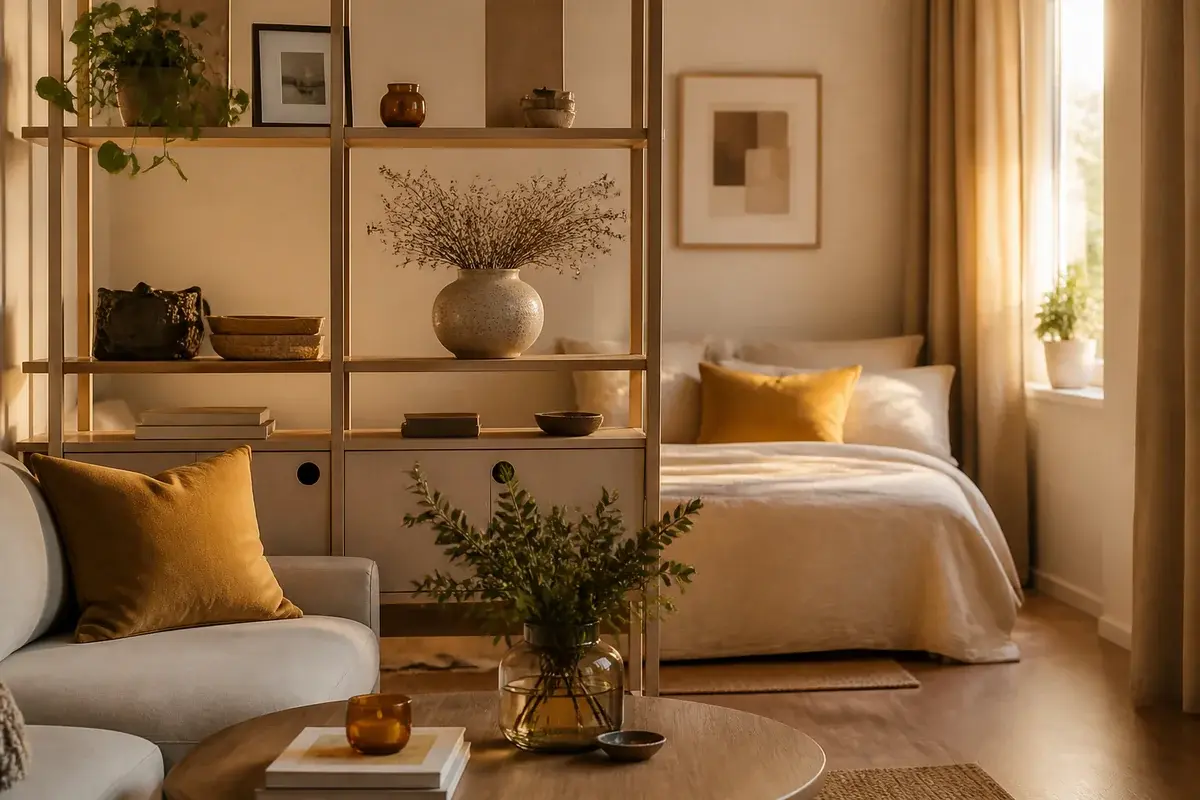
A small room has tight constraints. It probably lacks a second wall you can drill into, natural light comes from one side only, and traffic has to flow somewhere. A full-height permanent wall is off the table. What you need is something that separates the space without swallowing it whole—something that adds definition instead of making the room feel chopped up and cramped. The dividers that work best here are the ones that respect the room's proportions, let light through, and don't demand permanent changes. Here are the approaches that deliver results at prices that make sense for small space room divider ideas.
1. Hang a Lightweight Curtain Rod High and Wide
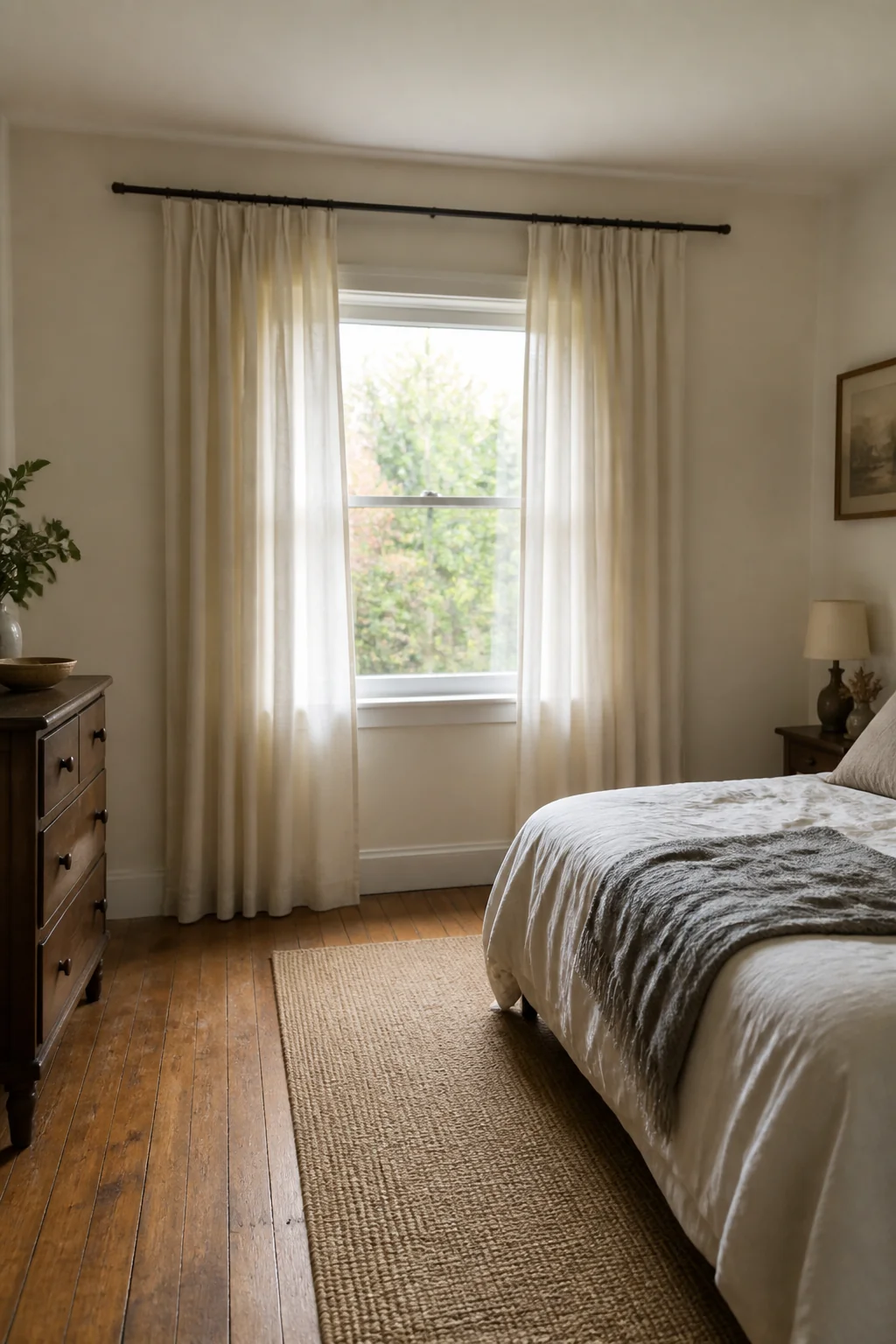
Mount a tension rod or standard curtain rod to the ceiling—or just above—and hang floor-to-ceiling curtains in a fabric that lets light filter through. Linen, lightweight cotton, or sheer blends work best. The rod should span the full width of where you want the divider to sit, even if it's 10 or 12 feet across. A tension rod costs about $15-30 and requires no drilling into studs if you use one rated for that span. The curtains themselves run $40-80 for a pair in a neutral color. What matters is the height: hung this way, the fabric becomes a visual boundary without blocking your sightline completely. Most people hang the rod too low or choose heavy velvet that darkens the whole space instead. You want the light to move through it.
2. Use a Tall Bookshelf as a Room Divider
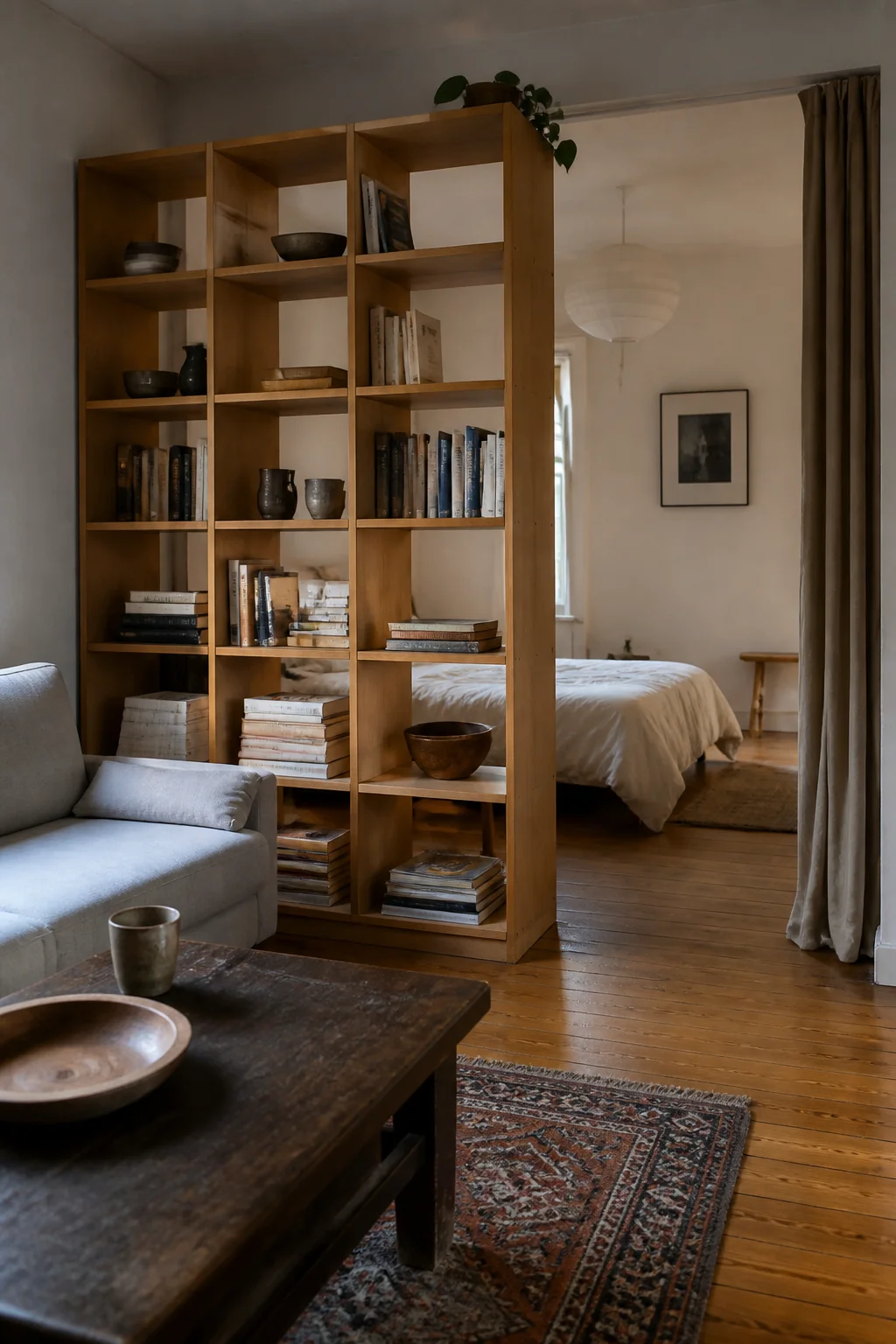
A freestanding bookcase between 72 and 84 inches tall creates a partition without taking up much floor space. IKEA's Billy shelving (about $60-120 depending on height) or a similar open-back unit lets light through while the shelves define the boundary. Position it perpendicular to one wall, roughly in the middle of the room where you want the division to happen. Fill it sparsely—books stacked on their spines, a few plants, some decorative objects—so it reads as a divider rather than storage furniture that blocks the view. This works best when your ceiling is at least 8 feet high. In shorter spaces, the shelf looks squat and the top edge becomes a visual stopping point that chops the room.
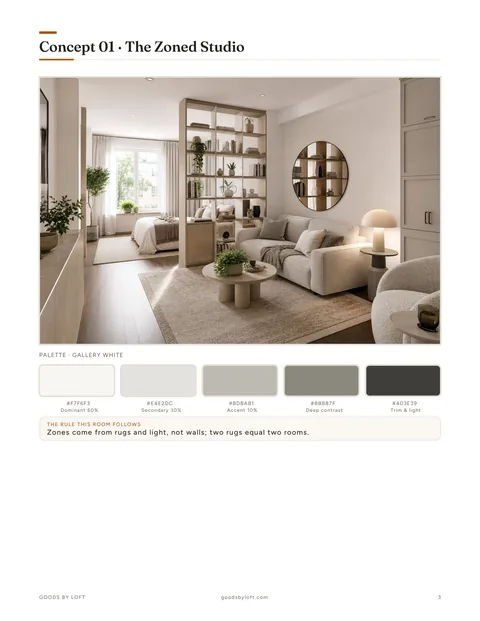
3. Install a Folding Screen or Room Divider Panel
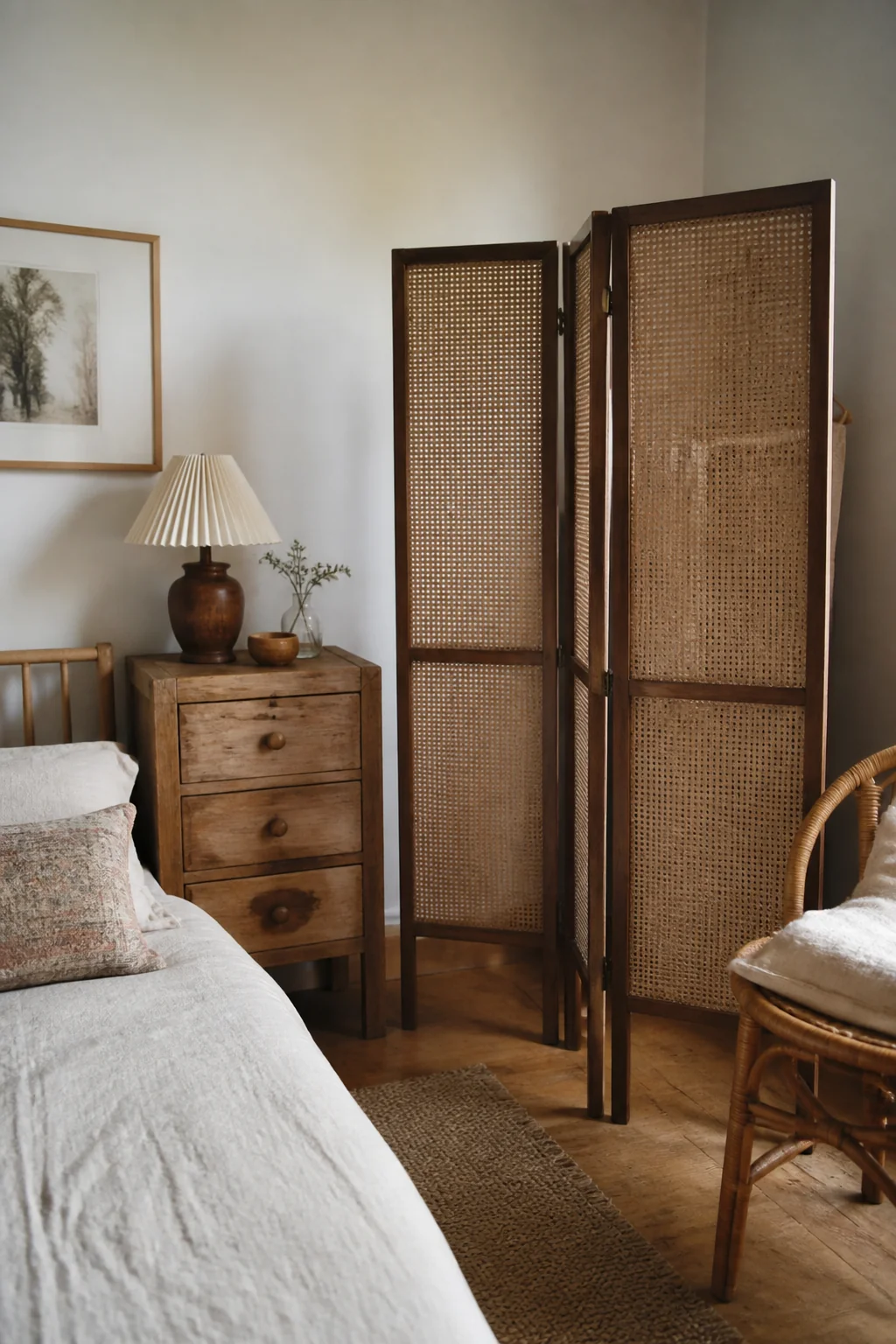
A three-panel or four-panel folding screen costs $80-200 depending on material and design. It's portable, requires zero installation, and can be moved or adjusted to block light, create a corner dressing area, or hide clutter. Look for one made of natural wood, rattan, or fabric-covered frames rather than plastic—those hold their shape better and look intentional in the space. Flexibility is the main benefit: you can angle it, fold it back, or move it entirely on days when you want the full open room. On hard floors, wobble becomes a problem. A screen needs to stay against a wall or furniture piece to remain upright. Carpeted rooms are more forgiving, but you'll still want to brace it if anyone walks past.
4. Hang Macramé or Wooden Beads as a Doorway Curtain
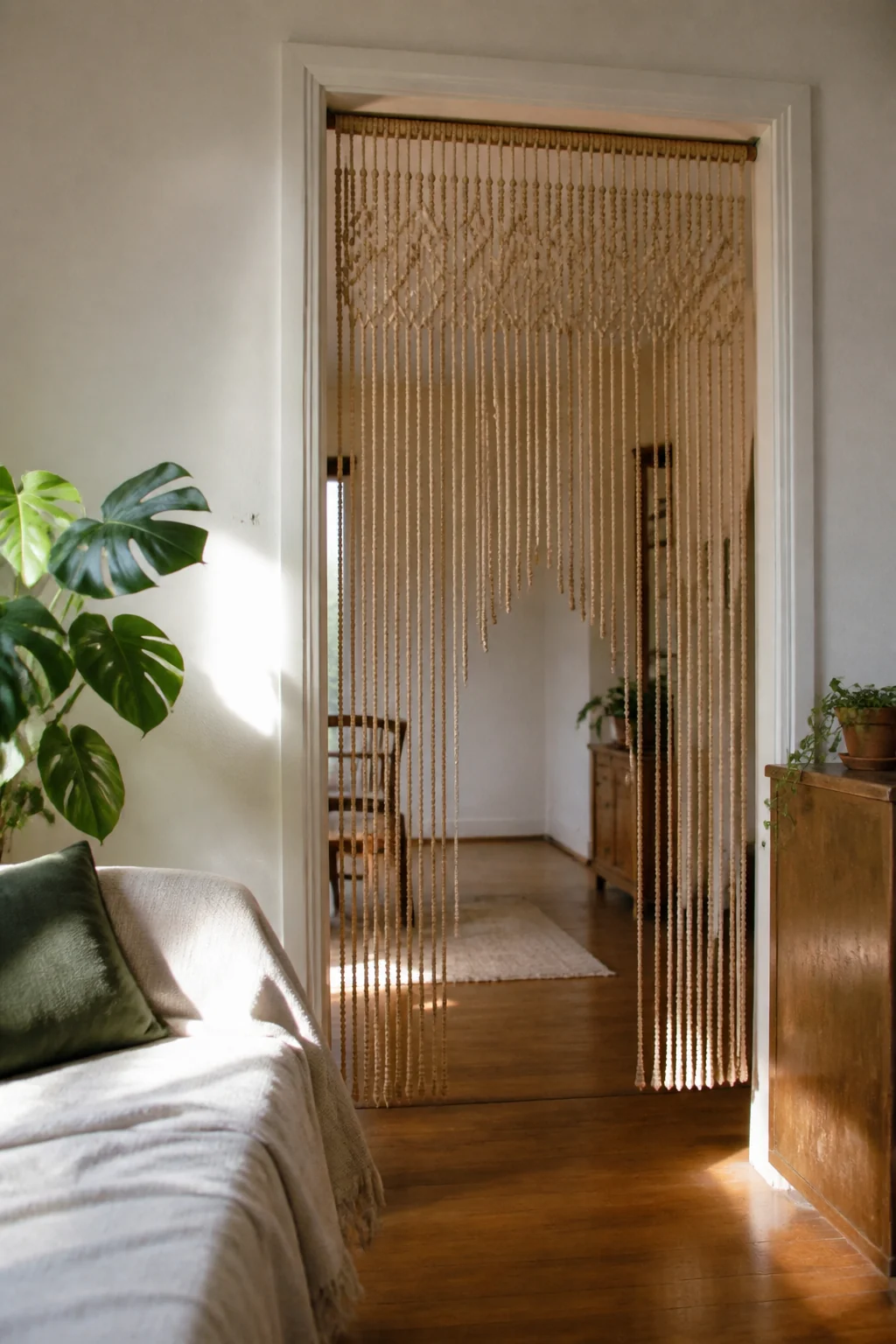
A beaded curtain strung across an opening between two rooms creates separation while maintaining visual openness. Macramé designs run $30-70, wooden bead versions about $20-40. Hang it from a standard curtain rod or tension rod mounted in the doorway frame. The beads move as you walk through, which adds texture and subtle movement without blocking light or sound completely. This works well when you want to separate a bedroom from an office nook or a living room from a sleeping area in a studio apartment. If you need acoustic privacy, the beads won't muffle sound effectively. And if you have pets or small children who'll play with the strings, this becomes annoying fast.
5. Create a Slat Wall or Wooden Room Divider
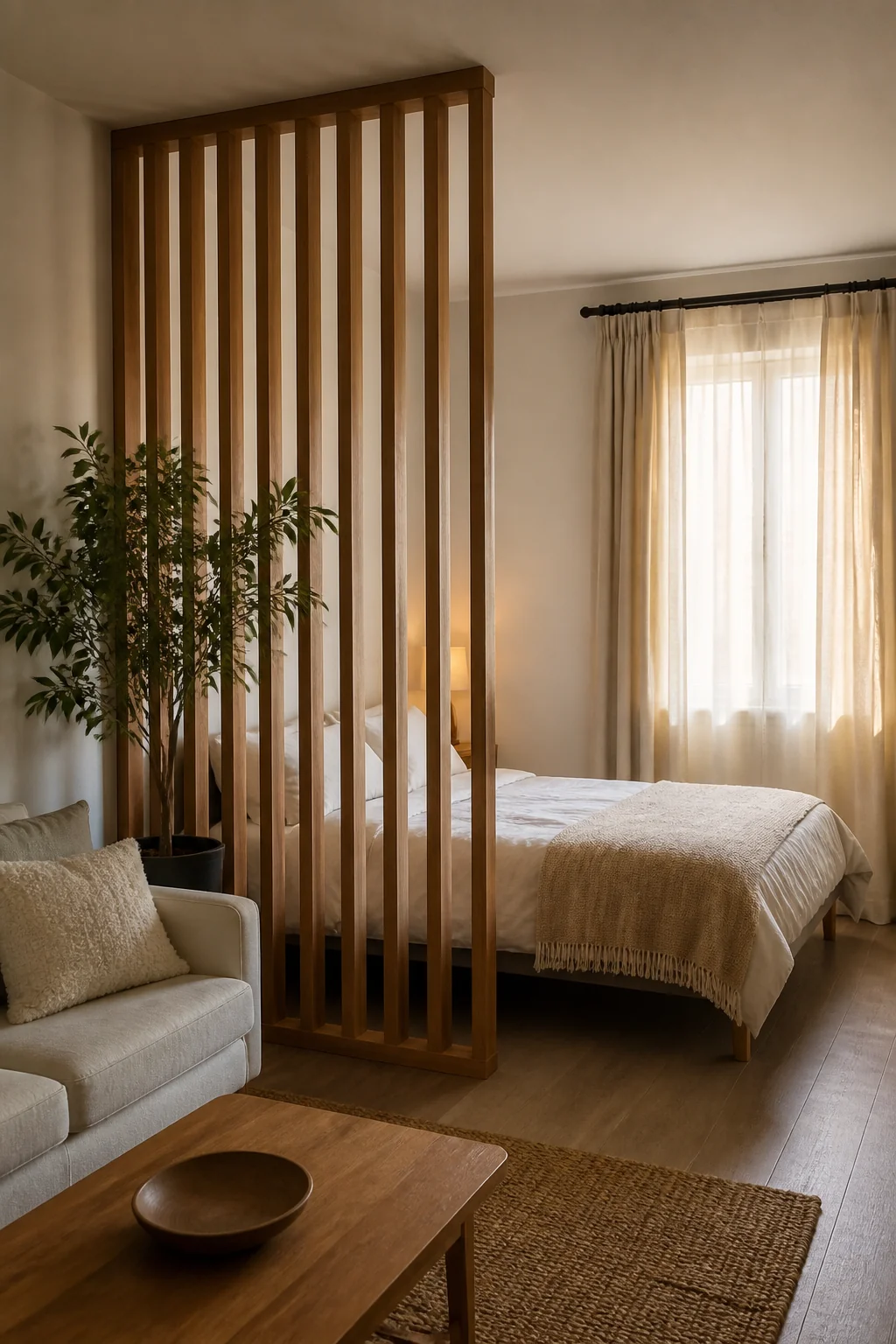
Vertical wooden slats mounted to a frame create a warm, architectural divider that costs about $120-300 to build or buy as a DIY kit. The slats don't have to be spaced evenly—wider gaps on the bottom half let you see through while tighter spacing higher up provides more visual separation. Mount it on a hinged base so it can stand freestanding or use a pipe frame system bolted together on a carpeted floor (no drilling required). Wood slats don't transmit light like curtains do, but the gaps create visual interest and allow some light to pass through. This approach works particularly well in contemporary or scandinavian spaces where clean lines matter.
6. Use Floating Shelves to Define a Zone
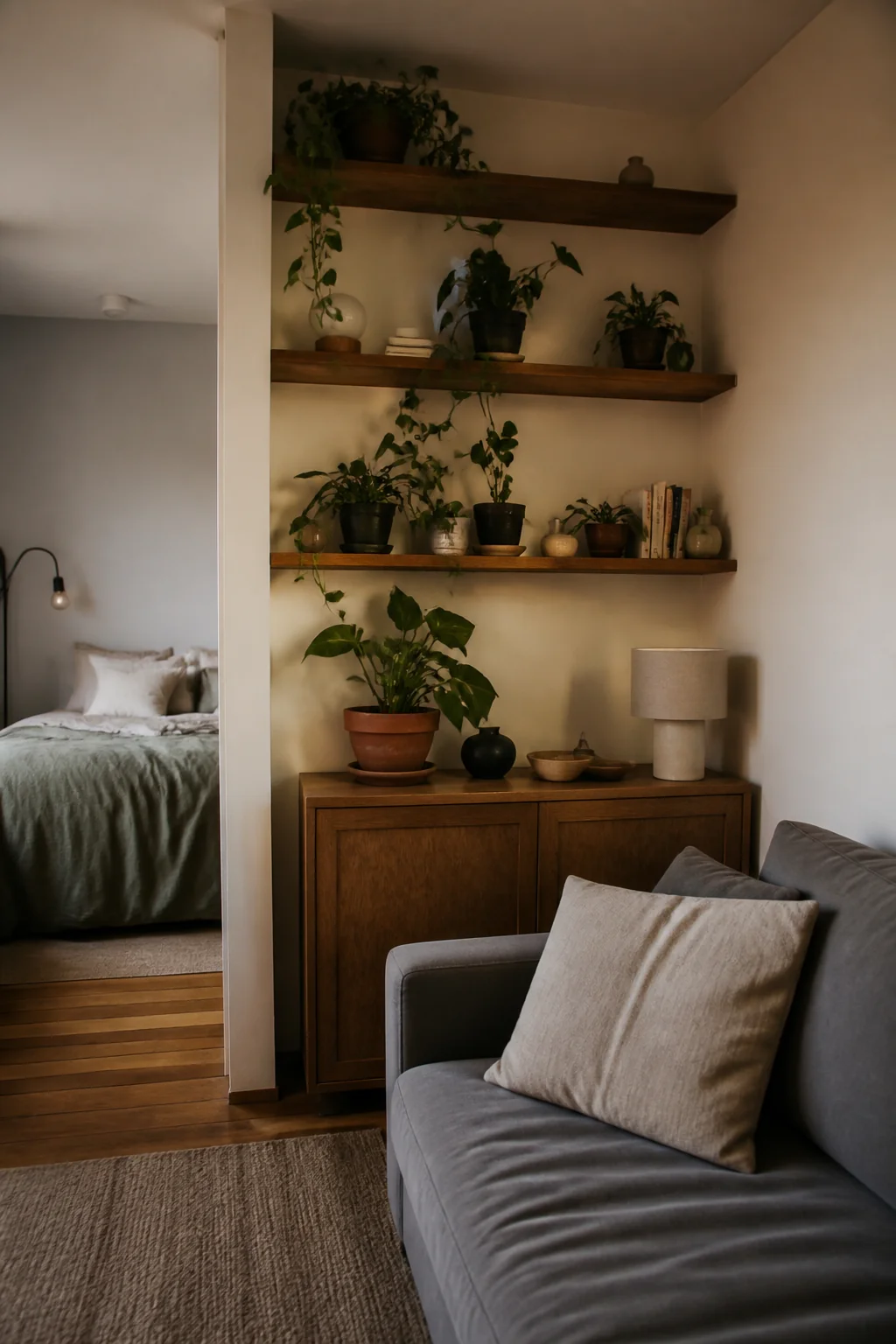
Mount open floating shelves at eye level across the wall where you want the divider to sit. Space them 12 to 18 inches apart vertically, and mount them to studs if the wall can take holes. About three to four shelves across a 6-foot span work well. Style them with books, plants, and small objects so they read as a deliberate boundary, not leftover wall space. This approach creates a visual grid without blocking the room entirely—your eye travels through the gaps. The style works in almost any decor. The catch is that floating shelves need proper installation and weight limits, so heavier items require shelf brackets underneath. This method of creating small space room divider ideas works because the negative space keeps the room feeling open.
7. Place a Tall Plant or Plant Wall
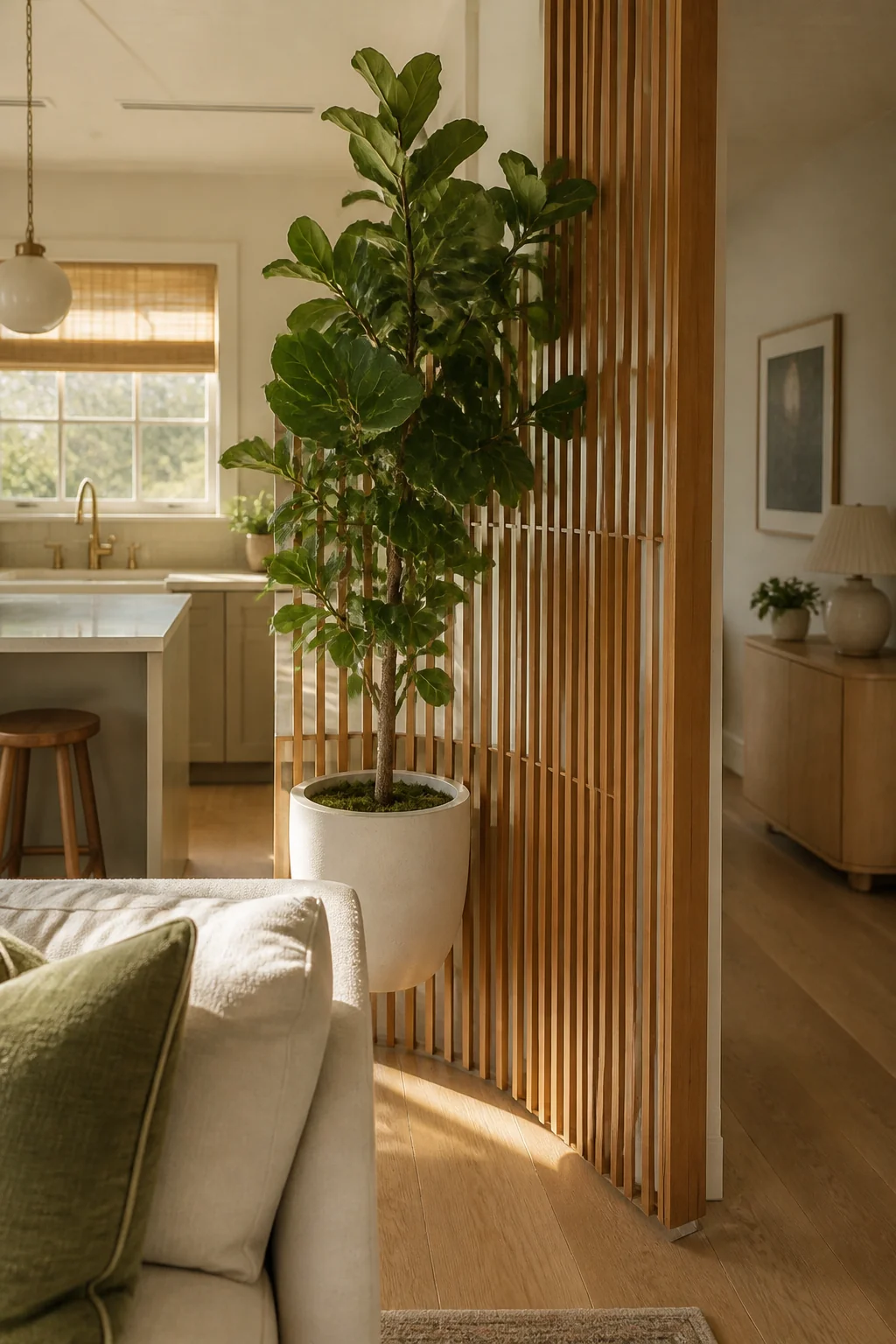
A large fiddle leaf fig, snake plant, or palm roughly 5 to 6 feet tall positioned in the center of the room creates a subtle, living divider. Three plants grouped together about 2 to 3 feet apart work even better for marking a boundary. A mature 5-foot plant costs $50-120 depending on species and size. Plants let light through, soften the space, and don't feel like a hard partition. They're perfect when you want the division to feel natural rather than intentional. Plants need appropriate light and care for the space to thrive. A tall plant in a dim corner won't survive, and it'll look wilted. Make sure the area where you're placing it gets the light the plant actually needs.
8. Hang Wooden Dowels or Rope in a Grid Pattern
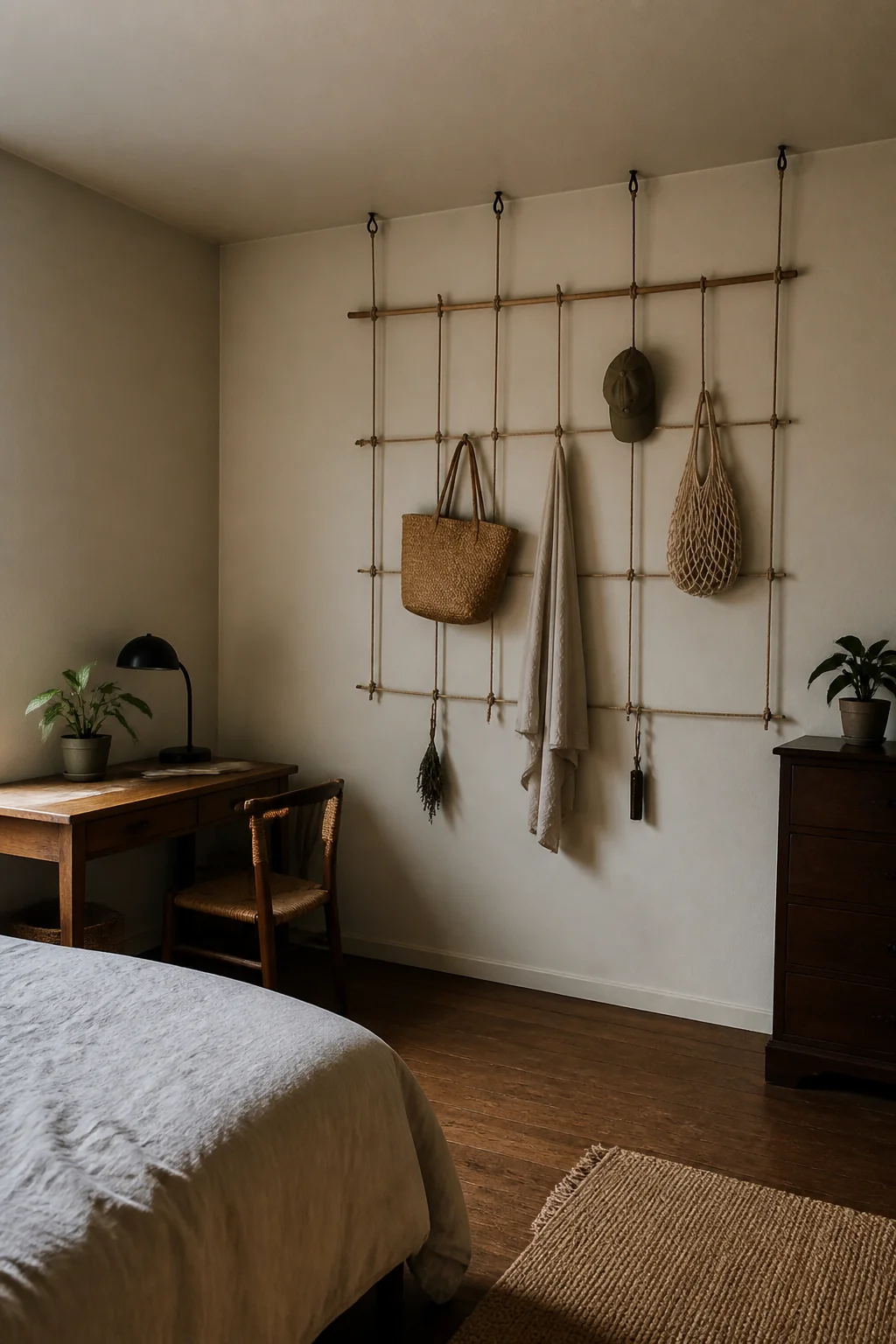
Create a framework of wooden dowels or thick rope stretched between two fixed points—either ceiling to floor or wall to wall. The grid lets light pass through completely while the pattern creates a clear visual division. Dowels are about $2-5 each and rope runs $10-20 for what you need. This is a DIY project that works best when you have structural anchor points (studs, ceiling joists, or hooks installed into those). Spacing the dowels 3 to 6 inches apart balances openness with definition. This approach feels sculptural and works in modern or industrial spaces. It requires some planning and installation know-how, so it's not a quick fix.
9. Install a Folding Glass or Acrylic Room Divider
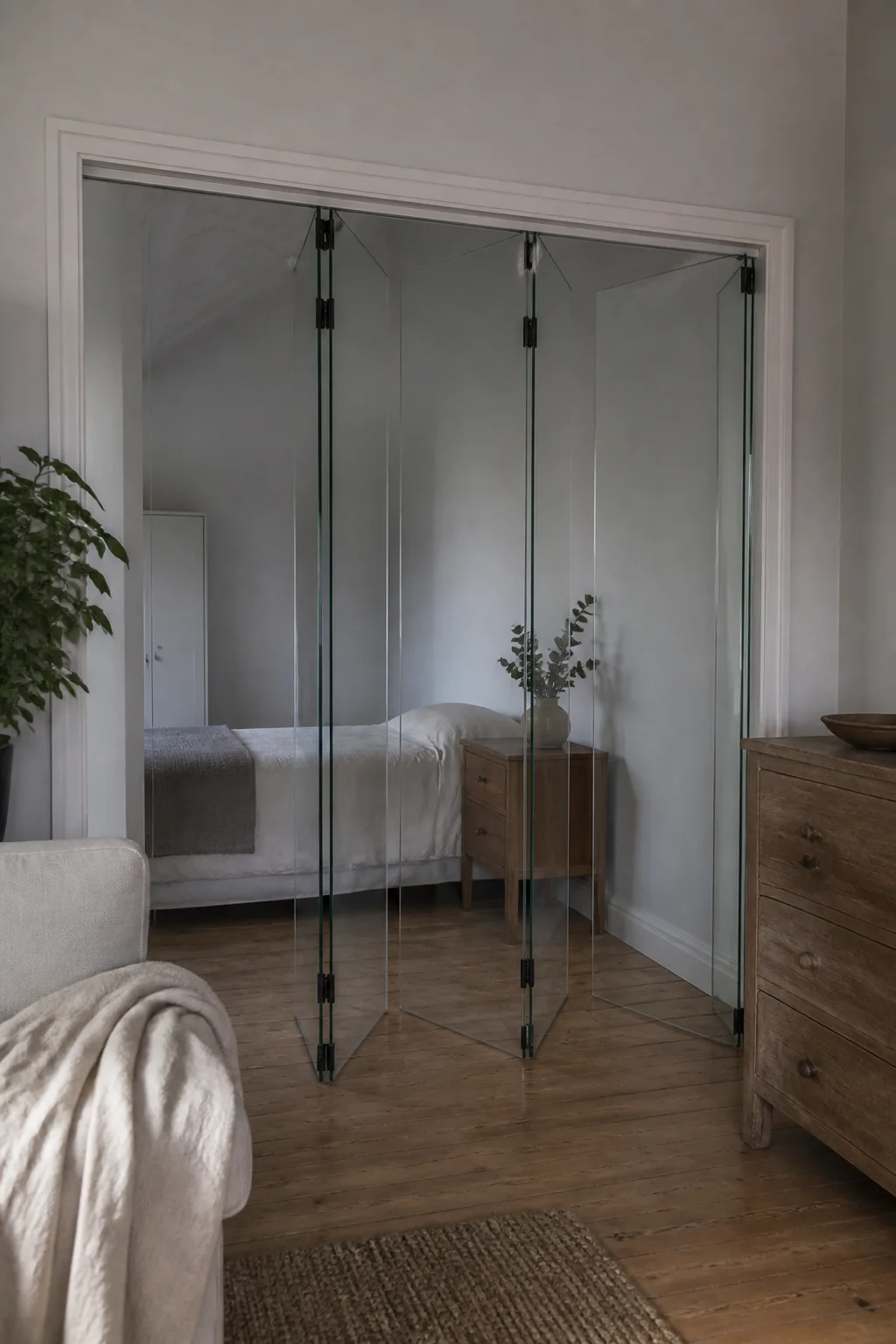
A folding glass or acrylic divider provides full visual separation while maintaining light flow. These cost $150-400 depending on size and material. Acrylic is lighter weight and cheaper than tempered glass but scratches more easily. Mount it to the ceiling or use a floor-mounted track system. The divider moves on tracks so you can open it for a larger open space or close it for privacy. Glass is almost invisible from certain angles, which keeps the room feeling large. Acrylic has a slight milky quality that softens whatever's behind it. The setup takes more hardware and installation than other small space room divider ideas here, but it's worth it if you need true sound and light privacy without permanent walls.
10. Use a Vertical Garden or Trellis with Climbing Plants
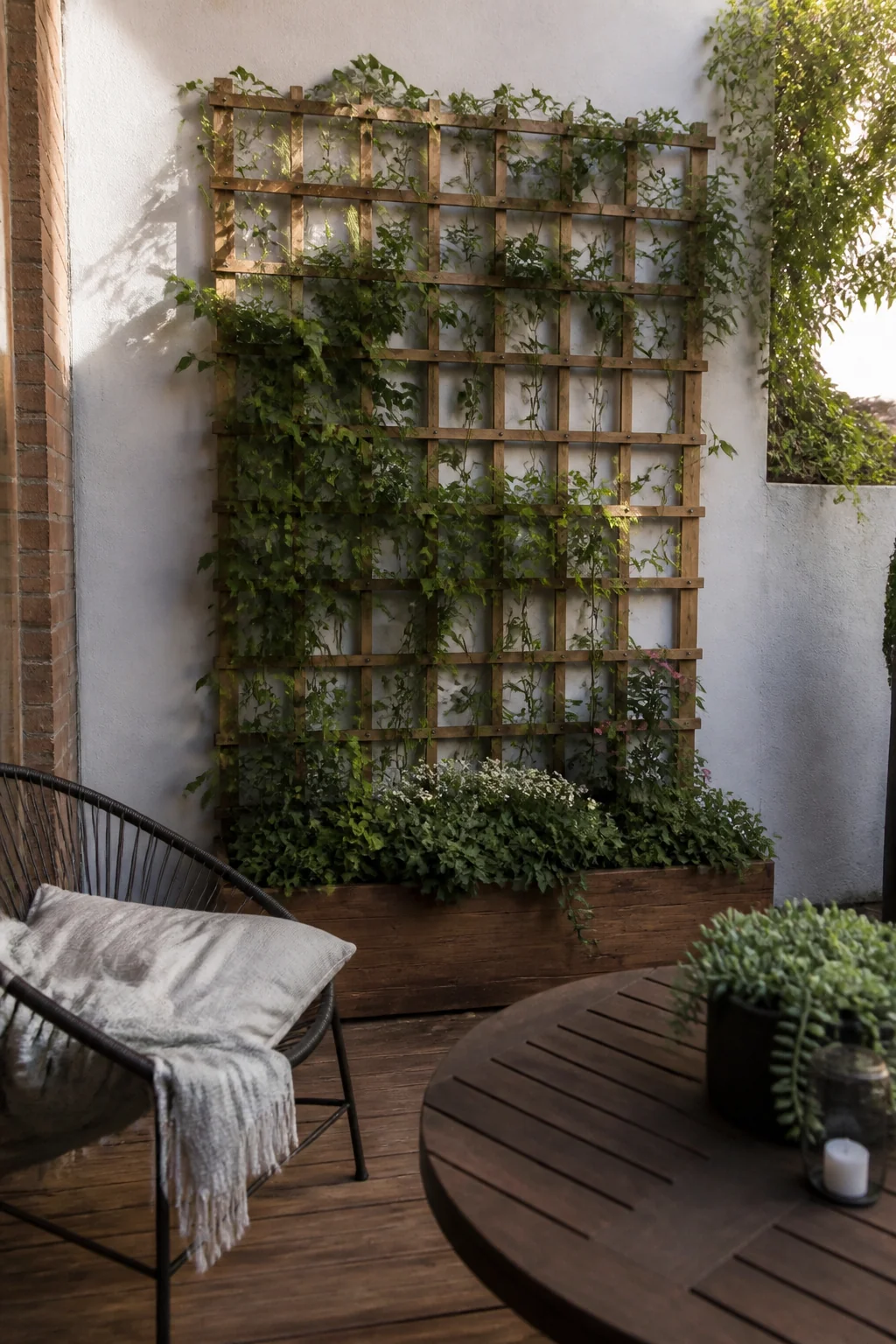
Mount a wooden trellis panel to the wall or use a freestanding trellis frame and plant climbing ivy, pothos, or other trailing vines around it. The trellis itself costs $30-80, and starter plants are $10-20 each. With consistent watering and bright light, climbing plants grow in to create a natural green wall that divides the space within several weeks. The greenery softens the division, adds humidity to the air, and brings life to the room. It's more of a slow reveal than an instant divider, so plan accordingly. Keep in mind that climbing plants need regular watering and pruning, and they work best where light reaches them directly. A trellis in a corner without much light will grow sparse.
Save the full guide
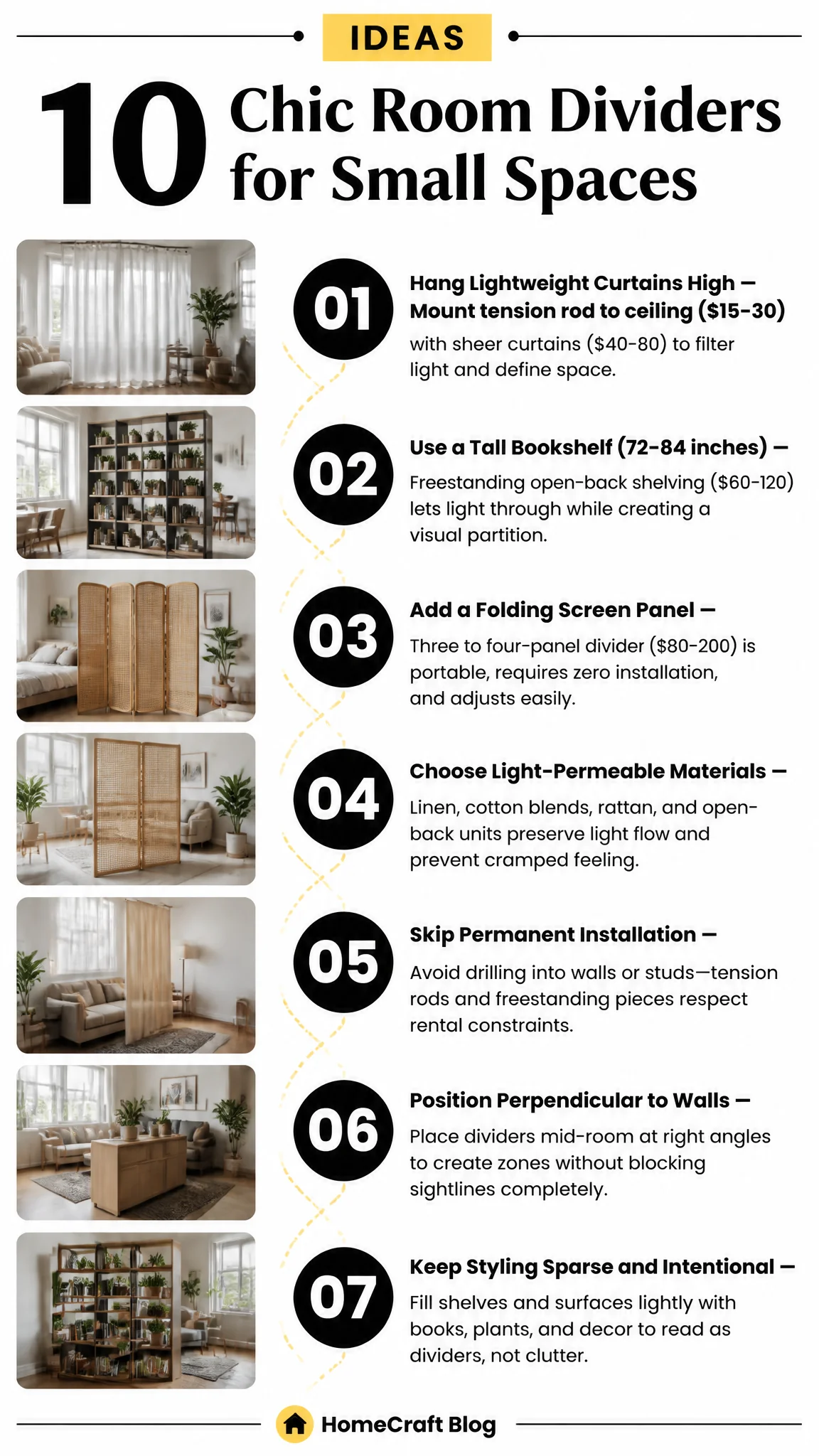
The most common mistake with room dividers in small spaces is choosing something too tall or too solid, which makes the space feel chopped in half instead of zoned. Pick something that lets light and your eye travel through it, even if you can't see the other side completely. That's what keeps the room feeling whole.
Ideas fade by Friday. A plan finishes the room.
You just read a full guide to your small space. Saving ideas will not change it; a plan will. The Home Decor Collection is every planning tool we make, for every room in the house, in one download, so the after photos below stop being other people's rooms.
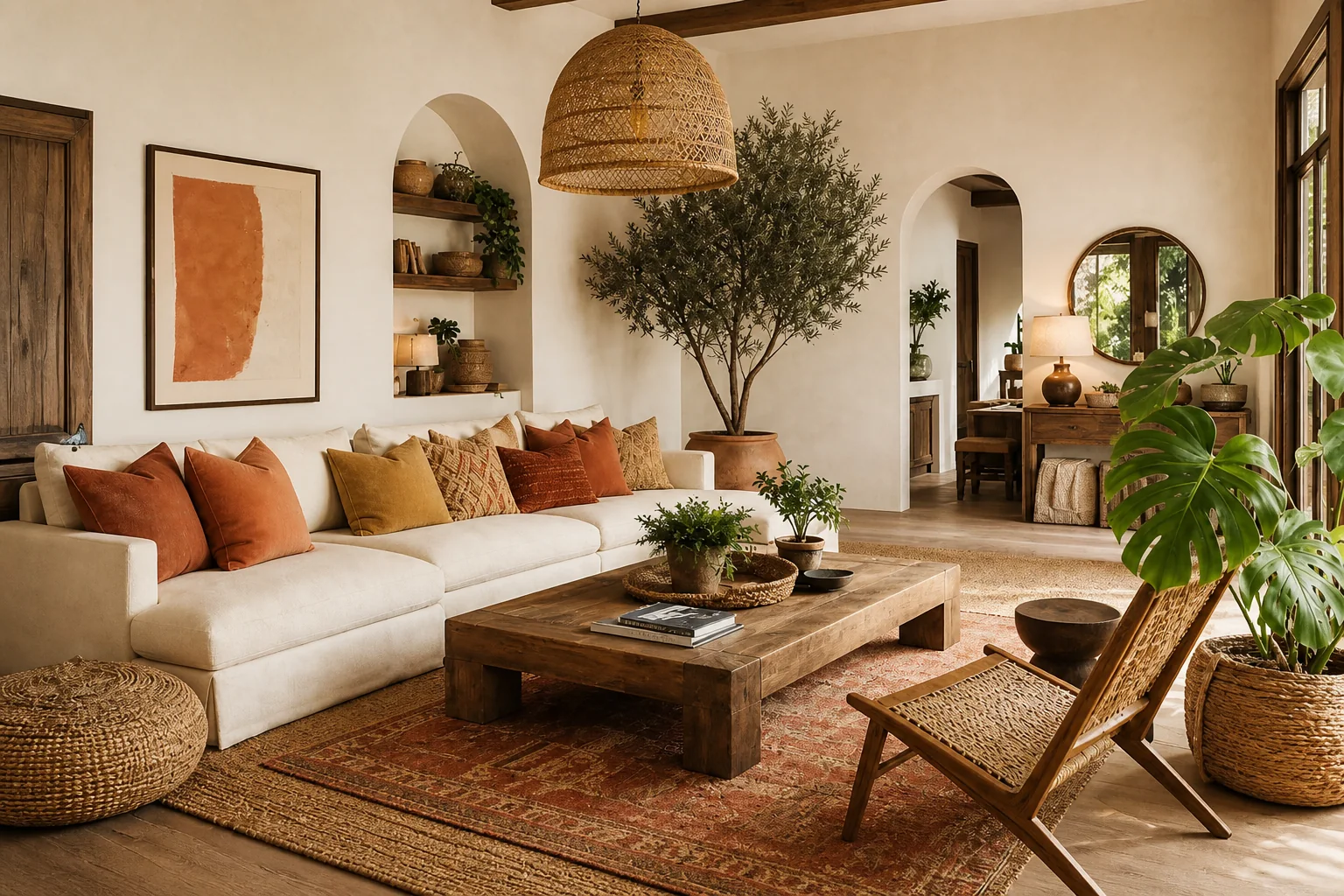
- Six room Style Kits, each with layout, palette and shopping list$114
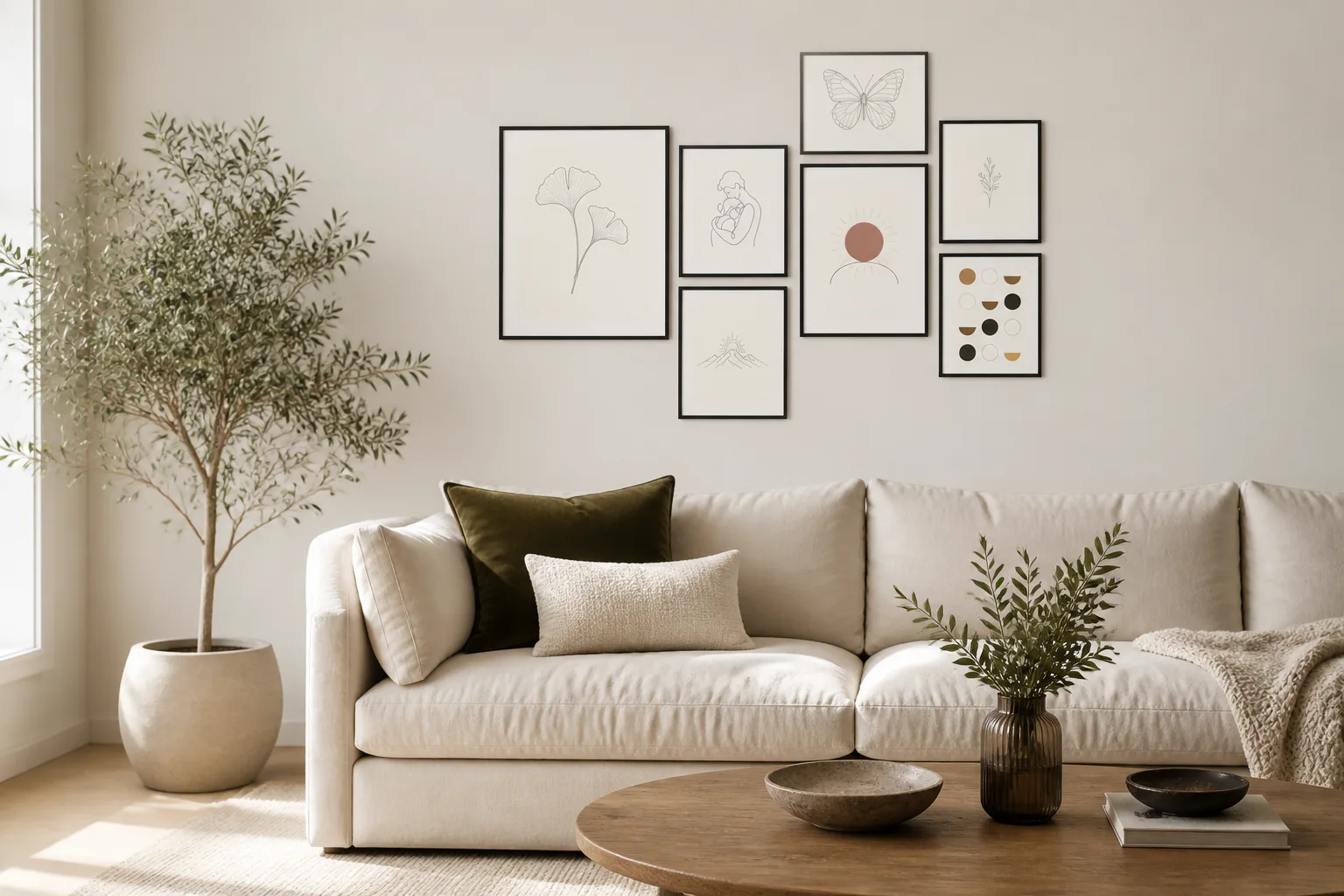
- The Gallery Wall Studio: 200 prints + 15 measured layouts$29
- The Room Makeover System: 40 solved room layouts + workbook$29
- The Color Palette Handbook: 60 palettes shown in real rooms$19
- The Whole-Home Reset: 40 printable organizing checklists$19
- The Decorator's Cheat Sheets: the 40 measurements that matter$9
- All eleven products, bought separately
$219$97
A single hour with an interior designer costs more than the entire Collection, and this one keeps answering for every room you will ever decorate. Free updates included as the products grow. And if it is not for you, the 14 day money back promise means you simply get a refund.