12 Warm Eclectic Living Room Ideas for Renters Who Want Personality
Create an eclectic living room with personality without damaging your lease. Mix styles, colors, and textures on a renter's budget.
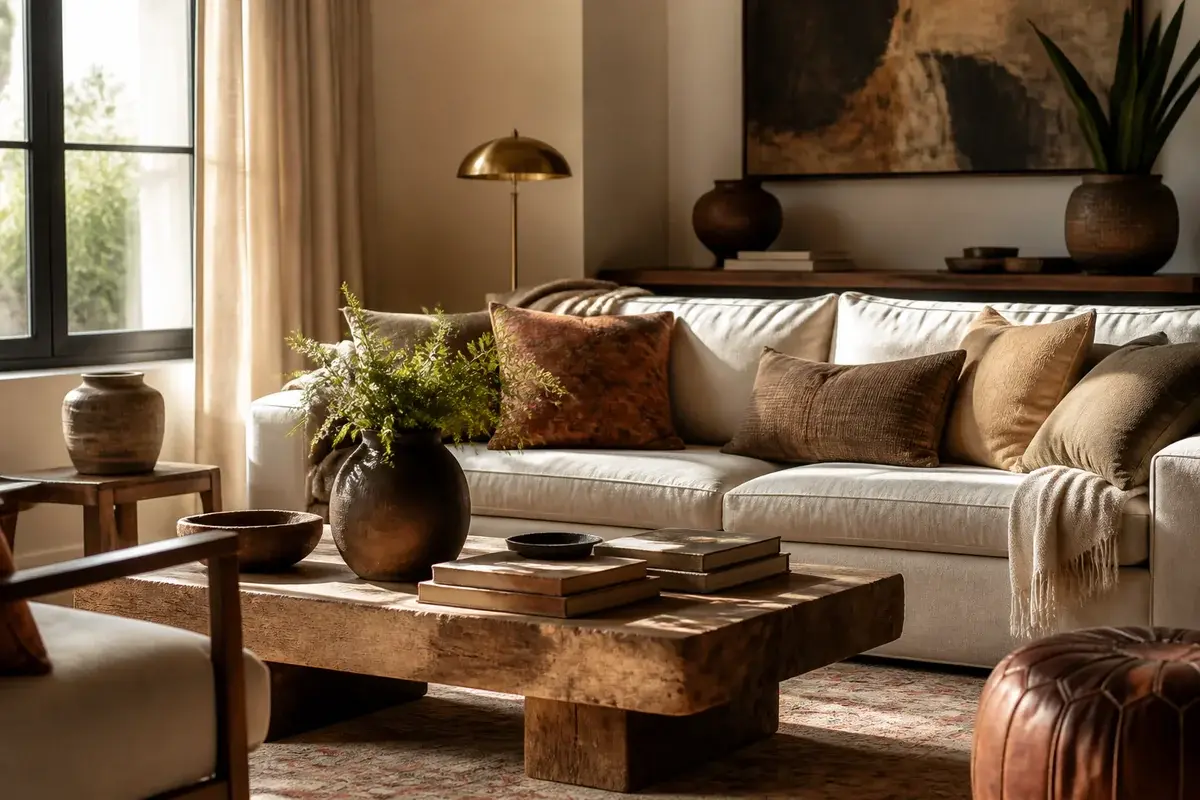
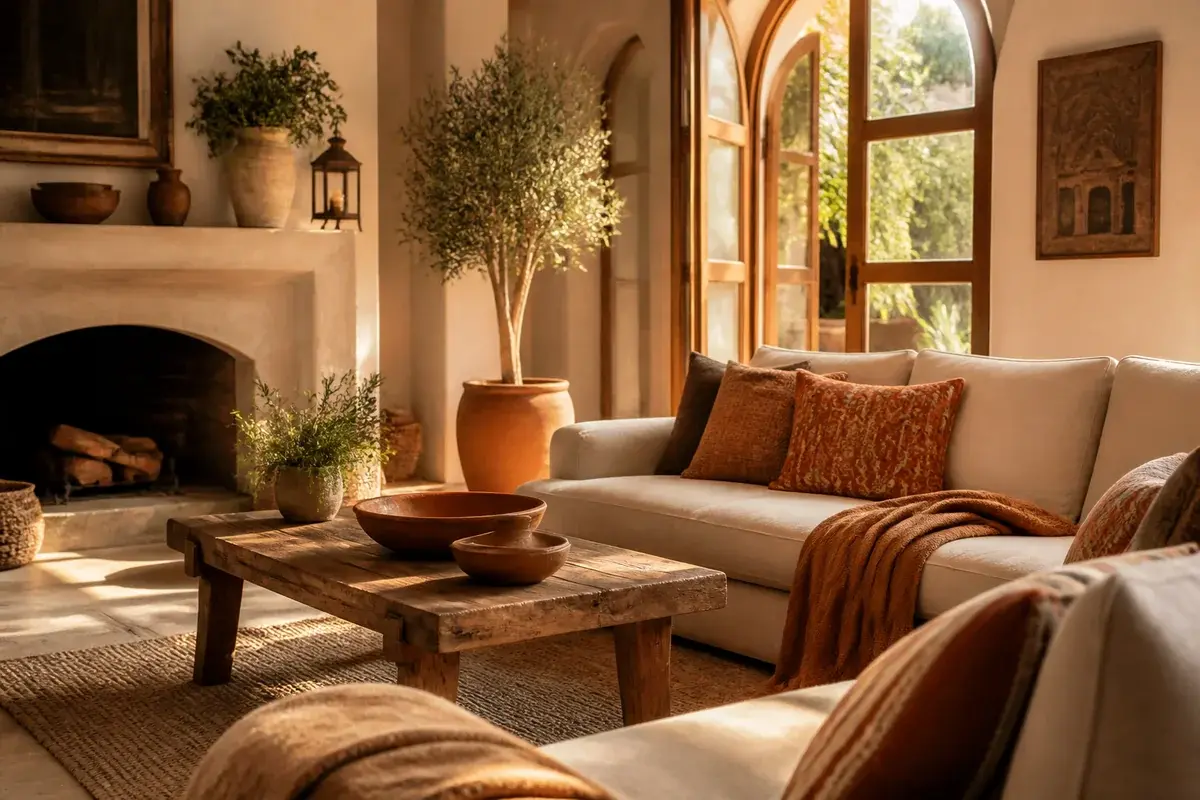
Beige walls, a lease that forbids paint, and a security deposit you'd like to see again. That's the starting point for most renters, and it's why eclectic style suits a rental so well: the whole look is built out of layers you set down rather than fasten permanently. Rugs, textiles, lamps and collected furniture do the work that paint would do in a house you own, and every one of them goes in the moving truck with you. The best eclectic living rooms aren't a matched set anyway. They come from mixing what you love and making the result warm enough to want to sit in. Here are twelve ideas that work inside a lease, with the measurements, prices and pitfalls that decide whether each one looks collected or just cluttered.
1. Layer rugs in different textures and tones
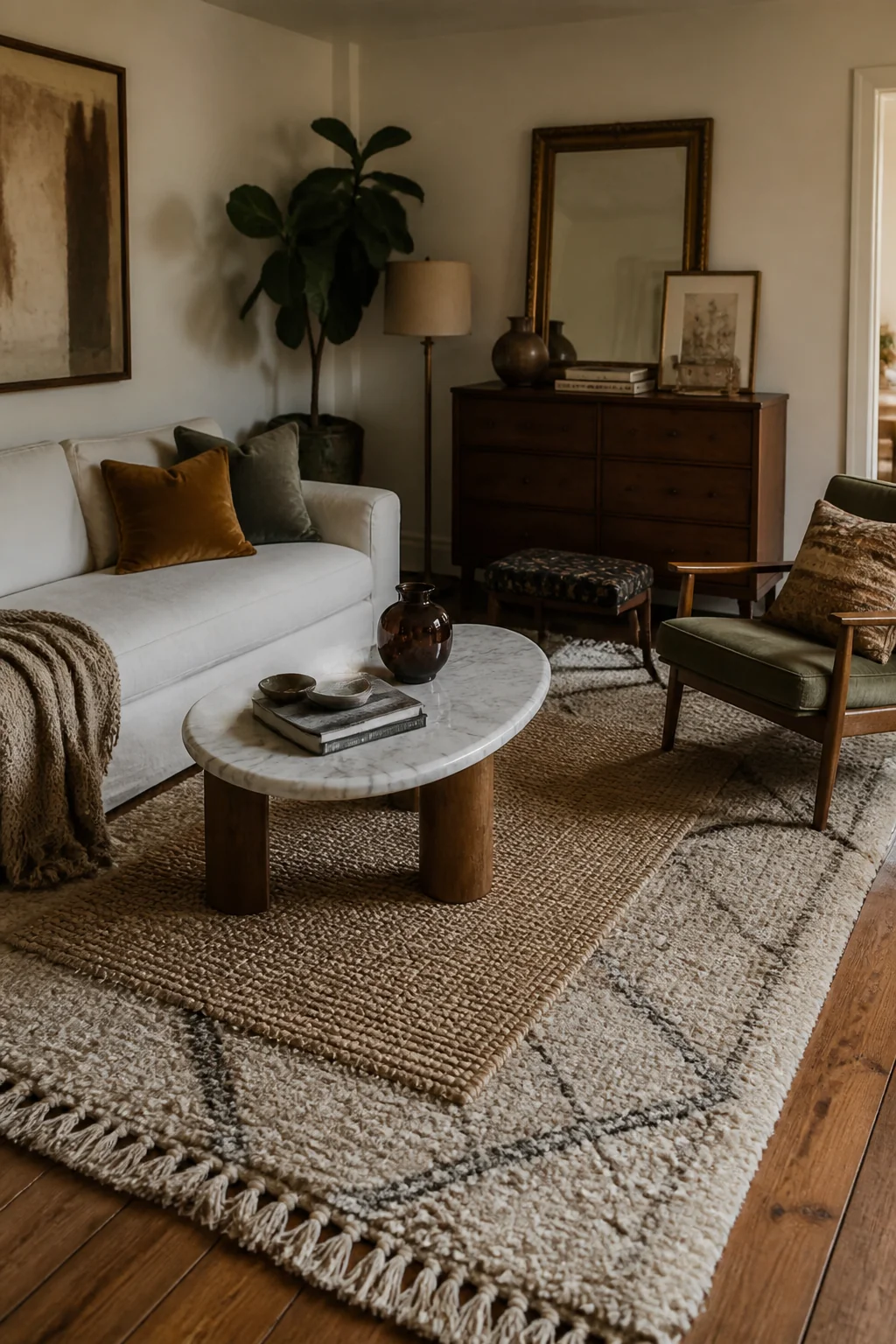
Start with a big, cheap base and save the interesting rug for the top. An 8x10 jute runs about $130 to $200 and anchors the seating area; a 5x7 wool or vintage-style flatweave layered over it costs $70 for a machine-woven copy or up to $300 for real wool. Leave 8 to 12 inches of jute showing on every side so the layering looks deliberate instead of like a rug that shrank in the wash. Put a felt-and-rubber pad underneath, about 1/4 inch thick. Skip it and the top rug creeps, the corners curl, and you've built a trip edge exactly where people walk. Jute has two drawbacks worth knowing before you buy: it sheds fiber for the first few months, and it stains permanently once it gets wet, so keep it clear of any plant that drips. The quiet payoff in a rental is sound. Two layers of textile over a hard floor pull the echo out of a room with no carpet and thin walls.
2. Mix vintage and new furniture pieces
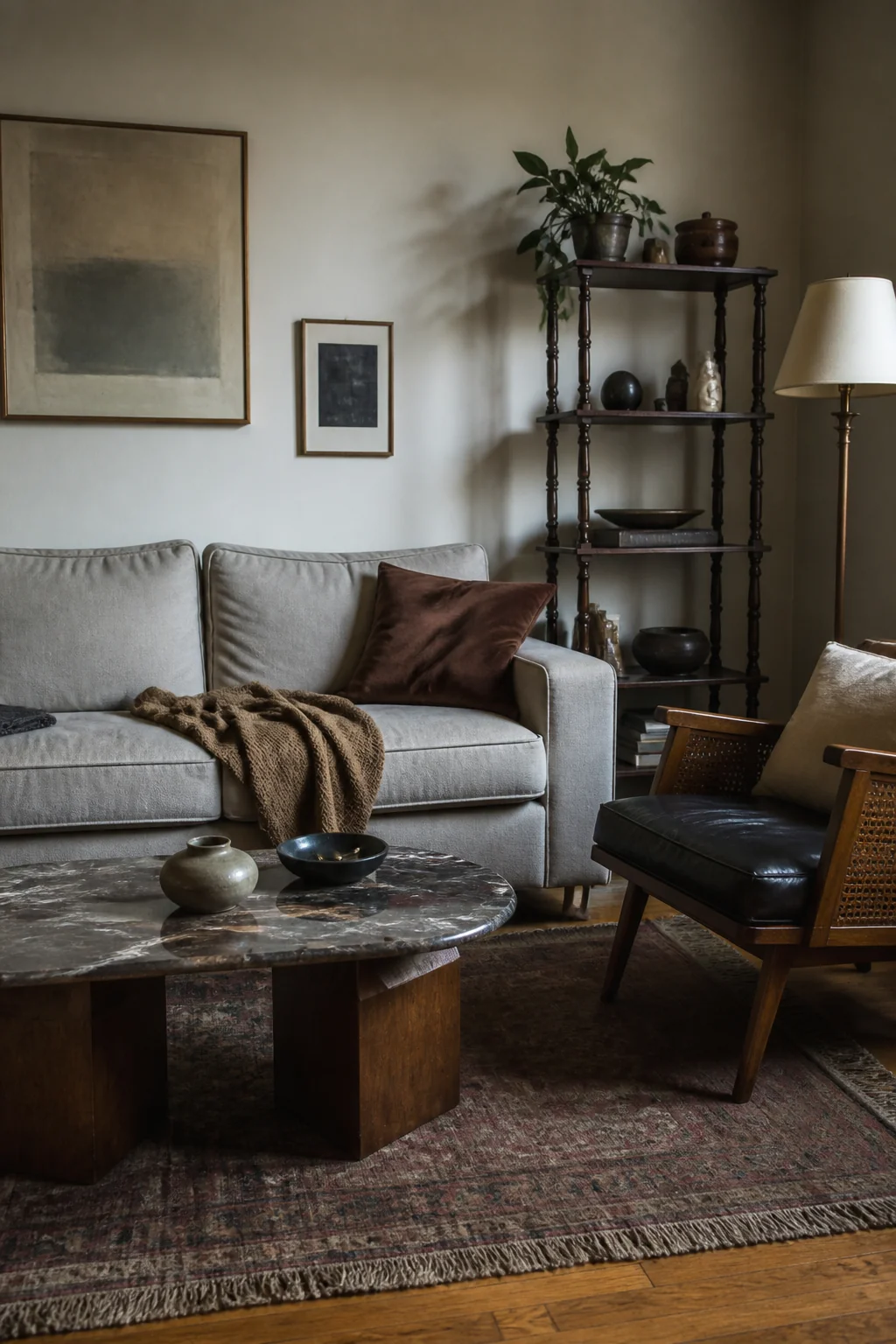
Buy vintage for the pieces you look at and new for the pieces you sit on. That one rule saves most of the money and nearly all of the regret. A mid-century credenza goes for $80 to $250 on Facebook Marketplace or at an estate sale, and it reads as the anchor of the room standing next to a plain new sofa. Before you commit, measure three things: the wall it's going on, the piece itself, and the narrowest doorway between the curb and your living room. Most credenzas are 16 to 20 inches deep and clear a standard 30 inch door, but a wide armchair up an apartment stairwell is a different problem. Pull the drawers to check the runners, look underneath for veneer lifting at the edges, and open it up and smell it. Musty means moisture, and that smell doesn't come out. Vintage seating is the one to skip, since reupholstering a chair costs $400 to $800 plus fabric.
3. Create a gallery wall with temporary adhesive strips
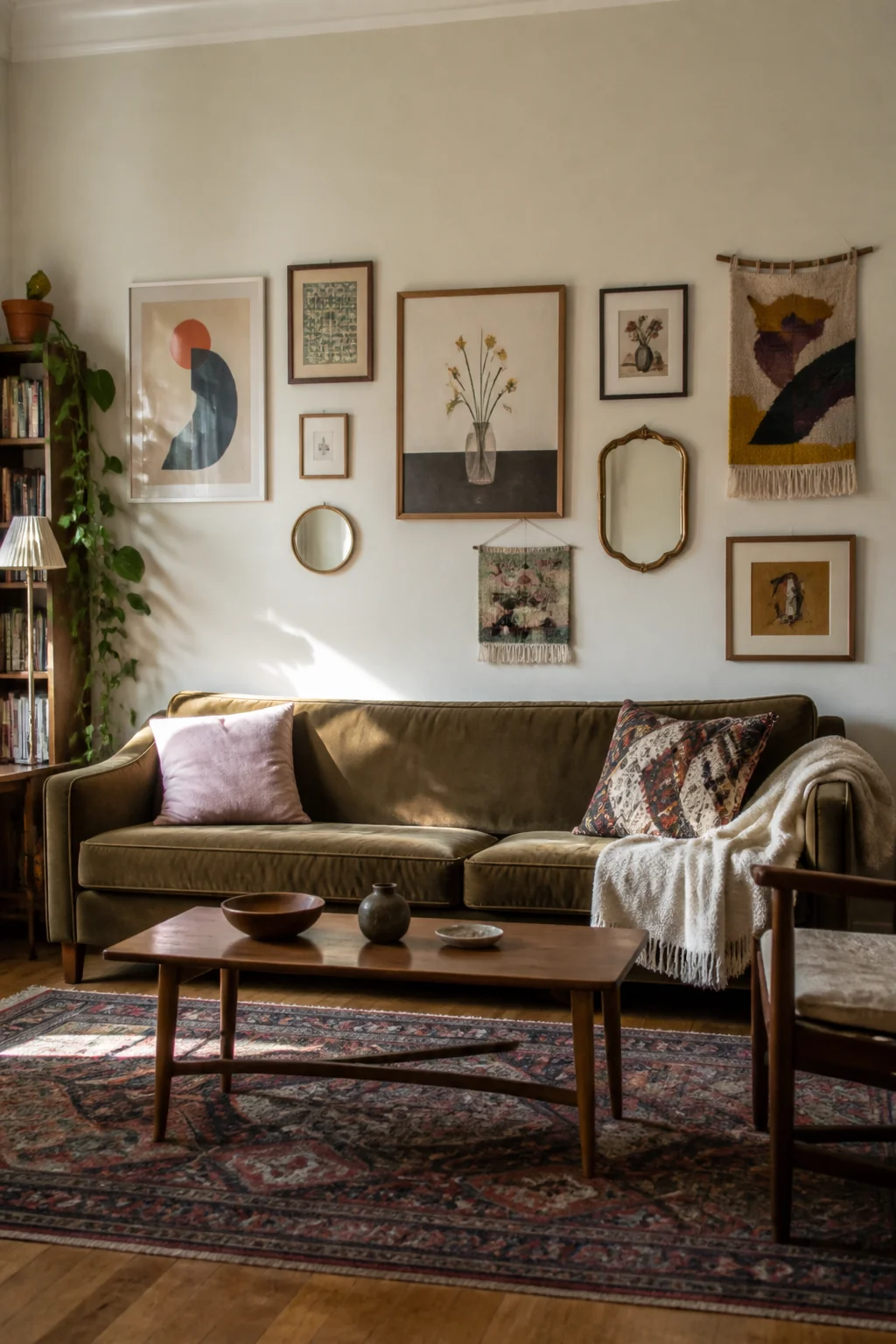
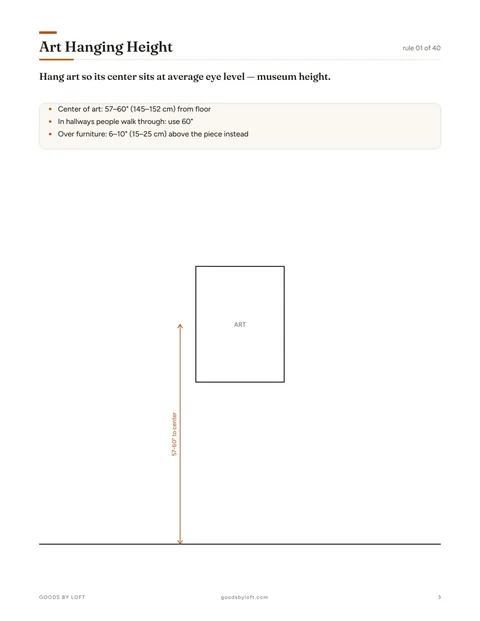
Lay the whole arrangement on the floor before anything touches the wall. Keep 2 to 3 inches of gap between frames, and watch the height, because a cluster hung to suit whoever is holding it always lands too high for whoever is sitting on the sofa. Set the center of the group about 57 to 60 inches off the floor. For a dry run, cut kraft paper templates or mark each rectangle with painter's tape and live with it for a day. Adhesive picture-hanging strips hold roughly 4 pounds per pair, so a large frame wants two to four pairs, and anything heavier than about 16 pounds needs a proper hook instead. Press each strip for 30 seconds and wait a full hour before you hang the frame on it. Two conditions make strips let go: textured walls, where the adhesive only meets the high points, and fresh paint, which needs around 30 days to cure before anything sticks to it reliably. When you take them down, pull the tab straight down along the wall, slowly, never out toward you.
4. Add a statement lighting fixture you can take with you
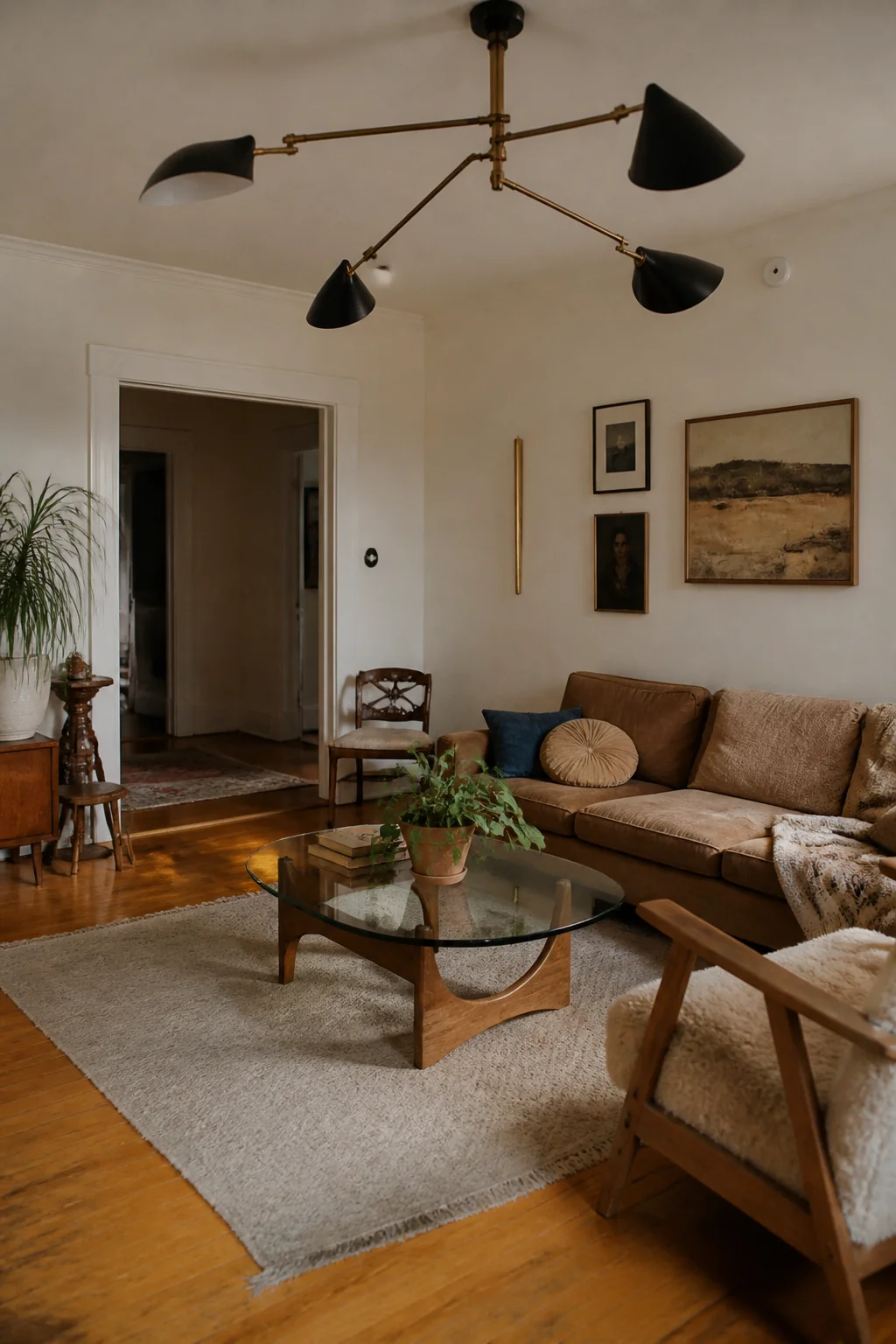
The builder-grade dome light is usually the cheapest object in a rental, which makes swapping it the biggest visual shift available for under $100. A secondhand chandelier or pendant runs $60 to $80 and a plug-in dimmer adds about $20. Lighting is where most rooms get shortchanged, and it doesn't have to be. If you'd rather not touch wiring at all, a plug-in swag kit at $15 to $25 hangs the fixture from a ceiling hook and runs the cord to an outlet. If you do hardwire it, switch off the breaker rather than just the wall switch, and box the original fixture in a closet so it goes back up on your last day. Two details decide whether it reads well: hanging height and bulbs. Keep the bottom of the fixture 7 feet above the floor anywhere people walk, or 30 to 36 inches above a table it hangs over. Check that your bulbs say dimmable, since a non-dimmable LED on a dimmer buzzes, flickers and burns out early.
5. Use patterned pillows to anchor your color scheme
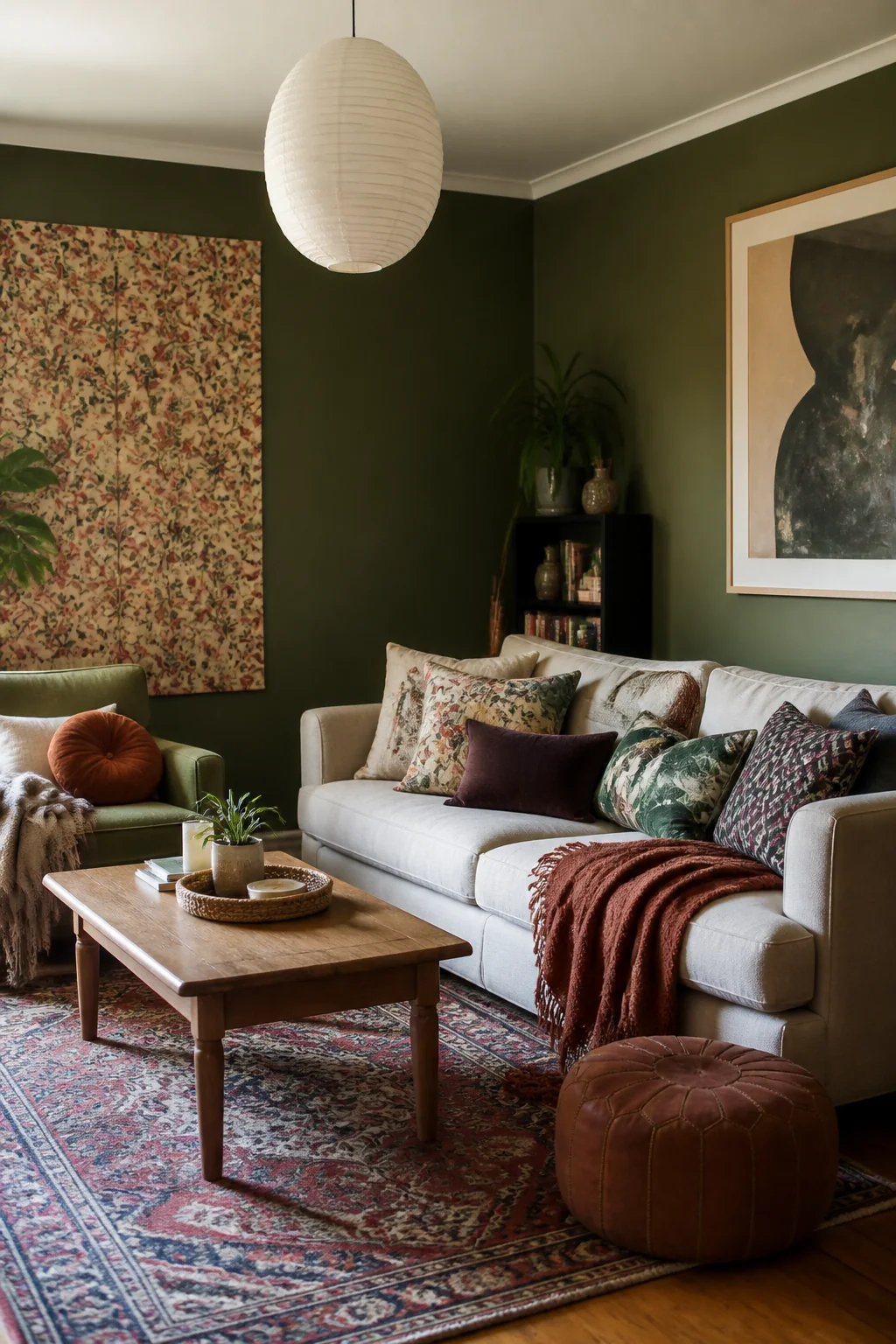
Four to six covers, two colors repeating, three different pattern scales. That's the whole formula. Put 20x20 or 22x22 squares at the back, an 18x18 in front, and a 12x20 lumbar in the middle of the sofa. Buy covers only at roughly $8 to $20 each and keep one good set of inserts for years. Limp squares with hollow corners by February are an insert problem rather than a cover problem, and the fix is buying the insert 2 inches over, so a 22 inch insert into a 20 inch cover. For the mix, pair one large-scale print with one small geometric and one solid with real texture, like velvet, boucle or slubby linen. Navy, cream and rust carries warmth; so does olive, ochre and faded pink. The usual failure is scale rather than color, since five patterns sized identically read as noise no matter how well the colors agree. A full set lands under $100 and shifts the room's palette with no paint involved.
6. Hang fabric on walls as removable art
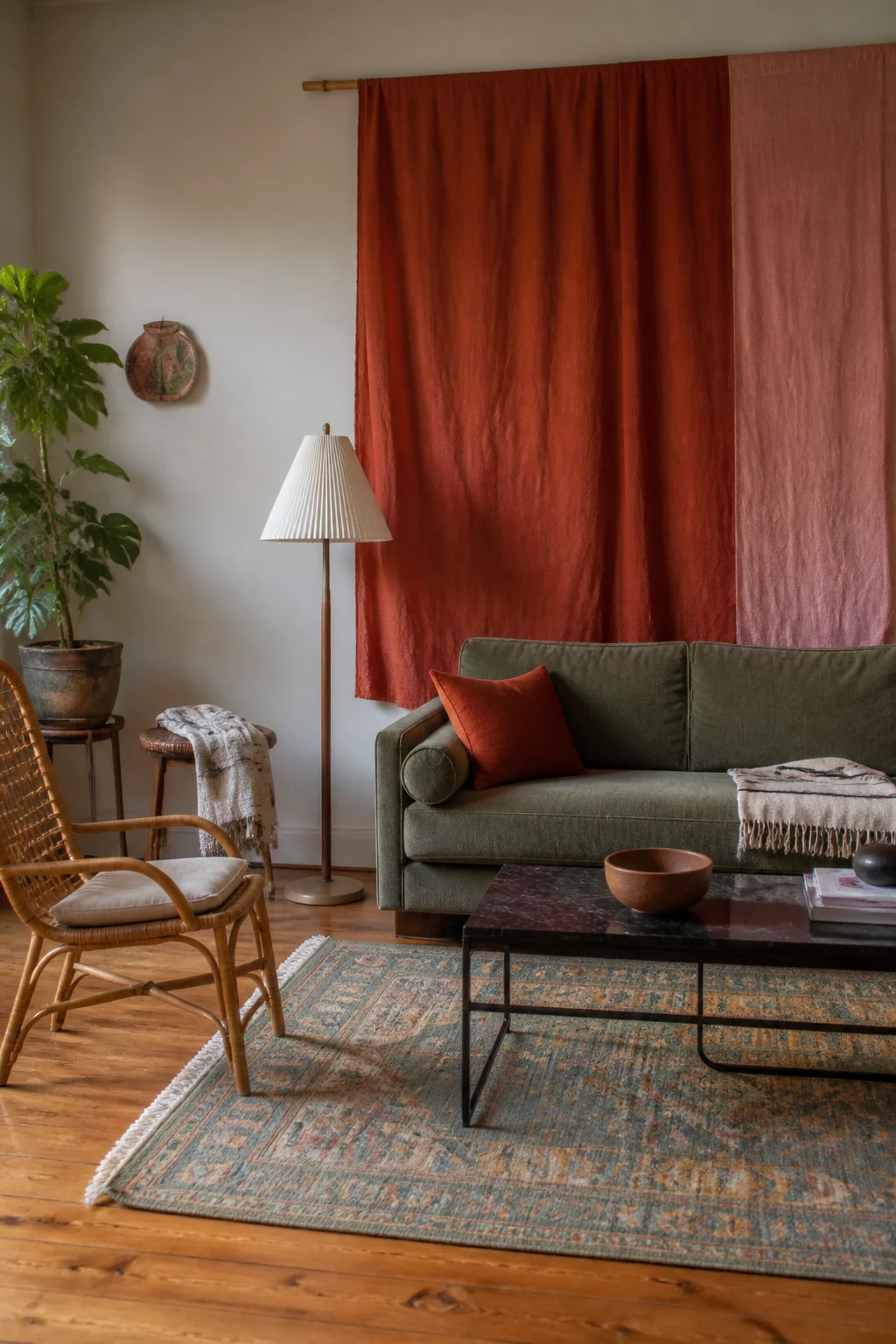
A large tapestry, a vintage bedspread or a quilted textile pinned straight to the wall gives you the color of an accent wall with no paint and no nail holes. Steam or iron it first, because fold creases show badly once fabric is flat and lit from the side. For anything light, upholstery pins or T-pins through the top edge every 8 to 10 inches will hold it, and museum putty handles the loose bottom corners of a thin cotton panel. For anything over about 3 pounds, clip or sew a sleeve, run a slim curtain rod through it, and rest the rod on two adhesive hooks. Pins alone let a heavy quilt sag and tear itself at each hole. Size it to the wall: a 4 by 6 foot piece covers the space behind most sofas, with the bottom edge 8 to 10 inches above the sofa back. Vintage quilts run $30 to $80, kantha throws $25 to $45. Keep any of them off a wall that takes hard afternoon sun, since old dyes fade in a single season.
7. Group plants in varying heights and pots
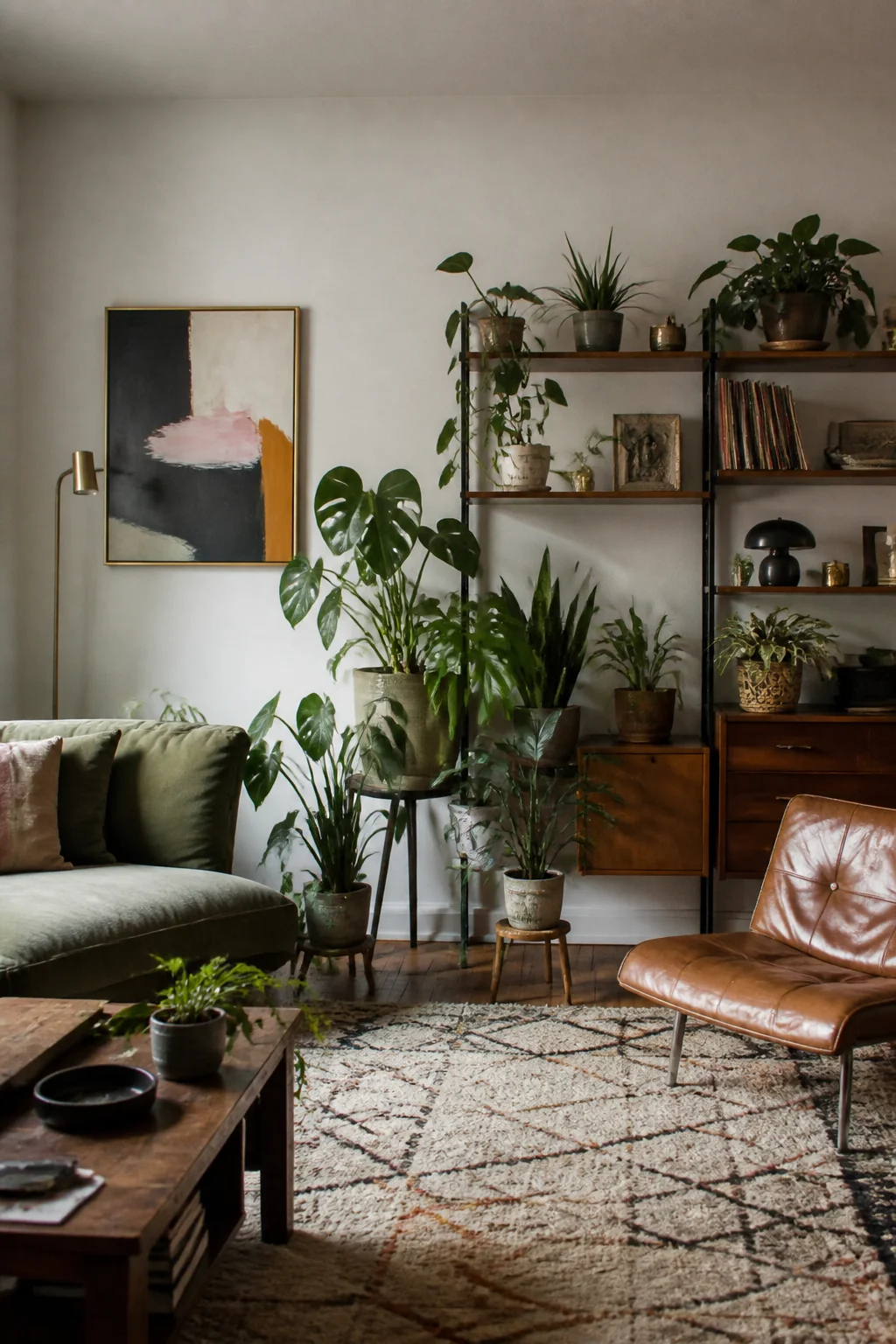
Cluster in odd numbers at staggered heights: a 4 to 5 foot floor plant in a corner, something 12 to 18 inches on a side table, and a trailing pothos up high where it can spill down the side of a shelf. The height gap is what makes three plants read as one arrangement instead of three separate pots. Mismatched ceramic pots at $8 to $15 each from a thrift store cost less than a single framed print and fill far more of the room. Check every one for a drainage hole. If there isn't one, leave the plant in its plastic nursery pot, drop that inside as a liner, and lift it out to water. Match the plant to the light you have rather than the photo you like. A fiddle leaf fig wants bright indirect light and drops leaves near a drafty door or a heating vent, while a rubber plant, a snake plant or a pothos will forgive a dim apartment. Put a saucer under everything, because water rings on rented hardwood come out of your deposit.
8. Mix warm and cool metal finishes without overthinking it
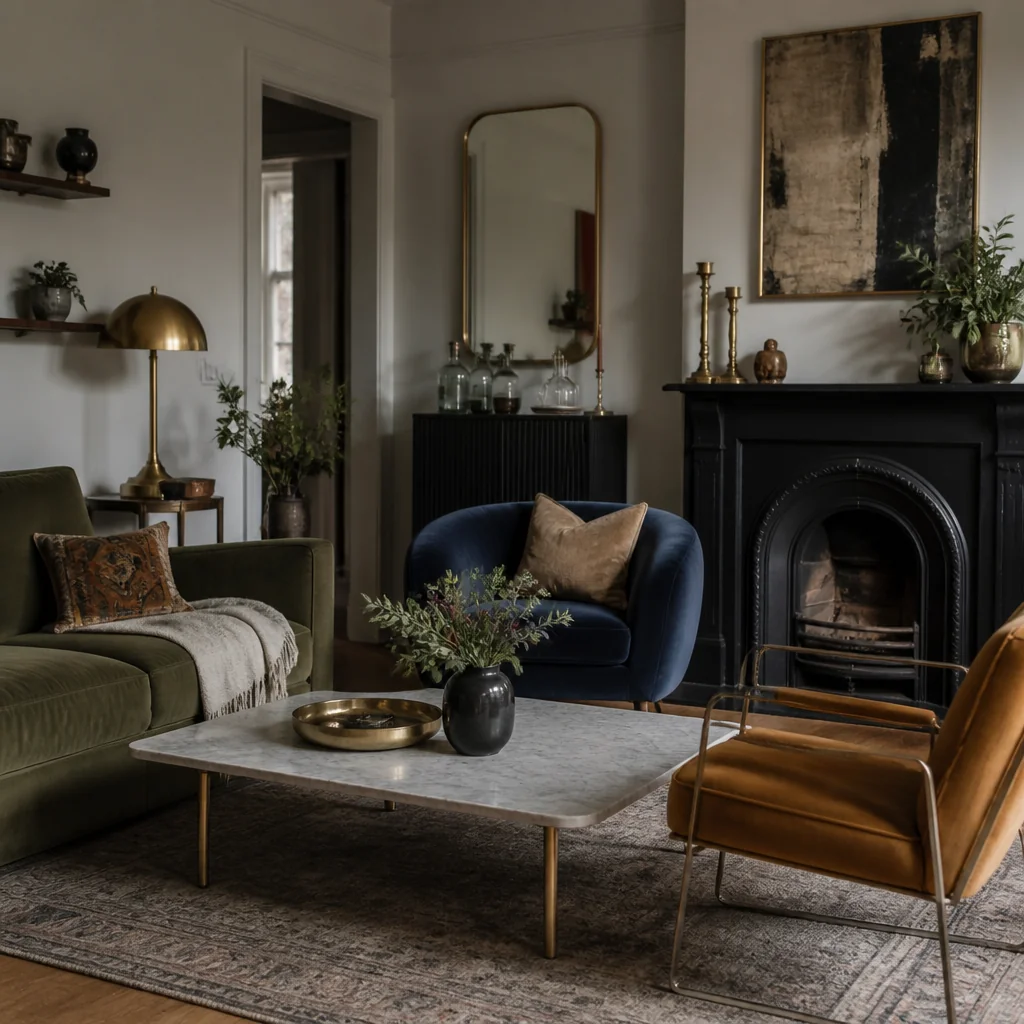
Brass, copper, gold, chrome and matte black don't need to match, but they do need a structure underneath. Pick one metal for the largest items in the room, meaning the lamp bases, the curtain rod, the coffee table legs, then let two accent finishes each appear at least twice somewhere else. That repetition is the whole difference between a mix and a mistake. Matte black is the easiest bridge between warm and cool metals, because the eye reads it as a neutral rather than a third finish competing for attention. One thing catches people out: unlacquered brass patinas and darkens over a few months while lacquered brass stays bright, so two brass pieces bought a year apart can clash harder than brass and chrome ever would. A $6 can of matte black spray paint turns a thrifted silver frame into the accent you were missing. Leave the hardware you can't change out of the count entirely, since a rental's chrome doorknobs and window latches are background, not part of your scheme.
9. Drape a vintage quilt or throw over your sofa
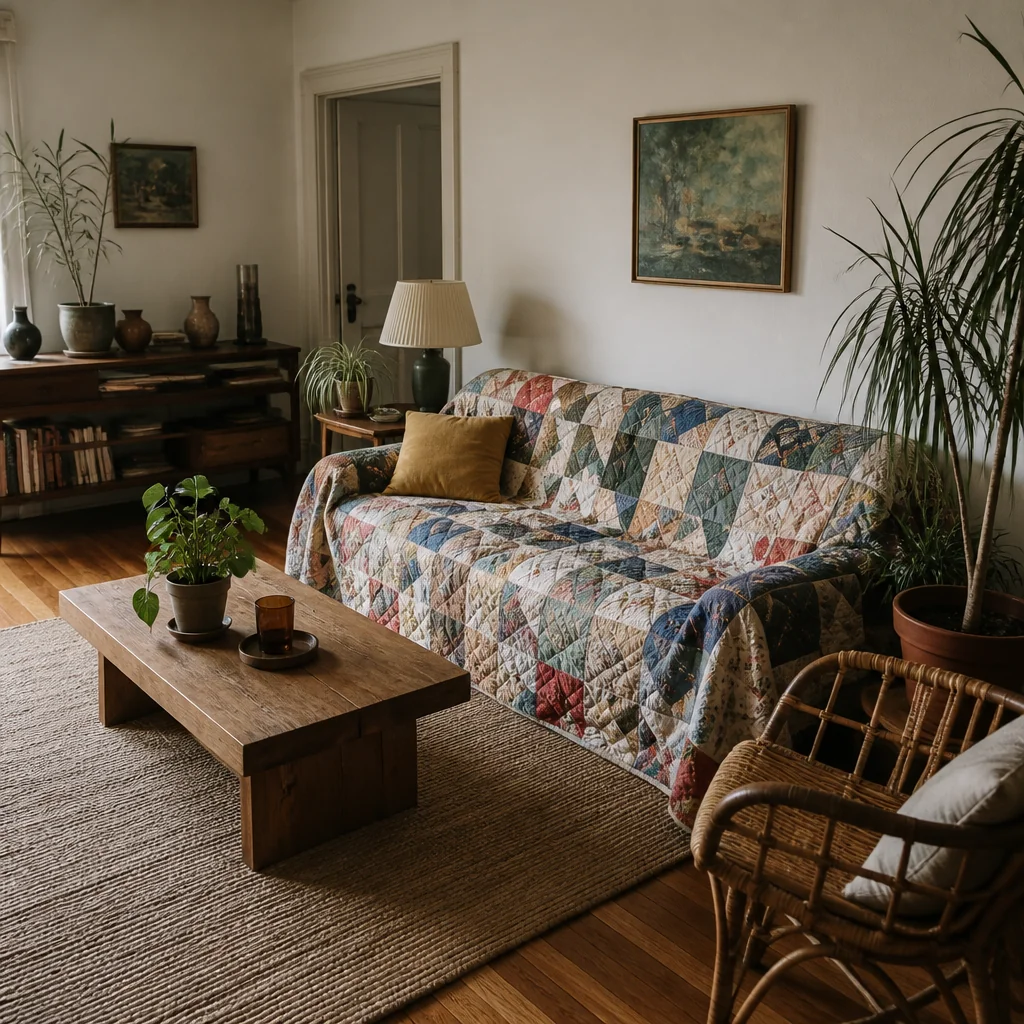
A secondhand quilt runs $15 to $35 and brings a rented sofa a texture no cushion cover can match. Drape it over one arm and let it fall 12 to 18 inches down the side, or fold it in thirds along the back. Spread flat and squared off, it reads like a hotel bed. Check the condition before you pay: hold the quilt up to a window and look for thin patches, since dry-rotted cotton splits the first time someone drops onto it. Wash it cold on gentle in a mesh bag and dry it flat, because hot water and a tumble dryer shred hundred-year-old thread. On sizing, a 50x60 throw covers a loveseat and a twin quilt at roughly 66x86 spans the back of a three-seat sofa. Stay with wool or cotton where you can. Polyester fleece pills within about three washes and starts looking cheap up close. It also hides whatever beige upholstery came with the apartment.
10. Build a styling shelf with books, objects, and negative space
Take everything off first, because editing a full shelf never works. Refill it to about two thirds and leave the rest genuinely empty. That breathing room is what separates collected from cluttered. Work in groups of three at different heights: something tall at 8 to 12 inches, something mid-height, something low and wide. Lay a few books flat as a stack and set a small object on top so the stack works as a plinth rather than more spines. Pull every object forward flush with the front edge of the shelf, which gives you a clean line and better shadows behind. Leave one shelf almost bare on purpose. Before you load ceramics on, check the span: a 30 inch particleboard shelf without center support bows visibly under weight, and that sag doesn't come back out. Mix in a small plant, a candle, a framed photo and one odd vintage find, and skip the paper-wrapped books trend, which reads as staged to anyone standing close.
11. Hang curtains higher and wider than the window itself
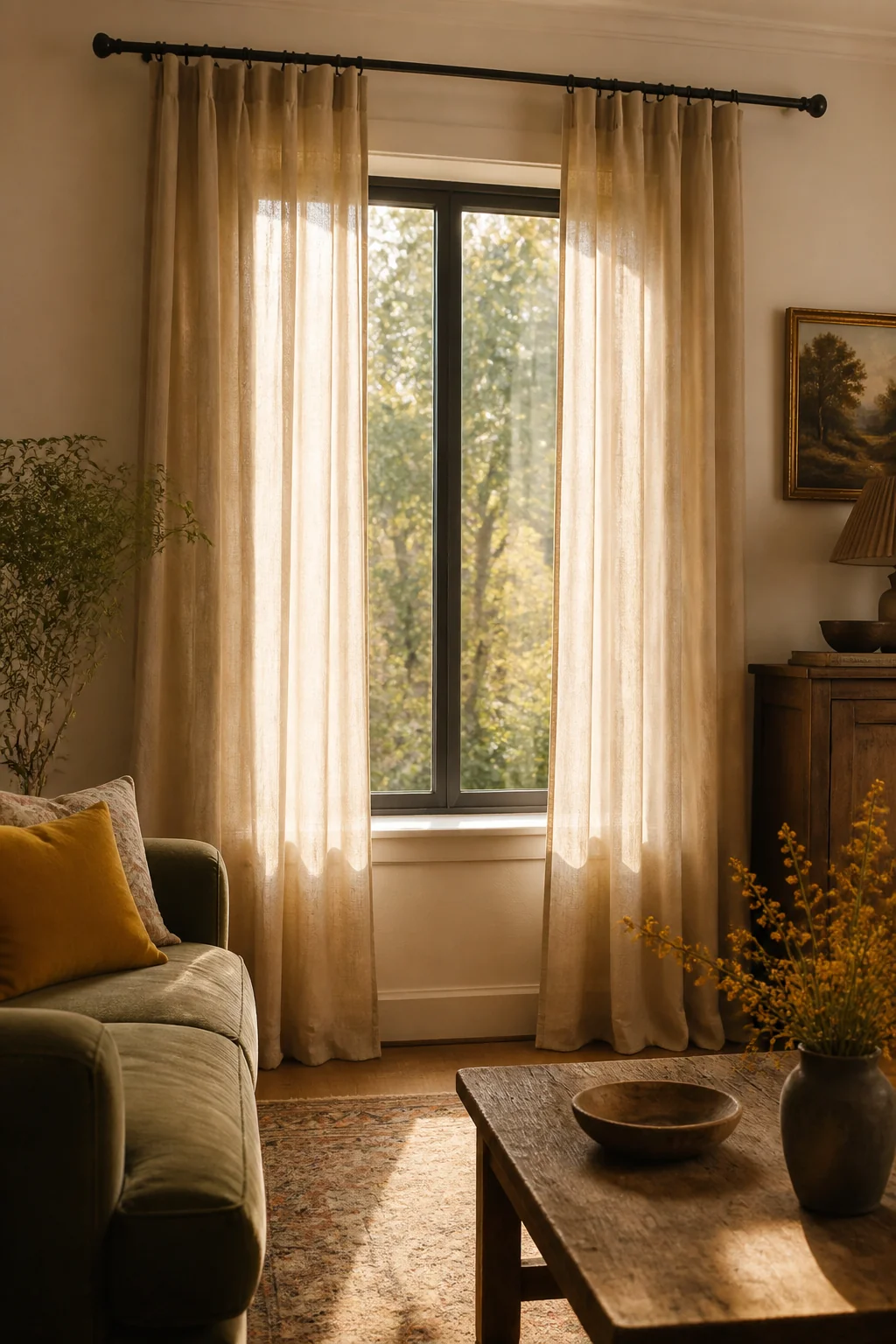
A rod cut to the width of the window is how a rental loses half its daylight, since the open panels have nowhere to sit except across the glass. Run the rod 8 to 12 inches past each side so they stack on the wall instead, and mount it 4 to 6 inches below the ceiling, or 6 to 12 inches above the frame at minimum. That side extension does more for the room than the height does. Measure rod to floor and buy the next standard length up: 84, 96 or 108 inches. Panels should brush the floor or break about half an inch on it. Curtains floating six inches short are the single detail that makes a rental look rented. Budget $25 to $40 for a rod and $15 to $30 per panel, two panels per window minimum, and aim for combined panel width around twice the window width so they hang in folds rather than flat sheets. Tension rods only work inside a recessed frame and slip under lined panels, so for face-mounting use adhesive hooks rated 5 to 7 pounds each.
12. Layer lighting with multiple sources and warm bulbs
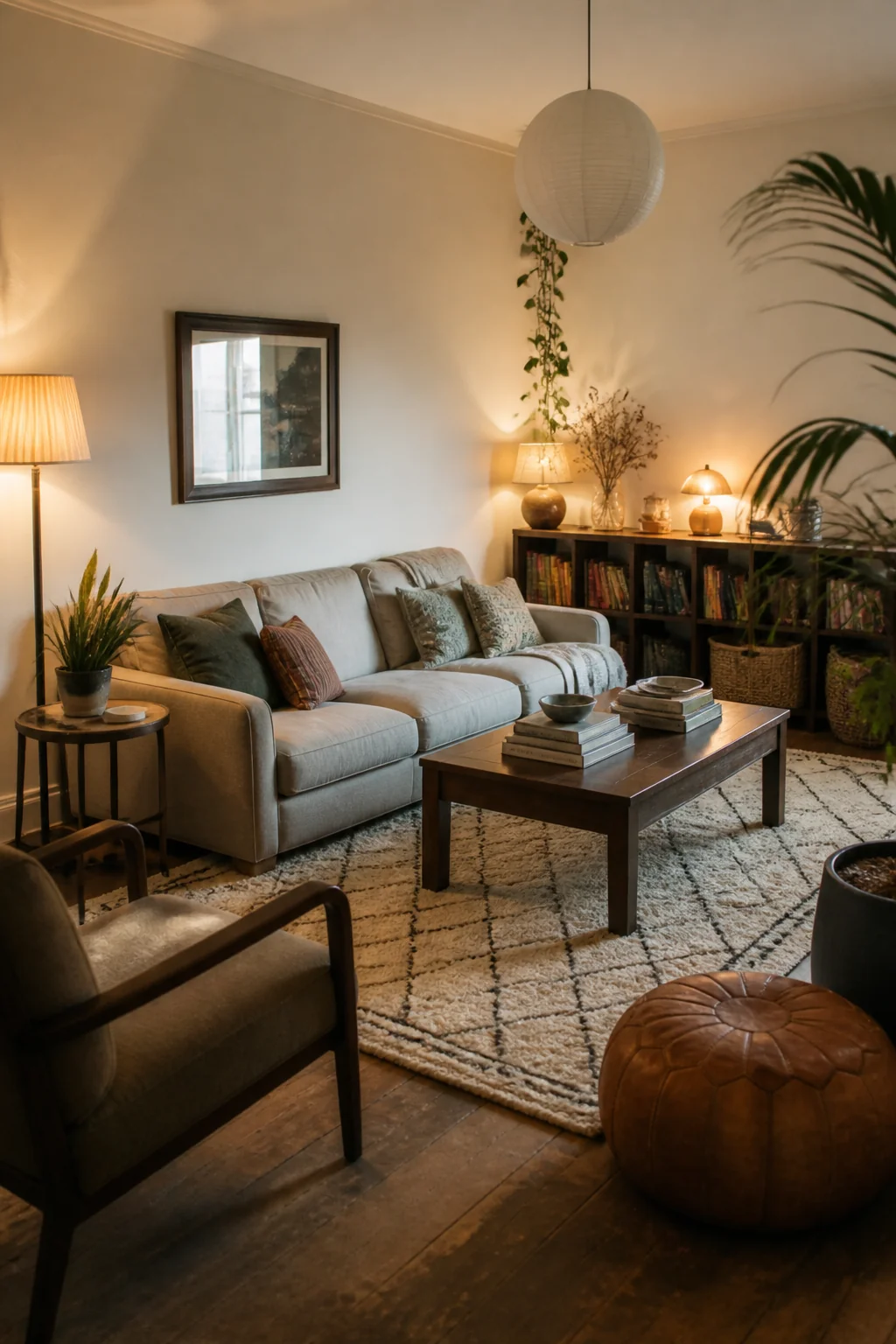
One ceiling light flattens everything under it. Three sources at three heights do the opposite. A floor lamp at 58 to 64 inches ($50 to $80) covers the room, a table lamp set so the bottom of the shade lands near eye level when you're seated handles reading, and something low like candles or string lights fills the corners. Roughly 800 lumens per lamp works out to about 2,000 to 3,000 lumens total in a 12 by 15 foot room. Buy every bulb at 2700K and check the box each time, because one 4000K bulb slipped into the group turns that corner cold and faintly blue against the others. Look for CRI 90 or higher as well, since low-CRI bulbs drain the color out of the rugs and textiles you just paid for. Plug-in dimmers cost $15 to $20 and smart plugs $10 to $15, so all three lamps come on with one tap. Consistent warm light is what makes mismatched furniture look chosen.
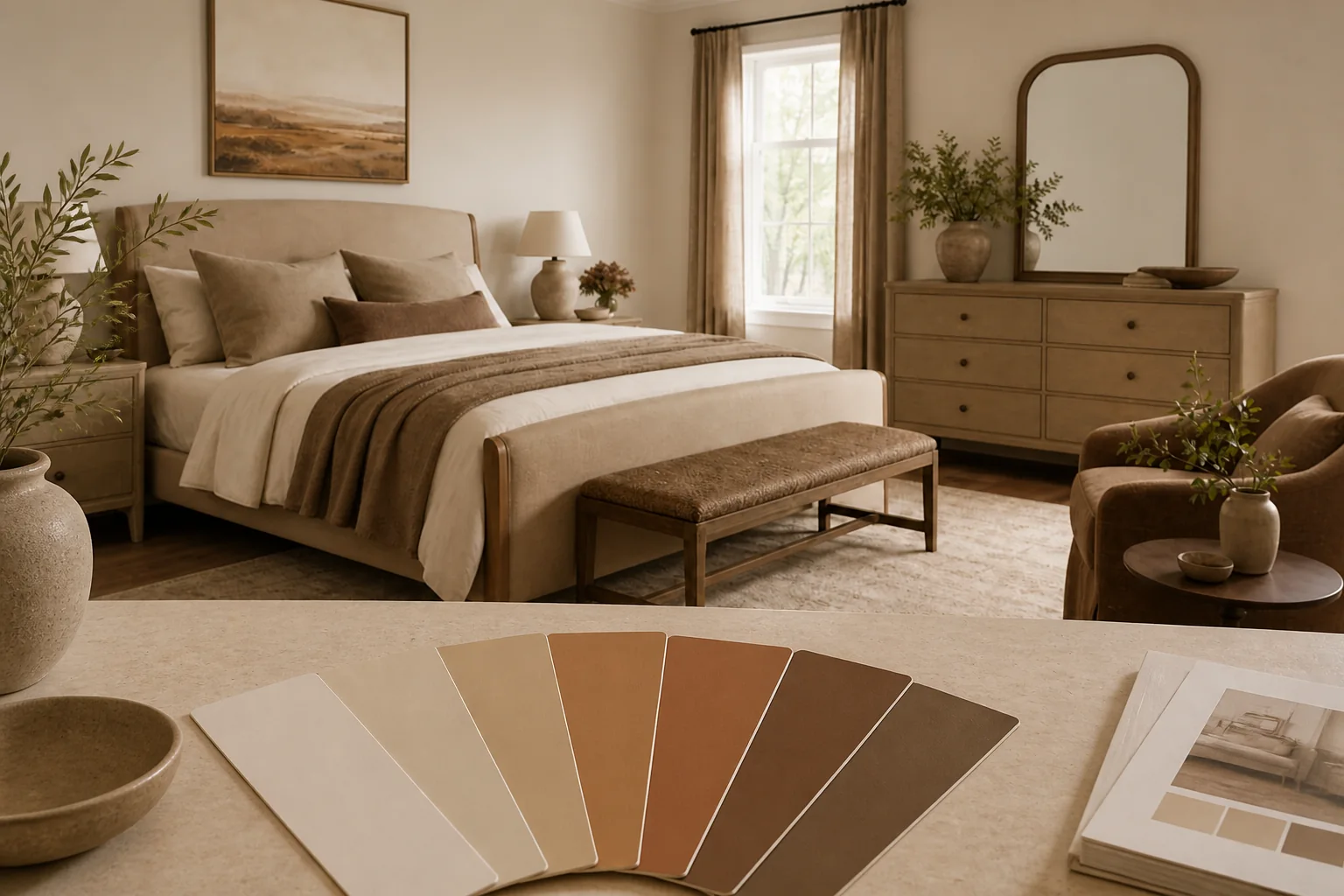
The whole guide in one image
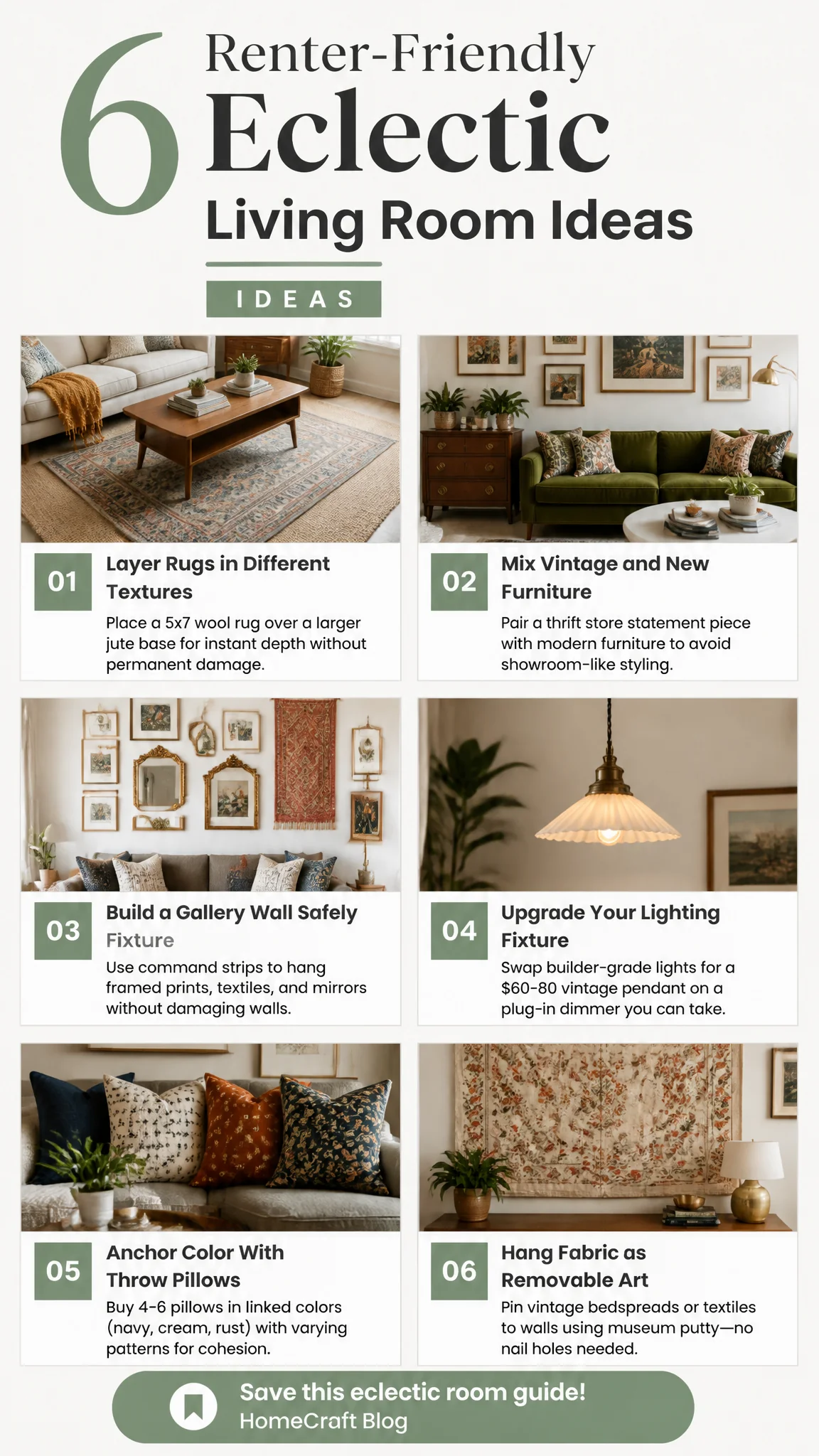
None of this needs a master plan, which is the useful part. An eclectic room gets assembled rather than designed in one sitting, and it happily absorbs a rug bought this month next to a credenza found next spring. The one place worth being strict is anything that touches the walls and the ceiling. Adhesive strips on fully cured paint, pins in drywall rather than nails, the original light fixture boxed up in a closet: get those few things right and everything else in the room stays reversible by definition. That is the real trick to decorating a place you don't own.
Ideas fade by Friday. A plan finishes the room.
You just read a full guide to your living room. Saving ideas will not change it; a plan will. The Home Decor Collection is every planning tool we make, for every room in the house, in one download, so the after photos below stop being other people's rooms.
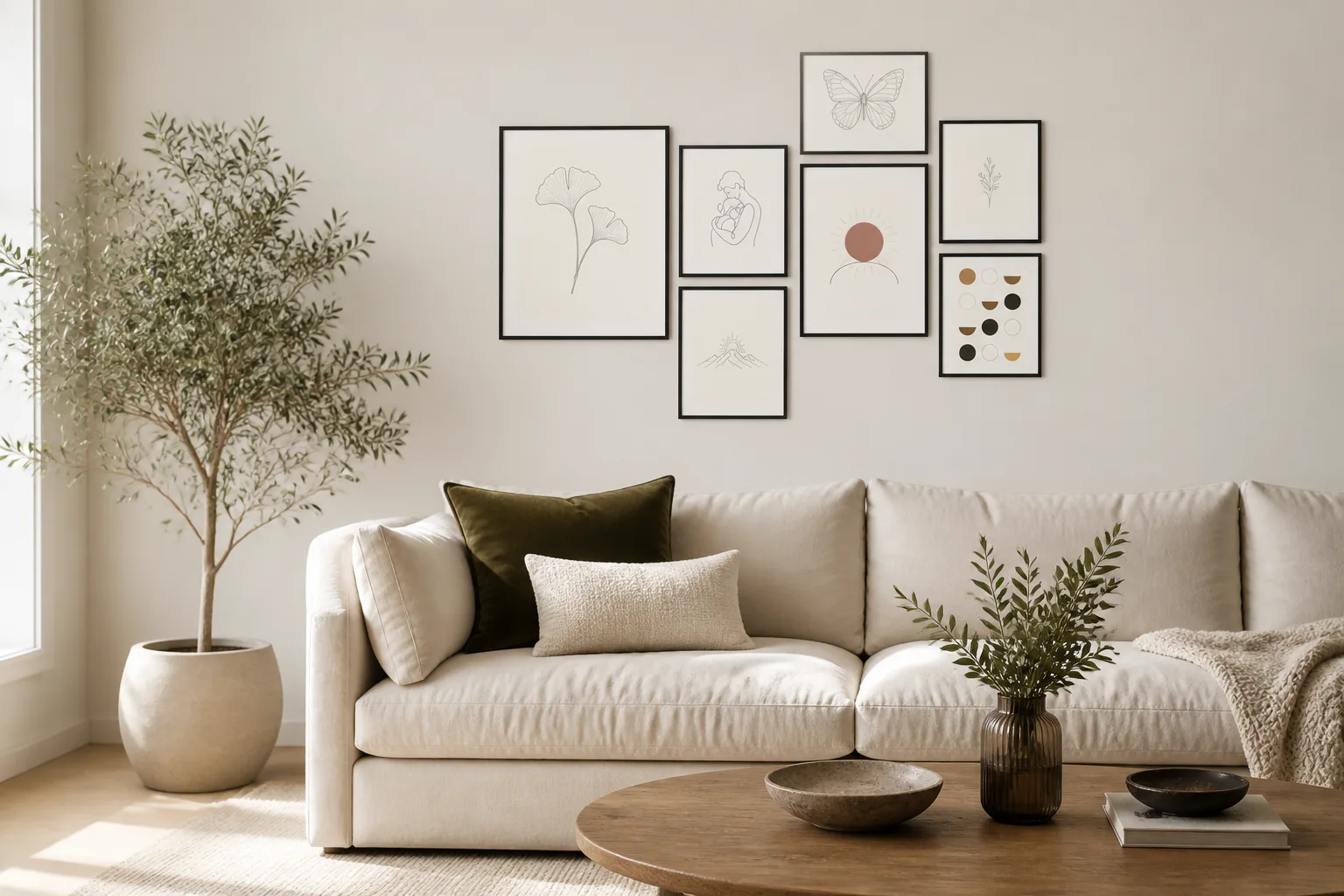
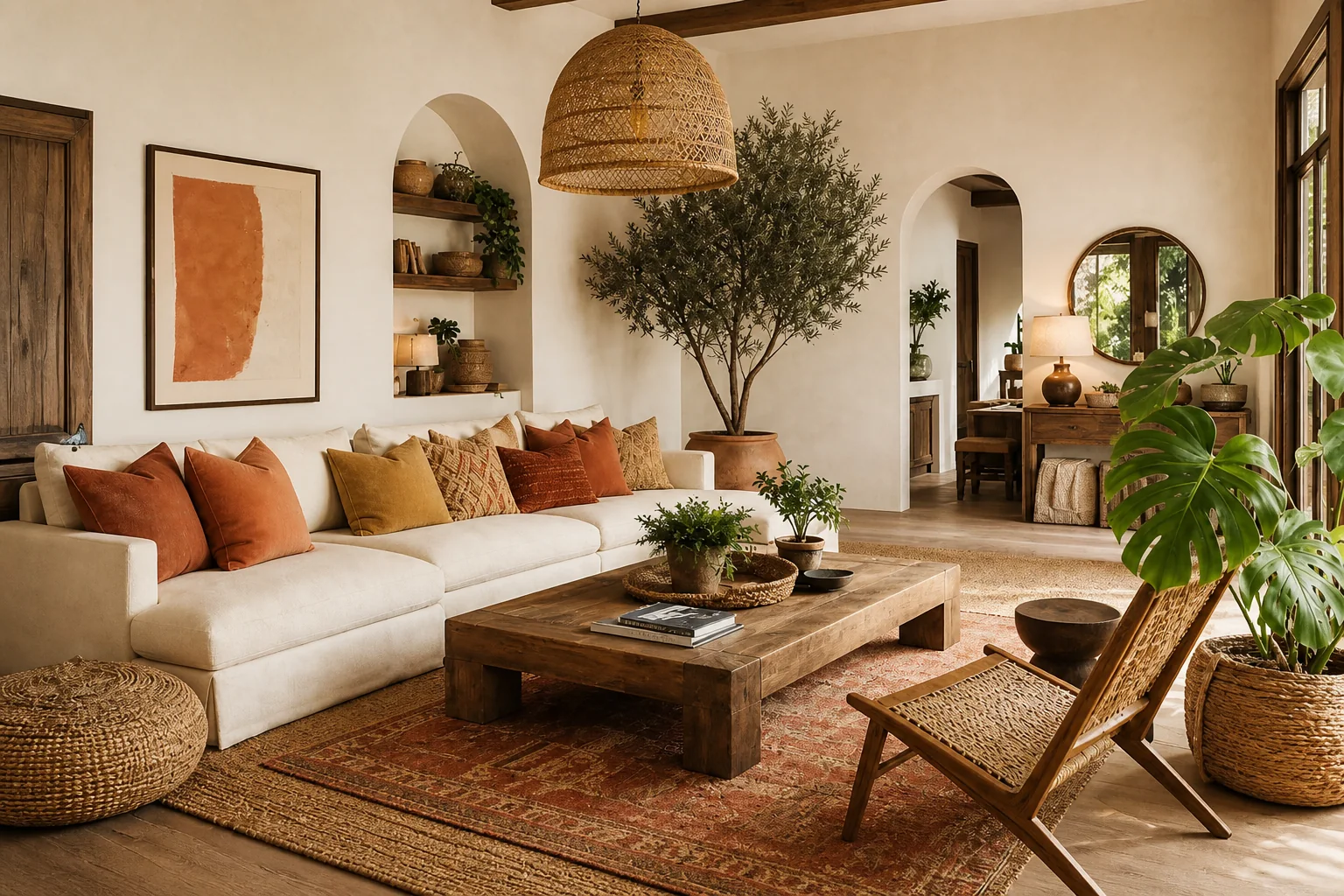
- Six room Style Kits, each with layout, palette and shopping list$114
- The Gallery Wall Studio: 200 prints + 15 measured layouts$29
- The Room Makeover System: 40 solved room layouts + workbook$29
- The Color Palette Handbook: 60 palettes shown in real rooms$19
- The Whole-Home Reset: 40 printable organizing checklists$19
- The Decorator's Cheat Sheets: the 40 measurements that matter$9
- All eleven products, bought separately
$219$97
A single hour with an interior designer costs more than the entire Collection, and this one keeps answering for every room you will ever decorate. Free updates included as the products grow. And if it is not for you, the 14 day money back promise means you simply get a refund.